Wulf started with an introduction reiterating that talking about the Washingtons’ slaveholding is far from new in American culture:
As anyone reading this will likely know, and as John Marks notes below, a remarkable volume of important research detailing George Washington’s (and Martha Dandridge Custis Washington’s, and their family’s) investment in slavery has been published over the last two decades. In conjunction with critical work on other “founders,” namely Thomas Jefferson, this work has helped usher in a shift in public perspective that has been greeted with angst by those who either didn’t know or don’t want to know about the foundational role of slavery at the founding, but also by relief among the many who did and do.In the interview, Marks noted three ways Americans have discussed George Washington’s connection to slavery. Some complain about exploitation and hypocrisy, some insist on reverence for the other things he did, and some argue we should focus on how he moved away from slavery over his lifetime. “What was really fascinating in researching the book was how early and consistently all three of these perspectives appeared in the record,” Marks added, finding examples of each approach in the period of his death.
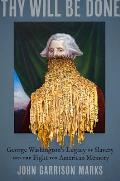
This book is different. It takes up the question of how this very specific issue about the first president—his role as an enslaver—was debated over centuries. In other words, this was not a phenomenon that leapt upon a settled historical narrative unbidden from the culture wars or the specific spate of racial violence that called forth the Black Lives Matter movement. For me, there was another dimension.
As soon as I heard about John’s project some time ago, I was intrigued in part because at one point I checked out a number of copies of Washington’s will printed in the 19th and 20th centuries. Why, I wondered, were so many people keen to have to hand a copy of what Washington willed? In part it has to do with the vexed issue of manumission. John shows, in this book that helps us to see historical memory in motion, Washington and slavery have always been particularly instructive.
No comments:
Post a Comment