J. L. BELL is a Massachusetts writer who specializes in (among other things) the start of the American Revolution in and around Boston. He is particularly interested in the experiences of children in 1765-75. He has published scholarly papers and popular articles for both children and adults. He was consultant for an episode of History Detectives, and contributed to a display at Minute Man National Historic Park.

Subscribe thru Follow.it


•••••••••••••••••


Showing posts with label printers. Show all posts

Thursday, July 30, 2026

“He passed without moving his Hat, or Head or Hand”

The part of the newly released documents from John Dickinson getting the most attention, including a news story in the New York Times, is his detailed proposal to reconcile the British government and the colonies at the Continental Congress before they reached a permanent breaking point.

But of course I’m drawn to the juicy interpersonal gossip. Dickinson wrote the second of those letters after John Adams’s nasty private comment about him had leaked. That letter reveals Dickinson’s feelings about that slight as well as his perspective on what led up to it.

The July 2026 issue of the William & Mary Quarterly contains an essay by Dr. Jane E. Calvert about this episode. She points out that historians have relied on Adams’s recounting of the event in his memoir, even while acknowledging those recollections can’t be confirmed and flatter Adams in consistent ways. (Calvert and Jonathan Gienapp’s article about the Dickinson documents offers an accessible précis of her essay.)

I wrote about Adams’s indiscreet remark back in 2014. In short, Adams gave the young lawyer Benjamin Hichborn two letters to carry home to Massachusetts. Hichborn let those papers fall into British hands. Gen. Thomas Gage had the texts published in Margaret Draper’s Boston News-Letter on 17 Aug 1775.

Adams’s 24 July letter to James Warren included these lines:
In Confidence,—I am determined to write freely to you this Time.—A certain great Fortune and piddling Genius whose Fame has been trumpeted so loudly, has given a silly Cast to our whole Doings…
Those lines made their way back to Philadelphia. No delegate to the Congress had more money and fame combined than Dickinson. (Benjamin Franklin was more famous but not as wealthy; a few men may have commanded bigger estates, but none had gained more respect as a political writer than Dickinson the “Farmer.”) So everyone knew who Adams was referring to.

On 16 September, Adams wrote in his diary:
Walking to the Statehouse this Morning, I met Mr. Dickinson, on Foot in Chesnut Street. We met, and passed near enough to touch Elbows. He passed without moving his Hat, or Head or Hand. I bowed and pulled off my Hat. He passed hautily by. The Cause of his Offence, is the Letter no doubt which Gage has printed in Drapers Paper.
That was a “cut direct.” It showed Dickinson was upset, but he was making that clear by not saying anything.

Forty years later, Adams insisted:
  • He wrote his 24 July letter only after Dickinson had tried to browbeat him and other “New Englandmen” into not arguing against the Congress’s Olive Branch Petition, and
  • He didn’t write that letter anyway. Or “not exactly.” The royal authorities had altered his words before publication.
Adams’s letter doesn’t survive, as far as anyone knows, so we can’t say for sure whether the newspaper text was edited. But we do know Adams expressed some similar sentiments in other private letters at the time. And he never specified which of the published words he hadn’t penned.

Thanks to the new documents, we now have John Dickinson’s view of the dispute, written in the year that it happened rather than decades later.

TOMORROW: The other side.

Tuesday, July 28, 2026

“Praying for an Act of Assembly to hang the Memorialist”

At the end of August 1771, Richard Steele finished a very busy year.

Since the start of September 1770, the young man had been:
  • convicted of theft, whipped, cropped, and branded twice
  • locked up seven times, twice in irons
  • escaped three times
  • acquitted of theft twice
All those events were reported in Connecticut’s newspapers. And then we don’t hear about Steele’s activity for three years.

That said, on 15 October the Connecticut Courant in Hartford ran a long essay, filling most of a newspaper page and headed:
A MEMORIAL, praying for an Act of Assembly to hang the Memorialist.

To the Honorable the General Assembly of the Colony of Connecticut, to be conven’d at New-Haven, on the second Thursday of October, 1771.

The MEMORIAL of Richard Steele Burglarian, now confin’d in Fairfield Goal, in behalf of himself and the rest of the Housebreakers who now, or hereafter may, practice their calling and profession, within said colony
In this context the word “memorial” meant a memorandum, not a remembrance of the dead (yet).

The author was not Richard Steele but someone (ironically) stealing his persona to complain, for himself and fellow criminals, about the state of legal justice in the colony. The essay was dated September, and its writer was apparently unaware that in late August a court acquitted Steele of the charges that had landed him in the Fairfield jail. Not that such knowledge would have made the author happy.

The essay argued that under Connecticut’s legal system “the reformation of the punished—has…never been to any degree effected.” Yet “the confining of us to hard labour” was “utterly inconsistent with the privileges and liberties of Englishmen.”

That left only one course of action: “That your honors would order, decree and enact that the first offence be punished with death.”

It’s a weird use of sarcasm. I suspect that the real target was talk of establishing a prison to lock up convicted criminals for long terms. The essayist expressed hope
That the proposal for confining us to hard labour may (as we are confident it will) be treated with the contempt it deserves.
The Connecticut assembly didn’t approve converting the Simsbury copper mine into a prison until October 1773, but this looks like an attempt to quash that proposal early. It didn’t work.

Indeed, Richard Steele probably was the sort of criminal the New-Gate Prison was designed for. The traditional corporal punishments hadn’t deterred him, and by the end of 1770 he had no more ears to crop. Yet juries may have been reluctant to send the young man to the gallows for property crimes—hence the two acquittals in 1771.

An underground prison might have looked like the best way to keep Richard Steele off the streets.

COMING UP: Steele goes to New-Gate.

Monday, July 27, 2026

“Steel made a most vigorous Resistance”

The 7 May 1771 Connecticut Courant newspaper of Hartford repeated Sheriff Ezekiel Williams’s wanted notice for Richard Steele that I quoted yesterday.

Folks up in Hartford Country didn’t know that Steele was once again in jail.

Four days earlier, on 3 May, the Connecticut Journal of New Haven reported:
Last Monday [29 April], the notorious Burglar, Richard Steel, was taken up at Milford, and conveyed to Fairfield Goal, (charged with several Burglaries and Thefts, since his late Escape from Hartford Goal, the last of which was committed in Stratford) also one Evens, an occasional Landlord of Steel’s, and as whose House he was taken; Steel made a most vigorous Resistance, and wounded the Person in the Head, with a Cutlass who took him.
The same item was reprinted in the 18 May Providence Gazette with the landlord’s name spelled “Evans.”

As far as I can tell, this was the first time Steele was accused of a violent act, as opposed to stealing clothing, jewelry, or horses.

Steele had a record of breaking out of jails, but Fairfield County managed to hold onto him. On 30 July, the Connecticut Courant ran this item:
NEW-HAVEN, July 26.

A few Days ago a Letter from the notorious Richard Steel (now in Fairfield Goal, and who is to be tried for his Life for Burglary at the next Superior Court) directed to a Woman belonging to Milford, named Alling was intercepted, the Contents of which was to desire her to be out of the Way at the Time of his Tryal, she being the principal Witness against him;——but to prevent her escape she was last Evening committed to the Goal in this Town; not being able to procure Bail.
Steele thus stayed in custody until his case came up in August. Furthermore, Connecticut authorities had detained two possible accomplices or witnesses against him. Surely he wouldn’t get away with his crimes again!

On 27 August, the Connecticut Courant reported:
The notorious Richard Steel, so well known in this Town and County, and who was tried for his Life for Burglary last March Term, in this Place and acquitted, was again tried for his Life last Week at Fairfield for a like Offence, and again acquitted.
TOMORROW: The “Memorial of Richard Steele.”

Friday, July 24, 2026

“Punished at Hartford, for Burglary, by the Name of Richard Steele”

On 17 Sept 1770, the Connecticut Courant of Hartford reported on recent cases from “the Superior Court of Assize and General Goal Delivery.”

After trials on bestiality (acquitted) and rape (acquitted), the newspaper told readers:
Also, Richard Steele and John Galloway, both transient Persons, were convicted of Burglary, and sentenced to be whip’d 15 Stripes each, and to be crop’d and branded with the Letter B on their Forehead, which Punishments they accordingly received on Friday last.
That corporal punishment took place on 14 September. Then the felons were set free.

Several weeks later, the Connecticut Courant for 6 November advertised Steele, Galloway, and Charles Livingston as wanted men. They had evidently been arrested again and escaped because the paper said:
The two first are shrewdly suspected to be the same that on the next evening, broke open a shoe makers shop, in said Hartford, and stole a greatcoat suit of cloaths, and two pair of shoes, and also last night Mr. [Peter] Verstille’s shop at Weathersfield, carried off considerable money, and sundry goods, were poorly clad when they went away, but probably by this time are well cloathed.

Whoever shall take up either of the two first mentioned persons, and convey the said Galloway to New-Haven Goal or to this, and the said Steel to this, shall have 20s. lawful money reward for each, and, for the said Livingston, a reward of 10s.

per Ezekiel Williams, Sheriff.

N.B. The Thief stole from Mr. Verstille two dollars, the one a Cobb, the other a Mill’d Dollar, which were both counterfeit, & about a Doz. black Barcelona handkerchiefs, several pieces of ribbon, &c.
That advertisement included a physical description of Steele, but unfortunately the page is ripped in the newspaper database I use, so I can’t offer a word picture of him yet.

On 4 December, the Connecticut Courant offered some good news, datelined New Haven on 30 November:
Last Tuesday was committed to the Goal in this Town, a Person Charged with breaking open and robbing the Shop of Mr. Marks of Derby: he says his Name is Richard James, but by the Mark on his Forehead, and some other Circumstances, it appears he is the Person who was lately punished at Hartford, for Burglary, by the Name of Richard Steele.
The authorities in New Haven sent the man back to Sheriff Williams in Hartford County. (The sheriff’s house in Wethersfield appears above, courtesy of Daniel Sterner’s Historic Buildings of Connecticut.)

On 24 December, the Boston Evening-Post ran this item from New London, dated 14 December:
Last Monday, one Richard Steele, was punished at Hartford, for the second offence of Burglary, by being whipt & branded, and having his left Ear cropt. He has since escaped from goal, but was yesterday taken and re-committed.
Thus, in the course of four months Richard Steele had been accused of burglary in Hartford, Wethersfield, and Derby; had been whipped, branded, and cropped on his ears twice; and had escaped jail twice—but was once again back in custody.

TOMORROW: On into 1771!

Friday, July 17, 2026

A Boston Stone

This month the city of Boston announced a new finding about a stone in the Granary Burying Ground that reads:
HERE LYES Ye.
BODY OF BOSTON
AGED 70 YEARS
DECd. FEBy. Ye. 28
1 7 2 8
Kelly Thomas, director of the Historic Burying Grounds Initiative for the Boston Parks and Recreation Department, told WBZ: “I was reviewing the photos of headstones, and then I noticed that the stone only had one name.” A geographic name, at that. That hinted the person buried there had been an enslaved man.

Some documentary research turned up records of such a man. Indeed, Gloria McCahon Whiting discussed Sebastian’s marriage to Jane Lake at length in her 2024 book, Belonging: An Intimate History of Slavery and Family in Early New England. Judge Samuel Sewall helped to negotiate the terms of that union at the same time he was writing The Selling of Joseph, his pioneering but self-suppressed anti-slavery pamphlet.

On 13 Feb 1701, after protracted discussions between the couple’s two owners, the judge married the couple. Sebastian’s owner, John Waite, died the next year. Six years after that, when the Boston selectmen listed free black men in town they put to work mending roads (since those men were free/barred from militia training), one of those men was identified as “Bastion Waite.”

Interestingly, Sebastian’s wife came to be known as Jane Basteen and then Jane Boston, taking (or being assigned) her husband’s name while he was assigned his late owner’s surname. As Whiting pointed out, Sabastian would name his second son Joseph, echoing Sewall’s pamphlet. Meanwhile, Sebastian’s name evolved into “Boston.”

The issue of the New-England Weekly Journal dated 24 Feb 1729 included this death notice:
On the 14th. Instant [i.e., of this month] died here a Negro Freeman named Boston, in an advanced Age, and on the 17th, was very decently Buried. A long Train follow’d him to the Grave; it’s said about 150 Blacks, and about 50 Whites, several Magistrates, Ministers, Gentlemen, &c.——

He having borne the Character of a sober Virtuous Liver, and of a very trusty honest and faithful Servant to all that employ’d him, and having acquir’d to himself the general Love and Esteem of his Neighbours by a Readiness to do any good Offices in his power for every one; his Funeral was attended with uncommon Respects, and his Death much lamented.
The carved gravestone, whether paid for by Boston’s estate or by his friends, was another sign of his standing in the community. It is, Mayor Michelle Wu now notes, “one of the oldest gravestones of a free Black person in America.”

At first I was confused by the different death dates stated in the newspaper and on the gravestone. But then I realized the stone was written in the Old Style, Julian date system while the newspaper followed New Style, Gregorian dating decades before the British Empire adopted it officially.

Thursday, July 09, 2026

“Im Congress, den 4ten July, 1776.”

On 9 July 1776, 250 years ago today, Heinrich Miller’s Pennsylvanischer Staatsbote newspaper printed the first translation of the Declaration of Independence into another language.

Miller’s paper served the colony’s substantial German population. He supported independence, so he was happy to spread this news.

At some point two more German printers, Melchior Steiner and Charles Cist, issued a broadside with the same translation. Emily Sneff reports that only two copies are known to survive.
Miller’s printing filled the entire first page of his newspaper below the masthead and about half of page 2. Steiner and Cist fit more type into each column and thus got the whole text onto one side of a broadsheet.

Both printings rendered the Continental Congress’s president as “John Hancock” and its secretary as “Carl Thomson.”

Monday, July 06, 2026

How Philadelphia Printers Shared News of the Declaration

John Dunlap printed official broadsides of the Declaration of Independence for the Continental Congress, but other printers were issuing the same text in other forms.

And that was how the Congress wanted it. The point was to spread the news through newspapers, broadside reprints, and public readings, not to keep it confined.

Back on Tuesday, 2 July 1776, the Pennsylvania Evening Post was the first newspaper to report that the Congress had voted for independence. Since Benjamin Towne and his staff laid out and printed the last page of that paper in the afternoon, they could slip in one more line of fresh news:

This day the CONTINENTAL CONGRESS declared the UNITED COLONIES FREE and INDEPENDENT STATES.
The next morning, David Hall and William Sellers’s Pennsylvania Gazette shared the same item.

The only Philadelphia newspaper to publish on Friday, 5 July, was Heinrich Miller’s Pennsylvanischer Staatsbote, printed in German. Miller ran two paragraphs about independence and the Declaration being on the press at the start of his local reports.
On Saturday, 6 July, 250 years ago today, the Pennsylvania Evening Post ran the full text of the Declaration starting on the front page. Towne’s print shop had probably laid out that text the previous day since newspapers usually printed the front page first.
Only a few Americans saw the Dunlap broadside and other government publications, but thousands would read the Declaration text in newspapers over the following weeks.

Sunday, July 05, 2026

John Hancock’s Enclosures

The Continental Congress approved its edited text of the Declaration of Independence in the middle of the day on 4 July 1776.

The delegates moved on to other business while a clerk—most likely Timothy Matlack—wrote out the final text neatly.

John Hancock signed that document as Congress chairman. Charles Thomson signed as secretary. Then it went to printer John Dunlap.

Years later, a handful of Philadelphians recalled hearing the Declaration, or part of it, read to the crowd outside the Pennsylvania State House that afternoon. This wasn’t the official proclamation, just someone like Matlack sharing news.

Dunlap’s shop set the text in type and printed copies that evening and into the next day. Those broadsheets were to go to the delegates, the army, and the Patriot governments of the new states.

On 5 July, 250 years ago today, Hancock started to fulfill his duty of distributing copies. He wrote to the Pennsylvania Committee of Safety:
I do myself the Honour to enclose, in Obedience to the Commands of Congress, a Copy of the Declaration of Independence; which I am directed to request, you will have proclaimed, in your Colony, in the Way and Manner, you shall judge best.

The American States being now for ever divided from those who wished to destroy them, it has become absolutely necessary for their Security and Happiness to adopt some Government of their own. In this View of the Matter, the important Consequences, flowing from a Declaration of Independence, considered as the Ground & Foundation thereof, will naturally suggest the Propriety of proclaiming it in such a Mode, that the People may be universally informed of it.
On the same day Hancock put two of those three sentences into a letter to the New Jersey Convention that first discussed moving prisoners to York, Pennsylvania.

On 6 July, Hancock signed more letters. These went to the New York Convention, Gov. Jonathan Trumbull of Connecticut, Gov. Nicholas Cooke of Rhode Island, the Massachusetts General Court, and the New Hampshire Assembly:
Altho it is not possible to foresee the Consequences of Human Actions, yet it is nevertheless a Duty we owe ourselves and Posterity in all our public Counsels, to decide in the best Manner we are able, and to trust the Event to that Being who controuls both Causes and Events so as to bring about his own Determinations.

Impressed with this Sentiment, and at the same Time fully convinced that our Affairs may take a more favourable Turn, the Congress have judged it necessary to dissolve all Connection between Great Britain & the American Colonies, and to declare them free and independent States, as you will perceive by the enclosed Declaration, which I am directed by Congress to transmit to you, and to request you will have it proclaimed in your Colony in the Way you shall think most proper.

The important Consequences to the American States from this Declaration of Independence, considered as the Ground & Foundation of a future Government, will naturally suggest the Propriety of proclaiming it in such a Manner, that the People may be universally informed of it.
Hancock finished that task on 8 July, sending the Declaration to states to the south. His letter to Georgia has been sold a couple of times in the last decade.

TOMORROW: Publication.

Thursday, June 18, 2026

“Breed’s Hill, about half a mile from the ferry”

Yesterday I started to dig into a recent social-media post by the City of Boston Archaeology Department about when the term “Breed’s Hill” arose.

The department has used claims from Charlestown residents seeking compensation for their damaged property in 1776 to produce a terrific website about the town one year earlier, just before it was destroyed in battle.

It looks like those locals didn’t label the height where the provincials dug their redoubt as “Breed’s Hill.”

The social-media posting went on to say: “It’s possible some may have called it Breed's at the time, but deeds & other official documents do not start using that name until the 1790s, long after the battle.”

Outside of legal documents, however, we do have examples of people describing the provincial redoubt as having been on “Breed’s Hill” very soon after the battle on 17 June 1775. Examples include:
  • Letter from Isaac Lothrop, delegate to the Massachusetts Provincial Congress from Plymouth, 22 June 1775, copied by Thaddeus Burr and published in Rivington’s New-York Gazetteer on 29 June: “took possession of Breed’s hill, about half a mile from the ferry”
  • Extract of a letter from Hartford, 23 June 1775, printed in the 28 June Pennsylvania Journal: “The Provincials were entrenched at Breed’s Hill, & were there first attacked;…the Regulars are entrenched at Bunker’s Hill”
  • Extract of a letter from Cambridge dated 12 or 21 or 22 July 1775 [the scan is blurry], printed in John Pinkney’s Virginia Gazette on 3 August: “The Enemy are situated on Bunker’s and Breed’s hills, both on the peninsula . . . every man in Boston, and at Bunker’s and Breed’s Hill must fall”
Thus, by the summer of 1775 some people were making a distinction between Breed’s Hill, center of the fighting on 17 June, and Bunker’s Hill, fortified afterward by the British army. None of those correspondents were from Charlestown, though. 

It’s notable that no newspaper in Boston or elsewhere mentioned Breed’s Hill by that name before the battle. There are some mentions of the Breed family of Charlestown, and of Samuel Swan, who owned part of the hill, sold wine, and hired out a horse. But the hill didn’t attract journalistic attention.

For that matter, neither did Bunker’s Hill. Not until war broke out and the British column ended their march there on the night of 19 Apr 1775. Then the newspapers referred to “Bunker’s Hill.”

But as to whether everyone agreed that that label did or didn’t also include what people would soon write about as “Breed’s Hill” is foggy.

TOMORROW: An alternative name.

Monday, June 08, 2026

“Washington and slavery have always been particularly instructive”

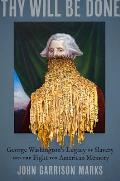
At Commonplace, Karin Wulf of the John Carter Brown Library interviewed John Garrison Marks about his new book, Thy Will Be Done: George Washington’s Legacy of Slavery and the Fight for American Memory.

Wulf started with an introduction reiterating that talking about the Washingtons’ slaveholding is far from new in American culture:
As anyone reading this will likely know, and as John Marks notes below, a remarkable volume of important research detailing George Washington’s (and Martha Dandridge Custis Washington’s, and their family’s) investment in slavery has been published over the last two decades. In conjunction with critical work on other “founders,” namely Thomas Jefferson, this work has helped usher in a shift in public perspective that has been greeted with angst by those who either didn’t know or don’t want to know about the foundational role of slavery at the founding, but also by relief among the many who did and do.

This book is different. It takes up the question of how this very specific issue about the first president—his role as an enslaver—was debated over centuries. In other words, this was not a phenomenon that leapt upon a settled historical narrative unbidden from the culture wars or the specific spate of racial violence that called forth the Black Lives Matter movement. For me, there was another dimension.

As soon as I heard about John’s project some time ago, I was intrigued in part because at one point I checked out a number of copies of Washington’s will printed in the 19th and 20th centuries. Why, I wondered, were so many people keen to have to hand a copy of what Washington willed? In part it has to do with the vexed issue of manumission. John shows, in this book that helps us to see historical memory in motion, Washington and slavery have always been particularly instructive.
In the interview, Marks noted three ways Americans have discussed George Washington’s connection to slavery. Some complain about exploitation and hypocrisy, some insist on reverence for the other things he did, and some argue we should focus on how he moved away from slavery over his lifetime. “What was really fascinating in researching the book was how early and consistently all three of these perspectives appeared in the record,” Marks added, finding examples of each approach in the period of his death.

Friday, May 15, 2026

“Revolutionary Narratives” Panel in Boston, 18 May

On Monday, 18 May, the Massachusetts Historical Society will host a panel discussion on the timely topic “Revolutionary Narratives: From Broadsides to Hollywood.”

The event description says:
The American Revolution has been contested since its very beginning. During the Revolution, contemporaries looking to understand what independence meant had to sift through disinformation and journalism rife with as many opinions as today.

In the war's aftermath, narratives of the Revolution went through continuous reinterpretations in response to political and social changes. From the Civil War to the Cold War and newsrooms to Hollywood, Americans looked to the Revolutionary era to debate and define what it meant to be an American, with often divisive results.

Now, during the 250th anniversary of the Revolution, Jordan E. Taylor and Michael D. Hattem will examine commentary in Revolutionary-era newspapers and broadsides, consider how understanding of American independence has changed over time, and reflect on how the public sees the nation’s founding today.
Taylor is Digital Content Manager for the Colonial Williamsburg Foundation. In Misinformation Nation: Foreign News and the Politics of Truth in Revolutionary America he argues that the American Revolution was based largely on false premises and misperception.

Hattem is the author of Past and Prologue: Politics and Memory in the American Revolution and The Memory of ’76: The Revolution in American History. He is assistant director at the Yale-New Haven Institute.

The conversation will be moderated by Debra Adams Simmons from GBH.

The in-person reception at the M.H.S. will start at 5:30 P.M., and the program will begin 6. Register to attend in person for $10, free to M.H.S. members and Card to Culture participants. Register to attend virtually for free.

Tuesday, May 12, 2026

Finding Mary Fowle of Londonderry

Yesterday I cited Jane Merrill’s Sex and the Scientist: The Indecent Life of Benjamin Thompson, Count Rumford (1753–1814), the latest and frankest biography of the scientist, statesman, soldier, and seducer.

That book quotes testimony from Mary Fowle of Londonderry, New Hampshire, about how Thompson had an affair with Mary (Dill) Thomas, first wife of the Boston printer Isaiah Thomas.

Merrill distinguishes that woman from the Mary Fowle whom Isaiah Thomas married in 1779, whom she identifies as both the printer’s cousin and the widow of his old master, Zechariah Fowle.

Isaiah Thomas’s second wife named Mary was indeed a cousin, having been born Mary Thomas on 9 June 1750, according to genealogy published in “The Portraits of Isaiah Thomas” by Charles Lemuel Nichols.

However, that cousin Mary didn’t marry Zechariah Fowle. Her mother, Rebecca (Bass) Thomas, did. The older printer died in Portsmouth in 1776. Rebecca (Bass Thomas) Fowle, twice widowed, died in Worcester in 1803 and was buried in her son-in-law’s family tomb.

So who was Mary Thomas’s first husband? Boston vital records show that the Rev. John Lathrop married Isaac Fowle and Mary Thomas on 11 May 1769. The Thomas and Fowle family genealogies say they had two daughters, who both died young:
  • Rebecca T[homas?]. (4 Feb 1770–6 Dec 1773 in New York)
  • Dorothea Whitmarsh (5 Nov 1771–10 Sept 1772)
Isaac Fowle reportedly died in 1777 while serving in the Continental Army.

That same year, Isaiah Thomas leased his financially stressed press and newspaper to his come-of-age apprentice, Anthony Haswell, and moved with his children to “a small farm in Londonderry, New Hampshire,” according to the biography published with the second edition of his History of Printing in North-America. He also initiated a divorce from his first wife.

A couple of years later, Isaiah came back and took over the print shop again. Worcester’s vital records state that on 26 May 1779 Isaiah Thomas married “Mary Fowle of Londonderry” in Boston. Since 1777 he had been a divorcé with three children, his cousin Mary had been a childless widow, and there was a war on. Mary might well have been keeping house for Isaiah in New Hampshire even before they married.

Thus, the Mary Fowle of Londonderry who provided testimony for Isaiah Thomas in his divorce case in 1777 was:
  • his cousin
  • a stepdaughter of his former master
  • his future wife
Isaiah and Mary (Thomas Fowle) Thomas had no children. She died at Worcester in 1818, and he remarried again the next year. The picture above is the pastel portrait of Mary in the collection of the American Antiquarian Society.

Monday, May 11, 2026

“Not playing cards but fondling and kissing each other”

In preparation for tomorrow’s talk about Benjamin Thompson’s early years, I’ve been reviewing the evidence of his affair with Mary (Dill) Thomas, wife of printer Isaiah Thomas.

When Isaiah moved to divorce Mary in 1777 by petitioning the Massachusetts Council, he submitted testimony from several people who had seen his wife traveling with the militia major from New Hampshire in February 1775, behaving like man and wife.

The printer’s file also offered an affidavit from Mary Fowle of Londonderry, New Hampshire, who had stayed with the Thomases in Boston from 20 Sept 1774 to 16 April 1775.

In Sex and the Scientist, Jane Merrill quotes Fowle describing how “Major Thompson [was] then a refugee in Boston who borded in a house opposite.” Mary Thomas started visiting him several times a day even though (or because) she had two children under the age of three.

One Saturday the printer’s wife “dressed herself, shifting her Linen, which I knew was not her custom,” said her house guest. Mary Thomas came home with “a small piece of parchment, on which a Lady’s face had been drawn with a black lead pencil. . . . the Major had taken much pains with it.”

Soon Mary Thomas visited Thompson’s ”bed-chamber, where they staid the whole afternoon and part of the evening.” Fowle stated, “I could not but think there was more intimacy between them than I before tho’t of.” She observed the couple “kissing each other, laying in each others laps, speaking fondly of each without regarding me.”

One day Isaiah came home from business after his wife had gone to play cards with Maj. Thompson. Mary Fowle and a household servant went across to fetch her. They found the couple “not playing cards but fondling and kissing each other, she often laying her head on the Major’s shoulder, and their arms round each other.”

As if that wasn’t clear enough, in February 1775 Mary Thomas insisted on taking that trip to Newbury with Maj. Thompson, first having her hair “in the greatest taste much powdered.” Later the printer gathered testimony from several innkeepers about that journey. At the time, however, he just seems to have felt trapped.

On one Sunday, Isaiah Thomas and Mary Fowle went to church. When they came home, his daughter Mary Ann, who turned three years old that March, showed them a “copper” that Maj. Thompson had given her to go into another room. Fowle stated the little girl said, “The major kissed her Mama and felt her bosom.” In response, little Mary Ann’s mother told her she was lying and threatened to whip her.

Isaiah finally demanded that Mary admit to what was going on. She acknowledged having a sexual affair. And when did it start? True to Benjamin Thompson’s character, he first got into Mary Thomas’s bed right after writing a letter to his own wife back in Concord, New Hampshire.

I won’t bother asking if these marriages can be saved.

TOMORROW: Who was Mary Fowle?

Saturday, May 09, 2026

Declarations of Independence around Boston—Collect Them All!

To commemorate the 250th anniversary of the Declaration of Independence, multiple institutions in greater Boston have collaborated to lay out a Declarations Trail—exhibits of different significant copies of that document.

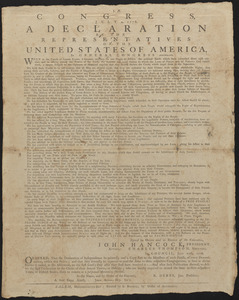
The Leventhal Map Center at the Boston Public Library has opened “Declarations: Printing a New Nation” with eight printings from broadsides and newspapers, along with maps showing the spread of that news. It will be up through 13 September. Shown here is the library’s copy of the Declaration as printed by Ezekiel Russell for the newly independent Massachusetts government.

The Boston Athenaeum exhibit “Imagined Nation” displays early printings in the context of such items as George Washington’s copy of Thomas Paine’s Common Sense, maps of the young republic, and World War II–era posters. That runs through November.

The Massachusetts Historical Society’s “1776: Declaring Independence” display, up through December, includes “handwritten copies of the Declaration by John Adams and Thomas Jefferson as well as multiple early printings, including a rare Dunlap broadside.” That was the first official presentation of the text, commissioned from printer John Dunlap by the Continental Congress in July 1776.

In Cambridge, three parts of the Harvard University library system are creating linked displays. The university archives is offering “Harvard and the American Revolution.” Next week the Harvard Map Collection will open “Charting Independence.” And starting on 18 May the Houghton Library will host “War of Words,” a display assembled by curator John Overholt to feature “the posters, pamphlets, newspapers, and images that brought news of the American Revolution to those who lived through it.”

In addition to the sites on the Declarations Trail, the Commonwealth Museum regularly displays Mary Katherine Goddard’s official reprinting of the Declaration signed by John Hancock and sent to the state in 1777.

And the “The Road to Revolution: Massachusetts and the Independence Movement” exhibit in Revolutionary Spaces’s Old State House, drawing on material from the M.H.S., includes a “rare 1776 Boston broadside printing of the Declaration of Independence.”

Most of those exhibits are free to the public. Many have special tours, talks, and workshops scheduled as well.

In a parallel initiative, five Revoloutionary-era institutions with admission fees—the Paul Revere House, Old State House, Old North Church, Old South Meeting-House, and King’s Chapel—have combined to offer visitors the Boston 250 Pass with a 10% on regular adult admission.

Tuesday, April 28, 2026

“For attempting to Carry Intillegence to the Enemy”

As I quoted back here, on 12 Oct 1776 the New London committee of correspondence detected two women trying to carry secret letters into British-occupied New York.

Due to the quirks of weekly newspaper publication, the first report of the arrest of those women didn’t appear in New London’s newspaper but on 17 October in the Independent Chronicle of Boston:
Last Saturday two Women were apprehended at New-London and properly secured, for attempting to convey a Number of Letters to the Commanders of the Foreign and British Mercenaries there, containing a very particular Account of the Situation of this and the adjacent Towns, with their present state of Defence.—

Some of them were wrote by a certain John Hill, now a Prisoner in this Town.
A week later, the Independent Chronicle updated its readers:
Last Tuesday, the Wife and Daughter of one John Hill, mentioned in our last to have been apprehended at New-London, for attempting to convey Intelligence to the Enemy at New-York, were brought to this Town, and committed to safe Custody.
That meant the Boston jail. As I said yesterday, I suspect the older woman was named Elizabeth Hill, and the younger might have been John Hill’s daughter by a previous marriage.

In his 1858 History of Eastern Vermont, Benjamin H. Hall stated:
Hill, on the 4th of June [1776], petitioned for his release, alleging as reasons the dying condition of his wife, and the starving state of his mother and daughter.
Hall presumed that request was granted because “it is well known that cruelty was not a characteristic of the conduct of the Americans in the war of the revolution.” 

In fact, Hill’s wife and daughter remained in custody for months.

TOMORROW: A look inside the jail.

Friday, February 20, 2026

The J.A.R.’s Books of the Year

The Journal of the American Revolution has announced its 2025 Book of the Year Award.

The winner is The American Revolution and the Fate of the World by Richard Bell (no relation, for the record).

The citation says:
The American Revolution undoubtedly changed world history. Many nations seeking their own independence tried to emulate the ideals of the Declaration of Independence, a document whose words still influence national and world events. What many people do not realize was that, at the time, the Revolution directly affected places all over the world. It was truly a global happening, reaching not only Europe, but also Latin America, India, China, and even Australia.
This is a book of synthesis, bringing together recent scholarship by many people to provide a global look at.

One of the runners-up took the opposite approach, looking at one community within one Massachusetts port: Enemies to Their Country: The Marblehead Addressers and Consensus in the American Revolution by Nicholas W. Gentile.
Gentile demonstrates how, even before a single shot was fired, the Revolution lived in the minds of this town’s residents as they harshly reacted to thirty-three signers of a letter of support to the departing governor Thomas Hutchinson. What follows is an interesting look at dynamics in this town—heavily influenced by Puritan theology—and the ways in which residents exerted social pressure to essentially coerce the signers back to the Patriot cause, placing ultimate importance on maintaining unity. Signers (“Addressers,” as they were called) ended up recanting through written and published statements, showcasing the growing importance of print culture during this period and the role that it played in creating a uniform identity going into the conflict. Gentile traces the fate of each of the thirty-three as they recanted and either rejoined the Patriot cause or, in the case of several, led lives in exile.
The other runner-up, The Course of Human Events by Steven Sarson, is a study of the intellectual roots and immediate impetuses behind the Declararion of Independence.

Sunday, February 15, 2026

“The Villain that murdered Colo: Parsons Brother is here”

Back here I described the family of the Rev. Jonathan Parsons of Newburyport, including his fourth son, Thomas Parsons, who disappeared in 1772.

The third son, Samuel Holden Parsons, became an attorney in Lyme, Connecticut. He prospered, getting elected to the colonial assembly, and then moved to New London. At the start of the Revolutionary War Parsons raised a regiment and marched north.

Parsons served through the siege of Boston and in the spring of 1776 led his troops south through Connecticut to defend New York.

Soon after Continental officers detained Basile Boudrot (alias Dugan) on suspicion of murdering Thomas Parsons and his crew, someone sent the news to Col. Parsons.

The next trace of Boudrot that we have is therefore Gen. Philip Schuyler’s 12 June letter from Albany to Gen. George Washington:
The Villain that murdered Colo: Parsons Brother is here. The Colo: desired Me to send him to New York I wait Your Excellency’s Directions.
Washington replied on 24 June:
As Colonel Parsons has requested you to send the Person who is supposed to have murdered his Brother, I have no objection to your doing it, if you judge it necessary. He, from what I have been told, designs to apply to Congress, for instituting some Mode of Trial for the Offence.
Schuyler (shown here) proceeded on that course. On 11 July, John Holt’s New-York Journal reported:
Last Sunday [7 July] one Bazel Bonderot, a native of Nova-Scotia, was brought to this city from Canada, charged with being a principal in the murder of Captain Thomas Parsons, and eight other persons, in Nova-Scotia, in February 1772.

Soon after this murder was perpetrated, he fled his country, and has been wandering from place to place ever since, till last April, when he was providentially detected by Captain Hector McNeil, properly secured, and sent forward to receive the just reward of his crimes.

He was yesterday sent on from this city to Newbury Port, the place where Captain Parsons last lived, for examination and trial.
That article was reprinted in several newspapers, and eventually in the 19 July Essex Journal of Newburyport.

That same issue of the Essex Journal reported:
This Morning, between 6 and 7 o’clock, departed this life after a long tedious illness, the Rev. JONATHAN PARSONS, in the 71st year of his age, and in the 31st of his MINISTRY in the PRESBYTERIAN Church, in this Town—His remains to be interred on Tuesday next, at three o’clock in the afternoon.
It’s not clear whether the minister heard about the capture of his son’s alleged killer before he died.

TOMORROW: Deliberations in the Congress.

Wednesday, February 11, 2026

“The supposed Plunder of the Cargo and burning of the Vessel”

Alas, the first newspaper printed in Newburyport, Massachusetts, Henry-Walter Tinges’s Essex Journal and Merrimack Packet, wasn’t founded until the end of 1773.

That means we don’t have published accounts of ships coming and going from that port in 1772, or stories on topics of local interest.

It’s possible a historian digging into the local sources like Alexander Cain will uncover a contemporaneous source on what happened to Capt. Thomas Parsons in 1772. But for now the closest he’s found is the lore published by Joshua Coffin in A Sketch of the History of Newbury, Newburyport, and West Newbury, from 1635 to 1845:
February 10th [1772]. Captain Thomas Parsons sailed from Newburyport, in a schooner, for the West Indies; was wrecked at St. Mary’s, Nova Scotia. It was supposed that he, with all his crew, eight in number, were massacred by the inhabitants there, after plundering the vessel, and setting it on fire.
We don’t know the name of Parsons’s ship or of his crewmen. Coffin also offered no sources—no indication of how the news got back to Newburyport, or when. I suspect that for months people thought the schooner had been lost at sea. Then something—the sight of a burned wreck, a bit of loot, seamen’s gossip—made people suspect there had been foul play.

On 11 Mar 1773, more than a year after Capt. Parsons’s departure, the Boston News-Letter ran this item:
We are informed, that the Accounts sent from hence of the Loss of a Schooner, belonging to Newbury, near Cape-Sable, and the supposed Plunder of the Cargo and burning of the Vessel if not the Murder of the Crew, had been received by the Governor of Nova-Scotia, and that there would be the strictest Inquiry and Prosecution by the Authority of that Province.
That was reprinted in the following weeks in the Essex Gazette of Salem and in Connecticut newspapers. (Capt. Parsons had brothers and other relatives in Connecticut who might be interested.)

It’s not certain that news item referred to rumors about Capt. Parsons’s ship, but the details are similar, and I’ve found no other possible cases. That suggests the suspicions about what happened in Nova Scotia built up over time until someone demanded an investigation.

Unfortunately, I also haven’t found any follow-up stories. Because of national boundaries, I can’t search the Halifax Gazette. Government archives in Nova Scotia might hold information. In early 1773 the royal governor, Lord William Campbell, was busy chasing smugglers and securing a better berth for himself in South Carolina, but maybe he did start an inquiry. Or at least file the “Accounts” from Massachusetts.

It’s also conceivable that some archive in the Caribbean holds a clue. Did Capt. Parsons sail to an island successfully only to run into difficulty on the way back? If he was on some sort of smuggling voyage, what sort of records would he have left?

TOMORROW: Probing the mystery.

Sunday, January 18, 2026

“The supposed Author of a Pamphlet”?

The pamphlet titled A Letter from a Veteran, to the Officers of the Army Encamped at Boston didn’t specify an author, printer, or place of printing, simply the date of 1774.

The earliest mention of this publication that I’ve found is an advertisement from the bookselling firm of Cox and Berry in the 31 October Boston Post-Boy. (Price: “6d. Sterling.”)

Edward Cox and Edward Berry were British by birth, and Isaiah Thomas wrote they went back across the Atlantic during the war. So it makes sense that they would sell a pamphlet said to be by a British officer for other British officers. 

Nobody claimed that the Letter from a Veteran was actually printed in Boston, however. The 10 November New-York Journal stated: “[Hugh] Gaine, has lately published, or at least sells, a pamphlet, called ‘a Letter from a Veteran, to the Officers of the Army, encamped at Boston.’”

An item in the 8 December New-York Journal listed A Letter from a Veteran first among “Several pamphlets…lately published by Mr. [James] Rivington and Mr. Gain.”

Modern analysis has confirmed that supposition. In a bibliography supplied to the Colonial Society of Massachusetts in 1956, Thomas Randolph Adams wrote that A Letter from a Veteran “has been assigned to Gaine because all but one of the eleven type ornaments used in this pamphlet are also found in the Laws…of the City of New York also printed by him in 1774.”

As for the author, people had different ideas at the time. On 17 November the New-York Journal published an open letter signed “A Friend to the Liberties of Mankind” which started:
To D——r ————‚ the supposed Author of a Pamphlet (which has made its appearance within a few Days) intitled, A Letter from a Veteran to the Officers of the Army at Boston…
That letter then began “Revd. Sir.” It sneered that the “Veteran” hadn’t really been educated as “a soldier” but had simply “assumed” that identity. (I quoted that article’s criticism of the whole “infamous Piece” yesterday.)

Obviously, the “Friend of the Liberties of Mankind” believed the author of A Letter from a Veteran was a minister with a doctorate. The Rev. Dr. Thomas Bradbury Chandler fits that description, and he was writing other pro-Crown pamphlets at the time. But later when he listed his political publications for the Loyalists Commission, Chandler didn’t claim to be the “Veteran.”

TOMORROW: A postwar attribution.

Thursday, January 15, 2026

Sneff on Mary Katherine Goddard in Essex, Connecticut, on 18 Jan.

On Sunday, 18 January, Emily Sneff will speak to the Essex (Connecticut) Historical Society and guests on “The Woman Who Printed the Declaration”—the printer, newspaper publisher, and postmaster Mary Katherine Goddard.

Born in New London, Connecticut, Goddard created the first broadsides of the Declaration of Independence to include the names of all the men who had signed the document (up to early 1777).

She had previously printed the Declaration in her newspaper, and she handled other jobs for the Continental Congress. At that time, the Congress had moved out of Philadelphia as the British army pushed south.

Sneff will contrast Goddard’s printings with publications of the Declaration from other printers, including a female printer on the other side of the Atlantic.

Emily Sneff earned her Ph.D. in History from William & Mary studying the spread of the Declaration around the world. Her book When the Declaration of Independence Was News will be published by Oxford University Press in April 2026.

This talk is scheduled to start at 3:30 P.M., with doors at Essex Meadows opening at 3. It is free and open to the public, but the society asks attendees to register for a seat in advance.