J. L. BELL is a Massachusetts writer who specializes in (among other things) the start of the American Revolution in and around Boston. He is particularly interested in the experiences of children in 1765-75. He has published scholarly papers and popular articles for both children and adults. He was consultant for an episode of History Detectives, and contributed to a display at Minute Man National Historic Park.

Subscribe thru Follow.it


•••••••••••••••••


Showing posts with label Lucy Knox. Show all posts

Friday, May 05, 2023

“O may each bliss the lovely pair surround”

Margaret Draper’s Boston News-Letter was published on Thursdays, and thus couldn’t report on the marriage of province secretary Thomas Flucker’s daughter Lucy to bookseller Henry Knox until a week after the event, in the 30 June 1774 issue.

[I rewrote that sentence to be absolutely clear that the date refers to the newspaper, not the wedding. There’s enough confusion already.]

The News-Letter ran one thing that Boston’s other newspapers didn’t have, however. After the same one-line announcement of the marriage it published this poem:
Blest tho’ she is with ev’ry human grace,
The mein engaging, and bewitching face,
Yet still an higher beauty is her care,
Virtue, the charm that most adorns the fair;
This does new graces to her air inspire,
Gives to her lips their bloom, her eyes their fire;
This o’er her cheek with brighter tincture shows
The lily’s whiteness and the blushing rose.
O may each bliss the lovely pair surround.
And each wing’d hour with new delights be crown’d!
Long may they those exalted pleasures prove
That spring from worth, from constancy and love.
There’s no clue about who wrote these lines. Henry Knox himself wasn’t known for writing poetry. Knox biographers say a friend of the couple composed this tribute to the bride, but no one ventures a guess as to which friend.

One possible clue to the poet is that the News-Letter was by then known for supporting the Crown, so Loyalists were more likely to write for the newspaper and read what it published. But that still leaves a lot of possibilities. 

The internet tells me that Whit Stillman borrowed these lines for his movie and novelization Love and Friendship, built off of Jane Austen’s unfinished Lady Susan.

Thursday, May 04, 2023

Where Did Lucy Flucker and Henry Knox Marry?

As I wrote yesterday, the marriage of Henry Knox and Lucy Flucker appears on the records of King’s Chapel, Boston’s most upper-class Anglican church, dated 23 June 1774.

The next week’s newspaper reports confirm that the rector of that church, the Rev. Dr. Henry Caner, presided at the wedding.

There’s another disagreement about that marriage, however: where it took place. Writers have come to different conclusions.

The most likely site would seem to be King’s Chapel itself. Nothing in its records suggests the Knoxes’ wedding was any different from others. Most biographers who describe the ceremony state that it happened in the chapel.

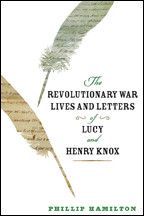
However, in The Revolutionary War Lives and Letters of Lucy and Henry Knox Phillip Hamilton wrote that the marriage took place in the building on Cornhill that Henry was renting as his house and shop. Lucy’s older sister Hannah Urquhart and “Aunt Waldo” attended, but her parents didn’t.

Hamilton appears to have relied on Henry Knox’s 29 August letter to his close friend Henry Jackson, which I haven’t seen in full. It’s now in the collection of the Gilder Lehrman Institute. Barring new discoveries, that’s the closest contemporaneous source about the young bookseller’s strained relationship to his new in-laws.

There are also a couple of memoirs written in the nineteenth century by members of the extended family that preserve their understandings about the marriage.

The Massachusetts Historical Society holds a manuscript called the “Winslow Family Memorial.” It was written by Isaac Winslow (1774–1856), a first cousin of Lucy Knox, and his daughter Margaret Catharine Winslow (1816–1890). The oh-so-handy transcript (P.D.F. download) offers this story of the marriage:
they were married at the house of her uncle Mr [Isaac] Winslow in Roxbury. I always understood, that he rather favor’d this union, and aided in its favorable issue. For this friendly disposition Gen Knox, as I have been led to think, from the little I know of the circumstances of the case, evinced more grateful feeling’s towards Mr Winslows family than his lady, who though not unkind to her cousins, yet when living in a good deal of style, after the peace in Boston, did not much notice her cousins, who were then in quite narrow circumstances
Hamilton’s citations show he looked at this manuscript, but he didn’t accept its statement that the Knox wedding took place in Roxbury.

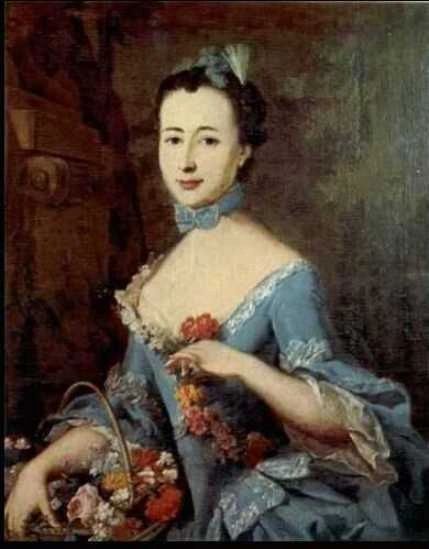
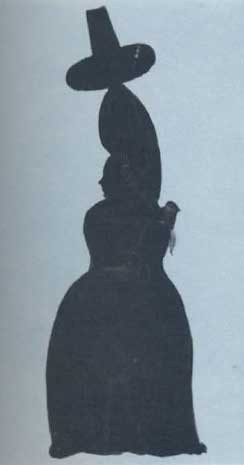
Finally, the “Reminiscences” of the Knoxes’ longest lived daughter, Lucy Knox Thatcher (1776–1854, shown above), is held at the headquarters of the National Society of the Daughters of the American Revolution in Washington, D.C. Nancy Rubin Stuart quoted from it in Defiant Brides. It agrees that Lucy’s parents didn’t attend the wedding but says her sister Hannah and their half-sister Sallie did. Again, I’ve seen only a bit of this document and plan to check it out on a future trip.

(The portrait above shows Lucy Knox Fletcher in the mid-1800s. Because there’s no portrait of Lucy Knox, and because of the similarities of the mother’s and daughter’s names, websites often mistakenly present this as a picture of Henry Knox’s wife.)

Wednesday, May 03, 2023

When Did Henry Knox and Lucy Flucker Marry?

You’d think the date when Lucy Flucker and Henry Knox got married would be well established in all that’s published about them.

After all, Flucker was a daughter of the royal government’s third-highest Massachusetts official. All the Boston newspapers reported on her wedding, followed by the newspapers in Essex County.

As for Knox, he was obscure then, but he came out of the Revolutionary War as one of the most prominent Bostonians in the country and has remained famous.

But if we look in biographies of Henry Knox, they give wedding dates all over the calendar:
  • 16 June 1771: Joseph W. Porter, “Memoir of Gen. Henry Knox, of Thomaston, Maine,” Bangor Historical Magazine (1890); Alan Taylor, Liberty Men and Great Proprietors (1990), stating that the marriage happened in 1771. 
  • 16 June 1774: Francis S. Drake, Life and Correspondence of Henry Knox (1873); Noah Brooks, Henry Knox: A Soldier of the Revolution (1900); Pamela Murrow, Unending Passions: The Knox Letters (2010); Nancy Rubin Stuart, Defiant Brides: The Untold Story of Two Revolutionary-Era Women and the Radical Men They Married (2014).
  • 20 June 1774: Mark Puls, Henry Knox: Visionary General of the American Revolution (2008); William Hazelgrove, Henry Knox’s Noble Train (2020).
  • 23 June 1774: Thomas Morgan Griffiths, Major General Henry Knox and the Last Heirs of Montpelier (1965); Phillip Hamilton, The Revolutionary War Lives and Letters of Lucy and Henry Knox (2017).
In addition, North Callahan’s Henry Knox: General Washington’s General (1958) didn’t state a date, but it quoted a 27 June 1774 newspaper item referring to a wedding “Last Thursday,” and readers with perpetual calendars could do the math.

So let’s start with the earliest biography: Drake’s from 1873. For his information on the wedding Drake credited “the ‘Gazette’ of June 20, 1774.” But he ran into a series of confusions.

Drake almost certainly looked at the Massachusetts Gazette and Boston Post-Boy. Unfortunately, two newspapers from two separate print shops were sharing the Massachusetts Gazette name, and there was also a Boston Gazette. For clarity, I always refer to papers by their unique title, in this case the Boston Post-Boy.

The second unfortunate detail is that the publishers of the Post-Boy, Mills and Hicks, were the only Boston printers to date their issues with a date range rather than the date of issue. In other words, the newspaper they published on 27 June 1774 had this line under its masthead:
From MONDAY, June 20, to MONDAY, June 27, 1774.
Drake stumbled into an error by reading that issue of the Post-Boy as coming out on 20 June rather than a week later.

The third glitch was that the marriage notices in all the papers didn’t state the date of the wedding but said: “Last Thursday was Married…” Drake counted back from 20 June, making “Last Thursday” 16 June. In turn, his book misled an entire line of later authors. The way-off date in Porter’s Bangor Historical Magazine article is obviously a typo based on Drake.

Puls, it appears, mistook the 20 June date of the newspaper for the date of the wedding itself. Hazelgrove’s passages on Knox’s early life are almost sentence-by-sentence adaptations of Puls, so he replicated that error.

Griffiths, with the detail focus of a genealogist, and Hamilton, the only academic historian in this group [besides Taylor], got the date right. Callahan provided accurate information. Not only do we have the multiple newspapers appearing on 27 and 30 June and referring back to the previous Thursday, but we also have the records of King’s Chapel, available through the Colonial Society of Massachusetts.

Henry Knox and Lucy Flucker got married on 23 June 1774.

Sunday, April 09, 2023

“Women in War Symposium,” Schuylerville, 6 May

On Saturday, 6 May, the Saratoga County 250th Commission and the Marshall House will host the the 2nd Annual Women in War Symposium, offering perspectives on the various roles women played during the American Revolution.

The scheduled presentations are:
  • Don Hagist: “Killed, Imprisoned, Struck by Lightning: British Soldiers’ Wives on Campaign”
  • Philip Hamilton: “The Excitement and Perils of War: Henry and Lucy Knox’s Revolutionary War”
  • Katie Turner Getty: “In the Greatest Terror: Women and Children in Crisis after Lexington and Concord
  • Alexander Cain: “‘I Have Scarcely a Mouthful of Bread for Myself or Children’: Mary McAlpin and the Plight of Loyalist Women during the Saratoga Campaign”
  • Jenna Schnitzer: “After Burgoyne Surrendered: Women of the Convention Army
This symposium will take place from 9:00 A.M. to 3:00 P.M. at Saratoga Town Hall, 12 Spring Street, Schuylerville, New York. The $50 registration fee will cover morning refreshments and lunch. For more details and registration, visit this page.

On the day before the symposium, the organizers will offer “Through the Baroness’ Eyes,” a four-hour tour of sites of the Burgoyne campaign as experienced by Frederika von Massow Riedesel, wife of General Friedrich von Riedesel, Commander of the German Division of Burgoyne’s Army. Along with her three young daughters, the baroness accompanied her husband to America and left a journal and letters recording her life with the army.

The tour will follow Riedesel’s path from Fort Edward (The Red House) through Saratoga (now Schuylerville) to the Saratoga Battlefield (Taylor House) and finally the back to the Sword Surrender Site. It involves some walking over uneven terrain. There is a separate $60 registration fee for this event.

Wednesday, November 23, 2022

“Last Monday evening Miss Hannah was married to Mr. Fluker”

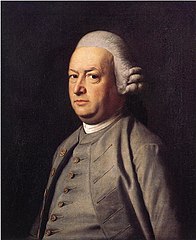
On 27 Dec 1750, Boston ministers announced that Hannah Waldo and Thomas Flucker (shown here) intended to marry.

The Rev. Jonathan Mayhew presided over the wedding on 14 Jan 1751 at the West Meetinghouse.

In reporting that wedding, the Boston Evening-Post called the bride “a Lady of great Beauty and Merit.” The Boston Post-Boy said she was “an agreable and virtuous young lady.”

That coverage strongly implies most people sympathized with Hannah in her decision to call off her engagement to Andrew Pepperrell the preceding fall after he had delayed their wedding one too many times. They didn’t blame her as the fickle one.

Flucker was a young merchant, seven years older than his bride. He had previously married a sister of James Bowdoin and been widowed in May 1750. Aside from his daughter named Sally born out of wedlock on a date I don’t know, Hannah and Thomas appear to have had a solid genteel New England marriage, with their first baby, also named Hannah, arriving at the end of 1751. Flucker went on to become the province’s royal secretary.

Andrew Pepperrell’s cousin William Tyler sent him the news:
I inform you that last Monday evening Miss Hannah was married to Mr. Fluker and appeared a bride at the West Church, New Boston, brought in her chariot. The talk is almost over, for everybody thinks and tells me they believe it is what you wanted, but more of this when I see you.
Pepperrell doesn’t appear to have pined after his lost fiancée. He went back to his mansion in Kittery, Maine, and his rural social life. While returning from a ball in Portsmouth, New Hampshire, in February, he caught a cold. That became pneumonia. The Boston Evening-Post announced that he died on 1 March “after a short Indisposition.” The local minister preached a sermon in his memory.

Later authors wrestled with why Andrew Pepperrell had strung Hannah Waldo along for so long. Was he prone to ill-timed “despondency” or depressions? Was he interested in someone else? Did he resent and resist his father’s arrangements? Most of Andrew’s papers were destroyed, making it even harder to know. (Not knowing the facts didn’t bother other authors who exaggerated the young man’s death, suggesting he went mad or died of a broken heart two days after Hannah Waldo’s send-off.)

Sir William Pepperrell was left without a son to carry on his name. He made the eldest son of his daughter Elizabeth Sparhawk heir to his fortune and baronetcy on the condition that that young man take the surname Pepperrell. The first Sir William Pepperrell died in 1759. The second became a Loyalist exile.

Hannah’s father, Samuel Waldo, also died in 1759 while overseeing his property in Maine. Most of his descendants became Loyalists, but one exception was Thomas and Hannah Flucker’s daughter Lucy, who married Henry Knox. Through careful management of family claims, the U.S. Secretary of War gained (nominal) control of most of the Waldo Patent.

And that couldn’t have happened except for the long, unhappy engagement of Hannah Waldo and Andrew Pepperrell.

Friday, December 25, 2020

A “very Cheerfull” Christmas at the Rowes’

The merchant John Rowe was one of Boston’s leading Anglicans, so he celebrated Christmas while his Congregationalist neighbors generally ignored the holiday.

Here’s how Rowe described 25 Dec 1770 in his published diary, 250 years ago today:
Christmas Day — I dined at home with Capt. John Linzee Mr. John Lane, Dr. Miller Joseph Golthwait Mr. Inman, Mrs. Rowe, Miss Lucy Flucker & Sucky Inman — The same Company staid & spent the afternoon & evening & wee were very Cheerfull.
That’s a lot of different surnames, but I can map close relations among many of those people. “Mrs. Rowe” was the diarist’s wife, of course, the former Hannah Speakman.

Before Hannah’s sister Susannah died in 1761, she had married Ralph Inman (1713-1788, shown above courtesy of the Harvard Art Museums). The Inmans’ daughter “Sucky” or Susannah (1754-1792) lived in Boston with her aunt and uncle Rowe, and her father had come in from Cambridge for this holiday.

John Linzee (1743-1798) was a captain in the Royal Navy who would spend increasing time at the Rowes’ house in 1772. Finally that summer he married Susannah Inman, then eighteen years old. Later he participated in the Battle of Bunker Hill and some other naval actions during the siege of Boston.

Lucy Flucker (1756-1824) was probably at this party as a teen-aged friend of Sucky Inman. She spotted Henry Knox in a militia parade in 1773 and married him the next year. She thus got to see the war from the other side.

Joseph Goldthwait (1730-1779) was a former major in the provincial army who became commissary to the royal troops in 1768 and filled other posts in military administration afterward. He died of illness in New York during the war.

John Lane was a London merchant and “Old Friend” of Rowe’s. Depending on what “Old Friend” meant, they may have met as young men when Rowe was still in England or recently when “John Lane, jun.” visited Boston and New York in 1764-65. Lane came back to Boston in August 1769 “in the Nassau very unexpected,” Rowe wrote, and he stayed until July 1771, regularly appearing in Rowe’s diary. In March 1771, for example, Rowe came home to find Lane and another man singing and playing his niece’s spinet.

Lane’s family firm, called Lane, Son & Fraser in this period, did a lot of business with Rowe and other New England merchants. They even owned ships together, including the Eleanor, one of the vessels at risk in the Boston Tea Party. After Capt. Linzee married Sucky Inman, Rowe wrote: “I gave Capt. Linzee a Letter with Orders to draw on me every New Years Day Twenty Pounds Sterling, taking the money of Messrs. Lane Son & Fraser for my acct.”

In 1786 John Lane came back to Boston with his son, apparently planning to settle permanently. In 1790 Lane, “now resident at Boston,” filed a lawsuit to seize a vessel that Lane, Son & Fraser had invested in. But the next mention of the firm in the Boston newspapers, in the 14 June 1793 Argus, said the firm had gone bankrupt in London.

Dan Byrnes has striven to collect and parse information about Lane, Son & Fraser because of an Australian connection, as this webpage shows, but it doesn’t make anything clearer for me. It’s likely there were two or three generations of men named John Lane (Jr.) who have to be sorted out.

That leaves only Dr. Miller to be accounted for. That name doesn’t appear among the local physicians of this period. It’s possible he was a surgeon attached to the Royal Navy or even the 14th Regiment of Foot, stationed at the Castle.

Tuesday, January 15, 2019

“An Officer carried a manuscript to Henry Knox”

I step away from The Saga of the Brazen Head at a moment of calamity to consider a passage in merchant John Andrews’s letter to a Philadelphia relative on 15 Jan 1775:
A few days since an Officer carried a manuscript to Henry Knox for him to publish; being an answer, as he said, to General [Charles] Lee’s pamphlet (which you sent me). He told him he did not mean to confute every part, as the principal of it was unanswerable.

Knox perus’d a few pages of it and found it to be rather a weak performance, and therefore declin’d undertaking the publishment—excusing himself as its being out of his way.
In November 1774, the New York printer James Rivington published A Friendly Address to All Reasonable Americans by Thomas Bradbury Chandler (1726–1790), a Yale graduate who had become an Anglican minister. That pamphlet argued for conciliation with the Crown. The Mills and Hicks print shop issued a Boston edition. Replies came quickly from John Adams (apparently never published), Philip Livingston, and, most successfully, Charles Lee.

Lee’s Strictures upon a “Friendly Address to All Reasonable Americans” was first published in Philadelphia and then reprinted in New York, Newport, New London, and twice in Boston. It was one of the most widely read pamphlets of the year. Among other points, Lee argued that the British army was not really that formidable; the 17 Jan 1775 Essex Gazette suggested that he had erased New Englanders’ fear of the redcoats. We can therefore understand this officer’s wish to respond to Lee.

More interesting is what this story tells us about Henry Knox (shown here). As far as I can tell, no biography of Knox has discussed this incident. Authors have generally echoed Charles Savage, writing in 1856, in portraying Knox as an active Whig before the war: “he discovered an uncommon zeal in the cause of liberty.” But there’s actually little evidence of political activism by Knox.

In fact, this anecdote shows that a British military man expected Knox to support the royalist perspective by publishing and selling his pamphlet. That belief was no doubt due to Knox’s recent marriage to Lucy Flucker, daughter of the province’s royal secretary, Thomas Flucker. Why would a poor man with ambition marry into such a family and not be or become a Loyalist?

I think this is part of a pattern of evidence showing that in the crucial months of late 1774 and early 1775, Knox let Loyalists believe he was one of them. That made him privy to their gossip, which could be useful to the Patriots.

This anecdote also shows Knox concealing his true assessment of the pamphlet (“rather a weak performance”) by giving the author a different reason for not publishing (“its being out of his way”). But that was just being polite.

TOMORROW: The author.

Monday, December 31, 2018

Richard Fry’s Greatest Scheme

Before going on with The Saga of the Brazen Head, I’ll zip through what happened with Richard Fry.

Under his contract for the paper mill with Samuel Waldo and Thomas Westbrook, Fry had to pay £64 a year. But making paper on the Maine frontier didn’t bring in huge profits, and the whole province was in a cash crunch. Fry managed to send his landlords fifty reams of paper in place of specie, but that wasn’t £64 in cash, was it?

Waldo and Westbrook sued Fry and won a judgment of £70. They had the sheriffs in Maine seize the paper-making equipment. And they had Fry clapped into the Boston jail as a debtor around the start of 1737. In response, Fry claimed that Waldo and Westbrook had taken that action only after they had tried to buy him out and he refused.

Waldo recruited another man to continue the paper manufactory as an employee. Then he turned on Westbrook, forcing him out of the partnership. Calling himself “hereditary lord of Broad Bay,” Waldo recruited more settlers in Europe.

Among the people who came to America at Waldo’s invitation were the German ancestors of Christopher Seider. However, whenever Britain went to war with France, which happened in 1744 and again in 1757, the Maine frontier became a risky place to live and the settlements emptied out. Waldo died in 1759. Some of his holdings descended to his daughter Hannah and then to her daughter Lucy, wife of Henry Knox.

Meanwhile, back in the Boston jail, Richard Fry produced a steady stream of petitions complaining about his Maine landlords, the sheriff and undersheriff who’d taken his stuff, and the jailer who’d locked him up.

On 22 May 1739 Fry placed yet another advertisement in the New-England Weekly Journal:
This is to inform the Publick, that there is now in the Press, and will be laid before the Great and General Court, a Paper Scheme, drawn for the Good and Benefit of every individual Member of the whole Province; and what will much please his Royal Majesty; for the Glory of our King is in the Happiness of his Subjects: And every Merchant in Great Britain that trades to New-England, will find their Account by it; and there is no Man that has the least Shadow or Foundation of Common Reason, but must allow the said Scheme to be reasonable and just:

I have laid all my Schemes to be proved by the Mathematicks, and all Mankind well knows, Figures will not lye; and notwithstanding the dismal Idea of the Year Forty One, I don’t doubt the least seeing of it a Year of Jubile, and in a few Years to have the Ballance of Trade in Favor of this Province from all Parts of the Trading World; for it’s plain to a Demonstration, by the just Schemes of Peter the Great, the late Czar of Muscovy, in the Run of a few Years, arrived to such a vast Pitch of Glory, whose Empire now makes as grand an Appearance as any Empire on the Earth, which Empire for Improvement, is no ways to be compared with this Royal Majesty’s Dominions in America.

I humbly beg Leave to subscribe myself,
A true and hearty Lover of New-England,
Richard Fry.

Boston Goal, May 1739.
What was he on about now? Fry was issuing A Scheme for a Paper Currency to solve the specie crisis and promote the local economy. Backing up the new printed money, he wrote, would be the output of “Twenty Mills” built around Boston harbor. When Fry had first announced his scheme the previous August, even calling a meeting of investors at the Green Dragon Tavern, he had only seventeen mills in mind.

One might question the value of economic advice from a man who had gone bankrupt in England and was in jail for debt. But those circumstances didn’t daunt Fry. We can read his proposal, plus a couple of the petitions he wrote in the same years, in this book. Other documents from him are in the Clements Library.

Fry’s scheme wasn’t the only attempt to address the province’s specie shortage. In 1740, Boston businessmen set up the Massachusetts Land Bank, which issued private paper currency based on land holdings. The royal government and its supporters, led by Thomas Hutchinson, worked to stifle that enterprise, and in 1741 Parliament outlawed it. Some historians have traced the enmity between Hutchinson and Samuel Adams, whose father was a Land Bank investor, to that controversy.

Fry of course saw nothing wrong with paper currency (and one suspects he hoped to win the contract to supply the paper). But he no doubt preferred his own approach to issuing it. And as long as the provincial authorities opposed the Land Bank, he was ready to take advantage of that. In December 1740 Fry pointed out to Gov. Jonathan Belcher and his Council that his jailer was dealing in Land Bank currency. (A sample shown above.)

Richard Fry died in 1745, his finances still a mess. He left a wife and at least one child.

Monday, October 10, 2016

Lucy Knox, Mistress of the Chess Board

On 24 Aug 1788, Lucy Knox wrote to her husband Henry from Trenton about having recently beaten Gouverneur Morris at chess.

That game might have been good preparation for Morris’s travel later that year to France, where chess could mean so much more. He wrote of calling on “Mme. [Sophie le Couteulx] Dumolley, who is at chess” before they embarked on an affair; of the Vicomte de Ségur, who declares “the pursuit of a woman is like a game of chess, when in consequence of a certain set of moves the success is certain”; and of the bishop of Autun, whose “passion for play has become extreme,” claiming to have won “in the society of chess-clubs, about thirty thousand francs.”

But for Lucy Knox, that chess game might have been just another day at the board. In 1804 Anna Cutts wrote to her sister, Dolley Madison, about visiting Lucy Knox in Boston:
We have very pleasant lodgings, and for my companion, the famous Madame Knox, who although very haughty, I find pleasant and sensible. Chess is now her mania which she plays extremely well, only too often for my fancy, who am not of late so partial to it. Every morning after breakfast there is a summons from her ladyship, which if I attend, pins me to her apron-string until time to dress for dinner, after which she retires, again inviting me to battle. Out of twenty-one games, in only two, and a drawn game, has she shown me any mercy; she is certainly the most successful player I have ever encountered.
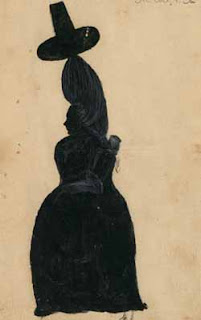
The image here is the only known portrait of Lucy Knox. It’s a caricature in silhouette created by one of Robert Morris’s sons, supposedly showing how her high hair-do made wearing a hat difficult. I think it could make a good chess-piece.

Monday, February 01, 2016

Mad about the Massachusetts Historical Society’s Collections

The Massachusetts Historical Society is celebrating its 225th anniversary this year with, among other things, this online exhibit of 225 notable objects from its collection.

Those objects don’t appear to include the broadside titled “Wolfe’s summit of human glory” which I wrote about here and is one of my personal favorites.

But they do include the Samuel Selden powder horn and many other treasures from the Revolutionary period:
And much more. Some of the material even comes from other historical periods.

Starting today, the M.H.S. is hosting some sort of bracket competition involving 64 of those objects, designated by red dots on the collection page. Since that hasn’t started yet, I don’t know how it works, but I’m sure the webpage will be happy to explain.

In addition, the society’s exhibit on “The Private Jefferson” has opened and will be free to visitors Monday through Saturday until 20 May. There’s also a new illustrated book highlighting Thomas Jefferson documents in the society’s collections.

Sunday, December 20, 2015

The Stamp Act as a Marriage Tax

Genealogists, historians of marriage, and other experts might correct me on this, but in provincial Massachusetts a new couple didn’t obtain a certificate of marriage.

Rather, they got a certificate of their intention to marry from their town clerk, who certified that the engagement had been announced from the pulpit for the requisite fifteen days (three Sundays) beforehand.

Then they could take that paper to the minister or justice of the peace (ministers seem to have become the default choice by the eighteenth century) for the actual marriage.

I looked for examples of certificates of intent to marry from eighteenth-century Massachusetts, and the closest I got, courtesy of Access Genealogy, was the example above from 1806. But hey, it’s signed by William Cooper, who was Boston’s town clerk from 1761 to 1809. So he would have signed the equivalent document in the 1760s.

[To folks at the Massachusetts Historical Society: If my notes are correct, the Willard (Knox) Papers contain the certificate that Cooper filled out for Henry Knox and Lucy Flucker on June 23, 1774. That might make a nice Object of the Month.]

I did find a number of transcriptions from town clerks’ records, showing they didn’t all follow the same linguistic formula in noting down who planned to marry in their towns. Here’s an example from Stoughton:
The Intention of Marriage Betwen Mr. Ezra Morse of Stoughton & Mrs. Susanna Guild of Walpole Entred April ye 13th 1765
From Dover:
October 1st 1786. The intention of marriage between Mr David Fuller Jr of the District of Dover and Miss Sally Gay of Dedham is this day entered with me and a certificate given that the said intention of marriage hath been made public agreeable to law

Joseph Haven District Clerk
The text of a certificate from Westfield:
This may certify that the Intention of Marriage between Mr. Zenas Noble, of Washington, and Mrs. Margaret Granger, of Westfield, hath been published in the manner the Law directs; and their names entered with me fourteen Days previous to the Date.

Westfield, Oct. 24th, 1791
Attt. P. WHITNEY, Town-Clerk.
Some clerks noted when couples registered their intention but never came to pick up their certificates, and were therefore not supposed to have gotten married.

The text of the Stamp Act makes no explicit mention of marriage, but it includes this clause:
For every skin or piece of vellum or parchment, or sheet or piece of paper, on which shall be ingrossed, written, or printed, any appeal, writ of error, writ of dower, Ad quod damnum, certiorari, statute merchant, statute staple, attestation, or certificate, by any officer, or exemplification of any record or proceeding in any court whatsoever within the said colonies and plantations (except appeals, writs of error, certiorari, attestations, certificates, and exemplifications, for or relating to the removal of any proceedings from before a single justice of the peace) a stamp duty of ten shillings.
Evidently the term “certificate, by any officer,” covered certificates of intent to marry. As a result, the Stamp Act put a ten-shilling tax on the legal act of marrying.

TOMORROW: Tax avoidance in 1765.

Wednesday, October 16, 2013

Biographers at the B.P.L. This Week

The Boston Public Library is hosting back-to-back talks by two authors who have written about the lives of women in eighteenth-century America.

On Wednesday, 16 October (that’s tonight), Nancy Rubin Stuart will speak about her book Defiant Brides: The Untold Story of Two Revolutionary-Era Women and the Radical Men They Married. Her subjects are Peggy Shippen, who married Gen. Benedict Arnold, and Lucy Flucker, who married Boston bookseller Henry Knox, later a general himself. That event starts at 6:00 P.M. in the Commonwealth Salon.

The next night, Jill Lepore will speak on Book of Ages: The Life and Opinions of Jane Franklin. This Boston woman, whose married name was Jane Mecom, was the baby sister of Benjamin Franklin. While Peggy Shippen and Lucy Flucker came from wealthy families and married prominent men, Jane Mecom came from the mechanic class and never gained gentility like her brother. Yet the siblings remained close throughout their long lives, exchanging letters and visits.

Carl Van Doren published the first book on Jane Mecom more than sixty years ago, so she’s due for a reassessment. The library’s event description says this new biography draws on “a collection of little-studied material, including documents, objects, and portraits discovered recently.” Lepore is the David Woods Kemper ’41 Professor of American History at Harvard University and a staff writer at The New Yorker. Her talk, which starts in the Abbey Room at 6:00 P.M., is co-sponsored by the Massachusetts Historical Society.

Saturday, August 17, 2013

“Liberty or Loyalty?” in Quincy, 17 Aug

Today Adams National Historical Park hosts an event called “Liberty or Loyalty?” focusing on American colonists who supported the Crown during the Revolutionary War. The Boston Globe reported:
While widely depicted as enemy collaborators, Loyalists were often ordinary Americans who suffered for their beliefs, losing their homes, livelihood, and even family, according to historians who want to set the record straight.

Tom Tringale, a member of McAlpin’s Corps of Loyal American Volunteers, a Revolutionary War reenactment group on the British side that will camp out at the park, goes even further.

“I want to get people to give the Loyalists a hug,” said Tringale, 28, a Quincy resident who been a historical reenactor from childhood. “Americans are in denial about the Loyalists.”

From the point of view of the status quo, the pro-British Tories were “loyal” to their government while the patriots were treasonous “rebels,” he noted.

“So we were the good guys,” Tringale said. “What we are going to do is talk about how the Loyalists were forced from their homes in Boston.” Loyalists formed military units such as McAlpin’s Corps, who served as guides to British General John Burgoyne in Canada and upstate New York.

“The public is honestly in denial,” Tringale said. “They see the Loyalists as traitors. . . . These people were not like Thomas Hutchinson,” the colony’s wealthy governor in the early 1770s, he said. “These were simple farmers, blacksmiths, shoemakers, who thought it was safer to be with the king. Our intention is to get the Loyalists a fair shake in American history.”
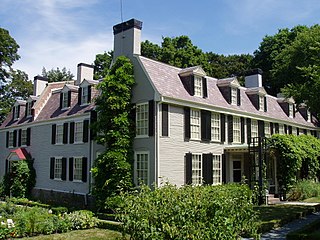
The mansion at the center of the Adams park, where the second and sixth Presidents lived during the last half of their lives, was originally home to part of the Vassall family. (Another member of that family built the Cambridge house that became Washington’s headquarters, now also a National Park Service site.)

Also at the event are Quincy resident Norma Jane Langford, who wrote a booklet on “The Tory Trail” of other Loyalist sites in greater Boston, and Nancy Rubin Stuart, author of Defiant Brides, about two young women from Loyalist families—Lucy Flucker and Peggy Shippen—who married American generals and ended up on different sides of the war and different sides of the ocean.

I’m not convinced there’s still as much denial or hostility toward Loyalists as the Globe article suggests. So much time has passed, and the issues of the Revolutionary War have receded so far, that the American public is far more willing to consider the Loyalist point of view than the losing side of more recent wars.

Saturday, June 01, 2013

Stuart on Defiant Brides in Worcester, 6 June

Defiant Brides: The Untold Story of Two Revolutionary-Era Women and the Radical Men They Married is a new book by Nancy Rubin Stuart, who previously wrote a biography of Mercy Warren.

The defiant brides of the title are Lucy Flucker and Peggy Shippen, both heiresses from Loyalist families who married striving men on the Patriot side of the Revolution.

Or rather, Lucy Flucker’s husband, Henry Knox, became a firm Whig when the war broke out. As I’ve written in the past, the evidence of his political activity before 1775 is sparse, and I suspect her family thought they might be able to bring Henry around to becoming a friend of the royal government.

But by May 1775 Henry and Lucy Knox had slipped out of besieged Boston, he was soon working with the provincial army, and by the end of the year he commanded the Continental artillery. Lucy Knox never saw her Loyalist relatives again, though she did inherit a substantial amount of land from them—the basis of the Knoxes’ postwar life in Maine.

As for Peggy Shippen, in 1779 she married a man who seemed passionately committed to American independence: Benedict Arnold, Continental general in charge of Philadelphia. Like Knox, he had started his career as a boy in precarious circumstances, unable to rely on his father, and worked his way up in business. Like Knox, he was one of the subordinates Gen. George Washington felt he could always rely on.

But in 1780 Arnold arranged to switch sides and surrender the West Point fortress on the Hudson. Peggy helped her husband escape to the British lines by distracting Gen. Washington with hysterics—whether sincere or feigned we’ll never know. The couple eventually moved to England. Peggy Arnold received a pension from the Crown and lived long enough that historians calculate she earned more from the British government than her husband did.

Booklist’s reviewer wrote about Defiant Brides:
With the seemingly endless parade of books devoted to both founding fathers and revolutionary rascals, it’s nice to see some attention paid to the fervor with which some remarkable women navigated the romantic, political, and wartime challenges of the era.
In its review, Kirkus Reviews said:
Flucker’s correspondence with Henry shows a loving couple who longed for each other when separated—though it’s not terribly enticing reading. Nor are the tales of their extravagances and scrambles for means.
But there have been very few studies of Lucy Knox and her choices, so any attention is new. Plus, social climbing and hanging on were a big part of these couples’ stories.

Stuart will speak at the American Antiquarian Society in Worcester on Thursday, 6 June, at 7:00 P.M. This event is free and open to the public. Books will be available for purchase and signing.

Tuesday, February 12, 2013

Peirce Family Anecdotes about Henry Knox

In 1849 Hunt’s Merchants’ Magazine and Commercial Review published an obituary of a descendant of Joseph and Ann Peirce, apparently based on information from the family or even written by a member of the family. That article turns out to contain interesting information about Henry Knox that I’d never seen before and that doesn’t appear in any Knox biography I know of. Whether it’s reliable information is another question.

Joseph Peirce founded Boston’s militia grenadier company in 1772 with Henry Knox as his lieutenant. The two men kept up a correspondence after the war when both invested heavily in Maine land. And some traditions about Knox came down in the Peirce family and made their way into that magazine:
Mr. Joseph Peirce, although a merchant of Boston, had, prior to the outbreak of the Revolution, organized a company of grenadiers, which he continued to command with Henry Knox, afterward Gen. Knox, as lieutenant, down to the day on which the tea was cast into Boston harbor. The grenadier corps was one of the finest in the colonies, and being drawn up in State, then King-street, to receive the new Governor [Thomas] Gage, on his arrival from England, elicited from that officer the remark that “he did not know his Majesty had any troops in America”—a compliment to the soldierly appearance of the corps long cherished by its officers even when patriotism had led them to oppose the king’s troops. Capt. Peirce was in charge of the tea ships as guard on the night previous to the appearance of those world-renowned “Indians,” of whom his brother John was one. That event brought about the dissolution of the corps; but the friendship then formed between Gen. Knox and Mr. Peirce existed uninterruptedly to the death of the former, in 1806.
There are two interesting anecdotes in that passage, and unfortunately they’re contradictory. If the grenadier company had dissolved soon after the Tea Party in December 1773, it could not have greeted Gen. Gage when he arrived in Boston in May 1774. Furthermore, Gage was commander-in-chief of the British army in North America and knew exactly how many troops his Majesty had there.

Gage’s alleged praise for the grenadiers echoes a story that evidently circulated in Maine about a British officer seeing the grenadiers and saying, “that “a country that produced such boy soldiers, cannot long be held in subjection.” I doubt either version of the story is wholly reliable, but they might have had a common source in a real event.

I haven’t seen any contemporaneous mention of the grenadier company dissolving shortly after the Tea Party. Rather, Boston’s specialized militia companies appear to have broken up in late 1774 as the political divide widened: the Company of Cadets in August after Gage dismissed their commander, John Hancock, and the artillery train in mid-September after its cannon vanished. The Ancient and Honorable Artillery Company, not officially part of the militia, went into abeyance late in the year. It would make sense for the grenadiers to do so as well.

The obituary went on to provide this anecdote about Henry and Lucy Knox’s departure from Boston:
When Lieut. Knox, impelled by his glowing patriotism, sought to join the army of Washington, then at Cambridge, preparatory to the fight at Bunker’s Hill, he had some difficulty in escaping from Boston, but he was enabled to do so through a permit obtained by Mr. Peirce for a chaise to pass the lines on Boston Neck. As he took leave of the future general, the latter remarked, “My sword-blade is thrust through the cushions on which we sit, and Lucy (his wife) has the hilt in her pocket.”
Again, whoever wrote this story had difficulty with chronology. The Knoxes appear to have been out of Boston by 14 May 1775. Gen. George Washington didn’t arrive in Cambridge until July.

Another version of the Peirce lore appeared in print the year before, in a review of J. T. Headley’s Washington and His Generals in the United States Democratic Review. The reviewer identified himself (or herself) as someone who had Joseph Peirce as a “maternal grandfather,” and told readers, “we have often listened with delight to the anecdotes of Knox, told by his octogenarian commander.” About the Knoxes’ departure:
[Headley’s] memoir remarks that Knox had some difficulty in escaping from Boston when the war broke out, and that his wife accompanied him, concealing his sword beneath her dress. This is not strictly correct. The lines as they were called, were on “the Neck,” and Knox’s former commander in the grenadiers having been to the lines to procure the passage of a chaise containing a nurse and child that had been in the country for its health, on his return, met Knox riding out of town. The future General remarked, “I have at last got clear, I think. My sword blade is thrust through the cushions on which we sat, and Lucy has the hilt in her pocket.”
In this version, Peirce didn’t secure the pass that the Knoxes used; he simply met Henry after he’d exited the gates. But the quotation is the same.

The Peirce story overlaps with one recorded by Knox’s first biographer, Francis S. Drake, in 1873: that Lucy smuggled out Henry’s sword “quilted into the lining of her cloak.” Hiding it in the cushions seems more effective. But really, swords weren’t what the provincial army needed.

Tuesday, July 24, 2012

Washington and Knox: When Harry Met George

After my “Washington’s Artillery” talk earlier this month, Marty Ganzglass raised an interesting question:

You mentioned that General Washington took a liking to Henry Knox who was about half the General’s age. I wonder why a patrician planter from Virginia would befriend Knox who, while educated, would have been considered a tradesman and not of the educated class. I would appreciate your views on their relationship.
On the class issue, I think Knox had already risen into the genteel ranks. Bookselling was indeed a trade, but one that catered to an upper-class clientele, displayed a man’s learning, and involved importing goods from London, thus making Knox a merchant of sorts. A generation earlier, Thomas Hancock had built himself up from a bookseller to one of the richest men in Boston. A florid letter that Knox sent to the doctors who cared for his hand after a hunting accident showed how he was striving for genteel manners.

Knox’s 1774 marriage to Lucy Flucker cemented his class rise locally. He was now part of one of the most prestigious families in the province, even if Thomas Flucker hadn’t been particularly pleased with his daughter’s choice.

And then Knox put that status at risk by supplying useful information to the Patriots and joining them during the siege. He walked away from the patronage possibilities of being the provincial secretary’s son-in-law and perhaps (it didn’t turn out this way) from the family fortunes. I’m sure gossip about Knox’s choice reached Washington, and such willingness to sacrifice comfort for the cause would have pleased him.

As for the age difference between the two men, I think that may actually have helped their relationship. With Washington in his forties and Knox in his twenties, there was a clear distinction between them. Washington couldn’t feel any threat to his authority as he might have with older, experienced officers like Artemas Ward and, later, Horatio Gates.

Psychologically, Knox had lost his father at an early age. Washington had no son of his own (and Jack Custis wasn't proving very impressive). So each man might have been looking for someone like the other in his life. That could have made it easy for the two to slip into a mentor-protégé relationship. They were also both big, strong, physical men.

For much of his career, and especially in these early years as commander-in-chief, I don’t think Washington liked men disagreeing with him. He had to put up with it when all his generals voted against his plans to attack Boston (and chose Ward’s plan instead!), or when the Congress hinted that he wasn’t working quickly enough. But he chafed at those moments. Knox and the general tended to see eye-to-eye on both policies and methods. Washington learned he could rely on Knox not only to agree with his general planning but also to get things done.

Finally, lots of sources say Knox was a charming man. He met Washington on 5 July 1775. At the time he was working on the fortifications at Roxbury, but so was Lt. Col. Rufus Putnam. Knox waited on the general on 9 and 12 July, and on 8 August he dined was Washington’s headquarters. In late September (before his own wife’s arrival), the commander invited Lucy Knox to dine at his headquarters as well. All that face time suggests that the Knoxes were just fun to be around. It’s hard to quantify that quality, but it wouldn’t have hurt when Washington considered what to do with the artillery regiment the next month.

Wednesday, April 11, 2012

Henry Knox in Balance

I’ve been exploring the documentary record of Henry Knox’s activities just before the outbreak of the Revolutionary War. I don’t think it supports the picture that his biographers have painted: that he was, and was widely known as, a stout Whig.

In fact, I suspect that Knox’s June 1774 marriage to Lucy Flucker, daughter of Massachusetts royal secretary Thomas Flucker, made some people think that the young man would soon lean toward the Crown. He had much better prospects with the Fluckers’ support than on his own.

As I quoted here, after hearing about that marriage, the pro-Crown New York printer James Rivington stepped up his correspondence with Knox. Rivington also recommended his shop to officers of His Majesty’s 23rd Regiment of Foot, on its way to Boston. Knox’s New London Book Store became known as a gathering-place for British officers—which could only have reinforced any public impression that Knox was in the Crown camp.

Whether he intended that outcome or not, Knox’s contact with the royal forces proved useful to the Massachusetts Whigs. On 3 Jan 1775, Josiah Quincy, Sr., of Braintree wrote to his son, Josiah, Jr., then visiting England, with sensitive news:

Mr W— brings intelligence from Boston, that the seamen on board the fleet are grown mutinous;—that one of the navy officers, meeting with a land officer at K—x’s shop, told him that on board all the ships their men were grown so uneasy and tumultuous, that it was with great difficulty they could govern them. Upon which the land officer observed, that the uneasiness among the soldiers was full as great, if not greater, than among the seamen.
The way Quincy dropped Knox’s name (disguised with a dash) suggests that the bookseller himself was a conduit of this gossip.

I’ve already written how it seems likely that Knox was the man who warned that royal officials—in particular, his father-in-law—knew what Paul Revere’s intelligence network was discussing in November 1774. (See “Who Tipped Off Paul Revere?”) Again, that suggests Knox supported the Whigs, but not loudly.

In his business letters Knox expressed strong hopes for a political change in London, but he avoided radical rhetoric and talk of armed conflict. Like most people, he probably hoped for a peaceful solution to the crisis. He probably wanted to avoid harsh conflict within his family and with trading associates. But when the Whigs needed intelligence, he provided it.

In his memoirs William Heath looked back circumspectly on how Henry and Lucy Knox left Boston:
His military genius and acquaintance with our General [i.e., Heath] led him to be importunate with Capt. Knox to join the army: not did he need persuasion to join in the cause of his country. His removal out of Boston, and the then state of his domestic concerns, required some previous arrangement; as soon as this was effected, he joined the army.
I suspect there was a lot of family drama involved in those vague sentences. Were there arguments and tears? Or did Henry and Lucy make their plans in whispers, not telling the rest of her family? As it turned out, Lucy would never see her parents again.

In the spring of 1775, Henry Knox discarded the opportunities that came from marrying into the Flucker family and became an unpaid engineer for the provincials. I don’t see that as an easy, foregone decision. Knox could probably still have chosen to stick with his wife’s family and take advantage of their wealth and contacts. Having that option made his decision all the more dramatic.

Friday, April 06, 2012

James Rivington: “for fear of hurting your interest”

Yesterday I quoted from the correspondence of Boston bookseller Henry Knox and New York printer James Rivington. Their professions made them natural business associates, with Knox selling what Rivington printed.

Eighteenth-century booksellers and printers didn’t confine themselves to selling printed matter. In his second latter to Knox, dated 26 June 1774, Rivington asked the younger man if he wanted to be the Boston agent for “Maredant’s Antiscorbutic Drops.”

In June 1774, Knox married Lucy Flucker, daughter of the royal secretary of Massachusetts. Soon after hearing that news, Rivington sent three letters, longer than any previously, congratulating the young bookseller on his marriage. At the same time, Rivington:
  • told Knox that he’d recommended his shop to officers of the 23rd Regiment of Foot (the Royal Welch Fusileers), then being transferred from New York to Boston.
  • sent him four chests of contraband tea to sell.
In October Rivington offered to host Henry and Lucy, whom he’d called a “most beauteous bride” and an “amiable Lady” (I don’t think they’d met), when they visited New York.

In that city, Rivington was already known in mid-1774 as a pro-Crown printer, though he still did jobs for Patriots as well. I suspect he thought that Knox’s marriage would draw the young bookseller into the Loyalist party in Boston. So he was throwing business in Knox’s direction.

On 1 December, Rivington sent Knox 300 copies of a Patriot pamphlet by Philip Livingston (shown above) titled “The Other Side of the Question; or, A Defence of the Liberties of North-America: In Answer to a Late Friendly Address to All Reasonable Americans, on the Subject of Our Political Confusions.” He told Knox that he hadn’t enclosed the original, Loyalist pamphlet:
The friendly address I do not send to you for fear of hurting your interest, it was forwarded to me by [Boston printers] Mills & Hicks to be printed, my reasons for not troubling you with these very warm, high seasoned pamphlets, is that your very numerous friends, on the patriot Interest, may be greatly disgusted at your distributing them; but if you are not so very nice as I apprehend from the state of your interest &c and are willing to have these sort of articles I will secure them for you from time to time. A piece is printing, in the Hudibrastic stile which will sell but I greatly fear you will not like. Pray explain yourself on this head directly, for I mean to shew every expression of my attention to you.
Thus, although Rivington recognized that Knox’s “interest” and “very numerous friends” were on the Patriot side, he dangled the prospect of business selling Loyalist material. Undoubtedly that would have pleased Lucy’s father, Thomas Flucker, and his colleagues in the royal government.

I don’t think Knox’s response to this invitation survives. When he discussed politics in earlier letters, his tone was moderate and his positions were Whig but not radical. He tried to maintain friendly ties. The only hint that Knox might become a Loyalist was his marriage with the financial prospects it brought—but apparently that was enough for Rivington to send out feelers.

COMING UP: The value of Knox’s position.

Monday, April 02, 2012

The Mystery of Henry Knox’s “Boy Soldiers”

In his 1900 biography of Henry Knox, Noah Brooks wrote of the connections that the young bookseller’s 1774 marriage brought him:
Lucy Flucker’s only brother [Thomas, Jr.] was a lieutenant in the British Army, and, while he was serving the cause of the King, his newly made brother-in-law was zealously studying the art of war and schooling himself for the service into which he was so soon to enter. Large promises were held out to young Knox to induce him to take a commission in the royal cause; he was regarded as too desirable a man to be lost from the military service of the King. The British officer who had observed with admiration the evolutions of the artillery company of which Knox was second in command, and had said that a country which produced such “boy soldiers” as he could not readily be brought under subjection, only gave voice to the sentiment that pervaded the ranks of the determined colonists.
In fact, Knox was never “second in command” of an artillery company in Boston’s militia; he was second in command of a grenadier company. Brooks’s biography has a lot of unreliable statements like that, which makes me wary of accepting its statements without confirmation.

So what confirmation does the Brooks biography offer about Knox being offered “a commission in the royal cause,” and a British officer praising his “boy soldiers”? Actually, Brooks doesn’t usually cite sources.

For the second part of that question, a Google Books search led to Cyrus Eaton’s History of Thomaston, Rockland, and South Thomaston, Maine, published in 1865. It stated:
[Knox] was at the early age of eighteen chosen one of the commanding officers of a company of grenadiers composed of young Bostonians, so distinguished for its martial appearance and the precision of its evolutions that it received the most flattering encomium from a British officer of high distinction. This officer’s prediction that “a country that produced such boy soldiers, cannot long be held in subjection,” was soon verified.
Unfortunately, Eaton didn’t cite a source for that anecdote, either. It appears to have been a tradition in Maine, where Knox lived after the war, rather than in Boston. Which is a bit odd since any such event would have taken place in Boston and pleased Bostonians, and later generations of Bostonians were never shy about publishing praise of their ancestors.

TOMORROW: And Knox’s royal commission?

Tuesday, May 17, 2011

When Did Henry Knox Leave Boston?

One of the historical questions I’ve puzzled over is when Henry and Lucy Knox left Boston, making a break with her Loyalist father, Thomas Flucker, whom they never saw again. The family papers offer little clue.

Knox’s earliest biographer, Samuel A. Drake, wrote in 1873:
Just one year from the day of his marriage [on 16 June 1774] Knox quitted Boston in disguise (his departure having been interdicted by [Gen. Thomas] Gage), accompanied by his wife, who had quilted into the lining of her cloak the sword with which her husband was to carve out a successful military career.
Drake offered no source for that probably overdramatic sentence, but it was the earliest statement I’d found. Noah Brooks’s 1900 biography said the Knoxes left Boston on 19 April, again without support, and that book is unreliable on other matters. So my best guess was still Drake’s June date.

But I recently spotted a clue in the Rev. Dr. Samuel Cooper’s diary for 14 May 1775. The day before, he wrote, he had gone to Concord and found the Rev. William Emerson absent. Cooper “engag’d to p[rea]ch for him on the Morrow, while he was to supply Groton.” So on Sunday the Rev. Mr. Cooper
Went to Concord with [daughter] Nabby. put my Horse at Mr [Ebenezer] Hubbard’s, found to my Surprize Mr. Emerson at the Meeting House Door. He pray’d I pch’d a.m. f’m, the Consolation of Israel. We din’d at Mr Emerson’s, with Mr. Knox and Wife of Boston. I pray’d Mr Emerson pch’d p.m. we drank Coffee at Mr Hubbards. slept at Mr. [Samuel P.] Savages. Horse at [Joseph] Russell’s.
There were a few other men named Knox in and around Boston in 1775, but Henry was the most prominent. So it appears the Knoxes were out of Boston and heading west by 14 May. Emerson’s more spotty diaries say nothing about them, but of course he didn’t know they would be famous.

TOMORROW: So who preached at Groton?