


J. L. BELL is a Massachusetts writer who specializes in (among other things) the start of the American Revolution in and around Boston. He is particularly interested in the experiences of children in 1765-75. He has published scholarly papers and popular articles for both children and adults. He was consultant for an episode of History Detectives, and contributed to a display at Minute Man National Historic Park.

Subscribe thru Follow.it


•••••••••••••••••


Showing posts with label Joseph Banks. Show all posts

Monday, April 10, 2023

How Americans Took Sides over Georgium Sidus
The Age of Revolutions just published M. A. Davis’s article “American Uranus: The Early Republic and the Seventh Planet.”

Like my political snakes article on the same site, this starts with eighteenth-century science and moves into the political implications of that new understanding.

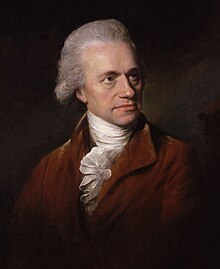
In the middle of the war over American independence, the astronomer William Herschel (shown here) extended the reach of Britain in a new way: he discovered a planet beyond Saturn.

All previous planets had been known since antiquity, so this was a very big deal. Herschel himself had reported this object as a comet, just a very big one in a near-circular orbit far from Earth.

“You will find I hope that we have not been idle,” wrote Royal Society president Joseph Banks, sending the news to a member busy negotiating the Treaty of Paris: Benjamin Franklin. For those men, scientific discovery transcended new national borders.

Thomas Jefferson also admired Herschel, noting “the number of double stars” he had discovered. But he didn’t like the name that Herschel gave to that new planet, telling the Rev. Dr. Ezra Stiles that the British “foolishly call it Georgium sidus,” after King George III.

At that time Jefferson was calling that planet “Herschel,” after its discoverer. Not surprisingly, that suggestion had come from a French astronomer, Jérôme Lalande. No matter that Herschel himself had chosen the name Georgium sidus [George’s star], after his patron, who granted him £200 per year.

There were still other names proposed. The Swedish astronomer Erik Prosperin suggested “Neptune,” which some colleagues connected to the strength of Britain’s Royal Navy. Davis’s article reports that in 1791 the Jeffersonian National Gazette of the U.S. used “Cybele.” That was the mother goddess of ancient Phrygia. Anything to avoid honoring King George.

Davis writes:
Not every American hesitated to use the British term for the new planet, even in the Early Republic. In 1795, the Gazette of the United States and Daily Evening Advertiser, an vigorously Federalist paper from Philadelphia, mentions the “‘tenth muse,’ lately arrived from ‘Georgium Sidus.’”

Given the Anglophilia of the Federalist press, perhaps this is not surprising – but the divide over the new planet was not quite that simply partisan. On April 20, 1801, DC’s National Intelligencer and Washington Advertiser had no problem referring to (in Herschel’s obituary) his role as “discoverer of the new planet Georgium sidus.” And the National Intelligencer, in an age of partisan divides in the press, was an enthusiastically Republican paper and one closely affiliated with Jefferson! Jefferson’s preferred “Planet Herschel” appeared next in the Alexandria Gazette, Commercial & Political in 1811 – a Federalist paper.
Of course, 1811 wasn’t a good time for U.S.-British relations. American writers continued to call the planet “Herschel” most of the time through the 1840s. Only then did a dark horse candidate gain favor.

Back in 1781, the German astronomer Johann Elert Bode had responded to William Herschel’s announcement by going back into older star charts and finding the planet catalogued there, mistaken for a star. By stringing those sightings together, Bode calculated its slow orbit. He also proposed a name for that planet. Since the mythological Saturn was Jupiter’s father, Bode apparently reasoned, the next planet out should be Saturn’s father.

Now technically the Latin name for Saturn’s father was “Caelus.” That god’s standard Greek name was “Ouranos.” But Bode used Uranus, and that’s the name Americans came around to. Even Britain’s National Almanac Office adopted Uranus in 1850.

Wednesday, March 30, 2022

Campaigns for Two Portraits in the U.K.

A couple of news stories about British art caught my eye recently.

In 1727 Sir Robert Walpole, then defining the post of prime minister, commissioned the thirty-year-old engraver William Hogarth to paint a portrait of his youngest son, Horace.

The result is “the earliest-known commissioned picture of an identifiable sitter by Hogarth and his first-known portrait of a child.” The painting’s creator, subject, and commissioner were three of the century’s most notable Britons.

Horace Walpole grew up to design and commission his Strawberry Hill mansion, a pioneering Gothic Revival structure. He also pioneered the Gothic in fiction with The Castle of Otranto.

Horace Walpole’s childhood portrait is still in private hands, and Strawberry Hill House & Garden, now a museum, has launched a crowdfunding campaign to raise money to buy it. The trust that runs the museum says:
The National Heritage Memorial Fund has generously awarded the Trust £115k and Art Fund has kindly offered £90k, but we now need to raise the final £25k by 14 April 2022, to meet the total cost of £230k.
For a look at the portrait and the fundraising campaign, go to this page.

In 1774, a young man called Omai (Mai to his compatriots) from Raiatea, one of the Society Islands, arrived in London. He had traveled on H.M.S. Adventure, commanded by Capt. James Cook, and was introduced to London society by the naturalist Joseph Banks.

Several leading British artists made portraits of Omai. In 1776 Sir Joshua Reynolds painted a full-length picture of the young man in robes and turban (shown above). In 1777 Omai returned to the South Pacific, and he reportedly died two years later.

In 2001 the Earl of Carlisle sold the Reynolds portrait of Omai to an Irish horse-racing magnate, John Magnier, for £10.3 million ($15 million). A few years later the British government sought to buy the painting for £12.5 million for the Tate Museum, but Magnier declined. He was able to have the picture displayed in Ireland from 2005 to 2011. Since then it has been in a “secure art storage facility” in London.

According to ArtNews, it’s unclear if Magnier still owns the painting, but last year the owner applied to export the picture from Britain again. The U.K. government temporarily barred its removal, designating Raynolds’s portrait as of “outstanding significance in the study of 18th-century art, in particular portraiture,” and “a signal work in the study of colonialism and empire, scientific exploration and the history of the Pacific.”

The latest estimate of the painting’s market value is £50 million ($65 million). Under British law, if any of Britain’s public museums commits by 10 July to try to raise that money, the painting will stay in the U.K. until next March to allow time for that campaign. But the Art Newspaper says, “it is unlikely any cash-strapped national museum can afford the hefty price tag.”

Friday, August 03, 2018

Taiato, Boy Explorer

Last month the British Library’s blog highlighted the short life of Taiato (spellings vary), a boy from Tahiti who sailed on Capt. James Cook’s Endeavour for a few months in 1770.

The Tahitian navigator and priest Tupaia brought Taiato, estimated to be twelve years old, aboard the ship in July. His most prominent moment in Cook’s log came on 15 October off the coast of New Zealand. Modern Maps project manager Huw Rowlands relates:
The Endeavour had only sighted land a few days before, but already a great deal had happened. [Joseph] Banks described 9 October as ‘the most disagreable day My life has yet seen’. An estimated nine Māori had already been shot dead, and the Endeavour had acquired virtually no fresh supplies of food and water in the nearly two months since they left the Society Islands.

As the crew started to trade for fish with Māori in canoes alongside the ship, a many-layered event unfolded. Cook tried to trade some red cloth for a Māori cloak, but no sooner was the cloth in the trader’s hand, than he sat down in the canoe, which calmly withdrew. After a brief discussion amongst themselves, the Māori approached again. This time however they had other ambitions.

As the ship’s surgeon [William Brougham] Monkhouse recorded: ‘we were attending to the coming up of the great war Canoe when all on a sudden an Alarm was given that one of the fishermen had pulled Tupaia’s boy into the boat – they instantly put off, and the great Canoe, as if the scheme had been preconcerted, immediately put themselves in a fighting posture ready to defend the other boat and stood ready to receive the boy from them. Our astonishment at so unexpected a trick is not to be described’.

The Endeavour’s crew, and particularly Tupaia, were outraged and shots were immediately fired at the Māori, fatally wounding several, and securing Taiato’s escape.
Unfortunately, Taiato lived only a few more weeks. On 9 November he died at Batavia, a base of the Dutch East India Company, which is now Jakarta. The navigator Tupaia was mournful and, already sick, died a few days later. Many authors presume the disease was tuberculosis.

Naturalist Sydney Parkinson wrote that during his illness, Taiato repeated, “Tyau mate oee,” which he translated as, “My friends, I am dying.” However, in Language Contact in the Early Colonial Pacific, Emanuel J. Drechsel posited that the boy actually said, “Taio mate ’ohi,” meaning, “Friend dying diarrhea.”