J. L. BELL is a Massachusetts writer who specializes in (among other things) the start of the American Revolution in and around Boston. He is particularly interested in the experiences of children in 1765-75. He has published scholarly papers and popular articles for both children and adults. He was consultant for an episode of History Detectives, and contributed to a display at Minute Man National Historic Park.

Subscribe thru Follow.it


•••••••••••••••••


Showing posts with label archeology. Show all posts

Sunday, June 28, 2026

“By dawn on June 18, 1775, nothing was left standing”

The current issue of Archaeology magazine includes a dispatch about the City of Boston’s Archaeology Department recent work in Charlestown, filed by a journalist with the almost-too-good-to-be-true named of Jason Urbanus.

Urbanus writes:
In early 1775, Charlestown was already almost 150 years old. It was a bustling settlement of between 1,500 and 2,000 people representing all walks of life—farmers, artisans, merchants, and mariners, including both free and enslaved Black people.

There were large landholders, such as 53-year-old distiller David Cheever, who owned multiple properties across the peninsula, and those who were less well-off, such as widow Elizabeth Moore, who rented a simple room in a neighborhood tavern. The town’s diverse population also included Margaret Thomas, who bought a humble home in 1773, likely making her the first free Black woman to own property in Charlestown. Among the wide array of craftspeople were goldsmith Nathaniel Austin, chaise maker James Frothingham, and Cato Hanker, a shoemaker. Hundreds of houses, workshops, and other buildings lined the town’s streets and wharves.

By dawn on June 18, 1775, nothing was left standing and everyone was gone. Less than 24 hours earlier, a brutal engagement, known as the Battle of Bunker Hill, had raged across the Charlestown Peninsula. . . . Townspeople were sent fleeing, and many never returned. Nearly all lost everything they owned. . . .

Many of Charlestown’s inhabitants had departed over the previous month amid increasing unrest, but those who remained were jolted from their homes. A widow named Relief Ellery and her 20-year-old daughter of the same name were among those who narrowly escaped the bombardment. The younger woman pocketed two valuable silver tablespoons from the kitchen table—the only things she had time to grab. When the pair returned to Charlestown, none of their property remained. “We have records of British troops coming back the next day and setting fire to any building that still stood,” says [City Archaeologist Joe] Bagley. “It was vindictive.” In a matter of hours, one of the oldest settlements in Massachusetts had ceased to exist. . . .

At the urging of a committee of Charlestown residents, more than 450 families submitted inventories of their lost possessions after the battle in hopes of receiving restitution. . . . Usually, when archaeologists excavate a residence, they record the artifacts that they uncover during the process. In this instance, they already have a list of everything that was in a house before beginning excavations. They know exactly what they might expect to find buried in dozens of backyards and basements.
Or, rather, buried underneath a dense modern city, or perhaps already dug up and tossed aside in construction projects over the past two and a half centuries. It seems unlikely that we’ll see a confluence of household inventory and newly dug artifacts. Still, the written record provides a lot for scholars of domestic material culture to work with.

No doubt Archaeology readers love ceramics, and another section of the article discusses Charlestown early pottery industry, which can also be dated with finality:
No commercial sector was hit as hard as Charlestown’s once-thriving ceramics industry. Although not well-known today, Charlestown had been among the largest pottery production centers in the northeast. That all changed on the day of the battle. With their workshops burned to the ground, Charlestown’s potters scattered throughout New England. “They lost everything—their kilns, all of their work tools—everything was gone,” says Bagley. “None of them came back.”
Pictured above is a milk pan from the site of the Parker-Harris Pottery, excavated during the Big Dig highway project a generation ago.

Thursday, June 11, 2026

Remembering the Battle of Bunker Hill This Week

Next week brings the 251st anniversary of the Battle of Bunker Hill, and the Charlestown Historical Society and partner organizations have planned several events to commemorate it.

On Saturday, 13 June, there will be an Author & Historian Symposium in the lodge beside the Bunker Hill Monument. Among the scheduled speakers from 10 A.M. to 4:30 P.M. are:
  • Timothy Reardon on the Brothers of the Battle of Bunker Hill descendants group 
  • James Philbrick on his ancestor, David Howe
  • Joni and Christine Parker on their ancestor, Benjamin Parker
  • Christian Di Spigna on Dr. Joseph Warren
  • J. L. Bell on the “whites of their eyes” quotation
  • Joe Bagley on archeology in Charlestown, including the dig completed the day before
  • Julie Hall on how public relations shaped the American Revolution
Throughout the day family artifacts, letters, journals, ephemera, and other historic items will be on display for visitors. A musket demonstration by the National Park Service is scheduled for 4:30.

Charlestown’s annual Bunker Hill Day Parade will be on Sunday, 14 June, from 12:30 to 4:30 P.M. I understand through other sources that there will also be a sidewalk demonstration against White House censorship of signs quoting later generations on the monument inside the lodge, as discussed here.

On Tuesday, 16 June, the society, the city of Boston, and GBH will cohost a community viewing of the Bunker Hill portion of Ken Burns, Sarah Botstein, and David Schmidt’s documentary series The American Revolution. Some of the historians, archeologists, and descendants from Saturday will be on hand, as well as Donald R. Ryan, biographer of William Prescott. That discussion will take place from 6 to 8 P.M. in the street-level meeting room of the Bunker Hill Museum.

On Wednesday, 17 June, the Bunker Hill Monument Association will have its annual meeting at 11 A.M. in the museum. Prof. Robert Allison from Suffolk University will speak on “The Importance of the Left Flank and the Rail Fence.” This event is open to B.H.M.A. members and invited guests only.

Finally, from 3:30 to 5 P.M. that Wednesday, the annual Remembrance Ceremony on the monument grounds will be open to the public.

Wednesday, June 03, 2026

Archeological Investigation on Breed’s Hill This Month

For the next couple of weeks, the Boston City Archaeology Department will be conducting a dig on Breed’s Hill in Charlestown. The public can watch the investigation proceed while visiting the battle monument.

The program’s website explains:
There have been multiple archaeological surveys surrounding the Bunker Hill Monument, the site of the redoubt on Breed’s Hill and currently a National Park. These surveys have revealed the likelihood that the 1775 redoubt structure may still be identifiable under the current surface of the grassy hill.

Ground penetrating radar (GPR) and other non-invasive remote sensing techniques have been useful for finding earthworks, and a previous GPR survey on the monument hill in the 1990s had promising results suggesting an oval-shaped trench present on the hill.

Technology has significantly improved since this original survey and the City Archaeology Program is actively working with the National Park Service and other partners on a plan to re-survey the top of the hill to provide an even better underground snapshot of the location and condition of the 1775 redoubt.

A goal of the project is to accurately document the presence and location of the 1775 redoubt, including the potential for an archaeological trench across the original redoubt to reveal a section of the surviving fortification as part of the 250th celebrations in the summer of 2025.

In addition to the redoubt, the team is also actively working to use remote sensing techniques to identify areas of potential burials for the more than 300 individuals who lost their lives during the battle, including both colonial and British forces. The colonial forces included people of color and Native individuals from multiple Native nations. No burials will be disturbed as part of this work, but radar and documentary surveys may help to better protect these locations.
The department is working working with the National Park Service and American Veterans Archaeological Recovery with support from the Friends of Boston Archaeology.

The department shares lots of information from previous archival and geographical investigations of Revolutionary Charlestown on its webpage.

Monday, October 27, 2025

“Great Trade to Bilbao” Symposium in Salem, 8 Nov.

On Saturday, 8 November, Salem State University will host a symposium titled “’To Drive a Great Trade to Bilbao’: Rediscovering New England’s Iberian Ties, 1640s–c.1830.”

This scholarly event coincides with the Marblehead Museum’s ongoing exhibition “Bilbao Bound,” created with the Itsasmuseum Bilbao (Bilbao Maritime Museum).

The symposium brings together an international group of historians and curators to examine a largely forgotten aspect of early New England history: the trading connections between Boston’s North Shore and the Spanish Basque port of Bilbao. Those commercial ties played a part in securing Spanish Crown support for the American Revolution.

10 to 11:30 A.M.
“Bilbao Bound” exhibit tour
Donald C. Carleton, Jr., guest curator
Marblehead Museum

All the symposium presentations will take place in the Petrowski Room of Marsh Hall at Salem State University.

1:30 to 1:45 P.M.
Greetings and Welcome
Brad Austin, Chairman, History Department, Salem State University
Rafael Orbegozo Guzmán, Advisor to the Chairman, Iberdrola

1:45 to 2:05 P.M.
“James G. Lydon and the Rediscovery of New England’s Iberian Trade(s)”
Donald C. Carleton, Jr., exhibit curator

2:15 to 3:45 P.M.
New England and Iberia: Peoples, Ports, Perspectives
  • “Dowries of Cod and Prayers against Shipwreck: Women and Their Atlantic World in the Early Modern Basque Country” by Amanda L. Scott, Associate Professor of History and Women’s, Gender, and Sexuality Studies, The Pennsylvania State University
  • “El papel de cádiz en las primeras redes comerciales atlántico-mediterráneas de nueva inglaterra (1770–1820)” [“The Role of Cádiz in the early Atlantic-Mediterranean Commercial Networks of New England (1770–1820)”] by Guadalupe Carrasco-Gonzalez, Profesora Titular, Universidad de Cádiz via Zoom
  • “Fish for Faience: Archaeological Evidence of Early New England’s Trade with Portugal” by Emerson Baker, Professor of History, Salem State University
Moderator: Donald C. Carleton, Jr.

4:00 to 5:15 P.M.
Yankees, Cod, Spain, and Revolution
  • “Spain and the American Revolution: The View from Madrid” by Larrie D. Ferreiro, George Mason University
  • “Fish to Firearms: How Lee, Gerry, and Gardoqui Helped Arm a Revolution” by José Manuel Guerrero Acosta, Project Director and Curator, Spain and the Support for the American Revolution, a Project by Iberdrola
Moderator: Dane Morrison, Professor Emeritus of Early American History, Salem State University

5:15 to 5:30 P.M.
Concluding Remarks
Brad Austin

The symposium is free, but attendees must register in advance. For in-person seats, sign up here. To watch the presentations online, use this link.

Monday, September 15, 2025

Revolutionary Talks This Week in Dedham and Westford

Here are a couple more Revolutionary lectures coming up this week.

Wednesday, 17 September, 7:00 P.M.
Bullet Strikes from the First Day of the American Revolution
Joel Bohy
Dedham Museum, 612 High Street

In 2013, Joel Bohy began a collaboration with conflict archaeologist Dr. Douglas Scott to better understand the ammunition found during archaeological investigations on former battlegrounds. This morphed into live-fire research and the study of the extant battle-damaged structures and objects from April 19, 1775.

From the Elisha Jones house in Concord, through Lexington and the Jason Russell house in Arlington, Massachusetts—where Dedham soldiers fought—the two carefully studied all the surviving bullet strikes and bullet-struck objects. Using modern forensic techniques adapted to historical studies and live-fire validation, Bohy and Scott tell the story of the brutality of the fighting on the first day of the American Revolution as British forces retreated to Boston.

Joel Bohy is the owner of J.Bohy Historical Consulting. He is an arms & militaria specialist at Blackstone Valley Auctions and an appraiser on the PBS TV series Antiques Roadshow.

Admission is $10, free to museum members. This event will be recorded by C-SPAN for its America 250 series and by DedhamTV.

Thursday, 18 September, 7:00 P.M.
The Plight of the Loyalist in Massachusetts
Larry Kerpelman
Westford Museum, 2 Boston Road

It’s been said that history is written by the victors, so it’s not surprising that the story of Loyalists to the Crown who lived in the American colonies is not as widely known as that of the Revolutionary War’s victors, the Patriots. As the drumbeat to independence grew louder, Loyalists faced their Patriot neighbors’ scorn and the agonizing decision of whether or not to flee their towns and homes. Various historians have estimated that between 60,000 and 100,000 people fled the colonies by the time “America’s first civil war” ended. Dr. Kerpelman will present a picture of how ordinary Massachusetts Loyalists and their Patriot neighbors interacted with one another during the fraught period between the 1750s and the 1790s.

Larry C. Kerpelman, Ph.D., is a freelance writer and communications professional from Acton, Massachusetts. Upon retiring as Vice president and Director of Corporate Communications after 30 years with the Cambridge public policy research and consulting firm Abt Global, he turned to researching, writing, and speaking on singular moments in American history. His work has appeared in American History, American Heritage, The Boston Globe, The Rochester Review, and The Chronicle of Higher Education, among other publications. He holds a B.A. from the Johns Hopkins University and a Ph.D. from the University of Rochester.

Suggested Donation for this lecture of $10 per person.

Saturday, July 05, 2025

“Siege and Liberation of Boston,” 7–8 Aug.

Registration is open for the third Pursuit of History Weekend that I’ve helped to program, this one on “The Siege and Liberation of Boston” on 7–8 August.

Organized with the folks who manage History Camp, these sessions are designed to offer in-depth looks at developments 250 years ago through expert speakers and visits to the actual sites where the history happened.

We’ll start on the slope of Breed’s Hill in Charlestown, exploring what turned out to be the decisive battle of the first campaign of the Revolutionary War. Sam Forman and Mary Adams will introduce two of the leaders of the American forces, Dr. Joseph Warren and John Stark. We’ll walk the battlefield and hear about ongoing investigations of the landscape from Boston City Archaeologist Joe Bagley. Then we’ll take a road trip to other places that the Continental Army fortified, which few visitors see. That day we plan to have meals at two restaurants that go back to the eighteenth century.

On the following day, we’ll move into the North End, collaborating with the Paul Revere House, the Old North Church, and veteran tour guide Charles Bahne to offer an in-depth look at the experience of living inside besieged Boston. Finally, I’ll speak about George Washington as a new commander-in-chief, what he thought his job was, and what he really learned.

The Pursuit of History webpage for this event has a video of me explaining more. Sam Forman and I are also scheduled to talk about the siege and this event in the History Camp discussion series on Thursday, 10 July, at 8:00 P.M.

This Pursuit of History Weekend is not, in fact, on a weekend but on a Thursday and Friday. That’s to allow people to also attend History Camp Boston on Saturday, 9 August, and even the related tours the next day if their history interests are still unsated.

And speaking of History Camp Boston 2025, I’ll be speaking there, too. My topic is related to the end of the Boston siege. That talk is called “Henry Knox, Loyalist?” It offers a new interpretation of that American general’s rise to prominence.

Saturday, April 26, 2025

Panel on “Lexington and Concord” in D.C., 29 Apr.

On Tuesday, 29 April, the American Revolution Institute in Washington, D.C., will host a panel discussion on “The Battles of Lexington and Concord.”

This is the first of the institute’s planned eight years of “250th anniversary celebrations of the American Revolution.”

The institute has announced:
Historians on the panel include J. L. Bell discussing the prelude of the two events of April 19, 1775; Alexander Cain discussing the engagements through the perspectives of the battles’ participants and civilian eyewitnesses; and Jarrad Fuoss of Minute Man National Historical Park discussing recent archaeological studies and findings and how they have enhanced the interpretation of the battles.
Because of increased government restrictions on employee travel, Jarrad Fuoss will be speaking through a video hookup. Alex Cain and I will be roughing it inside Anderson House, the Society of the Cincinnati’s headquarters and research library in Washington.

Through this webpage, people can register to attend in person or online. The panel will be recorded for posting on the institute’s YouTube page.

The discussion is scheduled to start at 6:30 P.M. and run for an hour, though I’m sure the folks involved would be happy to keep talking about the start of the Revolutionary War as long as we can. 

Sunday, April 13, 2025

Sestercentennial Talks in Boston on the 18th of April

Friday, 18 April, will be the 250th anniversary of the day when Maj. Edward Mitchell led over a dozen British army officers on horseback out into Middlesex County to tamp down alarms (and thus caused alarms).

The 250th anniversary of the day when William Dawes and Paul Revere rode out into the same countryside to do all they could to spread the alarm as far as Lexington, at least.

And finally the 250th anniversary of the day when more than 700 British light infantrymen and grenadiers embarked across the Charles River to begin their alarming march to Concord.

Some of those events will be reenacted that evening in various places, and there will also be talks in the city of Boston on both sides of the Charles River.

The U.S.S. Constitution Museum and Paul Revere House are sponsoring “The Messenger and the Maker,” a free evening of activities at the Constitution Museum in the Charlestown Navy Yard. From 5 to 9 P.M. families can explore the galleries and make their own lanterns to help escort Revere on his journey from the Navy Yard through Charlestown.

At 8:00 P.M. I’ll speak in the museum on “The Reasons for Revere’s Ride.” The organizers asked me to lay out the background for the events on 18 Apr 1775, and they said I had twenty minutes. Later they revised that to thirty. I’m preparing a whirlwind tour through history up to that fateful evening. And I can’t speak too long because the audience will go out to meet Mr. Revere.

At City Square Park in Charlestown, two events are scheduled at 8:45 P.M. Revere will arrive at Deacon John Larkin’s House and emerge to mount his borrowed horse. Around that event Joe Bagley, Boston’s Chief Archaeologist, will speak on “Unearthing the Untold Stories of Charlestown’s Sacrifice.” Drawing on recent discoveries and study, he will introduce the inhabitants of Charlestown, enduring the frightening end of one battle and the destruction caused by another.

Meanwhile, over in Boston’s North End, the Old North Church will offer a free costumed reading of Revolution’s Edge from 6:30 to 8 P.M. on Paul Revere Mall (or, in case of rain, inside St. Stephen’s Church). This play by Patrick Gabridge dramatizes the choices that the Rev. Mather Byles, Jr.; Capt. John Pulling; and Cato, the minister’s enslaved servant, faced in April 1775.

Starting at 7 P.M., the church will also host its traditional Lantern Service. This year’s keynote address will be offered by Heather Cox Richardson, professor of American history at Boston College and author of Democracy Awakening: Notes on the State of America. This commemoration will also include inspirational music, Revere’s recollection of his ride, prayers for the nation, and the lighting of the lanterns in the belfry at about 8:15 P.M. (This event is currently at capacity.)

Wednesday, January 29, 2025

Talks on Bullet Strikes and Women Printers

Sestercentennial talks are starting to come fast. I’ll have some of mine to announce soon, and here are two happening tonight and tomorrow.

Wednesday, 29 January, 7:00 P.M., at the Acton Town Hall and livestreamed
“‘Dreadful Were the Vestiges of War’: Bullet Strikes from the First Day of the American Revolution”
Joel Bohy

Bohy, historic arms & militaria specialist at Blackstone Valley Auctions and Estates, will discuss the arms and ammunition used by both British and provincial forces on April 19, 1775, as well as the battle damage that remains. Modern shooting-incident reconstruction, archaeology, live fire studies, and new research sheds new light on the heavy fighting along the route of the British retreat back to Boston.

This free event is an Acton 250 program, and a recording will be available through Acton TV.

Thursday, 30 January, 7:00 P.M., at the Westford Museum
“In the Margins: Women Printers in the 18th Century”
Michele Gabrielson

In the 18th century, newspapers and pamphlets were crucial in spreading information and stoking the fires of conflict during the revolutionary period. Although printing was primarily seen as a masculine profession, women—such as widows, wives, and daughters—stepped up to embrace the responsibilities of a free press. These women not only set the type but, in some cases, also owned and managed their own printing businesses. This lecture will lay out the essential contributions of women in the printing industry leading up to the American Revolution.

Gabrielson is an award-winning educator, a historical interpreter, and secretary for the recently formed Mercy Otis Warren Society.

The suggested donation for this event is $10 per person.

(The picture above shows the broadside “A Bloody Butchery, by the British Troops,” issued after the 19th of April by Ezekiel Russell, whose wife Sarah helped run the print shop.)

Friday, July 19, 2024

“The Fate of This Country” in Concord, 20 July

Last Saturday, Minute Man National Historical Park celebrated Archeology Day by unveiling musket balls found last year near the North Bridge.

There were also fine technical talks about recent archeology projects in national parks across the Northeast and about analyzing musket balls from Revolutionary War battles.

This Saturday, 20 July, the park’s programming continues with “The Fate of This Country: Massachusetts Militia on Alarm 1757–1775.” The event description says:
In 1757, the people of Massachusetts were under threat of French invasion. Through the crisis, they learned valuable lessons to better prepare themselves for the future. In 1774, a new threat emerged, and the people drew from their past experiences to confront it.

Join us across the street from the home of Major John Buttrick, who marched on alarm in 1757 and 1775, for two interpretive talks that explore the experiences of the Massachusetts militia on alarm.
Those talks will take place at the North Bridge Visitor Center at 1:00 and 3:00 P.M. They are scheduled to last about thirty-five minutes.

Visitors will also be able to enjoy the park’s ongoing presentations on such topics as “Concord’s North Bridge: History and Memory” and “Enemies to Their Country.”

Tuesday, July 09, 2024

A Dig into the Lives of Pompey and Isaac Hower

Last month Northeastern Global News published an article about an archeological excavation in what is now Saugus and historical research about a past owner of that site.

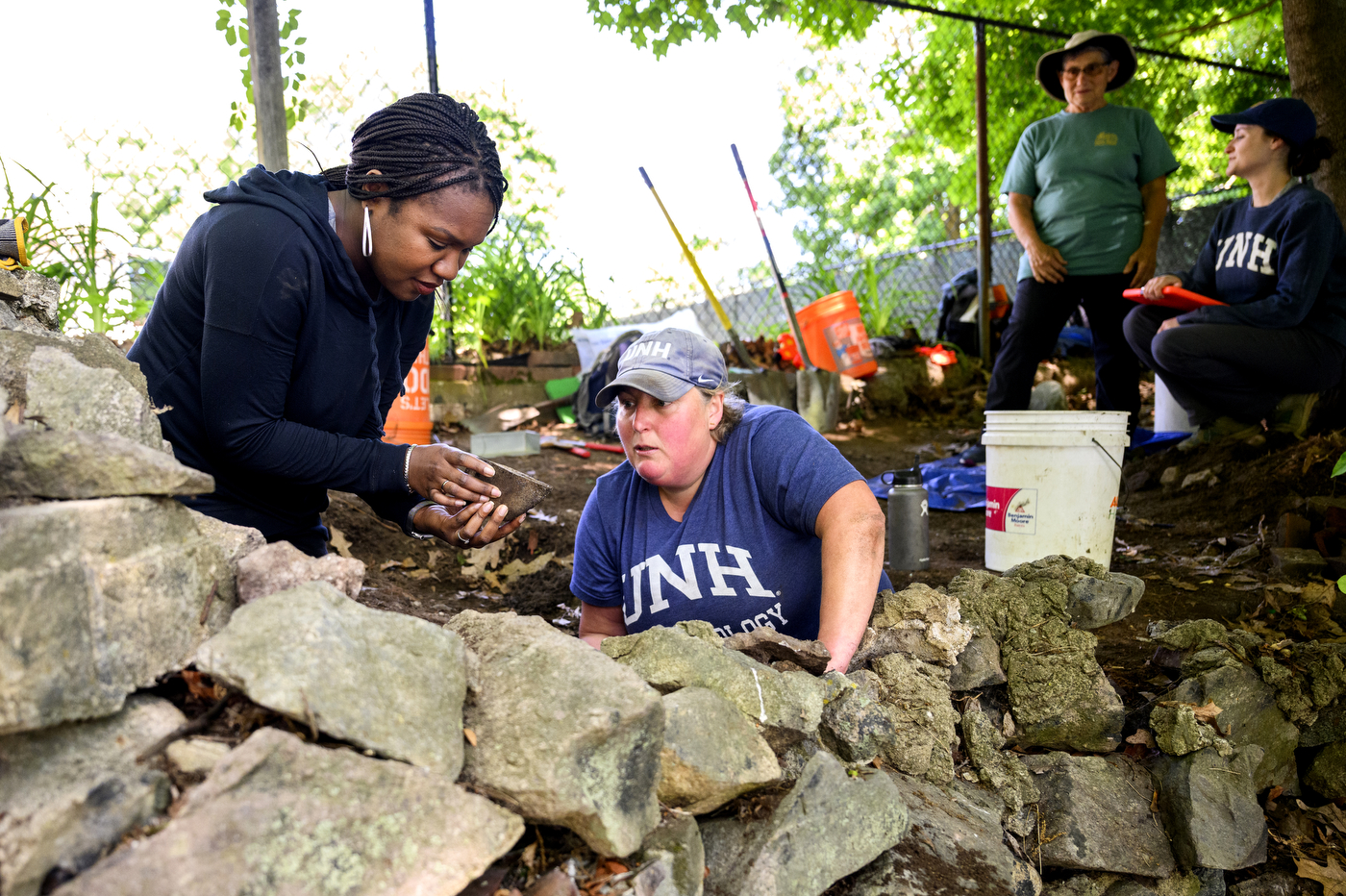
This project is a collaboration by Meghan Howey, Alyssa Moreau, and Diane Fiske of the University of New Hampshire’s Great Bay Archaeological Survey; Prof. Kabria Baumgartner of the Northeastern University history department; and their students.

That team is digging into the property and the records of a man named Pompey who lived in Lynn in the late 1700s. According to Alonzo Lewis’s 1829 History of Lynn, Pompey hosted the African-born people of the region for a one-day celebration each year. Baumgartner ties this tradition to the “Negro Election” tradition across New England in that period.

Research into real estate and town records provides some facts that both strengthen that tradition by confirming Pompey’s status as a free black property owner and complicate it with questions of dates:
For instance, research confirmed Pompey’s 1745 marriage to a woman named Phyllis or Phebe, and that he was enslaved by a man named Daniel Mansfield II.

Historians believe Pompey was manumitted, or freed, by the 1750s, but apparently not — as legend holds — in Mansfield’s 1757 will.

“It’s not in the will, and we haven’t found any manumission papers,” Baumgartner says. But she notes that manumission papers are rare to find.

Upon securing his freedom, Pompey borrowed money from another Black man named Isaac Hower to purchase two acres along the Saugus River in 1762. The deed was not recorded until 1787, however, at which time Pompey signed the property over to Hower’s widow, Flora.

But many questions remain unanswered. For instance, if not freed in Mansfield’s will, did Pompey free himself?
And then of course there’s the question of Isaac Hower. What was his story, and how did he gain enough money to be able to lend it out?

The vital records of Salem offer some hints. On 23 Jan 1754, Isaac, enslaved by Samuel Gardner, married Jane, enslaved by Richard Derby. According to the first volume of The Pickering Genealogy, in 1757 Isaac owned the covenant and joined Salem’s First Meeting; this book says he had formerly been called Cato, but the marriage record indicates he was already known as Isaac before that religious experience.

An abstract of Samuel Gardner’s will, dated 1766 and probated in 1769, stated:
As my negro slave named Isaac has generally served me with great diligence and integrity, I give to the same Isaac £10 lawful money with his apparel, and his freedom. If he is unable to support himself, my sons George, Weld, and Henry, to support him.
The Northeastern article thus says Pompey borrowed money from Hower to buy property before Hower was freed, which calls out for more research. Perhaps the purchase and mortgage were separate acts.

The vital records of Salem also record that “Isaac Hower, formerly servant to the late Samuel Gardner, Esq.,” married Mary Banister of Boston in March 1774. Later, it appears, he married a woman named Flora.

The 6 Nov 1787 Salem Mercury reported this death:
Isaac Howard (an African) aged 60——formerly a domestick of the late Samuel Gardner, Esq.---A “good and faithful servant.”
“Honour and shame from no complexion rise;
Act well your part, there all the honour lies.”
Those lines are an adaptation of a couplet in Alexander Pope’s Essay on Man, with the word “condition” swapped out for “complexion.” Such a notice indicated that Hower had stature in Salem.

When Daniel Smith advertised to settle the estate the following January, he used the spelling “Hower,” as did the man’s son, so that was the family’s preference. In December 1788, Flora Hower married Reuben Pernam. The vital records don’t help after that.

Monday, July 08, 2024

A City Project to Reconstruct Charlestown in June 1775

Last month, on the anniversary of the Battle of Bunker Hill, the Boston’s Archaeology Program announced the release of research on the people who lived in Charlestown at that time.

During the battle, most of the town burned to the ground. That event provided a physical marker in the ground, and also a documentary milestone as inhabitants filed claims for their losses. However, the department notes, “Despite multiple attempts over half a century, no funds were ever granted.”

Using real estate records compiled by Thomas Bellows Wyman in The Genealogies and Estates of Charlestown (two volumes, 1879), the City Archaeology Team produced a map of property ownership in June 1775 that can be viewed here. The announcement says, “Each property is clickable, with details including a direct link to the property deed (via free familysearch.org account).”

The next step: “property descriptions based on deeds and claims documents to better understand the layout of buildings, structures, wharves, agricultural spaces, fences, and other landscape features for a future 3D landscape reconstruction of 1775 Charlestown.”

Another product of this effort is a reconstructed “census” for Charlestown in 1775, here in spreadsheet form.

Finally, there are multiple databases about the claims themselves, now housed in the Boston Public Library. Those documents have been scanned and are being transcribed, but the index is already available.

One name that stood out for researchers and myself was Margaret Thomas, filing for the loss of a house and furnishings worth £68.9, as shown here.

Wyman listed Margaret Thomas as “Spinster,” house owner, and “negro of Bartholomew Trow,” a Charlestown militia officer. Perhaps she had been enslaved in the Trow family, and anxious authorities still recorded that link even after she was buying real estate of her own.

Was this the same Margaret Thomas who worked at Gen. George Washington’s Cambridge headquarters by February 1776, joined the general’s traveling domestic staff, and married William Lee before the end of the war? We know that other people who came to work at the commander’s headquarters in 1775–76 had been burned out of Charlestown.

The handwriting on the “Summary Accompt.” filed with the town doesn’t match the signature on a receipt Margaret Thomas signed in Valley Forge in April 1778. But it’s possible that the claim was filed by someone else on Thomas’s behalf, or that this summary was copied by someone else. It’s definitely a lead worth following up.

Thursday, March 07, 2024

Fort Plain Museum’s 2024 Conference in the Mohawk Valley, 14–16 June

The Fort Plain Museum’s Revolutionary War Conference 250 in the Mohawk Valley will take place this year on 14–16 June in Johnstown, New York. Registration is open.

The scheduled speakers are:
  • James Kirby Martin and guest host Mark Edward Lender having a fireside chat about the American Revolutionary War, its Sestercentennial, and their legacies as historians
  • Nancy Bradeen Spannaus, “Alexander Hamilton’s War for American Economic Independence Through Two Documents” (supported by the Alexander Hamilton Awareness Society)
  • Gary Ecelbarger, “‘This Happy Opportunity’: George Washington and the Battle of Germantown”
  • Shirley L. Green, “Revolutionary Blacks: Discovering the Frank Brothers, Freeborn Men of Color, Soldiers of Independence”
  • Mark Edward Lender, “‘Liberty or Death!’: Some Revolutionary Statistics and Existential Warfare”
  • Shawn David McGhee, “No Longer Subjects of the British King: The Political Transformation of Royal Subjects to Republican Citizens, 1774-1776”
  • James Kirby Martin, “The Marquis de Lafayette Visits the Mohawk Valley, Again and Again”
  • Kristofer Ray, “The Cherokees, the Six Nations and Indian Diplomacy circa 1763-1776”
  • Matthew E. Reardon, “The Traitor’s Homecoming: Benedict Arnold’s Raid on New London, September 4-13, 1781”
  • John L. Smith, “The Unexpected Abigail Adams: A Woman ‘Not Apt to Be Intimidated’” (supported by the Dr. Joseph Warren Foundation)
  • Bruce M. Venter, “Albany and the Stamp Act Crisis of 1765”
  • Glenn F. Williams, “No Other Motive Than the True Interest of This Country: Dunmore’s War 1774”
  • Chris Leonard, Schenectady City Historian, “Storehouse Schenectady: Depot and Transportation Center for the Northern War”
  • David Moyer, “Recent Archaeology Discoveries on the Site of Revolutionary War Fort Plain”
There will also be a bus tour of Revolutionary sites in the area with the theme of “1774: The Rising Tide.” In that year Schenectady saw a violent Liberty Pole riot while the British Indian agent Sir William Johnson passed away in July.

For more information, visit this page.

Tuesday, February 06, 2024

Two Online Archeology Events on 15 Feb.

Two online events about archeology are coming up next Thursday, 15 February.

The Lake Champlain Maritime Museum will host its third annual Virtual Archaeology Conference that afternoon from 1:00 to 4:00 P.M., with staff speaking about various work going on at and around the museum.

The scheduled presentations are:
  • Patricia Reid, “Legacy Collection: Leege Collection Artifacts from Arnold’s Bay”
  • Cherilyn Gilligan, “Arnold’s Bay Artifacts: Conservation and Context”
  • Chris Sabick, “The Excavation and Documentation of the Revolutionary War Row Galley Congress
  • Paul Gates, “Site Formation Processes: Defining the Theoretical Process of Archaeology for the Revolutionary Warship Congress
Those will be followed by a live question-and-answer session.

Go to this webpage for more details on the museum’s program and to register.

That same evening, starting at 7:00 P.M., the Shirley-Eustis House Association will host an online lecture by Boston City Archaeologist Joe Bagley on “Archaeology at Shirley Place.”

Bagley will share new information learned about the eighteenth-century enslaved inhabitants of the estate and new insights into the former location of the 1747 Shirley-Eustis House. The presentation will include artifact discussions and digital reconstructions of the historic property before it was developed in the nineteenth century.

Go to this page to register for the Shirley-Eustis House’s event.

Both of these online events are free, but donations to the hosting organizations are welcome.

Monday, October 23, 2023

Local Archeology for Local Historians in Charlestown and Medford

On Thursday, October 26, folks have a choice between two events on local archeology north of the Charles.

At 6:00 P.M., the City of Boston Archaeology Program, Boston’s Commemoration Commission, and the National Park Service will hold a “public listening event” at the Bunker Hill Museum, asking what people want to know about that battlefield and the destruction of Charlestown.

Co-sponsored by the Charlestown Historical Society and Charlestown Preservation Society, this session will feature Joe Bagley and the City Archaeology Program team, Genesis Pimentel of the Commemoration Commission, and Meg Watters Wilkes of the National Park Service. They will discuss previous archeological work around the battle and how new technology and methods might reveal more.

Folks can help the presenters prepare, or participate in the ongoing discussion, by filling out this form asking about interests in the battle.

At 7:00 P.M. the Medford Historical Commission will host “History Beneath Our Feet: The Archaeology of Thomas Brooks Park” at the Medford Public Library.

This event description says:
Located in West Medford, the wooded and grassy parcel is an important reminder of Native Americans, northern slavery and the Brooks family. The Public Archaeology Laboratory, Inc. and the Commission will share artifacts which were excavated by volunteers from the recent archaeological dig and talk about how these tiny fragments provide greater insight into the people who inhabited the landscape.
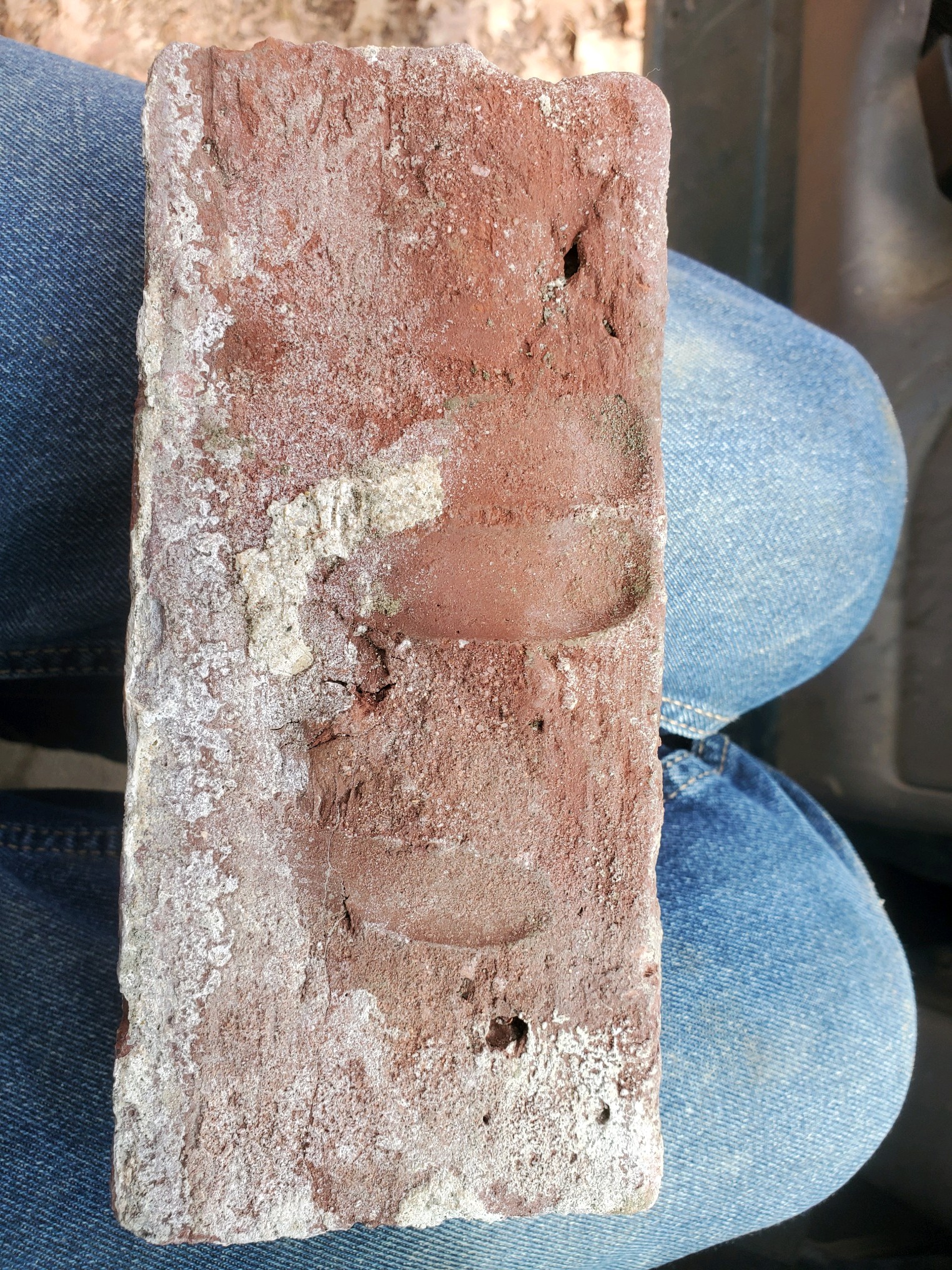
Thomas Brooks owned that land in the mid-1700s, and he also owned a man named Pomp, who around 1765 built a decorative brick wall that’s preserved in the park. The area was recently restored, as described on the historical commission’s website, and part of that work was the new study.

(The photo above, courtesy of the Medford Historical Commission, shows one of the bricks from Pomp’s wall, preserving the impressions of the fingers of the person who made it.)

Thursday, October 19, 2023

Open House at Boston Archaeology Program, 25 Oct.

On Wednesday, 25 October, the city of Boston’s Archaeology Program will open its new Mary C. Beaudry Community Archaeology Center to the public.

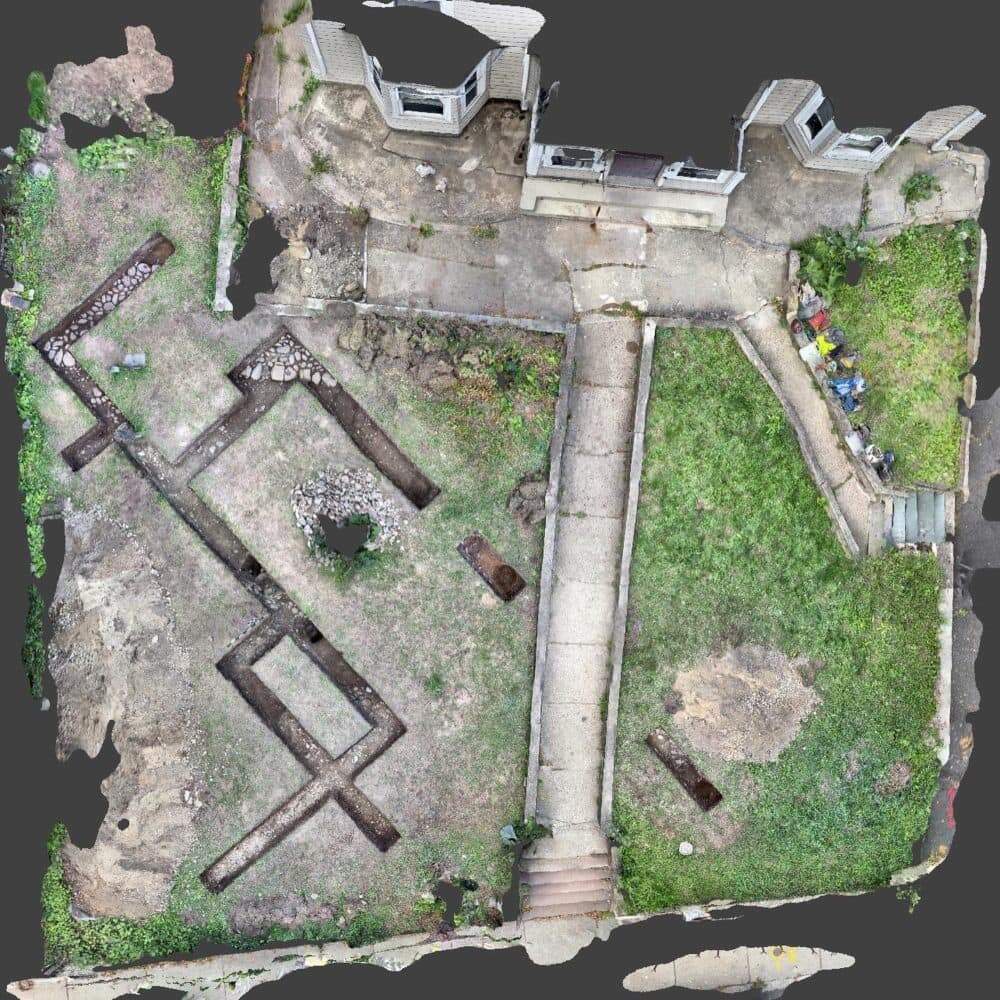
At this open house in West Roxbury, visitors can meet staff members, take a behind-the-scenes tour of the facility, and see the new exhibit on the archaeology of a Charlestown house dating from the 1630s.

The new facility features, behind glass walls:
  • two processing laboratories
  • an artifact-digitizing lab with 3D scanners, printers, and photography equipment
  • a repository of over 1,000,000 artifacts from dozens of ancient and historical sites in Boston
  • an extensive collection of historical ceramic and lithic raw material for comparisons
  • a “specialized wet laboratory”
  • a research library containing over 2,000 reference books and archaeological reports
The Archaeology Program still shares a building with the City of Boston Archival Center. Neighbors include archivists and collections librarians from the Boston Planning & Development Agency and the Boston Public Library.

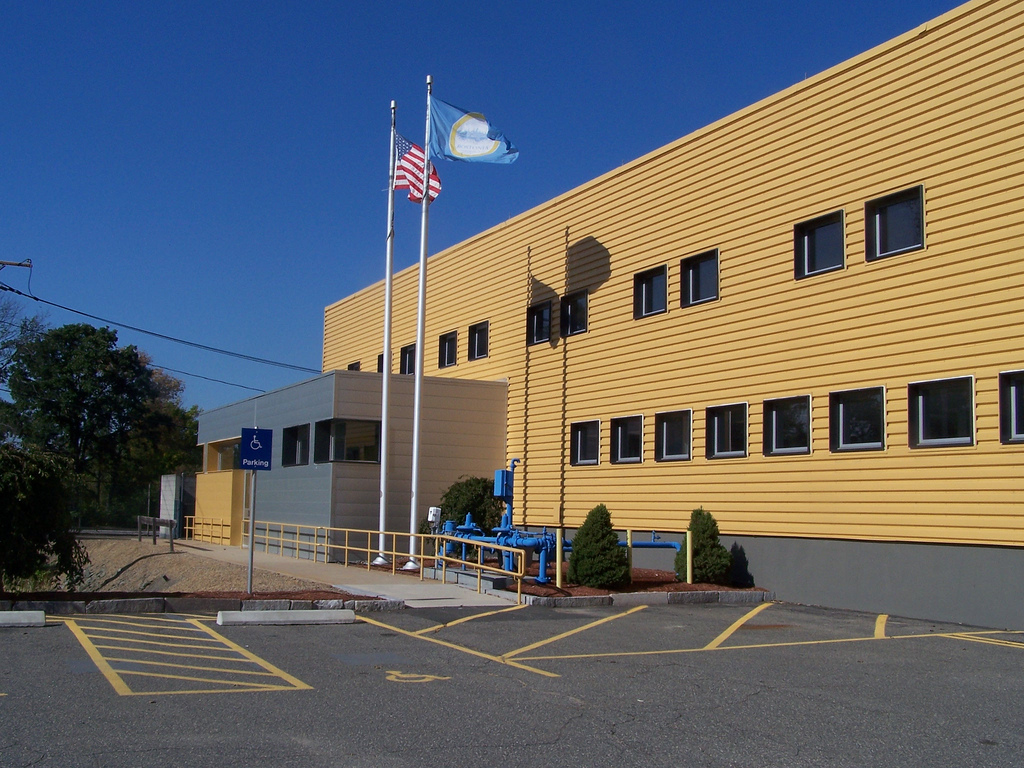
This open house will start with a ribbon-cutting ceremony with special guests at 9:00 A.M. and last the whole workday at the City of Boston Archival Center, 201 Rivermoor Street. The first-floor exhibits will be available for viewing year-round during business hours.

For the curious, Mary C. Beaudry (1950–2020) was a historical archaeologist and professor at Boston University. In the latter part of her career she focused on the anthropology of food. Among many other sites she studied the Spencer-Pierce-Little Farm in Newbury.

Monday, September 18, 2023

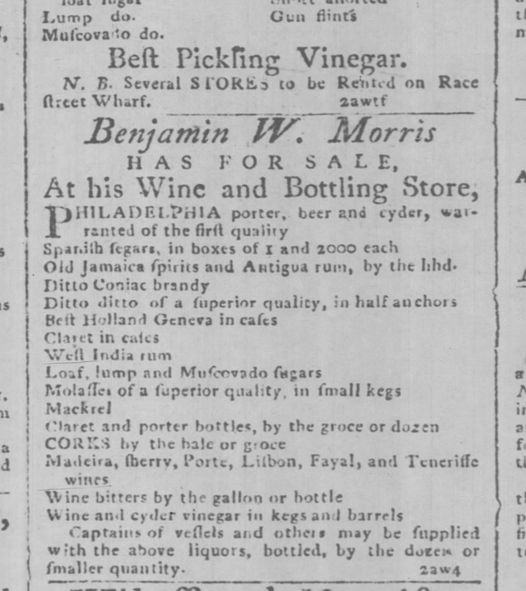
Taking a Scrap of History

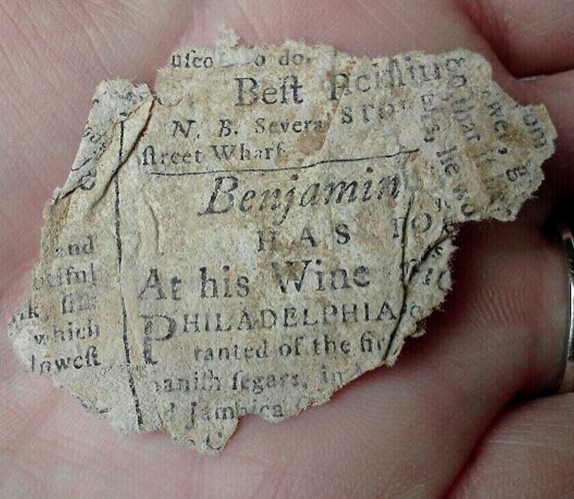
Earlier this month Independence National Historical Park shared the photo above on Facebook.

That posting stated:
This scrap of newspaper was excavated from a privy at the National Constitution Center site where it had likely been used as toilet paper. That's right - this piece of paper likely wiped a bottom in ye old outhouse sometime following November 5, 1790, the day it was published. Sometimes the most fascinating objects are those that capture the most private moments of the past.
The clipping might also have come from the 8 Nov and 12 Nov 1790 Pennsylvania Packet, and Daily Advertiser. Before and after those days, wine merchant Benjamin W. Morris’s advertisement differed slightly.

Sunday, July 09, 2023

“The area is steeped in Revolutionary significance”

New York Magazine’s Curbed website just shared an extraordinary article by Reeves Wiedeman titled “The Battle of Fishkill.”

It details the long and ongoing conflict between a New York restaurateur and property developer named Domenic Broccoli and a group of local preservationists named the Friends of the Fishkill Supply Depot.

The land in question was part of a Continental Army logistics site. Archeologists have found bodies buried there, with ground-penetrating radar turning up signs of more. This has raised the question whether the land should be mostly set aside for study and commemoration, partially preserved, or developed as planned into a retail site called Continental Commons.

Wiedeman writes:
For more than a decade, the Friends [of the Fishkill Supply Depot] have argued — based on some evidence, but not as much as they would like — that there are more Revolutionary War soldiers buried on [Domenic] Broccoli’s land than anywhere else in the United States.

Broccoli argues that this is rubbish and accuses his foes — with some evidence, but not as much as he would like — of going so far as to plant human remains on his lot in their effort to make it seem more grave-stuffed than it actually is. . . .

The Friends of the Fishkill Supply Depot are a group of history buffs and retiree volunteers, and yet Broccoli claimed he had found it necessary to spend more than a million dollars battling them with archaeologists, lawyers, and the private investigators he hired as “spies” to infiltrate the Friends. As it happened, one of his spies was at the Memorial Day protest holding up a STOP CONTINENTAL COMMONS sign while surreptitiously recording the group in case anything might help the RICO case Broccoli was building.

Broccoli insists that he’s not anti-history. He doesn’t dispute the fact that people are buried on his land or that the area is steeped in Revolutionary significance; his vision for the IHOP [in Continental Commons] involves a wait staff in tricorne hats and bonnets. But it was still a bit of a mystery exactly whose bones were buried on his property and who put them there.

And, besides, if there really were hundreds of soldiers beneath the ground, Broccoli believed it to be self-evident that he was the one pursuing the vision of life, liberty, and happiness that George Washington’s troops had fought and died for: the right to sell pancakes where they were buried.
In that last point, Broccoli’s not wrong. The Founding generation didn’t value landscape preservation. They put up small monuments in a few spots, like the hard-to-farm crest of Breed’s Hill in Charlestown, but plowed and built over most battlefields and other military sites. That’s why the only fortifications remaining from the lines around Boston are the small, late-built earthworks in Washington Park in Cambridge, preserved solely by the Dana family for generations.

Historical preservation became an American value in the late 1800s. By then, of course, the Revolutionary generation had died out. Fewer sites survived. What remained seemed all the more precious. With industrialization, it became easier to preserve (or restore) battlefields in rural areas, but urban sites got swallowed even faster.

The Fishkill Supply Depot didn’t make the cut for preservation then. The local culture barely remembered it, in fact. It was a logistical site, well away from the fighting. There was no ‘Battle of Fishkill’ to commemorate. Compared to other places (most, but not all, already preserved or commemorated in some way), its significance might fade.

Nonetheless, many Continental soldiers died at the site. Diseases spread naturally when eighteenth-century people gathered in large numbers. Andrew Wehrman, author of The Contagion of Liberty, has tweeted that Fishkill was also a site of mass inoculation against smallpox, which (given the use of the actual live virus at that time) meant a site of many smallpox deaths.

Our contemporary culture is more squeamish about dead bodies and graveyards than our ancestors were. Many of greater Boston’s hallowed burying-grounds have actually been excavated and relandscaped over time before arriving at what we now perceive to be their historic shape. We’d have a harder time stomaching that process now, even though there are probably fewer Revolutionary remains than ever.

As for the Fishkill Supply Depot, there doesn’t seem to be any resolution in sight. Though Sen. Charles Schumer supports the idea of making some of the land into a new national park, there are lots of details to be worked out and support to line up. This deadlock might end only when more people die out.

(The photograph above shows the Van Wyck Homestead, once the administrative center for the supply depot and now the only surviving structure from that large complex. It’s a New York state museum.)

Friday, June 16, 2023

“Slavery in Boston” Exhibit Now Open in Faneuil Hall

Today the city of Boston’s Department of Archaeology officially opens its new exhibit in Faneuil Hall, titled “Slavery in Boston.”

The display panels are already up, so I swung by to see them yesterday. The exhibit is in two parts, with an online component as well.

One part is on the ground floor of Faneuil Hall, among the shops selling books, souvenirs, and candy. This consists mostly of vertical panels set up around the building’s structural pillars. Some of the panels have basic introductory material, and some look at the legacy of race-based slavery in the area.

Most of the pillars, however, profile individual enslaved people, using all the sources available to show even a sense of their lives. That sees like a powerful way to communicate the experience of slavery on a one-to-one level to visitors who think they have just a minute or two to spare.

Those visitors who want to learn more (or use the restrooms) can go downstairs, where there’s a larger space and the rest of the exhibit. This area includes benches, a television monitor (now showing a video about abolitionist Lewis Hayden), and an activity table for kids.

Here the walls are lined with panels providing a more general introduction to the laws, economics, and demographics of slavery in Boston. Some of this repeats information upstairs, and sometimes it builds on that. One major message is that in the mid-1700s slavery affected all Bostonians’ daily lives and produced benefits for most free people, not just slaveowners.

At times, the presentation might even be too Boston-centered. One panel describes Charles Apthorp becoming the town’s richest merchant by trading with the Caribbean islands, Britain, and Africa. His business included buying and selling people. That panel could add that Apthorp’s ties to the slavery economy included marrying an heiress, Grizzell Eastwick, born on Jamaica.

A few of the “Slavery in Boston” panels display archeological finds related to households that included enslaved people, but most of the information behind this exhibit comes from documentary sources: legal and church records, newspapers, letters, and so on.

So why is this an Archaeology Department display? I suspect it’s because that’s the branch of local government most concerned with Boston’s past rather than its present and future.

Tuesday, May 09, 2023

Fort Ti American Revolution Seminar, 23–24 Sept.

Fort Ticonderoga has announced its 19th Annual Seminar on the American Revolution, to take place on the weekend of 23–24 September 2023. Unlike last year, this appears to be an in-person event only.

The seminar actually starts on the evening of Friday, 22 September, with a opening reception and Curator Matthew Keagle’s presentation of highlights from the Robert Nittolo Collection related to the War for American Independence.

The scheduled presentations on Saturday are:
  • Justin B. Clement, “The Black Servants of Major-General Gilbert du Motier, Marquis de Lafayette”
  • Isabelle J. Courtney, “In the Wake of the British Retreat: Sir Guy Carleton’s Book of Negroes and the Enslaved Population of Rhode Island”
  • Dr. Jen Janofsky and Wade P. Catts, “‘Naked and Torn by the Grapeshot’: Fort Mercer and the History, Archaeology, and Public Perceptions of a Mass Burial Space at Red Bank Battlefield Park
  • Dr. Friederike Baer, “Hessians: German Soldiers in the American Revolutionary War”
  • Dr. Armin Langer, “Alexander Zuntz in America: A Hessian Army Supplier Turned New York Jewish Community Leader and Businessman”
  • Jack Weaver, “The Customs and Temper of Americans?: Germans and the Continental Coalition, 1775–1776”
And on Sunday morning:
  • Dr. Timothy Leech, “Was There an Internal Patriot Coup in Massachusetts beginning April 20, 1775?”
  • Dr. Stephen Brumwell, “Fighting Rebellion from America to Jamaica: The Experience of Alexander Lindsay, Lord Balcarres”
  • Mark R. Anderson, “The Rise, Disgrace, and Recovery of Timothy Bedel”
  • Don N. Hagist, “New Views of Fort Ticonderoga and Burgoyne’s Campaign”
In addition, for an additional cost on Friday there’s a bus tour of “Forts, Raids, Battles and Mayhem: The Schoharie Valley, 1775-1780,” led by Jeff O’Conner and Bruce Venter of America’s History L.L.C.

Basic registration is $150, but there are discounts for being a Fort Ti member, registering early, and registering online, so that if one checks all the boxes the cost goes down to $100. Registering early enough also signs one up for box lunches on both days and the informal group dinner on Saturday evening. Register starting here (but if you’re a Fort Ti member, sign into the website first).