J. L. BELL is a Massachusetts writer who specializes in (among other things) the start of the American Revolution in and around Boston. He is particularly interested in the experiences of children in 1765-75. He has published scholarly papers and popular articles for both children and adults. He was consultant for an episode of History Detectives, and contributed to a display at Minute Man National Historic Park.

Subscribe thru Follow.it


•••••••••••••••••


Showing posts with label Chelsea. Show all posts

Wednesday, June 24, 2026

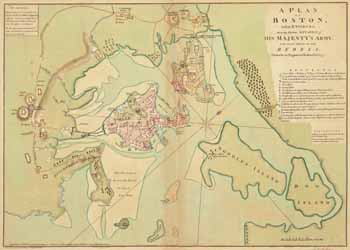
Chelsea Creek and Fighting in the Indian Way

Earlier this spring the Army Historical Foundation shared Alexander Cain’s detailed article “‘The Firing Begun on Boath Sides’: The Battle of Chelsea Creek, 27-28 May 1775.”

Cain’s introduction says:

Positioned between the significant events at Lexington and Concord (19 April) and the Battle of Bunker Hill, the Battle of Chelsea Creek (27-28 May) is frequently overshadowed by these more renowned engagements. Nevertheless, Chelsea Creek should not be regarded merely as a preliminary skirmish to Bunker Hill. The events of 27-28 May are equally essential to understanding the Siege of Boston as those at Lexington and Concord and at Bunker Hill. Therefore, the Battle of Chelsea Creek warrants comparable scholarly attention.

The Battle of Chelsea Creek holds considerable significance within the broader context of the American Revolution. This engagement is notable for several key milestones, including the first planned offensive by Provincial land forces, which resulted in direct combat. It also marked the initial collaboration between military units from different colonies and the first use of artillery by American forces in support of the Revolutionary cause. Most importantly, Chelsea Creek signaled the emergence of the American Army and the adoption of a supply interdiction strategy that benefited the Provincials in subsequent campaigns.
The Battle of Chelsea Creek also led to the first time Native Americans fought for the American forces in the “Indian” way, as opposed to individual Native men serving within militia companies modeled on the British regulars.

That started on 29 May, the day after the battle. Chaplain David Avery recorded in his diary:
About noon Capt. [Jehoiakim] Yoking, a Stockbridge Indian & I reconnoitered the Ground East of the schooner & judged that the taking off the cattle was practicable. The Capt. with 3 men took a canoe & went about a mile & a quarter upon the north side of the river from the Ferry & went across to Noddle’s Island & reconnoitered & scouted round about an hour & a quarter, when he fixed his centuries & another canoe went over to his assistance & soon took 2 horses & mired a 3d when a cannon ball fell pretty near them & four barges landed upon which all the scout retreated to the main shore & came over.

Upon that I advised that they should go back & get the stock. Accordingly they got off the Stock about sunset.
On 3 July the Massachusetts committee of safety considered a request from a man who had evidently been on that raid:
Henries Vomhavi, an Indian, having represented to this committee, that he had taken two horses at Noddle’s island, one a little horse, which he is desirous of retaining as some recompense for his fatigue and risk in that action, in which, it is said he behaved with great bravery; it is the opinion of this committee, that said Indian should be gratified in his request, which will be an encouragement to others in the service, provided, the honorable Congress should approve thereof.
The Massachusetts Provincial Congress did resolve that Vomhavi should receive “a small Horse…for his own use.”

That small operation to seize livestock from Noddle’s Island thus appears to have been conceived and carried out by the Stockbridge Indian company. That was an official part of the Massachusetts force, but people viewed those fighters as living and fighting in their own way. The horse for Vomhavi, who’s otherwise unknown, shows the rebel government saw value in compensating those men differently as well. 

Friday, June 20, 2025

The Last Years of Henry Howell Williams

I’ve written before about how Henry Howell Williams came from a wealthy, well-connected Roxbury family.

Close relatives married members of the Crafts, Dawes, Heath, and May families, all prominent in republican Boston.

Though in 1787 he told Henry Knox that he’d been “reduced to beggary” by his losses in the spring of 1775, Williams actually appears to have maintained a genteel lifestyle.

By 1784, as I wrote back here, Williams was once again living on Noddle’s Island, employing enough laborers that they needed their own building. An 1801 survey of the island labeled his rebuilt home as a “Mansion House.”

Williams also had the resources to keep petitioning one level of government after another, cajoling supportive letters from various officials. In 1789, the state of Massachusetts granted him £2,000.

Four years later, Williams bought the Winnisimmet ferry from the family that had run that concession for decades. He upgraded it and made good money for a decade crossing the Mystic River.

In 1797, Williams’s eldest daughter Elizabeth (1765–1843, shown here in a portrait by Gilbert Stuart) married Andrew Sigourney, who became the treasurer of Boston. His daughter Harriet married a son of John Avery, the state secretary. Other Williams siblings married another Sigourney, another Avery, and a couple of Williams cousins.

In that decade, Henry Howell Williams moved his family off of Noddle’s Island to mainland Chelsea. One of his last public acts, in January 1802, was to petition the state legislature to compensate him for the income he’d lose after a consortium built a bridge across the Mystic.

Williams didn’t live to see that bridge. He died in December 1802 after “three months confinement.” Lengthy death notices appeared in the Columbian Centinel and Massachusetts Mercury, obviously written by relatives and friends. They praised him as a generous host, a vigorous farmer, and a beloved family patriarch. (Notably, they make no mention of any service to the republic during the war.)

As I mentioned above, Williams’s daughter Harriet married John Avery’s son, John, Jr. In 1800, the next year, they had a son, also named John. And then in October those parents were lost at sea. Little John was raised by relatives, perhaps maiden aunts. He wouldn’t have remembered his grandfather, but he would have grown up on stories about him.

In particular, young John probably heard about the building on the Noddle’s Island farm that had once been a barrack for the Continental Army in Cambridge, and about how his grandfather’s livestock had gone to feed those troops. Putting those facts together in the most complimentary way probably gave rise to what Avery told William H. Sumner later in life: that his grandfather had been some sort of quartermaster supplying the army, and that the barrack had been a reward from the Continental commander, George Washington himself. Contemporaneous records tell a different story.

The third John Avery showed Sumner the file of documents his grandfather had collected to make his case for compensation. In 1911 another heir, Henry Howell Williams Sigourney, donated those papers to the Massachusetts Historical Society. They’re what got me started on this series about one long-extended outcome of the Battle of Chelsea Creek.

Thursday, June 19, 2025

“A bar to the object of his petition”

On 25 Feb 1792, the U.S. House of Representatives recorded receiving:
A petition of Henry Howell Williams, praying compensation for injuries sustained in his property by the army of the United States, during the late war.
The House forwarded that and other petitions “to the Secretary of the Treasury, with instruction to examine the same, and report his opinion thereupon.”

Alexander Hamilton replied on 22 November with two reports, a long one on several petitions for such compensation and a short one on Williams’s particular request.

In general, Hamilton wrote, during and after the war the Congress had provided good procedures for handling such claims. Not perfect, but good enough that opening the door for special requests now would be “both difficult and dangerous.”

As to Williams’s case:
The Secretary begs leave to add, that it appears by the petitioner’s own shewing, that the State of Massachusetts has considered his case, and granted him a compensation: And that it further appears, from a document, which was produced by the petitioner, that the compensation allowed by the State was meant to be in full.

The State of Massachusetts having decided upon a matter respecting one of its own citizens, having made him a considerable compensation, for the loss which he sustained; that compensation having been made, as in full, and having been accepted by the petitioner, it would be, as far as the information of the Secretary goes, without precedent, in any similar case, to revise the compensation made, on the suggestion of its being inadequate; nor, considering the various incidents of the war, would comparative justice be promoted by doing it.

Though duly sensible of the respectability of the petitioner, and of the extent of the losses, which he originally sustained, the Secretary cannot but regard the considerations, which have been stated, as a bar to the object of his petition.
In sum, Williams was not going to get any money from the new federal government. And as far as I can tell, that was his last attempt at compensation from the Battle of Chelsea Creek seventeen years before.

TOMORROW: What happened to Henry Howell Williams?

Wednesday, June 18, 2025

“In full compensation of the damage he sustained”

For more than a week now I’ve traced Henry Howell Williams’s quest for compensation after the Battle of Chelsea Creek in May 1774 destroyed his estate on Noddle’s Island in Boston harbor.

In 1788, the Confederation Congress’s board of treasury sent him back to Massachusetts. After all, those commissioners said, his livestock had been taken and his farm burned before the Continental Army legally existed. This was a state matter.

I don’t have access to Massachusetts legislative journals from that period, but Williams must have submitted a petition during the session that started in May 1789.

On 23 June, Gov. John Hancock and state secretary John Avery signed off on this resolution passed by both houses of the General Court:
Resolved, that the Treasurer of this Commonwealth be and he hereby is directed to issue his note in behalf of the Commonwealth in favor of Henry Howell Williams, for the sum of two thousand pounds and interest thereon from date of the same in full compensation of the damage he sustained from having his stock and other property taken from him or destroyed in consequence of orders given by the commanding officer of the Massachusetts troops [Artemas Ward] in the month of May, 1775, and that the same be charged to the United States.
Williams would get £2,000. That wasn’t all he’d asked for, but it was more than half, and more than his own estimate of the value of the livestock he said the army had confiscated.

Massachusetts would supposedly try to get reimbursed for that payment from the federal government. I doubt it ever saw money back, but I don’t know how to track that now that Williams’s name was probably no longer attached to the request.

Williams had been seeking such compensation since the summer of 1775. He had asked each of these bodies for money:
  • Massachusetts Provincial Congress.
  • Massachusetts General Court under the provincial charter, seeking relief.
  • Massachusetts General Court, seeking a loan.
  • Congress of the U.S. of A. under the Articles of Confederation, through its agent.
  • Congress of the U.S. of A. by direct petition.
  • Massachusetts General Court under the constitution of 1780.
Some men might have been satisfied with £2,000. But not Williams.

Three years later he went back to Massachusetts legislators and asked if that “full compensation” from the state meant he couldn’t also ask the new federal government for money. Five members of the committees that had considered his claim in 1789 signed off on a document dated 14 Feb 1792 saying their resolution was
by no means and in no sense to preclude any further grant, Which The Federal Legislature, or any other government, May think proper to make said Williams.
So Williams sent yet another petition off to the new national capital of Philadelphia.

TOMORROW: In the room where it didn’t happen.

Tuesday, June 17, 2025

“The Memorialist should apply to that source for relief”

In 1787, the Confederation Congress was meeting in New York, at City Hall and the Fraunces Tavern (shown here).

When Henry Howell Williams asked for more than £3,600 in compensation for losses from Noddle’s Island twelve years earlier, the Congress referred his request to its Board of Treasury. (This must have happened after 10 Apr 1787, when Williams wrote to Secretary of War Henry Knox asking for his help with this petition.)

That treasury board consisted of three men, all recent Congress delegates:
These were the same three men who considered Richard Gridley’s request for payment for a horse killed in the Battle of Bunker Hill (fought 250 years ago today).

On 1 Aug 1788 that board told the Congress:
the damage done to the property of the Memorialist, and the articles stated to have been applied to the benefit of the United States, was previous to the formation of an Army, under the authority of the Union.

The Board are therefore of opinion, that if the evidence adduced in proof of the value and quantity of the articles stated to have been applied to the public use was more satisfactory than in fact it is, it would be improper to establish a Precedent, in the present instance, for an admission of numerous Claims, on the merits of which it would be impossible for the Officers of the Treasury to form any competent judgement.

The general fact, of a very valuable property belonging to the Memoralist, having been either destroyed or used for the benefit of the Army assembled at Boston in the month of May 1775, by order of a Board of General Officers, appears by the Certificate of the late Commissioner of Accounts for the State of Massachusets, marked A, to have been well established:

Inasmuch however as the aforesaid property appears to have been applied for the immediate benefit of the State, and as the merits of the Claim can be best ascertained under their authority, The Board are of opinion, that the Memorialist should apply to that source for relief; and should Claims of a similar description be hereafter allowed by the general Board of Commissioners, the State will obtain reimbursement for such sums as shall appear an equitable compensation for the real damage sustained by the Memorialist.
In short, the Congress sent Williams back to Massachusetts since the Battle of Chelsea Creek happened before any Continental Army legally existed.

It’s probably also significant that the Confederation Congress was on its last legs. It didn’t have enough money to pay all its bills. So few delegates were coming to New York that the body often lacked a quorum—hence the use of commissioners for day-to-day administration, and the long delay in actions. By the time this board submitted its report, a new Constitution was being publicly debated.

TOMORROW: Back to Massachusetts.

Monday, June 16, 2025

“Satisfied that he was intitled to a large allowance”

engraved portrait of Israel PutnamAfter listing more than £3,600 of property lost on Noddle’s Island in May and June of 1775, Henry Howell Williams presented that document to the Continental Congress’s agent in Boston and asked to be paid back.

That agent was Royal Flint (1754–1797), from Windham, Connecticut. A Yale graduate, he became a Connecticut paymaster in 1776 and eventually a Continental assistant commissary-general under Jeremiah Wadsworth. He had accompanied the army command to Valley Forge and Morristown, New Jersey. Flint was thus used to dealing with paperwork and property.

In 1786 the Congress appointed Flint to settle Continental accounts in New England, laying out procedures for him to follow. (In a possible conflict of interest, he was also starting to speculate in western lands, an enterprise that took up all of his time after 1790 and soon broke him.)

It appears that Williams approached Flint in 1786. Flint explained that his job was to settle outstanding bills with military contractors. Even if Williams’s livestock did ultimately benefit the army, he didn’t qualify. Instead, Flint advised Williams to ask for special consideration from the small Confederation bureaucracy.

On 1 Apr 1787 Williams got Flint to write that out in a certificate now shared by the Massachusetts Historical Society. Flint told the Congress, then meeting in New York:

soon after I entered upon the duties of my office as Commissioner for Settling public accounts in this State, the annexed claim was presented to me for allowance by Mr. Henry H. Williams.

As some part of it was for articles that were destroyed & which were productive of no advantage to the United States; and as none of it was Supported by regular vouchers, I suspended my determination upon it ’till I had obtained the best evidence that could be found.

The charges for the loss of Household furniture and whatever was received merely as damage could not be admitted at this Office; therefore I did not so critically investigate the proofs which were to establish that part of the Account. But that part of the claim which related to supplies of provision, or any other articles which were applied for the benefit of the United States, could be admitted, if the evidence of the fact was Satisfactory.

Under this idea, I suggested to Mr. Williams the propriety of stating in a Separate account such articles as were applied for the use of the Army; and to produce his evidence both with respect to the value & appropriation of them. From a great concurrence of testimony, he established the general fact, that his property was taken at the time & in the manner set forth in his memorial.

We also made it evident that the horses taken were turned into public Service; whether for this State or the United States, some of the witnisses were at a loss. The Honorable Moses Gill Esqr. & the late Major Genl. [Israel] Putnam informed me, they were actually applied for the United States. The number & value of the horses was not ascertained with any precision, but it was well proved that the horses were valuable & the number considerable.

It was proved to me that some Cattle & Sheep were slaughtered for the use of the Army, but the quantity was altogether uncertain.

Upon the whole, as this claim was for so large an amount, & the evidence in support of it not precise, I recommended to Mr. Williams to lay the affair before the Commissioners of the Treasury. I was however Satisfied that he was intitled to a large allowance & should have admitted that part of the account which related to articles appropriated to public use, with some deductions.

But the claimant preferred laying a memorial before the Honorable Congress under the expectation that the whole claim will be admitted. It must be Settled by general estimation. The nature of the transaction was Such as to exclude all possibility of accurate testimony. The evidence is satisfactory as far as it goes. It is perhaps as good as the nature of the case will admit.
That wasn’t a ringing endorsement, but Flint did say that Williams deserved some compensation.

That was enough for Henry Howell Williams, who submitted his request for the whole £3,600+ to the Congress.

TOMORROW: A confederated response.

(Israel Putnam was still alive in 1787, so “the late Major Genl. Putnam” must refer to his having retired from the army.)

Sunday, June 15, 2025

“Ought to be paid by the United States”

To bolster his request for compensation after the Battle of Chelsea Creek, Noddle’s Island estate owner Henry Howell Williams assembled several documents, shared by the Massachusetts Historical Society.

One came from William Burbeck, who before the war had a job managing munitions in Castle William as well as helping to lead Boston’s militia artillery train.

I quoted Burbeck’s account last month. Because Williams took the risk of helping him get out of town, Burbeck was able to become second-in-command of Massachusetts’s artillery regiment.

As for Williams’s loyalty, Burbeck wrote:
it was Done at ye Risque of Every thing that is Dear And [he] informd. me that he was ready to save me or his Country in any thing that he Could

I know of but few men if Any in America that would have taken such Risques they being in his then situation (on an Island Surounded by men of war)—

Mr. Williams Complaynd. to me of the Ill treatment he Recd. from the Enemy that his family had been abused And his Interest taken from him & Recd. nothing therefor and that his situation was Dredfull, That he wished his Interest was off the Island and himself in the Country.
Burbeck signed that account (it’s not written in his handwriting) on 17 Apr 1776, just after the siege, as the Massachusetts legislature was moving to fortify Noddle’s Island. Obviously that document was meant to answer suspicions about Williams’s loyalty and willingness to provide provisions, even passively, to the British military the previous spring.

Williams also collected two statements signed by Moses Gill (shown above), prominent Patriot politician from the town of Princeton. One is dated 20 Mar 1786 and written in what looks like the same hand as the Burbeck statement. That document was composed for multiple people to sign, but only Gill did. It said:
in the year 1775 we were appointed by the Government A Committee of Supplies for the Army that when Genrl. [Israel] Putnam Removed the Stocks from Noddles Island, Among which were a Number of Horses which were Committed to our Care, And Upon Genrl. [George] Washington taken the Command of the Army they were with other Stores turnd. over to Colo. [Joseph] Trumbell the Continental Commissary Genrel at Cambridge
The other document signed by Gill isn’t dated, but it responds to an “account above”—probably meaning Williams’s inventory of lost property. As quoted yesterday, that accounting included “43 Elegant Horses...@ 30£.” The statement said:
I cannot with precision recollect the number, yet I believe the above amount is too high charged either with respect to the number or value of the horses.
And then the scribe inserted “not” in front of “too high.” I think that was the intended meaning all along, given the rest of the sentence, but that particular edit does raise eyebrows.

Williams also claimed to have lost “3 Cattle” and “220 Sheep.” Gill responded:
As to the Cattle & Sheep charged above, I have no personal knowledge in what manner they were applied, but I have no doubt they were used for the benefit of the American Army. as I was informed so by officers & others at that time
The bottom line for Gill:
Upon the whole, the account above charged is in my opinion just & ought to be paid by the United States.
Williams was already in discussions with a representative of the national government.

TOMORROW: A federal agent.

Friday, June 13, 2025

Going Back onto Noddle’s Island

The message from Thomas Chase quoted yesterday makes clear that in 1780 Henry Howell Williams still felt he had a claim to “the Soil” of Noddle’s Island.

Williams had leased and farmed the harbor island for years before the Revolutionary War—as his father-in-law had done before him.

But that letter doesn’t indicate Williams was living on that island again. Williams’s appearances in the Boston newspapers during the previous half-decade also suggest he wasn’t.

On 7 Sept 1775, during the siege, Thomas Bumstead put a notice in the New-England Chronicle about “a likely, well built black Mare, and a Colt by her Side,” that were “STRAYED or stolen from Mr. Henry Williams, of Roxbury.” Henry Howell Williams did raise horses on Noddle’s Island, and he may well have gone back to his father’s family in Roxbury during the siege. On the other hand, the lack of a middle name or initial might suggest this was one of his relatives with a similar name, also raising horses.

More telling, on 24 Mar 1777 James Bell advertised in the Boston Gazette for the return of a stout 28-year-old black man named Dick, who had freed himself from slavery. Bell was from Colrain, and he told readers they could deliver Dick “to Mr. Henry Howell Williams in Boston.”

On 7 Sept 1778, Henry Howell Williams himself advertised in the same newspaper for the return of an enslaved 23-year-old woman named Phillis. That notice was datelined in Boston.

Thus, in those two years Williams could be found living in Boston, not in Chelsea, as Noddle’s Island was designated. Meanwhile, the island was occupied by provincial troops and then sick French soldiers.

Then the war ended. On 11 June 1784, the Massachusetts house received “A petition from the Rev. Charles Chauncey [shown above] and others, owners of Noddle’s island, in Boston harbour, stating that said island had been greatly damaged by the troops stationed there, and praying for some compensation.” Chauncy’s third wife had inherited an interest in Noddle’s Island which passed to him on her death in 1783, and then to his heirs.

Williams and his family returned to Noddle’s Island around that time. Back in the early 1770s he had run regular ads complaining about hunters and other trespassers. He did so again in the 15 Aug 1784 Independent Ledger, saying that “Gunners” were endangering his livestock, his mowers, and his family. That notice was signed from “Noddle’s-Island.” Obviously, the farm was back in operation.

As Williams rebuilt his estate, he probably commandeered the barracks originally constructed for Continental troops in Cambridge and then moved to the island by the state in 1776. After all, no one was using that building anymore.

TOMORROW: Renewing the quest for compensation.

Wednesday, June 11, 2025

Henry Howell Williams as a Quartermaster?

In his 1858 History of East Boston, William H. Sumner wrote, “I think [Henry Howell Williams] was a quartermaster-sergeant in the army” during the siege.

To research that book, Sumner relied on Williams family sources. He wrote favorably of Williams and included the portrait of the man shown here. So that impression probably came from descendants.

In fact, the Continental Congress didn’t establish the rank of quartermaster sergeant until July 1776.

As for the possibility that Williams helped in supplying the Continental Army around Boston less formally, I’ve found no contemporaneous documentation for that. Unless, of course, we count how the Massachusetts government commandeered his livestock for the public benefit.

Adm. Samuel Graves did claim that the destroyed property on Noddle’s Island belonged to “a notorious Rebel then in Arms.” But there’s no evidence for Williams joining the Massachusetts or Continental army. We shouldn’t rely on Graves’s self-justifying account for what was happening on the other side of the siege lines.

Sumner linked Williams’s alleged work for the army to how he obtained some property from the Continental authorities after the siege:
In partial compensation for this destruction of private property was the gift of the barracks at Cambridge, after the army quitted it, by General [George] Washington, to Mr. Williams. . . . The barracks were removed to the Island, and part of them used for a house, which Mr. Williams erected over the old cellar, to be used as tenements for his workmen, and for barns and sheds for the sheep and cattle, at the westerly slope of Camp hill.
Again, I’d like to see contemporaneous evidence for such a gift. Gen. Washington was careful to work with the Continental Congress and local governments in managing public assets, so such a grant should have left a paper trail. The documents I’ve found suggest another story.

[The search function for Founders Online has slowed down considerably in the past month. On 19 May the U.S. government issued an acknowledgment of “periodic degraded performance owing to extreme spikes in traffic caused by excessive website crawling, associated with content scooping from AI platforms and other indexers.” This slowdown coincided with the D.O.G.E. takeover of federal government computer networks. Given that new agency’s faith in A.I. programs, that could be related to the “scooping.”]

TOMORROW: The barracks on Noddle’s Island.

Monday, June 09, 2025

“The horses lately taken from Noddle’s Island”

The major fighting over Noddle’s Island, later elevated with the name of the Battle of Chelsea Creek, took place on 28 May 1775.

Provincial troops returned to the island on 30 May and 10 June to remove the remaining livestock and burn the structures still standing on Henry Howell Williams’s farm.

On 2 June, the Massachusetts Provincial Congress appointed a five-man committee to consider what to do with “the horses lately taken from Noddle’s Island.”

That committee decided to treat a significant number of those animals, if not all, as belonging “to our enemies” and thus as the spoils of war. Perhaps those horses really had been the property of the British military, left to graze on the island. But we know that Williams had raised horses on that island, and on 12 June he told the congress that provincial soldiers had taken more than eight horses from his farm.

Before that petition arrived, the congress had adopted its committee’s recommendation:
the same horses be delivered to the committee of supplies, to be by them used and improved for the benefit of the colony, as they shall think fit, until further order from this or some future congress, or house of representatives.
On 13 June, one horse was grazing outside Edmund Fowle’s house in Watertown, where Provincial Congress committees met. The congress assigned “the horse in Mr. Fowle’s pasture in this town, which was taken lately from Noddle’s island,” to James Sullivan. Along with two other delegates, he was about to head west to inspect Crown Point and Fort Ticonderoga, and he needed transportation.

On 3 July, the committee of safety resolved:
Henries Vomhavi, an Indian, having represented to this committee, that he had taken two horses at Noddle’s island, one a little horse, which he is desirous of retaining as some recompense for his fatigue and risk in that action, in which, it is said he behaved with great bravery; it is the opinion of this committee, that said Indian should be gratified in his request, which will be an encouragement to others in the service…
The next day the full congress heard the “recommendation of the committee of safety relative to an Indian’s having a horse.” Yet another committee endorsed the plan to give Vomhavi the small horse “to encourage his further brave conduct and good behaviour in camp,” and the congress agreed.

The Provincial Congress thus recognized how the Stockbridge company was a valuable part of its army, and how its men might have particular expectations in regard to warfare. While Sullivan was supposed the return the first horse, the second now belonged to Vomhavi.

TOMORROW: And for Henry Howell Williams?

Sunday, June 08, 2025

“Your poor memorialist is stripped almost naked”

Within two weeks of seeing the provincial army destroy his house and farm on Noddle’s Island during the Battle of Chelsea Creek, Henry Howell Williams petitioned the rebel government for support.

On 12 June 1775 he told the Massachusetts Provincial Congress (as transcribed in American Archives):

That your memorialist hath, for eleven years last past, dwelt on an island in Boston Bay, commonly called Noddle’s Island, at a very high rent, and in order to pay the same was obliged to keep a large stock of horses, cattle, sheep, &c.; and that during all the years aforesaid hath paid very large taxes for said island, stock, &c., for the support of Government; and hath always endeavoured faithfully to discharge his duty, as a good member of society, towards all men, and all that was theirs.

That on Saturday, the 27th day of May last, a number of armed troops, commonly called Provincials, came on to said island, by way of Hog Island, and did then and there kill or carry away eight horses and three cows, part of the aforesaid stock, and also burnt and destroyed one dwelling-house and barn, with all the household goods therein contained, wearing apparel, &c.

That on Monday, the 29th of May, the same or another number of said armed troops, came again on to said island, and then and there did burn and destroy two other dwelling-houses, goods, &c., and three barns; and at the same time did take away and drive off from said island about five hundred old sheep, and about three hundred and forty lambs, with between thirty and forty head of horned cattle, the property of your memorialist, together with a further number of horses, hogs, &c., &c.

And that on Tuesday, the 30th day of May aforesaid, they entered again on to said island, and then and there proceeded and burnt your memorialist’s mansion house, with all the barns, corn-houses, and store houses, stores, provisions, goods, house furniture, wearing apparel, liquors, and utensils of all sorts, to a very considerable amount and value:

And on Saturday, the 10th day of June, instant, entered again, and burnt and destroyed the warehouse, the last building on said island, by which means your poor memorialist is stripped almost naked, and destitute of any place to lay his head, with a very large family of children and servants, to the amount of between forty and fifty in number, that are destitute of any business or supplies but from your memorialist.

These are therefore to request your Honours will take his most distressed circumstances into your wise consideration, and make such order thereon as in your wisdom shall seem meet…
That number of forty to fifty dependents probably included everyone Williams employed at harvest time, not his year-round staff. But he was trying to make the case that his personal loss was a societal problem that justified spending scarce public funds.

It looks like Williams had given up hope of having the congress help retrieve his livestock. In fact, the rebel government was already assigning horses from Noddle’s Island to the war effort. The sheep, cattle, and hogs went toward feeding the troops. Figuratively, it was too late to close that barn door.

Then the Battle of Bunker Hill happened five days later, giving the Provincial Congress a lot of other things to deal with.

TOMORROW: Animal tracks.

Saturday, June 07, 2025

“Belonging to Mr. Henry Howell Williams”

Henry Howell Williams lost more property in the Battle of Chelsea Creek than anyone else but the Royal Navy.

Williams held the lease for Noddle’s Island. He had a big house there—big enough to show up on maps of the harbor. He’d invested in agricultural outbuildings, horses, sheep, cattle, hogs, and hay.

Williams probably took his family off the island in April, soon after the war began. On 1 May, Adm. Samuel Graves granted him a pass to go to and from his home, with the stipulation that he not remove anything. Williams later reported that his house still contained a clock bought in Britain, mahogany furniture, family pictures, and other genteel possessions.

Late that month, provincial troops went onto Hog Island and Noddle’s to grab animals, keeping them away from the British. In the fighting that followed, they set fire to the hay and most buildings on Noddle’s Island. In early June the provincials returned to grab the remaining livestock and burn the last structure.

Williams’s farm was reduced to charred ruins on an empty, singed landscape. As I wrote back here, Williams was protective of his interests, placing regular advertisements to warn off trespassers and hunters. He came from a wealthy Roxbury family. He had connections to men in the Patriot leadership.

However, Williams had also signed the farewell to Gov. Thomas Hutchinson. He sold his livestock and forage to the British military, possibly even after the war began. That no doubt affected his standing with the provincial authorities.

On 31 May, Gen. Artemas Ward’s general orders stated:
That the stock, which was taken from Noddle’s Island, belonging to Mr. Henry Howell Williams, be delivered to his father, Col. Joseph Williams, of Roxbury, for the use of the said Henry H. Williams.
But evidently few or no animals were driven all the way around the siege lines to Roxbury and returned to the Williams family. After all, there was a war on. The provincial army also needed food and horses.

TOMORROW: The first petition.

Friday, June 06, 2025

“Every thing I had, to amount of Seventy pounds”

Yet another outcome of the Battle of Chelsea Creek was the destruction or removal of various agricultural resources on Hog Island and Noddle’s Island: hay, livestock, and buildings.

Provincial soldiers removed all the animals they could and destroyed the rest to prevent the British military from using it.

Alexander Shirley was a longtime resident of Noddle’s Island, as attested to by Isaiah Tay of Chelsea. In March 1776 Shirley told the Massachusetts legislature that its troops had “set fire to my Hous, & Destroyed all my substance, goods, & provisions, & every thing I had, to amount of Seventy pounds, Lawfull Money, at least.” He had “a large family of Children” to support.

That wasn’t a large estate, and Shirley didn’t claim to have lost crops or animals. That’s because, while he probably tended the island’s livestock and worked the harvest, he didn’t own the farm. He worked for Henry Howell Williams.

Boston vital records show that Alexander Shirley married Eleanor McCurdy in 1750, when he was in his thirties. They had children baptized at Christ Church in the North End. In 1774 Alexander Shirley married Molly King, so Eleanor had probably died.

Alexander Shirley appears to have actually been part of the Chelsea company of provincial soldiers who fought on Noddle’s Island in May 1775. Massachusetts Soldiers and Sailors of the Revolutionary War lists both Alexander Shirley of Chelsea and Alexander Shirley, Jr., of Chester, New Hampshire, in Capt. Samuel Sprague’s company, along with other men named Shirley—quite possibly related.

After the war, the older Alexander Shirley and his wife went back to living on Noddle’s Island, still working for Williams. In old age he gained the nickname “Governor Shirley” (since William Shirley was no longer using it).

On 17 Feb 1800, Alexander Shirley died “aged eighty-three, an inhabitant of the Island for upwards of fifty years.” The funeral took place the next day from the house of John Fenno, described as “at Winnisimmet-Ferry.” Shirley was buried in the Copp’s Hill cemetery after one last trip across the water.

TOMORROW: The big loser.

Saturday, May 31, 2025

Heading into June 1775 with Confidence

One consequence of the Battle of Chelsea Creek is that by the end of May 1775 the provincial troops started to feel pretty powerful.

The militia mobilization of the Lexington Alarm had done significant damage to the Crown forces. Fortifications were keeping the king’s troops inside Boston.

The Royal Navy was seizing some ships and raiding coasts and islands for food. But three times now the provincial defenses had pushed back. Fairhaven men had recaptured two ships from Capt. John Linzee of H.M.S. Falcon. Hingham and other South Shore companies had forced troops off Grape Island with only a fraction of the hay they wanted.

And the fight over Hog Island and Noddle’s Island was even more impressive. The provincials came away with some livestock, reducing the food supply for besieged Boston. They set fire to hay being grown to feed the army’s horses.

In the fighting that followed, the provincials had deployed artillery for the first time and withstood return fire. They hadn’t lost any men, with four wounded and expected to recover, and reports out of Boston suggested some of the enemy had died. (Two seamen were killed, in fact, but some early reports put the number of Crown casualties as high as thirty.)

From H.M.S. Diana the provincial troops had pulled useful supplies: four four-pounder cannon, twelve swivel guns, the mast, and various bits of fresh rigging—the ship had been launched only the previous year.

And then those troops had actually destroyed the Diana—a Royal Navy warship! True, it was a relatively small vessel that had run aground, but that was obviously a provincial victory and a royalist loss.

Even the most cautious New England commanders and soldiers must have felt they were on a roll when they made the move onto the Charlestown peninsula on the night of 16 June. But the scale of the battle that followed was far beyond any other fight in the Boston campaign.

The Sestercentennial of the Battle of Bunker Hill will be observed on two successive weekends in June:
Make your plans now!

Wednesday, May 28, 2025

“The Diana was soon after burnt by the rebels”

Having covered the maritime seizures that took place between Fairhaven and Martha’s Vineyard (14 May 1775) and the exchange of fire over Grape Island off Hingham (21 May), I’ve come back to the skirmishing over Hog Island and Noddle’s Island that’s become known as the Battle of Chelsea Creek.

And just in time for its Sestercentennial! (Well, the Sestercentennial of the second day of the action.)

Here’s a description of that fight from the British perspective, not contemporaneous but within living memory, published in 1804 by former engineer Robert Beatson in Naval and Military Memoirs of Great Britain:
The insurgent Americans, with astonishing perseverance, pursued their avowed design of cutting off every possible supply from the friends of Government, and of destroying what they could not carry away.

On the 27th of May, they burnt a great deal of hay on Hog island; and a few hours after, they landed on Noddles island, with the intention of also burning the hay which had been purchased for the army, and of adding to the conflagration, by laying in ashes a storehouse that had been hired when his Majesty’s ship the Glasgow was on shore, and in which the Admiral [Samuel Graves] had deposited two large cargoes of lumber, until an opportunity should offer of sending them to Halifax.

The storehouse also contained many other articles, which it was of great consequence to preserve, from the impossibility of having them replaced at this juncture. There were likewise on this island six hundred sheep, several milch cows, and a number of horses, mostly private property.

The Admiral, eager to prevent the depredations of the Americans, when he observed that they were landed upon the island, immediately ordered the Diana schooner (newly arrived) to sail between it and the main; and to get up as high as possible to intercept them: and as assistance from the army required time, he directed a party of marines to be landed.

The Diana entered the river between three and four in the afternoon at low water, and proceeded to Hog island, with some interruption from the rebels on all sides. Their numbers on Hog and Noddles islands were computed at seven hundred men. Parties of each occasionally attacked the Diana. They were, however, all obliged to quit Noddles island, without doing the intended mischief.

This being effected; Lieutenant [Thomas] Graves [shown above, later in his career], whom the Admiral had ordered not to remain in the river upon the turn of the tide, began to move off: but being retarded by a calm which unluckily took place, the boats of the squadron were ordered to assist the Diana by towing her along.

The slow progress which she made gave time for the enemy to assemble; and by the close of the evening the whole country was alarmed, and the rebel General [Israel] Putnam had brought two thousand men with field-pieces from Cambridge, with which he lined the shore and greatly annoyed her.

The marines from the squadron were landed on the island, with two three pounders from the Cerberus; and General [Thomas] Gage, the moment it was in his power, sent two pieces of artillery: but it was impossible, though in sight of the fleet, to give the schooner any effectual assistance.

The calm continued; it grew almost dark; the fire of the rebels increased; between eleven and twelve at night, she unfortunately got aground upon the ferry-ways at Winnisimmest, and the tide ebbing fast, rendered every effort to move her ineffectual.

About three in the morning she fell over, and her crew were obliged to abandon her, and go on board the Britannia armed floop, which had been sent to their assistance. The Diana was soon after burnt by the rebels.

The battle was renewed by Lieutenant [John] Graves in the Britannia, and lasted about eleven hours from first to last, in which there were two men killed, and several wounded; the commander, officers, and crew of the Diana schooner were tried by a Court-martial for the loss of the vessel, and most honourably acquitted.
Lt. Thomas Graves of was a nephew of Adm. Samuel Graves, as was Lt. John Graves of the Somerset’s tender Britannia. Other sources say both Graves brothers suffered serious burns when the provincials set the Diana on fire.

This account is based mostly on Adm. Graves’s report to the Admiralty on 7 June. He said almost nothing about this event in his later narrative of the start of the war, most likely because it didn’t reflect very well on the navy in general and his family in particular.

The courts martial that Beatson mentioned were held in Boston, under Adm. Graves’s eye. In their 2013 New England Quarterly article on this fight, Craig J. Brown, Victor T. Mastone, and Christopher V. Maio reported that all the British mariners testifying at Lt. Graves’s trial said the Diana hadn’t gone far upstream, but the archeological record suggests otherwise. In sum, that inquiry might have been a whitewash. Both Graves brothers eventually became admirals.

Of the shoreline fights between Crown and provincials in May 1775, this was the first in which either commander reported any of his own men killed. The two Royal Navy seamen who died were named George Williams and William Crocker. The Rev. John Troutbeck, assistant rector at King’s Chapel, “performed divine Service” at their funeral on board H.M.S. Somerset.

Wednesday, May 21, 2025

“Observing the Rebels landed on Noddles Island”

On 14 May 1775 the Massachusetts Provincial Congress’s committee of safety, aware that the British military was buying or confiscating sheep and cattle pastured on the Boston harbor islands, passed this resolution:
as the opinion of this committee, that all the live stock be taken from Noddle’s island, Hog island, Snake island, and from that part of Chelsea near the sea coast, and be driven back; and that the execution of this business be committed to the committees of correspondence and selectmen of the towns of Medford, Malden, Chelsea and Lynn, and that they be supplied with such a number of men as they shall need, from the regiment now at Medford.
That strong opinion apparently didn’t have the effect the committee wanted. It was, after all, recommending that other people undertake a difficult task that wouldn’t normally fall within their responsibilities.

So ten days later the committee resolved:
That it be recommended to Congress, immediately, to take such order respecting the removal of the sheep and hay from Noddle’s Island as they may judge proper, together with the stock on the adjacent islands.
The next day, 25 May, Gen. Thomas Gage wrote to Adm. Samuel Graves (shown above):
I have this moment received Information that the Rebels [intend] this Night to destroy, and carry off all the Stock & on Noddles Island, for no reason but because the owners having sold them for the Kings Use: I therefore give you this Intelligence that you may please to order the guard boats to be particularly Attentive and to take such Other Measures as you may think Necessary for this night.
According to Lt. John Barker, some British troops went onto Noddle’s Island that day “to bring off some hay.” But that was about it.

On the morning of 27 May, about 600 provincial soldiers under Col. John Nixon and Col. John Stark moved from Chelsea onto Hog Island. They began to round up livestock, most likely owned by Oliver Wendell, and set fire to hay and other crops.

In the afternoon, part of that provincial force crossed to Noddle’s Island, burning some structures. The smoke from the fires alerted British commanders. Capt. John Robinson of H.M.S. Preston sent an alert to Adm. Graves, who later wrote:
Upon observing the Rebels landed on Noddles Island, I ordered the Diana to sail immediately between it and the Main[land], and get up as high as possible to prevent their Escape, and I also directed a party of Marines to be landed for the same purpose.
That started the second significant fight of the siege of Boston, which local historians later named the Battle of Chelsea Creek. Rather than recounting the two-day action blow by blow, I recommend Craig J. Brown, Victor T. Mastone, and Christopher V. Maio’s article in the New England Quarterly from 2013 and HUB History’s recent podcast.

On Saturday, 24 May, Chelsea will commemorate the Sestercentennial of the Battle of Chelsea Creek. There will be military drills, artillery demonstrations, and other events at Port Park. The Governor Bellingham Cary House Museum will have an open house. There’s also a boat tour, but that’s sold out (and the Battle of Chelsea Creek wasn’t really a good event for sailing vessels, anyway).

On that same day, East Boston will commemorate the Sestercentennial of the Battle of Chelsea Creek at Condor Street Urban Wild with two battle reenactments at 11:00 A.M. and 3:00 P.M., a boat tour, a walking tour, military music, games, crafts, and the usual activities of modern public festivals.

After the anniversary passes, I’ll discuss a couple of the outcomes of that fighting.

Monday, June 19, 2023

“I should not have chose this town for an Asylum”

On 17 June 1775, as I quoted yesterday, John Adams complained that five friends from Massachusetts hadn’t sent him any letters with news about the province since he’d left for the Second Continental Congress.

I decided to look into what those men did in the previous two months.

The Rev. Dr. Samuel Cooper had fled from Boston on 9 April, halfway through Sunday services, wary that Gen. Thomas Gage might order his arrest. He settled in with Samuel P. Savage in Weston. By the end of the month Cooper had his wife, daughter, and clothing with him, but not his library or all his letters.

In early May, Cooper arranged to stand in as the minister in Groton. Or rather, since that town was far away and he liked being near the seat of Patriot power, he made deals with other ministers to go out and preach in Groton while he preached in their churches close by. For a while, at least, he could coast on his celebrity as Boston’s most silver-tongued minister and recycle his old sermons.

Prof. John Winthrop of Harvard College lived in Cambridge. As the king’s troops marched through town on 18–19 April, he and his wife Hannah fled for safety, first to the Fresh Pond area, then further the next day, fearing the redcoats would return.

Later Hannah Winthrop wrote to her friend Mercy Warren:
Thus with precipitancy were we driven to the town of Andover, following some of our acquaintance, five of us to be conveyd with one poor tired horse & Chaise. . . .

I should not have chose this town for an Asylum, being but 20 miles from Seaports where men of war & their Pirates are Stationed, but in being fixd here I see it is not in man to direct his steps. As you kindly enquire after our Situation, I must tell you it is Rural & romantically pleasing.
Back in Cambridge, militia companies arrived en masse, taking over the college buildings and larger mansions. Most of the townspeople left.

By mid-June, however, the Winthrops were back home, though only temporarily. The professor helped to pack up the Harvard College library and scientific equipment. College classes resumed in Concord in October, and the Winthrops settled there for the rest of the school year.

Adams’s list started with three lawyers, all from Boston. All also had ties of family or friendship to Loyalists, and that complicated their choices as the war broke out.

Benjamin Kent at some point got a pass out of Boston and, according to his profile in Sibley’s Harvard Graduates, stayed with various friends in the countryside through the siege. Though he remained in the U.S. of A. through the war, in the mid-1780s he moved to Canada to spend his last years with his children.

William Tudor was just starting his legal career. He was also courting Delia Jarvis, a young lady from a Loyalist family. According to a family memoir, after the fighting started, Tudor tried to wrangle passes for himself, her, and her family from the Adm. Samuel Graves’s secretary, but that effort was fruitless.

On 12 May, Tudor “broke from Boston by the roundabout way of Point Sherly” in Chelsea (now Winthrop), leaving Delia and her family behind. He sought a position in the Patriot service. With John Adams championing him, Tudor became the Continental Army’s judge advocate general in the summer of 1775.

TOMORROW: The legend of Samuel Swift.

Monday, February 06, 2023

“Go down to the ferry ways so as to see Charls”

Even after the siege of Boston began, the nearby ferries continued to operate, at least intermittently. Those boats offered ways to transmit information or goods, sometimes illicitly.

There was a ferry between Boston’s North End and Charlestown, operated by a man named Enoch Hopkins (d. 1778). On 15 June 1775, a Boston magistrate named William Stoddard wrote to James Littlefield in Watertown:
Your letter and the last, dated the 13th instant, by Mr. Hopkins, I have received. I waited on the Admiral [Samuel Graves] this morning, and have got you a fishing pass for your boat and three men, to come in and out of this harbour, which I now send you. You will carefully observe the pass; you must observe to go a fishing from Salem, before you come up here, and then you may come in and go out. I hope you will not meet with any obstruction at Salem; not forgetting, if in your power, to bring up veal, green peas, fresh butter, asparagus, and fresh salmon.

Mr. Miles went away yesterday in the afternoon, by water, in order to come to you, and we suppose he is with you before this. I hope you have received a cloak, with a bag of brown sugar, I sent over yesterday by Mr. Hopkins’s son. I have paid some of the ferrymen, and I shall pay them all for their trouble, when I have done with them. Do not pay them any thing; if you have, let me know; keep that to yourself. . . .

I wish you would send me last Monday’s newspaper, and this day’s paper. I shall be much obliged to you, if you can, before you go for Salem, send me some fresh butter, and half a bushel of green peas. I now send you two dollars in this letter, and an osnaburgh bag, by Mr. Hopkins’s son, to put the peas in. What other charges you are at I will settle with you hereafter.
On 28 July, Joseph Reed, Gen. George Washington’s military secretary, wrote about getting a secret message into Boston via “a Waterman” operating north of Boston, possibly Hopkins. And at some point during the siege, a Boston shopkeeper warned Gen. Thomas Gage that ferrymen named Hopkins and Goodwin were “as bad Rebels as any”:
I have seen them bring men over in Disguise—and they are up in Town every Oppertunity they have gathering what Intelegence they can and when they return communicate it to the Rebels the other side, and they again to the Rebel Officers.
This may be the same Enoch Hopkins who with his wife and seven children arrived in Concord as war refugees in November, as Katie Turner Getty has written about.

The British army took the Charlestown peninsula two days after the Stoddard letter above. That meant the ferry across the Charles River was fully within royal territory, and the Mystic River now defined the siege line. There were two ferries crossing the Mystic to Charlestown, one from Malden called the Penny Ferry and one from Chelsea called the Winnisimmet Ferry (spelled variously, of course).

On 6 August, British army raiders burnt the Penny Ferry landing house in Malden, and it was never rebuilt.

At Chelsea, Lt. Col. Loammi Baldwin was in charge, stationed at the ferry landing. On 28 July he became part of Reed’s chain of men sending information into Boston, and in return he sent headquarters several reports about people coming over the Winnisimmet Ferry.

As I quoted yesterday, in the summer of 1775 Dr. Benjamin Church discussed using the Winnisimmet Ferry as a conduit for information and what he really wanted, money:
If I am to Continue in your Service Major be so good to send me out a little Cash, Charly the ferry Man if you can trust him may give it me—Slyly—by heavens Major I shou’d loose my life if it was known by these people.

I attempted some time ago to write you, over Chalsey ferry but the Committy would not let me go down to the ferry ways so as to see Charls. After that I did not try but went to Newport and from thence wrote.
Clearly the local Patriot authorities (“the Committy”) understood that people might use that ferry for nefarious purposes and didn’t let Church, or probably anyone, go there alone. 

I’ve tried to identify this ferryman named “Charly” or “Charls” (or, presumably, Charles) without success. While the men granted the right to run a ferry sometimes show up in the records, Charly may well have been an employee instead.

Stymied by that route, Church instead sent information through Newport, and ultimately that led to his arrest.

TOMORROW: Church’s report on the Arnold expedition.

Thursday, August 13, 2020

“Brisk Firing” along the Rivers in 1775

When we last peeked in on Malden during the siege of Boston, a British raiding party from Charlestown had crossed the Mystic River and burned the building at the Penny Ferry landing.

The Continental Army officer assigned to that spot, Capt. Eleazer Lindsey, was no help. Reports differ about whether he had gone home or took just that moment to go home in a hurry.

The British floating battery remained in the Mystic River, threatening those parts of the American siege lines.

A week later, on 13 Aug 1775, there was another exchange of fire. It started when some British boats came to resupply the floating battery. Capt. William T. Miller of Rhode Island, stationed on Prospect Hill, told his wife there were “2 Boats that were armed from Bunkers hill.” The historian Richard Frothingham later stated there were “two barges and two sail boats, on their way from Boston.”

Men guarding Malden’s ferry landing opened fire. Capt. Miller wrote that the British boats “were Drove back by the brisk firing of Some field pieces from Malden this day which Caused them in a Very great Hurry to Retreat and Run ashore on Bunkers hill Shore.”

Those small cannon might have been the two that had arrived in April from Newburyport. If so, the men firing them appear to have been a local guard rather than men from Lindsey’s company. In addition, Lt. Col. Loammi Baldwin’s soldiers at Winnisimmet in Chelsea fired on the British boats.

There were no known casualties on either side. The Continentals were quite pleased with their performance in comparison to the previous week, though presumably the redcoats would have gone back to their lines anyway.

Both Lindsey and Baldwin reported to Col. Samuel Gerrish of Newbury. His regiment was spread out over several spots along the northern wing of the siege lines. When a group of officers from the regiment sent a petition to Gen. George Washington complaining that they hadn’t been paid, they signed from the “Camps at Chelsea, Malden, Medford, and Sewells Point” near what is now the B. U. Bridge.

Gen. William Heath’s memoir records a similar British attack on that Brookline fortification a couple of weeks earlier, on 31 July:
A little before one o’clock, A.M. a British floating-battery came up the river, within 300 yards of Sewall’s Point, and fired a number of shot at the American works, on both sides of the river.
Some of the works on the Cambridge side survive as Fort Washington Park. The picture above, a detail from Henry Pelham’s map of the siege, shows the area in 1775. (Pelham’s map has north on the right.)

That attack might have been the occasion when Col. Gerrish chose not to shoot back at the British but instead told his men to hunker down behind their walls. Reportedly he said, “the rascals can do us no harm, and it would be a mere waste of powder, to fire at them with our 4 pounders.” That was the wrong attitude for an officer already under criticism for how he had behaved at the Battle of Bunker Hill.

COMING UP: Washington’s “pretty good Slam” among the officers.