J. L. BELL is a Massachusetts writer who specializes in (among other things) the start of the American Revolution in and around Boston. He is particularly interested in the experiences of children in 1765-75. He has published scholarly papers and popular articles for both children and adults. He was consultant for an episode of History Detectives, and contributed to a display at Minute Man National Historic Park.

Subscribe thru Follow.it


•••••••••••••••••


Showing posts with label John Prince. Show all posts

Thursday, December 21, 2023

“His hat and clothes were covered with tea dust”
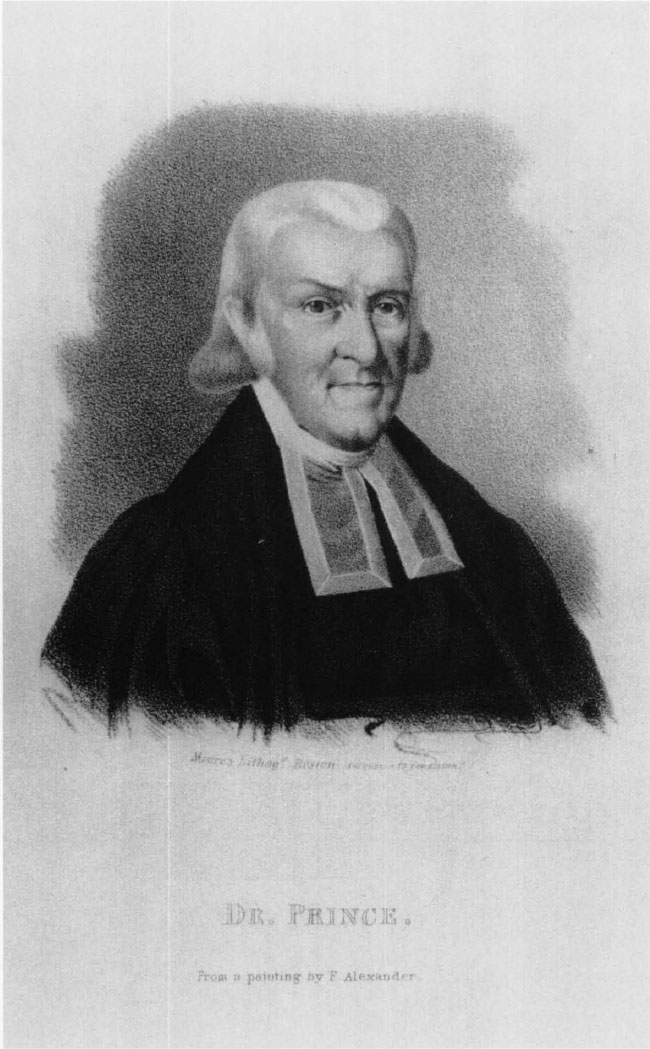
The Rev. Dr. John Prince (1751–1836, shown here) had an unusual path to the pulpit, and an unusual sideline afterward.

He was apprenticed and trained as a tinsmith and pewterer in Boston before entering Harvard at age twenty-one, several years older than a typical undergraduate of the time. After college and a master’s degree, Prince became a minister for Salem’s First Meeting.

Prince’s early practical training allowed him to become an expert on scientific instruments in the early republic. He invented, produced, evaluated, brokered, and repaired apparatus for several institutions, including his alma mater.

Back while he was an undergraduate, Prince was a close witness of the Boston Tea Party and its aftermath. He preserved his recollections of the event in a letter published in the Salem Gazette on 24 Sept 1833:
Mr. Editor,—There is a mistake in the Salem Mercury of last Wednesday, where, in speaking of the tea, it is said “there is a venerable Clergyman in Salem who took a part in the tea frolic, and assisted in emptying the chests into the sea”—

As there is but one clergyman now in Salem, who was a boy old enough to have assisted in the destruction of the tea at that time, viz. Dec. 16, 1773, it is evident who is meant by the “venerable Clergyman,” and he sends you this note to correct the mistake, and inform you that he was only a quiescent spectator of the transaction, and had no hand in destroying the tea. He stood upon the quarter deck of the vessel, leaning over the rail which crossed the deck, while the persons, disguised as Indians, were unloading her, and could plainly see what was doing, though it was principally in the evening.

Two men stood at the hatchway on the main deck, with axes in their hands, and as the chests were hoisted out of the hold they knocked off the tops and emptied the tea into the dock, and threw the chests after it. The tide was out, and the tea was piled up on the flats by the side of the ship as high as her gunwales.

The boy, as the Clergyman is called, was then more than 22 years old, and was not “an apprentice at that time.” He crossed the vessel’s deck in going on shore, and so much of the tea was scattered on it as to be over his shoes, which he found full when he got home; and his hat and clothes were covered with tea dust as a miller is with meal in his mill.

He went on to the wharf the next morning, where a great concourse of people was assembled to view what had been done the night before, (by the Mohawk Indians, it was said). Amongst the people assembled was the old British Admiral, ([John] Montague) who looked with astonishment on the scene of devastation, and said, the Devil is in this people, for they pay no more respect to an act of the British parliament, which can make England tremble, than to an old newspaper, and then went off of the wharf.

In the morning after the tea was thrown overboard the ebb tide carried most of it away, and the empty chests were seen floating down the harbor on the Dorchester shore in a line, extending to the castle. The business of destruction of the tea was conducted without any tumult or great noise; nor was any damage done to the vessel, or to any other effects whatever. The writer of the above knew several of the Indians who did the patriotic work.
Although the Salem Gazette didn’t print Prince’s name with this letter, the Gloucester Telegraph reprinted it on 28 September and blew his anonymity. Prince wrote several more reminiscences of the Revolutionary period for the Salem Gazette, their authorship not confirmed until his death notice.

This 1833 letter put Adm. Montagu at Griffin’s Wharf while complaining about the locals on the morning of 17 Dec 1773, as I discussed yesterday.

As part of its program to mark the graves of seemingly all known, suspected, rumored, or claimed Tea Party participants, the Boston Tea Party Ships & Museum has included Prince as an “honorary participant.” I think that’s more than fair, given that he was actually on board one of the ships and would surely have faced criminal charges if there had been a royal police force to break up the action.

Wednesday, December 20, 2023

“Who was to pay the fidler”?

As I wrote yesterday, George R. T. Hewes’s story of Adm. John Montagu exchanging words with Tea Party leader Lendell Pitts as the men were marching off Griffin’s Wharf on 16 Dec 1773 seems unlikely, in both its details and its essence.

And yet there is contemporaneous support for one point of that story, which might have been the seed it grew from.

On 23 December, Gov. Thomas Hutchinson wrote to his ally Israel Williams about the event. That letter said:
Because a number of Gentlemen, who without their knowledge, the East India Company made the Consignees of 400 Chests of Tea would not send it back again, which was absolutely out of their power, they have forced them to fly to the Castle [for] refuge and then have destroyed the property [commi]tted to their care. Such barbarity none of the Aboriginals were ever guilty of.

The Admiral asked some of them next moring who was to pay the fidler.
That last remark echoes how Hewes would quote Montagu:
“Well, boys, you have had a fine pleasant evening for your Indian caper—havn’t you? But mind, you have got to pay the fiddler yet!”
We also have a Massachusetts source from 1833 saying that Adm. Montagu was on Griffin’s Wharf the morning after the tea went into the harbor, complaining about what the Bostonians had done. (I’ll share that account soon.)

Thus, it’s quite plausible that Montagu asked “who was to pay the fidler” on Griffin’s Wharf the day after the Tea Party, locals who heard him told others, and Hewes incorporated the phrase into his stories of the night, jiggering the details.

Lendell Pitt’s reputed response to the admiral appears to be an example of staircase wit—what Hewes (and his audience) wished someone had a chance to say back to a royal official.

Such scholars of the Tea Party as Benjamin Woods Labaree and Benjamin Carp have recreated events this way, putting Montagu on the wharf on 17 December but not the night before.

Other accounts, built more from tradition than from analyzing early sources, continue to repeat Hewes’s anecdote—as does Johnny Tremain. So it will be with us for a while yet.

Monday, November 11, 2019

The Mysteries of David Province

When George Gailer sued for damages after being tarred and feathered, he named four people from Boston: “David Bradley, Pool Spear, Taylors, and David Provence Infant and Edward Mathews Mariner.”

I’ve come up blank on “Edward Mathews[,] Mariner.” Ordinary sailors don’t leave a lot of records, and this man’s name is too common.

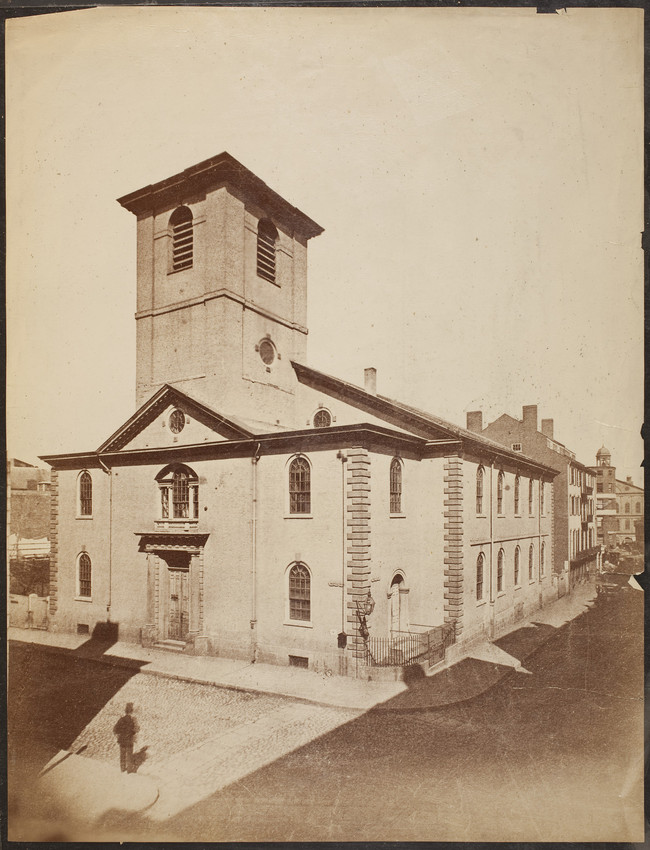
For David Province I have limited information about his childhood. David’s father, John Province, married Sarah Prince in late December 1747. Brattle Street Meetinghouse (shown here) recorded that they had Mary in 1752, Sarah in 1757, and twins Abigail and Elizabeth in 1763. However, there’s no sign of a son named David in those published records.

In 1758 Sarah (Prince) Province’s father, a ship’s captain named John Prince, died. His estate included a house and land on Milk Street, an enslaved man named Jack, and a two-masted, fully rigged boat. But he left only 20s. to his daughter Sarah, saying he had already supported her in life. He left a larger sum—£13.6s.8d.—to her children. That bequest may have been a way to make sure her husband John Province didn’t control much of his estate.

In September 1760 Thomas Hutchinson, in his capacity as a probate judge, assigned John Province to be guardian for his son David Province, who was under the age of twelve. In other words, Province ended up controlling any bequest from his father-in-law to his son anyway, but he had to keep accounts under court supervision.

(I note the possibility that David Province was John Province’s son by another woman, born after his marriage to Sarah Prince. That would be unusual, but could explain the anomalous details. Of course, there might just be gaps in the surviving records.)

The Province family lost their home in the great fire of 1760—the one that had started at the Sign of the Brazen Head. [Whatever happened to that storyline, anyway?] But the Province children were among the fortunate Bostonians who received public support. That September, John Province bought new real estate on Lynde Street.

By 1767 John Province was established securely enough to join the Scots Charitable Society. Later he took in apprentices through the Overseers of the Poor. He died in 1792 at the age of 72, and the Columbian Centinel reported that the funeral would be out of his home in West Boston. His will mentioned two married daughters, one in Nova Scotia and one in Albany, but no son.

Indeed, I found no records of David Province after the 1770 lawsuit, in which he played only a minor [!] part. He was probably the right age to serve in the military during the war, but he’s not listed in Massachusetts Soldiers and Sailors… He may have died before 1775.

As to the attack on George Gailer, the most pertinent information about David Province may be that his father was a tailor. That’s stated in both the probate and Overseers records. David may therefore have been an apprentice tailor. Two of the three Boston men in the lawsuit were tailors, the only men not connected with the maritime trade.

Why, I wondered, were tailors so interested in tarring and feathering a sailor for informing on a smuggler? Then I realized that might not be the right question. Out of all the crowd that attacked him, how did Gailer learn the names of two or three tailors? The answer might have something to do with how Gailer “took Shelter in a House” for most of the day before being grabbed. Perhaps workers in a nearby tailor shop kept a watch for him, or something like that.

TOMORROW: Pool Spear and the long arm of the law.