J. L. BELL is a Massachusetts writer who specializes in (among other things) the start of the American Revolution in and around Boston. He is particularly interested in the experiences of children in 1765-75. He has published scholarly papers and popular articles for both children and adults. He was consultant for an episode of History Detectives, and contributed to a display at Minute Man National Historic Park.

Subscribe thru Follow.it


•••••••••••••••••


Showing posts with label guest blogger. Show all posts

Saturday, May 17, 2025

“Commemoration of the 135th anniversary of the battle of Lexington”

grayscale photographic portrait of a man apparently in his late thirties with thick dark hair and a dark moustache
As a sort of “guest blogger” entry today I’m running an article that appeared in the 19 Apr 1910 Boston Herald reporting on an anniversary oration in Lexington by Rabbi Charles Fleischer (1871–1942), then of Temple Adath Israel of Boston.

Exercises Begin at Lexington

Rabbi Fleischer Delivers Address on “Americanizing America” and Criticises Conditions Prevailing at Present Here.

“Is America American? Are we as a people, and as individuals, democratic? Are our institutions democratic? Have we made any serious effort to organize our national life on the basis of democracy?” These were the questions asked, and answered in the negative, by Rabbi Charles Fleischer in an address at Lexington last night.

The occasion was the commemoration of the 135th anniversary of the battle of Lexington, at the town hall, by the Lexington Historical Society. Rabbi Fleischer’s address was on “Americanizing Americans.” He said in part:

“Let us see what this process of Americanizing and democratizing America implies. In politics it means, not only war on the machine and on boss rule, but it means an end to discrimination against sex, the actual institution of universal suffrage, female as well as male, this being implied in a political democracy, in which the ballot is the symbol of social status.

“Also it means the elimination of business from politics, the cutting away of that cancerous growth, the corruption of corporate influence, which threatens the integrity of our political democracy. We don’t want the business man as such in politics. Nor, on the other hand, is the tariff to be considered a political question, but an industrial problem.

“The Americanization of America further involves the democratization of industry to the end of distributing more equably (not equally, of course), the fruits of the co-operation between capital and labor. This is demanded by the situation, not only to promote economic justice, but still more is it needed in order to prevent our degenerating into the most corroding type of human society, a soulless plutocracy—already prefigured in our worship of the almighty dollar.[”]

I share this not because it offers information about the Revolutionary War but because it shows what at least some Americans of 115 years ago thought that American history pointed toward.

Charles Fleischer was a Reform rabbi—radical Reform, some might say. He left Temple Adath Israel the year following this address in order to start a non-sectarian movement he called “Sunday Commons.” Here’s a Commentary article about Fleischer written by Arthur Mann in 1954.

Saturday, February 08, 2025

Telling the Truth about Teaching History

Earlier this week, the American Historical Association and the Organization of American Historians released a joint statement joined by dozens of other historical and educational organizations.

Here’s an extract:

The presidential executive order “Ending Radical Indoctrination in K–12 Schooling,” signed on January 29, 2025, grossly mischaracterizes history education across the United States, alleging educational malpractice—teachers supposedly “[i]mprinting anti-American, subversive, harmful, and false ideologies on our Nation’s children.” The order uses this caricature to justify sweeping and unprecedented federal interventions in public education.

This inflammatory rhetoric is not new. For the past four years, the same largely fabricated accusations have provided justification for efforts by some state legislatures to prohibit “divisive concepts” in history and social studies education, along with other extreme restrictions that the Organization of American Historians (OAH) and American Historical Association (AHA) have separately and jointly opposed.

Taken together, this state legislation and executive order not only disregard the training, ethics, and lifelong work of history teachers; they also demean American students by assuming that patriotism can be ignited only by triumphal stories and that our students are incapable of forming complex opinions about their nation’s past. . . .

The executive order’s narrow conception of patriotism and patriotic education does more than deny the actual history of American democracy; it also undermines its own goals of a rigorous education and merit-based society.

This is neither history nor patriotism. An uncomplicated celebration of American greatness flattens the past into a parade of platitudes devoid of the context, conflict, contingency, and change over time that are central to historical thinking. We instead support our nation’s educators as they help students learn how past generations fought to make the United States a “more perfect union,” in the words of our Constitution. As they teach the history of how people in the past chose to devote, risk, and in some cases even lose their lives challenging our nation’s most glaring imperfections, they teach our youth resilience, courage, and pride. They also teach them history.

We reject the premise that it is “anti-American” or “subversive” to learn the full history of the United States with its rich and dramatic contradictions, challenges, and conflicts alongside its achievements, innovations, and opportunities. History education that is rooted in professional expertise and integrity can inspire patriotism in American students through deep and honest engagement with our nation’s past and prepare them for informed civic engagement. Teachers want students to grapple with complex history.

This history includes the rich legacy of freedom and democracy built into the nation’s foundation. It also includes legacies of contradictions to those principles present at the nation’s founding and beyond. It includes the struggles of Americans across nearly 250 years to enlarge that legacy—to end slavery, to end prejudice against immigrants from across the world, to end poverty, to build a nation where everyone has the freedom to pursue their dreams.
You can read the entire statement here.

Friday, December 27, 2024

Christopher Machell and the Additional Companies

Earlier this month I wrote about Capt. Christopher Machell of His Majesty’s 15th Regiment of Foot.

Some sources have said that British officer was wounded at the Battle of Bunker Hill, and I knew his regiment wasn’t even in North America at that time. Apparently more reliable sources said he was wounded in the “Battle of New York,” but when that was remained a mystery.

Also a mystery: Why if Machell lost an arm in 1776 did he remain on the regiment’s rolls through the end of the war?

I was pleased but not surprised to receive answers from Don Hagist, author most recently of
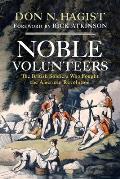
Noble Volunteers: The British Soldiers Who Fought the American Revolution and editor of the Journal of the American Revolution.

Here’s Don Hagist as this month’s guest blogger, plugging the holes in that short series about Capt. Machell:


During the American Revolution British regiment on service in America maintained a cadre of officers and non-commissioned officers in the British Isles for recruiting. Called “Additional Companies”, these were not companies in a structural sense, but financial vehicles to allow for the expenses of the recruiters, and for the recruits.

Every so often, when enough recruits had been raised and trained, they were sent to America under care of one of the Additional Company officers, and an officer in America returned to Britain to join the recruiting service.

As the war progressed, it was quite common for wounded officers to return to Britain to recover, and joining the Additional Companies was a way to keep them at full pay and working while they convalesced.

Captain Christopher Machell commanded the 15th Regiment’s light infantry company, and was wounded at the battle of Harlem Heights on “New York Island” on 16 September 1776. Because he was no longer fit for that company’s active service, he was transferred into a battalion company, then the following June joined the Additional Companies in Great Britain, where he remained for the rest of the war.

Thanks, Don!

Tuesday, November 19, 2024

The Good Properties of Richard Lechmere

Back here, in introducing a letter by Richard Lechmere, I wrote about him as leaving his country estate in Cambridge after accepting a seat on the mandamus Council and moving into Boston.

Charles Bahne, Cambridge historian and good friend of the blog, commented:
I question whether Richard Lechmere ever lived in what is now called East Cambridge. Certainly he owned a lot of land there, much of it inherited from his in-laws, the Phips family, and then he bought more parcels from other Phips heirs. And from this we get the names of Lechmere's Point, Lechmere Square, Lechmere station, and, at one time, the Lechmere Sales chain of department stores.

But my understanding is that the Phips mansion standing on that land in East Cambridge hadn't been occupied for some years prior to Lechmere's inheritance, and I don't think he ever lived there himself. It was in a remote location with no easy access, often becoming an island at high tide.

The Cambridge residence I associate with Richard Lechmere was the Tory Row house on Brattle Street, which he built circa 1761. In 1771 Lechmere sold that house to Jonathan Sewall, who still owned it in 1774-75. About the same time, Lechmere bought an estate residence in Dorchester, from Thomas Oliver, who had moved to Cambridge shortly before that. But it appears that Lechmere only owned that Dorchester house for about eight months, before selling it to an Ezekiel Lewis, who in turn quickly resold it to John Vassall [Jr.], another Tory Row resident. (And as you know, John, the Vassall, Oliver, Lechmere, and Phips families were all intermarried with each other.)

Lechmere may have purchased the Dorchester property with the intent of moving there, but since he resold it so quickly, he may never have actually occupied the estate. I believe he may already have relocated to Boston itself by 1772 or so. (I remember reading that somewhere, but can't track the source down right now.) He did own a large distillery in Boston.

The fact that the Phips mansion in East Cambridge was vacant in 1775 may well have been a reason why Gen. [Thomas] Gage chose that isolated area as the landing place for the Concord expedition on April 18. With no nearby residents, there wouldn't be any nosy neighbors to notice the troops' arrival.
There’s no dispute that Richard Lechmere owned a lot of property when he left Massachusetts. On 13 Oct 1784 he applied to the Loyalists Commission, seeking compensation for his losses. The commission’s records discuss “his House in Boston,” “his farm at Cambridge,” part of “a great Distillery at Boston,” “some Land at Muscongus” in Maine, and “property at Bromfield [Brimfield] & Sturbridge.”

But where did Richard Lechmere live? Some of those properties were real-estate investments. He may have moved between a couple of houses seasonally. But where was his legal residence? I went looking for period sources.

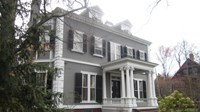
Lechmere’s name (as well as others’) is still attached to his 1760s home on Brattle Street in Cambridge, shown above. But according to Cambridge historian Lucius Paige, Lechmere turned that property over to royal attorney general Jonathan Sewall on 10 June 1771.

The 17 May 1770 Boston News-Letter contains an advertisement for the Dorchester house that had belonged to Thomas Oliver. That ad directed inquiries to “Richard Lechmere, of Cambridge,” meaning he didn’t move to Dorchester, just owned the property there while still living in Cambridge.

On 22 Aug 1773 the Boston Evening-Post contains another advertisement for a house in Boston on Hanover Street, “lately in the Occupation of Jacob Royall, Esq; deceased.” That directs inquiries to “Richard Lechmere, of Boston.” So by that date Lechmere presented himself as back in the town of his birth, no longer a Cambridge resident.

According to James Henry Stark’s Loyalists of Massachusetts, the Boston real estate confiscated from Lechmere was a house, land, and distill-house on Cambridge Street. He may have moved there from Hanover Street, or the house in that second advertisement was another property he managed. Cambridge Street was probably where Richard Lechmere was living when he became a mandamus Councilor—already safe from actual Cambridge residents.

Sunday, September 15, 2024

Where Was the Charlestown Powderhouse?


Before departing from the “Powder Alarm” entirely, I’ll draw on guest blogger Charles Bahne to address a pertinent question: Where was the powderhouse?

That may seem like a silly question since it’s a stone building that has stood atop the same hill since it was built shortly after 1700.

But some of our sources from 1774 refer to that location in different ways:
  • William Brattle: “This morning the Select Men of Medford, came and received their Town Stock of Powder, which was in the Arsenal on Quarry-Hill.”
  • Boston Gazette: “the powder house on quarry hill in Charleston bounds”
  • Rev. Dr. Samuel Cooper: “You have heard of the taking ye. Windmill, at Cambridg with the Province Powder.”
  • Rev. Ebenezer Parkman: “The Contents Magazine of Powder at Winter Hill had been carryed off.”
  • John Adams: “the Provincial Powder from the Magazine at Cambridge”
Charles Bahne wrote in an email:
Legally, the powder house was in Charlestown. But it was closer (both crow-flies distance, and actual roads) to the populated centers of either Medford or Cambridge, or even Menotomy, than it was to Charlestown.
  • Powder House Sq. to Medford Sq. = 1.23 miles airline, 1.47 miles by road, according to Google Maps
  • Powder House Sq. to Harvard Sq. = 1.90 miles airline, 2.14 miles by road
  • Powder House Sq. to Menotomy [Arlington Center] = 2.13 miles airline, 2.17 miles by road
  • Powder House Sq. to Charlestown Neck [Sullivan Sq.] = 2.47 miles airline, 2.49 miles by road
Once you got "beyond the Neck", Charlestown got long and skinny. And hardly anyone lived there. . . . While the powder house itself was in the town of Charlestown, the property just across the street was in Medford. The town/city boundaries in that area were adjusted at some point in the 1800s.

I suspect that one reason for choosing that site for a powder house—besides the fact that the old windmill was available—was that the area was unpopulated. If by chance it blew up, there was no one nearby to be killed or injured, no other property that might be destroyed.

But it was conveniently at a crossroads. Broadway was a straight line road between Charlestown Neck and Menotomy, although I suspect that it was a lightly used, poorly maintained thoroughfare, and not a highway. . . . The other crossroad was more important, the road from Medford to Cambridge, present day Harvard St., Warner St., and College Ave.
The picture above is a detail from an 1833 map, before the western arm of Charlestown became Somerville. The arrow points to the powderhouse. The circles show the population centers of Medford, Cambridge, and (at the lower right) Charlestown.

Proximity helps to explain why the man who “for a Number of Years had the Care of [the gunpowder] as to sunning and turning it,” William Gamage, lived in Cambridge. Proximity might explain why the Medford selectmen were the last to remove their town’s powder from the tower in August 1774; it was, after all, quite convenient where it was.

As for Winter Hill, that was fairly nearby and large. But the powderhouse stood atop its own drumlin, called Quarry Hill for decades because locals had taken stone from it, including the stone used to build the tower itself. That spot is now known as Powder House Hill.

Thursday, April 18, 2024

The Launch of Concord’s Arrowhead Ridge

As Patriots’ Day season continues, Boston 1775 is pleased to welcome back our old friend Christopher Lenney, author of Sightseeking: Clues to the Landscape History of New England, as a guest blogger.

In this posting, Chris discusses the origin of a name that has come to appear in maps and descriptions of the Battle of Lexington and Concord, but which the locals of 1775 didn’t use.


The mile-long ridge running parallel to Lexington Road from Meriam’s Corner to the center of Concord has long been a looming presence in the landscape and the history of the town. However, until the mid-twentieth century, it had no single, well-established name. At various times, various parts have been known as ye Hill above ye Meeting house, Meriam’s Hill, Heywood’s Hill, or simply the hill (or hills).

Its present name, Revolutionary Ridge, likely first appeared about 1915 and was popularized as the original name of Ridge Road. It was officially adopted by the U.S. Geological Survey on the 1943 Concord quadrangle map and has become widely accepted.

So anachronistic a name as Revolutionary Ridge has obvious drawbacks when recounting the events of April 19, 1775. It presupposes what hasn’t yet occurred. Something less glaringly modern, please!

Since the 1960s, Arrowhead Ridge, a name of even more recent coinage and one borrowed from another war, has come to fill the void. While a few arrowheads have coincidentally been found there, this is not how the name came about.

Arrowhead Ridge originated almost accidentally with military historian John R. Galvin, who brought a shrewd eye for terrain to the study of the battle. In the text of his book The Minute Men (1967), he employs the term purely descriptively—lowercase—four times:
  • “A long ridge, shaped like an arrowhead, runs eastward from the center…The arrowhead points directly at Lexington”
  • “At Meriam’s Corner, just below the east tip of the arrowhead ridge”
  • “the British were preparing to march out along the arrowhead ridge”
  • “climbing up the slope of the arrowhead ridge”
Gen. Galvin was a Massachusetts native (Melrose and Wakefield) who had a lifelong interest in the battle. The term could only have occurred to someone studying a U.S.G.S. topographical map, and then perhaps only to a military topographer. It is inconceivable that Galvin, who was a cadet at West Point from 1950 to 1954, could have been unaware that Arrowhead Ridge (uppercase) was also the name of a fierce October 1952 battle of the Korean War.

To illustrate Galvin’s account, Arrowhead Ridge was understandably, but misleadingly, given equal weight with other place names on the endpaper map of the first edition of his book. From there it slowly spread. A decade later Arrowhead Ridge resurfaced on a map in The Minute Men 1775–1975, a booklet published locally by the Council of Minute Men in 1977.

Relatively few have ever seen the original Galvin map, as most copies of the 1967 edition are now locked away in local history rooms and the map was omitted altogether from the much-revised and more widely available 1989 edition (although use of “arrowhead ridge” persisted in the text). Still fewer have seen the Council of Minute Men publication, which is something of a rarity.

However, virtually everyone interested in the events of April 19, 1775, has seen Arrowhead Ridge where it truly came into its own: on the map of the British retreat on page 223 of David Hackett Fischer’s now classic Paul Revere’s Ride (1994). Although not original to Paul Revere’s Ride, the influence of that book has assured that use of the term would survive and thrive: notably in Time-Life’s The Revolutionaries (1996). Nathaniel Philbrick’s Bunker Hill (2013), and Rick Atkinson’s The British Are Coming (2019). It has even made its way into a 2005 National Park Service report.

While Fischer refers to Galvin at least twenty-four times, the term Arrowhead Ridge never actually appears in the text of Paul Revere’s Ride. It was perhaps introduced by the cartographer, who compiled the map from Galvin and other sources. Its use is somewhat surprising in that Fischer twice takes exception to anachronistic terminology in his footnotes: Hardy’s Hill for Brooks Hill and, more famously, Bloody Angle for Bloody Curve. The latter is especially singled out for criticism as a Civil War name being reused for a battle in the Revolutionary War.

Ironically, in the use of Arrowhead Ridge we can see an example of much the same thing. Only in this case it was not a Civil War name that was borrowed, but one with ultimate origins in the Korean War.

We might ask whether Concordians of 1775 ever thought of that high ground as arrowhead-shaped since they weren’t used to picturing the world from above, the way we are in this era of widespread maps, plane travel, and satellite views.

Thanks, Chris!

Friday, October 06, 2023

Whither the Weathercock?

Today’s Boston 1775 posting comes from Charles Bahne, a local historian based in Cambridge. In this “guest blogger” essay, Charlie discusses an artifact of the North End in the early 1700s and Cambridge in the late 1800s, making the case to preserve and reproduce it locally.

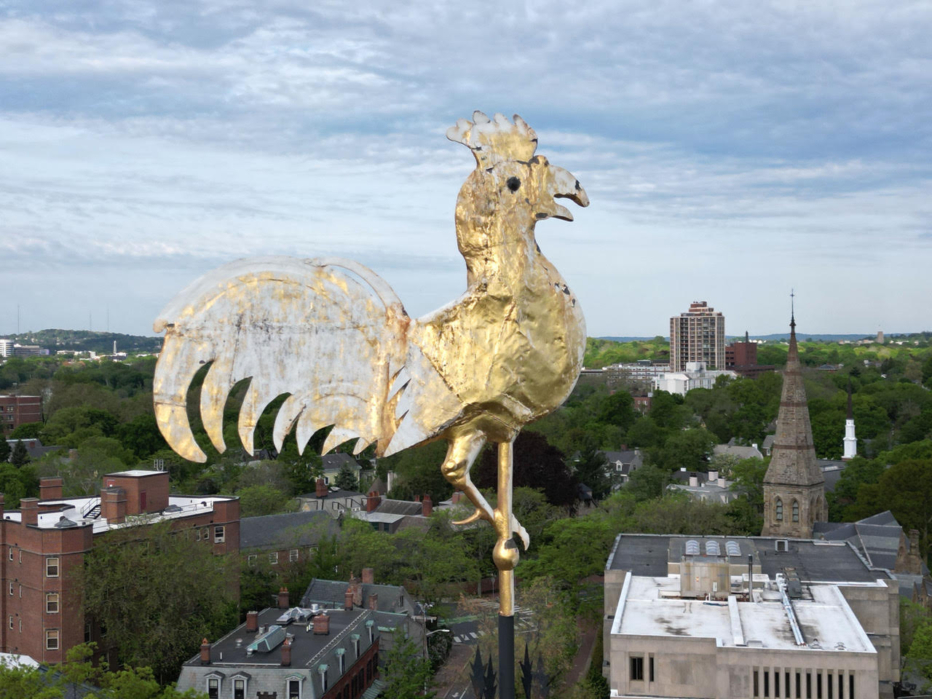
One of the most historic elements of the Cambridge skyline is coming down sometime soon: the big brown church with the rooster on top is losing its rooster.

The Executive Council of the First Church in Cambridge—the stone church on Garden Street, across from the Common—has decided to bring the cockerel weathervane down for its own safety. According to the church’s website, drone videos have revealed significant and dangerous erosion of the gilding on one side of the cockerel, especially its large tail feathers. After extensive consultation, nationally recognized experts in the field of American Folk Art and historic weathervanes have strongly advised removal. The date for its descent is still being determined, but the goal is to make the move as soon as possible.

The church adds, “Once the cockerel is safely down and securely stored, church leaders and the congregation will need to consider next steps in the stewardship of this national treasure, including discerning whether the time has come to consider selling it. Another future decision is whether the Shem Drowne original should be replaced with a replica or something else.”

At 302 years of age, the five-foot gilded fowl is one of the oldest weathervanes still in use in America. Perhaps the first rooster weathervane, or “weathercock,” made in this hemisphere, he was fashioned in 1721 by Shem Drowne, the same coppersmith who crafted the grasshopper vane atop Faneuil Hall.

For a century and a half—nearly half of his existence—he has dominated the corner of Garden and Mason Streets, a landmark for Cantabrigians. And before he landed in Cambridge, the cockerel perched atop a church in Boston’s North End, where he led quite an interesting life.

The weathervane originated with a 1719 dispute among members of a North End parish, over the ordination of a pastor named Peter Thacher. Following Rev. Thacher’s rather tumultuous installation, the dissenting parishioners seceded from the original congregation and erected a new meeting house just three blocks away. As a deliberate insult to their former colleagues, they commissioned the cockerel weathervane for their new building: an allusion to Peter’s betrayal of Christ at the crowing of the cock. Upon placing the new vane on its spindle, “a merry fellow straddled over it, and crowed three times to complete the ceremony.”

Officially the “New Brick Meeting House,” their 1721 structure was commonly known as the “Cockerel Church” in honor of its weathervane; and some people (perhaps not so jokingly) called it the “Revenge Church of Christ.”

Paul Revere worshipped in the Cockerel Church for most of his life; the back yard of his house abutted the meeting house property. The weathercock appears prominently in Revere’s 1769 print of “A View of Part of the Town of Boston,” where he towers over the North End neighborhood.

Before he changed his career from the ministry to writing, Ralph Waldo Emerson preached sermons under the cockerel weathervane for three years, as pastor of the Second Church in Boston, which had merged with the original New Brick parish.

A new building followed in 1845, on the same Hanover Street site, and the weathercock was placed atop it. When that building came down for an 1870 street-widening project, the vane was sold at auction. William Saunders, an antiquarian and a member of the First Church Cambridge congregation, bought it, and the cockerel found his new home, roosting atop First Church’s new stone building. Since 1873 he has graced the corner of Garden and Mason streets, overlooking Cambridge Common.

So our friend the rooster has quite a story to tell, over and above the weather forecast. It’s a story that’s unique to Boston and Cambridge. It’s important that he remain in our community, where he can continue to tell it to us. He must not be allowed to fly the coop, and land somewhere else.

In an ideal world, the historic fowl would be repaired and restored to the Garden Street perch where he has served for 150 years, fulfilling his ancient purpose of informing us which way the wind is blowing.

Should that ideal not be possible, for fragility or other reasons, then all of us in Cambridge and Boston have a stake in the decision. After a century and a half in our town—and another century and a half across the river—the cockerel weathervane has become a valuable member of our entire community. He’s an important part of our shared heritage, and not just an asset belonging to only one organization.

It is understandable, but always sad, when an institution chooses to monetize its patrimony, exchanging its heritage for financial gain. Given the significance of this historic weathercock, it would be a tragedy if he were sold to a distant museum, and exiled to a place where his story cannot be fully appreciated. It would be an even greater tragedy if he were sold to a private collector and locked behind closed doors where the public cannot appreciate him.

If the cockerel weathervane is to be sold, it is imperative for him to remain on public display locally, at the Museum of Fine Arts or a similar organization.

And what of us Cantabrigians who look skyward? We too will be losing a familiar friend, a piece of our history. If Shem Drowne’s classic cockerel is too fragile to remain on his perch above the Common, then he should be replaced with a likeness. Any monetary gain that First Church might realize from the sale should be used to finance the creation of a replica, to keep this fowl’s memory alive atop the tower which has been his home for so long.

After all, what is a big brown church without a rooster on top?

First Church is giving the community a chance to reflect on, ask questions about, and consider next steps following the decision to remove the cockerel, which was announced to the congregation on Sunday, September 10. A first listening session will be on Sunday, October 8, at 12:30, followed by a weeknight Zoom session on a date to be announced. For more information, including photos and videos of the weathervane’s current condition, visit the First Church website.

(And thanks to Cousin Lynn and the late Ol’ Sinc of “Hillbilly at Harvard” for coining the phrase “big brown church with the rooster on top,” many years ago.)

Thanks, Charlie! The Rev. Peter Thacher who prompted that rupture in the New North Meeting wasn’t the same Rev. Peter Thacher who was active during and after the Revolution, but they were collateral relations.

Boston 1775 readers may recall that another weathervane attributed to Shem Drowne was put up for sale through Sotheby’s in January with an asking price around $400,000. I can’t find the result of that auction, but it shows the potential value of this sort of famous folk art.


Wednesday, November 30, 2022

“About 18 years old, uncommonly large of his age”

Earlier this month I wrote about Dick Morey, a young boy of African descent indentured to David S. Greenough of Jamaica Plain in the 1780s as the commonwealth’s law was shifted away from the slavery system.

I couldn’t find anything more about that child, but Wayne Tucker of the Eleven Names Project spotted a newspaper advertisement that must refer to him under a different name.

On 4 July [!] 1798, the Columbian Centinel ran this ad:
ONE DOLLAR REWARD.

RAN away from the Subscriber on the morning of the 21st inst. [i.e., of this month] an indented Molatto Servant by the name of Dick Welsh, about 18 years old, uncommonly large of his age; carried off with him a new broad cloth Coat; a chocolate colour’d short Coat; one fustian short coat; a drab colour’d cloth great coat almost new; one spotted velvet and several other Waistcoats; 3 pair tow Trowsers; 2 pair nankin Overhalls; 3 new tow Shirts; 1 linen do. 2 round Hatts, &c. &c. Whoever will apprehend said ran away and return him to the Subscriber at Jamaica Plains (Roxbury,) shall be entitled to the above reward.

All masters of vessels and others are hereby cautioned against harbouring or concealing said ran away, if they wish to avoid the penalty of the law.

DAVID S. GREENOUGH
Roxbury, June 25, 1798.
The same notice ran again a week later.

Both little Dick Morey and this teenager called Dick Welsh were born in 1780 and “Molatto.” It’s so unlikely that Greenough had two indentured servants matching that description, both named Dick, that this advertisement must refer to the same person.

Among the notable details in this ad is the phrase “about 18 years old, uncommonly large of his age.” That’s a reminder that people reached puberty later in the early modern period, so eighteen-year-old males still had significant physical growth ahead of them. It also gives us a peek at Dick Welsh as an individual.

The advertisement said Welsh took away a lot of clothing—far more than listed in similar ads. He probably planned to sell most of those garments to have money for a longer trip. All told, that clothing was worth more than the dollar Greenough was offering for his indentured teenager—I’ll discuss that promised reward later.

Back in 1785 Greenough and John Morey referred to this child as “known by the Name of Dick”; most slaves were not acknowledged to have surnames. But a year later Dick’s relationship to Greenough was put on a new legal basis when the selectmen indentured the boy, and they called him “Dick Morey.” Twelve years after that, Greenough stated he was “Dick Welsh.”

It wasn’t unusual for African-Americans to change their names in this period (or to convince the authorities to refer to them by names they were already using) as they developed their own identities, no longer bound to masters.

I wondered if the Morey surname implied something about this boy’s father, but the selectmen may simply have chosen it because John Morey was Dick’s last owner. As for the new surname “Welsh,” did that indicate the boy had a familial tie to a man in Roxbury named Welsh (or Welch, or Walsh, or even Weld)? Was it an ethnic signifier for a father in town during the war? Or did Dick adopt that name out of admiration for someone? We don’t know.

The second advertisement indicates Dick Welsh was still free as of 11 July—almost three weeks after he left Greenough’s house. It’s possible he came back, or was made to come back, to serve out his term until age twenty-one. It’s also possible he made good his escape.

TOMORROW: Rewards for runaways.

Wednesday, August 12, 2020

Paula Bagger with More on Marlborough

After my series of postings about Revolutionary conflict in Marlborough, Paula Bagger of the Hingham Historical Society filled me in on some details about the household of Loyalist merchant Henry Barnes. She has researched that family in the course of making important discoveries about the enslaved artist Prince Demah.

In particular, Paula identified the little girl whom Dr. Samuel Curtis quizzed about the two undercover British army officers who visited the house in March 1775. So I’m sharing Paula’s information as a “guest blogger” posting.


The “child” was undoubtedly Christian (“Chrisy”) Arbuthnot, the daughter of Christian Barnes’s brother William Arbuthnot from Hingham. Born in 1765, Chrisy would have been ten years old whereas the other young women who lived with the Barneses from time to time (Catharine Goldthwait and several Murray nieces of Elizabeth Inman) were older. The Barneses became Chrisy’s guardians when William Arbuthnot, a widower, died in the late 1760s.

Chrisy decamped to England with the Barneses in 1776 and died in 1782 in Bristol.

As for Catharine Goldthwait (1744-1830), who remained in Marlborough trying to preserve the estate in 1775, she traveled to England in the late ’70s or early ’80s. She spent time with her parents, Thomas and Catherine (the latter Henry Barnes’s sister), who had settled in Walthamstow outside London. But she seems to have spent some time with the Barneses in Bristol as well.

In July 1795, Catherine wrote Deborah Barker of Hingham to tell her that Christian Barnes had died in April. Henry Barnes died in London in 1808.

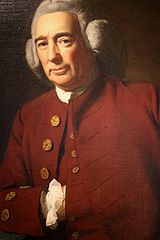
In England, Catharine Goldthwait met and married eighty-year-old Dr. Silvester Gardiner, a wealthy Loyalist widower [shown above]. They returned to America together. After Gardiner died, she married the merchant William Powell of Boston, a wealthy Patriot widower. She had no children of her own but adopted a niece and then two great-nieces.

Thanks, Paula!

One of the oddities I came across while researching this extended family is that Catharine Goldthwait’s sister Mary (1753-1825?) married Francis Archibald in Maine, was widowed, and fell into mental illness—the reason her teen-aged daughter came to live with Catharine Powell in Boston and eventually take her aunt’s last name. Mary Archibald lived on relief in the homes of various Maine householders, including now-famous Revolutionary War veteran Joseph Plumb Martin for several years.


COMING UP: Gossip about Marlborough’s Dr. Curtis.

Tuesday, March 03, 2020

Don Hagist on Drummer Thomas Walker’s War

Don Hagist, author of British Soldiers, American War and editor of the Journal of the American Revolution, is my go-to advisor on British military records. 

Every so often Don unearths a new gem of information about redcoats who served in Massachusetts, such as the record of Edward Montgomery and Mathew Kilroy, the two privates convicted of manslaughter after the Boston Massacre, retiring in 1776 just before the 29th Regiment was sent back to North America. 

Now as a guest blogger Don shares another new discovery about a soldier prominent in Boston 250 years ago:

In the months leading up to the Boston Massacre, a number of altercations occurred between soldiers of the 14th and 29th Regiments of Foot and civilians in Boston. One of the best-known soldiers involved in these scuffles was Thomas Walker, a drummer in the 29th Regiment.

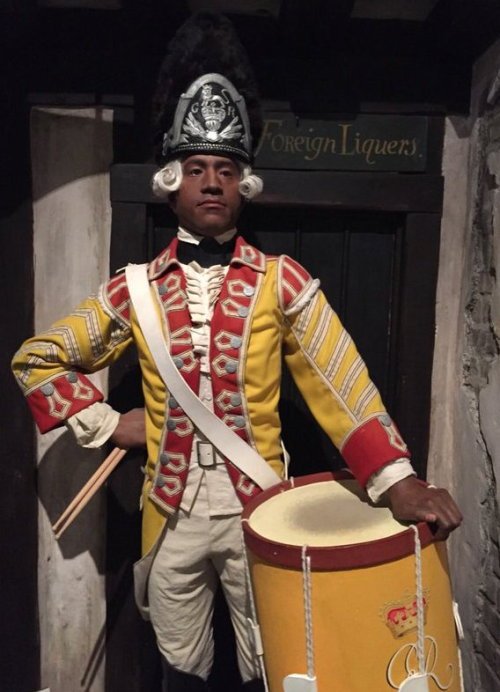
The 29th’s drummers were of African heritage, but those those whose place of birth is known were born in the Caribbean—Jamaica, St. Kitts, St. Domingo, Antigua. The first of them joined the regiment in 1759 and were replaced by others as attrition demanded, well into the nineteenth century.

The earliest surviving muster rolls for the regiment indicate that Walker was already serving as a drummer in 1765. He was a key player in the fighting that occurred at the ropewalks in Boston on March 1, 1770. He is frequently mentioned in this context, but what about his subsequent career?

The 29th Regiment was removed from Boston soon after the events of March 5, 1770, and after a few more years in other American colonies they returned to Great Britain. Their stay in the home islands was not long, though; the outbreak of war in American necessitated a significant military buildup there, and in early 1776 the 29th Regiment was ordered overseas once more.

As a drummer in the regiment’s grenadier company, Walker may have been among the first ashore when the regiment landed in Quebec in June 1776 to relieve the besieged city. With several other regiments, they drove American forces out of Canada and up Lake Champlain. Walker may have been among the 29th’s soldiers that served on board British ships and gunboats at the battle of Valcour Island in October.

After spending a cold Canadian winter dispersed in various locations between Quebec and the northern end of Lake Champlain, the British army regrouped for a new campaign in 1777. While most of the 29th Regiment remained in Canada, their light infantry company and grenadier company, including Thomas Walker, went with the army under General John Burgoyne up Lake Champlain. The grenadier battalion, formed of grenadier companies from ten regiments, was involved in some of the campaign’s hottest fighting including the battles of Hubbardton, Freeman’s Farm and Bemis Heights. The campaign ground to a halt in October and Burgoyne’s army capitulated in October. Thomas Walker became a prisoner of war.

The prisoners were marched to the outskirts of Boston where they spent the winter in crude barracks on Winter Hill and Prospect Hill. From here Walker had a good view of the city where he had spent two years almost a decade before. The following summer the prisoners were moved inland to Rutland, Massachusetts. In November they were marched Albemarle, Virginia, where they arrived in the January snow for two more years in poorly-constructed barracks.

British campaigning in Virginia in 1781 provoked yet another overland march for the beleaguered prisoners, this time to Lancaster, Pennsylvania. The prisoners arrived there on June 16. Since their capture in 1777, they had walked over 1,000 miles from prison camp to prison camp. By this time, only four men of the 29th Regiment’s grenadier company remained, the others having escaped, deserted, or died.

Thomas Walker got to Lancaster, but his time had run out; by the time a list was made of the prisoners, on July 18, Drummer Thomas Walker was “dead in the Barracks.” The cause of his demise is not known. Dying in captivity was a sad end for a man who had served as a soldier for over sixteen years.

I’m struck by how Drummer Walker remained with his dwindling company, not escaping and deserting. As a black man, he may have seen fewer opportunities to move around in American society. And he may have commanded more respect as an army drummer than he expected as an unattached black laborer. 

Thanks again, Don!

Tuesday, June 11, 2019

How Pvt. Joshua Williams Ended Up in Boston

A couple of days back I quoted a deposition from Pvt. Joshua Williams of His Majesty’s 29th Regiment about a bad encounter with Bostonians in June 1769. Williams said he was then new in the regiment and new in Boston, which intrigued me but which I didn’t know enough about British army bureaucracy to explain.

Luckily for me, that also intrigued Don Hagist, author of
British Soldiers, American War and editor of the Journal of the American Revolution. He looked up Williams in his sources and added his deep knowledge of how the British army worked in the Revolutionary era. Here’s what Don found out:

Joshua Williams, a soldier in the 29th Regiment, said that he was assaulted in June 1769 “a few days after he joined the regiment in Boston.” The regiment had arrived the year before, so Williams was either new to the regiment or had stayed behind somewhere when the regiment sailed for Boston.

Particularly interesting is that the “Mob of People” recognized that Williams was new to Boston, “a new or a Strange Lobster.” Did Bostonians know the faces of over three hundred soldiers of the 29th Regiment that well, or was there something else about Williams that made him stand out as being new in town?

Williams first appears on the regiment’s muster rolls prepared in October 1769, with no indication of where he came from. Following his career forward on the rolls shows that he recovered sufficiently from his injuries to serve in the 29th Regiment for two more years. He was discharged on June 4, 1771, when the regiment was in New Jersey, along with a number of other soldiers.

Men who had been injured while serving as soldiers often received pensions after returning to Great Britain and going before the pension examining board in Chelsea, a London suburb. The records of that board show that Joshua Williams appeared there on August 29, 1771, and was granted a pension. On that date he was thirty-two years old and had been in the army for nine years; he was from “Glocester” and had no skilled trade, instead being called a “labourer.”

With nine years in the army but only two in the 29th Regiment, he must have transferred from another corps into the 29th. When a regiment that was on foreign service was sent home, it was not unusual for able-bodied men to be drafted—transferred—into other regiments still on service in the foreign land. Although the 29th’s rolls do not record where their new men like Williams came from, his entry in the pension examination book suggests that he was, indeed, a draft.

The disability that made him eligible for a pension was having been “wounded at Fort Pitt,” probably during the siege of that place in 1763 during Pontiac’s War.

As a draft into the 29th, Williams probably retained his uniform from his previous regiment; he would not receive one from the 29th until the next annual clothing issue, late in the year for regiments in America. This would make him easily recognizable to the Boston mob.

And, since British soldiers owned their own clothing, the loss of his “new Regimental Hatt” meant that he would have to purchase a new one—unless the mob could be convinced to return the property of a man who had been wounded defending colonists on the western frontier.

Thanks, Don!

Saturday, May 18, 2019

Where Was Pvt. John Bateman?

Back when I quoted the April 1775 deposition of Pvt. John Bateman about the shooting at Lexington, I said I was more interested in analyzing the circumstances of that document than its content.

But Don Hagist, chief editor of the Journal of the American Revolution, noticed something about the content that’s worth considering. So I asked to run his message as a “guest blogger” posting.

We’ll start with a reminder of Bateman’s testimony:

I, John Bateman, belonging to the fifty second regiment, commanded by Colonel [Valentine] Jones, on Wednesday morning, on the nineteenth day of April instant, was in the party marching to Concord. Being at Lexington, in the county of Middlesex, being nigh the meeting-house in said Lexington, there was a small party of men gathered together in that place, when our said troops marched by; and I testify and declare, that I heard the word of command given to the troops to fire, and some of said troops did fire, and I saw one of said small party lie dead on the ground nigh said meeting-house; and I testify, that I never heard any of the inhabitants so much as fire one gun on said troops.
And here’s Don:

Reading the testimony of Pvt. John Bateman of the 52nd Regiment, I realized something that calls the veracity of his testimony into question. Bateman was a grenadier. As such, he was probably pretty far away from the first shot on Lexington green, not in good position to know who fired it.

There is no disputing that the light infantry got to Lexington first, and that the companies of the 4th and 10th Regiments went onto the green first. This accords well with typical British formations that put the most senior units on the flanks when in line. A number of period maps show that grenadier and light infantry battalions formed in the same way. Formed in a line by seniority, the light infantry companies on April 19, 1775, would be arranged with the 4th on the right, the 5th on the left, the 10th next on the right, 23rd, next on the left, and so forth working inwards. Marching by column from the right puts the 4th and 10th as the first two companies, making them first on Lexington green.

With this formation, Bateman's company from the 52nd Regiment would be near the middle of the grenadier battalion, in column behind the light infantry. Only if they had proceeded partway past the green by the time the first shot was fired would Bateman have been in a position to see who fired it.

This assumes that Bateman was with his company and not with an advanced party. Lt. William Sutherland of the 38th Regiment wrote that, before arriving at Lexington, the column halted “in order to make a Disposition, by advancing men in front & on the flanks to prevent a surprise.” He himself was not a grenadier or light infantry officer, and “went on with the front party which consisted of a serjeant & 6 or 8 men” who could have been chosen from any company in the column. And Lt. Jesse Adair of the Marines said that he was at the head of the column, even though the Marines were between the 38th and 43rd in seniority, and so should have been in the middle of the column.

We don’t know where John Bateman was when the shooting started on April 19, but it doesn’t seem likely that he was in a good position to see who fired the first shot.

Thanks, Don!

I agree with this analysis and think it also reflects the reality of what Bateman said. He claimed to have heard the command to fire, but he didn’t describe seeing those shots or their immediate aftermath. He saw only one dead body, and we know that several men died on Lexington green. Because, most likely, Bateman marched by the scene after the shooting was over.

TOMORROW: But you know who was in a position to see the first shots at Lexington?

[The image above shows a detail from the muster roll of the 52nd Regiment, supplied by Don. It shows how Bateman’s commanders gave him up as dead as of 21 April—two days before his deposition and probably two weeks or more before he died.] 

Friday, January 05, 2018

A Second Look at the Corporal Who Stole a Horse

Last week (and last month) I shared an item from Rivington’s New-York Gazetteer about the Massachusetts Provincial Congress preparing for war. Isaiah Thomas of the Massachusetts Spy declared that story “A d——d lie.”

In the same column Loyalist printer James Rivington shared another story about a British “corporal of the 38th regiment” pretending to desert and making off with a Patriot’s horse, saddle, and clothing. To me that sounded like the plot that the unreliable Samuel Dyer had described to a British admiral back in July 1774; wouldn’t it be awfully risky to put a deserter on horseback and ride him past his own barracks? Yet Isaiah Thomas didn’t have anything to say about that tale.

It turns out Don Hagist, author of
The Revolution’s Last Men and British Soldiers, American War, did have something to say. So here’s his note as a “guest blogger” posting:

I encountered the story of the corporal of the 38th Regiment who stole a horse in an issue of the Hibernian Chronicle dated 23 January 1775, which gave the name of the letter writer, of the corporal, and of a private soldier…
Copy of a letter from Captain Maginis of the 38th regiment in Boston to his brother in Drogheda, dated Dec. 14, 1774.

“…We often see here in the English papers accounts from America, not one of which contain a word of truth; they mention a great deal about the desertion from our troops, some are gone off, but not the tenth part of what they say, for our whole army, consisting of 105 companies, have not lost 120 men, although the people make use of every stratagem to make them desert, and supply them with horses and carriages to go off.

But I believe that will be a good deal stopped by the good behaviour of a young lad, a corporal in my company; he with another of the company went to a public-house, where they met some countrymen, who advised them to desert, and that they would supply them with disguises, that they might escape the easier, whereupon the corporal put on a disguise, stuffed his regimentals into one of the men’s saddle bags, and after settling their expedition, the countryman offered to take the corporal behind him, but he told him he could not ride without stirrups, so he got on the saddle, and took the countryman behind him, and set a galloping towards the nearest barrack, which, when the other observed, he leaped from behind him, and made his escape, swearing he would not wait to be shot, the corporal drove on to his own barrack with the whole prize, and no one dare to own the horse or cloaths; the corporal is thanked by the whole army, and the horse given up to him; there was no horse for the other, or he would have done the same.

The corporal is one Baker, a Yorkshire-man; and the soldier’s name is Drenning a Heart of Steel from the county of Antrim.”
In his blog post on this letter, Don asked, “Is this letter a piece of propaganda fabricated by the publisher or a legitimate record of an event in Boston?” Follow that link to his website to see what Don found in the 38th Regiment’s muster rolls.

Thanks again, Don!

Wednesday, July 12, 2017

The First Continental Death Under Gen. Washington

Back in February, the Journal of the American Revolution ran Patrick H. Hannum’s article “America’s First Continental Army Combat Casualty.” Hannum confined his search to the riflemen from Pennsylvania, Virginia, and Maryland, categorizing the New England troops already at the siege of Boston as militia. He named Pvt. William Simpson as the first man from those rifle companies to die.

I was among the commenters responding that by the end of May 1775 the New Englanders were legally enlisted as full-time soldiers for the rest of the year. And the Continental Congress adopted the colony armies around Boston at the same time it recruited men from the south and appointed George Washington, Philip Schuyler, Charles Lee, and other generals. Thus, all the troops around Boston were Continentals.

Another such commenter was Jim Gallagher, who went on to explore the question of who was the first soldier from
any unit of the Continental Army to die under Washington’s command. I’m running his findings as a guest blogger on this anniversary.

We can identify the first fatal casualty of the Continental Army according to Gen. George Washington’s reports to Congress. In his first report of 10 July 1775, addressed to John Hancock, the new commander reported a successful action with no American casualties (driving British troops from an outpost at Brown’s house/store).

In his second report, written 14 July, Washington reported the action of 12 July; the first engagement under his command which resulted in casualties. Casualties consisted of one soldier wounded and another killed on Moon Island in Boston Harbor. This soldier was killed while covering the withdrawal of a party burning hay to prevent its use by British troops.

According to a letter from Richard Cranch to John Adams the valiant soldier killed in this expedition was a “Mr. Clarke, of Stoughton.”

Massachusetts Soldiers and Sailors of the Revolutionary War verifies the death (pg 562), listing this soldier as Nehemiah Clark, of Stoughtonham, who marched on the alarm of April 19 and then enlisted on 8 May 1775 in Col. Joseph Reed’s 20th Reg’t, Capt. Samuel Payson’s Co., killed at Squantom 12 July 1775. Squantom is the town nearest to, and incorporates, Moon Island, and this engagement is known colloquially as “the Battle of Squantom”.

Nehemiah Clark’s story is equally compelling and offers glimpses into the relationships between the soldiers, their cause, and their families. Nehemiah was born 23 Feb 1741, son of Ichabod and Sarah Clark of Stoughton.

He married Judith Payson, sister of the man who became his company commander, on 9 Aug 1764, in Sharon, where the couple lived. At that time Sharon was an unincorporated area of Stoughton; an area from which today one can see the lights and hear crowd noise from Gillette Stadium, home field of the New England Patriots. The couple had six children, four of whom survived to adulthood. One of the twins born ten months after their marriage died shortly after birth, and another child died in 1774 at seven months of age.

Nehemiah left his wife and four children behind. Following his death, records show that his pay and the value of the “bounty coat” he never received were collected by his lieutenant on behalf of the family. Judith Clark never remarried, and died in 1786 of jaundice and scurvy. (“Clarks of Sharon”, 1999, Dr. Frank O. Clark.)

Thanks to Jim Gallagher, and to Patrick H. Hannum, for bringing to light the names and details of those unfortunate men, making them more than casualty figures again.

The photograph above shows Moon Island today, connected to the mainland by a causeway. It now belongs to Quincy, and is used by the Boston Police and Fire Departments for training.

Thursday, June 29, 2017

A Cannon in Lunenburg

Eileen O’Brien kindly shared the following extracts from the records of the Lunenburg town meeting. They add Lunenburg to the list of Massachusetts towns which in the months before the Revolutionary War officially began were discussing how to arm themselves with artillery—the focus of my book, The Road to Concord. Thanks, Eileen!

In the “Town of Lunenburg Minute & Report 1763-1796” (which is unpublished) are the following entries:
At a Legal annual Town meeting on monday ye 6th of March 1775 being Legally assembled at the publick meeting house in Lunenburg

Voted to open a Subscribtion to mount the Cannon now in town

Voted & Choose Capt Aaron Willard Lt Philip Goodridge & Mr Zebulon Dodge a Committe to forward sd Subscribtion & to See to the mounting [of] sd cannon . . .

March ye 9th: the town being meet agreeable to the adjournment—

Voted that Capt Abijah Stearns & Docr. Abraham Haskel be added to the Committe that was Choosen to open a Subscribtion for mounting the Cannon and that the Sd Committe Receve any article in the Subscribtion and turn the Same to the best advantage for Sd purpos . . .

At a Legal town meeting at the meeting hous in Lunenburg on Tusday the thirteenth Day of June 1775...

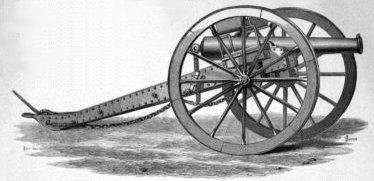
Voted that whereas there is a peace of ordnance viz a cannon carrying a Shot of 9# well mounted & fit for Service now in the town of Lunenburg the property of sd town which the Said town are willing Should be made use of for the Defence of the province or otherwise as the Committe of Safty or Congress for Sd province Shall think proper, & will convey the Same to Cambridge on there Desire or order, and also that the Select men of the Sd. town give proper notice that their is Such a peice of ordinance now at Lunenburg fit for Service, to the Said Congress or Committe of Safty for Sd province

Voted that Capt. Abijah Stearns be an officer of four men for a gard & a teamster to See that the Cannon be Safely Conveyd as above prescribed

Voted that if Capn Stearns Delivers Said Cannon that he take a proper Recipt . . .

the town being [met] December ye 11th: 1775 agreeable to the adjornment

Voted that the Selectmen be a Committe to petition the General assembley for the Chargeses of procuring & mounting a Canon for the Continential army
As Eileen O’Brien noted, the men of Lunenburg were very careful to get a receipt for their property and to ask for payment. After all, cannon don’t grow on trees, and town meetings don’t like to spend money.

TOMORROW: Some observations and questions about this situation.

Sunday, May 21, 2017

Visiting Carisbrooke Castle with Abigail Adams

Earlier this year author Jaime Mormann sent me an email noting a passage from Abigail Adams’s account of her travels in Great Britain while she was wife of the U.S. Minister.

In the spring of 1788 Adams went to the Isle of Wight off England’s southern coast:
On tuesday we went to Newport in order to visit Carisbrook Castle. This is a very ancient Ruins. The first account of it in English History is in the year 1513. This is the castle where Charles the first was kept a prisoner and they shew you the window from whence he attempted to escape.

In this castle is a well of such a depth that the water is drawn from it by an ass walking in a wheel like a turn spit dog. The woman who shew it to us told us it was 300 feet deep. It is Beautifully stoned and in as good order as if finishd but yesterday. She lighted paper and threw [it] down to shew us its depth and dropping in a pin, it resounded as tho a large stone had been thrown in. We went to the Top of the citidal which commands a most extensive prospect.
Mormann added:
Out of curiosity, I checked to see if the castle still holds tours as it did in 1788. Sure enough (’cause England is awesome like that), they still do. Their website even features many of the things Abigail mentions in her journal entry.
Including the asses! (Now carefully called donkeys.)

TOMORROW: More of Abigail Adams’s experience of Newport, England.

Thursday, March 09, 2017

A Whitehouse Briefing

Last week I wrote about Pvt. Joseph Whitehouse and his bride Jane Crothers, who each testified to events on the night of the Boston Massacre. (She more reliably than he, I believe.)

Don Hagist, author of
British Soldiers, American War and The Revolution’s Last Men, wrote with more information about Pvt. Whitehouse and the experiences of wives attached to the 14th Regiment of Foot, so I’m gratefully sharing that information as a “guest blogger” posting.

Joseph Whitehouse was thirty years old when he married Jane Crothers in March 1770. He was born in Birmingham, England, and had pursued a trade fairly typical for that industrial city; he was a smith. By the age of twenty-five he’d tired of that profession, and he enlisted in the army.

This was a common path for a British soldier; most of the men who served in British infantry regiments during the American Revolution enlisted in their early twenties, after having pursued one or more other lines of work. The army offered steady employment, the opportunity to travel, and a pension after long service—perquisites not offered by any other profession of the era.

After their marriage, and their testimonies about the troubles in Boston in 1770, Joseph and Jane Whitehouse probably stayed with the regiment at Castle William in Boston Harbor, but they may have had opportunities to visit the mainland. Some soldiers’ wives did, and the Boston Post-Boy of 25 February 1771 reported that two of them fell into misfortune:
On Friday last as two Women belonging to the 14th Regiment were crossing the Ice at the South End of Town, they both fell through, and altho’ they were soon taken out by the Assistance of the Town’s People, yet one of them, Susannah Mills, was so chil’d with the cold, that she expir’d immediately; the other is like to do well.
Conditions on Castle Island were crowded and brought challenges different that those posed by the hostile townspeople. Late in 1771, engineering officer John Montresor wrote:
There is a deficiency [of water] from the latter end of July unto the latter end of November. . . . the 14th is now 400 men – 70 women & 90 children. Obliged to employ a large Boat every other day – sent to Boston to Peck’s wharf & bought there at one shilling per Hogshead – One hhd serves one Company of the 14th Regt Two days.
The 14th Regiment didn’t have to endure these conditions much longer, but their next station was even more difficult. In 1772 they left Boston harbor for the island of St. Vincent in the West Indies, part of a force sent to quell a rebellion by island natives. There, disease took a toll on the regiment in addition to casualties from fighting. By 1774, the regiment was due to be sent back to Great Britain after eight years in North America, but rising tensions in the colonies forced those plans to be changed. The regiment was divided up among posts in Florida, Virginia, and the Bahamas. Their grenadier company suffered severely in the Battle of Great Bridge in December of 1775.

As the British war effort turned sour in the south, the 14th Regiment was sent to join the British army in New York that was enjoying great success in the waning months of 1776. The regiment was quite worn out by this time, so the decision was made to send them home, but first the able-bodied soldiers were transferred to other regiments campaigning in America. The officers, and the soldiers no longer fit for service, were sent home, the former to recuit and the latter to be discharged.
Among the soldiers of the 14th Regiment of Foot who were discharged in England in early 1777 was Joseph Whitehouse. On 29 April, he went before the out-pension examining board at Chelsea Hospital; their examination book recorded his age, place of birth, trade and length of service, as well as the malady that prevented him from remaining a soldier. During his twelve years in the army, he had contracted a hernia, called a “rupture” in the parlance of the day, and was deemed no longer fit for service. He was granted a pension, paid semi-annually at a rate of five-eighths of a soldier‘s regular pay, a modest sum but enough to subsist on. He was still living in 1808.

What became of his wife, Jane, is not known. She was entitled to follow him with the regiment, and to accompany him to Great Britain when he was discharged from the army, but at this writing we have no information about her fate.

Thanks, Don!

Sunday, March 20, 2016

“Small woodin and paper houses & Towers”

Last month I wrote about a wooden model of ancient Jerusalem that toured the colonies in 1764 and 1765. The first posting quoted the diary of a young Philadelphia woman who saw the model in Germantown in 1762 and described it as “done by an illiterate shoemaker.” I also noted another possible clue to the creation that I couldn’t follow up.

Sandra G. Hewlett, a certified genealogist in Phoenixville, Pennsylvania, kindly decided to check out that lead, and this is her report.


In your 24 February 2016 post you mentioned a footnote in Stephanie Grauman Wolf’s Urban Village, in which she cited a 1761 Philadelphia probate file for Anthony Sultser that held a clue to this story.

Yesterday I visited the Philadelphia Register of Wills office at City Hall where I obtained a copy of Anthony Sultser’s estate inventory dated 17th September 1761. The last line reads:
…..small woodin and paper houses & Towers: a shew to Represent the City and Tempel of Jersusalem £20
This item had the greatest value of anything mentioned in this inventory.

Anthony Sultser’s will mentions only his wife Barbara, no children, so we don’t learn much about him from his probate file.

Some of the inventory appears above. In addition to the model, it notes “some joiners tools,” “some saws Chisels and other old tools,” and “some wooden figures” that might be related to that project. The inventory also lists “all the shoemakers tools” and “some Leather,” indicating that Sultser was the shoemaker the diarist wrote about who carved this Jerusalem. Interestingly, his estate also included (not shown in the section above) some old books, so perhaps he wasn’t illiterate after all. Or maybe he just looked at the pictures for artistic inspiration.

(Another item in the inventory is “a marvell Stone” worth two shillings. I couldn’t find that as a common phrase, so it might just have been a chunk of marble.) 

As I wrote earlier, in 1765 the Boston selectmen found that “—— & his Mother” had brought the model to Boston. Was that Sultser’s widow Barbara and her son? Or had his heirs sold the model to a family who decided to travel and display in other seaports? 

Thanks, Sandi Hewlett!

Tuesday, February 23, 2016

A King’s Chapel Anniversary

This photo and the following come from Boston tour guide and educator Ben Edwards.

This 2,437-pound Paul Revere bell at King’s Chapel was installed on February 23, 1816—exactly 200 years ago.

On October 16, 2011, we saw an 1801 Paul Revere bell raised with the aid of a giant crane into the tower of Old South. I believe that bell is 876 pounds. I attended that day, and it made me imagine what it might have been like back in 1816 raising a bell that weighed nearly three times as much!

I read that this bell replaced an earlier one that was even slightly heavier. So eighteenth-century technology got those bells up there.

Monday, July 27, 2015

The Fight in Boston Harbor: A Vexillological Footnote

During last week’s investigation of the conflicting accounts of the June 1776 fight in Boston harbor that ended with the capture of troop transport ships from Scotland, Boston 1775 reader Peter Ansoff sent a message with some additional information. So I’m happily running it as a guest blog entry.

The schooners involved in the capture of the Scottish transports were not actually privateers, but the armed vessels commissioned by Gen. George Washington to prey on British commerce. One of them, the Hancock, was commanded by Samuel Tucker, who later served with distinction in the Continental Navy. Commodore Tucker wrote a short sketch of the affair in 1818, which was published in John H. Sheppard’s biography of Tucker in 1868:
The first cruise I made was performed in January 1776, and I had to purchase the small arms to encounter the enemy with money from my own pocket, or go without them; and the consort mentioned above [his wife] made the banner I fought under: the field of which was white, and the union was green, made therein in the figure of a pine tree, made of cloth of her own purchasing and at her own expense. These colors I wore in honor of the country—which has so nobly rewarded me for my past services—and the love of their maker, until I fell in with Colonel Archibald Campbell…
This is one of only two first-hand descriptions of “Pine Tree” flags carried by Washington’s cruisers, the other being the well-known flag of Capt. Sion Martindale’s brig Washington, captured by the British in December 1775.

Tucker’s description is different from the modern conception of the Pine Tree flag, in that the pine tree is in a union (or canton, a small rectangle in the upper hoist corner), rather than in the middle of a plain field. Tucker’s description is a bit puzzling. The white field and the green union are clear enough, but what color was the pine tree in the union? Or does his phrase “made therein” simply suggest a small green pine tree in the upper hoist corner of the flag, without a defined union? There is also no mention of the “Appeal to Heaven” motto that appeared on the Washington’s flag and is standard on modern Pine Tree flag replicas.

Tucker then recounts the capture of the troop ships George and the Annabella:
About ten P.M. a severe conflict ensued, which held about two hours and twenty minutes. I conquered them with great carnage on their side, it being in the night, and my small barque, about seventy tons burden, being very low in the water, I received no damage in loss of men, but lost a complete set of new sails by the passing of their balls; then the white field and the pine tree union were riddled to atoms. I was then immediately supplied with a new suit of sails and a new suit of colors, made of canvas and bunting of my own prize goods.
Unfortunately, this is no clearer with respect to what the “pine tree union” looked like.

Nor was Tucker’s phrase “I conquered them” clear that his Hancock was not the only ship in the battle with the George and Annabella, nor (by all other accounts) the biggest, most effective American ship during the final confrontation. But Capt. Seth Harding’s 1776 report had left Tucker and his colleagues out, so maybe Tucker figured this was only fair.

The image above is merely symbolic of the pine tree flag since we don’t even know what the pine looked like, much less the rest of the flag.

Thanks again, Peter!