J. L. BELL is a Massachusetts writer who specializes in (among other things) the start of the American Revolution in and around Boston. He is particularly interested in the experiences of children in 1765-75. He has published scholarly papers and popular articles for both children and adults. He was consultant for an episode of History Detectives, and contributed to a display at Minute Man National Historic Park.

Subscribe thru Follow.it


•••••••••••••••••


Showing posts with label Dr. Samuel Prescott. Show all posts

Friday, April 18, 2025

Counterfactual 3: If Prescott Hadn’t Alerted Concord

Continuing my speculation about what might have happened if Paul Revere and William Dawes hadn’t alerted Lexington about the regulars coming out, I’m now going to look at Concord.

This post was prompted by the suggestion in Kostya Kennedy’s book The Ride that if Revere hadn’t ridden out on 18 April “the munitions at Concord could have been seized.”

That’s mistaken because militia colonel James Barrett, his helpers, and his family had started moving the most valuable military supplies out of town days before the British army march. In part because Revere had brought a warning from Boston on an earlier ride. 

On 6 April, James Warren was in Concord for a meeting of the Massachusetts Provincial Congress, and he wrote to his wife Mercy: “This Town is full of Cannon, ammunition, stores, etc., and the Army long for them and they want nothing but strength to Induce an attempt on them.”

But when the redcoats arrived, Ens. Henry DeBerniere said, they “did not find so much as we expected.” Specifically, he reported:
Capt. [Mundy] Pole of 10th regiment…knock’d the trunnions off three iron 24 pound cannon and burnt their carriages; they also destroyed a quantity of flour, and some barrels of trenchers and spoons of wood for their camp.
At Barrett’s farm the soldiers burned some more carriage wheels. But the town was obviously no longer “full” of military stores. And that change had taken days, not a few hours.

If the British expedition hadn’t paused in Lexington but marched straight through, as I posited yesterday, the vanguard would probably have arrived in Concord less than half an hour earlier. Some of the local militia might have been on alert, but without Dr. Samuel Prescott’s warning, it probably wouldn’t have been at full force.

But would that have mattered at first? When the regulars approached the town, the Concord militia marched away and took a position on a hill west of the North Bridge. Other men and then other town companies joined them there while the redcoats searched both the town and Barrett’s farm.

Without the earlier alerts from Revere riding west from Medford to Lincoln and the Prescott brothers riding out of Concord, those militia companies from other towns wouldn’t have joined the Concord companies as quickly as they did. It’s thus possible there would have been significantly fewer men on that hill when smoke began to rise from the center of town, where redcoats were burning carriage wheels (and, briefly, the town house).

The Concord men might have been just as upset by the sight of that smoke, but might not have felt their numbers were strong enough to do anything about it. And eventually the smoke would have dissipated as people in town succeeded in dousing the fire. So the provincials might never have made their fatal march down to the bridge, with the Acton company in the lead.

TOMORROW: The battle that never was.

Friday, April 28, 2023

A Few More Tidbits from Along the Way

Here are a few more observations on the sources I examined in my hunt for traces of Dr. Samuel Prescott this month.

First, in 1835 Lemuel Shattuck, probably relying on local and family traditions in Concord, wrote that when Prescott met Paul Revere and William Dawes, he “had spent the evening at Lexington,…and having been alarmed, was hastening his return home.”

In other words, Dr. Prescott had left his fiancée, Lydia Mulliken, because he had heard about the approaching regulars. Given the timing, that news had probably reached Lexington when the Boston men arrived at the Lexington parsonage. By the time the riders met on the road, Revere and Dawes didn’t need to tell Prescott.

If Dr. Prescott had indeed already heard the alarm, that helps to explain two details:
  • why he left the Mulliken house—because he wanted to get back to his home town and prepare for any necessary military or medical action. He may therefore have planned to spend the night.
  • how Revere and Dawes quickly learned that Prescott was a “high Son of Liberty.” They were probably all talking about what the army might be up to.

Second, in The Road to Concord, I wrote that James Barrett’s family and friends probably took the four cannon stolen from Boston to Stow and hid them near the house of Henry Gardner, the Massachusetts Provincial Congress’s reciever-general (equivalent of treasurer).

I based that on a statement in a Bicentennial-era history of Stow citing a local tradition. I wished I had a stronger source, but I presented it only as a possibility.

In the 24 Apr 1824 Concord Gazette and Middlesex Yeoman article I quoted this month I spotted this sentence:
Five pieces of cannon, a quantity of ammunition had been previously conveyed to Stow, and put under the care of Mr. GARDNER.
That’s still an unsourced statement from a newspaper story published forty-nine years after the event. Nonetheless, it’s gratifying to find people in Concord believed that was true.


Finally, in the 14 Feb 1778 article from the Providence Gazette where I found Dr. Prescott’s name among the men who had died in Halifax prison, another name is “Samuel Dyre.”

Samuel Dyer (whose name was spelled other ways as well) was the subject of the two articles I wrote for the Journal of the American Revolution published earlier this month.

Early in those articles I noted how hard it is to trace that Samuel Dyer since he was a sailor, thus transient and unlikely to leave a mark on institutional records, and since there were other men with the same or similar names.

Therefore, I resist the temptation to say that sailor Samuel Dyer from 1774–75 was the same man who died in Halifax in late 1776 or early 1777, most likely after being captured on a privateer.

After all, the last time my Samuel Dyer definitely appears in the historical record, he had been working for the royal authorities as a trustie inside the Boston jail. Would he really have enlisted aboard an American privateer after that?

All I can say is, given my Samuel Dyer’s habit of switching sides and telling powerful men what they wanted to hear, I can’t rule out that possibility.

Wednesday, April 26, 2023

“For the Information of the Friends of the unhappy Prisoners”


On 27 Nov 1777, the Independent Chronicle newspaper of Boston reported on a ship sailing under a flag of truce:
Last Sunday returned here a Flag from Halifax, with about 60 Prisoners, whose gastly Countenances and feeble Limbs present a striking View of the Cruelties which they have endured, and the horrid Situation of those who still remain there in Confinement.

The following is a List of the misfortunate Persons who belonged to the Hancock and Boston Frigates, and other Vessels, who were killed there by Starvation in the Months of July, August and September, viz.
Three lists of male names followed:
Massachusetts sent an offer to exchange prisoners for some of the surviving men, but those negotiations dragged into the new year. (Around this same time the Continental authorities were deciding not to let the “Convention Army” of prisoners from Saratoga go home to Europe after all.)

On 14 Feb 1778, John Carter of the Providence Gazette published similar information, this time prefaced:
Mr. CARTER,

For the Information of the Friends of the unhappy Prisoners, who fell a Sacrifice to British Cruelty in their Confinement at Halifax, I herewith send you a List of their Names, and request you would publish it in your next Gazette. As I was confined among them myself, and am lately arrived from Halifax, you may rely on the List being authentic.

Your’s, &c. A. B.

A List of Prisoners, taken in American Vessels, who died in Halifax Prison, between the 23d of November, 1776, and the 26th of December, 1777.
Then came a long list of names—“Total 192” said a note at the end. It included the men on the Independent Chronicle list and many more.

These names don’t appear alphabetically. Two men with only given names and the label “a Negro” appear at the bottom, but aside from that segregation there’s no indication of sorting by, for example, what ships they had served on or what prisons they died in. The men of the Hancock appear in about the same order as the chronological list linked above. In sum, this list appears to have been compiled mostly by date of death.

About four-fifths of the way through that long column appears the name “Dr. Samuel Prescott.” Thus, this Providence Gazette item is a long sought contemporaneous source confirming that the young doctor from Concord died in a Halifax prison. Since his name wasn’t on the earlier list of men who died “in the Months of July, August and September,” Dr. Prescott almost certainly died in the last months of 1777.


Tuesday, April 25, 2023

Scrounging for Clues about Dr. Samuel Prescott

In 1835, as quoted yesterday, Lemuel Shattuck wrote that Dr. Samuel Prescott was captured on a privateer and died as a prisoner of war in Halifax.

After Henry W. Longfellow’s 1860 poem made Paul Revere an American icon, authors look for more information about his fellow riders, including Prescott.

Or at least confirmation of what Shattuck wrote.

Anything, really.

And almost nothing came to light.

As I said earlier this month in answering a question at an online presentation, we knew little about Prescott. Since Shattuck’s writing, only two additional sources had surfaced, and they both bring a lot of questions.

One is an entry in Massachusetts Soldiers and Sailors of the Revolutionary War, a monumental state-funded listing of all the names in surviving records, extracted from the original documents and alphabetized. The pertinent entry is:
PRESCOT, “SALL.” Lists of men appearing under the heading “Hartwell Brook the first Everidge;” said Prescot appears among men in service at Ticonderoga in 1776; name preceded by “Dr.”
Was “Dr. Sall Prescot” also the alarm rider Dr. Samuel Prescott?

Searching those volumes for the phrase “Hartwell Brook the first Everidge” shows that document (or documents?) listed many other men who served in many places and times. Those listings rarely include the usual helpful information about commanding officers, dates of service, and so on.

Which Hartwell Brook does this document refer to? What does “the first Everidge” mean? Dr. Samuel Johnson’s dictionary offers this first definition of “average”: “In law, that duty or service which the tenant is to pay to the king, or other lord, by his beasts and carriages.” Was “the first Everidge” thus a record of how men had served their duty to the state of Massachusetts?

In this case, it seems likely “Dr. Sall. Prescot” was among some short-term Massachusetts troops sent out to Fort Ticonderoga to hold that position in 1776. (Not, as some writers assumed, part of Henry Knox’s mission there, which actually started in 1775.) Then he could have returned to eastern Massachusetts and enlisted on a privateer. If in fact this was Dr. Samuel Prescott.

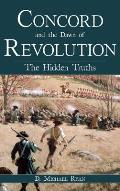
Another tantalizing statement appears in D. Michael Ryan’s Concord and the Dawn of Revolution in 2007. Ryan wrote:
Among family papers of a Jacob Winter (Windrow) of Ashburnham, Massachusetts, was found a letter claiming that he had been a prison mate of a Dr. Prescott from Concord who apparently died in miserable conditions in 1777.
Alas, there’s no other information: who wrote this letter, when, where it is now, and what exactly it says. (A slightly different statement appeared in Ryan’s original magazine article from 2001, but no additional citation.)

Ezra S. Stearns’s 1887 history of Ashburnham lists Jacob Winter among that town’s casualties in the Revolutionary War, saying he died a prisoner at Halifax in the fall of 1777. So it’s conceivable Winter overlapped with Dr. Prescott there and wrote home about it. But other scenarios are all too conceivable as well.

Joseph Ross’s Continental Navy site offers a primary source mentioning Jacob Winter. His name appears on a list apparently compiled by Dr. Samuel Curtis as he treated fellow prisoners from the Continental Navy’s frigate Hancock. That document even gives an exact date for Jacob Winter’s demise: 29 Aug 1777.

Fortunately, following Jacob Winter’s trail led me to a new, and contemporaneous, source about Prescott.

TOMORROW: Where and when the doctor died.

Monday, April 24, 2023

Why Samuel Prescott and Lydia Mulliken Never Married

A couple of days ago, I quoted an 1824 Concord newspaper saying that on 18 Apr 1775 Dr. Samuel Prescott had been out on “a visit to the lady who afterwards became his wife.”

Folks who’ve read about Prescott no doubt perked up at that because it contradicts one of the few facts in the history books about him.

That fact first surfaced in a footnote in Lemuel Shattuck’s history of Concord:
Samuel was taken prisoner on board a privateer afterwards, and carried to Halifax, where he died in jail.
No other details or source notes came with this statement, alas.

Authors were therefore left with little to work with. Some dwelled on the sad story of Lydia Mulliken’s brother Nathaniel and Samuel Prescott’s brother Abel both dying on dysentery (camp fever) in the first year of the war, followed by Samuel dying a prisoner.

In November 1782, the Haverhill town records recorded that Joseph Burrill of that town and Lydia Mulliken of Lexington intended to marry. On 18 Mar 1783, the Lexington vital records say, that wedding took place. (This is listed only under Burrill’s name.)

Some have taken that timing to say Lydia held out hope that Samuel was still alive until near the end of the war and only then agreed to marry someone else. But of course we don’t know what she was thinking or when she and Joseph Burrill met.

Lydia died in 1789 after having two children who both died young. Joseph remarried to Susanna Mulliken, a cousin of his first wife. That couple had several more children and lived into the 1830s.

There are, however, a couple of other sources that might complicate or confirm the local lore of Dr. Samuel Prescott’s death in a Halifax jail.

TOMORROW: Marching west, sailing east?

Sunday, April 23, 2023

“Mr. Mulliken, to whose daughter he was paying his addresses”

Around the fiftieth anniversary of the Battle of Lexington and Concord, more details about Dr. Samuel Prescott came into print.

As I quoted yesterday, in 1824 a local newspaper stated that when Dr. Prescott started to spread the alarm about regulars on the march he “was returning from Lexington before day light…from a visit to the lady who afterwards became his wife.”

That detail about Prescott spending the evening with a lady was significant because it wasn’t necessary to excuse his being on the road that night. As a doctor, Prescott could have been out late after making a house call.

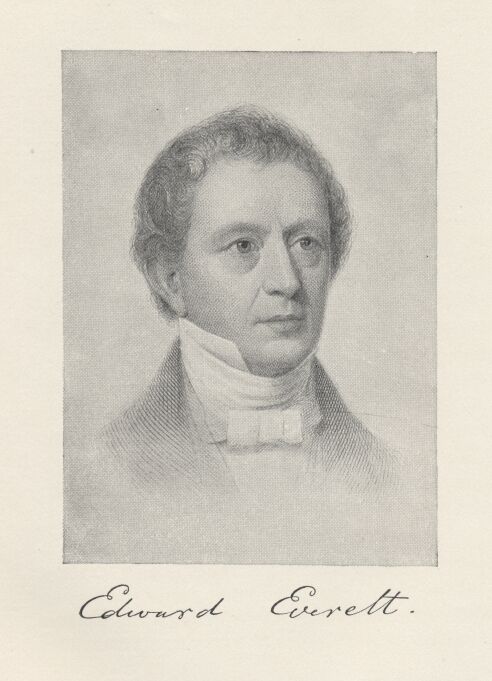
The following year, Edward Everett came to Concord to deliver a historical oration. As he would do on many occasions (most famously at the dedication of the Gettysburg National Cemetery in 1863), he consulted published and local sources in order to retell the event he was commemorating.

Everett didn’t add anything to the historic record, but he brought together sources:
After staying a short time at Lexington, Messrs Revere and Dawes, at about one o’clock of the morning of the nineteenth of April, started for Concord to communicate the intelligence there. They were soon overtaken on the way by Dr. Samuel Prescott of Concord, who joined them in giving the alarm at every house on the road.
The Concord newspaper hadn’t named Paul Revere and William Dawes. Revere’s account and Elias Phinney’s book about the fighting on Lexington common hadn’t included Prescott’s full name. But here all three riders were together in one recounting at last.

The Rev. Ezra Ripley’s 1827 History of the Fight at Concord stated:
Nothing very interesting occurred in the march of the British from Lexington to Concord. Intelligence had been given by Mr. Samuel Prescott, who had passed the evening at Lexington, and had seen and escaped the British officers on the road…
This book added little to the printed record about Prescott, but it showed that Ripley, the long-time town minister, accepted that he “had passed the evening at Lexington” and wasn’t just riding out on errands.

In 1835 Lemuel Shattuck was finally unabashed enough to drop a surname into his Concord history:
They [Revere and Dawes] had not travelled far before they were overtaken by Dr. Samuel Prescott of Concord, who had spent the evening at Lexington, at the house of Mr. Mulliken, to whose daughter he was paying his addresses; and having been alarmed, was hastening his return home. All rode on together, spreading the alarm at every house.
“Mr. Mulliken” was Nathaniel Mulliken, a well-known clockmaker. He died in 1767, but his widow and sons were carrying on that business in 1775. Their house was close to the road. British regulars were accused of looting and burning it on their return to Boston.

All that means there was a lot of documentation about the Mullikens. By the Bicentennial authors wanted this woman’s full name, and in the published town records they found an unmarried daughter who would be the right age for Dr. Samuel Prescott’s attention: Lydia Mulliken. The published town records say she was born in 1753 and baptized in 1752 (I’m pretty sure one of those figures is an error).

Back in 1824, the local newspaper assured readers that Dr. Samuel Prescott visiting his fiancée into the very early hours of 19 April “was the custom on such occasions in those days.” Lots of subsequent authors included similar comments. They read like either wink-wink-nudge-nudge hints those young people were canoodling or prim denials that they weren’t.

At his blog Historical Digression, Patrick Browne expressed some skepticism about the story of Dr. Prescott’s visit to his fiancée because it didn’t surface until decades after the event. That detail also fit easily into Colonial Revival sentimentality.

Browne noted an inaccuracy in Lemuel Shattuck’s history to show he wasn’t always reliable. However, that example shows Shattuck boosting Concord over another town, a typical flaw of local chronicles. That same closeness to Concord suggests Shattuck actually had reliable sources about Dr. Prescott and Mr. Mulliken’s daughter.

Furthermore, we now have the 1824 newspaper as an earlier source on the doctor visiting his betrothed.

In fact, Shattuck was more accurate about the fate of Samuel Prescott and Lydia Mulliken’s relationship than that article.

TOMORROW: Torn apart by war.

Saturday, April 22, 2023

“Returning from Lexington before day light”

When Paul Revere described his ride with William Dawes to the Rev. Jeremy Belknap in 1798, he wrote: “We were overtaken by a young Docter Prescot, whom we found to be a high Son of Liberty.”

Revere wrote nothing about why Dr. Samuel Prescott was out on horseback in west Lexington after midnight.

In his 1824 History of the Battle of Lexington, Elias Phinney quoted Elijah Sanderson on how British army officers “attempted to stop a man on horseback, who, we immediately after understood, was Dr. Prescott’s son.”

Again, no reason given for young Prescott being out on the road at that time.

The first printed explanation for Prescott’s late night that I’ve found appeared that same year in the 24 Apr 1824 Concord Gazette and Middlesex Yeoman. In a 49th-anniversary retrospective on the opening battle of the Revolutionary War, that hometown newspaper stated:
The approach of the British army from Lexington, was known to the people of Concord at an early hour of the morning. This information was brought by Dr. SAMUEL PRESCOTT who was returning from Lexington before day light, (as was the custom on such occasions in those days) from a visit to the lady who afterwards became his wife.

He was met by the British advance guard near Mr. [Ephraim] HARTWELL’s in Lincoln, and in attempting to stop him a scuffle ensued, during which he had the reins of his horse’s bridle cut off; but being acquainted with the way, he jumped his horse over the fence, adjusted the bridle and came to Concord. Others who endeavored to get to Concord for the same purpose were stopped by the enemy.
Those unnamed ”others” included Revere, Sanderson, and their companions.

In recounting the British army search of Concord, the same article states:
One party went down the road to the house owned by the late ASA HEYWOOD, then occupied as a tavern. Suspicions were excited that young Dr. PRESCOTT was in the house; and as they considered him the principal cause of defeating the execution of their plan to take the town by surprise, they sought his life. He was aware of their intentions and secreted himself in a hole beside the chimney in the garret, and eluded their search. They broke the windows of the house and left it.
That anecdote is obviously based on the experience of Samuel Prescott’s older brother Abel, as recounted here. Both brothers had been physicians and impromptu alarm riders who died decades earlier, so it’s understandable for local lore to conflate them.

(I’m not sure if Asa Heywood, who had died earlier in 1824, ever owned the house where Jonathan Heywood’s widow Rebecca was living in 1775, or whether it was then a tavern, but I’m just not up to sorting through real estate records of Heywoods in Concord.)

There were other errors in the newspaper’s account, such as a claim that Lt. Col. Francis Smith was wounded in the fight (true) and “died in a few days” (false).

Nonetheless, this article is significant as the earliest statement that Dr. Samuel Prescott was out late visiting his fiancée on 18 April.

TOMORROW: More details emerge.

Sunday, April 16, 2023

Getting to Know Dr. Samuel Prescott

One of the questions after my online talk for the Army Heritage Center Foundation last week led me to discussing Dr. Samuel Prescott and how little we know about him. So I decided to look into what we do know.

Dr. Prescott is remembered for joining Paul Revere and William Dawes on their ride west from Lexington center in the small hours of 19 Apr 1775. Revere’s 1798 account is largely responsible for that clear identification. The silversmith wrote: “We were overtaken by a young Docter Prescot, whom we found to be a high Son of Liberty.”

Some authors have claimed that Prescott was already active in the Patriot resistance, carrying messages. I’ve never seen evidence of that beyond the fact that Revere called him “a high Son of Liberty.” But look at how that clause began, “whom we found…” Revere and Dawes, who were active in the network and in Revere’s case had been out to Concord before, didn’t know Prescott. They had to get to know him.

Note also how Revere, aged forty, recalled this rider as “a young Docter Prescot.” Samuel Prescott was only twenty-three years old. In fact, he was the fourth Dr. Prescott in Concord, after his father, Dr. Abel Prescott (1718–1805), and his brothers, Benjamin (1745–1830) and Abel, Jr., who had just turned twenty-six. (Their mother had died the previous July.)

(I’m following the dates that appear in The Prescott Memorial, published by a family member in 1870. Find-a-Grave gives a different date in 1749 for Abel, Jr.’s birth without citing a source. The family doesn’t appear in Concord’s published vital records.)

Revere warned his companions that there were British army officers on the road that night, so they should be prepared. And:
I likewise mentioned, that we had better allarm all the Inhabitents till we got to Concord; the young Doctor much approved of it, and said, he would stop with either of us, for the people between that & Concord knew him, & would give the more credit to what we said.
The elder Dr. Abel Prescott had treated people in that region for decades, succeeding his own father and elder brother. He had probably brought his sons along on calls for training.

In Lincoln, while Prescott and Dawes visited a house together, Revere spotted two riders up ahead. He thought they were behaving like the army officers who had nearly stopped him in Charlestown. He called for his companions to join him, thinking three Patriots could handle two officers. Instead, “in an Instant I was surrounded by four.”

Revere continued:
The Docter being foremost, he came up; and we tryed to git past them; but they being armed with pistols & swords, they forced us in to the pasture;—the Docter jumped his Horse over a low Stone wall, and got to Concord.
Revere had nothing more to say about Prescott. Concord sources confirm that he reached his home town with the Bostonians’ warnings and then continued on west to Acton and Stow.

Meanwhile, Dr. Abel Prescott, Jr., mounted and carried the same news to Framingham and Sudbury, south of Concord. Later in the morning he tried to return to Concord over the South Bridge, only to find regulars from the 10th Regiment of Foot guarding that position.

TOMORROW: Wounded and hiding.

Saturday, June 04, 2016

Legends and Lies to Be Broadcast 5 June

Fox television is promoting a couple of upcoming shows based on the American Revolution. Sort of.

The Fox News Channel has a series called Legends & Lies, and its second season carries the subtitle The Patriots. The accompanying book by David Fisher has the full title Bill O’Reilly’s Legends and Lies: The Patriots, spotlighting the show’s executive producer and host.

The first episode of the new season, debuting tomorrow night, is titled ”Sam Adams & Paul Revere—The Rebellion Begins.” The network says it “tells the story behind the ‘Sons of Liberty,’ who start the fight for American independence leading to the infamous historic Boston Massacre.”

In the short preview for the series, you can hear O’Reilly narrate how Dr. Joseph Warren “enlists militiaman Patrick Dawes and three others to join Revere.”

Now I would have thought this show was meant to dispel legends and lies, not spread new misinformation. Dr. Warren sent William Dawes out of Boston with the same message as Paul Revere. I have no idea what “three others” O’Reilly might refer to. (There were other alarm riders in the countryside, but Dr. Warren had no contact with them. Dr. Samuel Prescott spent some time riding with Revere and Dawes, but that was their improvisation, not Warren’s plan.)

Errors on such easily researched facts don’t bode well for the Fox News treatment of Samuel Adams.

But things could be worse. This fall Fox’s entertainment channel will air a situation comedy titled Making History. It shows two Massachusetts college professors traveling back to 1775, one to find a girlfriend and the other to keep history running right. One man is bearded, which should scare children in 1775, but no one notices. The other man is a history professor, yet doesn’t stop to think that being black will limit his influence in a slave-owning society. I’ve seen a preview of this one, too, and it’s so bad I won’t even link to it.

But it could make Legends and Lies: The Patriots look better.

Sunday, April 17, 2016

Amos Baker at the Bridge

On 22 Apr 1850, three days after the seventy-fifth anniversary of the Battle of Lexington and Concord, justice of the peace Ebenezer Rockwood Hoar took down the memories of a nonagenarian veteran named Amos Baker.

Baker was thought to be “the sole survivor of the men who were present at the North Bridge at Concord,…and the only man living who bore arms on that day.”

Hoar wrote out an affidavit that said:
I, Amos Baker, of Lincoln, in the County of Middlesex, and Commonwealth of Massachusetts, on oath depose and say that I was ninety-four years old on the eighth day of April, 1850; I was at Concord Fight on the nineteenth of April, 1775; I was then nineteen years and eleven days old.

My brother Nathaniel, who was then paying his addresses to the girl whom he afterwards married, was at the house where she was staying, near the line between Lexington and Lincoln, and received the alarm there from Dr. Samuel Prescott, and came over and gave it to me. My father and my four brothers, Jacob, Nathaniel, James, and Samuel, and my brother in law, Daniel Hosmer, were in arms at the North Bridge. After the fight at the bridge, I saw nothing more of them, and did not know whether they were alive or dead, until I found two of my brothers engaged in the pursuit near Lexington meeting house. Nathaniel followed the enemy to Charlestown.

When I went to Concord in the morning, I joined the Lincoln company at the brook by Flint’s pond, near the house then of Zachary Smith, and now of Jonas Smith. I loaded my gun with two balls,—ounce balls, and powder accordingly. I saw the British troops coming up the road that leads on to the Common at Concord. The sun shone very bright on their bayonets and guns.

Abijah Pierce of Lincoln, the Colonel of the minute men, went up armed with nothing but a cane.

When we were going to march down to the bridge, it was mentioned between Major [John] Buttrick, and Capt. Isaac Davis, that the minute men had better be put in front, because they were the only men that had bayonets, and it was not certain whether the British would fire, or whether they would charge bayonets without firing. I do not remember which of them said it, but they both agreed to it; and Captain Davis’s company of minute men [from Acton] was then brought up on the right. Then they saw the smoke of the town house, and, I think, Major Buttrick said “Will you stand here and let them burn the town down?”
Local historian Josiah Adams noted that other witnesses were more certain in ascribing these words to adjutant Joseph Hosmer.

That smoke having roused the officers, Baker said, “the order was given to march, and we all marched down without any further order or arrangement.”

TOMORROW: “Firing jackknives”?

Thursday, April 10, 2014

Patriots Day Week Begins

Saturday, 12 April, seems to be the start of this year’s commemoration of the Battle of Lexington and Concord. I know of four events that day.

10:30 A.M.
Bedford Parade and Pole Capping
Wilson Park, Bedford
Minutemen from throughout New England will convene on Bedford town common and march with fife and drum down the Great Road to Wilson Park to watch the official pole-capping tradition. A minuteman will proclaim freedom by shinnying up a 25-foot pole and placing a red cap atop it.

1:00 P.M.
Meriam’s Corner Exercise
Meriam’s Corner, Lexington Road, Concord
The town of Concord, joined by area minute companies and Minute Man National Historical Park, commemorate the fight at Meriam’s Corner that sparked the six-hour running battle back to Boston.

3:00 P.M.
Paul Revere Capture Ceremony
Revere Capture Site of Minute Man National Historical Park, Route 2A, Lincoln
The minute men march down Battle Road and narrate the story of Paul Revere’s capture at the actual site. Hear Revere, Samuel Prescott, William Dawes, Mary Hartwell, even Henry Wadsworth Longfellow. Music, dramatic reading and musket fire in the Park. For all ages.

7:00 P.M.
Embattled Farmers
South Acton Congregational Church, 35 School Street, Acton
Author Rick Wiggin tells stories from his book profiling the Revolutionary War soldiers from Lincoln, Massachusetts, throughout the war. Tickets are $5, free for children under twelve.

Next weekend will be much busier. For more events, visit Battleroad.org.

Saturday, March 31, 2012

Two Upcoming Events in Lincoln

At 2:45 P.M. on Saturday, 7 April, the Lincoln Minute Men and Minute Man National Historical Park will host the annual Paul Revere Capture Ceremony. I understand that Henry Wadsworth Longfellow will attempt to read his “Paul Revere’s Ride” while people portraying Paul Revere, William Dawes, Dr. Samuel Prescott, Mary Hartwell, and others will offer corrections and additions. There will also be music and musket fire. This event takes place at the outdoor site of the capture (shown above, courtesy of the Paul Revere House), and is for all ages.

Three days later, on Tuesday, 10 April, the group hosts its annual Battle at North Bridge Lecture. I’ll address the group on the topic of “What Did the British Hope to Find in Concord on April 19th?” Most accounts of the start of the Revolutionary War in April 1775 say that Gen. Thomas Gage sent troops to Concord to search for “military stores.” Research shows that Gage was hoping to find specific weapons and that the “arms race” to secure those weapons started back in September 1774. That starts at 7:30 P.M.

To observe that event, I’ve revamped the Boston 1775 website by creating separate pages about my upcoming and past speaking engagements, publications, and web appearances. Those pages now contain the links the used to fill the top of the right-hand column. I’ve headlined those pages “Elsewhere” since I do occasionally come out from behind the keyboard.

Thursday, September 02, 2010

Facts, Fables, and Fiction about “Paul Revere’s Ride”

On the remaining Wednesdays in September, the Paul Revere Memorial Association [i.e., the Paul Revere House, getting fancy] is presenting a series of lectures on the theme “One Hundred and Fifty Years of ‘Paul Revere’s Ride’: Facts, Fables and Fiction.”

These lectures will start at 6:30 P.M. each Wednesday at the Old South Meeting House on Washington Street in Boston. The series is free to the public, thanks to a grant from the Lowell Institute. Here are the topics.

Wednesday, 8 September
Listen, My Children: Paul Revere’s Ride in Poetry and Legend
Using new research, historian and author Charles Bahne [a Boston 1775 guest blogger] will examine how Henry W. Longfellow created one of America’s most enduring legends—a tale which, like all legends, often strays from the truth. What did Longfellow know when he wrote the poem? Why did he include some details, and ignore or omit others? What about William Dawes and Samuel Prescott? Included in the program will be a world-premiere: the first-ever public reading of Longfellow’s complete first draft, including an entire stanza which was later deleted, and has never been published.

Wednesday, 15 September
The Lost and Legendary Riders of April 19th
Beyond Paul Revere and his companions, Americans have passed along stories of other notable riders on April 19, 1775. Historian J. L. Bell [that’s me!] investigates the facts and fiction behind such figures as Hezekiah Wyman, the dreaded “White Horseman”; Abel Benson and Abigail Smith, children said to have helped raise the alarm in Middlesex County [and never explored on Boston 1775]; and Israel Bissell, the post rider credited with carrying news of the fight all the way to Philadelphia.

Wednesday, 22 September
“A Friend” of Paul Revere: The Role of Family Histories in the Ongoing Mystery of Who Hung the Lanterns in Old North Steeple, April 18, 1775
On April 18, 1875, in front of a packed house at Boston’s Old North Church, Samuel Haskell Newman presented his family’s account of the night of April 18, 1775. Specifically, he identified his father, Robert Newman, as the man who hung the lanterns in Old North steeple on that historic night. One year later, in July, 1876, Reverend John Lee Watson of Orange, New Jersey, argued in a letter to the Boston Daily Advertiser that it was his relative, Captain John Pulling, who hung the signal lanterns. Old North Foundation historian and educator Bob Damon will evaluate these competing narratives and explore the important role that family histories play in our understanding of history.

Wednesday, 29 September
Revering America: The Politics of Remembering the Revolution
Henry Wadsworth Longfellow was not the first, nor by any means the last, to make use of Revolutionary War history for other purposes. Just this past spring, George Pataki launched an anti-health care petition drive called RevereAmerica, from Boston’s Paul Revere Mall. Americans have always put the past to political ends. Jill Lepore, Kemper Professor of History at Harvard University and New Yorker staff writer, will discuss the fraught relationship between reverence and revolution.

Monday, April 21, 2008

The Concord Alarm and the Casablanca Rule

As promised, this posting continues my extended response to Garden Keeper’s thoughtful comment on the posting “Without Paul Revere.” That comment argued for Paul Revere’s importance on 19 Apr 1775 this way:

As for your point about the value of the Revere's ride, who could have rousted Hancock and Adams - Dawes or Revere. As you noted, Hancock was loathe to abandon Lexington. Would Dawes have the stature to make the argument? Your earlier note about Monroe recalling a "Mr. Lincoln" suggests otherwise. If Hancock and Adams had not abandoned the Clarke home, would Parker and the others turned away from the British troops? Or would they have felt a greater need to sacrifice themselves to allow for an escape? They sustained heavy losses - and, at the moment, weren't even engaged with the troops. It could have been far worse.

And, let's not ignore the considerable heroism of the Prescott family that day. Did Dawes know who Samuel Prescott was? Revere did. His later recollection was that Dr. Prescott was recognized as a son of liberty. After all, Revere HAD been to Concord twice in the prior two weeks before the troops left Boston. If Dr. Prescott had not been recruited as a rider that evening, would Acton had been notified in time to be at the bridge that day? Would Abel Prescott had been sent off to Sudbury and Framingham? Perhaps young Abel would have survived the day unscathed...

It's a terrific point to consider but I would submit that Revere's ride was a considerable part of the success of the day.
To start slowly (since I did get up early this morning), I don’t think Revere knew who Dr. Samuel Prescott was when they met on the road from Lexington to Concord. In 1775 Revere wrote of him as “Mr. Prescot” rather than as a doctor. In 1798, Revere recalled: “We were overtaken by a young Docter Prescot, whom we found to be a high Son of Liberty.” I think the phrase “whom we found” indicates that Revere and Dawes hadn’t known about the doctor’s politics until they got to talking.

That said, I think your remarks get to the larger question about Revere’s personal influence on events. He had intangible qualities we can only infer from the preserved records, including his level of confidence, dedication, and contacts with top Whigs in and out of Boston. Revere himself recognized how Dr. Prescott’s personal contacts were useful on the road from Lexington to Concord:
we had better allarm all the Inhabitents till we got to Concord; the young Doctor much approved of it, and said, he would stop with either of us, for the people between that and Concord knew him, and would give the more credit to what we said.
William Dawes, Jr., wasn’t as well known as Revere. He was adjutant (or clerk) of the Boston militia company and a member of the Ancient & Honorable Artillery Company, a private group for militia officers that reached outside Boston. Through his wife, he had contacts in Roxbury. But he hadn’t sat in on meetings of the top Whigs in Boston, as Revere had. He hadn’t been out to Concord and Charlestown earlier in the month, making arrangements for an alarm, as Revere had. The major thesis of David H. Fischer’s Paul Revere’s Ride is that the silversmith was uniquely positioned to spread the word of the British march.

But the bigger question remains, how much did Revere’s personal connections matter at the end of the day? And in that inquiry I’m taking the long view and following what I’ll call the Casablanca rule: “the problems of three little people don’t amount to a hill of beans in this crazy world.” In other words, rather than looking at how Revere affected individual people’s fates, such as the number of men shot in Lexington or the activity of the Prescott brothers, we should consider the broader picture.

On the “crazy world” scale, what were the important developments of 19 Apr 1775?
  • There was a sustained clash between the British army and the British colonists of Massachusetts, with significant numbers of lives lost on both sides, signaling to everyone that the long political conflict had turned into a military one.
  • Both sides felt that the other had started the violence and/or carried it out brutally and unfairly.
  • The army failed to find the Provincial Congress’s most important supplies in Concord.
  • The militias didn’t capture the army column (though it’s not clear that provincial commanders wanted to do that).
  • At the end of the day, provincial troops had Boston under siege.
If we take away Revere’s ride—say, by imagining him detained by British officers along the Charlestown/Cambridge border—do those big developments change? One can never be sure about a counterfactual hypothesis, but I’m not sure they shift significantly.

To start with, Col. James Barrett and his family were already moving the Congress’s arms off his farm in the days before 19 April. Gen. Thomas Gage’s mission was doomed to failure before it began.

More important, the Massachusetts countryside had been on high alert for a long time. The Powder Alarm of the previous September showed how the rumor of an army attack could put thousands of militiamen on the march. Concord was farther inland than Gage had ever sent troops before, bringing more opportunities for conflict. It took only a little stimulus—a shot no one can trace in Lexington, smoke from burning artillery carriage wheels in Concord—to lead to fatal violence. With or without Revere, that march was very likely to have triggered the war.

The first shooting might even have happened at the same places without Revere. The record from Lexington indicates that several messengers alerted Capt. John Parker about troop movements, starting with local teenager Solomon Brown and including Dawes. The town’s militia had been assembled (and dismissed, and reassembled) for more than four hours when the British column finally arrived. Parker was sending riders both west to Concord and east to see how close the troops were. He and his men didn’t necessarily need to hear from Revere that night to be on the alert, on edge, and on the green.

What about Concord? If Revere hadn’t made it to Lexington, then Dawes may well have decided not to ride on to Concord, and Prescott wouldn’t have met anyone on the road, and Prescott may have been stopped (along with Brown and others) by the British scouts. In that case, Concord wouldn’t have received Prescott’s alert at 2:00 A.M. But, as I noted above, Col. Barrett, commander of the Concord militia, was already wary of a possible army raid. And in the several hours between two o’clock and the first shots at the North Bridge, other riders came into the town with news of the troops.

Finally, in the broad view, did the early alerts amount to more than “a hill of beans”? Our public history emphasizes the minutemen, ready at a minute’s notice to defend the countryside. And indeed thousands of men heard the various summonses in their towns and quickly gathered in their militia units. And then what happened? A lot of them stood around for a while, discussing what to do. That’s partly what military service is like: “Hurry up and wait.” And it’s partly what the New England culture was like, with a lot of consensus decision-making; there’s nothing wrong with discussing things before you go into a war. But that lessens the crucial importance of the initial alert.

Thus, even after the shooting on Lexington green, even after the shooting at the North Bridge, the Massachusetts militia didn’t make a serious attack on the British column until it had started to withdraw from Concord, sometime after noon on 19 April. Eleven hours had passed since Revere’s capture, about seven since the first fatalities of the day, and about two since some of those same militiamen had exchanged shots with regulars. The war’s start involved minutemen, but it wasn’t determined in minutes.

Granted, some town militia companies might have mustered later without Revere’s message, and thus might not have arrived along the battle road in time to attack the British column. But would that have mattered, given that the column got through to Charlestown anyway? The big military development was the start of the siege, and the siege would probably have started much the same way even if Revere hadn’t been able to do all he did.

Some might say, as Jay Fitzgerald’s Hub Blog did, “couldn't the same be said of the actions of 99.9 percent of those who participated in the events of April 18-19, 1775?” And the same could indeed be said. But often people describe Paul Revere as crucial for determining the major results of the day; nobody else gets that treatment. Revere’s story has built-in appeal; it’s a dramatic narrative about admirable actions. (So is Casablanca.) But by presenting Revere alone as crucial to the start of the war, we can lose sight of the Revolution as a mass movement involving thousands of people already prepared for armed conflict.


Friday, April 18, 2008

Without Paul Revere

Today is the anniversary of Paul Revere’s 18-19 Apr 1775 ride to Lexington to warn John Hancock and Samuel Adams that British troops were coming out of Boston. So I’m going to discuss the one myth of this event that we have the hardest time dealing with.

It’s not the myth created by H. W. Longfellow’s poem that Revere was in Charlestown awaiting the two-lantern signal from Old North Church. Most books these days remind us that Revere arranged to send that signal from Boston, not receive it; he was already aware that the army would start its expedition by crossing the Charles River. Only after the signal had been sent did he cross the Charles himself as a backup rider and proceed west.

It’s not the myth, also implied by that poem, that Revere was a lone rider. Many people know the name of William Dawes, Jr., who carried the same message out of Boston through Roxbury a few hours before Revere crossed the Charles. David H. Fischer’s Paul Revere’s Ride does an excellent job of documenting how Revere was also just the start of a cascade of alarm riders, like a nuclear chain reaction, fanning out from the towns he passed through.

It’s not the myth that Revere yelled, “The British are coming!”; I discussed that here.

It’s not the myth that Revere rode all the way to Concord with the news. Again, history books are clear that mounted officers sent out ahead of the army’s march captured Revere and Dawes on the road between Lexington and Concord. There’s a historic marker at that point, and a yearly ceremony. The two Boston men had happened to pick up a third rider, Dr. Samuel Prescott; he was a local man, perhaps with a fresher horse, and he escaped from the officers and brought news of the approaching troops to Concord.

It’s not the more recent myth that after Revere was captured he fearfully spilled his guts to those officers. He did tell them how he’d warned the countryside about their army’s march, but that was in all likelihood an attempt to make them tell their commanders to call back those troops before anyone got hurt.

It’s not even the myth that the provincial militiamen at Concord stopped the British army at the North Bridge. Three companies of soldiers crossed that bridge and proceeded to James Barrett’s farm, then returned hours later, without being blocked or attacked. The firing at the bridge occurred after the locals advanced on the army companies trying to hold it. The militiamen drove that rear guard away, but then withdrew and didn’t try to trap the advance units.

Rather, the most troublesome myth of Paul Revere’s ride is that Paul Revere’s ride mattered a lot.

There’s no doubt that Revere was very active on the night of 18-19 Apr 1775. After telling Hancock and Adams that troops were coming so that they could move out of reach, Revere rode on toward Concord with Dawes and then Prescott, was captured, was released, walked back to Lexington—and found Hancock and Adams still hadn’t left town. Revere then helped convince Hancock to get in the damn carriage, and the political leaders set off for Woburn—only to realize that Hancock had left some Provincial Congress papers behind in a tavern. So Revere returned to Lexington and was helping to move those papers during the first shots on Lexington green.

The ironic or even farcical part of all that dedicated activity was that Gen. Thomas Gage had written nothing in his orders about John Hancock and Samuel Adams. The officers commanding the expedition knew nothing about those men being at the Lexington parsonage, or about Hancock’s trunk. No soldiers went toward those buildings on the morning of 18 April.

Hancock, Adams, Revere, and Dawes could have decided to hunker down in the parsonage with guns, swords, and a militia guard, and waited for the army to try to grab them. And those troops would have marched straight through Lexington without noticing. Gen. Gage’s only target was armaments stored in Concord.

Without Revere, the Lexington militia would still have been on the alert by dawn on 19 April after hearing the same news from Dawes. There were hours between when he arrived and when the troops did, during which several more riders came into town. Capt. John Parker thus had more than enough time to assemble his men.

Dawes may not have taken the initiative to ride on to Concord without Revere, and thus no man from Boston might have met Dr. Prescott. In that case, the warnings Col. Barrett heard in Concord might not have seemed as authoritative as when he knew Revere was behind them. Earlier in the month, Revere had established contact with men in Concord.

Nonetheless, there were about two hours between the British soldiers’ arrival at Concord and the exchange of shots at the North Bridge. There was another two hours between then and when the troops withdrew from the town and headed back toward Boston. So in all there were more than six hours between the shots at Lexington and when the provincial militias began to counterattack the British column in earnest. That was enough time for many towns to mobilize and reach the battle area, even without a warning the night before. So as brave, hard-working, and dramatic as Paul Revere’s ride was on 18-19 Apr 1775, it may not have changed events all that much.