J. L. BELL is a Massachusetts writer who specializes in (among other things) the start of the American Revolution in and around Boston. He is particularly interested in the experiences of children in 1765-75. He has published scholarly papers and popular articles for both children and adults. He was consultant for an episode of History Detectives, and contributed to a display at Minute Man National Historic Park.

Subscribe thru Follow.it


•••••••••••••••••


Showing posts with label Constitution. Show all posts

Tuesday, July 21, 2026

America250’s Christian Comics

When Boston 1775 last looked in on America250, the commemorative campaign of the Congressionally-established Semiquincentennial commission, the Trump White House was trying to replace it with its own Freedom250 campaign.

And, of course, its own merchandise for sale.

America250 continues to issue material, though. Among the products bearing its brand and sold through its website is a series of comic books about American history.

That line has included fifteen comics about 36 pages long, a collection of ten of those comics which cover the settlement and founding periods, and a graphic novel on the U.S. Constitution.

The America250 website doesn’t offer clear info on contents and credits, and not all the titles are available there anymore. Its publishing partner, Kingstone, offers all the titles, and at lower prices.

Journalist and historian Colin Woodard recently looked at those comics for Talking Points Memo and reported:
The comics — beautifully executed and bearing the America250 logo — were produced by Kingstone, a Christian publisher best known for its 2000-page, 10,000 panel graphic interpretation of the Bible. . . .

The series — drawn by a world-class Brazilian artist [Joe Bennett] who lost his gig with Marvel comics over antisemitic imagery in cartoons championing Jair Bolsonaro — devotes five volumes to the colonial era, its characters, themes and settings carefully curated to depict the eventual creation of the United States as an outgrowth of divine will and intervention. They all take place north of the Mason-Dixon line, with the action rarely leaving the confines of New England, the only part of colonial North America where Calvinists were the dominant political and cultural force. . . . More glaring is the omission of the origin stories of all of the colonies south of New England — home to most of colonial America’s inhabitants — which don’t fit so well into Kingstone’s narrative. . . .

Miracles abound in the story. Among those explicitly called out in the comics: a young George Washington surviving a rain of French bullets in a 1755 raid; Jefferson writing “all men are created equal” even though he was a slaveowner; the dense fog that fell to protect Washington’s army’s retreat across the East River during the Battle of Long Island; the reversal of fortune allowing Washington’s [sic] victory at the Battle of Saratoga in 1777; the early start to the 1781 hurricane season and the bad decisions made by British generals that facilitated the final British defeat at Yorktown; Franklin’s suggestion that delegates pray to find a compromise solution on legislative representation at the Constitutional Convention; and the Constitution itself, because of its alleged brilliance.
Woodard also detailed many ways the Constitution graphic novel promotes particular positions on today’s political issues, from a historically unfounded reading of the Fourteenth Amendment to opposition to gun regulations, reforming the Electoral College, and expanding the Supreme Court.

Sunday, May 31, 2026

“Declaring Independence: Declaration to Constitution” in Boston, 1 June

On Monday, 1 June, the Massachusetts Historical Society will host a panel discussion titled “Declaring Independence: Declaration to Constitution.” The guiding question will be whether the promises of the Declaration of Independence shaped the Constitution.

The event description says:
America’s founding documents have echoed throughout global history and culture for more than two centuries. Join us to learn more about how these two documents are related—and how they differ. Why did revolutionaries like John Adams and his peers draw on the past as they drafted the Declaration and crafted the Constitution? What ideas shaped the United States’ working definition of liberty, and how did that translate to audiences abroad? Explore how “we the people” imagined a new political vocabulary to interpret the American experiment, which we continue today.
The panelists will be:
  • Emily Sneff, author of When the Declaration of Independence Was News
  • Mary Sarah Bilder, professor at Boston College Law School and author of Madison’s Hand
  • Sara Georgini, series editor at the Adams Papers, moderator
For in-person attendees, the evening will start with a chance to view the exhibit “1776: Declaring Independence” and a reception starting at 5:30 P.M. The conversation and its livestream will begin at 6 P.M.

Register from this page. Attending in person costs $10, free for M.H.S. members and Card to Culture participants. Listening in online will be free, and the society usually posts recordings of its events on YouTube a few days afterward.

Thursday, May 07, 2026

A Closeup Look at the President’s House in Philadelphia

I’ve been following the story of the President’s House site within Independence National Historical Park.

That structure marks the residence of George Washington and John Adams before the District of Columbia was built and also memorializes the people enslaved to the Washingtons who lived and worked there.

In September, we first learned that White House policy was putting pressure on the park to change the signage on that site. In January, the signs were taken down.

In February, after the city of Philadelphia filed a lawsuit, a judge ordered the signs be put back up. But then a higher judge halted that process while also requiring those signs already restored to remain. The U.S. Circuit Court has upheld that stasis.

Last month I traveled to Philadelphia for the Pursuit of History’s weekend examining the creation of the Declaration of Independence. One morning I walked through the President’s House.

Most of the frames for signs are empty; the few panels that have been restored appear to be almost random. In some of the blank spaces people had posted small images of the missing signs. While I was there, a local taped a large sheet of paper in another space along with two markers, inviting people to share their own thoughts on the controversy. I presume those unofficial displays are taken down each evening and replaced each day.

In April the National Park Service unveiled new draft signage, created (by people unknown) to please the White House. Those panels now appear on the webpage for the President’s House Site. WHYY reported:
The new panels include references to slavery, the Underground Railroad and figures like Frederick Douglass. Like the previous panels, they also make mention of the nine enslaved people held by Washington while he was president and living in Philadelphia.

However, they would have changed the overall tone of the site, softening and significantly reducing references to slavery, and shifting the focus toward the “anti-slavery sentiments” of the slave-owning Founding Fathers. For example, text on one notes that the U.S. Constitution did not contain the word “slavery,” and another one argues that Washington had “doubts” about the institution.
Local critics called that revision “whitewashing” and “maliciously outrageous.”

TOMORROW: A historian’s take.

Wednesday, May 06, 2026

This Year’s Pulitzer Winners on the Founding Era

This week Columbia University announced the Pulitzer Prizes for 2026. In journalism, the big trend was big exposés of big abuses by the current administration in Washington.

The awards for books reflected this Sestercentennial year more mildly, though of course that anniversary has meant authors and publishers produced more books about the Founding era. Here are two winners.

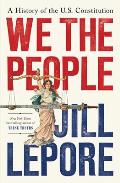
In History, the prize went to We the People: A History of the U.S. Constitution, by Jill Lepore. The judges called it “A lively and engaging narrative that investigates why the Constitution is so difficult to amend, including a review of noteworthy failed amendments proposed by marginalized groups.”

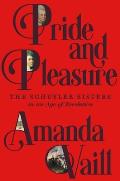
In Biography, the winner was Pride and Pleasure: The Schuyler Sisters in an Age of Revolution, by Amanda Vaill.

This was described as: “A lively and detailed biography of two daughters of wealthy and influential Dutch landowners who colored our nation’s history, using present tense to tell their story and past tense to chronicle the dramatic sweep of the American Revolution.”

Wednesday, March 04, 2026

Archive in the Sky


In addition to the Freedom Trucks discussed yesterday, the federal government and its corporate donors are sending the Freedom Plane around the country bearing documents of national importance from the Founding period.

Those documents are listed on the plane’s own website. They are:
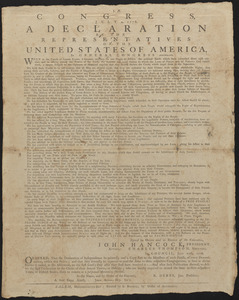
  • William Stone’s 1823 engraving of the Declaration of Independence, which is both more common and more legible than the handwritten original. (This artifact is on loan from David M. Rubenstein, co-founder of the Carlyle Group and collector of historical documents, while all the others are originals from the U.S. National Archives.)
  • The Continental Congress’s Articles of Association from 1774, laying out the Continental Association boycott of goods from Britain.
  • Oaths of allegiance signed by George Washington, Alexander Hamilton, and Aaron Burr as Continental Army officers in 1778.
  • The Treaty of Paris from 1783.
  • A copy of the draft Constitution printed for delegates to the 1787 convention to debate and revise, this one with notes by David Brearley of New Jersey. 
  • Chart of votes by states at that convention, including “The Constitution unanimously agreed to” (though Rhode Island didn’t send a delegation and New York’s was incomplete). 
  • The Senate markup of the Bill of Rights in 1789, showing revisions of the language that came out of the House of Representatives. 
Legally the main omission is any form of the Articles of Confederation and Perpetual Union, which actually formed the United States of America into a single country. But we always overlook that. 

The plane’s itinerary is Kansas, Georgia, southern California, eastern Texas, Colorado, southern Florida, Michigan, and Washington. This national tour includes no stop in the Northeast.

Tuesday, March 03, 2026

“Touch-screen displays, Revolutionary War artifacts, and A.I. slop”

Among the Trump administration’s Sestercentennial initiatives are modern gladiatorial games outside the White House on the President’s birthday. Less decadently imperial are the Freedom Trucks mentioned yesterday.

These trucks were clearly inspired by the Freedom Train that traveled the country in 1947–49, giving citizens a look at 127 documents from the National Archives and other artifacts.

The most detailed list of those documents that I found is a Huntington Library catalogue description of “Heritage of Freedom,” the booklet given out to explain those items to visitors. The selection didn’t include the handwritten Declaration of Independence, Articles of Confederation, or Constitution, but it did have the Congress-approved Bill of Rights, George Washington’s copy of the printed Constitution, and various letters and pamphlets from the Founding era. The display went back as far as the Magna Carta and Christopher Columbus, and as recently as the surrender of Germany and Japan.

The 1940s Freedom Train previously inspired the American Freedom Train of the Bicentennial period, 1975–76. This one carried Washington’s copy of the Constitution again, the original Louisiana Purchase, and other documents, but also one of Judy Garland’s dresses from The Wizard of Oz, Martin Luther King Jr.’s pulpit, and a Moon rock. It was like a rolling Smithsonian.

What will be in the Freedom Trucks? The New York Times reported:
The truck exhibits were designed in collaboration with Hillsdale College, a conservative school in Michigan, and PragerU, a company that makes conservative educational materials. . . . The trucks prominently feature quotes from Mr. Trump and a video he filmed inside the Oval Office.
On 27 February, the New Yorker offered a story by Jessica Winter about PragerU’s projects:
Last year, PragerU unveiled the Founders Museum, a “partnership” with the White House and the U.S. Department of Education featuring A.I.-generated video testimonials from luminaries of the American Revolution. These include a digitized John Adams who ventriloquizes the words of the right-wing influencer Ben Shapiro, almost verbatim: “Facts do not care about our feelings.”

PragerU is also supplying the multimedia content for the Freedom Truck Mobile Museums, a travelling exhibition of touch-screen displays, Revolutionary War artifacts, and A.I. slop that will chug across the country on tractor-trailers throughout 2026, in celebration of the two-hundred-and-fiftieth anniversary of the Declaration of Independence. It seems that the battle over who defines good and evil—or, at least, over who defines American history—will be waged, in part, from the helm of an eighteen-wheeler. . . .

Prager’s nonprofit is just one of dozens of conservative organizations, many of them Christian, that are named as “partners” in the America 250 Civics Education Coalition, which is overseen by Linda McMahon, the Education Secretary. The coalition has the secular task of developing programming for America’s birthday, such as PragerU’s Founders Museum and the Freedom Trucks, the latter of which received a fourteen-million-dollar grant from the federal Institute of Museum and Library Services. (In March, President Trump signed executive orders to dismantle both the I.M.L.S. and the D.O.E.; they remain alive, albeit in shrunken, ideologized versions of their former selves.)

Other America 250 partners include both of the major pro-Trump think tanks (the America First Policy Institute and the Heritage Foundation), a Christian liberal-arts school (Hillsdale College), the Supreme Court’s favorite conservative-Christian legal-advocacy group (the Alliance Defending Freedom), the Christian-right-aligned church of Charlie Kirk (Turning Point USA), and something called Priests for Life.
Another notable detail from the New York Times: “Both institutions [Hillsdale and Prager U] said that they had not received any of the $10 million in taxpayer money and that they had funded their work with private donations.” That $10 million, you may remember from yesterday, was shifted by the White House from the Institute of Museum and Library Services to America250 and then to Freedom 250, ostensibly for these very trucks. What pocket is that money sitting in now?

TOMORROW: Up in the air.

Saturday, February 28, 2026

“Acts of government could be resisted when they threatened the essential rights”

Jack Rakove is the William Robertson Coe Professor of History and American Studies emeritus at Stanford University, with parallel appointments in political science and law.

He’s the author of respected books of Revolutionary-era history, including Original Meanings: Politics and Ideas in the Making of the Constitution (winner of the Pulitzer Prize for History in 1997), James Madison and the Creation of the American Republic, and Revolutionaries: A New History of the Invention of America.

In other words, Rakove has worked largely in political history and how the Framers translated ideas into laws and policies for the new nation. When he uses the term radical, as in his 2020 book Beyond Belief, Beyond Conscience: The Radical Significance of the Free Exercise of Religion, he’s talking about the ideas of the Founders in their eighteenth-century context, not about the importance of now noting how hierarchical those men’s lifestyles were.

That’s something to bear in mind while reading Rakove’s essay for the Washington Monthly earlier this month, “Playing the Grinch at America’s 250th Birthday Party.”

In that essay Rakove writes:
Last June, I attended a conference on The American Revolution and the Constitution held at the American Enterprise Institute in Washington. It was the seventh of eight conferences that AEI has been holding on the 250th anniversary of independence. Given its conservative orientation, any conference sponsored by AEI would predictably take a celebratory turn, and so did this one. My own paper on “The Invention of American Constitutionalism” fits well within that framework. . . .

Yet at the conference dinner that followed, I became the grinch who wanted to rob the other happy campers of their semiquincentennial joy. Yuval Levin, our gracious host and convenor, started our post-dessert conversation by asking me, “What do you think the celebration of the 250th anniversary of independence will be like?”

“I think it is going to be a complete disaster,” I replied, and offered a few reasons to support that view. The most important one, directly relevant to our subject, was that the constitutional system is lurching toward collapse and outright failure.
That link leads to Rakove’s article from last June, “It’s Not Just a Constitutional Crisis in the Trump Era. It’s Constitutional Failure.” Having spent a career studying how the Constitution was supposed to work, he’s watching it not work that way at all.

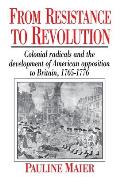
Rakove discerns some hope in what his graduate-school colleague Pauline Maier described as “extra-legal resistance” in her excellent book From Resistance to Revolution:
In the colonies as in Britain, communities believed that certain acts of government could be resisted when they threatened the essential rights and interests of the king’s subjects. Various kinds of uprisings, riotous events, and militant protests did occur during the colonial era of our history. From the perspective of imperial officials representing the British crown, these protests were illegal acts to be repressed or punished. Ship captains in the Royal Navy believed they were acting legally when they forcefully impressed sailors for their warships. Merchant seamen, shipyard workers, or ordinary individuals innocently strolling the streets thought otherwise. When anti-impressment riots occurred, they enjoyed the community’s full support.

This tradition was well established before the Stamp Act Crisis of 1765 disrupted imperial politics. Some of the earliest protests against the Stamp Act were indeed too violent. It was one thing to intimidate individuals who thought they had received lucrative appointments as stamp collectors into resigning their commissions. That was the easiest way to halt the enforcement of the Stamp Act. It was another matter entirely to ransack the residences of royal officials, notably including the Boston mansion of Thomas Hutchinson, lieutenant governor and chief justice of Massachusetts. . . .

In the past few weeks, Minneapolis has become our Boston, and its citizens have become modern Sons of Liberty. Far more important, they and their counterparts in other communities have unknowingly revived the strategy of resistance that American communities deployed between the Stamp Act Crisis of 1765 and the crisis of independence. Blowing whistles, tailing ICE and Border Patrol vehicles, blaring airhorns outside the hotels where their agents are hopefully spending sleepless nights—these are modern versions of the extra-legal resistance that Maier described.
The protesters aren’t the only people behaving outside the law, however. The Trump administration continues to put unconstitutional pressure on Minneapolis, this past week announcing a freeze on paying for medical benefits for anyone in the state of Minnesota. It’s tried that tactic before through the Department of Agriculture, and been stopped by federal courts, repeatedly. That sort of tyrannical action naturally prompts protests.

Tuesday, January 27, 2026

“This rule narrows the concept of patriotism and patriotic education…”

Back in September, the U.S. Secretary of Education, former wrestling entertainment magnate Linda McMahon, announced that “Patriotic Education” would be a “supplemental priority” in the department’s grants.

The department’s press release defined that as “a civic education that teaches American history, values, and geography with an unbiased approach.”

However, the Federal Register’s proposed rule for this initiative, which carries more legal weight, offered a different definition of “Patriotic education”:
a presentation of the history of America grounded in an accurate, honest, unifying, inspiring, and ennobling characterization of the American founding and foundational principles; a clear examination of how the United States has admirably grown closer to its noble principles throughout its history; and the concept that commitment to America’s aspirations is beneficial and justified.
Words like “ennobling,” “admirably,” and “beneficial and justified” are obviously value judgments, contradicting the press release’s claim to seek “an unbiased approach.”

I believe the U.S. of A.’s founding principles are indeed inspiring and ennobling, and I wish the country had done and would do a better job of following those principles. It certainly hasn’t done so “throughout its history,” implying there have been no reverses. Not everyone shares my idea of those principles, furthermore.

The federal government invites citizens to comment on proposed rules. Many historical organizations spoke out about this one and urged their members to do so. I’ll quote the American Historical Association’s talking points because I think they’re sensible and well put.
Students deserve an honest and full account of US history. This funding priority promises to support the teaching of “accurate and honest” content. We consider this goal profoundly important, and this is why we are concerned about efforts to scrub historical content from federal websites, remove factual signage at historic sites, and attack curatorial decisions at Smithsonian museums, alleging that this history is insufficiently celebratory in its depiction of the United States. . . .

We do not need to think alike in order to find common purpose; the founders of the United States found common purpose amid multiple conflicts and divisions. The proposed Department of Education priority states that “a shared understanding of our political, economic, intellectual, and cultural history—including our national symbols and heroes” is a prerequisite for informed patriotism. The founding generation of the United States did not have a shared understanding of their history, their symbols, or their heroes; nor have subsequent generations. US patriotism is diverse and multifaceted and it is capacious enough to include even those who are critical and skeptical about patriotism.

The Department of Education’s rule asserts that there can only be one interpretation of an event, an assertion that runs contrary to the practice of history and the importance of allowing people to engage in civil deliberations. Disagreement also is a strength of our political system and not a flaw. The US Constitution’s First Amendment recognizes this when embracing freedom of assembly, petition, press, religion, and speech. . . .

This rule narrows the concept of patriotism and patriotic education, with a disproportionate focus on the Founding Era, a period when most Americans could not vote, when many were enslaved, and before the US Constitution explicitly embraced “equal protection.” American history does not stop in 1800, and it should be presented in a way that allows students to explore multiple periods, consider various perspectives, and draw their own informed conclusions. . . .

The commemoration of the 250th anniversary of American independence must provide opportunities for all Americans to learn from our shared history, one that includes recognition of the complex challenges, aspirations, and struggles across this history to enact a more perfect union.
The comment period has passed, though this federal website says citizens are still posting their responses. In fact, it looks like most comments have arrived this month. I don’t know when the department might issue a rule and apply it to educational grants.

Sunday, January 25, 2026

“How should patriotic Americans think about political violence”?

On 15 January, Prof. Johann Neem shared an essay titled “The Problem of Violence in Authoritarian America.” Here’s a sample:
No American should be shot so easily or blithely. In a country where, as Tom Paine put it, the law is king, we are entitled to due process. Instead, we have become victims of state violence encouraged by the Trump regime’s policies, statements, and values. Trump has permitted federal agents to use illegal amounts of force; ICE agents now regularly assault Americans on the streets, in their cars, and in their homes. . . .

As Trump expands his rule, we must ask ourselves unsettling—and unsettled—questions about the role of violence: How should patriotic Americans think about political violence, and what might we learn from our Revolutionary political tradition?

At first glance, the answers to these questions are easy: violence in a constitutional democratic republic is never permitted. Democracies require citizens to embrace disagreement and accept the outcome of free, fair elections.

But we are no longer living in a free state. Under Trump, the Constitution is no longer active. The rule of law has ended. Donald Trump has deployed lies, violence, and lawlessness to amass power. As I have written before, Trump’s violation of his oath of office means that he is no longer the constitutional president of the United States. We Americans are now subjects of an arbitrary regime ruled by a tyrant. Under Trump, the federal government has become the enemy of the American people. We are subject to force, not law. . . .

In our current context, conversations about violence are complicated because our political tradition recognizes the legitimacy of violence against tyrants but denies the legitimacy of violence by tyrants. Two and a half centuries ago, when the colonists found themselves in a similar situation, the leaders of the patriot cause had to explain why they had embraced violent resistance against their own government. They did so in Continental Congress’s 1775 “Declaration…[on] the Causes and Necessity of Taking Up Arms.”

The situation was fraught. America’s resistance leaders in Congress had hoped to resolve differences between the colonists and England peacefully through meetings, petitions, and boycotts. Yet as Americans faced an increasingly hostile British government, patience was running out and the people got ahead of the opposition’s leaders. In April 1775, patriotic Minutemen at Lexington and Concord showed up to prevent British soldiers, then occupying Boston, from seizing arms in the Massachusetts countryside. Soon after, Ethan Allen’s Green Mountain Boys and colonial militiamen stormed Fort Ticonderoga.

Similarly, today, we see incidents in which protestors are getting increasingly unwilling to stay out of ICE’s way as Trump’s agents cross line after line that protects Americans from arbitrary force, arrest, and imprisonment, as the Cato Institute recently concluded. Most protestors are peaceful and obeying the law—but deciding what counts as lawful becomes harder when federal agents act violently and unlawfully. . . .

As our patriotic forebears 250 years ago understood, we too have a responsibility to our children and future generations who deserve to live in a free country. Violence is always a last resort. But at some point, some people in some city may be pushed to cross a line that most of us never want to cross. Just as [the] Continental Congress struggled with how to respond, so will we. The answer of what to do next is not easy or simple. The question we must all start asking ourselves, then, is how we will respond if that time comes, hoping and acting all along to prevent it from arriving.
Over a week later, as I type this, we see multiple videos of how I.C.E. agents approached, shoved, tackled, beat, maced, and finally shot observer Alex Pretti several times, killing him on the street. Along with the shooting of Renée Good, that made I.C.E. agents responsible for 66% of all homicides in Minneapolis so far this year.

The day before those agents killed Pretti, tens of thousands of local citizens braved harsh winter weather to march peacefully against federal oppression (shown in the photo at top). As Neem says, it’s hard to see Americans remaining committed to such peaceful protest if the forces of trumpery try to maintain their tyranny. 

Tuesday, December 30, 2025

“Everything he can to build a standing army that he can use domestically”

Earlier this month, Prof. Noah Shusterman, author of Armed Citizens: From Ancient Rome to the Second Amendment, shared an essay through H.N.N. titled “Deploying Federal Troops to U.S. Cities Is a Second Amendment Issue.”

Here’s a taste:
The Second Amendment was meant to prevent events like the Boston Massacre… The amendment was meant to prevent the government from turning its military into an occupying force, as the British were doing when they began stationing troops in Boston. It is also what our current president is trying to do when he sends federal troops into Los Angeles. Or Portland. Or Chicago. Or, eventually, New York and Boston.

The courts have been treating those deployments as Tenth Amendment issues, or as potential violations of the 1878 Posse Comitatus Act, but back when the Bill of Rights was written, the domestic deployment of federal troops was the Second Amendment issue. And if the courts understood that, we would be in much less of a mess right now. In 2025, the amendment might be about privately owned guns, but when the Bill of Rights was ratified in 1791, it was about the military — specifically, the threat that a nation’s military could pose to its own people, as it had in Boston during the 1770s, when the British government began stationing troops there. . . .

In the years immediately following independence, neither the state militias’ shortcomings on the battlefield during the Revolution, nor the Continental Army’s successes, made Americans any less wary of peacetime standing armies. Leaders of the founding generation still believed that because a professional soldier relied on his job for his livelihood, his allegiance was to his commander, not his nation. (The current commander-in-chief recently endorsed this view, albeit unknowingly, when he told an audience of military leaders that “if you don’t like what I’m saying, you can leave the room. Of course, there goes your rank, there goes your future.”) . . .

In Second Amendment terms, this president is doing everything he can to build a standing army that he can use domestically against his own population. If the Second Amendment’s self-proclaimed supporters both inside and outside the courts appreciated the significance of these policies, and how contrary they are to the amendment’s original goals, the nation might be in a better place right now. In deploying federal police and military units as an occupying force, the president is doing precisely what the amendment was meant to prevent.
I write this from Washington, D.C., where the President has summoned over 2,600 National Guard troops from multiple states. While traveling to libraries, I see small groups of young people in uniform pulled away from their homes and jobs to stand around in subway stations and parks. Courts have disagreed about the constitutionality of that order and others, with the President getting even more deference than usual in the federal district.

The President claims this authority based on laws speaking of “invasion” and “rebellion,” neither of which applies, and he also claims he’s acting against “crime.” This same President is a convicted criminal who pardoned about 1,600 people for attacking the U.S. Capitol on his behalf in January 2021.

Thursday, August 14, 2025

“The Revolution belongs to all Americans”

Johann Neem, author of Creating a Nation of Joiners: Democracy and Civil Society in Early National Massachusetts, Democracy’s Schools: The Rise of Public Education in America, and other historical studies, is a forthright critic of today’s political trumpery.

The New Republic just published Neem’s essay “Unfit to Lead: Trump Is the Enemy of the American Revolution.”

Here are some passages:
Today, as we approach the Declaration of Independence’s semiquincentennial, Donald Trump and his allies claim the Revolution for themselves. They have made fealty to the American Revolution part of their culture war against “woke” progressivism. The Revolution has become a pawn in Trump’s politics of retribution against the country’s supposed cultural enemies. Trump and his allies claim to be patriots while regularly violating the principles outlined in the Declaration of Independence and undermining the government established by our Constitution. . . .

For Trump, [Chief Justice John] Roberts, and their allies, the actual principles of the Revolution matter less than its capacity to signify tribal loyalty by distinguishing “real Americans” from domestic enemies. Trump conflates respect for the Revolution with loyalty to him. The gross spectacle of Trump hosting a military parade on his birthday—as do kings and dictators—and connecting it to the birth of the Continental Army illustrates all too well that he seeks to legitimize his own rule by wrapping himself in the Revolution.

To our Founders, there was a causal relationship between legislative consent and liberty. Today, we often think freedom is the ability to do what one wants. To our Founders, in contrast, freedom was a collective possession, not a private one. Freedom was only possible in a free state in which the people or their representatives actively made the rules that govern their shared life. . . .

Trump’s violations of the Constitution are too long to list here, but among them are illegally suspending laws and violating court orders. He has sought to dominate the other two branches of government by encouraging extralegal violence against legislators, judges, and their families. He has weaponized the Justice Department to go after his political enemies. He threatens the media, universities, and other civil society institutions that dare to question his edicts. Indeed, he seeks to destroy any person or institution that checks his will. . . .

Trump and his allies distort the past to convince their followers that respecting the American Revolution is somehow compatible with supporting a tyrant. They want to turn the Revolution into a symbol for tribal loyalty, but the Revolution belongs to all Americans. The United States was born from a revolt against lawless tyranny and arbitrary power. Today, future generations of Americans are counting on us to protect the republic. Like those who sacrificed so much to secure our freedom two and a half centuries ago, once again we Americans must pledge our sacred honor to uphold the legacy of the American Revolution from those who invoke it only to betray it.
The New Republic article on the web has links to show some of the events Neem refers to.

Friday, July 04, 2025

“Two hundred and forty-nine years later…”

Mother Jones just shared David Corn and Tim Murphy’s article “Here are the Declaration of Independence’s Grievances Against King George III. Many Apply to Trump.”

It begins:
When Thomas Jefferson was writing the Declaration of Independence in the weeks leading up July 4, 1776, he wanted to not only rely on just high-falutin enlightenment ideals to justify the case for separation from Great Britain. His aim was also to present a slam-dunk indictment of King George III—to prove that the royal was a “tyrant” and that he and Parliament had forfeited their right to rule the Americans by breaking their own laws and trampling on the rights of their people. This is why about half of the Declaration is a list of 27 specific grievances lodged against the King and his regime.

Two hundred and forty-nine years later, many of these grievances apply to the reign of Donald Trump. Here’s a look at how Trump stacks up against the Mad King.

He has refused his Assent to Laws, the most wholesome and necessary for the public good.

This grievance refers to the King refusing to approve laws passed by the colonies. Trump used his veto power a few times during his first presidency and has not had to do so this year. But he’s shown his disregard for Congress by simply ignoring existing laws. The Elon Musk-led DOGE attack on the government violated numerous laws—including those governing privacy and data. Trump paid no heed to the War Powers Resolution when he launched a military attack on Iran. He illegally impounded funds approved by Congress. He has misinterpreted the International Emergency Economic Powers Act and the Alien Enemies Act of 1798 to claim powers not afforded the president. Legal experts have said that Trump’s firing of inspectors general and commissioners of independent government commissions is illegal—though some of these cases are still being litigated in the courts. He has also issued an executive order to end birthright citizenship, which is enshrined in the Constitution.
On the Mother Jones site, that last paragraph includes lots of links for reports on the violations. And it goes on, all the way down to “He has excited domestic insurrections amongst us…”

This record is all the more remarkable for two reasons. First, several of the Congress’s complaints about George III referred to things the royal government did while it was openly waging war against the people of America for over a year. And secondly, Britain didn’t have a written Constitution to render the violations so clear.

Monday, April 28, 2025

“Fidelity is not given to a single individual”

On Patriots’ Day the towns of Danvers and Peabody come together again to honor the men who marched from that area on 19 Apr 1775 to confront the British regulars.

Seven men in the Danvers company were killed in the fighting at Menotomy.

The Danvers town archivist, author Richard B. Trask (shown here), was among the speakers at this year’s ceremony. He said: “I cannot ignore, at today’s remembrance of the sacrifice for liberty made by our ancient brethren, the danger that I believe our nation now faces.”

Caroline Enos reported for the Salem News:
Their sacrifice led to the nation’s Declaration of Independence in 1776 and, in 1789, the creation of the Constitution, said Trask, one of the most respected historians of the Salem Witch Trials and North Shore colonial history who is a founding member of the Danvers Alarm List Co.

“Our form of government was codified by the ratification of the United States Constitution,” he said. “It included the establishment of co-equal branches of government, the judicial, executive and legislative. But our Constitution and our way of life can only be preserved by a vigilant citizenry who insists these branches perform as specified in this our founding document.”

Trask said the Executive branch has overstepped its power by disregarding the checks and balances enshrined in the Constitution. He criticized the Department of Government Efficiency, created under President Donald Trump upon taking office in January, for its mass firings of government employees and its steps to defund agencies and programs without the consent of Congress, which is responsible for appropriating the government’s funds.

The Trump administration’s mass deportations of undocumented migrants and, in a growing number of cases, immigrants who came into the country legally, has disregarded the Constitution’s right to due process before American courts, Trask said.

“Our Constitution and our way of life can only be preserved by a vigilant citizenry who insists these branches perform as specified in this our founding document,” he said.

“Fidelity is not given to a single individual, a group or a party, but to the adherence to the words and the meaning of our Constitution.”

Trask’s words of concern followed his detailed account of the events of April 19, 1775. “We must, at this time, be brave as those young men, who in ‘75 were willing to lay their lives on the altar of liberty for a cause bigger than themselves, when our country and its future seemed in peril.”

Much of the crowd cheered or clapped for Trask as he used his walker to step back from the podium. Some who were sitting gave him a standing ovation. Others were upset.
Loyalists were upset at criticism of their king in 1776, too.

Friday, April 25, 2025

Reviewing the Constitution with Ray Raphael

My friend and fellow author Ray Raphael has launched a YouTube channel called “Our Constitution—If We Can Keep It.”

There are six episodes up so far, ranging in length from four to nine minutes. They cover some of the Constitution’s bigger changes from the U.S. of A.’s previous form of government, such as the choice to create a new framework at all and the establishment of the Presidency.

Ray went into much greater detail on these topics in his books Mr. President: How and Why the Founders Created a Chief Executive, Constitutional Myths, and The U.S. Constitution—Explained, Clause by Clause, for Every American Today, plus lesson plans for the Constitutional Sources Project.

A teacher for many years, Ray is aiming to serve an audience of students and the casually curious with these videos. They clarify the Constitution’s eighteenth-century legal language as in, for example, the episode on “Presidential Powers…and Responsibilities,”
There will be no emoluments. That’s any kind of payment for favors granted. Gifts of any kind have to be disclosed. Congress can either approve them or not, but there will be no under-the-table profiteering. This restraint applies to all federal officials, but the President is singled out for special attention.
Obviously, much about the Constitution was controversial, then and now, and these early episodes brush lightly against the fundamental controversies without getting into the weeds. But if they find an audience, there’s plenty of potential for deeper discussion.

Four more episodes are mapped out for this first “season,” with another eleven after that to cover the Amendments.

Monday, March 17, 2025

The Plain Language of the Alien Enemies Act

In 1798 the U.S. Congress, caught up in the possibility of war against France (then under the Directory government), passed a series of controversial laws.

The Naturalization Law made it harder for immigrants to become citizens of the U.S. of A. by increasing the number of years a person had to live in the country before applying. This was repealed in 1802.

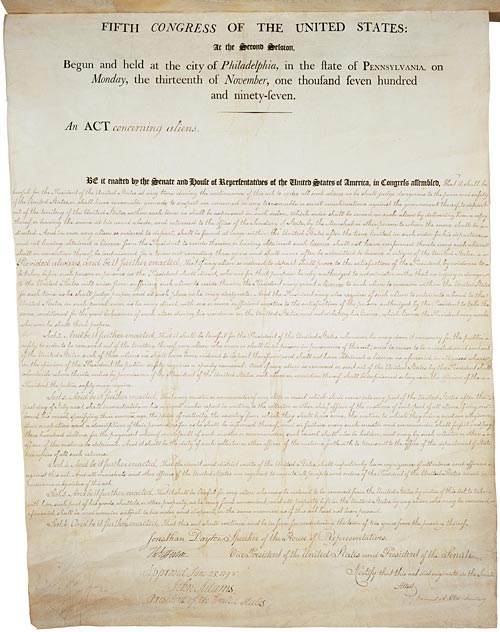
The Act Concerning Aliens (distinguished as the Alien Friends Act) empowered the President to jail or deport any non-citizen who he determined was “dangerous to the peace and safety of the United States.” This expired after two years.

The Sedition Act criminalized combining to oppose government measures and criticizing the U.S. government, House, Senate, or President. The John Adams administration deployed this law against Jeffersonian politicians and printers. It expired in 1800.

The Alien and Sedition Acts were strongly opposed at the time. They led to Jeffersonian victories over Federalists. Since then, historians and legal scholars have almost universally treated these laws as a Bad Thing.

The fourth of those laws from 1798 remained on the books, however: the Act Respecting Alien Enemies. It didn’t have an expiration date. Instead, its language limits the circumstances under which a President can invoke it.

The Alien Enemies Act empowers a President to act only
whenever there shall be a declared war between the United States and any foreign nation or government, or any invasion or predatory incursion shall be perpetrated, attempted, or threatened against the territory of the United States, by any foreign nation or government
If “any foreign nation or government” is in a “declared war” with the U.S. of A. or has made a “predatory incursion,” then the federal government can jail and deport that country’s male citizens aged fourteen or older. The U.S. Constitution further vests the power to declare war in Congress, not the executive branch.

Last week the White House illegally invoked the Alien Enemies Act to justify deporting hundreds of Venezuelans to El Salvador even though there’s no declared war against Venezuela nor any invasion by Venezuela.

In place of the law’s actual conditions, the White House claimed that the Tren de Aragua criminal gang and Venezuela amount to something it calls “a hybrid criminal state.” (It didn’t address how in 2023 the Venezuelan government deployed 11,000 soldiers to break up a Tren de Aragua stronghold.) The White House also claims that illegal migration by individuals, in unspecified numbers, is the equivalent of a government-led invasion.

In some ways, the President is an expert on criminal states. He’s a convicted felon, facing additional federal and state charges, adjudicated as liable for sexual assault, and bound by multiple legal settlements for fraud. But that experience in crime doesn’t give this President the legal power to invoke a statute contrary to its provisions.

The executive branch then further demonstrated its lawlessness by ignoring a judicial order to stop flying people out of the country until the legal issues can be decided.

The Nicolás Maduro regime in Venezuela shows the danger of allowing a coup plotter—in this case, Maduro’s predecessor Hugo Chávez after 1992—to take political office. Coup plotters by definition don’t respect elections and the rule of law. Venezuela is now only nominally republican, actually authoritarian (as is El Salvador). But Venezuela isn’t in declared war against or invading the U.S. of A., as the Alien Enemies Act stipulates. It’s not the only criminal state in this story.

Friday, February 21, 2025

Believing in “No More Kings”

In September 1975, as America was celebrating its Bicentennial, ABC launched a new season of Schoolhouse Rock interstitials titled “America Rock.”

The first of those ten cartoons was “No More Kings,” featuring a song by Lynn Ahrens that moved rapidly from the Pilgrims at Plymouth to American independence.

It made enough of an impact that a 1990s pop band called itself No More Kings.

The last cartoon in that series, also with a Lynn Ahrens song, was “Three-Ring Government,” about the division between legislative, executive, and judicial branches.
Looking back, historians’ big criticism of “America Rock” was how it presented a simple narrative of constant progress, elevating the perspective of propertied white men and largely ignoring Americans who dissented or lost out.

Seeking to avoid criticism, the producers had avoided current controversies and also tamed the controversies of the past. They reflected a version of national history that the overwhelming majority of Americans in that era could agree on.

Such as “No More Kings” and “Three-Ring Government.”

Wednesday, February 12, 2025

Protecting “a government of laws, not of men”

This week William R. Bay, president of the American Bar Association, issued a statement that says in part:
Most Americans recognize that newly elected leaders bring change. That is expected. But most Americans also expect that changes will take place in accordance with the rule of law and in an orderly manner that respects the lives of affected individuals and the work they have been asked to perform.

Instead, we see wide-scale affronts to the rule of law itself, such as attacks on constitutionally protected birthright citizenship, the dismantling of USAID and the attempts to criminalize those who support lawful programs to eliminate bias and enhance diversity.

We have seen attempts at wholesale dismantling of departments and entities created by Congress without seeking the required congressional approval to change the law. There are efforts to dismiss employees with little regard for the law and protections they merit, and social media announcements that disparage and appear to be motivated by a desire to inflame without any stated factual basis. This is chaotic. It may appeal to a few. But it is wrong. And most Americans recognize it is wrong. It is also contrary to the rule of law.

The American Bar Association supports the rule of law. That means holding governments, including our own, accountable under law. We stand for a legal process that is orderly and fair. We have consistently urged the administrations of both parties to adhere to the rule of law. We stand in that familiar place again today. And we do not stand alone. Our courts stand for the rule of law as well. . . . We support our courts who are treating these cases with the urgency they require. Americans know there is a right way and a wrong way to proceed. What is being done is not the right way to pursue the change that is sought in our system of government.

These actions do not make America stronger. They make us weaker. . . .

Moreover, refusing to spend money appropriated by Congress under the euphemism of a pause is a violation of the rule of law and suggests that the executive branch can overrule the other two co-equal branches of government. This is contrary to the constitutional framework and not the way our democracy works. The money appropriated by Congress must be spent in accordance with what Congress has said. It cannot be changed or paused because a newly elected administration desires it. Our elected representatives know this. The lawyers of this country know this. It must stop.

There is much that Americans disagree on, but all of us expect our government to follow the rule of law, protect due process and treat individuals in a way that we would treat others in our homes and workplaces. The ABA does not oppose any administration. Instead, we remain steadfast in our support for the rule of law.
John Adams was fond of defining a republic as “a government of laws, not of men.” He was echoing the British political writer James Harrington, who criticized the opposite situation: “some man, or some few men, subject a city or a nation, and rule it according to his or their private interest: which, because the laws in such cases are made according to the interest of a man, or of some few families, may be said to be the empire of men, and not of laws.”

After Richard Nixon and Robert Bork dismissed Archibald Cox because the Watergate prosecution was closing in on Nixon’s crimes, Cox issued a statement that drew on that tradition: “Whether we shall continue to be a government of laws and not of men is now for Congress and ultimately the American people.”

Wednesday, January 22, 2025

“The bill for laying a duty on goods, wares, and merchandises”

As I wrote yesterday, on 5 May 1789 the new U.S. House faced the text of its first major bill: a schedule of tariffs on various imported goods.

Tariffs within the British Empire had been a huge issue in the years leading up to the Revolutionary War. Colonial merchants had to pay those taxes when their goods were landed.

Though that money went into the central government’s coffers, and therefore theoretically benefited all British subjects, American importers and politicians had complained vociferously.

Of course, since tariffs were an established way for governments to raise money, a number of the states instituted their own import taxes during and after the war. The U.S. Constitution assigned that power to the national government alone, with the requirement that they be equal in every port. But how much tax should the U.S. of A. collect?

Over the next several days, the House kept making itself into a committee of the whole to consider the proposal. More petitions arrived from domestic manufacturers, pushing for higher tariffs. On 16 May the House finally voted, 41–8, to approve the “bill for laying a duty on goods, wares, and merchandises, imported into the United States.”

Nearly a month later, on 12 June, Samuel Allyne Otis, secretary of the U.S. Senate, came to tell the House that that chamber had also passed the bill on duties, but “with sundry amendments.” Over the next two weeks there was a lot of back and forth. The Senate reported which amendments it would “recede” from and which it would insist on. The House approved a conference committee. At last, on 29 June Otis reported that the Senate acceded to the House’s last two proposed amendments.

Congress had reached agreement on a major bill—it had never done that before! Just to be sure, on 1 July the House created a small committee “to examine the enrolled bill” to be sure the text was accurate and ready for signature by the leaders of the two chambers.

The next day, Speaker Frederick Muhlenberg (shown above) signed the document. On 3 July, a joint committee presented it to the President. And on the already symbolic date of the Fourth of July, George Washington signed the first substantial legislation of the first U.S. Congress. It’s now called the Tariff Act of 1789.

But Congress still hadn’t established how to collect those duties.

TOMORROW: Following up.

Tuesday, January 21, 2025

“Power To lay and collect Taxes, Duties, Imposts and Excises”

The U.S. Constitution, in Article I, Section 7, states:
All Bills for raising Revenue shall originate in the House of Representatives; but the Senate may propose or concur with Amendments as on other Bills.
The next section begins:
The Congress shall have Power To lay and collect Taxes, Duties, Imposts and Excises,…but all Duties, Imposts and Excises shall be uniform throughout the United States;…
Under that Constitution, men elected to the U.S. House of Representatives met for the first time on 4 Mar 1789. They quickly saw they didn’t have a quorum. Those men gathered six days a week until 1 April, when finally enough Representatives arrived.

For the next couple of weeks, the House got itself organized: electing a speaker (Frederick Muhlenberg), choosing a clerk and other staff, establishing an oath of office, and composing rules. On 6 April members participated in counting the electoral votes. (Spoiler: George Washington won.)

On Wednesday, 8 April, the House “resolved itself into a Committee of the Whole on the state of the Union.” That bland language meant the legislators were taking themselves off the official record in order to discuss something that could be controversial—in this case, those import duties that the Constitution empowered them to enact. This was the first substantial issue the House took up, the first potential law that affected more than the workings of the government itself.

According to Debates in Congress, compiled decades later, Rep. James Madison of Virginia was first to speak on this subject “of the greatest magnitude.” He suggested starting with the “propositions made on this subject by Congress in 1783,” at least as “the temporary system.”

Madison read off the list of imported goods that the Continental Congress proposed should be taxed. Elias Boudinot of New Jersey endorsed that proposal. The next day, John Laurance of New York argued that an across-the-board duty would be easier and quicker than enumerating what to tax and how much. But there was general agreement that the federal government should start collecting import duties.

Meanwhile, messages started to come in from interest groups: manufacturers in Baltimore, shipwrights in Charleston, and so on. Domestic manufacturers wanted higher tariffs to help their businesses. Merchants wanted lower tariffs to keep down their costs. Ship builders and owners wanted preferential treatment for American vessels. As for consumers, who would ultimately pay higher prices, they weren’t really organized.

On 28 April, a House committee proposed a series of duties on various imported commodities and goods, from Jamaica rum and cheese to millinery and walking-sticks. There were higher tariffs on distilled spirits from “any State or Kingdom not in alliance with the United States” and on teas brought in on ships owned by foreigners. On 5 May, the committee presented the text of a law to enact those duties.

Tariffs have thus been part of American legislation from the beginning of the federal government—even before, considering how Madison was calling on a precedent from the preceding Congress. Those taxes were in fact the main source of revenue for the national government for many decades. But the first Congress understood two things:
  • As revenue measures, those tariffs had to originate in the House, not be imposed by the executive.
  • Imposing tariffs required discussion and careful balancing of the benefits and costs.
TOMORROW: Making law.

Thursday, January 16, 2025

Amar’s Constitutional Conversation Continues in Concord, 16 Jan.

On Thursday, 16 January, the Concord Museum will host Akhil Reed Amar, Sterling Professor of Law and Political Science at Yale University, speaking on the U.S. Constitution.

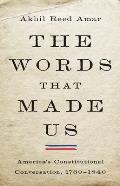
Amar’s books include The Bill of Rights (1998), America’s Constitution (2005), America’s Unwritten Constitution (2012), and The Words That Made Us: America’s Constitutional Conversation, 1760–1840 (2021).

The event description says:
Uniting history and law through the biggest constitutional questions early Americans confronted, Professor Amar discusses the formative decades of the Constitution after its ratification and its resonance today. As Professor Amar notes, our national “constitutional conversation continues” to this day “in courtrooms, classrooms, newsrooms, family rooms and everywhere in between.”
A couple of years ago, however, Gregory Ablavsky wrote in the Michigan Law Review that Amar’s description of that “constitutional conversation” is too limited:
He focuses much of the book around the idea of a “constitutional conversation,” a cacophonous and capacious dialogue that encompassed many Anglo-Americans. Unfortunately, his account of that conversation quickly collapses to the views of a handful of too-familiar figures—a cramped vision that reads backward our own sometimes narrow constitutional conversation privileging a clubby legal elite oriented around the Supreme Court. Democracy, “America,” and “the people” all feature prominently here, but only as abstractions that get seen but not heard. This is a notably undemocratic history of democracy.

For over a generation, historians have offered a different version of the constitutional conversation—one that is fuller and more inclusive, highlighting the many ways that the actual people accessed and shaped constitutional law. . . . The point of this approach is not more inclusiveness to serve current sensibilities; it is that a diverse range of actors and arguments mattered. They shaped law. Often, the “Big Six [Founders]” were reacting more than acting. . . .

None of this is to fault Amar for not writing a different book. It is to fault him for failing to write the book that he claims he did write, about the early republic’s constitutional conversation. Without much evidence, he announces his conclusory, if regretful, finding that the views of those outside the room didn’t matter, thereby echoing past generations who labored so hard to ignore these voices. . . .

Why not instead have a constitutional history that reflects the pluralism that Amar acknowledges? People with “myriad ethnic backgrounds” and “ideologies” were already present at the beginning, sharing a continent and a nation. They might not all have been at the Constitutional Convention or in [George] Washington’s cabinet, but as Amar argues, “America” was: the document’s drafters were keenly aware of the complex nation that they sought to govern.
That offers plenty to think about.

This event starts at 7:00 P.M. Tickets for seats at the Concord Museum are free for members, $10 for the public. People can also register to watch online for free.