


J. L. BELL is a Massachusetts writer who specializes in (among other things) the start of the American Revolution in and around Boston. He is particularly interested in the experiences of children in 1765-75. He has published scholarly papers and popular articles for both children and adults. He was consultant for an episode of History Detectives, and contributed to a display at Minute Man National Historic Park.

Subscribe thru Follow.it


•••••••••••••••••


Showing posts with label Edward Smith. Show all posts

Tuesday, January 24, 2023

“Orders for the Lighting of the Lamps”
As I recounted yesterday, the official records of Boston’s selectmen from the end of August 1774 reveal that the town’s first street lamps, acquired at great expense and trouble just a few months before, were no longer being lit.

The immediate question was how the town would treat its contract with Edward Smith, hired back in March to oversee the lamplighters and maintain supplies. On 31 August the selectmen decided:
Whereas it was agreed with Mr. Edward Smith to take the care of the Town Lamps for twelve months he to receive the sum of Forty Pounds Sterg. for that term of time, and whereas £13–6–8– lawful mony has been paid him for one quarter, & another quarter expires this day; but by reason of the distress occasioned by the Boston Port Bill, the Lamps have not been light the last Quarter—therefore,

Voted, that mr. Smith have a draft for said last Quarter as tho’ the service had been performed he having engaged to perform said service in any future time when called upon for that purpose, it being his intention and agreement to perform the service at the rate he had engaged for a twelve month, when the Town shall think proper to have the Lamps again lighted; and to consider this 2d. Quarters pay as so much advanced on account of service, which remains still to be performed by him, when called upon for that purpose.

In the memo. Book he has signed his Name to such a Writing as the above.
The town was thus still spending money on the street lights even though they weren’t lighting anything—and in a difficult economic time, too. But the selectmen could justify that as a payment for future service, and they kept Smith satisfied.

The decision to stop lighting the lamps coincided with the return of British army regiments to the streets. The presence of those soldiers didn’t make Bostonians feel so secure they decided street lighting was unnecessary. Based on their memories of 1768, citizens expected that having hundreds more young men in town, especially entitled young officers, would bring more trouble, not less.

At a meeting on 3 November, the town endorsed a recommendation to “augment the Town Watch to the Number of Twelve Men in each Watch” instead of four—a huge increase in personnel and expense.

That same town meeting took this confusing series of votes:
Upon a Motion made, Voted, that the Selectmen be desired to give Orders for the Lighting of the Lamps, when they shall think it proper.——

Voted, that a Comittee be now chosen to procure Subscriptions for the Purpose of Lighting of the Town Lamps.

On a Motion made, Voted, that the above Vote respecting Subscriptions for lighting the Lamps be reconsidered
That appears to be the last recorded discussion of the street lamps before the war. Presumably they remained dark.

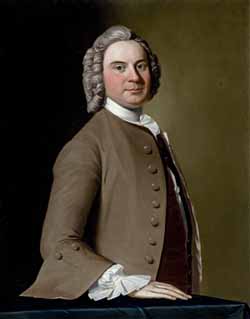
On 24 November, the selectmen chose one of their number, Timothy Newell, to “receive from John Rowe Esq. all the Lamps and Tin Plates which he has in his hands, and to deposite the same in the upper loft of Faneuil Hall.” Rowe (shown above) had chaired the committee to acquire and install the street lights, and now he was done with the project. The extra equipment went into Boston’s attic, not to be brought out until the lamps had been lit again.

Monday, January 23, 2023

When the Lights Went Out in Boston

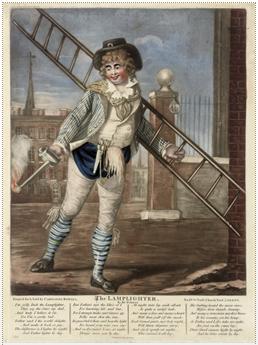
The latest episode of the fine HUB History podcast focused on how Boston installed its first street lamps in 1773 and 1774, the effort hampered by the equipment being wrecked on Cape Cod along with some East India Company tea.

The discussion doesn’t end with those whale-oil lamps but traces the changes in illumination technology to today. Along the way, we learn that the “historic” street lamps now decorating certain Boston neighborhoods are far younger than most people assume.

The podcast’s story of the first street lamps draws heavily on the records of Boston’s town meeting and the journal of John Rowe, the merchant put in charge of the lamp committee.

Here’s another aspect of the story, preserved in the records of Boston’s selectmen. Each year’s first town meeting chose those seven officials to carry out ordinary business and deal directly with contractors.

On 1 March, those officials recorded:
It was agreed with Edward Smyth to have £40— Sterg. for one year, for overseeing the Lamps & Lamplighters & delivering the Oyle & Wicks & other necessary.
Smith (as the name was more often written) got paid £13.6.8 for the first quarter of the year, March through May. (No, I don’t know why the town paid Smith a third of his annual salary to cover a quarter of the year.)

Three months later, on 1 June, the selectmen met with the lamplighters themselves, named as “Messrs. Barker, Fowle, Stevens, Wm. & Thomas Sharp, Hoadly, & Ayres.” Those men “agreed with the Selectmen that they would continue Lamp Lighters thro’ the Winter.”

But bigger questions were roiling the town. On 13 May there was a meeting to hear the new Boston Port Bill and formulate a response to it. That discussion continued through meeting after meeting all summer. Almost everyone agreed that the Port Bill was a constitutional affront and an economic disaster. And, of course, alongside Parliament’s new law, companies of British army regulars were once again marching on Boston streets.

One response to the law was not to light those new street lamps after all. There’s no record of a decision, nor report in the newspapers. But on 24 August Edward Smith “apply’d to the Selectmen and acquainted them he expected to be paid according to Agreement although the Lamps had not been lighted the last Quarter.”

At the end of the month the selectmen’s records confirmed: “by reason of the distress occasioned by the Boston Port Bill, the Lamps have not been light the last Quarter.”

As the HUB History episode recounts, although the town governed the process of installing and maintaining the street lamps, it didn’t undertake to pay for them through taxes. Instead, Boston asked wealthy citizens to donate money for that effort. Enough money had come in the buy the lamps, install them, and hire staff to maintain them.

But with the Port Bill straining the town’s trade with Britain and other colonies, those wealthy citizens might have felt they couldn’t afford to pay for street lamps after all. Or perhaps people felt the illumination clashed with the somber, resentful mood of a town protesting arbitrary law and military occupation. Maybe the longer days of midyear made it easier to do without street lighting. With no visible decision point, it’s impossible to know for sure why the lamps weren’t lit and who made that choice.

(We do know that, since the lamps went dark in June, that decision had nothing to do with the ‘arms race’ that broke out in September, with Patriots trying to smuggle artillery and other weapons of war out of Boston and the British military trying to stop them. When I wrote about that conflict in The Road to Concord, I wondered if dark streets made moving cannon around at night easier, but that could only be conjecture.)

TOMORROW: Making choices in the dark.