J. L. BELL is a Massachusetts writer who specializes in (among other things) the start of the American Revolution in and around Boston. He is particularly interested in the experiences of children in 1765-75. He has published scholarly papers and popular articles for both children and adults. He was consultant for an episode of History Detectives, and contributed to a display at Minute Man National Historic Park.

Subscribe thru Follow.it


•••••••••••••••••


Showing posts with label William Dalrymple. Show all posts

Thursday, October 05, 2023

The Real Life and Death of Mrs. Coghlan

Margaret Moncrieffe was born in Scotland in 1762. Her father was army officer Thomas Moncrieffe, who soon became one of Gen. Thomas Gage’s aides in North America. Her wealthy mother died young.

When the Revolutionary War broke out, Margaret was in the New York area while her father was serving as a brigade major inside besieged Boston.

In 1776 Maj. Moncrieffe came to New York with the British expeditionary force, and his teenage daughter became a suspected spy, potential hostage, and all-around headache.

Over the next ten years, Margaret Moncrieffe:
  • Fell in love with an American officer—most authors believe that man was Aaron Burr.
  • Was sent over to the British in Manhattan.
  • Was married to Lt. John Coghlan of the 23rd Regiment of Foot.
  • Ran away from her husband to London.
  • Became mistress of Lord Thomas Pelham-Clinton.
  • Was sent to a convent in Calais.
  • Fell in with Charles James Fox, Richard Brinsley Sheridan, and others in the British political opposition.
  • Became mistress to a “Mr. Fazakerley.”
  • Became mistress to Lord John Augustus Hervey.
  • Became mistress to Capt. Andrew Barnard.
  • Became mistress to a “Mr. Giffard.”
Then, in June 1787, the London newspapers reported that Margaret (Moncrieffe) Coghlan had died. The Daily Universal Register, which later became the Times of London, stated she passed away on 4 June “After two days illness…at three o’clock.”

The Gentleman’s Magazine included her in its section “Obituary of Considerable Persons,” with these details: “In Cavendish-street, Portland-squ. … Mrs. Margaret Coghlan, lady of John C. esq; and dau. of Colonel Moncrieffe.”

Seven years later, British readers were presented with Memoirs of Mrs. Coghlan, (Daughter of the late Major Moncrieffe.) Written by Herself and Dedicated to the British Nation; Being Interspersed with Anecdotes of the late American and Present French War, with Remarks Moral and Political.

That book described adventures and affairs extending past 1787 to the date of publication. Among her later lovers was retired general William Dalrymple, who makes most of his Boston 1775 appearances as the British army commander in Boston during the Massacre.

In Revolutionary Ladies (1977), Philip Young guessed that Margaret Coghlan had left some memoirs before she died, but someone—he guessed it was the political writer Charles Pigott—had expanded that document in unreliable ways and arranged for it to be published.

In Revolution Song (2017), Russell Shorto cited documents showing Margaret Coghlan was active after 1787. He concluded that she reported her death to newspapers in order to escape creditors and flee to France. Later she published her memoirs herself in another bid for money. That made Coghlan’s memoirs a more credible historical source—albeit coming from someone dishonest enough to fake her own death.

Last month the Journal of the American Revolution published Jane Strachan’s two-part profile of Margaret (Moncrieffe) Coghlan, from birth through fake death to her last recorded writings, documents begging for support from 1803 and 1805. It’s a thorough discussion of her life and the challenges of sorting out the facts about that life. It’s also quite a ride.

Tuesday, December 29, 2020

The Massachusetts Council Investigates Itself

Yesterday we left off as provincial secretary Andrew Oliver’s sworn statement about what members of the Massachusetts Council had said on the day after the Boston Massacre made its way back to Massachusetts.

That statement was the final item in A Fair Account of the Late Unhappy Disturbance at Boston, published in London. Capt. James Scott, who worked for John Hancock, carried a copy of that pamphlet to Boston. Edes and Gill printed Oliver’s deposition without comment in the 24 September Boston Gazette.

The Whigs quickly leapt to the conclusion that Oliver’s description of the 6 March Council meeting was the latest move by royal appointees to misrepresent the province as rebellious.

And in a way they were right—the statement and its publication were part of a campaign by high officials. As Lt. Gov. Thomas Hutchinson later wrote (modestly referring to himself in the third person), they wanted to be sure the London government understood what they were dealing with:
he asked the secretary to recollect, as well as he could, what passed in the debate at council, and to commit it to writing, intending to send it to England, to shew in the fullest manner the reasons for the lieutenant governor’s complying with their advice, and not with any intention to set the council in general or any particular member, in an unfavourable light.

The secretary informed him, that, of his own mere motion, and for his private satisfaction, he had done it the evening before, while the debates were fresh in his mind.

After he had transcribed and corrected the minutes, he made oath to them; and they were transmitted at the same time with the copies of the votes or minutes of council, and other papers relative to the transaction, not to the secretary of state, but to governor [Francis] Bernard, who, at that time, continued governor of the province.
Oliver (shown above) made his oath before justice of the peace Foster Hutchinson, the acting governor’s cousin. 

Soon after the pamphlet arrived, the Massachusetts General Court started a new legislative session in Cambridge, with the Council meeting in Harvard’s Philosophy Chamber. On 4 October, the Council took up Oliver’s statement:
ONE of the Members of the Board having acquainted the Board that he had seen a Deposition signed Andrew Oliver, which was published in the Appendix to a Pamphlet lately printed in London; in which Deposition divers Gentlemen of the Council, which consisted of 8 Members then present, therein said to be convened on the 5th Day of March last, are represented as having made such a Declaration to His Honor the Lieutenant-Governor, respecting a plan formed by the People to remove the King’s Troops and the Commissioners of the Customs from the Town of Boston, as was likely to be attended with the most pernicious Consequences to this Province—He thereupon moved that the Board would make Enquiry of the Gentlemen of which said Council consisted, what Foundation there was for such a representation—

Which motion being seconded, the Board desired said Gentlemen, namely, Mr. [Samuel] Danforth, Mr. [John] Erving, Mr. [Thomas] Hubbard, Mr. [Harrison] Gray, Mr. [James] Russell, Mr. [Royall] Tyler, Mr. [James] Pitts, and Mr. [Samuel] Dexter, to prepare a true State of the Matter and lay the same before the Board as soon as may be.
Those were the eight Council members present at the 6 March meeting. Oliver had named five of them in his account. (To be exact, he had named three and referred to two more by title, and the London pamphlet had helpfully identified them in footnotes.)

The next day, Oliver asked for a chance to respond and to call witnesses to support his account of the discussion. The Council therefore accepted evidence on 9 October from Capt. Benjamin Caldwell of H.M.S. Rose, Lt. Col. William Dalrymple of the 14th Regiment, deputy secretary John Cotton, and clerk Francis Skinner.

All those witnesses basically agreed with Oliver’s description of what Royall Tyler had said about the town and countryside being angry enough to attack the troops if the governor didn’t remove them, and to drive the Customs Commissioners out of Boston as well. They also agreed that no other members of the Council had objected to Tyler’s statement.

Councilors bore down on Cotton and Skinner about one important detail. When Tyler said of the Whigs, “they had formed their plan, and that this was a part of it to remove the troops out of town, and after that the commissioners,” did he let slip news of a plan predating the Massacre? No, said those provincial employees; they didn’t think Tyler’s mention of a ”plan” on 6 March necessarily referred to any planning more than a day old.

TOMORROW: The Councilors’ contentions.

Tuesday, December 15, 2020

What Happened to the Boston Massacre Defendants?

After being acquitted of murder at the Boston Massacre on 5 Dec 1770, Cpl. William Wemys and five private soldiers “went their Way thro’ the Streets,” the Boston Gazette reported. They probably boarded a boat to Castle William, where the 14th Regiment of Foot was stationed.

Nine days later, fellow defendants Edward Montgomery and Mathew Kilroy joined them, each with one hand bandaged after branding.

Lt. Col. William Dalrymple of the 14th had already decided how he would send those men back to the 29th Regiment, which had been moved to New Jersey. The commander wrote:
A bad disposition appearing in the Soldiers who were confined I shall send them round by sea, we have but too much reason to suspect their ententions to desert they are not at all to be depended on.
“I do not chuse to trust them any other way,” he added on 17 December. It would be great to know why Dalrymple was suspicious, but we don’t.

Until recently, the story of those eight British enlisted men stopped there. But Don Hagist has been doing thorough research on British troops during the War for Independence, culminating in the new book Noble Volunteers. Don found more information on some of those soldiers in the muster rolls and Chelsea pensioner records, which he generously let me publish here. I’ve added information on others over the years. So here’s what happened to all the defendants.

By May 1771, William Wemys was promoted to sergeant. He was still a sergeant when the company was stationed at Chatham, England, on 29 July 1775. His company’s muster rolls end there, so we lose track of him.

In the grenadier company, John Carroll and William Macauley were both made corporals. William Warren, despite being the tallest of the defendants, transferred out of the grenadiers to another company in the 29th.

As I related in this posting from 2006, Pvt. James Hartigan died on 4 Nov 1771 at the 29th’s next assignment in St. Augustine, Florida.

The regiment was in England when the war began, and army commanders decided to send it back to North America. That could have exposed Pvts. Montgomery and Kilroy to being captured by the American rebels, their hands still bearing the brand of the Massacre. On 22 Feb 1776 those two men appeared before a board of examiners for military pensions administered by Chelsea Hospital. Montgomery, age forty-one, was deemed “Worn Out,” and Kilroy, only twenty-eight, was found to have “a Lame Knee.” The board discharged both men from the army with pensions.

The rest of the 29th Regiment sailed to Canada, where different fates awaited different companies. Pvt. Warren and Pvt. Hugh White, the sentry, spent the American war at separate stations in Canada. White was finally discharged from the army on 10 Nov 1789, then aged forty-nine.

John Carroll, promoted to sergeant by February 1777, and Cpl. Macauley were still with the 29th’s grenadier company, which was assigned to Gen. John Burgoyne’s invasion force. Those two men might therefore have become part of the “Convention Army” of prisoners of war marched from Saratoga to Cambridge at the end of that year. But there’s no record of anyone in Massachusetts recognizing those two soldiers from the Massacre trial.

I discussed the evidence about Capt. Thomas Preston’s retirement here. He started to receive an annual £200 royal pension in 1772, and it continued until at least 1790. In the 1780s Preston was living in Dublin.

Of the defendants in the third trial, I profiled Hammond Green in this posting. He evacuated Boston in 1776 as a Customs employee, and his wife and children followed the next year. The royal government gave Green a Customs job at his new home of Halifax, and he was still working there in 1807.

Thomas Greenwood was working for the Customs service in 1770 but wasn’t listed among the employees who evacuated in 1776. I don’t know anything more solid about him.

Edward Manwaring retained the post of chief Customs officer on the Gaspé peninsula until 1785 when he was succeeded by his neighbor Felix O’Hara.

John Munro carried on his business as a notary “at his Office South Side of the Town House.” The 12 Jan 1775 issue of the Massachusetts Spy reported that he had died the previous Tuesday at the age of thirty-nine after a “tedious illness.” He was buried out of Christ Church on 13 January.

Wednesday, December 09, 2020

Paying for the Defense in the Massacre Trials

On 12 Nov 1770, after receiving word that Capt. Thomas Preston had been found innocent of the Boston Massacre, Gen. Thomas Gage wrote to him from New York.

Gage was pleased Preston was no longer “oppressed by the most malicious Prosecution” and able to help the enlisted men to go on trial next. “I readily Consent to your going home when all is over,” he wrote. He also addressed Preston’s expenses:
I Flatter myself that Government will readily comply with an Application in your Behalf, to reimburse the unavoidable Expence you have been put to. A Packet sails tomorrow, and I shall write to Lord Barrington on the Subject, In the mean time send me an Account of the Expences the Prosecution has cost you, and have a Copy Ready to produce when you arrive in England. . . .

If you are in want of Money I shall with the greatest Pleasure assist you, with any Sum my private Purse will afford, and will answer your Draught.
Gage expected Preston and, apparently, himself to have to dip into personal funds. There was no budget line for defending soldiers against criminal charges.

Preston sailed from Boston on 7 December, the day after the verdict in the men’s trials. (He thus didn’t wait around for the sentencing and punishment of Pvts. Mathew Kilroy and Edward Montgomery.)

Lt. Col. William Dalrymple of the 14th Regiment (shown above later, during his political career) sent Gen. Gage a list of expenses on 17 December:
To a retaining fee to C: Prestons Lawyers – £10.10
To Do: to the mens D[itt]o: – £10.10
To a fee for pleading at the tryal to C: Prestons Lawyers – £63
To Do: to the Mens Do: – £42
To an Attorney to assist at their tryal – £10.10
To an Attorney for taking some affidavits – £3.12
To certain people employed to enquire about town and collect Affidavits and Evidences [witnesses] – £25.10
To Summons’s and serving them on 93 Evidences – £13.19
To Evidences for the time they waited in Court before examin:n – £5.19
To Joalers fees – £15
To Turnkeys fees and Civility money – £21
To a Clerk at several times – £15.7.6
To small presents to particular people in Boston – £21
To postage of Letters – £2.5
[subtotal] £260.2.6
To extra: expences in coming express from Portsmouth to London with Governour [Thomas] Hutchinsons and Comodore [James] Gambiers dispatchs to Government – £4.4.6
[total] £264.7
The four defense lawyers involved in the two cases thus split more than £140.

On 5 Mar 1771, exactly one year after the shooting on King Street, Secretary of War Barrington assured Gage that “Captain Preston has had all his expences paid and a Pension of £200 a Year bestowed upon him.” In fact, the pension didn’t become official for another year, perhaps time to let Preston sell his commission.

Isaac Smith, Jr., a young cousin of Abigail Adams, was in London that spring, and he wrote to John Adams: “It is said that Capt. Preston will be reimbursed in the expences of his prosecution and meet with some further compensation for his confinement.”

Adams replied: “If Preston is to be reimbursed his Expences, I wish his Expences, at least to his Council, had been greater.” In other words, if Adams had known that he was working for the Crown government, and not just an army officer paying out of pocket, he would have charged more.

There’s no way to know how much of the legal fees came to Adams. However, it’s very hard to reconcile the figures from 1770 with what Adams wrote in his autobiography decades later:
[James] Forrest offered me a single Guinea [worth £1.1] as a retaining fee and I readily accepted it. From first to last I never said a Word about fees, in any of those Cases, and I should have said nothing about them here, if Calumnies and Insinuations had not been propagated that I was tempted by great fees and enormous sums of Money. Before or after the Tryal, Preston sent me ten Guineas and at the Tryal of the Soldiers afterwards Eight Guineas more, which were all the fees I ever received or were offered to me, and I should not have said any thing on the subject to my Clients if they had never offered me any Thing.

This was all the pecuniary Reward I ever had for fourteen or fifteen days labour, in the most exhausting and fatiguing Causes I ever tried: for hazarding a Popularity very general and very hardly earned: and for incurring a Clamour and popular Suspicions and prejudices, which are not yet worn out and never will be forgotten as long as History of this Period is read.
This is of course another of John Adams’s stories about doing the right thing and not being appreciated for it.

Tuesday, December 08, 2020

The Disadvantage of the Benefit of Clergy

As reported here, jurors convicted Pvt. Mathew Kilroy and Edward Montgomery of manslaughter instead of murder for the Boston Massacre. Manslaughter was still nominally a capital crime—but only nominally.

Under British law, people convicted of manslaughter could plead “benefit of clergy” at their sentencing. That plea was an old protection for actual or potential members of the clergy, who could get out of hanging by demonstrating the valuable skill of being able to read from the Bible.

While avoiding execution, those defendants who weren’t actually in holy orders got branded on the base of their thumbs to mark them as convicted felons, ineligible to make the same plea a second time. Sources from the late Middle Ages say the brand was “M” for murderer or manslayer, “T” for thief and other lesser criminals. (Some histories say there was another brand of “F” for felon. It’s hard to sort out.)

That branding was of course painful. Thus, the benefit of clergy plea was a way to reduce a death sentence to a corporal punishment and public shaming for first-time offenders.

And it wasn’t just for the literate after all. Courts asked defendants to read the same verse—Psalms 51:1, the “neck verse”—so illiterate criminals could memorize that verse and gain the same benefit.

And British society knew all that. When the jury in the Massacre trial found Kilroy and Montgomery guilty of manslaughter, everyone knew they were setting those men up for a remitted death sentence and a branding.

Some people felt that was still too harsh. Acting governor Thomas Hutchinson reported shortly after the trial, “I was applied to to remit the burning.”

People wanted to spare Montgomery in particular. He “had been knocked down with a club, and provoked to fire, as appeared in the course of the evidence,” the governor wrote. Montgomery was also “a fellow of very good character.”

However, Hutchinson found, “[Lt. Col. William] Dalrymple & other Officers wished I would not,” probably to avoid making Bostonians more resentful toward the army. Dalrymple’s 14th Regiment was still stationed on Castle Island (and that had become a political issue in itself). And after all, Montgomery was just a soldier.

In the end, therefore, Hutchinson decided he “did not think it prudent” to commute the soldiers’ branding. The sentencing, and punishment, was set for 14 December.

COMING UP: The smell of burning flesh.

Monday, November 02, 2020

Capt. Preston at the Castle

The Boston Whigs don’t appear to have been surprised or terribly upset when Capt. Thomas Preston was acquitted of murder for the Boston Massacre in October 1770.

The 5 November Boston Gazette reported the not guilty verdict without comment.

Writing to John Wilkes on behalf of the Whigs, young merchant William Palfrey complained at length about how the jury had been seated and called the trial a “farce,” but he also said:
It must however be confessed that the confusion of that unhappy night was so great that the Witnesses both for the Crown & the prisoner differed materially in some parts of their testimony, and even in my own mind there still remains a doubt whether Capt Preston gave the orders to fire, as the two Witnesses who swore to that point, declared also that Capt Preston had on a Surtout Coat, which he proved was not the case.
Preston and his friends nonetheless still feared a lynching, or at least more harassment. On 31 October, the captain wrote to Gen. Thomas Gage in New York:
They have endeavourd to lodge an Appeal against me, in behalf of one of the relations of the deceasd, but it won’t lie, as there are not any near enough of kin now surviving, but their busy malice has found out another way to distress me, by sueing me for damages on acct. of the wounded, & if taken wou’d involve me in endless lawsuits
The next day, Lt. Col. William Dalrymple added, “I understand there are fresh warrants out against him.” No lawsuit went forward, however.

To be safe, Capt. Preston had headed for Castle William, where the 14th Regiment could protect him against both mobs and constables.

We even have a glimpse of the captain’s departure for that island fort in a document that Christie’s auctioned in 2005. That was a handwritten copy of Preston’s “Case,” including a section not published in the London newspapers.

Bound with that plea for a pardon was a letter from the Rev. Richard Mosley dated 7 November. He recounted the captain’s trial and stated, “After Capn Preston was discharged…I escorted him to a boat” headed to Castle Island. Mosley believed the locals still wanted “Blood for Blood.”

Mosley was then the chaplain of H.M.S. Salisbury, which had arrived in Boston harbor earlier in October carrying Commodore James Gambier, recently appointed naval commander of the North American station. Some Whigs had speculated that the Crown had sent the warship to Boston to ensure the town remained peaceful during the Massacre trials.

As for the Preston/Mosley document, I don’t know where it is now. The selling price was over a quarter-million dollars, so it’s not in the Boston 1775 collection.

TOMORROW: Preston’s own view of his trial.

Monday, June 22, 2020

“Enraged upon reading Capt. Preston’s Narrative”

The publication of Capt. Thomas Preston’s “Case” in Boston in June 1770 heightened the danger that had prompted the captain to write to the British government in the first place: the possibility that he would be killed for the Boston Massacre.

One threat was that a Massachusetts jury would convict Preston of murder and the local authorities would quickly carry out a death sentence. The 21 June Boston News-Letter reported that the government in London had anticipated that possibility:
The Ministers expect, That if Captain Preston, and the soldiers, who committed the late murders at Boston, are condemned, That the Lieutenant Governor (Hutchinson) will respite them during the King’s pleasure [i.e., put off executions until the London government had a chance to pardon them], which may occasion another Porteu’s affair)
John Porteous was a captain of the Edinburgh City Guard in 1736. After he and soldiers under his command killed people while putting down a riot, he was convicted of murder. Rumors said he might be reprieved, so on the night before his scheduled execution a crowd took him out of the jail (shown above) and hanged him themselves.

Thus, the second danger that Preston and the ministry feared was that Bostonians would lynch him.

On 22 June, 250 years ago today, Lt. Gov. Thomas Hutchinson wrote to Gen. Thomas Gage in New York:
I ever supposed it would be necessary for me, at all events if Capt. Preston & the Soldiers should be found Guilty and Sentence be passed to grant a Reprieve until His Majesty’s pleasure should be known. I am now under stronger Obligation to do it than before having received His Majestys express commands so to do.

I am much less concerned from an apprehension of the rage of the people against me than I am from the danger in our present dissolute state of Government, of the people’s taking upon themselves to put the Sentence into execution. I do not believe I have one Magistrate who would be willing to run any risque in endeavouring to prevent it. If Troops were in the Town I don’t know that a Magistrate would employ them on such an occasion but I think they might notwithstanding be the means of preventing it.
Hutchinson sent that letter from Boston and then went to his country house in Milton. As evening approached, he received a message from Lt. Col. William Dalrymple, commander of the 14th Regiment stationed on Castle William. Dalrymple enclosed “a Letter he had received from Capt. Preston expressing his great fears that the people were so enraged as to force the Gaol that night and make him a sacrifice, several of his friends having informed him this was their intention.”

The acting governor dashed off a note for Preston which said in its entirety:
Dear Sir

I will take every precaution which is in my power which I wish was greater than it is and am Yours sincerely

TH
Hutchinson told Gage the next day what other steps he took:
I sent immediately proper Orders to the Sheriff [Stephen Greenleaf] & I directed to every precaution I could think of but, being extremely uneasy, I went to Town. I found the people were enraged upon reading Capt. Preston’s Narrative which I wish had not been published in England.

I sat up until midnight and until the Scouts which had been sent to different quarters made return that all was quiet and I find that where Capt. Prestons fears have come to the knowledge of the Liberty People they have generally remarked that what ever danger there may be after Trial it would be the heighth of madness to think of any such thing before.

I shall however continue all the caution I have in my power.
Hutchinson thought Preston’s trial for murder would come in “ten or twelve weeks,” or sometime in September. Both the royal authorities and Boston’s political leaders had to keep him and the soldiers alive until then.

Sunday, June 21, 2020

Alarming News from Across the Atlantic

On 21 June 1770, 250 years ago today, the Boston News-Letter reported startling news from London. So startling that Richard Draper added a two-page “Extraordinary” sheet to his newspaper.

On Monday the 18th, Capt. James Hall had arrived from England with copies of the London Public Advertiser describing how the imperial capital had reacted to receiving news of the Boston Massacre back on 5 March.

The first word had reached London on 22 April. The next day, the Earl of Hillsborough, Secretary of State for North America, summoned Sir Francis Bernard, still officially the royal governor of Massachusetts, for consultation.

That evening the London newspapers published the Boston Gazette’s account of the killing, a statement from the Boston town meeting, and a letter from the Whigs to former governor Thomas Pownall. All of those sources of course blamed the royal authorities.

On 23 April, a Sunday night, there was a “Cabinet Council” about the news. The next day, Lord Hillsborough met with colonial governors and agents in a “grand levée at his house.” Those meetings gave rise to several rumors about what the government might do next: appoint Sir Jeffery Amherst commander-in-chief in North America, send more troops to Boston, repeal the tea tax before resigning? The tea tax was the last of the Townshend duties, and ending it would have been a total victory for the non-importation movement. (None of those things happened.)

Parliament met on 26 April. Member Barlow Trecothick, also a London alderman with close links to the Boston business community, formally asked the ministry to share all communications about Boston. Reportedly Hillsborough and Lord North had promised him a formal vote would not be necessary, but he “did not chuse to trust their assurances.” The ensuing debate included Edmund Burke, Isaac Barré, George Grenville, and others. It ended with agreement that the government would share the information with names redacted.

As part of that discussion, the London newspapers (still dashing out most names because it wasn’t clearly legal yet to report parliamentary debates) quoted Viscount Barrington, Secretary of War, as saying that Boston magistrates didn’t support the troops, and:
That the Government is a Democracy, and all civil Officers chosen by the People,—that the Council is a democratical Part of that Democracy,—that in his Opinion a Royal Council is necessary for a more proper Division of Powers of Government.
Such a Council appointed in London would be part of the Massachusetts Government Act of 1774.

Then on 28 April more documents arrived from Boston. Some were in the same vein as before. A letter from Lt. Col. William Dalrymple reportedly said Bostonians “had absolutely DETERMINED to risk their lives in an Attack upon the Military; in order to revenge the cruel and wanton Massacre of their Countrymen”—which is not what that army colonel would have ever written.

But the bombshell printed in the 28 April Public Advertiser, and reprinted in the 21 June Boston News-Letter after it went back across the Atlantic, was the “Case of Capt. Thomas Preston of the 29th Regiment.” This 2,000-word account of the Massacre started with complaints of Bostonians being mean the soldiers, proceeded through a detailed account of the shooting on King Street that blamed the violent crowd, and concluded with warnings of the slanted local press. (The London newspapers, and thus the News-Letter, omitted Preston’s final paragraphs asking for a pardon.)

The Boston Whigs were upset because back in March Preston had sent the Boston Gazette a short letter thanking the town and praising its justice system. Even as he did so, those politicians realized, the captain must have been preparing this very different message for Customs Commissioner John Robinson to carry to London.

TOMORROW: The anger of the people.

Saturday, March 28, 2020

The Departure of Commissioner John Robinson

Although the Boston Whigs indicted the Customs officer for the port of Gaspé; a passing notary; and a couple of bottom-level Customs employees for the Boston Massacre, those men weren’t their real targets.

The anonymous person reporting on events for Customs Commissioner Joseph Harrison wrote:
This affair has struck every friend of Government with Horror and amasement, not Knowing but that it may be their case tomorrow . . . almost Every person in the Province are made to believe, that the Commissioners, and principal Officers of the Revenue were aiders & abettors, in the fireing on the 5th Inst.
In his role as historian, and thus referring to himself in the third person, Lt. Gov. Thomas Hutchinson later recounted:
Another witness, having sworn that he saw a tall man in the Custom house or in the balcony; it was insinuated to the Lt. Governor in Council that this was one of the Commissioners, who soon after left the Province and went to England.—There is no judging, in such times, where the credulity of the People will stop.
Who was this “tall man,…one of the Commissioners”? That was John Robinson.

Back in September 1769, Robinson had gotten into a coffee-house brawl with James Otis, Jr., seriously injuring the leader of the Massachusetts Whigs. That popped him to the top of the Least Popular Customs Commissioner list, beating out perennial Charles Paxton.

In February 1770, after land waiter Ebenezer Richardson killed Christopher Seider, some people whispered that superiors in the Customs service had encouraged him to use violence. Perhaps the Customs sloop sailor George Wilmot, who joined Richardson in defending his house, was acting under agency orders?

Clearly all these events were connected! Obviously Robinson and his colleagues were engaged in a secret transatlantic conspiracy to slowly press Massachusetts into political slavery!

Did anyone question how this conspiracy would benefit from killing an eleven-year-old? Or how a well-known tall man in hiding after the Otis brawl got into the Customs House in the center of town without anyone seeing him? Or why his method of attacking the crowd outside that building was by loading a musket, thrusting it into the hands of a teen-aged servant boy, and ordering him to shoot? (Charles Bourgate insisted he had shot over the crowd’s heads.)

Presumably the Boston activists believed that an investigation in the courts would answer those questions. Or, if we take the more cynical approach, they believed that they simply had to keep the questions alive until they achieved some sort of political victory over the Customs bureaucracy.

Meanwhile, what was John Robinson really up to? He had, as Hutchinson wrote, “left the Province and went to England.” The 22 March Boston News-Letter reported:
Friday last [i.e., 16 March] sailed for London the Captains Robson and Miller; in the former went the Hon. John Robinson, Esq; one of the Commissioners of the Board of Customs.
Robinson carried an important cargo: documents telling the army’s side of the story. Lt. Col. William Dalrymple wrote to his commander on 19 March:
I have sent to England States of the affairs here, as well as of Captain [Thomas] Preston’s case. You will pardon my doing so by any other channel than yours, when you consider that the first impression is always the strongest in such cases, an opportunity offered and I presumed to use it.
“Captain Preston’s case” meant a 2,200-word narrative by the imprisoned captain dated 14 March. Robinson also carried affidavits from twenty-one other army officers and several local eyewitnesses dated 12-15 March. They were all certified by James Murray, the Scottish-born justice of the peace appointed by Gov. Francis Bernard in 1768.

By comparison, Boston town officials started to collect testimony about the Massacre on the morning after—at the town meeting and for coroners’ inquests. But it wasn’t until 13 March that the town voted to commission a report on the event to send to Britain.

Whig magistrates took down depositions over the following week, particularly on 16, 17, and 19 March. Then they collected more. They deposed Charles Bourgate on 23 March. They interviewed three Customs service employees who refuted him on 24 March. Meanwhile, there was a debate in the town meeting about how best to send a fast ship to London with the report. The Short Narrative was finally printed on 30 March, and Capt. Andrew Gardner sailed with it on 1 April.

By that point, John Robinson and his documents already had a two-week head start for the imperial capital.

I think the Massachusetts Whigs learned a valuable lesson from this episode. The next time British soldiers shot and killed locals—at Lexington and Concord in April 1775—the Patriots were much more efficient about gathering testimony, printing it, and speeding it to London. In 1775, Capt. John Derby sailed from Salem on 29 April, ten days after the battle—or about as quickly as it took John Robinson to embark after the Massacre.

Tuesday, March 17, 2020

The Troops’ Schedule for “embarkation for the castle”

One of the great things about the Sestercentennial of the Boston Massacre earlier this month is that I got to hear questions and new perspectives I could investigate.

In the coming days I’ll go back over some of those points, starting with the question of when the 29th and 14th Regiments moved out to Castle Island.

As described here, after simultaneous meetings of the town and the Massachusetts Council on the afternoon of 6 March, Lt. Gov. Thomas Hutchinson and Lt. Col. William Dalrymple acceded to Bostonians’ demand to send all the troops from central Boston to Castle William.

This season I saw tweets saying that the troops went to the Castle “before sunset” on 6 March, or “Less than a week after the Boston Massacre,” which would have been 12 March.

The Boston Whigs would have welcomed such speed. But moving hundreds of men, their equipment, and their families took more than a few hours or even a week. In fact, the 14th dawdled so long that the town meeting complained, repeatedly.

Because soldiers of the 29th did the shooting on King Street, everyone agreed they should leave town—for their own safety as well as to calm the public. The diary of merchant John Rowe records their departure within a week:
March 10. – Yesterday two companies of the 29th went to the Castle, and four companies more went this day; still a military watch.

March 12. —The remainder of the 29th went to the Castle this day; still a military watch.
By “military watch,” Rowe meant that a Boston-based militia was patrolling the town in force to keep the peace.

Decades later, John Adams wrote to his old clerk, William Tudor, about the departure of some soldiers, probably from the 29th:
William Molineaux was obliged to march side by side with the commander of some of these troops: to protect them from the indignation of the people, in their progress to the wharf of embarkation for the castle—

Nor is it less amusing that lord north, as I was repeatedly & credibly informed in England, with his characteristic mixture of good humour & sarcasm ever afterwards call’d these troops by the title of “Sam Adams’s two regiments.”
I’d like another source for that last line, but at least Adams gives us some hint of how he supposedly came to be privy to Lord North’s remark.

The ongoing presence of the troops was an issue at the town meeting held on 12-13 March, summarized here. There was already a “Committee of the Town now sitting at the Representatives Chamber” in the Town House addressing that issue. It looks like that those men were Molineux, Adams, John Hancock, William Phillips, Dr. Joseph Warren, Joshua Henshaw, and Samuel Pemberton. They reported to the meeting as a whole:
That they had attended the Business alotted them by the Town, Night and Day, and done every thing in their power by their repeated applications to Collo. Dalrymple to expedite the removal of the Troops, that the 29 Regiment was already Gone, and the Collo. had assured them that the 14th. Regiment should begin to follow them this Day, and that no time should be lost in removing them
The meeting sent those same men back to the colonel with the message “that this Town have now waited Seven Days, for the removal of the 14 & 29th Regiments agreable to his express promise made in presence of the Lieut. Governor his Majesty’s Council and ye. Committee of the Town to remove the same with the utmost dispatch.”

The committee returned with Dalrymple’s promise “that between Thursday Night and Fryday Morning not one of the 14th. Regiment, except himself, would remain here.”

But when the town meeting reconvened on Friday morning, 16 March, there were still some troops in town. It looks like Dalrymple was dragging his feet, hoping to give his superior in New York, Gen. Thomas Gage, time to send explicit orders about what to do.

The men at Faneuil Hall “Voted, that a Committee be sent to the Committee of the Town meeting at the Town House, to know from them whether all the Troops had left us.” Yes, that was a committee to communicate to another committee.

Molineux came “and informed the Town that he had this Morning been with Collo. Dalrymple to know how far he had proceeded in sending away the Troops, when he had assured him that the whole of what remained would be embarqued in four Boats by One O’Clock, when they would immediately go down to Castle Island.”

Rowe’s diary confirms that Dalrymple fulfilled that promise by the end of that Friday: “All the 14th regiment are gone to the Castle, the last of them this day.”

So it took ten days from the royal officials’ agreement to remove all the troops from Boston until they were actually gone.

Friday, March 13, 2020

The Boston Town Meeting Takes Action

On Tuesday, 13 Mar 1770, 250 years ago today, Boston took a couple of major steps in its official response to the Boston Massacre.

The town had started its annual meeting the day before, reelecting the seven selectmen and then moving on to overseers of the poor, wardens, and such specialized offices as surveyors of boards and sealers of leather. But there were a lot of agenda items specific to that month.

Sheriff Stephen Greenleaf warned about possible jailbreaks. The town agreed to cover the cost of more watchmen in case the court system didn’t. This may well have been an oblique way of pointing to the number of soldiers in jail after the shooting on King Street. In fact, those prisoners might have been even more nervous than the townspeople, worried that as soon as there were no regiments in town they might be lynched.

The 29th Regiment had already moved to Castle William, but the 14th was still in town. The meeting appointed a high-level committee led by John Hancock and Samuel Adams to urge Col. William Dalrymple to remove his regiment immediately. Dalrymple assured those gentlemen “that between Thursday Night and Fryday Morning [i.e., by 16 March] not one of the 14th. Regiment, except himself, would remain.”

On Monday the meeting appointed Thomas Cushing, John Adams, and Josiah Quincy to write to the town’s agents and major contacts in London about the Massacre.

Resuming on Tuesday, the town appointed a committee of small businessmen to “draw up an Agreement for the Shopkeepers that have or do deal in Tea, not to dispose of any more of that Article untill the Revenue Acts are repealed.” It formed another committee of major merchants to discuss how to strengthen non-importation.

Finally the meeting reached this item:
What steps may be further necessary for obtaining a particular Account of all proceedings relative to the Massacre in King Street on Monday Night last, that a full and Just representation may be made thereof
The meeting approved these actions:
  • Commissioning James Bowdoin, Dr. Joseph Warren, and Samuel Pemberton to write a thorough report on the event and who was responsible for it, which became A Short Narrative of the Horrid Massacre.
  • Asking the selectmen “to employ one or more Council to offer to the Kings Attorney as Assistance to him in the tryal of the Murtherers”—a special prosecutor paid by the town in the name of the victims.
  • Referring the question of whether “a public Monument may be Erected on the spot where the late Tragical Scene was acted” to the Massachusetts General Court, presumably because it had more funds.
The Boston town meeting wanted strong measures, but it was still chary about spending money.

Friday, March 06, 2020

A Town Meeting for a Town in Turmoil

After the shooting on King Street on 5 Mar 1770, townspeople raced to take the wounded to doctors and to demand justice.

British army officers struggled to get from their lodgings to their companies’ barracks. They feared that locals would gather weapons and counterattack. There were rumors of a tar barrel being moved to Beacon Hill to summon militiamen from neighboring towns, though there’s little evidence those things actually happened.

At the Town House, acting governor Thomas Hutchinson assured the crowd that the civil government would investigate the event and pursue charges. Magistrates started to interview witnesses.

Whig leader William Molineux arrived and urged Hutchinson to order all the troops back to their barracks. Reluctant to be seen as controlling the army, the lieutenant governor merely asked Lt. Col. Maurice Carr to issue that order on his own authority.

In the early morning, Sheriff Stephen Greenleaf brought in Capt. Thomas Preston for questioning. About 3:00 A.M., the justices sent him to the town jail. The next morning, they visited the main guard, examined the eight soldiers’ firelocks (one bayonet still showing traces of blood), and arrested them as well.

At 11:00 on the morning of 6 March, 250 years ago today, hundreds of Bostonians thronged Faneuil Hall, demanding a special town meeting “occasioned by the Massacre made in King Street”—the event’s label was already being established. Only town clerk William Cooper was there, however. The selectmen were all over at the Town House, meeting with Hutchinson and his Council. So William Greenleaf, the sheriff’s brother and eventual successor, went to alert them.

Many townspeople wanted to testify about hostile encounters with soldiers. Eventually the meeting appointed a small committee to take that evidence. (I’ll address those testimonies in a separate posting.) The gathering then chose a larger committee filled with prominent men—Thomas Cushing, John Hancock, Samuel Adams, William Phillips, Molineux, and so on—to tell Lt. Gov. Hutchinson:
it is the unanimous Opinion of this Meeting, that the Inhabitants and Soldiery can no longer dwell together in safety; that nothing can be rationally expected to restore the peace of this Town, and prevent blood and Carnage, but the immediate removal of the Troops
That committee proceeded to the Council Chamber of the Town House, overlooking the site of the shooting. Hutchinson and Lt. Col. William Dalrymple were trying to balance the orders that Gen. Thomas Gage had issued on the authority of the Crown, the need to keep public order, and the need to calm the populace. But most of all, each man was trying to ensure that the other bore the main responsibility for whatever decision came out of the meeting.

Dalrymple suggested that since Gen. Gage has instructed him to station some troops at Castle William, he was willing to order the 29th Regiment there and await approval from New York. No soldiers of the 14th had been involved in the shooting, after all. Would that satisfy the people?

At 3:00 P.M. the town meeting resumed and immediately moved from Faneuil Hall to the larger Old South Meeting-House. That meant there had to be thousands of men attending. Cooper read Hutchinson’s message: “It is not in my power to countermand those Orders” from Gage, but Lt. Col. Dalrymple had offered to remove the 29th to the Castle.

The meeting voted to reject that compromise with “but one dissentient.” The people chose a smaller committee to return to the Town House. Back in the Council Chamber, Samuel Adams told Hutchinson and Dalrymple, “If you can remove the 29th regiment, you can also remove the 14th; and it is at your peril if you do not.” (That’s the wording from the Rev. William Gordon, writing just a few years later. Later accounts have other language.)

In 1771, Adams told James Warren about Hutchinson’s immediate reaction: “if Fancy deceived me not, I observ’d his Knees to tremble. I thought I saw his face grow pale (and I enjoyd the Sight) at the Appearance of the determined Citizens peremptorily demanding the Redress of Grievances.”

But Hutchinson still held out, asking his Council for support. Those gentlemen urged withdrawal. Councilor Royall Tyler went farther and warned:
The people will come in from the neighboring towns; there will be ten thousand men to effect the removal of the troops, who will probably be destroyed by the people, be it called a rebellion, or occasion the loss of our charter, or be the consequence what it may.
That was just the uprising the royal authorities feared.

Lt. Col. Dalrymple was already dangling another suggestion. The acting governor could “desire” him to remove both regiments, and he’d do so. Hutchinson could thus avoid giving orders to the army. Dalrymple could tell Gage that he was simply responding to the local civil authority.

The Council accepted that approach. The committee accepted it. Back in Faneuil Hall, the town meeting accepted it and then voted “to have a strong Watch of our own for the protection of the Inhabitants in the Night, untill the troops would remove.”

However, nobody had settled how soon the two regiments would actually leave Boston.

Wednesday, March 04, 2020

Looking for Trouble, Even on the Sabbath

Among the men who brawled at John Gray’s ropewalk on 2 Mar 1770 were a young ropemaker named Samuel Gray (no known relation) and Pvts. William Warren and Mathew Kilroy of the 29th Regiment.

The next day, there were more fights in Boston. Some redcoats from the 29th, including Pvt. John Carroll, went back into Gray’s ropewalk and challenged the men working there, along with sailor James Bailey. Then there was another brawl, with one private reportedly badly injured.

Town watch captain Benjamin Burdick also had a run-in with soldiers on Saturday:
A young man that boarded with me, and was at the Rope-Walks, told me several of them had a spite at him, and that he believed he was in danger. I had seen two soldiers about my house, I saw one of them hearkening at the window, I saw him again near the house, and asked him what he was after;

he said he was pumping ship:
(“Pumping ship” was slang for urinating. This may have been a reference to William Green’s rude joke the day before about cleaning an outhouse. Then again, the soldier might have been urinating.)
Was it not you, says I, that was hearkening at my window last night?

what if it was, he said, I told him to march off, and he damned me, and I beat him till he had enough of it, and he then went off.
That incident made Burdick, and even more so his wife, decide that he should carry a Highland broadsword when he went out on duty.

Sunday was a day of rest in Boston, of course. Yet more military men visited Gray’s ropewalks then, 250 years ago today. But this delegation was at a higher level, as owner John Gray testified:
At Sabbath noon I was surprised at hearing that Col. [Maurice] Carr [of the 29th] and his officers had entered my rope-walk, opened the windows, doors, &c, giving out that they were searching for a dead sergeant of their regiment; this put me upon immediately waiting upon Col. [William] Dalrymple [of the 14th, senior army officer in Boston, pictured above after retirement], to whom I related what I understood had passed at the rope-walk days before.

He replied it was much the same as he had heard from his people; but says he, “your man was the aggressor in affronting one of my people, by asking him if he wanted to work, and then telling him to clean his little-house.”

For this expression I dismissed my journeyman on the Monday morning following; and further said, I would do all in my power to prevent my people’s giving them any affront in future.

He then assured me, he had and should do everything in his power to keep his soldiers in order, and prevent their any more entering my inclosure.

Presently after, Col. Carr came in, and asked Col. Dalrymple what they should do, for they were daily losing their men; that three of his grenadiers passing quietly by the rope-walks were greatly abused, and one of them so much beat that he would die.

He then said he had been searching for a sergeant who had been murdered; upon which, I said, Yes, Colonel, I hear you have been searching for him in my rope-walks; and asked him, whether that sergeant had been in the affray there on the Friday; he replied, no: for he was seen on the Saturday. I then asked him, how he could think of looking for him in my walks; and that had he applied to me, I would have waited on him, and opened every apartment I had for his satisfaction.
These gentlemen in the military and in business were trying to keep the peace, but also sought to protect the interests of their operations.

The 12 March Boston Gazette added detail, perhaps even reliable, to the story of the missing sergeant:
Divers stories were propagated among the soldiery that served to agitate their spirits; particularly on the Sabbath that one Chambers, a sergeant, represented as a sober man, had been missing the preceding day and must therefore have been murdered by the townsmen. An officer of distinction so far credited this report that he entered Mr. Gray’s rope-walk that Sabbath; and when required of by that gentleman as soon as he could meet him, the occasion of his so doing, the officer replied that it was to look if the sergeant said to be murdered had not been hid there.

This sober sergeant was found on the Monday unhurt in a house of pleasure.
On the day of rest there were no more brawls, but rumors flew among the townspeople that soldiers were plotting revenge on Monday. Oddly enough, rumors spread among the soldiers that townspeople were plotting revenge on Monday.

COMING UP: Another glimpse of Sergeant Chambers. But first…

Friday, March 08, 2019

“A More Circumstantial Account” of the Massacre

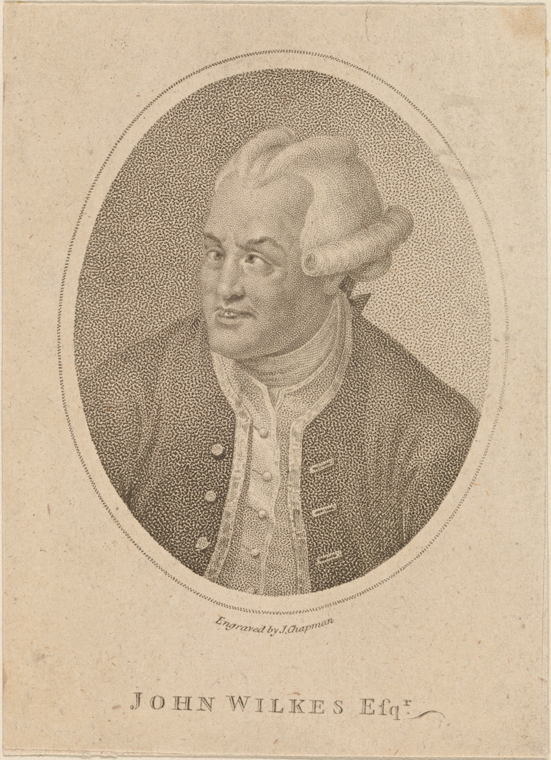
After describing what he saw on King Street during and after the shooting that became known as the Boston Massacre, William Palfrey’s 13 Mar 1770 letter to John Wilkes (shown here) continued:
The return of morning exhibited a most shocking spectacle; the gutters of the street running with blood, & the snow on the ground dyed crimson with the blood & brains of our fellow citizens.

I went the next morning to view one of the bodies; when I was call’d upon a jury of inquest. In the course of the examination many witnesses were sworn, which enables me to give you a more circumstantial account of the matter than you may possibly receive from others, unless they had the same advantage.
At that point Palfrey’s description of events shifted from what he experienced firsthand to what he’d heard other people say. His story became the Boston Whigs’ official line, what they wanted British sympathizers to understand about the event. But there were still some interesting statements reflecting what locals believed.

For example:
It appear’d by the oaths of credible witnesses that Soldiers had been to the houses of some of their friends the Sunday Evening before this tragical event happen’d, and desir’d them, as they tender’d their own safety, to keep out of the way the two nights following: that there would be more blood shed then, than ever was known since the country had been settled.
While these stories were meant to show a premeditated attack, they also show how soldiers had made “friends” in Boston.

As for stationing a sentinel in front of the Customs office:
This has been Customary since the Regiments were quarter’d here. The town have ever since kept a strong military watch, not only to prevent a rescue of the prisoners which was threatened by the soldiers, but also to prevent the lower sort of our own people from making any attempt to revenge the murder of their brethren.
Genteel Whigs like Palfrey were willing to cast the common people as prone to rioting—as long as they could blame outside forces like lawless soldiers for provoking those riots.
The centinel at the Custom house door on seeing the lads approach loaded his piece, which they seeing gatherd near and laugh’d at him without offering any other insult.
Actual eyewitnesses said that Pvt. Hugh White had loaded his musket, pounding the butt on the street, after the barbers’ apprentices had started to bother him. Throughout his letter, Palfrey insisted that locals had given the soldiers no reason to be nervous.

Having reported that Capt. Thomas Preston had ordered his men to fire, Palfrey still had a good word for him:
I cannot leave this subject without doing justice to Capt. Preston so far as to inform you that before this unfortunate event, he always behav’d himself unexceptionably & had the character of a sober, honest man & a good officer,—but Influence, fatal influence!
The letter also tells us how locals watched the removal of soldiers from town:
The 29th have since been sent down [to Castle William], & the embarkation of the 14th begins this day. We shall soon get rid of our Military inmates, & I hope the town will thereby be restor’d to its former state of tranquility.
In this striking passage, Palfrey raised the possibility of the Massacre provoking armed rebellion.
The people, tho’ drove almost to despair by this act of violence, and ready to take immediate vengeance on the offenders, were however restrain’d by the example & persuasion of many of those very men who have been on your side the water branded as incendiaries, & enemies of Great Britain. If there had ever been any intention in the Colonies to rebel, what a fair opening was here made! The military, without the least provocation, slaughtering the unarm’d, defenceless & innocent citizins. The Country for a great distance round was alarm’d & prepar’d themselves to join the people in Boston upon the first signal, & however despicable an opinion Collo. Dalrymple or his associates may entertain of the Bostonians, I assure you, Sir, forty thousand men could have been brot into the gates of this city at 48 hours warning.
Finally, Palfrey noted a rumor that the Crown would appoint Col. William Dalrymple as successor to the departed governor, Francis Bernard:
I have just heard that Collo. Dalrymple is a candidate for our Government. I pray God most heartily we may never be govern’d by a Scotchman, & above all by a Military Scotchman.
Palfrey’s correspondent, Wilkes, had of course made his political name attacking Scottish influence on the British government in his North-Britain magazine, so he would have responded well to badmouthing Scotchmen.

Monday, October 29, 2018

“Fanueil-Hall was cleared of the troops”

Back on 1 Oct 1768, the selectmen of Boston told Lt. Col. William Dalrymple that he could house His Majesty’s 14th Regiment of Foot in Faneuil Hall.

(The picture of Dalrymple here is a caricature from 1804 after he had retired from the army and gone into politics.)

Of course, Dalrymple had asked for that lodging only “till Monday following, promissing upon his honor to quit said Hall at that time.”

And then on 4 October, the day after he’d promised to leave, the colonel “asked the favor of having the further use of Faneuil Hall till Wednesday next, when he would withdraw his Troops from thence.”

Then the next day he sent word “that it was not in his power To remove the Soldiers from Faneuil Hall” until barracks were ready.

Since most of Boston’s politicians were determined to force all the soldiers into the barracks on Castle Island, and Col. Dalrymple and Gov. Francis Bernard were determined to keep them in Boston proper as the Crown had ordered, that stalemate remained.

On 21 October, Boston’s seven selectmen voted to order this letter sent to Dalrymple:
I am directed by the Board of Selectmen to address you by Letter, Requesting that Faneuil Hall which is now occupied by part of your Regiment, and was to be cleared agreeable to your assurances when desired, may be delivered up this Day or to Morrow

By Order of the Selectmen.
William Cooper Town Clerk
It took almost another week, until 27 October, before the Cooper could log in a response:
The Selectmen received this Day a Message from Collo. Dalrymple, by Mr. [John] Rowe, acquainting them, that the Hall should be cleared & delivered this Evening agreeable to their requirement
The Boston Whigs happily reported in their “Journal of Occurrences” for that day: “This day Fanueil-Hall was cleared of the troops and delivered up to the Selectmen by Col. Dalrymple.”

In Boston Under Military Rule, a 1936 compilation of that “Journal,” Oliver M. Dickerson noted that the same item was dated 26 October, or one day earlier, when it was eventually reprinted in the Boston Evening-Post. He concluded that that was the correct date for the troops’ move.

But actually the move appears to have taken longer—until 29 Oct 1768, or 250 years ago today. On that day selectman Rowe, the liaison to the army command, finally wrote in his diary: “This day the Troops went from Fanewill Hall into the Barracks.”

The next day the Whigs reported more news in their “Journal”: “Last evening the encampment on the Common broke up, and the soldiery [of the 29th Regiment] retired into winter quarters in this town, but by whom they have been quartered remains yet to be enquired.” So all the soldiers were under roofs for the winter.

COMING UP: Where had all the troops gone?

Sunday, October 21, 2018

“The siege of the Manufactory House still continues”

Yesterday we left the Manufactory building (shown above in its role as the Massachusetts Bank in the 1790s) under siege by British troops, who themselves were surrounded by townspeople. The crisis over where those soldiers would spend the winter had come down to that one big building beside the Common.

Dr. Thomas Young’s dispatch for the Boston Gazette reported:
Friday morning bread and butter were denied, and no person allowed to speak to them for several hours. The sick were denied the visits of their physicians, and Dr. [Benjamin] Church’s apprentice in the afternoon had several pushes with a bayonet as he was attempting to convey them medicines.
For outside consumption the Boston Whigs described the next moves:
The siege of the Manufactory House still continues, and notwithstanding one of their bastions has been carried by assault; the besieged yet shew a firmness peculiar to British Americans:

The children at the windows crying for bread this morning, when the baker was prevented supplying them by the guards, was an affecting sight. Some provision and succours were however afterwards thrown into the Castle with the loss of blood, but no lives.
Back to Dr. Young in the Gazette:
Some gentlemen deploring the imminent ruin of their country, & fearing some ill consequences from the resentment of the people, who had been insulted by the guards, kept with them to moderate ’em, while others laid before the members of his Majesty’s council the distress & danger they conceived the people subjected to by the unprecedented actions of the sheriff.
The Whigs provided this account of the Council meeting:
The Council met in the forenoon at the G——rs, those of them who were in the late vote greatly disturbed, that such an illegal method should be taken by the G——r to carry it into execution, they were still more disturbed at the treatment received. Council met in the afternoon at their own chamber, and are to meet again on the morrow. The C——l have been really in a most uncomfortable situation for some time past, tho’ very frequently called together by the G——r, it is rather to give a colour and countenance to what he had done or is projecting, than to receive their information and advice.
Dr. Young:
The council assembled, and after some deliberations waited on his Excellency, and signified that their advice to clear the factory intended no more than to clear it by law. His Excellency said it appeared to him to empower him to clear it as he most conveniently cou’d:
Gov. Francis Bernard described that discussion this way: “some of the Council declaring that it was not intended to use Force, altho’ they knew that it could not be done without.”

Evidently the Council’s majority now said that they had authorized the governor to evict the Brown family and others from the Manufactory by law, taking them to court if necessary, but not by physical force. Of course, that would hardly have solved the army’s immediate need for housing. But it cast a little more doubt on the legality of the sheriff’s and army’s actions the previous afternoon.

So the royal government eased back a little. Dr. Young reported, “it seems the consequence of this meeting was a recall of the troops about 7 that evening, leaving only a small guard in the cellar, and one or two at the window.” The Whigs claimed: “In the evening terms of accomodation were proposed to Mr. [John] Brown of the Manufactory, but rejected with disdain.” The siege continued, just less intensely.

Meanwhile, “Col. [William] Dalrymple was required by the Selectmen to remove from Faneuil-Hall this day or on the morrow, agreeable to his word of honour, the troops which have occupied it for too long a time already.”

TOMORROW: But where could all those troops go?

Saturday, October 13, 2018

Halifax Reacts to the Occupation of Boston

In 1768 the royal governor of Nova Scotia, which included modern-day New Brunswick, was Lord William Campbell, shown here.

According to Emily P. Weaver’s 1904 paper “Nova Scotia and New England During the Revolution,” as of 1766 the royal government counted only 9,789 subjects in the whole province. This page from Statistics Canada gives the number 11,779. Either way, that was considerably smaller than Boston on its own.

That number didn’t include the soldiers stationed in the province or the crews of the Royal Navy ships that stopped at Halifax. Those men, and their families, were seen as transient. With such a small local population, however, they shaped the society greatly. Though Halifax had seen some anti-Stamp Act protests, it stayed close to the royal authorities through the Revolutionary turmoil. The Nova Scotia legislature ignored Massachusetts’s Circular Letter, for example.

On 25 June 1768, Gen. Thomas Gage sent important orders to the highest-ranking army officer in Halifax, Lt. Col. William Dalrymple of the 14th Regiment. Dalrymple was to consolidate all forces in the province and prepare them to sail to Boston. Gage wrote:
There is now at Halifax, one entire Regiment, and five Companies of another, and if you have Time to put the Orders in execution, which are transmitted to you, concerning the withdrawing the Troops from Louisbourg, St: Johns Island, and Fort Frederick, before any Requisition is made for the Aid of the King’s Forces; you will then have under your Command, and ready for immediate Service, a number of Troops equal to two Regiments, and three Companys.

You will embark therefore, if your Assistance is required, with the Whole, or any Part of those Troops, as Governor [Francis] Bernard shall demand, and if the Governor should be of Opinion, that it wou’d be requisite you should bring Artillery with you, the Detachment of the Royal Regiment of Artillery at Halifax, will be embarked at the same time, with such a Number of Pieces of Artillery, as they shall be Able to manage.

You will pay no Regard, in effecting this Service, to the leaving Halifax without Troops: it will be sufficient, that you leave there one Company, or a Detachment equal to a Company.
Gov. Bernard managed to slip out of demanding troops as Gage wanted him to do. Thus, he could claim to the Massachusetts Council that the decision to station soldiers in Boston came entirely from the Secretary of State in London, Lord Hillsborough, and he was merely following orders.

On 13 October, 250 years ago today, the Boston Whigs shared their understanding of how Halifax had experienced that redeployment:
A private letter from Halifax contains some particulars relative to the Boston expedition, not known before, viz. “That in consequence of orders received Sept. 11th, from this place, all the workmen in the King’s yard, necessary to equip the ships, were set to work on Sunday; a strict embargo laid, and guard vessels sent to the mouth of the harbour to prevent intelligence being sent, and more caution used than when fixing out for the Louisbourgh expedition; the embargo so strict, that an open shallop going a mackerel catching, was stopt and sent back to town; and that the troops embarked in as great hurry as was ever known in time of war.[”]—

What a tragi-commick scene is here presented! and how must it be viewed by European politicians?—

Another letter mentions, that as Halifax must sink without the support of troops and ships of war, some of their patriots were about erecting a liberty pole, and employing some boys to sing the Liberty Song through the streets, in hopes it may procure the return of those ships and forces or a larger number from Britain, in order to quell such disturbances.
If anyone from Halifax made such a remark, it was a joke. But the local economy really did depend on supplying the army and navy. On 12 September, the day after Dalrymple received his orders to sail, Lord William Campbell wrote to Hillsborough asking him to send those regiments back north as soon as possible. The royal governor warned that Nova Scotia’s “chief dependence was the circulating cash spent by the troops.”