


J. L. BELL is a Massachusetts writer who specializes in (among other things) the start of the American Revolution in and around Boston. He is particularly interested in the experiences of children in 1765-75. He has published scholarly papers and popular articles for both children and adults. He was consultant for an episode of History Detectives, and contributed to a display at Minute Man National Historic Park.

Subscribe thru Follow.it


•••••••••••••••••


Showing posts with label Foster Hutchinson. Show all posts

Sunday, March 03, 2024

“Thus ended the Superior Court”
As I described yesterday, when the Massachusetts Superior Court tried to open a new session in Boston on Tuesday, 30 Aug 1774, all the men chosen for juries refused to serve under Chief Justice Peter Oliver.

John Adams was away at the First Continental Congress, so his former clerk William Tudor described the judges’ response for him: “The Court told them they should consider of their Refusal, and then adjourn’d to next Day.”

The jurors didn’t change their minds. On the morning of 31 August the court sat again. Oliver and associate justices Foster Hutchinson and William Browne were at the Province House, meeting with Gen. Thomas Gage as part of his appointed Council. That body advised the governor to keep his redcoats in Boston and not “send any Troops into the interior parts of the Province.”

Tudor wrote that the justices who remained on the bench

…continued all the continued Actions till next Term. They agreed to let us file Complaints and to enter up Judgement on them; which we had imagined they would not consent to, as some of the Judges the first Day had said that if the County would rise and prevent them doing Business generally, they should decline finishing it partially, and the County must thank themselves for the Inconveniences of their own Madness.
The next day:
One small Point was argued by Mr. J[osiah]. Q[uincy]. and [Samuel] Fitch, a few Complaints read, and after Mr. Fitch, in Complyance with a previous Vote of the Bar, had reccommended four of Us to be admitted to the Atty.’s Oath, the Court adjourn’d to next Day.
Tudor was among the young men hoping to be admitted to the Boston bar at this session.

On the morning of Friday, 2 September, “there were a Number of printed Bills stuck up at the Court house and other Parts of the Town, threatening certain Death to any and all the Bar who should presume to attend the Superior Court then sitting.” Someone with access to a print shop had produced those death threats, making them all the more ominous.

The justices postponed “All the new enter’d Actions” as well as the old ones. Then the jurists noticed that people were taking advantage of the lack of juries to enter appeals, thus postponing judgments against them. Tudor wrote to Adams at length on whether this tactic was valid. “You had but one [case] in this Predicament,” he added.

The court swore in one new attorney: Nathaniel Coffin, Jr., a professed Loyalist. The other three young men hung back. Finally, the justices adjourned. “Thus ended the Superior Court and is the last common Law Court that will be allowed to sit in this or any other County of the Province,” Tudor wrote.

That same day, thousands of rural militiamen gathered in Cambridge in what was later dubbed the “Powder Alarm.” People inside Boston worried about an armed invasion. By evening, it was clear that the rest of the province was no longer going to cooperate with the royal authorities at all.

William Molineux’s refusal to serve as a juror under Chief Justice Oliver in the summer of 1773 had grown into the legislature’s march to impeaching Oliver, crowds closing the courthouses in rural counties, Suffolk County citizens boycotting juries, and finally a halt to all Superior Court business. Colonial Massachusetts’s judicial system was frozen, and in some areas would stay jammed up until past the Shays Rebellion in the late 1780s.

Saturday, March 02, 2024

“They all to a Man refus’d taking the Oath”

William Molineux refused to pay the £6 fine the Massachusetts Superior Court imposed on him for refusing jury duty in the fall of 1773.

Publicly, that was because Molineux was protesting how Chief Justice Peter Oliver accepted (or at that point not denying that he would accept) a salary from the Crown rather than the people of Massachusetts.

Privately, Molineux might have had another reason: he was in debt to Boston for £300 for money advanced for a public-works venture.

In February 1774, as the Massachusetts General Court moved to impeach Oliver, the merchant petitioned that legislature to block this fine on his behalf. The assembly declined to take action for Molineux alone.

On 28 July, Gov. Thomas Gage wrote to Chief Justice Oliver from Salem about how Molineux had still not paid his fine for refusing jury duty. He promised to support the judges if they demanded that £6 and threatened to jail the merchant.

But in August 1774 Parliament’s new Massachusetts Government Act made even more people refuse to cooperate with the court system under Oliver.

In the western counties, popular protest took the form of hundreds of men massing around the courthouses and keeping the justices out.

Bostonians didn’t dare to do that since their streets were once again patrolled by redcoat soldiers. So on 30 August they emulated Molineux’s refusal.

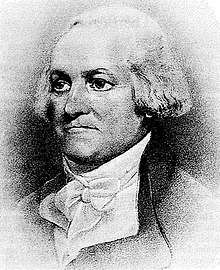
William Tudor (shown above later in life) wrote to his mentor in the law, John Adams, on 3 September:
Tuesday the Superior Court opened and Mr. Oliver took his Seat as chief Justice. When the grand Jury were called upon to be sworn they all to a Man refus’d taking the Oath, for Reasons committed to Paper, which they permitted the Court, after some Altercation, to read.

The Petit Jury unanimously followed the Example of the Grand Jury; their Reasons together with the others You will read in the Masstts. Spy.
The jurors’ protests were also published as handbills by Edes and Gill. Among the grand jurors were longtime activists Thomas Crafts and Paul Revere, John Hancock’s younger brother Ebenezer, and William Thompson, whose granddaughter supplied the texts to the Massachusetts Historical Society in 1875.

In different ways the grand and petit jurors pointed to these reasons:
  • The General Court had impeached Chief Justice Oliver.
  • The Massachusetts Government Act had taken control of the courts from the people and put them under the Crown.
  • Justices Oliver, Foster Hutchinson, and William Browne had accepted seats on the Council, now appointed under the new law instead of elected by the legislature as the charter specified.
The judges, attorneys, and young men waiting to be admitted to the Boston bar (like Tudor) tried to figure out what to do.

TOMORROW: The last court session.

Monday, October 15, 2018

“This afternoon General Gage arriv’d from New York”

The Boston Whigs’ dispatch for 15 Oct 1768 reported that the British army’s hunt for deserters had achieved results:
A deserter from the 14th Regiment was brought in the last evening by one of the decoy parties, sent into the country, also a labouring man from Roxbury, with a soldier’s regimentals on his back, he was confined for some time in a tent, without lawful warrant, and afterwards committed to prison by Mr. Justice [Foster] Hutchinson,—
Imagine the tyranny of the army confining a local farmworker for doing something as unsuspicious as wearing a soldier’s uniform!

But the big news 250 years ago today was that Gen. Thomas Gage had arrived from New York to see how the soldiers under his command were settling in. The Boston Whigs were actually glad to see him, or at least said they were:
This afternoon the troops were drawn up, on the Common, on the appearance of General Gage; at sunset there was 17 discharges from the field cannon; he passed the front of the battalion in his charriot, preceded by a number of aid de camps on horseback.—The arrival of this gentleman from N. York at this time, is a very agreeable circumstance, to the friends of their country; as his mild and judicious behaviour in that province, has been justly applauded; and he comes here determined to see and judge for himself.
Some New Yorkers would have disputed that judgment, though the biggest conflicts between soldiers and civilians there were still to come.

Deacon John Tudor wrote about the day:
This afternoon General Gage arriv’d from New York just before sunset when the Troops where drawn up in the common to receive him & his Retennu, 17 discharges from the field cannon was fir’d to honour him, who came in his Chariot & 4, his Aid de camps on Horseback, all together with the Regiments made a gallant Show; Many disputes arose between the Governor Council, Justices & Selectmen aboute Quartering & Biliting the Troops. 
Local elected officials were still pushing for the troops to be moved out to Castle William.

Merchant and selectman John Rowe had his own take:
General Gage arr’d from New York at Major [Robert] Byards at Roxbury. The regiments were under arms & made a Good Appearance. The General with his attendants came into Town abo. four P.M. The Artillery saluted with 17 Guns. They passed & marched along the Front of both Regiments & Capt. [John] Wilsons two Companies who were formed in the Center.
Robert Bayard, who appears to have hosted Gen. Gage the night before he came into Boston, was from a New York mercantile family. He had been a captain in the Royal American Regiment during the French & Indian War under Gen. James Wolfe. Bayard married Rebecca Apthorp, the youngest surviving daughter of Charles and Grizzell Apthorp, who had been Boston’s wealthiest couple. The Bayards had a daughter baptized in Boston in 1768, but Rebecca died four years later. Robert Bayard appears to have then returned to New York and married Elizabeth McEvers, who was both the widow of a partner in his family firm and another Apthorp daughter, thus his sister-in-law. The Bayards moved to Britain during the war, their New York properties confiscated. Elizabeth died in 1800, Robert in 1819, said to be the last British officer surviving from the Battle of Québec. But I digress.

Rowe’s diary entry for the next day says:
This morning I waited on Colo. [James] Robertson who came with Gen. Gage. He received me very Politely. I had a full hour’s discourse with him abo. the troops. I find him to be a Gentleman of Great Abilities & very cool & dispassionate. I took a walk & met Gen. Gage & Colo. [William] Dalrymple. Gen. Gage engaged me to wait on him tomorrow morning.
Robertson was deputy quartermaster general for the army in North America, the man in charge of ensuring the troops were housed and fed. Rowe was one of the Boston selectmen disputing about where those troops should live. But he was already renting space to army officers, pleased to meet with Robertson, and, as his diary reveals, eager to socialize with Gen. Gage.

Friday, October 12, 2018

“A general disposition to desert from the regiments here”

When the Boston Whigs wrote their “Journal of Occurrences” dispatches for newspapers in other American ports, their main theme was how badly the presence of the British troops was damaging the fabric of Boston society.

But an important secondary theme was how stationing those regiments in Boston was also harming the British army, constitution, and state.

In the report dated 12 Oct 1768, 250 years ago today, the Whigs highlighted the desertions by British sailors and soldiers:
The rumor of Castle William being delivered up by the G——r to the King’s troops, arose from his having permitted a number of mariners from the ships of war, to land at Castle Island, six of whom it is said went off in a boat the last night.

Reports of great desertions and a general disposition to desert from the regiments here, which it is said left Halifax under great dejection of spirits; about 21 of the soldiers absconded the last night, and parties from the troops with other clothing, instead of their regimentals, are sent after them.—

Some of the consequences of bringing the troops into this town, in direct violation of the act of Parliament, and disregard to the advice of his Majesty’s Council, instead of quartering them in the barracks on Castle Island, are like to be the scattering proper tutors through the country, to instruct the inhabitants in the modern way of handling the firelock and exercising the men, and also in the various manufactures which the ingenuity and industry of the people of Great Britain have hitherto furnished us with.—
According to Don Hagist of British Soldiers, American Revolution, army records consistently show a rise in desertions just before and just after regiments made a major move. Soldiers may have been reluctant to leave a post where they had forged ties, so they maneuvered to stay behind or to return. Alternatively, they may have noticed that it was easier to desert when commanders were preoccupied, didn’t know the local ground, or couldn’t send anyone back to the old station to hunt men down.

It’s therefore not surprising to see sailors and soldiers releasing themselves from the royal military on their own recognizance in these weeks. It’s startling to see American Whigs talking about how army deserters would make “proper tutors” for the local militia, with an unstated threat underneath. In 1774 and 1775 New England Patriots did indeed recruit soldiers for that purpose and boasted of their militia’s strength. But in 1768 political leaders were trying to tamp down calls for resistance by force.

As this additional item shows:
This night a surgeon of one of the ships of war being guilty of very disorderly behaviour was committed to gaol by Mr. Justice [Edmund] Quincy, as was also a person not belonging to this province, by Mr. Justice [Foster] Hutchinson, on complaint of a soldier, that he had been enticing him to desert; said stranger was first taken and confined by Captain [John] Willson, in the Town House for some time, without warrant or authority from any magistrate—If the oaths of soldiers who are promised 10 guineas for such discoveries, are to be taken as sufficient proof, we know not what proscriptions may take place.
The Boston Whigs thus made a point of blaming “a person not belonging to this province” for encouraging desertion, not a local.

Of course, those Whigs also complained that an army captain had confined that suspect outside of civil authority based on questionable evidence. Worse yet, that confinement happened inside the building that normally housed the provincial legislature, still occupied by troops!

We’ll have to keep a watch on Capt. Willson.

Saturday, September 15, 2007

Deacon Newell Chooses Not to Be Seen

Yesterday I quoted Deacon Timothy Newell’s first response to demands that he turn over the key to the Brattle Street Meeting-House to a group of Loyalist Presbyterians who wanted to worship there. After a curt exchange, he refused to talk with them.

So, on 15 Sept 1775, they turned up the pressure:

As I was attending a funeral, the Provost Mr. [William] Cunningham, came to me and told me “It was his Excellency the Genls command, I should immediately deliver him the Key of Dr. [Samuel] Cooper’s Meetinghouse[”]—I replied, I must see the Governor—he told me he would not see me till I had delivered the Key. I told him, I must see the General, and refused to deliver the Key. He left me in a great rage and swore he would immediately go and break open the doors.

I left the funeral and proceeded to the Governor’s,—calling on Capt. [John?] Erving to go with me.—He excused himself, so I went alone. The Governor received me civilly. I addressed myself to him and most earnestly intreated him that he would be pleased to withdraw his order, urging that Dr. [Andrew] Elliot, in order to accommodate our people, was to preach in said Meetinghouse next Sabbath, or the Sabbath after and that the person they proposed was a Man of infamous character, which had it been otherwise, I should not oppose it &c. And I desired his Excellency would consider of it. He told me he would and that I might keep the Key, and if he sent for it he expected I would deliver it,—so left him.—

I had not been, I believed 20 minutes from him, before the Provost came with a written order to deliver the Key immediately, which I did accordingly.

When I at first urged the Governor to excuse my delivering the Key for the reasons given—he replied that a number of creditable people had applied to him, and he saw no reason why that house should not be made use of as any other. Gen’l Robinson (when I mentioned the preacher being of an infamous character) said he knew no harm of the man, but this he knew that he had left a very bad service and taken up with a good one.

The next day the Provost came to my shop, I not being there, he left word that he came for the apparatus of the Pulpit and that he must have the Key under the Pulpit, supposing the curtain and cushions were there.

The Provost the same day came again. I chose not to be there. He left orders to send him the aforesaid and swore most bitterly that if I did not send them, he would split the door open—and accordingly I hear the same was forced open[—]and that if Dr. Cooper and Dr. Warren were there, he would break their heads and that he would drag me in the gutter, &c. &c. &c.—

This being Saturday afternoon, I chose not to be seen—spent the evening at Major [William] Phillips’s—consulted with a few friends—advised still to be as much out of the way as possible.—

Dr. Elliot invited me to come very early in the morning (being Lords day) and breakfast with him and also dine, which I did and returned home after nine at night—found Serjent with a Letter had been twice at our house for me—Thus ends a Sabbath which exclusive of the perplexities and insults before mentioned, has has [sic] been a good day for me.

P.S. Capt. Erving and myself being the only persons of the Committee remaining in town, I acquainted him of the demands of the General, who advised me that if the Gen’l insisted on the delivery of the Key, to deliver the same.

The next week several of our Parish thought proper to petition the Genl.—I advised with Foster Hutchinson Esqr., who thought it very proper, and accordingly at my desire he drew a petition, but upon further consideration and hearing of the opinion of the General, he thought it best not to present it.
Provost William Cunningham was one the most notorious villains of the Revolutionary War, according to Americans. He was reviled for the suffering of prisoners of war under his care, and Americans delighted in newspaper reports that he had been hanged in England for financial crimes in 1791. However, British historians later wrote they could find no evidence that actually happened. Practically all the facts that most sources state about Cunningham’s life come from the “confession” published at his “execution,” which renders them more than a little dubious. I’ve just started digging into him (and frankly wish he had a more unusual name).

Foster Hutchinson (1724-1799) was younger brother of former governor Thomas Hutchinson. Newell might have thought he’d have some pull with the royal governor, but he apparently decided to defer to Gage instead.

I haven’t been able to identify “Gen’l Robinson.”