


J. L. BELL is a Massachusetts writer who specializes in (among other things) the start of the American Revolution in and around Boston. He is particularly interested in the experiences of children in 1765-75. He has published scholarly papers and popular articles for both children and adults. He was consultant for an episode of History Detectives, and contributed to a display at Minute Man National Historic Park.

Subscribe thru Follow.it


•••••••••••••••••


Showing posts with label Benjamin Greene. Show all posts

Sunday, January 26, 2020

An “Extraordinary Proposal” from Lt. Gov. Hutchinson
The political prospects of non-importation veered wildly back and forth in the middle of January 1770.

As I’ve been tracing, the month opened with the town’s initial public agreement not to import goods from Britain expiring, a few shopkeepers openly defying the boycott, and some wealthy merchants decidedly lukewarm on it.

Of the top merchants on the original non-importation committee, rumors said that John Hancock and John Barrett had become “cool in the cause.” Thomas Cushing and Edward Payne had “deserted” it. John Rowe had trimmed his sails so much he was dining with Lt. Gov. Thomas Hutchinson.

To regain control, the town’s political organizers called a big public meeting, taking the movement away from the merchants and bringing in the wider public. In a show of popular support, hundreds of men massed outside one of the importers’ shops. At the end of 17 January, the acting governor’s sons, Thomas Hutchinson, Jr., and Elisha Hutchinson, told representatives of the meeting that they were once again willing to cooperate.

Just one day later, however, the Hutchinsons were back to being defiant. Their father told the crowd in the king’s name to disperse from outside his house. The people then visited six other importers, but they all refused to yield their goods. That evening, supporters of the royal government thought the boycott would soon fall apart.

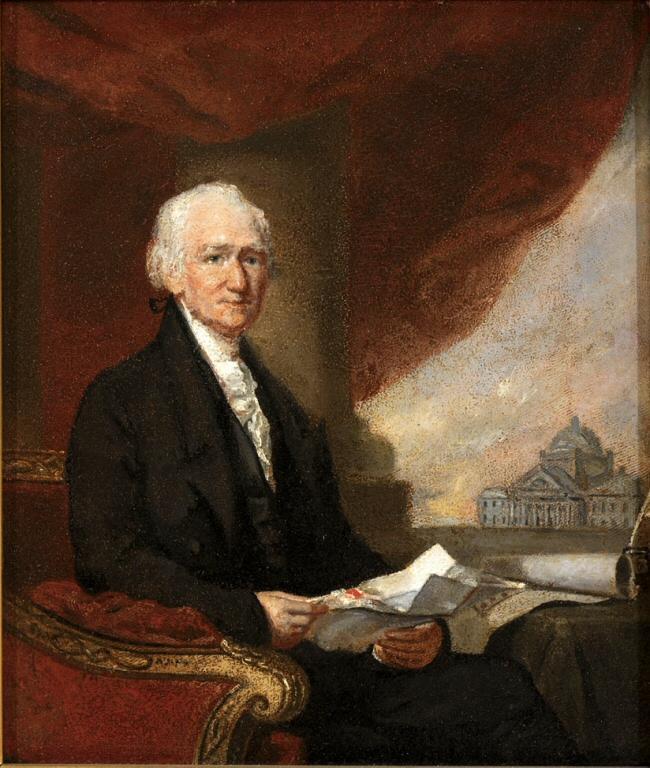
But then the acting governor shifted his stance. On the morning of 19 January, according to a Crown informant, Hutchinson sent for William Phillips, the moderator of those public meetings (shown above), and a member of the merchants’ inspection committee. He “told them that upon consideration he was now ready to make his Sons deliver up to the Committee what they had in their store and the Cash for the part they had sold.”

The Crown source, who appears to have been reporting to Customs Collector Joseph Harrison, called the acting governor’s change an “extraordinary proposal,” a “sudden and unexpected step” that “struck every person with astonishment.” According to that observer:
it was well known that the most zealous partizans of the faction had given up all hopes of carrying their point the Night before, and that their only intention of meeting this day was to pass a few resolves to publish in the Newspapers as a justification of their Conduct to the other Collonies.
The informant might overstate how little hope the top Whigs had felt, but the governor’s cooperation was still an overnight reversal.

Bernard Bailyn’s Ordeal of Thomas Hutchinson says nothing about this moment, which would soon be overshadowed by many other events of 1770. The best analysis seems to be in John W. Tyler’s Smugglers and Patriots.

It looks to me like Lt. Gov. Hutchinson felt that honor required his sons to cooperate with the non-importation committee for two reasons. First, Thomas, Jr., and Elisha had reached some sort of agreement on 17 January to turn over their tea. Their father reviewed the notes of that discussion. I suspect he felt that the young men were now duty-bound to stick to those terms.

Second, the acting governor knew he was vulnerable to charges of conflict of interest. If he took any steps to support the town’s importers, the Whigs could complain he was abusing his office to benefit his sons. Indeed, Hutchinson had invested a large chunk of money in his sons’ business. By taking Thomas, Jr., and Elisha out of the dispute, Lt. Gov. Hutchinson later explained, he had more leeway to protect the remaining importers.

Of course, the immediate effect the Hutchinsons’ cave-in was that the other importers got nervous. They saw the acting governor and his well-connected sons yielding to the Whigs. It was all very well for Lt. Gov. Hutchinson to say he would support them more strongly now—but would he really? Meanwhile, the “Body of the Trade” in Faneuil Hall continued to grow, amounting to “more than Twelve Hundred Persons” on 19 January, according to the Boston Gazette.

That morning, Nathaniel Cary sent the public meeting a letter to say he was turning over his imported goods to the committee. Late in the day Benjamin Greene followed suit. Deacon Phillips had moved quickly to take the Hutchinsons’ tea inventory. That left only four importers still in defiance: William Jackson, Theophilus Lillie, John Taylor, and Nathaniel Rogers.

The “Body of the People” and their leaders recognized victory. They quickly accepted those merchants’ offers and adjourned the meeting until Tuesday.

COMING UP: The battle rejoined.

Wednesday, January 22, 2020

Non-Importation in the New Year

At the end of 1769, the Boston merchants’ non-importation agreement ran out. But the Townshend duties were still in effect, so the Whigs insisted on maintaining that boycott into the new year.

That required leaning on people who wanted to resume regular business. After John Mein’s 1769 publications accused leading merchants of importing goods, the Whigs couldn’t allow any exceptions.

One threat to the town’s united front came from two Glasgow ships’ captains who wanted to commission new vessels from local shipyards, producing lots of jobs. They asked the merchants’ committee to approve importing what was necessary for those ships. A Crown informant reported:
A petition to that effect was immediately sett on foot by some of the tradesmen, and in a few hours was subscribed by upwards of 70 people. In the evening they met to fix the manner in which it was to be presented, when [John] Ruddock a Justice of the Peace and one of the Select Men of the town went to them and assuring the person who had been most active in promoting the subscription that he was ruining himself & his Country insisted on his delivering up the Petition which he immediately destroy’d, and such was his influence amongst these people that not one of them made any objections to his violent proceedings.
So much for those seventy signatures.

The merchants’ committee had pressured almost all of Boston’s importers into storing any goods that had arrived from Britain in 1769 under lock and key until… Well, there was a dispute about how long that commitment was for. The committee insisted the promise should last until they called off non-importation. Some tradespeople said they had promised only until the end of the year.

Benjamin Greene and his son had received a large order of dry goods in October. In December the committee learned he had shipped some of that material, packed in fish barrels, to John Chandler in Worcester. Under questioning, the Greenes admitted to making that sale. They declared they’d kept it secret only to preserve the image of a unified non-importation movement.

Then another merchant named John Taylor used a skeleton key to get into his locked storeroom and start selling imports. “You see, Gentlemen, how it is,” he told the committee, “and I always designed to do so.”

Theophilus Lillie put some of his imported stock on display and, he acknowledged, sold it to people who asked for it. How much of his inventory was gone? Lillie refused to let the inspection committee into his shop. He recalled: “Captain [Samuel] Dashwood was in a great rage, challenging me to come out of my house and he would break my neck, my bones, and the like.”

In the 11 Jan 1770 Boston News-Letter Lillie and Taylor publicly announced they no longer felt bound by the non-importation agreement. In fact, they declared that they had been intimidated into signing it in the first place, violating the spirit of liberty that the Whigs supposedly championed. Lillie got off one of the great lines of the entire pre-Revolutionary debate:
I had rather be a slave under one master, for if I know who he is, I may perhaps be able to please him, than a slave to an hundred or more who I don’t know where to find or what they will expect of me.
The most vociferous Whig merchants were actually hurting their cause. In particular, on 12 January a Crown informant wrote that William Molineux was turning off potential supporters:
Many were disgusted at Mollyneaux’s violent proposals particularly at a speech made at the meeting at which the vote against Green Lillie &c was pass’d, wherein he declared that were it not for the Law he would with his own hands put to Death any person who should presume to open their goods
Reportedly the two Boston merchants who held the highest political offices, speaker Thomas Cushing and selectman and representative John Hancock, were souring on the movement.

It was time for a meeting.

TOMORROW: The “Body of the Trade.”