J. L. BELL is a Massachusetts writer who specializes in (among other things) the start of the American Revolution in and around Boston. He is particularly interested in the experiences of children in 1765-75. He has published scholarly papers and popular articles for both children and adults. He was consultant for an episode of History Detectives, and contributed to a display at Minute Man National Historic Park.

Subscribe thru Follow.it


•••••••••••••••••


Showing posts with label Harvard College. Show all posts

Sunday, October 11, 2026

Seeking a Look at John Hancock

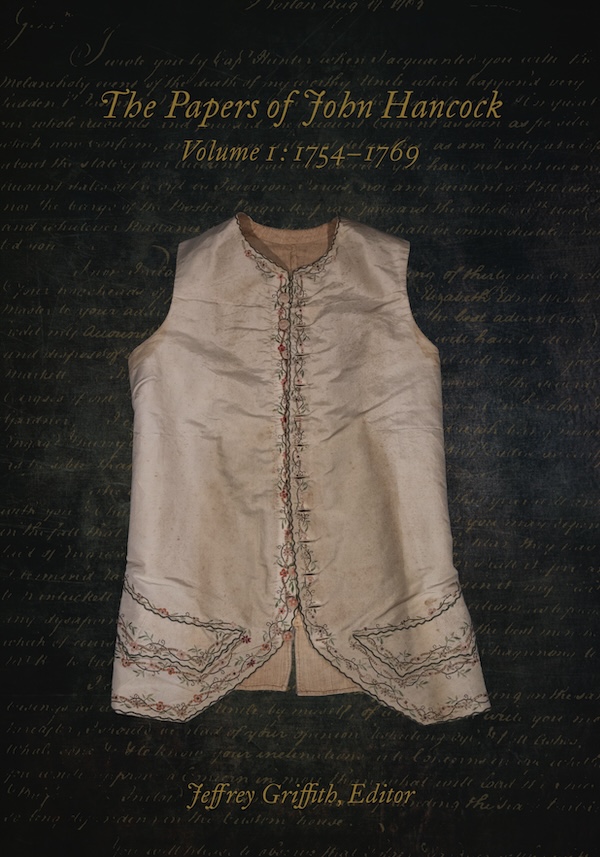
I asked Jeffrey M. Griffith, editor of the Colonial Society of Massachusetts’s new Papers of John Hancock series, about computerized handwriting transcription in part because his website for that project includes elements created with generative A.I.

At the bottom of the home page, for example, are three “John Hancock Videos.” It looks like these started with period images of Hancock—the well known John Singleton Copley painting and a couple of engravings. I presume the engravings were colorized.

Then all three images were fed through the sort of program that animates portraits so the subject appears to move their head, eyes, and mouth. These Hancocks deliver statements on different topics derived from the man’s actual writings through large-language-model A.I.

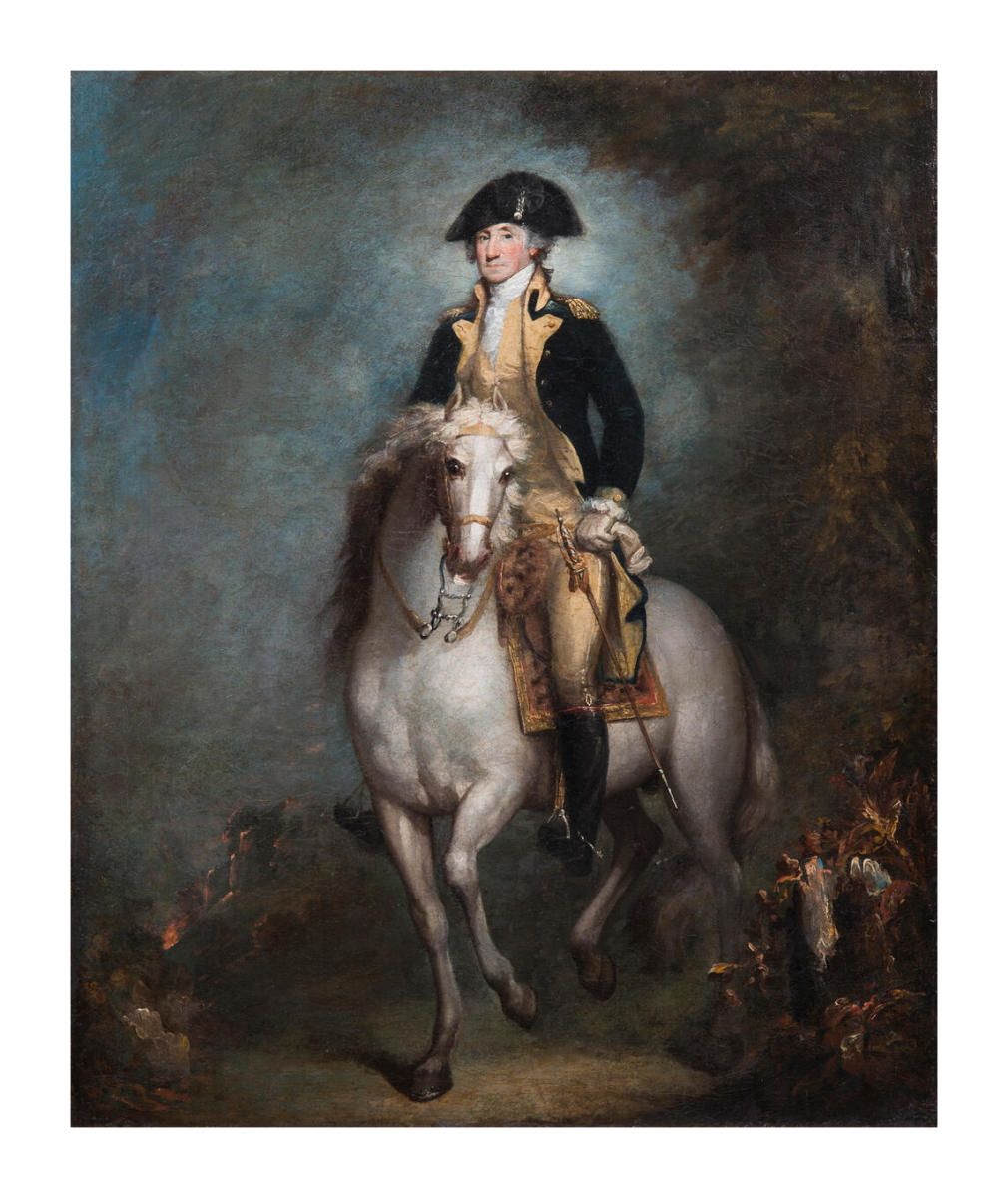
Those sorts of moving portraits were all the rage online a few years back. The early models showed us George Washington and the like swiveling their eyes and smiling. I wondered then how the results would look if we fed in a photograph of someone we’ve all seen really moving—a twentieth-century President or movie star. Would the output still be impressive, or would the uncanny valley open?

Just this week I saw a similar animated portrait incorporated into a museum exhibit. Now that the technology exists, it might become a standard way to enliven images for the public. Or it may be remembered as a hallmark of the 2020s. At least with figures as old as Hancock, no one will be fooled into thinking it’s genuine footage.

Dr. Griffith alerted me to another way he found an A.I. program valuable:
With that said, a very recent positive use of AI for research that I have come across is Harvard’s Collection Explorer. The metadata and previous digitalization efforts that they have worked on over the past decade has allowed them to create a tool that digs deep into their holdings.

I had a list of a handful of letters that I needed to find from Houghton Library that I could not previously uncover through their traditional search engine, and I was able to find them through this tool. Additionally, I found letters for Hancock that I have never seen cited before, nor did I know they existed. This nearly blew up Volume 2, but fortunately I was able to slip in a letter before the book design was completed.

To summarize, the actual readily-accessible tools to transcribe are not quite ready for wide use…, but the integration of AI searching has done great things for the discovery and acquisition of the materials for me to transcribe.
That speaks to one of the particular challenges of assembling John Hancock’s papers. While some families had the motivation and wherewithal to preserve a famous ancestor’s files, providing a big home base for a documentary project, others didn’t.

Also, I’m pleased to know other people find the Harvard library catalogue requires advanced technology to navigate.

Saturday, May 09, 2026

Declarations of Independence around Boston—Collect Them All!

To commemorate the 250th anniversary of the Declaration of Independence, multiple institutions in greater Boston have collaborated to lay out a Declarations Trail—exhibits of different significant copies of that document.

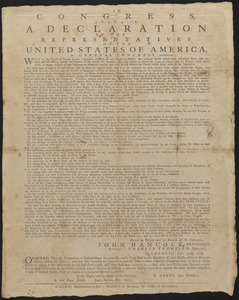
The Leventhal Map Center at the Boston Public Library has opened “Declarations: Printing a New Nation” with eight printings from broadsides and newspapers, along with maps showing the spread of that news. It will be up through 13 September. Shown here is the library’s copy of the Declaration as printed by Ezekiel Russell for the newly independent Massachusetts government.

The Boston Athenaeum exhibit “Imagined Nation” displays early printings in the context of such items as George Washington’s copy of Thomas Paine’s Common Sense, maps of the young republic, and World War II–era posters. That runs through November.

The Massachusetts Historical Society’s “1776: Declaring Independence” display, up through December, includes “handwritten copies of the Declaration by John Adams and Thomas Jefferson as well as multiple early printings, including a rare Dunlap broadside.” That was the first official presentation of the text, commissioned from printer John Dunlap by the Continental Congress in July 1776.

In Cambridge, three parts of the Harvard University library system are creating linked displays. The university archives is offering “Harvard and the American Revolution.” Next week the Harvard Map Collection will open “Charting Independence.” And starting on 18 May the Houghton Library will host “War of Words,” a display assembled by curator John Overholt to feature “the posters, pamphlets, newspapers, and images that brought news of the American Revolution to those who lived through it.”

In addition to the sites on the Declarations Trail, the Commonwealth Museum regularly displays Mary Katherine Goddard’s official reprinting of the Declaration signed by John Hancock and sent to the state in 1777.

And the “The Road to Revolution: Massachusetts and the Independence Movement” exhibit in Revolutionary Spaces’s Old State House, drawing on material from the M.H.S., includes a “rare 1776 Boston broadside printing of the Declaration of Independence.”

Most of those exhibits are free to the public. Many have special tours, talks, and workshops scheduled as well.

In a parallel initiative, five Revoloutionary-era institutions with admission fees—the Paul Revere House, Old State House, Old North Church, Old South Meeting-House, and King’s Chapel—have combined to offer visitors the Boston 250 Pass with a 10% on regular adult admission.

Sunday, March 15, 2026

“After Evacuation” in Cambridge, 19 Mar.

On Thursday, 19 March, I’ll speak at Longfellow House–Washington’s Headquarters National Historic Site on the topic “After Evacuation: What Came Next for General Washington and the American Colonies.”

Back in January I spoke in that same space about Col. Henry Knox’s “Fine Train of Artillery” and the end of the siege of Boston. Here’s the video of that presentation. This talk will pick up when that left off.

Here’s our event description:
On March 17, 1776, the British military pulled out of Boston, giving General George Washington his first victory of the Revolutionary War. Already, however, he was positioning the Continental Army for the redcoats to return. Meanwhile, the political atmosphere had changed, sending the thirteen colonies in a new direction. This year’s annual Evacuation Day talk explores how much changed during the siege and what lay ahead as the Washingtons left Cambridge.
One detail I haven’t decided whether to include is the honorary doctorate that Harvard College conferred on Washington on 3 Apr 1775, as discussed back here. This was the first time the college gave an LL.D. degree.

The Rev. Dr. Samuel Cooper wrote in his diary about signing the handwritten diploma on 4 April. Then Cooper went to Cambridge to say farewell to the general and presumably help to deliver that document, only to find that Washington was already on his way south. No word about how the diploma eventually made its way to the man.

To reserve a seat at my talk on Thursday, or learn about how to look in online, go to this page.

Friday, February 27, 2026

“Possibly not the best man to colonize a new country”

I’ve been analyzing a letter from the Thomas Gage Papers at the Clements Library, written by Jonathan Hastings, Jr., on 11 June 1775.

Hastings addressed his correspondent as “Friend Jacob.” Their families were known to each other, and Jacob probably had connections to Harvard College.

Another clue to Hastings’s correspondent is his comment “Am happy you had so safe a Passage & found your Friends well.” Jacob was obviously traveling. Hastings then offered basic information about the siege, meaning he knew Jacob was far from Massachusetts. Crown forces probably intercepted the letter at sea, not on land.

I looked at the entries in Sibley’s Harvard Graduates for Harvard students in this period named Jacob who might have gone abroad. Almost all were settled down as ministers by 1775, usually inside Massachusetts.

One remaining candidate is Jacob Welsh (1755–1822) from the class of 1774. He was the son of John Welsh (1730–1812), a Boston jeweler and member of the club that used the silver punch bowl now called the “Sons of Liberty Bowl.” This Jacob had one brother, John, Jr., born in 1757.

Sibley’s says nothing about Jacob Welsh’s whereabouts between graduating in July 1774 and entering the Continental Army as an ensign at the start of 1776. (He served until late 1778, first at Fort Ticonderoga and then in the artillery.) Did Welsh leave Massachusetts in that stretch, missing the start of the Revolutionary War because he was in Europe, the Caribbean, or the west?

Jacob Welsh did prove more peripatetic than most of his peers. In addition, Sibley’s says, he “looked for the main chance wherever it might present itself.” After the war he settled in Lunenburg briefly, serving as the town’s legislative representative. But then he sailed to England, smuggling home a “carding and spinning machine” in hopes of securing a state patent for himself. In 1791 Welsh went to Philadelphia and applied to President George Washington to help build the new national capital. He invested in lots of land, as far afield as Louisiana.

In 1807, it appears, Welsh wrote to Gen. Henry Burbeck, a fellow veteran of the Continental artillery corps. According to Heritage Auctions, he submitted “suggestions for the defense of Boston,” including “substitutions for round cannonballs.”

By 1809 Welsh faced a legal judgment of almost a thousand dollars owed to a merchant in Salem. The authorities began to seize his local property. Welsh lit out for Geauga County, Ohio, to manage land that his father had bought a decade before. A county history published in 1878 stated:
Jacob Welsh was a native of Boston, of an old family, and reared in luxury, possibly not the best man to colonize a new country. At the time he came to Ohio, he was a middle-aged man; a gentleman of the old school, of medium height, fair complexion, dressed in small-clothes, with long hose and buckles at the knee, and shoe-buckles over the instep, liberally educated, of imposing appearance and stately address, quite fitted to the aristocratic drawing-rooms of Boston, but not appearing to especial advantage in the woods, trails, and cabins of the Western Reserve. While he was a good conversationalist, he had little energy, small business capacity, and a large disposition to spend money.
After another decade, enough people had settled around Welsh’s land to form a township. He promised his neighbors to “give glass and nails for a meeting-house, and fifty acres of land, to settle a minister.” In return, the township was named after him. In April 1820 Welshfield Township had its first election, and Jacob Welsh was chosen to be a trustee.

According to that county history, after Welsh died in 1822 locals found that he had “forgot” his promised bequests. Twelve years later, the community changed its name to Troy Township. That township’s website offers a more compact version of the story while Sibley’s says Welsh did make his promised donation. The county histories from 1878 and 1880 seem best documented, so I’ve relied on them.

Jacob Welsh’s gravestone appears above, courtesy of Find-a-Grave. The central, unincorporated part of Troy Township is still called Welshfield.

Thursday, February 26, 2026

“It was not the Butler who fell in Battle”

I just finished quoting a letter that Jonathan Hastings, Jr., of Cambridge addressed to “Friend Jacob” on 11 June 1775. The letter probably never reached that friend because it’s in the files of Gen. Thomas Gage, the British commander besieged inside Boston at the time.

Hastings started by referring to “Your Brother’s Letter of 18th. May.” Later he wrote, “John intends to write to your Brother.” The writer had a younger brother named John, born in 1754 and graduating from Harvard College in 1772. Heitman’s Historical Register of Officers of the Continental Army says John Hastings “Served in the Army in 1775” but doesn’t specify a unit until 1777. Massachusetts Soldiers and Sailors of the Revolutionary War likewise documents his service from 1777 on, rising to brevet major.

It looks like the Hastings brothers, Jacob, and Jacob’s unnamed brother were all part of the same crowd in Cambridge, probably connected with Harvard. Jonathan expected Jacob to know where “the Red House leading to Charlestown” was. Jacob and the Hastings family had financial dealings.

That link offers an explanation for Jonathan Hastings’s line “It was not the Butler who fell in Battle, but a Samuel Cooke from Danvers.” Harvard had a staff position called the butler. This man oversaw the buttery, which sold snacks and other little items to undergraduates. Unfortunately, the Harvard archives says, “there is no complete list of all of the Harvard Butlers.” It looks like the college reserved the job for master’s students to hold for two or three years before moving on.

Harvard’s class of 1772 included Samuel Cooke, Jr. (1752–1795), son of the minister in Cambridge’s Menotomy precinct. Some college documents say Cooke filled in as librarian while reading for his master’s degree. I suspect that he was the college butler in that period, thus known to his classmates and those who came after as well as to the administration.

After Samuel Cook of Danvers was widely reported as killed in the fighting at the Jason Russell House, Jonathan Hastings assured his friend Jacob that this wasn’t the fellow they knew from the buttery. The Menotomy Samuel Cooke, Jr.’s most significant action on 19 Apr 1775 was dragging his father away from the fighting.

TOMORROW: A man on the move and on the make.

Saturday, January 10, 2026

Seeking Josiah Quincy’s Much Older Schoolmate

The upstart rural academy in Andover that became the prestigious Phillips Andover prep school published records of exactly who attended. Of course it did.

The Biographical Catalogue of the Trustees, Teachers and Students of Phillips Academy Andover, 1778-1830 confirms one detail of the story from Edmund Quincy’s biography of his father that I quoted yesterday.

Namely, that age six, Josiah Quincy (1772–1864, shown here past age six) was indeed the youngest student at the school when it opened in 1778. There were five seven-year-olds, though.

The alumni list also confirms that one student at the academy that year was “a man nearly thirty years of age”: James Anderson of Londonderry, New Hampshire, aged twenty-nine.

It’s therefore conceivable that little Josiah and old Mr. Anderson were seated together as the most rank beginners among the Latin scholars. This history of the school makes that assumption.

Otherwise, however, James Anderson doesn’t match Edmund Quincy’s description of his father’s classmate: a former Continental Army surgeon named Cutts who went on to an overseas career and marriage to an heiress in the vicinity of Alexandria, Virginia.

A man from Londonderry named James Anderson did serve as a lieutenant in the first year of the war. He was not, however, a surgeon or surgeon’s mate. His military duties didn’t take him anywhere near Virginia. And we have no indication that that former officer decided to go back to school.

The academy said its James Anderson went on to Harvard College in 1784. Sometimes men of limited means who were fixed on clerical careers started their higher education late, and they might spend a couple of years intensively studying Latin and Greek to qualify for college.

Harvard says its James Anderson didn’t go on to earn a master’s degree, as most aspiring clergymen did. He died in 1835. I can’t find anything more about him. His common name doesn’t help. (In the 1790s, for example, George Washington was corresponding with a Scottish botanist named James Anderson while employing a different James Anderson to operate his distillery.)

When the Sibley’s Harvard Graduates series reaches the class of 1784, it might have more to say about this James Anderson. (This year’s volume covers the classes of 1775 through 1777.) His profile will surely not reveal he went by the name of “Dr. Cutts,” though.

In 1782, a couple of brothers named Cutts arrived at the academy. But they were about Josiah Quincy’s age, not army veterans and not doctors.

So does Edmund Quincy’s account of his father’s adult schoolmate Dr. Cutts have any basis in reality?

TOMORROW: Meet Dr. John Brown Cutting.

Sunday, May 11, 2025

Thomas Newell’s Secret Notes

As discussed yesterday, Thomas Newell wrote several lines in his 1773–74 diary in cipher.

Since one of those lines coincides with Newell joining the effort to keep the East India Company tea from landing, one might hope the secret words would have political significance.

Barring that, they could be juicy personal gossip. Better than the weather reports that comprise the great majority of entries in this diary.

But no, these ciphered lines turn out to be far less juicy than other things Newell wrote about openly: political brouhahas, a duel between British military officers, the suicide of a British sailor.

Of eleven lines in cipher, four were Newell admitting to not going to a meetinghouse on a Sunday. Four times in two years!

Three expressed Newell’s worry for a woman named Hannah, who was suffering ill health:
  • 10 Oct 1773, Sunday: “Staid at home this day upon account of my dear Hannah being unwell with a breaking out on her hands and legs.”
  • 28 December: “My dear Hannah very unwell; out of her head most of this evening.”
  • 13 Mar 1774: “My Hannah [not in cipher:] went to meeting, after many months’ illness.”
This was presumably the Hannah he married and had two daughters with years later. I haven’t found a date for that marriage, but the Newells were members of the Brattle Street congregation, and the Rev. Dr. Samuel Cooper wasn’t known for scrupulous record-keeping. Hannah Newell died in 1807.

Two entries were about attending social events that would be standard for a young man of his class:
And one ciphered entry was about a holiday gift:
  • 2 Jan 1774: “Yesterday being New Year’s Day, my father gave me a new shirt, for which I was greatly obliged to him.”
Thomas Newell’s father had the same name; he was called captain because he had commanded a ship as a younger man, but in this period he was running a wharf.

Why would Thomas Newell feel the need to keep that information from posterity? Well, he probably didn’t care about us. In this period a diary was less private than we now expect, so Newell’s uncle Timothy or his father or his friends might have expected to be able to read it.

I suspect that Thomas Newell kept these little personal notes private because they were about his own personal life and not the weather or public events.

TOMORROW: Cannon.

Friday, January 24, 2025

The Ongoing Story of Harvard and the Legacy of Slavery

In 2016, Harvard University president Drew Gilpin Faust stated publicly:
Harvard was directly complicit in America’s system of racial bondage from the College’s earliest days in the 17th century until slavery in Massachusetts ended in 1783, and Harvard continued to be indirectly involved through extensive financial and other ties to the slave South up to the time of emancipation.
A historian of America’s antebellum South, Faust established a committee to investigate that history further, building on various faculty members’ work. Caitlin Galante DeAngelis, Ph.D., led much of the new research, producing an internal report for the administration.

In 2022, the university issued a public report on how the institution had benefited from slavery. This initiative followed similar efforts at Brown, Georgetown, and many other old American universities, not only to uncover that history but to seek ways to repair the damage of past slaveholding today.

Brown is named after a transatlantic slave trader, and profits from that business helped to endow the university. Georgetown received an infusion of funds in the 1830s from the Maryland Province of Jesuits’ sale of more than 200 people to Louisiana planters. Harvard was actually founded before Massachusetts made chattel slavery legal, but the college undoubtedly benefited directly and indirectly from coerced labor in the following centuries.

Among other responses, the university’s 2022 report recommended creating “a public memorial for the enslaved people who helped shape the institution.” A committee started to solicit ideas from artists, but in May 2024 the committee chairs resigned, saying that university administrators were rushing the process and not consulting enough with descendant communities.

That disagreement appeared to be only the most visible sign of trouble. In September, the Harvard Crimson published a story about the Harvard & the Legacy of Slavery project that began:
A $100 million University initiative intended to make amends for Harvard’s ties to slavery has been hamstrung by infighting, high staff turnover, and senior University officials seeking to limit the project’s scope, multiple current and former staff members told The Crimson.
This long article described various forms of dysfunction, including interpersonal friction, but the problem underlying everything else seemed to be disagreement on the scope and purpose of the project.

As to the scope, one issue is whether the Harvard Slavery Remembrance Program’s research should cover people enslaved by “members of the Harvard Corporation and Board of Overseers…in their personal homes.” In colonial Massachusetts, those governing board members tended to be ministers or wealthy men—the classes of people most likely to own other people. As with any board, some were more involved in the working of the college than others.

The month after that story, the Harvard Slavery Remembrance Program’s director, Richard J. Cellini, published his own opinion essay in the Crimson, reiterating one detail:
Last year, I formally notified the Office of the President and the Office of General Counsel that a small number of senior University administrators pressured me not to find “too many descendants” and not to do my job “too well.”
Obviously Cellini was challenging the university to keep the scope of the program wide.

On 17 January, the college newspaper reported:
Members of the Harvard & the Legacy of Slavery initiative met with Prime Minister Gaston A. Browne and Governor General Rodney E.L. Williams of Antigua and Barbuda on Wednesday after the initiative’s research team determined that “several hundred people” had been enslaved by Harvard affiliates in the island nation between the 1660s and 1815.
That article said researchers had identified four “four Harvard-affiliated enslavers” with property on Antigua. However, it didn’t say how the program had defined those “affiliates.” Antigua was where Isaac Royall, a Harvard overseer and benefactor, derived most of his wealth.

Members of the initiative at that meeting included Cellini, his program’s senior research fellow, and Vincent A. Brown, Charles Warren Professor of History and Professor of African and African-American Studies. Brown’s 2020 book Tacky’s Revolt: The Story of an Atlantic Slave War won the Frederick Douglass Book Prize, James A. Rawley Prize, and Anisfield-Wolf Book Award for non-fiction.

Yesterday, six days after the Crimson reported on that meeting on Antigua, the university suddenly laid off the Harvard Slavery Remembrance Program’s staff. The genealogical work will reportedly be outsourced to American Ancestors (the New England Historic Genealogical Society). The program itself has not been formally ended, though it’s unclear how many people remain and what they’re assigned to do.

No doubt there will be more drama to come.

Wednesday, December 06, 2023

“Ye. uncommon size & penetration of his genius”

When the Locke family returned to Sherborn, after the Rev. Dr. Samuel Locke resigned as president of Harvard College (because he’d fathered a child with his housekeeper), they had a nice home waiting for them.

The Lockes owned a “large convenient Dwelling-House” situated “near the Northerly side of the Common on the road to Holliston” and “opposite the Meeting-House.”

The attached estate included “two Barnes, and other Out-Houses,” and ninety-two acres of land, including “Pasturage, Arable land, Meadow, &c with a large quantity of good Fruit Trees; as also a valuable Lot of Wood.”

There had been some hurt feelings when Locke had left Sherborn’s pulpit in 1769, but the congregation found a replacement within a year, with the college providing some settlement money. The townspeople didn’t seem to hold a grudge against Locke personally.

In fact, Locke’s neighbors continued to refer to him with the honorifics “Reverend” and “Doctor.” In March 1774 they voted to put him on the committee of correspondence, which after the war started became the committee of public safety.

To supplement his income, Locke prepared boys for Harvard, having them board at his house. One student, John Welles, recalled him as “the most learned man in America,” and “a perfect gentleman, dignified.”

The Continental Journal for 22 Jan 1778 reported: “Thursday morning last [i.e., 15 January] died suddenly of an apoplectic fit, the Rev. Dr. Samuel Lock of Sherburn.” According to John Goodwin Locke’s Book of the Lockes, “He died from the bursting of a blood-vessel, when aiding in driving some cattle from his field.” (Sherborn’s published town records say the date was 15 Jan 1777, but apparently someone forgot to start writing the new year. That error confused later people, like the person who carved the headstone shown above.)

Contemporaries glossed over Locke’s adultery. A neighbor wrote: “Some domestic troubles embittered the last years of his life, but he was never known to make a complaint, but bore them with Christian resignation.” His successor at Harvard, the Rev. Dr. Samuel Langdon, is credited with this eulogy:
In Memory of ye. Revd. Samuel Locke D. D. [sic]

As a Divine he was learned and judicious—In ye. pastoral relation vigilant and faithfull—as a christian devout & charitable—In his friendships firm & sincere—humane affable & benevolent in his disposition—in ye. conjugal & parental relations kind, & officious—ye. uncommon size & penetration of his genius—ye. extensiveness of his erudition—yt. fund of useful knowledge wh. he had acquired—ye. firmness & mildness of his temper & manners—his easiness of access & patient attention to others-join’d with his singular talents for government, procur’d him universal esteem, especially of ye. governers & students of Harvard College over wh. he PRESIDED four years with much reputation to himself & advantage to ye. public—after wh. he retired to ye. private walks of Life, entertaining & improving ye. more confined circle of his friends until his Death wh. was very sudden on ye. 15th: day of January 1778—aged 45.
For the president of a college Locke had embarrassed by having an affair to say he was in “conjugal & parental relations kind, & officious” suggests that some contemporaries shared John Andrews’s opinion that his wife had somehow driven him into the arms of his housekeeper. But Mary Locke left no account herself, and no one else commented on her.

Be that as it may, Locke left an estate worth over £3,600. The widow Locke continued to live in Sherborn and to raise their three children. There’s an advertisement for settling her estate in the 11 June 1789 Independent Chronicle.

Of Mary and Samuel Locke’s children, Samuel, Jr., became the local doctor. He married Hannah Cowden, and they had four daughters, one dying in infancy. He died in 1788, aged twenty-seven, thus probably before his mother.

In 1792 the Locke family farm was put up for sale. The sellers were the couple’s daughter Mary, the doctor’s widow Hannah, and Samuel Sanger, the same man who had administered the widow’s estate. It evidently did not sell because in 1794 the widow Hannah Locke advertised it again, now on her own.

Mary Locke the daughter died in 1796, aged thirty-three. The family historian wrote: “She had been an invalid for some years before she died.” He also stated: “She was a lady of considerable personal and mental attractions, and if we may judge from the wardrobe which she left, not inattentive to that personal adornment to which many of her sex are addicted.” That judgment seems to be based entirely on the number of gowns in her probate inventory.

The youngest sibling, John Locke, moved from Sherborn to Union, Maine, and then to “Northampton, where he died, as it is said, by drinking cold water when heated.” That death wasn’t so sudden, however, as to preclude seeking medical attention and writing a will. John Locke was only thirty-four years old, continuing the family tradition of dying young.

The Rev. Dr. Samuel Locke’s grave went unmarked for decades. A sexton found his skeleton in 1788 when he was burying the eldest son. By 1853 the former minister’s remains had been dug up and reinterred in a new town cemetery. At the time his skull was judged to show “those phrenological developments which indicate great mental powers.”

When the younger Mary Locke died in 1796, both the Sherborn town records and the local Moral and Political Telegraphe newspaper described her as the minister’s “only daughter,” making a point. According to Sibley’s Harvard Graduates, however, the child Samuel Locke fathered in 1773 was also a girl, named Rebecca Locke. Clifford K. Shipton wrote that “she became a well-known figure in Boston and Worcester,” but I haven’t unearthed any sign of her.


Tuesday, December 05, 2023

The Lockes in Wedlock

Three years ago I wrote about the sestercentennial of the Rev. Samuel Locke’s inauguration as president of Harvard College.

Normally I wouldn’t find such a ceremony interesting, but that was all in service of the really juicy 250th anniversary that I can finally discuss this month: Locke’s departure from that job after people discovered he’d impregnated his housekeeper.

The earliest surviving source on that affair is the letter of John Andrews that I quoted here. That’s a mostly sympathetic account, dwelling on Locke’s religious crisis: he had mystified his colleagues by holding back from taking communion and leaving chapel suddenly during prayers. He exhibited “most sincere grief,” earning the “ye. compassn. of all.”

Yet Andrews also described Locke offering his housekeeper £150—for what, it’s not clear. A doctor who graduated in the Harvard class of 1782 told Harvard librarian John Langdon Sibley that he’d heard Locke had summoned his own physician, Dr. Marshall Spring of Watertown, but then couldn’t express his request. Was he trying to ask for an abortifacient?

Most striking, Andrews blamed Locke’s wife for the trouble, writing that her “vices, has been ye. means of drivg. him to it.”

Mary (Porter) Locke was born in 1738, daughter of the Rev. Samuel Porter of Sherborn. Her mother Mary, a Coolidge from Cambridge, died in 1752. Her father the minister died in 1758. At the age of twenty, therefore, she was left an orphan with a fair amount of property in her home town.

Samuel Locke came to Sherborn in 1759, having taught school and preached in Lancaster and Plymouth. Within a few months the congregation offered him the job of minister. In January 1760, less than two months after being ordained, Locke married Mary Porter in Natick.

On 11 February Locke wrote a letter to Edward Wigglesworth in Boston, having apparently heard that that young merchant was getting married:
It seems to be ordained by Providence in ye. oeconomy and constitution of all created, animate nature we are acquainted with that each individual of ye. several species should be drawn by some secret attraction to those of its own kind; and indeed it appears to be a necessary precaution for ye. preservation of order amidst ye. immense variety of creatures that people ye. world and for ye. regular conservation and increase of ye. several classes into which they are divided.

But man has a nature peculiarly adapted for society and friendly intercourse and is directly urged to it by ye. great difficulties, if not utter impossibility, of subsisting alone independent of and inconnected with others of ye. same nature with himself,—his wider capacities demand more gratifications, and he feels in himself innumerable wants which a life of sollitude cannot supply, and many powers to which it cannot give employment.

Hereupon he is naturally led by some affections amost peculiar to our kind to select some from among ye. many individuals of human nature for peculiar intimacy and tenderness in order to improve the condition of his existence and refine ye. common principles of benevolence into a peculiar affection for some individuals.

And I apprehend in particular with regard to ye. nuptial tie (ye. closest of any) we are not only directed to it by ye. constitution of our nature and ye. many miseries which a forlorn individual must necessarily suffer while he stands alone without any prop to support him, but also by ye. continued course of Providence in preserving in all ages such an apparent equality between ye. sexes.

This, I think is an additional call to every one to be up and doing. You will therefore, Sr., I trust, find a complyance with your duty in ye. respect a solid foundation of ye. most substantial happiness which this world affords,—and that it will be a happy medium of improvement in sosial virtue, and of increasing to you that felicity which I cannot describe but heartily wish to be ye. portion of every human creature in a way consistent with ye. wise designs of ye. great Father and governor of ye. universe.
Locke’s language was highly philosophic, but the bottom line was that he believed a man needed a wife for his “innumerable wants’ and “many powers.”

The Lockes had three children in regular fashion:
  • Samuel, Jr., in 1761.
  • Mary in 1763.
  • John in 1765.
Then they didn’t have any more. That’s an unusual pattern for a New England couple of this period. Sometimes a husband and wife had no children, suggesting a fertility problem. More typically, the wife was pregnant every two or three years for up to two decades. For a couple to have a few children and stop suggests that something came between them, medically or interpersonally.

At first Locke resisted recruitment by Harvard College, but in late 1769 he finally agreed and moved his family to Cambridge. Samuel and Mary were both familiar with that town, him from his college days and her from living with her maternal relations.

In his profile of Locke, Clifford K. Shipton wrote that “Mrs. Locke was a feeble, sickly woman,” but he cited no evidence to support that. Andrews was nastier, saying Mary’s unspecified “vices” had driven Samuel to adultery. Either way, the implication was that the college president turned to his housekeeper for sex that he couldn’t have with his wife.

The one female commenter I’ve found, Hannah Winthrop, made no remarks about Mary Locke but wrote that she hoped the post of president would “be filld with a person who may do Honor to the Station.”

In December 1773, 250 years ago this month, the Locke family returned to the town of Sherborn. The town’s pulpit had been filled by another minister, and no doubt some people no longer saw Samuel Locke as fit to preach. But Mary still owned property there, and Samuel had bought 120 more acres in 1772. The Lockes also had three children to raise, aged twelve to eight.

TOMORROW: Can this marriage be saved?

Sunday, December 03, 2023

“A See becoming Vacant in a Sudden Surprising manner”

As I quoted yesterday, in December 1773 the Rev. Ezra Stiles was worried by rumors from Cambridge about the sudden resignation of Harvard College president Samuel Locke.

On 20 December the Newport minister finally heard the cause, as he set down in his diary:
Mr. [William?] Ellery left Cambridge last Friday: he tells me that the Week before, President Locke resigned the Presidency of Harv. College, alledging two Reasons.

1. Ill state of Health.

2. That his Usefulness was ruined by the evil Report raised & spread abroad about him. This was that his Maid was with Child by him.

He sent in this Resigno. from Sherburn, whereto he is removed. A most melancholly Event, & humbling Providence!
Despite the nod to a claim that Locke was resigning only because of an “evil Report” about him, Stiles seems to have accepted that the president really had impregnated his maid.

I’ve found one comment about this incident from a woman. Hannah Winthrop was wife of the college professor delegated to secure college property in the president’s house. On 1 Jan 1774, she wrote to her friend Mercy Warren as quoted here:
I have no news of a domestick kind to tell you, we go on in the same little peacefull Circle as usual Varied with alternate sickness & health, sometimes Amused, sometimes astonishd with Viewing Events which happen in the great World. Here, beholding a See becoming Vacant in a Sudden Surprising manner. but it is best for one so near the seat where Candor ought to Reign, to draw a Veil over what the Delinquent tenderly Calls Human imperfections. I know you join me in earnest wishes that it may be filld with a person who may do Honor to the Station.
Harvard was already drawing a veil over a painful subject. Indeed, the college and its supporters did such a good job of keeping the “Sudden Surprising” news about Locke out of print that it wasn’t until Stiles’s diary entry was published in 1901 that historians knew about it.

Well, the Harvard librarian John Langdon Sibley (1804–1885) filed a recollection of the event from a Harvard student. And Winthrop Sargent (1792–1874) must have read John Andrews’s postscript about it, quoted yesterday, when he published other parts of the same letter. Surely other researchers had seen those sources and others. But nothing about the affair appeared in print.

No evidence appears to have survived about Locke’s housekeeper. The vital records of Cambridge list a girl named Hannah Lock, baptized at some unspecified time in 1773, with no named parents. Was this the president’s newborn daughter? Likewise, a Hannah Lock died of consumption in Cambridge on 19 Nov 1809, with no further information about her in that record.

COMING UP: Wedlock.

Saturday, December 02, 2023

“A child Laid to him by his housekeeper”

Though the Harvard College corporation kept quiet about the reason for president Samuel Locke’s resignation in December 1773, news was already seeping out. Tea wasn’t the only thing people around Boston were talking about 250 years ago.

One of the finest sources on Revolutionary Boston is the collection of letters that the businessman John Andrews wrote to his brother-in-law William Barrell in Philadelphia in the 1770s.

Andrews was a gossip sponge, and apparently uninhibited when writing to someone out of town. His letters were discovered during the Civil War, sent back north to the Massachusetts Historical Society, and published in the society’s Proceedings in 1866.

Not entirely, though. The transcriber, Winthrop Sargent, focused on political developments and conflicts with the royal authorities. And of course there was this thing called the Victorian sensibility.

One bit left out of print came from a letter Andrews dated 29 Nov 1773. Most of that letter was about money issues, followed by a paragraph about the arrival of East India Company cargos. (Andrews was working under the impression that two ships had arrived, not one.)

Then came a long postscript in small writing along the left side of the page:
P.S. I have a secret to tell you, which not only affects ye. direction of our Colledge, but brings great dishonor upon it:

after sufferg. the most poignant distress for two months past, and repeatedly leavg. ye. Sacraments, with frequently leavg. off, while in Prayer at ye. Chappel in a most abrupt manner, & going out; it has come out that no less a man than P—i—t L—ke has a child Laid to him by his housekeeper: after trying every method compromise to ye. mattr. wth. her, without effect, even to ye. offerg. her £150 Sterlg., he has retird to ye. Country, [???] wth. ye. most sincere grief, his situation excites ye. compassn. of all, as he is curs’d wth. a wife, whose vices, has been ye. means of drivg. him to it
Clifford K. Shipton quoted two clauses out of that passage in his Sibley’s Harvard Graduates biography of Locke, but I think this is the first time the whole thing is out in the world.

Andrews’s letter tells us that two days before Locke wrote out his resignation from the college presidency, people in Boston were already talking about the sex scandal behind it.

By 9 December, the Rev. Ezra Stiles down in Newport wrote in his diary: “More melancholy news about President Locke of Harvard College Camb.” And a week later: “The Corporation of Harvard College met last Week, & sent a Committee to wait on President Locke, & on return, voted his Answer not satisfactory.”

The Rev. Nathaniel Appleton of Cambridge was the corporation member who forced Locke to stop dithering and resign. His grandson, recent Harvard graduate Nathaniel Walker Appleton, wrote to his classmate Eliphalet Pearson on 14 December:
The unhappy affair concerning the late Pr-s-d-nt remains as yet something in the dark, perhaps Time may discover it. He resigned on 6th. Inst & went off to Sherburne the next Day. We Hope that the Corporation will make Choice of a Person to fill the vacant Chair who by his exemplary VIRTUE will remove the Blemish which now lays upon the College.
But only Andrews’s letter was straightforward about what that blemish was.

TOMORROW: And it was all Mrs. Locke’s fault?

(Incidentally, lately I’ve seen some items identifying John Andrews as a lawyer. He’s labeled “Merchant” in the 25 Feb 1771 Boston Post-Boy report of his marriage to Ruth Barrell. He was later a selectman and helped to set up the Boston Sail-Cloth Manufactory, the Massachusetts Fire Insurance Company, the Boston Dispensary, and other organizations.)

Friday, December 01, 2023

The Resignation of Samuel Locke

On 1 Dec 1773, two and a half centuries ago today, the Rev. Dr. Samuel Locke resigned as president of Harvard College.

I wrote about how the college had come to choose Locke back in 2020, on the sestercentennial of his installment.

Locke had been a star student at the college, where John Adams considered him the second-best classical scholar. He then had a quiet career as a minister in Sherborn, where he married a daughter of his predecessor (whose dowry included some good farmland) and started a family.

Locke wasn’t the Harvard corporation’s first choice to be president in 1770, and he took a long time to accept the job. It looks like the governing board wanted someone clearly different from the Rev. Dr. Edward Holyoke, who had served more than thirty years as president before dying at age seventy-nine. Locke would be the youngest Harvard president ever, and the board hoped he would modernize the teaching and scholarship.

Things appeared to have started off well. In 1772 the college gave Locke an honorary doctorate in sacred theology. The following June, the Rev. Ezra Stiles wrote good things about him, while wishing he would be more supportive of local resistance to the Crown.

And then suddenly Locke was gone. The official college records about his departure come from the minutes of a corporation meeting on 7 December:
Dr. [Nathaniel] Appleton communicated a Letter from President Locke dated Dec. 1st 1773, signifying his resignation of the Office of President of this College. Voted. that the Revd Dr. Appleton, Professor [John] Winthrop and Mr. [Andrew] Eliot be a Committee to receive and take into their Care the Books Papers and other Things in the President’s house, that belong to the College and to receive the Keys as soon as the late President has removed his Family & Effects.
Appleton was the Congregationalist minister in Cambridge, his meetinghouse right next to the college campus. Prof. Winthrop lived nearby. Eliot was a minister in Boston, someone who had turned down the office of president back during the last search. Now they had the task of tidying up after President Locke.

TOMORROW: “The unhappy affair.”

Saturday, September 16, 2023

“A Sett of Controversial Discourses agreed upon by the Society”

In October 1722, almost a year after being inoculated against smallpox, Ebenezer Turell found a new use for his notebook.

He wrote out what he called “An account of a Society in Har: Colledge.” This was a more serious endeavor than the Telltale essay exchange the previous year.

Ten young men from the Harvard College class of 1721 plus four from nearby classes pledged to meet regularly for intellectual pursuits. One might share “a Discourse of about Twenty minuits,” or the group could engage in philosophical disputations, readings, and epistles.

They also promised “That if we see or hear of any Extraordinary Book, we will give ye best account we can of it to ye Society.”

As an example of what this society (formally) talked about, Turell’s two lectures were:
1 Upon Light, a Phisico-Theological Discourse
2 Upon Providence.
The group was still meeting in October 1723 when Turell took the lead in a new format, combining the discourse and the disputation into a single discussion:
E T read a Lecture to show that it is a point of Prudence To prove & Try all Doctrines in Religion, wch was to serve as an Introduction to a Sett of Controversial Discourses agreed upon by the Society to be successivly carried, one every week.
The last record is from January 1724 when the group agreed on topics for upcoming lectures and discussions. There’s no record of those meetings, however. It’s possible Turell switched to another notebook since he was coming close to the pages he’d already filled with the Telltale material, and that second document didn’t survive. It’s also possible this extracurricular activity just petered out in the winter of 1724 as members moved on.

In 1909 William C. Lane pointed out to the Colonial Society that nearly all the young men in that society went on to be ministers. Those included the Rev. Dr. Charles Chauncy and the Rev. Ebenezer Pemberton of Boston and the Rev. John Lowell (shown above) of Newburyport, ancestor of the celebrated Lowell family.

Ebenezer Turell himself started to train for the pulpit under the Rev. Benjamin Colman of the Brattle Street Meeting in Boston. He became the minister in Medford in 1724, and Colman’s son-in-law two years later. Jane (Colman) Turell shared Ebenezer’s love of writing, though she had a religiously anxious life until she died in 1735.

Turell remarried twice, each time to women in the upper class. As a minister he was a firm Old Light and later a supporter of the Whigs. The Medford congregation granted him a pension in 1773, the year before he preached his last sermon, and he died in 1778. In all, the current church says, Turell oversaw the construction of two church buildings, admitted 323 communicants, baptized 1,037 people, and married 220 couples.

Friday, September 15, 2023

“Argumentive dialogue concerning inoculation”

The Telltale essays by Harvard College students in Ebenezer Turell’s notebook come to a stop on 1 Nov 1721.

In the preceding month, 411 people in Boston had died of smallpox. The epidemic had been spreading and killing since April.

People at Harvard were contracting the disease, including the maid of undergraduate Samuel Mather (1706–1785).

Samuel’s father, the Rev. Cotton Mather, had heard about inoculation against smallpox from his enslaved servant Onesimus and then from reading accounts of the procedure in Turkey. He urged Dr. Zabdiel Boylston to try this approach infecting people with a mild case of the disease in hopes of immunizing them for life.

In June 1721, Boylston inoculated his young son, an enslaved man, and that man’s son. When they didn’t die, he and Mather went public. Boston’s selectmen told him to stop. Boylston didn’t, inoculating young Samuel Mather among others.

Dr. William Douglass opposed inoculation with his pen and his authority as a Scottish-educated physician. The Rev. Benjamin Colman (shown above) supported Boylston and Mather with his Narrative of the Method and Success of Inoculating the Small-pox in New England. Other doctors and ministers divided on the question.

In that atmosphere, around the start of November Ebenezer Turell opened his Telltale notebook from the other end and wrote out a fourteen-page “Argumentive dialogue concerning inoculation between Dr. Hurry and Mr. Waitfort.” Dr. Hurry was, of course, eager for the new procedure, and Mr. Waitfort was still hanging back.

The dialogue consisted of exchanges like this one:
W[aitfort:…] He that bring sickness upon himself Voluntarily Breaks one of the divine Commandment (the 6th)…

H[urry:] I never heard yt the Bringing Sickness upon our selves was a Breach of ye Divine Law Absolutly for by vomitting Purging letting of Blood &c We make our selves sick and that voluntarily too
In the end Dr. Hurry prevailed. The essay concluded with this verse:
Theres none but Cowards fear ye Launce,
Heroes receive ye Wound
With rapturous joy they Skip & Dance,
While others hugg ye Ground.
According to Dr. Boylston’s published account, on 23 November he “inoculated Mr. Ebenezer Pemberton, and Mr. John Lowel, each about 18.” Both those young men were in Turell’s college class and in his circle. (Indeed, I suspect this John Lowell was the student he started the Telltale with.)

The next day, he administered the procedure to a Harvard professor, a tutor, and seven students, including “Mr. Ebenezer Turil.”

Turell went back into his notebook and added that his “Argumentive dialogue” was “Compos’d about three weeks before I was inoculated.”

TOMORROW: Ebenezer Turell’s Society.

Thursday, September 14, 2023

Theophilus Evedropper and the Chair Lifters

As I wrote yesterday, on 9 Sept 1721 a Harvard College student—quite possibly Ebenezer Turell—using the signature “Telltale” wrote a short essay inviting a friend to write back about “The shamfull impertinences & monstrous inconsistencies yt daily perplex us.”

Instead, someone else found that note and wrote back. Turell didn’t record the reply.

“Telltale” then wrote directly to his target reader, “J. L.”—perhaps John Lowell, like Turell in the Harvard class of 1721. (The president of the college then was John Leverett, but he seems a less likely addressee.) That second letter said: “If you have any inclination for an epistolary correspondence with me you may deposit your Letters in that Famous tree call’d the Pliable Crotch on Monday Ev’ning.”

J. L. did write back, and other authors joined in the exchange, sharing essays over such pen names as Blablonge and Courage. Telltale himself also used the name Theophilus Evedropper. He collected the essays in a notebook under date headings with classical or literary mottos underneath, imitating British magazines like the Spectator.

Evidently someone else at Harvard was circulating similar essays under the title “The Censure or Muster Roll.” The 30 September offering from Telltale was devoted to criticizing this rival, as in: “The Subject he would treat of is Learning wch I entirly forgott before I had finish’d the first Page.”

Other essays appear to lampoon fellow students, and it’s not clear whether those were friendly joshing within the group or snaps at rivals. By October, the articles veer toward setting up a group called the Spy Club (and sniping at something called the Mock Club).

The Harvard Archives has called the Telltale material “the first student publication” at the college. However, there’s no suggestion the material was ever printed, and I’m not convinced it counts as a publication without more copies. It definitely appear to be an extracurricular activity, however.

John Lowell and Ebenezer Turell were in the college class of 1721, which meant they had graduated by September when these essays started to circulate. They were probably still in Cambridge, reading for their master’s degrees. It’s possible that the greater freedom accorded graduates empowered them to write and share these essays.

On the other hand, the Telltale articles do offer some glimpses of life that seems undergraduate (and remember that at this time most college students were what we think of as high-school age):
There [are] a number of Persons in Colledge who delight in nothing so much as in doing Mischief. This is what they call clean, showing their Parts &c. The great Number of these Persons adds to the Vexation. They are of very different inclinations & each of ym has his particular Art wherin he excells.

I was t’other Day in Company with some of them who go by the Name of Chair Lifters. These Cowards attack you while you are sitting in a Chair (a most defenceless Posture) flinging you to the Ground with Great Violence. For wch Sometimes you[r] Head, arms and Posteriors curse them a fort night after. . . .

There a[re] Divers other Troblesome Fellows of other Species…as rappers, clappers, Trippers, nippers, Thigh Duffers, Stroakers, Pokers, &c all of them when I have opportunity shall be satyrically animadverted upon.
All in all, the Telltale appears to have been motivated by a wish to chide others into proper behavior rather than the satirize the powerful. In that respect, among Boston-area writing it was more like the establishment Boston News-Letter and Boston Gazette than the cheeky New-England Courant.

TOMORROW: Serious matters.

Wednesday, September 13, 2023

“Essay’d on the following Saturdays”

The Boston News-Letter was launched in 1704, the first ongoing newspaper in British North America.

The Boston Gazette followed in 1719. Like the News-Letter it was a weekly licensed by the province and indeed funded by government officials.

On 7 Aug 1721 James Franklin began the New-England Courant with the support of several gentlemen opposed to Boston’s Puritan orthodoxy. That meant poking fun of government officials, Congregationalist ministers, and their public concerns, such as the Rev. Cotton Mather’s ludicrous support for smallpox inoculation. 

Slightly more than a month after the Courant began running, a group of Harvard College students started “a Paper call’d the Telltale, or Criticisms on the Conversation & Beheavour of Schollars to promote right reasoning & good manner.”

The text of this “Paper” survives because Ebenezer Turell (1702–1778, shown here) from the Harvard class of 1721 copied the contents from Saturday, 9 September 9, to Wednesday, 1 November, into a little notebook. Indeed, Turell might have been the organizer of the Telltale to begin with.

That document came to the Harvard University library almost two centuries later, and it’s now digitized. Back in 1909 William C. Lane did a presentation on the manuscript to the Colonial Society of Massachusetts, and we can read his text here, including transcriptions of some parts of the Telltale.

As the Telltale told its own history, the first item was a little handwritten essay titled “The Preface”:
Tis a common observation, he yt remarks ye Folly of others has his own severly remark’d upon. However abjiciendus Timor quoties urget necessitas [throw away disgrace whenever necessity urges]. The shamfull impertinences & monstrous inconsistencies yt daily perplex us must have their career obstructed by some seasonable animadversions wch (Divino anuente numine [with God’s divine approval]) shall be essay’d on the following Saturdays.

Perhaps your enquiries will run more after my Person than the reason of my Discourses. But take this Caution. I am so envelop’d with clouds & vizards yt the most piercing eye can[not] distinguish me from Stoughton’s Hall. In this I am happy. What I intend is for the benefit of the Society & tho in some passages I may seem pritty facetious (wch erroneously call light & vain) It must be attributed to my natural constitution. I hope ther’s no Gentleman (I know ther’s none of worth) will be my antagonist in so laudable an undertaking. But if any man will appear so vain & foolish I defy his strength & Laugh att his attempt.

I would propose and desire ye Gentlemen of Witt & good Sense (of whom we have a considerable number) would unite in the Servasable affair & assume their rights in the other 5 Days. The time yt would be taken up in this matter would not amount to above an hour in a week, & yet how great the advantage!

Sign’d Telltale
The author of that notice left it “upon a pair of Stairs.” Someone picked it up and wrote something underneath in reply. But that someone wasn’t the person that Telltale wanted to hear from.

TOMORROW: “that Famous tree call’d the Pliable Crotch”.

Saturday, June 24, 2023

“He will be in Danger of a Duplicity of Character”

On 24 June 1773, the Rev. Dr. Ezra Stiles of Newport received two visitors from Cambridge. He wrote in his diary:
Visited me Rev. Mr. Samuel Locke President of Harvard College, and Mr. [John] Marsh a Tutor. Had much Conversation together on a Variety of Things both in Politics and Literature. The President is a Gentleman of fine Understanding, clear distinguishing Mind, rather adapted for active gubernatorial Life, than for the deep Researches of Literature. He keeps a good Lookout and will pass serenely through Life. He will be in Danger of a Duplicity of Character for he is ever adjusting himself to everybody, that it is somewhat difficult to find his real Judgment on some Points. Yet he is open and vigorous against the New Divinity.

In politics he will never oppose the Governor nor Crown Interest, and will rather lean on that side the Balla[nce] and against the patriots; but he can talk strong for Patriotism. I believe he likes neither at heart; and designs to trouble himself about neither, further than as either affects the Interest of College—in which Case he will secure both parties if possible, else that which will be most beneficial. He will make no stand in politics either for or against the Liberty of his Country, and will rather divert himself with the Folly of those who are most ventersome and enterprizing on both sides.

If America should become an independent Empire, he would be for a pretty firm Government which the people could not easily overthrow. His own Dominion would make a State happy. In his hands a Tyranny would be good Government. Was Pres’t Locke at the Head of Government either in a Tyranny or Republic, his Government would be administered with Firmness, Justice, Mildness. It would be so good that the most popular Republic would never call him to an account; it would be so good that the subjects of an absolute Monarchy would forget their Chains and think themselves in the fullest possession of true Liberty.

Under the Idea and Purpose of governing well, I believe his Judgment would adopt a Theory of high and Absolute Government. But was he in any other part of the world he would forget Theory and adapt his practice to the Exigencies and Usages of Places. Neither would he suffer himself to be harrassed with laboring the surreptitious Introduction of a Theory different and very opposite to that which took place where he was called to act. He will aim at the Glory of a really useful Man. He will have but little Leisure for Reading and Contemplation. But will profit by Conversation with the Literati of every Branch of Erudition. He has a liberal Understanding, a penetrating Discernment & is capable of looking into and judging upon everything.

He has great Affection for his Pupils, and feels the Father the tender Parent towards all of them. He tells me he has about 180 Undergraduates.

He is a man in almost all respects of an excellent Character. He is in the midst of Life or rather young, I believe about aet. [i.e., age] 38, he is a good classical scholar in Latin, Greek, Hebrew and Chaldee—he made an Oration in Chaldee at the first public Commencement after his Election to the Presidency, which I heard; he is excellent in Philosophy and academical Literature—and in all Branches of Knowledge is far superior to any President of any of the American Colleges, unless Dr. [John] Witherspoon of Nassau Hall should excede him in Theology.

He is one of those Minds which will enlarge to a great Size, will grow and magnify through Life. His Morals are excellent; Piety and a holy Life set on him with a good Grace. I doubt not he is determined to live well, to act his part with Dignity, to die well, and obtain the Crown of immortal Glory. He is a firm Friend to Revelation.
Five years later, Stiles himself became president of a college, Yale. Locke had died earlier in 1778 at the age of forty-five. He had already left Harvard, as I’ll describe later this year.

Monday, June 19, 2023

“I should not have chose this town for an Asylum”

On 17 June 1775, as I quoted yesterday, John Adams complained that five friends from Massachusetts hadn’t sent him any letters with news about the province since he’d left for the Second Continental Congress.

I decided to look into what those men did in the previous two months.

The Rev. Dr. Samuel Cooper had fled from Boston on 9 April, halfway through Sunday services, wary that Gen. Thomas Gage might order his arrest. He settled in with Samuel P. Savage in Weston. By the end of the month Cooper had his wife, daughter, and clothing with him, but not his library or all his letters.

In early May, Cooper arranged to stand in as the minister in Groton. Or rather, since that town was far away and he liked being near the seat of Patriot power, he made deals with other ministers to go out and preach in Groton while he preached in their churches close by. For a while, at least, he could coast on his celebrity as Boston’s most silver-tongued minister and recycle his old sermons.

Prof. John Winthrop of Harvard College lived in Cambridge. As the king’s troops marched through town on 18–19 April, he and his wife Hannah fled for safety, first to the Fresh Pond area, then further the next day, fearing the redcoats would return.

Later Hannah Winthrop wrote to her friend Mercy Warren:
Thus with precipitancy were we driven to the town of Andover, following some of our acquaintance, five of us to be conveyd with one poor tired horse & Chaise. . . .

I should not have chose this town for an Asylum, being but 20 miles from Seaports where men of war & their Pirates are Stationed, but in being fixd here I see it is not in man to direct his steps. As you kindly enquire after our Situation, I must tell you it is Rural & romantically pleasing.
Back in Cambridge, militia companies arrived en masse, taking over the college buildings and larger mansions. Most of the townspeople left.

By mid-June, however, the Winthrops were back home, though only temporarily. The professor helped to pack up the Harvard College library and scientific equipment. College classes resumed in Concord in October, and the Winthrops settled there for the rest of the school year.

Adams’s list started with three lawyers, all from Boston. All also had ties of family or friendship to Loyalists, and that complicated their choices as the war broke out.

Benjamin Kent at some point got a pass out of Boston and, according to his profile in Sibley’s Harvard Graduates, stayed with various friends in the countryside through the siege. Though he remained in the U.S. of A. through the war, in the mid-1780s he moved to Canada to spend his last years with his children.

William Tudor was just starting his legal career. He was also courting Delia Jarvis, a young lady from a Loyalist family. According to a family memoir, after the fighting started, Tudor tried to wrangle passes for himself, her, and her family from the Adm. Samuel Graves’s secretary, but that effort was fruitless.

On 12 May, Tudor “broke from Boston by the roundabout way of Point Sherly” in Chelsea (now Winthrop), leaving Delia and her family behind. He sought a position in the Patriot service. With John Adams championing him, Tudor became the Continental Army’s judge advocate general in the summer of 1775.

TOMORROW: The legend of Samuel Swift.