J. L. BELL is a Massachusetts writer who specializes in (among other things) the start of the American Revolution in and around Boston. He is particularly interested in the experiences of children in 1765-75. He has published scholarly papers and popular articles for both children and adults. He was consultant for an episode of History Detectives, and contributed to a display at Minute Man National Historic Park.

Subscribe thru Follow.it


•••••••••••••••••


Showing posts with label Fort Ticonderoga. Show all posts

Thursday, August 27, 2026

“Arnold’s Defeat or Ultimate Victory?” Conference at Fort Ti, 9–10 Oct.
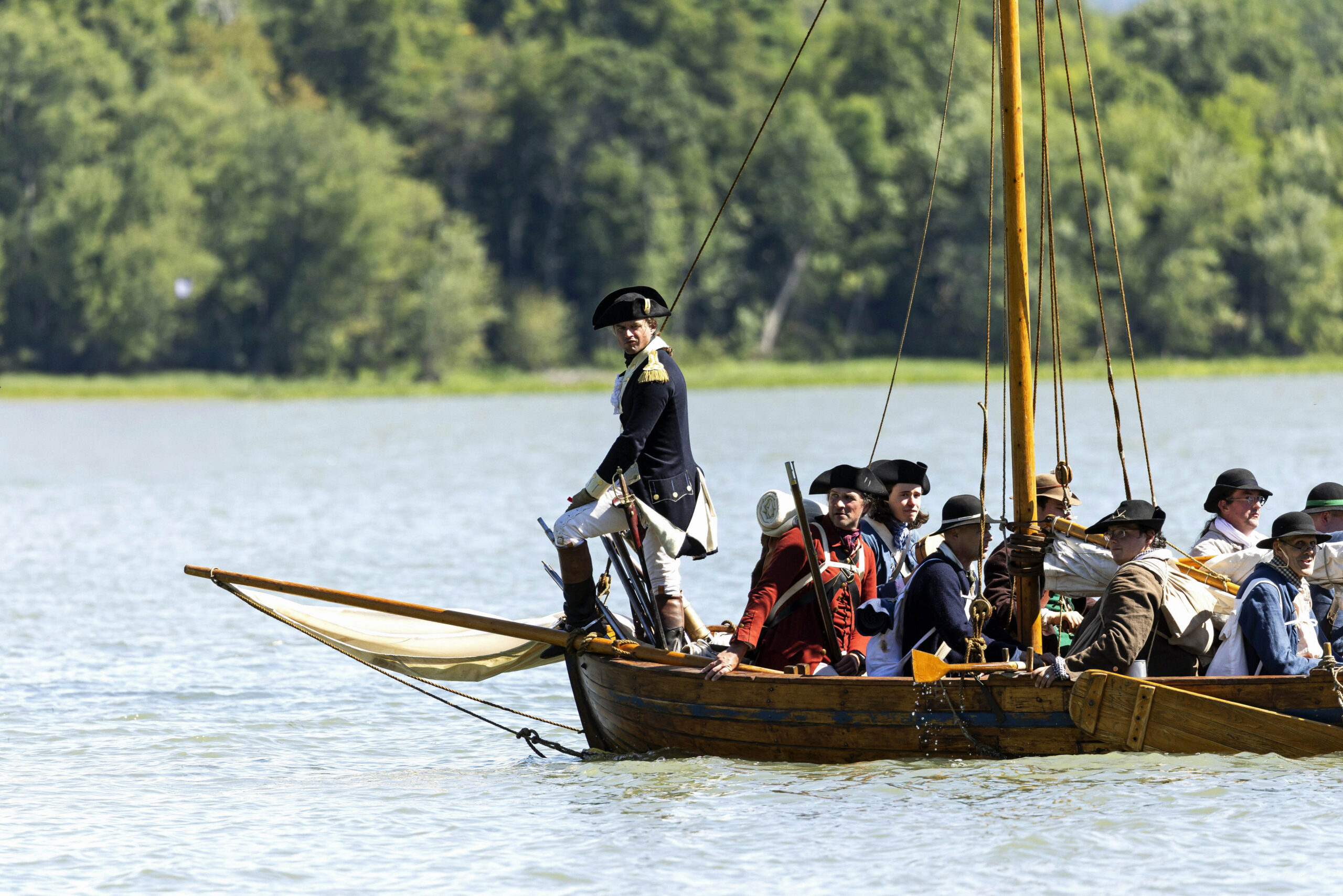
On 9–10 Oct 2026, Fort Tionderoga will host a Special 250th Conference on “Arnold’s Defeat or Ultimate Victory?: Perspectives on the 1776 Campaign,” covering the Battle of Valcour Island and surrounding events.

The venue explains:
The failure of the British to seize Ticonderoga in the fall of 1776 was a critical, vital victory for the Americans in the early years of the Revolutionary War—acknowledged even at the time. But who gets the credit for the year’s victory? Benedict Arnold and his lake fleet? Horatio Gates and the defenses of Ticonderoga and Mount Independence? Sharing new perspectives and new research from a variety of disciplines, our panelists will detail, and debate, the critical actions of the campaign to better understand the impact of October 1776.
The event starts with optional programs on Friday:
  • 11 A.M.: Tour of Liberty Hill and the Outer Defenses of Fort Ticonderoga with Stuart Lilie, Vice President of Public History.
  • 1:15 P.M.: Crewing a Bateau—Join the fort’s Maritime Trades staff, take an oar, and head out on Lake Champlain in a bateau.
  • 3 P.M.: Ticonderoga’s Treasures: The 1776 Campaign on Lake Champlain with Dr. Matthew Keagle, Curator.
These programs have limited space and additional fees ranging from $35 to $50.

Here are the conference presentations scheduled for the Saturday conference:
  • “Carleton’s Race to Ticonderoga: His Opponents and Why He Lost” by Don Hagist, editor of the Journal of the American Revolution.
  • “Crafting Independence: The Work Behind the Battle of Valcour Island” by Kenneth Cohen, Chair of the Division of Military & Society at the Smithsonian’s National Museum of American History.
  • “‘To prevent Shipping coming past’: Ticonderoga’s Amphibious Fortifications” by Stuart Lilie, Vice President of Public History at Fort Ticonderoga.
  • “The day must shortly come when these facts will be known to the World” by Eric Schnitzer, ranger and military historian at Saratoga National Historical Park.
  • “‘An Active Part in Our Favour’: The Stockbridge Mohican Indians” by Mark R. Anderson, author of Down the Warpath to the Cedars.
  • “The Archaeology of ‘Destruction Bay’ and the Events of October 13, 1776” by Christopher Sabick, executive director of the Lake Champlain Maritime Museum.
The sessions will end with a panel discussion collecting all the speakers and moderator Dr. Matthew Keagle, Curator of Fort Ticonderoga.

The fort also organized a Sunday cruise on Lake Champlain, following the maritime action, but that’s already sold out.

The presentations will be livestreamed so people can register to listen online. For more information, including cost, meals, and schedule, visit the conference webpage.

And while you’re there, also check out Fort Ti’s annual conference on the American Revolution, scheduled 26–27 September.

Friday, February 27, 2026

“Possibly not the best man to colonize a new country”

I’ve been analyzing a letter from the Thomas Gage Papers at the Clements Library, written by Jonathan Hastings, Jr., on 11 June 1775.

Hastings addressed his correspondent as “Friend Jacob.” Their families were known to each other, and Jacob probably had connections to Harvard College.

Another clue to Hastings’s correspondent is his comment “Am happy you had so safe a Passage & found your Friends well.” Jacob was obviously traveling. Hastings then offered basic information about the siege, meaning he knew Jacob was far from Massachusetts. Crown forces probably intercepted the letter at sea, not on land.

I looked at the entries in Sibley’s Harvard Graduates for Harvard students in this period named Jacob who might have gone abroad. Almost all were settled down as ministers by 1775, usually inside Massachusetts.

One remaining candidate is Jacob Welsh (1755–1822) from the class of 1774. He was the son of John Welsh (1730–1812), a Boston jeweler and member of the club that used the silver punch bowl now called the “Sons of Liberty Bowl.” This Jacob had one brother, John, Jr., born in 1757.

Sibley’s says nothing about Jacob Welsh’s whereabouts between graduating in July 1774 and entering the Continental Army as an ensign at the start of 1776. (He served until late 1778, first at Fort Ticonderoga and then in the artillery.) Did Welsh leave Massachusetts in that stretch, missing the start of the Revolutionary War because he was in Europe, the Caribbean, or the west?

Jacob Welsh did prove more peripatetic than most of his peers. In addition, Sibley’s says, he “looked for the main chance wherever it might present itself.” After the war he settled in Lunenburg briefly, serving as the town’s legislative representative. But then he sailed to England, smuggling home a “carding and spinning machine” in hopes of securing a state patent for himself. In 1791 Welsh went to Philadelphia and applied to President George Washington to help build the new national capital. He invested in lots of land, as far afield as Louisiana.

In 1807, it appears, Welsh wrote to Gen. Henry Burbeck, a fellow veteran of the Continental artillery corps. According to Heritage Auctions, he submitted “suggestions for the defense of Boston,” including “substitutions for round cannonballs.”

By 1809 Welsh faced a legal judgment of almost a thousand dollars owed to a merchant in Salem. The authorities began to seize his local property. Welsh lit out for Geauga County, Ohio, to manage land that his father had bought a decade before. A county history published in 1878 stated:
Jacob Welsh was a native of Boston, of an old family, and reared in luxury, possibly not the best man to colonize a new country. At the time he came to Ohio, he was a middle-aged man; a gentleman of the old school, of medium height, fair complexion, dressed in small-clothes, with long hose and buckles at the knee, and shoe-buckles over the instep, liberally educated, of imposing appearance and stately address, quite fitted to the aristocratic drawing-rooms of Boston, but not appearing to especial advantage in the woods, trails, and cabins of the Western Reserve. While he was a good conversationalist, he had little energy, small business capacity, and a large disposition to spend money.
After another decade, enough people had settled around Welsh’s land to form a township. He promised his neighbors to “give glass and nails for a meeting-house, and fifty acres of land, to settle a minister.” In return, the township was named after him. In April 1820 Welshfield Township had its first election, and Jacob Welsh was chosen to be a trustee.

According to that county history, after Welsh died in 1822 locals found that he had “forgot” his promised bequests. Twelve years later, the community changed its name to Troy Township. That township’s website offers a more compact version of the story while Sibley’s says Welsh did make his promised donation. The county histories from 1878 and 1880 seem best documented, so I’ve relied on them.

Jacob Welsh’s gravestone appears above, courtesy of Find-a-Grave. The central, unincorporated part of Troy Township is still called Welshfield.

Sunday, February 22, 2026

“Henry Knox’s Trek from Ticonderoga” in Acton, 26 Feb.

On Thursday, 26 February, I’ll return to the Acton 250 lecture series to speak about “Henry Knox’s Trek from Ticonderoga: Myths, Realities, and Results for Boston.”

Our event description says:
In early 1776, the young Continental Army colonel Henry Knox moved dozens of heavy cannons and mortars from Lake Champlain to the siege lines around Boston; one of the most famous stories from the Revolutionary War. And like many famous stories, it embodies a fair amount of legend and lore.

This talk sorts out what we know, what we only think we know, and what we should know about how Knox brought this “noble train of artillery” that helped to make all of Massachusetts independent.
The day on which I’ll speak will be the 250th anniversary of when Gen. George Washington informed the Massachusetts Council and the Continental Congress about the plan to fortify Dorchester Heights. On that same day the Boston official Ezekiel Price, then living as a refugee in Milton, wrote in his diary:
It is said that the heavy cannon which were left at Framingham are brought down to Cambridge;…every thing getting in readiness to make a push by our army.
For a month the fifty-eight artillery pieces which Col. Knox had managed to bring from Fort Ticonderoga had stayed in Framingham, being equipped with the necessary carriages and tools. Now they were moving forward to the siege lines. How would the Continentals use them?

This talk is scheduled to start at 7 P.M. in Room 204 of the Town Hall, 472 Main Street in Acton. It will also be shown live and recorded on Acton cable television.

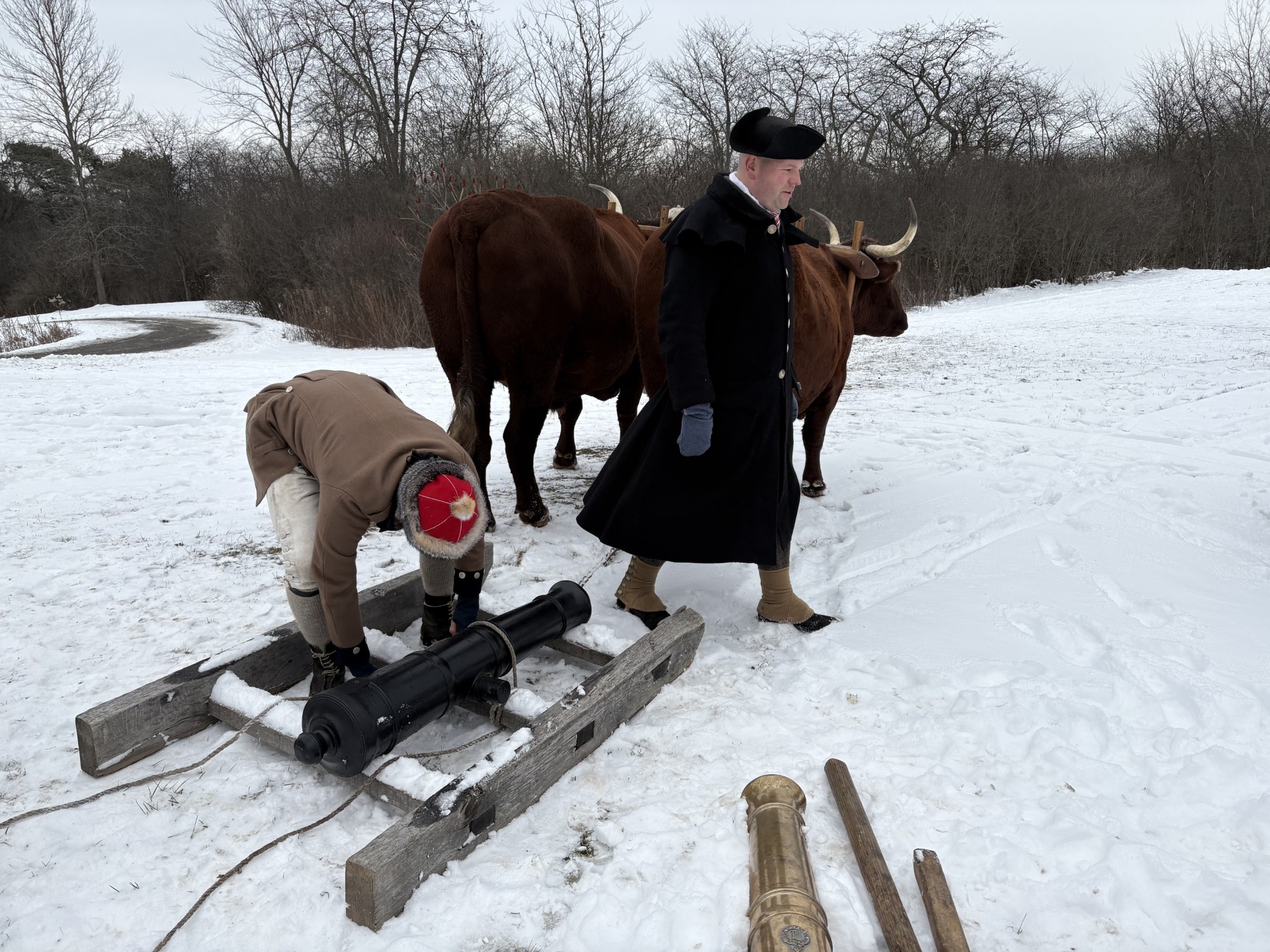
(The photo above shows a cannon carriage being completed at the Hartwell Tavern in Lincoln. I took this photo during yesterday’s Minute Man Park/Fort Ti event.)

Thursday, February 19, 2026

The “Noble Train” at Hartwell Tavern, 21 Feb.

On Saturday, 21 February, Minute Man National Historical Park and Fort Ticonderoga will present a special event titled “To Win The Siege: The Noble Train Arrives.”

The park says:

We invite you to join us…at the Hartwell Tavern to commemorate the 250th anniversary of Knox’s Noble Train of Artillery arriving and outfitting for battle. Witness history come to life as the artillerists of Washington's army haul cannon via oxen, prepare supplies, and conduct artillery firing demonstrations.

Inside Hartwell Tavern we welcome you to enjoy the warmth and learn about the ways everyday people confronted the immense difficulties of surviving a siege of their own.
The living history encampment at the Hartwell Tavern site will be open from 10 A.M. to 4:30 P.M. During that time there will be demonstrations of:
  • Moving cannon with oxen, 11 A.M. and 3 P.M.
  • Firing artillery, 2 and 4 P.M.

Friday, January 30, 2026

Knox Trail Commemorations on 31 Jan.–1 Feb.

This weekend brings another set of commemorations of Col. Henry Knox’s artillery train, including a couple of events displaced by last weekend’s snow.

Saturday and Sunday, 31 January–1 February, 10 A.M. to 4 P.M.
Knox Train of Artillery
Old Sturbridge Village

In partnership with Fort Ticonderoga, this unique event explores the Noble Train as it went through central Massachusetts. For regular museum admission, join staff from the village and Fort Ti and reenactors from Knox’s Regiment of Artillery to learn about the 300-mile journey. Examine reproduction artillery tools and ammunition. Explore the historic village and interact with costumed historians as they demonstrate daily life after the Revolution. Highlights include:
  • See oxen in action hauling cannons. 
  • Watch Knox’s Regiment of Artillery demonstrate cannon firing. 
  • Learn about American artillery of the Revolution compared to the Massachusetts Artillery of the 1830s. 
  • Try using an artillery engine, lifting reproduction cannon from Fort Ticonderoga. 
  • Handle reproduction cannon ammunition and explore their types and use. 
  • See cabinetmakers building a log sled. 
  • Learn about using draft animals and their importance to 19th-century farmers. 
  • See blacksmiths forging cannon carriage hardware. 
  • Hear stories from a recreated patriot who marched on the Knox Trail from Pittsfield to Cambridge in 1976. 
For more details, including the schedule of events on each day, see the Old Sturbridge Village webpage.

Saturday, 31 January, 1 to 4 P.M.
250th Anniversary of Henry Knox & the Noble Train of Artillery
185 Salisbury Street, Worcester

Join Revolution 250, Boston Celebrations, the AC Marriott Hotel Worcester, and citizens of the towns of Brookfield, Leicester, Spencer, Worcester, Shrewsbury, and Northborough for a commemoration of the epic 1776 adventure of Henry Knox and his “Noble Train or Artillery” trekking across Massachusetts on their way to Boston. A procession will step off from Elm Park about 1 P.M. and end at City Hall. An indoor commemorative program will begin at 2 P.M.

Sunday, 1 February, 1:30 to 3 P.M.
“Were so lucky as to get the Cannon out of the River”: Henry Knox and His Noble Train of Artillery
Westford Museum

Alexander Cain will discuss Knox’s journey and its impact on the Continental Army’s firepower and the American cause. At Fort Ticonderoga, the colonel selected 58 artillery pieces, including immense 12-, 18-, and 24-pounders. Once they were ready, some of that artillery was positioned on Dorchester Heights, forcing the British evacuation of Boston. Cain explores Knox’s mission transformed the Continental Army’s firepower while embodying the ingenuity and determination that defined the American cause. Learn more about this presentation.

Sunday, 1 Febuary, 4 to 6 P.M.
Henry Knox: Presentation and Cannon Firing
Martha Mary Chapel, Wayside Inn, Sudbury

Local writer Steven Glovsky explores the improbabilities and inconsistencies of Henry Knox’s story, leading up to his undertaking the transport of urgently needed cannon in the winter of 1775–76. The presentation will be followed by cannon fire from Crane’s Third Artillery. For more information.

For those wanting to-the-date exactitude, as of 250 years ago, the fifty-eight cannon and mortars were parked in Framingham, being equipped for use. Col. Knox had taken command of the artillery regiment on the siege lines, issuing his first regimental orders.

Thursday, January 22, 2026

Knox Trail Commemorations on 24–26 Jan.

By this date 250 years ago, Col. Henry Knox had checked in with his commander, Gen. George Washington, in Cambridge.

The artillery that Knox had moved from Fort Ticonderoga was, Gen. William Heath wrote, “ordered to be stopped at Framingham.”

Those guns needed to be mounted and equipped for use, a process that would take a few more weeks.

This weekend, the commemoration of Knox’s artillery train will continue with events in several Massachusetts towns.

Saturday, 24 January, noon to 2 P.M.
Demonstration of Knox’s Noble Train
Bidwell Park, Stockbridge

This display of costumed educators from Fort Ticonderoga, a non-firing reproduction cannon, and two friendly oxen is part of “A Day In Revolutionary Stockbridge (1775-1783),” which runs from 10 A.M. to 4 P.M. and marks several moments during the war.

The Mission House will be set up as a tavern with tea, hot chocolate, and baked goods. At the town library, Dennis Picard will discuss eighteenth-century food. Outside the library, Prado del Lana will show her Lincoln Longwool sheep. At the Bidwell Museum and Procter Gallery, museum staff will discuss cooking and other domestic tasks.

Multiple first-person historic interpretations are scheduled from 10 A.M to 1:30 P.M.:
  • Theodore Sedgwick preparing for the Elizabeth Freeman case (Bement Room)
  • Anna Bingham and Abigail Dwight discussing taverns and doing business as women (Red Lion Inn small parlor)
  • Thomas Williams, highest-ranking military officer from Stockbridge to die during the war, recounting the siege of Boston (various locales)
  • Timothy and Rhoda Edwards, storekeepers, community leaders, and relatives of Col. Aaron Burr (Mission House)
  • Members of the 2nd Massachusetts Regiment (various locales)
The afternoon will bring two larger presentations:
  • Stockbridge Committee of Safety court scenario (2 to 3 P.M. in the library lobby)
  • Gregg Duffek and JoAnn Schedler on Mohican Veterans (3 to 4 P.M. in the Bement Room)
Cards with a map and a list of programs will be available at the Stockbridge library and Red Lion Inn. For what’s currently planned, see this page.

Saturday, 24 January, 11 A.M.
Noble Train of Artillery: The Knox Expedition
Bartlett Park and Jacobs Hall Masonic Lodge, Marlborough

The Marlborough Historical Society commemorates Knox’s mission with the town’s own newly acquired cannon and J. Archer O’Reilly III portraying the general and secretary of war. Organizers ask attendees to register in advance so there will be enough refreshments for all.

Sunday, 25 January, 1:30 to 3 P.M.
“Were so lucky as to get the Cannon out of the River”: Henry Knox and His Noble Train of Artillery
Westford Museum

Alexander Cain will discuss Knox’s journey and its impact on the Continental Army’s firepower and the American cause. At Fort Ticonderoga, the colonel selected 58 artillery pieces, including immense 12-, 18-, and 24-pounders. Once they were ready, some of that artillery was positioned on Dorchester Heights, forcing the British evacuation of Boston. Cain explores Knox’s mission transformed the Continental Army’s firepower while embodying the ingenuity and determination that defined the American cause. Learn more about this presentation.

Sunday, 25 January, 4 to 6 P.M.
Henry Knox: Presentation and Cannon Firing
Martha Mary Chapel, Wayside Inn, Sudbury

Local writer Steven Glovsky explores the improbabilities and inconsistencies of Henry Knox’s story, leading up to his undertaking the transport of urgently needed cannon in the winter of 1775–76. The presentation will be followed by cannon fire from Crane’s Third Artillery.

Monday, 26 January, 7 to 8:30 P.M.
Ethan Allen, Benedict Arnold and the Gibraltar of North America
Aeronaut Brewing Company, Somerville

The Somerville Museum presents the first of two talks by Dan Breen on the subject of “Henry Knox and His Noble Train of Artillery” in the sociable space of a brew pub. This evening will cover the story of Fort Carillon/Ticonderoga, its improbable capture, and Col. Knox’s arrival six months later. The second installment, scheduled for 9 February, will complete the tale with “The Noble Train Arrives: Knox, Washington and the End of the Siege.”

Saturday, December 06, 2025

“Knox’s Mission to Lake Champlain” in Saratoga, 11 Dec.

On Thursday, 11 December, I’ll be in Saratoga, New York, to share thoughts on “Myths and Realities of Col. Henry Knox’s Mission to Lake Champlain.”

Our event description:
In November 1775, Gen. George Washington gave Henry Knox a mission to travel to New York and bring back cannons for the Continental Army. Knox was a 25-year-old bookseller with no military rank. His trek back to Cambridge has become a beloved part of the American saga. This talk digs deeper into that story, examining such questions as who first had the idea to fetch cannon from Lake Champlain, how Knox had contributed to the Patriot movement, the ways weather affected the mission, and how much those cannon changed the British army’s plans.
This talk will take place in the Saratoga National Historical Park visitor center starting at 6:30 P.M. It is free, but because seating is limited, the park asks people to make reservations by email to SARA_Reservations@nps.gov. The Friends of Saratoga Battlefield supports this and other fall lectures at the park.

The Saratoga battlefield park is within the town of Stillwater, New York. Exactly two hundred and fifty years before the date of this talk, Knox wrote in his diary, he sent a man from Fort George “to Squire Palmer of Stillwater to prepare a number of Sleds & oxen to drag the Cannon presuming that we should get there.”

According to the Gilder Lehrman Institute’s abstract of Knox’s letter to Palmer, the colonel asked for forty sleds. Since he would soon refer to “eighty Yoke of oxen,” that meant he was planning to use four beasts per sled. (The institute also says that letter was dated 12 December, so it’s possible Knox was off by a day in his journal.)

George Palmer (1719–1809) was a local bigwig, more than twice Knox’s age. According to Stillwater’s website, he had “at his own expense equipped a company of militia which marched to Crown Point and Ticonderoga, arriving just after Ethan Allen had taken the fort.”

Palmer came to Fort George on 13 December and “agreed to provide the necessary number of sleds & oxen & they to be ready by the first snow.”

COMING UP: Making other plans.

Sunday, October 12, 2025

Studying Henry Knox with Fort Ti

The Sestercentennial of Col. Henry Knox’s mission to Lake Champlain in the winter of 1775–76 is coming up, and Fort Ticonderoga is on it.

That site naturally feels some ownership of that saga since some of the artillery pieces Knox hauled to the siege of Boston came from there. Some, however, came from other fortifications along the lakes, such as Crown Point. Fort Ti is the best restored and most active of those historic locales, so it gets almost all the attention.

For more on that ordnance, I recommend this video with Fort Ti curator Matthew Keagle. He describes how Continental authorities moved artillery around in the summer and fall of 1775, preparing for Gen. Richard Montgomery’s push into Canada and also laying the ground for an idea that Benedict Arnold had floated back in the spring—trucking some of those guns toward Boston.

In addition, Fort Ticonderoga is offering a free virtual teacher institute on the topic “Noble Train!: Henry Knox and the Siege of Boston” on Saturday, 15 November, from 10 A.M. to 2 P.M.

The presentations will include:
  • “Henry Knox: Beyond the Noble Train of Artillery” by Fort Ticonderoga’s Director of Academic Programs, Rich Strum
  • “The Revolutionary Lives and Letters of Lucy and Henry Knox” by Dr. Phillip Hamilton from Christopher Newport University
  • “The Ticonderoga Soldiers Project” by Kate Tardiff, Archivist at Fort Ticonderoga
  • “The Siege of Boston and Evacuation Day” by Dr. Robert Allison from Suffolk University
  • “Real Time Revolution®: Bringing Henry Knox into the Classroom” by Tim Potts from S.U.N.Y. New Paltz and Rich Strum
Participants must register in advance, though the session is free for educators. 

Monday, June 09, 2025

“The horses lately taken from Noddle’s Island”

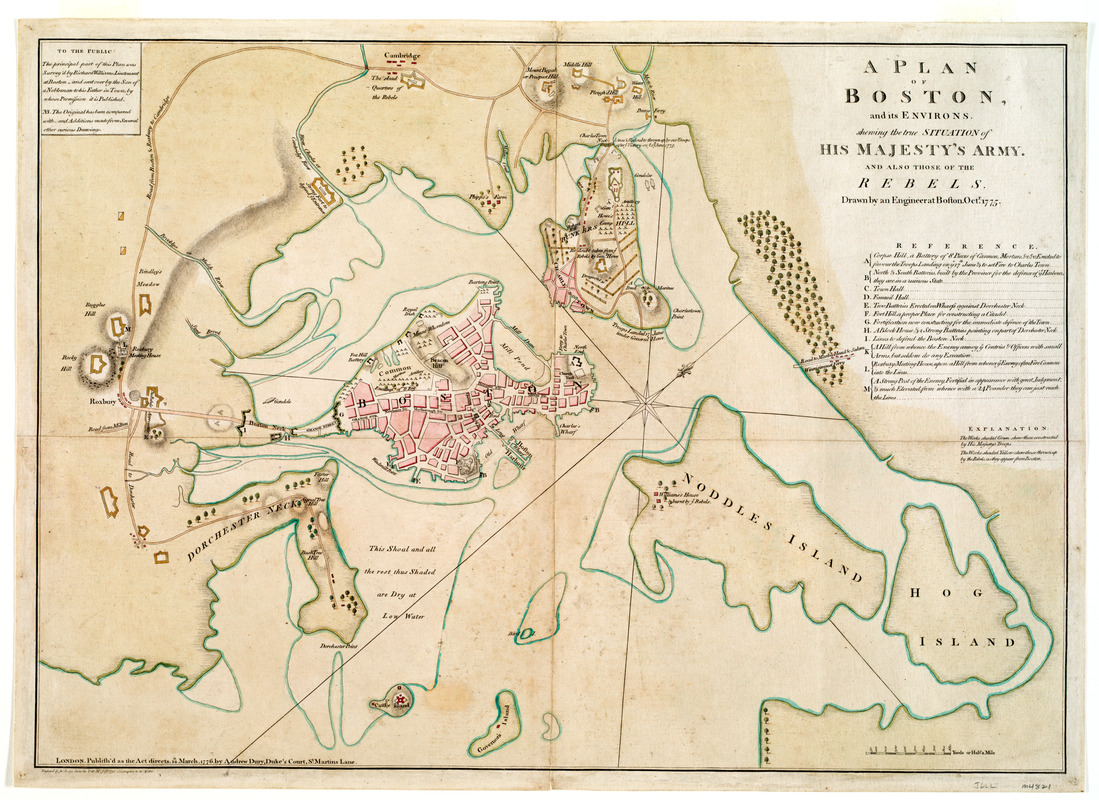
The major fighting over Noddle’s Island, later elevated with the name of the Battle of Chelsea Creek, took place on 28 May 1775.

Provincial troops returned to the island on 30 May and 10 June to remove the remaining livestock and burn the structures still standing on Henry Howell Williams’s farm.

On 2 June, the Massachusetts Provincial Congress appointed a five-man committee to consider what to do with “the horses lately taken from Noddle’s Island.”

That committee decided to treat a significant number of those animals, if not all, as belonging “to our enemies” and thus as the spoils of war. Perhaps those horses really had been the property of the British military, left to graze on the island. But we know that Williams had raised horses on that island, and on 12 June he told the congress that provincial soldiers had taken more than eight horses from his farm.

Before that petition arrived, the congress had adopted its committee’s recommendation:
the same horses be delivered to the committee of supplies, to be by them used and improved for the benefit of the colony, as they shall think fit, until further order from this or some future congress, or house of representatives.
On 13 June, one horse was grazing outside Edmund Fowle’s house in Watertown, where Provincial Congress committees met. The congress assigned “the horse in Mr. Fowle’s pasture in this town, which was taken lately from Noddle’s island,” to James Sullivan. Along with two other delegates, he was about to head west to inspect Crown Point and Fort Ticonderoga, and he needed transportation.

On 3 July, the committee of safety resolved:
Henries Vomhavi, an Indian, having represented to this committee, that he had taken two horses at Noddle’s island, one a little horse, which he is desirous of retaining as some recompense for his fatigue and risk in that action, in which, it is said he behaved with great bravery; it is the opinion of this committee, that said Indian should be gratified in his request, which will be an encouragement to others in the service…
The next day the full congress heard the “recommendation of the committee of safety relative to an Indian’s having a horse.” Yet another committee endorsed the plan to give Vomhavi the small horse “to encourage his further brave conduct and good behaviour in camp,” and the congress agreed.

The Provincial Congress thus recognized how the Stockbridge company was a valuable part of its army, and how its men might have particular expectations in regard to warfare. While Sullivan was supposed the return the first horse, the second now belonged to Vomhavi.

TOMORROW: And for Henry Howell Williams?

Tuesday, March 25, 2025

Two Revolutionary Symposia Coming Up in New York

The month of May brings two gatherings of Revolutionary War researchers in upstate New York, just a scenic drive away from Boston.

Saratoga 250 will host its fourth annual Turning Point Symposium in Schuylerville on 3 May with these speakers:
  • Dr. Phillip Hamilton – “Washington’s Artillerist: Henry Knox Commands the Continental Guns
  • Matthew Keagle – “My Dinner with Andre?: Henry Knox Arrives at Fort George on Lake George”
  • Dr. Bruce M. Venter – “Irascible Ethan Allen: He Cared Little About Ticonderoga’s Guns”
  • Michele Gabrielson – “American Calliope: The Writings of Mercy Otis Warren and Her Friendship with Henry Knox”
  • Dr. Mark Edward Lender – “The Woman at the Gun Reconsidered: Molly Pitcher’s Legendary Performance at Monmouth
Registration for that day is $89 and includes two meals.

The following day, 4 May, Hamilton will conduct a bus tour of the “Sled Tracks of Henry Knox.” That has a separate registration cost.

At the end of the month, the Fort Plain Museum convenes its annual American Revolution Conference in Johnstown. This year’s presenters include:
  • Pulitzer Prize winner Rick Atkinson – “The Fate of the Day: The War for America, Fort Ticonderoga to Charleston, 1777-1780”
  • Maj. Gen. Jason Q. Bohm, U.S.M.C. (Ret.) – “The Birth and Early Operations of the Marine Corps: 250 Years in the Making”
  • Alexander R. Cain – “We Stood Our Ground: 250th of the Battles of Lexington and Concord, April 19, 1775”
  • Abby Chandler – “Choosing Sides: North Carolina’s Regulator Rebellion and the American Revolution”
  • Gary Ecelbarger – “The Mammoth of Monmouth: George Washington’s 1778 Campaign in New Jersey”
  • Michael P. Gabriel – “Richard Montgomery and the Other Invasion of Canada
  • Shirley L. Green – “Integrating Enslaved and Free: Rhode Island’s Revolutionary Black Regiment”
  • Don N. Hagist – “Marching from Peace into War: British Soldiers in 1775 America”
  • Patrick H. Hannum – “The Virginia Campaign of 1775-76: Kemp’s Landing & Great Bridge”
  • Wayne Lenig – “The Mohawk Valley’s Committee of Safety in 1775”
  • James L. Nelson – “Bunker Hill: The First Battle of the American Revolution”
  • Eric H. Schnitzer – “Breaking Convention: How a Fussy Detail about British Uniforms Doomed Burgoyne’s Army to Captivity
  • William P. Tatum III, Ph.D., the James F. Morrison Mohawk Valley Resident Historian – “‘To Quell, Suppress, and Bring Them to Reason by Force’: Combatting the Loyalist Threat in New York during 1775”
  • Bruce M. Venter – “‘It is infinitely better to have a few good men than many indifferent ones’: Ethan Allen and the Green Mountain Boys Take Fort Ticonderoga”
This program extends from the afternoon of Friday, 30 May, to the morning of Sunday, 1 June. Registration for people not already members of the museum costs $160 and includes lunch on Saturday.

The Fort Plain conference also offers a bus tour—in this case beforehand, on Thursday, 29 May. Alex Cain will guide attendees along the Battle Road in Middlesex County, Massachusetts. So that would be a busman’s holiday for folks coming from the Boston area.

Friday, February 07, 2025

“Secrets on the Road to Concord” via Fort Ti, 9 Feb.

On Sunday, 9 February, at 2:00 P.M., I’ll deliver an online talk about “Secrets on the Road to Concord” in Fort Ticonderoga’s Author Series.

The event description says:
The British march to Concord in April 1775 set off the Revolutionary War, but what exactly were the redcoats looking for? Looking at General Thomas Gage’s papers reveals that his main goal was to destroy four brass cannon that Patriots had spirited out of Boston months before. In the early months of 1775, while the provincials worked to build an artillery force, General Gage used military spies and paid agents to locate those weapons. Those maneuvers led to a fatal clash on the road to Concord.
This event is free for Fort Ti members, $10 for others. The webpage asks people to register by 5:00 P.M. on Friday, 7 February, in order to receive the link.

Fort Ticonderoga has a long history, but many people know it as the source of artillery pieces that Col. Henry Knox brought back to the siege of Boston in 1776. (He also collected cannon from Crown Point and other sites along Lake Champlain.)

Years later, as secretary of war, Knox returned two of Boston’s four brass cannon to Massachusetts. But first he had them engraved with the names “HANCOCK” and “ADAMS,” and this story:
Sacred to Liberty.
This is one of four cannon,
which constituted the whole train
of Field Artillery,
possessed by the British colonies of
North America,
at the commencement of the war.
on the 19th of april 1775.

This cannon
and its fellow
belonging to a number of citizens of
Boston,
were used in many engagements
during the war.

The other two, the property of the
Government of Massachusetts
were taken by the enemy.
By order of the United States
in Congress assembled
May 19th, 1788.
Those engravings made those two cannon unique and easily traceable, which helped my research immensely. At the same time, the words promulgated a false picture of the provincials’ artillery force.

The Massachusetts committee of safety had far more than “four cannon” under its control in April 1775—more than three dozen, in fact. It had only four small brass (bronze) cannon, but it had a bunch of iron guns suitable as “Field Artillery.” Six of those cannon went onto Bunker Hill, and five were lost.

In addition, if we’re talking about “the British colonies of North America,” Rhode Island sent brass field-pieces to the siege under Capt. John Crane—who became one of Knox’s top artillery officers. New Hampshire had artillery from the raid on Fort William and Mary. And I’m not even bothering to count what other colonies had for their militia companies and shore fortifications.

I’m not sure why Knox told the history that way, especially since his audience included veterans and insiders like himself who knew the whole story. That telling does enhance the importance of his own mission to New York.

I also don’t get the distinction Knox made between one pair owned by “a number of citizens of Boston” and the other by “the Government of Massachusetts” since they were all considered Massachusetts militia guns and he was returning the “citizens” guns to the state.

Thursday, January 02, 2025

The Many Books of James Kirby Martin

This week brought the news that James Kirby Martin has died at the age of eighty-one.

Earning his doctorate at the University of Wisconsin, which used to have a huge American history department, Martin taught at Rutgers before moving to the University of Houston.

In 2018, more than thirty years later, he retired as the Hugh Roy and Lilli Cranz Cullen University Professor of History. He’d held visiting appointments along the way, of course.

When I started researching the actual war part of the Revolution, I knew I was going to use James Kirby Martin’s books. His biography Benedict Arnold, Revolutionary Hero: An American Warrior Reconsidered is an excellent scholarly dig into well-trodden ground, and his edition of Joseph Plumb Martin’s memoir, titled Ordinary Courage, is probably the best.

Martin and Mark Edward Lender wrote A Respectable Army: The Military Origins of the Republic, 1763-1789, as well as Drinking in America: A History, 1620-1980, and they edited Citizen Soldier: The Revolutionary War Journal of Joseph Bloomfield.

Then I found Martin was also coauthor with Joseph T. Glatthaar of Forgotten Allies: The Oneida Indians and the American Revolution. Collaboration seems to have been one of his skills.

And those are just some of his books. His oeuvre extends from Men In Rebellion: Higher Governmental Leaders and the Coming of the American Revolution to Insurrection: The American Revolution and Its Meaning, as well as edited collections. One of his retirement projects was a novel written with Robert Burris about an entirely different period of history.

At the time of his death, Martin was still working. His Revolutionary War projects included a book about Fort Ticonderoga and a study of just war theory. I hope collaborators can complete those projects.

It wasn’t till after I’d read some of James Kirby Martin’s books that I had the pleasure of meeting him at a conference produced by America’s History, L.L.C. Later I also saw him at the Fort Plain Museum conference. Because he studied the actual war part of the Revolution, Jim Martin knew that his work attracted a lot of interest outside the academy, and he was happy to chat with readers and researchers from all walks of life. We’ll miss him.

Thursday, November 14, 2024

“You will have doubtless have an account of their surprizing Ticonderoga”

One striking feature of Richard Lechmere’s 22 May 1775 letter to Henry Seymour Conway, partially transcribed here, is how well informed the Loyalist merchant was about events outside besieged Boston.

Lechmere wrote to the British politician:
you will have doubtless have an account of their surprizing Ticonderoga in which Fort, there was upwards of One hundred pieces of Cannon, and some Mortars, these they are bringing down, and a Considerable train are expected to arrive from Providence to Morrow...
Col. Ethan Allen had led the takeover of Fort Ticonderoga on 10 May, only twelve days before. Lechmere not only had that news, but also an estimate of how many artillery pieces the rebels would find there.

Lechmere understood that ordnance was to be brought to the siege lines around Boston. The Massachusetts committee of safety’s orders for Col. Benedict Arnold also stated that possibility. It wasn’t some wild brainstorm of Henry Knox later in the year.

The letter also refers to “a Considerable train…from Providence.” On 8 May the Rhode Island government had commissioned John Crane as a captain of an artillery company. However, he brought only four small cannon to the siege lines. Those weren’t “Considerable,” even by Rhode Island standards, though they did double the number of brass artillery pieces available to the Continentals. Most artillery in Rhode Island was, I suspect, being held back for privateering.

But that wasn’t all Lechmere had heard about. He had heard news from Pennsylvania:
Mr. [Benjamin] Franklyn & General [Charles] Lee are Arriv’d at Philadelphia the former chosen a Delegate to the Congress & most probably the Latter may be appointed Generalissimo of the Rebel Army. Birds of a feather flock together
Lechmere probably had only a dim awareness, if any, of George Washington from Virginia. Lee, on the other hand, was a celebrated veteran of the British army who had come through Massachusetts the previous year. Lechmere wasn’t the only contemporary to mention him as a candidate to be commander-in-chief.

Saturday, September 21, 2024

Some Recent Videos

Here are some videos you might like.

From the American Battlefield Trust, footage from the 249th-anniversary reenactment of the Battle of Lexington and Concord at Minute Man National Historical Park in April.


From Fort Ticonderoga, here’s a link scenes from the site’s reenactment of the capture of British cannons atop Mount Defiance during Col. John Brown’s raid on the area in 1777.

Finally, from History Camp, with the help of Phil Lupsiewicz, here’s a link to my talk from last month’s gathering on “Beyond the Thirteen: The American Colonies that Stayed with Britain.”

Tuesday, June 11, 2024

Call for Papers for the 2025 Fort Ticonderoga Seminar

The 2024 Fort Ticonderoga Seminar on the American Revolution will take place on 20–22 August.

I’ve already shared the full program and registration details, which you can find here.

Fort Ti has just issued a call for papers and submissions for the next American Revolution seminar, scheduled for 19–21 Sept 2025. It says:
In 2025, Fort Ticonderoga continues our multi-year commemoration of the 250th anniversary of the American Revolution. Fort Ticonderoga seeks to explore both the local and global events of the Revolutionary War, through new exhibits, programs, and our innovative REAL TIME REVOLUTION™ interpretive experience.

In 2025, the museum’s rotating exhibition, A Revolutionary Anthology, will display more material from Fort Ticonderoga’s unparalleled collection to explore the breadth of the revolutionary experience through its material culture. Begun in 2024, the contents of this exhibition change annually to reflect a series of interpretive themes focusing on aspects of the Revolutionary era, its participants, events, and repercussions.

The 2025 installation explores the theme of Subjects, Citizens, Service. The Revolutionary War was the longest armed conflict in American history until the 20th century, and war shaped all the nations involved. Existing armies expanded and new armies sprung into being, calling thousands directly into military service. People on both sides of the Atlantic made decisions when, and if, to enter the military, and many millions of others had loved ones, friends, or family members who served on all sides of the conflict in various ways. Terms of service varied based on culture and politics and evolved during the war in ways that shaped how nations and individuals understood and interacted with military service in ways that still have meaning today.

The Fort Ticonderoga Museum seeks proposals for our 21st annual Seminar on the American Revolution. We encourage papers from established scholars, graduate students, and others related to the theme Subjects, Citizens, Service, and are especially interested in papers that engage with the variety of interactions between people and military institutions across the Revolutionary world.

Sessions are 30 minutes in length followed by 10 minutes for audience questions. Fort Ticonderoga may provide speakers with partial travel reimbursement. Please submit a 300-word abstract and CV by email by September 30, 2024, to Richard M. Strum, Director of Academic Programs.

Thursday, May 30, 2024

“The Rout taken by Capts Malcom and Holmes, from Quebec”

Yesterday’s posting brought John Malcom back to Boston in August 1760 after more than eight months as a prisoner of war in French Canada.

On 24 November, the Boston Evening-Post reported that “Capt. Malcom…arrived here last week from Ireland.” That was probably John’s younger brother, Daniel Malcom, but there’s just enough time for John to have made that round trip as a way to get his sea legs back, so I can’t say for certain.

It looks more likely that John returned to trading with a voyage to a different port: Québec!

One might think he’d had enough of that region. But viewed another way, it made sense for John Malcom to start sailing to the British Empire’s new city. In his months in Canada, he probably learned the language, observed the culture, made some contacts.

That first voyage turned out to be harder than he planned. According to the 16 Feb 1761 Boston Evening-Post, Malcom’s sloop Wilmot got iced in on the St. Lawrence River, along with a score of other ships.

Malcom and John Holmes, master of the Sally out of Philadelphia, decided to return by land.

The same issue of the Evening-Post explained:
On the 8th of January they left Quebec in a Sleigh, in company with 12 other Sleighs having Goods for Montreal, and travel’d on a good Road to Trois Rivieres: From thence they went up the River on the Ice, and passing over Sorrell, arrived at Montreal in 2 Days:—

After tarrying there 2 Days they proceeded in their Sleigh to Chamble, St. John’s and Isle au Noix, which they reached in 3 Days more: During this Time the Season was moderate for Winter.—

From the Isle au Noix they travel’d 45 Mile on Lake Champlain in one Day, but the next Morning after going some Miles, finding the Ice grow weak, they left their Sleigh, and went ashore with their Horse and Baggage on the South-East Side of the Lake; it being bad Travelling in the Woods, it was 5 Days and as many Nights before they arrived at Crown Point.—

On their Way they met an Officer with Dispatches for the Governors of Montreal and Quebec; with Accounts of the Death of his late Majesty King George the Second, & of the Accession of his present Majesty King George the Third to the British Throne.—

At Crown Point they tarried one Day, and having procured another Sleigh, they proceeded to Ticonderoga, and over Lake George to Fort George: Thence proceeded to Fort Edward, but the Road not being broke they travelled with only their Horse:—

From Fort Edward they went in a Sleigh to Albany: From whence they came to Town by Land on Monday last the 9th of February.
The captains brought news that Maj. Robert Rogers was on his way to Detroit, another new British possession. That information came from Capt. Jonathan Brewer and other officers in the rangers.

When Malcom and Holmes made this trip, they were traversing a route that just a couple of years earlier had crossed the border between two rival empires. I think that was why the Fleets devoted so much of their newspaper to this account: for their readers, the possibility of traveling or shipping goods over land to Montreal and Quebec really was news.

TOMORROW: John Malcom makes his move.

Friday, March 08, 2024

Fort Ticonderoga’s 2024 Annual Seminar on the American Revolution, 20–22 Sept.

Fort Ticonderoga will host its twentieth Annual Seminar on the American Revolution on 20–22 September.

There slate of speakers are:
  • Sara C. Evenson, “Archaeology, Archive-Making, and Interpretation: Military Kitchens at Fort Ticonderoga”
  • Jason T. Sharples, “Governing the Anglo-American Subjects of Spanish Florida after 1783”
  • Robert Swanson, “‘For the Common Cause of the States’: Ideology and Canadian Participation in the American Revolution”
  • Todd W. Braisted, “‘Anxious to be of some Service to the Government’: The Trials and Tribulations of Burgoyne’s Royalist Corps after Saratoga”
  • David C. Hsiung, “Energy, Geography, and Geology in the Saratoga Campaign, 1777”
  • Kieran J. O’Keefe, “Why Did Horatio Gates Become a Revolutionary?”
  • Craig Wilson, “A Spirit of Dissention and Disobedience in the Troops: Military Mischief and Geographic Isolation at Michilimackinac”
  • John William Nelson, “Chicago’s Long War of Independence: Native Peoples and the Power of Chicago’s Portage Geography”
  • Jennifer K. Bolton, “‘Just IMPORTED from LONDON’: An Apothecary’s Place within the British Empire”
On Friday there will also be an optional bus tour from America’s History, L.L.C., “In the Footsteps of Ethan Allen, Benedict Arnold, and John Brown: The Capture of Fort Ticonderoga,” and an evening talk by Matthew Keagle, Fort Ticonderoga’s curator.

There are scholarships for teachers available. Registration is open.

Tuesday, May 09, 2023

Fort Ti American Revolution Seminar, 23–24 Sept.

Fort Ticonderoga has announced its 19th Annual Seminar on the American Revolution, to take place on the weekend of 23–24 September 2023. Unlike last year, this appears to be an in-person event only.

The seminar actually starts on the evening of Friday, 22 September, with a opening reception and Curator Matthew Keagle’s presentation of highlights from the Robert Nittolo Collection related to the War for American Independence.

The scheduled presentations on Saturday are:
  • Justin B. Clement, “The Black Servants of Major-General Gilbert du Motier, Marquis de Lafayette”
  • Isabelle J. Courtney, “In the Wake of the British Retreat: Sir Guy Carleton’s Book of Negroes and the Enslaved Population of Rhode Island”
  • Dr. Jen Janofsky and Wade P. Catts, “‘Naked and Torn by the Grapeshot’: Fort Mercer and the History, Archaeology, and Public Perceptions of a Mass Burial Space at Red Bank Battlefield Park
  • Dr. Friederike Baer, “Hessians: German Soldiers in the American Revolutionary War”
  • Dr. Armin Langer, “Alexander Zuntz in America: A Hessian Army Supplier Turned New York Jewish Community Leader and Businessman”
  • Jack Weaver, “The Customs and Temper of Americans?: Germans and the Continental Coalition, 1775–1776”
And on Sunday morning:
  • Dr. Timothy Leech, “Was There an Internal Patriot Coup in Massachusetts beginning April 20, 1775?”
  • Dr. Stephen Brumwell, “Fighting Rebellion from America to Jamaica: The Experience of Alexander Lindsay, Lord Balcarres”
  • Mark R. Anderson, “The Rise, Disgrace, and Recovery of Timothy Bedel”
  • Don N. Hagist, “New Views of Fort Ticonderoga and Burgoyne’s Campaign”
In addition, for an additional cost on Friday there’s a bus tour of “Forts, Raids, Battles and Mayhem: The Schoharie Valley, 1775-1780,” led by Jeff O’Conner and Bruce Venter of America’s History L.L.C.

Basic registration is $150, but there are discounts for being a Fort Ti member, registering early, and registering online, so that if one checks all the boxes the cost goes down to $100. Registering early enough also signs one up for box lunches on both days and the informal group dinner on Saturday evening. Register starting here (but if you’re a Fort Ti member, sign into the website first).

Thursday, April 27, 2023

“Henry Knox Symposium” in Springfield, 6 May

On Saturday, 6 May, Springfield Armory National Historic Site and the Friends of Springfield Armory will host a “Henry Knox Symposium” looking at the bookseller, the artillery officer, the secretary of war.

When the Revolutionary War began, Henry Knox was still in his early twenties and married to the daughter of Massachusetts’s royal secretary. Within a couple of years he was one of Gen. George Washington’s closest colleagues, helping to lead the Continental Army and then the new nation.

Perhaps most importantly, Knox had a quality that’s hard to nail down on paper: lots of people just thought he was fun to be around.

Here’s the lineup of speakers and topics, basically in chronological order:
  • J. L. Bell [that’s me], “Henry Knox, Loyalist?”
  • Nathan D. Wells, formerly Quincy College, “Henry Knox: A Flawed Brilliant Amateur, A Microcosm of the American Struggle for Independence”
  • Matthew Keagle, Curator, Fort Ticonderoga, “Knox Alone?”
  • William F. Sheehan, Historical Services Branch, Massachusetts Military Division, “Henry Knox’s Fortnight in Albany: The Knox Expedition Finds Its Footing”
  • Maria G. Cole, Boston National Historical Park, “Henry Knox and the Siege of Boston”
  • Richard Colton, Springfield Armory (retired), “Henry Knox and the Establishment of ‘The American Foundry’ at Springfield Arsenal, Massachusetts, 1776–1800: Assuring Independence”
  • Roger Johnson, Friends of the Springfield Armory, “Henry Knox and the Constitutional Convention: The Knox/Washington Letters”
This event will take place from 9:00 A.M. to 3:30 P.M. Registration is free, but organizers strongly recommend attendees purchase the box lunch for $12 (that’s the “ticket” on Eventbrite) or bring their own meal. There are limited eating options nearby, and the whole point of a symposium is supposed to be spending time talking with other people over food instead of driving around, right?

The “Henry Knox Symposium” will take place on the 7th floor of Scibelli Hall, Bldg 2, at Springfield Technical Community College, One Armory Square, in Springfield.

Tuesday, April 25, 2023

Scrounging for Clues about Dr. Samuel Prescott

In 1835, as quoted yesterday, Lemuel Shattuck wrote that Dr. Samuel Prescott was captured on a privateer and died as a prisoner of war in Halifax.

After Henry W. Longfellow’s 1860 poem made Paul Revere an American icon, authors look for more information about his fellow riders, including Prescott.

Or at least confirmation of what Shattuck wrote.

Anything, really.

And almost nothing came to light.

As I said earlier this month in answering a question at an online presentation, we knew little about Prescott. Since Shattuck’s writing, only two additional sources had surfaced, and they both bring a lot of questions.

One is an entry in Massachusetts Soldiers and Sailors of the Revolutionary War, a monumental state-funded listing of all the names in surviving records, extracted from the original documents and alphabetized. The pertinent entry is:
PRESCOT, “SALL.” Lists of men appearing under the heading “Hartwell Brook the first Everidge;” said Prescot appears among men in service at Ticonderoga in 1776; name preceded by “Dr.”
Was “Dr. Sall Prescot” also the alarm rider Dr. Samuel Prescott?

Searching those volumes for the phrase “Hartwell Brook the first Everidge” shows that document (or documents?) listed many other men who served in many places and times. Those listings rarely include the usual helpful information about commanding officers, dates of service, and so on.

Which Hartwell Brook does this document refer to? What does “the first Everidge” mean? Dr. Samuel Johnson’s dictionary offers this first definition of “average”: “In law, that duty or service which the tenant is to pay to the king, or other lord, by his beasts and carriages.” Was “the first Everidge” thus a record of how men had served their duty to the state of Massachusetts?

In this case, it seems likely “Dr. Sall. Prescot” was among some short-term Massachusetts troops sent out to Fort Ticonderoga to hold that position in 1776. (Not, as some writers assumed, part of Henry Knox’s mission there, which actually started in 1775.) Then he could have returned to eastern Massachusetts and enlisted on a privateer. If in fact this was Dr. Samuel Prescott.

Another tantalizing statement appears in D. Michael Ryan’s Concord and the Dawn of Revolution in 2007. Ryan wrote:
Among family papers of a Jacob Winter (Windrow) of Ashburnham, Massachusetts, was found a letter claiming that he had been a prison mate of a Dr. Prescott from Concord who apparently died in miserable conditions in 1777.
Alas, there’s no other information: who wrote this letter, when, where it is now, and what exactly it says. (A slightly different statement appeared in Ryan’s original magazine article from 2001, but no additional citation.)

Ezra S. Stearns’s 1887 history of Ashburnham lists Jacob Winter among that town’s casualties in the Revolutionary War, saying he died a prisoner at Halifax in the fall of 1777. So it’s conceivable Winter overlapped with Dr. Prescott there and wrote home about it. But other scenarios are all too conceivable as well.

Joseph Ross’s Continental Navy site offers a primary source mentioning Jacob Winter. His name appears on a list apparently compiled by Dr. Samuel Curtis as he treated fellow prisoners from the Continental Navy’s frigate Hancock. That document even gives an exact date for Jacob Winter’s demise: 29 Aug 1777.

Fortunately, following Jacob Winter’s trail led me to a new, and contemporaneous, source about Prescott.

TOMORROW: Where and when the doctor died.