J. L. BELL is a Massachusetts writer who specializes in (among other things) the start of the American Revolution in and around Boston. He is particularly interested in the experiences of children in 1765-75. He has published scholarly papers and popular articles for both children and adults. He was consultant for an episode of History Detectives, and contributed to a display at Minute Man National Historic Park.

Subscribe thru Follow.it


•••••••••••••••••


Showing posts with label Jonathan Hastings. Show all posts

Friday, February 27, 2026

“Possibly not the best man to colonize a new country”

I’ve been analyzing a letter from the Thomas Gage Papers at the Clements Library, written by Jonathan Hastings, Jr., on 11 June 1775.

Hastings addressed his correspondent as “Friend Jacob.” Their families were known to each other, and Jacob probably had connections to Harvard College.

Another clue to Hastings’s correspondent is his comment “Am happy you had so safe a Passage & found your Friends well.” Jacob was obviously traveling. Hastings then offered basic information about the siege, meaning he knew Jacob was far from Massachusetts. Crown forces probably intercepted the letter at sea, not on land.

I looked at the entries in Sibley’s Harvard Graduates for Harvard students in this period named Jacob who might have gone abroad. Almost all were settled down as ministers by 1775, usually inside Massachusetts.

One remaining candidate is Jacob Welsh (1755–1822) from the class of 1774. He was the son of John Welsh (1730–1812), a Boston jeweler and member of the club that used the silver punch bowl now called the “Sons of Liberty Bowl.” This Jacob had one brother, John, Jr., born in 1757.

Sibley’s says nothing about Jacob Welsh’s whereabouts between graduating in July 1774 and entering the Continental Army as an ensign at the start of 1776. (He served until late 1778, first at Fort Ticonderoga and then in the artillery.) Did Welsh leave Massachusetts in that stretch, missing the start of the Revolutionary War because he was in Europe, the Caribbean, or the west?

Jacob Welsh did prove more peripatetic than most of his peers. In addition, Sibley’s says, he “looked for the main chance wherever it might present itself.” After the war he settled in Lunenburg briefly, serving as the town’s legislative representative. But then he sailed to England, smuggling home a “carding and spinning machine” in hopes of securing a state patent for himself. In 1791 Welsh went to Philadelphia and applied to President George Washington to help build the new national capital. He invested in lots of land, as far afield as Louisiana.

In 1807, it appears, Welsh wrote to Gen. Henry Burbeck, a fellow veteran of the Continental artillery corps. According to Heritage Auctions, he submitted “suggestions for the defense of Boston,” including “substitutions for round cannonballs.”

By 1809 Welsh faced a legal judgment of almost a thousand dollars owed to a merchant in Salem. The authorities began to seize his local property. Welsh lit out for Geauga County, Ohio, to manage land that his father had bought a decade before. A county history published in 1878 stated:
Jacob Welsh was a native of Boston, of an old family, and reared in luxury, possibly not the best man to colonize a new country. At the time he came to Ohio, he was a middle-aged man; a gentleman of the old school, of medium height, fair complexion, dressed in small-clothes, with long hose and buckles at the knee, and shoe-buckles over the instep, liberally educated, of imposing appearance and stately address, quite fitted to the aristocratic drawing-rooms of Boston, but not appearing to especial advantage in the woods, trails, and cabins of the Western Reserve. While he was a good conversationalist, he had little energy, small business capacity, and a large disposition to spend money.
After another decade, enough people had settled around Welsh’s land to form a township. He promised his neighbors to “give glass and nails for a meeting-house, and fifty acres of land, to settle a minister.” In return, the township was named after him. In April 1820 Welshfield Township had its first election, and Jacob Welsh was chosen to be a trustee.

According to that county history, after Welsh died in 1822 locals found that he had “forgot” his promised bequests. Twelve years later, the community changed its name to Troy Township. That township’s website offers a more compact version of the story while Sibley’s says Welsh did make his promised donation. The county histories from 1878 and 1880 seem best documented, so I’ve relied on them.

Jacob Welsh’s gravestone appears above, courtesy of Find-a-Grave. The central, unincorporated part of Troy Township is still called Welshfield.

Thursday, February 26, 2026

“It was not the Butler who fell in Battle”

I just finished quoting a letter that Jonathan Hastings, Jr., of Cambridge addressed to “Friend Jacob” on 11 June 1775. The letter probably never reached that friend because it’s in the files of Gen. Thomas Gage, the British commander besieged inside Boston at the time.

Hastings started by referring to “Your Brother’s Letter of 18th. May.” Later he wrote, “John intends to write to your Brother.” The writer had a younger brother named John, born in 1754 and graduating from Harvard College in 1772. Heitman’s Historical Register of Officers of the Continental Army says John Hastings “Served in the Army in 1775” but doesn’t specify a unit until 1777. Massachusetts Soldiers and Sailors of the Revolutionary War likewise documents his service from 1777 on, rising to brevet major.

It looks like the Hastings brothers, Jacob, and Jacob’s unnamed brother were all part of the same crowd in Cambridge, probably connected with Harvard. Jonathan expected Jacob to know where “the Red House leading to Charlestown” was. Jacob and the Hastings family had financial dealings.

That link offers an explanation for Jonathan Hastings’s line “It was not the Butler who fell in Battle, but a Samuel Cooke from Danvers.” Harvard had a staff position called the butler. This man oversaw the buttery, which sold snacks and other little items to undergraduates. Unfortunately, the Harvard archives says, “there is no complete list of all of the Harvard Butlers.” It looks like the college reserved the job for master’s students to hold for two or three years before moving on.

Harvard’s class of 1772 included Samuel Cooke, Jr. (1752–1795), son of the minister in Cambridge’s Menotomy precinct. Some college documents say Cooke filled in as librarian while reading for his master’s degree. I suspect that he was the college butler in that period, thus known to his classmates and those who came after as well as to the administration.

After Samuel Cook of Danvers was widely reported as killed in the fighting at the Jason Russell House, Jonathan Hastings assured his friend Jacob that this wasn’t the fellow they knew from the buttery. The Menotomy Samuel Cooke, Jr.’s most significant action on 19 Apr 1775 was dragging his father away from the fighting.

TOMORROW: A man on the move and on the make.

Wednesday, February 25, 2026

“Boston is environed on all sides”

Having shared his version of the Battle of Lexington and Concord, as quoted over the last two days, the new Cambridge postmaster Jonathan Hastings, Jr., turned to the current situation.

His 11 June 1775 letter described the siege this way:
Boston is environed on all sides. 7000 Men at Camb. 6000 at Roxbury, exclusive of smaller Numbers wch. guard the Coasts both Eastward & Southward. [Thomas] Gage acknowleges our Superiority in Number, but says we have neither Government, Discipline nor Powder. The two first Charges are false; and I hope the other Colonies will not be backward to Supply us with the last, to let him see he is mistaken in that likewise.—

Indeed we are determined to defend ourselves in the best manner at all Events, rather than submit to Slavery.—Our Motto is the same which Caesar engraved on his Breast Plate—“Nil actum reputans si quid superesset agendum.”
That was a standard eighteenth-century British rendering of a line from Lucan’s Civil War, appearing in the Spectator and Lord Chesterfield’s letters. It translates more or less as “As long as there’s anything left to do, we don’t consider anything done.” Curiously, that Latin line appears differently in modern editions of Lucan. I can’t explain the discrepancy.
Should Massachusetts be conquered, your Halcyon Days will soon be at an end. God grant our union may be like that of a Band of Brothers, wch. can never be broken. The Light Troops in Boston we are informed have not done Duty for 4 Days. An Attack is expected soon, for every Delay on their part is a Strengthening to us.

It was not the Butler who fell in Battle, but a Samuel Cooke from Danvers the largest Man in the Colony, I suppose
A Danvers man named Samuel Cook, Jr., was indeed among the provincial casualties on 19 April, killed at the Jason Russell House. I haven’t found any other reference to his size. I’ll discuss why Hastings mentioned him tomorrow.
You must excuse my not being more particular, as John intends to write to your Brother, and my Business call me away: therefore would just acquaint you that an half a whole Sheet with your Name alone will afford a particular Pleasure to your sincere Friend & very humble Servant

Jonathan Hastings Junr.

P.S.—My Father & mother desire to be remembered to you & your Friends, & would inform you that our Papers are removed into the Country, & we know not where to look for any Receipts, therefore beg you will make yourself easy with regard to us—&c
JH
That looks like a very familiar closing for an eighteenth-century letter, begging more time to pay bills. Or maybe Hastings was replying to a correspondent who had begged more time.

Of course, there was a war on. The Hastings house had become the headquarters of both the Massachusetts committee of safety and Gen. Artemas Ward, so it’s understandable that the family had moved their records out.

TOMORROW: Clues to the crowd.

Tuesday, February 24, 2026

“As ever the two Armies met”

Yesterday we left schoolteacher Jonathan Hastings, Jr., and the rest of Col. Thomas Gardner’s Cambridge militia contingent caught near the Lexington meetinghouse on 19 Apr 1775.

Lt. Col. Francis Smith’s expedition to Concord (which Hastings called “the Detachment”) was headed back their way from the west, harried by other militia companies.

Col. Hugh Percy’s reinforcement column (“the Brigade”) was approaching from the east. Percy had more soldiers. And he had cannon.

We return to Hastings’s 11 June letter, now in the Thomas Gage Papers:
We were commanded to retreat into a thick Grove of Oaks over a Meadow, up to our Knees in water, wch. saved us. The Brigade turned their Artillery immediately upon us.—Their Cannon Balls cut down the Branches of the Trees merrily but none of us were killed.

As ever the two Armies met, it being about 3 Quarters after one OClock, they begun a precepitate Retreat for Bunkers Hill in Charlestown under the Protection of the navy. There were not above 400 that attacked them, being 1850 at once that day. Lord Peircy put the Cannon in Front, himself in the Centre, & the Marines were formed in the Rear. The Grenadiers & Marines were nobly peppered. Peircy had a Ball shot thro’ the Bosom of his shirt.

Two Officers were treppaned in the Red House leading to Charlestown. Quarters were offered them, they refused, replying their Orders were neither to give nor take any Favour. They met Death bravely.—

It is easier for you to imagine, than for me to describe the Horrid Barbarity & savage Cruelty of the British Troops in their Retreat. Houses plundered & burnt, wounded Men begging for mercy, had Bayonets struck into their Heads, & the Piece discharged, Women in Child Bed commanded into the Streets with a Gun at their Breasts, Old Men unarmed thrust thro’ their Bodies. Harmless young Fellows shot dead, such was the horrid Scene.

But on our side no such Vestiges of Cruelty were seen or exercised on any who chose to live: the wounded taken the utmost Care of, & when exchanged for our Men who were taken Prisoners, & have been treated most inhumanly: they cryed like Children to tarry among us.—
Of course, the redcoats had their own tales of atrocities by the enemy, starting with the “scalping” at Concord’s North Bridge.

I can think of one example of a woman who had recently given birth ordered out of her house (Hannah Adams of Menotomy) and one of a young teenager shot when he peeked out a window (Edward Barber of Charlestown). But Hastings’s letter rendered those examples as plural. And I’m not sure what he referred to with the bayonets.

Likewise, Hastings’s numbers of the troops engaged—400 militiamen chasing off 1,850 regulars—are skewed to make his side look good. Many groups of 400 provincials attacked the British column in turn. The Massachusetts force had a clear advantage in numbers.

Hastings wrote of emergency surgeries in “the Red House leading to Charlestown” as if his correspondent knew that location. Indeed, there appears to have been a brick house fitting that description. I haven’t been able to identify who owned or lived there, but sources do refer to its appearance and location.

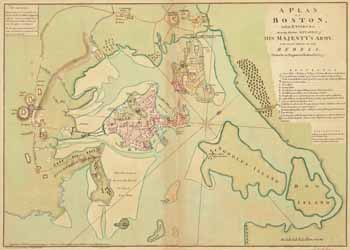
On 12 May the Massachusetts committee of safety mentioned “the red house at the head of the creek near the road from Cambridge to Charlestown.” Soon provincials built the “Red House Fort,” more commonly called Fort No. 3, to guard a nearby crossroads, as shown in the detail of Henry Pelham’s map above. Today the site is just south of Union Square in Somerville.

TOMORROW: Finishing the letter.

Monday, February 23, 2026

“At length we have had the Commencement of Hostilities begun”

Here’s an account of the start of the Revolutionary War that I don’t believe has been published before.

It’s a letter dated 11 June 1775 from Jonathan Hastings, Jr. (1751–1831), son of the steward of Harvard College, to a friend named Jacob.

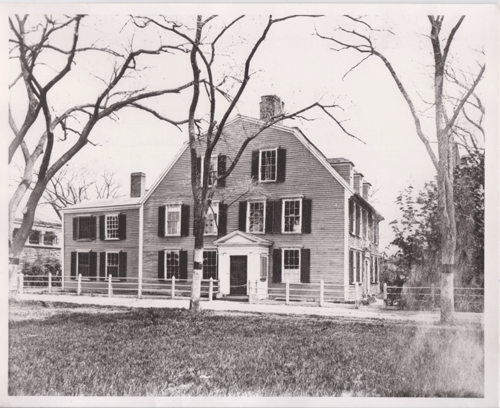
Hastings graduated from Harvard in 1768 and a few years later become one of Cambridge’s school teachers. He was living in his father’s house beside the common, shown here. On 8 June, three days before writing this letter, the young man took the job of town postmaster.

Ironically, his letter appears to have been intercepted by the Crown forces because it’s filed among Gov. Thomas Gage’s papers at the Clements Library. The library offers scans and an imperfect transcription.

Hastings wrote:
Your Brother’s Letter of 18th. May we received the 9 of June. Notwithstanding my many Avocations (our House being made Head Quarters) I cannot miss an Opportunity of sending you a Letter. Am happy you had so safe a Passage & found your Friends well.

At length we have had the Commencement of Hostilities begun by Gage’s Troops, at the Battle of Lexington, where 8 of our Men were killed, there being about 50 assembled on a Green.—

The Evening preceeding the 19 of April, I was met by 11 Officers equipt with Pistols & Cutlasses; when I got Home I acquainted several Gentlemen therewith; but they thought it was like to prove nothing but a false Alarm. They were mistaken. About 2 OClock the next Morning, we were roused out of Bed to pursue 1100 Grendadiers & Light Infantry being a Detachment from all the Regiments in Boston.—

They made their way to our Magazines at Concord, but affected nothing more than destroying 80 Barrels Flour, knocking of [sic] the Ears of 3 twenty four pounders & burning the Carriages. A Quantity of Bullets they threw into a pond, but have been got out since.

Coll. [Thomas] Gardner ordered our Regiment to parade at Watertown, not knowing but that Gage’s Reinforcement would take that Course. He was mistataken [sic], they marched thro’ Cambridge, wch. being known our Regiment took the nearest Way to meet the Detachment. Unluckily for us we had no sooner placed ourselves in an advantageous Post near Lexington Meeting House to give Battle to the Detachment, than we perceived the Brigade in the other Side of us. Our Situation was bad, being between both Armies.
Well, that seems like an exciting place to break, doesn’t it?

TOMORROW: Under fire.

Wednesday, March 19, 2025

“The procession of the old clergymen who filled our pulpit”

Back in January I quoted Dr. Oliver Wendell Holmes on one of the impressive clergymen who came to preach in his father’s pulpit in Cambridge while he was a boy.

Young Oliver was born in 1809 in the house that had belonged to the Harvard College steward Jonathan Hastings. In 1775 the Massachusetts committee of safety and Gen. Artemas Ward took it over as the first rebel headquarters of the war.

In The Poet at the Breakfast Table, Holmes described some ministers whose names I know because they wrote recollections about the Revolutionary period when they themselves were boys.

Holmes recalled the Rev. Thaddeus Mason Harris (1768–1842) of Dorchester this way: “already in decadence as I remember him, with head slanting forward and downward as if looking for a place to rest in after his learned labors.”

The Rev. David Osgood (1747–1822) has made only one appearance in Boston 1775, guarding his privilege to perform all marriages in his town. Holmes recalled him as “the most venerable David Osgood, the majestic minister of Medford, with massive front and shaggy over-shadowing eyebrows.”

Holmes’s longest profile limned the “attenuated but vivacious little Jonathan Homer of Newton, who was, to look upon, a kind of expurgated, reduced and Americanized copy of Voltaire, but very unlike him in wickedness or wit.”

Homer (1759–1843) was minister of the first congregation in Newton, where Homer Street preserves his name. Holmes went on:
The good-humored junior member of our family [Holmes himself?] always loved to make him happy by setting him chirruping about Miles Coverdale’s Version, and the Bishop’s Bible, and how he wrote to his friend Sir Isaac (Coffin) about something or other, and how Sir Isaac wrote back that he was very much pleased with the contents of his letter, and so on about Sir Isaac, ad libitum,—for the admiral was his old friend, and he was proud of him.
Homer and Coffin had been classmates at the South Latin School, one becoming an American clergyman and the other a British admiral. Coffin’s recollections of life in that school were invaluable to me in writing about its culture.
The kindly little old gentleman was a collector of Bibles, and made himself believe he thought he should publish a learned Commentary some day or other; but his friends looked for it only in the Greek Calends,—say on the 31st of April, when that should come round, if you would modernize the phrase.
In other words, that magnum opus’s day of publication would never arrive.

Monday, April 03, 2023

The Outcome of Harvard’s “Butter Rebellion”

As I wrote yesterday, the prevailing interpretation of Harvard College’s “butter rebellion” in the fall of 1766 is that the faculty quashed the protesting students.

Certainly the undergraduates did end their action on 11 October, nearly all of them signing the confession dictated by the faculty.

However, we shouldn’t lose sight of what the students had achieved already. First, the faculty inspected steward Jonathan Hastings’s supply of butter and rejected most of it. The tutors had already complained the President Edward Holyoke about the butter, but nobody made any changes. The protest got that very real problem fixed.

Second, the bulk of the student body had stood united from 24 September to 11 October—more than two weeks. They presented a strong defense for their actions, demonstrated unity and order, and commanded the attention of the college’s highest board. Despite all signing that confession, they received no punishment. There were just too many of them.

The students thus achieved a concrete benefit in exchange for a symbolic concession.

What about the individual scholars?

Asa Dunbar was the senior who started the controversy by complaining about the butter to his tutor and refusing the man’s order to sit down. His classmates feared he would be expelled. Instead, the faculty demoted him to the bottom of his class (which was still ranked by social standing rather than grades). Everyone knew that punishment could be reversed, and indeed that’s what the college administration did at the end of the school year.

Earlier I mentioned “a telling of the event that’s entirely in mock Biblical language.” That document refers to Dunbar as “Asa, the scribe,” and his private notebooks show he wrote similar pieces about other events in his life, so Harvard chronicler Clifford K. Shipton concluded he wrote the account. A person doesn’t normally compose and share long, satirical stories about events that embarrass them, so I don’t think Asa Dunbar felt much shame about his actions or punishment.

Thomas Hodgson moderated the first student meeting, which concluded with a mass threat to withdraw from college if Dunbar was expelled. He didn’t graduate with the class of 1767—but that was because in the spring he was caught with a “lewd Woman” in his room. He went home to North Carolina and died young.

Daniel Johnson, the senior who defied the faculty’s demands in long discussions on 26 September, suffered no immediate consequences from this protest at all. He was caught up in the “lewd Woman” infraction with Hodgson and demoted, but then restored to his place again.

After graduating, Dunbar was a minister in Bedford and Salem, and then an attorney in Keene, New Hampshire. One of his grandchildren was Henry David Thoreau, who created his own history of protest.

Johnson became the minister in the town of Harvard. He was a strong supporter of the Revolution, even joining his parishioners in marching toward Boston in April 1775. In the summer of 1777 he served as chaplain for a militia regiment guarding Boston harbor, apparently contracted an illness, and went home and died at the age of thirty.

As for younger Harvard students involved in the butter protest, one of the “College Committee” that signed the defense was Stephen Peabody. He learned his lessons so well that he was in the thick of an even bigger protest in 1768.

Because the administration hadn’t quashed student protest at all. 

Saturday, April 01, 2023

“The present uncomfortable state of the College”

Yesterday’s posting left the Harvard College community on 26 Sept 1766 roiled with controversy over butter.

Or rather, the undergraduates and faculty (at least the tutors, the younger ones who habitually dined with the undergraduates) were in agreement about the butter supplied by steward Jonathan Hastings. It was bad.

The controversy was over how far the students had gone to protest that situation. The faculty objected to the boys:
  • complaining in the dining hall, possibly using the word “stinketh.”
  • gathering in a large group to plan actions, or what the college laws called a “combination.”
  • walking out of the dining hall en masse before being dismissed with prayer.
But, President Edward Holyoke said, he could be forgiving if the students just confessed their guilt.

Daniel Johnson, the senior who was one of the leaders of the protest, refused to do that. And almost the whole student body showed up at the president’s house to support Johnson.

During evening prayers on 26 September, Holyoke threw all his authority behind the demand that the undergraduates sign an acknowledgment of wrongdoing written by the faculty. As Johnson had predicted, the student body stood firm against doing that.

On 4 October, Holyoke and the tutors endorsed a report on the situation written by Prof. Samuel Wigglesworth. They sent that to the Harvard Corporation, which met three days later, alongside the Harvard Board of Trustees. The latter group included Gov. Francis Bernard, Lt. Gov. Thomas Hutchinson, provincial treasurer Harrison Gray, and several impressive clergymen.

Those gentlemen considered “the present uncomfortable state of the College” and came down firmly on the side of the administration. Both bodies said the students’ action was “irregular & disorderly in an high Degree” while the faculty response was “mild & gentle.” As for the students’ threat to withdraw as a mass protest, the boards resolved:
That if any Scholar shall leave the College in persuance of the Combinations enter’d into as afforesd. or shall go out of the Town of Cambridge wtḥout Leave, before ye Fall vacation which will begin on Wednesday the fifteenth Instant, every Scholar so offending shall be adjudged to have renounc’d his Relation to the College & shall not be again rec’d. into it, wtḥ out a Vote of the Presdt. Professrs. & Tutors.
The overseers agreed to act together (in what might otherwise be called a combination) by attending the chapel service when President Holyoke read all those resolutions. Surely that show of authority would cow the student body into agreeing “to sign a full & ample Confession of their Crimes.”

Instead, the students submitted a defense of their actions more than 1,500 words long. It was signed by seven undergraduates as a “College Committee”—four seniors plus one representative from each of the other classes. The first signatory was senior Thomas Bernard, son of the governor.

Incidentally, other prominent men who had sons at Harvard at this time included Lt. Gov. Hutchinson, colony secretary Andrew Oliver, new clerk of the legislature Samuel Adams, and Prof. John Winthrop. Even steward Hastings had a son in the college, though he was staying out of the protest.

The students’ defense repeated how their protest against the butter was the only way they could be heard, expressing gratitude that the faculty had finally done something about that shared problem. As for the charge of being “disorderly in an high Degree,” they emphasized their group discipline: in visiting President Holyoke, “we formed ourselves into regular Ranks, & marched in a Body to his House,” showing “remarkable good Order.” That quasi-military behavior was similar to the 5 Nov 1765 anti-Stamp Act march in Boston, and to the rural court closings of 1774.

The Board of Overseers gathered again on 10 October, with only five days left before the fall vacation.

TOMORROW: The opposition melts.

(The photo above shows steward Jonathan Hastings’s house, which stood near Harvard Yard in an area now used by the Harvard Law School. It became the headquarters of the provincial army in April 1775.)

Friday, March 31, 2023

“They shou’d have been obliged to have eat all the Bad Butter”

Harvard College picked up the rebellious spirit of the ’60s—the 1760s.

The unrest started with a protest against rancid butter in autumn 1766. According to one account, on 23 September student Asa Dunbar told the college’s senior fellow, Belcher Hancock, “Behold our butter stinketh and we cannot eat thereof!”

That quotation appears in a telling of the event that’s entirely in mock Biblical language, so I’m not convinced those were Dunbar’s actual words.

Whatever Dunbar said, the faculty deemed his behavior “a very great Misdemeanr. by an high act of Disobedience.” They demanded an apology and demoted him to the bottom of his class.

Predictably, instead of stopping the protests, that harsh punishment caused more discontent. Most of the undergraduates had a meeting that night. Then more bad butter was served the next morning. When more boys complained, their tutors replied by saying that morning’s butter was “pretty good—much better than they had frequently been served with.”

At that point, senior Daniel Johnson (1747–1777) stood up and started walking out of the dining hall, before the faculty read the prayer of thanks and dismissed the students. A second later, as they had agreed the night before, almost all the undergraduates stood and followed him. Only three upperclassmen and a few freshmen remained in the hall. Outside in the yard, the students huzzahed and fanned out into Cambridge to find breakfast.

The students didn’t know that the faculty had appointed a committee “to examine the Condition of the Stewards Butter & condemn what they tho’t not proper to be offerd to the Scholars.” Later that day, that committee rejected one barrel and six firkins of butter and deemed four firkins suitable “for Sauce only.” The tutors agreed that the butter was bad, and indeed they’d made their own complaints to college steward Jonathan Hastings.

The bigger problem, as far as the college administration was concerned, was that the undergraduates had not “presented a Petition to those in the im̄ediate Governmt. of the College, to have this Grievance redress’d.” Instead, their large meetings and collective actions constituted “a Breach of the Law relating to Combinations.”

That evening, after prayers, the long-tenured college president, the Rev. Samuel Holyoke (shown above), announced the butter committee’s findings. But he demanded that students confess they had broken college rules while promising that he might remit their punishment.

Prof. Samuel Wigglesworth summoned Daniel Johnson, a former tutee, and asked him to cooperate to avoid being rusticated (and presumably set an example for the rest of the student body). Johnson refused to sign any acknowledgement of guilt, insisting that the students had no other way of gaining redress.

On 26 September, more faculty members met with Johnson, asking him to sign, and get his classmates to sign, an admission “That some of our late Proceedings, in Order to procure Relief from a Grievance we have lain under, were irregular & unconstitutional.”

Johnson refused to sign any confession. Furthermore, he said most of the undergraduates would leave the college before signing any confession.

This wasn’t a confession, the faculty insisted; it was merely an expression of sorrow. Johnson said he had nothing to express sorrow about. He repeated that the students’ method of protest was the only way they could be heard. That response echoed what American Whigs were saying to the Crown.

The discussion continued to go round and round about proper procedure:
He was told, that the College Law prescrib’d, First an Application to the Presdt. & Tutrs., Then to the Corporation & Overseers.

He said, if they had proceeded in that Manner, they shou’d have been obliged to have eat all the Bad Butter before They cou’d have procur’d Redress.

Upon this he was told, That upon emergent Occasions [i.e., in emergencies] The Presdt. call’d a Meeting of the Corporation im̄ediately & that if Theyhad made a proper Application, There might probably have been a Meeting of the Corporation on ye next Day.
Having made that promise, the faculty asked Johnson to read their language to his fellow students. According to William C. Lane, the senior said he’d “be afraid to enter the College Yard should it be known that he had such a paper about him, for he should either have his limbs broke or be hissed out of the Yard.”

Increasingly desperate, the faculty invited Johnson and his fellow scholars to draft their own “Declaration of Grievances and the Reason of their Conduct” and sign that. And if anyone objected to signing that, he could speak personally to the college president.

Half an hour later, President Holyoke was about to leave his house to lead evening prayers. Almost the whole student body was on his doorstep asking to explain their objections to him.

TOMORROW: The controversy churns.

Friday, October 07, 2011

Benjamin Russell’s Busy Day

I’ve previously quoted Joseph T. Buckingham’s account of how young Benjamin Russell (shown here as a dignified publisher and politician) experienced the outbreak of the Revolutionary War. Russell wrote his own account as well; it doesn’t seem to have been published, but Francis Baylies summarized and quoted from it in his eulogy for Russell in 1845.

Benjamin was born in September 1761, so he was nearly at the end of his career at Master James Carter’s writing school in April 1775. Baylies’s account:

In the morning, soon after the opening of the town school (which was kept in Scollay’s Buildings [later Scollay Square, now gone]), martial music was heard, and the Regulars were seen in motion. They were soon paraded in Long Acre [Tremont Street], and the line extended from the head of the Mall [Park Street] to the head of Queen [Court] Street, facing which was the school-house. Lord Percy, mounted on a white horse, was busy in arranging the column. . . .

When these movements were seen, Master Carter sent out one of the boys for information. It came full soon. The British had fallen on the Americans at Lexington, killed several, and sent for a reinforcement. [It seems too soon for Bostonians to have heard about the shooting at Lexington, but they did know of the departure of an earlier column of royal troops, so Percy’s mission was clear.]

Master Carter then said: “Boys, war has begun; the school is broken up.” This announcement was received with three cheers, and the boys, having gained their own freedom, sallied forth to see whether the men would gain theirs.

They followed in the rear of the column, when the British took up the line of march, and at Roxbury, through the courtesy of the Provost Marshal, (an unwonted quality in such characters,) they were permitted to pass the fortifications, and followed as far as the Colleges in Cambridge. The boys being wearied, rested on the Common, and Lord Percy’s column proceeded through West Cambridge to Lexington.

The boys remained in play on the common until near sunset, and as the firing then appeared to be near, they ascended a rising ground and saw the British army, followed by the Americans, in full retreat. They heard the whistling of the bullets, but…knew not what it meant, until they were informed by Farmer Hastings, of Cambridge [probably Jonathan Hastings, not a farmer but steward of Harvard College], that they were in danger.

They descended, regained the Cambridge road, and began to think of eating, for since breakfasting they had taken no food. On an examination, they found their pockets nearly as empty as their stomachs, but through the kindness of Mr. Hastings, they obtained a supper, and lay down to their rest in one of the colleges, and amidst the din of arms they slept the sleep which heaven in its mercy sends to the weary and the young.
According to Russell himself, the boys awoke with “nothing to regret except that, owing to the closeness of the siege, we could not inform our parents of our situation.”

TOMORROW: Do the Russells ever find young Benjamin?