J. L. BELL is a Massachusetts writer who specializes in (among other things) the start of the American Revolution in and around Boston. He is particularly interested in the experiences of children in 1765-75. He has published scholarly papers and popular articles for both children and adults. He was consultant for an episode of History Detectives, and contributed to a display at Minute Man National Historic Park.

Subscribe thru Follow.it


•••••••••••••••••


Showing posts with label school. Show all posts

Monday, September 07, 2026

“Ever afterwards, he was known as Dr. Bush”

David Bushnell’s pioneering submarine didn’t do much damage to the Royal Navy in 1776, but the next year he came back with another invention.

As Christian McBurney relates in this article, in August 1777 Bushnell oversaw an attack on H.M.S. Cerberus with explosive mines. They didn’t hit the warship, but they did destroy a schooner and kill three British sailors.

In August 1779 Bushnell became an officer in a new Continental corps of “Sappers and Miners.” Two years later, Capt. Bushnell led his specialized unit in the siege of Yorktown.

In 1787 Bushnell moved from Connecticut to France. There’s not much evidence of what he did there. Some people speculate that he crossed paths with Robert Fulton, who would design his own submarine as well as a steamboat. However, it looks to me like Fulton didn’t go to France until 1797, and by then Bushnell was back in the U.S. of A.

Not in Connecticut, however. Instead, Bushnell settled in Georgia “in 1795 or 96,” according to the Rev. George White’s Historical Collections of Georgia (1854). At first he was “a teacher in the County of Columbia.”
He was eminently distinguished for his classical and scientific learning. His chief enjoyments were found in the instruction of his classes, and an occasional visit to a few men of congenial spirit. . . .

His old fellow soldier, the Hon. Abraham Baldwin, received him into his family, under whose auspices he had no difficulty in placing himself at the head of one of the most respectable schools in Georgia. In this vocation he spent several years, and under his guidance and tuition many of our most useful citizens received valuable instructions in learning and morals.
Bushnell and Baldwin (1754–1807, shown above) had met at Yale in the early 1770s. Baldwin was barely a “fellow soldier,” though; he had been a chaplain for Connecticut troops but spent most of the war preparing for the Congregationalist pulpit. Then in 1783 he suddenly changed direction, became a lawyer, and moved to Georgia.

Within a few years Baldwin was representing the state in the Confederation Congress, the Constitutional Convention, and the first federal House of Representatives. He also served as president of the nascent University of Georgia while it was organized.

As for the “family” that Baldwin welcomed Bushnell into, both men were lifelong bachelors. It looks like Bushnell shared Baldwin’s house for several years before the younger man died suddenly in 1807 while serving in the U.S. Senate.

The Historical Collections of Georgia profile of Bushnell continued:
Late in life, he settled in Warrenton as a practitioner of physic. Then, and ever afterwards, he was known as Dr. Bush. For reasons which have never been disclosed, he had some time before he settled in Georgia, dropped the last syllable of his name; and until the publication of his last will and testament, no person in this country, except his old friend Baldwin, was apprised of the fact that his family name was Bushnell.
The name of “David Bush, Phicion [physician]” does appear on Georgia tax records for 1805, owning “Stock in trade & House adjoining Warrenton.” Three years later, he bought more real estate. In 1810 David Bush was one of the commissioners to incorporate the town of Warrenton, named for Dr. Joseph Warren.

At least one other local did know Dr. Bush’s real name, however. In 1814 George Hargraves, a notary in Warren County, wrote a letter to Thomas Jefferson enclosing a “description and drawing of a Torpedo” that might be useful to the U.S. in the current war. He said the inventor was “a man of science” mentioned in David Ramsay’s history of the Revolution, hinting: “you will readily conjecture who the Inventor is.” Bushnell must therefore have entrusted Hargraves with his secret, just as he trusted the man to be an executor of his will.

Dr. Bush probably died in early 1826. Hargraves started advertising for his debtors to come pay what they owed the estate on 15 March of that year.

On 9 August an item appeared in the Middlesex Gazette of Middletown, Connecticut, reminding readers about Bushnell and his “destructive machine.” It reported:
About 30 years since, Mr. Bushnell left his native town, and from that period no information was received respecting him, until very recently, when a gentleman arrived in Saybrook from Georgia, with the intelligence that Mr. Bushnell had lately died in that State, leaving about 9,000 dollars in cash; accumulated principally by the practice of Medicine; which Mr. B. had given to him, he being a particular friend, provided that if he should, upon inquiry, discover that Mr. B’s connexions in Saybrook, were from their character, worthy of the property, such connexions were to receive the whole amount.

The gentleman with whom it was entrusted, ascertained, on reaching Saybrook, that Mr. Bushnell’s nearest relatives were four nephews, and those all men of worth and integrity, and faithfully divided the property among them.
Those were the sons of David Bushnell’s brother Ezra. In addition to the money, this article said, he bequeathed them an “unfinished a piece of mechanism, upon which he had bestowed much pains”—but what it was, the newspaper didn’t, or couldn’t, say.

The Middlesex Gazette stated: “Mr. Bushnell…bore a very high reputation as a mechanical genius, and was esteemed an exemplary member of society, although possessing many eccentricities of character.” Again, the paper didn’t say what those eccentricities were.

Sunday, January 11, 2026

The Reality of “Dr. Cutts”

Back here, I quoted Edmund Quincy’s story of his father, little Josiah Quincy, starting to study Latin at the Phillips Academy in Andover in 1778 alongside a man more than twenty years older—a former Continental Army surgeon named Cutts.

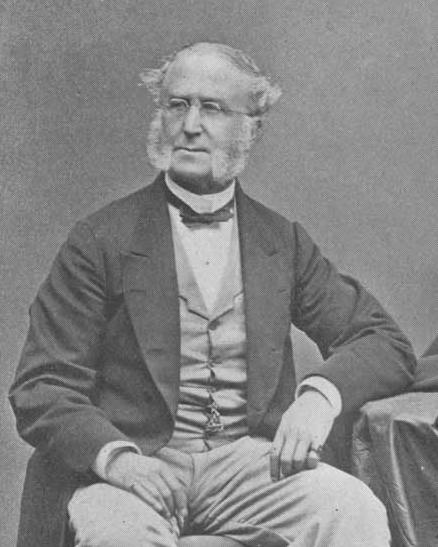
It’s significant that that story appeared in Edmund Quincy’s biography of his father not in Mayor Quincy’s own words but in those of the author (shown here), remembering what he’d heard from his father decades before.

As I stumbled across gathered evidence, it became clear that the younger Quincy amalgamated multiple figures from his father’s school days into a composite “Dr. Cutts.”

The first figure was James Anderson of Londonderry, New Hampshire, admitted to the same inaugural class at the academy alongside six-year-old Josiah even though he was twenty-nine. As beginning students, they may indeed have been seated together, as Edmund Quincy described.

Next were a pair of young brothers named Cutts, who joined the school in 1782. Josiah Quincy and Richard Cutts (1771–1845) went on to be Harvard classmates who both represented Massachusetts in the U.S. Congress in the first decades of the nineteenth century, albeit in different parties. Edmund Quincy remembered that surname.

Finally there was John Brown Cutting, whose last name was easily confused with “Cutts” and equally appropriate for a surgeon. He entered the Phillips Academy in 1781, when Josiah Quincy was nine. According to academy records, Cutting was then 23 years old. (According to the age reported when he died, Cutting was a little older, born about 1755.)

John Brown Cutting came to the school from the Continental Army medical department. But he wasn’t a surgeon or surgeon’s mate; rather, starting in 1775 he served as an assistant apothecary. In this period, apothecaries were routinely addressed as “Doctor,” and Cutting definitely used that title.

Other details of John Brown Cutting’s life also connect with what Edmund Quincy described about “Dr. Cutts.” He did spend many years after the Revolutionary War in Europe. In 1806 he did marry a gentlewoman in Virginia: Sally (Carter) Carter (1767–1814), widow of George Carter.

Later Cutting worked for the U.S. government and started spelling his middle name with a terminal E. He died in Alexandria in 1831. Laudatory obituaries appeared in national newspapers and in the Boston Palladium, which likely prompted Josiah Quincy to tell his son stories of his old schoolmate.

Mayor Quincy probably remembered John Brown Cutting vividly not just because he was an unusual older student at Andover but because the man was a world-class networker, schmoozer, and unabashed gossip. Cutting served John Adams as a fill-in secretary in 1787. He aided American sailors as a self-appointed diplomat. He corresponded with both John and Abigail Adams, Washington, Jefferson, Hamilton, Madison, Knox, Jackson, Pickering, and more. Gouverneur Morris once described him entering the room with “a World of News.”

I plan to explore stories from the life of John Brown(e) Cutting. For now, though, I simply wish to establish that Edmund Quincy’s tale of a “Dr. Cutts” turns out to have some basis in reality, but not exactly as printed.

Saturday, January 10, 2026

Seeking Josiah Quincy’s Much Older Schoolmate

The upstart rural academy in Andover that became the prestigious Phillips Andover prep school published records of exactly who attended. Of course it did.

The Biographical Catalogue of the Trustees, Teachers and Students of Phillips Academy Andover, 1778-1830 confirms one detail of the story from Edmund Quincy’s biography of his father that I quoted yesterday.

Namely, that age six, Josiah Quincy (1772–1864, shown here past age six) was indeed the youngest student at the school when it opened in 1778. There were five seven-year-olds, though.

The alumni list also confirms that one student at the academy that year was “a man nearly thirty years of age”: James Anderson of Londonderry, New Hampshire, aged twenty-nine.

It’s therefore conceivable that little Josiah and old Mr. Anderson were seated together as the most rank beginners among the Latin scholars. This history of the school makes that assumption.

Otherwise, however, James Anderson doesn’t match Edmund Quincy’s description of his father’s classmate: a former Continental Army surgeon named Cutts who went on to an overseas career and marriage to an heiress in the vicinity of Alexandria, Virginia.

A man from Londonderry named James Anderson did serve as a lieutenant in the first year of the war. He was not, however, a surgeon or surgeon’s mate. His military duties didn’t take him anywhere near Virginia. And we have no indication that that former officer decided to go back to school.

The academy said its James Anderson went on to Harvard College in 1784. Sometimes men of limited means who were fixed on clerical careers started their higher education late, and they might spend a couple of years intensively studying Latin and Greek to qualify for college.

Harvard says its James Anderson didn’t go on to earn a master’s degree, as most aspiring clergymen did. He died in 1835. I can’t find anything more about him. His common name doesn’t help. (In the 1790s, for example, George Washington was corresponding with a Scottish botanist named James Anderson while employing a different James Anderson to operate his distillery.)

When the Sibley’s Harvard Graduates series reaches the class of 1784, it might have more to say about this James Anderson. (This year’s volume covers the classes of 1775 through 1777.) His profile will surely not reveal he went by the name of “Dr. Cutts,” though.

In 1782, a couple of brothers named Cutts arrived at the academy. But they were about Josiah Quincy’s age, not army veterans and not doctors.

So does Edmund Quincy’s account of his father’s adult schoolmate Dr. Cutts have any basis in reality?

TOMORROW: Meet Dr. John Brown Cutting.

Friday, January 09, 2026

“This mature schoolfellow, Cutts by name”

Edmund Quincy wrote The Life of Josiah Quincy of Massachusetts (1867) by drawing on his father’s writings and his own memories.

The father, namesake son of the Patriot Josiah Quincy, Jr., wrote a detailed reminiscence about his years as a student at what became the Phillips Andover Academy. I quoted some here.

To that first-hand account Edmund added information he recalled hearing, such as this anecdote about one of his father’s classmates:
The Phillips Academy at Andover had just been founded [in 1778], mainly by the contributions of his grandfather [William Phillips] and other members of the Phillips family; and it was thought expedient that the founders should show their confidence in the school by sending their children and grandchildren to it. . . .

And at six years old he took his seat on the lowest form by the side of a man nearly thirty years of age, and they began their Cheever’s Accidence [the standard Latin textbook] together.

This mature schoolfellow, Cutts by name, had been a surgeon in the Continental army, who, having scrambled into as much surgical skill as was then thought sufficient for that position without any early advantages of education, was made so sensible of his deficiencies, through associating with the cultivated men he was thrown among in the army, that he resolved to supply them as soon as he had an opportunity.

Resigning his commission, he came to Andover Academy, and went regularly to school for two years, to make up in some degree his classical shortcomings. Out of school, of course, he associated on equal terms with the Preceptor and the other gentlemen of the town. He was a man of wit and talent, and the two ill-mated form-fellows were friends in later years.

Various romantic stories are told of him, of which this is one. During his military service he had won the heart of the daughter of a rich Virginia planter, who would not consent that her hand should go with it to the penniless young surgeon. His scholastic training as well as his military career being ended, Dr. Cutts, after various adventures, went to Europe, where he lived for many years, nobody knew how.

After long years a letter from the lady of his youthful love found him out, which told him that her father, and I think her husband, and whatever other obstacles had hindered the course of their true love from running smooth, were now out of the way, and that, if he retained his old affection for her, and chose to claim her early promise, she was ready to fulfil it. On this hint he hastened home, married his early love, and spent the rest of his life at ease. . . .

All this I remember my father telling us at breakfast, many years ago, on reading in the newspaper the death of his old schoolfellow, somewhere near Alexandria, at a good old age.
Now that’s a fine anecdote of a marriage being saved. Unfortunately, it’s tough to find any evidence to support it, and easy to find contradictory records.

TOMORROW: Little Josiah’s big classmate.

Sunday, December 21, 2025

The Burdicks after the Boston Massacre

In the year after the Boston Massacre, Benjamin Burdick became the proprietor of the Freemason’s Arms tavern—better known as the Green Dragon Tavern, owned by the St. Andrew’s lodge.

I imagine his wife Jane did a lot of the hosting since Benjamin remained Constable of the Town House Watch through 1774.

As the London government cracked down and war approached, the Burdicks moved out to Marblehead. Benjamin opened a “large, genteel, and commodious” inn opposite Jeremiah Lee’s mansion. Soon he was watching over auctions of captured goods and vessels. Later the inn hosted auctions of estates confiscated from absent Loyalists.

By 1786 Burdick had relocated to Danvers, at the Sign of the Flag, but that property was sold the next year. Jane was back in Boston when she died in 1791. I haven’t found a record of Benjamin’s death. (It doesn’t help that genealogists have intertwined him with a man of the same name from Westerly, Rhode Island.)

In 1778, the Boston merchant Samuel Phillips funded the opening of a new academy in Andover with Eliphalet Pearson as preceptor. The inaugural class of that school included Malcolm McNeil Burdick, born in Boston 1764—the Burdicks’ oldest son. (His first and middle name appeared with different spellings.) Malcolm was in his teens but for some reason listed as age ten in school records.

Later Malcolm M. Burdick went to sea, appearing in advertisements as master of the Minerva sailing from Baltimore to Liverpool in 1801 and of the John out of New York in 1807. By 1812 he had settled in Windham, Maine, where he advertised that someone else’s livestock had gotten onto his land.

Another of Benjamin and Jane Burdick’s sons, William, born in 1774, went into printing. In July 1795 he and Benjamin Sweetser cofounded a newspaper in Boston called the Courier. Soon that became The Courier, Boston Evening Gazette and Universal Advertiser. Burdick signed over his portion of the business to Sweetser in December, and it ceased publishing in March 1796 after a fire.

[ADDENDUM: From 1798 to 1800 William Burdick was the junior partner in publishing the Oriental Trumpet newspaper in Portland, Maine. He then returned to Boston.]

In 1809 William Burdick married Lucretia Sprague (1788–1849), daughter of Continental artillery veteran Samuel Sprague (1753–1844). According to her brother, the banker and poet Charles Sprague (1791–1895), their father was also part of the Boston Tea Party.

William Burdick reused the Boston Evening Gazette name for a new periodical in 1813. His printing office at Congress and State Streets was next to the Exchange Coffee House, and he bought stock in that jittery enterprise. The printer’s older brother Malcolm sold subscriptions up in Maine.

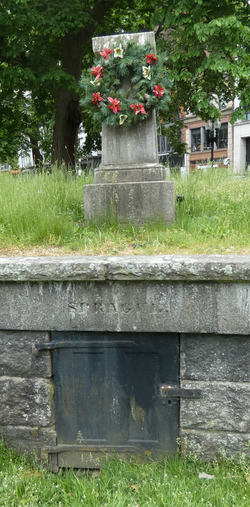
That Boston Evening Gazette evolved into the the Boston Intelligencer in August 1816. Burdick sold the business the following January and died on 30 May 1817, under Dr. John Collins Warren’s care. He was intestate but solvent, so his widow Lucretia could settle the estate and live for three more decades. She was interred in the Sprague family tomb in Boston’s Central Burying-Ground, shown above.

Thursday, November 27, 2025

A Tight Squeeze for the 1780–81 School Year

When we left the Boston selectmen yesterday, a town meeting committee had just told them that they’d heard the widow Rebecca Holbrook might have a room in her house suitable for teaching handwriting and arithmetic to 70–80 boys.

Since Widow Holbrook’s late husband and his brother had both been masters of the South Writing School, she would surely be willing to host scholars from that school while it was repaired after a fire, right?

The selectmen delegated two of their number, Gustavus Fellows and Tuthill Hubbard, to confer with Rebecca Holbrook. On 12 April they reported back “that Mr. [Samuel? Mrs.?] Holbrook was out of Town & they were of opinion that said Room would not accommodate the Schoolars of the South part of the Town, without very great expence.”

“Very great“ was the same level of expense that had prompted the selectmen to reject refitting the laboratory building as a school. With the war and wartime inflation both raging, the selectmen very much wanted to avoid spending a lot.

So the selectmen and town came to a decision about what to do with the South Writing School: nothing.

At least that’s how I interpret the record, which doesn’t include any moment of decision but shows the results. The boys appear to have been crowded into the town’s two other Writing Schools, on Queen Street and in the North End. The charred building was apparently left alone.

Normally in early July the selectmen led a big committee of officials and eminent male citizens on a visit to each of the schools. This was an end-of-school-year ritual, an occasion for the Writing School boys to show off their skills and for the Latin School boys to recite. The parents of the Latin School boys who were graduating after the full course of study (only about a third of those who had entered seven years before) joined the town notables for a dinner in Faneuil Hall.

I see no record of that ceremony in 1780—another likely sign of wartime austerity. The selectmen’s records say they visited the schools on 6 July, but there’s no list of invitees. That page left space for the count of boys in the South Latin School, North Latin School, Writing School on Queen Street, and North Writing School—but those spaces are blank. And the South Writing School wasn’t mentioned at all.

On 11 July 1781 the custom was back on, and the count was:
  • South Latin School: 91 scholars
  • North Latin School: 39
  • Queen Street Writing School: 270
  • North Writing School: 271
Back in 1773, the three Writing Schools held 674 students. Evidently Boston’s population was still low enough that all the Writing School boys could squeeze into two buildings.

But that population was growing. Inflation leveled off with the arrival of hard money from France. Bostonians wanted to go back to normal—even if that might cost a bit.

In May 1781 the town meeting authorized paying “Three hundred Pounds old Currency towards purchasing Repairs for South Writing School.” The next month, the selectmen reached an agreement with an experienced writing master to reopen that school, sixteen months after the fire.

John Vinal was moving back from Newburyport.

COMING UP: Vinal in the new republic.

Wednesday, November 26, 2025

“To accommodate the Youth of the South part of the Town with a School House”

As March 1780 began, the selectmen of Boston were looking for two new schoolmasters and one temporary schoolhouse.

Before the war, men tended to serve as schoolmasters for many years. There was more churn among the ushers, or assistant teachers—they probably had so little chance of advancement that they took jobs in other towns.

By 1780 the wartime economy was causing problems for everyone, but especially men who provided services in return for set salaries. The town provided extra grants (of paper money), but it also paid late, so the teachers were struggling.

William Bentley had taught at the North Latin School for three years, starting as usher in 1777 and becoming master in 1779. But on 23 Feb 1780 parents told the selectmen that he would leave “next Satturday.” A couple of years later Bentley became a minister in Salem, a job more to his liking. (He kept it for more than thirty-five years.)

Fortunately, the North Latin School usher, Aaron Smith, could keep the lessons going there. He and two other men immediately applied for the job of master. Furthermore, that public school was the smallest in Boston—only 39 boys attended as of July 1781.

On 8 March, Smith promised the selectmen that as master he would stay for at least twelve months, so the selectmen gave him the job. One problem solved! (Smith did serve through the end of the 1780–81 school year before leaving.)

The South Writing School presented a bigger difficulty. The night before the selectmen heard about Bentley’s departure, that schoolhouse had caught fire. Then Master Samuel Holbrook resigned, as described yesterday. I can’t be sure, but it looks like he took his usher with him.

There were probably over 150 boys attending the South Writing School—a drop from before the war, when the town routinely counted over 200, but still too many to let loose unsupervised on the town.

At the time, a schoolhouse was a large room with long desks and benches for all those boys. The master and usher needed their own desks, and the room needed a stove and a firewood supply, but that was about it. No chalkboards, bookshelves, or other special pedagogical equipment. The town just need to find a big room unoccupied during the day.

On the morning after the fire, the selectmen delegated two of their number, Nathan Frazier and Harbottle Dorr, “to apply to the Overseers of the Poor, for the use of the Workhouse Hall for Mr. Holbrooks Scholars.” At best that might have been a short-term remedy.

On 1 March, the selectmen added John Preston to that committee and sent them to ask whether the “Labretory” could become the new Writing School. After all, it was right next to the fire-damaged building.

A week later those selectmen reported:
That Colo. [William] Burbeck has the care of it at present for the use of the State—that he came in possession of it under Colo. [Thomas] Crafts

that the Land on which it is built belongs to the Town, Major [Adino] Paddock building on it first—

That it will answer for a School, tho not without a very great expense to the Town in fitting it up in a proper manner.
So the town could demand the property back, kick out the artillerists in the middle of a war, and refit the building with a lot of money—which it didn’t have. Not a practical solution. 

On 13 March, Boston embarked on its annual town meeting to elect new officials. One item on that meeting’s agenda was “what is necessary to be done to accommodate the Youth of the South part of the Town with a School House.” Eventually, on 21 March, the meeting chose a committee to tackle that problem, headed by militia colonel Josiah Waters. John Preston wasn’t reelected as a selectman, but he was put on that committee, so he couldn’t escape the problem.

The schoolhouse committee submitted their first report on 24 March. It was “Recommitted,” or rejected, and the town meeting record doesn’t even say what they suggested. On 4 April they told the meeting:
That upon enquirey they had found that the Widow Holbrook had a Room which would accomodate about Seventy or Eighty Scholars, and that they were of Opinion that if this Room could be obtained it would be best to hire it for a School
This was Rebecca Holbrook, widow of the late Abiah Holbrook and sister-in-law of Samuel Holbrook. So she knew what a writing master needed in order to teach.

The town meeting quickly approved that idea and directed the selectmen “to agree with Mrs. Holbrook for said Room as they shall Judge for the Interest of the Town.”

TOMORROW: The cheapest solution.

Tuesday, November 25, 2025

Fire in the Schoolhouse

On 24 Feb 1780, Boston’s Continental Journal reported:
Early on Tuesday morning last [i.e., 22 February], a fire broke out in the South Writing-School, (near the Laboratory) in this town, which entirely consumed the same; but by the usual activity of the inhabitants, it was happily prevented from doing further mischief.—

’Tis not yet discovered how the fire happened.
Four days later the Boston Gazette added:
Wednesday last a Person was prosecuted for disobeying the Orders of the Firewards in this Town, at the Fire of the South School the Morning preceeding, and fined £.47 for the same.—

[This Information being given, and the second Instance of the Kind, ’tis doubted whether there will be any Need of cautioning Persons in future, against disobeying the Firewards, at the Time of Fire ]
No information on who disobeyed and how.

The selectmen had other business to handle after a fire. They rewarded Richard Hunnewell’s engine company for being the first to arrive on the scene. On 1 March they announced that “those Persons who have taken Stuff from the late Fire [and] refuse to deliver up what they have taken” had one more week to return those goods before being summoned to Faneuil Hall.

In addition, on 23 February the selectmen asked Master Samuel Holbrook how this fire had broken out in his schoolhouse. He couldn’t explain, saying:
that there had been but little Fire [in the stove] that afternoon, and that he left the School the last of any one, and his Son had looked thro. the Windows about 9. OClock, having smelt fire.
I sense that the selectmen found that inadequate. It had been Master Holbrook’s responsibility to check that the schoolhouse stove was left in safe condition at the end of Monday’s lessons.

On 1 March the selectmen recorded: “Mr. Holbrook Master of the South Writing School has sent a Letter of resignation as Master on account of his health.” He was then fifty-one years old.

So now in the middle of the school year the selectmen had to find a new schoolhouse and a new schoolmaster.

TOMORROW: The search.

(John Fenno, Jr.’s 1787 advertisement for leather fire buckets above comes courtesy of Skinner. The leather-dresser’s nephew, also named John Fenno, knew the South Writing School well: he had trained there under Abiah Holbrook and then worked as Samuel Holbrook’s usher in 1773–74.)

Sunday, November 23, 2025

Back to the Scene of the Crime

A significant portion of The Road to Concord focuses on one spot in Boston: the corner of West Street and Tremont Street. There, across from the Common, stood the South Writing School and the newer gunhouse of the militia train of artillery.

(Now that space is occupied by a Suffolk University dormitory, a Sal’s Pizza, and a Blue Bikes rack.)

In September 1774, as I wrote in the book, the artillery company dissolved amid political recriminations. Soon their four small brass cannon disappeared, two from that corner.

In April 1775, war broke out, in some immediate sense because of those cannon, and all of Boston’s public schools shut down.

The following March, the British military left Boston. Patriot authorities gained control. After tending to the most dire problems, the selectmen looked ahead to a new school year, which would ordinarily begin in July.

In June the selectmen ordered the South Writing School to reopen. However, Master Samuel Holbrook was still out of town. So were a lot of families—Boston’s population was only a fraction of what it had been.

The selectmen therefore said that James Carter, the master of the Queen Street Writing School, would fill in for Master Holbrook. In effect, I think, that was consolidating the two schools for at least a few months until enough pupils returned to justify reopening both schoolhouses.

In October 1777 the town looked into repairing the South Writing School, possibly from damage during the siege. Two months later, Master Holbrook asked for an assistant, to be paid £34 plus £16 “on Accot. of the rise of Provisions”—i.e., the price of food had inflated. 

Ordinarily a schoolmaster had an adult assistant called an “usher,” paid about half of the master’s salary. Holbrook asking for an “assistant” with a smaller salary suggests that he was seeking to hire a teenager, as he had employed Andrew Cunningham in 1774–75. Perhaps he had in mind his own son Abiah, then fourteen years old.

We can see the effects of inflation in how the town meeting voted to pay Holbrook over the next few years:
  • March 1778: £100 salary plus £100 “on Account of the present high Price of Provisions &c.” in the next six months.
  • November 1778: £140 more to cover the remaining six months of the year.
  • March 1779: a town committee recommended £600 for Holbrook himself plus £100 for his usher and £30 house rent. The meeting approved even more: £640 for the master, £300 for the usher.
  • November 1779: and another supplemental grant, £1,500 for September through March.
Master Holbrook’s usher arriving in October 1778 was named Abiah Holbrook. The master’s son would still have been too young to command that title and salary. But Holbrook also had a nephew named Abiah Holbrook. A man of that name advertised a school in Portsmouth, New Hampshire, from 1775 to 1777. So perhaps that man moved to Boston to work for his uncle, taking the place of his young cousin. Running writing schools was a family business; Master Holbrook had started out working as usher under his own brother—named, of course, Abiah.

Thus, as the 1770s ended, the South Writing School was back in operation under Master Samuel Holbrook, just as it had been at the start of the decade. But it was costing a lot more to operate, at least in inflated wartime currency.

TOMORROW: Changes at the gunhouse.

Thursday, October 23, 2025

The “Doctrine of Projectiles” and Other Doctrines

On 10 Aug 1775, the Newburyport schoolmaster John Vinal wrote out the text of a new advertisement to appear in the next day’s Essex Journal and succeeding issues.

That was nearly four months into the war, and Vinal’s ad reflected that situation:
AT a Time when our Enemies are endeavouring our Ruin it is highly proper to qualify ourselves in the best Manner we can to defend our injured Country:

And as the Doctrine of Projectiles, or Art of GUNNERY is of such Importance that no Person should undertake the Direction of any Piece of Ordnance without a competent Knowledge of it, the Want of which has proved fatal to many:

The Subscriber therefore proposes to instruct those who may incline to attend four Afternoons in a Week, from five to seven o’Clock, or from eleven to one A.M. [sic] in the above Art at a very moderate Price

JOHN VINAL.

N.B. The Subscriber received his Knowledge of the above Art from a Gentleman who was an Engineer in the British Army the whole of the last War.

Newbury Port, August 10th, 1775.
In April and October 1776 Vinal went back to advertising private lessons for the “youth of both sexes” in the standard school subjects, not gunnery.

Vinal was also a warden of St. Paul’s, the town’s Anglican church, founded in 1711. On 16 July 1776 he, fellow warden Joseph Cutler, and eight vestrymen gave this letter to their minister, the Rev. Edward Bass (1726–1803):
Rev’d Sir;—

The Representatives of the United Colonies in America, having in Congress declared s’d colonies free and Independent States, and disavowed all Allegiance to the King of Britain and the service of the Church to which we belong, prescribing certain prayers, &c., to be used for s’d King, his Family & Government, We find ourselves under the necessity of requesting you to omit in your use of the Service all Prayers, Collects, or Suffrages which relate to the King, Royal Family, or Government of Great Britain, both as we would avoid great Inconsistency and as we value the welfare of the church, being assured that without such omission the Existence thereof would immediately cease.
Most of Boston’s Anglican clergymen had left with the British military, and others in Massachusetts were keeping a low profile. Bass had to worry about local opinion, his congregation, his sacred oaths—and his salary.

TOMORROW: A special collection.

Wednesday, October 22, 2025

“To open his EVENING-SCHOOL, as usual”

Isaiah Thomas and Henry-Walter Tinges launched the Essex Journal newspaper in Newburyport in 1773.

Among its advertisers was town schoolmaster John Vinal, offering private lessons in a broad range of subjects. His notice on 5 Oct 1774 said:

JOHN VINAL,
INTENDS to open his EVENING-SCHOOL, as usual at the NORTH-SCHOOL the 10th Instant, for Writing and the several practical Branches of the Mathematics, enumerated in a former Advertisement of his.
Alas, I haven’t found that “former Advertisement.” 

On 15 Mar 1775 Vinal was more expansive:
JOHN VINAL,
ACQUAINTS his Friends that he intends to begin his private School for Youth of both Sexes, on Monday the third of April next at 11 o’Clock A.M. in the room he improved the last Summer, nearly opposite Mr. Davenport’s Tavern, and from 5 to 7 o’Clock, P.M. at the Town School House for those who can best attend in the Afternoon.

N.B. The Said VINAL has a very genteel BOWFAT, with a Glass Door to dispose of, very cheap, for almost any Pay that will suit the Purchaser.
A what now?

A week later the same ad ran again except the item offered for sale was “a very genteel BUFFET, (commonly pronounced Bowfat,) with a Glass Door.”

Ah.

Dr. Samuel Johnson’s dictionary defined a buffet this way:
Buffet. n.s.  [buffette, Fr.] A kind of cupboard; or set of shelves, where plate is set out to shew, in a room of entertainment.
The rich buffet well-colour’d serpents grace,
And gaping Tritons spew to wash your face.
Pope.
”Mr. Davenport’s Tavern” referred to the tavern started by William Davenport and inherited by his sons Anthony and Moses in 1773. Its sign showed Gen. James Wolfe, so it was also called the Wolfe Tavern.

Vinal’s eagerness to sell that genteel piece of furniture suggests a need for quick cash. Of course, he often seems to have wanted extra cash. But the spring of 1775 wasn’t the best time for selling a luxury item, especially one you didn’t know how to spell.

TOMORROW: War!

Tuesday, October 21, 2025

“A Sett of Globes (which came over by Mistake)”?

In eighteenth-century New England, booksellers sold more than books, pamphlets, and magazines. 

As the business letters of Thomas Hancock and Henry Knox show, they also purveyed medicines, tea, “Instruments,” quills, stationery, snuff, and other genteel goods.

In the spring or summer of 1773, Knox received a set of globes from one of his London suppliers. This set probably consisted of a terrestrial globe—the spherical representation of Earth that we’re used to—and a celestial globe showing the constellations and other stars.

We have a bunch of Knox’s incoming correspondence, published by the Massachusetts Historical Society in 1928, but I don’t see a clue about who sent those globes.

Some London merchants, such as the publisher Thomas Longman, just shipped Knox the latest magazines and the books reviewed in those magazines without waiting for an order. So it’s possible one of the young bookseller’s suppliers put those globes on a ship expecting he would find a market for them.

Fortunately, a customer appeared. On 6 August, the schoolmaster John Vinal wrote to Knox from Newburyport:
Mr. [Tristram?] Dalton informed me that you had a Sett of Globes (which came over by Mistake) that you would dispose of at the Sterling Cost and Charges. I was just going to write to London for such a Sett; but if you have not disposed of yours, and the price is agreeable, and they are the right sort I will purchase them. I should be glad of a Line immediately; you may inclose one to me directed to my Friend Mr. Wm. Miller Collector.

I should be glad to know the following particulars, vizt. Whither they are Senex’s Globes—who they are made by, if they have a Magnetic Needle and Card, if they have a Nonius Scale and Analemma, Quadrant of Altitude, etc. and what Cases they are in. . . .

Please to express the Price either in Sterling or L[awful] M[one]y.
As published, this letter told Knox to send mail through “Wm. Millen,” but the deputy collector of customs in Newburyport was another of Knox’s customers, William Miller. Since Vinal was officially a handwriting master, you’d think he’d render his friend’s name unmistakably.

As a teacher of adult classes in navigation, among other subjects, Vinal’s wanted to know this product’s features. “Senex’s Globes” meant those modeled on the work of cartographer John Senex (1678–1740). A “Nonius Scale” was the invention of the Portuguese scientist Pedro Nuñez (1492–1577). An “Analemma” is the figure-8 pattern traced by the Sun when viewed from the same spot day after day over a full year.

As for the price, that probably depended on how large these globes were. Sets ranged from small enough to fit in a pocket to large enough to count as furniture, and their price tags were proportional.

Did Knox and Vinal close the deal? We don’t know because we don’t have both sides of the bookseller’s correspondence. But on 27 June the Rev. John Murray had written to Knox from Boothbay in Maine asking for “one pair of 18 inch Globes.” (Murray also complained about how Knox had supplied “Copies of the Classical authors,” nonetheless ordered some other books, and asked how to reach Knox’s childhood friend the Rev. David McClure.) So if those globes from London were 18 inches across, they were probably on their way past Newburyport to Boothbay.

TOMORROW: Mr. Vinal’s notices.

Monday, October 20, 2025

A New Schoolmaster for a New Town

In January 1764 the Massachusetts General Court passed a law allowing part of the town of Newbury to split off as the new town of Newburyport.

The new town held its first meeting on 8 February, choosing a clerk, selectmen, and other officials. The inhabitants also chose a committee to determine what schoolhouses the children needed. They decided to keep paying the masters of the Newbury grammar and writing schools for now.

In March that committee recommended:
that at least three large schools should be provided and maintained in sd. Town, viz: one Grammar school not far from the Revd. Mr. [John] Lowel’s meeting house, and two reading, writing & arithmetick schools, one of them adjoining to Queen street, Ordua Lane, or Bartlet’s Lane, preferring the latter, and the other adjoining or near Cross street or Elbow Lane.
That summer, the town bought some land on what is now Winter Street, beside Route 1, and started building a schoolhouse.

To oversee that school the selectmen hired John Vinal, usher of Boston’s South Writing-School. They offered him £80 per year, significantly more than he had been earning in Boston though less than what the bigger town’s schoolmasters earned. In addition, each pupil was to bring “two pistareens” to pay for firewood used during the year.

The selectmen announced: “Boys that can read in a Psalter will be received and carefully taught Reading, Writing & Arithmetick.” The school would meet 8 A.M. to noon and 1 to 4 P.M.

Vinal’s school opened on Monday, 5 November, with the Rev. Mr. Lowell and the selectmen present. Given that Newbury’s youth usually celebrated Pope Night with a big procession and bonfire, I imagine that student body was rather antsy that day.

John Vinal continued to look for ways to supplement his salary. The town needed to survey the “common and undivided land” near the Frog Pond, and in 1771 Vinal produced the map shown above, shared by History Newburyport. Around the pond it shows a burying-ground, a potash house, a ropewalk, a powderhouse, and a windmill.

TOMORROW: Vinal’s lessons.

Sunday, October 19, 2025

John Vinal “continues to keep a private School”

Back in September I quoted John Adams’s account from 17 Apr 1764 of meeting a man who had taken the smallpox inoculation before him:
My Unkle [Dr. Zabdiel Boylston?] brought up one Vinal who has just recoverd of it in the natural Way to see Us, and show Us. His face is torn all to Pieces, and is as rugged as Braintree Commons.
That couldn’t have been very encouraging.

That man was John Vinal (1736–1823), the usher, or assistant teacher, at Boston’s South Writing School under Abiah Holbrook.

The Boston Athenaeum has a painting of Vinal, apparently copied from an earlier canvas around 1900. I’ll have to look for smallpox scars the next time I see it.

On 15 May Vinal petitioned the Boston town meeting “that an allowance may be made him, in consideration of the Straits and Difficultys he has been reduced to by means of the Small Pox.” After some debate the town voted to pay Vinal £15 on top of his usual salary of £50.

That was just one way Vinal augmented his town salary. Like other town teachers, he offered private lessons. As early as 1756 he advertised an evening school for adults. This 15 Sept 1760 Boston Evening-Post notice lays out his subjects:
John Vinal
Hereby gives Notice, that he intends an Evening-School will be opened as usual, at the South Writing School, the 29th of this Instant, where Persons may be taught Writing, Arithmetic, Algebra, &c. also Book-keeping, in so plain a Method, that any Person of a common Capacity, may in a short Time, at a small Expence, be able to keep his own Accompts with Exactness.
In the 3 Oct 1763 Boston Post-Boy Vinal promised to cover “Reading, Writing, Arithmetic vulgar and decimal, Navigation and several Branches of the Mathematics; also the Italian Manner of Bookkeeping.”

That still left some free hours of the day. The boys at the town schools went home for their midday dinners, and then again at the end of the day. Master Holbrook probably had his own private pupils come into the South Writing School at that time, so where did that leave Vinal?

He hustled over to a space that yet another teacher, Richard Pateshall, used for private lessons in “the Rudiments of the Latin Tongue” along with English reading, spelling, and arithmetic. While Pateshall was out, Vinal went to work teaching children, as shown in this 30 Apr 1764 Boston Post-Boy ad:
John Vinal,
Hereby gives Notice, that he continues to keep a private School, opposite William Vassall’s Esq; where Youth may be instructed in Reading, Writing and Arithmetic in the best Manner, from XI to XII o’Clock, A.M. and from V to VI o’Clock, P.M. Misses may also be taught Spelling. Those who send their Children, may depend upon their being faithfully instructed.
That ad appeared less than two weeks after Adams saw Vinal’s smallpox-ravaged face. A lesson the youth would never forget.

TOMORROW: Moving up.

Wednesday, October 08, 2025

Teachers’ Tour of the Siege of Boston, 4 Nov.

The Massachusetts Council for the Social Studies is offering a Sestercentennial tour of sites in the siege of Boston for teachers. I’ll be one of the folks riding along to talk about that history.

This tour will happen on Tuesday, 4 November, from 7:30 A.M. (when the bus is scheduled to pick up the first batch of participants) to about 4:30 P.M. That’s Election Day, when many schools close for staff training because the buildings are being used for voting.

Through site tours and rides, we aim to provide an overview of the siege from April 1775 to March 1776 that includes the perspectives of rank and file soldiers, free and enslaved Africans, Loyalists, and women.

After gathering at Castle Island, we plan to visit:
Three of those sites are part of the National Park Service, so access will be limited if the federal government is still shut down at that time. The grounds will probably be open but the buildings closed. We’re developing contingency plans to cover those sites or perhaps substitute others.

Registration cost is $30 for an individual, $100 for a team of four educators. Lunch will be provided. See this page for more information. Use this form to register.

Saturday, September 27, 2025

Thomas Williston, Doorkeeper

Yesterday I introduced Thomas Williston, sexton of Boston’s Old Brick (First) Meeting-House starting in the 1740s.

Williston also took on jobs for the town of Boston. Some of those were tied to his work as a church sexton, such as winding his meetinghouse’s clock and burying the dead. Others were civic tasks, as in managing the weekly traffic of farm wagons at the marketplace.

In June 1754 the town government offered another job: “Mr. Thomas Williston is appointed to attend the Select men in the room of Mr. John Savel who by reason of Age and Infirmities cannot attend the business.” Williston was also given “the care and Oversight of all the Watches in the Town.” And he was still the sexton at the Old Brick.

Thomas Williston’s official title was doorkeeper at Faneuil Hall. As such, he continued to patrol the marketplace, arranged to illuminate the building after the capture of Montreal in 1760, and the next year took down “the Potts & other Iron Ware” from the walls and hung “the Town Ladders” there instead.

But being doorkeeper also involved a lot of running around Boston. In 1758 the selectmen empowered Williston to enforce the town’s newly revised by-laws, including speed limits on vehicles. They sent him out on the water to warn ship captains against unloading “French neutrals” or possible smallpox patients. Along with Deacon William Larrabee, Williston was assigned to warn newcomers out of town—though he did that for only a few months, Robert Love’s Warnings reports. At different times Williston summoned new officeholders, tax collectors, and heads of fire companies to meet with the selectmen at Faneuil Hall.

For the annual inspection of the schools, Williston contacted the many respected gentlemen chosen for that committee. He also visited the two grammar-school masters to obtain the names of the graduating scholars so the selectmen could invite their parents to a dinner at Faneuil Hall. (Students leaving the three writing schools didn’t get a party.)

Some of Williston’s assignments overlapped with his roles as gravedigger, bellringer, and watchman. For example, in March 1761 he informed tomb owners they were responsible for paying to repair a wall of the burying ground. But he could also be told to deliver the seals to the newly elected sealers of leather, inspect leaning chimneys, and warn property owners about dangerous drains.

Williston’s busiest months on record were during the smallpox epidemic of 1764. He appears over and over in the selectmen’s minutes: tracking down reported patients, moving some to the hospital at New Boston in the town sedan chair, installing flags and guards (including his brother Ichabod) outside quarantined homes, hiring and dismissing nurses, smoking homes and clothing, and burying the dead under special arrangements to contain the disease. Thomas, his brother John, his other brother Ichabod, and Ichabod’s wife Elizabeth all got extra pay during those months.

After army regiments arrived in Boston in October 1768, Thomas Williston had the task of telling British officers that the selectmen wanted to speak to them—a potentially volatile clash of authorities. In November he summoned two officers accused of having “insulted & interrupted” the Dock Watch; those officers apologized for being drunk. In July 1770 “Mr. Williston, Door-keeper to the Select-men,” carried a letter from a town committee to Capt. Thomas Preston in the town jail. In September, some sick soldiers came back from Castle Island to enter “the Hospital in the Common”; the selectmen had Williston summon regimental surgeon Charles Hall for consultation.

In sum, Thomas Williston was well known in Boston, the liaison between the town’s highest elected officials and citizens of all sorts. He was based at Faneuil Hall and the Old Brick Meeting-House, but he could show up anywhere in the course of his duties.

On 18 Feb 1773, Isaiah Thomas’s Massachusetts Spy reported the death of Thomas Williston, “sexton of the Old-Brick, and doorkeeper of Faneuil hall.” He was buried in the Granary Burying Ground with his wife Sarah, who had died on Christmas Day in 1771.

Four days later the selectmen met in Faneuil Hall. Those men, “taking into consideration who was a proper Person to fill up the place of Mr. Thomas Williston, who for a number of years had attended them on the Towns Business; Agreed to give the Offer of the office to Mr. William Barrett Sexton of Dr. [Samuel] Coopers Church” on Brattle Street.

Williston’s successor as sexton of the First Meeting-house and, as of 31 March, as a town-approved gravedigger was Josiah Carter. As I discussed here, he had also been a town watchman. However, Carter lasted in that sexton’s job less than two years after Williston’s demise.

Friday, April 04, 2025

“The ideals of American life still in force today”

The Museum of Fine Arts just shared an essay by Ethan Lasser, the the John Moors Cabot Chair for the Art of the Americas, about the silver punch bowl made by Paul Revere and engraved with several merchants’ names.

Lasser wrote:
What does the year 1949, in the aftermath of World War II, when America was entering a decade of prosperity, have to do with a silver punch bowl from the 18th century? This is the year Revere’s piece entered MFA’s collection. It’s a remarkable story: the bowl descended through the family of William Mackay, one of the Sons of Liberty it celebrates. In 1902 ownership shifted, and the bowl fell into the hands of Marian Lincoln Perry, great-great-granddaughter of John Marston, another one of the Sons of Liberty.

After Mrs. Perry’s death in 1935, the enterprising New York art dealer Israel Sack set out to place the bowl in an institution. He received offers from the Metropolitan Museum of Art, but felt strongly that “the bowl should belong to the city that gave it birth” and offered it to the MFA. “It was made in Boston for men of Boston and by a famous silversmith of Boston,” he said. “It belongs in Boston.”

Edwin J. Hipkiss, then the MFA’s curator of Decorative Arts, was quick to act. He realized the bowl spoke of the past—but also of his own time, when the United States had endured a more recent fight for freedom in World War II. In Hipkiss’s words, the piece “expresses the hopes and achievements of dauntless Americans of 180 years ago and commemorates the ideals of American life still in force today.”

Prominent Bostonians rallied to help Hipkiss raise funds to acquire the bowl for the Museum. “Acting independently for the Museum of Fine Arts,” they initiated the Revere Sons of Liberty Bowl Fund. Their rousing, all-caps fundraising letter is still in our curatorial files: “THE BOWL IS A SYMBOL OF OUR FREEDOM because it commemorates the very first unified stand for liberty in the country.” . . .

Leafing through our files, I came upon the Boston Public School Superintendent’s Circular #103, dated November 30, 1948. “To the principals of Schools and districts,” the letter begins:
The School committee invites the school children of Boston to make a voluntary contribution … to keep permanently in our city this priceless relic made in Boston by a famous silversmith of Boston in tribute to sterling patriots of Boston.
When was collection day? December 7, 1948, the seventh anniversary of Pearl Harbor—a day of infamy brightened by this symbol of freedom. Thousands of school children participated in the effort and, a few weeks later, in the opening weeks of 1949, the Sons of Liberty Bowl was acquired and made its debut at the Museum.
It struck me how this telling looks back repeatedly to World War II but doesn’t mention the Cold War with the Soviet Union that the U.S. of A. had just entered. Americans were eager to point to the values of liberty, faith, and the like, in contrast to oppressive, godless Communism. Recruiting schoolchildren to give money for “A SYMBOL OF OUR FREEDOM” and “in tribute to sterling patriots” fits right into that moment.

Sunday, March 23, 2025

“Secrets on the Road to Concord” in Scituate, 15 May

On Saturday I attended the “Spies Among Us” event in Concord, described back here.

Top highlights:
  • Seeing the Wright Tavern sprucing up as it prepares to reopen to the public next month, including the Pursuit of History weekend on “The Outbreak of War” that I’m helping to organize there (a couple of seats may still be available).
  • Enjoying all the special touches the National Park Service staff and volunteers brought to this event, including a full-size replica of Ens. Henry DeBerniere’s map from the Library of Congress and a Concord role-playing game.
  • Hearing details about what brought the British troops to Concord and remembering back during the 2000 commemoration when many of those were still little beads I was trying to string together into a narrative that became The Road to Concord.
So I’m eager to keep spreading the word at my upcoming speaking engagement for the Scituate Historical Society. [This event was originally scheduled for March and postponed.]

Thursday, 15 May, 7–8:30 P.M.
Secrets on the Road to Concord
G.A.R. Hall, 353 Country Way, Scituate

Early in the spring of 1775, British army spies located four brass cannon belonging to Boston’s colonial militia that had gone missing months before. British general Thomas Gage devised plans to regain the cannon. Massachusetts Patriots prepared to thwart the general’s hopes. Each side wanted control of those weapons, but each also had reasons to keep their existence a secret. That conflict would end with blood on the road to Concord.

Admission is $15, or $10 for society members. Reservations are recommended, but payment will be accepted at the door.

I look forward to meeting more folks in shoreside Plymouth County.

(The picture above is a page from one of Scituate Historical Society’s artifacts of the 1770s: Caleb Litchfield’s notebook from when he was a teenager studying mathematics and navigation. Litchfield served in the Continental forces on land and sea during the war. After a brief time as a merchant ship’s master, he retired inland to Milton and then Weathersfield, Vermont.)

Wednesday, March 19, 2025

“The procession of the old clergymen who filled our pulpit”

Back in January I quoted Dr. Oliver Wendell Holmes on one of the impressive clergymen who came to preach in his father’s pulpit in Cambridge while he was a boy.

Young Oliver was born in 1809 in the house that had belonged to the Harvard College steward Jonathan Hastings. In 1775 the Massachusetts committee of safety and Gen. Artemas Ward took it over as the first rebel headquarters of the war.

In The Poet at the Breakfast Table, Holmes described some ministers whose names I know because they wrote recollections about the Revolutionary period when they themselves were boys.

Holmes recalled the Rev. Thaddeus Mason Harris (1768–1842) of Dorchester this way: “already in decadence as I remember him, with head slanting forward and downward as if looking for a place to rest in after his learned labors.”

The Rev. David Osgood (1747–1822) has made only one appearance in Boston 1775, guarding his privilege to perform all marriages in his town. Holmes recalled him as “the most venerable David Osgood, the majestic minister of Medford, with massive front and shaggy over-shadowing eyebrows.”

Holmes’s longest profile limned the “attenuated but vivacious little Jonathan Homer of Newton, who was, to look upon, a kind of expurgated, reduced and Americanized copy of Voltaire, but very unlike him in wickedness or wit.”

Homer (1759–1843) was minister of the first congregation in Newton, where Homer Street preserves his name. Holmes went on:
The good-humored junior member of our family [Holmes himself?] always loved to make him happy by setting him chirruping about Miles Coverdale’s Version, and the Bishop’s Bible, and how he wrote to his friend Sir Isaac (Coffin) about something or other, and how Sir Isaac wrote back that he was very much pleased with the contents of his letter, and so on about Sir Isaac, ad libitum,—for the admiral was his old friend, and he was proud of him.
Homer and Coffin had been classmates at the South Latin School, one becoming an American clergyman and the other a British admiral. Coffin’s recollections of life in that school were invaluable to me in writing about its culture.
The kindly little old gentleman was a collector of Bibles, and made himself believe he thought he should publish a learned Commentary some day or other; but his friends looked for it only in the Greek Calends,—say on the 31st of April, when that should come round, if you would modernize the phrase.
In other words, that magnum opus’s day of publication would never arrive.

Saturday, February 08, 2025

Telling the Truth about Teaching History

Earlier this week, the American Historical Association and the Organization of American Historians released a joint statement joined by dozens of other historical and educational organizations.

Here’s an extract:

The presidential executive order “Ending Radical Indoctrination in K–12 Schooling,” signed on January 29, 2025, grossly mischaracterizes history education across the United States, alleging educational malpractice—teachers supposedly “[i]mprinting anti-American, subversive, harmful, and false ideologies on our Nation’s children.” The order uses this caricature to justify sweeping and unprecedented federal interventions in public education.

This inflammatory rhetoric is not new. For the past four years, the same largely fabricated accusations have provided justification for efforts by some state legislatures to prohibit “divisive concepts” in history and social studies education, along with other extreme restrictions that the Organization of American Historians (OAH) and American Historical Association (AHA) have separately and jointly opposed.

Taken together, this state legislation and executive order not only disregard the training, ethics, and lifelong work of history teachers; they also demean American students by assuming that patriotism can be ignited only by triumphal stories and that our students are incapable of forming complex opinions about their nation’s past. . . .

The executive order’s narrow conception of patriotism and patriotic education does more than deny the actual history of American democracy; it also undermines its own goals of a rigorous education and merit-based society.

This is neither history nor patriotism. An uncomplicated celebration of American greatness flattens the past into a parade of platitudes devoid of the context, conflict, contingency, and change over time that are central to historical thinking. We instead support our nation’s educators as they help students learn how past generations fought to make the United States a “more perfect union,” in the words of our Constitution. As they teach the history of how people in the past chose to devote, risk, and in some cases even lose their lives challenging our nation’s most glaring imperfections, they teach our youth resilience, courage, and pride. They also teach them history.

We reject the premise that it is “anti-American” or “subversive” to learn the full history of the United States with its rich and dramatic contradictions, challenges, and conflicts alongside its achievements, innovations, and opportunities. History education that is rooted in professional expertise and integrity can inspire patriotism in American students through deep and honest engagement with our nation’s past and prepare them for informed civic engagement. Teachers want students to grapple with complex history.

This history includes the rich legacy of freedom and democracy built into the nation’s foundation. It also includes legacies of contradictions to those principles present at the nation’s founding and beyond. It includes the struggles of Americans across nearly 250 years to enlarge that legacy—to end slavery, to end prejudice against immigrants from across the world, to end poverty, to build a nation where everyone has the freedom to pursue their dreams.
You can read the entire statement here.