


J. L. BELL is a Massachusetts writer who specializes in (among other things) the start of the American Revolution in and around Boston. He is particularly interested in the experiences of children in 1765-75. He has published scholarly papers and popular articles for both children and adults. He was consultant for an episode of History Detectives, and contributed to a display at Minute Man National Historic Park.

Subscribe thru Follow.it


•••••••••••••••••


Showing posts with label James Anderson. Show all posts

Sunday, January 11, 2026

The Reality of “Dr. Cutts”
Back here, I quoted Edmund Quincy’s story of his father, little Josiah Quincy, starting to study Latin at the Phillips Academy in Andover in 1778 alongside a man more than twenty years older—a former Continental Army surgeon named Cutts.

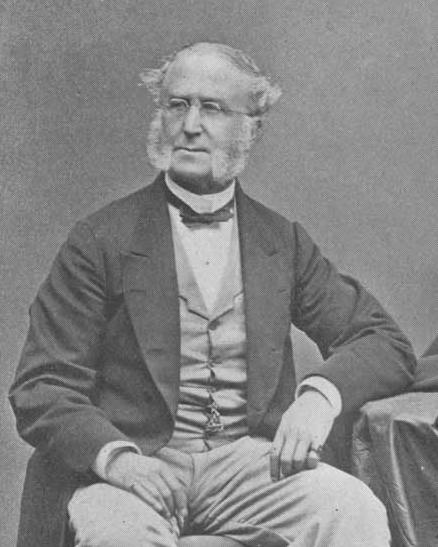
It’s significant that that story appeared in Edmund Quincy’s biography of his father not in Mayor Quincy’s own words but in those of the author (shown here), remembering what he’d heard from his father decades before.

As I stumbled across gathered evidence, it became clear that the younger Quincy amalgamated multiple figures from his father’s school days into a composite “Dr. Cutts.”

The first figure was James Anderson of Londonderry, New Hampshire, admitted to the same inaugural class at the academy alongside six-year-old Josiah even though he was twenty-nine. As beginning students, they may indeed have been seated together, as Edmund Quincy described.

Next were a pair of young brothers named Cutts, who joined the school in 1782. Josiah Quincy and Richard Cutts (1771–1845) went on to be Harvard classmates who both represented Massachusetts in the U.S. Congress in the first decades of the nineteenth century, albeit in different parties. Edmund Quincy remembered that surname.

Finally there was John Brown Cutting, whose last name was easily confused with “Cutts” and equally appropriate for a surgeon. He entered the Phillips Academy in 1781, when Josiah Quincy was nine. According to academy records, Cutting was then 23 years old. (According to the age reported when he died, Cutting was a little older, born about 1755.)

John Brown Cutting came to the school from the Continental Army medical department. But he wasn’t a surgeon or surgeon’s mate; rather, starting in 1775 he served as an assistant apothecary. In this period, apothecaries were routinely addressed as “Doctor,” and Cutting definitely used that title.

Other details of John Brown Cutting’s life also connect with what Edmund Quincy described about “Dr. Cutts.” He did spend many years after the Revolutionary War in Europe. In 1806 he did marry a gentlewoman in Virginia: Sally (Carter) Carter (1767–1814), widow of George Carter.

Later Cutting worked for the U.S. government and started spelling his middle name with a terminal E. He died in Alexandria in 1831. Laudatory obituaries appeared in national newspapers and in the Boston Palladium, which likely prompted Josiah Quincy to tell his son stories of his old schoolmate.

Mayor Quincy probably remembered John Brown Cutting vividly not just because he was an unusual older student at Andover but because the man was a world-class networker, schmoozer, and unabashed gossip. Cutting served John Adams as a fill-in secretary in 1787. He aided American sailors as a self-appointed diplomat. He corresponded with both John and Abigail Adams, Washington, Jefferson, Hamilton, Madison, Knox, Jackson, Pickering, and more. Gouverneur Morris once described him entering the room with “a World of News.”

I plan to explore stories from the life of John Brown(e) Cutting. For now, though, I simply wish to establish that Edmund Quincy’s tale of a “Dr. Cutts” turns out to have some basis in reality, but not exactly as printed.

Saturday, January 10, 2026

Seeking Josiah Quincy’s Much Older Schoolmate

The upstart rural academy in Andover that became the prestigious Phillips Andover prep school published records of exactly who attended. Of course it did.

The Biographical Catalogue of the Trustees, Teachers and Students of Phillips Academy Andover, 1778-1830 confirms one detail of the story from Edmund Quincy’s biography of his father that I quoted yesterday.

Namely, that age six, Josiah Quincy (1772–1864, shown here past age six) was indeed the youngest student at the school when it opened in 1778. There were five seven-year-olds, though.

The alumni list also confirms that one student at the academy that year was “a man nearly thirty years of age”: James Anderson of Londonderry, New Hampshire, aged twenty-nine.

It’s therefore conceivable that little Josiah and old Mr. Anderson were seated together as the most rank beginners among the Latin scholars. This history of the school makes that assumption.

Otherwise, however, James Anderson doesn’t match Edmund Quincy’s description of his father’s classmate: a former Continental Army surgeon named Cutts who went on to an overseas career and marriage to an heiress in the vicinity of Alexandria, Virginia.

A man from Londonderry named James Anderson did serve as a lieutenant in the first year of the war. He was not, however, a surgeon or surgeon’s mate. His military duties didn’t take him anywhere near Virginia. And we have no indication that that former officer decided to go back to school.

The academy said its James Anderson went on to Harvard College in 1784. Sometimes men of limited means who were fixed on clerical careers started their higher education late, and they might spend a couple of years intensively studying Latin and Greek to qualify for college.

Harvard says its James Anderson didn’t go on to earn a master’s degree, as most aspiring clergymen did. He died in 1835. I can’t find anything more about him. His common name doesn’t help. (In the 1790s, for example, George Washington was corresponding with a Scottish botanist named James Anderson while employing a different James Anderson to operate his distillery.)

When the Sibley’s Harvard Graduates series reaches the class of 1784, it might have more to say about this James Anderson. (This year’s volume covers the classes of 1775 through 1777.) His profile will surely not reveal he went by the name of “Dr. Cutts,” though.

In 1782, a couple of brothers named Cutts arrived at the academy. But they were about Josiah Quincy’s age, not army veterans and not doctors.

So does Edmund Quincy’s account of his father’s adult schoolmate Dr. Cutts have any basis in reality?

TOMORROW: Meet Dr. John Brown Cutting.