J. L. BELL is a Massachusetts writer who specializes in (among other things) the start of the American Revolution in and around Boston. He is particularly interested in the experiences of children in 1765-75. He has published scholarly papers and popular articles for both children and adults. He was consultant for an episode of History Detectives, and contributed to a display at Minute Man National Historic Park.

Subscribe thru Follow.it


•••••••••••••••••


Showing posts with label Horatio Gates. Show all posts

Tuesday, March 10, 2026

“He must not fire upon the Town of Boston tonight”

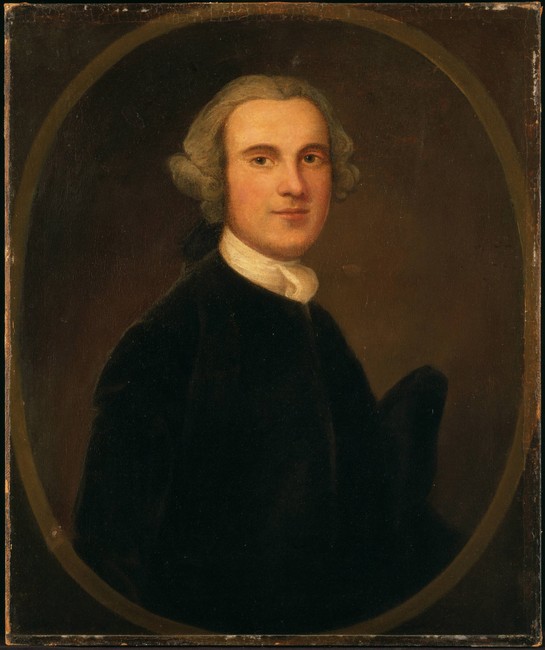
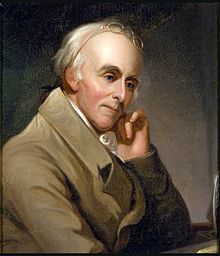
On 10 Mar 1776, 250 years ago today, Gen. George Washington’s military secretary, Robert Hanson Harrison (shown here), sent this order to Gen. Artemas Ward in Roxbury:
By his Excellency’s command I am to inform you that It is his desire that you give peremptory Orders to the Artillery Officer commandg at Lams Dam, that he must not fire upon the Town of Boston tonight unless the Enemy first begin a Cannonade, and that you Inform the Officer at Dorchester heights that he is not to fire from thence on the Town—

If they begin, and we have any Cannon on Nuke Hill, his Excellency wou’d have the fire to be returned from thence among the Shipping and every damage done them that possibly can.

Notwithstanding the accounts received of the Enemy’s being about to evacuate the Town with all seeming hurry & expedition, his Excellency is apprehensive that Genl [William] Howe has some design of having a brush before his departure and is only waiting in hopes of findg us of our Guard, he therefore desires that you will be very vigilant and have every necessary precaution taken to prevent a Surprize and to give them a proper reception in case they attempt anything
This conditional order summed up the Continental commanders’ dilemma. On the one hand, they didn’t want to waste gunpowder and cause unnecessary damage to the town if the British army was leaving. On the other hand, they still didn’t fully trust the British commander to leave.

Around seven o’clock that evening, Gen. Horatio Gates sent another message to Ward with a similar mix of optimism and paranoid preparation:
The Motions of The Enemys Fleet, Strongly intimate their intention of Abandoning The Town of Boston tomorrow,

His Excellency Generel Washington is therefore Anxious to take every Possible Advantage of their precipate Retreat; & desires you would Order all the Troops at Roxbury, & Dorchester Heights, to be paraded at their Several Alarm Posts, half an hour before day tomorrow morning; it is not possible for His Excellency to give any Particular directions as to the manner of Distressing the Enemy, or assisting Our Friends in The Town, as there is no foreseeing the Circumstances that will accompany the departure of [the] Ministerial Army: a very exact Observation will be taken from hence of all The Enemys Motions at Sun rise.

the General desires the like attention may be paid on Your side, & wishes you to Communicate every half hour all extraordinary Occurrences; you may be assured of receiving the like minute Accounts from hence
Meanwhile, inside Boston Gen. Howe’s orders were all about preparing to sail, though he did add that “Upon Ringing the Church Bells at Night the Troops are to get under Arms.” Because he wasn’t entirely sure there would be no Continental attack, either.

Capt. John Barker summed up the situation inside the town this way: “Nothing but hurry and confusion.”

Monday, August 19, 2024

“Claimed to be Burgoyne in order to get better quarters”?

Sherman Lohnes left a helpful comment on these lines in yesterday’s posting about Elisha Porter:
He later served in the Saratoga campaign as a militia colonel and escorted Gen. John Burgoyne east. According to the Porter family, Burgoyne left his host a dress sword.
Since December 2022 Lohnes has shared a blog on The 1777 March of the Saratoga Convention Army, the prisoners of war in Continental custody after the Saratoga battles.

Using sources and reminiscences of that journey, the blog reexamines a lot of the lore and local traditions about it.

Lohnes commented:
It's highly unlikely that General Burgoyne gave Elisha Porter his sword - or even that Porter accompanied Burgoyne from Saratoga to Cambridge.

Burgoyne offered his sword in surrender to General Horatio Gates on October 17th at Saratoga, who graciously allowed him to keep it. Prior to the surrender, Burgoyne took pains to negotiate terms with Gates that allowed all of his officers to not only keep their swords, but wear them while they were being held in Massachusetts.

Finally, Burgoyne didn't stay with Porter in Hadley. New Hampshire Militia Brigadier-General William Whipple, who did travel with Burgoyne and kept a journal of their trip, indicates that they crossed the Connecticut River south of Hadley, from West Springfield into Springfield, before continuing on through Palmer to Brookfield, and eventually Cambridge…
In this blog post, Lohnes wrote:
Though Porter was a colonel, and commanded the 4th Hampshire County Regiment of the Massachusetts Militia, which marched on September 24, 1777, to reinforce the Northern Army and served until October 17, 1777, Brigadier-General William Whipple’s Journal indicates Burgoyne did not pass through Hadley.

If Burgoyne didn't stop in Hadley (or Northampton), what may have led its residents think that he did? Perhaps the source of these tales is explained by British Ensign (and author) Thomas Anburey. According to Anburey, at some point along the march one of the officers with the British column went on ahead, and claimed to be Burgoyne in order to get better quarters. Being the first to reach "a small village, he personated General Burgoyne, and with such an air of confidence..." that his hosts being "compleatly outwitted, they assigned him the best quarters."
Another possibility is simply that the Porter family’s understanding of what happened grew in the telling from one generation of children to another. Marching out to Saratoga and back again in parallel with some prisoners from Burgoyne’s army could have become escorting the British general himself. A British officer’s dress sword acquired in any sort of way could have become connected to the most famous officer in that army.

Family and local historians writing in the 1890s and 1900s described seeing that sword, and they didn’t use the same language, indicating they observed independently. That strongly suggests the Porter family did own such an artifact. But evidently not an accurate knowledge of where it came from.

Monday, July 22, 2024

“Over-emphasized the early conflict in the northern colonies”?

Last month Gene Procknow reviewed Alan Pell Crawford’s This Fierce People: The Untold Story of America’s Revolutionary War in the South, just published.

Procknow reports that Crawford
asserts that Revolutionary War historians have over-emphasized the early conflict in the northern colonies, leaving the impression that the conflict was “George Washington’s War.” As evidence, he cites that a more significant percentage of the eight-year war occurred in the southern colonies, while Washington’s army remained relatively inactive in the north.
He praises the book’s focus on particular individuals’ experiences, starting with the Bavarian-French volunteer Baron de Kalb. That allows the book to cover “over one hundred battles” vividly without bogging down in details.

“Storytelling is the veteran journalist and political analyst’s strong suit,” Procknow says of Crawford. “The book is laced with vignettes that engender reader interest and comprehension.”

However, the review also faults Crawford for repeating details from secondary sources not backed up by contemporaneous evidence, citing multiple examples, from Gen. Horatio Gates’s purported nickname to important details of the Battle of Guildford Court House.

Friday, March 08, 2024

Fort Ticonderoga’s 2024 Annual Seminar on the American Revolution, 20–22 Sept.

Fort Ticonderoga will host its twentieth Annual Seminar on the American Revolution on 20–22 September.

There slate of speakers are:
  • Sara C. Evenson, “Archaeology, Archive-Making, and Interpretation: Military Kitchens at Fort Ticonderoga”
  • Jason T. Sharples, “Governing the Anglo-American Subjects of Spanish Florida after 1783”
  • Robert Swanson, “‘For the Common Cause of the States’: Ideology and Canadian Participation in the American Revolution”
  • Todd W. Braisted, “‘Anxious to be of some Service to the Government’: The Trials and Tribulations of Burgoyne’s Royalist Corps after Saratoga”
  • David C. Hsiung, “Energy, Geography, and Geology in the Saratoga Campaign, 1777”
  • Kieran J. O’Keefe, “Why Did Horatio Gates Become a Revolutionary?”
  • Craig Wilson, “A Spirit of Dissention and Disobedience in the Troops: Military Mischief and Geographic Isolation at Michilimackinac”
  • John William Nelson, “Chicago’s Long War of Independence: Native Peoples and the Power of Chicago’s Portage Geography”
  • Jennifer K. Bolton, “‘Just IMPORTED from LONDON’: An Apothecary’s Place within the British Empire”
On Friday there will also be an optional bus tour from America’s History, L.L.C., “In the Footsteps of Ethan Allen, Benedict Arnold, and John Brown: The Capture of Fort Ticonderoga,” and an evening talk by Matthew Keagle, Fort Ticonderoga’s curator.

There are scholarships for teachers available. Registration is open.

Sunday, August 06, 2023

What to Expect at the Battle of Camden

Later this month a new book will appear in the Emerging Revolutionary War series: All That Can be Expected: The Battle of Camden and the British High Tide in the South, August 16, 1780, by Rob Orrison and Mark Wilcox.

With the Battle of Camden, Britain seemed to find a strategy to win back the rebellious southern colonies. Crown forces took Savannah, Georgia, in the fall of 1779, then Charleston, South Carolina, in May 1780. The king’s army, which hadn’t penetrated far inland from the northern ports, now began to set up outposts in the Carolina backcountry.

The Continental Congress assigned Gen. Horatio Gates, victor at Saratoga, to rebuild its army in the south from Continental regiments in the middle states and militia from Virginia and North Carolina. He moved against Gen. Cornwallis’s troops near Camden, South Carolina. The two forces met on 16 Aug 1780.

The title of this new book comes from a report by Lt. Col. Benjamin Ford of Maryland: The British “have done all that can be expected of them; we are outnumbered and outflanked.” Gates’s career would never recover.

At 7:00 P.M. this Sunday, 6 August, Orrison and Wilcox will chat about All That Can be Expected with series editor Dan Welch live on the Emerging Revolutionary War Facebook page. The recorded conversation will be posted on the allied YouTube and Spotify a week later.

Tuesday, March 07, 2023

“Came to Head Quarters and gave the following Intelligence”

After Continental troops moved onto Dorchester heights on the night of 4–5 March 1776, Gen. George Washington and his commanders waited anxiously for the British response.

As of 8 March, Gen. Horatio Gates was telling John Adams that headquarters still didn’t know what was going on inside Boston “as neither Townsman, nor Deserter, has yet come in to acquaint us!”

But some men were making their way out of Boston, bringing intelligence. Maj. Samuel Blachley Webb (shown above, courtesy of the New-York Historical Society), stationed with Gen. Israel Putnam’s brigade in Cambridge, wrote in his journal on 8 March about “Capt. Erving, of Salem, who last night stole out of Boston.”

Four different letters sent from Washington’s headquarters on 9 March, the next day, described that man in slightly different ways:
After looking at Salem vital records, which provide yet more variant spellings, I think this captain was most likely named Ervin, so I’m going to refer to him that way.

At first I thought Capt. Ervin was the most likely person to have reported Gen. William Howe’s exclamation on seeing the Dorchester heights fortifications. His rank as a captain in command of a “Transport,” or troop ship, suggested that the general was more likely to have spoken frankly in front of him.

However, the timing doesn’t quite work. In one of his 9 March letters Gen. Washington wrote that it was “Yesterday evening,” or 8 March, when this captain “came to Head Quarters and gave the following Intelligence.” James Bowdoin understood that the general questioned the source we’re looking for at or after midday dinner on 9 March.

In addition, Bowdoin used the term “deserter.” None of the headquarters letters used that word for the sea captain, even when Washington described him as “A Captain of a Transport,” presumably working for the Crown.

But Maj. Webb did use that language in describing another man in his diary on 9 March: “Three Inhabitants and one Soldier last night deserted to us from Boston—they confirmed the accounts Rec’d yesterday…” If that soldier reached Washington’s Cambridge headquarters on 9 March, then the general would have seen him as an army deserter and questioned him that day, as Bowdoin described.

Finally, while Ervin and the deserter told the same basic story about the British authorities preparing to leave, they provided different details—about numbers, hospital ships, and so on.

It therefore looks like Gen. Washington spoke to Capt. Ervin on the evening of 8 March, received a letter from the Boston selectmen with similar news (as discussed here), and dispatched reports based on all that information to the Congress and nearby colonies in the middle of 9 March. Later on that day the deserting soldier arrived, offering yet more corroboration and the story of Gen. Howe exclaiming, “Good God! These fellows have done more work in one night than I could have made my army do in 3 months. What shall I do?”

TOMORROW: Digging into these intelligence sources.

Saturday, February 04, 2023

“To write one time no want of powder and at another not so great a plenty”

The 23 July 1775 letter from Dr. Benjamin Church, Jr., that I quoted yesterday never made it into Boston.

Church gave it to his mistress in Little Cambridge, Mary Butler, and she asked her ex-husband in Newport, the baker Godfrey Wenwood (or Wainwood), to pass it on to royal officials to take into Boston.

Instead, the baker sat on the document. But Dr. Church couldn’t know that. Just a few days later, he discovered a quicker way to send messages into Boston, piggybacking on Gen. George Washington’s own espionage route.

Eventually, Dr. Church realized the letter he’d sent by his mistress had never arrived, and he asked her about it. She asked her ex-husband. He grew even more suspicious and took the document to Rhode Island’s Patriot authorities on 26 September.

That set in motion the chain of events that led to the deciphering of the letter, Washington’s interrogation of Mary Butler, and Dr. Church’s arrest by the end of the month.

That summer, Church had sat through a series of inquiries about how he as Surgeon General ran the Continental Army hospitals. (Regimental surgeons disliked him encroaching on their territory.) On 19 September, Church asked for a leave to visit his family in Rhode Island. The next day, he sent Gen. Washington his resignation. Adjutant General Horatio Gates cited the commander’s “his unwillingness to part with a good officer” and asked Church to reconsider.

On 24 September, Dr. Church sent a new letter full of intelligence about the Continental camp into Boston. We know this one arrived because it survives in Gen. Thomas Gage’s files.

Among many other things, Church discussed the Continental gunpowder supply. As I quoted yesterday, back in July he had said there was lots of powder. In late September he wrote:
the Accot I sent you that our Army was Supplyed largely with powder is not so, instead of our peoples having Ninety Tons of powder from Philadelphia they did but Nine as I find by the Commessary and from New York Six for Sixty as is declared all over the Camp, but when it got down here it was no more than I now write you, they have got some little from different Quarters by some means but I am bould to say, not enough to stand a long Siege. We are made to believe that we are to have large Quantitys in a very short time, they have sent different ways, that I know, for powder and without every good look out they will get [difficulties?],

You will think me an odd fellow to write one time no want of powder and at another not so great a plenty—but Sir, never was a people lead on blindfold and so imposed on as this people have been with respect to Arms and Amunition: I am not alone in this matter I heard Mr. [John] Hancock Say the very day he came from Congress that we had more Powder on the Road coming to the Camp, than we could Expend in one twelve months, this was believed by all coming from Hancock.

The Army begin to inquire for themselves, about these matters, and are not satisfied to find themselves so deceived in a matter of so much importance. but our Chiefs say, it is absolutely necessary, nay Justifiable for such reports when all is at Stake, and the Courage of the Soldiers must be kept up high by some means or other.
This letter would have completely destroyed Church’s claim that his July letter showed he was exaggerating the Continental Army’s strength. After he learned about the gunpowder shortage, he passed that news on to the British commander.

It also hints at another source on the Continentals’ confidence about their gunpowder: none other than John Hancock, chair of the Congress. He visited Cambridge in mid-July and surely met with his longtime colleague there. Shortly afterward, Church sent his original dispatch describing how “Powder mills are erected and constantly employed.” By September, the doctor no longer believed that.

TOMORROW: More from Dr. Church’s letter.

Sunday, July 03, 2022

A Chain of Errors about Continental Army Nurses

Just as Google Books helped me find the actual sources for the quotations in the U.S. Army webpage about women in the service, it also offered some explanation for how those quotations got misattributed.

The first stop is an article in the journal The Military Surgeon: “The Forerunners of the American Army Nurse” by Maj. Julia C. Stimson, Capt. Sayres L. Milliken, and Ethel C. S. Thompson, published in 1926.

In a passage about “the army organized for the invasion of Canada” (shown above), the authors wrote:
Later Gen. [Horatio] Gates protested about the unsatisfactory health conditions in the Army on the northern frontier. The congressional committee, sent to investigate, evidently found to its surprise that the situation was even as black as Gen. Gates had painted. Although there was by that time a large supply of medicine, “the sick suffered much for want of good female nurses and comfortable bedding, many of those poor creatures being obliged to lay upon bare boards.”
As I showed yesterday, that concluding quotation came from a Continental Congress committee consisting of Richard Stockton and George Clymer. A quick reading, however, would lead one to believe those words actually came from Gates. The page’s citations to Peter Force’s American Archives are accurate but opaque.

(In fact, the names of Stockton and Clymer don’t appear in the American Archives entry, so Stimson, Milliken, and Thompson were probably hard-pressed to credit them by name. I had to look them up in another source—and could, thanks to Google Books.)

The next step was a U.S. Army publication issued in 1975 at the start of the Bicentennial, Highlights in the History of the Army Nurse. There’s no official author, but the foreword was signed by Lt. Col. Dorothy E. Zalaback, Army Nurse Corps Historian. Its text has been republished several times since, including on the web.

The first entry in that booklet’s timeline says:
14 Jun 1775 The Second Continental Congress authorized the Continental Army which later became the United States Army. Shortly thereafter, Maj. Gen. Horatio Gates on the northern frontier reported to Commander in Chief George Washington that “the sick suffered much for Want of good female Nurses.” General Washington then asked the Congress for “a matron to supervise the nurses, bedding, etc.,” and for nurses “to attend the sick and obey the matron's orders.”
It looks like the History of the Army Nurse authorial team used the Military Surgeon article to attribute the statement about “female nurses” to Gates, and also mussed up the timeline between June 1775 and November 1776.

That raises the question of why the History of the Army Nurse team fixed on a quotation from an obscure Congress committee in late 1776 rather than the Congress’s official 27 July 1775 resolution setting up the military hospital with a “matron” and “nurses,” which has always been much easier to find.

I suspect the big factor was that the committee report was explicit in calling for “female nurses” (my emphasis). The 1775 resolution didn’t specify the nurses’ gender. The men at the Congress probably assumed that nurses should be female—it didn’t seem necessary to be explicit.

I want to note that in 1981 the army also published The Army Medical Department, 1775–1818, by Mary C. Gillett (P.D.F. download). That’s another Bicentennial-era history, but it quoted the Congress’s resolutions, the Stockton-Clymer committee report, and other documents accurately.

If I had the chance to rewrite the U.S. military webpage I started with, I’d say:
In July 1775, a month after establishing the Continental Army, the Continental Congress laid out its first guidelines for a military hospital. The staff was to include nurses “To attend the sick” and a “Matron…To supervise the nurses, bedding, &c.” There was to be one nurse for every ten patients, and later one matron for every hundred patients. The Congress expected women to fill those jobs, as shown by how in 1776 the northern wing of the army drafted soldiers’ wives for that work when “the Sick suffered much for Want of good female Nurses.”
That would remove Gen. Gates and Gen. Washington from the conversation—but then they weren’t really involved to begin with.

Saturday, July 02, 2022

“The Sick suffered much for Want of good female Nurses”

The fourth quotation to track down from that U.S. Army webpage is the first to appear in its paragraph about the creation of the Continental Congress’s nursing policy:
Shortly after the establishment of the Continental Army on June 14, 1775, Maj. Gen. Horatio Gates reported to Commander-in-Chief George Washington that “the sick suffered much for want of good female Nurses.”
The way that webpage lays out events, Gates’s warning prompted the Congress to hire nurses.

However, as I showed yesterday, the Congress established its standards for an army medical department in July 1775 without needing guidance from the generals at Cambridge

The phrase “the sick suffered much for want of good female Nurses” doesn’t appear on Founders Online, which includes all of Washington’s incoming and outgoing correspondence during the war.

It doesn’t appear in the Journals of the Continental Congress, still searchable through the Library of Congress’s old American Memory website, where we can find the paragraph’s other phrases (approximately) because those were part of official resolutions.

I tracked the phrase in question to Peter Force’s American Archives (digitized and searchable here) and the Orderly Book of the Northern Army, at Ticonderoga and Mt. Independence, published by Joel Munsell in 1859.

Not surprisingly, yet another committee of the Congress was involved. In November 1776, the Congress sent two delegates—Richard Stockton of New Jersey (shown above) and George Clymer of Pennsylvania—to northern New York to assess the Continental forces in the aftermath of the collapse of the invasion of Canada.

Stockton and Clymer consulted with Gen. Gates, Gen. Philip Schuyler, and commissary general Joseph Trumbull before reporting back to the Congress on 27 November. That body named a larger committee to take up the discussion and report back, which meant the original report wasn’t entered into the Congress’s journal.

The first committee report, as printed in the Munsell book, includes this about medical care:
Your Committee also beg leave further to Report, that they have visited the General Hospital for the Northern Army, situated at Fort George; that there is a Range of Buildings erected convenient for the Purpose, which on the 20th of October last contained about four hundred Sick, including those wounded and sent from General [Benedict] Arnold’s Fleet; that they were sufficiently supplied with fresh Mutton and Indian Meal, but wanted Vegetables; that the Director-General in that Department [Dr. Samuel Stringer] obtained a large Supply of Medicines, but the Sick suffered much for Want of good female Nurses and comfortable Bedding; many of those poor Creatures being obliged to lay upon the bare Boards. Your Committee endeavoured to procure Straw as the best temporary Expedient; but they earnestly recommend it to the Attention of Congress, that a Quantity of Bedding be speedily furnished,…
The American Archives version has fewer capital letters, more italics, and one added “that.”

Thus, a Revolutionary War source did say “the Sick suffered much for Want of good female Nurses.” But that source wasn’t Gen. Gates writing to Gen. Washington on or shortly after 14 June 1775. It was Richard Stockton and George Clymer reporting to the Continental Congress in November 1776.

That report came more than a year after the Congress authorized hiring nurses for its hospitals; it didn’t prompt that hiring. Stockton and Clymer were actually describing an anomaly in the army’s medical establishment. Up in the frontier fortifications along Lake Champlain and Lake George, there weren’t enough women to staff the army hospitals as commanders had come to expect.

In fact, back on 13 July 1776 Gen. Schuyler had ordered:
One woman from each company of each of the Pennsylvania Battalions now at this post, to be draughted as soon as possible, and sent to the General Hospital at Fort George. They will have the customary allowance of provisions, and so forth from Dr. Stringer, director of the hospital there.
The Continental Army expected soldiers’ wives to be ready to serve as nurses.

TOMORROW: How the error appeared and metastasized.

Thursday, June 30, 2022

Gates, Washington, and the Continental Nurses

In connection with last week’s online event about unpaid and underpaid labor at the siege of Boston, I encountered this statement on the U.S. Army’s website about women in the military:
Shortly after the establishment of the Continental Army on June 14, 1775, Maj. Gen. Horatio Gates reported to Commander-in-Chief George Washington that “the sick suffered much for want of good female Nurses.” Gen. Washington then asked Congress for “a matron to supervise the nurses, bedding, etc.,” and for nurses “to attend the sick and obey the matron’s orders.” A plan was submitted to the Second Continental Congress that provided one nurse for every ten patients and provided “that a matron be allotted to every hundred sick or wounded.”
Though I’d studied Washington’s work in Cambridge in 1775–76, that first quotation was new to me. I’m always interested in more information, so I dug deeper, seeking more definite dates.

Those statements and quotations are echoed in other army webpages and textbooks about the history of nursing. After all, they come from the army itself.

Some of those overviews put Gates’s report on 14 June 1775 instead of “Shortly after” that date. But that timing wouldn’t make sense. As the original passage above states, the Congress created the Continental Army on 14 June—implicitly, by authorizing the recruitment of riflemen from Pennsylvania, Virginia, and Maryland. Washington wasn’t commissioned commander-in-chief for another couple of days.

As for Gates (shown above), he learned of his appointment as adjutant general (with the rank of brigadier general) on 21 June, and he reached Cambridge on 9 July. So at what point “Shortly after” 14 June would he have made that quoted statement?

Fortunately, the specificity of the quotations makes it easy to look them up on Founders Online, which includes all known writing to and from George Washington during the war. Gates’s reports to Washington and the commander-in-chief’s requests to the Congress all appear there.

Yet none of the quoted phrases comes up in a Founders Online search.

TOMORROW: Real sources and real dates.

Wednesday, October 20, 2021

Gen. Gates’s Articles of Convention

As I said yesterday, on 23 Oct 1777 John Gill’s Continental Journal printed the “ARTICLES of CONVENTION between Lieutenant-General [Horatio] GATES and Major-General [John] BURGOYNE.”

Gates must have hurried that document to Boston, not simply because the Battle of Satatoga was big news but also because the state of Massachusetts had to prepare for the arrival of thousands of prisoners of war.

The full text of the surrender terms is here. I’ll quote the most important passages, those involving substance rather than details of implementation, as they appeared in the Continental Journal.

ARTICLE I. The troops under Lieutenant-General Burgoyne, are to march out of their camp with the honors of war and the artillery of the intrenchments, to the verge of the river where the old fort stood, where the arms and artillery are to be left; the arms to be piled by word of command from their own officers.

Art. II. A free passage to be granted to the army under Lieutenant-General Burgoyne to Great Britain, on condition of not serving again in North America during the present contest, and the port of Boston is assigned for the entry of transports to receive the troops, whenever General [William] Howe shall so order. . . .

Art. IV. The army under Lieutenant-General Burgoyne, to march to Massachusetts-Bay by the easiest, most expeditious and convenient route; and to be quartered in, near, or as convenient as possible to Boston, that the march of the troops may not be delayed when transports arrive to receive them.

Art. V. The troops to be supplyed on their march, and during their being in quarters, with provisions by General Gates’s orders, at the same rate of rations as the troops of his own army, and if possible, the officers horses and cattle are to be supplyed with forage at the usual rates.

Art. VI. All officers to retain their carriages, batt-horses and other cattle, and no baggage to be molested or searched, Lieutenant General Burgoyne giving his honor that there are no public stores secreted therein.—Major-General Gates will of course take the necessary measures for the due performance of this article; should any carriages be wanted during the march for the transportation of officer’s baggage, they are if possible to be supplyed by the country at the usual rates. . . .

Art. IX. All Canadians and persons belonging to the Canadian establishment, consisting of sailors, batteaumen, artificers, drivers, independent companies and many other followers of the army, who come under no particular description, are to be permitted to return there . . .
Gates was a veteran of the British army. He and Burgoyne had enlisted as young officers at the same time, and he had served under Burgoyne earlier in their careers.

The American general knew what supplies and housing a large army, including families, would need. He was also sensitive to the honor of British officers; one of the thirteen articles guaranteed those gentlemen the privilege of walking around greater Boston wearing their arms. 

About 5,900 Crown troops surrendered at Saratoga. On 8 November they started to arrive in Cambridge, which in 1776 had an official population of 1,586.

Tuesday, October 19, 2021

“Receiving confirmation various ways of the surrender”

The army around Philadelphia wasn’t alone in waiting anxiously for news from northern New York in October 1777. The publisher of the Massachusetts Spy was gleaning every bit of information that came through Worcester for his readers.

That publisher wasn’t Isaiah Thomas, who had co-founded the Spy in Boston in 1770 and moved it out to Worcester just before the outbreak of war.

In the middle of 1776 Thomas stepped away from day-to-day operations in order to tend to family business—namely, divorcing his wife, finding care for their children, and helping his mother at her home in Cambridge.

Thomas leased the Massachusetts Spy to other printers as a (barely) going concern. Starting in mid-1777 the publisher was Anthony Haswell, a former Thomas apprentice who turned twenty-one that year.

On 23 October Haswell’s Massachusetts Spy printed extracts from a Continental officer’s letter dated eleven days before, reporting that Gen. John Burgoyne’s army had attacked and been pushed back:
Friday [10 October] the whole army marched with three days provision, and we found the road strewed with baggage of all kinds; horses killed in the waggons, and all their sick and wounded, with Burgoyne’s chief surgeon
Then came another letter from the same officer, dated 14 October:
We have now entirely surrounded the enemy, and it is common to have forty or fifty deserters and prisoners come in per day. The Canadians we are informed have mutinied, and decline having anything further to do in the matter, and that the General had promised they should go home in a few days.
Then a letter from Saratoga dated 14 October:
Last night General [Horatio] Gates received a card from General Burgoyne, requesting to know when it would be agreeable to him to have a field officer of his army wait on him with proposals of great consequence to both armies. . . . General Gates sent the articles on which he would agree . . .

P.S. I believe that General Gates rather than not get Burgoyne and his army, will soften his terms a little.
In the next paragraph the publisher lamented receiving “many different” reports raising doubt about what had really happened next. But then a seemingly reliable witness arrived:
A Gentleman who passed through town yesterday informed, that General Burgoyne was arrived at Albany, on his way to Boston, where it is said he is to take ship for England, according to the capitulation said to be entered into between him and Gen. Gates.

In consequence of receiving confirmation various ways of the surrender of Gen. Burgoyne, a number of the sons of liberty in this town, met on the common and expressed their joy by thirteen discharges of cannon, and drinking several toasts. The whole was conducted with a decency suitable to the occasion, and truly characteristic of the supporters of the glorious cause in which we are engaged.
On the same day that Haswell was printing these bare tidbits, in Boston John Gill was printing the entire Articles of Convention, or terms of surrender, for readers of his Continental Journal. That document must have been couriered to Boston by a route that bypassed Worcester.

Monday, October 18, 2021

Joyful News from Saratoga

On 18 Oct 1777, Gen. George Washington issued joyous general orders to the Continental Army outside Philadelphia:
The General has his happiness completed relative to the successes of our northern Army. On the 14th instant, General [John] Burgoyne, and his whole Army, surrendered themselves prisoners of war

Let every face brighten, and every heart expand with grateful Joy and praise to the supreme disposer of all events, who has granted us this signal success—The Chaplains of the army are to prepare short discourses, suited to the joyful occasion to deliver to their several corps and brigades at 5 O’clock this afternoon—

immediately after which, Thirteen pieces of cannon are to be discharged at the park of artillery, to be followed by a feu-de-joy with blank cartridges, or powder, by every brigade and corps of the army, beginning on the right of the front line, and running on to the left of it, and then instantly beginning on the left of the 2nd line, and running to the right of it where it is to end—The Major General of the day will superintend and regulate the feu-de-joy.
According to Col. Timothy Pickering, the chaplains’ sermons were forestalled by a report that “the enemy were marching towards us,” so the soldiers had to muster for battle instead. But “the enemy pretty soon went back to their quarters.”

The evening celebration went on. Over on the British side, Maj. John AndrĂ© wrote in his journal, “at sunset firing was heard in the direction of the Rebel Encampment. This was a feu-de-joie on account of the taking of General Burgoyne and the Northern Army.”

(A feu-de-joie involved soldiers firing their muskets in rapid succession to make a long ratatat-tat-tat sound.)

Washington was especially pleased with that news because his own army was still reeling from losses at Brandywine, Paoli, and Germantown. He had just heard from Gen. Israel Putnam about British forces storming up the Hudson. The last letter he’d received from Gen. Horatio Gates indicated that Gen. Burgoyne’s campaign was still a threat.

Thus, the commander-in-chief was delighted when Putnam passed on a note from Gen. George Clinton in Albany dated 15 October:
Last Night at 8 OClock the capitulation whereby Genl Burgoyne and whole Army surrenderd themselves Prisoners of war was sign’d, and this morning they are to march out towards the river above fish Creek with the honors of war (and there ground their Arms) they are from thence to be marched to Massachusets Bay. We congratulate you on this happy event, and remain yrs &c.
In fact, that report was premature. Burgoyne and Gates started talks on 14 October, but it took three days before the British and Hessian soldiers actually surrendered. All the while, Gates was worrying about whether Crown reinforcements might arrive and change Burgoyne’s mind.

Now technically we could say Washington’s army didn’t jump the gun because the British army did surrender on 17 October, one day before the celebrations in Pennsylvania. But Washington was still operating on false information.

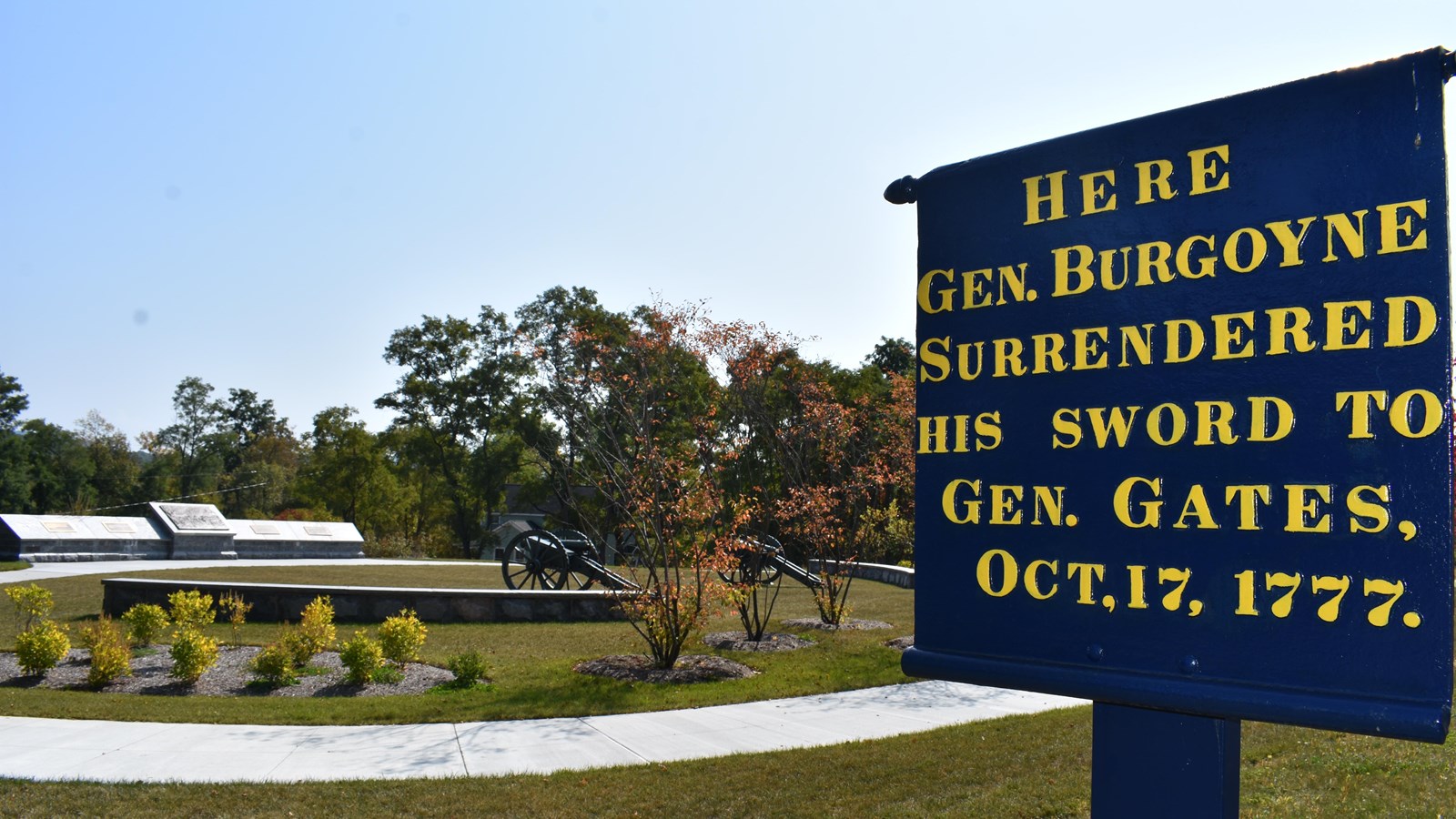
Discussing Saratoga gives me leave to note that the national park there has a new Chief of Interpretation starting today. Garrett Cloer previously worked at Minute Man National Historical Park, Independence National Historical Park, and Longfellow House–Washington’s Headquarters National Historical Site, all places with serious Revolutionary history, in addition to his latest posting at the Herbert Hoover Birthplace in Iowa. He’ll be a real asset to Saratoga.

The photo above shows the Saratoga surrender site, which will soon also become part of the national park there. For the past two years that landscape has been managed and upgraded by the Friends of Saratoga Battlefield.

Tuesday, August 24, 2021

Upcoming Online Book Events

Here are some book discussions coming to a computer screen near you in the next couple of weeks.

Thursday, 26 August, 8:00 P.M.
History Camp
Kathleen DuVal, Professor of History at the University of North Carolina, Chapel Hill, will discuss her prize-winning book Independence Lost: Lives on the Edge of the American Revolution, which looks at the history of the American Revolution through the eyes of slaves, American Indians, women, and British loyalists on Florida’s Gulf Coast. Free.

Tuesday, 31 August, 7:00 P.M.
Harvard Book Store
Mike Duncan, host of the groundbreaking podcast The History of Rome and author of The Storm Before the Storm will discuss his latest book, Hero of Two Worlds: The Marquis de Lafayette in the Age of Revolution. He will be joined in conversation by Patrick Wyman, host of the Tides of History podcast. This is a ticketed event. A $35.25 ticket buys access to the event plus a signed hardcover copy of Hero of Two Worlds mailed afterwards.

Thursday, 9 September, 8:00 P.M.
History Camp
Jack Kelly, author and historian, on his new book, Valcour: The 1776 Campaign That Saved the Cause of Liberty, which covers the Revolutionary War battle on Lake Champlain, led by Philip Schuyler, Horatio Gates, and the heroic Benedict Arnold, that delayed British invasion until the following year. Free.

Tuesday, June 15, 2021

Nostalgia “a frequent disease in the American army”

The words “nostalgia” and “nostalgic” don’t appear in any of the letters and other sources available at Founders Online. But of course most of those writers weren’t physicians.

American doctors did use the diagnosis of nostalgia, learning it from European medical authorities. Their uses reflected the original meaning of the word as homesickness rather than how we use the term today.

In “An Account of the Influence of the Military and Political Events of the American Revolution upon the Human Body” (published with other essays in 1789), Dr. Benjamin Rush wrote:
THE NOSTALGIA of Doctor [William] Cullen, or the homesickness, was a frequent disease in the American army, more especially among the soldiers of the New-England states. But this disease was suspended by the superior action of the mind under the influence of the principles which governed common soldiers in the American army.

Of this General [Horatio] Gates furnished me with a remarkable instance in 1776, soon after his return from the command of a large body of regular troops and militia at Ticonderoga. From the effects of the nostalgia, and the feebleness of the discipline, which was exercised over the militia, desertions were very frequent and numerous in his army, in the latter part of the campaign; and yet during the three weeks in which the general expected every hour an attack to be made upon him by General [John] Burgoyne, there was not a single desertion from his army, which consisted at that time of 10,000 men.
Rush’s essay was as much political as medical. He wanted to make the case that, while the disruptions of revolution and war caused stress and illness, the best remedy was more republicanism. Nothing cured the New Englanders’ nostalgia quicker than the imminent prospect of being hanged as traitors by an invading monarchical army.

Rush’s memory may have been faulty about dates. He said Gen. Gates told him in 1776 that nostalgia cleared up because of the threat from Gen. Burgoyne. In that year, Gen. Guy Carleton was in command, with Burgoyne serving under him. Burgoyne led the bigger advance from Canada in 1777. Rush may have amalgamated the events in his mind, but such detail doesn’t matter much to how Rush understood nostalgia.

Dr. James Thacher of Plymouth served the entire war as a surgeon’s mate and military surgeon for the Continental Army. Decades later, in 1823, he adapted his wartime diaries into A Military Journal During the American Revolutionary War.

In that book Thacher wrote under the date of late June 1780:
Our troops in camp are in general healthy, but we are troubled with many perplexing instances of indisposition, occasioned by absence from home, called by Dr. Cullen nostalgia, or home sickness. This complaint is frequent among the militia, and recruits from New England. They become dull and melancholy, with loss of appetite, restless nights, and great weakness. In some instances they become so hypochondriacal as to be proper subjects for the hospital.

This disease is in many instances cured by the raillery of the old soldiers, but is generally suspended by a constant and active engagement of the mind, as by the drill exercise, camp discipline, and by uncommon anxiety, occasioned by the prospect of a battle. 
Rush and Thacher didn’t use the term “nostalgia” in a way that we can easily map onto the modern diagnosis of post-traumatic stress disorder. Thacher definitely saw signs of anxiety and depression with physical manifestations. Rush linked the condition to desertions. But they didn’t see nostalgia as a reaction to combat.

Both of these doctors described nostalgia as prevalent in soldiers away from home (particularly from New England), not in those soldiers who had been through hard fighting. In fact, both of these American doctors saw “the prospect of a battle” as dispelling nostalgia, and Thacher viewed “old soldiers” as less prone to it than fresh militiamen.

It’s possible that other American doctors diagnosed Revolutionary soldiers or veterans with nostalgia based on symptoms and circumstances that correspond better with what we call P.T.S.D. I’ve looked for such cases, haven’t found any, and would welcome references.

TOMORROW: A British case study.

Friday, May 07, 2021

Commanding Lt. Col. Abijah Brown

As I related yesterday, Lt. Col. Abijah Brown chose not to reenlist in the Continental Army for the year 1776. He remained in Waltham as the army moved south.

But Brown remained active in the Massachusetts militia. As much of a headache as he was to work with, Brown really was committed to the Patriot cause. And he appears to have been capable. Within a couple of years he resumed his work in the Waltham town government as well.

It looks like authorities who had dealt with Brown before might have learned to be really strict with him, to leave him as little wiggle room as possible.

For instance, in late 1776 Brown led some Massachusetts militia troops north to Lake Champlain, but then balked at further orders. On 10 September, Gen. Horatio Gates, who no doubt recalled how Brown had escaped serious punishment a year earlier during the siege of Boston, wrote from Fort Ticonderoga to Lt. Col. Philip Van Cortlandt:
On receipt of this you will immediately order Lieutenant-Colonel Abijah Brown (who is now at Skenesborough) to this post. If he offers to make any hesitation or delay, you will instantly put him under an arrest and send him down under a good guard.
There might be a sad backstory to that conflict. Two days after that letter, Lt. Brown’s teen-aged son, Abijah, Jr., died at Skenesborough (now Whitehall).

In the spring of 1778 Lt. Col. Brown mustered militiamen for another mission to upstate New York. He wrote to the Massachusetts General Court about those troops needing arms. On 9 June the legislature resolved:
On the Petition of Colo. Abijah Brown praying that a number of militia-men mentioned in his petition, who are now on their march to join their regiment at North River, may be supplied with Fire Arms and accoutrements.

Resolved that the Board of War be, and they hereby are directed to deliver to said Colo. Brown twenty-two Fire Arms and accoutrements for the use of said men, he giving security to said Board of War that said Fire Arms and accoutrements shall be returned in good repair at the expiration of their tour of duty; and that there be stopped out of each one’s wages who shall so receive Fire Arms, the sum of ten shillings for the use of the same, unless any one or more shall choose to purchase said Fire Arms and accoutrements, in which case the Board of War are directed to sell to such as choose to purchase and give them a receipt for their payment.
Evidently some people thought that law wasn’t strong and specific enough to ensure the state would be fully repaid. The next day, the General Court resolved:
WHEREAS some doubts have arisen with respect to the Resolve on the Petition of Lieut. Colo. Abijah Brown of the 9th instant, for solving of which it is

Resolved that the Board of War be directed without delay to deliver to Lieut. Colo. Abijah Brown, twenty-two Fire Arms and accoutrements compleat for the use of that number of men belonging to the regiment of militia from this State, commanded by Colo. [Thomas] Poor; and that the Board of War take an obligation of Lieut. Colo. Brown for the return of the arms and accoutrements aforesaid in good order, at the expiration of the term for which said regiment is raised, and also said Brown’s obligation for ten shillings for the use of each Fire Arm and accoutrement delivered as aforesaid, as also to pay the said Board of War for each of the said arms and accoutrements as may be deficient, or that may be purchased by any of the men, such price as they shall determine, and that the Board of War be directed to set the price of said Fire Arms and accoutrements previous to their being delivered out.
Abijah Brown lived to the age of eighty-one, dying in 1818 at the home of a widowed daughter in Lincoln.

TOMORROW: Back to Col. Gridley’s horse.

Thursday, May 06, 2021

The Court Martial of Lt. Col. Abijah Brown

In October 1775, for the second time in a half a year, Patriot authorities met to formally judge the behavior of Waltham’s Lt. Col. Abijah Brown.

The first time was in late May, when a committee of the Massachusetts Provincial Congress assessed reports that Brown was badmouthing that body because he didn’t like the orders he had received.

The second time, the judges were Continental Army officers assembled for a court martial, and Brown faced the charge of “endeavouring to defraud the Continent, in mustering two Soldiers, whom he at the same time employed in working upon his farm.”

That board’s judgement, as reported in Gen. George Washington’s general orders for 7 October, was:

The Court having duly considered the evidence, are of opinion, that Lieut. Col. Brown is not guilty of any fraud, in endeavouring to have Harrington and Clarke muster’d, in the manner he did: But the Court are of opinion, that Col. Brown is guilty of employing Harrington for fourteen days, and Clarke for eighteen days, out of Camp, upon his own business; yet are inclined to think it was done rather thro’ Ignorance, than a fraudulent intent, and therefore adjudge that he be fin’d Four Pounds, lawful money, for the said offence.
Brown appears to have deployed the George Costanza “Was that wrong?” defense. And once again, the official verdict was that Brown had done what he was accused of doing but didn’t deserve serious punishment.

The commander-in-chief felt he had to abide by that verdict, but he made clear that he wasn’t pleased:
The General orders Lt Col. Brown to be released, as soon as he has paid his fine to Dr [Isaac] Foster, Director of the hospital, who will apply it to the use of the sick, in the General hospital, under his care—

The General hopes, the Stigma fixed on Lieut. Colonel Brown by the above sentence, will be a sufficient warning to all Officers, not to be guilty of the like offence, especially as the General is confident, no General Court martial will, for the future, admit a plea of Ignorance, in excuse of so atrocious a crime.
For the adjutant general, Horatio Gates, the outcome of this court martial showed the need for wider reform:
Much regulation is wanted in the Continental Articles of War, as in many Instances they have been found to give too Discretionary a power to the Members who compose Genl Courts Martial, a very Flagrant instance having happen’d lately in the trial of Lieut. Colo. Abijah Brown.
At the time, Washington, Gates, and other commanders were busy reorganizing the Continental Army for the new year and trying to convince men to reenlist. Col. Benjamin Rugggles Woodbridge evidently indicated that he would not return in 1776. But that didn’t open a position in his regiment for Lt. Col. Brown.

Instead, on 3 November a council of war ranked Brown as sixth in seniority among the lieutenant colonels but then assigned him to a regiment under Loammi Baldwin (shown above), still a lieutenant colonel himself but to be commissioned on 1 January as the most junior colonel in the new army.

Brown ultimately declined to reenlist. Gen. Washington and his headquarters staff probably weren’t sad to see him go.

TOMORROW: One more march.

Sunday, May 17, 2020

Walpole on Young Washington

Horace Walpole, the son of British prime minister Robert Walpole and at the end of his life the fourth Earl of Orford, died in 1797.

A quarter-century later, Baron Holland edited and published Walpole’s review of the 1750s, ultimately titled Memoirs of the Reign of King George II.

In his manuscript, Walpole wrote this about the year 1754:
In August came news of the defeat of Major [George] Washington in the Great Meadows on the western borders of Virginia: a trifling action, but remarkable for giving date to the war. The encroachments of the French have been already mentioned; but in May they had proceeded to open hostilities. Major Washington with about fifty men attacked one of their parties, and slew the commanding Officer. In this skirmish he was supported by an Indian half king [Tanacharison] and twelve of his subjects, who in the Virginian accounts, is called a very considerable Monarch.

On the third of July, the French being reinforced to the number of nine hundred, fell on Washington in a small fort, which they took, but dismissed the Commander with military honours, being willing, as they expressed it in the capitulation, to show that they treated them like friends!

In the express which Major Washington dispatched on his preceding little victory, he concluded with these words; “I heard the bullets whistle, and believe me, there is something charming in the sound.”

On hearing of this letter, the King said sensibly, “He would not say so, if he had been used to hear many.” However, this brave braggart learned to blush for his rodomontade, and desiring to serve General [Edward] Braddock as Aid-de-camp, acquitted himself nobly.
Young Washington’s comment about whistling bullets didn’t appear in an official dispatch about this event but in an earlier letter to his little brother, as discussed here. That letter made it into the press in both Virginia and London. Walpole appears to be our only source for George II’s response, but there’s solid evidence Londoners were talking about Washington’s callow bravado.

Walpole immediately went on to discuss another episode in the coming of the Seven Years’ War in the same gossipy style:
The violence of this proceeding gave a reverberation to the stagnated politics of the Ministry: in a moment, the Duke of Newcastle assumed the hero, and breathed nothing but military operations: he and the Chancellor held Councils of War; none of the Ministers, except Lord Holderness, were admitted within their tent. They knew too well how proper the Duke was to be consulted: of course they were jealous, and did not consult him.

Instead of him, they summoned one [Horatio] Gates, a very young officer just returned from Nova Scotia, and asked his advice. He was too sensible of their absurdity, and replied, that he had never served but in Nova Scotia, and it would be impertinent to give his opinion; he was ready to answer any questions.
In this manuscript, Walpole never mentioned that the “very young officer” he wrote about was his own godson, named after him. Walpole’s mother had employed Gates’s mother as a housekeeper.

Monday, March 05, 2018

Men Who Brought Us Dorchester Heights

On 5 Mar 1776, Gen. William Howe and his colleagues in the British military woke up to find Continental troops positioned and protected on the heights of the Dorchester peninsula. The cannon up there threatened not only Boston, already under artillery fire from other positions, but the all-important naval and supply ships in the harbor.

The person who deserves the most credit for making the move onto Dorchester Heights possible was Lt. Col. Rufus Putnam, one of the Continentals’ self-taught engineers. As shown by his 11 February letter (quoted here), he knew that soldiers going on to those hills would have to fortify their positions to hold off a British counterattack. But digging in would be hard because the ground was hard—still frozen at the end of the winter.

When Putnam wrote that letter, he could only imagine a long, costly operation that would require fortifying the entire “causeway” or low, narrow approach onto the peninsula. Then, however, Putnam stumbled across a better solution in a book belonging to Gen. William Heath. Some year I’ll tell that whole story. For now, I’ll summarize by saying that Putnam realized the army could build wooden structures in advance of the move, assemble them on the heights, and strengthen them with dirt. Those walls, while not as strong as an earthen fort, would be enough to protect the men as they dug in further.

William Davis, a Boston merchant, suggested adding “Rows of barrels filled with earth” to those fortifications. Heath wrote:
They presented only the appearance of strengthening the works; but the real design was, in case the enemy made an attack, to have rolled them down the hill. They would have descended with such increasing velocity, as must have thrown the assailants into the utmost confusion, and have killed and wounded great numbers.
Heath took credit of relaying Davis’s idea to Gen. George Washington, who loved it.

Finally, the timing of the operation was the brainchild of quartermaster general Thomas Mifflin (shown above), according to the Rev. William Gordon’s eyewitness history of the Revolution. Gordon wrote, “A council of war was called to fix the time for going upon the heights.” However, he didn’t state a date or place for that meeting, and there’s no record of it in Washington’s papers. Perhaps it was a smaller, more informal group than a “council of war.”

Mifflin was brought into the meeting since he was responsible for supplying the carpenters, wood, wagons, tools, and other material essential to the operation Putnam had suggested. Never a shy man, Mifflin also shared his bright idea:
He went prepossessed in favor of the night of March the 4th, a friend having reminded him, that probably the action would be the next day; and that it would have a wonderful effect upon the spirits of the New Englanders, to tell them when about engaging—“Remember the fifth of March, and avenge yourselves for the massacre at Boston.” When required to give his opinion, he spake in favor of the aforementioned night, and supported it in opposition to the contrary sentiment of gen. [Horatio] Gates, who for some reasons deemed it an improper time. After a debate, it was carried for that night, by a majority of one.
Washington would have preferred an even earlier date, though it’s not clear the army would have been ready until the 4th. That night also offered a nearly full moon for the work.

As it turned out, the British were never able to mount an attack on the Continentals’ new position. Gen. Howe was of two minds about that idea, the weather turned bad, and the men on the heights kept working to make their position even stronger. Less than two weeks later, the British military abandoned Boston.

The barrels never got rolled down the hill.

Saturday, January 13, 2018

Alexander Hamilton’s Love Letter Revealed!

Julie Miller of the Library of Congress recently wrote at Medium about the effort to read crossed-out lines in one of its Alexander Hamilton letters.

This is a 6 Sept 1780 letter from Hamilton to his fiancĂ©e Elizabeth Schuyler (“Betsey” in real life, “Eliza” in the musical), two months before they married. Most of the letter is about the American loss at the Battle of Camden (Gen. Horatio Gates “seems to know very little what has become of his army”). That material was first published in John Church Hamilton’s 1850 edition of his father’s writings.

In the twentieth-century edition of Hamilton’s papers, which make up part of Founders Online, editor Harold C. Syrett added a new detail about that document: fourteen lines of the first paragraph had been heavily crossed out and illegible.

Miller tells the next stage of the story:
When the Library of Congress recently digitized the Alexander Hamilton Papers, that letter, unedited, with its 14 obliterated lines, became visible to all for the first time. However, the lines were still unreadable.

To find out what lay beneath the scratchings-out, Fenella France, chief of the Preservation Research and Testing Division, and preservation staff Meghan Wilson and Chris Bolser used hyperspectral imaging. A noninvasive analysis that employs light at different wavelengths to capture information not visible to the eye, hyperspectral imaging can determine the composition of inks and pigments, track changes in documents over time and reveal faded, erased or covered writing.
The article shows that process and what Library of Congress scholars now believe those crossed-out lines say. Most likely John C. Hamilton deleted them himself out of familial and Victorian embarrassment at his father writing to his mother about the couple anticipating “the unrestrained intercourses of wedded love.”

As Miller points out, that’s far from the biggest deletion from Alexander Hamilton’s correspondence. All the letters that Elizabeth Hamilton wrote to her fiancĂ© and husband are gone, most likely destroyed by her own choice.