J. L. BELL is a Massachusetts writer who specializes in (among other things) the start of the American Revolution in and around Boston. He is particularly interested in the experiences of children in 1765-75. He has published scholarly papers and popular articles for both children and adults. He was consultant for an episode of History Detectives, and contributed to a display at Minute Man National Historic Park.

Subscribe thru Follow.it


•••••••••••••••••


Showing posts with label Mills and Hicks. Show all posts

Monday, August 05, 2024

“John Hancock, Esq; lay past all hopes of recovery”

By 1774, John Hancock was a well known Massachusetts Whig.

Newspapers in other colonies reported on him, though not always correctly. This item appeared in the Norwich Packet on 2 June:
By a Gentleman that arrived here Yesterday, from New-York, we are informed, that a Vessel from London had brought Intelligence, that…General [Thomas] Gage is ordered to send the Honourable John Hancock, of Boston, to England in Irons.
That peril wasn’t why Hancock didn’t attend the Salem session of the Massachusetts General Court, though. Instead, he became seriously ill.

The earliest public mention of this illness that I’ve found appeared in Rivington’s New-York Gazetteer. The issue was dated 22 June, but this item was dated 23 June, suggesting the newspaper may have been printed late: “By accounts from Boston we are told, that John Hancock, Esq; is in a very bad state of health…”

Things escalated quickly. John Holt’s New-York Journal stated on 7 July: “We have the melancholy news from Boston, that the Hon. John Hancock, Esq; lay past all hopes of recovery.”

And William Goddard’s Maryland Journal, 16 July:
The last Boston Mail brings us the melancholy News that the Honourable JOHN HANCOCK, Esq; that distinguished Patriot and amiable Gentleman, who has been long indisposed, lay, to the inexpressible Grief of his affectionate Countrymen, past all Hopes of Recovery.
However, by then Bostonians could read good news in Isaiah Thomas’s 15 July Massachusetts Spy (delayed one day from its usual Thursday publication, probably because that had been proclaimed a “day of fasting and prayer”):
It is with pleasure we can inform the public that the Hon. John Hancock, has so far recovered his health as to be able to take an airing in his chariot.
The following Monday, 18 July, Edes and Gill’s Boston Gazette shared inside information on Hancock’s health:
It is with the greatest Pleasure, we can inform tha Publick, that the Hon. JOHN HANCOCK, Esq; has so far recovered his Health, as to be able to walk abroad; and in the Course of the past Week, has twice honored this Office with his presence. He likewise attended divine Service Yesterday.
Boston Post-Boy printers Mills and Hicks backed the Crown government, but even they shared that day’s news, albeit with less enthusiasm: “The Hon. John Hancock, Esq; is so far recovered from his long Indisposition, as that he Yesterday attended Divine Service.”

The update reached Rivington’s New-York Gazetteer on 21 July: “We hear from Boston, that the Hon. John Hancock, Esq; is now perfectly recovered; and is engaged in returning visits received from his numerous acquaintance during his late illness.”

Finally, on 18 August the Massachusetts Spy reported on a dinner in Roxbury celebrating the first public protest against the Stamp Act in 1765. It quoted several toasts, and the eighth was: “Recovered and confirmed Health to that worthy Patriot the Honourable John Hancock, Esq.” No other local was called out by name.

TOMORROW: The consequence of that illness.

Tuesday, July 16, 2024

“The foregoing is a Copy of a Covenant…”

The Boston committee of correspondence’s Solemn League and Covenant went further than previous boycotts by having ordinary people pledge not to buy any goods from Britain after a certain date, and to shun business with anyone who continued to sell.

That’s why the 30 May town meeting voted “That the Comittee of Correspondence be & hereby are directed, to comunicate the Non Consumption Agreement aforesaid to the other Towns in the Province.” Not just non-importation by merchants but non-consumption by everyone.

According to the merchant John Andrews, that agreement was “sent out in printed copies by the Clerk to the Committee. W[illiam]. Cooper,” along with his printed letter dated 8 June 1774.

One might think that it would therefore be easy to identify the official text of that boycott agreement.

But there’s a lingering mystery about the Solemn League and Covenant. Two different texts were printed in American newspapers by the end of the month. Both also exist as broadsides carrying the date of June 1774. To add to the muddle, a third text was also printed as a broadside.

In 1915 Albert Matthews compared the two June 1774 texts for the Colonial Society of Massachusetts, calling them Form A and Form B. I guess I’ll call that third version Form C when I get to it.

Normally the Boston town government favored the Edes and Gill print shop. The letter and broadside might well have come from its presses. On 20 June Edes and Gill’s Boston Gazette editorialized in favor of it:
The Solemn League & Covenant for a non-consumption of British Merchandize is an Ax to the Root of the tree; by coming into it we establish our own Manufactures, save our Money, and finally our Country from the destruction that threatens it.
But that newspaper didn’t report the actual text of the new agreement. The Boston committee evidently didn’t want to publicize details of the boycott in town, at least not until a lot of rural communities had signed on to it.

Instead, the recently widowed Margaret Draper printed the document in her Boston News-Letter on 23 June. This wasn’t an official release. The document was prefaced with a request to print it and followed by:
The foregoing is a Copy of a Covenant, which I am told great Pains are now taking to promote in the Country. As I think it is of the most pernicious Tendency, as at present circumstanced, I beg Leave through your Paper to propose some Questions relating thereto.
Nearly a full column of political questions and argument followed. Then came an even longer series of questions leading to the suggestion not to take any action until “the approaching Congress.”

Four days later Mills and Hicks’s Boston Post-Boy printed the entire text of Cooper’s letter followed by the same form of the Solemn League and Covenant as in the News-Letter.

In other words, the Solemn League and Covenant wasn’t announced by Boston’s committee of correspondence. It was leaked by opponents through the Loyalist press.

TOMORROW: Form A.

Wednesday, October 18, 2023

“This Day Published…Mr. Bates and his Horses”?

Two hundred fifty years ago today, on 18 Oct 1773, the Boston Post-Boy published this advertisement:
THIS DAY PUBLISHED,
And to be SOLD at the New Printing-Office
in Hanover-street, Boston,
A Pamphlet, entitled,
Mr. Bates and his Horses,
Weighed in the Balance.

In which is shewn, with great Brevity, that his Exhibitions in Boston, are impoverishing, disgraceful to human Nature, and downright Breaches of the Sixth Commandment.

OH BE A MAN! Young.
This was very similar to the advertisements that had appeared back on 27 September, as previously quoted. The big difference is that the first ad had started, “In a few Days will be published…”

The 17 October was even more similar to an ad in the Post-Boy on 4 October, and again on 11 October. In fact, those three notices were all identical. And they all said that “Mr. Bates and his Horses” was published that day. The text never shifted over to say “Now available” or any other phrasing to indicate the pamphlet was already off the press.

Combined with how no printed copy of “Bates and His Horses Weighed in the Balance” has survived, nor any mention of it in writings of the time, that repeated advertisement raises the question of whether that screed was actually ever printed.

Nathaniel Mills and John Hicks, printers of the Boston Post-Boy since April, could have sold ad space for a certain number of weeks and kept the type in place for each new issue of the paper until that time ran out. If they didn’t hear from their client about updating the wording, they had no strong motive to quibble with it.

On the other hand, Joseph Greenleaf, proprietor of the printing office on Hanover Street, would probably have wanted some payment before investing time and paper in the pamphlet. With Jacob Bates heading out of town in early October, public interest in his moral standing probably dried up.

But we can’t be sure. Perhaps some author really had a lot to say about Bates’s equestrian exhibition and did pay to have it printed, only for no one else to care enough to preserve the result. People could always find a use for scraps of rag linen paper.

Wednesday, May 03, 2023

When Did Henry Knox and Lucy Flucker Marry?

You’d think the date when Lucy Flucker and Henry Knox got married would be well established in all that’s published about them.

After all, Flucker was a daughter of the royal government’s third-highest Massachusetts official. All the Boston newspapers reported on her wedding, followed by the newspapers in Essex County.

As for Knox, he was obscure then, but he came out of the Revolutionary War as one of the most prominent Bostonians in the country and has remained famous.

But if we look in biographies of Henry Knox, they give wedding dates all over the calendar:
  • 16 June 1771: Joseph W. Porter, “Memoir of Gen. Henry Knox, of Thomaston, Maine,” Bangor Historical Magazine (1890); Alan Taylor, Liberty Men and Great Proprietors (1990), stating that the marriage happened in 1771. 
  • 16 June 1774: Francis S. Drake, Life and Correspondence of Henry Knox (1873); Noah Brooks, Henry Knox: A Soldier of the Revolution (1900); Pamela Murrow, Unending Passions: The Knox Letters (2010); Nancy Rubin Stuart, Defiant Brides: The Untold Story of Two Revolutionary-Era Women and the Radical Men They Married (2014).
  • 20 June 1774: Mark Puls, Henry Knox: Visionary General of the American Revolution (2008); William Hazelgrove, Henry Knox’s Noble Train (2020).
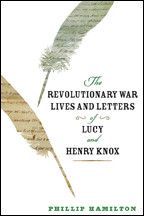
  • 23 June 1774: Thomas Morgan Griffiths, Major General Henry Knox and the Last Heirs of Montpelier (1965); Phillip Hamilton, The Revolutionary War Lives and Letters of Lucy and Henry Knox (2017).
In addition, North Callahan’s Henry Knox: General Washington’s General (1958) didn’t state a date, but it quoted a 27 June 1774 newspaper item referring to a wedding “Last Thursday,” and readers with perpetual calendars could do the math.

So let’s start with the earliest biography: Drake’s from 1873. For his information on the wedding Drake credited “the ‘Gazette’ of June 20, 1774.” But he ran into a series of confusions.

Drake almost certainly looked at the Massachusetts Gazette and Boston Post-Boy. Unfortunately, two newspapers from two separate print shops were sharing the Massachusetts Gazette name, and there was also a Boston Gazette. For clarity, I always refer to papers by their unique title, in this case the Boston Post-Boy.

The second unfortunate detail is that the publishers of the Post-Boy, Mills and Hicks, were the only Boston printers to date their issues with a date range rather than the date of issue. In other words, the newspaper they published on 27 June 1774 had this line under its masthead:
From MONDAY, June 20, to MONDAY, June 27, 1774.
Drake stumbled into an error by reading that issue of the Post-Boy as coming out on 20 June rather than a week later.

The third glitch was that the marriage notices in all the papers didn’t state the date of the wedding but said: “Last Thursday was Married…” Drake counted back from 20 June, making “Last Thursday” 16 June. In turn, his book misled an entire line of later authors. The way-off date in Porter’s Bangor Historical Magazine article is obviously a typo based on Drake.

Puls, it appears, mistook the 20 June date of the newspaper for the date of the wedding itself. Hazelgrove’s passages on Knox’s early life are almost sentence-by-sentence adaptations of Puls, so he replicated that error.

Griffiths, with the detail focus of a genealogist, and Hamilton, the only academic historian in this group [besides Taylor], got the date right. Callahan provided accurate information. Not only do we have the multiple newspapers appearing on 27 and 30 June and referring back to the previous Thursday, but we also have the records of King’s Chapel, available through the Colonial Society of Massachusetts.

Henry Knox and Lucy Flucker got married on 23 June 1774.

Thursday, September 15, 2022

“An authentic Copy of a Letter, which was thrown into both the Camps”?

Today I’m returning to the question of whether the letter printed in James Rivington’s New-York Gazetteer on 8 Sept 1774, naming particular Boston Whigs as the chief troublemakers, was indeed “authentic.”

Some nineteenth-century authors accepted the accompanying statement that the letter “was thrown into both the Camps, on Monday Night last,” and even called it a “handbill,” suggesting it was printed.

I see no evidence for that. None of the sources from 1774 referred to a handbill. It’s less trouble to copy two or three copies of a letter than to set it in type.

The Harvard biographer Clifford K. Shipton suggested the letter might be Patriot propaganda, aimed at riling up the Boston crowd to defend their leaders from perfidious Loyalists and redcoats.

That theory seems untenable for two reasons. First, as Charles W. Akers argued, the Patriots wouldn’t have sullied two of the town’s leading ministers with charges of being political, even while putting them in someone else’s mouth.

Even more convincing, Boston’s radical press didn’t trumpet this supposed evidence of danger but made nothing of the threats at all. The only newspaper in town to pick up the item from New York was the moderate Whig Boston Evening-Post.

In sum, the letter does seem to be a genuine Loyalist attempt to direct the attention of British army officers (and possibly enlisted men) at leading Boston Whigs. But how did that message get out?

One possibility is that copies of the letter were truly tossed into the compounds where the army was camping in Boston around the start of September 1774, with a copy sent to New York.

Another is that the writer cut out the step of distributing copies in Boston and just sent the letter to New York with a false cover story.

And the third is that the letter was created in New York, false story and all, with the real goal of influencing redcoats who were about to embark for Boston.

I lean slightly toward the last possibility because of these details:
  • The lack of any mention of such a letter in Boston before it surfaced in New York.
  • The reference to “both the Camps” when the Boston press always spoke of “the Camp” on the Common (even though some redcoats were camped at the South Battery).
  • The slip of replacing of the name of William Dennie, a well-known Boston merchant, with William Denning, a New York merchant and activist.
It’s possible that the omission of Dr. Joseph Warren from the list of troublemakers also reflected incomplete knowledge of who the most fervent Boston leaders were, based on reading newspapers or hearing reports. To be sure, whoever wrote this letter might just have respected Warren personally and thought he didn’t deserve to be lambasted as much as others.

At the end of the year, Rivington presented readers with extracts of another letter from Boston. Mills and Hicks repeated that item in their pro-government Boston Post-Boy while Isaiah Thomas denounced part of it as “A d——d lie” in the Massachusetts Spy. So there might be a pattern here.

Of course, that’s just a guess. If I see more evidence, such as someone printing the letter before Rivington, I’ll have to rethink everything.

TOMORROW: Did this letter have any effect?

Wednesday, September 14, 2022

“Charming black Eyes indeed!”

When Nathaniel Mills and John Hicks took over the Boston Post-Boy in 1773, they tried to make their shop the favored printer of the Customs office.

They also turned that newspaper, which had a sort of lukewarm Whig profile in previous years, into an organ supporting the royal government, a little more scrappy than Richard and Margaret Draper’s establishment Boston News-Letter.

On 27 June 1774, the Boston Post-Boy ran an item that began:
Messieurs PRINTERS,

THE following is a List of the Committee of Correspondence, so called, for this Town: “The Eyes of the Province and of the whole Continent,” as they have vainly stiled themselves. Charming black Eyes indeed! It is published for the Information of the Committees of Correspondence in the other Provinces, and of the other Towns in this Province, many of whom, it is believed, have not heard their Names.

It must be candidly acknowledge that there are some worthy Characters on the List; these, perhaps ashamed of their Company, have in a Manner seperated themselves from their Brethren, and have not ever joined in their Correspondence or their Counsels. By this Conduct they have partly saved their Reputation, had they publicly declared off at first, they would be quite free from the the Imputation which many may now lay on them, of giving Countenance, by their Silence, to Measures, some of which have been of the most wicked and pernicious Tendency.

In a short Time, Portraits of the Characters of several of the most active of them will be given to the Public. The Author, not copying the base and scandalous Example of the Committee, will advance nothing but the most incontestable Facts, which if requested shall be clearly avouched.
The newspaper then ran the names of the Boston committee of correspondence, from James Otis and Samuel Adams at the top to William Molineux and Robert Peirpoint at the end.

So far as I know, none of the threatened “Portraits of the Characters” ever saw print. I mention this newspaper item because it shows that Loyalists in Boston were circulating the committee’s names with the avowed goal of making them more known, and also distinguishing which were “the most active.”

The 8 September list of Boston activists printed in New York named only nine of the twenty-one men on the committee, mostly grouped together. That list added:
Those changes indicate that whoever created the list had some knowledge of the town’s real Whig leadership. With the exception of Dr. Joseph Warren, the September list does seem to point to the most fervent and active Whigs.

At the same time, it might have been possible to pick up that knowledge from reading Boston’s newspapers or talking with Bostonians, either while one traveled to the Bay Colony or while they traveled to, say, New York.

TOMORROW: Back to the origin question.

Monday, December 16, 2019

How Newspapers Covered the Fight at the Clarke House

The fight at the Clarke house on School Street on the night of 17 Nov 1773 offers a good test case of colonial Boston’s highly politicized press.

The next morning, Isaiah Thomas’s Massachusetts Spy, a Whig newspaper, put all the blame for the violence on the Clarkes:
Last evening a number of people assembled before the house of Richard Clarke, Esq; one of the Tea Commissioners, and huzzaed, upon which a musket was fired from his house among the populace, which so enraged them that they broke his windows, &c.
In contrast, Richard Draper’s Boston News-Letter, friendly to the royal government, blamed the crowd and said nothing about a gunshot:
Last Evening a Number of Persons assembled in School-Street, they broke the Windows and did other considerable Damage by throwing large Stones into the House of the late Middlecot Cook, Esq; near King’s Chappel, now belonging to Dr. Saltonstall of Haverhill, and occupied by Richard Clarke, Esq;
Eight days later, the News-Letter published a much longer account, quoted here. That one did mention the pistol shot, but as a response to the violent crowd and in the context of detail about damage to the house. That report clearly came from someone inside the house.

Three newspapers came out on Monday, 22 November. I already quoted the emotional account from the Clarke family that appeared in Mills and Hicks’s Boston Post-Boy.

The Fleet brothersBoston Evening-Post, which tried to stick to the political center in the Whig town, stated:
Last Wednesday Evening a number of People assembled before the House of Richard Clarke, Esq; in School-Street, and being irritated by a Musket or Pistol being fired at them out of the House, they broke the Windows, and did other Damage.
And finally there was the Boston Gazette. Its printers, Benjamin Edes and John Gill, worked closely with the town’s government and the radical Whigs. The 22 November Boston Gazette report on the fight at the Clarkes was:
Nothing.
Edes and Gill devoted almost all their space for local news to publishing about the town meetings against the tea that the consignees declined to attend. They wanted to portray the town as united, orderly, and not given to violence.

Only after the Boston News-Letter published its report from inside the Clarke house did the Boston Gazette mention that fight. In the 29 November issue the Whig paper ran one short paragraph at the bottom of a page:
We have not Room this Week to publish the Answer to an Account inserted in Draper’s last Paper respecting the Transactions at Mr. Clarke’s the 17th Instant [i.e., this month]; but we can assure our Readers from a Gentleman of Veracity who was a Spectator, That that Account was false in almost every Sentence, and that Mr. Draper himself knew it to be so.
The next issue of the Gazette contained no such “Answer.” Like other cries of “fake news” presented without any actual evidence of misreporting, this claim couldn’t convince anyone whose mind wasn’t already made up.

Saturday, December 14, 2019

“The Multitude began their Salutation with missive Weapons”

As I wrote back here, Jonathan Clarke (1744-1827) happened to be in London when Parliament enacted the Tea Act of 1773. He took advantage of established commercial ties to secure for his family’s firm, Richard Clarke and Sons, a contract to import the East India Company’s tea into Massachusetts.

On 17 Nov 1773, Jonathan Clarke wrote back to the chairman of that company from Boston:
After a long detention in the English channel, and a pretty long passage, I arrived here this morning from England, and there being a vessel to sail for London within a few hours, gives me an opportunity of writing you a few lines on the subject of the consignment of tea, made to our house by the Hon’ble East India Company, in which I had your friendly assistance, and of which I shall always retain a grateful sense.

I find that this measure is an unpopular one,…
That was an understatement. As discussed yesterday, the Clarkes and other Massachusetts tea importers had been summoned to Liberty Tree on 3 November. When they refused, a crowd burst into the Clarkes’ warehouse on King Street and tried to shove their way into the counting-house.

The tea consignees managed to hold off public demands for two weeks by saying they hadn’t yet received solid word from London about what was happening. Once Jonathan Clarke arrived, that excuse no longer held water. Furthermore, the captain he had sailed with, James Scott of the Hancock fleet, reported that four ships carrying tea were on their way.

The Boston crowd made their displeasure known that evening. The Clarkes were at their house next to King’s Chapel on School Street, originally owned by Elisha Cooke and rented from Dr. Nathaniel Saltonstall. On 22 November, the Boston Post-Boy—now firmly favoring the royal government under new owners Nathaniel Mills and John Hicks—published a letter describing what happened:
on the Evening of the same Day, his Brothers and Sisters, being on the joyful Occasion of his arrival, collected at his Father’s House, in School-street, in the perfect Enjoyment of that Harmony and Soul and Sentiment, which subsists in a well united and affectionate Family, about 8 o’Clock their Ears were suddenly assailed by a violent Knocking at the Door, and at the same Instant a tremendous Sound of Horns, Whistles, and other Noises of a Multitude; which caused, in those of the tender Sex a Distress, that is more readily conceived than described.

The Care and Safety of these took up the Attention of their Parent; the Sons immediately had Recourse to Weapons of Defense, and throwing open the Chamber Window commanded those who were endeavouring to force the Door to retire, threatening them with immediately firing upon them unless they withdrew; this somewhat raised their Fears, but the most hardy remaining and continuing the Violence, a Pistol was fired from the House, but not taking Place, the Multitude began their Salutation with missive Weapons, Stones, Brickbats and Clubs, and surrounding the House, they demolished the Windows, Window-Frames, and all that was frangiable, within their Power; and in this Manner they continued with Threats and outrageous Attempts for the Space of two Hours, after which they dispersed, leaving a virtuous and distressed Family, to seek Shelter and Lodging with their friendly and compassionate Neighbours.
Obviously, that letter reflected the Clarkes’ perspective. Furthermore, it appears to have come from patriarch Richard Clarke—the “Parent”—or one of the women in the family, not from one of the younger men on the front lines of the confrontation.

TOMORROW: Details from one of the gentlemen yelling out the window.

Friday, November 01, 2019

“A young Lad (belonging to the Office) fir’d a Gun”

The report of someone inside John Mein and John Fleeming’s print shop firing a gun at Boston’s first tar-and-feathers procession on 28 Oct 1769 raises a number of questions.

First is the matter of how many guns were involved. Edes and Gill’s Boston Gazette reported “a Gun was fired from thence and two others snap’d at them [i.e., someone fired blank shots] just as they got by.” However, the pro-governor Boston News-Letter stated simply that “a Gun was fired from one of the Windows.” So was there one shot or three?

A Crown informant named George Mason reported this version of events:

As soon as the Mob had got as far as Mr. Meins Printing Office and dwelling House (which is near Liberty Tree) they made a Halt, and as I’m very credibly informed endeavour’d to force the Door (I’m certain of this they broke the Windows) upon which a young Lad (belonging to the Office) fir’d a Gun loaded with nothing but Powder with a view to intimidate them from any further violence, this had not the desired effect, for immediately after they recover’d from their fright, they burst the Door open in earnest, and likewise forc’d the Locks and Doors of the inner appartments in search of Mein. Some mischief was done to his Books &c and two Guns were taken away by Persons in the Neighborhood who are well known to Mr. Meins Servants
The Boston Gazette stated: “they bro’t off three Guns, two of them well charg’d, as Evidence.” So it looks like both sides agree that at least one shot was fired, the crowd confiscated at least two guns, and no one was injured.

The next question is who fired that shot. Mason identified the shooter as “a young Lad (belonging to the Office)”—i.e., a printer’s apprentice or devil. The newspapers said the crowd found no one inside the house, so Mason apparently had inside information.

Isaiah Thomas wrote later that Nathaniel Mills was an apprentice to John Fleeming. He was a week shy of twenty years old during this riot, however, and therefore probably not still considered a “young Lad.”

Another possibility, though I’ve found no direct evidence, was John Howe (1754-1835). He had just turned fifteen in October 1769, still too young for militia service. I can’t show that he worked for Fleeming, but he did become a Sandemanian, and Fleeming was the only Boston printer of that faith. If I were writing a historical novel, I’d put young Howe into that building.

The Boston Gazette report is clear that the shot from the print shop caused people in the procession to break in. Mason’s account says the opposite: when members of the crowd “endeavour’d to force the Door,” a frightened boy inside fired the gun. Both sides had every reason to present themselves as the party under threat, indeed many incentives to think of themselves as the party under threat, so I don’t see any way to work that out.

It’s notable that the Boston Gazette made no mention at all of the merchants’ confrontation with John Mein earlier in the day. That makes that paper’s claim that someone fired a gun “for what Reason we know not, as no injury seemed designed them,” more than a little disingenuous. When the whole town was buzzing that your boss, already unpopular, had fired a pistol recklessly in public and was being hunted by the authorities, you could reasonably worry about being injured.

The Boston Post-Boy also declined to report in detail on the confrontation with Mein in its 30 October issue, saying, “as we are informed a Warrant has been issued upon the Occasion, we do not think it proper at present to give a particular relation of the Circumstances of that Affair.” That looks like a cop-out, but at least those printers gave a legal reason.

One last observation about the gunshot from the printing office: this was the third instance of gunfire in Boston in one week of October 1769. There would be more, most memorably in late February and early March of 1770. In all those cases, the shots were fired by employees or supporters of the Crown. Not until late 1774, as the Massachusetts Government Act provoked violence against mandamus Councilors, did any Whig or Patriot fire at a supporter of the royal government. (It’s not clear what James Otis, Jr., was shooting at when he fired out his windows in April 1770.)

That pattern reflects how the Crown supporters were heavily outnumbered. The soldiers marching home from the Neck on 24 October were under assault from a crowd, albeit one trying to enforce a writ. Four days later, John Mein was surrounded by a crowd. The young lad inside Mein’s office apparently felt threatened by a crowd. Months later, Ebenezer Richardson saw his house being attacked, and Pvt. Edward Montgomery had just been knocked down by something thrown from a mob when he shouted to his fellow soldiers to shoot on 5 Mar 1770.

Firing a single-shot musket without a bayonet was a desperate move. It raised the level of violence and the anger of the other side while leaving the shooter essentially defenseless for the next minute at least. Those gunshots show how desperate some Bostonians were feeling.

COMING UP: George Gailer’s experience.

Tuesday, January 15, 2019

“An Officer carried a manuscript to Henry Knox”

I step away from The Saga of the Brazen Head at a moment of calamity to consider a passage in merchant John Andrews’s letter to a Philadelphia relative on 15 Jan 1775:
A few days since an Officer carried a manuscript to Henry Knox for him to publish; being an answer, as he said, to General [Charles] Lee’s pamphlet (which you sent me). He told him he did not mean to confute every part, as the principal of it was unanswerable.

Knox perus’d a few pages of it and found it to be rather a weak performance, and therefore declin’d undertaking the publishment—excusing himself as its being out of his way.
In November 1774, the New York printer James Rivington published A Friendly Address to All Reasonable Americans by Thomas Bradbury Chandler (1726–1790), a Yale graduate who had become an Anglican minister. That pamphlet argued for conciliation with the Crown. The Mills and Hicks print shop issued a Boston edition. Replies came quickly from John Adams (apparently never published), Philip Livingston, and, most successfully, Charles Lee.

Lee’s Strictures upon a “Friendly Address to All Reasonable Americans” was first published in Philadelphia and then reprinted in New York, Newport, New London, and twice in Boston. It was one of the most widely read pamphlets of the year. Among other points, Lee argued that the British army was not really that formidable; the 17 Jan 1775 Essex Gazette suggested that he had erased New Englanders’ fear of the redcoats. We can therefore understand this officer’s wish to respond to Lee.

More interesting is what this story tells us about Henry Knox (shown here). As far as I can tell, no biography of Knox has discussed this incident. Authors have generally echoed Charles Savage, writing in 1856, in portraying Knox as an active Whig before the war: “he discovered an uncommon zeal in the cause of liberty.” But there’s actually little evidence of political activism by Knox.

In fact, this anecdote shows that a British military man expected Knox to support the royalist perspective by publishing and selling his pamphlet. That belief was no doubt due to Knox’s recent marriage to Lucy Flucker, daughter of the province’s royal secretary, Thomas Flucker. Why would a poor man with ambition marry into such a family and not be or become a Loyalist?

I think this is part of a pattern of evidence showing that in the crucial months of late 1774 and early 1775, Knox let Loyalists believe he was one of them. That made him privy to their gossip, which could be useful to the Patriots.

This anecdote also shows Knox concealing his true assessment of the pamphlet (“rather a weak performance”) by giving the author a different reason for not publishing (“its being out of his way”). But that was just being polite.

TOMORROW: The author.

Wednesday, November 28, 2018

“Pre-Revolutionary Newspaper Wars” in Jamaica Plain, 4 Dec.

On Tuesday, 4 December, I’ll speak at the Loring-Greenough House in Jamaica Plain on the topic of “Boston’s Pre-Revolutionary Newspaper Wars (and What They May Tell Us About Today’s News Media).”

This is part of the site’s “Tuesday in the Parlor” lecture series. Here’s the description we came up with:
In the period leading up to the Revolution, colonial journalists produced a lively array of print publications aimed at keeping the populace informed about—or inflamed by—the political news of the day.

On the left were The Boston Gazette and The Massachusetts Spy while The Boston News-Letter, The Boston Chronicle, and Boston Weekly Post-Boy espoused viewpoints from the right. The Boston Evening-Post tried to maintain a centrist voice. The newspaper business could be a nasty and dangerous one, prompting rivalries between printers and occasional violence.

Join us for J. L. Bell’s enlightening talk about the how America’s early news medium operated in the volatile pre-Revolutionary environment and the significance of this history for today’s information media.
We’re scheduled to start promptly at 7:00 P.M. After the talk, there will be a book signing and light refreshments.

Tickets for this event are $5 for members of the Loring-Greenhough House and $10 for the public, plus a small processing fee to Eventbrite. Folks who join now will of course enjoy discounted tickets for events all the coming year.

Friday, December 29, 2017

Extracts of Letters from Boston?

On 29 Dec 1774, Rivington’s New-York Gazetteer ran the following items:
Extract of a letter from Boston.

“Every thing is at present quiet here, and the governor takes all possible precautions to keep things so. The people are continually tampering with the soldiers to desert; a corporal of the 38th regiment was last Monday addressed by one of their Agents, he pretended to consent to go off with him, upon which the fellow took him to a house, gave him a suit of plain cloathes and put his regimentals into the saddle-bags, he then put the corporal upon his horse and got up behind; they rode on together till they came to the Fusileers barrack, into which the corporal turned, the fellow instantly jumped off and made his escape, leaving the horse, saddle-bags and clothes, all of which have been given to the corporal as a reward for his wit and spirit.[”]

A Gentleman in Boston, writes to his friend here, of the 12th instant;—

Two ships of the line, viz. the Asia and Boyne, are arrived here, and the Somerset is now firing guns in the offing. The day before yesterday it was moved in Provincial Congress, that arms be immediately taken up against the King’s Troops; but one of the members got up and told them such a move was infamous, when at the same time the Members knew, that neither Connecticut nor any of the southern colonies meant to oppose his Majesty’s arms, on which account the Congress immediately dissolved, and a new one is to be chosen, to meet the tenth of next month.

At Plymouth they are now beating up for volunteers to attack the troops; the parties sent for a parson to pray for them, who refused to comply; but he was obliged to attend on being sent for a second time, on penalty of being shot.
James Rivington was then a strong supporter of the Crown, on his way to being put out of business by a Patriot mob and then sponsored by the royal government in occupied New York through the war.

On 1 Jan 1774, Nathaniel Mills and John Hicks reprinted the entire article in their Boston Post-Boy. In the preceding May they had taken over from Green and Russell and turned the Post-Boy into a strongly pro-government paper.

On 5 January, Isaiah Thomas printed the part about plans to attack soldiers instead of to suborn them in the Patriot Massachusetts Spy, crediting “the New-York Gazette,” but he added at the bottom:
[A d——d lie.]
And indeed there’s no evidence supporting the article’s claims about the congress. If Rivington had actually seen a letter from Boston with that story, he fell for an alarmist rumor—and it’s quite possible he just made it up.

Even so, the letter from “A Gentleman in Boston” was reprinted in several British magazines in early 1775, helping to shape public opinion there.

[ADDENDUM: Follow-up from Don Hagist.]

Monday, December 18, 2017

Why Wasn’t Henry Knox at the Boston Tea Party?

Considering how many families and authors have made claims for particular men to have participated in the Boston Tea Party, and how lionized Henry Knox has been since the Centennial, it’s surprising that no one’s made a claim that he helped to destroy the tea as well.

Instead, we have a plausible tradition that Knox was on Griffin’s Wharf on 15 Dec 1773, the night before the Tea Party.

That story first appears, so far as I can tell, in a series of essays titled “Recollections of a Bostonian” which ran in the Columbian Centinel starting in 1821.

One speaks in an interesting fashion about how the public memory of that protest had faded nearly fifty years afterward, a decade before the first book about George R. T. Hewes prompted Boston to celebrate the event:
There have been some doubts concerning the destruction of the tea on the 16th of December, 1773. The number of the ships, and the place where they were situated is not quite certain.—One gentleman, now living, over 70 years of age, thinks they were at Hubbard’s wharf, as it was then called, about half way between Griffin’s (now Liverpool) and Foster’s wharf, and that the number of ships was four or five.

Another gentleman, who is 75 years of age, and who was one of the guard detached from the new grenadier company, says that he spent the night, but one, before the destruction of the tea, in company with gen. Knox, then a private in that company, on board of one of the tea ships; that this ship lay on the south side of Russell’s wharf; and that there were two more on the north side of the same wharf, and he thinks one or two at Griffin’s wharf.

A gentleman now living, who came from England in one of the tea ships, thinks there were but two, but he is uncertain where they lay.

A song, written soon after the time, tells of “Three ill-fated ships at Griffin's wharf.” [I’ve found no other trace of this song.]

The whole evidence seems to result in this, there were three ships—but whether at Russell’s or Griffin’s wharf, or one or more at each, is not certain. The number of chests destroyed was, according to the news-papers of the time, 342.
(As Charles Bahne pointed out here, the number stated in East India Company inventories was 340.)

Henry Knox was indeed a member of “the new grenadier company” added to the Boston militia regiment in 1772. In fact, he was a founder of that company. That means he wasn’t “a private” but an ensign and then, by the time of the Tea Party, a lieutenant. But perhaps on the night of 17 Dec 1773 Knox was acting as a private, standing sentry like other men.

After all, that militia company had not been officially called out by the governor. Rather, Bostonians had decided on their own authority to patrol the docks and prevent the tea from being landed. At first the public meetings recruited volunteers ad hoc. After a few nights of that, leaders decided it would be a lot easier if the militia company commanders took turns calling for volunteers from their ranks.

Another, probably independent mention of the grenadier company taking a turn on the docks appeared in the Merchants’ Magazine in 1849:
Mr. Joseph Peirce, although a merchant of Boston, had, prior to the outbreak of the Revolution, organized a company of grenadiers, which he continued to command with Henry Knox, afterward Gen. Knox, as lieutenant, down to the day on which the tea was cast into Boston harbor. . . .

Capt. Peirce was in charge of the tea ships as guard on the night previous to the appearance of those world-renowned “Indians,” of whom his brother John was one. That event brought about the dissolution of the corps; but the friendship then formed between Gen. Knox and Mr. Peirce existed uninterruptedly to the death of the former, in 1806.
It’s not clear what that article meant by saying the Tea Party “brought about the dissolution of the corps.” Mills and Hicks’s almanac for 1775 still listed the grenadiers among the town’s militia units, Peirce and Knox among its officers. Perhaps the article meant that the Crown response to the Tea Party led to the British army’s clampdown on militia activity in 1775, the war, Knox’s departure, and the rest of history. Or perhaps the author was very confused.

In any event, there appears to be a strong tradition reaching us through two sources that Henry Knox helped to watch over the tea ships on the night before the Tea Party. So perhaps on the fateful night he was home resting.

Meanwhile, the artillery company or “train” had its turn patrolling the docks on 16 December—so those men, such as Ebenezer Stevens, John Crane, Samuel Gore, and Moses Grant, got to toss tea into the harbor. Some of them later served under Gen. Knox during the war.

Wednesday, August 30, 2006

The Boston Regiment in late 1774

After last week's posting about war games on Boston Common, Alfred F. Young wrote to ask, “Do you have any idea of how many militia companies there were in Boston?” So I looked it up in Mills and Hicks’s British and American Register for the Year 1775.

These were the officers of the “BOSTON REGIMENT” when that little reference book was printed in late 1774:

Col. John Erving (shown here in a postcard from Smith College)
Lt. Col. John Leverett
Maj. Thomas Dawes
Captains
Richard Boynton (with the rank of major)
Jeremiah Stimpson
Josiah Waters
Martin Gay
Samuel Ridgway
Samuel Barrett
John Haskins
Ephraim May
David Spear
Andrew Symmes
Edward Procter
Job Wheelwright
Adjutant William Dawes, Jr. (with the rank of lieutenant)
There were twelve captains in all, one for each company. After each captain’s name the Register listed his lieutenant and ensign (the equivalent of a second lieutenant).

There’s a similar rundown of the Boston regiment’s officers as of 1 Apr 1772 in young printer John Boyle’s “Journal of Occurrences in Boston,” printed in volumes 84 and 85 of the New England Historical & Genealogical Register. A close look shows why Boyle was so pleased to record this information: he'd just been commissioned as an ensign in one company. (By late 1774, he was a lieutenant.)

Comparing the two lists show that the captains and all superior officers remained the same, but three lieutenants had been succeeded by men who had been ensigns and one by an entirely new name. Of the twelve ensigns in 1774, only five had held that rank in 1772.

Boston also had some specialized militia units, which Mills & Hicks listed in this order:
  • The grenadier company, founded in 1772. Maj. Dawes of the main regiment was also captain of this company (which might have been why blacksmith Capt. Boynton got the brevet rank of major).
  • The train, or artillery company, under Maj. Adino Paddock. According to an inside source, however, this company had basically dissolved in Sept 1774 when its cannons disappeared.
  • The South Battery company, under Maj. Jeremiah Green, which staffed the fort overlooking the southern end of the wharfs; by late 1774, British army units were using that battery.
  • The North Battery company, under Maj. Nathaniel Barber, still overseeing the smaller battery in the North End.
In addition, Boston was home to the Ancient & Honorable Artillery Company, then functioning as a private training organization for militia officers; the governor’s troop of horse-guards, fourteen strong and probably no more than ceremonial; and the Independent Company of Cadets, in flux after most members had resigned when Gen. Thomas Gage dismissed John Hancock from his role as company captain.

All told, that’s seventeen functioning companies, though the two battery companies might have needed fewer men than the rest. The 1765 census found 2,941 white men over the age of sixteen in Boston. The law exempted some of those men (sexagenarians, clergymen, etc.) from militia service, but the mystery for me is what informal customs militia officers followed in running the regiment.

Did Samuel Adams, whose hands shook with palsy, carry a musket alongside his neighbors? (Would you want to drill in front of him?) We know African-American men served in militia units outside of Boston. Did they also drill in the big town’s musters? How easy was it to skip militia training by paying a small fine or simply not showing up? How did the system deal with illnesses or absences for, say, going out on a fishing boat? In sum, the law said nearly every white male inhabitant between sixteen and sixty was supposed to turn out for militia training, but how many actually did?