J. L. BELL is a Massachusetts writer who specializes in (among other things) the start of the American Revolution in and around Boston. He is particularly interested in the experiences of children in 1765-75. He has published scholarly papers and popular articles for both children and adults. He was consultant for an episode of History Detectives, and contributed to a display at Minute Man National Historic Park.

Subscribe thru Follow.it


•••••••••••••••••


Showing posts with label Spanish. Show all posts

Thursday, September 17, 2026

“The Prize Papers of the American War” Workshop, 8 Oct.

On Friday, 8 October, the Prize Papers Project at Britain’s National Archives will host an international symposium on “The Prize Papers of the American War of Independence.”

Online registration to this event is available, but folks should know that it will take place in London. The discourse will start at 4:30 A.M., Boston time.

The workshop description says:
Bringing together specialists on prize law, the American War of Independence and the Prize Papers, the workshop approaches the collection as a transnational archive of wartime capture and its afterlives. The workshop creates a forum for sustained international exchange and collaboration.

The year 2026 marks the 250th anniversary of both the Declaration of Independence of the United States of America in July and the opening of the British Vice-Admiralty Court in newly-captured New York City in September 1776. Although exceptionally rich, the prize papers of this court have been largely inaccessible. The newly catalogued papers of the New York court (and its mother-court in London) provide new perspectives on the War of Independence at sea, and on lived experiences of the time, through the intercepted papers and letters found by the British on merchant and fighting ships.

Maritime warfare was central to the War of Independence. Controlling, disrupting, and capturing shipping was crucial to the war on both sides. America started privateering early, in 1775, and sought new (previously forbidden) trading partners. From 1778, French naval and privateering activity expanded the war against Britain, followed by Spain and the Netherlands. British naval forces and loyalist privateers sought to stop American and allied shipping, enforce their imperial authority, and weaken the Continental cause. The conflict eventually extended far beyond the North American seaboard.

An initial group of papers from 150 captured ships, American or supporting America, will be published online on 8 October in the Prize Papers Portal, the open-access online database of the Prize Papers Project. . . . Major bodies of captured material from American, French, Spanish, Dutch and recaptured British vessels will be published in the coming months and years…
Presentations schduled for 8 October include:
  • Amanda Bevan & Luan Cakolli: “A Voyage of Discovery and Delivery … and what we’re learning along the way”
  • Suzanne Foxley: “American Experience of British Prize Law”
  • Séverine Angers: “Write to me by different ships as the English capture many”
  • Randolph Cock: “Piecing Together Clues from the U.S.S. Lexington, 1777: A Whodunnit”
  • Rebekah Harbord: “Behind the Scenes: Preparing documents from the Prize Papers for digitisation”
  • Bethany Groff Dorau: “‘Taken by 64 Guns’: A Case Study of Dalton Marine Captain Offin Boardman”
  • Christopher Minty: “‘False & Colourable’: The Brigantine Adventure and the Paper War of the American Revolution”
  • Abby Mullen: “Mutiny or Loyalty?: Revolt from the Enemy in American Prizes”
  • Graham Moore: “Revolution 250: Exhibiting the Prize Papers at The National Archives”
  • John Beiner & Lucas Haasis: “History at the Helm: The Prize Papers and the Making of the Videogame Ahoy”
The keynote address to close out Friday will be delivered by Nathan Perl-Rosenthal, author of The Age of Revolutions and the Generations Who Made It (Basic Books, 2024).

The Prize Papers Project is run by the National Archives, U.K., and the University of Oldenburg, Germany. Other organizers of this event are the German Maritime Museum Bremerhaven and the German Historical Institute London. The workshop will be hosted by Nele Popp, Amanda Bevan, Oliver Finnegan, and Lucas Haasis.

This symposium occurs alongside an exhibit at the National Archives in Kew titled “Revolution 250: America's Independence Story 1763–1783,” which will run through 29 November.


Friday, February 20, 2026

The J.A.R.’s Books of the Year

The Journal of the American Revolution has announced its 2025 Book of the Year Award.

The winner is The American Revolution and the Fate of the World by Richard Bell (no relation, for the record).

The citation says:
The American Revolution undoubtedly changed world history. Many nations seeking their own independence tried to emulate the ideals of the Declaration of Independence, a document whose words still influence national and world events. What many people do not realize was that, at the time, the Revolution directly affected places all over the world. It was truly a global happening, reaching not only Europe, but also Latin America, India, China, and even Australia.
This is a book of synthesis, bringing together recent scholarship by many people to provide a global look at.

One of the runners-up took the opposite approach, looking at one community within one Massachusetts port: Enemies to Their Country: The Marblehead Addressers and Consensus in the American Revolution by Nicholas W. Gentile.
Gentile demonstrates how, even before a single shot was fired, the Revolution lived in the minds of this town’s residents as they harshly reacted to thirty-three signers of a letter of support to the departing governor Thomas Hutchinson. What follows is an interesting look at dynamics in this town—heavily influenced by Puritan theology—and the ways in which residents exerted social pressure to essentially coerce the signers back to the Patriot cause, placing ultimate importance on maintaining unity. Signers (“Addressers,” as they were called) ended up recanting through written and published statements, showcasing the growing importance of print culture during this period and the role that it played in creating a uniform identity going into the conflict. Gentile traces the fate of each of the thirty-three as they recanted and either rejoined the Patriot cause or, in the case of several, led lives in exile.
The other runner-up, The Course of Human Events by Steven Sarson, is a study of the intellectual roots and immediate impetuses behind the Declararion of Independence.

Tuesday, January 13, 2026

Online Lecture Series from Historic Deerfield

Here’s another series of online lectures exploring the Revolution during the Sestercentennial, this time from Historic Deerfield.

Sunday, 25 January, 2 P.M.
Mighty Microbes: The Deadly 1775 Massachusetts Dysentery Epidemic and the Other Diseases That Shaped the American Revolution
Woody Holton, Professor of History at the University of South Carolina, author of Liberty Is Sweet

Sunday, 22 February, 2 P.M.
Spain, Native Nations, and the American Revolution
Kathleen DuVal, Carl W. Ernst Distinguished Professor of History the University of North Carolina, author of Native Nations

Sunday, 29 March, 2 P.M.
Picturing the American Revolution
Paul Staiti, Professor of Fine Arts on the Alum Foundation at Mount Holyoke College, author of Of Arms and Artists

Historic Deerfield says this series will “explore the American Revolution not just as a political conflict, but as a broad and complex global event that profoundly shaped the lives of everyone in the colonies. The war’s impact extended far beyond political fervor, crucially affecting Native nations seeking autonomy, free and enslaved Black people across the continent, and every sphere of social, cultural, and economic life—from material culture and daily labor to political ideology.”

All three lectures will be free of charge and presented virtually via Zoom webinar. Register for the links through this page.

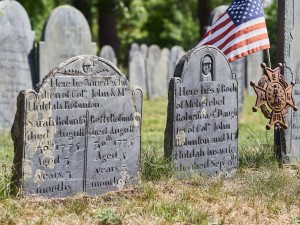
(The picture above shows the gravestones of young sisters Betty, Huldah, and Mehetebel Robinson, dead of dysentery in late 1775, courtesy of the Westford Museum.)

Monday, October 27, 2025

“Great Trade to Bilbao” Symposium in Salem, 8 Nov.

On Saturday, 8 November, Salem State University will host a symposium titled “’To Drive a Great Trade to Bilbao’: Rediscovering New England’s Iberian Ties, 1640s–c.1830.”

This scholarly event coincides with the Marblehead Museum’s ongoing exhibition “Bilbao Bound,” created with the Itsasmuseum Bilbao (Bilbao Maritime Museum).

The symposium brings together an international group of historians and curators to examine a largely forgotten aspect of early New England history: the trading connections between Boston’s North Shore and the Spanish Basque port of Bilbao. Those commercial ties played a part in securing Spanish Crown support for the American Revolution.

10 to 11:30 A.M.
“Bilbao Bound” exhibit tour
Donald C. Carleton, Jr., guest curator
Marblehead Museum

All the symposium presentations will take place in the Petrowski Room of Marsh Hall at Salem State University.

1:30 to 1:45 P.M.
Greetings and Welcome
Brad Austin, Chairman, History Department, Salem State University
Rafael Orbegozo Guzmán, Advisor to the Chairman, Iberdrola

1:45 to 2:05 P.M.
“James G. Lydon and the Rediscovery of New England’s Iberian Trade(s)”
Donald C. Carleton, Jr., exhibit curator

2:15 to 3:45 P.M.
New England and Iberia: Peoples, Ports, Perspectives
  • “Dowries of Cod and Prayers against Shipwreck: Women and Their Atlantic World in the Early Modern Basque Country” by Amanda L. Scott, Associate Professor of History and Women’s, Gender, and Sexuality Studies, The Pennsylvania State University
  • “El papel de cádiz en las primeras redes comerciales atlántico-mediterráneas de nueva inglaterra (1770–1820)” [“The Role of Cádiz in the early Atlantic-Mediterranean Commercial Networks of New England (1770–1820)”] by Guadalupe Carrasco-Gonzalez, Profesora Titular, Universidad de Cádiz via Zoom
  • “Fish for Faience: Archaeological Evidence of Early New England’s Trade with Portugal” by Emerson Baker, Professor of History, Salem State University
Moderator: Donald C. Carleton, Jr.

4:00 to 5:15 P.M.
Yankees, Cod, Spain, and Revolution
  • “Spain and the American Revolution: The View from Madrid” by Larrie D. Ferreiro, George Mason University
  • “Fish to Firearms: How Lee, Gerry, and Gardoqui Helped Arm a Revolution” by José Manuel Guerrero Acosta, Project Director and Curator, Spain and the Support for the American Revolution, a Project by Iberdrola
Moderator: Dane Morrison, Professor Emeritus of Early American History, Salem State University

5:15 to 5:30 P.M.
Concluding Remarks
Brad Austin

The symposium is free, but attendees must register in advance. For in-person seats, sign up here. To watch the presentations online, use this link.

Sunday, March 30, 2025

“Some of which they themselves were witness to”

As described yesterday, an agent for the British government “pumped” Julien-Alexandre Achard de Bonvouloir and the Chevalier d’Amboise at their hotel in London in the summer of 1775.

The two Frenchmen had recently arrived from New England, and they had a lot to say about the rebel army there.

Some of the claims the agent set down were wildly false: “That there are at least 200 french amongst the Troops of the Rebels, who acted as Artillerists and Engineers, which numbers may be augmented since they came away.”

The British agent was particularly eager to report support from European powers: “Seven french Ships, masked under English Colours came into different ports with Ammunition &c.”; “the Americans expected French and Spanish Officers and Engineers, also Powder &c.” Perhaps Bonvouloir and D’Amboise told him what they sensed he wanted to hear.

On the other hand, other reported remarks from the Frenchmen matched the situation more closely, albeit filtered through aristocratic eyes:
6. That the Rebel Officers in general are perfectly ignorant of their business, and they esteem them men of very moderate, or rather mean parts,—but the private men are well trained to the handling of Arms, and remarkably well armed, particularly in the Articles of Firelocks and Bayonets.

7. That they saw the Fortifications on the Posts of Roxbury and Cambridge and also the Park of Artillery the Rebels have in the neighbourhood of the last place consisting of Canons, Mortars and Howitzers, concerning the quality of which they do not agree—Le Comte de Beauvouloir says,—they are equal in quality and Bore to those employed in Europe, and he only found them defective in the Article of the Carriages, which he said are of a bad Construction.—his friend the Engineer (whom I heard called Le Chevr d’Ambroise) held the Artillery rather cheap in general, but perticularly the Mortars which are small.—they both agreed that the Rebels were in want of Ammunition, particularly of powder, and insinuated that they might be greatly distressed by being Canonaded from Posts well chosen and properly fortified.
Bonvouloir reported the militant mood of the New England population in early 1775, though again he came up with a strange anecdote for it:
10. That the common people in America have been worked up to a pitch of enthusiastick phrensy that is beyond conception, and such was their Confidence (when they came away) that they were convinced His Majesty’s Troops would be entirely defeated, and driven on board the Ships in less than two Months, and indeed the Rebel Chiefs employed every Art to keep up their Spirit and enforce such Ideas, some of which they themselves were witness to, such as making their own people put on English Regimentals and come into the Camp in the Character of Officers and Soldiers deserting from His Majesty’s Troops, and one Man personated a Member of Parliament.
There’s no evidence from this side of the Atlantic to support those stories—no plans to impersonate British soldiers, no report of seeing a Member of Parliament on the ground.

In sum, like a lot of raw intelligence, this report was a mix of fact and fabulism.

TOMORROW: Bonvouloir makes his move.

Saturday, March 29, 2025

“Employing every art and all the Address I am Master of”

Here’s another glimpse of espionage in 1775.

That summer, Julien-Alexandre Achard de Bonvouloir, younger son of a French nobleman, and the Chevalier d’Amboise arrived in London on a ship from New England.

They aroused the suspicions of the British government. On 5 August John Pownall, Secretary to the Board of Trade, wrote to the Earl of Dartmouth, Secretary of State for the colonies:
The Lodgers at the Hotel in Watling Street have been watched & pumped by a discreet & proper person employed by Lord Rochford, they proved to be as stated in the Letter you left with me, French officers from the West Indies, by the way of North America; they do not conceal that they have been in [Israel] Putnams Camp, but they speak of him and his troops in a most despicable Light, and say that but for their advice they would have made an Attempt that would have ruined them—if this is true I don’t think we are much obliged to the Gentlemen—

they further say that there is at least 200 able Officers & Engineers of all countrys now here endeavouring to get passages to North America—

a few days ago the Society at the Hotel was increased by the addition of a french officer from France, who got out of his Chaise at Westminster Bridge took a Hackney Coach, and went both to the Spanish and French Embassadours—in a few days we shall probably know more and be able to judge what is fit to be done.
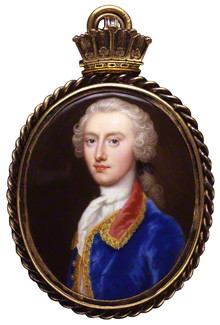
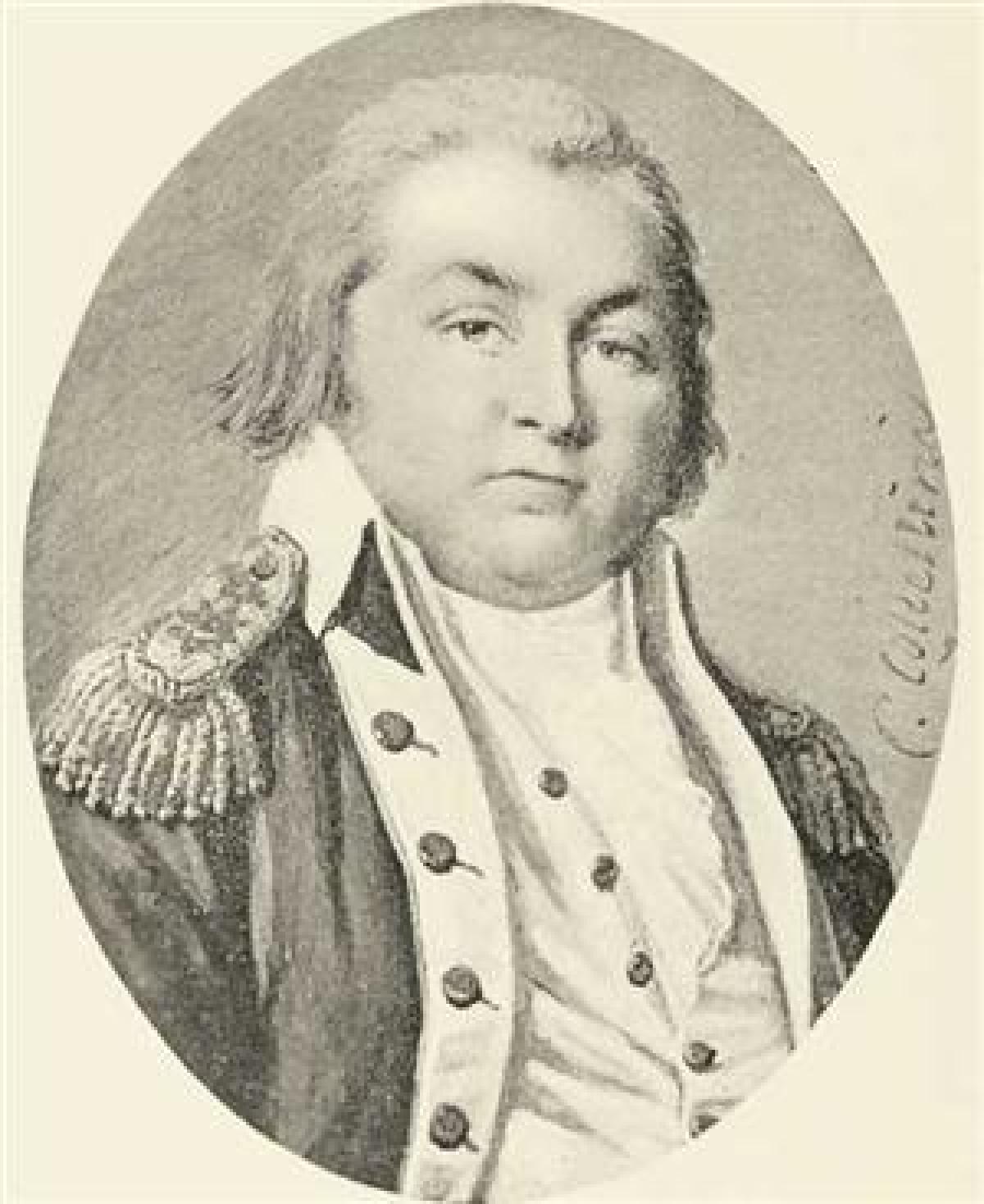
The Earl of Rochford (shown above) was Britain’s other Secretary of State, with responsibility for continental Europe.

This document seems less valuable for its secondhand content about America than for its hints about intelligence methods in London. The Frenchmen were “watched,” “pumped,” and trailed. The new arrival switched vehicles before visiting embassies but didn’t manage to shake his trackers.

Lord Dartmouth’s files also contain a unsigned report headed “Intelligence.” which states:
What I have been able to collect from the two French Officers by employing every art and all the Address I am Master of, amounts to what follows:—

1st. That they have been over great part of the American Continent, particularly at Philadelphia, at New York, Rhode Island, and New England, which with their stay in and about Boston, would have required more time to perform than the three Months they say they remained in America.

2d. That they are particularly acquainted with Putnam and [Artemas] Ward,—the first they represent to be a good natured Civil and brave old Soldier—but a head strong, ignorant and stupid General—Ward they hold indeed very cheap.

[3d.] That they were both in person at the Affair of Lexington, and from circumstances they cited, I am induced to think that they were present at the Affair of the 17th [i.e., Bunker Hill].

4. That they were courted by the Rebels to stay amongst them, and were offered forty Pounds / Month each, of pay—they say they did not think such Offers solid, nor did they like the paper Currency. . . .
I suspect the claim to have been “in person at the Affair of Lexington” meant Bonvouloir and D’Amboise were present in eastern Massachusetts during the militia alarm on 19 April, not that they were in Lexington itself on that early morning. Still, adding two aristocratic Frenchmen to the mix of people in New England at the outbreak of war is intriguing.

TOMORROW: Pumping M. Bonvouloir.

Wednesday, December 25, 2024

“This is a great day with the Roman Catholics”

On Saturday, 25 Dec 1779, John Quincy Adams was in the coastal town of La Coruña.

He and his younger brother Charles were accompanying their father on his second diplomatic mission to Europe. Aiming for France, their ship had run into trouble, and the captain had chosen to dock in allied Spain instead.

That provided the occasion for John Quincy to experience another culture. Which his diary shows him doing with characteristic primness:
This is a great day with the Roman Catholics. “Fete de Nouailles” Christmas. However I find they dont mind it much. They dress up and go to mass but after that’s over all is. So if they call this religion I wonder what is not it; after Mass, almost all the Shops in town are open’d.

But stop. I must not say any thing against their religion while I am in their country but must change the subject.

This forenoon Madame Lagoanere [wife of the American consul] sent us some sweetmeats: for my part I was much obliged to her for them, but I shall diminish them but little.
John Quincy’s idea of a proper religious holiday involved closing the shops. That was how people observed fast days in New England, after all. And the gift of sweets seems to have puzzled him. I suspect Charles wasn’t so bothered.

Saturday, June 01, 2024

“All the English must deliver their Vessels to the French”

The Turks and Caicos Islands lie north of Hispaniola. In the eighteenth century, they were sparsely inhabited, used mostly for harvesting salt.

Like many other Caribbean islands, the Turks were grabbed back and forth by the three main European Atlantic empires of that time: Spanish, French, and British.

And within the British Empire, the Bahamas and Bermuda fought over who should have jurisdiction.

On 15 May 1764, Capt. John Malcom anchored his sloop Friends off the Turks “in order to take in Salt,” according to a story printed in the 13 September Boston News-Letter.

The crew was interrupted a little more than two weeks later:
upon the 1st of June, about 9 o’Clock in the morning, a French Xebeque of 16 Guns, a Snow of 12 and a Sloop of 8 Guns anchored in the Road; a French Ship of War of 64 standing off and on, about a Mile’s distance:

Said Malcom, and other Masters of English Vessels lying there, being eight in Number, were ordered on board the Xebeque; in the mean Time about 250 Soldiers, Marines or Sailors were landed, who, as soon as they got on Shore, set all the Houses on Fire, burnt and destroyed every Thing in them.

Said Malcom, and the other Masters who were put on board the Xebeque, were told, they and all the English must deliver their Vessels to the French, who would be sent out of the Man of War to take possession of them, which he and the rest were immediately obliged to comply with, and by 2 o’Clock the same Day, all the Vessels, French and English (manned with French) got under Sail, and anchored the next Morning at Salt Quay, another Island which they had destroyed, about 24 Hours before Turk’s-Island, in the same Way;

from whence said Malcom, with the other English Prisoners, were sent to Cape François, upon the Island of Hispaniola, where said Malcom was kept Prisoner under a Guard of French Soldiers till the 10th, and then was ordered with his Men on board his own Sloop (which had been plundered of sundry Articles) in order to leave that Place immediately—

Said Malcom further informs us, that a Detachment of Soldiers had been left on Turk’s Island, with all necessary Materials to fortify said Island.
The repeated phrase “said Malcom” makes me wonder if this came from a deposition or other legal testimony the captain gave after returning to Québec.

This was the second, or perhaps even the third, time that Malcom had been held prisoner by the French in the past decade. He must have been getting tired of that.

The Friends had happened to be at “Turk’s-Island” (most likely Grand Turk) when the French came back for the first time in eleven years to reassert their claim to the archipelago. According to this Turks and Caicos history site:
They erected two “pillories” 80 feet tall that rested on large stone bases. One was on Sand Cay and the other at Saunders Pond Beach on Grand Turk. Each had the name of the French Prime Minister and displayed an iron Fleur de Lis.
A Royal Navy sloop reclaimed possession in 1766, presumably when there weren’t any French warships in the area to fight. The French returned in 1778. British Loyalists showed up in 1781. The French returned for most of 1783, fending off a brief attack by Capt. Horatio Nelson, R.N. Finally, the islands were formally assigned to Britain in the 1783 Treaty of Paris.

This article appeared in the Boston News-Letter with the dateline “QUEBEC, July 36,” suggesting Richard Draper copied the text from the Quebec Gazette of that date. But I don’t have access to that newspaper since databases are defined by modern national boundaries, not old imperial ones.

It’s therefore possible that John Malcom made more news in Québec City while he was based there. I’ve found one other item reprinted in the Boston press, and it’s a doozy.

COMING UP: The first clubbing.

Wednesday, May 29, 2024

“Taken on the 6th Day of November last by 9 Frenchmen”

Yesterday we left Capt. John Malcom in mid-1759, plying the route between Boston and the British Empire’s new conquest of Louisbourg, relaying information about developments in the Seven Years’ War.

That war caught up with Malcom in the fall. This is how the Boston News-Letter reported the story on 28 Aug 1760:
In Capt. Gardner came Passenger from Quebec, Capt. John Malcom of this Town, who with one of his Hands was taken on the 6th Day of November last by 9 Frenchmen, as they were endeavouring to get Wood off the Island of St. Barnaby for the use of the Vessel,

who after he was taken was immediately strip’d of all his Cloaths and barbarously used by the Enemy for four Days at that Place, and then obtaining Liberty to go to Quebec, was taken twice in Twenty-eight Days;

He informs that after he arrived at Quebec, he was often threatned to be given to the Indians to be massacred, they thinking him to be a Spy.—

And that on the 14th of November his Sloop, called the Sally, (his Mate being then on board endeavouring to get to Boston,) off of Gaspee, was taken by the Ship Two Brothers, Francis Boucher Commander, mounting 20 Carriage Guns; by which Accidents the said Malcom not only lost his Vessel, but likewise to the amount of near give Hundred Pounds Sterling in Cash, and other Effects, then on board.
Since Gen. James Wolfe’s forces had taken Québec City on 13 Sept 1759, I presume the “Quebec” where Malcom spent months as a prisoner of war was the area around Montréal, still in French hands until September 1760.

On 7 Apr 1760 the Boston Post-Boy reported about a couple of Malcom’s crew in a letter from Col. Joseph Frye at Fort Cumberland (now once again called Fort Beauséjour):
About [30 January] there came in eight Men, one of whom was a New-England Man, one Irishman, and the rest Italians and Spaniards; who inform’d me they Deserted from a French frigate that lay froze in, at the Head of Gaspee Harbour.

The two former belong’d to a Vessel commanded by Capt. Malcom of Boston, who was taken on by the above Frigate, as she was returning from Quebec, where she had been on a Trading Voyage.
As for younger brother Daniel Malcom, on 5 May 1760 he was home in Boston, preparing to sell a 50-ton schooner called the Betsy by auction at Harris’s Wharf.

TOMORROW: Back to trading, back to Quebec?

Thursday, July 06, 2023

“We have every opportunity and every encouragement”

Over the Independence Day holiday, the political reporting website called The Bulwark published a provocative article by history professors Timothy C. Hemmis and David Head titled “This July Fourth, Remember the ‘Founding Scoundrels’.”

The subhead explains the thesis: “They helped build America, too.”
As Americans celebrating Independence Day, we tend to want to remember the ideal promised by the new nation: that the United States would be a place where high-minded people led virtuous citizens in a spirit of well-ordered liberty.

That’s what Thomas Paine meant in 1776 when he wrote that “we have every opportunity and every encouragement before us, to form the noblest, purest constitution on the face of the earth.” And it’s certainly how the Founding Fathers themselves wanted to be remembered.

But some of their contemporaries interpreted “every opportunity” differently.

These particular individuals would fight for independence from Britain, sure, and even establish new political and social institutions—so long as they could also serve themselves.
Follow the link to see which three scoundrels these authors picked to spotlight.

All three of those men went after opportunities in the old American Southwest, or the new nation’s frontier border with Spain/France. Arguably, such adventurism had as much to do with creating the modern, continent-wide U.S. of A. as the mercantile ventures more typical gentlemen were trying back along the coast.

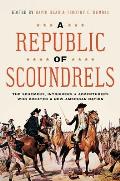
There’s a book coming, of course. Hemmis and Head are the editors of the collection A Republic of Scoundrels: The Schemers, Intriguers, and Adventurers Who Created a New American Nation, which will arrive in December.

Monday, June 05, 2023

Hearing about the Seven Years’ War, Top to Bottom

Yesterday by chance I listened to two podcast episodes about the French & Indian War that were so diametrically different in approach that they ended up being good complements of each other.

One recording was from the History Extra podcast, issued by B.B.C. History Magazine. It was in that podcast’s “Everything You Wanted to Know” series, interviewing an expert about a historical topic using basic, far-reaching questions drawn from listeners and internet searches.

(Though this “Seven Years’ War” episode is restricted on the magazine website, it appears to be freely available through advertising-supported podcast services.)

In this case the interviewee is Jeremy Black, professor emeritus at the University of Exeter. Prof. Black came through Lexington fifteen years ago, as I reported back here. He tends to speak with a great deal of authority, based on a great deal of knowledge. Among his remarks about the French & Indian War were:
  • It was really two wars laid on top of each other, one involving lots of countries on the European continent and one between Britain and France in their imperial territories (with Spain making a poor choice to join in late).
  • Though often called a “world war,” should we really apply that label when China’s huge population wasn’t involved? Hadn’t European powers fought in many parts of the globe simultaneously before?
Those remarks give the sense of how this conversation took a big-picture approach.

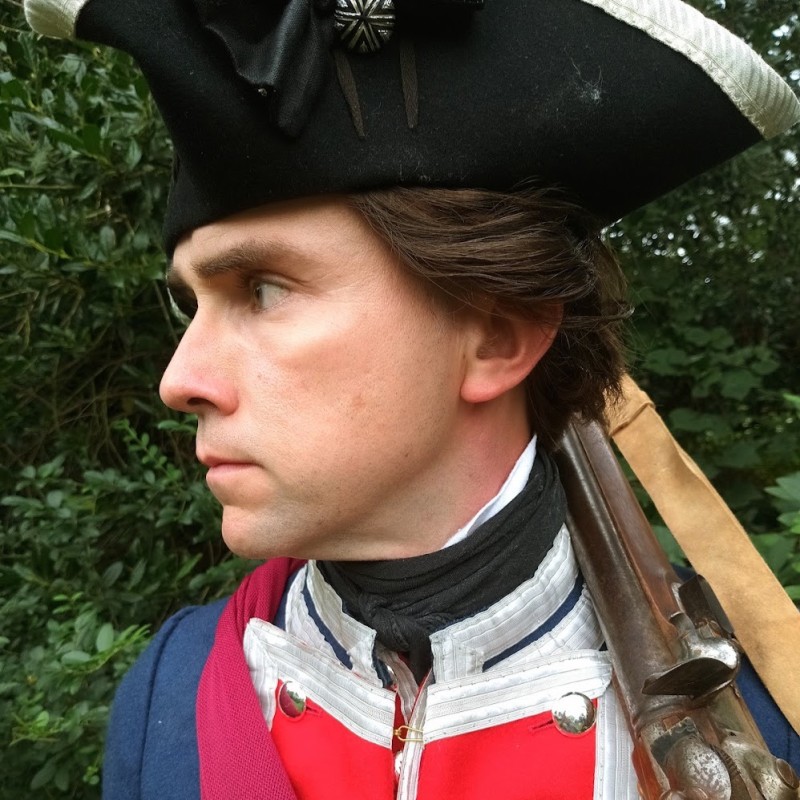
In contrast, the 2 Complicated 4 History podcast from Dr. Lynn Price Robbins and Isaac S. Loftus get into small details on “George Washington, The Seven Years’ War, & Post-traumatic Stress.” Their guest was Daniel Cross, who portrays Col. Washington for the Colonial Williamsburg Foundation (as shown above).

Using Washington, his fellow Virginians, and British army officers as case studies, Robbins, Loftus, and Cross looked at the painful effects of warfare, particularly Braddock’s defeat. They suggest that George Washington’s marriage to Martha Custis gave him not only wealth and status but also the stability he needed to recover from the turmoil of the preceding years. Other men weren’t so fortunate.

Sunday, May 14, 2023

Kongo, “Angolans,” and the Stono Region

Another mystery of the article about early American fossil discoveries that I quoted yesterday was why the author identified the enslaved people who recognized elephantine teeth as coming from the “Kingdom of Kongo.”

The main source on that historic episode, the naturalist Mark Catesby, didn’t mention where in Africa those workers had come from.

However, that discovery occurred in the Stono region of South Carolina around 1725. The same region was the site of a significant uprising by enslaved people in 1739.

As this P.B.S. description says, white slaveholders identified the initial leader of that rebellion a ”an Angolan named Jemmy.”

The History Bandits website states:
The leaders of the initial insurrection were reportedly “Angolans” and suspected to have connections with Spanish Florida. They spoke Portuguese, which many South Carolinians understood to be “a dialect of Spanish, such as Scots is to English” and demonstrated certain adherences to the Catholic faith. One South Carolina planter around this time complained that “many Thousands of the Negroes profess the Roman Catholic Religion,” having learned its tenants [tenets] in Africa before being brought to the New World.
The period term “Angolan” appears to have been a misnomer:
In the early eighteenth century, however, most actual Angolan slaves were shipped directly from the Portuguese colony across the southern Atlantic to Brazil. When South Carolinians employed the term “Angolan,” they were more likely referring to the coast of West Central Africa, which British ship captains called the “Angolan Coast.” The port of Kabinda, near the mouth of Zaire River, served as the main point of embarkation for the slave trade in the region . . .

the slaves themselves came from the vast African interior. Distinguishing actual identities and backgrounds of African slaves is often impossible. Given that the leaders of the Stono Rebellion spoke Portuguese and practiced Catholicism, it seems likely that they came from the Kingdom of Kongo, the only region of West Central Africa with a long history of exposure to both the Catholic Church and Portuguese traders.
Thus, while it appears to be an assumption that the people who identified the mammoth teeth were from Kongo, there’s solid historical reason for making that assumption. That would be consistent with a knowledge of elephants. In Fossil Legends of the First Americans, Adrienne Mayor noted that the Congo region was the home of “living Loxodonta elephant species.”

However, there were also elephants in the Senegambia region and other parts of western Africa, home to most people shipped to North America. The slaveholders of the Stono region appear to have seen the “Angolans” as a troublemaking fraction of the people they claimed, not typical. Thus, while the people who saw the resemblance between mammoth and elephant teeth could well have included captives from Kongo, I don’t think that was the only possibility.

Saturday, August 06, 2022

James Leander Cathcart on Three Continents

At Common-place, Julie R. Voss discussed the self-fashioned career of James Leander Cathcart (1767–1843).

Cathcart was born in Ireland and, according to an autobiographical manuscript he left with his family, came to America at age eight with a relative who was a sea captain. That would have been just as the war began.

Within a couple of years, both James and his relative were working on privateers. He reported that he out on the Connecticut-based Continental warship Confederacy under Capt. Seth Harding (1734–1814). That frigate had 32 guns and galley oars as well as sails for better maneuvering, but, when faced with two British warships, Harding surrendered on 18 April 1781.

Cathcart thus became a teen-aged prisoner of war. Voss writes:
In his narrative, Cathcart claims the frigate was seized and the sailors held on a prison ship in New York harbor, from which he and a friend escaped. This striking and adventurous story cannot be corroborated, and it’s at least equally possible that Cathcart claimed his British citizenship when he was seized and then served in the British Navy in order to escape being a prisoner of war.
There are Admiralty Office records of at least some of the New York prison ships, so it might be possible to find young Cathcart’s name and know how long he was a prisoner and how he got out.

After the war, Cathcart continued to work as a sailor, running into another danger:
The Mediterranean practice of seizing ships and holding the crews for ransom or hard labor was common. In fact, the practice dated back centuries, and went in multiple directions. In the heyday of galley ships, European nations captured North Africans to work the oars; and the Catholic Church engineered an entire enterprise of “redemption” for Catholics seized by the ships of Barbary.

By the late eighteenth century, European nations signed treaties with the Barbary States to protect their shipping, and these treaties were renegotiated frequently. After the American Revolution, American ships were no longer protected by British treaties, and Cathcart and his shipmates quickly learned the consequences.
James spent eleven years as a captive, coming of age in northern Africa. At first assigned to be a menial servant, James finessed what Voss calls his “remarkable facility with languages” to become a clerk for the local official and a business owner.

When David Humphreys arrived to neogtiate for the Americans, Cathcart became the man’s aide, helping to obtain his and his fellow prisoners’ release in 1796.

One might think James Leander Cathcart had then had enough of north Africa, but he had lived as long on that continent as any other. He lobbied to be appointed a U.S. consul.

For all his skills, some people thought Cathcart was duplicitous. The American diplomat Joel Barlow stated, “He has neither the talent nor the dignity of character necessary” for his role. Mustafa Baba, the Dey of Algiers after the one Cathcart served, sent a similar message to President Thomas Jefferson. In modern translation:
If he comes to me, I shall in no way receive him since he is not a good man. It is clear that wherever he spends time he creates a great disturbance. For this reason, our not accepting him is for our and your good.
As translated at the time:
his Character does not Suit us, as we know, wherever he has remained That he has created difficulties and brought On a war And as I will not receive him I am shure it will be well for both nations
But the U.S. didn’t have a lot of people experienced in the Arab world and willing to serve the government. Cathcart thus remained consul in Tunis and Tripoli, helping to negotiate again with Algiers. Later he spent more than fifteen years in Madeira and Cadiz before returning to the U.S. of A. and working for the Treasury Department.

Wednesday, July 20, 2022

“Extensive swamps of bitumen”

Yesterday I visited the La Brea Tar Pits in Los Angeles, which occasions this short posting about events far from New England.

While Bostonians spent 1769 continuing to complain about British soldiers stationed in town, the Spanish official Gaspar de Portola led an expedition north from Mexico.

On 3 August the Franciscan friar Juan Crespi wrote in his diary of that journey:

We proceeded for three hours on a good road; to the right were extensive swamps of bitumen which is called chapapote.

We debated whether this substance, which flows melted from underneath the earth, could occasion so many earthquakes.
The locals who had made that “good road” had used the tar for thousands of years to waterproof baskets, mend pottery, decorate jewelry, and more. But this was the first time Europeans had seen the tar pits.

In 1781, the year that the British, American, and French forces fought the decisive siege of Yorktown, Gov. De Portola founded a colonial settlement called El Pueblo de Nuestra Señora la Reina de los Ángeles.

That settlement grew into the city of Los Angeles. It contained the tar pits, which locals continued to mine for building material, then to drill for oil, and now explore for fossils and host countless school field trips.

Tuesday, July 05, 2022

“They found in its stomach a package…”

I couldn’t help being intrigued by this anecdote from Aderivaldo Ramos de Santana’s recent article on the Black Perspectives history blog, as translated by Ana Catharina Santos Silva:
[In 1799] in the West Indies, in the context of conflicts involving France, Spain, Holland and England, Lieutenant Hugh Whylie [of the Royal Navy] stopped Nancy, an American ship.

Nancy’s journey, a 125-ton brig, began in the port of Baltimore on July 3, 1799, and was bound for the ports of Curaçao and Santo Domingo (now Haiti) to buy goods that would supply American trade. After the first stage, the ship followed its destination towards Port-au-Prince, but bad weather and a broken mast forced it to stop at the small Île à Vache (Cow Island), in southern Haiti.

Soon after, Nancy was chased and approached by Sparrow, one of the English cruisers commanded by Lieutenant Whylie, who watched the Haitian coast. Since the ship was suspected of being a “good prey” for the illegal trafficking of goods with the enemy nations, it was then escorted to Port Royal, Jamaica, where a lawsuit was filed. Nancy’s captain, Thomas Briggs, fervently claimed the vessel was neutral, with no connection to the Dutch or Spanish.

As investigations progressed, another English cruiser, H.M.S. Aberdavenny, commanded by Lieutenant Michael Fitton, found the main evidence to convict Briggs and his crew of the crimes of perjury and smuggling. On August 30, Fitton spotted, near Jacmel, a dead bull [whale] fought by hungry sharks, 119 kilometers from Cow Island, a description that might take one back to Herman Melville’s novel Moby Dick. In the interest of catching at least one of the predators, the lieutenant threw a bait and managed to lure the biggest of them. As the sailors opened and cleaned the animal, they found in its stomach a package with documents carefully tied. The leaves were separated on deck and set to dry in the sun, revealing who the real trading partners of the American brig were.

Except for the envelope, the letters were in perfect shape. One of them, dated on the island of Curaçao, was addressed to Christopher Schultz, a Jewish merchant from Baltimore, and dealt with merchant affairs. Based on this documentation, Nancy and her charge were condemned as “proper war preys” on November 25, 1799.
Ramos de Santana’s article discusses other ways that sharks intersected with the transatlantic slave trade, both biologically and symbolically. Indeed, this wasn’t the only example of a ship’s records being thrown overboard and retrieved from the intestinal tract of a shark.

(The picture above is, of course, John Singleton Copley’s Watson and the Shark, showing the British merchant Brook Watson’s close encounter with a predator in Havana harbor in 1749. This version hangs at the Museum of Fine Arts in Boston.)

Tuesday, May 10, 2022

Botto Sculteus Aeneae’s American War

At the Age of Revolutions site, Tessa de Boer shared a new source on the latter years of the American War for Independence through the eyes of a youth.

In August 1781, Botto Sculteus Aeneae was “a twelve-year-old boy from Amsterdam, feverishly excited about his fanciful midshipman job.”

He was serving on a ship called the South Carolina, ferrying military supplies from the Dutch island of Texel to Charleston in the young United States of America.

On 25 Nov 1783, Botto was back in Amsterdam. He described his previous two and a half years to a notary. The intervening experiences included:
  • shying away from the Charleston port on learning that it had been recaptured by the British. 
  • sailing the Caribbean on the South Carolina, taking prizes.
  • helping the Spanish military seize the Bahamas in May 1782. 
  • reaching Philadelphia, where the ship had to be restaffed with “mostly inexperienced youth desiring adventure, and Germans recruited out of British prisoner camps.” 
  • quickly being captured by three British warships. 
  • being sent as a prisoner onto the infamous Jersey prison ship in New York harbor. 
Of course, the existence of the manuscript shows that Botto Sculteus Aeneae survived the Jersey and the war, making it back to his home town. However, the same document suggests he was preparing a lawsuit of some sort, possibly seeking compensation for his service better than the Continental bond and grants of land in North America that American authorities had offered.

That purpose also makes Botto’s deposition somewhat frustrating. He didn’t tell his story to inform his family what he went through, to entertain readers, or to create meaning for himself. He was simply getting his experiences and basic suffering down on paper for the record. The account doesn’t have a lot of daily detail or emotion beyond frustration and suffering. 

Still, it’s a side of the war we rarely see from an even more unusual witness and participant. De Boer’s translation of the text appears under the notes for her essay about it.

Saturday, February 05, 2022

Public Occurrences, Both Foreign and Domestic

Last month on H-Net, Tristan Stubbs reviewed D. H. Robinson’s The Idea of Europe and the Origins of the American Revolution, published in 2020 by Oxford University Press.

Stubbs wrote:
…this highly impressive work offers a genuinely new paradigm through which to view the years leading up to 1776. Americans made the fateful decision to secede not for the economic reasons offered over a century ago by Charles Beard and the Progressive historians; they were not the “radicals” drawn by Gordon S. Wood; and their motivations cannot be ascribed solely to civic republican ideals of virtue and liberty favored by the “canonical intellectual histories” of Bernard Bailyn and J. G. A. Pocock.

Instead, Americans had seen themselves for a long time before the Declaration of Independence as intimately connected to European geopolitics, took a deep interest in the balance of power across the ocean, and were disappointed by the metropolitan Tory government’s failure to shoulder its responsibilities in defending continental liberties against the overweening power of France and Spain. . . .

it spends an impressive amount of time on the effect on metropolitan and colonial opinions of Sweden’s 1772 reversal to absolutism and of the British government’s failure to support the Republic of Corsica against what colonists viewed as French attempts to impose Catholic “universal monarchy” not only on that Mediterranean island but throughout the French sphere of influence—including in America.
This hypothesis truly does seem like a “new paradigm,” in that I hadn’t considered inadequate protection from Catholic empires to be a major concern for the Americans resisting Crown measures from 1765 to 1775.

There would be at least a great irony if colonists adopted independence due to fear of France and Spain given how the young U.S. of A. soon allied with France and Spain. And then felt threatened by Spain/Napoleonic France as well as Britain on its new borders without the protection of a large empire.

To be sure, the Revolution in New England was fueled by suspicion of popery and ended with national freedom of religion, and the war in large slaveholding states was fueled by fear of slave uprisings and ended with slavery coming to an end in other parts of the country. So a paradoxical outcome doesn’t negate a possible cause of the conflict.

But the idea that colonial American discourse about European geopolitics strongly influenced resistance to Parliament’s new taxes and royal officials seems very tenuous. Ebenezer Mackintosh named a son after Corsican independence leader Pasquale Paoli and Loyalists claimed that William Molineux wanted “Paoli” as a nickname himself, but I really don’t see the farmers of Hampshire County shutting down their courthouse because they felt the London government hadn’t supported Paoli’s Corsican cause enough six years before. (Indeed, it was well known the British Crown granted Paoli a pension, supporting him as an asset against France.)

Today we Americans live in a much more democratic society, meaning more people are involved in political decisions. We’re privy to more news from around the world. Our economy is more globalized, as are our military forces. By all measures we should be more concerned with international relations than eighteenth-century farmers. And yet foreign policy is rarely a big factor in our politics, so was it a factor in theirs?

Robinson’s argument appears to rest on what he calls “the discursive evidence,” the same body of evidence that he says should also rule out historical hypotheses about the Revolution based on “relations between classes and genders...racism and material cultures.”

As Stubbs writes, “the discourse under investigation here was led primarily by white, male, anglophone professionals.” And in this case “professionals” appears to mean the sliver of educated, usually wealthy white men who wrote essays for the newspapers.

I have no doubt those essays used contemporary Sweden as an example of the danger of autocracy, the same way they used the Stuart monarchs and the Roman emperors. But I doubt those writings from such a narrow, well, class really got at all the forces driving political change at the time. And I’m skeptical that developments well outside the British Empire motivated colonial Americans to rebel as much as “pocketbook issues.” 

Monday, December 27, 2021

Florida’s Foamy Fort

the stone walls of Castillo de San Marcos in Florida
This article from Atlas Obscura about Castillo de San Marcos National Monument caught my eye recently.

Lena Zeldovich wrote:
In 1702, when the Spanish still ruled Florida, an English fleet from colonial Carolina approached Castillo de San Marcos, a Spanish stronghold on the Atlantic shore. . . .

But even after nearly two months of being shelled with cannonballs and gunfire, the fort’s walls wouldn’t give. In fact, they appeared to be “swallowing” the British cannonballs, which then became embedded within the stone. . . .

Built from coquina—sedimentary rock formed from compressed shells of dead marine organisms—the walls suffered little damage from the British onslaught. As one Englishman described it, the rock “will not splinter but will give way to cannon ball as though you would stick a knife into cheese.”
This behavior intrigued people who grew up near the fort, including mechanical engineering graduate student Phillip Jannotti and high-school student Sanika Subhash, daughter of Jannotti’s dissertation advisor.

They formed a team that tested souvenir samples of coquina stone by firing small metal projectiles into the material and recording how it behaved with high-speed cameras.

The result:
coquina had a rare ability to absorb mechanical stress, which stemmed from its loosely connected inner structure. Although the little shell pieces that make up coquina are piled and pressed into each other for thousands of years, they aren’t cemented together, so they can shuffle around a bit.

So when a cannonball slammed into the coquina walls of Castillo de San Marcos, it crushed the shells it directly hit, but the surrounding particles simply reshuffled to make space for the ball. “Coquina is very porous and its shells are weakly bonded together,” Jannotti says. “It acts almost as natural foam—the balls sink in, and slowly decelerate.”

It’s not clear whether the Spanish had known about coquina’s properties when they first built the walls, mining the stone from the nearby quarry within what is today Anastasia State Park. But they certainly learned to appreciate the material’s absorptive properties. When they realized coquina’s unique abilities, they used the fort walls for target practice.
The Spanish thus practice-attacked their own fort, not worrying about weakening its walls. And it worked. Another British colonial force tried to take the fort again in 1740, also without success.

Because of victories elsewhere, Britain held Florida from 1763 to 1783. During the Revolutionary War, therefore, this site was known as Fort St. Mark.

Thursday, December 02, 2021

How to Become the Member from Thirsk

Under the subject of “Eighteenth-century British aristocrats are not like us,” I’ve been looking into the life of Thomas Gascoigne (1745-1810).

Gascoigne was born not in Britain but in a convent at Cambrai in northern France. He was the third son of Sir Edward Gascoigne, baronet, and his wife. The Gascoignes were Catholic and had long ties to that convent, which was part of the English Benedictine Congregation.

Thomas grew up in France, educated by monks at Douai. In 1762, when he was sixteen years old, his older brother died, and he succeeded to the baronetcy. From then on he was Sir Thomas Gascoigne, baronet.

To prepare for his responsibilities as an estate owner, the teenager was sent to Paris for more schooling, visited Britain for the first time, and in 1764 embarked on a Grand Tour of southern Europe.

That travel ended abruptly in March 1765 when, it appears, a traveling companion killed a coachman in Rome and young Sir Thomas was peripherally involved. He had to hurry back to England, though his connections secured a papal pardon later in the year.

For the next decade Sir Thomas Gascoigne settled into life as a British gentleman. He developed his estates, including the usual improvements: scientific gardening, breeding race horses, funding coal mines, founding a spa. He had a romance with Barbara Montgomery (1757-1788), one of the three sisters Joshua Reynolds painted as “Three Ladies Adorning a Term of Hymen” in 1773.

By 1774 it was safe to visit Europe again, and Sir Thomas spent the rest of the decade outside Britain. He traveled with the author Henry Swinburne, paying most of the bills. During those years Britain declared war on France and Spain, but that doesn’t appear to have greatly affected Sir Thomas’s movements because he was traveling in Catholic circles. His faith kept him out of the British government, after all.

That all changed soon after Sir Thomas Gascoigne returned to his seat in the middle of 1779. He decided to get involved in politics. As a baronet, he had inherited a title but not a peerage, so he wasn’t in the House of Lords and could run for the House of Commons. However, the law barred him from Parliament as a Catholic.

On the king’s birthday in June 1780, therefore, Sir Thomas Gascoigne renounced his Catholicism before the Archbishop of Canterbury. (He never stopped supporting Catholic missions.) Three months later, he entered Parliament as the member from Thirsk, a seat recently purchased by the Marquess of Rockingham for his faction of Whigs. Later he represented Malton and Arundel.

As a Rockinghamite, Sir Thomas opposed continuing the war in America and supported some electoral reforms. Within the larger Whig faction he favored Charles James Fox over the younger William Pitt, which left him once again excluded from power after 1784.

TOMORROW: Sir Thomas Gascoigne’s mark on history.

Sunday, June 27, 2021

Visiting the American Republics

Two historians I follow on Twitter published reviews of Alan Taylor’s American Republics: A Continental History of the United States, 1783–1850 last week.

For The New Criterion, Daniel N. Gullotta of Stanford and the Age of Jackson podcast wrote:
Taylor’s history incorporates Canadian, Mexican, and Native American perspectives to recount the birth of the early Republic and the rise of American democracy. Taylor’s sources, which also include material from European diplomats and foreign travelers, offer unique insights on episodes routinely covered in similar books. International events loom particularly large in the mind of his antebellum American subjects, such as the establishment of Haiti as a free black republic in 1804, the various Latin American revolutions that erupted throughout the early nineteenth century, and the United Kingdom’s Slavery Abolition Act of 1833.

While other works have shown how involved Americans were in regional events and national politics, Taylor demonstrates their keen awareness of foreign events and global changes, too. They were, for instance, angry that Canadians and Britons thought of the United States as a nation of irresponsible drunks, ill-tempered ruffians, and hypocritical slavers. . . .

Even the Americans who did want to expand the nation’s borders rarely did so out of a national sense of shared destiny, but rather out of regional self-interest. The absence of early American nationalism in this period might surprise readers, who will find more figures proudly willing to call themselves Virginians, Georgians, or New Yorkers than Americans. This regionalism and the issue of slavery made for a young nation full of anxiety and built on fragile alliances, ready to break out into civil war at almost any moment.
The Washington Post commissioned its review from Colin Woodard, author of American Nations and Union and journalist at the Portland Press Herald:
The takeaway is that this era of conquest and expansion was a time of anguish and acrimony for U.S. leaders — manifest uncertainty — and terrible tragedy for many of the continent’s inhabitants. In an effort to achieve security for its White citizens — to protect them from imperial rivals, native nations and enslaved-person uprisings — the United States aggressively expanded. The effort instead triggered the Civil War, as the balance of power between slave and free states became impossible to maintain. . . .

For Americans used to the comforting myth of an exceptional union boldly leading humanity in a better direction, this account may sting. Taylor doesn’t seek to salve such pain, but neither has he written a polemic. Diligently researched, engagingly written and refreshingly framed, “American Republics” is an unflinching historical work that shows how far we’ve come toward achieving the ideals in the Declaration — and the deep roots of the opposition to those ideals.
In addition, Taylor did a podcast interview with Lewis Lapham.