J. L. BELL is a Massachusetts writer who specializes in (among other things) the start of the American Revolution in and around Boston. He is particularly interested in the experiences of children in 1765-75. He has published scholarly papers and popular articles for both children and adults. He was consultant for an episode of History Detectives, and contributed to a display at Minute Man National Historic Park.

Subscribe thru Follow.it


•••••••••••••••••


Showing posts with label women. Show all posts

Friday, July 17, 2026

A Boston Stone

This month the city of Boston announced a new finding about a stone in the Granary Burying Ground that reads:
HERE LYES Ye.
BODY OF BOSTON
AGED 70 YEARS
DECd. FEBy. Ye. 28
1 7 2 8
Kelly Thomas, director of the Historic Burying Grounds Initiative for the Boston Parks and Recreation Department, told WBZ: “I was reviewing the photos of headstones, and then I noticed that the stone only had one name.” A geographic name, at that. That hinted the person buried there had been an enslaved man.

Some documentary research turned up records of such a man. Indeed, Gloria McCahon Whiting discussed Sebastian’s marriage to Jane Lake at length in her 2024 book, Belonging: An Intimate History of Slavery and Family in Early New England. Judge Samuel Sewall helped to negotiate the terms of that union at the same time he was writing The Selling of Joseph, his pioneering but self-suppressed anti-slavery pamphlet.

On 13 Feb 1701, after protracted discussions between the couple’s two owners, the judge married the couple. Sebastian’s owner, John Waite, died the next year. Six years after that, when the Boston selectmen listed free black men in town they put to work mending roads (since those men were free/barred from militia training), one of those men was identified as “Bastion Waite.”

Interestingly, Sebastian’s wife came to be known as Jane Basteen and then Jane Boston, taking (or being assigned) her husband’s name while he was assigned his late owner’s surname. As Whiting pointed out, Sabastian would name his second son Joseph, echoing Sewall’s pamphlet. Meanwhile, Sebastian’s name evolved into “Boston.”

The issue of the New-England Weekly Journal dated 24 Feb 1729 included this death notice:
On the 14th. Instant [i.e., of this month] died here a Negro Freeman named Boston, in an advanced Age, and on the 17th, was very decently Buried. A long Train follow’d him to the Grave; it’s said about 150 Blacks, and about 50 Whites, several Magistrates, Ministers, Gentlemen, &c.——

He having borne the Character of a sober Virtuous Liver, and of a very trusty honest and faithful Servant to all that employ’d him, and having acquir’d to himself the general Love and Esteem of his Neighbours by a Readiness to do any good Offices in his power for every one; his Funeral was attended with uncommon Respects, and his Death much lamented.
The carved gravestone, whether paid for by Boston’s estate or by his friends, was another sign of his standing in the community. It is, Mayor Michelle Wu now notes, “one of the oldest gravestones of a free Black person in America.”

At first I was confused by the different death dates stated in the newspaper and on the gravestone. But then I realized the stone was written in the Old Style, Julian date system while the newspaper followed New Style, Gregorian dating decades before the British Empire adopted it officially.

Wednesday, July 15, 2026

“Touching the delivery of the Papers found upon Mrs. Hill”

As recounted yesterday, on 21 Oct 1776 Boston’s committee of correspondence, inspection, and safety questioned Elizabeth and Mary Hill about the documents they had tried to carry into British-occupied New York.

One of those letters was from Dr. Benjamin Church, Jr. The Patriot authorities were pretty certain he had spied for Gen. Thomas Gage, but they were still lacking solid evidence. If that letter had been incriminating, they would have used it.

In the second letter, Elizabeth’s husband John suggested that the merchant John Timmins was a fellow Loyalist.

And when asked who had brought John’s letter out of the Boston jail to her, Elizabeth said it might have been Richard Newton.

The committee sprang into action:
Collo. [Nathaniel] Barber and Mr. [Ebenezer] Dorr were appointed to go to Mr. [Alexander?] Orracks where Newton lodges in order to secure his Papers for the Inspection of the Committee.

A Complaint signed by the chairman [William Davis], was entered with Mr. Justice [Joseph] Greanleaff one of the Court of Enquiry; praying that the said Newton, might be immediately apprehended, & examined, touching the delivery of the Papers found upon Mrs Hill.
Richard Newton appears to have been a merchant, but not one who had been in Boston for long. He had evacuated Boston on the brig Elizabeth in March along with the Hills, William Jackson, Crean Brush, and other hopeful Loyalists. But Capt. John Manley captured that ship.

In April the Massachusetts Council had ordered Newton, Jackson, Brush, and a couple of other men to be detained in the Boston jail. Later they sent John Hill to jail, too.

In August, Newton signed a bond for good behavior, so he was presumably let out then. It seems quite plausible that Newton brought out a letter from Hill to his wife. That letter probably had more to say about the family’s survival than Boston’s defenses. After all, how much could Hill have learned over the summer in jail?

On 22 October the committee met “at their Chamber in King Street,” perhaps in the Town House. This time Ellis Gray chaired.
The Committee appointed to secure Mr. Newtons Papers Reported, that they had examined the same and could not find any one of a criminal nature among them.

Voted, that Mr. Newton shall have his Trunks of Papers returned him by the Committee — also —

Voted, that the Complaint entered with Mr. Justice Greanleaff, one of the Court of Enquiry against Richard Newton be withdrawn.
As for John Timmins, he was also a merchant. In 1768 he had married the young widow Mary (Olney) Greene, and they had children baptized at Trinity Church. During the tea crisis of 1773 he was agent for the cargo on the Beaver and publicly promised not to unload the East India Company’s tea.

The following year, Timmins signed the merchants’ addresses to Govs. Thomas Hutchinson and Thomas Gage. All of which is to say Timmins really did look like a Loyalist before the war. But he hadn’t left town with the British military.

The committee record says:
Mr. John Timmons name having been mentioned in one of the Papers found upon Mrs. Hill, the Committee sent for her Husband who gave the Paper, and having examined him strictly with respect to what he had written, together with his Wife and Daughter, and also made inquiry of Mr Timmins — the Question was put viz. — “Whether the Committee are fully satisfied, that Mr. Timmons conduct with respect to what passed between Mrs. Hill & himself has been quite unexceptionable — passed in the Affirmative unanimously.
The letters that Elizabeth and Mary Hill had been carrying therefore turned out to be less incriminating than first newspaper reports hinted. Yes, John Hill had communicated to them from the jail. Yes, he’d written about Timmins as a potential helper. Yes, Mary Hill and Ralph Cunningham, attached to the British army, were on their way to marrying. But the committee found no sensitive military information or the like.

Nonetheless, Elizabeth and Mary Hill were still locked up in the Boston jail in February 1777. According to John’s claim to the Loyalists Commission, the family “were all tried For their lives, but not Condemned.” Instead, “In November 1777, they were Exchanged, went to Halifax, and afterwards to New York…”

As for John Timmins and Richard Newton, both those men eventually left Boston for Britain. They decided to be Loyalists in the end.

Tuesday, July 14, 2026

Interrogating Elizabeth and Mary Hill at the Boston Jail

Back in April I wrote a series of postings about John Hill, his wife Elizabeth (?), and their daughter, captured on board the brig Elizabeth as they evacuated Boston in March 1776.

Recently I stumbled back across a source I may have seen before since I could have mentioned it in 2012. But I viewed it with new eyes.

As you recall, on 12 Oct 1776, Patriots in New London detected the two female Hills trying to carry secret letters onto British-occupied Long Island. They sent those women back to Boston, where John Hill was locked up, for questioning.

The records of the Boston committee, inspection, and safety, published by the New England Historical Genealogical Society in 1880, let us fill out that story.

On 21 October, the committee met at the house of Joseph Otis, the jailkeeper. The merchant William Davis chaired. They summoned “One Mrs. Hill Wife of one Hill now in the Jayl of this County examined together with her Daughter” about the incriminating papers they were carrying when detained.

The committee minutes say:
A Letter of recommendation given Mrs. Hill by Dr. [Benjamin] Church was read, together with the other Papers found upon her.

Mrs. Mary Hill the younger was brought in, and examined particularly with respect to Dr. Church, and one Ralph Cunningham mentioned in the Paper, the latter of whom appeared to be a Person who had made Courtship to the said Hill & supposed to be in the British Army at New York.
This source thus tells us that John Hill’s daughter was named Mary, and that she must have been the daughter of John Hill who married Lt. Cunningham of the Legion in 1779, as I guessed here.
Mrs. Hill the Mother was brought in & examined more particularly with respect to Mr. John Timmins of this Town Merchant, who was characterized by Hill the Husband, as a person who had been faithful to Government [i.e., Loyalist].

Mrs. Hill being asked who it was that delivered her the Paper wrote by her Husband answered. that she could not well recollect but thought it was one Richard Newton.
Well, of course we know what happened next: the authorities went on a hunt for Timmins and Newton.

TOMORROW: Further investigation.

Saturday, July 11, 2026

New Dramas at Old Places in Newport, Deerfield, and East Granby

This is a very busy summer for Plays in Place, which works with historic sites to create new plays built on their past, informed by their archives, and designed for their spaces.

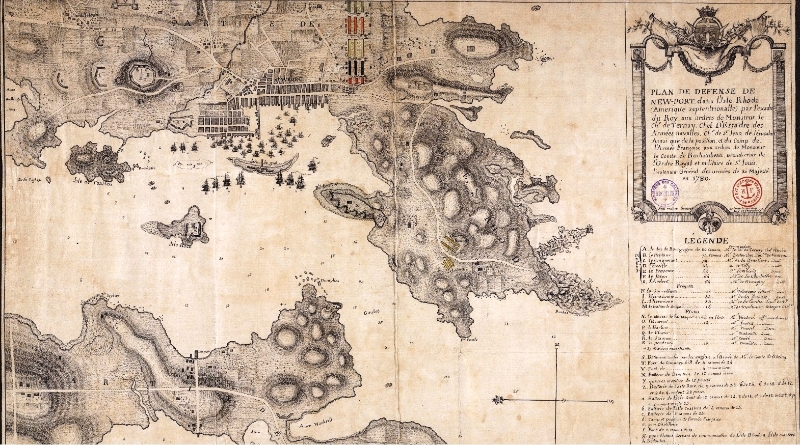
At the Hunter House in Newport, Rhode Island, Newport Mansions presents Loyalty or Liberty, a trio of short plays set between 1778 and 1781 as control of that port changed hands.

“Dinah” by Ken Green follows an enslaved woman in a Loyalist household whose husband plans to enlist in the Continental Army, seeking freedom for the family. “For Love and Glory” by Patrick Gabridge dramatizes the conference between Axel von Fersen, aide-de-camp to Gen. Rochambeau, and Adm. de Barras, who has to be convinced to sail his fleet to Yorktown. “Where We Once” by Lily Mathews picks up the story of Dinah’s enslaver, Sarah Wanton, as she faces life in an independent republic. These plays are directed by Rachel Walshe and produced by Jessica Chace.

Loyalty or Liberty will run Tuesday and Saturday evenings through 1 September. Normally the plays will be staged outdoors, overlooking Narragansett Bay, but in bad weather the production will move into the Guild Hall at St. John’s Church. Buy tickets here.

Historic Deerfield is hosting A Stake in the Ground: 1774, three short plays about conflicts in that Loyalist-leaning town as Massachusetts slid out of royal control.

In the summer of 1774, Patriots brought a Liberty Pole into Deerfield. “The Liberty Lark” by Talya Kingston, “Jinny and Cato” by Valyn Lyric Turner, and “Sparks on Dry Tinder” by Patrick Gabridge explore the political divisions, tangled family relations, and complexities of enslavement stirred up by that political act and the protest against it. These dramas are directed by Brianna Sloane and produced by Talya Kingston.

Performances will take place on Friday and Saturday evenings and Sunday afternoons through 16 August. A Stake in the Ground will be staged outside, with the audience walking to each location and sitting on folding chairs. On 31 July–2 August, and in very bad weather, the same plays will be performed inside the Deerfield Community Center for a more traditional and accessible theatrical experience. Tickets available here.

At the Old New-Gate Prison & Copper Mine in East Granby, Connecticut, visitors can take in The Slippery Truth: Prisonbreak at New Gate by Patrick Gabridge, directed by Zoë Golub-Sass and produced by Nicole Young-Martin.

On 18 May 1781, a group of captive Loyalists rushed up a 35-foot ladder and overpowered their guards, killing one man before escaping into the night. Was this brave resistance by political prisoners or a desperate blow by criminals? Did they have inside help? Prison trustee John Forward interrogates guards and recaptured prisoners to find the truth.

The Slippery Truth will be produced indoors—to be precise, inside the mine. The audience will enter via 33 steps and a 100-yard loop starting at 35 feet below ground and descending to 75 feet below. The shortest tunnel is 4 feet. The mine is always 52 degrees and wet. Strollers, wheelchairs, walkers, and similar devices are not permitted, and visitors should consider their medical history and physical limitations before attending.

Performances will happen on Friday, Saturday, and Sunday evenings through 30 August. Tickets at this page.

Sunday, June 28, 2026

“By dawn on June 18, 1775, nothing was left standing”

The current issue of Archaeology magazine includes a dispatch about the City of Boston’s Archaeology Department recent work in Charlestown, filed by a journalist with the almost-too-good-to-be-true named of Jason Urbanus.

Urbanus writes:
In early 1775, Charlestown was already almost 150 years old. It was a bustling settlement of between 1,500 and 2,000 people representing all walks of life—farmers, artisans, merchants, and mariners, including both free and enslaved Black people.

There were large landholders, such as 53-year-old distiller David Cheever, who owned multiple properties across the peninsula, and those who were less well-off, such as widow Elizabeth Moore, who rented a simple room in a neighborhood tavern. The town’s diverse population also included Margaret Thomas, who bought a humble home in 1773, likely making her the first free Black woman to own property in Charlestown. Among the wide array of craftspeople were goldsmith Nathaniel Austin, chaise maker James Frothingham, and Cato Hanker, a shoemaker. Hundreds of houses, workshops, and other buildings lined the town’s streets and wharves.

By dawn on June 18, 1775, nothing was left standing and everyone was gone. Less than 24 hours earlier, a brutal engagement, known as the Battle of Bunker Hill, had raged across the Charlestown Peninsula. . . . Townspeople were sent fleeing, and many never returned. Nearly all lost everything they owned. . . .

Many of Charlestown’s inhabitants had departed over the previous month amid increasing unrest, but those who remained were jolted from their homes. A widow named Relief Ellery and her 20-year-old daughter of the same name were among those who narrowly escaped the bombardment. The younger woman pocketed two valuable silver tablespoons from the kitchen table—the only things she had time to grab. When the pair returned to Charlestown, none of their property remained. “We have records of British troops coming back the next day and setting fire to any building that still stood,” says [City Archaeologist Joe] Bagley. “It was vindictive.” In a matter of hours, one of the oldest settlements in Massachusetts had ceased to exist. . . .

At the urging of a committee of Charlestown residents, more than 450 families submitted inventories of their lost possessions after the battle in hopes of receiving restitution. . . . Usually, when archaeologists excavate a residence, they record the artifacts that they uncover during the process. In this instance, they already have a list of everything that was in a house before beginning excavations. They know exactly what they might expect to find buried in dozens of backyards and basements.
Or, rather, buried underneath a dense modern city, or perhaps already dug up and tossed aside in construction projects over the past two and a half centuries. It seems unlikely that we’ll see a confluence of household inventory and newly dug artifacts. Still, the written record provides a lot for scholars of domestic material culture to work with.

No doubt Archaeology readers love ceramics, and another section of the article discusses Charlestown early pottery industry, which can also be dated with finality:
No commercial sector was hit as hard as Charlestown’s once-thriving ceramics industry. Although not well-known today, Charlestown had been among the largest pottery production centers in the northeast. That all changed on the day of the battle. With their workshops burned to the ground, Charlestown’s potters scattered throughout New England. “They lost everything—their kilns, all of their work tools—everything was gone,” says Bagley. “None of them came back.”
Pictured above is a milk pan from the site of the Parker-Harris Pottery, excavated during the Big Dig highway project a generation ago.

Thursday, June 25, 2026

“From which patterns of everyday life and social change would emerge”

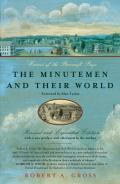
Back in April the Concord Bridge published a nice retrospective profile of Robert Gross, author of The Minutemen and Their World.

Published in 1976 and recently updated, that book has proved the most lasting of the New England community studies that came out in the middle of the twentieth century.

No doubt Minutemen gets a boost from its connection to the nation’s origin story, but it’s a really good book that offers both an early example of computer-aided data analysis and interesting new ideas about how generations interact.

Plus individual stories, as the article says:
Gross wanted to write about “men, women, free and slave, native and newcomer, patriot, neutral, and loyalist” — all of those who had been excluded from conventional accounts — recovering their voices. His approach would reflect his interest in social history, a method that was growing in popularity. It involved tapping overlooked sources such as tax lists, censuses, vital records, genealogies, and town meeting minutes, from which patterns of everyday life and social change would emerge, he says.

Among those who people “Minutemen” is John Jack, an enslaved man who worked for a cobbler, bought his freedom, built a cabin in Great Meadows, and paid his taxes, but was never allowed to vote. At the time of Jack’s death, he owned eight acres, a pair of oxen, and seven barrels of cider. “His was a marginal place in the community, but it was nonetheless a real place,” Gross writes.

And there is Lucy Barnes Hosmer, daughter of a prosperous farmer and town clerk. When Joseph Hosmer, a cabinet maker, asked for permission to marry 16-year-old Lucy, her father refused, wanting her to wed someone wealthy and important.

Though a father could not dictate his daughter’s choice of spouse, he could try to arrange unions and pressure her to agree, Gross says. Lucy rebelled, denying her father’s choice of a cousin for her, and acted on her own. When she married Hosmer at 19, she was two months pregnant.
Highlighting people like that reflects the appeal of such human detail in a study of a society, a balance that The Minutemen and Their World achieved.

Friday, June 12, 2026

Did Sybil Ludington’s Ride Really Happen?

Last month I talked with Ryan Chatelain of Spectrum News about the tale of Sybil Ludington.

His story, headlined “Sybil Ludington is called the ‘female Paul Revere.’ But did her ride really happen?” is a good primer on the historical debate.

On the one hand, Vincent Dacquino has succeeded in pushing back the documented mentions of Sybil Ludington’s ride, as shown in the most recent edition of his book Patriot Hero of the Hudson Valley:
Through his research, Dacquino uncovered that the earliest evidence of her ride actually came in 1854, when Charles Ludington — Henry’s grandson and Sybil’s nephew — argued in a letter to a group of Masons planning a statue for Gen. David Wooster, who was killed in the Battle of Ridgefield, that Henry and Sybil Ludington should also be included in their tribute.
On the other hand, as I state in the article, we still lack contemporaneous evidence about the Ludingtons’ effect on the Battle of Ridgefield or anything else to support the family lore. Knowing that Charles Ludington believed the story seventy years later isn’t proof that it actually happened.

On such lore, Chatelain quotes me on my theory of “grandmothers’ tales”:
Women, sometimes men, involved in raising children would tell stories of the family’s involvement in historical events, presenting those stories simply as educational, as inspirational, as entertaining, not expecting them to be put into the public realm,” Bell said. “…But the children who are hearing those stories grow up — and because these are the earliest stories they’ve heard, because they have to do with their family, because they hear them maybe many times — they really stick with them. And so as they become older, they want these stories, which they believe to be gospel truth, out for everyone to hear.”
The legend of Sybil Ludington’s ride is one of many that fit that model. We know that in other ways the Ludington family lore exaggerates how central their ancestors were to events—just as most family traditions and many personal memoirs do. All the more reason to look for solid evidence.

As I said to Chatelain, the Sybil Ludington story may have some basis in fact. But we have to acknowledge how that account was massaged and enlarged over the years. In the early 1900s an author published a conjectural map of her ride, based on what he acknowledged was supposition. That’s became the basis of more maps, measurements, and highway markers, as well as the repeated claim that Sybil rode farther than Revere—without any additional evidence being offered.

Sunday, June 07, 2026

A New Fight at Bunker Hill

With the anniversary of the Battle of Bunker Hill coming up on 17 June, the central office of the National Park Service has ordered Boston National Historical Park to remove much of a display of quotations of Americans commenting on the battle in the context of their times.

This incident began with the Trump administration ordering parks to post Q.R. codes to collect feedback from visitors in a new channel. This was clearly an attempt to trawl for political objections, but I heard that most of the comments were positive.

As reported by the Washington Post, “A visitor at the [Bunker Hill] site complained to park staff about a quote related to women’s suffrage as being ‘woke’ feminist ideology, the people familiar said, and the visitor later sent an email complaint.”

There appear to be two quotations on display that address the situation of American women in the late 1800s:
“The battle is celebrated for the justice of the cause, which, because it was just, was triumphant. The woman sufferance battle is like that of Bunker Hill—not won today, but sure to be later. Meantime, Bunker Hill Monument is our monument.”
—Lucy Stone, The Woman’s Journal, 22 June 1889

“Once, as we were passing by in the train, we saw the lofty shaft on Bunker Hill outlined against the sunset glow. [Lucy Stone] spoke eloquently of all it commemorates, and said in substance: ‘We are still battling for the principle it stands for. My spirit kindles whenever I see that monument. It is our monument.‘”
—Florence M. Adkinson, The Woman’s Journal, 1893
Stone’s claim on the monument probably derived from how women had been crucial to raising the funds to complete it in the early 1800s.

One might think that American women having the right to vote is no longer the sort of “corrosive ideology” that Trump’s appointees claim to oppose in federal historic sites and museums. They could read the U.S. Constitution and find it’s been part of our electoral system for over a century now.

Nevertheless, that visitor’s complaint cued “a wider review of material at the site.” N.P.S. officials in Washington ordered the removal of three quotations—though, ironically, not any about women.

The quotations in jeopardy are likewise all over fifty years old:
“As we drew near to Boston, there stood Bunker Hill Monument, towering up towards the heavens, as if in silent, bitter mockery of the millions of slaves guarded by the professed lovers of Liberty, who reared its lofty column.”
—G. F. Stebbins to William Lloyd Garrison, published in The Liberator, 22 May 1846

“Now that a public orator has declared that foreign-born men have no association with the men of the Revolution, it is our duty to show that in love of freedom and loyalty to the republic, the citizens of foreign birth take no second place…”
—“To Our Irish Societies,” The Pilot (published by Boston’s Roman Catholic archdiocese), 8 May 1875

“We find, upon reflection, that our duty to our country has not ended... We as Vietnam Veterans, strongly feel that the United States should cease to build memorials to death and begin to glorify life.”
—Arthur Johnson and Bestor Cram, Vietnam Veterans Against the War, published in the Boston Globe, 23 May 1971
Again, it’s hard to see what’s “corrosive” about supporting emancipation, immigrants showing loyalty to their new country, and life itself. But this is an administration now focused on observing the President’s birthday with gladiatorial games next to the ruins of the East Wing. They think in strange ways.

Monday, May 25, 2026

“The services of their father in repairing certain cannon”

Preserved Clap was born in Hadley, lived in the part of that town which became Amherst, and ultimately died at age eighty up the Connecticut River in Claremont, New Hampshire.

His headstone appears here courtesy of Find a Grave. His wife Eunice’s stone is nearby.

Clapp probably had earlier ties to that region. The Preserved Clap listed as serving in 1775 in a provincial company recruited largely from Bolton was said to come from Charlestown, New Hampshire, next to Claremont.

There’s also this curious anecdote related by Jaazaniah Crosby in his History of Charlestown in New Hampshire (1833):
On the 18th of June, 1756, while Lieut. Moses Willard was endeavoring to extinguish the fire, which had been kindled in his fence, he was attacked by the Indians, and killed behind the barn of the late Capt. John Willard, and near the academy. At the same time, his son Moses was wounded in the hip by a spear, which is said to have remained in the wound till after his retreat into the fort. It is further said that a Mr. Preserved Clap carried the same spear into the revolutionary war.
Preserved and Eunice Clap’s son Roswell was living in Claremont by 1790, per the first U.S. Census.

Dr. Clap’s children followed in his footsteps in at least one way: asking to be paid for his inventions during the Revolutionary War.

In 1837, the U.S. Senate took up “the petition of Roswell Clapp and Charlotte Reed, children and heirs of Preserved Clapp, praying compensation for the services of their father in repairing certain cannon belonging to the United States.” That referred to work sixty-one years before, just after the siege of Boston.

And the Clap family kept up that plea until 1841, thirty years after the doctor had died.

Tuesday, May 12, 2026

Finding Mary Fowle of Londonderry

Yesterday I cited Jane Merrill’s Sex and the Scientist: The Indecent Life of Benjamin Thompson, Count Rumford (1753–1814), the latest and frankest biography of the scientist, statesman, soldier, and seducer.

That book quotes testimony from Mary Fowle of Londonderry, New Hampshire, about how Thompson had an affair with Mary (Dill) Thomas, first wife of the Boston printer Isaiah Thomas.

Merrill distinguishes that woman from the Mary Fowle whom Isaiah Thomas married in 1779, whom she identifies as both the printer’s cousin and the widow of his old master, Zechariah Fowle.

Isaiah Thomas’s second wife named Mary was indeed a cousin, having been born Mary Thomas on 9 June 1750, according to genealogy published in “The Portraits of Isaiah Thomas” by Charles Lemuel Nichols.

However, that cousin Mary didn’t marry Zechariah Fowle. Her mother, Rebecca (Bass) Thomas, did. The older printer died in Portsmouth in 1776. Rebecca (Bass Thomas) Fowle, twice widowed, died in Worcester in 1803 and was buried in her son-in-law’s family tomb.

So who was Mary Thomas’s first husband? Boston vital records show that the Rev. John Lathrop married Isaac Fowle and Mary Thomas on 11 May 1769. The Thomas and Fowle family genealogies say they had two daughters, who both died young:
  • Rebecca T[homas?]. (4 Feb 1770–6 Dec 1773 in New York)
  • Dorothea Whitmarsh (5 Nov 1771–10 Sept 1772)
Isaac Fowle reportedly died in 1777 while serving in the Continental Army.

That same year, Isaiah Thomas leased his financially stressed press and newspaper to his come-of-age apprentice, Anthony Haswell, and moved with his children to “a small farm in Londonderry, New Hampshire,” according to the biography published with the second edition of his History of Printing in North-America. He also initiated a divorce from his first wife.

A couple of years later, Isaiah came back and took over the print shop again. Worcester’s vital records state that on 26 May 1779 Isaiah Thomas married “Mary Fowle of Londonderry” in Boston. Since 1777 he had been a divorcé with three children, his cousin Mary had been a childless widow, and there was a war on. Mary might well have been keeping house for Isaiah in New Hampshire even before they married.

Thus, the Mary Fowle of Londonderry who provided testimony for Isaiah Thomas in his divorce case in 1777 was:
  • his cousin
  • a stepdaughter of his former master
  • his future wife
Isaiah and Mary (Thomas Fowle) Thomas had no children. She died at Worcester in 1818, and he remarried again the next year. The picture above is the pastel portrait of Mary in the collection of the American Antiquarian Society.

Monday, May 11, 2026

“Not playing cards but fondling and kissing each other”

In preparation for tomorrow’s talk about Benjamin Thompson’s early years, I’ve been reviewing the evidence of his affair with Mary (Dill) Thomas, wife of printer Isaiah Thomas.

When Isaiah moved to divorce Mary in 1777 by petitioning the Massachusetts Council, he submitted testimony from several people who had seen his wife traveling with the militia major from New Hampshire in February 1775, behaving like man and wife.

The printer’s file also offered an affidavit from Mary Fowle of Londonderry, New Hampshire, who had stayed with the Thomases in Boston from 20 Sept 1774 to 16 April 1775.

In Sex and the Scientist, Jane Merrill quotes Fowle describing how “Major Thompson [was] then a refugee in Boston who borded in a house opposite.” Mary Thomas started visiting him several times a day even though (or because) she had two children under the age of three.

One Saturday the printer’s wife “dressed herself, shifting her Linen, which I knew was not her custom,” said her house guest. Mary Thomas came home with “a small piece of parchment, on which a Lady’s face had been drawn with a black lead pencil. . . . the Major had taken much pains with it.”

Soon Mary Thomas visited Thompson’s ”bed-chamber, where they staid the whole afternoon and part of the evening.” Fowle stated, “I could not but think there was more intimacy between them than I before tho’t of.” She observed the couple “kissing each other, laying in each others laps, speaking fondly of each without regarding me.”

One day Isaiah came home from business after his wife had gone to play cards with Maj. Thompson. Mary Fowle and a household servant went across to fetch her. They found the couple “not playing cards but fondling and kissing each other, she often laying her head on the Major’s shoulder, and their arms round each other.”

As if that wasn’t clear enough, in February 1775 Mary Thomas insisted on taking that trip to Newbury with Maj. Thompson, first having her hair “in the greatest taste much powdered.” Later the printer gathered testimony from several innkeepers about that journey. At the time, however, he just seems to have felt trapped.

On one Sunday, Isaiah Thomas and Mary Fowle went to church. When they came home, his daughter Mary Ann, who turned three years old that March, showed them a “copper” that Maj. Thompson had given her to go into another room. Fowle stated the little girl said, “The major kissed her Mama and felt her bosom.” In response, little Mary Ann’s mother told her she was lying and threatened to whip her.

Isaiah finally demanded that Mary admit to what was going on. She acknowledged having a sexual affair. And when did it start? True to Benjamin Thompson’s character, he first got into Mary Thomas’s bed right after writing a letter to his own wife back in Concord, New Hampshire.

I won’t bother asking if these marriages can be saved.

TOMORROW: Who was Mary Fowle?

Wednesday, May 06, 2026

This Year’s Pulitzer Winners on the Founding Era

This week Columbia University announced the Pulitzer Prizes for 2026. In journalism, the big trend was big exposés of big abuses by the current administration in Washington.

The awards for books reflected this Sestercentennial year more mildly, though of course that anniversary has meant authors and publishers produced more books about the Founding era. Here are two winners.

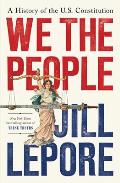
In History, the prize went to We the People: A History of the U.S. Constitution, by Jill Lepore. The judges called it “A lively and engaging narrative that investigates why the Constitution is so difficult to amend, including a review of noteworthy failed amendments proposed by marginalized groups.”

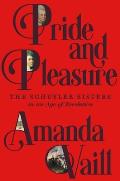
In Biography, the winner was Pride and Pleasure: The Schuyler Sisters in an Age of Revolution, by Amanda Vaill.

This was described as: “A lively and detailed biography of two daughters of wealthy and influential Dutch landowners who colored our nation’s history, using present tense to tell their story and past tense to chronicle the dramatic sweep of the American Revolution.”

Monday, May 04, 2026

The Hill Brothers Settle in Canada at Last

On 27 Apr 1782, Elizabeth Hill died, “greatly lamented by her Family and Neighbours,” the New-York Gazette reported two days later.

In that news item her husband, John Hill, had “Esq.” after his name, a genteel reflection of his service to the Crown inspecting the Brooklyn ferry.

Also by that time, the Americans had won the war. Gen. Guy Carleton was about to be appointed commander of the British forces, charged with holding things together till the end. Gen. George Washington’s Continental Army was pressuring New York City, but not trying anything too risky. Lt. Col. Benjamin Thompson was getting his combat experience by leading dragoons on Long Island. But basically people were waiting for the final peace terms to be settled.

John’s brother Richard led one of the first contingents of Loyalists to leave New York, embarking in June 1783. He was in Carleton, Nova Scotia (which would become St. John, New Brunswick), in September when he wrote back to John about a ship captain named John Mason who had tried to make off with the vessel under his command.

Richard Hill was described as the first Loyalist to build a frame house in the town of Digby, Nova Scotia. He became a justice of the peace and a vestryman.

John Hill and his family evacuated New York late in 1783, eventually joining his brother in Digby. By the next year, John had remarried. His household consisted of him, his wife, a child over age ten, and three “servants” over age ten.

In 1786 the Loyalists Commission held hearings at Halifax. John Hill applied for “half pay, as a Quarter Master, but was told by their Honors that Pensions, and Half Pay, was to be Settled in England.” Four years later he was in London, petitioning for support for himself and his brother. Returning to Digby, he managed a store and was first treasurer of the local Freemasons’ lodge.

People think that Richard Hill died around 1803, three years after his wife Jane (her gravestone shown above).

John died on 23 Nov 1817—forty years after he had been released from the Boston jail, accused of helping to loot the town during the evacuation.

Friday, May 01, 2026

”No other Crime, but retaining their Allegiance to the King”

We left John Hill, his wife Elizabeth (?), and his daughter in the Boston jail in February 1777, suspected of “being Enemical to the States” and “attempting to Carry Intillegence to the Enemy.”

The next trace of Hill that I’ve found is from John Noble’s article “Some Massachusetts Tories” for the Colonial Society of Massachusetts in 1900:
At the July [court] Term, 1777, John Hill of Boston recovers judgment in a plea of the case against Crean Brush for £2.8s.10d lawful money, and costs.
Did Hill sue Brush, his employer during the evacuation from Boston, for some loss? Or was this another John Hill?

There’s firmer information from John Howe’s Newport Gazette, published in the British-occupied city on 20 Nov 1777:
By Mr. JOHN HILL, who left Boston the 15th of October, we learn, that Dr. [Benjamin] Church, Mr. John Dean Whitworth, of the Queen’s Rangers, and a Number of others, are yet confined in Boston; Dr. [Mather] Byles is confined in his own House; and upwards of 70 Persons, who can be charged with no other Crime, but retaining their Allegiance to the King, and Attachment to that happy Constitution under which they were born, and from which they have enjoyed the most solid and inestimable Blessings, are now confined on board a Prison Ship in that Harbour.—

He also adds, that almost every Goal in New England is filled with these unhappy People.

Mr. Hill has also favoured us with the current Prices, in Lawful Money, of the following Articles, at the Time he left it:
Beef, — — 0.1.3
Mutton, — — 0.1.6
Butter, — — 0.4.0
And so on through a list of other meats and foods, alcohols, sugars, teas, and cordwood to shoes for men (£2.2/pair) and women (£1.10/pair).

Presumably Howe was making the point about price inflation in Continental-governed areas, but we’d have to find pre-war costs for comparison.

Years later John Hill told the Loyalists Commission, as recorded by Todd Braisted:
That on the 17th of March 1776, he left Boston, with the Royal Army; but was taken at Sea, by the Rebels, . . . himself, his Wife, & Daughter was carried back to Boston, and he confined in Prison 19 months; they were all tried For their lives, but not Condemned.

In November 1777, they were Exchanged, went to Halifax, and afterwards to New York
Hill’s memory was off by just a few weeks. It’s possible he didn’t remember the port his family came through, or that the Hills went from Newport to Halifax. Adding to the confusion on that point, on 16 Oct 1777 the Independent Chronicle reported that “a Cartel” ship “with upwards 130 Prisoners on board” had sailed the previous day from Boston for Halifax. 

By whatever route they left New England, John Hill, his wife, and his daughter eventually returned to New York, the city he’d been chased out of in the spring of 1775. But now it was held by the British military.

TOMORROW: Inspector Hill.

Wednesday, April 29, 2026

“Prisoners in Boston Goal” in February 1777

On 18 Feb 1777, deputy jailer Joseph Otis wrote down “A List of Prisoners in Boston Goal,” transcribed and published by the Colonial Society of Massachusetts.

This document says:
Doctṛ̣ [Benjamin] Church for holding a Tratirus Correspondence with the Enemy

John Hill for being Enemical to the States

Thoṣ̣ Mews for ditto

Thoṣ̣ Edwards for ditto

Crean Brush for ditto

Benjạ̣ Davis for ditto

Hopestill Capen for ditto

Miss [Elizabeth?] Hill & Daughter for attempting to Carry Intillegence to the Enemy

John Dean Whitworth A prisoner of War

Seven Men & two Women prisoners of War taken Near fort Cumberland

Richḍ̣ Luby for theft Sentens’d

Mary Young Sentens’d

Mary Voax Sentens’d

John Lovell for theft not had his trial

Five Debtors
It’s no surprise that Dr. Church headed this list. But it is surprising to see Brush listed fifth, given his notoriety. But perhaps the order reflects their cell assignments or some other factor.

I’ve just written about how John Hill was jailed in May, and his wife and daughter arrested in October. Those two women were the only ones explicitly locked in Boston’s jail for actions to aid the enemy, as opposed to being prisoners of war or criminals.

As for the other political prisoners, Thomas Mewse was an English “wollen-manufacturer,” as the Massachusetts Spy once put it. William Molineux had recruited him into a public-works scheme that ended with the two men suing each other. Aside from that, I know no reason to think him “Enemical.”

Thomas Edwards is usually identified as the 1771 Harvard graduate and former Braintree schoolteacher who became suspect because he apprenticed in law to a Tory. Within a couple of years, however, that Thomas Edwards was a high-ranking Continental Army officer, and he went on to a long political career. I have yet to see any contemporaneous sources describing that man as a suspected Loyalist. So I wonder if there might have been two Thomas Edwardses.

Benjamin Davis and Hopestill Capen were merchants who had sided with the Crown. Davis was captured while sailing from Halifax to New York in June 1776. Capen had stayed in Boston after the evacuation was undoubtedly regretting that decision. I may discuss them, as well as Lt. John Dean Whitworth of the Queen’s Rangers, at more length in the future.

By the time Joseph Otis wrote out this list, John Hill had been imprisoned for nine months, his wife and daughter for four. It looks like they were held separately. And it would be several more months before their situation changed.

COMING UP: An exchange.

Tuesday, April 28, 2026

“For attempting to Carry Intillegence to the Enemy”

As I quoted back here, on 12 Oct 1776 the New London committee of correspondence detected two women trying to carry secret letters into British-occupied New York.

Due to the quirks of weekly newspaper publication, the first report of the arrest of those women didn’t appear in New London’s newspaper but on 17 October in the Independent Chronicle of Boston:
Last Saturday two Women were apprehended at New-London and properly secured, for attempting to convey a Number of Letters to the Commanders of the Foreign and British Mercenaries there, containing a very particular Account of the Situation of this and the adjacent Towns, with their present state of Defence.—

Some of them were wrote by a certain John Hill, now a Prisoner in this Town.
A week later, the Independent Chronicle updated its readers:
Last Tuesday, the Wife and Daughter of one John Hill, mentioned in our last to have been apprehended at New-London, for attempting to convey Intelligence to the Enemy at New-York, were brought to this Town, and committed to safe Custody.
That meant the Boston jail. As I said yesterday, I suspect the older woman was named Elizabeth Hill, and the younger might have been John Hill’s daughter by a previous marriage.

In his 1858 History of Eastern Vermont, Benjamin H. Hall stated:
Hill, on the 4th of June [1776], petitioned for his release, alleging as reasons the dying condition of his wife, and the starving state of his mother and daughter.
Hall presumed that request was granted because “it is well known that cruelty was not a characteristic of the conduct of the Americans in the war of the revolution.” 

In fact, Hill’s wife and daughter remained in custody for months.

TOMORROW: A look inside the jail.

Monday, April 27, 2026

“Possessed of that sweet Disposition towards all Mankind”

I’ve been hunting for the names of John Hill’s wife and daughter in 1776.

According to the profile of Hill at the Loyalist Directory, his first wife was Ann Powell (1737–1775), and they had a son named John in 1764.

If that’s true, Hill remarried quickly after Ann’s death since newspapers and legal documents say he had a wife by the fall of 1776. We might presume his daughter came from the first marriage.

Intriguingly, Boston’s marriage intentions list the couple ”John Hill & Eliza Kennedy” with the date of 7 Oct 1776. (But as a reminder about common names, that same volume shows men named John Hill marrying women named Elizabeth in 1753, 1759, 1784, and 1793—and women named Hannah in 1756 and 1808.)

The 29 April 1779 New-York Gazette stated that “Mrs. ELIZABETH HILL, Wife of John Hill, Esq;” had just died. It called her “A Woman amiable in her the domestic Relations, and possessed of that sweet Disposition towards all Mankind, which nothing but Christianity can bestow.” I’m guessing she’s the same wife as three years earlier.

As for Hill’s daughter, the 22 Nov 1779 New-York Gazette reported the marriage of “Miss Hill, Daughter of Mr. John Hill,” to “Lieut. Cunningham, of the Legion.” Alas, the newspaper didn’t provide the young people’s first names. The lieutenant might well be Ralph Cunningham, given John’s link to William Cunningham. Lt. Cunningham was killed in a fight at Hanging Rock, South Carolina, on 6 Aug 1780.

The reason John Hill’s wife and daughter are so interesting is that, as recounted yesterday, in 12 Oct 1776 the New London committee of correspondence stopped them from crossing onto Long Island and found they were carrying incriminating papers.

The Connecticut Gazette described “sundry Papers, containing Matters of Intelligence respecting the People, and State of the Country, sent from said Hill and others in Boston, to be communicated to General [William] Howe.”

What’s more, the women didn’t seem to be carrying that correspondence unknowingly. The article went on: “it appeared from the Papers found upon them, that they had been possessed of other Papers, which they had secured or destroyed.”

Hill’s wife and daughter “were both sent back with the Papers, under a proper Convoy, to the Place from whence they came,” reported to be Providence, Rhode Island.

TOMORROW: A family reunited.

Sunday, April 26, 2026

“John Hill be sent under a proper Guard to Boston Goal”

As recounted yesterday, on 25 Apr 1776 the Massachusetts General Court issued a resolve to catch John Hill, an Irish-born Loyalist accused of helping to loot Boston as the British evacuated.

I haven’t found any newspaper advertisements for Hill, suggesting that local authorities located him within just a few days.

The Marblehead committee of correspondence sent the man back to Watertown, and on 1 May the legislature passed a new act: 
Whereas John Hill a Prisoner now before this Court is justly suspected to have been assisting Crean Brush in Robbing the Inhabitants of the Town of Boston of their Goods & Merchandize

It is therefore
Resolved that the said John Hill be sent under a proper Guard to Boston Goal, there to be confined as a prisoner until he shall be Examined by the Seven Justices of the Peace of the County of Suffolk or the major part of them who are appointed to try associators and abetters of the Ministerial Army, which Justices are impowered to Examine the said Hill and deal with him in the same manner as if he had remained in Boston after the said Fleet & Army had gone away
Magistrates in Boston were questioning a long list of people who had stayed in town through the siege about their political loyalties.

Boston’s “goal” or jail appears on the detail from the 1769 town map above, but barely. At the bottom of that image are two large buildings: the Town House, now the Old State House (lowercase a), and the First or Old Brick Meeting-House (big A). Above the meeting-house is the label “Church Square.” And above that, mostly worn off because of a fold, is the label “Prison.” That building faced onto Queen Street, now Court Street—named for the courthouse, which was conveniently near the prison.

Hill remained in that Boston jail for several months. The United States declared independence. The British military returned to New York in force.

On 18 October, the Connecticut Gazette of New London reported:
Last Saturday [12 October], the Wife and Daughter of one John Hill, a Prisoner in Boston Goal, for being concerned with Crean Brush and others, in Robbing the Inhabitants of Boston, when that Place was evacuated; came to this Town from Providence by Water, and was endeavouring to get a Passage to the West End of Long-Island, but were stopped by the Committee of this Town, and on Examination were found upon them, sundry Papers, containing Matters of Intelligence respecting the People, and State of the Country, sent from said Hill and others in Boston, to be communicated to General [William] Howe;…
TOMORROW: Mystery women.

Sunday, April 12, 2026

“What I am to dow whith the Prisoners for I have Thirtey hear now upon Expences”

A lot of the correspondence that followed the Continental capture of the Elizabeth in April 1776 involved money.

First, there was the cost of housing the prisoners taken on that brig.

Eleven men were sent to Gloucester, including four British soldiers and Caleb Wheaton, the Customs officer from Maine. Their families came along.

Winthrop Sargent, Sr. (1727–1793), the Continental Army’s agent at that port, wrote to Gen. George Washington on 7 April:
The Bayer [bearer] of this has under his Gard a Number of Prisoners & Toreys tachen by Comodor [John] Manley & Capt. [Daniel] Warters the Prise is sent to Portsmouth I mack Know doubt you have had Acount of before this Reaches your Excellence thar nams you have below

thare is two Women & Sum Children Left hear which is not Abel to Travel Should be glad your Excellence would Send me Answor to what I Roat you Last about Capt. Watt:s Goods and what I am to dow whith the Prisoners for I have Thirtey hear now upon Expences.

I Rem[ai]n You[r] Hume Sarv.
Winthrop Sargent, Agent

P.S. Sence I rote the above Capt. [Samuel] Tucker here Carres the Prisners to Marvelhead ware thay well be sent to head Quartr will not Carrey the women & Children for fear of the Small Pox so I am fors to porvide for them hear Should be glad of your Order in Regard to the afore
Capt. Tucker on the armed schooner Franklin carried twenty-two people, including the Wheatons, to Marblehead on 9 April. That town’s committee of correspondence sent Azor Orne to ask the Massachusetts Council what to do with them.

On 13 April, the legislature “Resolved that the Soldiers belonging to the British Army, with their Wives and Children, be sent to General [Artemas] Ward.” Apparently they would be treated like other prisoners of war.

The Marblehead committee would be responsible for maintaining all the civilian women and children, tracking the expenses so the town could “endeavour to have the same discharged out of the Monies arising on the Sales of the Cargo and effects found on Board the said Vessel.”

And that was where the big money was. John Rowe heard that the Elizabeth had “Twenty five Thousand pound Sterling On board—in English Goods & Other Merchandise.” The Boston Gazette reported, “she is estimated to be worth about 35,000l. sterling.”

Cdre. Manley had sent the brig into Portsmouth, New Hampshire, where Continental agent Joshua Wentworth would go through the legal process of ”condemning” the ship and its contents and putting them up for auction. Manley, his captains, and his crews were no doubt anticipating a good payday.

TOMORROW: What to do with the Wheatons.

Wednesday, April 01, 2026

“This captain of ours was at the greatest loss”

Yesterday I started to tell the story of how Jolley Allen evacuated Boston with the British fleet in March 1776—or tried to.

Quoting Allen’s own narrative of course gives away the fact that he survived to tell his tale. But it’s such a sarcastically detailed account that I can’t resist.

We left Allen on the morning after the British ships left Boston harbor. Along with his large family and almost two dozen other people, he was on sloop Sally, and it was sinking.

Allen had come to the realization that the man he’d hired to captain that vessel, Robert Campbell, knew nothing about navigating the ocean or even how a sailing ship worked.

That meant for a tense few hours in the early morning of 28 Mar 1776. But then at seven o’clock Campbell “said he saw a vessel.”

Allen urged Campbell to chase after it. Campbell replied that “did not understand steering the vessel he was in, so well as he knew how to give directions to another.” Allen pointed out that he hadn’t hired anyone else who knew how to steer it any better.

Some time later, Campbell announced “he thought he never saw so large a Ship before.” Allen looked and saw the man was pointing at a stretch of land.
I applied to him and asked him what land he thought it was. He told me that he was fully convinced that it was Nantucket. I told him, if that was the case, we must all perish very soon; for the amazing rocks and shoals that lay off Nantucket I could remember very well, as I saw them above Twenty-Two years ago on my passage when I came from London. . . .

This captain of ours was at the greatest loss to know what to do in this situation, seeing land, for want of a map (which I am of opinion had there been one on board he knew no more what to do with than a rat).
The two men called everyone up on deck to discuss what to do. Some passengers feared drowning most. Some had more fear of falling into rebel hands—though Nantucket would prove to be neutral territory for most of the war. Allen advocated running the sloop on shore. Campbell suggested going back out to sea and hoping a Royal Navy ship would come by. Showing their confidence in the captain, the group voted to try the shore.

With the help of a handy current, the Sally moved inland, then struck a sandbar “violently either seven, eight, or nine different times.” Waves lifted the sloop over the bar, but the anchor caught for a while. About 2 P.M. the sloop reached calmer water
with all our sails hoisted, as we had hoisted in Nantasket Road; some all the way up, some half the way up, and some not a quarter of the way up; torn, to appearance, into ten hundred thousand pieces, all flying.

The captain says to me, by way of adviseing with me, seeing no boat come off to us, whether or no we had not better hoist a signal of a white sheet or table-cloth, to let them know we was in distress for want of a boat. The answer I made him was that I thought the above signals was quite sufficient
Eventually a man appeared on shore. The people on the Sally waved. More men appeared. Those men stood and talked with each other.
At last, to our great joy, we saw a cart with a boat (or cano) in it drawn by ten oxen, and six men more, which came down to our assistance. They soon got the boat into the sea, and two men in it to know from whence we came.
Those two oarsmen hadn’t had smallpox, and one of the women on board was dying from the disease (though Allen didn’t come right out and say that). So the passengers had to wait for two different men with immunity to bring out the rowboat. At about seven in the evening the locals started to ferry the people on the Sally to shore. Allen wrote:
I asked them the name of the place; they told me it was Cape Cod. I told them my captain told me, and insisted upon it, that this place was Nantucket. They answered me that Nantucket was above four days’ sail from Cape Cod with a fair wind.
Allen and Campbell hadn’t managed to escape rebel Massachusetts. They hadn’t even managed to get out of Cape Cod Bay.

TOMORROW: More Loyalists at sea.