J. L. BELL is a Massachusetts writer who specializes in (among other things) the start of the American Revolution in and around Boston. He is particularly interested in the experiences of children in 1765-75. He has published scholarly papers and popular articles for both children and adults. He was consultant for an episode of History Detectives, and contributed to a display at Minute Man National Historic Park.

Subscribe thru Follow.it


•••••••••••••••••


Showing posts with label John Dickinson. Show all posts

Tuesday, August 04, 2026

Back to Philadelphia for “The Road to Independence” in September

In April, I went to Philadelphia to help lead the Pursuit of History Weekend on “The Road to Independence,” nearly three full days of exploring the city and the Continental Congress’s move to breaking from Britain.

That was so much fun that we’re offering a similar program on 18–20 September. The anniversary of the Declaration of Independence has passed, of course, but we can dig deeper into its history in this Sestercentennial year. In fact, we have the chance to take in new material and historic spaces not available in the spring.

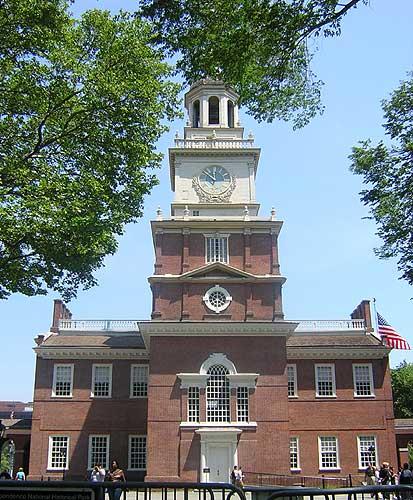
This time our base will be the Arch Street Meetinghouse, commissioned by Quakers in 1803–04 and shown above. We’ll also visit Carpenters’ Hall, Independence Hall, the controversial Presidents’ House site, the Arch Street Burying-Ground, the Museum of the American Revolution, the American Philosophical Society Museum, and other places in scenic Philadelphia.

One addition to this session is the First Bank of the United States, which just reopened after a major refurbishment. We’ll visit that on Sunday, our “extra” day when we go outside the period of our main focus.

Our speakers this time around will be:
  • Jane E. Calvert, Ph.D., author of Penman of the Founding and founding director of the John Dickinson Writings Project.
  • Christina R. Carrick and James P. McClure, Ph.D., editors at the Papers of Thomas Jefferson.
  • Shawn David McGhee, Ph.D., author of No Longer Subjects of the British King: The Political Transformation of Royal Subjects to Republican Citizens, 1774–1776.
  • Samuel A. Forman, M.D., M.P.H., author of Joseph Warren and Ill-Fated Frontier, and a native of Philadelphia.
  • Richard Vague, author of The Banker Who Made America: Thomas Willing and The Rise of the American Financial Aristocracy, 1731–1821.
  • J. L. Bell, program director and author of The Road to Concord.
We’re expecting this session to be smaller than the one in the spring, but still looking for two to three dozen folks interested in Revolutionary history.

For more information about what’s included, costs, and registration for “The Road to Independence,” please visit the Pursuit of History website.

(Meanwhile, I’m also working on the program for a new Pursuit of History Weekend in November.)

Monday, August 03, 2026

“So disagreeable that one half of the Congress withdraw”

Delving into the newly published John Dickinson letters also led me back into the notes of the Continental Congress during 1775.

The official record that secretary Charles Thomson kept for eventual publication was often anodyne. The delegates made themselves into a committee of the whole to avoid going on the record, and of course Thomson was politic about what he recorded.

But some delegates kept their own notes. In this period Silas Deane kept busy summarizing arguments and then grading the speakers.

Neither Dickinson nor John Adams came off in Deane’s notes as so composed and effective as they would have liked.

In his memoir Adams described himself as “not having ever been remarkable for very long Harrangues.” But on 15 May Deane described the Massachusetts man’s remarks as “lengthy, and argumentative.”

Dickinson felt he was guiding the Congress to a safe middle course. That same day Deane wrote that the Pennsylvanian “argues smoothly but Sophistically on the Subject and gives rather disgust.”

And here’s the delegates’ interactions on 24 May:
Mr. Dickinson in his old Way lengthy, and concludes in his old Way with a Fable

Mr. [Thomas] Mifflin animadvests[?] with spirit on him and exposes his reasoning &c

Mr. [Thomas] Johnson, on a reconciling plan and offers a Motion.

Col. [Richard Henry] Lee for a different mode of expression in ye Motion and is severe on Dickenson

Mr. Jno. Rutledge against any Concession whatever, that Lord North has given Us his Ultimatum with which We cannot agree. Treats Dickinsons plan with the upmmost Contempt. and is so severe that [Samuel] Chase rises to explain himself.

Col. Lee up again

Mr. [Thomas] Stone of Maryland so disagreeable that one half of the Congress withdraw
Deane’s 1775 notes were published in Letters of Delegates to Congress, and they can easily be found online at From the Page and American Founding.

Meanwhile, the Congress’s official record of 24 May 1775 is:
Peyton Randolph, President, returned to Virginia where he was Speaker of the Assembly. John Hancock was unanimously chosen President.

Samuel Ward reported that the committee of the whole had made progress in the business of the state of America, but not having come to a conclusion, requested permission “to sit again.”

Adjourned till to Morrow at 9 o’Clock.
Deane’s notes show what was really behind that “progress.”

Sunday, August 02, 2026

“Dependant upon the Imperial Crown of Great Britain”?

In 1775, John Adams and John Dickinson held the same basic position about the best course for the British Empire and its large North American colonies:
  • There must be a new understanding of the relationship between those colonies and the central government in London.
  • But those colonies need not become independent.
The problem was that the two men defined “independent” differently.

On 15 May, Silas Deane made these notes on the Continental Congress’s debate:
Mr. Jno Ruttlidge…insists it previously some that points must be settled, such as do We aim at independancy, or do we only ask for a Restoration of Rights & putting of Us on Our old footing. speaks long & well

Mr. Robt. R Livingston Succeeds him in the same way. short

Mr. Jno. Adams lengthy, and argumentative. independance on Parliamant is absolutely to be avowd. in the Americans, but a dependance on the Crown is what We own
Adams thus declared himself in favor of “independance” only from Parliament, not the entire British system (“the Crown”). How exactly that would work he didn’t say.

Two months later, in his letter to James Warren that fell into British hands, Adams went into more detail:
We ought to have had in our Hands a Month ago, the whole Legislative, Executive and Judicial of the whole Continent, and have compleatly moddelled a Constitution, to have raised a Naval Power and opened all our Ports wide, to have arrested every Friend to Government on the Continent and held them as Hostages for the poor Victims in Boston. And then opened the Door as wide as possible for Peace and Reconcilliation
Adams still didn’t use the term “independance.” He still held out the prospect of “Reconcilliation.”

To Dickinson, however, Adams’s wish list amounted to “a total Independence, & the Establishment of a Commonwealth.” The term “commonwealth” recalled the English protectorate of the mid-1600s, which Adams’s Puritan ancestors had applauded but most British subjects remembered with distrust.

Adams never saw the material that Dickinson sent to David Barclay in Britain in August 1775. In fact, hardly anyone in the history of the world saw those documents until they were just published in the William & Mary Quarterly. With his letter Dickinson included draft legislation he hoped would calm the crisis by resetting the imperial relationship to how it had been back before Parliament started raising tariffs in 1763.

But Dickinson prefaced part of that legal repeal with this language:
Whereas it is essential to the good Government & Prosperity of every Sosciety [sic] or State, that an undisputed Supreme superintending Power & Authority should exist within it; And whereas this Power & Authority hath always been vested in & exercised by Parliament; and whereas the respective local legislatures of distinct Colonies are in many Instances incompetent; be it therefore further enacted by the Authority aforesaid, that when any of the said Colonies shall by an Act of Assembly acknowledge & recognize & declare the said Colony to be dependant upon the Imperial Crown of Great Britain, and that the Kings most excellent Majesty by & with the Advice & Consent of the Lords Spiritual & temporal & Commons in Parliament assembled had hath & of Right ought to have full Power & Authority to make Statutes to bind the People of the said Colonies, where the general Wellfare of the Whole Empire shall require the Exercise of such a Supreme superintending Power & Authority, as especially to make Statutes for regulating the Trade & Navigation of the Whole Dominion of the Imperial Crown of Great Britain…
To Adams, Dickinson’s concession would have amounted to accepting dependence on Parliament.

Ironically, both men claimed that the disclosure of Adams’s letter was useful because it showed how far he wanted to go. Dickinson felt those words should make politicians in Britain realize that some Americans sought de facto independence. Adams felt the same words emboldened more Americans to adopt his position.

In fact, none of the documents I’ve been discussing—Adams’s intercepted letter, Dickinson’s two letters to Barclay and his draft legislation—made any difference in London. On 23 August, before those papers could cross the Atlantic, King George III issued a proclamation written by Lord Dartmouth that the North American colonies were in “open and avowed rebellion” and his forces should “use their utmost endeavours to withstand and suppress such rebellion.”

Saturday, August 01, 2026

“The last Words which ever passed between Mr. Dickinson and me”?

The discovery of John Dickinson’s 28 Oct 1775 letter to David Barclay, quoted yesterday, lets us assess his thoughts on John Adams’s private criticism of him in an intercepted letter earlier that year.

As Jane E. Calvert writes in the July 2026 William & Mary Quarterly, it should also make us reassess Adams’s recollection of how he came to make that criticism. We know that other passages from Adams’s nineteenth-century memoir contradict contemporaneous sources, or at least aren’t supported by them.

According to Adams writing in 1805, the two men fell out during the Continental Congress’s debate over the Olive Branch Petition in the spring or early summer of 1775:
I was opposed to it, of course; and made an Opposition to it, in as long a Speech as I commonly made, not having ever been remarkable for very long Harrangues, in Answer to all the Arguments which had been urged. . . .

At this moment I was called out to the State house Yard, very much to my regret, to some one who had business with me. I took my hat and went out of the Door of Congress Hall: Mr. Dickinson observed me and darted out after me. He broke out upon me in a most abrupt and extraordinary manner. In as violent a passion as he was capable of feeling, and with an Air, Countenance and Gestures as rough and haughty as if I had been a School Boy and he the Master, he vociferated out, “What is the Reason Mr. Adams, that you New Englandmen oppose our Measures of Reconciliation…[?]”

I answered him very coolly. “Mr. Dickenson, there are many Things that I can very chearfully sacrifice to Harmony and even to Unanimity: but I am not to be threatened into an express Adoption or Approbation of Measures which my Judgment reprobates. Congress must judge, and if they pronounce against me, I must submit, as if they determine against You, You ought to acquiesce.”—These were the last Words which ever passed between Mr. Dickinson and me in private.
If Adams had made a firm, direct speech against the Olive Branch Petition, and Dickinson had gotten so upset about it, why would Dickinson be surprised to read Adams criticizing him weeks later? Why did Dickinson write that before the intercepted letter the Adams cousins had always “behav’d to Me…with the…greatest Marks of friendly Respect,” expressing “the most silken softness of public pretensions”?

Of course, a big part of the problem was Adams’s rude language, calling Dickinson a “piddling Genius” whose measures made the Congress appear “silly.” That went beyond a collegial disagreement over policy. Dickinson recognized the two men “differed in Sentiments” but thought they were still friendly and recognized they were all trying to solve the same problem.

Dickinson’s surprise might have been the result of John Adams’s own actions up to that point. He probably didn’t speak out as strongly as he remembered decades later. Calvert points out how Adams signed the Olive Branch Petition in July. Of course, that’s consistent with his later statement “Congress must judge, and if they pronounce against me, I must submit.” 

At the same time, I see indications that Dickinson and Adams were talking past each other on “independence” and what that really meant.

TOMORROW: Cross-purposes.

Friday, July 31, 2026

“So severely & so meanly attack’d from that Quarter”

On 28 Oct 1775, John Dickinson finished writing a long letter to a Quaker banker in Britain, David Barclay—one of the documents just published in the William & Mary Quarterly.

Dickinson had written most of that letter in late September, starting with his comments on what he had filed in his papers as “Letter from John Adams of Massachusetts Bay, in which he abuses Me, for opposing the Violent Measures of himself & others in Congress.”

Dickinson told Barclay:
The inclos’d Letters written by John Adams one of the Delegates from Massachusetts, were intercepted, as the Boat was passing an Arm of the Sea, and have been publish’d by General [Thomas] Gage. These are now in every Body’s Hands, and indisputably prove the high projects that are in Agitation. . . .

I did not expect that my Reputation would be so soon so severely & so meanly attack’d from that Quarter. My Compassion for the unhappy Province of Massachusetts Bay was so sincere & tender, that I truly regarded her Delegates as my Brothers; and they ever behav’d to Me, especially the two, that, I am now convinc’d, are my Enemies, with the [illegible] greatest Marks of friendly Respect.
That second Massachusetts delegate was almost certainly Samuel Adams.
Tho We differed in Sentiments, yet I suppos’d without the least Hesitation, that as We had embarqued our Lives & Fortunes in the same Bottom, We should feel a manly & liberal Indulgence for each others particular Opinions.

I have been mistaken; for under the most silken softness of public pretensions, lurk the bitterest Resentments, which can only spring from the Disappointment of selfish Designs.

This Assault so far from hurting my Character, has, if I can form any true Judgment, been of Advantage to Me. It convinces those, who before doubted—that tho I am resolved, as is testified by my public Conduct, at every Hazard to act for the Wellfare of my Country, yet I am not hurried away by the Torrent of Passions, that has swept so many at this Time from their sure Footing: but still retain the heartiest wishes for a Reunion with G[reat] B[ritain].

But another Effect of vastly more Consequence, will be deriv’d, from the Publication of those intercepted Letters. It will prove, that a total Independence, & the Establishment of a Commonwealth, are seriously thought of, and that hitherto they have been successfully oppos’d…

You will observe, no Doubt, how…the Writer of the intercepted Letters, & his party…abhorr any prospect of Accommodation, before they have got “the whole legislative, executive, and judicial of the whole Continent in their Hands, have completely modell’d a Constitution, have rais’d a naval Power, opended all Ports wide” &c that is, before they have established an independent Commonwealth.
Dickinson was repeating phrases directly from Adams’s letter, using it to show that his August warning that some Americans actually wanted independence had been well founded.

TOMORROW: Up until then…

Thursday, July 30, 2026

“He passed without moving his Hat, or Head or Hand”

The part of the newly released documents from John Dickinson getting the most attention, including a news story in the New York Times, is his detailed proposal to reconcile the British government and the colonies at the Continental Congress before they reached a permanent breaking point.

But of course I’m drawn to the juicy interpersonal gossip. Dickinson wrote the second of those letters after John Adams’s nasty private comment about him had leaked. That letter reveals Dickinson’s feelings about that slight as well as his perspective on what led up to it.

The July 2026 issue of the William & Mary Quarterly contains an essay by Dr. Jane E. Calvert about this episode. She points out that historians have relied on Adams’s recounting of the event in his memoir, even while acknowledging those recollections can’t be confirmed and flatter Adams in consistent ways. (Calvert and Jonathan Gienapp’s article about the Dickinson documents offers an accessible précis of her essay.)

I wrote about Adams’s indiscreet remark back in 2014. In short, Adams gave the young lawyer Benjamin Hichborn two letters to carry home to Massachusetts. Hichborn let those papers fall into British hands. Gen. Thomas Gage had the texts published in Margaret Draper’s Boston News-Letter on 17 Aug 1775.

Adams’s 24 July letter to James Warren included these lines:
In Confidence,—I am determined to write freely to you this Time.—A certain great Fortune and piddling Genius whose Fame has been trumpeted so loudly, has given a silly Cast to our whole Doings…
Those lines made their way back to Philadelphia. No delegate to the Congress had more money and fame combined than Dickinson. (Benjamin Franklin was more famous but not as wealthy; a few men may have commanded bigger estates, but none had gained more respect as a political writer than Dickinson the “Farmer.”) So everyone knew who Adams was referring to.

On 16 September, Adams wrote in his diary:
Walking to the Statehouse this Morning, I met Mr. Dickinson, on Foot in Chesnut Street. We met, and passed near enough to touch Elbows. He passed without moving his Hat, or Head or Hand. I bowed and pulled off my Hat. He passed hautily by. The Cause of his Offence, is the Letter no doubt which Gage has printed in Drapers Paper.
That was a “cut direct.” It showed Dickinson was upset, but he was making that clear by not saying anything.

Forty years later, Adams insisted:
  • He wrote his 24 July letter only after Dickinson had tried to browbeat him and other “New Englandmen” into not arguing against the Congress’s Olive Branch Petition, and
  • He didn’t write that letter anyway. Or “not exactly.” The royal authorities had altered his words before publication.
Adams’s letter doesn’t survive, as far as anyone knows, so we can’t say for sure whether the newspaper text was edited. But we do know Adams expressed some similar sentiments in other private letters at the time. And he never specified which of the published words he hadn’t penned.

Thanks to the new documents, we now have John Dickinson’s view of the dispute, written in the year that it happened rather than decades later.

TOMORROW: The other side.

Wednesday, July 29, 2026

Dickinson Seeking “a happy & permanent Reconciliation”

The William & Mary Quarterly had a big Sestercentennial scoop in its July 2026 issue—so big that it made those newly discovered documents available online for a limited time ahead of publication. 

The documents are two long 1775 letters and an enclosure from Pennsylvania politician John Dickinson to David Barclay, a British merchant and banker (shown here).

In 1775 the Continental Congress assigned Dickinson the task of drafting the Olive Branch Petition. He also reworked Thomas Jefferson’s prose in the Declaration of the Causes and Necessity of Taking Up Arms. The first text sought a reconciliation with the Crown in traditional fashion, the second explained publicly why the young war was justified.

Together those texts show the balancing act Dickinson was trying to pull off. He believed in the American resistance to Parliament’s new measures, in which he had played a leading role, and he also believed in the danger of splitting completely from Britain.

Dickinson dated the first of the newly surfaced letters on 5 Aug 1775. It shared his (not always accurate) description of the war so far, emphasizing how the Crown was unlikely to prevail without both sides suffering great harm. Then came his draft bill for reworking the constitutional relationship between Britain and its colonies and calming people’s “Fears & Jealousies.”

Those two documents were written out by a secretary for Dickinson’s edits and signature. The second letter, finished 28 October, is in Dickinson’s own messy, reconsidered writing. By then, though he didn’t know it, George III and the government had dismissed the Olive Branch Petition without looking at it, declared all the colonies at the Congress to be in rebellion, and promised a forceful response. Dickinson’s proposal had arrived too late to do any good.

According to the New York Times, these letters remained in the Barclay family, coming into the hands of his great-great-great-great-great-nephew, Humphrey Barclay. In 2024 he showed them to book and manuscript specialist Donovan Rees, who realized their importance. Dickinson’s initiative isn’t mentioned in any other source—both he and Barclay were working backchannels, so they kept their correspondence quiet. Dickinson even put a postscript on the first letter asking Barclay not to print it or give anyone a copy.

On behalf of the Barclay family, Rees offered to sell the three documents to the U.S. Library of Congress, but it didn’t meet the asking price. (It’s unclear when that discussion took place, but the Library of Congress has been under dire pressure at times in the last couple of years. There’s an ongoing legal dispute over whether the President’s criminal-defense lawyer and current acting U.S. Attorney General is also the acting Librarian of Congress.)

The documents were then purchased by Harvard professor Eric Nelson, author of The Royalist Revolution: Monarchy and the American Founding among other books. Nelson generously makes manuscripts in his collection available to researchers.

Prof. Jonathan Gienapp of Stanford and Dr. Jane E. Calvert of the John Dickinson Writings Project prepared transcripts of the documents for analysis and publication. The William & Mary Quarterly organized a forum of scholars to discuss their implications in short essays appearing in that July issue.

For a good primer on these Dickinson letters, see Calvert and Gienapp’s article “The Secret Effort to Prevent the Revolution.”

TOMORROW: Hurt feelings.

Wednesday, July 08, 2026

Counting Votes in Independence Hall

As quoted yesterday, Edward Rutledge hoped that John Jay would return to the Continental Congress by 1 July so he could help to argue against declaring independence, at least at that time.

Jay didn’t make it, and on that date the delegations in Philadelphia took a test vote in their committee of the whole.

Nine colonies voted for independence. Four voted otherwise.

Rutledge’s South Carolina voted against. That colony contained the fourth largest port in North America and was very tied in with trade to the Caribbean and Africa.

Pennsylvania voted against independence. Its large delegation was split. Such heavyweights as John Dickinson and Robert Morris opposed the measure while a minority including Benjamin Franklin favored it.

Delaware had sent three delegates to Congress, but only two were present. Those men, Thomas McKean and George Read, disagreed. As a result, that delegation had to abstain.

New York also abstained because its delegates had received no guidance from its provincial congress. That colony contained the second-largest port along the coast, under imminent threat from the British military.

The vote was thus 9 delegations for independence, 2 against, and 2 abstaining.

The committee of the whole thus supported independence, but a big chunk of the Middle Colonies, including the two largest cities, were missing from the pro-independence bloc. There was no formal requirement that the vote be unanimous, but everyone realized that reporting disunity would hamper any ongoing resistance to the Crown.

The next day, Caesar Rodney returned from Delaware, “detained by thunder and rain,” as he wrote. McKean later said his colleague appeared “at the State-house door, in his boots and spurs.” Rodney’s arrival tipped the Delaware delegation into the pro-independence camp.

10 – 2 – 1.

Rutledge saw the trend. He decided that the danger of displaying disunity was worse than the danger of declaring independence before finishing the Articles of Confederation and Perpetual Union. He moved for a new vote, signaling that South Carolina would switch to approval.

11 – 1 – 1.

Thinking along the same lines, Dickinson and Morris chose not to attend the 2 July session of the Congress. That meant most of the Pennsylvania delegates in the assembly hall supported independence, changing that colony’s vote.

12 – 0 – 1.

The Congress could thus report that the vote for independence was unopposed.

Tuesday, July 07, 2026

“The Exertions of the Honest and sensible part of the Members”

Last week I shared sources detailing how the Declaration of Independence was drafted.

This post jumps back a few days to a last-ditch effort to head off the vote on independence.

Richard Henry Lee proposed that the Continental Congress declare the thirteen colonies separate from Britain on 7 June.

Delegates debated that measure in a committee of the whole, meaning everyone was involved but secretary Charles Thomson didn’t take official notes.

Meanwhile, Thomas Jefferson and his committee were drafting a Declaration just in case it would be handy, then or later. Other committees worked on what ultimately became the Articles of Confederation and Perpetual Union and a model treaty with a foreign power like, oh, say, France. (S’il vous plait!)

After a while, it became clear that most colonies favored independence, including Virginia and Massachusetts, populous anchors of their regions. But was that enough? Men on both sides of the question knew that resisting royal power required unity. If a chunk of colonies, or a big central colony, wasn’t ready to leave the British Empire, it would be a weak point for the rest. Thus, opponents of independence could win the argument by showing not that most colonies wanted to stay in the empire but that too many colonies wanted to stay to make leaving safe.

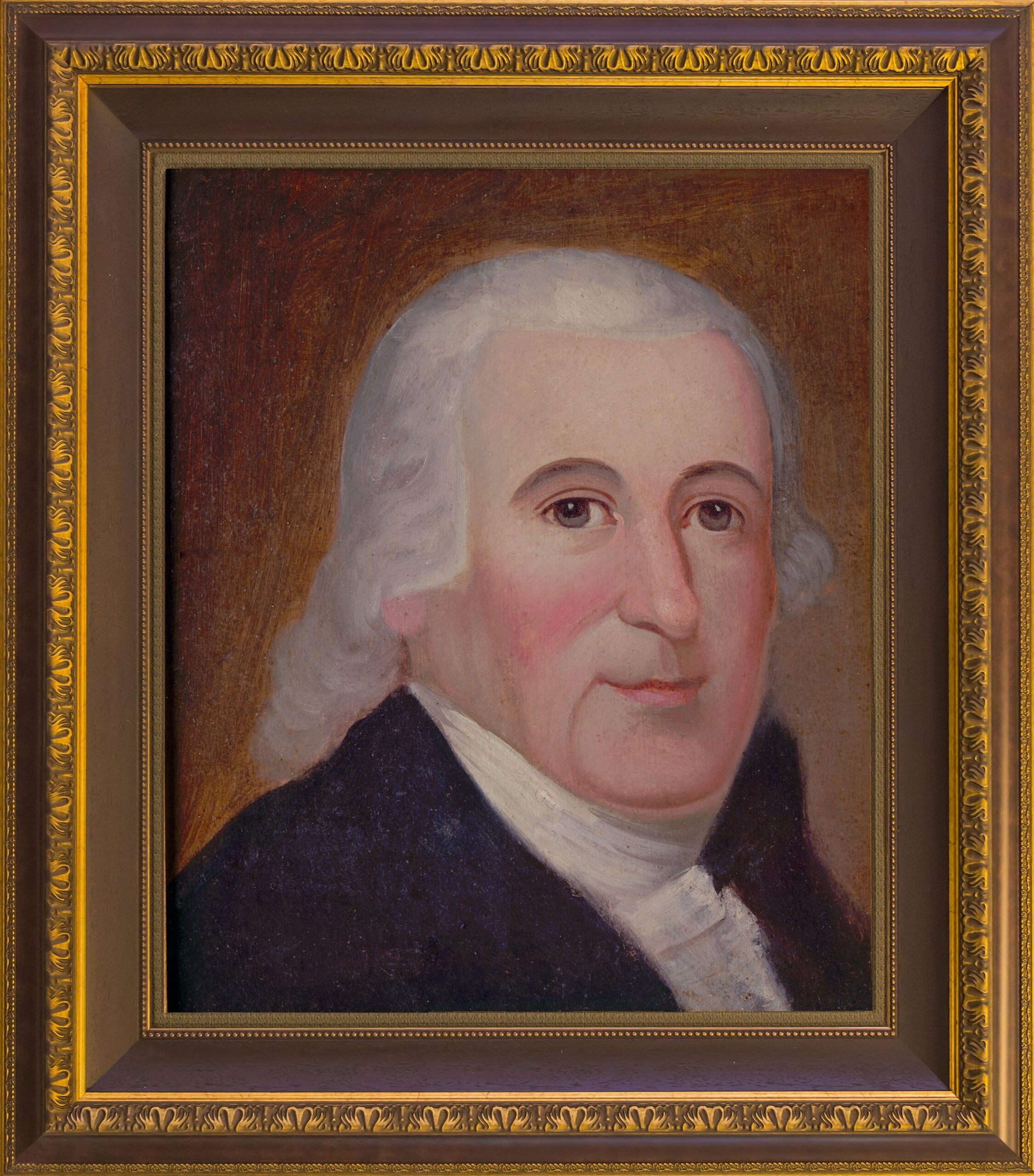
On 29 June, the South Carolina delegate Edward Rutledge (1749–1800, shown above) wrote to John Jay, another delegate known to oppose independence at that time. Jay had gone home to New York to serve in that colony’s legislature. Rutledge wrote frankly:
I write this for the express Purpose of requesting that if possible you will give your Attendance in Congress on Monday next [1 July]. I know full well that your Presence must be useful at New York, but I am sincerely convinced that it will be absolutely necessary in this City during the whole of the ensuing Week.

A Declaration of Independence, the Form of a Confederation of these Colonies, and a Scheme for a Treaty with foreign Powers will be laid before the House on Monday.

Whether we shall be able effectually to oppose the first, and infuse Wisdom into the others will depend in a great Measure upon the Exertions of the Honest and sensible part of the Members. I trust you will contribute in a considerable degree to effect the Business and therefore I wish you to be with us.

Recollect the manner in which your Colony is at this Time represented. [George] Clinton has Abilities but is silent in general, and wants (when he does speak) that Influence to which he is intitled. [William] Floyd, [Henry] Wisner, [Francis] Lewis and [John] Alsop though good Men, never quit their Chairs. You must know the Importance of these Questions too well not to wish to [be] present whilst they are debating and therefore I shall say no more upon the Subject.

I have been much engaged lately upon a plan of a Confederation which [John] Dickenson has drawn. It has the Vice of all his Productions to a considerable Degree; I mean the Vice of Refining too much. Unless it is greatly curtailed it never can pass, as it is to be submitted to Men in the respective Provinces who will not be led or rather driven into Measures which may lay the Foundation of their Ruin. If the Plan now proposed should be adopted nothing less than Ruin to some Colonies will be the Consequence of it.

The Idea of destroying all Provincial Distinctions and making every thing of the most minute kind bend to what they call the good of the whole, is in other Terms to say that these Colonies must be subject to the Government of the Eastern Provinces [i.e., New England].

The Force of their Arms I hold exceeding Cheap, but I confess I dread their over-ruling Influence in Council, I dread their low Cunning, and those levelling Principles which Men without Character and without Fortune in general Possess, which are so captivating to the lower Class of Mankind, and which will occasion such a fluctuation of Property as to introduce the greatest disorder.

I am resolved to vest the Congress with no more Power than what is absolutely necessary, and to use a familiar Expression to keep the Staff in our own Hands, for I am confident if surrendered into the Hands of others a most pernicious use will be made of it.
I don’t think we know when Jay received this letter. However, he was too busy with provincial business to respond until 6 July, and by that time the question of independence had been decided.

TOMORROW: And Rutledge had changed his vote.

Saturday, July 19, 2025

Nominees for the 2025 George Washington Book Prize

The finalists for the 2025 George Washington Book Prize, all history titles published last year, have been announced.

In alphabetical order of the author’s surname, they are:
  • Jane E. Calvert, Penman of the Founding: A Biography of John Dickinson (Oxford University Press)
  • Francis D. Cogliano, A Revolutionary Friendship: Washington, Jefferson, and the American Republic (Harvard University Press)
  • Michael D. Hattem, The Memory of ’76: The Revolution in American History (Yale University Press)
  • Tyson Reeder, Serpent in Eden: Foreign Meddling and Partisan Politics in James Madison’s America (Oxford University Press)
  • Cara Rogers Stevens, Thomas Jefferson and the Fight against Slavery (University Press of Kansas)
The sponsors of this prize are Mount Vernon, the Gilder Lehrman Institute of American History, and Washington College. Mount Vernon will host an event featuring all the authors on 12 August, and the winner will be announced at a gala dinner in New York on 8 October.

Tuesday, July 08, 2025

Rhode Island’s “vote for raising men”

As soon as he heard about the shooting at Lexington, James Warren, delegate from Plymouth to the Massachusetts Provincial Congress, passed the news on to Patriots in Rhode Island.

On 20 April the elite militia company called the Kentish Guards mustered and marched toward Massachusetts.

Before those men reached the border, a message arrived from Gov. Joseph Wanton (shown here), ordering the unit to stand down.

Four members continued on horseback, three of them being Nathanael Greene and his brothers. But once those men heard that the British troops were back inside Boston and the emergency had passed, they went home to Rhode Island to sort things out.

The colony’s first step came quickly. On 22 April the assembly passed an act to raise 1,500 men
properly armed and disciplined, to continue in this colony, as an army of observation, to repel any insult or violence that may be offered to the inhabitants. And also, if it be necessary for the safety and preservation of any of the colonies, to march out of this colony and join and co-operate with the forces of the neighboring colonies.
The Massachusetts Provincial Congress had also used the phrase “army of observation” in early April, implying a purely defensive force. Once the fighting began, however, it dropped that phrase entirely. Even as the Rhode Island assembly called its new troops an “army of observation,” it was clearly opening the door to sending those men off to help Massachusetts in its war.

Top officials in the colony resisted. Though Gov. Wanton had been crucial to stymieing the Crown’s Gaspee inquiry a couple of years before, he filed a protest against the legislature’s vote. Deputy Governor Darius Sessions joined him along with two members of the Council of Assistants (the upper house), Thomas Wickes and William Potter. On 25 April they declared their opposition to the new army
Because we are of opinion that such a measure will be attended with the most fatal consequences to our charter privileges, involve the Colony in all the horrors of a civil war, and, as we conceive, is an open violation of the oath of allegiance, which we have severally taken upon our admission into the respective offices we now hold in the Colony.
Coincidentally, Rhode Island’s charter called for a new legislative session to start on the first Wednesday of each May. In that spring’s annual election, Sessions, Wickes, and Potter all lost their seats. (Potter would recant and apologize in June, and then return to the Council of Assistants.) Nicholas Cooke became the new deputy governor.

Rhode Island’s freemen reelected Joseph Wanton as governor, but on 2 May he sent a letter to the assembly saying, “indisposition prevents me from meeting you.” Instead he enclosed what Lord Dartmouth, the British Secretary of State, considered a conciliatory offer. Wanton thought that was a more promising route to resolving the crisis. He told the legislators:
The prosperity and happiness of this colony, is founded in its connexion with Great Britain; “for if once we are separated, where shall we find another Britain to supply our loss? Torn from the body to which we are united by religion, liberty, laws and commerce, we must bleed at every vein.”
That passage quoted from John Dickinson’s Letters from a Farmer in Pennsylvania. (Some authors miss the quote marks and attribute those words to Wanton himself.)

On 5 May the legislative speaker, Metcalf Bowler, tried to force the governor’s hand. He sent a blank commission for an officer in the new army and asked Wanton whether he would sign such a form. The governor replied:
I cannot comply with it; having heretofore protested against the vote for raising men, as a measure inconsistent with my duty to the King, and repugnant to the true and real interest of this government.
At that point the assembly bypassed Gov. Wanton and started treating Nicholas Cooke as the colony’s chief executive. Wanton wouldn’t be officially replaced until November, but he could no longer stand in the way of Rhode Island’s army.

TOMORROW: Finding a general.

Sunday, February 02, 2025

“The seller is nothing less than a collector of the tax”

Here are some paragraphs from the seventh Letter from a Farmer in Pennsylvania, John Dickinson’s 1767–68 essays arguing against the Townshend duties:
There are two ways of laying taxes. One is, by imposing a certain sum on particular kinds of property, to be paid by the user or consumer, or by rating the person at a certain sum. The other is, by imposing a certain sum on particular kinds of property, to be paid by the seller.

When a man pays the first sort of tax, he knows with certainty that he pays so much money for a tax. The consideration for which he pays it, is remote, and, it may be, does not occur to him. He is sensible too, that he is commanded and obliged to pay it as a tax; and therefore people are apt to be displeased with this sort of tax.

The other sort of tax is submitted to in a very different manner. The purchaser of any article, very seldom reflects that the seller raises his price, so as to indemnify himself for the tax he has paid. He knows that the prices of things are continually fluctuating, and if he thinks about the tax, he thinks at the same time, in all probability, that he might have paid as much, if the article he buys had not been taxed. . . .

The merchant or importer, who pays the duty at first, will not consent to be so much money out of pocket. He therefore proportionably raises the price of his goods. It may then be said to be a contest between him and the person offering to buy, who shall lose the duty.

This must be decided by the nature of the commodities, and the purchaser’s demand for them. If they are mere luxuries, he is at liberty to do as he pleases, and if he buys, he does it voluntarily: But if they are absolute necessaries or conveniences, which use and custom have made requisite for the comfort of life, and which he is not permitted, by the power imposing the duty, to get elsewhere, there the seller has a plain advantage, and the buyer must pay the duty.

In fact, the seller is nothing less than a collector of the tax for the power that imposed it. If these duties then are extended to the necessaries and conveniences of life in general, and enormously encreased, the people must at length become indeed “most exquisitely sensible of their slavish situation.”
That quoted phrase came from Montesquieu’s The Spirit of the Laws.

This letter concluded:
These duties, which will inevitably be levied upon us---which are now levying upon us---are expresly laid FOR THE SOLE PURPOSE OF TAKING MONEY. This is the true definition of “taxes.” They are therefore taxes. This money is to be taken from us. We are therefore taxed.

Those who are taxed without their own consent, expressed by themselves or their representatives, are slaves. We are taxed without our own consent, expressed by ourselves of our representatives. We are therefore---SLAVES.
Dickinson thus put himself among the American Whigs who equated a lack of full political rights for white men of property with a state of slavery while keeping actual chattel slaves. Unlike most of his countrymen, however, Dickinson did something about that. In 1786 he finished manumitting everyone he had claimed as property.

Wednesday, April 03, 2024

James Smither, Engraver of Philadelphia

The 18 Apr 1768 Pennsylvania Chronicle included this advertisement:
James Smither, Engraver,
At the first house in Third Street, from the Cross Keys, Corner of Chestnut-Street, Philadelphia,
PERFORMS all manner of ENGRAVING in Gold, Silver, Copper, Steel, and all other Metals—Coats of Arms, and Seals, done in the neatest Manner. Likewise cuts Stamps, Brands, and metal Cuts for Printers, and ornamental Tools for Bookbinders. He also ornaments Guns and Pistols, both engraving and inlaying Silver, at the most REASONABLE RATES.
Smither had come from Britain, where he reportedly worked for a while in the Tower of London engraving guns for the government.

In January 1769, Smither proposed to start a drawing school for “young gentlemen and ladies.”

Meanwhile, he was also doing a wide range of engraving jobs, including:
In October 1775, the colony was at war, and it needed to print more money. Pennsylvania hired Smither to engrave another series of notes, issued through April 1776.

In the fall of 1777, the British army took Philadelphia.

By May 1778, Smither was engraving the tickets for the Meschianza, Maj. John André’s elaborate ball and theatrical tournament for army officers and wealthy Loyalists.

But that may not have been the only job James Smither did for the royal authorities in Philadelphia. On 11 April, Thomas Paine wrote to Henry Laurens, then president of the Second Continental Congress, about counterfeiters. He made this proposal:
As Forgery is a Sin against all men alike and reprobated by all Civil Nations. Query, would it not be right to require of General [William] Howe, the Persons of Smithers and others in Philadelphia suspected of this Crime; and if he or any other Commander, continues to conceal or protect them in such practices, that in such case the Congress will Consider the Crime as the Act of the Commander in Chief.
The idea that the Congress could ask Gen. Howe to hand over anyone suspected of forging Continental or state notes was ludicrous, but no one ever said Thomas Paine wasn’t visionary.

On 18 June, the British army pulled out of Philadelphia, heading across New Jersey back to New York. James Smither probably went with them. In 1778 the Pennsylvania council put him on a long list of people who had “willingly aided and assisted the enemies of this state,” and at the end of the war it seized his property.

TOMORROW: Meeting Maj. Donkin.

Thursday, November 16, 2023

Dickinson Biography to be Published in 2024

More than eleven years ago I posted this observation about how many books on Thomas Paine had come out in recent years, belying his fans’ claim that he was a neglected Founder.

As I wrote that, I looked around for a foil and landed on this:
Let’s compare Paine to, say, John Dickinson of Pennsylvania, author of Letters from a Farmer in Pennsylvania, the most influential American political essay before Common Sense.

In addition to writing that book and “The Liberty Song,” Dickinson was an important delegate to the Continental Congress, top official of Pennsylvania’s wartime government, and a delegate to the Constitutional Convention.

Dickinson was on the losing side of the debate over the Declaration of Independence but on the right side of the debate over slavery.
Dickinson made even more contributions to the American cause, such as writing the first draft of the Articles of Confederation and chairing the Annapolis Convention.

Nonetheless, back in 2011 I could find only two recent books on Dickinson, one from a press affiliated with the National Review and the other by Jane Calvert, apparently based on her doctoral dissertation.

Calvert went on to launch the John Dickinson Writings Project, where she is Director and Chief Editor, as well as becoming a professor at the University of Kentucky.

Oxford University Press has just announced that next summer it will publish Penman of the Founding: A Biography of John Dickinson by Calvert. This will be the first full, scholarly, modern biographer of this important and unique figure among the Founders.  

Ironically, Calvert’s university webpage says, “Professor Calvert has also produced work on Thomas Paine.” So it’s possible to do both!

Monday, October 17, 2022

“The only house in the neighbourhood unprovided with an electrical apparatus”

I’ve been writing about the death of Lt. Albert Rémy de Meaux, artillerist in the French army, after he was struck by lightning in Philadelphia in March 1782.

That news reached the commanders of the French forces in Williamsburg, Virginia, the next month. They were sad at the loss, though grateful that the man De Meaux had been staying with, the chevalier de la Luzerne, had escaped the same death by coming to visit them.

Those commanders were well aware of the value of lightning rods, invented by Benjamin Franklin back in 1752. The military engineer d’Aucteville wrote about Williamsburg:
Upon nearly all the houses there are lightning rods [conducteurs]. The chimneys are all of brick, often outside the houses, and rising far above the roofs. Almost all of them are capped with cut stone placed carefully and symmetrically; also upon all the roofs are to be seen fire escapes—des échelles contre le danger des incendies.
Gen. Rochambeau himself wrote to his minister of war:
M. de Meaux, lieutenant of artillery, who was convalescing at M. de Luzerne’s residence, was killed. This fatality is a strong argument in favor of the conducteurs. The owner of the house in which M. de Luzerne lodged had always opposed the system of M. Franklin and had refused permission to have it installed.
There’s an echo of that remark in the memoir of one of Rochambeau’s aides de camp, the Baron von Closen:
M. de La Luzerne arrived in Williamsburg on the 17th… On the 26th he received the sad news of the thunderbolt which had struck his house during his absence; the circumstances…are very odd and prove how much one owes to Franklin for his invention of lightning conductors, which are much used in America.

The owner of M. de la Luzerne’s house, who was an enemy and rival of Dr. Franklin’s, had been skeptical until then of the value of conductors; but after that he had them erected on all his houses.
(Von Closen wrote his manuscript about 1823, based on his wartime records; the William and Mary Quarterly published it as his “Journal” in 1953.)

It’s notable that none of those French officers named that landlord, nor did the Philadelphia newspaper articles that went into great detail about the damage the lightning had done. However, a letter published in “The Norris-Fisher Correspondence: A Circle of Friends, 1779-1782” (Delaware History, March 1955) clearly placed the blame on one prominent man:
There has within this few Days a very Meloncholy accident happen’d at the house of Johny Dickinson, ocupied by the french Minister, it was occasion’d by a dreadful flash of Lightning and thunder. the [h]ouse in every part is more or less shatter’d, the furniture mostly distroy’d, and [e]very thing almost inside the house carries the appearance of Devastation—all this is trifling compared with the horrid situacion it has thrown a poor Man in—he lays now in the Most extreem agony, if he survives he is an entire Cripple, what an affecting Circumstance
George Grieve also named John Dickinson in his 1796 translation of the Marquis de Chastellux’s Travels in North-America, in a footnote that closed, “It may be proper to add, that this was the only house in the neighbourhood unprovided with an electrical apparatus.”

In March 1782, Dickinson was the president of the state of Delaware. By the end of the year he was also president of the state of Pennsylvania. He owned a great deal of real estate in and around Philadelphia in addition to that lightning-struck house. The French commanders no doubt knew he was an influential man and chose not to name him.

I don’t know whether it’s accurate to say Dickinson was “an enemy and rival of Dr. Franklin’s” or simply conservative about that new-fangled lightning rod. If indeed he had them added to his properties after De Meaux’s death, we can credit Dickinson with being able to learn and change his mind, just as he did on American independence after July 1776. But that was too late for Lt. De Meaux. All told, this seems like an incident that Dickinson would prefer no one mention.

As I wrote in the first post of this series, I started looking into this story because of a chance remark by William Hogeland on Twitter. But what spurred me to finish was the title of one of the papers planned for the Dickinson Symposium later this week: David Forte’s “‘Like Lightening thro the Land’: John Dickinson and the Freedom of the Press.” I’m sure that’s a period metaphor, but, given De Meaux’s fate, it feels like an awkward one.

(My thanks once again to Dr. Robert A. Selig for help finding sources on this event.)

Wednesday, September 28, 2022

Josiah Quincy’s “clandestine Departure”

On 28 Sept 1774, Josiah Quincy, Jr., sailed for Britain aboard the Boston Packet, captained by Nathaniel Byfield Lyde.

Because the Boston Port Bill had outlawed ships traveling from Boston to other colonies or Britain, Quincy embarked from Salem.

He did so in great secrecy. Back on 20 August, Quincy had written to Samuel Adams about his plans:
I have taken my passage and sail (God willing) for London in 18 days certain. The master with whom I go, will not know who is his passenger till he is 3 Leagues below the Light house. Nay he is not to know that any one sails with him as a passenger, and it is to Leave too far to receive the orders of the owner who is our friend William Dennie (otherwise to favor the plan all in his power).
And he closed that letter: “Post PS. I desire that my sailing for London may be kept a secret as long as possible. All our friends join in the Utility of such secrecy.”

Of course, he was telling Adams, and asking Adams to spread the word among First Continental Congress delegates. On the same day, Quincy had written to John Dickinson:
My design is to be kept as long secret as possible, I hope till I get to Europe. Should it transpire, that I was going Home, our public enemies here would be indefatigable and persevering to my injury, as they have been to the Cause in which I am engaged heart and hand; perhaps more so, as personal pique would be added to public malevolence.
Quincy wanted Dickinson and other leaders from colonies to the south to tell their supportive contacts in London he was coming.

As it turned out, it took a whole month longer for Quincy to prepare for his journey, and he traveled on a different ship. Nonetheless, he was still able to keep his departure largely a surprise.

A few weeks later, Quincy’s father wrote to him:
All the Tories and some of the Whigs resent your clandestine Departure. Many of the Former say, that as soon as your Arrival is known, you will be apprehended and secured. One in particular offered to lay 10 Guineas you were not gone to London, provided another 10 Guinea were laid, that you would not be hanged when you got there. Some say, you are gone to Holland, and from thence to the south of France. Others say, the general Congress have appointed, and Commissioned you their Agent at the Court of Great Britain, and that you had your Credentials and Instructions from them before you went away.

Your Friends say, your principal Motive is the recovery of your Health, which if Providence should please to restore, they rest assured of your best Endeavours to procure, a Redress of the Grievances, and a speedy Removal of the intolerable Burthens, with which your native Country is, and has been long oppressed.

I had almost forgot to tell you, that your Sister Quincy, who is here upon a Visit, says, she heard a Gentleman say, you loved money too much, to be trusted at a Court where every thing is bought and sold: That if they could not refute your Arguments in Defence of your Country, they would offer invincible Arguments to induce you to betray it.

Thus you see, how much you are a general Subject of Conversations: Perhaps, there never was an american, not even a D[ickinson] nor a [Benjamin] F[ranklin], whose Abilities have raised the Expectations of their American Brethren more than yours. God Almighty grant, if your Life and Health is spared, that you may exceed them in every Respect.
Indeed, this does seem to be putting a lot of weight on one young attorney without any official standing, without previous contacts in London, to make a big difference in the imperial crisis.

TOMORROW: Fellow passengers.

Thursday, September 22, 2022

John Dickinson Symposium in Philadelphia, 20–21 Oct.

To celebrate the publication of the first volumes of The Complete Writings and Selected Correspondence of John Dickinson, the American Philosophical Society in Philadelphia is hosting a free “John Dickinson Symposium: New Perspectives on the American Founding.”

This symposium will begin on the evening of Thursday, 20 October, with a plenary address by Jack N. Rakove: “John Dickinson, Political Conscience, and the Dilemma of the Moderates.”

The panel discussions scheduled for the following day show the wide range of issues Dickinson addressed and contributions he made:
Communication
  • Jelte Olthof, “John Dickinson: Pluralist and Orator”
  • Helena Yoo, “Letters from Before He Became a Farmer: John Dickinson’s Transatlantic Correspondence”
  • David Forte, “‘Like Lightening thro the Land’: John Dickinson and the Freedom of the Press”
Matters of State
  • Charlotte Crane, “Contribution and Representation: John Dickinson’s Contributions to the Fiscal Design of the Emerging Federal Government”
  • Charles Fithian, “‘A System, concise, easy and efficient’: John Dickinson’s Version of von Steuben’s Regulations for the Delaware Militia, 1782”
  • Nathan R. Kozuskanich, “‘A Certain Coldness in my Presbyterian Friends’: Dickinson and the Pennsylvania Radicals”
Social Justice
  • Jon Kershner, “‘Nature Planted Them in this Land’: John Dickinson’s Quakerly Diplomacy and Indian Concerns”
  • Kevin Bendesky, “‘Defending the Innocent & redressing the injurd’: The Criminal Jurisprudence and Penology of John Dickinson”
  • Jane E. Calvert, “Black Freedom and Its Limits in the Thought of John Dickinson”
Gender and Social Concerns
  • James Emmett Ryan, “John Dickinson and Public Education”
  • Rebecca Brannon, “John Dickinson and Aging”
  • Nathaniel Green, “‘From a Common Stock of Rights’: Human Rights and Political Power in John Dickinson’s America”
And that doesn’t even get into the man’s songwriting.

Two years ago, after the very first volume of Dickinson’s collected writings appeared, the Library Company of Philadelphia hosted a smaller, online event. But of course late 2020 was a time for online events. This symposium is the first time these scholars will be gathered in the same place.

Wednesday, January 05, 2022

The Ninety-Four Years of Charles Thomson

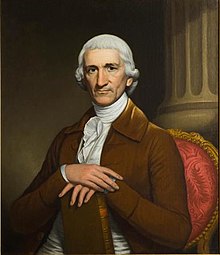
Portrait of Charles Thomson, wearing a white wig and brown coat and holding a leatherbound book, painted by Joseph Wright
The second person to sign the Declaration of Independence, after John Hancock, was Charles Thomson.

Thomson wasn’t a delegate to the Continental Congress, and thus didn’t sign the famous handwritten copy of the Declaration.

Rather, he was the Congress’s secretary, chosen unanimously in the first week of meetings and serving fifteen straight years to the launch of the federal government in 1789. He co-signed all the body’s official pronouncements before sending them to the printer.

Last month the American Philosophical Society ran a blog post by Michael Miller about Thomson, inspired by some recently acquired manuscripts from his later years.

Charles Thomson had a remarkable early life—straight out of a melodramatic novel if we believe the details in John Fanning Watson’s Annals of Philadelphia (1830), which I’ll put in brackets. He was born in Londonderry in 1729, and his mother died when he was ten. His father decided to move the family to America but died on the voyage over [within sight of the coast!]. The kids were then split up [after the captain took all their father’s money!], but they remained in touch.

Charles was placed in a blacksmith’s household. [After watching the man make a nail, he pounded out one himself! Overhearing the smith and his wife talk about legally making him an apprentice, Charles ran away! He met a kind anonymous lady who sent him to school!] By 1743, when he was fourteen, Charles was attending Francis Allison’s academy in New London, Pennsylvania, with support from one of his older brothers.

On coming of age in 1750, Thomson moved to Philadelphia. With the recommendation of Benjamin Franklin, he became a tutor in languages at the Academy. He joined some of the city’s intellectual societies, eventually serving as corresponding secretary of the A.P.S., and the Presbyterian Church. He became involved in political matters like the colony’s Indian policy, and after the Stamp Act he allied himself with John Dickinson and other organizers of resistance to Crown taxes.

In September 1774 Thomson married Hannah Harrison, daughter of a wealthy Quaker. This cemented his position in the top echelon of Philadelphia society. That was also when the First Continental Congress assembled in Philadelphia and, as I said, the delegates chose Thomson to be the secretary. Anyone who’s seen 1776 can recall how big a presence Thomson was, as played by Ralston Hill—and that was just handling official business.

Since Thomson maintained the Congress’s official records, he exercised influence behind the scenes as well, and he managed a lot of official correspondence, foreign and domestic. When he got fed up with delegates not deciding on the design of an official seal for the U.S. of A., he created the eagle symbol the country still uses. Thomson’s power annoyed some people, and he once got into a physical altercation with delegate James Searle.

The A.P.S. blog post focuses on Thomson’s big post-Congress project:
Upon retiring from politics in 1789, at age 60, Thomson devoted himself to studying the Bible in Greek. He acquired a 1665 copy of the Septuagint edited by the English theologian John Pearson. When New Testament writers quoted Scripture, they used the Septuagint, more often than they used Hebrew sources. In order to better understand the Greek text himself and to share his work with an American audience, Thomson saw the merit in translating the Septuagint into English for the first time.

Thomson completed his translation of the Bible, both Old Testament and New, in 1808. His rendition is titled The Holy Bible, Containing the Old and New Covenant, Commonly Called the Old and New Testament: Translated from the Greek. Only a thousand copies were printed; most went unsold and ended up as scrap paper.
Undaunted, seven years later Thomson published A Synopsis of the Four Evangelists, a summary of the four canonical gospels into one unified text.

Thomson lived to be ninety-four, dying just a couple of weeks short of the fiftieth anniversary of the First Continental Congress. By that time, Thomas Jefferson had heard, the former secretary had senile dementia and could not recognize family members; “It is at most but the life of a cabbage,” Jefferson wrote. Still, Thomson had outlived all but three of the other men who signed the Declarationa after him.


Thursday, July 15, 2021

“The idea of a place called Nova Scotia”

One of the most thought-provoking historical articles I’ve read recently is Alexandra L. Montgomery’s essay for the Journal of the History of Ideas blog, “Imagining Nova Scotia: The Limits of an Eighteenth-Century Imperial Fantasy.”

Montgomery, a Nova Scotian herself, writes that the visions of people far from the province have often overlaid actual life there.
Particularly during the decades on either side of the Seven Years’ War (1756-1763), the then-colony became a near obsession among British colonial administrators on both sides of the Atlantic. Generations of men poured over questionable maps, spinning out schemes meant to exploit the region’s rich fisheries, timber stores, and geographically advantageous location along the major ship routes between Europe, the British mainland colonies, and New France. And yet,…while proposals for the region were unending, facts were in short supply.

Indeed, even the idea of a place called Nova Scotia was, for much of the early modern period, unmoored from any objective reality.
In the middle of the eighteenth century, the Earl of Halifax wanted to mold Nova Scotia into a “model colony,” with lots of British government money and oversight and a new capital named, naturally, Halifax. The French and Indian War made British Canada safer to settle but harder to pay for.
While the new leadership of the province and Board of Trade supported Halifax’s broad vision, they balked at its cost and chose to outsource the next phase of Nova Scotia’s transformation to private individuals and land companies. It was in this post-war context that some of colonial America’s most notable names became involved in the colony to their north. The Board of Trade’s open call for respectable land investors to take up and settle Nova Scotian land attracted no less a figure than Benjamin Franklin, and another company from Philadelphia hired a fresh-faced and not-yet-“mad” Anthony Wayne to survey their potential Nova Scotian lands.
But that fuse fizzled instead of booming, and by the time the more populous British colonies to the south were coming together to resist Parliament’s new taxes, American Whigs saw Nova Scotia as what a colony shouldn’t be.
In his 1767/1768 Letters from a Farmer in Pennsylvania, John Dickinson pitted the colonies that would eventually break away from the empire against the somewhat newer areas of British control, among which he included Nova Scotia. He rejected the attempts to settle Nova Scotia as damaging to the population levels of the older colonies, not to mention a colossal waste of money.
That attitude colored the American Revolutionaries’ thoughts on whether to treat Nova Scotia as a potential ally, Montgomery writes.

The last image her article left me with was Nova Scotia at the end of the war, firmly within the British Empire and now the Loyalists’ first place of refuge. “Shelburne, Nova Scotia,…transformed from a boom town of as many as 14,000 people in 1783 to a near ghost town with over 300 empty houses just a few years later.”

Monday, October 19, 2020

Seminar on John Dickinson and the Constitution, Starting 21 Oct.

Back in 2012 I made a point about the steady flow of books on Thomas Paine by comparing that output to the sparse number of books on John Dickinson.

I counted over a dozen recent books on Paine and only two on Dickinson—one published by an outfit co-founded by William F. Buckley to promote conservative politics on college campuses and one written by Jane E. Calvert, who became a professor at the University of Kentucky.

Calvert formed the John Dickinson Writings Project to produce a scholarly edition of this Founder’s output, which will ease further research and publications on his work.

That enterprise has now published the first volume of The Complete Writings and Selected Correspondence of John Dickinson, covering the man’s legal training in London and early law practice in the 1750s. The editorial staff is forging ahead on more.

This autumn Prof. Calvert is leading a three-session seminar on “John Dickinson and the Making the the U.S. Constitution, 1776-1788” through the Library Company of Philadelphia.
This seminar will consider the innovative contributions of John Dickinson to the creation of the United States Constitution through his work on the Articles of Confederation (1776), the Annapolis Convention (1786) that met to consider the shortcomings of the Articles, the ensuing Federal Convention (1787), and the debate over ratification (1788).

As the only leading figure to contribute substantially to every phase of the American Founding beginning with the Stamp Act resistance, Dickinson also played a key role during the constitutional era. This timely seminar will explore drafts, notes, and essays, along with selected secondary source readings, to understand Dickinson’s contributions to the U.S. Constitution, reflecting on both what he offered and what his colleagues rejected.
Calvert’s seminar guests will include Liz Covart of the Ben Franklin’s World podcast, John Kaminski of the Study of the American Constitution at the University of Wisconsin-Madison, and Jack N. Rakove, emeritus W. R. Coe Professor of History and American studies at Stanford University.

The conversations will take place online over three Wednesday evenings, 5:30–7:00, two weeks apart: on 21 October, 4 November, and 18 November. Register here. Registrants will receive a syllabus and readings for the three sessions.