J. L. BELL is a Massachusetts writer who specializes in (among other things) the start of the American Revolution in and around Boston. He is particularly interested in the experiences of children in 1765-75. He has published scholarly papers and popular articles for both children and adults. He was consultant for an episode of History Detectives, and contributed to a display at Minute Man National Historic Park.

Subscribe thru Follow.it


•••••••••••••••••


Showing posts with label Elizabeth Hamilton. Show all posts

Wednesday, May 06, 2026

This Year’s Pulitzer Winners on the Founding Era

This week Columbia University announced the Pulitzer Prizes for 2026. In journalism, the big trend was big exposés of big abuses by the current administration in Washington.

The awards for books reflected this Sestercentennial year more mildly, though of course that anniversary has meant authors and publishers produced more books about the Founding era. Here are two winners.

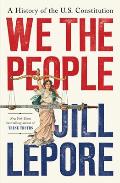
In History, the prize went to We the People: A History of the U.S. Constitution, by Jill Lepore. The judges called it “A lively and engaging narrative that investigates why the Constitution is so difficult to amend, including a review of noteworthy failed amendments proposed by marginalized groups.”

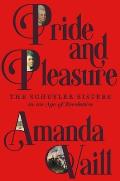
In Biography, the winner was Pride and Pleasure: The Schuyler Sisters in an Age of Revolution, by Amanda Vaill.

This was described as: “A lively and detailed biography of two daughters of wealthy and influential Dutch landowners who colored our nation’s history, using present tense to tell their story and past tense to chronicle the dramatic sweep of the American Revolution.”

Monday, September 17, 2018

A Season of Talks at the David Library

Here’s the lineup of upcoming talks at the David Library of the American Revolution in Pennsylvania. That’s a striking venue with a loyal audience, and its offerings cover the entire war—note how many different people and events proved absolutely crucial to the Revolution.

Thursday, 20 September, 7:30
John Oller, “A Patriot (But Not THE Patriot)”
The author of The Swamp Fox: How Francis Marion Saved the American Revolution will explore the life and military campaigns of Francis Marion. Like Robin Hood of legend, Marion and his men attacked from secret hideaways before melting back into the forest or swamp, confounding the British. Although Marion bore little resemblance to the fictionalized portrayals in television and film, his exploits were no less heroic. He and his band of militia freedom fighters kept hope alive for the patriot cause in one of its darkest hours, and helped win the Revolution.

Thursday, 4 October, 7:30
Bob Drury, “The Existential Moment: How The Valley Forge Winter Saved the Revolution, Created the United States, and Changed the World”
Bob Drury is co-author (with Tom Clavin) of the new book Valley Forge. In his talk, he will outline how George Washington and his closest advisers spent six months on a barren plateau 23 miles from enemy-held Philadelphia fighting a war on two fronts—militarily against the British, and politically against a Continental faction attempting to depose him as Commander in Chief of the Continental Army. How he deftly prevailed on both of these fronts shaped the world as we know it today.

Sunday, 7 October, 3:00
Robert Selig, “The Washington-Rochambeau Revolutionary Route National Historic Trail in the State of Pennsylvania”
In 2008, President Obama signed legislation establishing the land and water routes that were traveled by the allied French and American armies to and from Yorktown in the summer of 1781 as a National Historic Trail. That trail stretches from Newport, Rhode Island, and Newburgh, New York, and includes Pennsylvania from Trenton south to Marcus Hook. Yet the very existence of this trail is still largely unknown. Robert Selig, Ph.D., serves as project historian to the National Park Service for the Washington-Rochambeau Revolutionary Route National Historic Trail Project. His lecture will introduce the trail and its historic significance, showing contemporary and modern maps, and important sites he has identified in his research, some of which was conducted at the David Library!

Wednesday, 17 October, 7:30
An Evening with Nathaniel Philbrick
This program comes in cooperation with nearby Washington Crossing Historic Park, which will host the event. The New York Times best-selling author, hailed by the Wall Street Journal as “one of America’s foremost practitioners of narrative nonfiction,” will give a talk about his newest book, In the Hurricane’s Eye: The Genius of George Washington and the Victory at Yorktown. Tickets are $50 for a single seat, and $80 for two. Each individual or couple admission price includes an autographed copy of In the Hurricane’s Eye. Proceeds benefit the David Library and the Friends of Washington Crossing Historic Park. Visit this site to buy tickets in advance.

Thursday, 25 October, 7:30
Stephen Fried, “Reclaiming Dr. Benjamin Rush, Our ‘Lost’ Founding Father”
Bestselling author Stephen Fried, whose latest book is Rush: Revolution, Madness, and Benjamin Rush, the Visionary Doctor Who Became a Founding Father, will help us see the American Revolution, the Federal Period and the human saga of the entire birth of our nation from the unique, fascinating perspective of founding father, physician, philosopher and confidant Benjamin Rush.

Thursday, 1 November, 7:30
Ricardo A. Herrera, “American Citizens, American Soldiers: Civic Identity and Military Service from the War of Independence to the Civil War”
From 1775 through 1861, American soldiers defined and demonstrated their beliefs about the nature of the American republic and how they, as citizens and soldiers, were part of the republican experiment. Despite uniquely martial customs, organizations, and behaviors, the United States Army, the states’ militias, and the war-time volunteers were the products of their parent society. Understanding American soldiers of all ranks, in war and in peace, helps us understand more about American society writ large and how that society shaped its armed forces in the years of the Early Republic. A former David Library Fellow, and currently Professor of Military History at the School of Advanced Military Studies in Kansas, Ricardo A. Herrera, Ph.D., is the author of For Liberty and the Republic: The American Citizen as Soldier, 1775-1861.

Thursday, 8 November, 7:30
Christopher S. Wren, “Vermont: The Most Rebellious Race”
Before Vermont was Vermont, it was a British territory fought over by such figures as Ethan Allen, who helped form the American Revolutionary War militia known as the Green Mountain Boys. This lecture, by the author of Those Turbulent Sons of Freedom: Ethan Allen's Green Mountain Boys and the American Revolution, will consider the story of the tough, brave, and wild crew of characters who faced some of the harshest combat in the American Revolution, and made their own rules to create an independent Vermont.

Sunday, 18 November, 3:00
Tilar J. Mazzeo, “The Private Lives and Loves of the Schuyler Sisters”
Mazzeo is the author of the new biography Eliza Hamilton: The Extraordinary Life and Times of the Wife of Alexander Hamilton. Her lecture will take a lively look into the lives of Eliza, Angelica and Peggy, the daughters of Philip Schuyler, and the context of colonial and early national women’s lives in the eighteenth and early nineteenth centuries. The lecture will draw on information from private family letters and documents, and will cover everything from Eliza Hamilton’s first crushes to the Schuyler family wedding cake recipe to how colonial women leveraged coterie networks to support spy rings in the Revolution.

Thursday, 6 December, 7:30
Christian di Spigna, “‘The Greatest Incendiary in all America’: The Rise and Fall of Dr. Joseph Warren”
Joseph Warren was the Boston physician who played a prominent role in the earliest days of the Revolution. As president of the revolutionary Massachusetts Provincial Congress, it was he who enlisted Paul Revere and William Dawes on April 18, 1775, to leave Boston and spread the alarm that the British garrison in Boston was setting out to raid the town of Concord. Christian di Spigna is the author of Founding Martyr: The Life and Death of Dr. Joseph Warren, the American Revolution's Lost Hero. His lecture will trace Warren’s rise from humble beginnings to his bloody death at Bunker Hill, and examine Warren’s postmortem journey over the years from Revolutionary hero to relative obscurity.

(My own talk at the David Library a couple of years back can be viewed here.)

Saturday, January 13, 2018

Alexander Hamilton’s Love Letter Revealed!

Julie Miller of the Library of Congress recently wrote at Medium about the effort to read crossed-out lines in one of its Alexander Hamilton letters.

This is a 6 Sept 1780 letter from Hamilton to his fiancée Elizabeth Schuyler (“Betsey” in real life, “Eliza” in the musical), two months before they married. Most of the letter is about the American loss at the Battle of Camden (Gen. Horatio Gates “seems to know very little what has become of his army”). That material was first published in John Church Hamilton’s 1850 edition of his father’s writings.

In the twentieth-century edition of Hamilton’s papers, which make up part of Founders Online, editor Harold C. Syrett added a new detail about that document: fourteen lines of the first paragraph had been heavily crossed out and illegible.

Miller tells the next stage of the story:
When the Library of Congress recently digitized the Alexander Hamilton Papers, that letter, unedited, with its 14 obliterated lines, became visible to all for the first time. However, the lines were still unreadable.

To find out what lay beneath the scratchings-out, Fenella France, chief of the Preservation Research and Testing Division, and preservation staff Meghan Wilson and Chris Bolser used hyperspectral imaging. A noninvasive analysis that employs light at different wavelengths to capture information not visible to the eye, hyperspectral imaging can determine the composition of inks and pigments, track changes in documents over time and reveal faded, erased or covered writing.
The article shows that process and what Library of Congress scholars now believe those crossed-out lines say. Most likely John C. Hamilton deleted them himself out of familial and Victorian embarrassment at his father writing to his mother about the couple anticipating “the unrestrained intercourses of wedded love.”

As Miller points out, that’s far from the biggest deletion from Alexander Hamilton’s correspondence. All the letters that Elizabeth Hamilton wrote to her fiancé and husband are gone, most likely destroyed by her own choice.

Sunday, January 08, 2017

“A comma in the middle of a phrase”

Here’s one last posting about Angelica (Schuyler) Church, for now. In the early years of the republic, she exchanged letters with a lot of American political men, and some of those letters seem flirtatious. Among those correspondents was Thomas Jefferson, whom Church met through the artist Maria Cosway.

Some authors writing about Church’s brother-in-law Alexander Hamilton take it as a near certainty that the two of them had a sexual affair: Willard Sterne Randall in Alexander Hamilton, Arnold Rogow in Fatal Friendship, Warren Roberts in A Place in History. Other authors say they just played at flirting, or never acted on their attraction, or that it’s simply impossible to know.

Me, I’m not sure Hamilton was even in Angelica Church’s league—not when her husband John Barker Church was around to supply both money and excitement. And if they were having a secret affair, I’d think they’d be less flirtatious in the letters each probably shared with his or her spouse. But it’s impossible to know.

The Hamilton show on Broadway presents the two in-laws’ relationship as an unconsummated yearning, mostly on Angelica’s part. That comes through most in a number titled “Take a Break,” in which Angelica sings:
In a letter I received from you two weeks ago
I noticed a comma in the middle of a phrase
It changed the meaning. Did you intend this?
One stroke and you’ve consumed my waking days
It says:
“My dearest Angelica”
With a comma after “dearest.” You’ve written
“My dearest, Angelica.”
In his surviving correspondence Hamilton never wrote “My dearest Angelica,” with or without a comma. (He did write “my dear Angelica” in three letters between 1794 and 1803.)

The inspiration for that verse clearly comes from an exchange between Angelica Church and Alexander Hamilton in 1787. In the first letter, Church wrote:
You had every right my dear brother to believe that I was very inattentive not to have answered your letter; but I could not relinquish the hopes that you would be tempted to ask the reason of my Silence, which would be a certain means of obtaining the second letter when perhaps had I answered the first, I should have lost all the fine things contained in the Latter. Indeed my dear, Sir if my path was strewed with as many roses, as you have filled your letter with compliments, I should not now lament my absence from America: but even Hope is weary of doing any thing for so assiduous a votary as myself. I have so often prayed at her shrine that I am now no longer heard. Church’s head is full of Politicks, he is so desirous of making once in the British house of Commons, and where I should be happy to see him if he possessed your Eloquence.
Hamilton wrote back in December:
You ladies despise the pedantry of punctuation. There was a most critical comma in your last letter. It is my interest that it should have been designed; but I presume it was accidental. Unriddle this if you can. The proof that you do it rightly may be given by the omission or repetition of the same mistake in your next.

So Mr. Church resolves to be a parliament-man. I had rather see him a member of our new Congress; but my fervent wish always is that much success may attend all his wishes. I am sincerely attached to him as well as to yourself.
Hamilton signed that letter “Adieu ma chere, soeur” (Adieu my dear, sister), to drive home the joke about punctuation. Or was it a joke?

In any event, it was Hamilton, not Church, who read meaning into a misplaced comma and wondered what it meant about the other’s affections. Hamilton even invited Church to repeat the “the same mistake” in her next letter. If she did, that document is lost. The next letter we have is from late 1789, and Church wrote:
Adieu my dear Brother, may god bless and protect you, prays your ever affectionate Angelica ever ever yours. . . . Adieu my dear Hamilton, you said I was as dear to you as a sister keep your word, and let me have the consolation to beleive that you will never forget the promise of friendship you have vowed. A thousand embraces to my dear Betsy, she will not have so bad a night as the last
No commas out of place there, plus a mention of his wife and of “the promise of friendship…as a sister.”

Angelica Church wrote that letter just as she finished a visit to New York without her husband, and some authors think that was when she and Hamilton consummated an affair. But it’s impossible to know.

Thursday, January 05, 2017

“There is no undoing this gordian knot”

We left Angelica Schuyler and John Carter in the house of her mother’s family near Albany, New York, in July 1777.

They had just eloped and were hoping that her father, Gen. Philip Schuyler, would accept their marriage.

The couple had apparently asked the general in advance for his permission to wed, and he had refused. He complained that he knew almost nothing about Carter, a young Englishman in exile who had come to his home the year before to audit army accounts for the Continental Congress.

If Gen. Schuyler had known all about Carter—that he was really named John Barker Church, that he had left Britain to escape a scandal, that that scandal was a duel or a bankruptcy, or maybe even both—he probably wouldn’t have been any more pleased.

But there were limits to patriarchal authority, even then. Schuyler had plenty on his mind already with Gen. John Burgoyne marching an army down from Canada. He had several other daughters and sons to worry about. His wife’s family seems to have supported the young couple. So the general gave in.

In the same letter in which he revealed the marriage to William Duer, Schuyler wrote:
But as there is no undoing this gordian knot, I took what I hope you will think the prudent part: I frowned, I made them humble themselves, forgave, and called them home.
The Carters returned to the Schuyler Mansion in Albany, shown above.

In September, John Carter wrote to the Congress asking that he be replaced as one of the auditors for the Continental Army’s Northern Department. He said that “important business requires his immediate presence in Boston.” The Congress probably saw that it wouldn’t do to have a man checking the books created in part by his own father-in-law, so it quickly gave him leave to resign. The Carters moved to Boston, and John went into business supplying the army.

Gen. Schuyler didn’t forget the brief estrangement from his eldest daughter. Three years later, on 8 Apr 1780, he wrote to the young American colonel who had asked for his daughter Betsy’s hand:
Yesterday I had the pleasure to receive a line from Mrs Schuyler in answer to mine on the subject of the one you delivered me at Morris town [New Jersey]; she consents to Comply with your and her daughters wishes. You will see the Impropriety of taking the dernier pas [last step—i.e., the actual wedding] where you are. Mrs. Schuyler did not see her Eldest daughter married. That also gave me pain, and we wish not to Experience It a Second time. I shall probably be at Camp In a few days, when we will adjust all matters.
Col. Alexander Hamilton and Elizabeth Schuyler married on 14 December at the Schuyler Mansion.

TOMORROW: A glimpse of the Carters in Boston.

Saturday, October 11, 2014

A Hip-Hip Hamilton Coming to the New York Stage

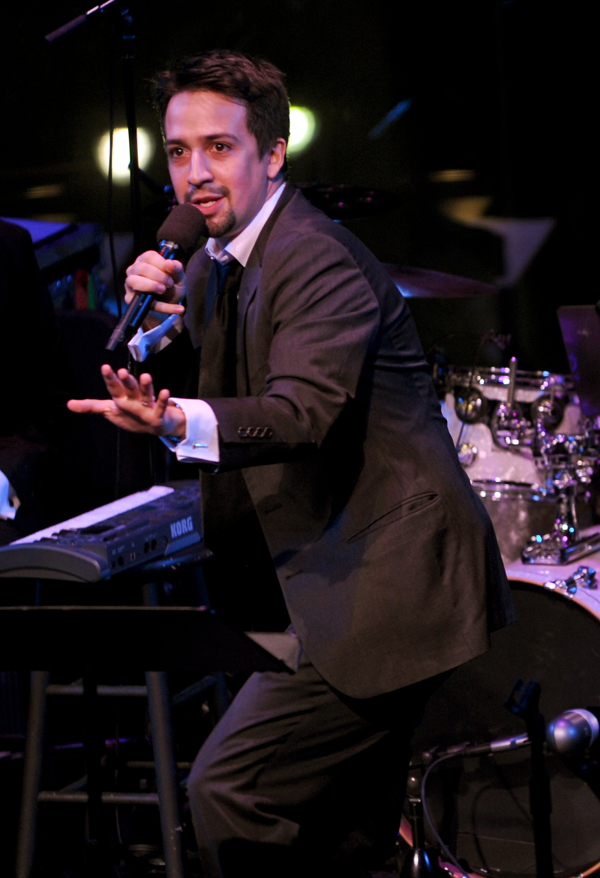
Early next year Lin-Manuel Miranda’s musical about Alexander Hamilton is scheduled to open Off Broadway in New York. Miranda, who won Tony and Grammy Awards for In the Heights, performed some of this material as “The Hamilton Mixtape” at an evening of poetry at the White House in 2009 and at Lincoln Center. That song cycle was in turn inspired by Ron Chernow’s biography of Hamilton.

This month the Hamilton producers announced some casting choices, in addition to Miranda himself in the title role:
The New York Times reports that the show “blends an array of musical styles – including traditional showtune-like numbers and elements of hip-hop and rap, which dominated In the Heights. The musical explores Hamilton’s life as a teenage orphan in the British West Indies, a young leader in the Revolutionary War, a confidant to Washington, a key force behind the American constitution, and the first Secretary of the Treasury, with moments of scandal along the way.”