J. L. BELL is a Massachusetts writer who specializes in (among other things) the start of the American Revolution in and around Boston. He is particularly interested in the experiences of children in 1765-75. He has published scholarly papers and popular articles for both children and adults. He was consultant for an episode of History Detectives, and contributed to a display at Minute Man National Historic Park.

Subscribe thru Follow.it


•••••••••••••••••


Showing posts with label Albert Remy de Meaux. Show all posts

Monday, October 17, 2022

“The only house in the neighbourhood unprovided with an electrical apparatus”

I’ve been writing about the death of Lt. Albert Rémy de Meaux, artillerist in the French army, after he was struck by lightning in Philadelphia in March 1782.

That news reached the commanders of the French forces in Williamsburg, Virginia, the next month. They were sad at the loss, though grateful that the man De Meaux had been staying with, the chevalier de la Luzerne, had escaped the same death by coming to visit them.

Those commanders were well aware of the value of lightning rods, invented by Benjamin Franklin back in 1752. The military engineer d’Aucteville wrote about Williamsburg:
Upon nearly all the houses there are lightning rods [conducteurs]. The chimneys are all of brick, often outside the houses, and rising far above the roofs. Almost all of them are capped with cut stone placed carefully and symmetrically; also upon all the roofs are to be seen fire escapes—des échelles contre le danger des incendies.
Gen. Rochambeau himself wrote to his minister of war:
M. de Meaux, lieutenant of artillery, who was convalescing at M. de Luzerne’s residence, was killed. This fatality is a strong argument in favor of the conducteurs. The owner of the house in which M. de Luzerne lodged had always opposed the system of M. Franklin and had refused permission to have it installed.
There’s an echo of that remark in the memoir of one of Rochambeau’s aides de camp, the Baron von Closen:
M. de La Luzerne arrived in Williamsburg on the 17th… On the 26th he received the sad news of the thunderbolt which had struck his house during his absence; the circumstances…are very odd and prove how much one owes to Franklin for his invention of lightning conductors, which are much used in America.

The owner of M. de la Luzerne’s house, who was an enemy and rival of Dr. Franklin’s, had been skeptical until then of the value of conductors; but after that he had them erected on all his houses.
(Von Closen wrote his manuscript about 1823, based on his wartime records; the William and Mary Quarterly published it as his “Journal” in 1953.)

It’s notable that none of those French officers named that landlord, nor did the Philadelphia newspaper articles that went into great detail about the damage the lightning had done. However, a letter published in “The Norris-Fisher Correspondence: A Circle of Friends, 1779-1782” (Delaware History, March 1955) clearly placed the blame on one prominent man:
There has within this few Days a very Meloncholy accident happen’d at the house of Johny Dickinson, ocupied by the french Minister, it was occasion’d by a dreadful flash of Lightning and thunder. the [h]ouse in every part is more or less shatter’d, the furniture mostly distroy’d, and [e]very thing almost inside the house carries the appearance of Devastation—all this is trifling compared with the horrid situacion it has thrown a poor Man in—he lays now in the Most extreem agony, if he survives he is an entire Cripple, what an affecting Circumstance
George Grieve also named John Dickinson in his 1796 translation of the Marquis de Chastellux’s Travels in North-America, in a footnote that closed, “It may be proper to add, that this was the only house in the neighbourhood unprovided with an electrical apparatus.”

In March 1782, Dickinson was the president of the state of Delaware. By the end of the year he was also president of the state of Pennsylvania. He owned a great deal of real estate in and around Philadelphia in addition to that lightning-struck house. The French commanders no doubt knew he was an influential man and chose not to name him.

I don’t know whether it’s accurate to say Dickinson was “an enemy and rival of Dr. Franklin’s” or simply conservative about that new-fangled lightning rod. If indeed he had them added to his properties after De Meaux’s death, we can credit Dickinson with being able to learn and change his mind, just as he did on American independence after July 1776. But that was too late for Lt. De Meaux. All told, this seems like an incident that Dickinson would prefer no one mention.

As I wrote in the first post of this series, I started looking into this story because of a chance remark by William Hogeland on Twitter. But what spurred me to finish was the title of one of the papers planned for the Dickinson Symposium later this week: David Forte’s “‘Like Lightening thro the Land’: John Dickinson and the Freedom of the Press.” I’m sure that’s a period metaphor, but, given De Meaux’s fate, it feels like an awkward one.

(My thanks once again to Dr. Robert A. Selig for help finding sources on this event.)

Sunday, October 16, 2022

“A living body not only singed, but scorched all over”

The Philadelphia Packet published its first detailed report about the lightning strike on the French minister’s house on 2 Apr 1782.

Four days later, on 6 April, a second long article appeared, also perhaps written by Arthur Lee and Benjamin Rush, who both had medical training. The second story went into detail about the artillery lieutenant hit by that lightning, Albert Rémy de Meaux:
He was alone, seated near a window, his right arm resting on the window cill, the electrical matter, proceeding from conductor to conductor, fell upon his shoulder, descended along his right arm on the window-cill, where it made so great an explosion, that every thing near it was broken in pieces: the arm making but a weak resistance to the explosion, was not broken or fractured, but bruised and burnt all over in a terrible manner.

All his body, and particularly his right side, from the shoulder to the end of his foot, served as a conductor for another part of the electric matter, which set fire every where as it passed.

It was not till six or eight minutes after he was struck that any body knew of his misfortune, when upon entering the room, they saw this unfortunate person surrounded with flames. When they had stripped off what little cloaths the flames had not time to burn, and had restored him to life again, he exhibited a most terrible spectacle; a living body not only singed, but scorched all over, and the miserable object making the most lamentable groans.

The parts which have been the most damaged are the left hand, which was burnt in such a manner that it must have undergone an amputation if he had lived; all the lower part of his belly, the inside of his thigh, was burnt so as to lose all feeling; the other wounds caused him to suffer incessantly for three days the most excruciating pains, when the gangrene began to appear in several places, after which his body gradually perished, and finally he died on the 3d of April at two o’clock in the morning; he preserved his reason, senses and presence of mind to his last breath.
In 1796, in a footnote to his translation of Chastellux’s Travels, George Grieve stated: “his private parts [were] reduced to ashes.” Grieve also wrote that De Meaux “survived but a few hours,” and we know he actually lived for six and a half days, so his information might not be totally reliable.

Another footnote to the lieutenant’s death appears in the papers of the artist Pierre Eugène du Simitière, who was assembling a museum in Philadelphia. He recorded acquiring in March 1782:
a fine miniature picture on vellum, representing a young gentleman with a large flowing wig, a laced cravat, and scarlet cloak turned over the Shoulder Supposed by the dress to have been done in france in the begining of this century

[Donor’s name in red ink] by Monsr. De Meaux officer in the artillery of the french army of Count De Rochambeau who died in Phila., from the hurt received by the lightning that struckt the minister of France’s house March 1782.
It’s possible that De Meaux gave Du Simitière this miniature portrait earlier in the month, before the accident, and Du Simitère added the note later. But the officer may have disposed of this possession in the days after he was badly injured and understood he was dying.

The lightning strike on the French ambassador’s house raises one big question. It happened in Philadelphia, the city where Benjamin Franklin had invented the lightning rod thirty years before. That invention had become internationally famous, establishing Franklin, Philadelphia, and America in the world of Enlightenment science. So how could lightning cause so much fatal damage to a Philadelphia house?

TOMORROW: The landlord.

Saturday, October 15, 2022

“Irritated by this obstacle, it broke the stove”

The Philadelphia Packet newspaper ran two long reports on the 27 Mar 1782 lightning strike on the Philadelphia house that the French diplomat De la Luzerne had rented, as I mentioned yesterday.

According to George Grieve, writing in a footnote to his 1796 translation of the Marquis de Chastellux’s Travels in North-America, “Mr. Arthur Lee, and Dr. [Benjamin] Rush, thought proper to publish a very long and curious account of” the calamity.

The newspaper articles are probably that account since there doesn’t seem to be any other candidate. Those articles also might show the signs of dual authorship with shifting tenses and sentence structures.

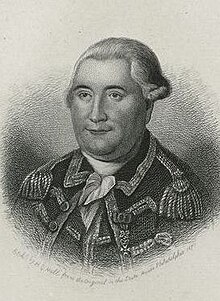
Both Lee and Rush had medical training, though only Rush was still a practicing physician. Lee (shown here) had spent most of the war in Europe as one of the Continental Congress’s diplomats, feuding with all the others. After he came back to Virginia, that state sent him to the Congress in 1782. Rush had left the Congress in 1778 but continued to be politically active in Philadelphia.

The 2 April Packet installment was an extremely detailed description of how the thunderstorm damaged the house:
The lightning struck it in three different places. The principal explosion was on the west side of the house. The chimney of monsieur le chevalier de la Luzerne was thrown down to the roof, and the bricks scattered to a great distance; the lightning descended down the chimney, attracted by a stove that stopped up the fire-place: irritated by this obstacle, it broke the stove in pieces, demolished entirely the mantle piece, split the funnel of the chimney, threw down and broke all the wainscotting near it, dispersed the bricks to the other end of the room, and cast pieces of the stove to the distance of ten or twelve feet, broke the furniture and glass, and the chamber was found covered with rubbish.

The electric matter appears to have scattered, by traces left on the wall at the front of the house, in returning upwards towards the roof, where the lead of the gutters attracted it without doubt. The same explosion which struck the chimney followed the course of the gutters and descended by a leaden pipe, the end of which terminated on the outside of the wall of the bedchamber of the chevalier: attracted by an iron bedstead in the chamber, it penetrated the wall and tore two bricks out of it, leaving a long black trace on the wall and collected by the iron bedstead set the curtains and bedcloaths on fire; it has started the flooring and made its way into the dining room, underneath this chamber, by a breach in the ceiling of the dining room of about six feet long and two feet broad; gliding along the wainscoting has fallen upon the window-leads and hinges of the shutters, which were all torn off, and has cast the window shutters to the other side of the room; split in several places a mahogany buffet and broke all the china within: the chairs were all broken by the force of the commotion, after which it passed out at a window of the court, without any other consequences.

The lightning struck also the eastern side of the house…
And so on. The electricity “broke a china jug of milk, and reduced the milk to smoke.” It “went off in an iron cilender full of live coals, placed in the middle of a tray of water: it dispersed the coal in all directions.” And “there is scarcely a nail but what has been removed by the shock upon the house.”

There were actually people inside the house at the time to witness the damage.
Two persons who were in [De la Luzerne’s bed-chamber] saw the [iron] bedposts dart abundance of flashes of fire in the midst of a thick black smoke, which had a sulphurous smell; it has torn up all the flooring under the bedstead, and has opened a large passage into a parlour on the ground floor, by breaking away the intermediate boards, and removing joices four inches thick.
Only a couple of sentences within that scientific report stated that a person had been injured:
Unfortunately a French officer was near this window; the shock threw him into a swoon on a chair, and set fire to his cloaths. He was alone, and no one coming to his assistance for some minutes, he was terribly and dangerously burnt; his clothes were almost wholly consumed about him.
That French officer, unnamed in this account, was Lt. Albert Rémy de Meaux.

TOMORROW: The lieutenant’s injuries.

Friday, October 14, 2022

At the French Ministry in Philadelphia

Here’s a story I’ve been intermittently digging into since 2013, when a chance tweet about it from the author William Hogeland intrigued me. That’s a long time ago, and it feels like even longer.

Albert Rémy de Meaux was born in Vitry-le-François, in the French province of Champagne, on 11 May 1753. In July 1769 he entered artillery school, and a year later became a lieutenant in the Auxonne Artillery.

In 1778, after the French government decided to help the new nation irk Great Britain, it sent guns and money; a diplomatic minister, Conrad Alexandre Gérard de Rayneval (1729–1790); and a naval fleet under Adm. Charles Henri Hector, count d’Estaing (1729–1794).

The next year, France upped its stake by sending a more prestigious minister, the chevalier de la Luzerne (1741–1791, shown here). And the year after that, it dispatched an Expédition Particulière—a special expedition containing a significant number of soldiers (by North American standards) under Gen. Rochambeau.

Lt. De Meaux was part of Rochambeau’s army and thus probably saw action at Yorktown at the end of 1781. He appears to have sustained some sort of wound or injury early the next year and needed to convalesce.

For that the lieutenant was given a berth in the large home that De la Luzerne had rented in the American capital of Philadelphia. The 2 Apr 1782 Philadelphia Packet reported, “This building stands alone, at a considerable distance from any other, at the western extremity of the city.” In her diary Elizabeth Drinker described it as located “up Chestnut St.”

On 27 March, during “a considerable shower of rain,” that house was struck by lighting—“in three different places,” said a detailed report in the Packet.

De la Luzerne had taken to sleeping in an iron bed. According to George Grieve, writing a couple of decades later, this was “by way of security from the bugs.” The lightning went through the bed and “set the curtains and bedcloaths on fire.”

Fortunately for the minister, he was away in Virginia consulting with the army. Rochambeau wrote to the French minister of war from Williamsburg on 14 April:
It was lucky for him that M. de Luzerne has been paying us a visit. Had he remained in Philadelphia it is probable he would have been killed by the lightning flash which fell upon his house, where, as a result, his bed and everything else was destroyed by fire.
Not everything about the Philadelphia house was destroyed, but a great many things were badly hurt. And that included the unlucky Lt. De Meaux.

TOMORROW: “The electric matter appears to have scattered.”

(My thanks to Dr. Robert A. Selig for his help in identifying Lt. Albert Rémy de Meaux.)