J. L. BELL is a Massachusetts writer who specializes in (among other things) the start of the American Revolution in and around Boston. He is particularly interested in the experiences of children in 1765-75. He has published scholarly papers and popular articles for both children and adults. He was consultant for an episode of History Detectives, and contributed to a display at Minute Man National Historic Park.

Subscribe thru Follow.it


•••••••••••••••••


Showing posts with label Québec. Show all posts

Saturday, February 14, 2026

“Appointed to the command of the Schooner Isabella”

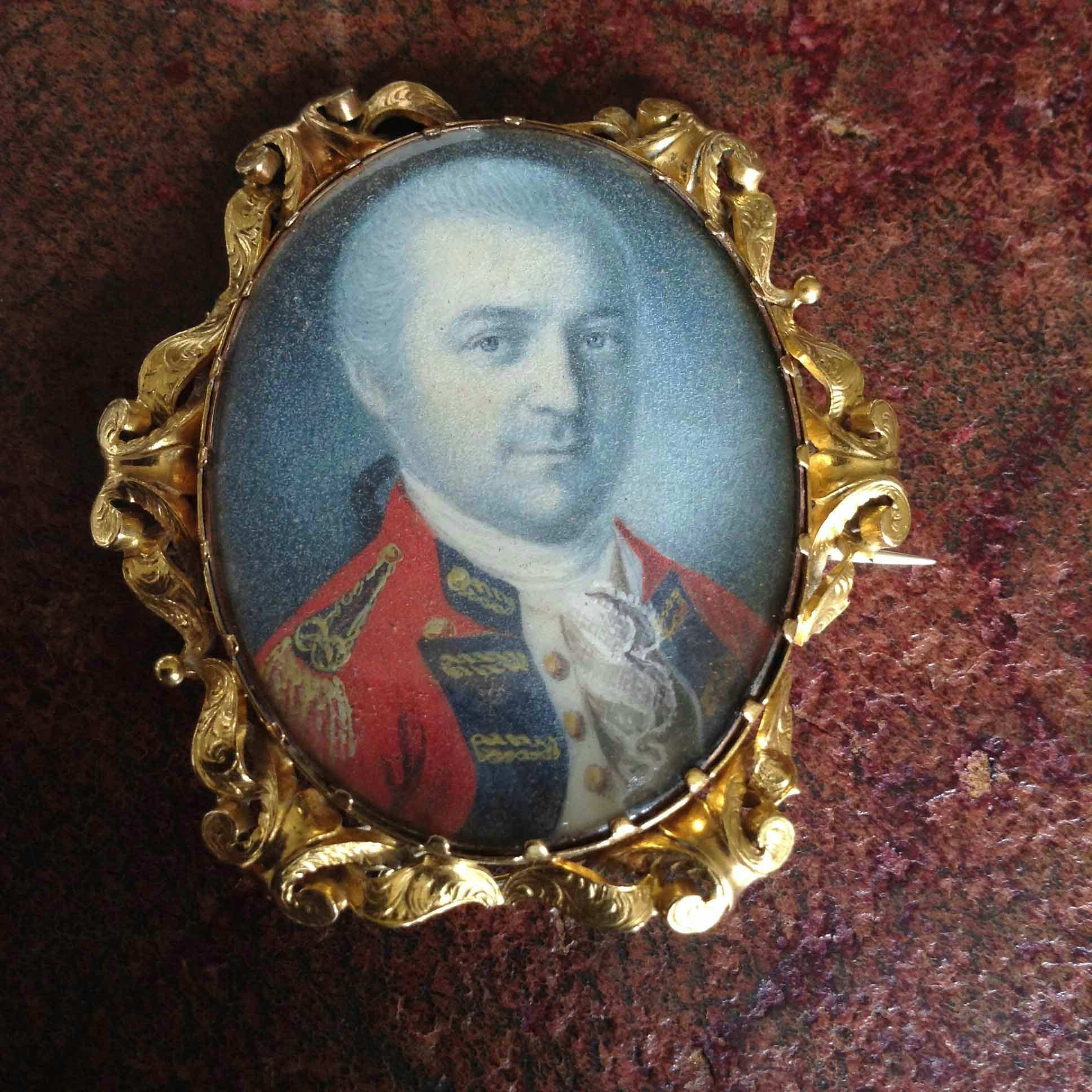
In the April 1776 letter from Capt. Hector McNeill to Col. Benedict Arnold (shown here) that I quoted yesterday is the line, “My William Farris is Saild for you I hope you will be kind to him.”

William Farris was twenty-three years old that year, having been born in Belfast in 1753. He came to Newburyport at the age of twelve. Then he went to sea.

In an 1832 pension application, quoted in John J. Currier’s History of Newburyport, Mass.: 1764-1905, Farris described what he did at the start of the war:
he was at Quebec as first officer of the Ship Mary Ann, belonging to Boston, in the summer of the year 1775, and there made arrangements with Captain Hector McNiel, and was under further engagement with him for a voyage and as first Officer of a vessel, in the Merchants service with him, and while thus engaged, and before the lading of the vessel, information was received of an expedition undertaken by General Arnold, in the service of the United States, who was then on his way through the woods.

To the best of his remembrance, General Arnold appeared with his Army in the month of November of that year [14 Nov 1775], and immediately thereupon a proclamation was issued by Lieutenant Governor Crambries [Hector Theophilus Cramahé] requiring every Individual in the City to take arms in its defence, or depart therefrom within three days, and declaring all who did not thus manifest their allegiance Rebels and Spies.

Your petitioner did not hesitate to make his election, but immediately procured a passport, leaving all his effects behind him, excepting only such few articles as were necessary for a change, and those contained in a single handkerchief, left the City, and proceeded to join the standard of his country, under General Arnold, who was then at about thirteen miles distance; he was favorably received by the General, and was immediately stationed by him at a place called Point aux Trembles, and there given in charge the care of several vessels, which had been captured from the British, and placed in a small creek at that place; from these vessels various articles which were considered useful and necessary for the American Army were selected and sent down from thence by land.

At this place he was stationed during the whole of the following Winter, having with him an officer from General Arnold’s Army, and a few soldiers, for the protection of this property. On the breaking up of the ice in the spring following, he was sent across the river to direct some Canadians, who were employed for that purpose, in making a number of sweeps, or large bars, for the use of gondolas, which were to be employed in transporting heavy cannon, and as soon as the Ice was sufficiently cleared away he was appointed to the command of the Schooner Isabella, one of the prises which had been captured from the British, mounting four carriage guns, and with this vessel was ordered for Montreal, as a transport, with supplies for the American army.

On arriving at said Montreal, it was found that General Arnold had been superceded in the command at Quebec [by Gen. David Wooster], and that information had been received of the arrival of a British fleet, upon which General Arnold immediately ordered all the materials which were considered useful and proper for the American Army to be selected, and these were laden and put on board the said Schooner, which was then under the command of your petitioner, and General Arnold, Colonel [Aaron] Burr, and several other officers of the American Army took passage in said Schooner with him and went down to the River Sorcel, where reinforcements for the Army were arriving, and at that place said Schooner was hauled in near the banks, and the General and all his officers continued on board several days, having no convenient place on shore for their accommodation.

When it became necessary to leave the said Schooner, there appearing no further use for her, or for the services of your petitioner at that place, he procured a passport from Colonel Burr, with which about the middle of June, 1776, he proceeded for the United States, with a view of entering the Navy, having been employed in the service of the United States, having the charge of said prises, and in the command of said Schooner, the full term of seven months.
I quote that at length because it offers a picture of the environment in which Capt. McNeill spotted the man he identified as Basile Boudrot.

In addition, Farris offers a link between McNeill, his mentor in Québec, and Newburyport, the port that Thomas Parsons had sailed from on his last voyage.

TOMORROW: Transporting the prisoner.

Friday, February 13, 2026

“He Now Passes by the Name of Dugan”

On 29 Aug 1775, Capt. Hector McNeill arrived in Québec on board another captain’s ship from Dominica. He brought false news of a battle at Roxbury where “most of the light horse were killed.”

Having been born in Ireland and raised in Boston, McNeill was then living in Québec with his daughters while carrying on trade with New England. His son Hector, Jr., based in Marblehead, had enrolled in Col. John Glover’s regiment.

A few months later, Col. Benedict Arnold and Gen. Richard Montgomery arrived at the walls of Québec with Continental troops. Lt. Gov. Hector Theophilus Cramahé ordered all able-bodied men to help defend the city or leave. The captain made his way to Arnold and started to carry supplies for the Continentals.

Though we usually tell the story of the American invasion of Canada with a climax and swift end in December 1775, the campaign went on for several more months, so McNeill had lots of work to do.

In the spring of 1776, the captain recognized a man aboard another ship, presumably also working for the Americans. On 25 April, McNeill at Pointe-aux-Trembles sent an urgent message to Col. Arnold, who was on the same island at Montréal:
This will be handed you by Major [Zachariah] Dubois, and is to Request the favour of you to Arrest, & Confine in Jail a certain acadian Whose proper Name is Basiell Boudrott, he Now Passes by the Name of Dugan and is the Mate of the Schooner Providence Commanded by Capt. Palmer,

I am bold to charge this fellow above named with the Murder of Capt. Thomas Parsons of Newbury Port, & his whole Crew at or near Cape St Mary’s in the Bay of Funda in the Month of March 177[2], I have been upon the look out for this chap ever Since & Now Providentially have found him, I am Sure he is the Principall of that gang of Villians who murderd Capt Parsons, & his crew, 9 in Number, & plundered first, afterwards burnt his Vessell—

I hope I need not urge you to Confine, & keep him close untill he can be Sent to New England, as Piracy, & Murder are Crimes which all good Men Should Endeavour to Prosecute & punish, I inclose you a Letter for the Owners of Capt Parsons his Vessell Which I beg you will read, Seal, & forward to the place of its distination—

My William Farris is Saild for you I hope you will be kind to him—as for your Capt Palmer—he has Sickened Me; of all Men to dispatch or manage affairs I Never Mett with worse hands then himself & his Lieut,—

I hear your wound is broke loose Which gives Me real Sorrow—you Must be Carefull of it or it may yet cost you dear

For heavens Sake do not Neglect to Secure the aforementioned Basiell Boudrot, for he is a Vile Murderer

May heavens preserve you in that Nest of Tory Scoundrels & grant you Wisdom & Fortitude to mannage them as they deserve
McNeill sent the same request to Gen. David Wooster. On 26 April, Wooster assured him: “I shall write Genl Arnold concerning the Acadien & also to arrest Palmer.”

TOMORROW: Sailing for Arnold’s army.

Wednesday, December 24, 2025

John Malcom, Counterfeiter?

Watching the recent American Revolution documentary series by Ken Burns, Sarah Botstein, and David Schmidt, my ear snagged on a detail about John Malcom.

The show said that Malcom, the Customs service officer severely mobbed, tarred, feathered, and whipped in Boston in January 1774, had gotten in trouble for counterfeiting a decade earlier.

Since I’ve collected newspaper reports about John Malcom for a series of postings I really must get back to, I was surprised at not having come across a report of that crime. Whig printers enjoyed publishing stories about Malcom’s behavior after he joined the Customs service. They had even more reason to pull out embarrassing old stories after the attack on him. But no newspaper described Malcom as a counterfeiter.

In Scars of Independence (2017) Holger Hoock wrote of Malcom: “He had become notorious across the colonies after being arrested for debt and counterfeiting in 1763.” Given the lack of newspaper mentions, the captain definitely wasn’t notorious for such a crime. In fact, after further research I’m dubious the man was ever charged with counterfeiting at all.

The earliest mentions of such a crime appear the work of Dirk Hoerder: his 1971 doctoral thesis, “People and Mobs, Crowd Action in Massachusetts During the American Revolution 1765–1780,” and his 1977 book, Crowd Action in Revolutionary Massachusetts, 1765-1780. The latter says of Malcom: “In 1763 he had been apprehended in Boston for debt and counterfeiting.”

The citation for that sentence appears to be Suffolk Court Files 84397, which is a court case listed as Malcom v. Butters. That doesn’t look like a criminal charge for counterfeiting, though it could well be a debt dispute. I haven’t seen that paperwork, though.

Based on newspaper reports, Capt. John Malcom spent little time in Boston in the 1760s. He had moved to Québec and commanded trading voyages to the West Indies. Of course, Malcom might have been charged or sued during a brief stopover in his home town.

Yet we have to be careful we have the right John Malcom. The 15 October 1772 Boston News-Letter announced the death of “Mr. John Malcom, Labourer,” as did the following Monday’s Boston Post-Boy and Boston Evening-Post. Obviously that wasn’t the Customs officer attacked in 1774. But he might have been the debtor of 1763.

Further confusing matters is how a “John Malcom, alias Malcolm,” was convicted of passing counterfeit bills in Maryland—back in 1743. (Kenneth Scott’s Maryland Historical Magazine article “Counterfeiting in Colonial Maryland,” which can be downloaded in a P.D.F. here, misdates that case as in 1734.)

Normally I find Hoerder’s work to be very thorough and reliable. In this case, however, I think that he (if you’ll excuse the expression) tarred the wrong John Malcom with the wrong misdeeds.

Monday, December 08, 2025

Examining the American Attack on Québec

Even as Col. Henry Knox was moving cannon south from Lake Champlain, Gen. Richard Montgomery was besieging Québec.

The American Revolution Institute is offering two online events about that invasion this week, two hundred fifty years later.

Tuesday, 9 December, 6:30 to 7:30 P.M.
The Battle for the Fourteenth Colony
Mark R. Anderson

Anderson examines the American colonies’ efforts to bring Quebec into the Continental confederation and free Canadians from British “tyranny.” He offers new insight into the key political and military factors that ultimately doomed America’s first foreign war of liberation and resulted in the Continental Army’s decisive expulsion from Canada on the eve of the Declaration of Independence.

Mark R. Anderson is a retired U.S. Air Force officer, having earned his M.A. in military studies from American Military University, with a concentration in early American land warfare. He is the author of several books, including The Battle for the Fourteenth Colony: America’s War of Liberation in Canada, 1774–1776 (2013), The Invasion of Canada by the Americans, 1775–1776: As Told through Jean-Baptiste Badeaux’s Three Rivers Journal and New York Captain William Goforth’s Letters (2017), and Down the Warpath to the Cedars: Indians’ First Battles in the Revolution (2022).

Anderson will be speaking at the American Revolution Institute in Washington, D.C. Register for the livestream of his talk through this webpage.

Friday, 12 December, 12:30 to 1 P.M.
The Revolution’s First Winter: Loyalist Thomas Ainslie’s Account of the 1775 American Assault of Quebec
Thomas Lannon

With unrest spreading in the southern colonies, British leaders worried rebellion might cross into Canada. That fear was justified, and Canada figured prominently in the American strategy for an opening campaign in the Revolution. Congress authorized the invasion in 1775, with the expectation that French Canadians would embrace union with the colonies.

At the center of this Lunch Bite presentation is a letter authored by Quebec’s Collector of Customs, Thomas Ainslie, preserved in the institute’s collections. Ainslie’s recollections provide a reliable day-to-day record from inside Quebec City during the American siege until British reinforcements arrived. The presentation will also explore the crucial role Loyalists played in defending the city, the uncertain loyalties of French Canadians, and the constant British fear that revolutionary fervor might spill over the border.

Lannon is the institute’s library director. Sign up to hear his virtual presentation here.

Tuesday, September 16, 2025

Commemorating the 1775 Expedition to Québec in Newburyport

This weekend the town of Newburyport will commemorate the 250th anniversary of when Col. Benedict Arnold and his Continental volunteers passed through the town on their way to Québec.

There are multiple events on the schedule. It looks like the Custom House Maritime Museum at 25 Water Street is the main base, open 10 A.M. to 4 P.M. all three days, but the Museum of Old Newbury and several churches are involved.

Friday, 19 September, 12 noon
Newburyport’s Bells Ring Out!

Three of the town’s oldest churches will ring their bells to herald the coming of the Continental troops.

Friday, 19 September, 7 to 8:30 P.M.
Through a Howling Wilderness: 1775 March to Quebec
Tom Desjardin
St. Paul’s Church, Newburyport

In September 1775, Arnold commanded eleven hundred Colonial soldiers on a daring, top-secret mission: to march and paddle nearly 200 miles through the untamed wilderness of Maine and Quebec to seize British-held Quebec City. It was a journey marked by hypothermia, disease, starvation, hurricanes, and blizzards. Dozens perished; survivors endured eating everything from dogs to lip salve before reaching their target. Though the attack ultimately failed, Arnold’s expedition helped pave the way for America’s eventual victory. Through a Howling Wilderness tells this gripping story of endurance, sacrifice, and leadership before Arnold’s name became synonymous with treason.

Tom Desjardin holds a Ph.D. in U.S. History and is the author of multiple acclaimed books. A former archivist and historian at Gettysburg National Military Park, he has taught at Bowdoin College, advised film and television productions (including Gettysburg and Gods and Generals), and appeared on the History Channel, A&E, Discovery, PBS, and CSPAN. He is a former Commissioner of Education for Maine and director of the Maine Bureau of Parks and Lands.

Saturday, 20 September, 10 A.M. to 4 P.M.
Revolutionary Living History Experience: Bringing 1775 to Life
Downtown Newburyport

A special one-day living history event featuring reenactors, tactical demonstrations, and engaging historical interpretation, this immersive celebration brings 1775 to life and honors the city’s pivotal role in America’s fight for independence. The day’s schedule will begin with Col. Arnold reviewing his troops. He will address them about their orders at around 3:30 P.M.

Saturday, 20 September, 10:30 A.M.
A Moment of Resolve: Reenactment of the Dedication Service
First Parish Church, 20 High Road

Commemorate the 250th anniversary of the Quebec Expedition with a powerful reenactment of the 1775 dedication service for departing troops. Reverend Samuel Spring, portrayed by Edward Speck, delivers the historic sermon that inspired courage and faith, honoring the spiritual strength that sustained Newburyport’s patriots on their journey to liberty.

Saturday, 20 September, 11 A.M. to 4 P.M.
Revolutionary Newburyport
Museum of Old Newbury, 98 High Street

Tours starting every hour highlight objects linked with the American Revolution not usually on display. Buy tickets and reserve spaces through this page.

Saturday, 20 September, 1:00 P.M.
DAR America 250 Patriots Marker Dedication
Old South Presbyterian Church, 29 Federal Street

The Brigadier General James Brickett–Old Newbury Chapter, N.S.D.A.R., will dedicate an America 250 Patriots Marker in Newburyport. This ceremony honors Revolutionary War patriots with reflections from civic leaders and descendants, preserving their legacy for generations to come.

Saturday, 20 September, 1:30 P.M.
Walk to the River: A Tribute to Newburyport’s Revolutionary Departure
Federal Street to Water Street

Following the dedication of the America 250 Patriots Marker, attendees are invited to join a commemorative walk through downtown Newburyport to the riverfront. The walk will conclude near the original embarkation site with brief remarks honoring the 1775 departure of local patriots on their daring expedition to Quebec.

Saturday, 20 September, 2 to 4 P.M.
Discover Your Family’s Story: Genealogy Drop-in Clinic
Museum of Old Newbury, 98 High Street

Discover your roots and deepen your community connection at this engaging genealogy workshop. Participants will learn how to trace family history, uncover ancestral ties to early settlers and patriots, and explore Newburyport’s revolutionary and colonial past. Trained genealogists will be available to assist with family history research.

Sunday, 21 September, 10:00 A.M.
Burying Ground Tour: Old Hill and Newburyport’s Road to Revolution
Old Hill Burying Ground, 25 Greenleaf Street

Join Newburyport historian Ghlee Woodworth on a captivating cemetery tour honoring Revolutionary War patriots. Explore gravestones, hear stories of bravery and sacrifice, and discover how these local heroes shaped America’s fight for independence. A fascinating journey connecting past to present through tales of courage, resilience, and Newburyport’s rich revolutionary heritage.

Sunday, 21 September, 11 A.M. to 4 P.M.
Revolutionary Newburyport
Museum of Old Newbury, 98 High Street

Tours starting every hour highlight objects linked with the American Revolution not usually on display. Buy tickets and reserve spaces through this page.

Sunday, 21 September, 1 P.M.
Faith and Freedom: Old South Presbyterian Church and the Revolution
Old South Presbyterian Church, 29 Federal Street

Explore Old South Presbyterian Church and uncover its rich Revolutionary War history on this guided tour. Learn about its role in 1775 as a gathering place for patriots, hear stories of prominent figures connected to the church, and discover how faith and freedom intertwined in Newburyport’s fight for independence.

Sunday, 21 September, 3 P.M.
The 1775 Quebec Expedition from Newburyport: Following Their Footsteps
Central Congregation Church, 14 Titcomb Street

On September 19, 1775, over 1,100 men departed Newburyport on a secret mission to capture Quebec—led by Benedict Arnold and planned with George Washington. Join Jack Santos as he recounts the stories of Newburyport’s patriots on this daring expedition through the wilderness as we celebrate its 250th anniversary.

Thursday, March 27, 2025

The Short Military Career of Lt. Col. Thomas Williams, Jr.

The Journal of the American Revolution just published Tim Abbott’s article about Lt. Col. Thomas Williams, Jr. (1746–1776), of Stockbridge.

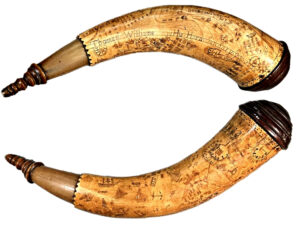
Williams left behind an engraved powder horn, now in the collection of the Stockbridge Library Museum and Archives. It shows Boston landmarks.

(This is different from the Dr. Thomas Williams powder horn recorded by Rufus Alexander Grider in 1888 and now lost.)

The siege lines around Boston contained some professional horn carvers selling their work to men who wanted souvenirs of military service. I suspect the Williams horn is one like that. As an officer and as a lawyer in civilian life, he probably didn’t have the time or inclination to do his own carving.

As Abbott’s article recounts, Williams was one of two minute company captains who responded to the Lexington Alarm from Stockbridge. The other company included a score of men from the town’s Native community and thus gets more attention.

As the troops besieging Boston organized themselves into an army enlisted through the end of the year rather than an emergency militia force, Williams became part of Col. John Paterson’s regiment. In September he volunteered for Col. Benedict Arnold’s expedition through Maine to Québec.

However, Williams was in the rear guard led by Lt. Col. Roger Enos (1729–1808), who in late October decided to turn back. That was controversial. Enos was tried and acquitted in a court-martial. He was probably lucky to go through that procedure before the army at Cambridge received “Colonel Arnolds evidence,” as Gen. George Washington reported.

Williams left Paterson’s regiment at the end of 1775, but on 9 Jan 1776 he became lieutenant colonel of a new regiment under Col. Elisha Porter to be sent up to Québec along Lake Champlain and the St. Lawrence River. This time Williams made it to the outskirts of the city, but smallpox was weakening the Continental forces.

Those Americans were trying to inoculate and fight the war at the same time. Abbott writes:
The timing for the deliberate exposure of Porter’s Regiment to smallpox could not have been worse. The inoculation process required effective quarantine for three to four weeks, during which the men were both weak and contagious. Even for those under treatment, severe cases could still develop and mortality rates under the best conditions still ran 1 to 2 percent. Porter’s men had no more than three days in hospital after they were inoculated before the siege was dramatically lifted by the arrival of a British fleet on May 6 and the American forces were soon driven back upriver in full retreat. Not only were they exposed to physical stress while they developed smallpox symptoms, but they became a significant vector for the spread of the disease to others in its more deadly form.
The American commander, Gen. John Thomas, died on 2 June. Lt. Col. Williams led his men back to Crown Point, New York, before falling ill. He didn’t make it home to Stockbridge.

Williams doesn’t appear to have left behind his own diary or letters—his powder horn might have been his only personal record of military service, and it probably wasn’t his own creation. Abbott has therefore done the work of reconstructing his career by weaving together official records and other officers’ accounts.

Sunday, August 18, 2024

The Life of “an exceeding active Man”

As I recounted this past week, in the summer of 1774 Elisha Porter of Hadley traveled to New York, Providence, and at least some way to New London seeking military supplies for the Continental Army besieging Boston.

In late September, the Patriot authorities called on Porter for another sensitive job: deciphering the letter that Dr. Benjamin Church, Jr., had given to his mistress Mary Butler, and which she unwisely asked her ex-husband, Godfrey Wenwood, to send into Boston.

Elbridge Gerry gave Porter a copy of that letter to work on. Porter’s deciphering exactly matched one by the Rev. Samuel West. Gerry then spread around news of the results.

During those months Porter was also busy on many committees of the Massachusetts General Court, and in August 1775 he became sheriff of Hampshire County.

In January 1776, Porter volunteered to raise a Massachusetts regiment to go into Canada and shore up the effort to win over that territory by force. Gen. George Washington introduced him by letter to Gen. Philip Schuyler as ”Colo. Porter, said to be an exceeding active Man.” I think that praise is a little faint for someone who had worked directly for the general.

Washington also gave Porter instructions urging him to act quickly, and the Massachusetts government supplied him with money.

Col. Porter started to keep a diary in January 1776, published in 1893. It describes how he got as close as the Plains of Abraham outside Québec City on 27 April, and how a week later the American forces started to withdraw.

Porter took a leave in August because of illness but returned in time to help with the Trenton campaign. He later served in the Saratoga campaign as a militia colonel and escorted Gen. John Burgoyne east. According to the Porter family, Burgoyne left his host a dress sword.

In 1778 Porter married a second time, to Abigail Phillips of Boston, first cousin of his first wife. That couple had no children, and I have no clue who brought up the young children of his first marriage while he was away from home.

After the war, Porter continued to serve as sheriff and militia officer and occasionally a town representative. He argued for Massachusetts to ratify the new U.S. Constitution. In 1796 he died unexpectedly at the age of fifty-four.

As for the other man involved in Gen. Washington’s plan to obtain gunpowder from Bermuda, sea captain William Harris appears to have gone back to sailing out of New London, Connecticut. He may have been the captain named Harris who spread word of a British fleet approaching New York in August 1776.

The 15 Mar 1809 Connecticut Gazette of New London reported the death of “Capt. WILLIAM HARRIS, aged 66 years.”

Friday, June 14, 2024

McConville on the Quebec Act at 250, 27 June

Years back, I decided to look into the burning question of whether the Quebec Act of 1774 was one of what American Patriots called the “Intolerable Acts.”

That law wasn’t, after all, directed at Massachusetts, even if the Suffolk Resolves treated the acceptance of Roman Catholicism in a population hundreds of miles away as a serious affront and threat.

The result was discovering that the American Patriots of 1774 didn’t call anything the “Intolerable Acts.” As I wrote in this article, that label surfaced in U.S. history textbooks in the late nineteenth century and was then retroactively embedded in the past.

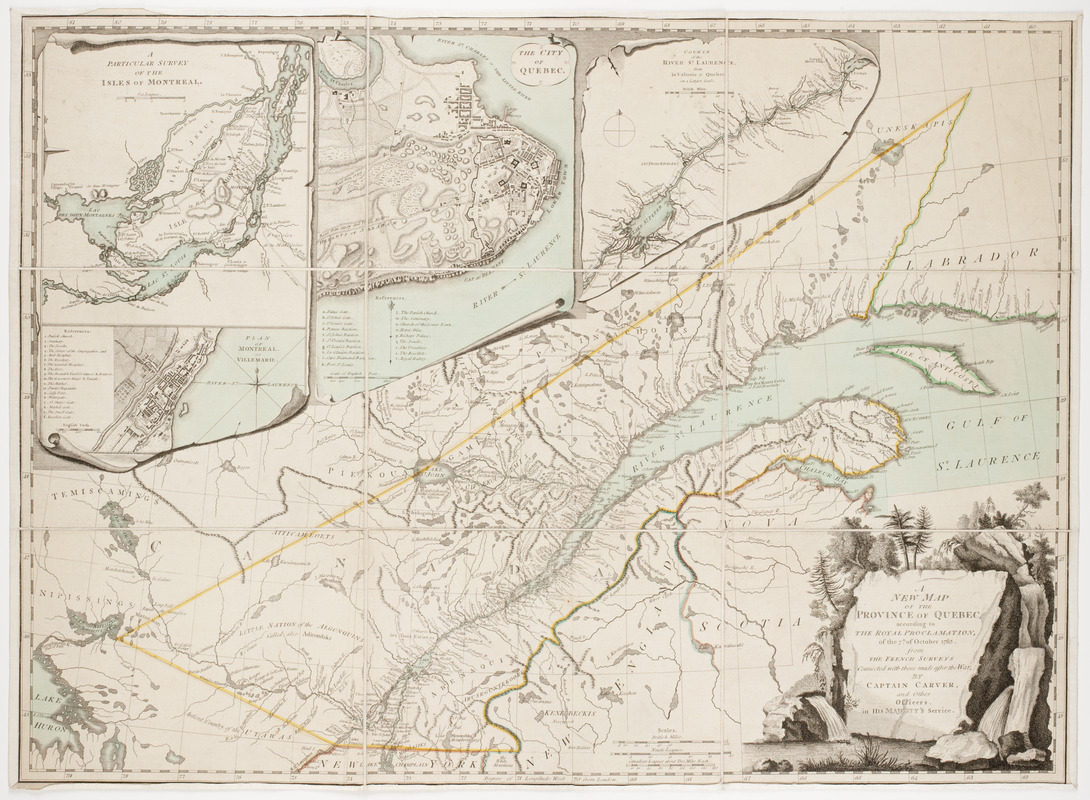
Nonetheless, the Quebec Act was one of the significant pieces of legislation to come out of Lord North’s government. Years in the making, that law incorporated a large formerly French territory into the British Empire. His Majesty’s government accepted the civil code and religion established under the former regime. The law even expanded the province to include the lands between the Ohio and Mississippi Rivers.

On 27 June, the Congregational Library and Archives will host “The Quebec Act at 250,” an online discussion with Prof. Brendan McConville exploring the significance of how the francophone province was folded into the British North American colonies—and why it made Congregationalists so profoundly uncomfortable.

McConville is Professor of History at Boston University and Director of the David Center for the American Revolution at the American Philosophical Society. He’s the author of These Daring Disturbers of the Public Peace, The King’s Three Faces: The Rise and Fall of Royal America, 1688-1776, and The Brethren: A Story of Faith and Conspiracy in Revolutionary America. He’s always offering provocative ways to look at the American Revolution.

This online event is scheduled to start at 1:00 P.M. It is free. To register and receive the link for that session, go to this page.

Monday, June 03, 2024

“Immediately struck Mr. Malcom in the Head”

Despite setbacks like being held prisoner by the French Navy in 1764, Capt. John Malcom appears to have prospered in Québec in the mid-1760s.

By early 1767 he had bought a “country house,” perhaps rising in status from merchant captain to landed gentleman.

There was one hitch to enjoying that house, however: it was already occupied by Lt. James Burns of the 52nd Regiment and his family.

That regiment had arrived in Canada in August 1765. Burns rented the house “in the country near Québec,” he later told Gen. Thomas Gage, “as lodgings were at the time dear in the town, and [I] as a subaltern, could not bear too heavy an expense.”

Months later, as John Gilbert McCurdy recounted in Quarters, Malcom bought that house.

At the time, it looks like Lt. Burns’s wife was still nursing a new baby. He described her as “confined to her bed, having had both her breasts laid open.”

Malcom told Burns that he had to vacate the property in three days or “become tenant to him.” Which frankly doesn’t seem unreasonable, but perhaps the captain was abrupt or suddenly raised the rent or demanded earlier payment than the previous property owner.

What happened next in February 1767 was reported in the press, including the 16 March Boston Gazette, presumably copying information from a Québec newspaper:
Saturday Night last, as Captain John Malcom, together with his Son and Daughter, was going from Town to his Country-House, in a Cariole, he was met on the Road, between the Wind-Mill and St. John’s Gate, by Lieut. Burns, of the 52d Regiment, walking into Town, with a large Club in his Hand;

upon his meeting Mr. Malcom he struck his Horse and overset his Cariole;

Mr. Malcom ask’d him what he meant by such Usage, to which Mr. Burns made answer, That he would FINISH him, and immediately struck Mr. Malcom in the Head, and by the Stroak broke his Club; but notwithstanding Mr. Malcom and his Daughter asking him his Reasons for so barbarous an Assault, he struck him a second Time, which knock’d Mr. Malcom down, and continued knocking at Mr. Malcom, with the Remains of the club, until he saw two Men come up, upon which he immediately went away.
The same story was reprinted in several other newspapers in Boston, New York, Philadelphia, and smaller cities. However, I don’t have any more information about this incident aside from Burns having to explain his side of the story to Gage the next year. Perhaps Canadian sources would tell more.

I can’t help but compare this to Malcom’s famous run-in with George R. T. Hewes in early 1774, except in that case Malcom was the one wielding a stick, hitting the little shoemaker on the head. In that confrontation Malcom insisted that Hewes was too lowly to criticize him, a gentleman; Hewes replied with a remark that questioned Malcom’s social status. For the captain, hitting Hewes with a stick wasn’t simply satisfying in itself, but it also signaled that the shoemaker was of lower social status, not worthy of a genteel challenge.

Up in Québec, Lt. Burns was a British gentleman, at least in his own eyes, and even if he did feel pressed for money. And he may have seen Malcom—raised in provincial Maine, a working mariner until quite recently, and yet now his landlord—as a parvenu who deserved to be put in his place.

TOMORROW: Meanwhile, back in Boston…

Friday, May 31, 2024

“His Business immediately calling him back to Quebec”

John Malcom spent November 1759 to August 1760 as a prisoner of war in French Canada.

He sailed back to Québec at the end of the year, apparently to scout for business opportunities, only to have his ship iced in.

In the winter of 1761 Malcom made a month-long trek over lake and land back to Boston.

So what do we hear about him doing next? Moving to Québec!

In the 16 Feb 1761 Boston Gazette Malcom announced:
Boston 9 February 1761.

THIS Day came to Town John Malcom, from Quebec in Canada, and desires one Thomas Power a Suttler at Halifax, immediately to come to Boston and settle all his Accompts with said Malcom without fail, as his Tarry at Boston cannot be long, his Business immediately calling him back to Quebec before the Lakes breaks [sic] up.
I’d think he could have written to Power directly, but advertising in the newspaper might have carried some legal weight.

On 2 March, the captain told Boston Gazette readers:
JOHN MALCOM will set out this Day Week [i.e., one week from today] for Quebec, by the Way of Albany, Lake George, Crown-Point, Montreal and Trois-Rivieres; and will receive Letters to carry to each Place at Mr. John Scollay’s Shop near the Town-Dock.
Perhaps, I thought, he was just going back to pick up his ship and sail it ’round to Boston again. But no, on 6 April his wife advertised in the Boston Gazette:
All Persons to whom John Malcom of Boston is indebted, are desired to bring in their Accounts to Sarah Malcom in order for Payment, as she intends soon to go out of the Province; and all indebted to said Malcom, are desired to make Payment to her directly. Said Malcom has a very commodious House at New Boston to Lett, with three Rooms on a Floor, and very good Accommodations.
In this case, “New Boston” meant what was also known as the West End. That side of the peninsula was less densely built up than the areas closer to the outer harbor.

The Malcoms evidently settled in Québec to help integrate one of the British Empire’s newest provinces into its trading system—and make money along the way. The captain maintained ties with Boston, though. Malcom announced in the 21 Feb 1763 Boston Gazette that in about ten days he was sailing his ship Friends up to Québec and could take freight or passengers.

Younger brother Daniel might have gotten involved in this trade, too. In the 25 Apr 1763 Boston Post-Boy, he advertised:
As DANIEL MALCOM intends to leave Boston for Quebec in 10 or 15 Days; any that has Demands on him are desired to apply to him. And any Persons indebted to said MALCOM are desired to pay him, or come and give their Note on Interest.—N.B. Said MALCOM goes by Land to Quebec.
Daniel doesn’t appear to have stayed in Canada for long, though. Church records and newspapers show him and his wife Ann in Boston at several points in the mid-1760s.

For the next few years John Malcom kept Québec as his trading base. But he didn’t keep out of trouble.

TOMORROW: An international incident.

Thursday, May 30, 2024

“The Rout taken by Capts Malcom and Holmes, from Quebec”

Yesterday’s posting brought John Malcom back to Boston in August 1760 after more than eight months as a prisoner of war in French Canada.

On 24 November, the Boston Evening-Post reported that “Capt. Malcom…arrived here last week from Ireland.” That was probably John’s younger brother, Daniel Malcom, but there’s just enough time for John to have made that round trip as a way to get his sea legs back, so I can’t say for certain.

It looks more likely that John returned to trading with a voyage to a different port: Québec!

One might think he’d had enough of that region. But viewed another way, it made sense for John Malcom to start sailing to the British Empire’s new city. In his months in Canada, he probably learned the language, observed the culture, made some contacts.

That first voyage turned out to be harder than he planned. According to the 16 Feb 1761 Boston Evening-Post, Malcom’s sloop Wilmot got iced in on the St. Lawrence River, along with a score of other ships.

Malcom and John Holmes, master of the Sally out of Philadelphia, decided to return by land.

The same issue of the Evening-Post explained:
On the 8th of January they left Quebec in a Sleigh, in company with 12 other Sleighs having Goods for Montreal, and travel’d on a good Road to Trois Rivieres: From thence they went up the River on the Ice, and passing over Sorrell, arrived at Montreal in 2 Days:—

After tarrying there 2 Days they proceeded in their Sleigh to Chamble, St. John’s and Isle au Noix, which they reached in 3 Days more: During this Time the Season was moderate for Winter.—

From the Isle au Noix they travel’d 45 Mile on Lake Champlain in one Day, but the next Morning after going some Miles, finding the Ice grow weak, they left their Sleigh, and went ashore with their Horse and Baggage on the South-East Side of the Lake; it being bad Travelling in the Woods, it was 5 Days and as many Nights before they arrived at Crown Point.—

On their Way they met an Officer with Dispatches for the Governors of Montreal and Quebec; with Accounts of the Death of his late Majesty King George the Second, & of the Accession of his present Majesty King George the Third to the British Throne.—

At Crown Point they tarried one Day, and having procured another Sleigh, they proceeded to Ticonderoga, and over Lake George to Fort George: Thence proceeded to Fort Edward, but the Road not being broke they travelled with only their Horse:—

From Fort Edward they went in a Sleigh to Albany: From whence they came to Town by Land on Monday last the 9th of February.
The captains brought news that Maj. Robert Rogers was on his way to Detroit, another new British possession. That information came from Capt. Jonathan Brewer and other officers in the rangers.

When Malcom and Holmes made this trip, they were traversing a route that just a couple of years earlier had crossed the border between two rival empires. I think that was why the Fleets devoted so much of their newspaper to this account: for their readers, the possibility of traveling or shipping goods over land to Montreal and Quebec really was news.

TOMORROW: John Malcom makes his move.

Wednesday, May 29, 2024

“Taken on the 6th Day of November last by 9 Frenchmen”

Yesterday we left Capt. John Malcom in mid-1759, plying the route between Boston and the British Empire’s new conquest of Louisbourg, relaying information about developments in the Seven Years’ War.

That war caught up with Malcom in the fall. This is how the Boston News-Letter reported the story on 28 Aug 1760:
In Capt. Gardner came Passenger from Quebec, Capt. John Malcom of this Town, who with one of his Hands was taken on the 6th Day of November last by 9 Frenchmen, as they were endeavouring to get Wood off the Island of St. Barnaby for the use of the Vessel,

who after he was taken was immediately strip’d of all his Cloaths and barbarously used by the Enemy for four Days at that Place, and then obtaining Liberty to go to Quebec, was taken twice in Twenty-eight Days;

He informs that after he arrived at Quebec, he was often threatned to be given to the Indians to be massacred, they thinking him to be a Spy.—

And that on the 14th of November his Sloop, called the Sally, (his Mate being then on board endeavouring to get to Boston,) off of Gaspee, was taken by the Ship Two Brothers, Francis Boucher Commander, mounting 20 Carriage Guns; by which Accidents the said Malcom not only lost his Vessel, but likewise to the amount of near give Hundred Pounds Sterling in Cash, and other Effects, then on board.
Since Gen. James Wolfe’s forces had taken Québec City on 13 Sept 1759, I presume the “Quebec” where Malcom spent months as a prisoner of war was the area around Montréal, still in French hands until September 1760.

On 7 Apr 1760 the Boston Post-Boy reported about a couple of Malcom’s crew in a letter from Col. Joseph Frye at Fort Cumberland (now once again called Fort Beauséjour):
About [30 January] there came in eight Men, one of whom was a New-England Man, one Irishman, and the rest Italians and Spaniards; who inform’d me they Deserted from a French frigate that lay froze in, at the Head of Gaspee Harbour.

The two former belong’d to a Vessel commanded by Capt. Malcom of Boston, who was taken on by the above Frigate, as she was returning from Quebec, where she had been on a Trading Voyage.
As for younger brother Daniel Malcom, on 5 May 1760 he was home in Boston, preparing to sell a 50-ton schooner called the Betsy by auction at Harris’s Wharf.

TOMORROW: Back to trading, back to Quebec?

Monday, March 13, 2023

“Frenchmen at the Siege of Boston,” 23 Mar.

On Thursday, 23 March, I’ll speak at the Longfellow House-Washington’s Headquarters National Historic Site on the topic “Frenchmen at the Siege of Boston.”

This is the site’s annual Evacuation Day lecture, presented in partnership with the Friends of the Longfellow House–Washington’s Headquarters. It honors the successful end of the siege of Boston, which Gen. George Washington oversaw from that Cambridge mansion.

Our description of this talk says:
Histories of the French government’s support for the American Revolution usually begin with Lafayette, the secret supply chain organized by Beaumarchais, and the formal alliance in 1778.

But French gentlemen were actually at the siege of Boston in 1775—observing the armies, meeting Gen. George Washington at his headquarters, and even briefly overseeing the provincial artillery force. Washington and his generals were also trying to win over the francophone subjects of Canada.

In this talk, author J. L. Bell will explore the first secret and tentative steps toward French-American friendship in Cambridge in 1775.
I’ll share some of my research about French noblemen and merchants who visited Massachusetts in 1775. I’ll also rely on Rick Detwiller’s excellent research about two more men who went beyond visiting to participate in the siege itself. As shown above, they left their mark on the landscape, or at least on Henry Pelham’s map of Boston: a fortified site labeled “French redoubt.”

I’ll speak in the Longfellow carriage house. Seating is limited, so please reserve seats through this link. This will also be our first attempt at livestreaming a talk through the site’s YouTube page.

Tuesday, February 07, 2023

“To transport these Men to Kennibeck”

When Dr. Benjamin Church wrote his intelligence report on 24 Sept 1775, the latest big event along the Continental lines was the departure of volunteers heading north.

Those men were under the command of Col. Benedict Arnold (shown here), respected for his part in taking Fort Ticonderoga and other Crown positions along Lake Champlain.

Church knew Arnold. In fact, the doctor had been the ranking member of the Massachusetts Committee of Safety who had signed Arnold’s orders for that mission to Ticonderoga on 3 May. In August he headed the committee to review the colonel’s expenses, an interaction that didn’t go so smoothly. (Ironic moments, since Church was already supplying the Crown with secrets and Arnold would do so later.)

In late August, Arnold met with Gen. George Washington and gained approval for a quick thrust through Maine to Québec, meeting up with Gen. Richard Montgomery’s force advancing from New York. The commander’s general orders for 5 September called for “such Volunteers as are active woodsmen, and well acquainted with batteaus,” to march under Arnold’s command. About a thousand men responded, and most of them left Cambridge on 13 September.

Although the destination of that column was supposed to be secret, lots of people suspected. For example, on 13 September Jesse Lukens, a volunteer from Pennsylvania, wrote:
Col. Arnold having chosen one thousand effective men, consisting of two companies of riflemen, (about one hundred and forty,) the remainder musqueteers, set off for Quebec, as it is given out, and which I really believe to be their destination. I accompanied on foot as far as Lynn, nine miles.
Starting on 20 September, newspapers in New York and Philadelphia reported on Arnold’s departure for Québec, citing reports from Cambridge. New England newspapers were more cagy about his destination, but the secret was out.

Dr. Church mentioned the overall Canada campaign three times in his letter, starting with the second sentence and ending just before his request for money:
The fifteen hundred Men that you had news of going to Quebec are going to Halifax (I believe) to destroy that place, . . .

An Express from Ticondiroga, says that they had been Ambushed but foursed their way through with the loss of 13 Men and they on their advancing forward found on the ground ten Indians dead, that the Army was within one Mile and a half of St. Johns, on which they sent a party of Men to Cut of the Communication between Montreal and the Fort. . . .

The Vessells I mentioned that was fiting at Salem was to transport these Men to Kennibeck as I find since, I am not Certain they are gone to Halifax but it is thought and believed they are.
This letter shows that even the British commanders inside Boston had received word of “fifteen hundred Men…going to Quebec” and asked Church about it. But the doctor suspected they were headed to Nova Scotia. When he began this dispatch he was certain about that; by the end, he wasn’t so sure but still thought that was most likely.

In fact, the Continental generals had talked about an attack on Halifax. Immediately after hearing about the shortage of gunpowder on 3 August, Washington and his council of war discussed raiding Crown outposts with powder stores. Col. John Glover leased a schooner called the Hannah.

By mid-September, however, plans had changed. Washington had ordered the Hannah to try attacking British supply ships instead. He wrote to the merchant Nathaniel Tracy to arrange for several more ships to carry Arnold’s one thousand men from Newburyport up to the mouth of the Kennebeck River.

Church’s expectation of an attack on Halifax might have been accurate at one point, but not any longer.

COMING UP: More details from the Continental camp.

Tuesday, July 26, 2022

“Mr. and Mrs. Curtis loaned their specie to the Colony”

Continuing my analysis of what an 1869 family history said about Obadiah Curtis (1724–1811), I reach the statement:
When the expedition against Canada was fitted out under Arnold, Mr. and Mrs. Curtis loaned their specie to the Colony, and took their pay in Continental paper.
That sentence appears to be the ultimate basis for this statement on the Boston Tea Party Ships & Museum website:
He was also a personal aid to General Arnold and assisted him on his expedition to Canada.
Readers might reasonably interpret those words to mean Obadiah Curtis was an aide de camp to Benedict Arnold and accompanied him across Maine to Québec. And that would be mistaken.

Arnold was a colonel, not a general, during his 1775 expedition to Canada. He therefore didn’t have the budget for aides. The muster rolls listing all the men on that mission, published by Stephen Darley in Voices from a Wilderness Expedition, don’t include Obadiah Curtis.

That’s because Curtis spent the siege in Rhode Island, not in the Continental Army. The Curtis family claimed that their ancestors aided Arnold with money, not that Obadiah was a military aid(e) or was “on his expedition to Canada.”

But is it true that, “When the expedition against Canada was fitted out under Arnold,” Obadiah and Martha Curtis loaned specie to the colony of Massachusetts? Arnold’s expedition was funded by Gen. George Washington as commander-in-chief from Continental funds. Though specie was always in short supply in the British colonies, there was no special collection for the Canada mission, and a couple living in Providence would be an odd source to tap.

We do know that Obadiah Curtis loaned money to the state of Massachusetts sometime between 1777 and 1779. He is listed (along with hundreds of other people) in an 1899 publication of the Massachusetts D.A.R. titled Honor Roll of Massachusetts Patriots Heretofore Unknown. That loan was supposed to pay 6% interest, though of course inflation of paper currency and the need for cash caused problems for the lenders.

I’m guessing that the Curtises’ decision to risk some of their savings on risky war bonds was remembered within the family, and Arnold’s celebrated mission got attached later.

It’s notable that the family tradition credited both Obadiah and Martha Curtis with this financial action, though officially the loan came from him. Both Curtises died in 1811, her a few months earlier, so that recollection was not the result of descendants hearing stories from the widow. Martha came from a wealthy Framingham family and ran a store in the South End, so she was probably involved in, if not the manager of, the family finances.

TOMORROW: Obadiah Curtis in Rhode Island.

Thursday, July 21, 2022

“Their belief that the peace was not the king’s to keep”

Lisa Ford’s The King's Peace: Law and Order in the British Empire was published last year by Harvard University Press. It looks at changes in how the British government sought to keep the peace in its empire by changing its fundamental rules.

Ford built the book around five case studies, starting in the province of Massachusetts and then moving on to Canada, Jamaica, Bengal, and New South Wales.

In a review for H-Net (P.D.F. download), Dana Rabin writes:
Boston’s Liberty Riot in 1768 illustrates the disorders faced by agents of empire in the run up to the American Revolution. Riot and threats of violence from white colonists revealed the weakness of the Crown and the powerlessness of the king’s agents to enforce the peace. Residents of Massachusetts justified their intimidation and threats of violence with their belief that the peace was not the king’s to keep but rather that of white, Protestant men in the name of the people. Ford calls this “the end of empire.”

The book proceeds to reconstruct what Ford considers the ramifications of the American Revolution to the legal history of empire, attributing to Parliament and British colonial officials a new resolve to buttress the king’s power and prerogative against similar future threats. In the period after the American Revolution, the Crown accrued great powers by Acts of Parliament that increased the power of governors and decreased the power of legislative bodies or eliminated them entirely. Judges appointed by the Crown and supervised from London enhanced Crown control over colonial legal systems. The Crown’s expanded power was often framed as a duty to protect.

The focus of chapter 2 is Quebec where white Protestant men again resisted the military rule installed upon British victory in the city in 1759. British Protestant merchants resented any limits to their participation in the fur trade and objected to any concession of rights to French Catholics. Ford argues that in response to their ungovernability and Catholic vulnerability, the Quebec Act of 1774 created a Crown colony in Quebec, granting the governor expanded powers to rule without a legislative body. Even after the creation of the elected assemblies of Upper and Lower Canada in 1791, legislation was subject to the approval of an appointed upper house and gubernatorial veto.
Starting in the 1760s, Massachusetts Whigs feared that Parliament wanted to take more control over the colony. British leaders felt that Massachusetts was trying to operate outside of legal bounds. With each new law, the Whigs felt their warnings were vindicated. With each new resolution or riot protesting a new law, London administrators felt their wish for stronger authority was vindicated. The result was a spiral of resentment and suspicion that no one could resolve.

Saturday, October 09, 2021

Tracking Down Diaries of the Québec Expedition

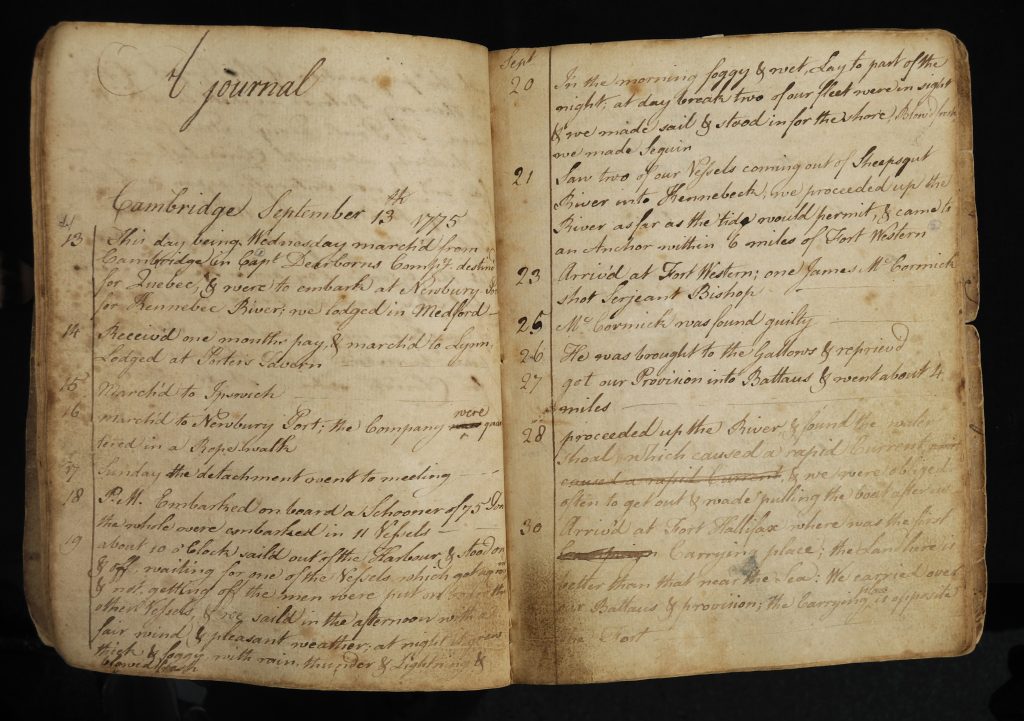
Earlier this week I mentioned Stephen Darley’s 2011 book Voices from a Wilderness Expedition, a bibliography of all known diaries and first-person accounts of Col. Benedict Arnold’s trek to Québec in 1775 and a listing of all the men on that march.

That book also included the transcripts of five diaries not previously published or noted in the last edition of Kenneth Roberts’s March to Quebec.

This year Darley published a new collection, Voices Waiting to Be Heard, with transcriptions of nineteen accounts of the expedition, some discovered in the last decade. The earliest actually appeared in the Pennsylvania Packet in March 1779.

In 2013, Darley and Stephen Burk published an article in Early American Review, which can be read here. It tackled the question of who wrote a diary of the expedition published in The American Antiquarian and Oriental Journal in 1900 without a name, still anonymous at the time of Darley’s first book.

Burk and Darley wrote:
From the pages of his journal it is apparent that the anonymous author was a Massachusetts soldier and that he had been in a Captain Smith’s company prior to transferring to Captain Hubbard’s company for the March to Quebec. He also mentions having a brother on the March although it is not evident whether both men were in the same company. The journal states that the author’s brother died “with fever and flux” on Dec. 28, 1775 near Quebec. Also, journal entries make clear that the author was not among the many that were taken prisoner during the Dec. 31 assault on the walled city of Quebec.
Using the listing of men in Darley’s book, the researchers found three named Pierce (or Peirce) in Capt. Jonas Hubbard’s company. David Pierce died during the march. John and William Pierce avoided both death and capture. But did either of them keep a diary?

In fact, they both did. Ens. John Pierce’s journal was published in Roberts’s compilation. One entry reads: “David Peirce…was taken again all on a sudden and died in a few days he had no senses after he was taken the last time –Adiu to my Friend and Namesake.” That doesn’t sound like a brother, just a man with the same last name.

Furthermore, Ens. Pierce was from Worcester, but David and William Pierce enlisted together from Hadley. They both served in Capt. Eliakim Smith’s company starting with the Lexington Alarm.

Those details confirmed William Pierce as the anonymous diarist first published in 1900. Knowing his name, Burk and Darley could fill out more details of the brothers’ lives. William was born in 1752, David two years later. Their father, a Harvard graduate, represented Hadley in the Massachusetts Provincial Congress.

David Pierce died just before Gen. Richard Montgomery led his doomed attack on Québec. William Pierce was sick that day, thus unable to fight. He remained with the Continental Army during its withdrawal in 1776 and was back in Hadley that summer. Pierce never married, dying in Hadley in 1832. Burk and Darley even found his gravestone.

All told, there are now thirty-eight known first-person accounts of the Arnold expedition, making it one of the most individually documented campaigns of the war. All the more striking since we usually hear about it as an event that took place in the wilderness under conditions that don’t seem conducive for keeping a diary.

Saturday, January 18, 2020

Capt. Samuel Lockwood at War

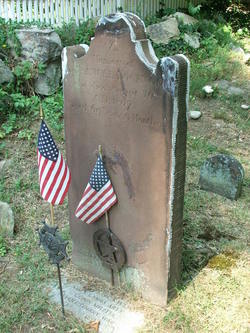
Samuel Lockwood (1737–1807, gravestone shown here courtesy of Find a Grave) of Greenwich, Connecticut, became a second lieutenant in the Continental Army in April 1775.

That fall, he joined Gen. Richard Montgomery’s invasion of Canada. On 5 November Lockwood’s commanders made him an assistant engineer with the rank of captain. The Continental Congress never recognized that rank but later voted to pay Lockwood a year’s salary as an engineer.

Lt. Lockwood’s specialty was really maneuvers on the water. He reconnoitered ahead of the army by boat during the march north and helped to capture eleven Crown vessels and Gen. Richard Prescott at Sorel.

The Battle of Québec didn’t work out so well for Lockwood, however. He was wounded, captured, and not released on parole until late in 1776.

As soon as Lockwood was formally exchanged in early 1777, the Congress commissioned him as a captain in Col. John Lamb’s artillery regiment. He served two years, resigning in 1779.

Capt. Lockwood was then done with the Continental Army, but he wasn’t done with the war. He remained active in his state’s military. In 1779 he commanded an armed vessel on Long Island Sound, attacking British ships in the Oyster Bay harbor in November.

On 17 Jan 1780, Capt. Samuel Lockwood led “forty volunteers from Greenwich” alongside Capt. Samuel Keeler and an equal number of Connecticut militiamen on a raid into New York. Their target was the home in Morrisania of Lt. Col. Isaac Hetfield, Loyalist commander of the Westchester County militia.

Gen. William Heath reported to New York’s Gov. (and Gen.) George Clinton about the Lockwood and Keeler raid a few days later:
they arrived at the place a little after one the next morning, attacked the picket, killed 3 and drove the others in, march’d to the House where Hatfield was, who, with his men took to the chambers [i.e., bedrooms] and kept up a fire down stairs and out at the windows; the militia behaved with great Bravery, call’d to Hatfield to Surrender or they would Set fire to the House…
TOMORROW: The view from inside Hatfield’s house.

Thursday, June 13, 2019

Pvt. James Melvin’s Journal in Manuscript

The American Revolution Institute, part of the Anderson House museum and library of the Society of the Cincinnati, has acquired the manuscript journal of Pvt. James Melvin.

Melvin was born in Concord in 1749, according to John Melvin of Charlestown and Concord, Mass. and His Descendants (1905), but different calculations of his age suggest he was born as late as 1753. James’s father moved the family to Chester, Nova Scotia. After his father’s remarriage and an unhappy indenture, James returned to Concord to live with an older brother. He mustered for the April 1775 alarm and enlisted in the army from yet another Massachusetts town, Hubbardston.

In the summer of 1775, Melvin joined Col. Benedict Arnold’s expedition through Maine to Québec. His journal covers that journey from the soldiers’ departure in September through imprisonment in Canada to freedom on parole in August 1776.

Pvt. Melvin’s journal was transcribed and published in 1857. That text was issued twice more on its own, most recently in 1902. The total number of copies from those editions was 450.

Kenneth Roberts reprinted the whole Melvin journal in March to Quebec while also suggesting its text had been copied and developed from the diary of another soldier, Moses Kimball.

However, Stephen Darley collected all the known journals of the Quebec mission in Voices from a Wilderness Expedition (2011). He reports the Melvin and Kimball journals each have material not found in the other, with Melvin’s continuing for months after its supposed source. On the other hand, Darley says the Melvin diary offers “no special content,” meaning no historical events that other diaries don’t already document.

The fact that so many men on the Quebec mission kept journals shows how significant they and their descendants felt that undertaking was. Some of those diaries are near copies of others while some are quite individual. Some documents appear to have been the actual papers men carried on the trek while others are later copies.

After returning to the U.S. of A. in late 1776, Melvin remained in the army, stationed for the most part at the artillery laboratory in Springfield, making gunpowder. He married a widow there in 1778 after they conceived a child and lived the rest of his life in Springfield and Chester, Massachusetts. Melvin lived at least until 1828, when he unsuccessfully applied for a pension.

Melvin’s record was still in her family’s hands when it was first published, but then it went underground—until now. The American Revolution Institute plans to digitize the manuscript and share the images. It reports the manuscript also contains a couple of essays titled “Treatise upon Air” and “An Explanation of Scripture Taken from the Epistle of St. Paul the Apostle to the Gallations.” There’s no report of text on the Québec march that we haven’t seen before, but we’ll see Melvin’s account in its oldest surviving form.

Thursday, January 04, 2018

“So suited to the New-Year’s day” in Québec?

The Checklist of American Newspaper Carriers’ Addresses that I discussed last year includes a section of Canadian examples both before and after the Revolution.

The carriers of the Quebec Gazette/Gazette de Québec had both English and French verses. One from 1781 appears on the Canadian Poetry website in a section headed “Poems in Early Canadian Newspapers”:
NEW-YEAR’S VERSES
Of the PRINTER’S BOY, who carries about the
Quebec Gazette to the CUSTOMERS.

JANUARY 1, 1781.

SERIOUS and solemn be the song
Which hails this still-returning day;
Let measure guide the rhyme along,
And gratitude inspire the lay!

When Spring, in all her blooming charms,
And Summer, in her richest dress;
When Autumn fills the lab’rer’s arms,
Nor coily yields her vast increase:

Oh then! let mortals grateful deem
Of all the blessings God has sent;
And, in deep Winter’s dread extreme,
Rejoice in plenty and content.

And, while they joy in bounty given,
Still to the poor their hands extend:—
The first great delegate of Heaven
Is he—the wretch’s firmest friend.

Now long, and dark, and dark the night,
And short the blessings of the day;
Yet soon the sun’s resplendent light
Shall hail us with a brighter ray!

And soon shall Winter’s blast be o’er,
And soon returning Spring arrive;
And then, oh then! the happy poor
Shall thank you they are still alive.

Grateful to Heaven their vows will rise,
For blessings you may now bestow;
And lab’ring breasts, and streaming eyes,
Their sense of obligation show.

And who, that feels the genial sun,
And owns the God that points his ray,
Would leave the grateful task undone,
So suited to the New-Year’s day.
Here’s the thing, though. That poem had appeared in the London Magazine in 1778 with only one small difference. In the magazine it was about the winter solstice. The Quebec printers changed “the Shortest-day” to “the New-Year’s day,” thus creating Canadian poetry.