J. L. BELL is a Massachusetts writer who specializes in (among other things) the start of the American Revolution in and around Boston. He is particularly interested in the experiences of children in 1765-75. He has published scholarly papers and popular articles for both children and adults. He was consultant for an episode of History Detectives, and contributed to a display at Minute Man National Historic Park.

Subscribe thru Follow.it


•••••••••••••••••


Showing posts with label Richard Stockton. Show all posts

Saturday, July 02, 2022

“The Sick suffered much for Want of good female Nurses”
The fourth quotation to track down from that U.S. Army webpage is the first to appear in its paragraph about the creation of the Continental Congress’s nursing policy:
Shortly after the establishment of the Continental Army on June 14, 1775, Maj. Gen. Horatio Gates reported to Commander-in-Chief George Washington that “the sick suffered much for want of good female Nurses.”
The way that webpage lays out events, Gates’s warning prompted the Congress to hire nurses.

However, as I showed yesterday, the Congress established its standards for an army medical department in July 1775 without needing guidance from the generals at Cambridge

The phrase “the sick suffered much for want of good female Nurses” doesn’t appear on Founders Online, which includes all of Washington’s incoming and outgoing correspondence during the war.

It doesn’t appear in the Journals of the Continental Congress, still searchable through the Library of Congress’s old American Memory website, where we can find the paragraph’s other phrases (approximately) because those were part of official resolutions.

I tracked the phrase in question to Peter Force’s American Archives (digitized and searchable here) and the Orderly Book of the Northern Army, at Ticonderoga and Mt. Independence, published by Joel Munsell in 1859.

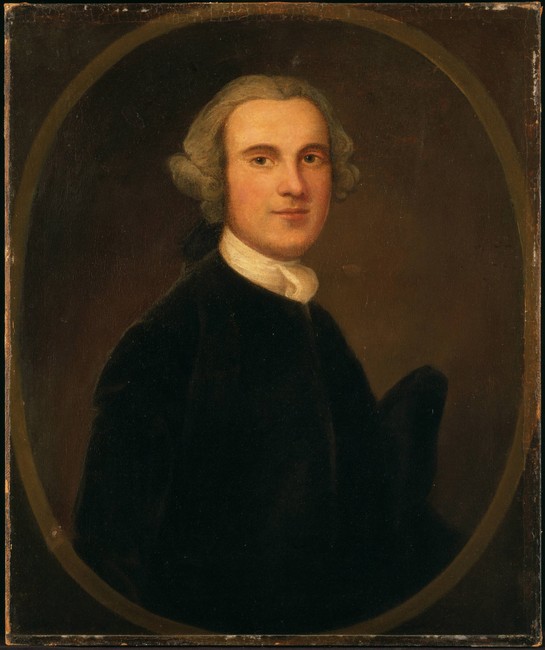
Not surprisingly, yet another committee of the Congress was involved. In November 1776, the Congress sent two delegates—Richard Stockton of New Jersey (shown above) and George Clymer of Pennsylvania—to northern New York to assess the Continental forces in the aftermath of the collapse of the invasion of Canada.

Stockton and Clymer consulted with Gen. Gates, Gen. Philip Schuyler, and commissary general Joseph Trumbull before reporting back to the Congress on 27 November. That body named a larger committee to take up the discussion and report back, which meant the original report wasn’t entered into the Congress’s journal.

The first committee report, as printed in the Munsell book, includes this about medical care:
Your Committee also beg leave further to Report, that they have visited the General Hospital for the Northern Army, situated at Fort George; that there is a Range of Buildings erected convenient for the Purpose, which on the 20th of October last contained about four hundred Sick, including those wounded and sent from General [Benedict] Arnold’s Fleet; that they were sufficiently supplied with fresh Mutton and Indian Meal, but wanted Vegetables; that the Director-General in that Department [Dr. Samuel Stringer] obtained a large Supply of Medicines, but the Sick suffered much for Want of good female Nurses and comfortable Bedding; many of those poor Creatures being obliged to lay upon the bare Boards. Your Committee endeavoured to procure Straw as the best temporary Expedient; but they earnestly recommend it to the Attention of Congress, that a Quantity of Bedding be speedily furnished,…
The American Archives version has fewer capital letters, more italics, and one added “that.”

Thus, a Revolutionary War source did say “the Sick suffered much for Want of good female Nurses.” But that source wasn’t Gen. Gates writing to Gen. Washington on or shortly after 14 June 1775. It was Richard Stockton and George Clymer reporting to the Continental Congress in November 1776.

That report came more than a year after the Congress authorized hiring nurses for its hospitals; it didn’t prompt that hiring. Stockton and Clymer were actually describing an anomaly in the army’s medical establishment. Up in the frontier fortifications along Lake Champlain and Lake George, there weren’t enough women to staff the army hospitals as commanders had come to expect.

In fact, back on 13 July 1776 Gen. Schuyler had ordered:
One woman from each company of each of the Pennsylvania Battalions now at this post, to be draughted as soon as possible, and sent to the General Hospital at Fort George. They will have the customary allowance of provisions, and so forth from Dr. Stringer, director of the hospital there.
The Continental Army expected soldiers’ wives to be ready to serve as nurses.

TOMORROW: How the error appeared and metastasized.

Tuesday, August 29, 2017

The Mixed Meaning of Richard Stockton

In 2008 I posted a multi-part inquiry into the legend of Richard Stockton, a signer of the Declaration of Independence from New Jersey.

According to the standard story, in late 1776 the British forces captured Stockton and treated him so badly that he was in poor health until he died from the consequences in 1781. That story led to New Jersey honoring Stockton in multiple ways, including putting his statue in the U.S. Capitol as a state hero.

I pointed out that:
  • Stockton’s Continental Congress colleagues immediately shared reports and concerns that after being captured he abjured his support for independence.
  • Sources from the 1770s and 1780s say little about mistreatment or extended illness arising from it. Stockton died of an oral cancer, not something normally brought on by cold.
  • Only in the 1820s did American authors start to complain that Stockton was mistreated and died as a result. Reported details of that treatment, still unsupported by documents, became worse as time went on.
The following year, Todd Braisted, now author of Grand Forage 1778, provided a smoking gun: a December 1776 letter from a British army officer stating that Adm. Lord Richard Howe and Gen. Sir William Howe had “granted a full pardon to Richard Stockton, Esq”. The judge then removed himself from politics and the war. Not only does that letter suggest that Stockton reached some kind of agreement for his freedom, but it also shows he was in British custody for less than a month.

Drawing on those postings and further research, Christian McBurney discussed Stockton’s case in detail in his book Abductions in the American Revolution and in this 2016 article for the Journal of the American Revolution. He questioned whether New Jersey should continue to have Stockton be one of the two figures it displays in the U.S. Capitol, given the state’s other heroes.

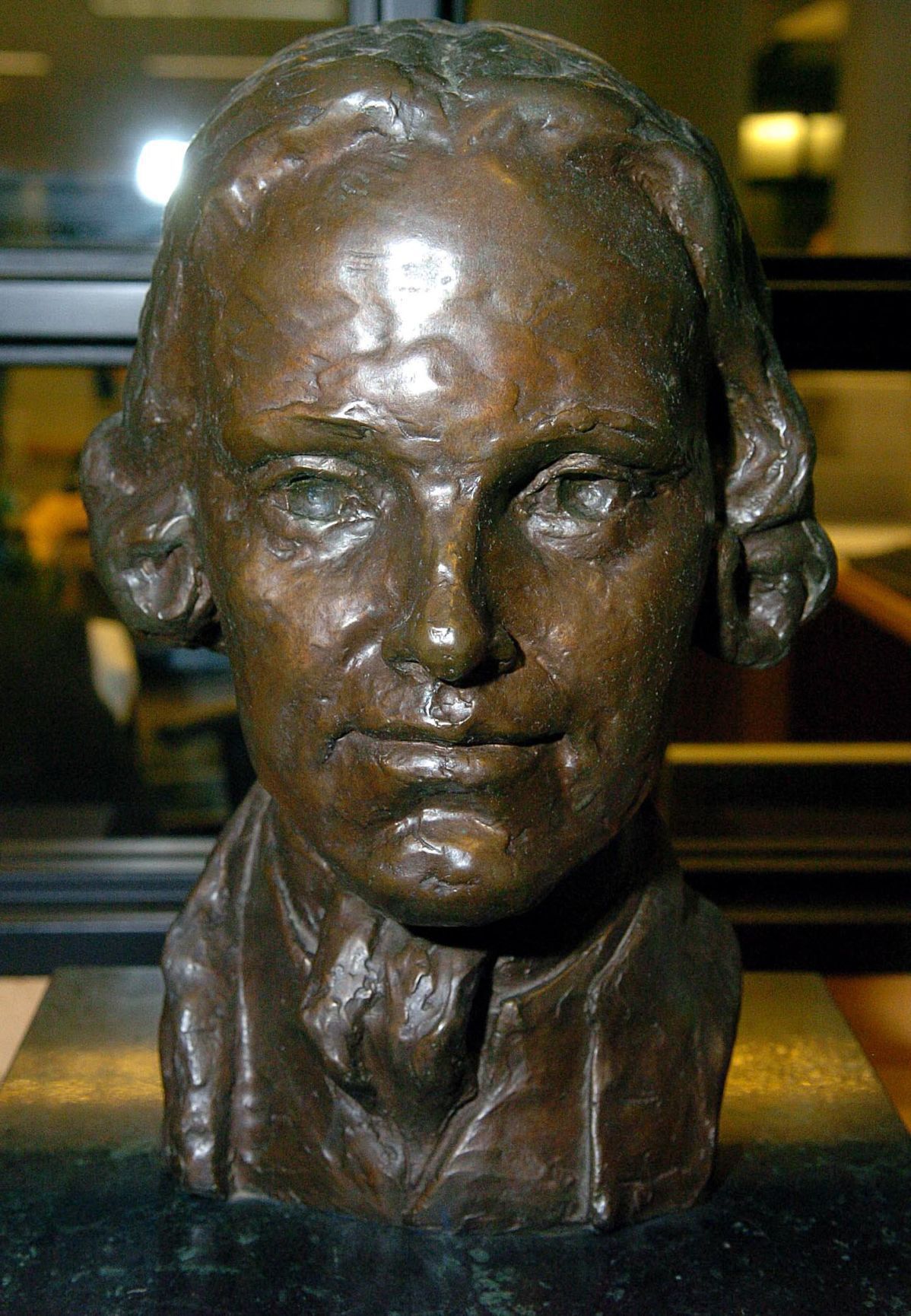
This month brought news that Stockton University in New Jersey has removed a bust of Richard Stockton (shown above) from its library. The reason was not, however, because his iconic status in the state rests on a shaky legend of stoic suffering at the hands of the enemy.

Rather, the university removed the bust because Stockton owned slaves. Those people are documented in his will, in which the judge said his widow Annis could free them if she chose. (I’ve found no evidence she did so. Their son Richard owned slaves as an adult, as did their daughter and son-in-law, Dr. Benjamin Rush—even though he advocated for an end to slavery.)

As a public university, and one founded to provide more opportunities for students who don’t have advantages in our society, Stockton University has good reason not to glorify someone who participated in slave-owning even while championing liberty for gentlemen like himself.

At the same time, I don’t see how removing Stockton’s bust will fix that contradiction when the institution is still, you know, named Stockton University.

The school started in the 1970s as South Jersey State College and evolved through Stockton State College, Richard Stockton State College, and the Richard Stockton College of New Jersey before becoming Stockton University in 2015. Has the Stockton name developed enough of its own legacy to leave the judge behind? Does Stockton’s documented interest in higher education (as a trustee of Princeton College) make him a good namesake for a university despite his other behavior?

Ironically, Stockton University is in Galloway Township. There’s some thought that the Crown named that settlement in 1774 after the Pennsylvania politician Joseph Galloway. He was one of America’s leading Loyalists, fleeing to exile in Britain four years later. And yet the name lives on.

Monday, August 28, 2017

“The Government of this Colledge is very Strict”

Yesterday I quoted the start of John Adams’s description of his first visit to Princeton in August 1774, when he was on his way to the First Continental Congress.

Adams viewed the college’s Nassau Hall, the mansion of Judge Richard Stockton, the Rittenhouse orrery, and equipment for electrical experiments (which didn’t work in New Jersey’s humid August).

Adams’s account continues:
By this Time the Bell rang for Prayers. We went into the Chappell, the President [John Witherspoon, shown here] soon came in, and we attended. The Schollars sing as badly as the Presbyterians at New York. After Prayers the President attended Us to the Balcony of the Colledge, where We have a Prospect of an Horizon of about 80 Miles Diameter.

We went into the Presidents House, and drank a Glass of Wine. He is as high a Son of Liberty, as any Man in America. He says it is necessary that the Congress should raise Money and employ a Number of Writers in the Newspapers in England, to explain to the Public the American Plea, and remove the Prejudices of Britons. He says also We should recommend it to every Colony to form a Society for the Encouragement of Protestant Emigrants from the 3 Kingdoms [i.e., England, Scotland, and Ireland].

The Dr. waited on us to our Lodgings and took a Dish of Coffee. He is one of the Committee of Correspondence, and was upon the Provincial Congress for appointing Delegates from this Province to the general [i.e., Continental] Congress. Mr. William Livingston and He laboured he says to procure an Instruction that the Tea should not be paid for. Livingston he says is very sincere and very able in the public Cause, but a bad Speaker, tho a good Writer.

Here we saw a Mr. Hood a Lawyer of Brunswick, and a Mr. Jonathan Dickenson Serjeant, a young Lawyer of Prince town, both cordial Friends to American Liberty. In the Evening, young [Samuel] Whitwell, a student at this Colledge, Son of Mr. [Samuel] Whitwell at Boston to whom we brought a Letter, came to see us.

By the Account of Whitwell and [fellow student John] Pidgeon, the Government of this Colledge is very Strict, and the Schollars study very hard. The President says they are all Sons of Liberty.
It’s notable how many of the men Adams met in Princeton eventually became New Jersey delegates to the Continental Congress: college president Witherspoon, professor William Huston, and lawyer Sergeant, not to mention neighbor Stockton.

Sunday, August 27, 2017

John Adams’s First Visit to Princeton

On 27 Aug 1775, John Adams visited the College of New Jersey in Princeton. He arrived in town about noon, checking into Jacob Hyer’s tavern at the “Sign of Hudibrass,” near the college’s Nassau Hall (shown here).

In his diary Adams recorded his impressions:
The Colledge is a stone building about as large as that at New York [i.e., what is now Columbia]. It stands upon rising Ground and so commands a Prospect of the Country.

After Dinner Mr. [John] Pidgeon a student of Nassau Hall, Son of Mr. [John] Pidgeon of Watertown [actually Newton] from whom we brought a Letter, took a Walk with us and shewed us the Seat of Mr. [Richard] Stockton a Lawyer in this Place and one of the Council, and one of the Trustees of the Colledge. As we returned we met Mr. Euston [William Houston], the Professor of Mathematicks and natural Philosophy, who kindly invited Us to his Chamber. We went.

The Colledge is conveniently constructed. Instead of Entries across the Building, the Entries are from End to End, and the Chambers are on each side of the Entries. There are such Entries one above another in every Story. Each Chamber has 3 Windows, two studies, with one Window in each, and one Window between the studies to enlighten the Chamber.

Mr. Euston then shewed us the Library. It is not large, but has some good Books. He then led us into the Apparatus. Here we saw a most beautifull Machine, an Orrery, or Planetarium, constructed by Mr. [David] Writtenhouse of Philadelphia. It exhibits allmost every Motion in the astronomical World. The Motions of the Sun and all the Planetts with all their Satellites. The Eclipses of the Sun and Moon &c. He shewed us another orrery, which exhibits the true Inclination of the orbit of each of the Planetts to the Plane of the Ecliptic.

He then shewed Us the electrical Apparatus, which is the most compleat and elegant that I have seen. He charged the Bottle and attempted an Experiment, but the State of the Air was not favourable.
For more about Rittenhouse’s orreries, see here.

TOMORROW: Adams’s college tour continues.

Tuesday, July 19, 2016

Taking Stock of Richard Stockton

Back in 2008 I wrote a series of postings about Richard Stockton, a judge from New Jersey who signed the Declaration of Independence in August 1776. Four months later he was in the custody of the British army.

As I discussed in my first posting, the standard story of Stockton for the past century and a half matches this passage from the Society of the Descendants of the Signers of the Declaration of Independence:
Judge Richard Stockton was the only signer to be put in irons, starved and imprisoned under brutal conditions by the British four months after signing the Declaration of Independence.
He reportedly became ill, returned home to find his estate ruined, and died poor and sick as a result of his imprisonment.

My postings pointed out that after Stockton’s release his contemporaries, family members, and clergy didn’t speak of the British army treating him cruelly. (His colleagues did worry while he was in custody in December 1776 and they had little information.) Instead, as soon as Stockton came home, fellow members of the Continental Congress wrote ruefully about how he had “sued for pardon” and “Rec’d General How’s protection.” He resigned from the Congress; rebuilt his health, estate, and legal career; and died of an oral cancer in 1781.

In 2009 Loyalist expert Todd Braisted, now author of Grand Forage 1778, provided a gun with at least a wisp of smoke coming from it: a document showing that Adm. Lord Richard Howe and Gen. Sir William Howe had granted Stockton “a full pardon” by 29 Dec 1776. That cut the judge’s time in enemy hands to less than a month. It also strongly suggested he had reached some sort of deal with the Howes—if not a loyalty oath to the Crown then (as I rather suspect) an agreement between gentlemen to sit out the war.

My articles also discussed how the legend of Stockton’s suffering blossomed in the early 1800s as the fiftieth anniversary of the Declaration approached. They really took off in the latter part of that century, despite some evidence to contradict the story and no solid evidence for its more extreme claims. That story turned Stockton into one of New Jersey’s most honored heroes, namesake of Stockton University and subject of a statue in the U.S. Capitol.

Christian McBurney has now rounded up all that material about Stockton and more in an article at the Journal of the American Revolution titled “Was Richard Stockton a Hero?” McBurney has become an expert on captures during the Revolutionary War, the topic of his books Kidnapping the Enemy: The Special Operations to Capture Generals Charles Lee & Richard Prescott and Abductions in the American Revolution: Attempts to Kidnap George Washington, Benedict Arnold, and Other Military and Civilian Leaders. The latter book covers the Stockton capture.

McBurney’s article concludes:
To summarize, I believe Richard Stockton showed great courage in signing the Declaration of Independence. For that reason, and for other work he performed as a Patriot, I believe he is a hero of the American Revolution. But because strong evidence indicates that he signed an oath of allegiance to the Crown, I do not believe he should be celebrated as one of New Jersey’s greatest heroes.
There will no doubt be pushback from fans, descendants, and others invested in the story of Richard Stockton as a martyr for independence.

Wednesday, December 30, 2015

Revisiting Richard Stockton in Princeton

Way back in 2008, I wrote a series of postings about Richard Stockton, who voted for and signed the Declaration of Independence as a Continental Congress delegate from New Jersey. Then, around the end of November 1776, the Crown forces captured him.

As I discussed at length, a legend grew up in the early 1800s, supplemented with imaginary details in subsequent decades, that the royal authorities mistreated Stockton in jail, ruined his health, and left him in poverty. In fact, eighteenth-century records show that Stockton spent a few weeks in captivity at most, left considerable property for his son, and was said by his son-in-law Dr. Benjamin Rush to have “fully recovered” from his detention before dying of an oral cancer.

In 2009, Todd Braisted shared a document confirming how briefly Stockton was in custody. (Look for Todd’s book about the war around occupied New York, The Grand Forage of 1778: The Revolutionary War’s Forgotten Campaign, coming early next year from Westholme.)

A while back I came across more evidence that Stockton had returned to regular business by mid-1777. College business, at least—he was a neighbor and trustee of Princeton College.

That source is the published edition of A Brief Narrative of the Ravages of the British and Hessians at Princeton in 1776-1777, an anonymous manuscript dated 18 Apr 1777. Toward the end the editor, Varnum Lansing Collins, wrote this footnote:
In his warmth [about British army damage to Princeton College and the Presbyterian Meeting House] the author loses sight of the fact that the first two of these edifices had suffered probably as much damage from the American soldiery as from the British and Hessian. The church had been used by both armies. . . .

The minutes of the Trustees of the College of New Jersey for September, 1776, record the fact that Dr. [John] Witherspoon was to move in Congress “that troops shall not hereafter be quartered in the College.” And three months to a day after our unknown author penned his last paragraph [dated 18 Apr 1777], Dr. Witherspoon, Dr. Elihu Spencer and Richard Stockton, Esq., a committee from the Board of Trustees of the College, presented a petition to Congress praying that no Continental troops be allowed hereafter to enter the College or to use it as a barracks.

The petition recites that every party of provincials marching through Princeton takes possession of the building, and partly through wantonness and partly under pretence of not being supplied with firewood “are daily committing the greatest ravages upon the Building, in breaking up the floors, and burning every piece of wood they can cut out of it.”
Collins reported that the petition was in the manuscripts of the Continental Congress.

Thus, within half a year of his release from supposedly torturous conditions under the British army, Stockton was signing a complaint about damage done by the Continental Army.

Thursday, July 30, 2015

Remembering Mary Katherine Goddard the Right Way

Earlier this month the Baltimore Sun reported on the installation of a historical plaque in a downtown Rite-Aid pharmacy.

That drugstore is on the probable site of the Goddard print shop in 1777. On 18 January of that year, Mary Katherine Goddard issued a broadside reprinting the Declaration of Independence with the names of all the Continental Congress delegates who had signed the document so far.

The Sun article has such headlines as “How a Baltimore woman defied the Redcoats” and “See how Mary Katherine Goddard helped win the Revolutionary War.”

It quotes Andrew Carroll, author of Here Is Where and promoter of this plaque, saying that her printing “was a total act of defiance. She was saying, ‘I’m stepping forward and I’m putting my life at risk in the expectation that other people will do the same. There's no turning back now.’”

Printing the Declaration, the article says, “put her life at risk.” An official at the Maryland Historical Society states of Goddard, “If the war had ended differently, the signers would have been convicted and hanged for treason, and she probably would have been hanged as well.”

For the record we should note that:
  • There were no redcoats in Baltimore to defy. The British army was no closer than Princeton, New Jersey, that month, and it never attacked or occupied Baltimore.
  • The British authorities had just held New Jersey signer Richard Stockton in custody and did not try or hang him.
  • There’s no example of the Crown executing an American printer for supporting independence or printing the Declaration. In fact, many British printers reprinted that text because it was significant news.  
  • While making the Declaration look nice for the Congress no doubt suggested support for its cause, Goddard’s status as a woman would have given her more insulation from political accusations—not that she was ever in British custody to be so accused.
Goddard’s work as both printer and postmaster was undoubtedly significant and deserves to be remembered. But the rhetoric around the installation of this plaque seems unduly sensational.

Tuesday, July 28, 2009

Richard Stockton’s Release Date

Back when I was writing about Richard Stockton, the Continental Congress delegate from New Jersey who signed the Declaration of Independence, was captured in late 1776, and then signed a commitment of loyalty to the Crown, I couldn’t figure out exactly how long he had been in captivity. Documents showed that he was captured about 30 Nov–1 Dec 1776, and he was back home by 8 Feb 1777.

Todd W. Braisted, who maintains the stellar Institute for Advanced Loyalist Studies website, had a better answer in his files, so he’s today’s Boston 1775 guest blogger. In response to a comment from me about this question on the Revlist, Todd wrote:


This document may shed some light on the subject:

Lord [Richard] and General [William] Howe having granted a full pardon to Richard Stockton, Esq, by which he is Intitled to all his property, and he having informed that his horse Bridle & Saddle was taken from the ferry by some of the people under your command, you will upon receipt of this restore the said Horse &c and such other of his Effects as shall come within your department to the said Mr. Stockton at the house of John Covenhoven in Monmouth I am Sir yours &c.

James Webster
Lt. Col. 33d Regt.

Perth Amboy
Decemr. 29, 1776

To Coll. Elisha Lawrence
Of the Loyall Jersey Volunteers
(Source: New Jersey State Archives, Dept. of Defense Manuscripts, Loyalist Mss, No. 192-L.)

Occasionally there is confusion when the name Richard Stockton is discussed, as there was a New Jersey Loyalist by the name of Richard Witham Stockton.

This man was a Loyalist from the start, joining the British on Staten Island on 3 August 1776 and initially being commissioned captain in the New Jersey Volunteers. By early December he was promoted to major in the 6th Battalion of the corps.

Taken prisoner at Bennett’s Neck, near New Brunswick, on 18 February 1777, Stockton was marched in irons to Philadelphia and paraded through the streets to “The Rogue’s March.” There was discussion of putting him and the other officers captured at the same time on trial for their lives, until Washington put a stop to it, fearing retaliation.

Stockton and his officers were confined in Philadelphia Jail, until moved to York and then by October 1777 the jail at Carlisle, where they complained of close confinement, where they complained the air was “affecting the body with strange sensations and destroying of our healths...” Stockton and his officers, along with the remaining rank & file still alive, were exchanged between August and October 1778.

The battalions of New Jersey Volunteers being reduced from six to four, Stockton had no command to return to and was reduced upon half pay. In early 1780 he and Captain Robert Richard Crowe, a New Jersey Loyalist & half-pay officer in the Black Pioneers, were involved in an incident that resulted in the death of a miller named Amberman on Long Island. Stockton was court-martialed, found guilty and sentenced to death. He spent months in the provost in New York City until eventually pardoned by the King himself.

One could make the argument that his wartime experience was rather more severe than his more famous namesake.

So the signer Richard Stockton was in British custody slightly less than one month. On 30 December his son-in-law, Dr. Benjamin Rush, still believed him to be “a prisoner with Gen Howe,” but by then he had actually been pardoned. Thanks, Todd!

(I’m especially tickled by the fact that New Jersey has papers for a Department of Defense.)

Friday, September 19, 2008

More Links on Richard and Annis Stockton

It turns out I’m not the only person writing about Richard Stockton this month. Boston 1775 reader Bill Welsch alerted me to Donald Johnstone Peck’s “New Jersey’s Darkest Hour” in the debut issue of Garden State Legacy, an online magazine of New Jersey history. You can download Peck’s article in P.D.F. form from that website. It offers much more context for Stockton’s choices in 1776-77. Other articles in the magazine discuss whether “urban spelunking” is a way to explore history and how two state authors popularized astronomy, so it’s quite wide-ranging.

Another online resource about the Stocktons comes from the OurStory Project, hosted by Bergen County Technical Schools. Its resources on the Revolutionary War in New Jersey include a “Poem for Washington.” That link brings a P.D.F. file of material from the New Jersey Historical Society: an image from a Stockton family commonplace book with the first lines of a poem by Annis Stockton (shown above), plus background information.

Annis Stockton, Richard’s wife, apparently wrote this poem in honor of Gen. George Washington soon after his victories at Trenton and Princeton in December 1776 and January 1777. Since she lived in Princeton, those battles were very important to her. She probably shared the poem with her friends, but didn’t have it published until ten years later, in the Columbian Magazine for January 1787.

The P.D.F. download contains only the first lines of the poem, and they’re not precisely transcribed. The full text appears in Carla Mulford’s collection of Stockton’s poetry, titled Only for the Eye of a Friend. Washington had obviously inspired Stockton to work in the epic mode, starting with an invocation:

The muse affrighted at the clash of arms,
And all the dire calamities of war,
From Morven’s peaceful shade has long retir’d,
And left her faithful votary to mourn,
In sighs not number’d, o’er her native land.
Dear native land! whom George’s hostile slaves,
Have drenched with blood and spread destruction round.
But thou[,] my country’s better genius comes[,]
Heroic Washington[,] and aid my song!
The reference to “George’s hostile slaves” didn’t mean Washington and his actual slaves, but George III and the soldiers working for him.

Thursday, September 18, 2008

Richard Stockton and the Creation of a Legend

Within twelve months from the spring of 1776 to the spring of 1777, Judge Richard Stockton of New Jersey went from advocate of American autonomy within the British Empire to Continental Congress delegate to signer of the Declaration of Independence to captive of the British military to subject reaffirming his loyalty to the British Empire and retiring from the independence movement.

Stockton’s oath of loyalty to Britain, attested to in letters of the time, explains why after he died in 1781 his family and minister didn’t even mention his weeks in captivity: that period was an embarrassment rather than a source of pride. That history also explains why people told a less than complimentary anecdote about how Stockton wasn’t chosen to be New Jersey’s governor in 1776, and why the Rev. William Gordon felt safe publishing that story in 1788. The judge wasn’t a revered figure, though he also wasn’t reviled.

Then time passed. Stockton’s widow, Annis, developed a reputation as a patriotic poet and correspondent of George Washington. Their eldest son, also named Richard Stockton (shown above), became the first U.S. Attorney for New Jersey. The couple’s other children were respectable local figures. In the 1820s, the U.S. of A. looked ahead to the fiftieth anniversary of the Declaration of Independence, with special reverence for that document’s signers.

Some of the Stocktons’ children were still alive in that decade. During the Revolutionary War, they had been old enough to understand what their father had experienced and done. Even if he hadn’t told them everything, they must have heard important details. Those aged children might have supplied the details of Stockton’s life in Biography of the Signers of the Declaration of Independence—or those details might have come from the next generation, raised on tales of their grandparents.

Whoever the family sources were, the Richard Stockton story of the 1820s came out as a tale of martyrdom to the cause of American liberty. That biography linked Stockton’s imprisonment, his departure from politics, and his death to make one smooth, heroic narrative. He was so patriotic that treacherous Loyalists made a special bid to capture him and treated him badly, so admired that the Congress made a special effort to get him released. The British treatment was so cruel that he couldn’t go back to working for the cause he was still committed to, so cruel that it killed him before the war was over. Not only did that story skip over the embarrassing bits, but it gave Stockton’s life a more coherent meaning by tying everything together as cause and effect.

It shouldn’t surprise us that the Stockton family created this story and believed it whole-heartedly after the first generation. (Even his children might have convinced themselves it had to be true.) Similarly, historians who focused on New Jersey were prone to retell the tale.

But American authors from outside the family and the state also accepted the Stockton legend uncritically, and some even added more details about his suffering. Historians found evidence of Stockton’s oath to the Crown, and the legend still survived. And not just in the “Price They Paid” essay and similar mythologies. Look on the websites of the Richard Stockton College of New Jersey (opened in 1971), the Morven Institute of Freedom, and even the National Park Service, and you won’t find any hint of the more complex tale. (Princeton University’s page on Stockton is a commendable exception, and after some editorial back-and-forth Wikipedia is more reliable than the Columbia Electronic Encyclopedia.)

Many Americans apparently haven’t liked learning that one signer of the country’s founding document later renounced it—and then changed his mind under pressure again. And people of all nations tend to prefer a tidy, admirable legend to more messy human history.

We can see the same thing happening right now with John S. McCain’s biography, and that’s not even over. McCain’s imprisonment in North Vietnam in 1967-73 is well documented, not just because we have lots of papers and video footage, but also through his own memoirs (written with longtime aide Mark Salter). McCain was held in prison for years, much longer than Stockton; suffered much worse treatment; and instead of retiring has served in public office for decades. That’s all beyond dispute. You wouldn’t think anyone would see a need to embellish that story.

Yet, as Peter S. Canellos wrote in the Boston Globe earlier this week, former senator Fred Thompson misrepresented McCain’s history in his speech at the Republican National Convention:

Thompson twisted one of McCain’s most moving revelations—how, while a badly injured POW, he provided some unimportant information to the enemy but felt so disgusted that he wanted to kill himself—into its opposite. “He was offered medical care for his injuries if he would give up military information,” Thompson declared in a sonorous tone. “John McCain said ‘no’.”
Politifact.com called Thompson’s account “false,” noting “he contradicts statements McCain made in his bestselling autobiography.” In fact, McCain made the information-for-medical-care offer to his captors, though not sincerely. He told them he’d talk if they took him to a hospital, secretly planning not to go through with that bargain, and then felt ashamed for compromising even that much. Later, McCain signed an anti-American statement; even though everyone recognized that was a product of torture, he still felt embarrassed.

Thompson’s speech simplified McCain’s real, human history into a false tale of pure heroism, apparently more suitable for prime-time television. And that change was apparently approved by the McCain campaign. It was one of many falsehoods the candidate and his team have told lately, so it was easily overlooked, but it’s the most ironic since it addresses McCain’s personal sense of honor, the quality that he at one point was running on.

Is it any wonder that Richard Stockton’s story—less heroic to begin with, directly tied to the sacred Declaration, and spottily documented—has been embellished and preserved in amber by people who want to admire a Founding Father without doubt?

Wednesday, September 17, 2008

Richard Stockton’s Complex Story

I’ve been analyzing the legend of Richard Stockton, often said to be the only signer of the Declaration of Independence to be taken prisoner solely for signing that document. Most biographies of Stockton say that the British authorities treated him harshly, leaving him a broken man who died shortly afterwards. That version of Stockton’s life leaves out several awkward historical details:

A contrary image of Stockton has therefore developed. David H. Fischer’s Washington’s Crossing refers to him only as a prominent example of someone who “turned his coat” and switched sides during the war. I think that portrait is better grounded in facts than the traditional one, but too harsh in assessing the man.

First of all, to say Stockton became a turncoat by abandoning the Continental Congress leaves out the British point of view. He had already broken his oath of loyalty to the British Empire—as had every other American government and militia official who joined the independence movement. When Stockton accepted a seat on New Jersey’s high court from Gov. William Franklin in 1774, he swore to serve King George III. Yet two years later the judge was signing his name to a document that pledged “our Lives, our Fortunes, and our sacred Honour” to the cause of breaking away from that king.

Then around the start of 1777 Stockton accepted the British commanders’ offer of pardon and signed an oath that took this form:
I, A. B., do promise and declare, that I will remain in a peaceable obedience to his Majesty, and will not take up arms, nor encourage others to take up arms, in opposition to his authority.
And finally at the end of 1777 Stockton swore yet another oath of loyalty to the state of New Jersey.

We can agree that Stockton’s promises of obedience were flimsy, subject to whatever pressure he was feeling at the time. But at the same time I think he was genuinely torn between the empire and the republic. Stockton’s December 1774 proposal on the imperial crisis shows that he would have been happy to remain a British subject under the king as long as the North American colonies had more autonomy. (Most Americans would probably have agreed with that position at the time.) He came to the side of independence at nearly the last minute, after he arrived at the Congress in June 1776.

Furthermore, though Stockton kept swearing allegiance to whatever authority was pressing him at the time, it’s clear that he was under the most pressure of all after his arrest in late 1776. That imprisonment was neither as long nor as painful as later authors have said, but it must have been a shock to his system. As a genteel attorney and judge, he was used to dealing with men who were held in jail—not to being in a “common jail” himself. Cold and lack of good food aside, the hardest part of being imprisoned for Stockton was probably lack of control and uncertainty about his fate. He was a high-born, intellectual gentleman, and he was at others’ mercy.

In late 1776 the infant U.S. of A. appeared to be in the same dire straits. The Crown forces had pushed the Continental Army out of New York and New Jersey. Until the Battles of Trenton and Princeton, weeks after Stockton’s capture, they seemed unstoppable. Hundreds of other New Jersey men swore loyalty to the British king in that period. Those circumstances make Stockton’s choice easier to understand. He appears to have favored American independence, but wasn’t fervent enough to stick to it when it looked like a really lousy idea.

Furthermore, I think it’s significant that there’s no evidence that Stockton offered aid to the British military. In the fall of 1776, just before he was captured, the judge had been busy helping to organize the Continental defenses around Fort Ticonderoga. I haven’t come across any hints that he gave the British commanders sensitive information about that topic.

On returning home, Stockton interpreted his oath as a promise not to help the American side. However, close family members continued to support the independence movement. His son-in-law Dr. Benjamin Rush was a Congress delegate in 1776-77 and a top medical officer in the Continental Army in 1777-78. His brother-in-law (through both wife and sister) Elias Boudinot was commmissary general of prisoners 1776-79 and delegate to Congress off and on from 1778 to 1783. On 4 July 1780, the New Jersey Gazette published a story about ladies raising money for the Continental Army, and it listed “Mrs. R. Stockton” among those with “well known patriotism.” (I should note that the extended Stockton family also contained some Crown supporters as well.)

So I don’t think it’s accurate to say Stockton became a turncoat in 1777, meaning that he switched sides. Rather, I suspect the judge decided, for the sake of his emotional health, to get out of the game altogether. He spent the rest of his life on the sidelines.

TOMORROW: How legends are born.

Tuesday, September 16, 2008

Richard Stockton’s Plan to Save the Empire

I’ve written a number of items about Richard Stockton, the Continental Congress delegate from New Jersey who was captured by Crown forces at the end of 1776 and, in exchange for his freedom, promised to leave the independence movement. In this post I’m going to go back about eighteen months before New Jersey sent Stockton to the Congress.

In 1774, Stockton was a new judge on New Jersey’s highest court, formerly a Council member and highly respected lawyer. And he was worried about civil war. The First Continental Congress had met in Philadelphia that fall, issuing a call to boycott British imports. Gen. Thomas Gage was gathering military forces in Boston, determined to enforce the Massachusetts Government Act and quash the rebellion there.

On 12 December, Stockton sat down and wrote a document for William Legge, the Earl of Dartmouth (shown here, courtesy of Colonial Williamsburg), the London government’s Secretary of State overseeing North America. It appears that Stockton sent his document to a London merchant named Samuel Smith to pass on to the government. (This was not the Rev. Samuel S. Smith who preached at his funeral.) The judge’s grandson supplied a copy to the Historical Magazine, which published it in 1868. The document first warned Dartmouth and his colleagues of the colonists’ military strength and then suggested a peaceful way to resolve the political disputes.

An Expedient for the Settlement of the American Disputes humbly submitted to the consideration of his Majesty’s Ministers by an American

The State of American Affairs is so truly alarming at this time, that every real friend to the British Empire ought to suggest every probable expedient that occurs to him for the accommodation of the unhappy disputes between Great Britain and the Colonies.——to give the following suggestions their due weight; it must be premised——

1st. That the several North American Colonies, from New Hampshire to South Carolina inclusive [Newfoundland, Nova Scotia, Canada, Georgia, and the Floridas had not sent delegates to the First Continental Congress], are able to furnish 500,000 fighting men: who are in general as fit for service as the English Militia, and many of them much more so, having been in actual service the last war.

2dly. That the great body of the people in these several Colonies are now (even to the astonishment of many Colonists themselves) perfectly united in a determinate opposition to the authority of the British Parliament, as to all internal Taxation.

3dly. That there is not the least remaining doubt, if the British Government should proceed to put the late Acts of Parliament respecting the Massachusetts Bay (or any other Acts which involve the Idea of an abso–uncontroulable power in the British Parliament over the Colonies) into execution, by force; but that the assd. Colonies would unite in attempting to repel force by force.——

To which may be added, what is as well or perhaps better known in Great Britain than in America, to wit,

4thly. That the certain consequences of this unnatural War will be dreadful to both Great Britain and America: and the probable effects thereof may be fatal to the whole British Empire.

Matters standing thus; and the three first propositions above premised being founded upon the most indubitable facts of which the writer of this, from his general acquaintance with America, is perhaps as competent a judge as any man whatever. It is humbly proposed to the Consideration of his Majesty’s Ministers, whether it would not be proper

1st. That a royal Instruction be immediately obtained, and sent over to the several Governors of the North American Colonies, requiring them forthwith to recommend it to their several Assemblies to pass, and to give their own assent to an Act which may be passed by the Legislatures of the several Provinces, empowering certain Commissioners therein to be named, to repair to England; with power to confer with his Majesty's Ministers or with Commissioners to be appointed by Act of Parliament, respecting the grand points in dispute between Great Britain and America; and finally to determine thereupon.

2dly. That to prevent all disputes in future the sd. American Commissioners be also impowered to confer and agree with the British Commissioners respecting the future government and regulation of the Colonies; either by framing One general System of Government for all the Colonies on the Continent, similar to the British, Or by making some material alterations in the present mode of provincial Government. In either of which systems, some effectual provision may be made for the adequate support of the American Government by the Americans themselves: And also for the payment of all such sums of money as may become due from America to Great Britain for the assistance of her Fleet and Army. These determinations of the sd. Commissioners to be subjected nevertheless to such alteration as the wisdom of his Majesty and his Parliament of Great Britain may make therein; and as shall be agreed to by the several provincial Legislatures.

3dly. That upon such Instructions being given to the several Governors, his Majesty be advised in his royal clemency to recommend it to his Parliament to suspend the operation of the Boston Port Act until the determination of the sd. Commissioners shall be had.

The Author of the above hints offers them with all humility, and with great diffidence of his own abilities, on so great and national a question. But some expedient must be immediately fallen upon, or we shall be involved in a civil war the most obstinate awful and tremendous that perhaps ever occurred since the Creation of the world.

He will esteem it a signal blessing of divine providence, conferred upon him, if any one Idea he hath suggested may be of any use at this dreadful Crisis: And if otherwise, he will at least be able to comfort himself with the uprightness of his intentions in this feeble attempt: and with the assurance that it can do no harm either to himself, or any other person.
This was a wealthy, well-connected lawyer’s solution to the troubles: colonial commissioners—no doubt chosen from the top of the political and legal class—talking with equivalent gentlemen in London and working out a compromise.

Although Stockton signaled he was open to other suggestions, he envisioned a system in which the American colonies would be basically self-governing within the British Empire, responsible only for paying the London government a fair price for military protection. The American colonies would have “One general System of Government...similar to the British,” which sounds like a North American parliament that worked with the king the same way the Parliament in London did. Most American colonists would probably have been satisfied with that resolution.

But the London Parliament would never have gone for it. The previous century and a half of British political history was all about Parliament establishing itself as the most powerful governmental institution—more powerful even than the monarch in whose name it acted. Parliament had deposed and executed Charles I, chased James II out of Britain, and passed over the Stuart claimants to bring in the Hanoverians. The legislature was so successful that George III, though more active in choosing government ministers than his successors would be, saw his job as working with Parliament.

Stockton’s scheme would have created a similar but independent parliament in North America, parallel to the one in London. And a future monarch, British politicians feared, might play one source of legislative power and revenue off against the other, thus potentially regaining the upper hand over both. The Parliament in London had to be the sovereign power in the British Empire.

So nothing ever came of Stockton’s proposal. I’m not even sure Lord Dartmouth ever saw it. But this document shows how in 1774 Stockton wished to find a way to preserve both American self-government and the British Empire.

TOMORROW: Richard Stockton, turncoat?

Wednesday, September 10, 2008

Calculating Richard Stockton’s Losses

In mid-1776, when he was elected to the Continental Congress, Judge Richard Stockton was living on his estate in Princeton, New Jersey, which his poetically inclined wife Annis had named Morven. The picture above shows the mansion at the center of that land. In the eighteenth century its wings were only one storey tall, and those classical porches are undoubtedly additions as well, but it was still a big, handsome house.

I’ve been discussing Stockton’s experience after being captured by Loyalists in late 1776. What happened to his house? The British army was marching down through New Jersey that fall. On 29 November, the Ten Crucial Days timeline says, Princeton College closed and Stockton left town. According to his entry in the Biography of the Signers of the Declaration of Independence, he moved “his wife and younger children“ into another county. Elizabeth Ellet’s profile of Annis Stockton in The Women of the American Revolution says, “His eldest son, Richard, then a boy twelve years of age, with an old family servant, remained in the house.” The “servant,” according to modern historians, was probably enslaved. This genealogy webpage lists Richard’s siblings, including some older sisters.

The American army retreated through Princeton in the first week of December, and the British arrived on the 7th. A week later, Gen. William Howe ordered his British and Hessian troops to go into winter quarters where they were. According to Washington’s Crossing, by David H. Fischer, a group of dragoons (mounted infantry) took over Morven. Presumably young Richard had rejoined his mother and siblings by this point, but that’s not clear.

Gen. George Washington led the American forces in a surprise counterattack at Trenton on 25-26 Dec 1776, changing the military situation in southern New Jersey. Gen. Cornwallis arrived at Morven late on the night of 1-2 Jan 1777 and slept a few hours there—just long enough that it gets remembered as “Cornwallis’s headquarters.” There was another battle at Trenton, and on 3 January the two armies met at the Battle of Princeton. The British lost and moved to New Brunswick, eventually leaving most of the state.

The Stocktons apparently returned home to Morven in January, finding widespread damage. The earliest source on damage there that I’ve found is a letter from the couple’s son-in-law, Dr. Benjamin Rush, stating that the judge had been “plundered of all his household furniture and stock by the British army.” However, before the Battle of Princeton some Americans had heard rumors of Stockton swearing loyalty to the king. Might some of the looting have been done by resentful Continental troops?

In any event, the damage to Morven became a big part of the Stockton family’s memory of the war. In speaking to historians, they emphasized how much property the judge had lost. The Biography of the Signers, written in the early 1820s, stated:

His fortune, which had been ample, was greatly diminished, both by the depreciation of the continental currency, and the wanton depredations of the British army. His papers and library, one of the best possessed by any private citizen at that period, were burned; his domestic animals, (particularly his fine stock of horses,) and almost all his personal property, were plundered or destroyed, and his farm laid waste.

Mr. Stockton now found himself the proprietor of a little more than his devastated lands, and was compelled to have recourse to the temporary aid of some of his friends, whose losses had been less extensive, for a present supply of such articles of necessity as were essential to relieve the pressure of absolute suffering.
Ellet’s history, published in 1840, adds more detail:
The house was pillaged, the horses and stock were driven away, and the estate was laid waste. The furniture was converted into fire-wood; the old wine, stored in the cellar, was drunk up, and the valuable library, with all the papers of Mr. Stockton, committed to the flames. The house became for some time the headquarters of the British general.

The [silver] plate and other valuable articles belonging to the family had been packed in three boxes and buried in the woods, at some distance from the mansion. Through treachery—it is said—the place of concealment was discovered by the soldiers, and two of the boxes were disinterred and rifled of their rich contents. The remaining one escaped their search and was restored to the family. The daughter of Mrs. Stockton residing in Princeton, has in her possession several pieces of silver that were in this box, and are now, of course, highly valued.

She has also two portraits—one of Mr. Stockton and the other of his wife, which were in the house when occupied by the British, and found among some rubbish after their departure. Both were pierced through with bayonets. Some years since, they were entirely restored by the modern process, and now occupy their honored place in Mrs. Field’s house. The portrait of Mr. Stockton is a very fine one, and understood to have been painted by [John Singleton] Copley.
Those descriptions are no doubt the basis of modern statements about Stockton’s financial suffering—but those statements go even further. For instance, in 2000 Boston Globe columnist Jeff Jacoby wrote, “His family lived on charity for the rest of their lives.” (Yes, I found a copy of his essay online.) The Morven Institute of Freedom, which is named for Stockton’s estate but has no connection to it, states that Stockton
died a pauper as the British had destroyed and burned most of his wealth. It only was after the war that his family regained the land where stood the home that had been lost by their father.
His UShistory.org biography says:
He lost all of his extensive library, writings, and all of his property during the British invasion. He died a pauper in Princeton at the age of 51 [actually 50].
None of those essays acknowledge Stockton’s oath of loyalty to the Crown. Instead, they stretch the sources to build up the legend of him as a martyr for American independence.

Stockton’s descendants didn’t describe long-lasting poverty. The Biography reported that Stockton needed “temporary aid” from friends immediately after his return, not that he lived on their charity for the next four years. Some of the books that say all of Stockton’s papers were burned also go on to quote from his letters. If Stockton suffered from the “depreciation of the continental currency” later in the war, that means he must have accumulated some of that currency along the way. Primary sources indicate that at the end of April 1777 Stockton was shopping for new furniture.

Furthermore, later Stocktons were just as proud to show off the nice things they had inherited from their Revolutionary ancestors as to imply that those ancestors had been wiped out by the nasty British. About that furniture? Thomas Allen Glenn wrote in Some Colonial Mansions and Those Who Lived in Them that in 1899 Maj. Samuel Witham Stockton of Princeton owned “Many rare old pieces of mahogany furniture, relics of Colonial Morven,...together with many of the family portraits.” So either some furniture from “Colonial Morven” was not burned, or the family had enough money after Stockton’s imprisonment to buy mahogany. (As for those portraits, they’re not by Copley; in the mid-1800s, practically every eighteenth-century American portrait got labeled as a Copley.)

All in all, it seems clear that there was looting and damage at Morven in December 1776 and January 1777, with books stolen or burned and the dragoons taking away all the good horses. But the Stockton family was rich, with lots of land and connections, so they had a financial cushion under them. They continued to enjoy an upper-class life.

The younger Richard Stockton graduated from Princeton College on 29 Sept 1779, delivering the English oration “on the principles of true heroism.” When the judge died in 1781, young Richard inherited Morven—which wouldn’t have been possible if the estate were tied up in debts. (The Morven Institute’s statement that the family reacquired the land must be based on trying to reconcile a belief that Judge Stockton lost everything with the fact that the family continued to live on that estate for two more generations.)

Morven was in such good shape that widow Annis Stockton hosted Gen. Washington there on 28 Aug 1781 and several times in 1783. She reportedly served dinner on “china, which is of the dark-blue willow-ware pattern” and remained in the family for at least another century.

And the mansion’s still there, as the photograph above shows. Morven served as the official residence of the state’s governors from 1945 to 1981, and is now “a museum and public garden showcasing the cultural heritage of New Jersey.”

COMING UP: Summing up Richard Stockton’s story.

Tuesday, September 09, 2008

The Ordeal of Richard Stockton

I’ve discussed the length of Judge Richard Stockton’s imprisonment by the British in 1776-77 (about two and a half months, tops), and what his family left out of their telling of the story in the 1820s (that he’d accepted the British commanders’ amnesty and dropped out of the Revolutionary struggle). Now I’ll consider what sources tell us about the conditions he endured while he was in custody.

From 1776-77, we have the complaints from Dr. Benjamin Rush, delegate to the Continental Congress, and from Congress itself. In late December 1776, Rush said he’d heard that the judge, his father-in-law, was suffering “many indignities & hardships from the enemy from which not only his rank, but his being a man ought to exempt him.” The Congress recorded complaints that their colleague had been “ignominiously thrown into a common goal” and “confined in a Common Jail.”

Those reports said nothing about physical abuse. Instead, they focused on the horrible possibility that the judge wasn’t being treated like a gentleman because “his rank” should exempt him from “a Common Jail.” He had been, after all, one of New Jersey’s high court judges under the king, and more recently a signer of the Declaration of Independence.

Congress expressed the same concern in other ways. A message to Gen. George Washington on 9 Jan 1777, one paragraph after asking him to find out more about Stockton’s situation, had this to say about the fate of other prisoners:

As you will have Occasion to send in a Flag to Genl [William] Howe we beg leave to suggest the propriety of writing to Lord [Richard] Howe respecting the Ill usage our prisoners suffer onboard the Prison Ships in New York and particularly we cou’d wish his Lordship to be informed that the Officers & Seamen taken onboard British Merchant Ships have not been considered as prisoners of War in this place, but have always been left at liberty to dispose of themselves as they thought proper without restraint, and have very generally got passages to different parts of Europe.

On the Contrary we find such of our People as are taken onboard Merchant Vessells are either made to work onboard the Men of War or detained onboard the prison Ships under intollerable Ill usage & no distinction between Master, Mates, Foremast Men & Negroes which surely is an unnecessary cruelty on Men who are taken from an innocent pursuit of a Maintainance in that line in which they were bred.
Congressmen, being from the nation’s elite, were especially concerned with maintaining the line between gentlemen and ordinary men. They viewed making “no distinction between Master, Mates, Foremast Men & Negroes...[as] an unnecessary cruelty” to prisoners taken at sea. But they weren’t alone in having that value system. Last month I wrote about how deference to gentlemen permeated eighteenth-century society, something that separates us from them.

I should note that American authorities also put gentlemen into common jails. For example, when searching for information about Richard Stockton in online sources, I kept coming across references to a Loyalist named Joseph Stockton. On 29 July 1776, the independent New Jersey legislature ordered:
That Joseph Stockton be committed to the common Jail of Somerset, the keeper whereof is hereby commanded to receive him into his custody, and to keep him in close confinement until the further order of this Convention, or future Legislature of this State.
Both Joseph and Richard Stockton lived in Somerset County, so they must have known each other; I haven’t been able to figure out how they were related.

It’s possible that the Loyalist and British authorities were physically mistreating Richard Stockton in December 1776, and the Congress didn’t know about it and therefore didn’t complain. However, as I noted last week, Stockton’s minister and wife said nothing about such mistreatment when he died in 1781. Perhaps they thought that doing so would only remind people of how he’d accepted the British amnesty. Perhaps they thought it would be impolitic to speak of a month or two of suffering when the British still held thousands of prisoners of war in New York. And perhaps they didn’t have anything to say about such mistreatment.

Only in the 1820s, in communicating to the authors of the Biography of the Signers of the Declaration of Independence, did Stockton’s family describe him suffering physically. They still spoke of the indignities of not being treated as gentleman: “ignominiously consigned to the common prison, and without the least regard for his rank, age, and delicate health.” But they also specified some types of severe treatment:
  • The judge was “exposed to the severity of extremely cold weather” while in jail.
  • He was once “left more than twenty-four hours without food.”
  • The food was bad, and the servings were too small. I know that sounds like a Catskills joke, but the family really did report “a very coarse and limited supply” of food.
Again, I’ll note that Loyalist prisoners complained of cold in American jails. In fact, a prisoner named Stockton did. The Continental Congress record for 25 Oct 1777 contains a complaint from “W. Stockton and others, prisoners in Carlisle gaol,...representing the uncomfortableness of the gaol, on account of the windows not being glazed.” In both cases, those hardships might have been produced by neglect or lack of resources; eighteenth-century jails were awful places. There’s no clear evidence that the jailers were choosing to make individual prisoners suffer—unlike the U.S. of A.’s recent use of extremes of hot and cold as an interrogation technique.

The Biography of the Signers description of Stockton’s ordeal is also notable for what it doesn’t include. There’s no mention of him being “brutally beaten” by the Loyalists or British, as T. R. Fehrenbach and other recent authors described. Writers added that detail later, possibly because being “consigned to the common prison, and without the least regard for his rank,” didn’t sound all that horrible as our values changed.

In the 1820s, the Stockton family said that Stockton continued to suffer the effects of British abuse after his release. His exposure to cold in 1776, they said, “laid the foundation of the disease which terminated his existence in 1781,” over four years later. However, on 8 Nov 1779 Stockton’s son-in-law Dr. Rush had written:
Our worthy friend Mr. Stockton continues to mend. All his physicians agree now in pronouncing his recovery complete.
I’m not sure whether Rush was speaking of his father-in-law’s recovery from his ordeal in jail, or his recovery from an illness that had arisen in the meantime. In any event, in 1779 he was apparently well enough to ride out for business at Somerset courthouse.

In that year, Stockton developed an oral cancer of some sort. He died in March 1781. I don’t know of a medical connection between exposure to cold and cancer, and suspect that tobacco or genes were bigger factors in Stockton’s death.

TOMORROW: What happened to Stockton’s property?

Monday, September 08, 2008

Primary Sources on Richard Stockton

So what do documents from 1776 and 1777 tell us about Richard Stockton, signer of the Declaration of Independence, and what he experienced as a British captive? How might those primary sources help to explain the discrepancies between what his family and friends said about him when he died in 1781 and the family tradition that was published in the 1820s?

In mid-1776, official records say, Richard Stockton was elected a delegate to the Continental Congress from the state of New Jersey. He arrived in Philadelphia in time to take part in the vote on independence, then was part of a committee to inspect Fort Ticonderoga. When he returned to New Jersey, the British army under Gen. William Howe was pushing down through that state toward Philadelphia.

According to Stockton’s entry in the Biography of the Signers of the Declaration of Independence, a squad of Loyalists captured him on 30 Nov 1776. The 8 July 1778 New Jersey Gazette reported that a jury had convicted Cyrenus Van Mater of “giving information to the enemy, and thereby being the cause of their taking the Hon. Richard Stockton, Esq. and John Covenhoven, Esq. in the month of December, 1776.” (By the time that article was printed, though, the British army had raided Monmouth County and rescued Van Mater from jail.) So let’s guess that Stockton was grabbed on the night of 30 Nov–1 Dec 1776, or thereabouts.

All the following quotations come from Letters of Delegates to Congress, 1774-1789, part of the Library of Congress’s American Memory website. I haven’t figured out how to link directly to particular documents in that collection, however, so I’m relying on other links when I can find them.

Dr. Benjamin Rush of Philadelphia (shown above), who had married Stockton’s daughter, wrote to Richard Henry Lee, a fellow Congress delegate, on 30 December:

I have heard from good Authority that my much hon[ore]d father in law who is now a prisoner with Gen Howe suffers many indignities & hardships from the enemy from which not only his rank, but his being a man ought to exempt him. I wish you would propose to Congress to pass a resolution in his favor
However, members in Congress were worrying over another rumor about Stockton. Word had reached Philadelphia that he had sworn off the American cause under the terms of a general amnesty offered by Gen. Howe and Adm. Richard Howe. On 26 Dec 1776, Elbridge Gerry wrote home to Massachusetts, possibly to James Warren, saying:
Judge Stockton of the Jersies who was also a Member of Congress has sued for pardon. I wish every timid Whig or pretended Whig in America would pursue the same plan, as their weak & ineffectual system of politics has been the Cause of every Misfortune that we have suffered.
The Congress wasn’t officially ready to accept that rumor as truth. On 3 Jan 1777, it made a formal complaint about how Stockton had “been ignominiously thrown into a common goal [jail].” Three days later John Hancock as chairman wrote to Gen. George Washington that while negotiating with the British over military prisoners he should “make Enquiry whether the Report which Congress have heard of Mr. Stockton’s being confined in a Common Jail by the Enemy, has any Truth in it, or not.” Congress’s Executive Committee told Washington on 9 Jan 1777: “We suppose the Report about Mr Stockton to be totally false but your Excellency will no doubt know that matter perfectly.” I’m not sure which “report” worried them more—Stockton being in a common jail or him asking the British commanders for a pardon.

Some latter-day sources say Stockton was released in a prisoner exchange, but those usually leave a paper trail and there isn’t any evidence of one in his case. Rather, it appears that the British authorities simply set the judge free. That was part of the Howe brothers’ amnesty policy. If gentlemen gave their word they wouldn’t take up arms against the British Empire again, they were free to go on “parole.” (If they did rejoin the Continental army and got recaptured, then they were liable to be hanged.)

By early February—or after less than three months in captivity—Stockton was back home in Princeton. On the 8th a fellow delegate, Abraham Clark, was seeking a replacement for him in Congress because “Mr. Stockton by his late proceedure cannot Act.” The next day, Hancock told Robert Treat Paine, “Stockton it is said, & truly, has Rec’d General How’s protection.” On 15 February, the New Jersey legislature received the judge’s formal resignation as delegate to the Continental Congress.

On 17 March, another New Jersey delegate, John Witherspoon, wrote to his son:
Judge Stockton is not very well in health & much spoken against for his Conduct. He Signed Howes declaration & also gave his Word of honour that he would not meddle in the least in American affairs during the War.

Mrs. Cochran was sent to the Enemies Lines by a flag of Truce and when Mr. Cochran came out to meet his wife he said to the Officers that went with the flag that Judge Stockton had brought Evidence to General Howe to prove that he was on his Way to seek a protection when he was taken. This he denies to be true yet many credit it but Mr. Cochrans known quarrel with him makes it very doubtful to candid Persons.
“Mr. Cochran” appears to be Richard Cochran, a Scotsman who settled in New Jersey in 1764 and was an early Loyalist. Even setting aside his story, which Witherspoon clearly wanted to do, the Gerry letter above shows that Stockton had been in Crown custody for less than a month before people in Philadelphia heard that he had forsworn the independence movement. How long Stockton was in a jail cell is unclear, but he was definitely back home in less than three months. By 29 April Stockton was apparently shopping for furniture.

At the end of 1777, the New Jersey government summoned Stockton to take another oath of allegiance, this time to the independent state. Finding the record of this oath in the late 1800s forced historians to notice the reports of Stockton’s promise to Howe in early 1777. In the end, however, most authors simply incorporated those events into the established story of Stockton’s terrible suffering: now they wrote that the British had treated him so badly that just to survive he’d had to swear allegiance to the Crown, so badly that he had to leave the independence fight because of poor health.

Not every author has accepted the usual story of Richard Stockton’s martyrdom. Leonard Lundin wrote of the judge’s “temporary apostasy” in Cockpit of the Revolution in 1940, while still accepting that his imprisonment led to his death. Frederick Bernays Wiener wrote a balanced, less than idolatrous article about Stockton in American Heritage in 1975. In Washington’s Crossing David Hackett Fischer may even be a little too critical, citing Stockton only as an American who “turned his coat” when the British army looked like it was winning. I think the situation is in some ways more complex, and in some ways simpler.

TOMORROW: How badly did the British authorities treat Richard Stockton?

Saturday, September 06, 2008

Richard Stockton Recently Remembered

As I quoted on Thursday, the Biography of the Signers of the Declaration of Independence, published in the 1820s, described how Richard Stockton of Princeton, New Jersey, was captured by Crown forces, imprisoned under brutal conditions, and released in such poor health that he could do no more political work. He died a few years later of the effects of his captivity, the authors wrote. And I noted yesterday how that narrative must have reflected how Stockton’s descendants described events in the early nineteenth century.

As late as 1820, however, Stockton’s imprisonment wasn’t central to the national memory of him. That year, a number of newspapers, including the Portsmouth Oracle on 8 July, published a column of short biographies of the men who signed the Declaration. The entry on Stockton said simply:

A judge, and member of the council of the Province. In 1776 he had an equal number of votes in the first balloting for governor of the state with Mr. Livingston, who was subsequently chosen: died March, 1781.
Stockton’s near-election had appeared in the published record of the New Jersey legislature and in the Rev. William Gordon’s history of the Revolution, as quoted here, so it was public rather than family knowledge.

The only private information printed about Stockton before the Biography of the Signers appeared in the sermon that the Rev. Samuel Smith preached at his funeral in 1781. That sermon was published along with two odes by widow Annis Boudinot Stockton, a well known Patriot poet. (The thumbnail picture of her above comes courtesy of New Jersey Public Television and Radio.) Needless to say, that pamphlet had nothing but good things to say about Richard Stockton.

All that pamphlet stated about Stockton’s experiences in the Revolutionary War was:
The office of a judge of the province was never filled with more integrity and learning than it was by him, for several years before the revolution. Since that period he hath represented New-Jersey with dignity in the Congress of the United States. But a declining health and a constitution worn out with application and with service obliged him, shortly after, to retire from the line of publick duty, and hath at length dismissed him from the world.
That’s all very vague, with no dates. And not a word about Stockton’s arrest or captivity as the cause of his health problems. If anything, Smith implied that Stockton had worn himself out working for New Jersey. The death notice that appeared in the Pennsylvania Packet on 10 Mar 1781 says even less.

The pamphlet offered these details about Stockton’s death:
For nearly two years [i.e., since 1779], he bore, with the utmost constancy and patience, a disorder that makes us tremble only to think of it. With most exquisite pain it preyed upon him, till it had eaten its way into the passages by which life is sustained...

[Footnote:] The disorder of which Mr. Stockton died was a cancer in the neck, and for many months the pain was so extreme that he could not enjoy the smallest repose but by the help of anodyne medicines.
There’s a slightly different account in John Frelinghuysen Hageman’s History of Princeton and Its Institutions (1879), which appears to be based on local traditions:
His health became impaired; and after riding on a cold day to Somerset [County] Court, his lip was cracked just at the parting, being so severely chapped that it resulted in a cancerous affection which terminated his life. Surgical operations and incisions proved useless. He suffered intensely; and died at Morven, his residence in Princeton, February 28, 1781.
Putting the pieces together, it looks like Stockton died of some kind of oral cancer which first appeared in 1779, probably while he was out conducting some legal business. It seems unlikely that being imprisoned could lead to a cancer.

More important, why didn’t Stockton’s family and friends publish anything about his jailing in 1781? Clearly it’s time to look at some primary sources.

COMING UP: Looking at some primary sources.