J. L. BELL is a Massachusetts writer who specializes in (among other things) the start of the American Revolution in and around Boston. He is particularly interested in the experiences of children in 1765-75. He has published scholarly papers and popular articles for both children and adults. He was consultant for an episode of History Detectives, and contributed to a display at Minute Man National Historic Park.

Subscribe thru Follow.it


•••••••••••••••••


Showing posts with label Elias Hasket Derby. Show all posts

Tuesday, October 16, 2018

Upcoming Events of Interest in Salem and Taunton

Sometimes it’s good to get away from the crowded Boston Common of 1768, so here are a couple of interesting historical events taking place elsewhere in Massachusetts.

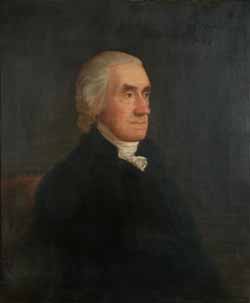
On Wednesday, 17 October, and then again on Wednesday, 24 October, the Salem Maritime National Historic Site will offer a special talk titled “Smuggling Stories from Captain Derby’s Wharf.” Richard Derby, Sr. (shown here), was a prominent Salem merchant captain whose sons Richard, Jr.; Elias Hasket; and John all played important roles in Massachusetts’s Revolution.

Drawing on recent research, park rangers will share real tales from the Salem waterfront, including:
  • The Crown’s seizure and auction of Fayal wine from the Derby warehouse in 1771.
  • The accidental sinking of the Crown’s Customs boat in the Salem harbor.
  • John Derby’s smuggling adventure on the Quero.
This free hourlong program is scheduled to start at 7:00 P.M. on Derby Wharf, 173 Derby Street in Salem. The park urges people to bring lawn chairs and blankets because the talk will be delivered outdoors near the water. (If the weather is particularly poor, though, I understand there’s an indoor site at the ready.)

On the weekend between those talks in Salem, Taunton is celebrating its “Liberty and Union” Festival, inspired by the British flag with that motto sewn onto it that local Patriots raised in 1774.

On Thursday, 18 October, public historian and landscape architect Tom Paine will speak at the Old Colony History Museum about “That Spark of Liberty: Robert Treat Paine and America’s D.N.A.” Tom is a sixth-generation descendant of Robert Treat Paine, the Taunton lawyer who became one of Massachusetts’s signers of the Declaration of Independence.

Tom will delve into the Paine family stories that inspired descendants of the Civil War Generation. He will discuss Paine’s years as the first Attorney General of Massachusetts, including his roles in crafting the world’s oldest modern constitution and the legal abolition of slavery in the state.

This talk is free and open to the public. Refreshments will be served at 6:30 P.M. with the talk to begin at 7:00. The museum is at 66 Church Green in Taunton.

The town’s “Liberty and Union” celebration has already reportedly gotten under way with middle-schoolers sticking flags into people’s lawns. But the big day is Saturday, 20 October. There will be a walking tour of historic downtown Taunton starting at 11:00 A.M. at the Old Colony History Museum. At 11:30 a procession from the statue of Robert Treat Paine to the museum will end with the raising off a “Liberty and Union” flag. Meanwhile, there will be music and dance, games and pumpkin-decorating for kids, crafts demonstrations and historical reenactors. The complete list of activities is here.

Sunday, December 21, 2014

What Did Bostonians Start a Revolution for?

In An Empire on the Edge: How Britain Came to Fight America, Nick Bunker posits a provocative parallel for Massachusetts in 1773, during the lead-up to the Tea Party: “Perhaps the closest equivalent in modern times was the end of the Communist regime in East Germany.” Having visited Leipzig and other G.D.R. cities as the Cold War dissolved into mist, Bunker suggests we view Boston through that lens.

Of course, he acknowledges, the British Crown had no equivalent of the Stasi or other elements of the totalitarian Soviet satellite. But in Bunker’s view both societies were aching to break through the flimsy oppression of an old regime: “The town of Boston needed to reinvent itself as the great industrial city it would eventually become after the War of 1812.”

Massachusetts, and New England as whole, indeed had a lot of advantages for an expanding republican economy. The region had the highest literacy rate of anywhere in the British Empire. As Bunker notes, the town was the size of a small British seaport that might support one newspaper, yet it had five or more papers each week in the years before the Revolutionary War, representing a spectrum of political ideas.

What’s more, New England’s relatively equal distribution of land, scarce labor, and town-meeting system let more men gain independent livings and participate in their government than anywhere else in the Empire. The leaders of the government in London didn’t believe in that system—they couldn’t imagine the region really ran that way, and they didn’t think it was a good idea anyway. In 1774 those ministers tried to roll back New England self-government, leading to the decisive countryside confrontations from summer 1774 through spring 1775.

On the other hand, the stultifying culture that might plausibly make Boston resemble Leipzig wasn’t anything that London government had created or supported. It was the system of New England’s own establishment, descendants of Puritans who disliked any form of faith but their own. Their laws didn’t just ban theater and stifle Christmas. They barred work from Saturday night to Monday morning, and blocked travel in Sundays between one town and another except in emergencies. For all of New England’s vaunted literacy, only the top households owned any non-religious reading material.

Since the start of the century Philadelphia had vaulted ahead of Boston in population and trade. Some of the reason was geographic: Philadelphia’s harbor was open for more of the year, and it wasn’t perched on a small peninsula. But most of the southern city’s advantages were cultural. It was more welcoming to immigrants and non-conformists. The most inventive Bostonian of the century, Benjamin Franklin, left for Philadelphia in his teens not because he lacked a place within New England society but because he didn’t like that place.

Bunker writes of the need for Boston to reinvent itself as an industrial center, “Even before the revolution, it contained men and women who understood this was so.” He doesn’t identify such individuals, however, and I’m hard pressed to think of any among the Revolutionaries. There’s no doubt that some benefited from the coming of industrialization: Paul Revere remade himself from a skilled craftsman into a manufacturer, and Loammi Baldwin of Woburn went from a farmer to a civil engineer overseeing the Middlesex Canal.

But almost to a man, Boston Patriots went into political activism and then the Revolutionary War not seeking to break free from their narrow society but to protect it from change. London’s new taxes were preventing a return to the town’s previous prosperity, they complained. When the political confrontation heated up, they demanded to go back to Massachusetts’s old charter, not to make reforms.

Samuel Adams certainly didn’t aim to lead a revolution that would open Boston to a Catholic church and competing theaters. Elias Hasket Derby (shown above) made a fortune in the post-war China Trade, but in April 1775 when he was pushing for his Salem militia company to march faster against the redcoats he would surely have been happy just to have the British Customs service roll back its enforcement to the 1750s level.

With Patriots like those, I think Bunker’s assessment that “Boston needed to reinvent itself as the great industrial city” is like saying that Tyrannosaurs needed to reinvent themselves as the light, maneuverable flyers they eventually evolved into. There’s no doubt now that birds descended from two-legged dinosaurs while Tyrannosaurs died out, but those dinosaurs weren’t spending their days trying to fly. Similarly, conservative New Englanders taking action against the Crown in the 1760s and 1770s were trying to preserve their way of life for themselves and their children, not to open up their society to the possibilities of industrial (or other) change. And yet that’s what they did.

TOMORROW: Reluctant revolutionaries?

Wednesday, June 09, 2010

Fichter to Speak on So Great a Proffit

Prof. James R. Fichter of Lingnan University in Hong Kong is speaking at three New England historic sites this month on his book So Great a Proffit: How the East Indies Trade Transformed Anglo-American Capitalism. Here’s a review in The New Republic.

Britain started trading with east Asia through the East India Company in the 1600s, and that economic and political link eventually led to major battles on the subcontinent in the Seven Years’ War and War of American Independence, and to the Boston Tea Party.

After independence, American merchants found themselves shut out of the British Empire’s trading system. (Some of them had apparently not thought through what “independence” would mean.) Among the risky new business ventures they tried was the China Trade.

Fichter’s first venue is the Salem Maritime National Historic Site’s visitor center on Sunday, 13 June, at 2:00 P.M., which makes sense since Salem was a center of America’s China Trade. Among the pioneering merchants was Elias Hasket Derby, who had marched with the Essex County militia on 19 Apr 1775, arguing the whole way with his colonel, Timothy Pickering, about whether they should march faster.

On Wednesday, 16 June, at 7:00 P.M., Fichter will speak at the Forbes House Museum in Milton, in an event co-sponsored by the Shirley-Eustis House Association. That Milton mansion was built by Robert Bennet Forbes, who started work for his opium-trading uncle Thomas Handysyd Perkins in 1816 at the age of twelve. The lecture is free, but seating is limited, so the organizers request an R.S.V.P. There will be refreshments supplied by Prof. Fichter’s publisher, Harvard University Press.

Finally, Fichter will cross state lines on Thursday, 17 June, at 5:00 P.M. and talk at the Rhode Island Historical Society’s John Brown House Museum at 52 Power Street in Providence. In 1787 Brown sent the General Washington to Canton with a cargo of “anchors, cannon shot, bar iron, sheet copper, ginseng…, tar, spermaceti candles,” and several types of alcohol, thus launching Rhode Island’s direct trade with east Asia.