


J. L. BELL is a Massachusetts writer who specializes in (among other things) the start of the American Revolution in and around Boston. He is particularly interested in the experiences of children in 1765-75. He has published scholarly papers and popular articles for both children and adults. He was consultant for an episode of History Detectives, and contributed to a display at Minute Man National Historic Park.

Subscribe thru Follow.it


•••••••••••••••••


Showing posts with label Benjamin Waterhouse. Show all posts

Monday, October 04, 2021

“There to pursue their Studies of Latin and Greek”
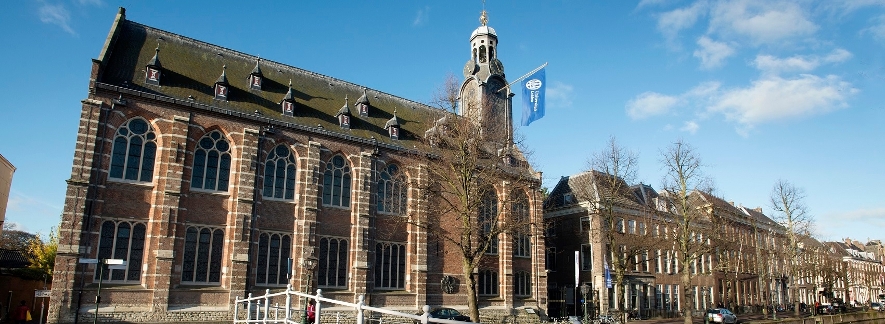
John Adams wasted no time in reacting to Benjamin Waterhouse’s 13 Dec 1780 letter about educational opportunities in Leyden, quoted yesterday.

Five days later, the American diplomat packed his eldest sons, John Quincy and Charles, off to that Dutch university town with their occasional tutor, John Thaxter.

Even before knowing that they had settled in, Adams wrote home to his wife Abigail in Braintree:
My dearest Portia

I have this morning sent Mr. Thaxter, with my two Sons to Leyden, there to take up their Residence for some time, and there to pursue their Studies of Latin and Greek under the excellent Masters, and there to attend Lectures of the celebrated Professors in that University. It is much cheaper there than here: the Air is infinitely purer; and the Company and Conversation is better.

It is perhaps as learned an University as any in Europe.

I should not wish to have Children, educated in the common Schools in this Country, where a littleness of Soul is notorious. The Masters are mean Spirited Writches, pinching, kicking, and boxing the Children, upon every Turn.
The last paragraph looks like a comment on the Latin School on the Singel, where John Quincy had had such a poor experience in September and October.

This letter is our first sign that part of the pedagogy, and part of the problem, at that school was corporal punishment. Or, probably more accurately, even more corporal punishment than a New England family like the Adamses thought was just.

As Adams wrote, he and his wife were staying on friendly terms with James Lovell, a former usher at Boston’s South Latin School whose method of beating boys on the hand with his ruler was legendary. But whatever happened in Amsterdam was supposedly worse.

Another implication of this letter is that John Adams had not told Abigail anything about John Quincy’s problems at the Latin School. She may never have learned about those difficult fifty days and how her eldest son reportedly misbehaved to force his removal.

Fortunately, John Quincy liked the new arrangements in Leyden. The day after the party arrived, he told his father, “we went to hear a Medicinal lecture by Professor Horn, we saw several experiments there. In the afternoon we went to Hear a Law lecture by Professor Pessel.” The next day he reported: 
I have this day seen the master who is to teach us greek and Latin. He is to come to us twice a day; from twelve to one oclock and from five to six in the afternoon, so that I shall be two hours occupied with our master an hour at each lecture is two more and the rest of my time I shall be writing from Homer, the Greek testament, of Grammar, and learning lessons for our Master.
Thaxter engaged this man, an usher at the town’s high school, for thirty Guilders per month. The lessons were in French, as the boys had prepared for.

In addition, in January 1781 the university registered Thaxter, John Quincy, and Charles as students, the first two to study law and the youngest to study letters. Thaxter reported: “Ils travaillent avec beaucoup d’ardeur, et ils avancent très bien.” They work with lots of ardor and they progress very well.

Thus ended the only significant blot on John Quincy Adams’s scholastic career.

Sunday, October 03, 2021

“Send my Children to me this Evening”

As I quoted yesterday, on 10 Nov 1780 Latin School rector Heinrich Verheyk sent American diplomat John Adams a letter stating that his eldest son, John Quincy Adams, was misbehaving in an attempt to get expelled.

John Adams responded immediately:
Sir

I have this moment received, with Surprise and Grief, your Billet.

I pray you Sir, to send my Children to me this Evening and your Account, together with their Chests and Effects tomorrow. I have the Honour to be, with great Respect, Sir, your humble servant,
He whisked both John Quincy and younger son Charles out of the Latin School at the Singel.

We don’t know what conversations took place in the Adams house that night. We do know that Adams already disagreed with how the school was placing John Quincy in a class with younger boys instead of letting him study Greek. So, while he may have been mortified at his son’s reported misbehavior, he sympathized with the motive behind it.

Adams cast about for a way for his boys to continue their education. John Quincy was thirteen, a year away from the age when many elite Massachusetts boys went to Harvard, and Charles was ten. They needed Latin and Greek for college. Adams was too busy trying to convince the Dutch republic to recognize the U.S. of A. to teach them himself. John Thaxter, who had tutored the boys in Braintree and aboard the ship to Europe, was still in Paris helping the American diplomats there.

Somehow Adams learned about another possible source of information: a young man from Newport, Rhode Island, named Benjamin Waterhouse (1754-1846, shown above as painted by Gilbert Stuart in 1775). He had started studying medicine as an apprentice at age sixteen and then sailed to Britain for more advanced training in March 1775, just before the Boston Port Bill took effect. Though Waterhouse spent the next three years in wartime Britain, he supported the independent U.S. of A.

In 1778 Waterhouse went to study at the University of Leyden, reportedly disconcerting the authorities by declaring himself a citizen of the free American states, which Holland had yet to recognize. After finishing a medical degree in 1780, he went back to Britain to visit his mentor there, then returned to Leyden to attend lectures on law and history. Perhaps on that trip he passed through Amsterdam, a little over twenty miles north of Leyden, and met the American minister.

Sometime in November or early December Adams asked Waterhouse if there were educational opportunities for his sons in Leyden. On 13 December the young doctor wrote back:
It so happened that I could not see the persons of whom I wished to enquire concerning the Schools, mode of education &c. untill yesterday, otherwise I should have written before.—

The Gentlemen from whom I have my information have each of them a young person under their care about the age of your eldest, and are well acquainted with every thing appertaining to education in this City, from conversing with them I am able to inform you that besides the publick-school which is a good one, there are private masters in the latin and greek, who at the same time they teach these languages, teach the greek and roman History. With boys who are far advanced in greek they read and explain Euripides, Sophocles and others.

The same person will if required repeat any of the Law-lectures to the pupil, and that indeed is what they are principally employed for, by those whose wives are to be Mevrouws [i.e., ladies].— There is a teacher of this kind in Leyden who is both an elegant schollar and a gentleman, such a one asks 20 ducats a year. . . .

In regard to living I am persuaded they can live here for much less than at Amsterdam. Three furnished rooms would probably cost 20 guilders a month. We find our own tea, sugar, wine, light and fire, and give one ducat a week for dinner, it is always the same price whether we go to the public-house, or have it brought from thence to our own rooms . . .

In respect to their being Americans or Sons of Mr. Adams they will never meet with any thing disagreeable on that head, where any profit is like to accrue little do the Dutchmen care for their political, or even religious principles—Turk, Jew, or Christian make no difference with them. I beleive we may say of them as they said of themselves at Japan when the Japonese enquired if they were christians—they answered, they were Dutchmen.

If the Gentlemen should come, I can insure them an agreeable Society and a genteel circle of acquaintance. If they should not, I hope at least they will come and pay us a visit, and I think I need not add how ready I should be to render them any service in my power.
Meanwhile, Adams had summoned Thaxter from Paris.

TOMORROW: A new arrangement.

Sunday, January 22, 2017

John Quincy Adams Prepped for College

When John Quincy Adams prepared to enter Harvard College, he was not a typical college student.

At eighteen, he was older than most undergraduates in that period. He had already studied some subjects at the University of Leiden in Holland.

More important, the young man had worked and traveled in far higher circles than other teenagers, and than most Harvard professors. He’d been a diplomatic assistant to his father and then Francis Dana, the Congress’s minister to Russia. He’d seen several European capitals.

And, let’s face it, he was John Quincy Adams. His parents worried about his progress, but he was one of the smartest and more diligent young men around. Of course, there was still the formality of passing the college entrance exam.

As recorded in his diary (the diary he kept regularly until 1848), John Quincy arrived home in Massachusetts in the summer of 1785. Over the next several months, he visited various relatives, including his younger brother Charles, already at Harvard on the normal schedule.

As I quoted yesterday, John Adams had sent Prof. Benjamin Waterhouse a letter asking him to put in a good word for his eldest son. John Quincy finally connected with the man in Boston on 28 September, writing in his diary: “Upon Change I met Dr. Waterhouse; and found him the same man, he was four years, ago, when I was acquainted with him in Holland.” But to his sister Nabby he added:
I met on the exchange, Dr. Waterhouse, who has been at Providence these 6 weeks, delivering lectures upon natural Philosophy. He did not know me at first, and I was obliged to introduce myself to him. As soon as he found me out, he was as sociable as ever.
Waterhouse had lived with the Adams family in 1781, so clearly John Quincy had grown a great deal since he was fourteen.

The young man decided to enter the college at the end of April 1786, in time to take a couple of science classes. He would be ranked as a junior. That fall, John Quincy went out to Haverhill live with his aunt Elizabeth and her husband, the Rev. John Shaw, and refresh his knowledge before the entrance test.

And then the college sped up the schedule. In March John Quincy told his sister why he’d become too busy to write:
At the beginning of the year I was informed…I must come by the middle of March, in order to attend two courses of experimental philosophy. I might have waited till next commencement [in July], and then entered as senior;…but I should have missed one course of lectures. Besides, I had undertaken last fall, to be ready to enter before the class began upon natural philosophy.

When I found my time shortened, I determined to lay aside every thing else, and attend only to my present business. . . . And to enter here, it is not necessary to know any thing but what is found in a certain set of books, and I have heard it asserted, that some of the best scholars, after having taken their degrees, would not be received if they offered as freshmen, because they commonly forget those parts of learning which are required in a freshman. Since the first of January, I have not, upon an average, been four hours in a week (Sundays excepted) out of Mr. Shaw’s house.
So John Quincy had spent nearly the whole winter cramming.

TOMORROW: Entrance exam time at last.

Thursday, January 19, 2017

“I hope he will pass muster”

As John Quincy Adams planned his return to Massachusetts from Europe in 1785, with the hope of attending Harvard College, his father John wrote to one of the professors there, Benjamin Waterhouse (1754-1846).

Waterhouse had lived with the Adams family while studying medicine in Holland in the early 1780s. It was thus natural for John Adams to ask Waterhouse to look out his son, even though he was one of the college’s first professors of physic rather than of law.

As a father, Adams had some worries about John Quincy’s preparation for college. All in all, his letter reads like what a modern anxious “helicopter parent” might write to a college admissions officer, insisting that his son was a better student than he might seem and deserved some special understanding:
This Letter will be delivered you, by your old Acquaintance, John Quincy Adams, whom I beg Leave to recommend to your Attention and favour. He is anxious to Study Sometime, at your University before he begins the Study of the Law which appears at present to be the Profession of his Choice.

He must undergo an Examination, in which I Suspect he will not appear exactly what he is. in Truth there are few who take their Degrees at Colledge, who have so much Knowledge, but his Studies having been pursued by himself, on his travells without any Steady Tutor, he will be found aukward in Speaking Latin, in Prosody, in Parsing, and even perhaps in that accuracy of Pronunciation in reading orations or Poems in that Language, which is often chiefly attended to in Such Examinations.

It seems to be necessary therefore that I make this Apology for him to you, and request you to communicate it in confidence to the Gentlemen who are to examine him, and Such others as you think prudent. If you were to examine him in English and French Poetry, I know not where you would find any body his Superiour. in Roman and English History few Persons of his Age, it is rare to find a youth possessed of So much Knowledge. He has translated Virgils Æneid, Suetonious, the whole of Sallust, and Tacituss Agricola, his Germany and Several Books of his Annals, a great Part of Horace Some of Ovid and Some of Cæsars Commentaries in Writing, besides a number of Tullys orations. These he may Shew you; and altho you will find the Translations in many Places inaccurate in point of Style, as must be expected at his Age, you will See abundant Proof, that it is impossible to make those translations without Understanding his Authors and their Language very well.

In Greek his Progress has not been equal. Yet he has Studied Morcells in Aristotles Poeticks, in Plutarch’s Lives, and Lucians Dialogues, the Choice of Hercules in Xenophon, and lately he has gone through Several Books in Homers Iliad.

in Mathematicks I hope he will pass muster. in the Course of the last year, instead of playing Cards like the fashionable World I have Spent my Evenings with him. We went with some Accuracy through the Geometry in the Præceptor the Eight Books of Simpsons Euclid, in Latin and compared it Problem by Problem and Theorem by Theorem with Le Pere Dechalles in french, We went through plain Trigonometry and plain Sailing, Fennings Algebra, and the Decimal Fractions, arithmetical and Geometrical Proportions, and the Conic Sections in Wards Mathematicks.

I then attempted a Sublime Flight and endeavoured to give him some Idea of the Differential Method of Calculation of the Marquis de L’Hospital, and the Method of Fluxions and infinite Series of Sir Isaac Newton But alass it is thirty years Since I thought of Mathematicks, and I found I had lost the little I once knew, especially of these higher Branches of Geometry, So that he is as yet but a smatterer like his Father. however he has a foundation laid which will enable him with a years Attendance on the Mathematical Professor, to make the necessary Proficiency for a Degree.

He is Studious enough and emulous enough, and when he comes to mix with his new Friends and young Companions he will make his Way well enough. I hope he will be upon his Guard against those Airs of Superiority among the Schollars, which his larger Acquaintance with the World, and his manifest Superiority in the Knowledge of Some Things, may but too naturally inspire into a young Mind, and I beg of you Sir, to be his friendly Monitor, in this Respect and in all others.
It’s always remarkable to me how much John and Abigail Adams worried about John Quincy being a good scholar. With our hindsight, we know that he was one of the most studious, diligent, and at times humorless statesmen the U.S. of A. has ever produced.

COMING UP: John Quincy Adams reaches Cambridge.