J. L. BELL is a Massachusetts writer who specializes in (among other things) the start of the American Revolution in and around Boston. He is particularly interested in the experiences of children in 1765-75. He has published scholarly papers and popular articles for both children and adults. He was consultant for an episode of History Detectives, and contributed to a display at Minute Man National Historic Park.

Subscribe thru Follow.it


•••••••••••••••••


Showing posts with label James Otis. Show all posts

Thursday, April 23, 2026

“Without the Privelege of Pen, Ink, Paper or Candle”

In April 1776, Watertown was the seat of Massachusetts’s government.

Though people could now go into Boston, that town was still reeling from the siege. Plus, there was smallpox.

So the Massachusetts General Court stayed in Watertown—the assembly in the town’s meeting-house and the Council in an upper chamber of Edmund Fowle’s house (now headquarters of the Historical Society of Watertown, shown here).

Under the provincial charter, because the governor and lieutenant governor were absent (both driven away by the war), the Council exercised executive power.

That’s why, on 12 April, James Otis, Sr., as senior member of the Massachusetts Council, signed this order to imprison five genteel Loyalists captured aboard the brig Elizabeth:
To the Keeper of the Goal at Boston, in the County of Suffolk—Greeting—

You are hereby directed and commanded to take into your Custody Crean Brush, William Jackson, Peter Ramsey, Edward [K]eighley, and Richard Newton, lately taken in their flight from Boston in attempting to carry away from thence under the protection of the British fleet, large Quantities of Goods Wares & Merchandizes, the Rightful Property of the Inhabitants of that town, and having joined themselves with the Fleet & army employed against the united Colonies of America—

and you are commanded to confine the said Crean Brush William Jackson & Peter Ramsen [sic], each in an apartment by himself, without the Privelege of Pen, Ink, Paper or Candle, and not suffer them, or either of them to converse with any person whatever, unless in your hearing, and for the better Security of the said Crean Brush you are further ordered & commanded to put him into Handcufts immediately—

And them and each of them safely keep, ’till the further Order of the Major part of the Council, or they be otherwise discharged by due Course of Law—Hereof fail not at your Peril.
Two days later, Maj. John Grizzage Frazer, as assistant quartermaster for the Continental Army, wrote to Gen. George Washington to say that those men were now locked up. Brush was “in Irons.”

Frazer also passed on the news that on 12 April “8 british seamen” had made off with the cutter from H.M.S. Renown, one of the Royal Navy ships still hovering in the outer harbor, and got into Boston. Those defectors were much more welcome than the Loyalists who had tried to leave.

TOMORROW: Free William Jackson!

Friday, November 21, 2025

The End of the Jacob Osgood House

In 2012 and again in 2023 I reported on the deterioration of the Jacob Osgood House in Andover.

Parts of that building may have dated to 1699, but its historic significance arose from being where James Otis, Jr., died in 1783.

This month the Andover News website reported that the town had demolished the Osgood house as a safety hazard.

The owner of the building died last year. She had never lived there but used the property to store more than 100 tons of stuff she’d accumulated at other places and couldn’t bear to part with. By 2023 the house was flagged with a sign warning emergency personnel that it was too dangerous to enter.

Andover was able to preserve one artifact from the house: the granite back step where Otis was standing when lightning hit the building, traveled down a beam, and went through his body. It appears here in a photo by Brian C. Mooney.

According to the Andover News, “Before demolition, the stone was removed to a temporary location near the arch at West Parish Garden Cemetery, awaiting relocation to a permanent home in the cemetery.” (Otis’s body was interred in the Old Granary Burying Ground in Boston.)

For more on why James Otis went to Andover while dealing with mental illness, read Lucy Pollock’s article for Revolutionary Spaces. Otis first moved to the town in 1778 to be under the care of Dr. Daniel How, and How’s house still stands in the same neighborhood as the late Osgood house.

Saturday, November 15, 2025

The Coroners of Suffolk County, 1747–1774

Early this month I started to discuss the office of coroner in pre-Revolutionary Boston. Then came Pope Night, followed by postings about the espionage of Dr. Benjamin Church, Jr. Now I’m going back to pick up the coroners’ thread.

Coroners were royal appointees: chosen by the governor, who was chosen by the ministry in London, who was chosen with the approval and authority of the king.

As such, their commissions lapsed six months after the death of the king in whose name they were appointed. The new monarch could remove them before that date or authorize new appointments.

The same rule applied to many other legal documents issued in the king’s name, such as the writs of assistance that granted Customs officials the power to search buildings for smuggled goods.

The death of King George II on 25 October 1760 started that clock ticking. In January 1761 sixty-three Boston merchants with James Otis, Jr., as their attorney sued to challenge the validity of new writs of assistance under Massachusetts law. Customs official Charles Paxton responded with his own filing, and the case was argued before Massachusetts judges in February and November 1761.

The merchants lost. But John Adams’s memory of the case (and his wish to put Massachusetts ahead of Virginia in challenging Crown policies) made the Writs of Assistance Case a milestone on the way to independence and eventually the Fourth Amendment.

When it came to the coroners, there was much less trouble. With the advice and consent of the Council, Gov. Francis Bernard simply issued new appointments in the name of King George III for what appear to have been all the existing coroners, and perhaps some new ones, on 5 Nov 1761.

In 1870, William H. Whitmore went through government records, compiled a list of every man elected or appointed to Massachusetts offices before independence, and published The Massachusetts Civil List for the Colonial and Provincial Periods, 1630-1774. You can read it here, though it’s not that sort of book.

Here are scraps of The Massachusetts Civil List’s section on Suffolk County coroners. Recall that Suffolk County then included all of today’s Norfolk County, so this list includes men who examined unexpected deaths in rural towns well outside Boston.

That list doesn’t say when a coroner left office, usually by becoming a potential subject for a coroner’s inquiry. But it should include the names of the Boston coroners in 1770, the year of the Massacre, and 1774, the year of William Molineux’s death.

That’s why I started to worry I’d tripped into a Boston 1775 emergency.

TOMORROW: A chill of doubt.

Monday, October 06, 2025

“Patriot, Hero, Distracted Person” Online

At the end of the summer Revolutionary Spaces and the National Museum of Mental Health Project debuted an online exhibit titled “Patriot, Hero, Distracted Person: James Otis, Jr. and Mental Health in the Eighteenth Century.” It’s well worth a visit.

For decades the standard American story of James Otis was shaped by the Massachusetts Whigs, particularly his sister Mercy Warren and his admirer John Adams.

That narrative had Otis staunchly leading the political resistance to the British ministry’s corrupt laws until Customs Commissioner John Robinson assaulted him in the British Coffee-House. That severe head injury tipped Otis into bouts of insanity.

In the twentieth century historians noted that Otis’s family had noticed him behaving erratically earlier in life. Adams’s diary and newspapers show that Otis was especially verbose and bellicose in the days leading up to his confrontation with Robinson. The fight in the British Coffee-House might thus have been the result of mental difficulties, not just the cause.

This web exhibit shares all that evidence as well a note from a psychiatrist saying that Otis’s head injury could have brought on or severely exacerbated his manic episodes. It also explores his treatment and family life in more detail than I’ve seen elsewhere.

Without completely neglecting politics, the exhibit thus reframes Otis’s life “from an epic tragedy to a much more familiar story of loss and sacrifice.” It puts particular emphasis on his later years when he was unable to work and often separated from his wife and children. The final page shares artistic responses to his story.

Kate LaPine, Lucy Pollock, Paul Piwko, and their colleagues at Revolutionary Boston and the National Museum of Mental Health Project have produced a website evoking sympathy for Otis as an individual facing human difficulties, not a distant historical figure. It provides a different dimension to our grand Sestercentennial narrative.

Friday, November 22, 2024

“Weak in Arms Void of Virtue, Honor, or Honesty”

Here are some more of the slashing character sketches published in the 8 May 1770 Nova Scotia Chronicle in the guise of detailing a “Tragi-comic Farce” about to the published.
John Dupe, Esq; A Senator, a Man of Fortune, but not of his own acquiring---A Man of weak Capacity and like tainted Meat devoured by the Vermin about them, who drew his Money out of the Cashiers Hands Not trusting to the Loyalty of his Country Men—He is remarkably melancholy on his Loss of Lady Beaver.

Poor Iammy, a Senator, who was the Leading Man in Politicks, but disappointed in Offices of Profit—He stands now ready arm’d to kill any Person who may be mader than himself.

Maria—His Wife, a worthy virtuous good Woman, comforting her Children, and bemoaning his unhappy Fate.

Thomas Wister, an Man weak in Arms Void of Virtue, Honor, or Honesty, whose compounds has poison’d his own Body and Soul, since that he has been finding out an Art to poison the Minds—Private Confessor to Admiral Renegado.

William Town, Regulating Clerk to the Parish—Procurer of Knights of the Post, and Secretary to Admiral Renegado, and Justice Gutts; also Secretary to the Caulkers Club, and chief Compiler of the Country Parish Resolves.
I think these are allusions to merchant John Hancock, lawyer James Otis, his wife Ruth Otis, most likely Dr. Thomas Young, and Boston town clerk William Cooper, respectively.

John Mein identified Hancock as “John Dupe” in his “Key to a certain Publication,” now at the Houghton Library, so that’s an easy one.

Back in October, Mein called Otis “Counsellor Muddlehead,” but by this time people recognized that he was mentally ill. Otis’s wife was indeed known as a Loyalist.

I’m guessing the references to “compounds” and “poison” were hints that “Thomas Wister” was a physician, hence the radical Dr. Young. This page never introduced “Admiral Renegado” at all despite these two allusions to that character. But the 5 Feb 1770 Boston Chronicle had used “Admiral Renegado” as another name for William Molineux, already introduced in the Nova Scotian item as “William the Knave.”

The paragraph on “William Town” contains several pointers to William Cooper, plus a reference to the “Caulkers Club” or caucus. This might be the first publication connecting that mysterious word for a political group to the profession of caulking, and it appears to be a joke.

The article offers no explanation of “Justice Gutts,” and I can’t find the Boston Chronicle using that name anywhere. Perhaps that was an alternate name for the next entry in the article: “Richard Glutton, Esq; a regulating Magistrate.” But I’m not sure who that’s meant to be.

TOMORROW: Mysteries and questions.

Saturday, September 28, 2024

The Triumph of the Barnstable Crowd

As recounted yesterday, on 27 Sept 1774 a reported 1,500 people surrounded the courthouse in Barnstable, refusing to let the county court session begin.

The local justices kept assuring the crowd that they, too, were concerned about the Massachusetts Government Act and other Coercive Acts, but they felt they should sit to hear local cases.

The committee chosen by the crowd, led by Dr. Nathaniel Freeman, told the justices that wasn’t satisfactory. That day apparently ended in a stalemate with the courthouse still closed.

The committee drafted a promise for each justice to sign, promising not to act under the new laws, even if that meant losing their governmental appointment. Then the crowd decided that sheriffs, deputies, and anyone else holding a royal commission do the same.

Feeling even more expansive, the crowd went on to demand that a local who had threatened (jokingly, he said) to cut down Barnstable’s Liberty Pole promise never to do that. That man made himself scarce.

Finally, the crowd voted to ask James Otis, Sr., a longtime member of the Massachusetts Council under the previous constitution, to go to Salem in case Gov. Thomas Gage went through with his initial plan to convene the Massachusetts General Court there.

On 28 September, 250 years ago today, several justices and other royal appointees signed the crowd’s promises. Otis promised to go to Salem. The crowd marched back to the courthouse, drums sounding. There they resolved to provide arms for their defense, not to buy any imported goods, and “endeavor to suppress mobs and riots” (as well as “common peddlers”).

In 1830, Barnstable County built a new, larger courthouse. The 1763 building was eventually sold to a Baptist church that expanded and remodeled it, as shown above. Then in 1972 it became the headquarters of Tales of Cape Cod. But somewhere within that building is the courthouse at the center of a political protest in 1774. 

Thursday, February 01, 2024

“He should not speak to a gentleman in the street”

Yesterday I quoted John Malcolm’s complaint about how some Royal Navy officers had treated him in 1771, cutting buttons off his cloak.

In his newspaper advertisement about the conflict, Malcolm twice used the language of duelling. One navy officer named Davis reportedly “promis’d…Gentleman-like Satisfaction,” and the Customs officer “demanded Satisfaction of him.”

Davis instead proceeded to an action that was also part of the duelers’ code, but not for a genteel equal with whom one would duel. Instead, Malcolm complained, “he struck me with a Stick.”

Clubbing or caning an opponent was not just a physical assault. It also communicated that person was of a lower social class.

When James Otis, Jr., and Customs Commissioner John Robinson met in the British Coffee-House in September 1769, they were following that code. Otis had publicly claimed the right to break Robinson’s head, and Robinson tried to grab Otis’s nose before swinging his own cane.

Decades later, Rep. Preston Brooks’s assault on Sen. Charles Sumner in the U.S. Senate chamber carried the same symbolism. Brooks had considered challenging Sumner to a duel, as he had previously dueled with other men, but another member of Congress persuaded him that dueling was too good for the anti-slavery senator.

When John Malcolm advertised in 1771 that he had given Davis “a genteel Basting or Caneing,” he wasn’t just saying he’d resisted Davis’s strike and come out ahead in their fight. He was signaling that because he’d succeeded in inflicting that chastisement he was the more worthy gentleman.

Malcolm’s behavior toward George R. T. Hewes on 25 Jan 1774 had the same symbolic dimension. The incident started when a boy criticized Malcolm for having knocked his “chips” into the snow the day before. Malcolm didn’t like being pestered by a child and started waving his cane around. Hewes then remonstrated with the man about threatening the boy.

Malcolm again resented being called out by someone from a lower class—a poor shoemaker. According to the Massachusetts Spy, he told Hewes, “You are an impertinent rascal, it is none of your business,” eventually adding that “he should not speak to a gentleman in the street” like that.

The two men then argued over their “good credit” in town. Hewes didn’t claim to be a gentleman, but he found a way to imply that Malcolm wasn’t one, either: “Mr. Hewes retorted, be that as it will, I never was tarred nor feathered any how.”

At this time, before the actual war broke out, crowds almost always reserved tarring and feathering for working-class men connected with Customs enforcement as low-level officers, sailors, or (supposed) informants. Contrary to later popular images, mobs didn’t tar and feather upper-class Tories.

By bringing up the fact that a crowd in Maine had tarred and feathered John Malcolm, Hewes was insinuating that, despite his career as a ship’s captain, colonial army officer, and higher-level Customs officer, Malcolm was not really a gentleman.

Malcolm responded as the dueling code said a gentleman could when insulted by someone beneath his rank: he clubbed Hewes on the forehead and knocked him out.

Tuesday, August 29, 2023

The Last of the Jacob Osgood House?

Back in 2012, I picked up a local news report that the Andover board of health had issued orders for the owners of the house where Jacob Osgood lived during the Revolution to remove garbage bags piled up on the front lawn.

According to Andover Historic Preservation’s 2016 page about this house, the earliest part might have been built in 1699, and it was expanded with new decoration in the mid-1700s.

On 23 May 1783, James Otis, Jr., the former leader of the Massachusetts Whigs, was staying at this house, while hoping to recover from mental illness.

William Tudor’s 1823 biography of Otis included a picture of the Osgood house and said:

…the greater part of the family were collected in one of the rooms to wait till the shower should have past. Otis, with his cane in one hand, stood against the post of the door which opened from this apartment into the front entry. He was in the act of telling the assembled group a story, when an explosion took place which seemed to shake the solid earth, and he fell without a struggle, or a word, instantaneously dead, into the arms of Mr. Osgood, who seeing him falling, sprang forward to receive him. . . .

His own room was on the left hand side of the front door, when looking at the plate; and at his death, he was standing in the door way of the room to the right. The lightning struck the chimney, followed a rafter of the roof which rested upon one of the upright timbers, to which the door post was contiguous. The casing of this door was split, and several of the nails torn out all which marks still remain as they were at the time.
This week Donovan Loucks sent me this new photograph of the Osgood house, showing much more damage than that.
He wrote:
The place is in terrible condition and has a red square with a white cross prominently displayed on the front so emergency personnel know it’s unsafe for entry. The front door is gone, the entry is piled high with refuse, and I suspect it’ll end up being demolished at some point.
The house had clearly deteriorated since 2012. It may be too late to preserve anything more than a few architectural elements.

Tuesday, April 11, 2023

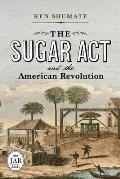
A Taste of Shumate’s Sugar Act

At the Journal of the American Revolution, John Gilbert McCurdy (author of Quarters) just reviewed Ken Shumate’s new book, The Sugar Act and the American Revolution.

I’m pleased to know about this study because I’ve long seen histories mention the Sugar Act of 1764 as colonial Americans’ first grievance of the decade. It prompted James Otis’s pamphlet The Rights of the British Colonies Asserted and Proved, which established “no taxation without representation” as the logical foundation for colonial resistance (without using that phrase, which didn’t appear until 1768).

And yet in looking at the more widespread resistance to the Crown in the late 1760s, and reading the colonists’ own arguments, the taxes and restrictions on sugar (and molasses, and rum, and later coffee and wine) show up barely at all.

Shumate’s study offers some explanations. First, the traders of the 1760s were used to an imperial tax on molasses, which was first instituted in 1733. The main purpose of that law was to discourage trading with French, Spanish, and Dutch West Indies, so objecting to it didn’t come across as patriotic or law-abiding. It was easier to smuggle quietly.

Then in 1764 prime minister George Grenville revised the law, actually cutting the duty in the hope that more American merchants would see obeying the law as the economical alternative. Then in early 1766 the Marquess of Rockingham’s government reduced the duty still further. There was literally less to complain about. To be sure, that last revision meant the government was taxing molasses from the British islands, too, but the North Americans were so pleased with Rockingham’s repeal of the Stamp Act that they didn’t raise a fuss.

Another big factor in the colonial response, I think, was that that Sugar Act’s taxes and trade restrictions affected only a small portion of the population. Molasses traders and rum distillers were a special interest. The biggest threat to their business actually came from distillers on the British Caribbean islands producing their own rum instead of shipping all the raw material to the mainland.

In contrast, the Stamp Act affected everyone in the colonies who filed or responded to lawsuits, read newspapers, got married, and more, which meant everyone. Though rum made from molasses was popular, tea was even more popular, so Charles Townshend’s 1767 tax on that import produced more widespread, longer-lasting opposition.

As McCurdy writes:
Although strict enforcement actually increased with the 1766 revision, the Americans raised few objections to the Sugar Act. Instead, between 1768 and 1772, the law brought in nearly £165,000 from duties on molasses, sugar, madeira, and other goods. But taxing British sugars did little to stem the tide of foreign products as 97 percent of the four million gallons of molasses that came into America derived from foreign sources.

Colonial ambivalence toward the Sugar Act continued despite the Townshend duties of 1767. Although Boston merchants demanded that no British goods would be imported until all taxes were repealed — including the Sugar Act — resistance from merchants in Philadelphia and New York forced them to drop this demand. Indeed, it was not until after the Boston Tea Party of 1773 and the Coercive Acts of 1774 that Americans turned against the Sugar Act.
Looking back, writers started to treat the Sugar Act as the start of their troubles. At the time, however, colonists saw bigger things to complain about.

Tuesday, December 27, 2022

John Adams’s Dinner with the Hotspurs

As described yesterday, John Adams finally got to see the inside of his mother’s cousin Nicholas Boylston’s Boston mansion on 16 Jan 1766.

Adams had apparently heard stories of the witty analysis around Boylston’s dinner table, and he finally got to experience that.

Nicholas Boylston’s younger brother Thomas (1721–1798, shown here in another John Singleton Copley portrait) was on that night’s guest list. So was the Boylstons’ brother-in-law Benjamin Hallowell, already a high Customs officer. (Adams also noted the presence of two gentlemen named Smith, but he didn’t record them saying anything notable.)

Adams’s description of the banter in his diary began:
The Conversation of the two Boylstones and Hallowell is a Curiosity. Hotspurs all.—Tantivi.—
Samuel Johnson defined hotspurs as men “violent, passionate, precipitate and heady.” “Tantivy” was a hunting cry that for a century had been associated with British Tories.
Nick. is a warm Friend of the Lieutenant Governor [Thomas Hutchinson], and inclining towards the Governor [Francis Bernard]. Tom a firebrand against both. Tom is a perfect Viper—a Fiend—a Jew—a Devil—but is orthodox in Politicks however.
Adams wrestled with how to regard Thomas Boylston, who seemed to be on his side but was nastier than he then liked. Adams also revealed that he shared the nastiness of his society in using “Jew” to mean a betrayer.
Hallowell tells stories about [James] Otis and drops Hints about [Samuel] Adams, &c., and about Mr. Dudley Atkins of Newbury. Otis told him, he says, that the Parliament had a Right to tax the Colonies and he was a d—d fool who deny’d it, and that this People never would be quiet till we had a Council from Home [i.e., appointed instead of elected], till our Charter was taken away, and till we had regular Troops quartered upon Us.
Those were the very measures that Parliament adopted in 1774. Did Otis really speak as Hallowell described? If so, was he warning about what the London government would do, or have to do, to quell resistance? As for defending the Crown’s right to tax, Otis did occasionally make such remarks, to the annoyance of his Whig colleagues. But Hallowell wasn’t an unbiased source.  

Returning to that royal appointee:
He says he saw Adams under the Tree of Liberty, when the Effigies hung there and asked him who they were and what. He said he did not know, he could not tell. He wanted to enquire.

He says Mr. Dudley Atkins was too well acquainted with the Secret of some riots there, to be entirely depended on, in his Account, &c.
Typically, Samuel Adams was careful not to incriminate himself. And in fact he was almost certainly not involved in planning the Loyall Nine’s anti-Stamp Act protest in August 1765. I’ll discuss Dudley Atkins in a separate posting.

Back to Adams’s host:
Nick Boylstone is full of Stories about Jemmy [Otis] and Solomon Davis. Solomon says, Country man I dont see what Occasion there is for a Governor and Council and House. You and the Town would do well enough.
Solomon Davis (1716–1791) was another of Boston’s Whig merchants, like Otis originally from Barnstable. If Boylston quoted him correctly, Davis saw merit in a more democratic government for the colony, akin to a town meeting. But he was much more interested in commerce than politics.

That meal gave John Adams plenty to think about.

Thursday, October 20, 2022

Three Cousins Named Jonathan

As I wrote yesterday, Jonathan Williams, Esq., merchant and town official in Boston, married Benjamin Franklin’s niece Grace Harris in 1746. They had a son named Jonathan in 1750.

Jonathan, Jr., went into business, starting with a trip to London to make contacts. While there he lived with his great-uncle Franklin and helped to keep the man’s accounts.

Boston newspaper advertisements say Jonathan, Jr., arrived back in Boston in September 1771 with “English Goods” and “Bohea Tea” to sell.

In April 1773 the young merchant wrote to Franklin from Boston, angling for part of the East India Company tea franchise for himself and his father. That was before the Tea Act became controversial. By the end of the year, Jonathan, Sr., had taken a prominent role in how Boston organized to stop any tea from being landed.

Jonathan, Jr., set out from Boston again in May 1774, allowing him to be in London late that year. His correspondence with his great-uncle Franklin shows he traveled around the British Isles through October, making contacts among rich businessmen and noble families.

Jonathan, Sr.’s sister Mary married Samuel Austin, another Boston merchant and official. They had a son in 1751 whom they named Jonathan Williams Austin. He went to Harvard College (shown above), graduating in 1769. While studying law under John Adams, he was a witness at the Boston Massacre trial, which these days would be flagged as a honking conflict of interest.

In April 1773 the Massachusetts Spy published a version of James Otis’s argument in the 1761 writs of assistance case. Adams later wrote that this text was based on his notes, which Austin “stole from my desk and printed in the Massachusetts Spy, with two or three bombastic expressions interpolated by himself.”

By that time, Jonathan Williams Austin had moved out to Chelmsford to establish his own practice. In late 1774 that town elected him as a delegate to the Middlesex County Convention and then to the Massachusetts Provincial Congress.

Jonathan, Sr., and Mary’s brother John Williams also had a son named Jonathan, born in 1753. He went to Harvard College, class of 1772. Then he followed his Austin cousin’s career path by becoming a clerk for John Adams. His correspondence with Adams shows he was in Massachusetts in the fall of 1774.

That gives us some of the data we need to interpret these entries from Josiah Quincy, Jr.’s journal of his trip to London in 1774:
November 17. Proceeded to London, where I arrived about 11 oClock a.m. . . . Was waited upon by Messrs. Thomas Bromfield, and Edward Dilly, and Mr. Jonathan Williams—from all of whom I received many civilities. . . .

November 18. This morning Jonathan Williams Esqr., Inspector of the Customs in the Massachusetts Bay[,] waited upon me and we had more than an hour [of] private conversation together.
In the Colonial Society of Massachusetts multivolume publication of Quincy’s writings, the note for this passage identifies Jonathan Williams as:
Benjamin Franklin’s grandnephew. His father John, a wealthy Boston merchant and Patriot leader, had married Franklin’s niece, Grace Harris. The younger Williams studied law under John Adams’s tutelage and was then living in London with his great-uncle, his post as a customs inspector in Massachusetts essentially a sinecure.
That note conflates the two cousins named Jonathan Williams. The one born in 1750 was Franklin’s grandnephew, but the one born in 1753 was Adams’s law student. Only the first could have been in London in late 1774. The note also misstates the name of that eldest cousin’s father, the “wealthy Boston merchant and Patriot leader”—that man was also named Jonathan. The youngest cousin’s father was named John.

But the biggest error came earlier. I puzzled over this passage and other documents for weeks, trying to reconcile odd details. And I finally decided that the most likely explanation is that Josiah Quincy met with two different men and wrote down the wrong name for one of them.

TOMORROW: Who was “Mr. Inspector Williams”?

Friday, September 09, 2022

“A brave and valiant sea-commander, only a little bashful”

When James Rivington’s New-York Gazetteer ran what it said was a letter alerting British army officers in Boston to the men behind the town’s political troubles, its list of fifteen names included two we don’t usually read among Revolutionary leaders:
Both those men do already have tags here on Boston 1775, but you know this is an unusual place.

Neither Bradford nor Barber were elected to major political offices or wrote significant newspaper essays (that we know about). They weren’t in the top tier of Boston organizers, nor in my view in the next tier, either. They were too old to fight in the war, serving in civil offices instead, and neither survived the 1780s to help construct the federal government, two ways people got remembered.

Nonetheless, as their titles suggest, Bradford and Barber commanded respect in colonial Boston. Both were staunch Whig businessmen, the sort who spoke out in town meetings, signed protests, and served on committees. Indeed, both Bradford and Barber were part of Boston’s first committee of correspondence in 1772 and then the larger committee to enforce the Association boycott in 1774.

John Bradford (1735–84) was a merchant captain, sailing ships to London and Jamaica. In his study Smugglers and Patriots, John Tyler reported evidence that Bradford belonged in both categories. In 1775 the printer John Mein would call Bradford “a brave and valiant sea-commander, only a little bashful, which is well known to the underwriters in London.” Unfortunately, it’s not well known to us what Mein was referring to, probably sarcastically.

In the 1760s Bradford stopped commanding the ships himself, settled into his North End home, and focused on managing imports through his shop in Boston. He was elected an Overseer of the Poor in 1768 and a warden in 1772.

Bradford was also a slave-owner. Among his servants was a teenager born in Africa and renamed Chloe Spear, subject of a biography published in 1832 by Rebecca Warren Brown, daughter of Dr. John Warren. According to that book, Spear sought to learn to read by studying a psalter:
She kept the book secreted in her pocket, and whenever she had a few moments leisure, she would take it out and try to spell a word. While thus engaged one day, her master discovered the book in her hand, and inquired what she was doing. She told the truth, and this led to a full disclosure of the case. He angrily forbade her going again to the schoolmistress for instruction, even under penalty of being suspended by her two thumbs, and severely whipped; he said it made negroes saucy to know how to read, &c.
Nonetheless, Bradford joined the crusade to preserve political liberty for men like him.

In 1769–70 Bradford was among several Boston merchants who enforced the non-importation agreement—walking aboard ships, demanding Customs documents, leaning on merchants who defied the boycott. After James Otis, Jr., and Customs Commissioner John Robinson brawled in the British Coffee-House, Bradford was seen “looking for Mr. Otis’s Hat & Wig.” He was also on the town committee to hire a ship to carry the town’s report on the Boston Massacre to London, though cost worries scuttled that plan.

On 2 Sept 1774, a week before the New York newspaper item appeared, Capt. John Bradford was among the Boston Whigs who went out to Cambridge to calm the militiamen gathered in the “Powder Alarm.” After two colleagues, William Cooper and William Molineux, told the crowd that the gunpowder the royal authorities had seized was probably old and worthless anyway, Bradford had the boldness to publicly disagree. (The next month, Bradford was a pallbearer at Molineux’s funeral.)

The Bradford household appears to have escaped from the siege of Boston as refugees in Andover, boarding with a family named Adams. Their host helped Chloe Spear learn to read and converted her to a fervent Christianity.

In April 1776 the Continental Congress appointed Capt. Bradford its prize agent for all British ships captured and brought into Boston harbor—which some historians estimate amounted to half of all the prizes that Americans captured during the war. Bradford also became an agent for the Congress’s marine committee, purchasing ships and supplies. Those responsibilities reflect both his nautical knowledge and how the Boston Whigs believed Bradford deserved trust and rewards.

According to the Chloe Spear biography:
As a reward of her integrity, her master gave her a certificate of manumission, (freedom) which was to take effect at a specified period not very distant. But shortly after, by a law of the Commonwealth, all the slaves in the State were made free.
That would have been in 1783. John Bradford died in May 1784 “after a lingering illness.”

TOMORROW: Major Barber.

Sunday, March 20, 2022

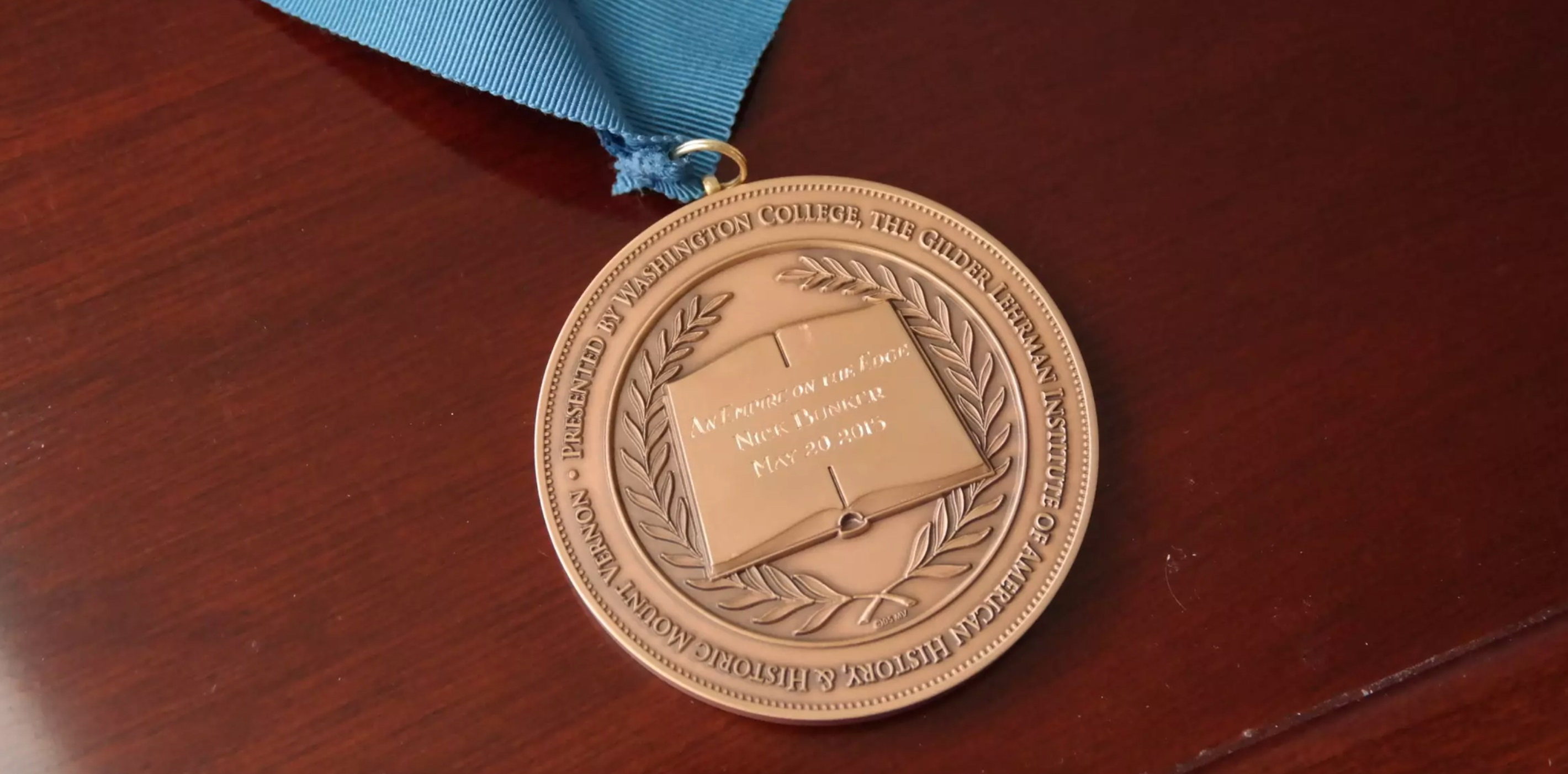
The 2022 George Washington Prize Finalists

Last week the Washington College, the Gilder Lehrman Institute of American History, and Mount Vernon announced the finalists of the 2022 George Washington Prize.

This prize was created to honor the “best works on the nation’s founding era, especially those that have the potential to advance broad public understanding of American history.” It comes with a significant cash award for the author.

In alphabetical order, this year’s five honored authors are:
  • Max M. Edling, Perfecting the Union: National and State Authority in the U.S. Constitution
  • Julie Flavell, The Howe Dynasty: The Untold Story of a Military Family and the Women Behind Britain’s Wars for America
  • Jeffrey H. Hacker, Minds and Hearts: The Story of James Otis, Jr. and Mercy Otis Warren
  • Bruce A. Ragsdale, Washington at the Plow: The Founding Farmer and the Question of Slavery
  • David O. Stewart, George Washington: The Political Rise of America’s Founding Father
As usual, the selection includes books about Washington himself but also books that examine the Revolutionary era more broadly.

Mount Vernon would be happy to sell copies of these five books.

Thursday, February 24, 2022

“Waited for This Oppertunity to Whip Jame in my Absence”

On 23 Feb 1773, Edmund Hawes (1738–1831) wrote from Barnstable to his cousin in Taunton, Robert Treat Paine, seeking legal help.

Hawes was uncle and guardian of a fifteen-year-old named James Paine Freeman. Years before, that boy’s father had worked as a clerk in the counting-house of Paine’s father.

Hawes’s letter described how that lad got into an altercation with a local man:
Now Acquaint you of an Unhappy Affair Desireing your Advice & Assistance therein. Novr. the 2nd: 1772 On Monday Evening James Paine Freeman was at Husking Corn to Mr. Thomas Annables. Elisha Gray Goldsmith of this Town being there, after Husking they had a Dance the said Gray being Tired Danceing Sot Down in a Chair

And it is Said that the sd. James tied the Button of the Sd. Gray’s Coat to the Chair with a Large Twine & when Gray Jumped up to Dance the Chair follow’d Him & Gray to Get Clear of the Chair Puled of his Own Button which was all the Dammage that was Done:

He Gave out that he would whip James for what He had Done: all which I was not Acquainted with by any Body on Saturday the 7th: of sd. Novr. I went to Eastham and Tarry’d there Exactly a Week. The sd. Gray have’g Waited for This Oppertunity to Whip Jame in my Absence.

On Thursday the Twelfth Day of sd. Novr. at About Eight O Clock in the Evening the sd. Elisha Gray Assaulted the sd. James with a Stick About as thick as one’s thumb as the Witnesses Say and Beat him with Great Violence till the Stick Broak to Pieces then Josep Hinckley haveing heard the Blows at a Distance Ridd up to Se the Affray. The sd. Gray Pull’d his Horse Whip out of his hand & whip James with that till the Lash Came off Then Bid James Down on his knees & Begg & then a Second Time which he Did as Once would Not Satisfy his Wicked Revenge. This was Done between My House & the Bridge.

Then Job Howland the Sheriff who Stood at Lawyer [Shearjashub] Bourns Shop Door Hearing the Blows Came & found James Laying on the Ground & sd. Gray Standing Over him: & would not leave him till the Officer Pull’d him Away By main force and Bid James Get up & Gray should not strike him again: and when He Got up he was much Beat and Bloody. All which I Prov’d Before Col. [James] Otis & I hope I Can Again.

On Thursday follow’g I had sd. Gray Before Col. Otis for the Kings Part and he was convicted of a Breach of Peace & Fine’d.
In a postscript Hawes added, “The Marks of James’s being Whip’d was Plain to be Seen Before Col. Otis as His Honour together with Others Can witness the which was allmost a week after he was whip’d.”

But that local criminal case (“for the Kings Part”) wasn’t the end of the dispute. People could also sue for assault and win damages.

TOMORROW: Back to court.

Wednesday, November 17, 2021

Bipolar Disorder as a Factor in the American Revolution?

Instead of porphyria as the explanation for George III’s madness, in the paper I quoted yesterday Timothy Peters pointed to bipolar disorder: a cycle of mania and depression that debilitated the monarch for long, unpredictable stretches in his later life.

Andrew Roberts adopts this conclusion in his new biography of the king. Other scholars might have proposed the same answer as well.

Some might respond that that’s not so much of a diagnosis as a description of the king’s symptoms. Why did his mood shift so drastically? Indeed, part of the appeal of the preceding porphyria diagnosis is that it seems to offer an “explanation” to point to.

Many psychiatrists would counter that even if we don’t know the causal mechanisms of bipolar disorder, it’s a widely recognized condition. About the same fraction of people have it in many different cultures, strongly suggesting that a similar fraction of people had it in the eighteenth century.

Indeed, a number of other prominent figures in the American Revolution showed signs of the disorder. I’m not talking about people whose politics or opinions other people sometimes called “mad,” such as John Adams, but men who went through periods of not being able to function because of depression and other periods of exuberance that got them into trouble.

In Massachusetts, the most prominent example was the early radical leader James Otis, Jr. He suffered several periods of insanity in the 1770s and early 1780s, bad enough that his family bundled him off to houses in the country.

William Tudor, Jr.’s 1823 biography blamed Otis’s coffee-house brawl with John Robinson for those troubles. But John Adams’s diary and other contemporaneous sources from 1769 suggest that Otis’s troubles were already evident by then, and that he actually went into that confrontation during a manic period.

In addition, the Massachusetts Historical Society Proceedings for May 1858 refers to a letter from Otis’s younger brother, Samuel Allyne Otis, to their father with “evidence of the existence of a tendency to insanity in the younger [James] Otis, which manifested itself at an early period of his life.” Of course, being beaten on the skull didn’t help the man’s mental stability.

Contemporaries also recognized that the Northampton lawyer Joseph Hawley (1723-1788) fell into a debilitating depression around the start of the Revolutionary War. Until then, he had been a strong Whig voice from the western part of the province, sometimes voicing radical arguments in the courts and legislature. Indeed, in the late 1760s his criticism of the Superior Court was so strong it got him disbarred for a time.

In May 1775 Hawley wrote to his colleague Theodore Sedgwick that he felt “very low and melancholy,” complaining of “want of health or memory, weakness of body and Shocking impair of mind.” He declined requests to serve in the Continental Congress and retired entirely in late 1776. In the following years friends would find Hawley confined to his house, biographer E. Francis Brown wrote, sitting in front of his fire and smoking for hours with a “wild and piercing look” in his eyes.

I think another Massachusetts lawyer in the opposite political camp, attorney general Jonathan Sewall, also shows a pattern of manic-depressive behavior. He certainly suffered a severe depression after going into exile during the war. But Sewall’s refusal to participate in the Boston Massacre trials and his uneven output of newspaper essays might be best explained as signs of severely changing moods.

The cases of both Hawley and Sewall offer evidence of how there’s a hereditary aspect to bipolar disorder. Hawley’s father committed suicide, and Sewall’s son was also known to have depressive episodes.

In Renegade Revolutionary: The Life of Charles Lee (2014), Phillip Pappas posits that bipolar disorder is the best explanation of that general’s wild and often self-defeating behavior—the risk-taking that led to his capture in 1776, his choice as a prisoner to offer strategic advice to Gen. William Howe, what looks like an attempt to draw Gen. George Washington into a duel after the battle of Monmouth, and so on.

Assuming these men did have bipolar disorder, did that affect the course of the Revolution? I think it’s conceivable that Otis was a bit manic when he broke with the Crown in the early 1760s and formulated his foundational arguments about the illegitimacy of Parliament’s revenue laws. I’m not saying that political position was crazy, but it was radical enough that Otis might never have had the audacity to stake out that ground otherwise.

Tuesday, October 26, 2021

“A large Collection of interesting Papers”

In 1843, the London bookselling firm of Thomas Thorpe issued its catalogue of manuscripts for sale, “Upon Papyrus, Vellum, and Paper, in Various Languages.”

Among those items was “A large Collection of interesting Papers, formed by the late George Chalmers, Esq., relating to New England, from 1635 to 1780, in 4 vols. folio, neatly bound in calf, £21.”

Chalmers (1742-1825, shown here) was born in Scotland and at age twenty-one settled in Maryland as a young lawyer. In early 1776 he published Plain Truth, a point-by-point riposte to Thomas Paine’s Common Sense. That went over so well that Chalmers soon moved back to Britain.

In 1780 Chalmers published Political Annals of the Present United Colonies from Their Settlement to the Peace of 1763. Or rather, he published the first volume of documents about the colonial governments, tracing the history up to 1688, but never produced the second.

In 1786 Chalmers became a secretary to Britain’s privy council, and he kept that postion for decades. It provided him with the income and access he needed to collect manuscripts and write books and pamphlets about the history of Scotland, Shakespeare, other authors, controversial issues of the day, and much more.

In 1796, as Britain fought Revolutionary France, the government paid Chalmers to write a critical biography of Paine. He issued that under the pseudonym of Francis Oldys, supposedly a graduate of the University of Pennsylvania. Otherwise, he focused mainly on British topics, particularly the long history of Scotland.

Nevertheless, Chalmers’s manuscript collection shows that he never gave up on accumulating material about the old North American colonies. After his death, his papers went to a nephew, and two years after that man died in 1841, they were on the market.

Here’s a sample of what the collection included from the Revolutionary years, according to the bookseller’s catalogue:
  • Various papers relating to the paper currency in the colonies, 1740-60.
  • Account of the dispute at New London, at the burial of a corpse, 1764.
  • List of graduates in Harvard College, who have made any figure in the world.
  • Part of Mr. Otes’s speech in the general assembly at Boston, in 1768.
  • Autograph letter from W. Molineux, relating to the riots at Boston, 1768.
  • Letters relating to the seizure of the sloop Liberty, 1768, very curious.
  • Information of Richard Silvester, of the speeches of the Boston leaders, 1769.
  • Declaration of Nathaniel Coffin to Governor J. [sic] Bernard, on the designs to drive off the Governor and Lieutenant Governor, 1769.
  • Key to the characters published in the Boston Chronicle of Oct. 26, 1769, (The Boston patriots characterized.)
  • Autograph letter from George Mason, containing an account of the riot and attack of Mr. Mein’s house, 1769.
  • Copy of a curious letter from Boston, relating to Franklin’s duplicity, &c. 1769.
  • Autograph letters from John Mein and George Mason to Joseph Harrison, concerning the riot at Boston, 1769.
  • Papers relating to the outrage on Owen Richards, an officer of the customs at Boston, 1770.
  • Copy of a letter from Lord Dartmouth to Dr. Benjamin Franklin, about presenting a remonstrance of the court to the king, 1773.
  • Account of the proceedings of Governor Hutchinson, relating to Massachusetts, &c., 52 pages, 1774.
  • Account of an attack that happened on His Majesty’s troops, by a number of the people of the province of Massachusetts Bay, 1775.
It looks like Chalmers obtained many of those documents from Joseph Harrison, a Boston-based Customs official, or his estate.

Prof. Jared Sparks (1799-1866) of Harvard College must have seen the bookseller’s listing. He apparently arranged for the college library to buy some of Chalmers’s papers in 1847 while he bought others for himself, leaving them to the library on his death. Thus, the papers listed above are now at the Houghton Library and digitized as part of the university’s Colonial North America project.

Monday, November 16, 2020

A Critical Review in The Critical Review

In 1764 James Otis, Jr., published The Rights of the British Colonies Asserted and Proved, which based the campaign against Parliament’s new colonial revenue laws on the ideas of natural rights and (though this term wouldn’t be formulated for another four years) “no taxation without representation.”

The Critical Review was a British political magazine founded in 1756. It was firmly conservative or Tory. The founding editor was the doctor and writer Tobias Smollett, but he left in 1763 and I’m not sure who helmed the magazine the following year.

In November 1764 The Critical Review ran a critique of Otis’s argument. Typical for the magazine, much of the space devoted to that book consisted of long extracts from it. At the end the reviewer wrote:
The author then…affirms, that government is founded on the necessity of our nature; and that the supreme absolute power existing in, and presiding over, every society, is originally and ultimately in the people, who cannot freely nor rightfully renounce that divine right. These are maxims far from being new; but as the author endeavours to prove that ancestry cannot renounce the rights of posterity, we wish he had thrown in an argument to demonstrate, by a parity of reasoning, that posterity ought to renounce all benefits from ancestry.

Perhaps our reader may be curious to know the definition Mr. Otis gives of a plantation, or colony; which, he says, ‘is a settlement of subjects in a territory disjoined or remote from the mother country, and may be made by private adventurers, or the public; but in both cases the colonists are entitled to as ample rights, liberties, and priviledges, as the subjects of the mother country are, and, in some respects, to more.

We are next entertained with a dissertation on the natural rights of colonists, where the author gives us some quotations from Grotius, Puffendorff, Domat, Strahan, and others; who, it is plain, knew nothing of the British constitution, or of the relation which our colonies have with the mother country. The sum total of what our author contends for, seems to be that our ‘northern colonies, who are without one representative in the house of commons, should not be taxed by the British parliament.' Good Mr. Otis, give Great-Britain fair play, and do not put into the heads of Leeds, Hallifax, Birmingham, Sheffield, that part of the duchy of Lancaster which lies at the very gates of the Royal Palace, and many other places of great opulence, that they are not bound to pay any taxes imposed by a British parliament, because they have no representative in that body.

We applaud Mr. Otis’s zeal, and should, be glad that he had published a scheme of reciprocal independence between our colonies and Great Britain, which may be done in the way of debtor and creditor, and which very possibly might awaken him and his vigorous friends from their visionary dreams of independency upon their mother country. There is nothing like fair counter-reckoning, good Mr. Otis.
I don’t find “Our system is unfair to lots of people, not just you” to be a convincing argument not to change. The reviewer rests his dismissal mostly on the idea that the North American colonists had inherited a great many advantages from the British system, political and economic, and should be grateful rather than seeking equality based on philosophical principles.

Sunday, August 30, 2020

“A Day which ought to be forever remembered in America”

Earlier this month I posited that the American Revolution began on 14 Aug 1765 with the earliest public protest against the Stamp Act, the first step in turning a debate among legislatures into a continent-wide mass movement.

After the riots on 26 August, culminating in the destruction of Lt. Gov. Thomas Hutchinson’s house, the Boston Whigs had a strong motive to focus public memory on that first date so they could disavow what happened on the second.

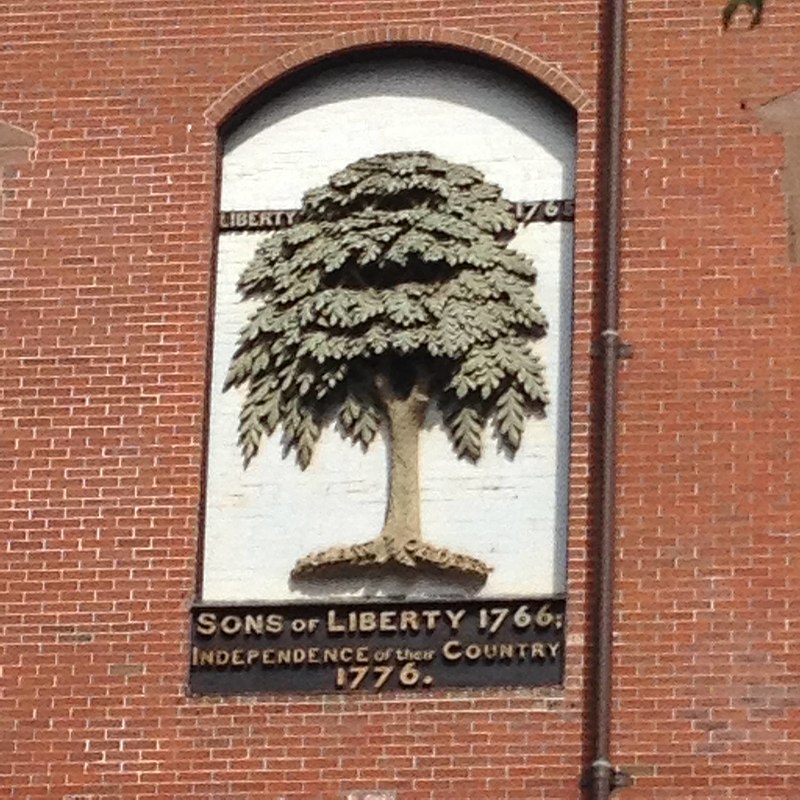
Those Sons of Liberty decorated Liberty Tree in the South End with a plaque and that famous name. [Don’t think about what happened in the North End!] They held banquets on the anniversary of the first protest. [Don’t remember the second!] They kept the ritual of hanging political enemies in effigy, but no houses were damaged as badly as Hutchinson’s before the outbreak of war.

On 19 Aug 1771, the Boston Gazette published a front-page article signed “Candidus,” which politically minded Bostonians recognized to be Samuel Adams. He said:
The Sons of Liberty on the 14th of August 1765, a Day which ought to be forever remembered in America, animated with a zeal for their country then upon the brink of destruction, and resolved, at once to save her, or like Samson, to perish in the ruins, exerted themselves with such distinguished vigor, as made the house of Dagon to shake from its very foundation; and the hopes of the lords of the Philistines even while their hearts were merry, and when they were anticipating the joy of plundering this continent, were at that very time buried in the pit they had digged.

The People shouted; and their shout was heard to the distant end of this Continent. In each Colony they deliberated and resolved, and every Stampman trembled; and swore by his Maker, that he would never execute a commission which he had so infamously received.
Basically my argument about the significance of that date is the same, with fewer scriptural allusions.

In 1771, however, the town of Boston began to make a bigger deal of the 5th of March, the anniversary of the Boston Massacre. Then at the end of the Revolutionary War, the town switched its annual oration to the 4th of July, a date with undoubted national significance.

In the early 1800s retired President John Adams helped to shape the memory of the early Revolution by sharing recollections in letters and by encouraging William Tudor, Jr., to write a biography of James Otis, Jr. As I discussed way back here, Adams was responding to William Wirt’s biography of Patrick Henry, which credited a Virginian with kicking off the Stamp Act protest movement.

And in an important way, that’s what Patrick Henry did in the Virginia House of Burgesses. And exaggerated reports of Patrick Henry’s proposals did even more. Those newspaper reports probably emboldened the Loyall Nine in Boston.

Adams, who called himself “jealous, very jealous, of the honour of Massachusetts,” wanted Americans to see his home state as a leader in the resistance to London, not just a close follower. He pointed to Otis’s arguments in the 1761 writs of assistance case in these terms: “Then and there was the first scene of the first act of opposition to the arbitrary claims of Great Britain. Then and there the child Independence was born.” That pushed the start of the American Revolution back.

I’m not won over by Adams’s position. Otis’s argument was unsuccessful and got limited press coverage outside of Massachusetts, where the legal decision didn’t apply anyway. Like Henry’s resolutions, the writs of assistance case was a protest from upper-class men inside exclusive chambers working through official channels. It wasn’t revolutionary.

Friday, May 29, 2020

Preparing for the Political Season to Reopen

Back in May 1768, the Massachusetts General Court added seven Whig House members involved in the Circular Letter dispute to the Council, which functioned as the legislature’s upper house and an advisory board for the governor.

Gov. Francis Bernard had vetoed six of those seven men.

In May 1769, a new legislature convened and elected those six men to the Council again. On 1 June, Gov. Bernard vetoed them again. He also vetoed five more names, including:
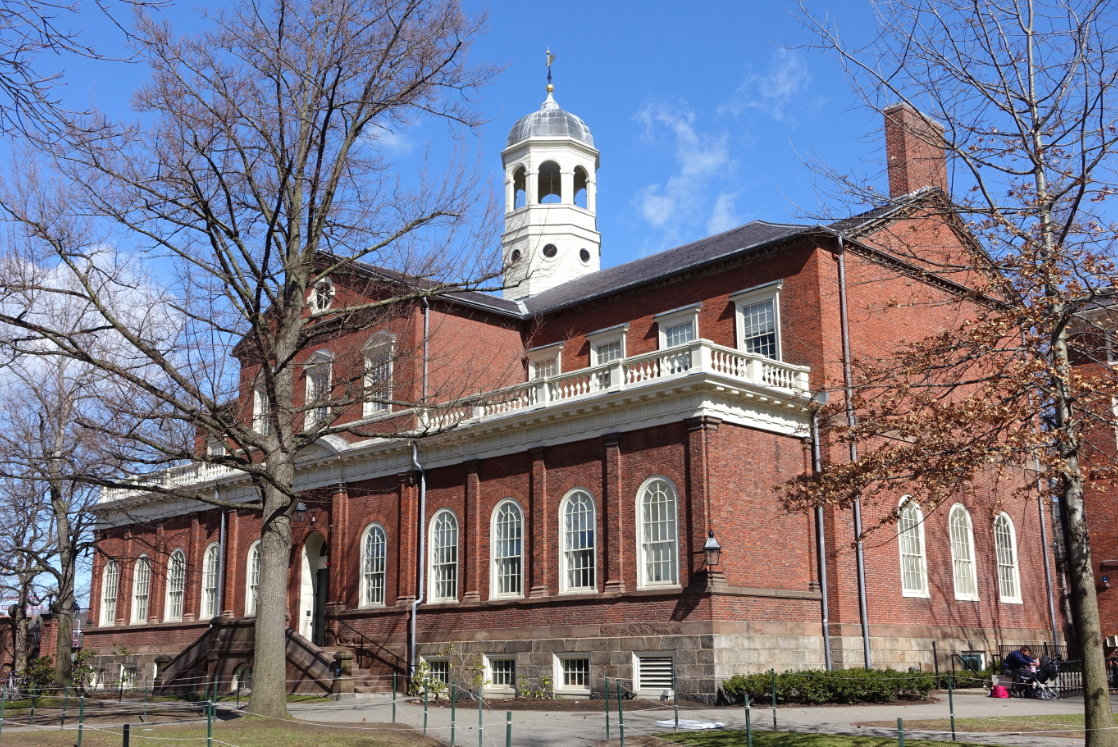
A couple of weeks later, Gov. Bernard moved the whole legislature out to Cambridge. Meeting in Harvard Hall (a building the governor himself had designed, shown above) instead of Boston’s Town House produced even more controversy. The House petitioned the Crown to remove Bernard from office. The legislative session ended in July. Bernard left Massachusetts forever in August.

On 15 Mar 1770, acting governor Thomas Hutchinson called the Massachusetts General Court back into session, once again in Cambridge. He said that he didn’t feel he had the authority to change the venue. There was a lot more arguing about that, as well as about Bernard’s and other officials’ letters to London, the recent Boston Massacre, and more.

Towns held elections for new General Court representatives in May. I discussed the Boston election here. The legislature was due to reconvene on 30 May, once again in Cambridge, and one of the first tasks would be to elect a new Council. The 28 May Boston Gazette shows the Whigs maneuvering to resume the arguments from the previous years.

One Councilor whom Bernard had removed in 1768 and 1769 was James Otis, Sr., but he would be back in the legislature nonetheless:
The Town of Barnstable have made Choice of the Hon. JAMES OTIS, Esq; to represent the Great and General Court the Year ensuing.——It is observable the good old Patriot had 92 Votes out of 101.
Edes and Gill also reported a complaint from the legislature’s unwitting host:
We hear that the Honorable Corporation of Harvard College, from a Regard to the Rights of the People and the good of that Seminary, have lately presented a Remonstrance to his Honor the Lieutenant-Governor, on the General Court’s being summoned to meet at that Seat of Learning, and have also entered a Protest on their Records to present this illegal Measure from being drawn into a Precedent.
The other big political development chronicled in that issue of the Boston Gazette was that Parliament had repealed most of the Townshend duties while keeping the most lucrative one, the tax on tea. What did that mean for the North American non-importation protest against all those tariffs? Merchants in Newport were reportedly shipping in goods already. Committees in Philadelphia and New York were asking what Boston would do.

On 23 May the Whigs had convened another public meeting of “the Trade” in Faneuil Hall, which “VOTED almost unanimously” to “still strictly adhere to the Non-importation Agreement.” The Boston Gazette assured “our Brethren of the other Colonies” that Boston wouldn’t be the first to reopen for regular business.

TOMORROW: Election day in Boston.

Friday, May 08, 2020

After James Otis “behaved very madly’

On 8 May 1770, 250 years ago today, Bostonians gathered for one of their annual town meetings.

Every March, the white men of the town elected its selectmen and other officials for the coming year. Every May, a smaller section of those white men, those who owned more property, elected the town’s four representatives to the Massachusetts General Court.

For the last few years the town had reelected the same four men:
But Otis was no longer in his right mind. He’d gotten into a coffee-house brawl with a royal official in September, suffering a bad head injury. For a while he appeared to recover, but in March, in the wake of the Boston Massacre, he had broken windows in the Town House.

Then on 22 April, the day after Ebenezer Richardson was convicted of murder for shooting at a crowd from his window, the merchant John Rowe wrote this in his diary:
This afternoon Mr. Otis behaved very madly, firing guns out of his window, that caused a large number of people to assemble about him.
Personally I’d stay far away from Otis’s house in that situation, but people might have felt safe once he’d emptied his guns. In any event, the man’s family subdued him and bundled him away to a doctor’s estate in the country.

One item of official business at the May town meeting, therefore, was:
The Honble. James Otis Esq. having by the advice of his Physicians, retired into the Country for the recovery of his Health.

Voted, that the Thanks of the Town be given to the Honble. James Otis Esq; for the great and important Services which as a Representative in the General Assembly through a Course of Years He has rendered to this Town and Province; particularly for his undaunted Exertions in the Common Cause of the Colonies from the beginning of the present glorious Struggle for the Rights of the British Constitution. At the same Time the Town cannot but express their Ardent Wishes for the recovery of His Health, and the continuance of those publick Services that must long be remembered with Gratitude, and distinguish his Name among the Patriots of America Voted, that the Gentlemen the Selectmen be a Committee to transmit to the Honble. James Otis Esq. an attested Copy of the aforegoing Vote
Otis’s departure meant that there was now an opening for the town’s fourth representative.

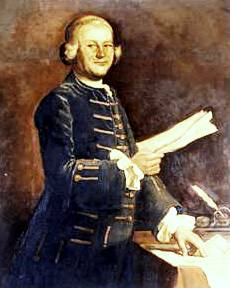
By a happy coincidence, there was also a prominent Whig politician in Boston who’d been shut out of his usual legislative seat the previous year. James Bowdoin (shown above as a young man) had served in the Massachusetts house back in the 1750s before rising to a seat in the Council. In that body he had led the opposition to Gov. Francis Bernard. In May 1769, the legislature chose Bowdoin for the Council again, but this time the governor “negatived” or vetoed him. Bowdoin therefore had had no official political role for a year.

Bowdoin had used that free time to publicize the letters of Gov. Bernard that leaked from London. After the Massacre, Bowdoin was the principal author of the town’s report on the shooting. So voters knew what he had done for Boston.

The official tally in the records was that out of 513 total votes the top candidates were:
The Honble. James Bowdoin Esq. - - - - - 439
Honble. Thomas Cushing Esq. - - - - - 510
Mr. Samuel Adams - - - - - - - - 510
Honble. John Hancock Esq. - - - - - 511
It’s possible that Bowdoin’s lower number meant there was another candidate or two but clerk William Cooper kept that man’s name out of the record.

(I don’t know if there’s any significance to the way those tallies appear in the minutes, from the lowest to the highest vote-winner. John Rowe attended the meeting and recorded the same numbers in his diary, but he listed Hancock second. In the next couple of years, there was no similar pattern in the order of votes recorded.)

TOMORROW: More town business.