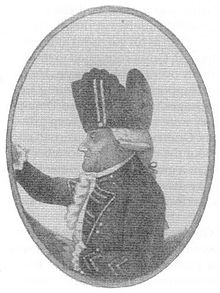
J. L. BELL is a Massachusetts writer who specializes in (among other things) the start of the American Revolution in and around Boston. He is particularly interested in the experiences of children in 1765-75. He has published scholarly papers and popular articles for both children and adults. He was consultant for an episode of History Detectives, and contributed to a display at Minute Man National Historic Park.

Subscribe thru Follow.it


•••••••••••••••••


Showing posts with label Alexander Leslie. Show all posts

Thursday, March 26, 2026

The Last of Castle William

On 10 Mar 1776, the last royal chief justice of Massachusetts, Peter Oliver, boarded a ship called the Pacific, which usually sailed between India and Britain. He called it “a very commodious vessell, which General [William] Howe was so polite as to appropriate to the accomodation of my friends and me.”

For the next week, Oliver recorded periodic artillery exchanges between Boston and the Continental lines. On 17 March, he wrote, “The troops at Boston embarked, and about 20 sail fell down into King Road by 11 o’clock this morning.” The next day, he watched the army start to destroy Castle William.

One of the Royal Artillery engineers involved in that operation was Capt.-Lt. Archibald Robertson. In his diary that officer wrote, “In the Morning went to Castle William to see the mines prepar’d; found them ready for Loading.” 

The next day, Robertson “found the mines all loaded but 12 which were again unloaded as the General wanted them not to be ready for some days.” Gen. William Howe was shifting some troops onto transport ships that had just arrived from Halifax, and the 64th Regiment was still holding the Castle, exchanging cannon fire with the mainland.

That night, Judge Oliver reported, the “south Blockhouse of the Castle was burnt, and some of the walls of it blown up.”

On 20 March, Capt.-Lt. Robertson wrote:
At 3 o’clock Colonel [Alexander] Leslie came to the Castle from the General with orders to load the mines. We began immediately and had 63 done by 7 o’clock.

As the night had the Appearance of Rain and the wind fair it was thought proper for the 64th to Embark. . . . Accordingly at 8 o’clock 6 Companies Embark’d and the Boats lay off untill the mines were fired, which was done 1/2 an hour Afterwards and they had a very good Effect.

The Barracks and other houses were then set on fire, and at 9 the Rear Guard consisting of 3 Companies, the Artillery, etc. Embark’d, and we got all safe on board the Transports.
Judge Oliver’s description of this spectacle was:
The blowing up of the Castle Walls continued: and at night all the combustible part of the Castle was fired. The conflagration was the most pleasingly dreadful that I ever beheld: sometimes it appeared like the eruption of Mount Etna; and then a deluge of fire opened to the view; that nothing could reconcile the horror to the mind, but the prevention of such a Fortress falling into the hands of rebels, who had already spread such a conflagration of diabolical fury throughout America, which scarce anything can quench but the— metu tremefacit Olympum.
That Latin phrase meant “He makes Olympus tremble,” hinting at a supernatural power.

Capt.-Lt. Robertson’s watercolor of Castle William being consumed by fire appears above; “a very good Effect” indeed.

TOMORROW: Leaving America behind.

Saturday, April 19, 2025

Counterfactual 4: If No One Had Died at Lexington or Concord

Building on my counterfactual of what might have happened if Paul Revere and William Dawes had never brought their warning to Lexington, I reached the moment when the militiamen of Concord saw smoke rising above their town.

Under the scenario so far, the lack of urgent alerts out of Boston had no effect on the safety of John Hancock and Samuel Adams (who were never in great danger, despite their worries) or the quantity of military supplies the redcoats found (since James Barrett and his crew had already moved most of that stuff).

But that counterfactual situation would have delayed the response from towns around Concord, meaning fewer militia companies would have joined the local men on the hill overlooking the North Bridge.

We know those men were of two minds about confronting the regulars. They stayed on that hill for about two hours, marching down only after thinking other soldiers had set fire to the center of town. Then, after a fatal exchange of fire had chased the company from the bridge, they pulled back for another couple of hours.

Given those real-life details, I posited yesterday that the militia men would have been more wary about marching down on the bridge if there had been fewer of them. And eventually the smoke from town would have stopped, lessening the urgency.

In real life, after the shooting the militia companies moved around the north side of Concord and then massed east of the town. At Meriam’s Corner, once the regulars had left the most populated area, the provincials started to shoot at the column. Would that have happened the same way in this what-if scenario?

The very big difference in this counterfactual is that no one has yet been killed. There was no shooting in Lexington or at the North Bridge. Neither side had seen deaths to avenge. As long as the two groups of armed men remained at a distance, neither would have felt themselves to be under imminent threat.

In that case, the afternoon might have proceeded like the end of Lt. Col. Alexander Leslie’s raid on Salem in February: with the regulars marching in order back to where they came from while the local militia regiments watched sullenly to be sure they left. Lt. Col. Francis Smith’s men would have met Col. Percy’s reinforcement column somewhere in west Cambridge, and they would all have returned to Boston.

As it happened in April 1775, the bloodshed along the Battle Road motivated a militia siege of Boston. The committee of safety and its generals didn’t have to choose that policy; it came about naturally as militia companies massed off the peninsulas of Boston and Charlestown. Without deaths, the provincials wouldn’t have felt so much fervency, so the situation might have remained as it was: no military siege, but the countryside beyond Boston outside of royal control.

In the ensuing days, the Patriot press would have made the most of the army incursion into people’s homes while also trumpeting how the raid had found so little. The newspapers would have celebrated the escape of Hancock and Adams. They would have lauded the strong unified response of the Massachusetts militia.

As for Gen. Thomas Gage, he would have been pleased not to lose any men but frustrated at not capturing all the artillery pieces and other weapons he wanted to destroy. And how would he explain the mission to his superiors in London after they’d advised him to do something else?

Of course, that scenario doesn’t include any of the near-random events that can ignite violence, like the first shot at Lexington. What if British troops and Massachusetts militia did bump into each other somewhere? What if military patrols stopping Revere or Dawes before they got to Lexington meant that one of those popular Bostonians had wound up dead?

And even if the 18–19 April expedition did end without bloodshed, the conflict and tensions in Massachusetts would have remained unresolved. Gen. Gage’s next mission could have started the war instead, just a few weeks later.

Thursday, February 13, 2025

“Leslie’s Retreat” Commemorations in Salem and Marblehead

Essex County is gearing up to commemorate the Sestercentennial of “Leslie’s Retreat,” the frustrated British army expedition on 26 Feb 1775 to seize cannon that Patriot rebels were collecting in north Salem.

Redcoat troops landed in Marblehead and marched through town to Salem. The militia companies of other nearby towns mobilized in response. That confrontation could have led to serious violence in the midst of Massachusetts’s second-largest settlement, but fortunately it was resolved peacefully.

Here are all the commemorations that I’ve learned about through Salem 400, the Marblehead Museum, and partner organizations.

Saturday, 15 February, 10 A.M.
Leslie’s Retreat: Salem on the Brink of Revolution
Salem Armory Visitor Center, 2 New Liberty Street, Salem

The National Park Service opens its exhibit on why Crown soldiers under Lt. Col. Alexander Leslie came to Salem on February 26, 1775, who were the major players in the event, and how this event has been remembered and celebrated in Salem in the last 250 years. This free exhibit wlll be on display through 27 April.

Saturday, 15 February, 11:30 A.M.
250th Anniversary of Leslie’s Retreat Forum and Discussion
Pickering House, 18 Broad Street, Salem

Local historians David Moffatt, Benjamin Shallop, Jeff Swartz, and Vijay Joyce discuss the British army expedition and the local reaction. $25 admission, $20 for Pickering House members. (Currently listed as sold out.)

Sunday, 16 February, noon to 3 P.M.

Tours of the Pickering House
18 Broad Street, Salem

The caretaker of the oldest house in Salem will introduce eleven generations of Salem history, including the Patriot activist Timothy Pickering, later a Continental Army general and U.S. Secretary of War and Secretary of State. The tour will cover the oldest parts of the house and end with tea and coffee. Order tickets here.

Friday, 21 February, 6:30 P.M.
Leslie’s Retreat exhibit opening reception and lecture
Salem Armory Visitor Center, 2 New Liberty Street, Salem

Emily Murphy, Ph.D., curator of this exhibit and for the Salem Maritime National Historic Site and Saugus Iron Works National Historic Site, will speak about the history and its interpretation at this free event.

Saturday, 22 February
Commemorative March and Tours
Salem
  • 9:30 A.M.: Presentation at St. Peter’s San Pedro’s Episcopal Church, 24 St. Peter’s Street, Salem.
  • 11 A.M.: Redcoat March to North Bridge. The public will view the reenactors from the site of the bridge. Spectaors should plan to be at the North Bridge at 11 A.M. sharp.
  • Noon to 4 P.M.: Self-guided tours of St. Peter’s San Pedro Episcopal Church.
  • 12:30 P.M. and 2:30 P.M.: Salem-Marblehead Trolley Tour lead by local architectural historian Judy Anderson. Reservations encouraged. The trolley starts boarding fifteen minutes before the tour, and everyone with a reservation must be aboard by 12:20 or 2:20. Then the remaining seats will be made available on a first-come first-served basis.
  • 2:30 P.M.: Fashion in the Season of Revolution: A Panel Discussion & Revolutionary Reenactor Promenade, Peabody Essex Museum, 161 Essex Street, Salem, free with museum admission.
  • 7:30 P.M.: Revolution Ball, Hamilton Hall, 9 Chestnut Street, Salem. An evening of live music, dancing, food, and drinks, with attendees in colonial dress or black-tie fashion. General admission $150.

Sunday, 23 February
Indoor Commemorations
Salem
  • 10:30 A.M.: “A Revolutionary Reckoning,” a joint religious service led by First Church in Salem, Unitarian Universalist, and Tabernacle Congregational Church. All ages and denominations welcome. Attendees can stay for a special Fellowship Hour of coffee, tea, and refreshments.
  • Noon to 3 P.M.: Tours of the Pickering House, 18 Broad Street, Salem (see above).
  • 12:30 to 1:30 P.M.: Norumbega Harmony concert, First Church, 316 Essex Street, Salem. Norumbega Harmony is a choral ensemble founded in 1976 and dedicated to the preservation, promotion, and performance of New England psalm singing from the colonial and early American periods.
  • 3 to 5 P.M.: “In Open Rebellion,” Old Town Hall, 32 Derby Square, Salem. World premiere of a drama written by Kristina Wacome Stevick, directed by Samantha Searles, and produced by History Alive. In the fall of 1774, Salem’s Patriots, Loyalists, and enslaved Africans debate the meanings of liberty and loyalty. Free, but attendees must reserve tickets.

Thursday, 27 February, 7 P.M.

When Redcoats Marched in Marblehead
Marblehead Museum, 170 Washington Street, Marblehead, and online

I’ll speak about both the history and the mythology of “Leslie’s Retreat,” drawing on eyewitness accounts and primary sources to illuminate a day the Revolutionary War might have begun, but didn’t. This talk will put the event in the context of the maneuvering between Gov. Thomas Gage and the Massachusetts Provincial Congress, and cut away some of the myths that have stuck to it. $15 admission, $10 for museum members.

Wednesday, December 14, 2022

“Ebenezer Withington hath declared that he hath sold a Part of the Tea”

Yesterday I quoted the proceedings of the Dorchester town meeting as printed in the Massachusetts Spy on 13 Jan 1774.

They included:
  • Ebenezer Withington’s public admission that he had picked up some tea left over from the Boston Tea Party and sold it, but was sorry.
  • The town’s long declaration that selling tea like that was very wrong, for the most important political reasons, but Withington hadn’t meant any harm.
Now for some close reading of the details.

First, this one contemporaneous report is not evidence for locals finding Tea Party detritus along the Dorchester shore on the morning after.

Bostonians destroyed that tea on the evening of Thursday, 16 December. The next morning was Friday. Withington was clear he “found said Tea on Saturday, on going round upon the Marshes.” So it may have taken longer than a day for that half-chest to float across Boston harbor.

Not a big deal, but it does hint at how we like to compact details to make better stories. “The next morning” works better than “a day and a half later.”

Second, I wish I knew all the implications of the phrase “some Gentlemen belonging to the Castle,” the description in Withington’s statement of men who asked him about the tea he’d found. During the Tea Party, Castle William (shown above) was the home base of Lt. Col. Alexander Leslie’s 64th Regiment. It also served as a refuge for Boston’s top Customs officials and the tea consignees. And at least a few civilians worked on that island.

Whoever talked to Withington obviously knew that most of his “Neighbors” supported the strict tea boycott. What might they have said about a man salvaging tea for himself? Especially if they were friends of the royal government! No wonder Dorchester leaders expressed concern that people might insinuate “that the whole of the Tea said to have been destroyed was plundered.”

Finally, I was struck by the elevated language of these Dorchester documents. The statement Withington signed begins, “I found said Tea…” There’s nothing about tea before that in the printed proceedings, but the statement may have been written in response to a reference in the warrant for the town meeting, or in a letter from the selectmen. In any event, that “said” was the legal language of depositions.

Likewise, the four town resolutions that follow are in the most formal style. The first even uses “hath” instead of “has,” despite being about a poor man pulling a soggy chest of tea out of a swamp. Dorchester clerk Noah Clap clearly knew he was writing for public consumption and depicted his town at its most upright and proper.

TOMORROW: Inspectors.

Tuesday, March 30, 2021

A Funeral Procession for Andrew Oliver

I started this month reviewing the events of early March 1774: the return of the Massachusetts Spy, the death of Lt. Gov. Andrew Oliver (shown here), John Hancock’s Massacre oration, and the second Boston Tea Party.

That wasn’t all. Lt. Gov. Oliver had to be interred. And that funeral was scheduled for the day after the tea destruction.

In his diary, merchant John Rowe wrote one line about the tea, showing how such news had become ho-hum. But he left a long description the funeral:
This afternoon his Honour the Lieut. Governour Andrew Oliver Esq was Buried as Follows.

Colo. Hancock with his Company of Cadets & Colo. [John] Erving with the officers of his [militia] Regimt. preceded the Corps—Colo. Hancock’s Compy. under Arms.

The Bearers were Judge [Samuel] Danforth, Judge [Shrimpton] Hutchinson, Treasurer [Harrison] Gray James Russell Esq, Mr. Secretary [Thomas] Flucker, Foster Hutchinson Esq.

Then Followed the Family,…
That family contingent was smaller than normal.

The late lieutenant governor’s brother Peter Oliver was chief justice, and in February the legislature had impeached him for accepting a Crown salary—raising his public profile, and not in a good way. On the day of the funeral, Chief Justice Oliver wrote, he thought
his Risque of his Life was too great, for him to pay his final Visit to the Death Bed of an only Brother; & his Friends advised him not [to] pay his fraternal Respect to his Brother’s Obsequies—the Advice was just; for it afterwards appeared, that had he so done, it was not probable that he ever would have returned to his own home. Never did Cannibals thirst stronger for human Blood than the Adherents to this Faction…
Gov. Thomas Hutchinson also stayed away to avoid rousing the crowd. The governor’s son Thomas, Jr., had married one of Andrew Oliver’s daughters. But his friends told him that they did “not think it safe for me to attend the funeral.”

The rites didn’t go smoothly. In his history of the province, Hutchinson wrote about his late friend and colleague:
Even his funeral afforded opportunity for the spirit of party to shew itself. The members of the house of representatives, who were invited, being in one house, and the admiral, general [sic], and other officers of the navy and army, in another, the latter first came out, and followed the relatives of the deceased, which was so resented by some of the representatives, as to cause them to refuse to join in the procession, and to retire in a body.
Rowe’s version of that was:
next in order should have the Council & house of Assembly but thro some Blunder the Admirall [John Montagu] & his Core followed the Family & Relations, next them Colo. [Alexander] Lesly of the 64 Regiment & his Core, then the Gentlemen of this & the Neighboring Towns which were very few. . . .

Thro some misunderstanding or Blunder the Gentlemen of the Councill did not attend this Funerall & very few of the House of Representatives.
And that was just the start of the trouble.

TOMORROW: Three volleys and three cheers.

Saturday, February 20, 2021

“Leslie’s Retreat” Commemorations, 21 Feb.

On 21 Feb 1775, Dr. Benjamin Church secretly told Gen. Thomas Gage that “Twelve pieces of Brass Cannon mounted, are at Salem, & lodged near the North River, on the back of the Town.”

Gage was hunting for the brass cannon of the Boston militia train, which had disappeared from armories under redcoat watch the previous September. He therefore ordered Lt.-Col. Alexander Leslie to lead an expedition to Salem on Sunday, 26 February.

That mission got the name “Leslie’s Retreat,” which shows how well it went for Lt.-Col. Leslie. It’s an episode in many books, including my own The Road to Concord. I’m pleased with two contributions to the story:
  • showing the event through the eyes of nine-year-old Samuel Gray.
  • debunking the familial claim that John Pedrick was crucial to spreading the alarm; he was actually a Loyalist at the time.
In recent years, Salem has revived the celebration of Leslie’s Retreat, not as a period reenactment like some others but as a community event. Unfortunately, the pandemic makes all such events harder.

This year, the Leslie’s Retreat coalition has various ways to commemorate set up for Sunday, 21 February, all designed for safely distanced households.

2:30-2:45 P.M.
City-wide Bell Ringing
And general noise-making.

3:00-4:00 P.M.
Bridging the Divide: Civil Conflict, Violence, and Negotiation in 1775 & Today
An online conversation among historians Robert Allison, Peter Charles Hoffer, and Chenoh Sesay, Jr., moderated by Diana Dunlap. Register to listen here.

As People Choose
Traveling the Leslie’s Retreat Trail
There are two routes mapped, 3.0 and 5.3 miles long, which individuals and families can walk or run when the weather is amenable. One could even award oneself a badge.

As for Lt.-Col. Leslie, he was promoted to general in 1776 and saw action in many campaigns of the war, ending up as the last British commander of Charleston, South Carolina.

Monday, July 27, 2020

“As we intended to go to Mr. Barns’s”

On Sunday, 26 Feb 1775, Capt. William Brown, Ens. Henry DeBerniere, and their bodyservant were in Worcester. They were all soldiers in the British army, but undercover in civilian dress.

Because New England colonies had laws against traveling from town to town on the Sabbath except for emergencies, the two officers stayed in their inn all day. DeBerniere later reported that “we wrote and corrected our sketches” of the roads out from Boston to Worcester. When the sun set, they went out to the hill around town and sketched some more.

Worcester was one of the places that the Massachusetts Provincial Congress had started to gather cannon for its army. The officers had seen some of those guns in town. Their mission was to spot such weapons and collect information that Gen. Thomas Gage would need in planning a march to seize them.

That same day in Essex County, Lt. Col. Alexander Leslie led just such an expedition to capture other cannon being prepared for the congress in the north part of Salem. He couldn’t move fast enough and withdrew empty-handed.

News of that confrontation appears to have riled up the Patriots of Worcester. About eight o’clock some men came to the inn to ask about Brown and DeBerniere, eventually telling the landlord they knew his guests were “officers of the army.”

Brown and DeBerniere decided to leave the next day at dawn, buying some roast beef and brandy from their landlord for the journey. Traveling east on foot, they were overtaken by a horseman who looked at them narrowly before riding off along the Marlborough road. Later generations identified this man as Timothy Bigelow, a Marlborough native who had become a successful blacksmith and political activist in Worcester.

The officers chose to turn off to Framingham, where they got to see a militia company drill outside their tavern. The next day they moved on to Isaac Jones’s Golden Ball Tavern in Weston, where they had also stayed on their hike west (shown above). Brown and DeBerniere sent their sketches back to Boston with their servant. Then they decided that, since no one had bothered them for a couple of days, it was safe to keep scouting the roads.

A snowstorm kept the officers indoors until two in the afternoon, but finally they set out for Marlborough. It was snowing again as they arrived about three miles from the center of town. DeBerniere wrote:
a horseman overtook us and asked us from whence we came, we said from Weston, he asked if we lived there, we said no; he then asked us where we resided, and as we found there was no evading his questions, we told him we lived at Boston; he then asked us where we were going, we told him to Marlborough, to see a friend, (as we intended to go to Mr. Barns’s, a gentleman to whom we were recommended, and a friend to government;)
Henry Barnes may have made peace with his Marlborough neighbors in 1770, but he was still a Loyalist. The British command in Boston expected he would provide a safe house for these scouts. So, however, did his suspicious Patriot neighbors.

The rider eventually came out and asked Brown and DeBerniere if they “were in the army.” They said they weren’t, but “were a good deal alarmed at his asking.” After some more “rather impertinent questions,” the man rode on into town.

The officers guessed that horseman intended “to give them intelligence there of our coming.” Indeed, as the two men reached the more thickly settled village, “the people came out of their houses (tho’ it snowed and blew very hard) to look at us.”

A baker asked Brown were they were going (addressing the captain as “master” to butter him up). Brown dropped Barnes’s name. That doesn’t seem like very good spycraft, but the captain probably figured everyone was watching where they would go anyway.

TOMORROW: Inside Henry Barnes’s house.

Tuesday, November 19, 2019

“A family mansion with a history of the stirring times”

Yesterday I quoted a letter that appeared in the Boston Evening Traveler on the day after the centenary of the Boston Tea Party. It described how a young woman named Sarah Bradlee helped prepare her four brothers and future husband to disguise themselves as they destroyed the tea and to conceal themselves afterward.

That letter offered no evidence for its story beyond the belief of a descendant, and there were discrepancies between its details and the historical record. Nonetheless, a young Bostonian named Samuel Bradlee Doggett picked up on the tale. He spent decades repeating, and perhaps improving, the account.

In his 1894 book A History of the Doggett-Daggett Family, Doggett described himself this way:
Born [29 May 1858] and always living in a family mansion with a history of the stirring times of the Revolution, and associated in early life with those who could tell of those times, he developed an interest in ancestry, which resulted first in a short account of the Bradlee family, printed in 1878, and since that time in the accumulation of material for the present work.
The house Doggett referred to appears above in a photograph from the Digital Commonwealth collection. Nathaniel Bradlee built that home about 1770, and it stood on the corner of Hollis and what became Tremont Street until 1898.

The Traveler letter said Sarah Bradlee was active “at her father’s house,” which would have been difficult since he’d lived in Dorchester and died five years before. Doggett fixed that by stating that Bradlee had disguised the men in her brother’s house—the very house he lived in.

As a genealogist Doggett also corrected the timing of Sarah Bradlee’s marriage. She and her husband, John Fulton, married more than a decade before the Tea Party rather than afterward. In Doggett’s telling, the fact that she lived in Medford and had small children didn’t stop her from going to her brother-in-law’s house in Boston to help on the night of the Tea Party.

Doggett first printed his version of the lore as a single sentence in his History of the Bradley Family (1878), quoting from the Traveler letter (while leaving out the awkward incongruous bits). A few years later he communicated with Francis S. Drake, who retold the story in Tea Leaves (1884), incorporating detail that first appeared in the Traveler letter.

According to Drake, all four Bradlee brothers “lived in the house yet standing, on the southerly corner of Hollis and Tremont Streets.” (Nathaniel did, and Josiah, aged nineteen, might have. David and Thomas were married with families and homes of their own.) The Tea Leaves version:
Their sister, Sarah, assisted her husband, John Fulton, and her brothers, to disguise themselves, having made preparations for the emergency a day or two beforehand, and afterwards followed them to the wharf, and saw the tea thrown into the dock. Soon returning, she had hot water in readiness for them when they arrived, and assisted in removing the paint from their faces. As the story goes, before they could change their clothes, a British officer looked in to see if the young men were at home, having a suspicion that they were in the tea business. He found them in bed, and to all appearance asleep, they having slipped into bed without removing their “toggery,” and feigning sleep. The officer departed satisfied. Mrs. Fulton helped to dress the wounds of the soldiers who were in the battle of Bunker Hill. She died in Medford, Mass., in 1836, and is the authority for the above statement.
Since Doggett wasn’t born until 1858, there must have been some intervening transmission to him. There were direct descendants old enough to have heard from Sarah Bradlee Fulton herself, such as grandson John A. Fulton of Cambridge.

The most dramatic detail of this story—how “a British officer looked in” suspiciously—makes little sense since in 1773 the one British regiment in Massachusetts was stationed out on Castle Island. Lt. Col. Alexander Leslie provided a report on the tea destruction for the royal government from that perspective, but he wrote nothing about officers searching houses in Boston.

Other versions of the tale presented that detail in different ways. The 1873 Traveler version said, “a spy or officer…put his head within the door.” In an 1893 Boston Post article that referenced Doggett, “an indignant Britisher…insisted on doing a thorough search.” An 1897 article for the American Monthly magazine by Helen Tilden Wild, reprinted in the Medford Historical Society Papers, said, “a spy…peered in at the kitchen window.”

In 1896 a number of American newspapers, including the Omaha World-Herald, printed an article describing a conversation with Doggett, his father, and John A. Fulton at age 91. The writer presented Sarah Bradlee Fulton’s story in her voice, not saying whether her descendants supplied those words or the journalist came up with them. In this version, “some soldiers or spies” came into the kitchen of that old house on Hollis and Tremont. Again, there was no evidence offered to corroborate that detail beyond the belief of descendants and its dramatic power.

TOMORROW: The legends of Sarah Bradlee Fulton.

Sunday, February 24, 2019

Looking at “Leslie’s Retreat”

Today Salem commemorates “Leslie’s Retreat” on 26 Feb 1775, so I’m highlighting Donna Seger’s Streets of Salem posting about that event. She explores three points, to which I’ll add my thoughts.

“How many damn cannon(s) were there in Salem?”

Seger concludes that the most reliable number comes from Samuel Gray, as I quoted it here. Now I adore this account for preserving the forthright experience of a nine-year-old boy, but I don’t trust all the details. Young Samuel may not have been told accurate information, and he may not have remembered it exactly decades later.

I think the best source for the number of cannon involved in the incident at Salem is a small green notebook deposited at the Massachusetts Historical Society. David Mason used that notebook as he was gathering cannon for the Massachusetts Provincial Congress. Mason arranged for blacksmith Robert Foster to build carriages for the cannon tubes he collected from town fortifications, the Derby family, and other sources.

On one page of the notebook Mason totaled his own charges for the congress, including for “paint’g 17 Carridges Limbers &c.” On another page he wrote, “fosters acct. 17 field Pieces” [though that figure could also be read as 19]. So I think the most likely number of cannon in Foster’s smithy on the morning of 26 Feb 1775 was seventeen.

But the cannon Mason had collected in north Salem were only one part of what the Provincial Congress amassed in late 1774 and early 1775. That rebel government had artillery pieces in Worcester, Concord, and perhaps other towns. What’s more, some towns acquired cannon of their own. I wrote a whole book about Massachusetts’s effort to arm itself for war, and I still can’t say exactly how many damn cannon there were.

“Major Pedrick was a Tory!”

Quite definitely. According to many Salem historians, John Pedrick fooled Lt. Col. Alexander Leslie into letting him carry a warning about the redcoats marching in from Marblehead. But all contemporaneous sources show Pedrick favored the Crown.

Pedrick’s daughter Mehitable told stories about her family’s brave feats in the Revolution. Even some of her descendants didn’t believe those tales, but her daughter Elizabeth did, and she spread them to local historians. I discussed those family legends in the last chapter of The Road to Concord.

“‘Anniversary History’ was alive and well in 1775.”

Seger notes how newspaper reports of Leslie’s expedition appeared in New England newspapers alongside remarks about the anniversary of the Boston Massacre. With redcoats marching on the streets of Boston and Marshfield, and popping up on a Sunday in Marblehead and Salem, the threat of another confrontation ending in death was very real.

A year later, the date of the Massacre determined when the Continental Army moved soldiers and cannon onto Dorchester Heights. In the cannonade that provided cover for that operation, just a year and a few days after “Leslie’s Retreat,” David Mason was wounded by a bursting mortar.

Saturday, February 16, 2019

Revolutionary History for the February Vacation

When I was going to elementary school in Massachusetts, back in the last century, we called the weeklong break in February our “flu vacation.” That term dates from the great Influenza Epidemic of 1918, when many institutions closed for long periods to slow the spread of the virus. I understood that the state scheduled a week off from school at the dead of every winter for the same healthy reason.

These days, many museums schedule special family activities during that February vacation rather than help in making children stay home. Of course, the vacation already includes Presidents’ Day and usually Washington’s actual birthday. So there are plenty of opportunities to enjoy both learning about history and sharing viruses!

Monday, 18 February, 1:00 to 3:00 P.M.
Boston By Foot
Adams Family of Boston Walking Tour
Observe Presidents’ Day by following the words and history of four generations of Adamses. John, Abigail, and their descendants were prolific writers. The trove of documents they left behind intimately describe their lives, public service, and Boston from the eve of the Revolution to the turn of the twentieth century.
$15, $5 for members

Tuesday, 19 February, and Thursday, 21 February, 1:00 to 3:00 P.M.
Paul Revere House
Drop-In Family Activities: Exploring Home
What makes a house a home? Come explore some materials, techniques, and designs used in three centuries of construction in Boston. Facilitated by a staff member, families will have a chance to see some historic building materials up close and learn about the architecture found in and around the Paul Revere House. Design your own piece of block-printed wallpaper!
Free with admission to the Revere House

Friday, 22 February, 11:00 A.M. and 1:00, 2:00, and 3:00 P.M.
Longfellow House–Washington’s Headquarters, Cambridge
Washington’s Birthday House Tours
The newly appointed commander-in-chief spent nine months in this mansion on Brattle Street, meeting people and facing challenges which shaped him in important ways for the rest of his life. Find out more while exploring the rooms Washington knew. Each tour takes about an hour.
Free; space is limited, so call 617-876-4491 or email reservationsat105@gmail.com to reserve spots

Sunday, 24 February, 11:00 A.M. to 1:00 P.M.
Salem Historical Society and Historic Salem, Inc.
Leslie’s Retreat; The Salem Resistance
March with invading redcoats or resistant colonial militia in Salem’s third annual interactive commemoration of “Leslie’s Retreat,” the 1775 confrontation in which townspeople and Essex County militia stopped British regulars from confiscating cannon. The reenactment is followed by an informal reception starting about noon at the First Church, a play reading at the Pickering House, and traditional music at O’Neill’s pub. To join the redcoats, don a red garment or scarf and meet at Hamilton Hall at 11:15. To stick with the colonists, gather at First Church at 11:30. Homemade costumes and musical instruments welcome. In the event of foul weather, the reenactment will take place inside First Church.
Free

Monday, December 17, 2018

Lt. Col. Leslie’s Report on the Tea Party

Five years ago Don Hagist at the Journal of the American Revolution shared another early report on the Boston Tea Party, penned on 17 Dec 1773.

The writer was Lt. Col. Alexander Leslie of the 64th Regiment of Foot, the British army unit then stationed at Castle William in Boston harbor. He had watched the crisis develop since the arrival of the Dartmouth at the end of November.

Lt. Col. Leslie told Gov. Thomas Hutchinson that his troops were available if the provincial government wanted to back up his policies with force. But Hutchinson felt he needed his Council’s approval to take that step, and the Council wouldn’t back such a move. Despite all the Whig complaints about “tyranny,” most Crown officials tried hard to adhere to the traditional British understanding of the rule of law, subordinating the military to the civil power and preserving some say for elected bodies.

Meanwhile, the merchants who had won the licenses to import East India Company tea and the Customs Commissioners in charge of administering the tax on it all joined Leslie on Castle William, seeking protection from the Boston crowd.

Leslie made sure to tell the Secretary at War in London, Viscount Barrington, about his offer to the governor, meaning he had done all he could. He also reported how Boston militia companies were guarding the tea ships to make sure they weren’t unloaded (as volunteers, not on the governor’s orders).

And then the locals destroyed the tea. The next day, Leslie wrote:
I did myself the honor to write your Lordship last Saturday, since then the Sons of Liberty have destroy’d 340 Chests of Tea on board three ships, that lay all together at one of the Wharfs.

The fourth vessel that brought the Tea [the William] is strand’d near to Cape Cod, but the Tea was got safe on Shore, and it’s expected by this time it has fared the same fate as the rest.

I had the regiment ready to take their Arms, had they been called upon.

I am informed the Council would not agree to the Troops going to town, however it must end in that at last. Lenity won’t do now with the People here. The Gentlemen that took refuge here still continue, and likely to remain, for the mob threatens them much if they go to town, in short they rule every thing at present.

The Governor who is now on the Island has wrote to My Lord Dartmouth on this late Affair.
So even Gov. Hutchinson had left his country home in Milton for the protection of the army.

Leslie is most remembered in Massachusetts for his unsuccessful February 1775 mission to seize cannon that David Mason was preparing for the Massachusetts Provincial Congress in north Salem. But he had more successful days later in the conflict, particularly in the campaigns for New York City and Charleston. He became a major general by the end of the war.

Wednesday, June 07, 2017

Wheels and What They’re Worth

Elisabeth Meier of the Winterthur Program in American Material Culture just wrote on learning about the art and mystery of the wheelwright at Colonial Williamsburg:
I’d already been passed by several carriages in Williamsburg, and each time, I’d had no idea how much specialized knowledge was rolling by under the bright coats of paint—which, incidentally, the wheelwrights also mix. Underneath that paint, the wood is specially chosen for the task it serves. The hubs are elm, because the tight, twisted grain resists splitting even when the spokes are driven in. Colonial wheelwrights also used oak and black gum. The spokes themselves are oak, a hard, durable wood that rives well and, therefore, can be shaped quickly. The fellies, which make up the wooden rim of the wheel, can be oak, ash, or elm. These are protected from the stress of passing over rough roads by iron rims that can be replaced relatively easily, thus prolonging the life of the wheel and the minimizing the expense of maintaining a vehicle.

…eighteenth-century wheels were beautifully engineered so that use would strengthen rather than weaken them. To start with, the mortises that the spokes in the hub are cut on an angle, so that the joint gets progressively tighter as the spokes are driven in. But this alone wouldn’t save a wheel from loosening under the constant jostling from horses and uneven roads. To avoid that, wheels have a concave shape, or ‘dish,’ built into them. The dish helps focus the forces on the wheel inwards, so that the joints would be driven together over time rather than being shaken apart. However, this only works if the wheel touches the ground at a right angle, meaning that the hubs also have to be angled. The result gives carts and carriages something of a flamboyant look—something I will no longer interpret as artistic license!

Wheelwrights were essential craftsmen in any community, and their craft supported much of the mobility that enabled the consolidation of England, and later America, in the eighteenth century. As a result the huge demand for wheels, wheelwrights on both sides of the Atlantic could count on purchasing timber that had been pre-processed into rough hubs, spokes, and fellies, considerably cutting down on the labor needed to shape a wheel. However, processes that were efficient for wheelwrights were often at odds with the needs of newly empowered governments and the infrastructure they were beginning to build. Public roads were a case in point. For wheelwrights, it was cheapest and easiest to nail on an iron rim in pieces, or strakes, using large bolts, but these bolts were tough on road surfaces. Continuous iron rims, or tire irons, were easier on pavement, but it took considerably more fuel and space to heat them evenly enough to fit around a wheel.
I gained a new respect for wheels in researching The Road to Concord. In 1774, the Massachusetts Provincial Congress’s Committee of Safety and Supplies set out to build an artillery force. Between politically supportive merchants, shore batteries, and the Boston’s militia gunhouses, they gathered dozens of cannon by early the next year. But those guns needed field carriages to roll across the countryside and maneuver around battlefields. And field carriages needed good, strong wheels.

As Meier’s essay shows, wheels were complex artifacts requiring skilled labor. Gun carriages were specialized vehicles, assembled by blacksmiths from iron and wood. What’s more, many of the cannon were damaged and needed special mounting. All that work was expensive. As a result, putting guns on carriages proved to be a chokepoint for Massachusetts’s Patriot committees, both at the provincial level and for towns that had decided to form their own artillery companies.

And that made the effort vulnerable. When Dr. Benjamin Church first sent intelligence to Gen. Thomas Gage, his information was mostly about blacksmiths making gun carriages—which blacksmiths and where. Days later, Lt. Col. Alexander Leslie nearly intercepted a bunch of cannon at Robert Foster’s smithy in Salem, where they were being mounted. When fighting finally broke out on 19 Apr 1775, the provincials didn’t take any cannon into battle—perhaps because none was fully ready.

Monday, May 08, 2017

Marblehead Resistance Walking Tour, 10 May

On Wednesday, 10 May, and twice more at the end of the month, Judy Anderson of Marblehead Architecture Heritage will lead a walking tour of Marblehead focusing on the events of 1774 and 1775.

At that time, Marblehead was the second-largest town in Massachusetts, third-largest in New England. Historically it stood out from the rest of the colony with an economy based on fishing more than farming and a population less devout than the Puritans.

The tour will quote from writings by and about Marbleheaders at that time—some secret, and some in diaries or newspapers. It will focus on the town’s resistance activities, from top to bottom.

As a significant trading port (with a bunch of smaller coves) and a large fleet, Marblehead was an important site for importing weapons and gunpowder in those years.

On 27 Oct 1774, the Massachusetts Provincial Congress appointed its first five “commissaries,” responsible for obtaining supplies for the army it was surreptitiously forming. Those men included Jeremiah Lee of Marblehead (shown here).

On 9 February, the congress added Elbridge Gerry, also from Marblehead, to what had become a whole committee on supplies. Meanwhile, another delegate from the town, Azor Orne, was on the committee of safety. And with the port of Boston closed, those three merchants and their neighbors brought in a lot of the military supplies the Massachusetts militia started the war with.

The 10 May walk is scheduled to last from 5:30 to 7:30 P.M. It will start at Abbot Hall, 188 Washington Street. It will end at Homan’s Cove, where Lt.-Col. Alexander Leslie’s troops reportedly disembarked in Marblehead Harbor on Sunday, 26 Feb 1775. That cove is between two harborside restaurants—The Barnacle and The Landing—where tour members can choose to eat before or after the event.

Anderson will repeat the walk twice on Memorial Day weekend: on Saturday morning, 27 May, 9:00 to 11:00 A.M., and Sunday afternoon, 28 May, 3:00 to 5:00 P.M. There is a suggested donation of $5 per adult for any tour. Reservations are not necessary.

Wednesday, April 26, 2017

Talk about David Mason in Salem, 28 Apr.

On Friday, 28 April, I’m headed back to Salem to talk about “Leslie’s Retreat” and The Road to Concord to the Explorers Lifelong Learning Institute of Salem State University. (I’m taking the place of another speaker, so I’m not listed on the website for that day.)

This event will be part of the Explorers’ “Friday Coffee” series, but I prefer tea, so I’ll share a story about tea that led up to “Leslie’s Retreat.”

According to Susan Mason Smith, interviewed in 1842 when she was “in her 80th year,” her father David Mason in 1774
was on a Com[mitt]ee (in Salem) to prevent the introduction of Tea in this Town.—

2 large chests, smuggled into Salem by a coloured man,—were seized—& put in Col Mason’s chamber closet for safe keeping over night—

This Tea was taken away the next day by the school boys who had much amusement in burning it on the Common
Smith apparently said “public square”; her interviewer wondered if that meant the common.

The story continued:
Mrs Mason was in feeble health, & it was thought necessary, that she should use Tea for her recovery for her relief. Her husband proposed to obtain special leave that she might use such a remedy; but she said “No, she would rather suffer inconvenience then it should be said she was enjoying a privilege her husband was appointee to take from her friends & neighbors.[”]
That autumn, the Massachusetts Provincial Congress’s Committee of Safety asked Mason “to make private preparation for the Revolution” by “collecting military Stores for the use of the Country.”

Come the following February, the stores David Mason had collected—namely a large number of cannon—were being mounted on carriages in the north of Salem. And Lt.-Col. Alexander Leslie and his redcoat soldiers had orders to search for them.

My “Friday Coffee” talk is scheduled to start at 10:00 A.M. at 10 Federal Street in Salem. I’m a bit worried about arriving on time from Middlesex County, but the session can run until noon, so we’ll get through everything eventually.

Thursday, April 06, 2017

A Boy’s View of “Leslie’s Retreat”

My favorite account of “Leslie’s Retreat” appeared in the first volume of the Proceedings of the Essex Institute in 1856. It consists of notes that Charles M. Endicott took when he interviewed Samuel Gray.

This wasn’t the Samuel Gray killed at the Boston Massacre, of course. This was a nine-year-old boy who lived on Peter Street in Salem. Here’s what he remembered about Sunday, 26 Feb 1775:
The family had all gone to meeting, except himself and grandmother. Was out in the yard—while there heard a drum and fife—went in and told the old lady of it—she thought he was mistaken—but he was convinced of it and took his cap and went in the direction of the music—

had reached the N. E. corner of Essex and Washington streets, when he saw the troops coming round the corner of School, now Washington street, from Mill street. They marched up to the Town House and halted a few minutes— . . . When the troops recommenced their march followed close to them, was near enough to touch Colonel [Alexander] Leslie most of the time.—The Colonel was a fine looking officer, rather stout with agreeable features; followed them through Lynde street to the North Bridge; should think the platoons about twelve deep, and when they halted at the draw of the bridge, they reached from there to Colonel [Joseph] Sprague’s distillery; should think there could not have been less than 300 men.

When they came to order they formed a line on the west side of the street facing to the eastward. Saw that the Colonel was quite disconcerted to find the draw of the bridge up; noticed his impassioned manner, but…don’t know that he heard any words he uttered.

Saw his minister, Mr [Thomas] Barnard, in the crowd, and saw him speak with Colonel Leslie;…was afterwards told, that when Mr Barnard heard the Colonel say that he would pass the bridge, that he addressed him in these words: “I desire you would not fire on those innocent people;” (meaning those collected on the north side of the bridge,)

at this Colonel Leslie turned short round and said to him “Who are you, sir?”

Mr. Barnard replied, “I am Thomas Barnard, a minister of the gospel, and my mission is peace.”

Saw three gondolas laying aground; saw the people jump into them for the purpose of scuttling them; recognized Frank Benson and Jonathan Felt—saw Frank Benson open his breast to the soldiers. . . . knew Capt. Robert Foster, and recognized him conspicuous among the crowd on the north side of the bridge.

Colonel Leslie had given some orders, and the soldiers were doing something to their muskets; cannot say what; but being a small boy it frightened him, and he with two or three others about his age, ran off and lay down under the fish flakes which covered almost the whole southern bank of the river from north bridge to what is now Conant street; did not return; it was a very cold day, and he was almost frozen, while laying down upon the ground under the flakes; did not see the troops leave town.
Fish flakes were the wooden shelves where fishermen laid their salted cod to dry. They used to be common in New England ports. The photograph of flakes above comes from the Penobscot Marine Museum.

The next day, Samuel went to the “barn of Capt. Foster” himself—and unlike Leslie, he was able to get in. He found a cannon lying on the ground. And being a nine-year-old boy, he climbed onto it and started asking questions:
asked why they did not carry it away;

was told it was injured—looked round and saw a crack in the breech;

asked how many guns there had been in all,

was told twelve; understood they were French pieces, and came from Nova Scotia after the late French war; were guns taken from the French; does not know to whom they belonged previous to being fitted up on this occasion.

Heard they were distributed in various directions—some to Cole’s hole, in what is now called Paradise; others towards Orne’s point, &c.; were not all carried to one place, for fear if they were discovered by the troops they would all be lost.
The troops hadn’t discovered any of those guns, of course. But to be sage, on the night of 3 March, the Essex Gazette reported, perhaps with some exaggeration, “Twenty seven Pieces of Cannon were removed out of this Town, in order to be out of the Way of Robbers.”

TOMORROW: Where those cannon went.

Tuesday, April 04, 2017

Making the “Salem Connection,” 7 Apr.

On Friday, 7 April, I’ll speak at the Salem Athenaeum about “The Salem Connection: A Crucial Part of Massachusetts’s Secret Drive to Collect Artillery Before the Revolutionary War.”

This event is part of Salem’s commemoration of “Leslie’s Retreat,” the confrontation on 26 Feb 1775 when a Patriot crowd prevented Lt. Col. Alexander Leslie from searching a smithy near the North River for weapons.

As I describe in The Road to Concord, there actually were weapons in that forge—at least when Leslie and his soldiers arrived in town. But blacksmith Robert Foster had hastily moved them away while David Mason, the man who had collected those guns, blocked Leslie’s approach at a drawbridge. Those cannon were part of the Massachusetts Provincial Congress’s drive to build an army.

Salem was also the site of other significant actions resisting the royal government in the preceding year:
  • the Massachusetts General Court’s vote on 17 June 1774 to send delegates to the First Continental Congress, which prompted Gen. Thomas Gage to dissolve that legislature.
  • the Salem town meeting’s vote on 24 August 1774 to send delegates to an Essex County convention, which Gage tried to stop by detaining local activists and summoning troops; that didn’t work, so he gave up on Essex County and moved back to Boston.
  • the first meeting of the Provincial Congress on 7 October 1774.
I’ll speak about how all those events tie together as part of a province-wide resistance to the Crown.

My talk is scheduled to start at 7:00 P.M. Admission is $10 for Salem Athenaeum members, $15 for others, free for students with identification, with the proceeds benefiting the host institution.

Thursday, February 23, 2017

“Retreat and Resistance” in Salem, 26 Feb.

On Sunday, 26 February, Salem will have a “fun and informal reenactment” of the confrontation between Patriots and redcoats across the town’s North River on that date in 1775.

Lt. Col. Alexander Leslie had orders to lead his men from the 64th Regiment of Foot across the river and search Robert Foster’s smithy. But locals, led by David Mason, had raised the drawbridge over the river, blocking the redcoats.

A crowd gathered around the soldiers. Militia units mustered in nearby towns. There was some tussling, some swinging of hatchets, some poking with bayonets. A soldier pricked Joseph Whicher’s chest—enough that Salem historians have claimed the first blood of the Revolutionary War was spilled that day.

Eventually the town’s civilian leaders and Lt. Col. Leslie found a compromise, brokered by Anglican [nearby meetinghouse] minister Thomas Barnard. Mason lowered the drawbridge. Leslie marched his men across it, far enough that he could say he had fulfilled his orders, and then they turned around and went back to the ship awaiting them in Marblehead.

During the stalemate at the bridge, Mason’s confederates had moved all the cannon he had collected for the Massachusetts Provincial Congress out of Foster’s workshop and into a nearby woods. Those cannon were being mounted on carriages for battlefield use. Within a week, they were moved on to Concord, where a larger British force came looking for them in April.

The commemoration on Sunday starts with two gatherings:
  • 10:30 A.M.: The First Church of Salem Unitarian-Universalist welcomes everyone for a service that will end with a warning that the redcoats are coming, just as happened in 1775. That will be about 11:30, when folks can also arrive at the church yard to join the congregants in heading to the bridge.
  • 11:00 A.M.: Folks representing the British army will meet at Hamilton Hall with fifes, recorders, and slide whistles. They will walk up to a mile (weather depending) to recreate the soldiers’ approach from Marblehead.
  • 11:45 A.M.: At the corner of Federal and North Streets (Murphy’s Funeral Home), Lt. Col. Leslie and militia captain John Felt will dispute whether the bridge must come down and what the soldiers must do. People are invited to observe and shout surly comments.
  • 12:00 noon: At the end of the reenactment, everyone will be invited into the First Church for an hour of warmth and refreshment.
The 26 Feb 1775 confrontation was part of the larger competition for artillery pieces described in The Road to Concord. On Friday, 7 April, I’ll speak at the Salem Athenaeum about that town’s many crucial connections to the Massachusetts arms race. General admission will be $15, for members $10, and for students with ID free.

Folks in the region are organizing other talks and events in the coming weeks about Leslie’s Retreat and the surrounding conflict. I’ll share more news of those as they come near.

Saturday, December 20, 2014

Nick Bunker’s Sharp Edges of Empire

After so much reading about the approach of the Revolution in New England, I’m always pleased to find books that give me a new perspective on the major events of those years. Sometimes that perspective comes from a tight focus on an individual or a lesser-known aspect of the conflict.

Nick Bunker’s An Empire on the Edge: How Britain Came to Fight America manages that even while examining the well-known GaspĂ©e incident, Boston Tea Party, and response to the Coercive Acts.

Bunker, an Englishman, describes those events as seen from London, where the American mainland colonies were a source of mystery and bother if the government’s overworked ministers had any time for them at all. His book has chapters on major events in New England from 1772 to 1774, but Bunker emphasizes sources that tell the British side of each story.

A great deal of archival work went into An Empire on the Edge, and its notes brim with unfamiliar sources that can set a researcher’s mouth to salivating: the War Office’s accounting of British army dead from 1774 to 1780; private verses that the Earl of Suffolk, junior secretary of state, wrote about the nascent rebellion; a painting of Boston in 1764 by Byron’s great-uncle; Lt.-Col. Alexander Leslie’s bitter letter from Castle William ten days before the Tea Party; a 1774 intelligence report about gunpowder shipments from Holland.

Bunker was a financial journalist before he turned to writing history, and that seems to surface in his analyses of economic pressures: abundant credit led to overproduction of tea in China, harvests failed in India and later in Europe at just the wrong times, a London banker tried to short East India Company stock a little too early and set off a cascade of banking failures. The book profiles John Hancock as a businessman more prominently than Samuel Adams as a politician, and devotes relatively little space to political philosophy, religion, and other forces.

Bunker’s background is especially valuable as he lays out how the East India Company finally ran aground in 1773 and the British government—despite George III and Lord North being no fans of the company—deemed it too big to fail. Competing business and political interests ultimately produced two redundant rescue schemes: one that allowed the Crown to take over the company’s territory in India, the other that rewrote the rules for sending surplus tea to North American ports. The first gave Britain the basis of its nineteenth-century empire while the second ultimately cost it much of the empire it had built in the previous two hundred years.

One player in shaping the latter policy, An Empire on the Edge argues, was Massachusetts governor Thomas Hutchinson, through his letters to British tea magnate William Palmer. Hutchinson’s interests were all mixed up: his sons were in the tea business, and his salary as governor (and those of his in-laws, the Oliver brothers) came from the tea tax. Thus, while Hutchinson sincerely sought the best for the British Empire and for Massachusetts, he looked corrupt—and just when the leak of some private letters made him look devious.

While many American authors emphasize the strength of the British Empire after the Seven Years’ War, especially its military, Bunker paints it as fragile and overextended. Stretched tight between North America and India, much of it was “only a make-believe empire.” The book starts symbolically with a description of that dominion’s western edge at Fort Charters in modern Illinois, a structure won from the French in 1763 and then allowed to slip gradually into the Mississippi. The figure of Edward Gibbon, Member of Parliament, floats through the book, not because of any astute observations on the political situation from him but perhaps because he wrote about another empire’s decline and fall.

An Empire on the Edge is thus a “sympathetic study of failure,” Bunker writes. He offers portraits of the top government ministers in London—especially Lord North and the Earl of Dartmouth—that bring out their good qualities instead of making them distant antagonists. (I recall how Bernard Donoughue’s British Politics and the American Revolution from 1964 struck me with a story of Lord North being robbed by a highwayman even as he won a government majority; this book does the same with the picture of the prime minister laying out a playing field for his sons.)

But none of those men’s personal strengths, Bunker says, were right for avoiding the “tragedy” of “a war the British should never have allowed themselves to fight.” Neither North nor Dartmouth had the broader vision that the situation demanded. At no point in the book, however, do I see a turning-point that would have allowed the British government to satisfy all the needs of its 1770s empire. I have a sense of what would have satisfied the Massachusetts Whigs, but I doubt that approach would have satisfied Bunker.

TOMORROW: An Empire on the Edge on Massachusetts.

Wednesday, February 26, 2014

Should Today Be “Salem Gunpowder Day”?

Earlier this month the Boston Globe published an essay by the historian Peter Charles Hoffer that it headlined, “Happy Salem Gunpowder Day! Did American independence start with a peaceful protest? The case for a new holiday.”

That holiday would be today, 26 February, and the article began:
In nine weeks, America will once more celebrate Patriot’s Day, in honor of the battles of Lexington and Concord. . . . But when it comes to the start of the Revolution, history has forgotten another crucial British retreat, one that might just as well be the day we celebrate instead. It happened on a Salem bridge on Feb. 26, 1775—239 years ago next Wednesday.

No shots were fired; no patriots or regulars fell. But on that day, for the first time, the Colonists stood up to a British Army serving field commander, and the British withdrew.

The story of the fierce but bloodless showdown that sparked the war is a reminder that our country was born not just out of violence, but from another kind of resistance altogether. If we were to commemorate that day instead—call it Salem Gunpowder Day—it would put a very different spin on our understanding of how our country’s war for independence began.
By no coincidence, Hoffer’s latest book is Prelude to Revolution: The Salem Gunpowder Raid of 1775. He was doing his job as an author, using the news media to bring attention to his book and argue for its importance.

But for me this essay left me less convinced Hoffer knows what he’s talking about. That’s harsh, especially since I’ve enjoyed some of his previous writing, but the run-up to the Revolutionary War in New England is a topic I’ve spent a lot of time on.

If we want to celebrate (mostly) non-violent resistance, then we should highlight the events of the late summer of 1774. Crowds in Massachusetts’s western counties closed their courts, and four thousand men massed on Cambridge common, all to protest the Massachusetts Government Act. Those unarmed crowd actions forced royal appointees to resign their posts or agree not to act under that law. By the end of the first week of September, it was clear that Gov. Thomas Gage exercised no authority outside of Boston. That opened a vacuum for the Massachusetts Provincial Congress formed weeks later.

If we want to spotlight the moment when the political conflict in New England turned military, then we might want to look at the shots fired at Fort William & Mary in Portsmouth harbor in December 1774. Nobody was killed there, but that confrontation got closer to being fatal than the Salem raid.

Why wasn’t the confrontation in Salem fatal? Hoffer paints the provincial obstruction as non-violent, but parts of the Essex County militia did mobilize and march to Salem. They simply arrived too late to get involved, after the British troops had started to withdraw. Only because the crisis was over by then could Hoffer call the event “bloodless.”

In fact, local historians didn’t call the confrontation at the drawbridge “bloodless.” Instead, Salem authors claimed that their townspeople shed the “first blood” of the Revolutionary War because the king’s soldiers pricked some locals in the chests with their bayonets. Not many authors from outside the county have agreed that that blood was so significant.

But most striking to me is how Hoffer refers to the “Salem Gunpowder Raid” and “Salem Gunpowder Day.” What gunpowder? In justifying the action to London, Gen. Gage wrote:
The circumstance of the eight field pieces at Salem led us into a mistake, for supposing them to be brass guns brought from Holland, or some of the foreign isles, which report had also given reasons to suspect, a detachment of 400 men under Lieut. Col. [Alexander] Leslie, was sent privately off by water to seize them. The places they were said to be concealed in were strictly searched, but no artillery could be found. And we have since discovered, that there had been only some old ship’s guns, which had been carried away from Salem some time ago.
Gage’s orders were all about cannon. That was why Lt. Col. Lesie headed for a blacksmith’s shop across the drawbridge across Salem’s North River—because David Mason had collected cannon there to be mounted on carriages.

Mason and his Patriot colleagues hadn’t collected gunpowder there. We know that because one of the rules that people in the eighteenth century knew to live by was:

You don’t store gunpowder in a blacksmith’s shop.