J. L. BELL is a Massachusetts writer who specializes in (among other things) the start of the American Revolution in and around Boston. He is particularly interested in the experiences of children in 1765-75. He has published scholarly papers and popular articles for both children and adults. He was consultant for an episode of History Detectives, and contributed to a display at Minute Man National Historic Park.

Subscribe thru Follow.it


•••••••••••••••••


Showing posts with label Artemas Ward. Show all posts

Tuesday, June 23, 2026

The Significance of Breed’s Hill Instead of Bunker’s

For one last posting on the label “Breed’s Hill,” I’ll share some thoughts on whether that label matters.

These days, it’s mostly useful as a fact that people (mostly of the male variety, to be frank) deploy to show they know more than average: ‘Well, actually, the Battle of Bunker Hill was fought on Breed’s Hill.”

Which is true, though:
Even more trenchant, what difference did that name make to the outcome of the battle? How did the “Breed’s Hill” label affect the seizure of the Charlestown peninsula? Or the deaths or wounding of nearly 1,500 men?

Well, actually, there’s an argument that Col. William Prescott’s insistence on fortifying Breed’s Hill before Bunker’s Hill, as he understood his orders to specify, did shape the outcome of the battle. Could the provincials have prevailed if they’d had a strong fallback position?

I’m dubious. The goal of the Massachusetts command—the committee of safety, Gen. Artemas Ward, and his council of war—was to keep the British army from seizing the Charlestown and Dorchester peninsulas, as intelligence said the Crown would soon try to do. The New England army’s countermeasure was to seize those positions first.

The real challenge, as Gen. John Thomas indicated from Roxbury, was holding those positions against a British counter-countermeasure. Thomas didn’t think that was feasible and declined to go onto Dorchester Heights that June.

The geography of Charlestown was more welcoming for such an advance from the mainland, but it doesn’t look like the New England army was truly prepared to hold that ground. With only a couple of days to get organized, the provincials didn’t have all the tools, artillery, and reinforcements lined up to fortify and stay on those high points. We see that from the limited support the front-line troops got during the battle.

Even beyond that, the crucial problem for the New England army turned out to be gunpowder. That would have been a problem no matter which hill they fortified.

To be fair to Gen. Ward, he was worried about a possible second British advance in Roxbury or elsewhere along the siege lines. He couldn’t throw all the provincial resources into Charlestown. But the Continental operation to fortify Dorchester Heights in March 1776 shows how effective preparation could overcome adverse conditions.

I even wonder if fortifying Bunker’s Hill might have changed the British commanders’ thinking in a way that would have produced a worse outcome for the provincials. Gen. William Howe saw a small redoubt on a relatively short hill that was close enough for cannon to reach Boston and thus worth cleaning out. He focused on that spot, with disastrous results.

If Howe had seen fortifications on Bunker’s Hill also or instead, he might have decided on a more cautious strategy, focused on cutting the provincials off at the neck. That might have produced many more rebel casualties and fewer British ones. The New Englanders could have ended the day more dismayed, the regulars more chuffed, with a consequent effect on the larger siege.

Monday, June 22, 2026

“Orders to march to Breeds Hill in Charlestown”

As I quoted yesterday, in July 1775 the Massachusetts Provincial Congress officially deemed the provincial fortification of Breed’s Hill in Charlestown to have been done “by some Mistake.”

Nine months later, Dr. Cotton Tufts echoed that assessment in a letter to John Adams: “Could a greater Blunder have been committed than that of Breeds Hill. Yet it finally has operated to our Advantage and trust will continue to do so.”

By then, New Englanders had decided that the Battle of Bunker Hill had worked out well because, even though they’d suffered hundreds of casualties and lost territory, the cost for the British army was catastrophic.

Who had made that fateful mistake? The report used the passive voice to avoid naming names, but everyone knew the battlefield commanders who’d overseen the building of the redoubt were Col. William Prescott, Connecticut general Israel Putnam, and Massachusetts colonel Richard Gridley of the artillery.

And the rumor I quoted here absolved Gridley, saying one of the top two infantry officers had insisted on Breed’s Hill. Or, to be exact, either Prescott or Putnam had insisted on digging the redoubt there before fortifying a fallback position on Bunker’s Hill, as the other two men thought wise.

Adams followed up the report from Massachusetts with some questions from Philadelphia. On 25 August, Prescott wrote back: “On the 16 June in the Evening I received Orders to march to Breeds Hill in Charlestown. . . . We arrived at the Spot, the Lines were drawn by the Enginier and we began the Intrenchmant…”

No written orders survive. If Gen. Artemas Ward and his council of war did indeed use the name “Breed’s Hill,” that would be our earliest confirmed example of that label, before the newspapers accounts I quoted here. But it’s also possible Prescott wrote “Breed’s Hill” in hindsight to reflect his understanding of those orders.

Prescott’s letter criticized some other officers. Gridley “the Enginier forsook me.” His “Field Officers being indisposed could render me but Little Service.” That makes it notable that Prescott didn’t complain about Putnam overruling his judgment and insisting on fortifying Breed’s Hill first. It thus seems clear that Prescott had been the officer sticking to that course.

Prescott didn’t take that position (figuratively and literally) because he deemed it more strategic for attacking Boston, as some analysts have argued. He declared that he was following instructions from his superiors. Perhaps those orders included some ambiguous term like “Charlestown Hill.” The memory of such a command probably empowered Prescott to convince Gridley to draw the entrenchment lines despite his and Putnam’s concerns—because that’s what they understood the council of war had told them to do.

TOMORROW: Why that mattered.

Tuesday, May 19, 2026

“They talk of sinking Hulks by the Castle”

On 29 Apr 1776, one week after writing the letter to John Adams that I quoted yesterday, the Rev. Dr. Samuel Cooper wrote to Samuel Adams:
this Town…is now in some better Posture of Defence, but the Works proceed slowly. I must repeat what I said to you in my last, There is an absolute Necessity of some able active Commander here, such as [Nathanael] Green, [John] Sullivan, [Israel] Putnam &c upon other Accounts besides fortifying, tho this is of extreme Importance in our Situation— . . .

We have some good Lines, excellent Cannon at Fort Hill; this is all our Defence at present, except the Works thrown up at Dorchester Point which are said to be good—We are now going to erect Works at the Castle, & hope to have a Line of Guns well defended, on the Eastern Point; & are preparing to sink Hulks, between the Rocks of Castle Island, & the lower middle Ground.

The Enemy employ’d no little Time in ruining all the old Works there, and destroying the Guns…
Cooper still wanted someone besides Gen. Artemas Ward to supervise the defense of Boston, but his description of the town’s defenses was a little advanced from the previous week.

A 22 April letter from Boston quoted in the Connecticut Gazette of New London also said: “Tomorrow they talk of sinking Hulks by the Castle.” Those hulks were the keels of old ships, meant to impede Royal Navy warships from sailing easily into the inner harbor.

Of course, those same obstacles would also be a problem for merchant vessels, or American warships. On 30 April James Warren told John Adams: “No hulks as yet sunk; the people of Boston seem much against it; and whether it will be done or not I can’t say.” After all, Warren was merely the speaker of the Massachusetts house.

On 9 May that legislature directed its harbor defense committee “without delay to sink the Hulks.” But on 23 May the Boston town meeting voted (unanimously, it was later said) against that measure. The General Court on 5 June suspended the operation, though empowering the committee to proceed “upon any sudden Alarm or appearance of danger.”

Soon enough, fear of British warships invading Boston waned. No hulks were sunk in the harbor.

Monday, May 18, 2026

“In what a defenceless State we still remain”

I was preparing to write about a document from the Samuel Adams Papers at the New York Public Library, digitized as “Letter from John Scollay” dated 22 Apr 1776.

But after taking a closer look, I realized that only the first two four pages at that link come from a letter by selectman John Scollay. And the first two pages of Scollay’s letter are at this link, called “Letter from William Davis”—which is indeed accurate for the first two of four pages there.

The file called “Letter from John Scollay” also contains a two-page letter from the Rev. Samuel Cooper, dated 29 Apr 1776. His signature is abbreviated, but the handwriting matches Cooper’s other letters in this collection.

The Cooper letter closes by saying he’d recently written to John Hancock and John Adams. The letter to Hancock isn’t listed in the John Hancock Papers project, so it probably hasn’t survived. But the Adams Papers does offer a 22 April letter from Cooper matching the style and concerns as the letter to Samuel Adams.

In particular, Cooper told John Adams he was worried about Boston’s defenses:
After so many Weeks Possession of this Town you would be surpriz’d to see in what a defenceless State we still remain. The Business of Fortifying has lain between Genl. [Artemas] Ward and a Committee of the General Court: Between them both, little or nothing has yet been done. We have but 7 or 8 Guns mounted on Fort Hill. Nothing yet done on any Island in the Harbor.

A British Ship of 40 or 50 Guns with two or three small arm’d Vessells are in Possession of King Road and Nantasket. They take or drive away almost all supplies coming to us by Water; and (would you believe it!) with this inconsiderable Force the Harbor has been, and is now effectually block’d up. Two or three Ships of War have had it in their Pow’r ever since the Evacuation of the Town to come up and cannonade it.
That warship’s primary mission was to stop other British ships from going into the harbor unaware that it waw now in rebel hands. But of course Cooper and other Bostonians couldn’t be sure it wouldn’t attack.
Ward complains that too small a Force, but 5 Regiments not full, were left him. The Court blame him for Inactivity, and He them. I was pleas’d to see your Letters and others from Gentlemen of the Congress mentioning the Importance of putting this Harbor into the best State of Defence. Pray write again and again to press this Matter.

There is a Report here that Ward has desir’d to resign. I wish from my Heart He would do it. He is a good Man, a thoro N. England man, and dispos’d to do us ev’ry Service in his Power. But He certainly wants Decision and Activity. It is of absolute Necessity that some General Officer of the best Qualities be sent to this Department immediately. Pray let [Nathanael] Green or some other be plac’d here.

We are in the utmost Hazard, should the Enemy return, of loosing in this Quarter much more than we have gain’d, by the Departure of the British Forces. Had there been a Man here, at the Head of the Military who would have discern’d at once what was proper to be done; and stated it to the Court, we might have been in a good Posture of Defence Weeks ago.
Ward had indeed put in his resignation on the grounds of ill health, then asked to remain so he could help Massachusetts rebuild. Cooper wasn’t the only local to say Ward moved too slowly. When the minister wrote this letter, however, it had been less than three weeks since Gen. George Washington had departed and left Ward in charge. It therefore doesn’t seem fair to suggest Boston could have been fortified against ocean attack “Weeks ago.”

Tuesday, March 17, 2026

“This Convinced me that they were Actually fled”

Gen. John Sullivan of New Hampshire wrote this description of how experienced the end of the siege of Boston for John Adams:

We Saw the Ships under way about 8 in the morning and the River full of Boats with Armed Soldiers. This gave an Alarm as Some Suspected they were about to Land at Dochester but having a full view of them with a Glass from Plowed Hill I found they were going on board the Ships.

I then took my Horse and Rode Down to Charlestown Neck where I had a Clear view of Bunkers Hill. I Saw the Sentrys Standing as usual with their Firelocks Shouldered but finding they never moved I Soon Suspected what Regiment they belonged to and upon taking a Clear view with my Glass found they were only Effigies Set there by the flying Enemy. This Convinced me that they were Actually fled for if they meant to Decoy us they would have taken away Every appearance of Men.

By this time I was Joined by Colo. [Thomas] Mifflin who with my Brigade Major [Alexander Scammell] agreed to go up[;] Sending two persons Round the works to Examine whether there was any of them in the Rear of the works while we went up in the front. I at the Same time Sent for a Strong party to follow us on to the Hill to assist us in Running away (if necessary).

We found no persons there and bravely Took a fortress Defended by Lifeless Sentries. I then brought on the party to Secure what we had So bravely won and went Down to the other works where we found all Abandoned but the works not Injured in any part.

We hailed the ferry Boat which came over and Informed us that they had abandoned the Town. We then gave Information to the General who ordered me with the Troops under my Command to take possession of Charlestown and General [Israel] Putnam with 2000 men to take possession of the works in Boston
Samuel Hall’s New-England Chronicle for 21 March offered the public this account of the action at the other end of Boston on the Neck:
About the same time General [Artemas] Ward, attended by about 500 troops from Roxbury, under the command of Col. Ebenezer Learned, (who unbarr’d and opened the gates) entered the town on that quarter, Ensign [Samuel] Richards carrying the standard.

The command of the whole being then given to General Putnam, he proceeded to take possession of all the important posts, and thereby became possessed, in the name of the Thirteen United Colonies of North-America, of all the fortresses in that large and once populous and flourishing metropolis, which the flower of the British army, headed by an experienced General, and supported by a formidable fleet of men of war, had, but an hour before, evacuated in the most precipitate and cowardly manner.
That’s rubbing it in, don’t you think?

TOMORROW: Ens. Richards’s perspective.

Friday, March 13, 2026

A Council of War in Roxbury

Early on the morning of 13 Mar 1776, 250 years ago today, Gen. Artemas Ward received a note from Stephen Moylan, muster-master general of the Continental Army, who was acting as an aide to George Washington, commander-in-chief.

Moylan wrote:
His Excellency the General, wants to Consult with you, General [John] Thomas, & General [Joseph] Spencer upon many matters & as he does not think it prudent at this time, that you all Should be So far as Cambridge from your posts, I have it in Comand to inform you that he will Call at your house or General Thomas’s this day at ten ôClock, where he will expect to meet you & them
I imagine a bit of a scramble that morning as the generals on the southern wing of the Continental siege lines prepared to receive their boss.

(It’s notable that Moylan didn’t mention Joseph Frye, a colonel ranked as a brigadier under Ward. The commander didn’t much like Frye. He had served in the summer of 1775, gone home when he didn’t get a Continental commission, and come back in February 1776. On 7 March, Gen. Washington told Joseph Reed that Frye “has not, and I doubt will not, do much Service to the cause—at present he keeps his Room, & talks learnedly of Emeticks Catharticks &ca. For my own part I see nothing but a declining life that matters him.”)

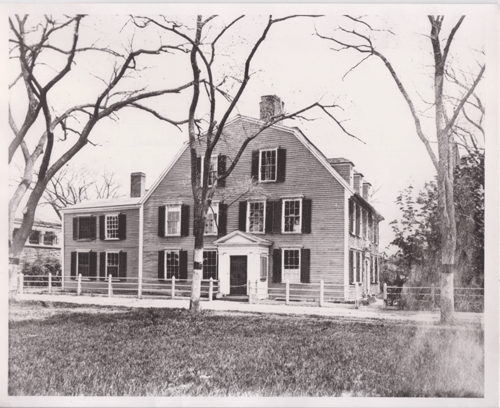
When Gen. Washington came to Roxbury, he brought Gens. Israel Putnam, William Heath, John Sullivan, Nathanael Greene, and Horatio Gates—all the generals present at the siege. They held a council of war in Ward’s headquarters. (The picture above shows that house in the mid-1800s after a lot of modification.)

The record of that council shows that Washington asked for advice on three questions:
  • Should he order part of the army to head to New York to guard that city in case the British military struck there next?
  • If the British evacuated Boston, should he leave part of the army there to guard the town?
  • If the British lingered in Boston, should he order the army to try fortifying Nook’s Hill, as they had on 9–10 March (with the loss of four men)?
The council of war concluded:
  • The rifle battalion should march immediately to New York, to be augmented by militia troops from that and neighboring colonies.
  • There would be no need to leave Continental troops in Boston since the Massachusetts militia could guard it.
  • If the British troops were still in Boston on 14 March, the army would go back onto Nook’s Hill.
Once again, the siege was over, and yet not over.

Tuesday, March 10, 2026

“He must not fire upon the Town of Boston tonight”

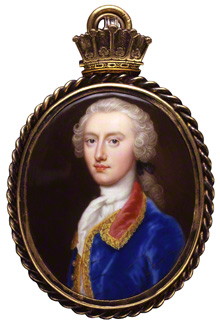
On 10 Mar 1776, 250 years ago today, Gen. George Washington’s military secretary, Robert Hanson Harrison (shown here), sent this order to Gen. Artemas Ward in Roxbury:
By his Excellency’s command I am to inform you that It is his desire that you give peremptory Orders to the Artillery Officer commandg at Lams Dam, that he must not fire upon the Town of Boston tonight unless the Enemy first begin a Cannonade, and that you Inform the Officer at Dorchester heights that he is not to fire from thence on the Town—

If they begin, and we have any Cannon on Nuke Hill, his Excellency wou’d have the fire to be returned from thence among the Shipping and every damage done them that possibly can.

Notwithstanding the accounts received of the Enemy’s being about to evacuate the Town with all seeming hurry & expedition, his Excellency is apprehensive that Genl [William] Howe has some design of having a brush before his departure and is only waiting in hopes of findg us of our Guard, he therefore desires that you will be very vigilant and have every necessary precaution taken to prevent a Surprize and to give them a proper reception in case they attempt anything
This conditional order summed up the Continental commanders’ dilemma. On the one hand, they didn’t want to waste gunpowder and cause unnecessary damage to the town if the British army was leaving. On the other hand, they still didn’t fully trust the British commander to leave.

Around seven o’clock that evening, Gen. Horatio Gates sent another message to Ward with a similar mix of optimism and paranoid preparation:
The Motions of The Enemys Fleet, Strongly intimate their intention of Abandoning The Town of Boston tomorrow,

His Excellency Generel Washington is therefore Anxious to take every Possible Advantage of their precipate Retreat; & desires you would Order all the Troops at Roxbury, & Dorchester Heights, to be paraded at their Several Alarm Posts, half an hour before day tomorrow morning; it is not possible for His Excellency to give any Particular directions as to the manner of Distressing the Enemy, or assisting Our Friends in The Town, as there is no foreseeing the Circumstances that will accompany the departure of [the] Ministerial Army: a very exact Observation will be taken from hence of all The Enemys Motions at Sun rise.

the General desires the like attention may be paid on Your side, & wishes you to Communicate every half hour all extraordinary Occurrences; you may be assured of receiving the like minute Accounts from hence
Meanwhile, inside Boston Gen. Howe’s orders were all about preparing to sail, though he did add that “Upon Ringing the Church Bells at Night the Troops are to get under Arms.” Because he wasn’t entirely sure there would be no Continental attack, either.

Capt. John Barker summed up the situation inside the town this way: “Nothing but hurry and confusion.”

Wednesday, February 25, 2026

“Boston is environed on all sides”

Having shared his version of the Battle of Lexington and Concord, as quoted over the last two days, the new Cambridge postmaster Jonathan Hastings, Jr., turned to the current situation.

His 11 June 1775 letter described the siege this way:
Boston is environed on all sides. 7000 Men at Camb. 6000 at Roxbury, exclusive of smaller Numbers wch. guard the Coasts both Eastward & Southward. [Thomas] Gage acknowleges our Superiority in Number, but says we have neither Government, Discipline nor Powder. The two first Charges are false; and I hope the other Colonies will not be backward to Supply us with the last, to let him see he is mistaken in that likewise.—

Indeed we are determined to defend ourselves in the best manner at all Events, rather than submit to Slavery.—Our Motto is the same which Caesar engraved on his Breast Plate—“Nil actum reputans si quid superesset agendum.”
That was a standard eighteenth-century British rendering of a line from Lucan’s Civil War, appearing in the Spectator and Lord Chesterfield’s letters. It translates more or less as “As long as there’s anything left to do, we don’t consider anything done.” Curiously, that Latin line appears differently in modern editions of Lucan. I can’t explain the discrepancy.
Should Massachusetts be conquered, your Halcyon Days will soon be at an end. God grant our union may be like that of a Band of Brothers, wch. can never be broken. The Light Troops in Boston we are informed have not done Duty for 4 Days. An Attack is expected soon, for every Delay on their part is a Strengthening to us.

It was not the Butler who fell in Battle, but a Samuel Cooke from Danvers the largest Man in the Colony, I suppose
A Danvers man named Samuel Cook, Jr., was indeed among the provincial casualties on 19 April, killed at the Jason Russell House. I haven’t found any other reference to his size. I’ll discuss why Hastings mentioned him tomorrow.
You must excuse my not being more particular, as John intends to write to your Brother, and my Business call me away: therefore would just acquaint you that an half a whole Sheet with your Name alone will afford a particular Pleasure to your sincere Friend & very humble Servant

Jonathan Hastings Junr.

P.S.—My Father & mother desire to be remembered to you & your Friends, & would inform you that our Papers are removed into the Country, & we know not where to look for any Receipts, therefore beg you will make yourself easy with regard to us—&c
JH
That looks like a very familiar closing for an eighteenth-century letter, begging more time to pay bills. Or maybe Hastings was replying to a correspondent who had begged more time.

Of course, there was a war on. The Hastings house had become the headquarters of both the Massachusetts committee of safety and Gen. Artemas Ward, so it’s understandable that the family had moved their records out.

TOMORROW: Clues to the crowd.

Tuesday, December 02, 2025

“From his own incoherent stories”

On 4 Dec 1775, Col. Jonathan Ward of Southborough convened a court-martial in the Continental Army camp at Roxbury.

Col. Ward presided over a board of officers that included four captains and seven lieutenants.

Pvt. John Short of Rochester was one defendant in that proceeding. He had marched under Col. Theophilus Cotton and Capt. Earl Clapp (represented above by his shoe buckles) during the Lexington Alarm and then enlisted under them for the rest of the year.

Short was charged with “desertion and theft.” He pled not guilty. The record of the court-martial published in American Archives states:
On hearing the evidence brought to support the charge, the Court are unanimously of opinion the prisoner is guilty. It likewise appears very clear to the Court, from sundry papers that were found with him, and from his own incoherent stories, that he is guilty of a breach of the 27th and 29th, and also the 3d article of the Rules and Regulations of the Massachusetts Army.
[Those articles forbade corresponding with the enemy, leaving one’s post to plunder, and provoking mutiny, respectively.]
According to said rules, the Court adjudge the following sums of money to be paid out of his wages and effects, viz:

To Captain Earl Clapp, the sum of 1£.16s., for expense of advertising and apprehending him; also, 36s., that said Clapp paid, at said Short’s desire, for a former theft.

To William Cowing [also listed as Cowen], a soldier in Captain Clapp’s company, 36s.10d., that he carried away with him when he deserted.

To Daniel Crawford [also Croxford], in said company, 4£.16s., for the damage done him by stealing his clothes.

Likewise adjudge him to be whipped thirty-nine stripes on the naked back, and suffer two years imprisonment in Newgate Prison, in Symsbury [Connecticut], and as much longer as the present contest between Great Britain and the American Colonies shall subsist.
The court then turned to Pvt. John Smith, a soldier in Capt. Peter Harwood’s company of Col. Ebenezer Learned’s regiment. Massachusetts Soldiers and Sailors includes many pages of John Smith entries, of course, but this information matches a man from Brookfield who had enlisted on 12 June.

Smith was charged with “attempting to desert to the enemy.” He pled guilty. The court sentenced him to “pay the sum of eight shillings to Brigadier-General [John] Thomas, to defray the expense of bringing him back to camp, and suffer six months imprisonment in Newgate Prison, in Symsbury.”

Finally the officers considered “Owen Resick, a transient person,” for “aiding, advising, and assisting John Smith to desert to the enemy.” He denied the charge. (Based on other sources, I now think this man’s surname should have been transcribed as Ruick.)

After “hearing and examining the evidence,” the panel found Ruick guilty and sentenced him to “one year’s imprisonment in Newgate Prison, in Symsbury, and as much longer as the present disputes between Great Britain and the Colonies shall subsist.”

Gen. Artemas Ward affirmed those sentences. They don’t appear in Gen. George Washington’s general orders, issued out of Cambridge.

TOMORROW: A glimpse of John Short.

Monday, December 01, 2025

“Sentenced to be Sent to Simsburty in Connecticut”

Here’s another glimpse of Gen. George Washington’s work in Cambridge 250 years ago.

On 11 Dec 1775, mustermaster general Stephen Moylan wrote out a letter to the committee of safety of Simsbury, Connecticut, for the commander’s signature:
Gentlemen

the prisoners which will be deliverd you with this haveing been tried by a Court Martial & deemd to be Such flagrant & Attrocious villains, that they Cannot by any Means be Set at Large or Confined in any place near this Camp were Sentenced to be Sent to Simsburty in Connecticut.

you will therefore be pleas’d to have them Secured in your Jail or in such other manner as to you shall Seem necessary So that they Cannot possibly make their escape—the Charges of their imprisonment will be at the Continental expence.
That same day Washington’s new military secretary Robert Hanson Harrison (shown here) sent this note to Gen. Artemas Ward in Roxbury, as published by Peter Force in American Archives:
I am commanded by his Excellency to enclose to your care the letter which you will herewith receive for the Committee at Symsbury. Should there be any of the Connecticut troops at Roxbury, which are going that way, and with whom the prisoners can be trusted, you will get them to take charge of them, as it will save some expense; but if you are of opinion that there will be the least risk of their getting away, you will send them off under a proper guard, with a copy of their sentence for the Committee.
On 21 December, Harrison sent a follow-up:
I wrote you the 11th inst., respecting the prisoners to be sent to Simsbury, and enclosed a letter for the Committee of that place; to these I beg leave to refer you. In case you did not receive them, his Excellency desires that you will send them off under a proper guard, unless there should be any of the Connecticut troops going home, who will take the charge of them to the Committee. You will please certify the Committee of the atrociousness of their crime, and of the court’s sentence.
Some of the Connecticut regiments had finished their enlistment terms on 10 December and were heading home. Hence the suggestion that those men could escort these prisoners to Simsbury (and presumably get a little more pay for that work).

Because Washington’s letter was printed in American Archives, a widely distributed and authoritative nineteenth-century source, it’s been quoted in many books about the Old New Gate Prison at Simsbury and American incarceration in general. 

However, I haven’t found any of those books stating who these prisoners were. Because Loyalists were confined at Simsbury later in the war, many authors have assumed that the people Washington sent to Connecticut were political prisoners. 

TOMORROW: Naming names.

Thursday, July 31, 2025

“General Folsom proposes also to retire”

On 30 June 1775, Gen. Artemas Ward received word of his new commission as major general in the new Continental Army.

Ward immediately wrote back to John Hancock, chair of the Continental Congress, accepting the post. He also warned that “the Appointments in this Colony [Massachusetts]” might “create Uneasiness.”

They did, along with those for Connecticut generals, as I wrote last month.

And what about Nathaniel Folsom, who’d just solidified his authority over the New Hampshire colonels at the siege? His letter dated 1 July indicates no one had told him about the Continental Congress’s commissions yet.

As I’ve stated, the New Hampshire Provincial Congress had named Folsom as the colony’s general officer in April, and then reaffirmed that choice in May.

Yet New Hampshire’s delegates to the Continental Congress apparently didn’t pass on that news. Nor did those men, John Sullivan and John Langdon, suggest that the senior New Hampshire officer already at the siege, John Stark, be made a brigadier general.

Instead, they apparently looked around and told their colleagues in Philadelphia that the very best choice of a general from New Hampshire was…John Sullivan.

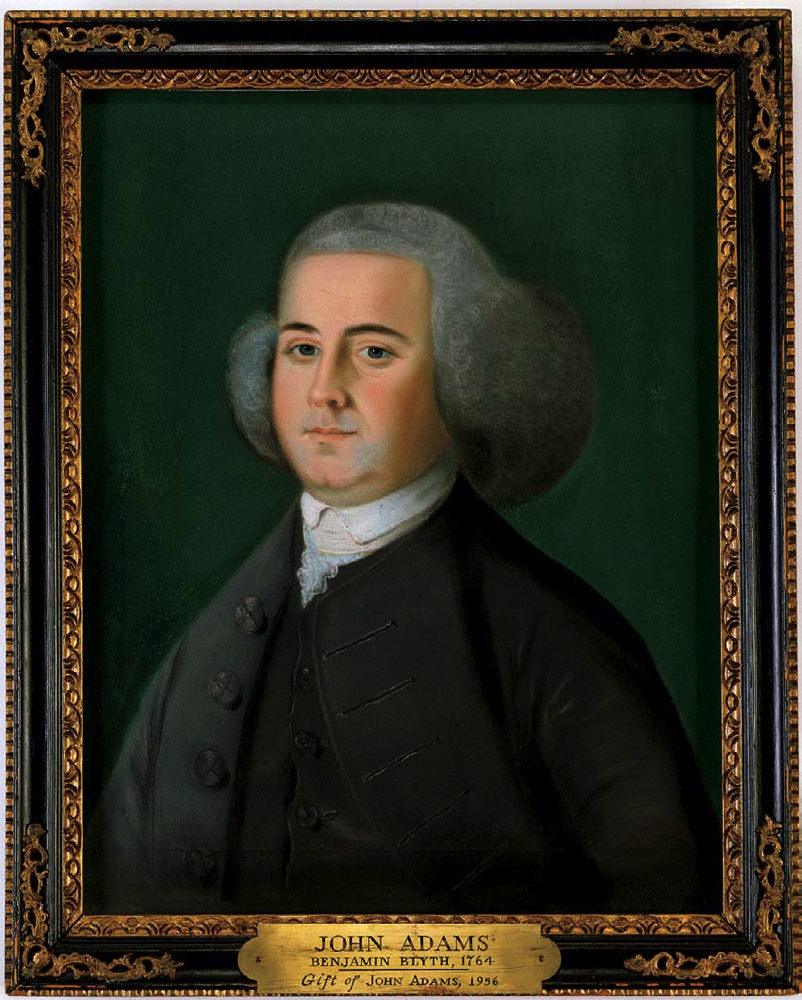
Sullivan (shown above, nominally) didn’t have any military experience from the last war, unlike Folsom, Stark, and the next two colonels, Enoch Poor and James Reed. He was younger than all those men. But Sullivan was in Philadelphia, and he was enthusiastic. So on 22 June he got the nod.

Gen. George Washington left Philadelphia the next day and arrived in Cambridge on 2 July, carrying commissions for his subordinates. His first general orders, issued the next morning, acknowledged the presence of “General Falsam.” But the conversations were probably awkward.

Sullivan arrived in Massachusetts a week later. So far as I know, there are no documents preserving his interactions with Folsom and the colonels.

On 20 July, Washington told Hancock and the Congress that “General Folsom proposes also to retire.” The older man returned to New Hampshire. On 24 August, its provincial congress “Voted That Nathaniel Folsom; Esqr. be the General Officer over the Militia in this Colony.” So he got to keep the rank of general.

Folsom remained active in New Hampshire politics, and he also served a second stint in the Continental Congress from 1777 to 1780. He presided over his state’s constitutional convention in 1783. And then, because that constitution forbade plural office-holding, he resigned his post as militia general in favor of being chief judge of his county.

Nathaniel Folsom exercised unchallenged command of New Hampshire’s army from 24 June to 3 July 1775, or a little over a week. He oversaw New Hampshire’s wartime militia for eight years.

Tuesday, July 29, 2025

“Stark repeatedly and at last absolutely refused to comply”

The New Hampshire general Nathaniel Folsom arrived on the siege lines around Boston on 20 June 1775.

However, Col. John Stark (shown here) had been in the action since April. The militia troops he had led into Massachusetts had become the 1st New Hampshire Regiment.

Col. James Reed had enlisted men into the 3rd New Hampshire Regiment in Fitzwilliam and joined Stark at the siege in early June.

Both regiments fought in the Battle of Bunker Hill on 17 June, standing up against the British army’s right and taking casualties.

Stark didn’t respond happily to a new man appearing and declaring he was now in charge based on the vote of a quasi-legal congress and his war record from twenty years before.

On 23 June, Gen. Folsom wrote back to the New Hampshire government from Medford:
In my Letter to you yesterday I acquainted you that on my arrival here I Imediately waited on the Capt. General [Artemas Ward]; he then Order’d me to make return to him of the Two Regiments, viz. Colo. Stark’s & Colo. Reed’s, of their Situation and Circumstances; on my return here I sent orders to the Two Colos. to make return of their respective Regiments to me.

Colo. Reed Imediately obey’d the order but Colo. Stark repeatedly and at last absolutely refused to comply. I am well inform’d by Mr. Stark’s best friends that he does not Intend to be under any subordination to any Person appointed by the Congress of New Hampshire to the general command of the New Hampr. Troops. I have tried all conciliatory methods both by Personal Conversation and the mediation of Friends, but without effect.

In consequence whereof I this afternoon again waited on the Capt. General at Head Quarters to take his order on the matter; he requested me to advise with the Committee of Safety of New Hampr on the Business, as Colo. Stark has received no Commission yet from you, he thinks he does not properly come under his cognizance.

Gentlemen, it is I trust unnecessary to hint to you that without a Proper subordination it will be absolutely Impossible for me to Execute the Trust you have Reposed in me; in my last conversation with Mr. Stark, he told me he could take his Pack and return home (and meant as I suppose to Lead his men with him.) I represented to him the dishonorable part he would thereby act towards both Colonies.

I have since made Enquiry & find he would not be able to Lead off many more than the supernumerors of his Regiment, it still consisting of 13 Companys. I think a Regiment might be form’d of the men who have been under his command without his being appointed to the Command of ’em.

I must do the Justice to Letn. Col. [Isaac] Wyman to say he has behaved prudently, Courageously and very much like a Gentleman, and I think I could recommend him to the command as soon as any Person I know.
Wyman was Stark’s second-in-command and potential successor.

TOMORROW: Can this regiment be saved?

Thursday, July 03, 2025

“Necessary that the regiments be immediately settled”

Many accounts of George Washington’s arrival in Cambridge in 1775 say that he converted the ragtag New England militia into the Continental Army.

That’s a misconception. It’s common enough that I might have expressed that understanding myself when I first wrote about the beginning of the war. But it misses an important development that I now see more clearly, and see as more important.

The New England colonies had already formed armies in the spring of 1775. Militia companies were designed to respond to emergencies, such as the Lexington Alarm. When an emergency was over, men expected to go home. Enlisting in an army meant a man agreed to serve for a defined time.

That was a different legal relationship between a government and its citizens, and for New Englanders military service was all about that maintaining that covenant. As Fred Anderson has written, British army officers (who were used to enlisting for life and commanding men who had done the same) and later Gen. Washington ran into trouble because they didn’t share that outlook.

On 19 April and shortly afterward, about 20,000 militia men mobilized, ending up in camps ringing the peninsula of Boston. But with all the regulars back inside the town, the immediate emergency had passed. Some men wanted to go home.

Two days later, Gen. Artemas Ward wrote to the Massachusetts Provincial Congress:
My situation is such that, if I have not enlisting orders immediately, I shall be left all alone: it is impossible to keep the men here, excepting something be done. I therefore pray that the plan may be completed and handed to me this morning, that you, gentlemen of the Congress, issue orders for enlisting men.
The committee of safety responded with a proposal to sign up “out of the Massachusetts forces, eight thousand effective men,” to serve for seven months.

Two days later, on 23 April, the full congress went further with two votes:
Resolved, unanimously, that it is necessary for the defence of the colony, that an army of 30,000 men be immediately raised and established.

Resolved, That 13,600 men be raised immediately by this province.
The rest were expected to come from the neighboring colonies.

That Massachusetts army would have fewer men per company and fewer companies per regiment than the Massachusetts militia. The Patriot authorities expected some men to go home and hoped to keep units as cohesive as possible.

In the following weeks, there must have been a lot of discussion within the ranks. Some companies enlisted nearly en masse under their familiar officers. Other men chose to go home to their wives, children, and farms. Some went home and came back. To fill holes, there was some shuffling of officers’ ranks and which companies belonged to which regiments (i.e., reported to which colonels).

Ward and his top officers were worried enough about the war to recommend a formal militia call on 9 May so there would be enough armed men to protect Roxbury and Dorchester. Ten days later the general wrote to Dr. Joseph Warren as president of the congress:
It appears to me absolutely necessary that the regiments be immediately settled, the officers commissioned, the soldiers mustered and paid agreeable to what has been proposed by the Congress—if we would save our Country.
That day the provincial congress approved its first Massachusetts army commission, to Col. Samuel Gerrish.

Gradually more pieces were put into place. Ward was sworn in as an army general, not just a militia general, the next day. By the end of the month, what Patriot newspapers started calling “the Grand American Army” had about 16,000 men from four colonies.

To be sure, not all those forces were formally enrolled yet. In Moses Little’s regiment from Essex County, Moses Sleeper had signed on as a corporal on 9 May. But the committee of safety didn’t approve paperwork for the whole regiment until 26 June, the last regimental commission of the spring. By then some of Col. Little’s companies had already fought in the Battle of Bunker Hill.

For more about the process of creating this provincial army, see Mike Cecere’s article “The Army of Observation Forms: Spring 1775 in Massachusetts” at the Journal of the American Revolution.

COMING UP: Taking the oath.

Saturday, June 07, 2025

“Belonging to Mr. Henry Howell Williams”

Henry Howell Williams lost more property in the Battle of Chelsea Creek than anyone else but the Royal Navy.

Williams held the lease for Noddle’s Island. He had a big house there—big enough to show up on maps of the harbor. He’d invested in agricultural outbuildings, horses, sheep, cattle, hogs, and hay.

Williams probably took his family off the island in April, soon after the war began. On 1 May, Adm. Samuel Graves granted him a pass to go to and from his home, with the stipulation that he not remove anything. Williams later reported that his house still contained a clock bought in Britain, mahogany furniture, family pictures, and other genteel possessions.

Late that month, provincial troops went onto Hog Island and Noddle’s to grab animals, keeping them away from the British. In the fighting that followed, they set fire to the hay and most buildings on Noddle’s Island. In early June the provincials returned to grab the remaining livestock and burn the last structure.

Williams’s farm was reduced to charred ruins on an empty, singed landscape. As I wrote back here, Williams was protective of his interests, placing regular advertisements to warn off trespassers and hunters. He came from a wealthy Roxbury family. He had connections to men in the Patriot leadership.

However, Williams had also signed the farewell to Gov. Thomas Hutchinson. He sold his livestock and forage to the British military, possibly even after the war began. That no doubt affected his standing with the provincial authorities.

On 31 May, Gen. Artemas Ward’s general orders stated:
That the stock, which was taken from Noddle’s Island, belonging to Mr. Henry Howell Williams, be delivered to his father, Col. Joseph Williams, of Roxbury, for the use of the said Henry H. Williams.
But evidently few or no animals were driven all the way around the siege lines to Roxbury and returned to the Williams family. After all, there was a war on. The provincial army also needed food and horses.

TOMORROW: The first petition.

Saturday, March 29, 2025

“Employing every art and all the Address I am Master of”

Here’s another glimpse of espionage in 1775.

That summer, Julien-Alexandre Achard de Bonvouloir, younger son of a French nobleman, and the Chevalier d’Amboise arrived in London on a ship from New England.

They aroused the suspicions of the British government. On 5 August John Pownall, Secretary to the Board of Trade, wrote to the Earl of Dartmouth, Secretary of State for the colonies:
The Lodgers at the Hotel in Watling Street have been watched & pumped by a discreet & proper person employed by Lord Rochford, they proved to be as stated in the Letter you left with me, French officers from the West Indies, by the way of North America; they do not conceal that they have been in [Israel] Putnams Camp, but they speak of him and his troops in a most despicable Light, and say that but for their advice they would have made an Attempt that would have ruined them—if this is true I don’t think we are much obliged to the Gentlemen—

they further say that there is at least 200 able Officers & Engineers of all countrys now here endeavouring to get passages to North America—

a few days ago the Society at the Hotel was increased by the addition of a french officer from France, who got out of his Chaise at Westminster Bridge took a Hackney Coach, and went both to the Spanish and French Embassadours—in a few days we shall probably know more and be able to judge what is fit to be done.
The Earl of Rochford (shown above) was Britain’s other Secretary of State, with responsibility for continental Europe.

This document seems less valuable for its secondhand content about America than for its hints about intelligence methods in London. The Frenchmen were “watched,” “pumped,” and trailed. The new arrival switched vehicles before visiting embassies but didn’t manage to shake his trackers.

Lord Dartmouth’s files also contain a unsigned report headed “Intelligence.” which states:
What I have been able to collect from the two French Officers by employing every art and all the Address I am Master of, amounts to what follows:—

1st. That they have been over great part of the American Continent, particularly at Philadelphia, at New York, Rhode Island, and New England, which with their stay in and about Boston, would have required more time to perform than the three Months they say they remained in America.

2d. That they are particularly acquainted with Putnam and [Artemas] Ward,—the first they represent to be a good natured Civil and brave old Soldier—but a head strong, ignorant and stupid General—Ward they hold indeed very cheap.

[3d.] That they were both in person at the Affair of Lexington, and from circumstances they cited, I am induced to think that they were present at the Affair of the 17th [i.e., Bunker Hill].

4. That they were courted by the Rebels to stay amongst them, and were offered forty Pounds / Month each, of pay—they say they did not think such Offers solid, nor did they like the paper Currency. . . .
I suspect the claim to have been “in person at the Affair of Lexington” meant Bonvouloir and D’Amboise were present in eastern Massachusetts during the militia alarm on 19 April, not that they were in Lexington itself on that early morning. Still, adding two aristocratic Frenchmen to the mix of people in New England at the outbreak of war is intriguing.

TOMORROW: Pumping M. Bonvouloir.

Wednesday, March 19, 2025

“The procession of the old clergymen who filled our pulpit”

Back in January I quoted Dr. Oliver Wendell Holmes on one of the impressive clergymen who came to preach in his father’s pulpit in Cambridge while he was a boy.

Young Oliver was born in 1809 in the house that had belonged to the Harvard College steward Jonathan Hastings. In 1775 the Massachusetts committee of safety and Gen. Artemas Ward took it over as the first rebel headquarters of the war.

In The Poet at the Breakfast Table, Holmes described some ministers whose names I know because they wrote recollections about the Revolutionary period when they themselves were boys.

Holmes recalled the Rev. Thaddeus Mason Harris (1768–1842) of Dorchester this way: “already in decadence as I remember him, with head slanting forward and downward as if looking for a place to rest in after his learned labors.”

The Rev. David Osgood (1747–1822) has made only one appearance in Boston 1775, guarding his privilege to perform all marriages in his town. Holmes recalled him as “the most venerable David Osgood, the majestic minister of Medford, with massive front and shaggy over-shadowing eyebrows.”

Holmes’s longest profile limned the “attenuated but vivacious little Jonathan Homer of Newton, who was, to look upon, a kind of expurgated, reduced and Americanized copy of Voltaire, but very unlike him in wickedness or wit.”

Homer (1759–1843) was minister of the first congregation in Newton, where Homer Street preserves his name. Holmes went on:
The good-humored junior member of our family [Holmes himself?] always loved to make him happy by setting him chirruping about Miles Coverdale’s Version, and the Bishop’s Bible, and how he wrote to his friend Sir Isaac (Coffin) about something or other, and how Sir Isaac wrote back that he was very much pleased with the contents of his letter, and so on about Sir Isaac, ad libitum,—for the admiral was his old friend, and he was proud of him.
Homer and Coffin had been classmates at the South Latin School, one becoming an American clergyman and the other a British admiral. Coffin’s recollections of life in that school were invaluable to me in writing about its culture.
The kindly little old gentleman was a collector of Bibles, and made himself believe he thought he should publish a learned Commentary some day or other; but his friends looked for it only in the Greek Calends,—say on the 31st of April, when that should come round, if you would modernize the phrase.
In other words, that magnum opus’s day of publication would never arrive.

Sunday, March 09, 2025

“Choosing a Commander” at the Longfellow–Washington Site, 13 Mar.

On Thursday, 13 March, I’ll speak at Longfellow House–Washington’s Headquarters National Historic Site on “Choosing a Commander: Myths & Realities Behind the Continental Congress’s Decision to Make George Washington the General.”

Two hundred fifty years ago this spring, the Massachusetts Provincial Congress invited the Continental Congress in Philadelphia to take over the direction (and funding) of the army besieging Boston. A big part of that direction was choosing who would command those troops.

Decades later, John Adams left detailed accounts of those discussions. He described himself as the man who advocated for George Washington of Virginia when no one else would.

According to letters Adams wrote in 1815 (and possibly in 1816 but never sent), most Congress delegates preferred either leaving the army in the hands of Gen. Artemas Ward of Massachusetts or hiring former British army lieutenant colonel Charles Lee.

Adams stated:
The Nominations were made, Ward I believe by Mr [Thomas] Cushing, Lee by Mr [Thomas] Mifflin, and Washington by Mr [Thomas] Johnson of Maryland. The opposition to a change was not So warm, as it had been before, but Still each Candidate had his Advocates.

Nevertheless all agreed in the great importance of Unanimity. This point was urged from all quarters of the House with great force of Reason and Eloquence and Pathos that never has been exceeded in the Counsells of this Nation. It was unanimously agreed to postpone in Election to a future day in hopes that Gentlemen by a deliberate Consideration, laying aside all private feelings, local Attachments, and partial motives, might agree in one, and unanimously determine to Support him with all their Influence. The Choice was accordingly postponed.

By this time all the Friends of Ward, among whom there was not one more Sincere than John Adams who had known him at School within two doors of his Fathers house, and who had known him in Worcester in his riper Years, were fully convinced that Washington Should be preferred to Lee; and they had reason to fear that Delegates from the Southern and Middle States would vote for Lee rather than for any New Englandman. And all the Sober Members would have preferred Either Ward or Washington to Lee.

When the day of Election arrived, after some Observations on the necessity of Concord, Harmony and unanimity in the present portentous moment, Congress proceeded to the Choice and the Suffrages were all found to be for George Washington.
In this talk I’ll explore how much the contemporaneous record from 1775, including Adams’s own private letters, supports this recollection.

This event is scheduled to start at 6:00 P.M., and will include questions and answers afterward. It is free, but seating in the Longfellow carriage house is limited. There’s an option to watch the livestream, and a recording will be put on the site’s YouTube channel when ready.

Friday, May 03, 2024

“The most prominent addition made to the cabinet”

On 2 Feb 1877, the Boston Daily Advertiser took note of “an exhibition of antiquarian relics” temporarily open “in the rooms of the National History Society of Worcester.”

The article didn’t provide the name of the group that had organized the exhibit, the Worcester Society of Antiquity, which received its state charter that year.

All the objects on display were probably owned by members. Most were items on paper, including books, deeds, commissions, newspapers, and autographs unfortunately clipped out of documents of greater interest. 

The exhibit did include “Spurs worn by General [Artemas] Ward in the Revolutionary war.” And:
the skull of a British soldier from Concord, April 19, 1775.
The Worcester Natural History Society, founded in 1825 as the Worcester Lyceum of Natural History, went on to open the New England Science Center, now called the EcoTarium.

Meanwhile, the Worcester Society of Antiquity started renting its own space in the building of the Worcester National Bank for its meetings and growing collection. On 6 Apr 1881 the Worcester Evening Gazette reported on the group’s monthly gathering, saying:
The most prominent addition made to the cabinet was the skull of a British soldier, shot at Concord Bridge in the first fight of the Revolution. Two were killed and buried where they fell. In 1844 [sic], by permission of the Selectmen, the bodies were exhumed by a resident, whose widow, who is in reduced circumstances transferred the relic to the Society. The members made up quite a collection of money for the donor. The other skull is in possession of Dr. J. N. Bates of this city.
The soldier’s skull had actually been dug up before 1840 because Edmund Quincy Sewall, Jr., saw Walton Felch display it that year. Sewall also heard that the skull had been dug up in Lincoln, not Concord, and Henry David Thoreau recorded the circumstances later in his journal.

The 1881 article suggests that Daniel Seagraves had just formally donated the skull to the society. As discussed yesterday, Dr. Joseph N. Bates died in 1883, and no one could find the second skull among his effects.

Folks might uncover other newspaper mentions of the British soldier’s skull on display in Worcester in the late 1800s. These are the only two I came across. Notably, they show no squeamishness about displaying human remains.

After a generous gift from a member and some fundraising, the Worcester Society of Antiquity opened its own building on Salisbury Street in 1892. The organization became the Worcester Historical Society in 1919 and the Worcester Historical Museum in 1978. Ten years after that, it moved into its present building on Elm Street.

But the British soldier’s skull was never exhibited in those museums.

Some people didn’t like the thought of that British soldier’s skull being separated from his body.

TOMORROW: Back to Concord.

Saturday, June 17, 2023

“The modest and virtuous, the amiable, generous and brave…”

On 17 June 1775, John Adams wrote from Philadelphia to his wife, Abigail, with big news:
I can now inform you that the Congress have made Choice of the modest and virtuous, the amiable, generous and brave George Washington Esqr., to be the General of the American Army, and that he is to repair as soon as possible to the Camp before Boston. This Appointment will have a great Effect, in cementing and securing the Union of these Colonies.

The Continent is really in earnest in defending the Country. They have voted Ten Companies of Rifle Men to be sent from Pennsylvania, Maryland and Virginia, to join the Army before Boston. These are an excellent Species of Light Infantry. They use a peculiar Kind of [gun?] [ca]ll’d a Rifle--it has circular or […] Grooves within the Barrell, and carries a Ball, with great Exactness to great Distances. They are the most accurate Marksmen in the World.

I begin to hope We shall not sit all Summer.
(They did.)

Adams then went back to his original topic, the new commander-in-chief:
I hope the People of our Province, will treat the General with all that Confidence and Affection, that Politeness and Respect, which is due to one of the most important Characters in the World. The Liberties of America, depend upon him, in a great Degree.
Adams wrote similar things to some of his political colleagues back in Massachusetts. A number of other New Englanders at the Continental Congress wrote to their contacts in the same fashion.

Indeed, the volume of letters from those delegates praising Washington in just a few days suggests that there was a concerted effort to prepare the army and people around Boston for the new generalissimo’s arrival. Massachusetts’s political leaders were in agreement that turning over command to a Virginian was a good trade-off for the other colonies’ support. But would the fighting men agree?

As it turned out, the quickest whiners in the army around Boston weren’t the enlisted men nor the commander Washington superseded, Artemas Ward, but the other generals. The Congress hadn’t figured out the seniority system those men used among themselves and ranked a couple below where they expected to be, leading to hurt feelings.

TOMORROW: Adams feeling forgotten.

Wednesday, February 15, 2023

“They ordered out both their Regiments to fire on Each other”

In his 24 Sept 1775 intelligence report, Dr. Benjamin Church, Jr., didn’t just describe dissatisfied enlisted men in the Continental Army.

He also wrote about the disputes among officers in the forces besieging Boston.

One paragraph of Church’s letter described a conflict that I haven’t found mentioned anywhere else:
A Quarrell happened between Col. Bruer and Col. Patterson, at length they got so high, that they ordered out both their Regiments to fire on Each other, but were Quelled by a third that was ordered to fire on them both in case they did not disperce which they did,
“Col. Patterson” was John Paterson (1744–1808, shown here) from Lenox by way of Connecticut. His regiment was assigned to Gen. William Heath’s brigade and thus stationed near the center of the lines.

Identifying “Col. Bruer” is less certain because the Continental Army had two colonels with the surname Brewer: Jonathan of Waltham and David of Palmer. They were in fact brothers, born in Framingham.

Col. Jonathan Brewer’s regiment was part of Gen. Nathanael Greene’s brigade, centered on Cambridge and Charlestown. Col. David Brewer’s regiment was assigned to Gen. John Thomas’s brigade, thus in Roxbury. I don’t know which was closer to Paterson’s position.

I suspect Paterson quarreled with David Brewer, who in October was cashiered for paying his teen-aged son as a lieutenant while the boy was back on the farm and other petty matters. The court-martial record said this Col. Brewer acted “contrary to the repeated remonstrances of the Officers of the regiment,” so it makes sense for another colonel to criticize him as well.

On the other hand, back in the spring Jonathan Brewer got a reputation for arguing with other officers about recruiting. So it’s possible Paterson harbored some hard feelings from that.

Cols. John Paterson and Jonathan Brewer reenlisted in 1776. Brewer, who had been wounded at Bunker Hill, shifted to the Massachusetts regiment of artificers later that year. Paterson (shown above) went on to become a major general.

Another conflict Church was happy to report on:
They begin to try Colonels and Captains for bad behaviour at Bunkers Hill battle, three Colonels have been Cashired and several Captains for their Cowerdice—and could the Army in General have their will General [Artemas] Ward wou’d go for one, for he never so much as gave one Written order that day.
There was indeed a short series of courts-martial in late 1775 removing officers from the army, either for misbehavior at Bunker Hill or for similar failings. (Sometimes, it seems, an officer’s behavior in that battle wasn’t bad enough on its own but left the man with no more chances to screw up.)

Gen. Artemas Ward definitely had his detractors. But he had exercised control during the Bunker Hill battle, sending spoken orders to the commanders on the Charlestown peninsula and to the other sections of the siege lines, which he also had to maintain.

TOMORROW: Dr. Church’s secrets and tales.