J. L. BELL is a Massachusetts writer who specializes in (among other things) the start of the American Revolution in and around Boston. He is particularly interested in the experiences of children in 1765-75. He has published scholarly papers and popular articles for both children and adults. He was consultant for an episode of History Detectives, and contributed to a display at Minute Man National Historic Park.

Subscribe thru Follow.it


•••••••••••••••••


Showing posts with label Edward Rutledge. Show all posts

Wednesday, September 23, 2026

Thomas Lynch and the Continental Army’s Black Soldiers

On 23 Oct 1775, Thomas Lynch, Jr., and two of his colleagues in the Continental Congress, Benjamin Harrison and Benjamin Franklin, conferred with Gen. George Washington and political leaders of the New England colonies about setting up the Continental Army for the coming year ahead.

Most of the current army’s enlistments ran out in December. Only the rifle companies from Pennsylvania, Virginia, and Maryland had enlisted on different terms. They had promised to serve for twelve months, or until the middle of 1776.

One of the many questions that October conference considered was:
Ought not Negroes to be excluded from the new Inlistment especially such as are Slaves—all were thought improper by the Council of Officers?
Washington’s generals had followed his lead in voting to exclude black soldiers, though there were some opposing voices, as I discussed back here.

Thomas Lynch, as a southern planter and politician, almost certainly supported the idea of keeping black men out of the army. His fellow South Carolinian, Edward Rutledge, had even proposed pushing black soldiers out in September and “was strongly supported by many of the Southern Delegates,” according to the notes of Richard Smith of New Jersey.

That makes Lynch’s letter to Washington on 8 December particularly interesting. By then the general was worried that not enough men of any sort would re-enlist for the new year. If the British heard about an incredible shrinking enemy, Washington feared, in January they would charge out of Boston and Charlestown and overwhelm the thin Continental lines.

Lynch wrote to the commander:
I shall not take upon me to advise. tis as improper as needless. your Rifle Men, Negroes, & Deserters may in proper passes defend your artillery Ammunition & Stores[.] shoud your Lines be deserted, & the glorious, golden opertunity of ending the War be lost, let not Hope be lost also.
Somehow Lynch believed that the “Negroes” in the Continental ranks would still be available to Washington, along with the riflemen (whose enlistments were still in force) and “Deserters.”

It’s such a brief comment that it’s hard to know what Lynch was thinking. Did he expect the black soldiers would be in the same boat as the deserters, with nowhere else to go? Was he so used to ordering around enslaved people that he automatically assumed Washington could demand the “Negroes” stay?

Either way, Lynch’s remark was a backhanded acknowledgment that the Continental Army did have soldiers of African heritage, despite Rutledge’s efforts, and that they might be most valuable in the worst emergency.

Wednesday, July 08, 2026

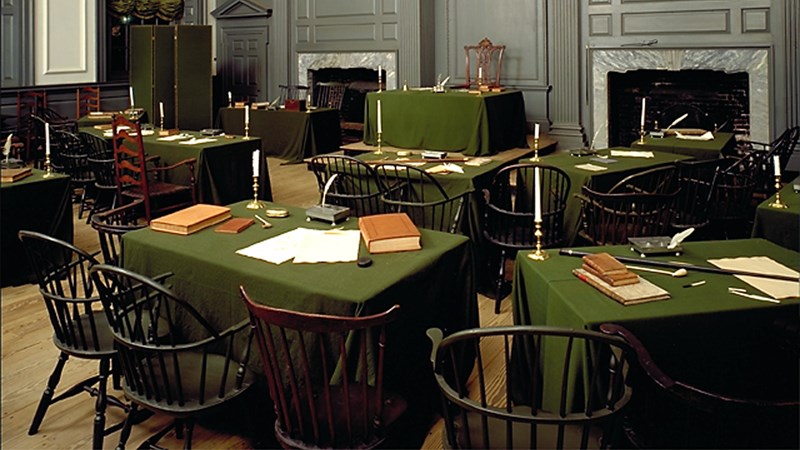
Counting Votes in Independence Hall

As quoted yesterday, Edward Rutledge hoped that John Jay would return to the Continental Congress by 1 July so he could help to argue against declaring independence, at least at that time.

Jay didn’t make it, and on that date the delegations in Philadelphia took a test vote in their committee of the whole.

Nine colonies voted for independence. Four voted otherwise.

Rutledge’s South Carolina voted against. That colony contained the fourth largest port in North America and was very tied in with trade to the Caribbean and Africa.

Pennsylvania voted against independence. Its large delegation was split. Such heavyweights as John Dickinson and Robert Morris opposed the measure while a minority including Benjamin Franklin favored it.

Delaware had sent three delegates to Congress, but only two were present. Those men, Thomas McKean and George Read, disagreed. As a result, that delegation had to abstain.

New York also abstained because its delegates had received no guidance from its provincial congress. That colony contained the second-largest port along the coast, under imminent threat from the British military.

The vote was thus 9 delegations for independence, 2 against, and 2 abstaining.

The committee of the whole thus supported independence, but a big chunk of the Middle Colonies, including the two largest cities, were missing from the pro-independence bloc. There was no formal requirement that the vote be unanimous, but everyone realized that reporting disunity would hamper any ongoing resistance to the Crown.

The next day, Caesar Rodney returned from Delaware, “detained by thunder and rain,” as he wrote. McKean later said his colleague appeared “at the State-house door, in his boots and spurs.” Rodney’s arrival tipped the Delaware delegation into the pro-independence camp.

10 – 2 – 1.

Rutledge saw the trend. He decided that the danger of displaying disunity was worse than the danger of declaring independence before finishing the Articles of Confederation and Perpetual Union. He moved for a new vote, signaling that South Carolina would switch to approval.

11 – 1 – 1.

Thinking along the same lines, Dickinson and Morris chose not to attend the 2 July session of the Congress. That meant most of the Pennsylvania delegates in the assembly hall supported independence, changing that colony’s vote.

12 – 0 – 1.

The Congress could thus report that the vote for independence was unopposed.

Tuesday, July 07, 2026

“The Exertions of the Honest and sensible part of the Members”

Last week I shared sources detailing how the Declaration of Independence was drafted.

This post jumps back a few days to a last-ditch effort to head off the vote on independence.

Richard Henry Lee proposed that the Continental Congress declare the thirteen colonies separate from Britain on 7 June.

Delegates debated that measure in a committee of the whole, meaning everyone was involved but secretary Charles Thomson didn’t take official notes.

Meanwhile, Thomas Jefferson and his committee were drafting a Declaration just in case it would be handy, then or later. Other committees worked on what ultimately became the Articles of Confederation and Perpetual Union and a model treaty with a foreign power like, oh, say, France. (S’il vous plait!)

After a while, it became clear that most colonies favored independence, including Virginia and Massachusetts, populous anchors of their regions. But was that enough? Men on both sides of the question knew that resisting royal power required unity. If a chunk of colonies, or a big central colony, wasn’t ready to leave the British Empire, it would be a weak point for the rest. Thus, opponents of independence could win the argument by showing not that most colonies wanted to stay in the empire but that too many colonies wanted to stay to make leaving safe.

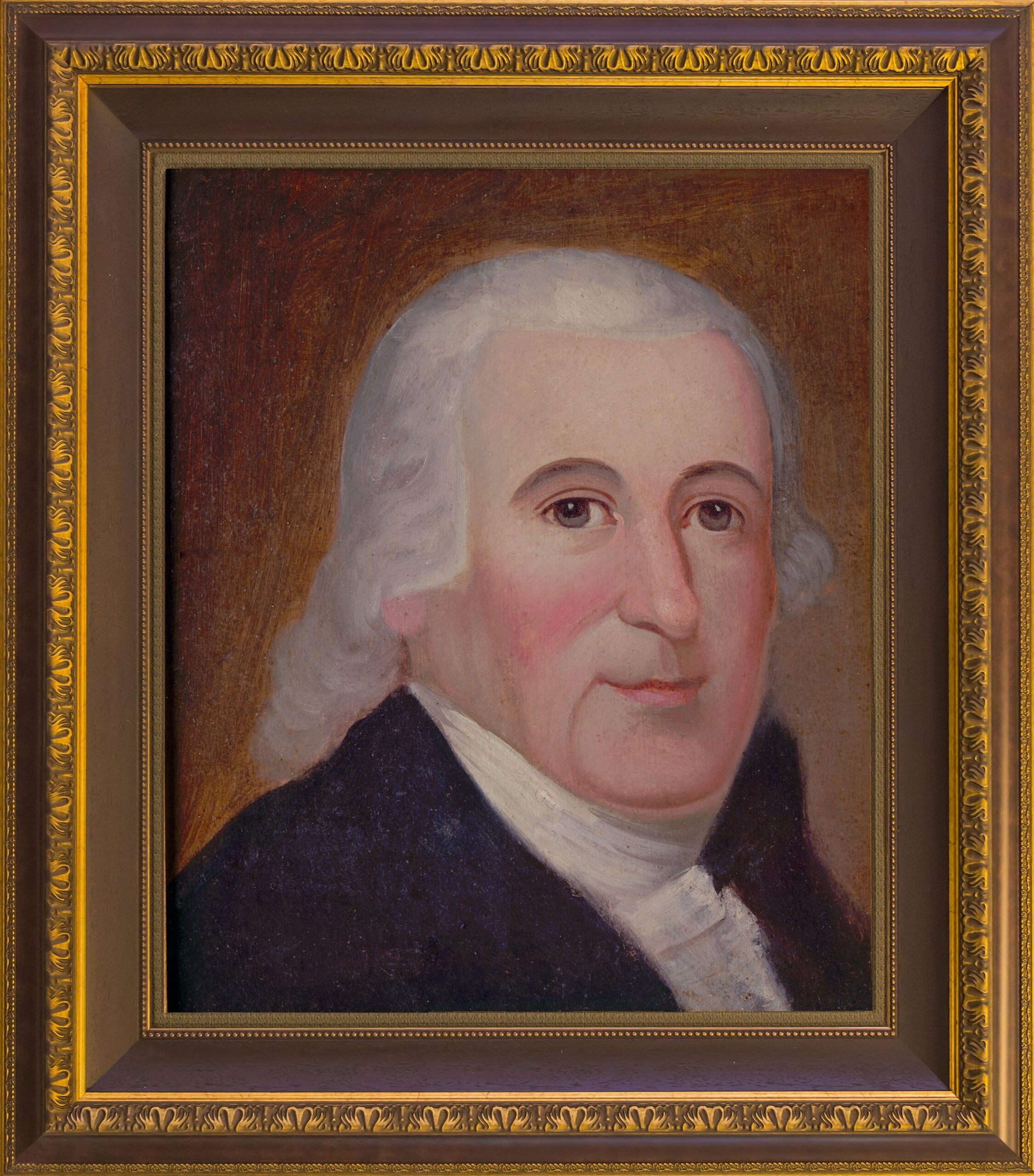
On 29 June, the South Carolina delegate Edward Rutledge (1749–1800, shown above) wrote to John Jay, another delegate known to oppose independence at that time. Jay had gone home to New York to serve in that colony’s legislature. Rutledge wrote frankly:
I write this for the express Purpose of requesting that if possible you will give your Attendance in Congress on Monday next [1 July]. I know full well that your Presence must be useful at New York, but I am sincerely convinced that it will be absolutely necessary in this City during the whole of the ensuing Week.

A Declaration of Independence, the Form of a Confederation of these Colonies, and a Scheme for a Treaty with foreign Powers will be laid before the House on Monday.

Whether we shall be able effectually to oppose the first, and infuse Wisdom into the others will depend in a great Measure upon the Exertions of the Honest and sensible part of the Members. I trust you will contribute in a considerable degree to effect the Business and therefore I wish you to be with us.

Recollect the manner in which your Colony is at this Time represented. [George] Clinton has Abilities but is silent in general, and wants (when he does speak) that Influence to which he is intitled. [William] Floyd, [Henry] Wisner, [Francis] Lewis and [John] Alsop though good Men, never quit their Chairs. You must know the Importance of these Questions too well not to wish to [be] present whilst they are debating and therefore I shall say no more upon the Subject.

I have been much engaged lately upon a plan of a Confederation which [John] Dickenson has drawn. It has the Vice of all his Productions to a considerable Degree; I mean the Vice of Refining too much. Unless it is greatly curtailed it never can pass, as it is to be submitted to Men in the respective Provinces who will not be led or rather driven into Measures which may lay the Foundation of their Ruin. If the Plan now proposed should be adopted nothing less than Ruin to some Colonies will be the Consequence of it.

The Idea of destroying all Provincial Distinctions and making every thing of the most minute kind bend to what they call the good of the whole, is in other Terms to say that these Colonies must be subject to the Government of the Eastern Provinces [i.e., New England].

The Force of their Arms I hold exceeding Cheap, but I confess I dread their over-ruling Influence in Council, I dread their low Cunning, and those levelling Principles which Men without Character and without Fortune in general Possess, which are so captivating to the lower Class of Mankind, and which will occasion such a fluctuation of Property as to introduce the greatest disorder.

I am resolved to vest the Congress with no more Power than what is absolutely necessary, and to use a familiar Expression to keep the Staff in our own Hands, for I am confident if surrendered into the Hands of others a most pernicious use will be made of it.
I don’t think we know when Jay received this letter. However, he was too busy with provincial business to respond until 6 July, and by that time the question of independence had been decided.

TOMORROW: And Rutledge had changed his vote.

Wednesday, March 11, 2015

Congress Argues about the Black Soldiers in the Continental Army

The official record of the Continental Congress on 26 Sept 1775 says:
The Committee appointed to prepare an answer to General [George] Washington’s letters, reported the same, which was read and agreed to.

Ordered, That the same being transcribed be signed by the president and forwarded immediately.
In fact, there was quite a vigorous debate that day, but secretary Charles Thomson (shown above) was suppressing news of any potential rifts among the colonies.

New Jersey delegate Richard Smith kept a private diary of the proceedings, and his entry for that day began:
Tuesday 26 Septr. Comee. brought in a Letter to Gen Washington, in the Course of it E[dward] Rutledge [of South Carolina] moved that the Gen. shall discharge all the Negroes as well Slaves as Freemen in his Army, he (Rutledge) was strongly supported by many of the Southern Delegates but so powerfully opposed that he lost the Point
The presence of black soldiers in the Continental Army remained a potent issue. On 5 October, John Adams wrote to two of Massachusetts’s generals asking for more information. This is what he told William Heath:
It is represented in this City by Some Persons, and it makes an unfriendly Impression upon Some Minds, that in the Massachusetts Regiments, there are great Numbers of Boys, Old Men, and Negroes, Such as are unsuitable for the service, and therefore that the Con­tinent is paying for a much greater Number of Men, than are fit for Action or any Service. I have endeavoured to the Utmost of my Power to rectify these Mistakes as I take them to be, and I hope with some success, but still the Impression is not quite removed.

I would beg the favour of you therefore sir, to inform me Whether there is any Truth at all in this Report, or not.

It is natural to suppose there are some young Men and some old ones and some Negroes in the service, but I should be glad to know if there are more of these in Proportion in the Massachusetts Regiments, than in those of Connecticutt, Rhode Island and New Hampshire, or even among the Rifle Men [from the Middle Colonies].
Presumably Adams wrote much the same thing to Gen. John Thomas, but that letter appears to have gone underground since a sale in 1948. I discussed Heath’s and Thomas’s replies back here.

Gen. Washington himself had grumbled to the Congress back in July about “the Number of Boys, Deserters, & Negroes” in the Massachusetts force. However, only the black men had become such a bone of contention in the Congress. And though Rutledge didn’t carry his point in September, the southerners won the debate the next month: Washington and a three-man Congress committee that included two southern planters agreed to remove all black soldiers from the Continental Army at the end of the year.

But that wasn’t the end of the story, as I’ll describe tomorrow evening in Cambridge.

Wednesday, February 01, 2012

Quintal on Black Soldiers in the Continental Army, 7 Feb.

On Tuesday, 7 February, at 7:30 P.M. in Lincoln’s Bemis Hall, George Quintal, Jr., will speak on the role of black soldiers in the American Revolution. The Lincoln Minute Men will host this presentation.

Back in 2005, Quintal assembled a study of African-Americans and Native Americans in the provincial forces during the Battles of Lexington and Concord and Bunker Hill for the National Park Service, and I know he’s continued to research since. (There’s a preview of that study on Google Books. Unfortunately, but the Government Printing Office says it’s no longer available.)

Anyone reading the Massachusetts Provincial Congress’s report about the opening day of the war saw that among the wounded was “Prince Easterbrooks (a Negro man)” of Lexington. Salem Poor fought notably in the Battle of Bunker Hill.

But for a major slaveholder like Gen. George Washington, the sight of armed black men was at the least novel, and probably a bit disturbing. He saw it as evidence the New England recruiters had scraped the bottom of the barrel. In his first report back to the Continental Congress, he wrote:
From the Number of Boys, Deserters and negroes which have inlisted in this Province, I entertain some doubts whether the Number required, can be raised here…
That news seems to have produced even more anxiety among the some of the Congress delegates, particularly those from colonies with large enslaved black populations. In September the South Carolina delegate Edward Rutledge (shown above) proposed discharging all African-American men from the army.

According to New Jersey delegate Richard Smith, Rutledge “was strongly supported by many of the Southern Delegates but so powerfully opposed that he lost the Point.” Like a lot of other controversial matters, that debate was kept out of the Congress’s official record. But the vote didn’t settle the question.

TOMORROW: John Adams writes home for reassurance.