J. L. BELL is a Massachusetts writer who specializes in (among other things) the start of the American Revolution in and around Boston. He is particularly interested in the experiences of children in 1765-75. He has published scholarly papers and popular articles for both children and adults. He was consultant for an episode of History Detectives, and contributed to a display at Minute Man National Historic Park.

Subscribe thru Follow.it


•••••••••••••••••


Showing posts with label Westboro. Show all posts

Sunday, January 19, 2025

“Going to Mendon to put himself under the Care of Dr. Pope”

Yesterday we left Mary Forbes, wife of the Rev. Eli Forbes of Gloucester, being treated in Boston by the cancer specialist John Pope for a tumor in her breast in the spring of 1775.

On 15 April, news came that the lump “came out in a Body, near of the Bigness and Shape of a Sheeps Kidney.”

It’s not clear whether the Forbeses were still in Boston when the war began four days later. If so, they still had access to Dr. Pope, but he might not have had the materials to make his medicines. And of course there were the dangers of attack and starvation.

The Forbeses may have left just before the war began or soon after, but in any case they were in the countryside by June. So was Dr. Pope. On 30 June Mary’s father, the Rev. Ebenezer Parkman, wrote in his diary:
My Daughter Forbes goes to Mendon in search of her Doctor, Pope: her Breast has Twinges, and she wants some of his [??] salve.
On 19 July, Isaiah Thomas’s Massachusetts Spy, now relocated to Worcester, published this notice:
This is to inform the public, that John Pope who of late years hath been much noted for curing inveterate Cancers, and the most malignant Ulcers at Boston, hath by reason of the deplorable situation of that town removed to Mendon, where any who want his assistance may by enquiring at George Aldrich’s of said Mendon find the place of his Residence.
Aldrich (1715–1797) was a Quaker, son of a prominent Quaker preacher.

On 13 September, Parkman reported on a sermon, adding: “Mr. Forbes [and Mrs. Forbes?] (having been to Dr. at Mendon about her Breast) came.” 

Pope continued to have a reputation as a healer, and on 17 Feb 1776 the minister wrote: “Mr. Edwards Whipple here. He has a Cancer on his Lip—is going to Mendon to put himself under the Care of Dr. Pope—and desires public prayers tomorrow for him.”

However, by that time Mary Forbes was dead. On 19 January her father wrote:
Billy comes from Concord—with The Heavy News, and Letter from my dear son Forbes! Of my most dear Child Mary’s Departure on the 16th at Eve, between 9 and 10 o’Clock! O Lord, Help!
Mary Forbes was fifty years old when she died.

The Rev. Eli Forbes married three more times, and his last wife was Mary’s younger sister Lucy, who by that time was widow of the military engineer Jeduthan Baldwin.

TOMORROW: John Pope’s travels.

(The picture above shows Gloucester’s first meetinghouse as depicted by Fitz Henry Lane.)

Tuesday, September 03, 2024

“Hostilitys have commenced at Cambridge”?

Here’s another primary source on the “Powder Alarm” of 1774 that I’ve quoted before, but only eight years ago.

These are two entries from the diary of the Rev. Ebenezer Parkman of Westboro.

Parkman really didn’t like conflict, so he hung back from political actions his parishioners and even his sons advocated. I recently traced his losing battle to keep people in town from committing to the Solemn League and Covenant boycott; that comes up here, too.

Naturally, Parkman was most uncomfortable with the idea of his farmworker, neighbors, son, and others marching off to confront the redcoats.

But the real story of these entries is how much misinformation and confusion the people of central Massachusetts were dealing with. The false rumor that the regulars had killed people in Cambridge on 1 September ended up reaching Westboro first as a false rumor that there was shooting on 2 September and “Some [victims] at least may be of Westborough.” That wasn’t completely refuted until the next day.
1774 September 2 (Friday). This morning was ushered in with Alarms from every Quarter, to get ready and run down to Boston or Cambridge. The Contents Magazine of Powder at Winter Hill had been carryed off — namely [550?] Barrells; by Treachery; etc. This is told as the Chief Affair.

72 of our Neighbours marched from Gales (tis said) by break of Day; and others are continuely going. My young man [Asa Ware] goes armed, with them.

About 5 p.m. Grafton Company, nigh 80, under Capt. Golding, march by us.

N.B. Squire [Francis] Whipple here. Says he is ready to sign [the Solemn League and Covenant] etc.

It is a Day of peculiar Anxiety and Distress! Such as we have not had — Will the Lord graciously look upon us; and grant us Deliverance — for we would hope and trust in His Name! We send for Mrs. Spring and her two Children to be here with us, while her husband is gone with the People. Breck [the minister’s son] returned from Lancaster.

At Eve we have most sorrowful News that Hostilitys have commenced at Cambridge, and that Six of our people are killed; that probably Some at least may be of Westborough. Joshua Chamberlin stood next (as it is related) to one that was slain. We have many Vague accounts and indeed are left in uncertaintys about Every Thing that has occurred.

Sutton soldiers — about 250, pass along by us — but after midnight are returning by reason of a Contrary Report. Mr. Zech. Hicks stops here. Breck is employed in the night to cast Bulletts. A Watch at the Meeting House to guard the Town stock etc. Some Towns, we hear, have lost much of theirs, as Dedham, Wrentham etc.
Westboro was using its meetinghouse as its militia armory, as Lexington would do in April 1775.
1774 September 3 (Saturday). Capt. Benjamin Fay came here between 2 and 3 o’Clock in the morn in much Concern and knew not what to do. After Light and through most of the forenoon, vague uncertain Reports. Sutton men that had gone to Deacon Wood, came back to go down the Road again.

My son Breck with provisions, Bread, Meat, etc., Coats, Blanket etc., for it was rainy, rides down towards Cambridge to relieve Asa Ware, Mr. Spring, and others who were unprovided.

About noon the Sutton Companys come back again and go home, Rev. [Ebenezer] Chaplin among them. So do the Grafton men.

Mr. Abraham Temple relates to me, that he, having been as far as to Cambridge and himself Seen many of the Transactions, that there were no Regulars there, no Artillery, no body Slain — but that Lt. Gov. [Thomas] Oliver, Messrs. [Samuel] Danforth, Joseph Lee, Col. [David] Phips (the high Sheriff) had resigned and promised that they would not act as Counsellors — that Mr. Samuel Winthrop computed there were about 7000 of the Country people had gathered into Cambridge on this Occasion — that it was probable, as he (Mr. Temple) conceived, that the Troubles would subside.

N.B. When the Sun run low, Our Company returned (consisting of Horse and Foot about 150). With them were my Son and my young man — all without any Evil Occurrance. To God be Praise and Glory! I Suppose Capt. [Jonathan] Maynard and those who were with him are returned also.
It’s also notable that the Sutton minister Ebenezer Chaplin accompanied men on this militia alarm. He was much more politically active than Parkman, chosen for the 1779 convention to write a constitution for Massachusetts and the 1788 convention to consider the new U.S. Constitition.

Chaplin also seems to have been a volatile man. In 1775 Isaiah Thomas declined to run some of his essays in the Massachusetts Spy, and the minister responded by preaching that the printer was an atheist and a Tory.

In 1791, the Rev. Mr. Chaplin locked up his daughter when she wanted to marry a popular young man. She died. The parish (which eventually became Millbury) dismissed Chaplin from their pulpit. Quite a change from seventeen years earlier, when they went off to possible war together.

Monday, July 29, 2024

“Instead of the Agreement which the people have signed”

By the first week of July 1774, people in Westboro had started to sign the Solemn League and Covenant, promising not only not to buy goods from Britain but not to do business with anyone who did.

The town’s minister, the Rev. Ebenezer Parkman, had shown that he didn’t think that was a good idea. He wasn’t coming out and condemning this latest boycott, either, though. He just wanted to avoid controversy.

Supporters of the non-consumption movement kept up pressure on Parkman, presumably because if he came out on their side it would be even easier to sign up everyone else in town. Members of Westboro’s committee of correspondence visited Parkman again on 7 July, as he recorded in his diary:
Messrs. Daniel Hardy, Edwards Whipple etc. here. The former is disturbed that I would not so much as read, at the late Town-Meeting, what their Committee had prepared to be signed. I gave him some Reason for my refusing: namely that I was aware that if I heard it, I must either approve or condemn it — but do which I will, I must of necessity be blamed.

If I approved of their Draught, I must have exposed my Self to the resentments of Authority which I must teach all Men to avoid: for I must teach and injoin that “every soul be subject to the higher powers” — “to obey Magistrates” — as Rom. 13.1 and Tit. 3.1. If I Should dislike it, I was aware that they would not be easily turned aside notwithstanding from what they had done. I was not o’ mind to render my Self Obnoxious either way.
Soon Parkman received word from his son that “at Boston and other Towns, they did not conform to the Governors late proclamation etc.” Gov. Thomas Gage’s threats were having little effect.

Rather than openly oppose the boycott, some people suggested that communities shouldn’t commit to any action until they heard what the upcoming Continental Congress recommended. But that body wouldn’t meet for another two months. Some towns instead added clauses to their Solemn League and Covenant votes saying that they could revisit the details based on that congress’s resolves.

Parkman continued to try his own delaying tactics on 18 July:
The Town Met again on the Article of Signing the Engagement to break off the Commercial Dealings with Great Britain. They Send their Committee to Me to let me see what they have drawn up; and if I pleased in Order to my Signing it. I sent my Regards to the Town, with my Request, that it might be suffered in my Hands a little while for my Review, and I will make them Some Return before or at their next Meeting.
Nine days later, Dr. James Hawes of the town committee and his wife visited the minister in the afternoon. Avoiding another political sore spot, Parkman offered chocolate instead of tea. Hawes left a copy of Westboro’s agreement.

The next day, Parkman wrote:
Transcribed the Towns Agreement for my own use. I cannot, as it is, like it: It is ill draughted.
Ah, there was the problem! The prose. (Not.)

On 1 August, the minister once again recorded a gathering “on the Affair of Subscribing the Agreement” that didn’t make it onto the official record of town meetings. His own son Breck “found it necessary to subscribe,” he wrote.

By this point Parkman had come up with his own form of the pledge (which I don’t think survives). But the men of Westboro no longer cared about what their minister thought. “I went to the Meeting House with a paper fit to be subscribed and read it to a Number of persons,” he wrote; “but the Town were busy and did not call for it.”

At that same meeting, Westboro agreed to help pay for the Massachusetts delegates’ expenses going to Philadelphia; that money was being collected outside the province’s regular taxation process to avoid the governor’s veto. Ministers were usually exempt from taxation, but Parkman wrote: “I sent my Quota thereto.” He was willing to avoid this extralegal equivalent of tax to avoid controversy. (This was also the day Calvin Piper got badly hurt falling from a horse.)

Finally Parkman recognized he wouldn’t convince anyone but himself about the boycott. On 4 August he wrote:
N.B. Instead of the Agreement which the people have signed, I have drawn up what I think may be more Safe for me, if I shall be obliged to Sign any thing.
The town had yet another unrecorded meeting “upon some of their Liberty Affairs” on 8 August. Four days later, Parkman stated that he had received an issue of the Boston Gazette with news of the Massachusetts Government Act.

For years the province’s Whigs had been warning people that there was a conspiracy to take away people’s legal rights. This new law curbed town meetings, eliminated the elected Council, increased the royal governor’s appointive powers, and limited jury pools. The radicals’ dire warnings, which moderates like Parkman had thought overblown, appeared to be coming true. In his diary he wrote: “May God Sanctifie to us this heavy stroke! and help us rightly to improve such privilege and Libertys as remain!”

Sunday, July 28, 2024

“I prayed they would not be hasty in signing”

Gen. Thomas Gage’s 30 June 1774 proclamation against the Solemn League and Covenant boycott reached the town of Westboro on 2 July.

The Rev. Ebenezer Parkman wrote in his diary: “N.B. Governor Gage has issued out a Proclamation against Combinations—Assemblys for signing a solemn League and Covenant etc.”

By that point, the townspeople had been debating the call for a strict non-consumption pact for two weeks. They were looking at both the Boston and Worcester versions. Their new committee of correspondence had already spoken with Parkman, as well as hearing from the Rev. Nathan Stone of Southboro.

So what effect did the governor’s royal proclamation have? It certainly slowed down one important person in town, but he was already leery of anything that might be controversial. That person was the Rev. Mr. Parkman himself.

On 4 July he wrote about a meeting never entered into the official town record:
Town Meet on the Affair of signing some Draught, for the public Relief. Old Mr. Whitney and Capt. Jonas Brigham are sent to me to desire me to go and assist ‘em, by prayer and advice. Went and prayed.

After prayer the Moderator (Mr. Daniel Forbes) requested me to communicate to them my Thoughts, if I had prepared something etc. I told him I had made no formal Draught: but read the Introduction and some other parts of my Remarks on the Covenant from Boston. Also what I wrote at Bottom of the Letter signed William Cooper.

Sundry persons urged my tarrying and advising them with respect to what their own Committee had drawn up, but I answered that I did not care to meddle with it; for I conceived it was not safe for me to do it, Safe either for me or for them, especially by reason of the Governors Proclamation. I craved the Liberty to retire; not but that I was heartily ready and willing to improve my small Abilitys to my utmost in their service.

It was asked me whether I would read their paper if it were Sent Me. I did not refuse to do that in [onelay?] for them and I said I had no desire or Intention to offend any one of them all, not the least; but intreated, and challenged the Liberty of Briton and a New Englandman: and I prayed they would not be hasty in signing every thing; I could not advise to signing any Thing Seeing there was no immediate Necessity; Boston itself had not and their meeting was adjourned to the 19th.

I conceived they would know better how to conduct if they waited a while, and had better perhaps till after the proposed Congress. I observed that there was not such an Alternative as was mentioned in the Covenant, viz. of Suffering Blood-shed or slavery, unless we would withdraw Commerce with Great Britain; for by the News from Newport it appeared that their Messengers to the Congress would propose a general Address and Supplication to the King from all the Colonys jointly.

Before I retired I openly declared, for the Ease and satisfaction of all their minds, that I had signed no paper of Address or Recommendation of the late Governor and that I could not but take it ill that numbers of persons had been ready to take up a Reproach against their Neighbour.

When I retired, they, as I understood went on to ripen for signing, and that many did sign.
Despite Parkman’s clear reluctance, men at that (unofficial) gathering joined the boycott. Two days later, the minister continued to fret: “all Conversations are upon the Governors Proclamation prohibiting Combinations and Covenants against Great Britain.” But, like Gage, he had lost his sway over his parishioners. Now he was trying to preserve his standing.

TOMORROW: Holding out to the last.

(The picture above shows the Jonah Warren House in Westboro, the oldest part estimated to have been built in the 1720s.)

Friday, July 26, 2024

“They came to hear my Sentiments of the Covenant”

The town of Westboro provides a good look at how one rural community responded to the invitations from Boston and Worcester to join the Solemn League and Covenant boycott in the summer of 1774.

The Boston committee of correspondence sent out its call on 8 June. Five days later, the Rev. Ebenezer Parkman (shown here) wrote in his diary:
Town Meeting to consider a Letter from the Town Clerk of Boston and there is come also a printed Covenant for them to Sign, in which they are to join with Others, and Solemnly bind themselves to renounce all Trade with Great Britain till the Bill for blocking up the Harbour of Boston Shall be repealed.

N.B. Little is said about supplicating the Throne of Grace on this Great Occasion. But they Chose a Committee to consider what is best to be done, and report to the Town.
The town meeting record for that day shows that Westboro set up a committee of correspondence. Legally, the warrant for that meeting didn’t mention the proposed non-consumption agreement, only Boston’s 12 May plea for support. But Parkman’s diary shows the Solemn League and Covenant was part of the discussion.

It’s notable that most of that 13 June meeting addressed military preparation, approving the purchase of a “4 Pounder and 4 Hundred Wt of Ball,” a carriage for that artillery piece, and gunpowder, and generally getting ready for “an allarum.” In “this dark and distressing Time of Perplexity,” the town majority already saw armed defense as worth spending money on.

Westboro didn’t record another town meeting until October, when men chose representatives to the Massachusetts Provincial Congress. But Parkman’s diary shows how his parishioners continued to discuss the non-consumption agreement—two committee members visited him the next day. 

On 17 June, the minister wrote that six of the town’s committee came to him:
They came to hear my Sentiments of the Covenant which they had received from Boston and another from Worcester, which I, in part gave them. It was Said from among the Committee that they Should be glad I would be at the Town meeting, when they were to report.
Parkman then stated—and underscored—that on the afternoon of 20 June “The Town Meet on the Affair of Signing a Covenant of Non-importation etc.” That gathering didn’t make it into the official record. Perhaps it was deemed a committee meeting, or perhaps conversations without votes weren’t thought to need an official record.

Jonathan Bond, the first man designated for the town’s committee of correspondence, visited Parkman on 27 June:
Deacon Bond came and delivered me 4 Papers of the public affairs relative to Signing a Covenant etc. I copyed the Covenant with alterations.
Parkman probably diluted the text, given his reluctance for confrontation. The next day, the deacon’s son came by:
Thomas Bond here about the Boston papers, Covenant etc. Read him my Draughts: he Seems to fall in with them. He carrys back those I borrowed.
With Parkman’s blessing Westboro observed a fast on Thursday, 30 June. The Rev. Nathan Stone came from Southborough to preach. Parkman wrote:
Mr. Stone preached a.m. on Deut. 29.24.25. [Even all nations shall say, Wherefore hath the Lord done thus unto this land? what meaneth the heat of this great anger? Then men shall say, Because they have forsaken the covenant of the Lord God of their fathers, which he made with them when he brought them forth out of the land of Egypt]

N.B. At the End of the Sermon he delivered his Mind concerning the Covenant that is going about the Country to be Signed in all places by all persons, on highest Penalty. May God add His Blessing!
Discussions continued on 1 July:
N.B. Mr. Daniel Forbes one of the Committee of Correspondence here. Shewed him my Remarks on the Covenant etc. He desires me to let Dr. [James] Hawes (who is another) See some of my papers concerning those Matters.
But then another voice entered the conversation.

TOMORROW: Here comes the general.

Thursday, October 13, 2022

Winter Is Coming at Minute Man Park, 15 Oct.

On Saturday, 15 October, Minute Man National Historical Park will host a day of special programming on the theme of “Preparing for Winter, Preparing for War.”

The event description explains:
Autumn in Colonial New England was a time of change and transition when many gathered to share the fruits of summer labor and prepare to survive the coming winter. In 1774 it was also a time of preparation for the coming conflict; Colonial Militia mustered to train their soldiers and scrambled to secure military supplies. As Colonists ferried weapons and goods into Concord, local families brought in their harvests to be preserved as food sufficient to feed their family through the coming year.
October 1774 was a couple of months after the arrival of the Massachusetts Government Act from London, which produced massive resistance in the countryside. It was weeks after the “Powder Alarm” changed the de facto balance of power in the colony, and the same month when the Provincial Congress started to meet.

On the local level, at least some towns were ahead of that shadow legislature. Westborough had already voted to ramp up militia training and acquire artillery. Worcester had put actual money toward bringing cannon out of Boston, but its meeting balked later that month at buying powder and shot. In sum, there was a lot for people to talk about.

“Preparing for Winter, Preparing for War” will take place at the park’s Hartwell Tavern site in Lincoln from 10:00 A.M. to 5:00 P.M. on Saturday. It is free for all visitors, supported in part by the Friends of Minute Man Park.

A version of this event was scheduled for last fall before a more contagious variant of the Covid-19 virus spread. Since then, we’ve allowed yet more variants to evolve. So now’s the time for us to prepare for winter by getting up-to-date inoculations against both Covid and the flu. If there’s one species-changing lesson western civilization learned in the 18th and early 19th centuries, it’s how inoculations save millions of lives.

Sunday, September 04, 2022

How Massachusetts Militia Companies Trained for War

At Historical Nerdery, Alexander Cain shared some findings on the question of how often Massachusetts militiamen drilled in the charged months leading up to the outbreak of war.

Provincial law already required most men aged sixteen to sixty to drill with militia units four times a year. But with royal troops in Boston, Patriots saw a need to increase their preparedness—to demonstrate their determination to resist in order to make the government back down in the best case, to fight those redcoats in the worst.

Cain wrote:
Following the October 1774 orders of the Massachusetts Provincial Congress, provincial towns scrambled to put themselves onto a wartime footing. As part of the effort, many militia and minute companies passed resolutions or entered into covenants clearly outlining the expectations of military service. . . .

Amesbury resolved that its minute men would engage in “exercising four hours in a fortnight.” Two weeks later, the town modified its order and instructed its minute men to “[exercise] four hours in a week.” The residents of Boxford voted on March 14, 1775, “that the minute-men shall train one-half day in a week, for four weeks after this week is ended.”
Note that towns didn’t follow uniform standards on how much their minute companies would train. Because the Provincial Congress was a creation of the towns, without strict constitutional authority, it could recommend that men devote more time to military training, but it didn’t have the authority to require that. 

Each town could choose whether to form a minute company, what training schedule its militia companies would follow, and how men would be paid for their time—or if they were to be paid at all. As I wrote back here, Westborough’s town meeting debated at least twice whether to pay the minute men more than other militiamen and decided not to. Furthermore, as volunteers the men themselves had a lot of say in how much time they put in.

In Haverhill, Cain has noted, the meeting first decided its minute men should “be duly disciplined in Squads three half days in a Week, three hours in each half day.” (Did the reference to “squads” mean only parts of the whole company?) That schedule was replaced a week later with one requiring a full day of training once a week.

Cain also shared the transcription of a document from Haverhill prepared by Sgt. Mitchel Whittier, listing the men who belonged to the minute company and how often each had come to drills in March and April 1775.

The number of days men attended ranged from six down to one—or, if a horizontal line didn’t mean “ditto,” none. Only one of four sergeants and one of three corporals (“Coprel”) came on six days. Neither Capt. James Sawyer nor his two lieutenants showed up for all six drills. (Or perhaps there were more than six drills, and nobody showed up for all of them.)

The fact that so few men attended every drill strongly suggests that the community didn’t expect perfect attendance. As neighbors, they understood that illness, family responsibilities, bad weather, the farming workload, or other factors might keep a man from every training day. Nonetheless, the prevailing goal in rural Massachusetts in the early months of 1775 was to get more prepared for war.

Saturday, June 18, 2022

Calvin Piper in Sickness, War, and Peace

Yesterday we left eleven-year-old Calvin Piper of Westborough in bed after falling off a colt and banging his head in August 1774.

Dr. James Hawes gave the boy a poor prognosis. The Rev. Ebenezer Parkman came to pray with him.

After a few days, Hawes gathered some medical colleagues to consult and perhaps perform surgery to relieve pressure in Calvin’s skull.

But on that morning of 6 August, Calvin woke up feeling much better than before. He was no longer delirious or babbling. The surgeons reconsidered.

The Rev. Mr. Parkman wrote in his diary:
It was feared the Trepan must be used: but it was first determined to take off part of his scalp and examine his Head. We began with prayer. Dr. [Charles] Russel [shown here] performed the Operation, and finding the grumous Blood, and that there was no Fracture, desisted from any thing further.
So Calvin was sewn up and allowed to keep recovering on his own. Parkman visited him again a couple of days later, and then Calvin drops out of the minister’s diary, presumably going back to normal farm boy behavior.

Nearly two years later, as the British military was preparing to leave Boston, Parkman had to visit the Piper family again. On Sunday, 10 Mar 1776, he wrote:
At Even went to see Mrs. Piper, newly brought to bed, and is very low; prayed with her in her Distresses.
The next day, Parkman added, “She is in a dangerous state.” And on Tuesday:
Capt. Wheelock early, Suddenly, hastily calls me to Visit Mrs. Piper as being near her End. I rode speedily (before Breakfast — nay before Family Prayer), found her groaning as in very great Distress. Prayed with her, Commending her Case to God, most gracious and compassionate. . . .

Mrs. Piper dyed about noon, about 42 and an half.
The funeral was on Thursday, 14 March. The minister noted, “her Father Whitcomb and one of her Brothers were there.”

The Parkman diary thus contains some clues to the Piper family history. The mention of “Father Whitcomb” might indicate Mary Piper’s surname at birth. There were Mary Whitcombs born in Bolton and its parent town, Lancaster, in the 1730s. However, none was born in 1733 and thus “about 42 and an half” in 1776. It’s also possible that “Father Whitcomb” was a stepfather.

In addition, Parkman’s record confirms that this Mary Piper died in 1776. John Piper remarried the next year to a woman from Templeton named Mary White. That means there were two wives named Mary Piper having John’s children in quick succession, and some genealogies don’t recognize they were separate women.

Back to Calvin Piper: As he reached his late teens, he had a new stepmother. Did that push him to leave the house? Or did he want some adventure, or just need money? Whatever the combination of reasons, on 1 July 1780 Calvin enlisted among the “men raised to reinforce the Continental Army for the term of 6 months.” When he reported to the camp at Springfield, Calvin was recorded as seventeen years old, 5'4" tall, with a ruddy complexion.

Pvt. Piper served a little more than five months at West Point, New York, before being discharged. He liked the experience enough to reenlist the following June. By now he was an inch taller and had been trained as a tanner, perhaps in a family shop. This time there was a dispute about whether he was counted in the quota for Lancaster or Templeton—not that it mattered to him. Piper agreed to serve three years, but the war ended before that term was up.

The twenty-year-old veteran moved to Norridgewock in the district of Maine. In April 1785 he married Zeriah Parker there. Five years later, however, Mrs. Zeriah Piper remarried, indicating that Calvin Piper had died in his late twenties—about fifteen years after he escaped having a hole drilled in his skull.

Friday, June 17, 2022

“The Case of the poor Boy, Calvin Piper”

In 1758, a young man named John Piper bought farmland in Bolton. He married around the same time, and from 1759 to 1765 Mary Piper had four children in Bolton. The third was a boy named Calvin, born 11 Apr 1763.

In 1764 John Piper, alongside his brothers and several neighbors, started buying farmland to the west in the town of Templeton. The next year, John moved his family onto sixty acres there.

After another few years, the Piper family moved again, this time back east to Westborough. A family genealogist found no evidence John Piper bought land in that town and guessed he “had decided to rely on his work as a tanner to support the family.” It’s also possible that the Pipers were now poor enough they had to work on other people’s land.

On 29 Apr 1774, Westborough’s minister, the Rev. Ebenezer Parkman, wrote in his diary:
At Eve came Mr. John Piper who is newly come to live among us, and asks the privilege to communicate with us, as also that his Wife Mary, may; they being Members of the Church in Templeton.
The Pipers were trying to fit into the Westborough community and congregation.

That summer, many Massachusetts towns became even more roiled in imperial politics than they were already. On 1 August, Westborough had a town meeting about “Subscribing the Agreement” and “bearing of the Charge of the Congress.” 

On that same Monday, Parkman wrote:
Martin Piper, a Lad in his 12th Year, was thrown by a Colt, and his Head came down on a Rock, nigh Mr. Newtons. He was carryed in there. It was feared to be a mortal Blow. Mr. Newton came in haste for me. I went. He was delirious. Dr. [James] Hawes soon blooded him. He bled well. Vomited Several Times — inclined to sleep; when any thing was given him, he cryed out bitterly, but could not speak. I prayed with him. What a Warning! Especially to Youth! But how great the Mercy he was not killed! His parents much distressed.
As subsequent journal entries make clear, this was Calvin Piper. In his distress, and not knowing the family well, the minister mistakenly called him “Martin” (after another Protestant leader?).

Delirium, vomiting, sleepiness—those are all symptoms of a serious head injury. Parkman was not optimistic (but then he rarely seems to have been). The next day, the minister visited the house of militia lieutenant Joseph Baker “to see young Piper”—despite his injury, the boy had been moved. Parkman wrote, “He is no better. Prayed with him.”

On Saturday morning, a coterie of rural surgeons came to Baker’s house. In addition to the local Dr. Hawes, Parkman also listed Charles Russell of Lincoln (politically a Loyalist, but still valued as a doctor), Edward Flynt of Shrewsbury, and “a Number of Doctors besides being there on the Case of the poor Boy, Calvin Piper.”

Fortunately, there were now good signs. The minister reported that the boy “last Evening began to recover his senses and to Speak—and is this morning composed and utters himself pertinently.”

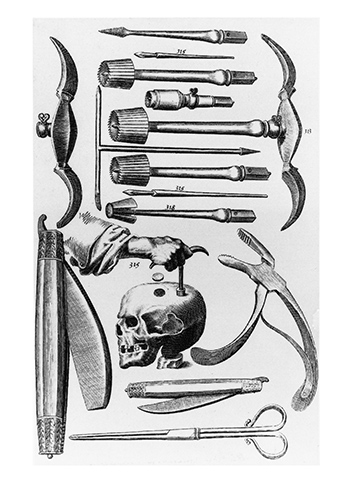
Still, those doctors had come prepared to trepan the kid—to drill a hole in Calvin’s skull to remove fluids and relieve pressure on his brain. They had no doubt brought their drills and other tools. It would have been a shame not to use any of that equipment.

TOMORROW: The operation and the aftermath.

Wednesday, April 27, 2022

“Money to pay said Company for said service”

Yesterday we reached the moment in Westborough’s town meeting on 30 Dec 1774 when the town voted not to pay its minute men anything extra.

Someone at the meeting then asked “if the Town expected any thing more of the Minit men than they did of other men.” The clerk’s notes don’t say who, but I can’t help but imagine it was Edmund Brigham or some other officer of the minute company, possibly working hard to keep his temper. After all, those men had already been training for months. Other towns had chosen to pay for extra training.

But that question, too, “past in ye negative.” Westborough officially decided to make no distinction between the minute company and its other militia companies aside from the name that the minute men had apparently taken for themselves.

Another town meeting stretched over 7 and 8 Feb 1775. Some citizens again brought up the question of special duties or pay for Westborough’s minute men. Ultimately the town “Voted at that all the Soldiers both minit men and others Train once a Fortnit four hours in a Day without pay.” This was a significant increase from the usual pace of four militia training days a year, but the majority of the town still wouldn’t expend any extra money or grant the minute company special status.

Someone—again we don’t know who—asked the town to reconsider that vote. The attendees agreed and went home for the night. Perhaps they agreed in order to go home for the night.

Official town records don’t describe any other meeting until March. However, on 20 Feb the Rev. Ebenezer Parkman wrote in his diary about an imminent “Town Meeting on many Accounts, viz. whether they shall pay Minute Men; Contribution to Relief of Boston etc.” Charity for Boston’s poor was another financial question.

Parkman attended what he called a “Town Meeting and Training” the following afternoon. He spoke in favor of charity. He also told his congregants “exerting themselves to obtain Military skill, Arms, Ammunition etc., to improve their Time Well when they have T[own]. Meetings and Trainings — to endeavour after Unity and Harmony (for I perceived there were Jarrs).” One of Samuel Johnson’s definitions for the word “jar” was “Clash; discord; debate.”

That public discussion never went on the records as an official town meeting. There’s still no record of Westborough deciding to treat the minute company differently. People appear to have tried to get along.

On 6 March the town had its traditional big meeting of the year, electing officials and handling other annual business. That long gathering decided to make the men training on the town’s cannon part of the minute company.

Then war broke out on 19 April. Three Westborough militia companies mobilized, as David A. Nourse’s thorough research has shown. Some of those men signed on to serve for the rest of the year as part of the Massachusetts army, then the Continental Army. Others turned out for later militia duty on behalf of the state.

On 27 November, Capt. Brigham tried one more time. He submitted a document to the Westborough selectmen that said:
Gentlemen

The following is an Exact Acct. [of] what Service the Minute company performd in the training field according to the vote of the Town pass’d sometime in the last winter, and desire you wd. give me an order on the treasurer for the money to pay said Company for said service.
The document then listed forty-six men. Most were labeled as having served seven days, a couple six or five.

Notably, Westborough had just convened another town meeting on 13 November to discuss town bills, including extra pay for the Rev. Mr. Parkman, but pay for militia training didn’t come up.

At the big town meeting on 4 Mar 1776, the town elected Edmund Brigham as a constable. One of his new duties was to collect taxes. There was still no official mention of pay for his company.

However, if we look on the back of Brigham’s request for training pay, there’s a date of 16 Mar 1776 and the signatures of all the men named on the front, attesting that they had indeed received pay. Somehow, fourteen months after the issue was first raised, despite two town meetings voting to the contrary and no recorded vote in favor, Westborough officials came up with money for the minute men.

Tuesday, April 26, 2022

“To yncorage ye minit men so called”

In the fall of 1774, as I described yesterday, the Massachusetts Provincial Congress invited towns to form militia companies of “fifty privates, at the least, who shall equip and hold themselves in readiness, on the shortest notice.”

These special companies became known as “minute companies” or, alliteratively, “minute men.”

Not every town acted on the congress’s suggestion, however. For example, the smallish town of Lexington never formed a minute company. Technically, none of the militiamen on Lexington common during the first skirmish of the war were minute men.

Towns also differed in how they defined their minute men. Braintree, a larger town, fielded several companies of militia. Its town meeting decided to pay all members of the militia the same hourly rate for extra drills, but it asked ordinary companies to train for three hours every week and the minute company to train for four hours. Everyone was doing more military training that winter.

For Westborough we have two sources of information now handily digitized and on the internet. One is the handwritten record of the town meetings. The other is the diary of the town’s longtime minister, the Rev. Ebenezer Parkman.

As early as June 13, Westborough started to beef up its military defenses, approving the purchase of a cannon and the equipment to use it. In September, men from the town participated in closing Worcester County’s court and in the county convention that issued the first call for minute companies. But the meeting records don’t mention starting a minute company that summer or fall.

On 28 November, the Rev. Mr. Parkman wrote that there was a “Training of the Company of Minute Men, and Capt. [Seth] Morse’s Company.” Other entries identified the captain of the minute company as Edmund Brigham, who at the time was involved in a simmering dispute with the minister over a church matter. Evidently Brigham and his men had decided on their own to start doing more drills.

The Parkman diary mentions other groups, including “two artillery companys” active by August and “the (more Elderly) Alarm Men.” The alarm list was a standard part of the militia system, composed of men over age fifty and generally assigned lighter duties close to home.

Parkman also noted “a Number of Boys under their Capt. Moses Warrin.” Moses Warren (1760-1851) was only fourteen and not yet eligible to serve in the militia. His gang was probably just playing at being a military company, learning the drill to show off.

The first time the Westborough town records explicitly mention the minute company came on December 30. A town meeting on that date addressed the question:
To see if ye Town will grant any money to yncorage ye minit men so called to Train & Exercise themselves so that they may be fit & Quallified for Public Service if called there unto.
Everyone understood that “money to yncorage ye minit men” meant paying those men for their extra training. How Westborough defined its minute company thus came down to the issue that always roils town meetings—money.

The records show that proposal “past in the Negative”—i.e., the voters of Westborough chose not to pay the town’s minute men.

TOMORROW: Reconsidering.

Sunday, April 24, 2022

Missing Militia Companies from Westborough

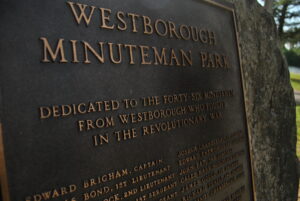
In 1975, during the Bicentennial, the town of Westborough dedicated a swath of land next to its reservoir, Sandra Pond, as Minuteman Park.

The town installed a bronze marker listing the names of all the members of its minute company from 1775. Those names appear to have come from the first part of The History of Westborough, Massachusetts, written by the Rev. Heman Packard DeForest and published in 1891.

More recently, Westborough resident David A. Nourse noticed some problems with that marker.

There were small errors, such as naming the captain of the minuteman company as Edward Brigham instead of (as the name appears in the local history, the original muster roll, and other documents) Edmund Brigham. Nourse spotted several other names changed to more common present-day spellings, one man with the wrong rank, and what looks like a last-minute substitute left off entirely.

But the bigger problem, Nourse felt, was that the marker commemorated only one company of local men who responded to the Lexington Alarm. Westborough had three militia companies, and all three submitted rolls to the Massachusetts government listing men who had marched on 19 April. In all there were 101 militiamen, and the plaque named only 46.

In April 2021, Nourse submitted a proposal to the Westborough select board proposing an additional plaque listing all 101 men, making sure the names appeared as they did in the muster rolls.

Nourse’s proposal on “Westborough’s Two Forgotten Revolutionary War Militia Companies” came with an impressive amount of historical documentation, including images of the three muster rolls from the state archives submitted by Brigham, Capt. Seth Morse, and Capt. Joseph Baker.

Nourse also found that DeForest’s book hadn’t transcribed any of those muster rolls but rather Brigham’s November 1775 record of distributing pay for five to seven days of training in the preceding winter. This sheet of paper includes every man’s signature as he received his pay—a striking historical record but not exactly the same thing as an April 1775 muster roll.

The select board referred the question of a new monument to the town’s Trustees of Soldiers’ Memorials. Before making any rash expenditures, they sought to have Nourse’s research vetted. That’s when a new corps entered the action: bloggers.

Anthony Vaver is both Westborough’s Local History Librarian and the creator of the Early American Crime site. On behalf of the town, he contacted me and Alexander Cain, who shares his Revolutionary research at Historical Nerdery. Vaver told me:
the Trustees are particularly interested in learning the difference between a “Minuteman” vs. a “Militiaman,” if indeed there is one. The park where the memorial sits is called Minuteman Park, and the memorial, of course, is meant to honor that name. We want to make sure that the definitions we are using are commonly, if not universally, accepted.
It turned out that Westborough had debated that very question in 1774 and 1775.

TOMORROW: The invention of the minutemen.

Thursday, September 17, 2020

Young Doctors in Marlborough

Yesterday I introduced the figure of Dr. Ebenezer Dexter, Marlborough’s leading doctor in the 1760s.

On 3 May 1769, however, the Rev. Ebenezer Parkman of nearby Westborough wrote in his diary: “Dr. [Edward] Flynt came from Dr. Dexter, and says the latter will hardly live through the Night.”

Indeed, Dr. Dexter died the next day. On 6 May Parkman reported: “Dr. Dexter was buryed at Marlborough.”

The doctor’s gravestone, shown here courtesy of Find a Grave, says, “He was an Eminent Physician but was Subject unto Death even as other men.”

The doctor’s death left an opening in his town. Two young physicians soon moved into Marlborough, hoping to establish their own practices.

One was Amos Cotting, born in Waltham in 1749 (under the name Cutting, which would have been apt for a surgeon). He graduated from Harvard College in 1767 and then earned his M.A., presumably while studying medicine. Charles Hudson’s history of Marlborough said Cotting came to that town “On the death of Dr. Ebenezer Dexter, 1769,” but he wasn’t on the list of men paying the poll tax in 1770, so he may have arrived later.

The other young doctor was Samuel Curtis, eldest son of the Rev. Philip Curtis of Stoughton. He graduated from Harvard a year before Cotting and also gained an M.A. Curtis was apparently starting to practice medicine in Roxbury when he learned about the sudden opportunity in Marlborough. Hudson quoted from the town’s warning-out records to reveal what happened next:
Dr. Samuel Curtis came to town, June, 1769; came last from Roxbury. Taken in by widow Dexter.
The following month, the Rev. Mr. Parkman rode to Marlborough to see a sick relative, and he also recorded: “Visit Mrs. Dexter and Dr. Curtis who lodges there.”

Curtis had advantages over Cotting in any competition to become the town’s favorite physician. He was slightly older, and as son of a minister instead of a farmer he was probably more genteel. But the big edge appears to have been that he was now living in Dr. Dexter’s house, thus endorsed by Dr. Dexter’s wife, all ready to see Dr. Dexter’s patients.

The widow Dexter was still only in her early thirties, with four young sons to care for and an estate to maintain. Then, in early 1771, Lydia Dexter became pregnant.

TOMORROW: Can this marriage be saved?

Wednesday, September 16, 2020

Dr. Ebenezer Dexter Practicing Medicine in Marlborough

Ebenezer Dexter was born in 1729, son of the Rev. Samuel Dexter of Dedham.

Ebenezer chose to go into medicine, and after marrying Lydia Woods, daughter of a selectman in Marlborough, he set up his practice in that town. In 1754, the year of their marriage, Ebenezer was twenty-five and Lydia was eighteen.

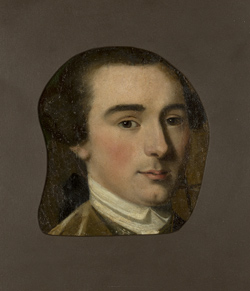
We can glimpse Dr. Dexter at work in the diary of the Rev. Ebenezer Parkman in nearby Westborough. That minister is shown here, and his diary is fully transcribed and annotated at this website.

Westborough’s northern precinct, which would eventually split off as Northborough [stay with me here], had its own meeting and minister, the Rev. John Martyn. On 13 Aug 1756, Parkman wrote about his colleague’s fifteen-year-old son Nathaniel being ill:
Sarah and Suse undertake to go to Mr. Martyn’s: they return at Eve Well. They tell me Natty Martyn, tis feared, grows bad.
Twelve days later, the father traveled to see Dr. Dexter:
Mr. Martyn has carryed down his Son Natty, to Marlborough to Dr. Dexter’s, who gives great Encouragement concerning the Sore, that he Shall effect the Cure of it.
And indeed, almost a year later Parkman mentioned the son again, apparently healthy: “Natty Martyn brought a Letter from Leominster.” Nathaniel Martyn survived and eventually became a doctor himself.

(The trouble in Leominster was that the Rev. John Rogers had turned into an Arminian, or what a later generation would call a Unitarian. This required a council of other ministers and eventually an approval to allow the Leominster congregation to split. But I digress.)

Dr. Ebenezer and Lydia Dexter had four sons between 1755 and 1762: William, Samuel, John, and Jason Haven, the last named after the minister who had succeeded the doctor’s father in Dedham. Dexter also served Marlborough as the town clerk starting in 1768.

But in May 1769, Dr. Dexter, still only thirty-nine years old, fell seriously ill.

TOMORROW: Opening for a young doctor.

Monday, September 03, 2018

The Powder Alarm Viewed from Westborough

Earlier in the summer I took note of the online edition of the diary of the Rev. Ebenezer Parkman of Westboro.

One of the events Parkman lived through and recorded was the “Powder Alarm” of September 1774. In fact, by writing down news at different times, the minister preserved the rumors that motivated that militia uprising.
1774 September 2 (Friday). This morning was ushered in with Alarms from every Quarter, to get ready and run down to Boston or Cambridge. The Contents Magazine of Powder at Winter Hill had been carryed off — namely [550?] Barrells; by Treachery; etc. This is told as the Chief Affair.

72 of our Neighbours marched from Gales (tis said) by break of Day; and others are continuely going. My young man goes armed, with them.

About 5 p.m. Grafton Company, nigh 80, under Capt. Golding, march by us.

N.B. Squire Whipple here. Says he is ready to sign etc. It is a Day of peculiar Anxiety and Distress! Such as we have not had — Will the Lord graciously look upon us; and grant us Deliverance — for we would hope and trust in His Name! We send for Mrs. Spring and her two Children to be here with us, while her husband is gone with the People.

Breck returned from Lancaster. At Eve we have most sorrowful News that Hostilitys have commenced at Cambridge, and that Six of our people are killed; that probably Some at least may be of Westborough. Joshua Chamberlin stood next (as it is related) to one that was slain. We have many Vague accounts and indeed are left in uncertaintys about Every Thing that has occurred.

Sutton soldiers — about 250, pass along by us — but after midnight are returning by reason of a Contrary Report. Mr. Zech. Hicks stops here. Breck is employed in the night to cast Bulletts. A Watch at the Meeting House to guard the Town stock etc. Some Towns, we hear, have lost much of theirs, as Dedham, Wrentham etc.
The initial report of the king’s soldiers taking hundreds of barrels of gunpowder from the provincial storehouse in Charlestown (shown above) on 1 September was correct. The later rumor of six men killed by those troops was entirely false. In his diary entry we can see Parkman struggling to make sense of the news he was hearing from different directions.

Many towns besides Westboro became anxious about their local supplies of gunpowder and other ordnance immediately after the alarm. After all, no one knew what would come next. The towns were preparing for war; descriptions like Parkman’s read very much like descriptions of the more famous Lexington Alarm of April 1775.

The next day the minister gradually realized the crisis had passed:
1774 September 3 (Saturday). Capt. Benjamin Fay came here between 2 and 3 o’Clock in the morn in much Concern and knew not what to do. After Light and through most of the forenoon, vague uncertain Reports. Sutton men that had gone to Deacon Wood, came back to go down the Road again.

My son Breck with provisions, Bread, Meat, etc., Coats, Blanket etc., for it was rainy, rides down towards Cambridge to relieve Asa Ware, Mr. Spring, and others who were unprovided.

About noon the Sutton Companys come back again and go home, Rev. Chaplin among them. So do the Grafton men.

Mr. Abraham Temple relates to me, that he, having been as far as to Cambridge and himself Seen many of the Transactions, that there were no Regulars there, no Artillery, no body Slain — but that Lt. Gov. [Thomas] Oliver, Messrs. [Samuel] Danforth, Joseph Lee, Col. [David] Phips (the high Sheriff) had resigned and promised that they would not act as Counsellors — that Mr. Samuel Winthrop computed there were about 7000 of the Country people had gathered into Cambridge on this Occasion — that it was probable, as he (Mr. Temple) conceived, that the Troubles would subside.

N.B. When the Sun run low, Our Company returned (consisting of Horse and Foot about 150). With them were my Son and my young man — all without any Evil Occurrance. To God be Praise and Glory! I Suppose Capt. Maynard and those who were with him are returned also.
The estimate of “7000 of the Country people” is high, but both Lt. Gov. Oliver and Dr. Thomas Young guessed there were 4,000 militiamen in Cambridge that day.

I started The Road to Concord with the “Powder Alarm” because it marked a turning point in Massachusetts’s conflict with the Crown. That was the moment that Gov. Thomas Gage lost control of most of the province, and the moment that people began to turn to military solutions for the political conflict.

Thursday, July 19, 2018

A Taste of the Rev. Ebenezer Parkman’s Diary

Here’s another nifty new online resource on eighteenth-century New England: the diary of the Rev. Ebenezer Parkman (1703-1782) of Westboro, Massachusetts.

It’s part of a larger Westborough Public Library project to make Parkman’s church and family papers available. The diary, which covers sixty-five years, was transcribed by Holy Cross professor Ross W. Beales, Jr., who’s written many papers on it. (Versions have also been published by the Westborough Historical Society and in the American Antiquarian Society Proceedings.)

The other members of the project team include James Cooper of New England’s Hidden Histories and Anthony T. Vaver of the Westborough Library and Executed Today (not that Parkman ever was).

The diary website appears to be built on a blogging platform, with a day for each entry and its footnotes. That allows one to search for names and to look at an entire month of entries at once.

I went to find the month of August 1752, which I’d read about in one of Ross Beales’s articles for the Dublin Seminar for New England Folklife.

That was a bad month for the Rev. Mr. Parkman because he was ill. “I had an exceeding poor Night. Feverish, profusely Sweating, and extreme faint,” reads the first diary entry he managed to write that month, on 16 August. Indeed, Parkman felt so sick that he wasn’t able to preach that Sunday or the next (and the replacement he had lined up finked out on him).

On 22 August Parkman wrote:
A pritty good Night for Sleep, and yet this morning full of pain chiefly in my left Hip, Shoulder and Foot. Great Frost last Night. Dr. [Samuel] Scammell came while I was at Dinner.

P.M. pains increase exceedingly especially in my left Shoulder. May God almighty sustain me and prepare me for his sovereign Will. My little Samuel a Twelve Month old. May he be born again in the Blessed Spirit of God!

The Evening and night were most distressing with pain that ceased not, no not in any Situation whatever, a Circumstance which I have not, I think, at any Time had till now. I put on a Blister upon the upper part of my arm
Parkman’s doctor diagnosed both rheumatism and gout. Aside from the blisters he applied, the minister reported taking “A portion of Rhubarb,” which seemed to do some good. Later, he wrote, “My wife stills a miscellany of Meat, Herbs, Roots, seeds etc. by the Doctor’s Direction.” A fellow minister sent an unnamed “remedy,” and a neighbor brought “some bak’d Bear with Sauce which I could Eat of.”

There was another remedy as well. Remember “little Samuel,” who turned one year old on 22 August? Two days later, his father wrote, “Child carry’d away to be wean’d at t’other House.” New England families often physically separated a mother and child to make weaning easier, or at least more certain. The Parkman family tended to wean babies between twelve and eighteen months, so this was a little on the early side.

Hannah Parkman, the minister’s second wife, stayed home to treat her husband. In addition to distilling that mix the doctor prescribed, on 26 August Ebenezer wrote: “My wife tends me o’nights and supply’s me with Breast-Milk.” So that was why they had to send the baby away.

Friday, October 13, 2017

Local Militia Muster in Westboro, 14 Oct.

On Saturday, 14 October, the Westborough Rotary Club and the Westborough Historical Society will present a re-creation of a town militia muster.

Specifically, this event commemorates the 243rd anniversary of the Westborough militia’s September 1774 march to Worcester to help close the county court in protest of the Massachusetts Government Act.

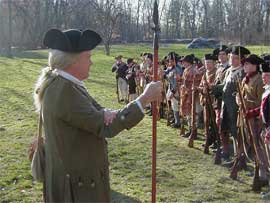
Reenactors portraying Westborough militiamen will perform the manual of arms, the standard military drill from 1774. There will be musket-firing demonstrations throughout the day. A colonial market will display a variety of colonial trades and crafts while citizens of Westborough will make items for barter or sale to the assembled militiamen. Westborough’s own Rev. Ebenezer Parkman will harangue and inform the crowds.

There will also be food trucks and vendors for attendees, displays of artifacts and documents, and eighteenth-century children’s games.

This event is scheduled to take place from 10:00 A.M. to 4:30 P.M. in Veteran’s Freedom Park, 169A West Main Street.

See the town library’s collection of Revolutionary documents here through Digital Commonwealth. Parkman’s diaries have been published, with some pieces freely available and others only in print.

Thursday, December 15, 2016

Two Small Cannon in Lexington

In Chapter 7 of The Road to Concord I described how several towns in Massachusetts moved toward establishing their own small artillery forces in the months leading up to the Revolutionary War. After all, what traditional New England town is complete without artillery?

I included every such town I’d come across, which wasn’t easy. While the book was in proofs, Gary Gregory of the Edes & Gill Print Shop told me how he’d recently moved to Westboro and saw a cannon mentioned in its records. So I quickly confirmed that fact and squeezed it into an endnote.

I don’t claim that The Road to Concord lists every Massachusetts town that looked into buying cannon or training with artillery in the seven months after the “Powder Alarm.” Assembling such a list would require searching every town’s local history and town-meeting records, most unpublished, since there’s no central source for that information. Alas, I didn’t have the time or the grad students to do that work.

I focused on the towns close to Boston, as shown on a map in the book. Gen. Thomas Gage had received intelligence about some of those guns, and a British officer had even seen one at the Watertown bridge in early 1775. I think that adds a new layer to the British expedition to Concord—those regulars were potentially marching into the mouths of cannon.

But that map doesn’t note big guns at one significant location: Lexington. In October author Alexander R. Cain shared his findings about that town’s artillery at his blog, Historical Nerdery:
Some of the guns, mostly iron cannons, were taken from coastal defenses around Boston and sent to Watertown. While there, two of the guns caught the attention of Lexington. Its residents quickly pressed the selectmen to acquire a pair of cannons for the town.

On November 3, 1774, the town selectmen relented and announced the issue would be addressed at the next town meeting. Specifically, “Upon a request of a numbre of Inhabitants to see if the Town will fetch two small pieces of cannon from Watertown, offered by said Town for the use of the Company in this Towne.” . . .

At some point after November 28, 1774, it received the two guns from Watertown. “Voted…that the Selectmen receive the two pieces of cannon with their beds [from] the Towne of Watertowne and give receipts for the same on behalf of the Towne.” By late February, 1775, Thomas Robbins of Lexington was already making ammunition cartridges for the guns. On February 27th, the town “Granted an ordere to pay Mr. Tho Robbins 1/9 in full for his trimming the (balls) & providing baggs to put them in.”

Unfortunately, what became of the guns after February 1775 is unknown. Lexington’s town meeting minutes from the Spring of 1775 were stolen years ago.
The records of a 17 October town meeting in Watertown refer to “pieces of Cannon now lodged in the Town,” suggesting that inhabitants hadn’t bought those guns, just found themselves in possession of them. That explains why Watertown offered Lexington two of those cannon the next month. (Yankees don’t give way expensive goods that easily.)

Watertown kept two cannon for itself. And Cambridge had one gun, of unknown origin. Is it simply coincidence that the Charlestown shore battery had contained five cannon in 1770, and all the guns from that battery had vanished early in September 1774? Coming from a battery might explain why the Lexington guns still had “their beds” attached.

Simply possessing cannon wasn’t enough, though. Lexington needed to spend £40 to buy field carriages to make its two guns useful in battle. Towns also had to pay for artillery tools and ammunition like Thomas Robbins’s cartridges, and militiamen had to train to fire those guns safely. That process required time and expense. It looks like none of the towns who had moved to create artillery companies had their cannon ready on 19 Apr 1775. At least, no town deployed artillery against the British army that day.

Friday, August 01, 2014

Searching for Mrs. Seaver

Yesterday I quoted from the page of the Hopkinton meetinghouse records shown above, photographed this week for the New York Times:
February 26th. 1763. The Church met at the meeting-house (pursuant to adjournment) and unanimously Voted, That the Charge brought against Mrs. Seaver, appear’d to them to be Sufficiently prov’d; and that therefore they could not Consent to her owning the Covenant, and receiving Baptism for her Child.
Who was Mrs. Seaver? What was the charge against her? Obviously her Hopkinton neighbors were convinced she’d done something wrong—but what?

The first place I went looking for Mrs. Seaver was in those same Hopkinton meetinghouse records—the part published within the vital records of Hopkinton for genealogists. They show that on 11 Sept 1763, or six and a half months later the church vote, two children of Moses “Sever” were baptized in that meetinghouse: Nabby and Amos Carril. A third Seaver baby, named Moses, was baptized in October 1765. The mother of those children isn’t named, but other baptism records from the same decade also omit the mother’s name, so that may not be significant.

The Westboro birth records say that Abigail (Nabby) Seaver was born 8 Mar 1761, so she was two and a half years old when she was baptized in Hopkinton. That delay points to her mother being the “Mrs. Seaver” whom the Hopkinton church didn’t want to admit.

It looks like Mrs. Seaver was born Lucy Carril(l) in Hopkinton in November 1737. On 21 Aug 1755, she married nineteen-year-old Hezekiah Johnson of Southboro, according to records from Hopkinton. This Johnson genealogy says Hezekiah died near Albany during the war against the French in 1756.

The Johnsons had a child named Miriam. Westboro records say she was born on 28 May 1756. But she was baptized on 5 September in Hopkinton, listed as “child of Lucy” with no father named. Evidently Hezekiah was no longer alive, or no longer present.

In May 1758, Lucy Johnson remarried to Moses Sever or Seaver, as recorded in the Hopkinton and Westboro records. Their first child, Lucia, was baptized in Framingham the following March. In 1762 they were living in Sudbury. During that period Lucy gave birth to Nabby, Amos Carrill, and Moses.

Sadly, according to this webpage, as of 1766 the family consisted of “Moses Sever from Hopkinton, his wife Lucy, Lucy’s daughter Merriam Johnson, and his daughter Naby.” So it looks like three of those five children died very young.

By that year, Moses and Lucy Seaver had gone back to Westboro, and they finally seem to have achieved some stability there. They remained in that town for the birth of three more boys and a girl, all of whom lived to adulthood. Moses Seaver died in 1809 or 1810. Lucy died in 1816.

What was “the Charge brought against Mrs. Seaver” that the Hopkinton church felt should bar her from admission? I couldn’t find a clear answer. One might lurk within the meetinghouse records, though more often such details were left out.

One common problem was sex outside of—usually before—marriage. For example, the Seavers’ first child, Lucia, might have been born well within nine months of their wedding. The surviving records don’t tell us her birthdate, so it’s possible the Seavers took her to Framingham to be baptized some months after she arrived.

Eighteenth-century New England congregations were quite used to dealing with brides who had been pregnant at the altar. They usually required one or both parents to admit that they had strayed before they were admitted into church membership, thus allowing their children to be baptized. And after that no one cared. Was that what ultimately happened in this case? Or was Lucy (Carrill Johnson) Seaver denying some greater scandal?

Wednesday, July 27, 2011

The New Old South Bell (Which Is Old)

Old South Meeting House is displaying its “new” bell from Paul Revere’s foundry for a few weeks before the instrument is hoisted into its tower.

Old South had a bell from 1731 to 1876, when the congregation moved to Old South Church in the Back Bay and the older building became a speaking venue and historic museum. The organization recently restored the Gawen Brown clock in its tower, and will soon once again have a bell to ring out the hours.

The new bell is actually 210 years old, made by Revere and Sons for a meetinghouse in Westborough, Massachusetts. Since 1849, it hung in the tower of that town’s Baptist church, which closed in 2007. Clock restorer James Storrow sent some articles about the bell from the Worcester Telegram & Gazette and the Metrowest Daily News. Here’s the Boston Globe’s take, and WBUR’s.

According to the History Blog, the Revere foundry charged $2.69 for the bell in 1801, but that’s far too low. At the typical rate of $.45 per pound, it should have cost about $400. (Reports differ as to whether the bell weighs 865 pounds or 876.) The Westboro’, Mass., Baptists bought it used for $173 in 1849. Old South credits a “generous donor” with making it available to the meeting house since “other organizations…reportedly had offered as much as $200,000 for it.”

Old South has also shared a list of other surviving church bells from the Revere foundry. The Massachusetts Historical Society is displaying a business card from the family’s bell and cannon factory.