J. L. BELL is a Massachusetts writer who specializes in (among other things) the start of the American Revolution in and around Boston. He is particularly interested in the experiences of children in 1765-75. He has published scholarly papers and popular articles for both children and adults. He was consultant for an episode of History Detectives, and contributed to a display at Minute Man National Historic Park.

Subscribe thru Follow.it


•••••••••••••••••


Showing posts with label James Robertson. Show all posts

Monday, August 17, 2026

The Losses of Benjamin Davis

In the newspaper reports on the May 1775 fire on Boston’s Town Dock, Benjamin Davis’s name appears only as the man who used to use (“improve”) the building where the fire started.

Davis had “Let General Robenson [James Robertson] have his store for the Brit Troops in the year 1775,” as he told the Loyalists Commission years later.

In his testimony to that commission Davis said he’d lost a great deal of property in the fire: “his story & wharf & Goods in the cellar were destroyed to amount of £900.”

In addition, Davis said that he was out:
  • £56 in whaling supplies on a ship “the Rebels” seized in Salem
  • £375 more in goods left behind in Boston in March 1776
  • £200 in household furniture in Boston
  • about £3,666 in uncollected debt due to him through his old partnership with his brother Edward
  • £700 in “Money & Wine” confiscated when he was captured in July 1776
Davis also said he “Was robbed of £400 on his way to Halifax,” but I can’t tell whether that was in 1776 or at the end of the war.

Most of Davis’s commission hearing involved discussing financial details like a mortgage or the value of certain land. He asked to be compensated for a total of £4,865 in losses, according to E. Alfred Jones’s The Loyalists of Massachusetts.

The commissioners awarded Davis only £300, suggesting they thought his claims were too high or too poorly documented, and/or that he had already been compensated enough through his wartime business with the government.

TOMORROW: Junior.

Thursday, October 31, 2024

“The workmen all pack’d up their tools and left the barracks”

In late September 1774, as described by the Boston merchant John Andrews yesterday, towns neighboring Boston put pressure on their own citizens and on Bostonians to stop helping the British army build barracks.

As commander of all the British army in North American, Gov. Thomas Gage had faced that problem before back in 1768. Then the royal government had ended up renting buildings from willing owners and turning them into barracks. But in 1774 there were more regiments to house, and even more on the way.

Gage asked Boston’s selectmen to forestall what would amount to a labor strike. They replied that they actually wanted the troops grouped in barracks, but they had no power over rural towns’ policies.

The next day, 26 September, Andrews reported that Gage approached John Hancock directly. Since Hancock was one of the selectmen, he might already met with the general. Hancock was also the chair of the Massachusetts Provincial Congress, and thus might have had leverage with other towns, but Gage officially refused to recognize that extralegal body. Furthermore, at the start of August, the governor had dismissed Hancock as commander of the Company of Cadets, so coming to the man for a favor was quite a concession.

Andrews wrote:
Sometime this day the Governor had a conference with Col: Hancock, requesting him to use his influence with the Committee to re-consider their vote respecting the barracks.

The Colonel observ’d to him that he had taken every possible measure to distress us: that notwithstanding it was the Solicitor’s opinion that the [Boston Port] Act could be construed to prevent goods, &ca., being transported within ye. bounds of the harbour, yet he had not suffered it to he done, and the Ships of War had seiz’d whatever had been attempted to be transported in that manner.

He likewise told him that he had been threat’ned, and apprehended his person was in danger, as it had been gave out by some of his people that he deserv’d to he hang’d: upon which the Governor told him he might have a guard, if he chose it, to attend him night and day. You will naturally conclude that he declin’d accepting.
The work stoppage took hold the next day:
At four o’clock yesterday afternoon, the workmen all pack’d up their tools and left the barracks, frames, &ca.; so that I am apprehensive we in the town will feel ill effects of it, as it has been given out that the troops will force quarters next month, if barracks are not provided for ’em: neither should I blame them for so doing, as the nights are so cold already, that it’s impossible for ’em to sleep comfortable under their slight canvas tents. And as to empty houses, now since we have got so many [Loyalist] refugees among us, there is not half sufficient to hold what troops we have got already here.

After the carpenters had left off work, the General sent Col. Robinson [actually James Robertson] and Major [William] Sheriff to Mr. Hancock, to let him know if they would proceed with the barracks, he could suffer any thing to be transported within the limits of the harbour, under the sanction of King’s stores—but all would not avail; as they very justly suppos’d, that after the work was compleated he would withdraw the indulgence, as he deems it, though in justice it not be prevented at all.

They have got the Carpenters from the Ships of War, and have sent an arm’d Schooner to Halifax for all the Artificers they can procure from there. It’s possible they may be as averse to coming as the Yorkers.
New York’s Patriots had already voted not to cooperate with the British army in Boston, a move that reportedly inspired the rural towns’ decision.

On 29 September, the merchant reported:
In the course of a day or two past, the Roxbury people have burnt several load of straw that was bringing in here, which has enrag’d the soldiers to such a degree, that I am in continual apprehension we shall soon experience another fifth of March, which God forbid!
In those same days, Andrews described how the Royal Artillery, Boston’s Patriot leaders, and ordinary people were all maneuvering over the mortars, cannon, and other ordnance in the inventory of hardware merchant Joseph Scott. Meanwhile, other artillery pieces were being seized by one side or the other (the focus of my book, The Road to Concord). Andrews was not alone in fearing that violence could break out any day.

Friday, April 12, 2024

Thomas Machin on the Firing at Lexington

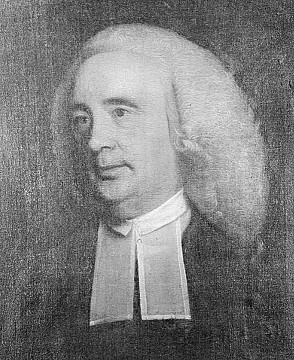
On 9 August 1775, Jedediah Preble (1707–1784, shown here) was visiting Cambridge.

A veteran of the wars against the French, he had been the Massachusetts Provincial Congress’s first choice to command its forces back in October 1774, but turned down the job on account of his age and health.

During that visit Preble wrote in his diary: “This morning met with a man that deserted from the regulars this day fortnight, as sensible and intelligent a fellow as I ever met with.”

A fortnight, or fourteen days, before was 27 July. There was one man who deserted from Boston around that date, remained with the Continentals, and was praised for his intelligence by men on both sides: Thomas Machin, captain in the American artillery from 1776. So I believe Preble recorded the former private Machin’s observations on the start of the war.

Preble wrote:
He was at Lexington fight. He says he came out with Lord Percy, and that he asked a young fellow of his acquaintance who fired first.

The soldiers when they first came where the Provincials were, one of them flasht his piece, on which a regular officer fired and swung his gun over his head, and then there was a general fire. They had 75 killed and missing, 233 wounded.
Alas, the antecedent for “one of them” is ambiguous: “soldiers” or “Provincials”?

Machin’s informant certainly blamed some “regular officer” for aggravating the situation. On the other hand, this version of events doesn’t have Maj. John Pitcairn or other officers ordering the redcoats to fire, which became the official provincial line soon after the battle.

There are further considerations. Machin’s information was secondhand, and he may have felt pressure to tell Americans what he thought they wanted to hear. Nonetheless, these comments ring true as a British enlisted man’s perspective: What did officers expect their soldiers to do when one of them was firing his gun and waving it around?

Preble went on:
He was also at Bunker’s Hill, where there was killed and died of their wounds 700, and 357 wounded that recovered. He took the account from Gen’l Robinson [actually James Robertson]. He says before he came out there died eight men of a-day, one day with another, and that they could not muster more than 6000 men.
Again, we know from Gen. George Washington’s files that Machin had brought out those casualty figures, as well as drawings of the British fortifications. He must have planned his desertion carefully.

Thursday, April 04, 2024

“An elegant frontispiece is now engraving”

We left Maj. Robert Donkin in 1777 with probably hundreds of copies of his Military Collections and Remarks needing to be shorn of a footnote that intemperately suggested his fellow British soldiers could fire smallpox-tipped arrows at the Americans.

That fall Donkin was busy with other things. In September the War Office announced his promotion to lieutenant colonel, news that made the American newspapers in December. By that time, Donkin was part of the British military force occupying Philadelphia.

We left the Philadelphia engraver James Smither as he switched to work for the Crown forces instead of Pennsylvania’s rebel government. Smither had been in North America for less than ten years, and, with the redcoats taking the American capital, he probably thought the king’s forces were winning.

On 14 April 1778, James Robertson’s Royal Pennsylvania Gazette ran this notice:

To the corps at New-York and Rhode-Island, that subscribed to the military remarks, &c.

LIEUT. Col. Donkin, gives notice that he has distributed to the orphans and widows of of [sic] the army here - - British £204.15.0

And that Mr. Thompson, Town-Adjutant of New-York, will proceed to distribute forthwith - - - £85.13.7

Being the balance arising from the publication, after defraying the expences of printing, &c. £290.8.7

N.B. An elegant frontispiece is now engraving at Mr. Smither’s, one of which will be sent to every subscriber.

Philadelphia, 13 April, 1778.
Thompson ran a similar announcement and accounting in Hugh Gaine’s New-York Gazette on 27 April. Donkin had deputized him to collect subscriptions the year before. (I haven’t found this man’s given name. The Scots Magazine and North-British Intelligencer reported that he was sergeant-major of the 37th Regiment.)

Thus, in 1778 Donkin commissioned Smither to create an illustration for his Military Collections, perhaps to make up for the delay and deletion of the footnote. So far as I can tell, none of the three copies with the footnote intact have the frontispiece shown here, and all of the copies with the frontispiece have a hole in page 190–1.


Donkin had dedicated his book to “the Right Honourable Hugh, Earl Percy, Colonel to his Majesty’s Vth regiment of foot,…commander in chief of the forces in Rhode Island.” He wrote:
HAVING had frequent occasions in the subsequent treatise to quote the grand actions of the most renowned captains of antiquity, it was natural for me to look at home for a Modern equally brilliant. Britannia holds forth PERCY! Fame sounds,
Great in the war, and great in the arts of state!” ILIAD.
That was the scene Smither illustrated: Donkin at work on his book, interrupted by Fame trumpeting and Britannia (notably without a Liberty Cap) holding out a picture of the earl with the label “Ille noster heros (He is our hero).”

I quoted the £290.8.7 in charitable donations from inside this copy of the book. It’s possible that those pages were added to what Gaine had printed in 1777 at the same time that the frontispiece was inserted. To know for sure, we’d need to examine the copy owned by Gen. Valentine Jones (now at the Clements Library).

TOMORROW: Separate ways.

Wednesday, July 19, 2023

“The town relying on the honor and faith of General Gage”

On 27 Apr 1775, in another session of Boston’s ongoing town meeting not preserved in the official records, a committee of selectmen and eminent gentlemen told voters how they had carried out their mandate from four days before.

As printed in the 26 June Boston Gazette:
They reported as follows, viz.

The committee waited on his excellency General [Thomas] Gage, with the papers containing the account of the arms delivered to the select-men, and the return made to them by the constables of the town relative to the delivery of arms in their respective wards.

After long conversation on the subject of the inhabitants removing themselves and effects from the town; his excellency being obliged to attend other business, left the affair to be settled with Brigadier General Robinson, who after further conference, and reporting the substance of it to General Gage, returned to the committee, and declared to them that General Gage, gives liberty to the inhabitants to remove out of town with their effects; and desires that such inhabitants as intend to remove, would give their names to the selectmen, and signify whether they mean to convey out their effects by land or water, in order that passes may be prepared; for which passes, application may be made to General Robinson, any time after eight o’clock to morrow morning; such passes to be had as soon as persons wanting them shall be ready to depart.

VOTED, That the foregoing report be accepted, the town relying on the honor and faith of General Gage, that he will perform his part of the contract, as they have faithfully performed their part of it.

Then the meeting was adjourned to monday next, ten o’clock in the forenoon.

A true copy, examined
Per Henry Alline, jun. Town Clerk, P. T.
I’ve found no record of another town meeting session on the following Monday, 1 May, but such adjournments were a legal way around the restrictions of the Massachusetts Government Act.

This is one of many places I’ve seen the surname of brigadier general James Robertson (1717–1788), the British barrack master general, rendered as “Robinson.” Was this the result of some collision between his Scottish accent and the Boston accent?

Robertson had already served many years as a military administrator in New York, and he would go on to be promoted to lieutenant general and royal governor of New York before the end of the war.

The town clerk pro tem. who took down these minutes was Henry Alline (1736–1804). Different sources say he had been trained as a “housewright and gauger” or “bred a Scrivener,” but he made his living as a notary public and clerk for such organizations as the Plymouth Company and the Kennebeck proprietors. In 1791 the Columbian Centinel reported that “his bodily health is such as renders a stationary business necessary and agreeable.”

In other words, Alline was a natural bureaucrat. After marrying in 1764, he was able to support a growing family; his society didn’t provide a lot of openings for those skills compared to ours, but it rewarded men who could do the job. Evidently in this emergency the town called on Alline to fill in for absent town clerk William Cooper.

In July 1776 Henry Alline had his family inoculated against smallpox and witnessed the reading of the Declaration of Independence from the Town House balcony, as he described in this letter at the Massachusetts Historical Society.

In 1791 Alline succeeded Nathaniel Green as the Suffolk County registrar of deeds. He held that job for five years until retiring because of failing eyesight. Then his son William, born in 1770, won election and served until 1821. Then William’s son Henry was registrar of deeds until 1860. That’s almost seventy unbroken years of the same family holding the position.

TOMORROW: Counting the guns.

Thursday, March 23, 2023

“Twas Expected The Troops would have embarkd this night”

On 15 March 1776, merchant John Rowe was expecting the British military to sail away from Boston. Any minute now.
This night my Store on the Long Wharff broke open & almost A hhd of Sugar & A hog head of Ware Stole—

Twas Expected The Troops would have embarkd this night but they still Remain in Town

I din’d at home with Genl. [James] Robertson Colo. Clark Richd. Green An Officer of the 5th Regt. Mrs. Rowe & Jack Rowe—

after dinner Capt. [John] Haskins gave me Notice that several officers were in Mrs. [Mary] Hooper’s House committing Violence & breaking Everything Left they Broke a Looking Glass over the Chimney which cost Twenty Guineas such Barbarous Treatment is too much for the most Patient man to bear.
Mary Hooper was the widow of the Rev. Dr. William Hooper (1702–1767, shown above), an Anglican minister Rowe admired. She was also the mother of the William Hooper who represented North Carolina in the Continental Congress and signed the Declaration of Independence.

“Rainy Weather” came on 16 March, and the preparations for departure went on.
The Troops are getting every thing in order to depart.

My store on Long Wharff broke open again this night—the Behaviour of The Soldiers is to bad—tis almost Impossible to believe it

I din’d at home with Mrs. Rowe & Capt. [John] Gore & Spent the Evening at home with Richd. Greene Mr. [Samuel] Parker Mr. [Jonathan] Warner & Mrs. Rowe & Jack.

Two officers of the 5th: came to Mee for Wine they wanted to be Trusted I Refused them since I have heard nothing only they Damned me & swore they would take it by Force—One of them nam’d Russell of the 5th. Regmt. the Other I dont know
There was a Boston paint merchant and official, about to evacuate, called Capt. John Gore for his militia rank. Just to make things fun, there was also a captain named John Gore in His Majesty’s Fifth Regiment of Foot. Rowe could conceivably have dined with either.

As for Russell of the Fifth Regiment, no officer of that name appears in the Army Lists of 1773 or 1778. Then again, Rowe forgot the name of the officer from that regiment whom he hosted at dinner the day before. So he didn’t know them that well. Certainly not enough to extend credit for wine.

TOMORROW: The country people come in.

Wednesday, March 22, 2023

“Plundering of Houses &c. Increasing”

By 12 Mar 1776, the British military’s evacuation of Boston was dissolving into chaos in the eyes of merchant John Rowe, and the cannon were going off again:
A Continual Fire from Both sides this night

They are hurrying off all their Provisions & destroying & Mangling all Navigation

also Large Quantitys of Salt & other things they heave into the Sea & Scuttle the stores

I din’d & spent the Evening at home with—
The Revd. Mr. [Samuel] Parker Mr. [Jonathan] Warner & Richd. Green also Mrs. Rowe & Jack Rowe—

The Inhabitants are greatly terrifyed and Alarm’d for Fear of Greater Evils when the Troops Leave this distressed Place

I got Crean Brush Rect. for the Goods taken from Mee, but dont expect much Good from it tho severall Gentlemen Say they will be my Friend in this affair
By “be my Friend” Rowe meant those gentlemen would testify about his losses—though now he had a receipt as well.

Rowe dated his next entry “13 March Wednesday,” getting the date wrong—a sign of his distress:
I have Staid at home most part of this day—

The Confusion still Continues & Plundering of Houses &c. Increasing

Genl. [James] Robinson paid Me a Visit & Eat a Morsell of Provisions together with Richd. Green Mrs Rowe & Jack Rowe

The Sailors from the Ships have Broke Open my Stores on my Wharff & plunderd them— this was done at Noon this day—

This morning A house was burnt at the North End, whether Set on Fire on Purpose or from Accident Seems Uncertain—

a Considerable Number of Cannon fir’d in the night from Both Sides—

The Country People throwing up more Entrenchments &c on Dorchester Neck—

(I dind at home with Genl. Robertson—Mr. Richd. Green Mrs. Rowe & Jack—) and spent the Evening at home with the Revd. Mr. Saml. Parker Mr. Warner Mr. Richd Greene & Mrs. Rowe
On Thursday, 14 March, Rowe realized he’d made the dating error and corrected himself. This day brought “Snow & Sleet” and a cold wind:
This night much damage has been done to Many houses & stores in this Town & many valuable Articles stolen & Destroyed—

Stole out of Wm. Perrys Store a Quantity of Tea Rum & Sugar to the value of £120 Sterling

Mr. Saml. Quincys house broke & great Destruction The Revd. Mr. Wm. Walters also the Revd. Dr. [Henry] Caners & many others
Samuel Quincy had left Boston months before, so his house was vulnerable. But the ministers had stayed out the siege and presumably didn’t have mercantile goods to carry away.

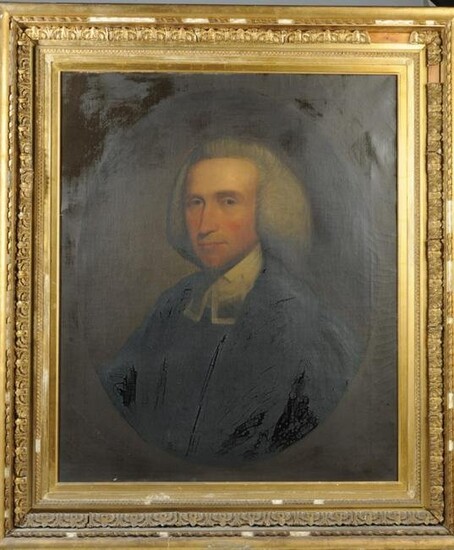
The picture above shows the Rev. William Walter, Anglican minister at Boston’s Trinity Church (1767–1776) and Christ Church (1791–1800). It was sold at auction in 2021.

TOMORROW: The expected departure date.

Sunday, March 19, 2023

“Nothing but Cruilty & Ingratitude falls to my Lot”

With Continental cannon pointing at Boston from Dorchester Heights, the merchant John Rowe realized that the siege was coming to an end. But what did that mean for him?

In his diary Rowe wrote on 6 Mar 1776:
This morning the Country People have thrown a Strong Work on Another Place on the Neck at Dorchester Nick. Gen. [William] Howe has order’d the Troops ashore again & tis now out of Doubt that Gen Howe will Leave this Town with his Troops &c—which has put The Inhabitants of This Town into Great Disorder Confusion & much Distress. . . .

The Firing has Ceas’d this day—
7 March:
The Troops & Inhabitants very Busy in Getting All the Goods & Effects on board the Shipping in the Harbour—

tis Impossible to describe the Distresses of this unfortunate Town

I din’d and spent the Evening at home with my Dear Mrs. Rowe Mr. [Ralph] Inman & Jack Rowe—

Genl. Robinson Pd. Mee a Visit
Rowe hadn’t described his wife as “my dear” for a while, possibly since the summer of 1774 when she was injured in a carriage accident. That’s a measure of the stress he was feeling now.

I believe the man Rowe referred to in this week as “Genl. Robinson” was Maj. Gen. James Robertson, barrack master general of the British army in North America. (Other documents, including selectman Timothy Newell’s journal and even Gen. Howe’s orderly book, also referred to him as “Robinson” at times.)

Back in 1768 Rowe had called Robertson a “Gentleman of Great Abilities & very cool & dispassionate.” He handled a lot of the army’s logistics, which at this moment meant safely moving the troops.

8 March:
My Situation has almost Distracted Me [i.e., driven me insane]

John Inman Archy McNeil and Duncan are determin’d to Leave Mee—God Send Me Comfort in My Old Age—I try to do what Business I Can, but am Disapointd and nothing but Cruilty & Ingratitude falls to my Lot.

I Spend the Day & Evening with my Dear Mrs. Rowe Richd. Green & John Haskins—
John Inman was a young relative of Mrs. Rowe. There were multiple men named Archibald McNeil or McNeal in Boston in the 1770s, and this appears to have been the baker, perhaps working for the Rowes as a cook. Duncan also seems to have been a household servant, perhaps enslaved. They were all evidently ready to sail away with the troops, and Rowe felt they were deserting him personally—which means he had already made up his mind to stay.

9 March:
I dind at home with the Revd. Mr. [Samuel] Parker [shown above] Mrs. Rowe & Jack & Spent the Evening at the Possee

This day Genl. Robinson pressed the Ship Minerva into the Service—nothing but hurry & confusion, Every Person Striving to get Out of this Place

A Great Deal of Firing on both Sides this night
As I wrote yesterday, I suspect that Rowe had a financial interest in the Minerva since he mentioned that ship and not others, but I can’t confirm that. Perhaps Gen. Robertson’s visit two days before was about the army’s need for that getaway vessel.

TOMORROW: Worse and worse.

Wednesday, December 11, 2019

The Tar-and-Feathering and Execution of John Roberts

Last month I wrote about using today’s online newspaper databases to track down a couple of reports about women tarred and feathered by sailors in the mid-1700s. Those reports turned out to be different distortions of a newspaper report about sailors tarring one woman in 1743.

Here’s another investigation into an even more horrific event, reported in a secondary source and for a long time untraceable. In 1865, Frank Moore’s Diary of the American Revolution, which was a collection of news reports and letters, ran this item on page 359 of volume 1:
THIS morning, at Charleston, South Carolina, John Roberts, a dissenting minister, was seized on suspicion of being an enemy to the rights of America, when he was tarred and feathered; after which, the populace, whose fury could not be appeased, erected a gibbet on which they hanged him, and afterwards made a bonfire, in which Roberts, together with the gibbet, was consumed to ashes.
Unfortunately, the footnotes on that page got garbled in the printing. There were three notes, numbered 1-3. But within the text there was no superscript 1 and two superscript 2s.

The first few paragraphs on that page should have ended with a superscript 1. They indeed came from the source listed in note 1: Hugh Gaine’s New-York Gazette and Weekly Mercury newspaper for 2 Dec 1776. I checked.

The second item was the story of John Roberts’s torture and killing, and Moore found that in the William Upcott Collection of Newspaper Extracts at the New-York Historical Society. Unfortunately, some authors trying to make sense of Moore’s footnotes have written that the story came from the New York newspaper.

The Upcott collection consisted of Revolutionary-era newspaper clippings, most or all from British printers. I hope that each clipping includes information on the newspaper it came from, but, having never seen the files, I don’t know if that’s true. I kind of doubt it.

However, through online hunting I can say that at least three British newspapers printed this text. Here’s how it appeared in the 4 Jan 1777 Ipswich Journal:
Charles-Town, Dec. 2. This Morning John Roberts, a Dissenting Minister, was seized at this Place, on Suspicion of being an Enemy to the Rights of America, when he was tarred and feathered, after which the Populace, whose Fury could not be appeased, erected a Gibbet, on which they hanged him, and afterwards made a Bonfire, in which Roberts, together with the Gibbet, was consumed to Ashes.
On 7 Jan 1777 the same news appeared in the Leeds Intelligencer and Manchester Mercury.

The Ipswich Journal headed that section “F. America,” and the first three items (of which that was third) “From the SOUTH-CAROLINA GAZETTE.” The Manchester Mercury headed its section “London, January 2,” suggesting this news came from a London newspaper of that date, and underneath that “From the SOUTH CAROLINA GAZETTE.”

We should therefore expect to find that news item in at least one London newspaper from early January 1777. Unfortunately, I have limited access to British databases, and their O.C.R. transcriptions are terrible.

We should also expect to find the original report in John Wells’s South-Carolina and American General Gazette from 2 Dec 1776. But the early American newspaper database I use doesn’t include any issue from that month. It’s possible no copies of this issue survived, or it’s possible that database has limitations.

Finally, once this item appeared in the South Carolina press, I’d expect to see it reprinted or alluded to in other American newspapers. At this time each side was hyping stories of atrocities by the enemy and trying to explain away enemy accusations, so this news would have been most appealing to Loyalist printers. Gaine had restarted his New York Mercury with a Loyalist slant in late 1776 under British occupation, and James Robertson launched another Loyalist paper in that city in January 1777. The South-Carolina and American General Gazette was itself a Loyalist paper from 1780 to 1782. But I couldn’t find any further reference to John Roberts’s death in eighteenth-century newspapers.

In fact, I can’t find another period record of the torture, execution, and burning of John Roberts beyond those two British newspapers. No South Carolina Loyalist appears to allude to it. No coreligionist of Roberts is recorded complaining about it. No published letter, memoir, or local history of South Carolina mentions it. I can’t find any report of the incident until Frank Moore’s Diary in 1865. After that, all citation trails lead back to Moore.

Among the possible explanations to explore:
  • The chaos of wartime printing meant that the crucial issue of the South Carolina Gazette got to London but not to New York.
  • There are errors in the London account, such as the victim’s name, which get in the way of searching independent American sources.
  • Roberts was killed not just for being an enemy to American Patriots but also for fomenting a slave rebellion. That could explain why he was treated so badly and his body was burned. It might also explain why so little was published about it, why Loyalists didn’t make a martyr out of him—the slaveholding class tended to tamp down news of actual uprisings.
All further possibilities and leads are of course welcome.

Monday, October 15, 2018

“This afternoon General Gage arriv’d from New York”

The Boston Whigs’ dispatch for 15 Oct 1768 reported that the British army’s hunt for deserters had achieved results:
A deserter from the 14th Regiment was brought in the last evening by one of the decoy parties, sent into the country, also a labouring man from Roxbury, with a soldier’s regimentals on his back, he was confined for some time in a tent, without lawful warrant, and afterwards committed to prison by Mr. Justice [Foster] Hutchinson,—
Imagine the tyranny of the army confining a local farmworker for doing something as unsuspicious as wearing a soldier’s uniform!

But the big news 250 years ago today was that Gen. Thomas Gage had arrived from New York to see how the soldiers under his command were settling in. The Boston Whigs were actually glad to see him, or at least said they were:
This afternoon the troops were drawn up, on the Common, on the appearance of General Gage; at sunset there was 17 discharges from the field cannon; he passed the front of the battalion in his charriot, preceded by a number of aid de camps on horseback.—The arrival of this gentleman from N. York at this time, is a very agreeable circumstance, to the friends of their country; as his mild and judicious behaviour in that province, has been justly applauded; and he comes here determined to see and judge for himself.
Some New Yorkers would have disputed that judgment, though the biggest conflicts between soldiers and civilians there were still to come.

Deacon John Tudor wrote about the day:
This afternoon General Gage arriv’d from New York just before sunset when the Troops where drawn up in the common to receive him & his Retennu, 17 discharges from the field cannon was fir’d to honour him, who came in his Chariot & 4, his Aid de camps on Horseback, all together with the Regiments made a gallant Show; Many disputes arose between the Governor Council, Justices & Selectmen aboute Quartering & Biliting the Troops. 
Local elected officials were still pushing for the troops to be moved out to Castle William.

Merchant and selectman John Rowe had his own take:
General Gage arr’d from New York at Major [Robert] Byards at Roxbury. The regiments were under arms & made a Good Appearance. The General with his attendants came into Town abo. four P.M. The Artillery saluted with 17 Guns. They passed & marched along the Front of both Regiments & Capt. [John] Wilsons two Companies who were formed in the Center.
Robert Bayard, who appears to have hosted Gen. Gage the night before he came into Boston, was from a New York mercantile family. He had been a captain in the Royal American Regiment during the French & Indian War under Gen. James Wolfe. Bayard married Rebecca Apthorp, the youngest surviving daughter of Charles and Grizzell Apthorp, who had been Boston’s wealthiest couple. The Bayards had a daughter baptized in Boston in 1768, but Rebecca died four years later. Robert Bayard appears to have then returned to New York and married Elizabeth McEvers, who was both the widow of a partner in his family firm and another Apthorp daughter, thus his sister-in-law. The Bayards moved to Britain during the war, their New York properties confiscated. Elizabeth died in 1800, Robert in 1819, said to be the last British officer surviving from the Battle of Québec. But I digress.

Rowe’s diary entry for the next day says:
This morning I waited on Colo. [James] Robertson who came with Gen. Gage. He received me very Politely. I had a full hour’s discourse with him abo. the troops. I find him to be a Gentleman of Great Abilities & very cool & dispassionate. I took a walk & met Gen. Gage & Colo. [William] Dalrymple. Gen. Gage engaged me to wait on him tomorrow morning.
Robertson was deputy quartermaster general for the army in North America, the man in charge of ensuring the troops were housed and fed. Rowe was one of the Boston selectmen disputing about where those troops should live. But he was already renting space to army officers, pleased to meet with Robertson, and, as his diary reveals, eager to socialize with Gen. Gage.

Saturday, April 12, 2014

The Travels of Pompey Fleet

After the Boston printer Thomas Fleet died, his 1759 estate inventory didn’t include his slave Peter, suggesting that that woodcut carver had already died as well. But that estate did include two boys: thirteen-year-old Pompey and ten-year-old Caesar.

Isaiah Thomas also mentioned those boys in his history of printing, saying:
Fleet had also two negro boys born in his house; sons, I believe, to the man just mentioned [the woodcut artist], whom he brought up to work at press and case; one named Pompey and the other Cesar; they were young when their master died; but, they remained in the family and continued to labor regularly in the printing house with the sons of mr. Fleet, who succeeded their father, until the constitution of Massachusetts, adopted in 1780, made them freemen.
However, at the time of the evacuation, the new Massachusetts constitution of 1780, and the judicial decision that made slavery unenforceable in Massachusetts in 1783, Isaiah Thomas was living in Worcester. His information about these Fleet brothers may not have been reliable.

I’ve found Pompey Fleet one place in Boston’s records. In December 1773 he married Chloe Short, a free black woman who had arrived from Grafton sometime in late 1771 or early 1772. At the time he was listed as a “servant [i.e., slave] of Elizabeth Fleet,” Thomas’s widow. And that’s the last I’ve found of Chloe.

Instead, it appears that Pompey Fleet freed himself in 1776. His name appears in “The Book of Negroes,” the list compiled by British military authorities of black Loyalists leaving New York at the end of the war. That manuscript states includes these entries:
Ship Three Sisters bound for Port Roseway [captain] John Wardell

Pompey Fleet, 26, short & stout, (Alexander Robertson). Formerly slave to Thomas Fleet, Boston; left him at the evacuation of Boston. GBC.

Suky Coleman, 21, slight make, (Alexander Robertson). Formerly slave to Mr. Teabourlt, Philadelphia; left at the evacuation of Philadelphia. GBC.

Sam Fleet, 5, small boy, (Alexander Robertson).
(Here’s an image of the copy supplied to the American government.)

The “Book of Negroes” says Pompey Fleet left the younger Thomas Fleet and Boston in 1776. The British military’s record of that departure lists only heads of household and no one who might be Pompey Fleet. He could have attached himself to the military or to a family; the printer Margaret Draper left with four other people, for example, though she had no children. A 2009 article for the Loyalist Trails U.E.L.A.C. Newsletter says that in 1783 Pompey Fleet had a certificate testifying that he had served the Crown for seven years, but I don’t know the basis for that statement.

Alexander Robertson was, the “Book of Negroes” says, “in…Possession” of Pompey Fleet and others in 1783. Isaiah Thomas wrote of Robertson, “I have been informed that he was, unfortunately, deprived of the use of his limbs, and incapacitated for labor. He was, however, intelligent, well educated, and possessed some abilities as a writer.” In 1783 Robertson was co-publisher of the Royal American Gazette in New York, so Pompey Fleet was probably working in that newspaper’s print shop. The other co-publishers were Nathaniel Mills and John Hicks from the Boston Post-Boy and Robertson’s older brother James, who had worked briefly for John Mein in Boston in the late 1760s. Thus, Pompey Fleet had probably become acquainted with those printers while still working for the Boston Evening-Post.

In 1778, James Robertson had followed the British army to Philadelphia and printed the Royal Pennsylvania Gazette there for a few months. Did Pompey Fleet go with him and meet Suky Coleman in that city? Was little Sam Fleet their son? That would correspond to about when Sam was born. Of course, Suky would have been only sixteen at the time. But perhaps we shouldn’t rely on the ages listed in “The Book of Negroes”; since Pompey was thirteen in 1759, he was thirty-seven in 1783, not twenty-six.

The Three Sisters headed to Port Roseway, an old name for Shelburne, Nova Scotia. There the Robertson brothers and Mills reestablished their Royal American Gazette, though Alexander died in December 1784 at age forty-two. James Robertson left Nova Scotia in 1789 and eventually returned to Scotland.

It’s not clear if Pompey Fleet worked for any of those printers in Nova Scotia. In 1784 he was listed as the head of a family across the bay from Shelburne in the black community of Birchtown. That was a rough settlement, poorly supported by the British Empire. (The photograph above shows a ”pit house” of the type many families had to build to survive their first winters, recreated at the Birchtown Museum.)

In 1791 over a thousand Birchtown settlers took up an offer to move to the new British colony in Sierra Leone. The document transcribed here lists “Pomphrey Fleet,” Sukey Coleman, and Sam Fleet together among the inhabitants electing to travel to Africa. And I don’t know what happened to them there.

TOMORROW: The younger brother, Caesar Fleet.

Wednesday, July 03, 2013

Meanwhile, in New York Harbor

This is the anniversary of a major turning-point in the Revolutionary War. Not because in 1776 the Continental Congress was debating how to publicly declare independence from Britain, as it had voted to do the day before. Rather, on 3 July 1776 the British military returned to the thirteen colonies in force, raising the conflict to a new level.

When Gen. William Howe evacuated Boston in March 1776, all thirteen colonies that had delegates in Philadelphia became basically free of royal control. Patriot leaders knew that situation wouldn’t last, but they enjoyed de facto independence and moved toward formalizing that status.

That spring Gen. Henry Clinton and Comm. Sir Peter Parker commanded a force off the Carolina coasts. In June they tried to take Charleston, South Carolina, the fourth-largest port on the Atlantic coast. In the Battle of Sullivan’s Island on 28 June, American troops fought off that force, but it was relatively small: about 2,200 British soldiers and no more than a dozen ships.

However, the next day a larger British fleet arrived in New York harbor. Gen. Howe had already sailed there from Halifax with most of his 9,000 troops to follow. But on 29 June his older brother, Adm. Richard Howe, arrived from Britain with the largest expeditionary force the Crown had yet assembled: 21,000 soldiers (12,000 British and 9,000 German). Soon Clinton and Parker would join the Howes.

Eventually the British naval force at New York included 73 warships and 300 other ships for transporting soldiers and supplies. But even on the first day the admiral’s fleet was imposing. On 29 June Pvt. Daniel McCurtin of Maryland wrote in his diary:
This morning as I was up stairs in an outhouse I spied, as I peeped out the Bay, something resembling a Wood of pine trees trimed. I declare at my noticing this that I could not believe my eyes, but keeping my eyes fixed at the very spot, judge you of my surprise, when in about 10 minutes, the whole Bay was as full of shipping as ever it could be. I do declare that I thought all London was in afloat.

Just about 5 minutes before I see this sight I got my discharge.
McCurtin headed for home.

On 3 July, on the advice of Gen. James Robertson, the Howes began to land troops on Staten Island. The Continental troops on that island quickly retreated to New Jersey, taking a few prominent Patriot families with them. By the next day, the British had 9,000 soldiers on friendly territory in position to threaten New Jersey, the American positions on Long Island, and New York City itself. And more ships and men were still arriving.

Tuesday, August 21, 2012

“A Gentleman lately sent to Philadelphia”

Among the published manuscripts of the Earl of Dartmouth is the summary of a letter from Brigadier General James Robertson, datelined 13 June 1775 in Boston. It described the situation in the besieged town and enclosed another note: “A Gentleman lately sent to Philadelphia brought me the inclosed, which I consider as the best Intelligence he brought.”

That enclosure was dated 25 May and said to be written in Philadelphia. The published collection summarizes it as follows:

The affair at Lexington has given such ideas of New England prowess that the Americans will listen to no terms but such as they themselves shall dictate. Delegates from the New England colonies declare openly against any Law of Parliament binding them in any respect. Congress proceedings. “It was said, and I believe truly, that Dr. [Benjamin] Franklin came out as an agent from Lord Chatham, to propose certain Terms, which he would push at home . . . We fear Lord Chatham: he is for having the supremacy acknowledged. . . . Lord North’s Motion would be slavery.” The taking of Ticonderoga has given great spirit to the Americans. New York has out-heroded Herod; its delegates are still the ablest in Congress. They hate the New Englanders. Strange and fabulous stories told of the provincials and the troops.
Who sent this intelligence?

My first thought was Dr. Benjamin Church, Jr., who was “A Gentleman lately sent to Philadelphia” by the Massachusetts Provincial Congress in May 1775. But the timing doesn’t quite seem to fit. He left Massachusetts on 20 May and evidently returned after 16 June, which makes him unlikely to have arrived in Philadelphia in time to gather intelligence and write the letter by 25 May, or to have “brought” it to Robertson by 13 June.

Furthermore, the phrase “sent to Philadelphia” probably refers to someone the Crown authorities sent there.