J. L. BELL is a Massachusetts writer who specializes in (among other things) the start of the American Revolution in and around Boston. He is particularly interested in the experiences of children in 1765-75. He has published scholarly papers and popular articles for both children and adults. He was consultant for an episode of History Detectives, and contributed to a display at Minute Man National Historic Park.

Subscribe thru Follow.it


•••••••••••••••••


Showing posts with label myths. Show all posts

Monday, September 21, 2026

The Danger of Speaking Truth to the Power-Hungry

The author of History by a Hair, Richard Kurin, is the Smithsonian Institution’s Distinguished Scholar and Ambassador-at-Large. A cultural anthropologist by training, he was previously the Under Secretary overseeing all the organization’s museums and scientific centers.

Kurin’s new book includes a foreword by Lonnie G. Bunch III, the retiring Secretary of the Smithsonian. Its back-cover blurbs include praise from David M. Rubenstein, former chair of the Smithsonian Board of Regents.

Ordinarily, those connections to America’s national history museum would be assets for History by a Hair. Under the current administration, they’re complications, especially when the book presents historical information that reactionaries don’t want to hear.

The New York Times reported:
An event on Sept. 22 announcing the findings has been moved from the American history museum to a less prominent Smithsonian location, limited to descendants and closed to the news media. An online public lecture by Kurin through the institution’s educational arm set for the next day was canceled.
The Smithsonian has been treading lightly under President Donald Trump because of his festering cultural resentments and wish to leave his footprint on Washington, D.C. In July the White House issued an executive order supposedly meant to “restore trust” in the Smithsonian—actually one of the most respected and beloved institutions in American culture.

We know Donald Trump doesn’t really care about accurate U.S. history. If he did, he wouldn’t have installed a plaque on one of his golf courses marveling at a Civil War battle that never happened. He’d have recognized immediately that it would be wrong to say that Revolutionary War troops “took over the airports.”

Donald Trump wants control of the Smithsonian, just as he grabbed control of the Kennedy Center for the Performing Arts, the Reflecting Pool, the Sestercentennial celebrations, and the White House’s East Wing. The scars on the D.C. landscape show us how well those moves have worked out.

Since the Smithsonian was chartered by Congress and has a robust governance system, Trump has only been able to exert pressure from the outside. The latest scheme his staff has come up with is to install signs between the empty Reflecting Pool and Smithsonian museums warning visitors of what they’ll find inside.

As Kevin M. Levin has pointed out, the federal agency tasked with writing, designing, and planting those signs is the National Park Service—another target of Trump’s hunger for power. The New York Times just reported on the damage the administration has inflicted on that agency.

In its story about History by a Hair, the Times hinted at how people feared the book could become a focus of Trump’s temper. Even though, as Karin Wulf writes, the historical findings about Thomas Jefferson and Sally Hemings are “so far beyond a reasonable doubt we’re in planetary orbit.” Because, as I said before, Trump doesn’t really care about accurate U.S. history.

Richard Kurin will come to Boston to talk about History by a Hair on 6 October at an appearance at WBUR’s CitySpace.

Saturday, August 01, 2026

“The last Words which ever passed between Mr. Dickinson and me”?

The discovery of John Dickinson’s 28 Oct 1775 letter to David Barclay, quoted yesterday, lets us assess his thoughts on John Adams’s private criticism of him in an intercepted letter earlier that year.

As Jane E. Calvert writes in the July 2026 William & Mary Quarterly, it should also make us reassess Adams’s recollection of how he came to make that criticism. We know that other passages from Adams’s nineteenth-century memoir contradict contemporaneous sources, or at least aren’t supported by them.

According to Adams writing in 1805, the two men fell out during the Continental Congress’s debate over the Olive Branch Petition in the spring or early summer of 1775:
I was opposed to it, of course; and made an Opposition to it, in as long a Speech as I commonly made, not having ever been remarkable for very long Harrangues, in Answer to all the Arguments which had been urged. . . .

At this moment I was called out to the State house Yard, very much to my regret, to some one who had business with me. I took my hat and went out of the Door of Congress Hall: Mr. Dickinson observed me and darted out after me. He broke out upon me in a most abrupt and extraordinary manner. In as violent a passion as he was capable of feeling, and with an Air, Countenance and Gestures as rough and haughty as if I had been a School Boy and he the Master, he vociferated out, “What is the Reason Mr. Adams, that you New Englandmen oppose our Measures of Reconciliation…[?]”

I answered him very coolly. “Mr. Dickenson, there are many Things that I can very chearfully sacrifice to Harmony and even to Unanimity: but I am not to be threatened into an express Adoption or Approbation of Measures which my Judgment reprobates. Congress must judge, and if they pronounce against me, I must submit, as if they determine against You, You ought to acquiesce.”—These were the last Words which ever passed between Mr. Dickinson and me in private.
If Adams had made a firm, direct speech against the Olive Branch Petition, and Dickinson had gotten so upset about it, why would Dickinson be surprised to read Adams criticizing him weeks later? Why did Dickinson write that before the intercepted letter the Adams cousins had always “behav’d to Me…with the…greatest Marks of friendly Respect,” expressing “the most silken softness of public pretensions”?

Of course, a big part of the problem was Adams’s rude language, calling Dickinson a “piddling Genius” whose measures made the Congress appear “silly.” That went beyond a collegial disagreement over policy. Dickinson recognized the two men “differed in Sentiments” but thought they were still friendly and recognized they were all trying to solve the same problem.

Dickinson’s surprise might have been the result of John Adams’s own actions up to that point. He probably didn’t speak out as strongly as he remembered decades later. Calvert points out how Adams signed the Olive Branch Petition in July. Of course, that’s consistent with his later statement “Congress must judge, and if they pronounce against me, I must submit.” 

At the same time, I see indications that Dickinson and Adams were talking past each other on “independence” and what that really meant.

TOMORROW: Cross-purposes.

Thursday, July 30, 2026

“He passed without moving his Hat, or Head or Hand”

The part of the newly released documents from John Dickinson getting the most attention, including a news story in the New York Times, is his detailed proposal to reconcile the British government and the colonies at the Continental Congress before they reached a permanent breaking point.

But of course I’m drawn to the juicy interpersonal gossip. Dickinson wrote the second of those letters after John Adams’s nasty private comment about him had leaked. That letter reveals Dickinson’s feelings about that slight as well as his perspective on what led up to it.

The July 2026 issue of the William & Mary Quarterly contains an essay by Dr. Jane E. Calvert about this episode. She points out that historians have relied on Adams’s recounting of the event in his memoir, even while acknowledging those recollections can’t be confirmed and flatter Adams in consistent ways. (Calvert and Jonathan Gienapp’s article about the Dickinson documents offers an accessible précis of her essay.)

I wrote about Adams’s indiscreet remark back in 2014. In short, Adams gave the young lawyer Benjamin Hichborn two letters to carry home to Massachusetts. Hichborn let those papers fall into British hands. Gen. Thomas Gage had the texts published in Margaret Draper’s Boston News-Letter on 17 Aug 1775.

Adams’s 24 July letter to James Warren included these lines:
In Confidence,—I am determined to write freely to you this Time.—A certain great Fortune and piddling Genius whose Fame has been trumpeted so loudly, has given a silly Cast to our whole Doings…
Those lines made their way back to Philadelphia. No delegate to the Congress had more money and fame combined than Dickinson. (Benjamin Franklin was more famous but not as wealthy; a few men may have commanded bigger estates, but none had gained more respect as a political writer than Dickinson the “Farmer.”) So everyone knew who Adams was referring to.

On 16 September, Adams wrote in his diary:
Walking to the Statehouse this Morning, I met Mr. Dickinson, on Foot in Chesnut Street. We met, and passed near enough to touch Elbows. He passed without moving his Hat, or Head or Hand. I bowed and pulled off my Hat. He passed hautily by. The Cause of his Offence, is the Letter no doubt which Gage has printed in Drapers Paper.
That was a “cut direct.” It showed Dickinson was upset, but he was making that clear by not saying anything.

Forty years later, Adams insisted:
  • He wrote his 24 July letter only after Dickinson had tried to browbeat him and other “New Englandmen” into not arguing against the Congress’s Olive Branch Petition, and
  • He didn’t write that letter anyway. Or “not exactly.” The royal authorities had altered his words before publication.
Adams’s letter doesn’t survive, as far as anyone knows, so we can’t say for sure whether the newspaper text was edited. But we do know Adams expressed some similar sentiments in other private letters at the time. And he never specified which of the published words he hadn’t penned.

Thanks to the new documents, we now have John Dickinson’s view of the dispute, written in the year that it happened rather than decades later.

TOMORROW: The other side.

Thursday, July 02, 2026

“Jefferson proposed to me to make the draught”

At last we come to John Adams’s dramatic description of how he—and he alone—convinced Thomas Jefferson to draft the Declaration of Independence, in his August 1822 letter to Timothy Pickering.
You enquire why so young a man as Jefferson was placed at the head of the Committee for preparing a declaration of Independence? I answer, it was the Frankfort advice, to place Virginia at the head of everything.

Mr: Richard Henry Lee, might be gone to Virginia, to his sick family, for aught I know, but that was not the reason of Mr: Jefferson’s appointment. There were three Committees appointed at the same time. One for the declaration of Independence; another for preparing Articles of Confederation; and another for preparing a Treaty to be proposed to France. Mr Lee was chosen for the Committee of confederation, and it was not thought convenient that the same person should be upon both.
In fact, Lee wasn’t named to any of those three committees. Roger Sherman and Robert R. Livingston were placed on the Declaration committee on 11 June and the Articles committee on 12 June.
Mr Jefferson came into Congress in June 1775. and brought with him a reputation for literature, science, and a happy talent at composition. Writings of his were handed about remarkable for the peculiar felicity of expression. Though a silent member in Congress, he was so prompt, frank, explicit and decisive upon Committees, not even Saml Adams was more so, that he soon seized upon my heart, and upon this occasion I gave him my vote and did all in my power to procure the votes of others. I think he had one more vote than any other, and that placed him at the head of the Committee. I had the next highest number and that placed me the second.

The Committee met, discussed the subject, and then appointed Mr: Jefferson & me to make the draught; I suppose, because we were the two highest on the list.

The Sub-Committee met; Jefferson proposed to me to make the draught.

I said I will not; You shall do it.

Oh No!

Why will you not?

You ought to do it.

I will not.

Why?

Reasons enough.

What can be your reasons?

Reason 1st. You are a Virginian, and Virginia ought to appear at the head of this business. Reason 2d. I am obnoxious, suspected and unpopular; You are very much otherwise. Reason 3d: You can write ten times better than I can.

“Well,” said Jefferson, “if you are decided I will do as well as I can.”

Very well, when you have drawn it up we will have a meeting.

A meeting we accordingly had and conn’d the paper over. I was delighted with its high tone, and the flights of Oratory with which it abounded, especially that concerning Negro Slavery, which though I knew his Southern Bretheren would never suffer to pass in Congress, I certainly never would oppose.

There were other expressions, which I would not have inserted if I had drawn it up; particularly that which called the King a Tyrant. I thought this too personal, for I never believed George to be a tyrant in disposition and in nature; I always believed him to be deceived by his Courtiers on both sides the Atlantic, and in his Official capacity only, Cruel.

I thought the expression too passionate and too much like scolding for so grave and solemn a document; but as [Benjamin] Franklin and Sherman were to inspect it afterwards, I thought it would not become me to strike it out. I consented to report it and do not now remember that I made or suggested a single alteration.

We reported it to the Committee of Five. It was read and I do not remember that Franklin or Sherman criticized any thing. We were all in haste; Congress was impatient and the Instrument was reported, as I believe in Jefferson’s hand writing as he first drew it.
Adams made a copy of Jefferson’s draft before it was complete, and Jefferson kept another draft with marks on it. The latter shows that Franklin did make substantive contributions.

On Independence Day in 1823, Pickering quoted liberally from Adams’s letter in an oration, which he then published.

TOMORROW: What did Jefferson think of that?

Wednesday, July 01, 2026

“Some among us urge strongly for Independency”

In August 1822, Timothy Pickering invited John Adams to do something the retired President really liked doing: explaining how he was close to the center of the most important decisions of the American Revolution.

Just four days after Pickering sent his letter from Salem, Adams responded with a long account of how the Continental Congress came to declare independence 250 years ago.

He started with a vivid word picture of the Massachusetts delegation to the First Continental Congress being “met at Frankfort [Frankford] by Dr [Benjamin] Rush, Mr [Thomas] Mifflin, Mr [John] Bayard and several others of the most active Sons of Liberty, in Philadelphia.”

That meeting was on 29 Aug 1774, according to Adams’s diary. At that time he wrote:
A Number of Carriages and Gentlemen came out of Phyladelphia to meet us. Mr. Thomas Mifflin, Mr. [Thomas] McKean of the Lower Counties [Delaware], one of their Delegates, Mr. [Edward or John] Rutledge of Carolina, and a Number of Gentlemen from Philadelphia. Mr. [Nathaniel] Folsom and Mr. [John] Sullivan, the N. Hampshire Delegates. We were introduced to all these Gentlemen and most cordially wellcomed to Philadelphia.
We also have Dr. Rush’s recollection in his memoir:
I went as far as Frankford to meet the delegates from Massachusetts, and rode back into town in the same carriage with John Adams, and two of his colleagues. This gentleman’s dress and manners were at that time plain, and his conversation cold and reserved. He asked me many questions relative to the state of public opinion upon politicks, and the characters of the most active citizens on both sides of the controversy.
Rush evidently warned Adams and Robert Treat Paine “against two Gentlemen particularly,” one being the Rev. William Smith of the University of Pennsylvania and the other not. (Adams’s diary preserved only one name.)

In his letter almost fifty years later, Adams stated that the Philadelphia radicals had come out for that meeting to warn the Massachusetts men that people viewed them as “four desperate adventurers.” The locals advised the newcomers to:
  • let Virginians and other southerners take the lead on radical measures. 
  • “not utter the word Independence, nor give the least hint or insinuation of the idea, neither in Congress or any private conversation.” 
Yet Adams recorded no hint of that warning in 1774. And the presence of a South Carolina delegate in the party would surely have inhibited discussion of how to lead along the south.

Adams’s 1822 letter then skipped ahead to the spring of 1776 as if the same situation still prevailed. Of course, a lot had happened during those eighteen months. By 1776 the Second Continental Congress delegates were discussing independence openly, though they insisted they weren’t pushing for it—rather, the Crown was pushing them toward it.

On 9 Jan 1776, for example, Richard Smith of New Jersey wrote in his diary: “Several Members said that if a Foreign Force shall be sent here, they are willing to declare the Colonies in a State of Independent Sovereignity.”

Robert Morris told a colleague on 15 February:
America has long been charged by her Enemys in England with aiming at Independency. The charge was unjust, but we now plainly see, that the burning of Towns, seizing our Ships, with numerous acts of wanton barbarity & Cruelty perpetrated by the British Forces has prepared Men’s minds for an Independency, that were shock’d at the idea a few weeks ago. This you may depend on, and should this Campaign open with furious Acts of Parliament, you may bid adieu to the American Colonies. They will then assuredly declare for Independency…
Joseph Hewes of North Carolina wrote home on 20 March:
some among us urge strongly for Independency and eternal separation, others wish to wait a little longer and to have the opinion of their Constituents on that subject, you must give us the sentiment of your province when your Convention meets.
Carter Braxton of Virginia reported on 14 April:
Independency & total Seperation from Great Britain are the interesting Subjects of all ranks of Men & often agitate our Body.
Notably, Morris and Braxton both opposed independence that spring. But they weren’t averse to discussing it.

Nonetheless, the next part of Adams’s letter was an almost necessary part of his post-Presidency memories: everyone disliking him because of his far-sighted and courageous stances.
It soon became rumoured about the City that John Adams was for Independence; the Quakers & Proprietary Gentlemen, took the alarm; represented me as the worst of men, the true-blue Sons of Liberty pitied me; all put me under a kind of Coventry. I was avoided like a man infected with the Leprosy. I walked the streets of Philadelphia in solitude, born down by the weight of care and unpopularity. But every ship for the ensuing year, brought us fresh proof of the truth of my prophesies and one after another became convinced of the necessity of Independence. I did not sink under my discouragements; I had before experienced enough of the Wantonness of popularity in the trial of Preston and the Soldiers, in Boston.
I’ve previously noted how there’s actually no contemporaneous evidence of Bostonians shunning Adams in the early 1770s because he represented Capt. Thomas Preston and the soldiers after the Massacre. 

Likewise, documents from 1775 and early 1776 show that Adams’s fellow Congress delegates continued to put him on many committees and to dine with him. No doubt it was awkward when the royal authorities intercepted and published letters in which he criticized colleagues like John Dickinson, but really Adams brought that on himself.

TOMORROW: Drafting the Declaration at last.

Sunday, June 14, 2026

Forgetting the Faiths of New England’s Revolutionary Founders

Thomas Lecaque, professor of history at Grand View University in Iowa, wrote at Religion Dispatches about the Pentagon’s recent move to “reduce the list from over 200 unmanageable categories to 31.”

After pointing out several ways the administration has promoted Christian nationalism over other religious approaches, Lecaque wrote:
[Assistant to the Secretary of Defense for Public Affairs Sean] Parnell’s statement feints at pluralistic neutrality, but stating that the Chaplain Corps is there to “provide the best spiritual care to our warfighters” suggests that what military personnel of all (real) religious backgrounds—which includes lots of kinds of Christians; agnostics, atheists, and Other Religions-ists; as well as Sikhs, Jews, Muslims (that one had to hurt), Hindus, Buddhists, and Baha’i—are really entitled to is Christianity-inflected pastoral care.

Guess who didn’t make the list, though?

Unitarian Universalists, Congregationalists, and Deists. Which, if you’re keeping score at home, you’ll recognize as the religious affiliations of Founding Fathers John Adams, Samuel Adams, Benjamin Rush, Paul Revere, Ethan Allen, Benjamin Franklin, Thomas Paine, Hugh Williamson, James Wilson—and possibly of Thomas Jefferson, James Monroe, and George Washington (who were raised Anglican, and, as historians have noted, demonstrated Unitarian, Deist, and/or semi-secular leanings).
This decision seems to reflect both the prejudices and the ignorance of Defense Secretary Pete Hegseth, who back in April solemnly read out quasi-Biblical lines from the Japanese action movie Karate Kiba, filtered through the U.S. action movie Pulp Fiction.

Lecaque went on to say, “We could argue these exclusions don’t matter—in a country that ‘to bigotry gives no sanction, to persecution no assistance,’ the Founders’ religious commitments (or lack thereof) should be immaterial.” He thus correctly quoted President Washington’s letter to the Touro synagogue in Newport. “But for an administration whose officers and supporters keep talking about Originalism as if it’s real (it’s not), people trying to wrap this country in the flag and the cross for its birthday party, the irony and hypocrisy somehow still manage to sting amidst larger horrors.”

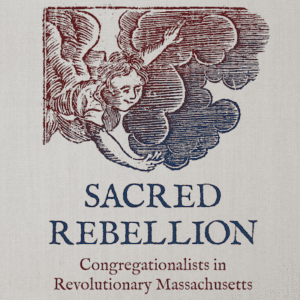
Meanwhile, the Congregational Library in Boston has announced it will reopen its free exhibition “Sacred Rebellion: Congregationalists in Revolutionary Massachusetts” on eight dates in June, July, and August. On each of those days there will also be a curator’s tour for $5 at 1 P.M.

Friday, June 12, 2026

Did Sybil Ludington’s Ride Really Happen?

Last month I talked with Ryan Chatelain of Spectrum News about the tale of Sybil Ludington.

His story, headlined “Sybil Ludington is called the ‘female Paul Revere.’ But did her ride really happen?” is a good primer on the historical debate.

On the one hand, Vincent Dacquino has succeeded in pushing back the documented mentions of Sybil Ludington’s ride, as shown in the most recent edition of his book Patriot Hero of the Hudson Valley:
Through his research, Dacquino uncovered that the earliest evidence of her ride actually came in 1854, when Charles Ludington — Henry’s grandson and Sybil’s nephew — argued in a letter to a group of Masons planning a statue for Gen. David Wooster, who was killed in the Battle of Ridgefield, that Henry and Sybil Ludington should also be included in their tribute.
On the other hand, as I state in the article, we still lack contemporaneous evidence about the Ludingtons’ effect on the Battle of Ridgefield or anything else to support the family lore. Knowing that Charles Ludington believed the story seventy years later isn’t proof that it actually happened.

On such lore, Chatelain quotes me on my theory of “grandmothers’ tales”:
“Women, sometimes men, involved in raising children would tell stories of the family’s involvement in historical events, presenting those stories simply as educational, as inspirational, as entertaining, not expecting them to be put into the public realm,” Bell said. “…But the children who are hearing those stories grow up — and because these are the earliest stories they’ve heard, because they have to do with their family, because they hear them maybe many times — they really stick with them. And so as they become older, they want these stories, which they believe to be gospel truth, out for everyone to hear.”
The legend of Sybil Ludington’s ride is one of many that fit that model. We know that in other ways the Ludington family lore exaggerates how central their ancestors were to events—just as most family traditions and many personal memoirs do. All the more reason to look for solid evidence.

As I said to Chatelain, the Sybil Ludington story may have some basis in fact. But we have to acknowledge how that account was massaged and enlarged over the years. In the early 1900s an author published a conjectural map of her ride, based on what he acknowledged was supposition. That’s became the basis of more maps, measurements, and highway markers, as well as the repeated claim that Sybil rode farther than Revere—without any additional evidence being offered.

Tuesday, June 02, 2026

Cutting Remarks

Here’s another data point on the phrase “Tarleton’s quarter(s)” in the early American republic.

This item that appeared in the Centinel of Freedom newspaper, published in Newark, New Jersey, on 4 Dec 1798.

Original and True.

AFTER the battle of Cowpens, in which [Banastre] Tarleton’s dragoons were so roughly handled by the Americans, he drew up his men, and riding in front of the line, communicated to them strict order to give no quarter thereafter.

A short time after, in an action where the American militia threw down their arms and begged for their lives, one of them answered, “aye, aye! we’ll give you quarter; but as we are in something of a hurry, we’ll only halve you now, and quarter you as we come back:” and so hewed them down with their sabres.

“This naivete passed from mouth to mouth, and excited laughter in the midst of carnage! Were these men or fiends?”
This anecdote reflected the American memory of Tarleton and his men as monsters. There’s no evidence from the British side that the lieutenant colonel gave such an order, nor any evidence from wartime for this remark by one dragoon.

Notably, this tale was set after the Battle of Cowpens in January 1781. David Ramsay’s history, quoted yesterday, stated that the phrase “Tarleton’s quarters” arose after the Battle of Waxhaws more than six months earlier.

This article used an older sense of “naïveté,” meaning not the quality of being naïve but an action or remark arising from that quality. Not that I picture those dragoons as naïve.

Friday, May 29, 2026

Meeting the Real Samuel McClellan

Yesterday’s post introduced Samuel McClellan (1730–1807) of Woodstock, Connecticut, the captain of a militia troop of horse in 1774.

McClellan was a shopkeeper and landowner in his small town. After the Revolutionary War he became a brigadier general in the state militia.

The McClellans remained locally important, and one of his great-grandsons was Gen. George B. McClellan of the Union Army and the 1864 Presidential race.

As often happens in that situation, Samuel McClellan’s descendants were influential enough to get their understanding of his role in the Revolution into local histories and biographical profiles when primary sources were hard to consult. For example, the 1902 National Cyclopedia of American Biography said:
On Oct. 13, 1773, he was commissioned captain of a fine troop of horse, raised in the towns of Pomfret, Woodstock, and Killingly, and led it Boston on receipt of the news of the battle of Lexington. He passed through the battle of Bunker hill uninjured, and in commemoration of that his wife planted three elm trees in front of residence, which attained great size and were standing when Gen. George B. McClellan visited Woodstock in 1884.
Ellen Douglas Larned’s History of Windham County, Connecticut: 1760–1880 says there were originally four elms.

The latest version of that lore is Samuel McClellan’s Wikipedia page, which as of this week says:
In 1775 Major Samuel McClellan led 184 men at the Battles of Lexington and Concord. He played a prominent role in the Battle of Bunker Hill, and after achieving the rank of lieutenant colonel in 1776, colonel in 1777, and brigadier general of the 5th Brigade in 1779, his regiment of the Connecticut Militia was stationed near New Jersey. McClellan was solicited by General George Washington to join the Continental Army and was offered a commission, but his domestic and business affairs compelled him to refuse.
That overstates the facts in multiple ways, starting with how McClellan wasn’t commissioned a major in the militia until October 1775.

News of the outbreak of war in Massachusetts didn’t reach Woodstock until 20 April, after the fighting was over, so there was no way men from that town were “at the Battles of Lexington and Concord.” Col. Israel Putnam was one of the first men from Connecticut to respond. On 21 April he wrote from Concord to say that the Massachusetts Provincial Congress hoped that Connecticut would send 6,000 men for “a standing Army.”

Putnam added as a postscript: “The Troops of Horse are not expected to come until further notice.” But Capt. McClellan had already led his 184 mounted men north into Massachusetts. That’s shown by Connecticut records of militia service, as tabulated here.

However, those same records also show that McClellan was paid for only eight days of service. Like most of his neighbors, he went home when it was clear the emergency had passed. Some men stayed or returned and enlisted in what became the New England army. McClellan didn’t.

There’s no evidence putting McClellan at the Battle of Bunker Hill or on the siege lines around Boston at the time. That undercuts the claim he “played a prominent role” in the battle, but it does explain how he remained “uninjured.”

Later in the war McClellan did mobilize with his militia regiment for short assignments in the Northern Department. He also served in the Connecticut assembly and as a commissary. In that last capacity his name comes up in Washington’s papers, but there’s no direct written solicitation from the commander for McClellan to join the Continental Army.

McClellan apparently left a fowling-piece, made by the Massachusetts gunsmith Joel White, equipped with a bayonet mount and bearing the initials “SMC.” That’s been displayed as a weapon from the Battle of Bunker Hill. McClellan may well have carried it during the Revolutionary War, but not at that fight.

Sunday, May 17, 2026

“There is something off about this sword”

Earlier this year the Sandwich Enterprise shared a story by Cearra O’Hern about the identification of an artifact at the Pilgrim Hall Museum.

The article focuses on Michael L. Welch, Jr., who uses first-person interpretation of Revolutionary figures in teaching history at the Sandwich Middle School.

The article explains:
Welch primarily portrays Major General James Warren, a leading revolutionary in Massachusetts who also served as president of the Massachusetts Provincial Congress during the American Revolution. Welch heard that the Pilgrim Hall Museum in Plymouth had Warren’s sword…

“I connected with the curator, who was very helpful in lining up a time to go in and look at the sword,” Welch said. “I was given the attribution of the sword, how the sword was passed down through the Warren family and donated. I photographed it extensively, I scanned it, I made a 3D rendering of it, and the whole time I am looking at this sword, I am like, ‘There is something off about this sword.’”

Welch had seen a sword like Warren’s before, which was believed to date back to 1764-1765. As he continued to examine its pommel, guard and counter-guard, Welch determined the sword was not a general’s sword; it was a mass-produced sword made much later, after the American Revolution.

Welch identified the sword as a Model 1796 Hanger carried by British sergeants, a discovery that “broke his heart,” as he did not want to say anything to the Pilgrim Hall Museum.
The photo above, which the museum shared on social media a few weeks before this article appeared, may show one of those awkward moments when Welch looked at the sword and wondered about sharing doubts with curator Anne Mason.

After confirming his assessment with an expert, Welch did indeed discuss those findings with Mason and her colleagues. The museum will add that information to its files and assess how it displays the hanger. As Welch points out in the article, the fact that this sword was made in 1796 doesn’t mean it wasn’t owned by James Warren; his son James, Jr. (1757–1821), a Continental Marine officer who lost a limb in 1781; or another member of the family. It just doesn’t go back as far as the Revolution.

Tuesday, May 12, 2026

Finding Mary Fowle of Londonderry

Yesterday I cited Jane Merrill’s Sex and the Scientist: The Indecent Life of Benjamin Thompson, Count Rumford (1753–1814), the latest and frankest biography of the scientist, statesman, soldier, and seducer.

That book quotes testimony from Mary Fowle of Londonderry, New Hampshire, about how Thompson had an affair with Mary (Dill) Thomas, first wife of the Boston printer Isaiah Thomas.

Merrill distinguishes that woman from the Mary Fowle whom Isaiah Thomas married in 1779, whom she identifies as both the printer’s cousin and the widow of his old master, Zechariah Fowle.

Isaiah Thomas’s second wife named Mary was indeed a cousin, having been born Mary Thomas on 9 June 1750, according to genealogy published in “The Portraits of Isaiah Thomas” by Charles Lemuel Nichols.

However, that cousin Mary didn’t marry Zechariah Fowle. Her mother, Rebecca (Bass) Thomas, did. The older printer died in Portsmouth in 1776. Rebecca (Bass Thomas) Fowle, twice widowed, died in Worcester in 1803 and was buried in her son-in-law’s family tomb.

So who was Mary Thomas’s first husband? Boston vital records show that the Rev. John Lathrop married Isaac Fowle and Mary Thomas on 11 May 1769. The Thomas and Fowle family genealogies say they had two daughters, who both died young:
  • Rebecca T[homas?]. (4 Feb 1770–6 Dec 1773 in New York)
  • Dorothea Whitmarsh (5 Nov 1771–10 Sept 1772)
Isaac Fowle reportedly died in 1777 while serving in the Continental Army.

That same year, Isaiah Thomas leased his financially stressed press and newspaper to his come-of-age apprentice, Anthony Haswell, and moved with his children to “a small farm in Londonderry, New Hampshire,” according to the biography published with the second edition of his History of Printing in North-America. He also initiated a divorce from his first wife.

A couple of years later, Isaiah came back and took over the print shop again. Worcester’s vital records state that on 26 May 1779 Isaiah Thomas married “Mary Fowle of Londonderry” in Boston. Since 1777 he had been a divorcé with three children, his cousin Mary had been a childless widow, and there was a war on. Mary might well have been keeping house for Isaiah in New Hampshire even before they married.

Thus, the Mary Fowle of Londonderry who provided testimony for Isaiah Thomas in his divorce case in 1777 was:
  • his cousin
  • a stepdaughter of his former master
  • his future wife
Isaiah and Mary (Thomas Fowle) Thomas had no children. She died at Worcester in 1818, and he remarried again the next year. The picture above is the pastel portrait of Mary in the collection of the American Antiquarian Society.

Saturday, April 18, 2026

“Thus did I engage in the arduous Struggle in the commencement of that revolution”

In the summer and fall of 1783, Lt. Joseph Wheaton was feuding with another Continental Army officer. Among the issues was the accusation that he sold rum to the soldiers at a personal profit. There were court-martial proceedings.

Lt. Wheaton wrote what Henry Knox Papers cataloguers call a “Long letter describing his service in the army and denouncing the accusations made in ‘envy’ against him.” That letters said that he’d “been in the army close to eight years,” or since 1775.

In fact, in early 1776 Wheaton appears to have been inside British-held Boston. The earliest evidence he was helping the American side was in late 1777, and his first Continental commission came in early 1779. But suggesting he had been fighting the war from the start sounded more impressive.

Wheaton also appears in the correspondence of the first five Presidents, usually asking for better jobs on the basis of his past services. For example, as John Adams left office, Wheaton sent him this letter:
Having been honord by you with a request to State Some circumstances which took place in the eastern part of the State of Massachusetts in the early part of our revolution, I have taken the liberty now to inclose that Statement to you, and permit me to add, that thus did I engage in the arduous Struggle in the commencement of that revolution with a zeal commensurate With the object, and continued in the armies of my country until tranquility was restored and the object of our contention obtained, Since which I need not add how my feble efforts have been imployed—Notwithstanding I have much reason to fear, that tho’ I am grown grey in Service, I shall be heard of Soon (if any Should deign to enquire after me) in retirement, and in poverty, unable to Support a wife and two young Children my feelings have lately been much agitated by the political disquietude and changes of this Country, on which I make no comment…
After the War of 1812, Wheaton spent years lobbying the U.S. Congress to reimburse him for expenses he allegedly incurred as a quartermaster. Once again he demanded respect for “Having served nine campaigns in the revolution under experienced officers,—commencing on the 11th day of May. 1775, in the capture of the Margaretta…” (Which actually took place in June 1775, and had nothing to do with his financial accounts forty years later.)

Wheaton even passed that mission on to his progeny. Decades after he died in a Baltimore asylum, his heirs were still petitioning Congress for compensation. Wheaton’s Revolutionary War pension file doesn’t have the usual reminiscences from the petitioner and his witnesses in the early 1800s. Instead, it’s all about what congressional committees were deciding about him after the Civil War.

As I said yesterday, it’s possible Joseph Wheaton did take part in attacking H.M.S. Margaretta in June 1775, just as he claimed—over and over. And it’s possible that those claims were exaggerated or completely made up as a way to improve his social standing in the new republic.

All we can be sure of is that the first contemporaneous evidence of Wheaton’s activity during the Revolutionary War shows him seizing a civilian boat on behalf of the Royal Navy.

TOMORROW: Marblehead harbor in 1776.

Friday, April 17, 2026

“The honor of this enterprise belongs to Joseph Wheaton”

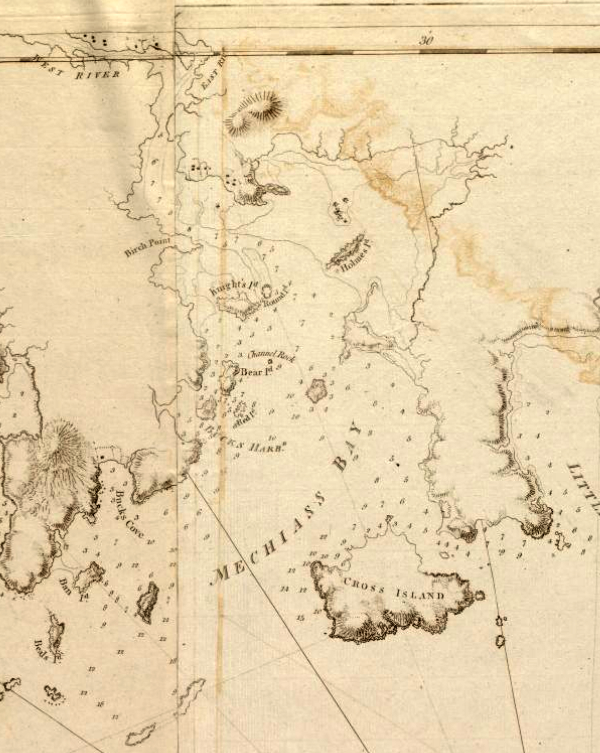
Yesterday I shared part of a letter Joseph Wheaton wrote in 1818 about how men from Machias, Maine, captured H.M.S. Margaretta early in the Revolutionary War.

In 1824, Charles W. Goldsborough quoted that letter in The United States Naval Chronicle. Many other chroniclers drew on it to describe the fight, sometimes said (by people not from Fairhaven) to be the first naval battle of the war.

In The Pictorial Field-book of the Revolution (1852), Benson J. Lossing said in a footnote:
The honor of this enterprise belongs to Joseph Wheaton, a native of New York, then residing at Machias. He was an energetic young man of twenty years. He proposed the expedition, but modestly named [Jeremiah] O’Brien for commander. He was active in the whole affair, and in person seized the colors of the Margaretta.
However, in a 1975 article for Maine History titled “The Historiography of The Margaretta Affair, Or, How Not To Let the Facts Interfere With a Good Story,” Edwin A. Churchill grouped Wheaton’s description of events with other unsupported or untenable tales. Churchill referred to “the self-centered bragging of Joseph Wheaton” and said his memory was “notoriously bad.”

Churchill’s main targets were two big errors that he said “traditionalist” authors kept making in their accounts of the Margaretta affair. It wasn’t sparked by conflict over a Liberty Pole, he insisted, and Benjamin Foster’s ship didn’t run aground before the fight. Wheaton wrote nothing about a pole, but he left Foster out of his account entirely. 

I won’t continue to quote Wheaton’s account, which you can read in full here, thanks to Maine Memory. Nor will I try to pick apart its details, much as I like doing that. Other people, closer to Machias geographically and emotionally, can handle that task.

Instead, I’ll consider how Joseph Wheaton’s account of the Margaretta capture fits, or doesn’t fit, with his status in March 1776: in the family of a royal appointee evacuating Boston with the British military.

It’s possible that Joseph Wheaton did take part in the attack on the Royal Navy sloop in 1775, despite (or because of) how that would have angered his father, a local Customs officer and Loyalist. He wouldn’t have been the only Revolutionary veteran to muddle details of events forty years before and put himself and his friends at the center of an event. He definitely did join the Continental Army a couple of years later.  

On the other hand, coming from a Loyalist family gave Joseph Wheaton a strong incentive to play up his Patriot credentials. In 1776 Massachusetts authorities even confined him as a suspected Loyalist. Telling the story of helping to capture the Margaretta let Wheaton claim that he’d fought for what became the U.S. from (nearly) the start of the war.

And Wheaton told that story a lot.

TOMORROW: Over the decades.

Thursday, April 16, 2026

“I said to him—Dennis let us go and take that Schooner”

Where were Caleb Wheaton, Sr.’s sons when the Revolutionary War began in April 1775?

Wheaton made his home on a substantial riverside plot in Machias, Maine, but he also owned real estate in Dedham. It’s conceivable an older son was farming that land.

The newspaper articles I quoted here suggest Wheaton himself was traveling in his home town of Rehoboth and nearly Providence, Rhode Island, in February.

But I haven’t found any statement from Caleb Wheaton about why or when he left Machias, when he went into Boston, or how many family members were with him.

In contrast, Caleb’s son Joseph Wheaton left a definite and detailed account of how he saw the war begin. In a letter to Gideon O’Brien, written on 23 Apr 1818 and held and published by the Maine Historical Society, Joseph Wheaton stated:
Before the Battle of Concord 19. Apr 1775—the Margarette Schooner Capt Moore—saild from Boston and came to Machias to escort convoy two sloops owned by Ichobod Jones with lumber for Boston & for the use of the British Governmt

while those vessels were loading. their came to Machias a vessel, & brought the news of the Battle of Concord—and communicated it to the people, on a Saturday Evening—

the next Morning Sunday it was proposed to take the officers when at public worship, and thereby obtain the vessel in retaliation for Concord & Lexington,

in attempting this, the officers Capt Moore & others escaped and got on board the Schoon—and fell down to Scotts Wharf—Where they were fired upon by a party who had come there headed by Mr [Benjamin] Foster from the East river—but as it fell dark very soon the Margarette fell down the river near where my family then lived

on Monday morning the people being yet together at Scotts—the Schooner in view. Your Brother Dennis and Myself were Standing on the Wharf by ourselves—when I said to him—Dennis let us go and take that Schooner—

how will you do it Said Dennis—

I said, we can take Job Hains’s Sloop, get the people on board her, the Sloop will out Sail the Margarette, we can board her and take her—

with all my heart said Dennis—

we then called to our aid two youths and renewed the proposition to which they agreed—we four immediately steped into a boat and went on board the Job Hains’s sloop and demand him to take the sloop to Scotts Wharf which with some little opposition was effected—

so soon as we steped on shore and gained the Bank before Scotts house, we four took off our Hatts and gave three cheers—when your Brother Jeremiah steped forward, yourself & Brother John & called upon the people to undertake the interprise to which all consented
We know from other sources that Lt. James Moore brought H.M.S. Margaretta to Machias in early June 1775, well after news that a war had started. That should be our first tip-off not to take the story that Joseph Wheaton told more than forty years later at face value.

TOMORROW: Maine memories. 

Wednesday, April 15, 2026

“Sacrificed his home and domestic ties for the cause of liberty”

The story of Joseph Wheaton’s defection from his Loyalist family to the Continental Army was passed down in both branches of the divided family, but the details got fuzzy and/or exaggerated.

E. Alfred Jones published the Canadian Wheatons’ version in his Loyalists of Massachusetts:
Joseph, also a loyalist, was taken prisoner and confined in Concord gaol, where he was successfully induced to join the Americans and was given a commission as ensign.
I haven’t yet found any connection between Wheaton and Concord, but members of the family were indeed detained in 1776.

A U.S. Congressional report in 1879 accepted this version from Joseph Wheaton’s descendants:
that Lieutenant Joseph Wheaton served in the Rhode Island Line from the commencement to the close of the revolutionary war; that his father and ten brothers all held commissions as officers in the British service, and that he alone sacrificed his home and domestic ties for the cause of liberty; that he was disinherited by his father, Colonel Caleb Wheaton, who commanded a regiment of British pioneers, who to the day of his death never forgave his son for what he considered a disloyalty to the King of Great Britain in joining the “Yankee rebels”…
Joseph Wheaton’s father Caleb was a lieutenant in a provincial company of guards and pioneers, never a colonel. The family boasted that five sons served in branches of the British military, not ten.

Most significant, Joseph Wheaton wasn’t in the Continental Army “from the commencement“ of the war. As I’ve been discussing, in April 1776 he, his father, and the family were captured by Continental schooners trying to sail from Boston to Halifax with the British invasion fleet.

But Wheaton did eventually join the Continental forces. Documents show that in September 1777 the New Hampshire committee of safety began to disburse money to him, and as of January 1778 he had “orders…to Enlist men for Rhod Island,” where the British were holding Newport. In April 1778 he was commissioned as a lieutenant in Capt. Samuel Dearborn’s state company for that campaign.

Francis B. Heitman’s Historical Register of Officers of the Continental Army stated that Joseph Wheaton became an ensign in the Second Rhode Island Regiment on 1 Mar 1779, rising to lieutenant by the end of the war.

According to a letter he wrote in June 1783, Lt. Wheaton went into New York City at the end of the war to seek out his Loyalist relatives. He found that “his parents were gone to England and Nova Scotia”; indeed, Caleb Wheaton, Sr., was in London pursuing a Loyalist claim in the middle of that decade. In 1820 Joseph described this situation as: “[I] found myself disinherited by my father for shedding my blood in the cause of liberty and my country.”

On 12 May 1789, the weeks-old U.S. House of Representatives elected Joseph Wheaton to be its first sergeant at arms, empowered to carry a ceremonial mace and enforce protocol. He held that position until 1807, meaning he moved with the federal government from New York to Philadelphia to Washington, D.C. The picture above shows the unfinished U.S. Capitol in 1800.

During the War of 1812 the old lieutenant returned to the U.S. Army, serving as a captain and then major in the quartermaster department from 1813 to early 1815.

According to the Congressional report quoted above, early in the Revolutionary War Joseph Wheaton had “received a severe saber wound on the head, which troubled his mind through life, and terminated in his dying in the insane asylum, in Baltimore, in the year 1828.”

As we’ll see, there’s reason to doubt that account of his Revolutionary activity.

TOMORROW: Back to Machias.

Sunday, February 22, 2026

“Henry Knox’s Trek from Ticonderoga” in Acton, 26 Feb.

On Thursday, 26 February, I’ll return to the Acton 250 lecture series to speak about “Henry Knox’s Trek from Ticonderoga: Myths, Realities, and Results for Boston.”

Our event description says:
In early 1776, the young Continental Army colonel Henry Knox moved dozens of heavy cannons and mortars from Lake Champlain to the siege lines around Boston; one of the most famous stories from the Revolutionary War. And like many famous stories, it embodies a fair amount of legend and lore.

This talk sorts out what we know, what we only think we know, and what we should know about how Knox brought this “noble train of artillery” that helped to make all of Massachusetts independent.
The day on which I’ll speak will be the 250th anniversary of when Gen. George Washington informed the Massachusetts Council and the Continental Congress about the plan to fortify Dorchester Heights. On that same day the Boston official Ezekiel Price, then living as a refugee in Milton, wrote in his diary:
It is said that the heavy cannon which were left at Framingham are brought down to Cambridge;…every thing getting in readiness to make a push by our army.
For a month the fifty-eight artillery pieces which Col. Knox had managed to bring from Fort Ticonderoga had stayed in Framingham, being equipped with the necessary carriages and tools. Now they were moving forward to the siege lines. How would the Continentals use them?

This talk is scheduled to start at 7 P.M. in Room 204 of the Town Hall, 472 Main Street in Acton. It will also be shown live and recorded on Acton cable television.

(The photo above shows a cannon carriage being completed at the Hartwell Tavern in Lincoln. I took this photo during yesterday’s Minute Man Park/Fort Ti event.)

Sunday, February 01, 2026

Getting Warmer on the Origin of a Warming Pan

At Historic New England, Erica Lome, curator of collections, shared a behind-the-scenes essay about a warming pan with a Revolutionary heritage of sorts:
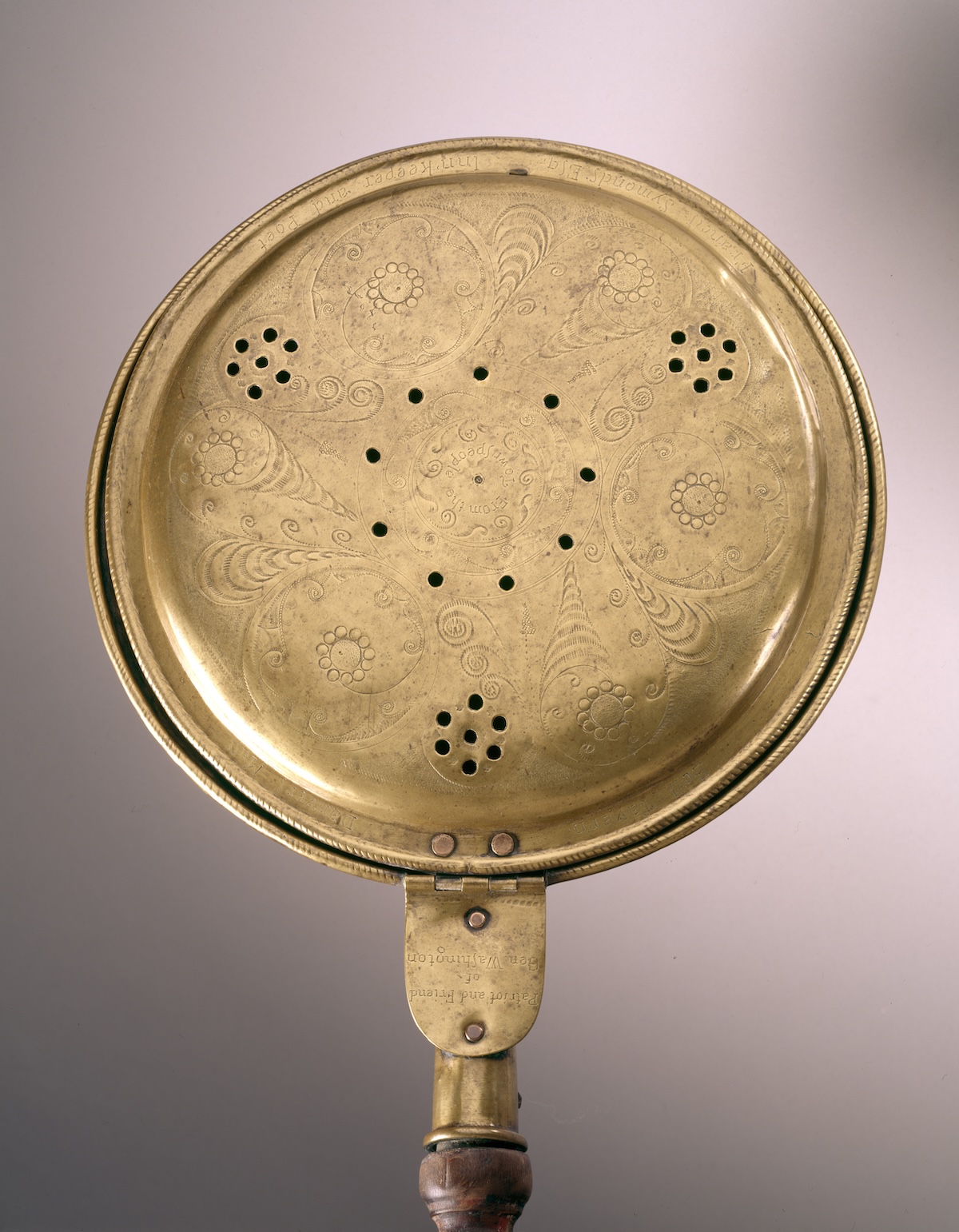
Tucked away in the parlor at Historic New England’s Cogswell’s Grant in Essex, Massachusetts, is a warming pan with a turned wooden handle and a brass container pierced with holes and engraved with scrolling vines and flowerheads. Also referred to as bed warmers, warming pans were a common household tool in colonial and post-revolutionary America, filled with embers and placed under the sheets of a bed to warm it before use.

This particular warming pan had more than just decorative motifs adorning its metallic surface. Engraved on its lid are the words:
From the Townspeople / Patriot and Friend of Gen. Washington / Bell Tavern, Danvers, Massachusetts / Francis Symonds Esq. Innkeeper and Poet.
On the pan’s sides, inside the incised outline of a bell:
I’ll toll you / if you have need / and feed you well / and bid you speed.
On the other side:
Francis Symonds / makes and sells / the best of chocolate / also shells.
John Warner Barber’s Historical Collections (1839) recorded that those verses hung on signs outside the Bell Tavern. In 1841 the Boston Cultivator stated that innkeeper Symonds’s “poetic genius caused [those lines] to be inscribed”; as Lome notes, he was known for adding bits of rhyme to his advertisements. (The Cultivator changed “also shells” to “and shells,” which scans better if you put three syllables into “chocolate.”)

The essay continues:
By its history, as recorded by Nina Fletcher Little, the warming pan was presented to Symonds around 1785: “After the war’s close, the citizens of Danvers evidently wished to present Symonds with a token of their esteem and decided on a warming pan as a practical gift.” The engraved inscription inside the bell matched the Bell Tavern’s signpost. The additional inscription praised Symonds as a patriot, friend of George Washington, and a poet, truly a prominent citizen and worthy of appreciation.

When researching this object for [the upcoming exhibit] Myth and Memory, one major detail of Symonds’s life challenged its story: Francis Symonds died on September 22, 1775. According to the Essex Gazette:
“On the 22nd Instant died at Danvers and on the 24th was very decently interred, Mr. Francis Symonds, Innholder, in the 5th Year of his Age. He was very just in his Dealings, and compassionate to the Poor as far as lay in his Power. In his last Sickness, especially towards the Close of Life, his Calmness and Resignation were very remarkable. He has left a sorrowful Widow and 6 Children, for whom we wish that the fame Compassion that he has shown to others may be shown to them.” . . .
Francis Symonds mustered for two days with Colonel [Timothy] Pickering’s regiment during the Battle of Lexington and Concord, and again on April 24, 1775, serving for a little over three months, until August 1, 1775. He was at home when he died of illness.

So, what about the warming pan? It seems very unlikely that the town of Danvers presented it to him on his deathbed, nor to his family immediately after, given the ongoing Siege of Boston. What is its true history?
Lome doesn’t offer a definite conclusion, but I like her hypothesis that the words were inscribed during a commemoration of the Revolution, such as Danvers’s dedication of a memorial obelisk near the Bell Tavern in 1835. Or later, when warming pans themselves were becoming relics of a quaint past. 

Tuesday, January 20, 2026

The Younger General Prescott

Bibliography abhors a vacuum.

Once William Tudor, Jr., suggested in print that “General Prescott” deserved credit for writing the 1774 pamphlet A Letter from a Veteran, to the Officers of the Army Encamped at Boston, cataloguers didn’t want to ignore that suggestion. It was better to share some possibly correct information than to leave a blank, right?

No matter that Tudor didn’t seem certain, or offer a reason to believe that attribution. He was a solid researcher, for the early nineteenth century. His parents had been in Boston before the war. His mother, Delia Jarvis, was from a Loyalist family who knew British army officers. So his info might have been accurate.

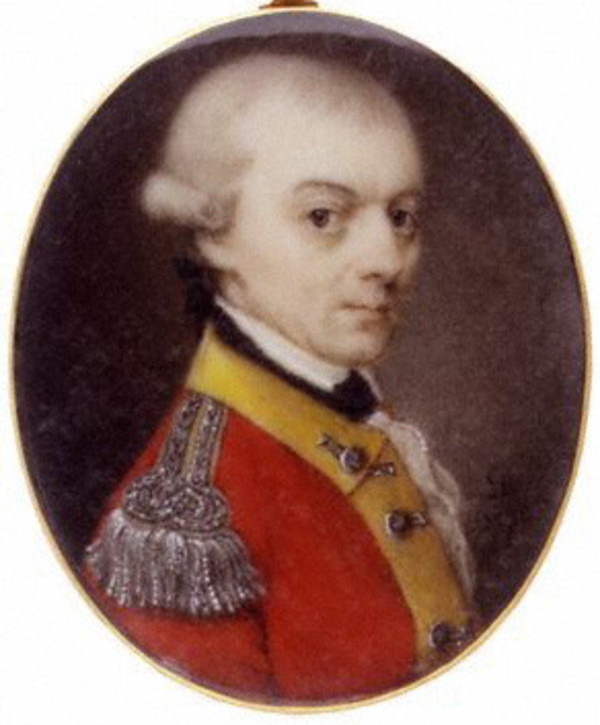
In the early twentieth century, bibliographers started to surmise that “General Prescott” might mean Robert Prescott (1726?–1815, shown above), a veteran of the Seven Years’ War who eventually became governor general of the Canadas. Most of those attributions remained tentative, but his was the only name put forward, so gradually it came to seem more solid.

I’m skeptical. In 1774, when A Letter from a Veteran appeared in New York, Robert Prescott was almost certainly in Britain, living on his half-pay pension as a lieutenant colonel mustered out of the 72nd Regiment. He hadn’t served on the North American mainland since 1760.

While it’s conceivable that Lt. Col. Prescott followed the political debates over America closely, wrote an essay responding to American Whig arguments and analyzing the cultures of different colonies, and sent it across the Atlantic to be published, that seems unlikely.

On 8 Sept 1775 Robert Prescott was called back into service, now lieutenant colonel in the 28th Regiment. He reached New York with the 1776 invasion force. After fighting on the mainland and in the Caribbean, he gained the rank of general in 1781. And his military and administrative career would continue. He never appears to have claimed A Letter from a Veteran as his own, or to have published other political essays. 

Is there any better candidate for “General Prescott”?

Robert’s older brother Richard Prescott (1725–1788) gained the rank of general a few years before him, early in the Revolutionary War. Richard’s regiment, the 7th or King’s Fusiliers, was in North America in 1774. So is Richard more likely to have been the author of A Letter from a Veteran?

The main problem with that hypothesis is that in 1774 the 7th Regiment was stationed in western Canada, practically as distant from New York as London was.

TOMORROW: A paper trail.

Monday, January 19, 2026

“It was attributed to General Prescott”

After the British army and the New England provincials went to war in April 1775, people stopped worrying about political pamphlets like A Letter from a Veteran, to the Officers of the Army Encamped at Boston.

John Adams broke off his “Novanglus” essays. The New York printer Hugh Gaine struggled to remain politically balanced, literally printing on both sides of the conflict. Most prewar essays fell into obscurity.

Nearly half a century after A Letter from a Veteran appeared, William Tudor, Jr. (1770–1830, shown here), wrote about it in The Life of James Otis, of Massachusetts:
A few of the officers felt an esteem for the people, and were reluctant to engage in a civil war, which they knew would bring great misfortunes upon the country, and as they supposed, overwhelm it. There was to much folly and disgusting arrogance in many of the subalterns, and careless ignorance about the whole subject of dispute, that one of their superior officers published a small pamphlet, entitled, “A letter from a Veteran to the Officers of the army encamped at Botton.” It is remarkably well written, and while it justifies his own government, reproves the frivolity and rashness that treated the Americans with contempt. It was attributed to General Prescott.
Tudor didn’t state a source for this information, and the expression “It was attributed” suggests he wasn’t completely sure about it.

That book might have given the pamphlet more visibility. James Fenimore Cooper took a passage from A Letter from a Veteran (imperfectly cited) as a chapter epigraph in his 1825 novel Lionel Lincoln: or, The Leaguer of Boston. His protagonist was a British army officer with conflicting loyalties.

Tudor’s emphasis on how A Letter from a Veteran “reproves” British officers who showed contempt for Americans might also have given people a false sense of its overall argument. It expressed very little sympathy for New Englanders.

In 1860 a catalogue of the Massachusetts Historical Society library attributed A Letter from a Veteran to, of all people, Col. William Prescott, the commander of the provincial redoubt at Bunker Hill.

That made no sense. William Prescott was never a high officer in the regular British army or, so far as I see, any sort a general. He wasn’t a political writer, and he certainly wouldn’t have published a criticism of New England religious zealotry.

Nonetheless, the attribution to William Prescott was repeated in other American publications for the rest of the nineteenth century.

TOMORROW: General Prescott and General Prescott.

Wednesday, December 24, 2025

John Malcom, Counterfeiter?

Watching the recent American Revolution documentary series by Ken Burns, Sarah Botstein, and David Schmidt, my ear snagged on a detail about John Malcom.

The show said that Malcom, the Customs service officer severely mobbed, tarred, feathered, and whipped in Boston in January 1774, had gotten in trouble for counterfeiting a decade earlier.

Since I’ve collected newspaper reports about John Malcom for a series of postings I really must get back to, I was surprised at not having come across a report of that crime. Whig printers enjoyed publishing stories about Malcom’s behavior after he joined the Customs service. They had even more reason to pull out embarrassing old stories after the attack on him. But no newspaper described Malcom as a counterfeiter.

In Scars of Independence (2017) Holger Hoock wrote of Malcom: “He had become notorious across the colonies after being arrested for debt and counterfeiting in 1763.” Given the lack of newspaper mentions, the captain definitely wasn’t notorious for such a crime. In fact, after further research I’m dubious the man was ever charged with counterfeiting at all.

The earliest mentions of such a crime appear the work of Dirk Hoerder: his 1971 doctoral thesis, “People and Mobs, Crowd Action in Massachusetts During the American Revolution 1765–1780,” and his 1977 book, Crowd Action in Revolutionary Massachusetts, 1765-1780. The latter says of Malcom: “In 1763 he had been apprehended in Boston for debt and counterfeiting.”

The citation for that sentence appears to be Suffolk Court Files 84397, which is a court case listed as Malcom v. Butters. That doesn’t look like a criminal charge for counterfeiting, though it could well be a debt dispute. I haven’t seen that paperwork, though.

Based on newspaper reports, Capt. John Malcom spent little time in Boston in the 1760s. He had moved to Québec and commanded trading voyages to the West Indies. Of course, Malcom might have been charged or sued during a brief stopover in his home town.

Yet we have to be careful we have the right John Malcom. The 15 October 1772 Boston News-Letter announced the death of “Mr. John Malcom, Labourer,” as did the following Monday’s Boston Post-Boy and Boston Evening-Post. Obviously that wasn’t the Customs officer attacked in 1774. But he might have been the debtor of 1763.

Further confusing matters is how a “John Malcom, alias Malcolm,” was convicted of passing counterfeit bills in Maryland—back in 1743. (Kenneth Scott’s Maryland Historical Magazine article “Counterfeiting in Colonial Maryland,” which can be downloaded in a P.D.F. here, misdates that case as in 1734.)

Normally I find Hoerder’s work to be very thorough and reliable. In this case, however, I think that he (if you’ll excuse the expression) tarred the wrong John Malcom with the wrong misdeeds.