J. L. BELL is a Massachusetts writer who specializes in (among other things) the start of the American Revolution in and around Boston. He is particularly interested in the experiences of children in 1765-75. He has published scholarly papers and popular articles for both children and adults. He was consultant for an episode of History Detectives, and contributed to a display at Minute Man National Historic Park.

Subscribe thru Follow.it


•••••••••••••••••


Showing posts with label William Shirley. Show all posts

Thursday, October 02, 2025

“A fine set of 8 Bells were brought hither”

On 25 July 1745 the Boston News-Letter reported the arrival of a new type of sound in Boston—or at least the potential for one.

The newspaper said:
Last Week a fine set of 8 Bells were brought hither in a Vessel from Bristol, designed for Dr. [Timothy] CUTLER’s Church at the North Part of this Town: We hear the largest of them is near 1500 Weight, and the whole Set about 7000.
That was Christ Church, now also known as the Old North Church. Its steeple was also the tallest in town. As an Anglican place of worship, it could be fancier than the several Congregationalist meetinghouses with their single bells.

The church’s website states:
Old North has a total of 8 bells, each cast to ring at a different pitch. The treble bell, or #1, is the smallest bell and weighs in at about 620 lbs. The largest is the tenor, or #8, which weighs about 1,500 lbs. Each bell is hung inside a wooden wheel and frame, with ropes attached that extends to the bell-ringing chamber two floors down.
Each bell has a unique message cast in its metal:
  • 1: “Abel Rudhall of Gloucester, cast us all, Anno 1744.”
  • 2: “Since generosity has opened our mouths, our tongues shall ring aloud its praise. 1744.”
  • 3: “The subscription for these bells was begun by Iohn Hammock and Robert Temple, Church Wardens, Anno 1743; completed by Robert Ienkins and Iohn Gould, church Wardens, Anno 1744.”
  • 4: “William Shirley, Esq., Governor of the Massachusetts Bay, in New England. Anno 1744.”
  • 5: “God preserve the Church of England. 1744.”
  • 6: “We are the first ring of bells cast for the British Empire in North America. A.R. 1744.”
  • 7: “This Church was founded in the year 1723. Timothy Cutler, DD, the first Rector, A.R. 1744”
  • 8: “This peal of eight bells is the gift of a number of generous persons to Christ Church, in Boston, N.E. Anno 1744.”
“A.R.” usually meant “in the year of his reign,” referring to the current king, but here it appears to be used as a synonym for “A.D.”

Abel Rudhall (1714–1760) was the head of a family firm that cast bells in Gloucester from 1684 to 1835. According to Wikipedia, his grandfather had invented a way of “tuning bells by turning on a lathe rather than the traditional chipping method with a chisel.”

Those bells were designed to be rung together, but that required a group of bell-ringers.

TOMORROW: You rang?

Sunday, October 27, 2024

“The Siege of Boston” Tour for Social-Studies Educators, 21 Nov.

The National Council for Social Studies, the largest professional association devoted to social studies education, will meet in Boston on 19–24 November. Over 3,000 classroom teachers and other educators from around the country are expected to come.

Attendees arriving before Thursday, 21 November, have a choice of two all-day tours, among other offerings. One is a trip to Portsmouth, New Hampshire. The other, which I’m involved in, is an exploration of “The Siege of Boston” in preparation for the Sestercentennial of that campaign.

This tour has been organized by Dr. Gorman Lee through Revolution 250, and he describes it this way:
The Siege of Boston refers to a significant period in colonial history when militias from the American colonies surrounded the British-occupied city of Boston. Teachers will visit five historical sites to explore how the Siege unfolded through the lenses of enslaved and free African Americans, Loyalists, women, and rank-and-file rebels.
The five significant historic sites are:
  • The Royall House & Slave Quarters in Medford, used by Gen. Charles Lee and Col. John Stark during the siege.
  • The Bunker Hill Monument in Charlestown, site of the biggest, bloodiest, and ultimately decisive battle of the siege.
  • Longfellow House–Washington’s Headquarters National Historic Site and nearby Cambridge common, from which Gen. George Washington and the Massachusetts committee of safety directed the siege.
  • The Shirley-Eustis House in Roxbury, a former governor’s mansion used as a hospital.
  • The Dillaway-Thomas House in Roxbury, from which Gen. John Thomas spearheaded the final move onto Dorchester Heights.
Prof. Robert J. Allison of Suffolk University will be the expert guide on the first leg of the tour. I’ll hop on in Cambridge, and gents from the Massachusetts Society of the Cincinnati will be awaiting us in Roxbury. Of course, the docents and curators at each site will share their knowledge.

That’s a packed itinerary, and I expect we’ll adjust the times spent at each site on the day based on time spent in traffic. I’ll try to bring along a store of stories to fill those moments.

This tour has a fee of $50 above the conference registration cost. Conference attendees can sign up for it through this webpage. (At least I think so. I can’t figure out the registration pages myself, but I expect educators have experience navigating that sort of complex bureaucratic system.) 

Friday, November 18, 2022

Hannah Waldo, Patent Heiress

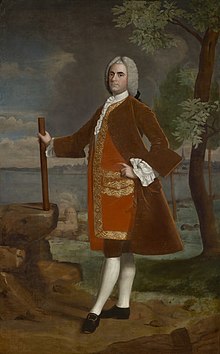
Hannah Waldo was born in Boston on 21 Nov 1726 and baptized in the town’s First Meetinghouse. She was the daughter of Lucy and Samuel Waldo (shown here).

Samuel Waldo was a merchant who went into land speculation in a big way. In 1729, when Hannah was two years old, he acquired the controlling interest in a big land grant in Maine.

That royal grant had changed hands for many decades because simply having permission from London to claim land didn’t mean a person could actually exercise any control over it.

Waldo also bought a big land grant in Nova Scotia, but that claim was on shaky legal grounds. He spent a fair amount of the 1730s in London, arguing unsuccessfully for that patent and recruiting people to settle on his Maine (main?) claim.

One obstacle to British settlements on what became known as the Waldo Patent was danger from the French and the Native nations allied with them, or just uninterested in losing their territory. Starting in 1740, Waldo promoted a plan to attack the French fortification at Louisbourg to remove that threat.

When Britain finally went to war against France, Gov. William Shirley authorized that military expedition. William Pepperrell was the commander-in-chief, and Samuel Waldo, who had served under Pepperrell in the top ranks of Maine’s militia, was commissioned a brigadier general, second in command of the land forces.

As I discussed yesterday, that expedition was a big success. By the end of 1745, Massachusetts’s military captured the French outpost for the British Empire (though the British Empire decided to give it back in exchange for Madras). Pepperrell was made a baronet. Waldo was addressed as “general” for the rest of his life, and he could step up his efforts to recruit settlers for his land.

Among the people who came to the Waldo Patent in the next few years, before another war broke out, were Georg Frederich Seiter and Christine Salome Hartwick. They would marry and have children, including Christopher Seider. But that’s getting away from Hannah Waldo’s story.

The Waldo and Pepperell families were well acquainted. The general’s son Samuel, Jr., was in the same class at Harvard College as the baronet’s son, Andrew. Furthermore, in 1742 the baronet’s daughter, Elizabeth, had married Nathaniel Sparhawk, a son of Hannah and Samuel, Jr.’s step-grandmother through a second marriage.

In 1746, Hannah Waldo and Andrew Pepperrell became engaged. Andrew was seen as quite a catch. Writing ninety years later, Usher Parsons said: “his comely person and polished manners were a passport to the best circles; and his heirship to a fortune and a baronetcy placed him in the highest social position.”

Sir William and Gen. Waldo were both pleased with this engagement, which would bring together the district’s two leading families (with the Sparhawks tied in as a bonus). The actual wedding date was to be named later when Andrew finished building his house.

And that proved to be a problem.

TOMORROW: Waiting for a wedding.

Thursday, April 15, 2021

Online Lectures about Maps, Soldiers, and Constitutions

This month I’ve listed online events to commemorate the 19th of April, and then more of those, and then another along with two events about tavern culture.

And yet here are three more online historical events scheduled in the next week.

“Mapping and Placing 18th Century Roxbury, New England and the Imperial Atlantic”
Saturday, 17 April, 6:30 P.M.
The Shirley-Eustis House Association

Explore how eighteenth-century maps were vital to governing and expanding the British Empire, starting at Governor William Shirley’s Roxbury mansion. Garret Dash Nelson, curator of the Boston Public Library’s Leventhal Map Center explores just how Boston, New England, and the historic Shirley-Eustis House were suited in the British Empire’s Northern Atlantic ambitions. Beautifully rendered and detailed historic maps from the 1700s reveal how Governor Shirley and others tried to shape those ambitions.

Free through the sponsorship of the Massachusetts Chapter of the Society of Cincinnati. Currently filled out, though it’s possible some slots will open up. Information and registration here.

“Noble Volunteers: The British Soldiers Who Fought the American Revolution”
Tuesday, 20 April, 12 noon
The Boston Athenaeum

Dispelling long-held myths about the Revolutionary War, Don Hagist shines light on the diversity of the British soldiers—many of whom had joined the army as a peacetime career, only to find themselves fighting a war on another continent in often brutal conditions.

$5, or free for members. Registration starts here. Don Hagist’s book.

“The Gun, the Ship, and the Pen: Warfare, Constitutions, and the Making of the Modern World”
Wednesday, 21 April, 6:00 P.M.
The Boston Athenaeum

Tracing the global history of written constitutions from the 1750s to the twentieth century, Linda Colley focuses on how constitutions crossed geographical boundaries and aided the rise of empires as well as nations, illuminating their intimate connections with print, literary creativity, and the rise of the novel.

$5, or free for members. Registration starts here. Linda Colley’s book.

Wednesday, July 08, 2020

The Speakman Chronicles, or, That Escalated Quickly

Last month, I said I didn’t know whom Christian Barnes was referring to when she wrote in June 1770 about “a young gentleman who has formilly headed the mob in Boston and now resides” in Marlborough.

I’ve since figured out who that young man is. But I’ll make a running start at him, beginning at the turn of the eighteenth century.

William Speakman (c. 1685-1748) was a baker from England, possibly Lancashire, who moved to Boston in the early 1700s. The town was growing, and he prospered. On his death the Boston Evening-Post said Speakman was “one of the rarest Instances of Industry and Diligence, that perhaps ever was in the Country.”

Speakman was also a pillar of the local Anglican church. He owned the land that the first Trinity Church (shown above) was built on and served as one of its first wardens. But he grew so wealthy that by the end of his life he was back at King’s Chapel, which had become the upper-class Anglican congregation.

William Speakman married Hannah Hackerel (spelled various ways) in 1719, and they had three children who grew to adulthood:
  • Thomas, born in 1722, who who went off to Harvard College in the late 1730s (a bit later than typical).
  • Hannah, born in 1725, who married merchant John Rowe.
  • Susannah, born in 1727, who married merchant Ralph Inman.
Clearly the Speakmans were rising in the world, and forging connections with other Anglican families.

Then Thomas fell off the collegiate track. He left Harvard in March 1740. When his classmates were about to graduate two years later, Thomas asked the college if he could get a diploma, too. The authorities decided “it would be neither agreeable to the Laws of this Society, nor for the Honour and Interest thereof.”

By then Thomas had married and become a father—hopefully in that order. We don’t have a date for his marriage to Mary Warner, but their first child, William, arrived in September 1740. So Mary was already well into her pregnancy when Thomas left college.

Mary was a daughter of Gilbert Warner, an Anglican distiller. The newlyweds’ fathers were both investors in the settlement of New Boston, New Hampshire. Mary’s father gave them property on Essex Street in Boston’s South End.

Thomas Speakman went into business in Boston. His father died in 1748, leaving a considerable estate, including a distillery in the South End. Mary’s father died in 1753, leaving the Speakmans more. They acquired substantial property in Marlborough. By this time Thomas and Mary had two sons and three daughters.

In 1755, Thomas Speakman volunteered to be a captain in a military force that Gov. William Shirley was assembling to fight the French. He served at first in Nova Scotia in the period when the British expelled thousands of French colonists. At the end of 1756 Speakman marched west to join in the fighting along Lake George and Lake Champlain.

Speakman and his company were assigned to the corps of rangers under Maj. Robert Rogers. On 17 Jan 1757, Speakman (whom Rogers referred to in his journal as “Spikeman”) joined in a “march on the ice down Lake George.” Also on this mission were Lt. John Stark and a gentleman volunteer with the 44th Regiment named Baker. After the major sent some injured soldiers back to Fort William Henry, there were 74 men in all.

By 21 January, Rogers wrote, the expedition was camped “about mid-way between Crown Point and Ticonderoga.” They spotted some sleds moving between the forts and captured seven prisoners, only to learn there were hundreds of French soldiers in the two posts and more coming. And some of the sled-men had gotten away, so they were no doubt warning their comrades of enemy rangers nearby. “I concluded it best to return,” Rogers wrote.

At about two o’clock that afternoon, as the British made their way through a small valley “in single file,” the enemy ambushed them from a hilltop. Two men were killed instantly, several more wounded. Rogers ordered his men back to another hill. In the withdrawal, he wrote, “We were closely pursued, and Capt. Spikeman, with several of the party, were killed, and others made prisoners.”

However, in early 1760 a young soldier named Thomas Brown returned to Charlestown from captivity and told a more grisly story. According to him, Speakman, the volunteer named Baker, and he were “all very badly wounded” and left behind as Rogers led the rest of the force away that night under darkness.

The three men built a fire on the snowy ground and talked about surrendering. Before they could, an “Indian came to Capt. Speakman, who was not able to resist, and stripp’d and scalp’d him alive.” Baker tried to kill himself with a knife, but the Native soldier stopped him and dragged him away. Only Brown had managed to hide in the woods.

Left for dead, Speakman called out to Brown “to give him a Tomahawk, that he might put an end to his life!” Brown urged the captain instead to pray for God’s mercy. “He desired me to let his Wife know (if I lived to get home) the dreadful Death he died.”

The next morning, Natives found Brown but treated his wounds and turned him over to the French. He recalled how they took him to see “Captain Speakman, who was laying in the place I left him; they had cut off his Head & fix’d it on a Pole.”

Maj. Rogers made it back to Fort William Henry on 23 January with 54 men. He had been shot himself; the New Hampshire soldier John Shute recalled seeing “one of the Rangers cutting off Rogers’ cue [queue] to stop the hole in his wrist.” Lt. Stark was given temporary command of Speakman’s company.

Capt. James Abercrombie, aide de camp to Gen. James Abercrombie [yes, I know], responded to Rogers’s report on the mission by writing, “I am heartily sorry for Spikeman…, who I imagined would have turned out well, as likewise for the men you have lost; but it is impossible to play at bowls without meeting with rubs.”

TOMORROW: Thomas Speakman’s wife and sons.

Tuesday, June 30, 2020

“The principal cause of the Mobbish turn in this Town”?

Early this month I recounted some moments in the mid-1700s when the royal governors of Massachusetts found themselves stymied by crowds protesting for their traditional liberties.

Without army units nearby or a large, full-time police force, no power in the province was strong enough to pacify the mass of ordinary men. Except, that is, a government that accommodated their demands for respect and rights.

In letters to London, those governors offered their diagnoses of how that situation had come about. Gov. William Shirley didn’t say the root of the problem was the Royal Navy forcing sailors and other young men into service. Gov. Francis Bernard didn’t say that Parliament made a mistake in imposing a tax without representation. Those officials said the basic problem was that Boston and Massachusetts’s forms of government were too democratic.

On 1 Dec 1747, Shirley wrote to the Lords of Trade:
But what I think may be esteem’d the principal cause of the Mobbish turn in this Town, is it’s Constitution; by which the Management of it is devolv’d upon the populace assembled in their Town Meetings; one of which may be called together at any time upon the Petition of ten of the meanest Inhabitants, who by their Constant attendance there generally are the majority and outvote the Gentlemen, Merchants, Substantial Traders and all the better part of the Inhabitants; to whom it is Irksome to attend at such meetings, except upon very extraordinary occasions;

and by this means it happens, as it would do among any other Community in a Trading Seaport Town under the same Constitution, where there are about Twenty thousand [actually about 16,000] Inhabitants, consisting among others of so many working Artificers, Seafaring Men, and low sort of people, that a factious and Mobbish Spirit is Cherish’d; whereas the same Inhabitants under a different Town-Constitution proper for the Government of so populous and Trading a place, would probably form as well dispos’d a Community for every part of his Majesty’s Service as any the King has under his Government.
Here’s Bernard in 1765, arguing for an appointed Council rather than one elected by the Massachusetts elite, in turn elected by the white men of property in their towns:
The Authority of the King, the Supremacy of Parliament, the Superiority of Government are the real Objects of the attack; and a general levelling of all the powers of Government, & reducing it into the hands of the whole people is what is aimed at, & will, at least in some degree, succeed, without some external assistance.

The Council, which formerly used to be revered by the people has lost its weight, & notwithstanding their late spirited exertion, is in general timid & irresolute, especially when the Annual Election draws near. That fatal ingredient in the Composition of this Constitution is the bane of the whole: and never will the royal Scale be ballanced with that of the people ’till the Weight of the Council is wholly put into the former. The making the Council independent of the people (even tho’ they should still receive their original Appointment from them) would go far to cure all the disorders which this Government is Subject to.
Making the Council appointed instead of elected was one of the big changes of the 1774 Massachusetts Government Act.

Thomas Hutchinson was speaker of the house under Gov. Shirley and lieutenant governor and chief justice under Gov. Bernard. He became royal governor himself in 1770 and took up his predecessors’ complaints about the people (i.e., the white men of property) having too much power.

Here’s Hutchinson writing to Bernard on 24 May 1771:
The town of Boston is the source from whence all the other parts of the Province derive more or less troubled water. When you consider what is called its constitution, your good sense will determine immediately that it never can be otherwise for a long time together, whilst the majority which conducts all affairs, if met together upon another occasion, would be properly called a mob, and are persons of such rank and circumstance as in all communities constitute a mob, there being no sort of regulation of voters in practice; and as these will always be most in number, men of weight and value, although they wish to suppress them, cannot be induced to attempt to do it for fear not only of being outvoted, but affronted and insulted. Call such an assembly what you will, it is really no sort of government, not even a democracy, at best a corruption of it.

There is no hopes of a cure by any legislative but among ourselves to compel the town to be a corporation. The people will not seek it, because every one is sensible his importance will be lessened. If ever a remedy is found, it must be by compelling them to swallow it, and that by an exterior power,—the Parliament.
To “compel the town to be a corporation” meant ending the town-meeting form of government and becoming a city with an elected mayor and council—a change Boston eventually made in 1822, to some controversy.

Instituting a mandamus Council didn’t quell disturbances in Massachusetts. In fact, it spread them, producing militia uprisings in the countryside within weeks. Ending Boston’s town meetings didn’t end riots in Boston. Instead, American governments became more democratic than the royal governors would have imagined in their worse nightmares, and popular protests became less destructive.

Sunday, June 14, 2020

“To build a Court-House in the Town of Roxbury”

On 17 Feb 1748, the Massachusetts house heard from a second committee on what to do about the Town House, the legislature’s usual meeting hall, which had burned the previous November.

The first committee had recommended building a new Court-House for the Massachusetts General Court in Cambridge. The full house then rejected that idea.

This second committee, which included house speaker Thomas Hutchinson, recommended instead “that the late Court-House be repaired.” That would keep the seat of the government in the center of Boston, Hutchinson’s home town.

The full house didn’t accept that recommendation. It voted not to have a new Court-House “built in any Part of the Town of Boston.” Hutchinson could steer a committee but not the whole chamber.

Instead, that morning the lawmakers voted “to build a Court-House in the Town of Roxbury.” That was just one town inland from Boston, but the new building could be away from the waterfront, the merchants, and the province’s biggest mobs.

Roxbury was also the town where Gov. William Shirley had just built a new country seat (now the Shirley-Eustis House, shown above). A couple of decades later, Gov. Francis Bernard liked to spend time at his estate in Jamaica Plain, part of the same town. A Roxbury legislative seat could have shifted the power of influence in the pre-Revolutionary decade.

The house proceeded to appoint five members to join Councilors on a committee to “report a proper Place in the Town of Roxbury to place said House in, and consider of the Dimensions of said House; also to consider and report how the Charge of said House shall be defreyed.”

The legislative meeting-place was slipping away from Boston. But that afternoon, Isaac Royall of Charlestown (a part of that town transferred to Medford in 1754) went upstairs to the chamber where the Council was meeting and brought back news: “they had unanimously nonconcur’d said Vote.”

The house went back to the question. After further debate, the legislators voted again to put the Court-House in Roxbury and to appoint the same five members to the same joint committee. The only difference in the bills was that this one left out the issue of paying for the building.

The whole next day, there was no response from the Council. (The house had been likewise silent a few days before when the Council wanted to curtail the Independent Advertiser.) On the morning of 19 February, Joseph Buckminster of Framingham went up to ask about the Court-House. He learned the Council had again refused to go along with the Roxbury plan.

The house then decided “That the Consideration of building a Court-House be refer’d ’till the next Sitting of this Court.” For the rest of the month the chamber dealt with many other matters, including discussions through the committee of the whole on 25 February about speaker Hutchinson’s proposal for paying off old currency.

On 2 March a message from Gov. Shirley arrived:
Gentlemen of the House of Representatives,

AT the Beginning of this Session, I recommended to you the making Provision for a Court-House; I was in Hopes the Inconvenience you suffer in your present Situation, would have prompted you to have given Dispatch to this Affair; but perceiving it is still delayed, I must desire you would resume the Consideration, lest the General Court be put to the same Difficulties another Winter.
The lawmakers voted to discuss that the next morning. But first they addressed other matters, including buying “the Stone-Wind-Mill in Charlestown, for a Powder-House”—the building still standing in Somerville’s Powderhouse Square.

Finally the house voted on three questions:
  • “Will the House reconsider their Vote referring the Consideration of building the Court-House ’till the next Sitting of the Court?” Yes.
  • “Whether the late Court-House shall be repair’d?” No.
  • “Whether the Court-House shall be built in the Town of Boston?” Yes.
Thus, Hutchinson and other Boston legislators maintained the town’s status as the provincial capital, but there would need to be a new building. The fire-scarred shell of the 1713 Town House would presumably be torn down.

TOMORROW: “a proper Place in the Town of Boston for building a new Court-House.”

Friday, June 12, 2020

“The grand source of most of the Evils we groan under”

The same 14 Dec 1747 issue of the Boston Post-Boy that leaked Gov. William Shirley’s letters about riots the previous month also reported on how the Town House in Boston had burned down.

As good descendants of Puritans, the people of Massachusetts couldn’t help but worry that fire might be a sign of divine displeasure at how some of them had been behaving.

On 28 December, a day before issuing a new message to mollify the Boston town meeting, Gov. Shirley issued a proclamation for a public fast in one month. He noted:
the continued and growing Calamities of the War; and the many Difficulties and Embarrassments which attend our Publick Affairs, and in the signal Frown of Divine Providence in the Destruction of the Court-House by Fire, and therein of a great Part of the publick Records of the Province, and other useful and valuable Writings.
On the designated fast day, 28 Jan 1748, ministers in every Massachusetts town preached on how the people should improve themselves.

In Cambridge, the Rev. Nathaniel Appleton (1693-1784, shown above) spoke on The Cry of Oppression where Judgment is Looked for, and the Sore Calamities Such a People May Expect from a Righteous God. In Charlestown, the Rev. Thomas Prentice preached The Vanity of Zeal for Fasts without True Judgment, Mercy and Compassions. In Medford, the Rev. Ebenezer Turell published a Brief and Plain Exhortation to His People on the Late Fast, a condensed version of his sermon.

All three of those clergymen pointed to the same problem. Was it rioting? Spending too much on luxury goods? New Light enthusiasm? Old Light recalcitrance? No, it was that burdensome sin—allowing the value of paper money to depreciate!

“For one and all agree,” Appleton declared from his pulpit, “that the Sinking of the Value of these Bills below what is expressed in the Face of them, is the Cause of the present Complaints and Cries that are heard in the Land.”

“We find GOD complaining most grievously, of his people Israel, Amos viii.5. for their not dealing with just Measures and Weights according to the fixed Standard,” Prentice preached; “…and such like Instability, either in the Measure of Commodities, or in the Weight and Value of Money, is a most dreadful Injustice.”

Turell explained that “the grand source of most of the Evils we groan under at this Day” was “our Medium of Exchange, unstable as Water, and variable as the Wind. . . . We trade and traffick, buy and sell by this Measure, and so we daily oppress one another.”

This was a long-standing challenge to the Massachusetts economy. Without enough specie (gold and silver coinage) to keep commerce going, the province issued notes on paper. Those notes never traded at quite their nominal value, and as time went on the bills came to be worth less and less.

That was a problem for people who had fixed incomes—particularly ministers who had negotiated set salaries with their congregations when they assumed their pulpits.

In his speech to the Massachusetts General Court on 3 February, Gov. Shirley devoted a whole paragraph to both “the extraordinary Emissions of Paper Money, whereby the Value thereof for all Occasions of Life is sunk so low and is still sinking,” and “the Difficulties, which many of the Ministers of the Gospel within this Province are brought under, thro’ the great Depreciation of the Bills of Credit.”

Thus, the question of rebuilding the Town House in Boston or building a new legislative meeting hall somewhere else was also a question of adding to the public debt just when that was becoming a real problem for influential people in the colony.

TOMORROW: Back to the Massachusetts house’s discussion.

Thursday, June 11, 2020

A New Voice in Boston Politics in 1748

On the morning of 12 Feb 1748, the Massachusetts house, before returning to the question of whether to rescind its vote to build a new meeting-place in Cambridge, took note of a different issue.

A member of the Council came down with that body’s complaint about:
a printed Paper called the Independent Advertiser, No. 6, published by [Gamaliel] Rogers and [Daniel] Fowle, dated the 8th of February Instant [of this year], wherein they apprehend there are many Things contained that strike at the Honour & Influence of this Legislature:
What were those “many Things”?

As I discussed back here, the Royal Navy’s impressment of Bostonians had led to three days of riots. For a while, everyone pointed fingers at everyone else. Gov. William Shirley complained that the townspeople were volatile and their elected leaders unhelpful. Bostonians complained that Shirley wasn’t protecting them from the navy. Speaker of the house Thomas Hutchinson appears to have felt both the people and the governor were behaving less rationally than they should.

Once things calmed down, most of the Massachusetts elite agreed on how to address the problem: maintain a unified front against impressment and blame social outsiders for the violence. As Chris Magra wrote this week for the University of Tennessee, “The royal governor hoped to distract attention away from deep and widespread concerns in Boston by blaming the disturbance on outsiders with no respect for law and order.”

Thus, the Massachusetts house, under Hutchinson’s leadership, passed a resolution on 19 November condemning the “tumultuous, rioting Assembling of armed Seamen, Servants, Negroes and others.” The next day, the Boston town meeting declared “That the said riotous tumultuous Assembly consisted of Foreign Seamen, Servants, Negroes, and other Persons of mean and vile Conditions.” A day after that, Gov. Shirley’s proclamation blamed “a great number of Seamen and other lewd and profligate Persons.”

That unity was fragile, however. On 14 December, the Boston Post-Boy printed two of the letters that Gov. Shirley had written during the riots complaining about the violence in Boston and how the town militia wouldn’t respond. Boston called another town meeting to object to that.

On 29 December, Shirley answered, “I am sorry for the Occasion I had to write the two Letters,” which was basically saying, ‘I regret that you people were behaving so badly I needed to point that out.’ But that was as close to a public apology as anyone could expect from a royal governor in the eighteenth century. Things calmed down again.

Then in January 1748, a new voice appeared on the scene: a two-page opinion weekly called the Independent Advertiser. One of its cofounders was the son of a Boston selectman and representative who had struggled to establish himself in business after earning an M.A. from Harvard: Samuel Adams, Jr. His descendants and scholars have credited him with some of the essays published in the Independent Advertiser, and he may have contributed others.

The front page of the first issue of the Independent Advertiser, issued on 4 Jan 1748, started right off reprinting the official “Accounts, respecting the late Riot in the Town of Boston,” from the previous two months. The third issue attacked the character of Adm. Charles Knowles. And then came issue No. 6, which prompted the Council’s complaint.

The main essay in that paper insisted that the “late Tumult” had begun justifiably with “An Assembly of People drawn together upon no other Design than to defend themselves, and repel the Assaults of a Press-Gang.” It built up to questions like these:
Whence is it then, that these unlawful Press-Gangs are permitted to rob us of our People? Whence is it, that A Resolve that there had been a notorious Riot in the Harbour of Boston [i.e., violence by the press gangs], when reported by a Committee could not pass in a certain Grand Assembly? Whence is it, that the Government have not thought proper to resent this Insult upon the People, in a Manner as strong, and as full of Spirit, as the Insult upon themselves?

Whence is it, let me ask further, that the Chief Commander of this Province should be so concerned at Mr. K——’s Threatnings? . . . Wouldn’t his Excellency’s Spirit have led him to tame this haughty Commander with something more sutable to the Dignity of his Station, than meer Entreaties and Perswasion
If the government couldn’t protect the people, this essay concluded, they “are really in a State of Nature; and of Consequence have an undoubted Right to use the Powers belonging to that State.”

Gov. Shirley could not have liked that article. The Council definitely didn’t like that article. And now that body was asking the house to join in taking some action against the Independent Advertiser.

Meanwhile, a second big issue was roiling Massachusetts politics.

TOMORROW: Faith and the invisible hand.

Wednesday, June 10, 2020

“The said House shall be built in the Town of Cambridge”

On 3 Feb 1748 (N.S.), the Massachusetts General Court gathered for a new legislative session in Boston.

The next day’s Boston News-Letter stated that the General Court met in Faneuil Hall. (In his 1825 history of Boston, Caleb Snow wrote that the legislature “preferred to occupy a room in a publick house,” but I suspect that applied only for a day or two.)

Some room in Faneuil Hall had been designated the “Council Chamber,” but it must have been smaller than what the Council was used to in the Town House. Unfortunately, that usual space had caught fire back in December and was no more. Likewise, in their temporary new home the lower house would have to figure out “proper Rooms for the Conveniency of the Committees.”

Commonly the first big event in a new legislative sessions was for the governor to call the whole lower house into the Council Chamber to hear him speak on priorities (his, which he hoped would be theirs). Because of the room sizes, this time Gov. William Shirley and the Council came down to the big chamber in Faneuil Hall, and he spoke there.

Among the matters Shirley wanted the house members to address were a border dispute with other colonies, the inflation of Massachusetts’s paper money, pay for provincial soldiers, his hope for a frontier defense force serving longer than ordinary militia, and
an Opportunity to provide in Season before the Winter is spent, for Timber and other Materials necessary for the repairing or new building a Court-House.
“Court-House” was what the government was calling the Town House.

Under the leadership of speaker Thomas Hutchinson, the house didn’t take up that topic until 10 February. They then recorded three votes:
  • Not to require “Yeas and Nays,” or recorded roll-call votes, on every question. That let legislators keep their votes private and concealed any deep division in the house.
  • To build the new Court-House “in some other Part of the Province than the Town of Boston, provided the Court agree upon the Place.”
  • Finally, that “the said House shall be built in the Town of Cambridge.”
Back in 1630, the original Massachusetts Bay colonists had laid out Cambridge (then “New-Towne”) to be their capital, but after a couple of years they chose Boston instead. Making Cambridge the regular seat of the legislature, with all its records and gatherings, would be a huge change.

The next morning, the house made itself a committee of the whole, which allowed Hutchinson to participate in the debate. The official record says only:
after some Time spent therein, Mr. Speaker resum’d the Chair, and Col. [John] Choate [of Ipswich] from the Committee reported, That they were of Opinion the two Votes pass’d Yesterday relating to the building a Court-House, should be reconsidered.
The next morning, however, something else came up first.

TOMORROW: What was wrong with staying in Boston?

[A Note on Dates: Gov. Shirley was still dating the year as 1747, but the News-Letter was already using the New Style 1748 only.]

Thursday, June 04, 2020

“I hear the Fury of the Mob subsided last Night”

On 19 Nov 1747, as I wrote yesterday, Gov. William Shirley was stuck at Castle William and not happy about it.

Only two years after his triumphant campaign to win Louisbourg for the British Empire, Gov. Shirley was seeing Bostonians rise up against the Royal Navy’s habit of impressment.

To force the navy into returning some young men seized for wartime service, local crowds had grabbed naval officers and government officials as their own hostages. They broke windows in the Town House and surrounded Shirley’s home and workplace.

The governor had tried to call out the Boston militia companies, but, as then-speaker of the house Thomas Hutchinson later wrote, “the drummers were interrupted.” In other words, people made sure one way or another that the signal didn’t go out.

From Castle Island in Boston harbor, Shirley wrote to the secretary of Massachusetts, Josiah Willard, on 19 November:
…finding myself without a proper force for suppressing this Insurrection, and maintaining the King’s Authority in the Town; the soldiers of the Militia there having refus’d and neglected to obey my Orders given ’em by their Officers to appear in Arms for quelling the Tumult, and to keep a Military watch at night, and there being reason to apprehend, the Insurrection was secretly Countenanc’d and encourag’d by some ill minded Inhabitants and Persons of Influence in the Town:

But I have retir’d to his Majesty’s Castle William, ’till I can assemble a sufficient force of the Province Militia from the Neighbouring regiments in the Country, to quell the Rebellious Tumult; and restore his Majesty’s Government, and the Publick Tranquillity in the Town of Boston…
Shirley told Willard to tell the legislators they should support him for the sake of “retrieving their own Honour, and my good Opinion of ’em, and preventing an infamous reproach upon the Duty and Loyalty of the Town.” Many Boston merchants hadn’t been that upset to see people rise up against naval impressment. But in response to the governor’s insinuation, the Massachusetts General Court passed resolutions condemning the riots.

At the same time, speaker of the house Thomas Hutchinson prodded Gov. Shirley to negotiate with Adm. Charles Knowles. The admiral was angry enough to talk about shelling the town. One witness quoted him as saying, “by God I’ll now see if the Kings Government is not as good as a Mob.” But Shirley persuaded him to release the local men his fleet had impressed (while keeping all the sailors from other parts of the empire).

To “assemble a sufficient force of the Province Militia from the Neighbouring regiments,” Gov. Shirley had told Willard:
I would have you forthwith issue out Orders to the Colonels of the several Regiments of the Towns of Cambridge, Roxbury and Milton, and of the Regiment of Horse, to cause the Officers and Soldiers of their respective Regiments to hold themselves in readiness to march at an hour’s warning to such place of Rendez-vous, as I shall further Order; which I hope together with such Officers and Gentlemen of the Town of Boston, upon whose Duty and Attachmt to the King’s Government I can depend, will be sufficient strength to enable me to support the Magistrates of the Town of Boston…
The admiral released the impressed men before those militia companies could muster, however. And suddenly the crisis was over. The crowd let the naval officers go back to their ships. People stopped threatening government buildings and went home.

At first Shirley couldn’t believe it. He told Willard:
I hear the Fury of the Mob subsided last Night; but I shall by no means think the King’s Peace secur’d, or that the Militia of the town of Boston have done the least Part of their Duty, ’till I see a strong military Watch kept for some Nights, in the Town.
But there was a strong military watch already. As Hutchinson later recounted:
the next day there was an uncommon appearance of the militia of the town of Boston, many persons taking their muskets who never carried one upon any other occasion, and the governor was conducted to his house with as great parade as when he first assumed the government.
One element of the informal settlement was that subsequent official pronouncements about the unrest were careful to blame malcontent sailors and other outsiders for the rioting, not locals.

The people of Boston had risen up against what they considered an unjust practice by the navy. They had forced the highest authorities in the province to answer their demand. Once satisfied, they went back to their regular, peaceful activity. They were clearly the strongest force in town. No wonder elite appointees like Shirley resented the situation.

TOMORROW: History repeats.

Wednesday, June 03, 2020

The Knowles Riot and the Boston Militia

In November 1747, the Royal Navy under Admiral Charles Knowles (c. 1704-1777, shown here) impressed some men in Boston. There was a war on—the War of Jenkins’ Ear or King George’s War—and the navy needed sailors to fight.

Impressment was widely unpopular in Massachusetts, though. Not only did sailors who hadn’t joined the Royal Navy prefer to keep it that way, but sea captains and merchants liked having experienced seamen to sail their ships. People felt there were laws or at least handshake agreements not to impress inhabitants of North America.

What’s more, Knowles’s impressment gangs grabbed some young men who weren’t even sailors, at least not full-time; they were carpenters living in Boston. On top of all that, there was still a man locked up in the Suffolk County jail for killing two locals in a fight over impressment in 1745.

The result was a huge riot, probably the worst popular unrest in Boston between the overthrow of Gov. Edmund Andros in 1692 and the Stamp Act protests of 1765. Yet this riot wasn’t simply destructive—the crowd had particular goals in mind.

As the merchant Samuel P. Savage wrote, this “Mob, or rather a body of Men arose, I believe with no other Motive, than barely to rescue if possible their Captivated Fr[ien]ds.” Savage’s substitution of a “body of Men” for “Mob” showed how he felt sympathy for their goals.

The crowd broke all the windows in the ground floor of the Town House, dragged a barge they thought belonged to the navy onto Boston Common and burned it, and detained a navy officer and local officials who had helped with the impressment.

Gov. William Shirley had opposed the impressment but still demanded peaceful deference to the Crown. He was able to hold off the crowd on 17 November with the help of other officials, including Thomas Hutchinson, then speaker of the Massachusetts house. But the people weren’t satisfied as long as the impressed men were still in naval custody. Crowds massed around the Town House and the Province House, Shirley’s official residence.

To pacify Boston, Shirley tried to call out the militia. As royal governor he was the legal commander-in-chief of that force. Years later Hutchinson wrote in his History of Massachusetts Bay:
The next day the governor ordered that, the military officers of Boston should cause their companies to be mustered and to appear in arms, and that a military watch should be kept the succeeding night, but the drummers were interrupted and the militia refused to appear. The governor did not think it for his honour to remain in town another night and privately withdrew to the castle.
Shirley had no other large law-enforcement force to call on—just a sheriff and a few deputies, plus some constables and watchmen who really answered to the town of Boston. Some of those officials were already intimidated by or sympathetic to the crowd. But the biggest problem for the governor was that Boston’s militia regiment consisted of the same men who were already marching in the streets, trying to help their neighbors.

Of course, the makeup of the militia wasn’t a problem for the people of Massachusetts when they were so united. Without a standing army or other armed force carrying out the orders of the royal authorities, they could stand up for their rights.

TOMORROW: The return of the militia.

Monday, January 13, 2020

Glimpses of Early Blandford

As long as we’re out in Blandford with Henry Knox, we might as well enjoy the town’s eighteenth-century history.

Most of the first British settlers in the area were Scotch-Irish, moving west in a bunch from Hopkinton in 1736. They named their new community “Glasgow” or “New Glasgow.” The town’s first meetinghouse was Presbyterian rather than New England Congregationalist.

However, when the Massachusetts government formally incorporated the town in 1741, the new governor, William Shirley, insisted on naming it after the ship that he had just arrived on—the Blandford. Reportedly he had leverage because the town proprietors had claimed more land than they were entitled to, so they needed the governor’s approval more than the inhabitants’.

The name “Glasgow” survived in a few geographic names such as the “Glasgow or Westfield Mountain” that Knox referred to in his diary. The town reportedly lost a church bell that the city of Glasgow, Scotland, had promised if it kept its original name.

Blandford was on the Massachusetts frontier, thus at risk from the French and their Native allies. During 1749, almost every household fled to other towns for safety. In 1755, as war loomed again, the town petitioned the Massachusetts General Court for a swivel gun, a type of small cannon. It was stored at the house of the Rev. James Morton.

The town straddled one of the few roads through the Berkshire Mountains, so it saw a lot of traffic. In 1762 a tavern keeper named Joseph Clark petitioned the legislature to be forgiven for selling alcohol without paying the excise tax. His excuse:
That in the Year 1760 He purchased a licensed House and purchased a barrel of Rum, but being sick in August when he should have applied for a license, and his House lying in the Road used by Soldiers sold the same, out to them: and he boght the said Rum of a Retailer who had paid the Duties of excise thereon—
The Massachusetts House bought that argument. The Council disagreed.

Blandford grew quickly after the Revolutionary War. Growth brought change, as preserved in this family anecdote from local historian William H. Gibbs. He said that around 1791 Isaac Gibbs (1744-1823)
brought into town the first single wagon used here. The neighbors regarded it as a curiosity, and their horses as he drove to church the first Sabbath, being affrighted, fled with as much precipitation as they do in our own day at the sight of the steam engine. It was a matter so strange to the people, that they actually proposed to call a town meeting to prohibit the use of wagons.
But the problems of growth didn’t last long. In the 1800 U.S. Census, Blandford had a population of 1,778—the largest the town ever was.

Sunday, January 13, 2019

Three Decades of Historical Context

The Saga of the Brazen Head started in 1730 with the first appearance of brazier James Jackson in the Boston newspapers, and it’s reached the year 1759.

What else was happening in New England in three decades? If we look at readily available timelines of Massachusetts history from FamilySearch.org or the World Atlas, we find the answer was: Nothing.

Of course, plenty did happen in those years. There weren’t dramatic changes in political constitutions, empire-ending wars, life-changing inventions, and the like, but there were events for Mary Jackson and her family to worry about and celebrate. So here, after some quick cramming, is the historical context for the saga so far.

The first of those decades occurred under the government of Sir Robert Walpole (1676-1745) in Britain and Gov. Jonathan Belcher (1682-1757, shown here) in Massachusetts. Walpole used European alliances to maintain international peace. That produced a lull in Britain’s wars with France and other Catholic powers of Europe, and thus relatively easy trade, fishing, and frontier settlement for British colonists in New England.

Belcher wasn’t as dominating as Walpole, but he was able to remain governor of both Massachusetts and New Hampshire for over a decade starting in 1729. Being a royal governor was a tough job. One answered to the Crown and its demands while feeling pressure from the colony’s politicians and people to serve their interests instead. And British society being what it was, governors also kept an eye out for their own economic well being.

Belcher had some advantages in being a Congregationalist merchant born in Boston and thus like his most wealthy constituents. But he couldn’t keep everyone happy forever. The royal government thought Belcher should do more to stop people felling New England tree trunks reserved as masts for the Royal Navy. (Some of Belcher’s friends benefited from this harvest.) In addition, the shortage of hard cash produced local pleas for more paper currency while the Crown wanted control over the money supply.

In 1739, Walpole couldn’t hold back the clamor for Britain to enter the War of Jenkins’ Ear. After three further years of declining popularity and military failures, he resigned.

That same war opened an opportunity for William Shirley (1694-1771, shown here), an Englishman who had moved to Massachusetts and become a critic of Gov. Belcher. He recruited troops for an early campaign in the Caribbean and so impressed London that the Crown made Shirley governor of Massachusetts in 1741. (Belcher eventually won the post of governor of New Jersey instead.)

Both Belcher and Shirley had to deal with the local campaign for the Massachusetts Land Bank. In 1740 the General Court overrode their opposition and authorized that private organization to issue bills of credit, which functioned as paper currency. Then Parliament outlawed the bank. With the Massachusetts economy in danger, Shirley and the legislature managed to bring about a soft landing for the former bank’s managers and creditors.

Those developments affected Mary Jackson and some of the people around her. All the dispute over paper money brought in papermaker Richard Fry, of course. And all those bills of credit meant Massachusetts currency was losing value.

Mary’s husband James died in 1735 while returning from a visit to Samuel Waldo’s development in southern Maine, which grew during that peaceful decade. Waldo also had a contract to supply masts to the Royal Navy, so he wanted Gov. Belcher to protect the navy’s exclusive rights. When that didn’t happen, Waldo started promoting Shirley for higher office. However, once war broke out, the Maine frontier became vulnerable to attack from both sea and land, and Waldo’s settlements shrank.

In the early 1740s, Britain’s war with Spain expanded beyond Jenkins’ Ear to become the War of the Austrian Succession or, as North Americans called it, King George’s War. In 1745 Gov. Shirley organized an attack on the French fortification at Louisbourg. The British army and navy gave only lukewarm support to that effort, but it succeeded—Massachusetts’s greatest military triumph. Decades later, the province’s Patriots still pointed to that moment as proof that they could defend themselves against the royal army.

Another effect of King George’s War was the Royal Navy impressing more sailors in Boston. In 1747, Commodore Charles Knowles (shown here) seized dozens of sailors, setting off days of riots. Huge crowds surrounded Gov. Shirley, twice at his house and once at the Town House in central Boston, close to the Brazen Head. He tried to call out the militia against the crowd, only to realize that the militia regiment and the crowd were the same men. The Massachusetts Council had to resolve the crisis, with Knowles releasing the sailors and the crowd releasing the naval officers they had grabbed.

When King George’s War ended in 1748, Britain returned Louisbourg to France. Massachusetts was still trying to get the royal government to reimburse the costs of its military campaign. One of the men who had funded that expedition was Samuel Waldo. He decided that Shirley wasn’t working hard enough to pay back his inflated expenses, so Waldo joined the governor’s political enemies. Among those foes were Dr. William Douglass, who decades before had opposed smallpox inoculation, and young political journalist Samuel Adams, son of a Land Bank director.

In 1749 Gov. Shirley sailed for London in order to deal with Waldo’s complaints. Shortly afterward, a large amount of gold and silver coin arrived in Boston harbor—the Crown had finally reimbursed the province with specie. Thomas Hutchinson, then Speaker of the Massachusetts House, wrote a law to use that hard cash to retire paper currency that had lost value. That put Massachusetts’s economy on a sounder footing. Henceforth, businesspeople like Mary Jackson distinguished between current pounds, which kept close to face value, and inflated “Old Tenor” money.

Gov. Shirley resumed his post as governor of Massachusetts in 1753. He seems to have been happiest as a war governor, and was soon preparing for another fight against France. After the death of Gen. Edward Braddock in 1755, Shirley was even commander-in-chief of British forces in North America for a while. But the Seven Years’ (or French and Indian) War brought the governor no military miracle like the Louisbourg expedition. He feuded with other commanders like Sir William Johnson, his own western campaign failed, and officials in London took against him. In 1756, Gov. Shirley was sacked. (Like Belcher, he did manage to become governor somewhere else—in the Bahamas.)

Also in 1756, hundreds of French Acadians came ashore in Boston, expelled from Nova Scotia. Their ships had actually arrived in the harbor in December 1755, but Gov. Shirley refused to let them land, and half those refugees died on their ships that winter. For the next decade, the population of Massachusetts contained a category of “French neutrals.”

This was also the period of religious fervor in colonial America later dubbed the “Great Awakening.” The Rev. Jonathan Edwards led revivals at his meetinghouse in Northampton starting in 1733 and published Sinners in the Hands of an Angry God in 1741. The Rev. George Whitefield preached up and down the North American coast in 1740, 1745, 1751, and 1754. Many New England Congregationalist meetings were roiled by splits between “New Light” and “Old Light” ministers and congregations. As Anglicans, the Jackson family was probably less affected by those disputes.

In 1757 a new royal governor arrived from London: Thomas Pownall (1722-1805). He had close contacts—i.e., his younger brother John—in the Secretary of State’s office, and a lot of big ideas about how the empire should run. He viewed the British constitution as subordinating the military power to the civil, even in wartime. He wanted to balance imperial needs and local rights. Pownall became a favorite of the Massachusetts merchants and Whigs but had a standoffish relationship with the man appointed lieutenant governor under him—Thomas Hutchinson.

Early in 1759, Pownall led a new campaign to conquer and settle the Penobscot region. Samuel Waldo came along and died that May, back on his Maine holdings. The previous year, British military forces had retaken Louisbourg. In July 1759, Gen. Jeffery Amherst finally took Fort Ticonderoga. In September, Gen. James Wolfe defeated Gen. Montcalm at Québec. Together with British and allied victories at Guadeloupe, Madras, Minden, and Quiberon Bay, these victories made 1759 an “annus mirabilis.” Boston celebrated along with the rest of the British Empire.

TOMORROW: Calamity at the Brazen Head.

Thursday, November 23, 2017

“Our Civil and Religious Rights and Liberties”

In the last, posthumously published volume of his History of Massachusetts, Thomas Hutchinson claimed that “the continuance of civil and religious liberties had constantly, perhaps without exception, been mentioned” in royal governors’ Thanksgiving proclamations.

Therefore, in using that language in his 1771 proclamation, Hutchinson said he was merely following tradition. So any objections to his phrasing had to be an artificial controversy.

But what does the historical record say? Gov. William Shirley’s Thanksgiving proclamation for 1754 [all these proclamation links lead to P.D.F. files] and Lt. Gov. Spencer Phips’s for 1756 do indeed include some variant of the phrase about civil and religious liberties.

Gov. Thomas Pownall (shown here), a favorite of the local Whigs, used such language consistently during his short administration:
  • Declaring a Thanksgiving on 27 Oct 1757, “to continue to the People of this Province their civil and religious Rights and Privileges.”
  • 23 Nov 1758, “to support Us in our Civil and Religious Rights and Liberties.”
  • 29 Nov 1759, “to continue to us the Enjoyment of our civil and religious Rights and Liberties.”
At first Gov. Francis Bernard adhered to that tradition:
  • 27 Sept 1760, for war victories “whereby the future Security of our Civil and Religious Liberties is put into our own Hands.”
  • 27 Nov 1760, mentioning “general liberties, as well religious as civil.”
But in 1761, coinciding with the ascension of George III, the writs of assistance case, and the emergence of political opposition under James Otis, Jr., Bernard stopped including language about Massachusetts’s liberties.

No such phrase appeared in the governor’s Thanksgiving proclamations for 3 Dec 1761; 7 Oct 1762, celebrating war victories; 9 Dec 1762; 11 Aug 1763, for peace; 8 Dec 1763; 29 Nov 1764; 5 Dec 1765; 24 July 1766, for the repeal of the Stamp Act; 27 Nov 1766; 3 Dec 1767; and 1 Dec 1768. In August 1769, Bernard left the province.

The responsibility of declaring Thanksgivings thus fell to Lt. Gov. Hutchinson. For the holidays on 16 Nov 1769 and 6 Dec 1770, he stuck to Bernard’s model, not mentioning “liberties.”

Thus, contrary to what Hutchinson the historian wrote, in 1771 Hutchinson the governor didn’t simply use language that “had constantly, perhaps without exception,” appeared in Thanksgiving proclamations. He returned to a tradition that had last prevailed over a decade before—a decade in which a lot had changed in Massachusetts politics.

(Incidentally, Gov. John Wentworth of New Hampshire had included phrases like “the Continuance of our Civil and Ecclesiastical Privileges” in his Thanksgiving proclamations since 1767. But the political conflict wasn’t so deep there.)

TOMORROW: The Whig reaction.

Tuesday, March 15, 2016

Gentlemen at the Shirley-Eustis House, 24 Mar.

Here’s one more history event for the busy night of Thursday, 24 March.

The Shirley-Eustis House in Roxbury will play host to “The League of Most Interesting Gentlemen,” or at least to professional men portraying them.

These gentlemen consist of Benjamin Franklin, President James Madison, President Thomas Jefferson, and a Natural Philosopher with unorthodox medical ideas. They will share “commentary on political and social issues of their times, and give their personal remarks regarding the intellectual spirit of the Enlightenment.”

William Shirley, the Massachusetts governor who built that house, “had much conversation” with Franklin in the winter of 1755 over the “Albany Plan” to unite the colonies. A later owner of the mansion, Dr. William Eustis (shown here), was Secretary of War under Madison and did just fine until there was, you know, a war. So those visiting gentlemen will surely have things to say about their hosts.

The doors will open at 5:30 P.M., and the presentations are scheduled to begin at 6:00. The League of Most Interesting Gentlemen will remain to have further conversation and answer further questions afterward. Refreshments will be served. Admission is $10 per person. To reserve spaces, call 617-442-2275.

Sunday, June 28, 2015

The Massachusetts Stamp Act of 1755

As I trace the developments of Parliament’s Stamp Act of 1765 in this year of its sestercentennial, I have to acknowledge that ten years before then, the Massachusetts General Court enacted its own stamp act, or tax on paper.

On 1 May 1755, during the second administration of Gov. William Shirley, the Massachusetts Stamp Act went into effect. It was based on a British act from 1698.

The Massachusetts law passed when it looked like war with the French was inevitable, with Gov. Shirley (highly respected after victories in the last war) recommending new forts in Maine.

The province issued four types of stamps, all circles a little more than an inch across:
  • the half-penny, printed in ink, as shown above; the words “Half Penny” were inscribed at top and bottom with a flying dove in between.
  • the two-penny, embossed; the text says “II Pence” and “Staple of the Massachusetts,” referring to the figure inside, a codfish.
  • The three-penny, embossed; “III,” “Pence,” and “Province of the Massachusetts,” around a pine tree.
  • The four-penny, embossed; “IV Pence” and “Steady” above and below around a schooner under sail.
Over the next two years Massachusetts’s stamp commissioner, James Russell, passed on about £897 in 1756 and £467 in 1757, keeping an additional £260 for his expenses and recompense.

The tax remained in effect for only two years. By then, the war had widened, and Massachusetts expected the Crown to pay more of the defense costs. Like other provincial stamp acts, it never produced big controversy because the colonists’ own representatives passed them and because the money stayed in the colonies. Ten years later, Parliament’s Stamp Act prompted a continent-wide campaign against what became known as “taxation without representation.”

Examples on this collectors’ auction page shows some examples of stamped paper from Massachusetts. Of course, the printed stamp shows up much better in a photograph than an embossed one.