J. L. BELL is a Massachusetts writer who specializes in (among other things) the start of the American Revolution in and around Boston. He is particularly interested in the experiences of children in 1765-75. He has published scholarly papers and popular articles for both children and adults. He was consultant for an episode of History Detectives, and contributed to a display at Minute Man National Historic Park.

Subscribe thru Follow.it


•••••••••••••••••


Showing posts with label Peggy (Shippen) Arnold. Show all posts

Monday, July 18, 2022

Discussing the Women in Washington’s World

In 2018, Mount Vernon hosted a symposium on the theme “‘A sensible woman can never be happy with a fool’: The Women of George Washington’s World.”

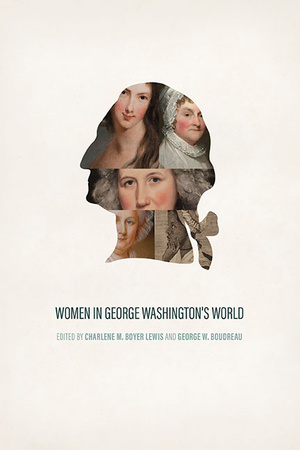
That has given rise to a collection of scholarly essays titled simply The Women of George Washington’s World, officially published later this month.

The women profiled include:
  • the first President’s mother, Mary Washington
  • his wife, Martha Washington
  • wives of significant colleagues like Margaret Arnold and Abigail Adams
  • friendly advisor Elizabeth Powel
  • poet Phillis Wheatley
  • enslaved servants Moll Judge, Ona Judge, and others
  • Ann Pamela Cunningham, the woman who preserved Mount Vernon with a nationwide fundraising campaign
The editors of this collection are Prof. Charlene M. Boyer Lewis of Kalamazoo College and George W. Boudreau of the McNeil Center for Early American Studies. The book’s publisher has shared a short interview with them.

For a longer interview, Roger S. Williams will host Boyer Lewis and Boudreau in the online History Author Talks series on Tuesday, 19 July, starting at 7:00 P.M. Register to listen to this convesation live here, or check back at History Author Talks in a few days for the video.

Friday, January 21, 2022

Two New Artistic Depictions of Revolutionary Stories


Naden Rowe teaches history at an “American” middle school overseas. He occasionally parodies popular songs with new lyrics to explain some part of his lessons.

Last year he reworked “drivers license” by Olivia Rodrigo and Dan Nigro into “Act of Violence,” narrating the Boston Massacre from the perspective of a teen-aged girl in Boston.

Rowe turned to a nearby singer who goes by the name Nyah (here’s her Tiktok feed) to record the new lyrics.

Then a sixth-grader dubbed Yakuza Baby asked to make an animated video for the song, using the Paul Revere engraving combined with new art.

All in all, it’s very impressive. Rowe’s song rightly depicts the first violence of the night on King Street coming from a soldier, analyzes what feelings the propaganda print would produce, and highlights the event’s ambiguities. Nyah’s vocal performance is affecting. And Yakuza Baby’s animation effects are varied and striking.

Another creator who caught my attention this week on Twitter was Sean Dermond, who shared “Mrs. Benedict Arnold,” an online picture book. It provides his take on the story of Peggy Shippen using cutouts within paper dioramas, a technique that reminds me of the 1970s Paddington television series. Handsome draftsmanship and photography under pandemic conditions. Check it out on Dermond’s webpage.

Friday, September 07, 2018

Symposium on Washington and Women at Mount Vernon, 2-3 Nov.

Last year I had the honor of speaking at the George Washington Symposium at Mount Vernon, organized by the Fred W. Smith National Library for the Study of George Washington.

This year’s symposium, to take place on 2-3 November, has the theme “‘A Sensible Woman Can Never be Happy with a Fool’: The Women of George Washington’s World.”

The event description:
“When the fire is beginning to kindle, and your heart growing warm, propound these questions to it… Is he a man of good character? A man of sense? for be assured a sensible woman can never be happy with a fool.”

Thus wrote George Washington in a heartfelt 1796 letter to his step-granddaughter Eleanor (Nelly) Parke Custis on the subjects of love and marriage. Although the Father of Our Country was a leader among leaders in a male-dominated world, we know that he enjoyed a number of complex and meaningful relationships with women from all stations of the socially-stratified eighteenth century. Join leading historians and academics for an enlightening look at a wide variety of women from the General’s personal orbit, including his often misunderstood mother, an admiring poet, social confidants, a traitor to the Revolution, and a defiant runaway slave. We will also examine the memory of Washington through the legacies of his adoring step-granddaughters and the Southern Matron who led the charge in the 1850s to rescue his home and final resting place.
The lineup of presentations is:
  • “Mary Ball Washington: Tales of Motherhood,” Martha Saxton
  • “A Rare Commitment: The Friendship of George Washington and Elizabeth Willing Powel,” George W. Boudreau
  • Roundtable on “Women” and “Mothers” across Eighteenth-Century America, moderated by Karin Wulf of the Omohundro Institute 
  • “True Republicans: The Relationship between George Washington and Mercy Otis Warren,” Rosemarie Zagarri
  • “George Washington and Phillis Wheatley: The Indispensable Man and the Poet Laureate of the Founding Era,” James G. Basker
  • “‘The tender Heart of the Chief could not support the Scene’: General Washington, Margaret Arnold, and the Treason at West Point,” Charlene Boyer Lewis
  • “‘She should rather suffer death than return to Slavery’: The Escape of Oney Judge,” Mary V. Thompson
  • “Daughters of the Pater Patriae: The Custis Step-Granddaughters’ Relationships with George Washington,” Cassandra Good
  • “Coming to the Rescue with Ann Pamela Cunningham,” Ann Bay Goddin
These symposiums are designed to bring the latest findings and analyses of historians to the community of Mount Vernon and its supporters. Attendees fill a large auditorium, reflecting the interest in all things Washington.

Wednesday, October 16, 2013

Biographers at the B.P.L. This Week

The Boston Public Library is hosting back-to-back talks by two authors who have written about the lives of women in eighteenth-century America.

On Wednesday, 16 October (that’s tonight), Nancy Rubin Stuart will speak about her book Defiant Brides: The Untold Story of Two Revolutionary-Era Women and the Radical Men They Married. Her subjects are Peggy Shippen, who married Gen. Benedict Arnold, and Lucy Flucker, who married Boston bookseller Henry Knox, later a general himself. That event starts at 6:00 P.M. in the Commonwealth Salon.

The next night, Jill Lepore will speak on Book of Ages: The Life and Opinions of Jane Franklin. This Boston woman, whose married name was Jane Mecom, was the baby sister of Benjamin Franklin. While Peggy Shippen and Lucy Flucker came from wealthy families and married prominent men, Jane Mecom came from the mechanic class and never gained gentility like her brother. Yet the siblings remained close throughout their long lives, exchanging letters and visits.

Carl Van Doren published the first book on Jane Mecom more than sixty years ago, so she’s due for a reassessment. The library’s event description says this new biography draws on “a collection of little-studied material, including documents, objects, and portraits discovered recently.” Lepore is the David Woods Kemper ’41 Professor of American History at Harvard University and a staff writer at The New Yorker. Her talk, which starts in the Abbey Room at 6:00 P.M., is co-sponsored by the Massachusetts Historical Society.

Saturday, August 17, 2013

“Liberty or Loyalty?” in Quincy, 17 Aug

Today Adams National Historical Park hosts an event called “Liberty or Loyalty?” focusing on American colonists who supported the Crown during the Revolutionary War. The Boston Globe reported:
While widely depicted as enemy collaborators, Loyalists were often ordinary Americans who suffered for their beliefs, losing their homes, livelihood, and even family, according to historians who want to set the record straight.

Tom Tringale, a member of McAlpin’s Corps of Loyal American Volunteers, a Revolutionary War reenactment group on the British side that will camp out at the park, goes even further.

“I want to get people to give the Loyalists a hug,” said Tringale, 28, a Quincy resident who been a historical reenactor from childhood. “Americans are in denial about the Loyalists.”

From the point of view of the status quo, the pro-British Tories were “loyal” to their government while the patriots were treasonous “rebels,” he noted.

“So we were the good guys,” Tringale said. “What we are going to do is talk about how the Loyalists were forced from their homes in Boston.” Loyalists formed military units such as McAlpin’s Corps, who served as guides to British General John Burgoyne in Canada and upstate New York.

“The public is honestly in denial,” Tringale said. “They see the Loyalists as traitors. . . . These people were not like Thomas Hutchinson,” the colony’s wealthy governor in the early 1770s, he said. “These were simple farmers, blacksmiths, shoemakers, who thought it was safer to be with the king. Our intention is to get the Loyalists a fair shake in American history.”
The mansion at the center of the Adams park, where the second and sixth Presidents lived during the last half of their lives, was originally home to part of the Vassall family. (Another member of that family built the Cambridge house that became Washington’s headquarters, now also a National Park Service site.)

Also at the event are Quincy resident Norma Jane Langford, who wrote a booklet on “The Tory Trail” of other Loyalist sites in greater Boston, and Nancy Rubin Stuart, author of Defiant Brides, about two young women from Loyalist families—Lucy Flucker and Peggy Shippen—who married American generals and ended up on different sides of the war and different sides of the ocean.

I’m not convinced there’s still as much denial or hostility toward Loyalists as the Globe article suggests. So much time has passed, and the issues of the Revolutionary War have receded so far, that the American public is far more willing to consider the Loyalist point of view than the losing side of more recent wars.

Saturday, June 01, 2013

Stuart on Defiant Brides in Worcester, 6 June

Defiant Brides: The Untold Story of Two Revolutionary-Era Women and the Radical Men They Married is a new book by Nancy Rubin Stuart, who previously wrote a biography of Mercy Warren.

The defiant brides of the title are Lucy Flucker and Peggy Shippen, both heiresses from Loyalist families who married striving men on the Patriot side of the Revolution.

Or rather, Lucy Flucker’s husband, Henry Knox, became a firm Whig when the war broke out. As I’ve written in the past, the evidence of his political activity before 1775 is sparse, and I suspect her family thought they might be able to bring Henry around to becoming a friend of the royal government.

But by May 1775 Henry and Lucy Knox had slipped out of besieged Boston, he was soon working with the provincial army, and by the end of the year he commanded the Continental artillery. Lucy Knox never saw her Loyalist relatives again, though she did inherit a substantial amount of land from them—the basis of the Knoxes’ postwar life in Maine.

As for Peggy Shippen, in 1779 she married a man who seemed passionately committed to American independence: Benedict Arnold, Continental general in charge of Philadelphia. Like Knox, he had started his career as a boy in precarious circumstances, unable to rely on his father, and worked his way up in business. Like Knox, he was one of the subordinates Gen. George Washington felt he could always rely on.

But in 1780 Arnold arranged to switch sides and surrender the West Point fortress on the Hudson. Peggy helped her husband escape to the British lines by distracting Gen. Washington with hysterics—whether sincere or feigned we’ll never know. The couple eventually moved to England. Peggy Arnold received a pension from the Crown and lived long enough that historians calculate she earned more from the British government than her husband did.

Booklist’s reviewer wrote about Defiant Brides:
With the seemingly endless parade of books devoted to both founding fathers and revolutionary rascals, it’s nice to see some attention paid to the fervor with which some remarkable women navigated the romantic, political, and wartime challenges of the era.
In its review, Kirkus Reviews said:
Flucker’s correspondence with Henry shows a loving couple who longed for each other when separated—though it’s not terribly enticing reading. Nor are the tales of their extravagances and scrambles for means.
But there have been very few studies of Lucy Knox and her choices, so any attention is new. Plus, social climbing and hanging on were a big part of these couples’ stories.

Stuart will speak at the American Antiquarian Society in Worcester on Thursday, 6 June, at 7:00 P.M. This event is free and open to the public. Books will be available for purchase and signing.

Saturday, December 29, 2012

The Value of Spying in America

Michael J. Sulick was the chief of counterintelligence at the Central Intelligence Agency from 2002 to 2004 and director of its National Clandestine Service from 2007 to 2010. He wrote Spying in America: Espionage from the Revolutionary War to the Dawn of the Cold War to create “one compact volume” that includes case studies from several periods of American history, something he felt was missing from the market or the classroom.

Spying in America doesn’t try to be comprehensive or to break new ground in discussing espionage in America. And it doesn’t. It leans heavily on secondary sources, most of them more than a generation old, such as the books by John and Katherine Bakeless. Other sources cited in the chapters about the Revolution include an article in the Colonial Williamsburg Journal, Thomas B. Allen’s George Washington, Spymaster for young readers, and the websites of the C.I.A. and Federal Bureau of Investigation.

In fact, Spying in America relies so much on secondary sources that chapter epigraphs from George Washington, Benjamin Franklin, and other well-documented historical figures aren’t credited to the original letters but to other books that have previously quoted those letters.

The Revolutionary War section starts with a short introductory chapter. Unfortunately, it contains basic errors. Page 16, for example, mischaracterizes the American Whigs’ preferred political solution to the conflict (not representation in Parliament but more autonomy for their colonial legislatures) and misapplies the John Adams quotation about a third of Americans opposing the Revolution (citing Howard Zinn). The next page misstates the reasons behind the British march to Concord in April 1775 and says Paul Revere’s fellow observers “were dubbed the Mechanics,” as if that were a formal name rather than the generic term for their class in society.

Three long-studied case studies follow, again with unfortunate errors. In retelling the treachery of Dr. Benjamin Church, Jr., the book displays Revere’s engraving of the doctor’s namesake ancestor as if it were a portrait of the traitor himself. This chapter also states that Church was at the Boston Tea Party, but an anonymous Crown source—i.e., just the sort of informer a book about espionage might highlight—placed him inside the Old South Meeting-House instead. (I can’t knock Sulick for not including my findings about Church’s mistress, published just this year in the big Washington study.)

The study of spying in the American delegation to Paris highlights the role of secretary Edward Bancroft, but then indulges in the wish-fulfilling suggestion that Franklin was onto the man all along. We Americans not only forgive Franklin his known tricks but happily believe he was up to more than he probably was. This chapter mentions Julien-Alexandre Achard de Bonvouloir, a gentleman who came to America in late 1775 as an unofficial emissary from the French court; it doesn’t note that Bonvouloir was in Massachusetts early in that year or that British agents had filed reports on him during the months in between.

To retell the story of Benedict Arnold’s treachery, Sulick relies most on Willard Wallace’s 1954 biography, which repeats a lot of dubious legends about the man’s boyhood. James Kirby Martin’s 1997 biography, Dave R. Palmer’s George Washington and Benedict Arnold, and other recent books seem more reliable, and also offer more detail about Peggy Arnold’s role in the affair.

Spying in America jumps right from the Revolutionary War to the Civil War, leaving out the highest placed known foreign agent ever to serve in the U.S. government: Revolutionary War veteran Gen. James Wilkinson, for more than ten years the top American general and also a paid agent of Spain.

I sense an unstated, perhaps unrecognized, purpose in this compilation. Sulick focuses on espionage against the U.S. during major conflicts while skipping successful intelligence-gathering and aggressive covert action by Americans (except against the Confederacy). These stories are thus all about Americans discovering spies in our midst. The book’s message is clear in the title of its introduction: “The Peril of Disbelief.” Readers must never let their guard down or doubt the need for vigorous government counterintelligence.

Yet Sulick notes that the U.S. had no coordinated counterintelligence effort until 1939, though the country had grown tremendously during the preceding century and a half. I wouldn’t argue that the greater threats of the mid-20th century and today, with faster communications and weapons delivery and more complex systems, require vigilance. But since the world has changed so greatly, how much useful information can we really learn from thin versions of the tales of Church, Bancroft, and Arnold? Those stories seem to be included for their “Founders’ Chic” value: even Washington and Franklin had to deal with spies!

Georgetown University Press could have served this book better during editing. For instance, page 5 tells us that in 1939 Franklin D. Roosevelt assigned responsibility for counterespionage to the F.B.I., and then page 6 tells us the same thing.

On the other hand, the publisher provided a great exterior design by Tim Green of Faceout Studio. The image above doesn’t do it justice. The dust jacket is a translucent vellum with a triangular cutout for the all-seeing eye of the dollar bill’s Great Seal—looking out for us or starting out on us?

(Review based on copy provided by the publisher.)

Monday, January 09, 2012

Not That Benedict Arnold’s Widow

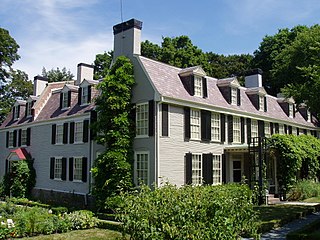
Vital Records of Uxbridge, Massachusetts was published in 1916, collecting records from the town’s churches and small Quaker meetinghouse (shown here, courtesy of Wikipedia).

As Pennsylvania historian John F. Watson reported in 1844, there is indeed a record from that meetinghouse of Benedict Arnold’s widow dying in Uxbridge on 14 Feb 1836. It appears in the genealogical volume on page 356: Sarah Arnold, widow of Benedict, age eighty-three.

However, page 25 of the same book states that a boy named Benedict Arnold was born in that town in 1752 and his wife Sarah in 1754. There’s no record of their marriage, but there are listings for their children Dorcas (1775), William (1777), and Mary (1781). All those births are recorded in a way that indicates the family was Quaker. Page 356 also says that Benedict died in 1802, which left Sarah a widow.

According to the Rhode Island Genealogical Register, Benedict’s will mentioned his wife Sarah and his children William, Dorcas, and Mary. The family is also mentioned in Richard H. Benson’s The Arnold Family of Smithfield, Rhode Island.

So while it’s true that Benedict Arnold’s widow died in Uxbridge, there’s really no doubt that she wasn’t that Benedict Arnold’s widow. The same source that preserves details of her death also records her life with a local Quaker man and their three children.

In fact, there were multiple Benedict Arnolds in southern New England in the late 1700s, many named in memory of a governor of Rhode Island a couple of generations earlier. That causes problems for biographers looking for exploits of the future general’s youth before he became the Benedict Arnold and Americans completely stopped naming their children Benedict Arnold.

The death of the general’s widow was clearly reported in London in 1804. Since she was receiving a pension from the Crown, the British government had a financial incentive to keep track. In 1931 J. G. Taylor published a short book titled Some New Light on the Later Life and Last Resting Place of Benedict Arnold and of His Wife Margaret Shippen, quoting records of the Battersea Church where the couple was buried.

So you might think that the already suspicious claim that Peggy Arnold secretly returned to America and lived for over thirty years in a Massachusetts town where she knew no one would have dissolved a long time ago.

But no, this is the age of the internet! Old claims no longer have to die. Indeed, the fact that Taylor’s 1931 book is still under copyright while Watson’s 1840s books are searchable means that the claim is easier to stumble across than some of the solid evidence.

So now there are webpages, some from reputable organizations like the Penn State University libraries and that new standby Wikipedia, stating that Peggy (Shippen) Arnold died in Uxbridge, Massachusetts. Some even say she did so in 1804, which means the authors had access to the right information but added on a layer of wrong.

Sunday, January 08, 2012

Did Benedict Arnold’s Widow Die in Uxbridge?

In Annals of Philadelphia and Pennsylvania, in the Olden Time, published in 1844, John F. Watson wrote:
The wife of Benedict Arnold was a Philadelphian, a Peggy Shippen, and died on the 14th February, 1836, at Uxbridge, Mass., aged 83 [about the same time a sister of Major Andre, aged 81, died in England.] It seems a strange affair, that the wife of such a general should under any circumstances get back to America—to get, too, not to her own home, and with her nearest relatives, in Pennsylvania, but should go to Massachusetts—the same state where her first ancestor, Edward Shippen, first mayor of Philadelphia, had been publicly punished in Boston as a Quaker!
Two years later Watson repeated his statement about Peggy Arnold in Annals and Occurrences of New York City and State, in the Olden Time:
Gen. [Benedict] Arnold died in London, in 1801, unhonoured and unnoticed there; and afterwards his wife returned to the United States, incognito, and died at Uxbridge, Mass. at the age of eighty-three years, on the 14th Feb. 1836.
A similar statement, with the year of her death changed to 1834, appeared in The National Cyclopaedia of American Biography, 1897 edition and probably others. It may well have popped up in other reference books.

Obviously, the death of Gen. Arnold’s widow in Massachusetts raises a lot of questions, as Watson acknowledged but didn’t pursue:
  • If this woman was truly incognito and away from relatives, how could anyone identify her as Benedict Arnold’s widow after she died?
  • How could this woman die at age 83 in 1836 (i.e., born around 1753) when Pennsylvania records show Peggy Shippen, future wife of the general, was born in 1760?
  • Most important, why did the September 1804 Gentleman’s Magazine in London report the following among its death notices?
In Bryanstone-street, Portman-square, in her 44th year, Mrs. Margaret Arnold, widow of Brigadier-gen. A. who died June 14, 1801…, and daughter of the late Hon. Edward Shippen, chief justice of the state of Pennsylvania, N. America.
Ah, but perhaps that was how the widow faked her death so that she could escape back to America. Because there’s an undisputed, contemporaneous record of the death of the widow of Benedict Arnold in Uxbridge in 1836.

TOMORROW: Examining the vital records.