J. L. BELL is a Massachusetts writer who specializes in (among other things) the start of the American Revolution in and around Boston. He is particularly interested in the experiences of children in 1765-75. He has published scholarly papers and popular articles for both children and adults. He was consultant for an episode of History Detectives, and contributed to a display at Minute Man National Historic Park.

Subscribe thru Follow.it


•••••••••••••••••


Showing posts with label Hugh Gaine. Show all posts

Wednesday, January 21, 2026

“Also embarked Colonel Richard Prescott”

In late 1774 the British 7th Regiment, known as the Royal Fusiliers, was stationed southwest of Montréal, guarding the frontier of the British Empire.

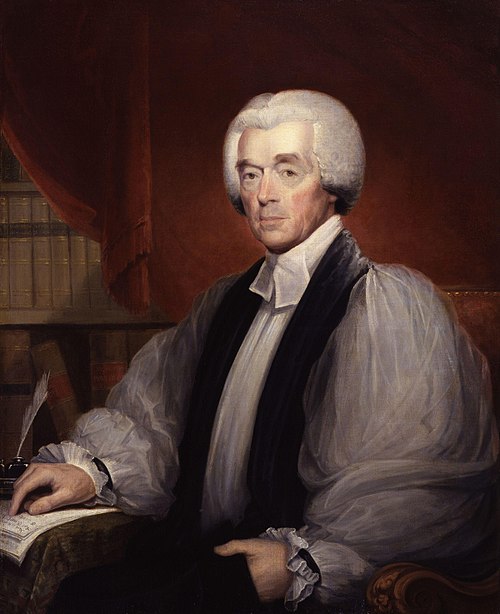
But its commanding officer, Col. Richard Prescott (shown here), wasn’t with them.

The 17 October New-York Gazette reported:
On Thursday Morning last Major General [Frederick] Haldimand embarked on board the Transport named the Countess of Darlington, attended by Major of Brigade [Thomas] Moncrieff, Capt. Thomas Gamble, Assistant Quarter-Master General, Captain [Dietrich] Brehm, Aid de Camp, and Captain [Francis] Hutcheson;

with General Haldimand also embarked Colonel Richard Prescott of his Majesty’s Royal Fusileers, a Company of the Royal Artillery, with a large Quantity of Ordnance Stores for Castle-William.
Also headed to Boston were the 47th Regiment, three companies of “the Royal Regiment of Ireland” (18th), an artillery company, and artificers to build barracks.

Those transport ships arrived on Sunday, 23 October, as reported four days later in the Boston News-Letter. This was part of Gen. Thomas Gage’s military build-up after the “Powder Alarm.” Indeed, by the end of the year the 7th would be one of the few regiments in North America not stationed inside Boston.

Col. Prescott was still in Boston when the war began because on 12 June 1775 Gen. Gage wrote to the Secretary of War, Viscount Barrington, that “Colonel Prescot, now declared Brigadier,…is going to Canada to Assist General [Guy] Carleton.”

In addition, this 1905 publication by the Canadian Archives stated that Gage sent the same news that day to Lord Dartmouth, the Secretary of State: “The Colonel Prescott goes immediately to Canada to assist General Carleton, for I hear the Rebels, after surprising Ticonderoga, made Incursions, and committed Hostilities upon the Frontiers of the Province of Quebec…” I haven’t found a copy of that letter in Gage’s papers at the Clements Library, but its online database and transcriptions are still a work in progress.

Thus, through the first half of October 1774 Col. (later Gen.) Richard Prescott was in New York, where Hugh Gaine printed A Letter from a Veteran, to the Officers of the Army Encamped at Boston, as discussed here.

Prescott then sailed north. Eight days after he arrived, booksellers Cox and Berry advertised that pamphlet for sale in Boston.

As a senior officer in Gage’s force, particularly one not engrossed in the daily duty of his regiment, Prescott had the motive and opportunity to pen advice from a “Veteran” to younger officers. He was much closer to the situation in Boston than his younger brother Robert.

When William Tudor, Jr., recorded that people said A Letter from a Veteran was written by “General Prescott,” he most likely meant Richard Prescott.

Thank you for your attention to this matter.

Monday, January 19, 2026

“It was attributed to General Prescott”

After the British army and the New England provincials went to war in April 1775, people stopped worrying about political pamphlets like A Letter from a Veteran, to the Officers of the Army Encamped at Boston.

John Adams broke off his “Novanglus” essays. The New York printer Hugh Gaine struggled to remain politically balanced, literally printing on both sides of the conflict. Most prewar essays fell into obscurity.

Nearly half a century after A Letter from a Veteran appeared, William Tudor, Jr. (1770–1830, shown here), wrote about it in The Life of James Otis, of Massachusetts:
A few of the officers felt an esteem for the people, and were reluctant to engage in a civil war, which they knew would bring great misfortunes upon the country, and as they supposed, overwhelm it. There was to much folly and disgusting arrogance in many of the subalterns, and careless ignorance about the whole subject of dispute, that one of their superior officers published a small pamphlet, entitled, “A letter from a Veteran to the Officers of the army encamped at Botton.” It is remarkably well written, and while it justifies his own government, reproves the frivolity and rashness that treated the Americans with contempt. It was attributed to General Prescott.
Tudor didn’t state a source for this information, and the expression “It was attributed” suggests he wasn’t completely sure about it.

That book might have given the pamphlet more visibility. James Fenimore Cooper took a passage from A Letter from a Veteran (imperfectly cited) as a chapter epigraph in his 1825 novel Lionel Lincoln: or, The Leaguer of Boston. His protagonist was a British army officer with conflicting loyalties.

Tudor’s emphasis on how A Letter from a Veteran “reproves” British officers who showed contempt for Americans might also have given people a false sense of its overall argument. It expressed very little sympathy for New Englanders.

In 1860 a catalogue of the Massachusetts Historical Society library attributed A Letter from a Veteran to, of all people, Col. William Prescott, the commander of the provincial redoubt at Bunker Hill.

That made no sense. William Prescott was never a high officer in the regular British army or, so far as I see, any sort a general. He wasn’t a political writer, and he certainly wouldn’t have published a criticism of New England religious zealotry.

Nonetheless, the attribution to William Prescott was repeated in other American publications for the rest of the nineteenth century.

TOMORROW: General Prescott and General Prescott.

Sunday, January 18, 2026

“The supposed Author of a Pamphlet”?

The pamphlet titled A Letter from a Veteran, to the Officers of the Army Encamped at Boston didn’t specify an author, printer, or place of printing, simply the date of 1774.

The earliest mention of this publication that I’ve found is an advertisement from the bookselling firm of Cox and Berry in the 31 October Boston Post-Boy. (Price: “6d. Sterling.”)

Edward Cox and Edward Berry were British by birth, and Isaiah Thomas wrote they went back across the Atlantic during the war. So it makes sense that they would sell a pamphlet said to be by a British officer for other British officers. 

Nobody claimed that the Letter from a Veteran was actually printed in Boston, however. The 10 November New-York Journal stated: “[Hugh] Gaine, has lately published, or at least sells, a pamphlet, called ‘a Letter from a Veteran, to the Officers of the Army, encamped at Boston.’”

An item in the 8 December New-York Journal listed A Letter from a Veteran first among “Several pamphlets…lately published by Mr. [James] Rivington and Mr. Gain.”

Modern analysis has confirmed that supposition. In a bibliography supplied to the Colonial Society of Massachusetts in 1956, Thomas Randolph Adams wrote that A Letter from a Veteran “has been assigned to Gaine because all but one of the eleven type ornaments used in this pamphlet are also found in the Laws…of the City of New York also printed by him in 1774.”

As for the author, people had different ideas at the time. On 17 November the New-York Journal published an open letter signed “A Friend to the Liberties of Mankind” which started:
To D——r ————‚ the supposed Author of a Pamphlet (which has made its appearance within a few Days) intitled, A Letter from a Veteran to the Officers of the Army at Boston…
That letter then began “Revd. Sir.” It sneered that the “Veteran” hadn’t really been educated as “a soldier” but had simply “assumed” that identity. (I quoted that article’s criticism of the whole “infamous Piece” yesterday.)

Obviously, the “Friend of the Liberties of Mankind” believed the author of A Letter from a Veteran was a minister with a doctorate. The Rev. Dr. Thomas Bradbury Chandler fits that description, and he was writing other pro-Crown pamphlets at the time. But later when he listed his political publications for the Loyalists Commission, Chandler didn’t claim to be the “Veteran.”

TOMORROW: A postwar attribution.

Monday, December 29, 2025

Wartime with “A New-York Freeholder”

“A New-York Freeholder” didn’t continue his newspaper debate with Israel Putnam, quoted over the last two days.

Hugh Gaine had published long essays from the “Freeholder” addressed “To the Inhabitants of North-America” in five successive issues of the New-York Gazette from 12 September to 10 October. One of those essays even crowded out other items.

The main target of the “Freeholder” was the Continental Congress and the ideology that led to it. His last essay criticized military preparations in New England and calls for non-importation. He treated Putnam’s letter about the “Powder Alarm” as simply a symptom of a deeper problem.

The “New-York Freeholder” was the Rev. Charles Inglis (1734–1816), recently made the senior curate at Trinity Church in New York. He was a native of Ireland but attached to the Anglican Church, even arguing for the unpopular idea of bishops in North America.

(This was not the Charles Inglis who commanded H.M.S. Lizard in 1770–71, H.M.S. Salisbury in 1778–80, and H.M.S. St. Albans in 1780–83, and who made one previous appearance on Boston 1775.)

According to the Rev. Mr. Inglis, he ceased his “Freeholder” essays after deciding that the Congress was hopelessly committed to “revolt and independency,” based on its adoption of the Suffolk Resolves and the proclamations it issued in mid-October 1774. So he never responded to Putnam.

After Thomas Paine issued Common Sense in early 1775, Inglis composed a reply titled The Deceiver Unmasked, printed by Samuel Loudon. Soon after copies were advertised for sale, Patriots broke into Loudon’s shop, seized all the copies, and burned them. Inglis was able to have the pamphlet reprinted in Philadelphia under the title The True Interest of America Impartially Stated.

In mid-1776, Gen. George Washington attended Trinity Church. As the minister told it, a lesser American general asked him to omit the usual prayers for the king from the service. Inglis defiantly refused. A few months later, the British military kicked the Continentals out of the city.

Inglis spent the rest of the war inside British-occupied New York, having become the rector of Trinity Church. In June–July 1782 he pulled out the “New-York Freeholder” name again for six essays in Rivington’s New-York Gazette.

The next year Inglis and his family moved to Britain, though most of the Trinity Church congregation went to Halifax. In 1787 the Crown sent him back across the Atlantic to be bishop of Nova Scotia—the first Anglican bishop in North America.

Saturday, December 27, 2025

“This letter betrays the state of the poor Colonel’s mind”

engraved portrait of Israel PutnamOne of the key nodes in the spread of the “Powder Alarm” was Israel Putnam. On 3 Sept 1774 he summoned the militia in eastern Connecticut and sent urgent messages to other parts of the colony.

On 6 September one of those messages arrived at the First Continental Congress. Robert Treat Paine recorded that from Putnam’s letter “we were informed that the Soldiers had fired on the People and Town at Boston.”

In fact, British soldiers had done no such thing. That became clear over the next few days.

Whigs spun the false alarm into a Good Thing, saying it showed how the populace was united and ready to defend Boston in an actual military emergency. “It is surprising and must give great satisfaction to every well-wisher to the liberties of his country, to see the spirit and readiness of the people to fly to the relief of their distressed brethren,” said an item in the 9 September Connecticut Gazette.

But other newspaper writers were more critical. Most of the front page of Hugh Gaine’s New-York Gazette on 19 September was filled with an open letter “To the Inhabitants of North-America” from “A New-York Freeholder” that said in part:

Col. PUTNAM’s famous letter, (forwarded by special messengers to New-York and Philadelphia) and the consequences it produced, are very recent and fresh in our memories. He informs Capt. [Aaron] Cleaveland [of Canterbury]---
“That the men of war and troops had fired on Boston—that the artillery played all night—that six were filled at the first shot, and a number wounded—that the people were universally rallying from Boston as far as Pomfret in Connecticut—and he begs the captain would rally all the forces he could, and march immediately for the relief of Boston.”
The evident confusion of ideas in this letter betrays the state of the poor Colonel’s mind, whilst writing it, and shews he did not then possess that calm fortitude which is so necessary to insure success in military enterprizes. . . .

What the design of this infamous report was—whether to inflame the other colonies, and to learn how they would act on such an emergency if real, or to influence the deliberations of our congress now sitting, I shall not taken upon me to determine.

One thing it has eventually made evident past all doubt, that many in the New-England colonies are disposed and ripe for the most violent measures: For it is certain that some thousands of armed men, in consequence of it, proceeded on their march from Connecticut towards Boston. . . .

These circumstances are mentioned with no other view than to shew that the apprenhension of a civil war is justly founded; and it is no more than justice to say that I think Col. PUTNAM himself was deceived when he wrote the above letter, tho’ still he acted imprudently in writing it. The authors of the report are to me unknown.
The “New-York Freeholder” went on to write about the horrors of a civil war, closing with Tobias Smollett’s poem “The Tears of Scotland,” composed after the Jacobite uprising of 1745. That would have annoyed the New England Whigs, not just because they were telling people that a firm, unified militia response would help stave off civil war but also because they hated being equated with Jacobites.

TOMORROW: How Putnam responded.

Saturday, April 06, 2024

The British March to the 1/88th of a Mile

So far this month I’ve been looking at the publishing history of Lt. Col. Robert Donkin’s Historical Collections and Remarks, particularly the removal of an incendiary footnote and how that might have affected the publishing schedule.

There are other significant blanks in the book, not made by a knife but left by the author.

On page 170, Donkin discussed the British troops’ march to Concord on 18–19 Apr 1775.

Donkin’s praise for the redcoats’ endurance would have been more impressive if he’d actually stated how long they marched. Instead, he left blanks: “the space of     hours,” “about     miles,” “less than     hours!”

Did Donkin just forget, and Hugh Gaine’s print shop never told him? Did he expect to write those figures in after printing, only to be caught up in the footnote brouhaha and capturing Philadelphia?

However it came about, Donkin didn’t tell readers how long the march to Concord was, in space or time. Just that it was impressive, believe him.

Frank Warren Coburn undertook the measurement in his 1912 study, The Battle of April 19, 1775. He had the advantage of bicycle with a cyclometer that measured distance to the 88th of a mile, or 60 feet. Coburn calculated that the companies who went all the way to James Barrett’s house and back to Bunker’s Hill traveled 39 and 71/88 miles. That’s over five miles more than the troops who stopped in central Concord.

As to time, which was measured less exactly in the eighteenth century, David Hackett Fischer rounded up all the reports and estimates of when things happened in Appendix L of Paul Revere’s Ride (1995), and Derek W. Beck further analyzed those in Appendix 7 of Igniting the American Revolution (2015).

Based on those analyses, the figures Donkin was looking for were:
  • the troops were under fire for eight hours, from leaving Concord at noon to reaching Charlestown around 8 P.M.
  • on average, the soldiers who went to Concord marched about 36 miles.
  • if we time that march as starting in Cambridge at 2 A.M. and ending in Charlestown, then the whole mission took 18 hours.
However, if we start the clock when the troops got into boats to cross the Charles River and end it with those troops coming back across the river from Charlestown, that was about 24 hours.

Thursday, April 04, 2024

“An elegant frontispiece is now engraving”

We left Maj. Robert Donkin in 1777 with probably hundreds of copies of his Military Collections and Remarks needing to be shorn of a footnote that intemperately suggested his fellow British soldiers could fire smallpox-tipped arrows at the Americans.

That fall Donkin was busy with other things. In September the War Office announced his promotion to lieutenant colonel, news that made the American newspapers in December. By that time, Donkin was part of the British military force occupying Philadelphia.

We left the Philadelphia engraver James Smither as he switched to work for the Crown forces instead of Pennsylvania’s rebel government. Smither had been in North America for less than ten years, and, with the redcoats taking the American capital, he probably thought the king’s forces were winning.

On 14 April 1778, James Robertson’s Royal Pennsylvania Gazette ran this notice:

To the corps at New-York and Rhode-Island, that subscribed to the military remarks, &c.

LIEUT. Col. Donkin, gives notice that he has distributed to the orphans and widows of of [sic] the army here - - British £204.15.0

And that Mr. Thompson, Town-Adjutant of New-York, will proceed to distribute forthwith - - - £85.13.7

Being the balance arising from the publication, after defraying the expences of printing, &c. £290.8.7

N.B. An elegant frontispiece is now engraving at Mr. Smither’s, one of which will be sent to every subscriber.

Philadelphia, 13 April, 1778.
Thompson ran a similar announcement and accounting in Hugh Gaine’s New-York Gazette on 27 April. Donkin had deputized him to collect subscriptions the year before. (I haven’t found this man’s given name. The Scots Magazine and North-British Intelligencer reported that he was sergeant-major of the 37th Regiment.)

Thus, in 1778 Donkin commissioned Smither to create an illustration for his Military Collections, perhaps to make up for the delay and deletion of the footnote. So far as I can tell, none of the three copies with the footnote intact have the frontispiece shown here, and all of the copies with the frontispiece have a hole in page 190–1.


Donkin had dedicated his book to “the Right Honourable Hugh, Earl Percy, Colonel to his Majesty’s Vth regiment of foot,…commander in chief of the forces in Rhode Island.” He wrote:
HAVING had frequent occasions in the subsequent treatise to quote the grand actions of the most renowned captains of antiquity, it was natural for me to look at home for a Modern equally brilliant. Britannia holds forth PERCY! Fame sounds,
Great in the war, and great in the arts of state!” ILIAD.
That was the scene Smither illustrated: Donkin at work on his book, interrupted by Fame trumpeting and Britannia (notably without a Liberty Cap) holding out a picture of the earl with the label “Ille noster heros (He is our hero).”

I quoted the £290.8.7 in charitable donations from inside this copy of the book. It’s possible that those pages were added to what Gaine had printed in 1777 at the same time that the frontispiece was inserted. To know for sure, we’d need to examine the copy owned by Gen. Valentine Jones (now at the Clements Library).

TOMORROW: Separate ways.

Tuesday, April 02, 2024

“Twang them at the American rebels”

Maj. Robert Donkin ran advertisements in the New-York Gazette promoting his upcoming book Military Collections and Remarks and thanking the latest subscribers from January through June 1777.

In the latter part of that year, the Gazette’s printer, Hugh Gaine, actually produced the book.

According to the accounting published inside, the print run was 1,000 copies, folded, bound, and covered.

But the book turned out to need more work.

Maj. Donkin had no good words for “this unnatural rebellion,” as his ads said. But on one page inside the book, he let his anger run away on him.

In a short section titled “Bows,” the major added this footnote:

Dip arrows in matter of smallpox, and twang them at the American rebels, in order to inoculate them; This would sooner disband these stubborn, ignorant, enthusiastic savages, than any other compulsive measures. Such is their dread and fear of that disorder!
In Pox Americana, Elizabeth Fenn analyzed this passage as showing how British officers could picture spreading smallpox among the enemy as long as they saw those people as “savages.” There had been similar talk of infecting Native Americans during the last war.

Fenn also reported that only three copies of Donkin’s book with that footnote are known to exist. One, now at the Clements Library in Michigan, belonged to Gen. Valentine Jones of the 62nd Regiment, a subscriber.

All other copies have that footnote on page 199 sliced out, as shown below in the University of California’s volume, digitized by Google and also available through the Hathi Trust.


This excision became well known among book dealers and collectors. Around 1900, catalogues describing copies of the book noted the deletion and added “as usual.”

All the copies I’ve found online are missing the footnote. Most of the excisions are neater and more complete than the one I’m showing here. For instance, through this page one can find the American Revolution Institute’s volume. Another copy on Google Books shows how the British Library staff patched the hole with blank paper.

The thoroughness and neatness of the footnote’s removal suggests that some authority demanded that Donkin and Gaine delete it. Soon after the major started to distribute the book, it appears, someone had to go through every remaining copy with a sharp blade. That certainly took more time, and probably more money.

Fortunately, the other side of that page was blank in that spot, so those copies didn’t lose any other text.

In fact, it appears that subscribers and purchasers of the censored version got something extra.

TOMORROW: He is their hero.

Monday, April 01, 2024

“His majesty’s troops peaceably marching to and from Concord”

I profiled Maj. Robert Donkin (1727–1821) back in 2021, which was 212 years after someone drew this profile of him as a retired general.

In 1777, Donkin was an officer in the 44th Regiment of Foot, stationed in New York City. He decided that was the right time to publish a collection of short essays and anecdotes on military topics.

Donkin described Military Collections and Remarks as the wisdom of “a late general officer of distinguished abilities, in the science of war”—probably his mentor, Gen. William Rufane. But the major wrote at least some of that material himself since it referred to events after Rufane’s death in 1773.

Donkin cast the project as a charity project. In his preface he wrote of “the bloody massacre committed on his majesty’s troops peaceably marching to and from Concord the 19th April, 1775,” and promised that proceeds from his book would
relieve and support the innocent children and widows of the valiant soldiers inhumanly and wantonly butchered that day, as well as for those that gloriously fell in their country’s cause at Bunker-hill the 17th June following.
The book contains a subscribers’ list eighteen pages long, all military officers or administrators, about 500 of them. At the end of that list is an accounting. Donkin and his agents had collected £422.7.3.

Here are the costs for the 296-page book, printed in New York by Hugh Gaine:
To Paper for 1000 Copies, £37.19.4 1/2
To Printing Expences, 57.13.1 1/2
To folding, sewing, and covering 1000 Copies, 21.1.10 1/2
To Advertisements, 4.19.3 1/2
Expences in England, Scotland and Ireland. 5.5.0
Incidental Charges 5.0.0
[total] Sterling, £131.18.8
The major therefore declared he had “Distributed in Charity, Sterling, £290.8.7.”

But if Donkin and Gaines thought that they were done when they printed those pages, they were fooling themselves.

TOMORROW: Cut it out.

Wednesday, March 27, 2024

The Last Glimpses of Lt. Ragg

Yesterday’s posting took Lt. John Ragg of the British marines to Middletown, Connecticut, as a prisoner of war along with his servant, Pvt. Benjamin Jones, in September 1776.

I’ve looked for records of what happened next, without success. I assume there must be some paperwork at the Continental or local level, but not published.

It appears that the lieutenant was exchanged for an American officer taken prisoner that fall, and there were a lot of those.

The next sign of Lt. Ragg is in the 12 May 1777 issue of the New-York Gazette and Weekly Mercury, printed by Hugh Gaine inside the Crown-held city. An advertisement for Maj. Robert Donkin’s Military Collections and Remarks, to be printed by Gaine later that year, listed “Marines, Lieut. Ragg” among the subscribers.

Then the man drops out of my sight again until toward the end of the war.

Lt. Ragg had a brother named Andrew, who became the Customs service controller of Customs on the Pocomoke River in southern Maryland in May 1766. When the war broke out the local authorities detained him, then let him out as long as he didn’t cause trouble and paid heavy taxes.

On 5 Feb 1779, Andrew Ragg asked the Maryland government to allow him and his young daughter Anne to return to Britain. On 31 March, Ragg filed a deposition promising not to give intelligence to the enemy, and that same day the state Council granted permission to travel to New York.

Evidently the Raggs didn’t go to New York until 1780. Anne was then nine years old. To the British authorities they characterized their journey as an “escape.”

The little family got on board a ship to Britain, but during the voyage Andrew Ragg fell overboard and was drowned. John Ragg, by then a captain in the marines, petitioned the government to support his niece on 24 Apr 1781.

The last sign I’ve found of John Ragg is that “Captain Ragg, of the marines,” was listed as wounded while serving on H.M.S. Magnificent in the Battle of the Saintes in April 1782.

After the war, Ragg might have gone home to Aberdeen, Scotland. He was living in that city in February 1767 when he was listed as a witness in a court case recorded in the city’s Enactment Book (notes in P.D.F. form here).

That book also lists “Andrew Ragg, late apprentice to William Brebner, merchant,” among the genteel young men accused of a breach of the peace in April 1763. Was this the future Customs officer? Those men “bound and enacted themselves that they shall behave themselves regularly, soberly and discreetly” and got off.

In any event, that’s all I’ve been able to uncover about Lt. John Ragg, remembered in the Shaw family lore as the lieutenant named Wragg who so angered young Samuel Shaw.

(The painting above shows H.M.S. Magnificent among the Royal Navy warships capturing two French vessels at the Battle of the Saintes.)

Friday, September 22, 2023

“The first English children’s novel” and Its Arrival in America

This month the Smithsonian Magazine website published V. M. Braganza’s article “The Revolutionary Influence of the First English Children’s Novel.”

What novel is that? Braganza writes:
Before her name became synonymous with sickly-sweet virtue, Goody Two-Shoes was the protagonist of the first English children’s novel, The History of Little Goody Two-Shoes. First published in 1765, the book was a groundbreaking work. It tells the life story of an orphaned girl, Margery Meanwell, whose poverty reduces her to rags—and to wearing just one shoe. When her fortunes improve and she acquires some new footwear, her excitement earns her the nickname “Goody Two-Shoes.” . . .

The book appeared in many editions in England and the United States, and it was beloved among famous writers like Robert Southey and Jane Austen, who kept her childhood copy until her death. One of the earliest works of children’s literature, Margery Meanwell’s adventures offered a striking alternative to prevailing gender norms. Over the course of the novel, Margery teaches herself to read, foils a major robbery, founds a school, earns her own living, stands up for animal rights and overcomes accusations of witchcraft. She was everything that 18th- and 19th-century British society thought women shouldn’t be: poor, well-educated, self-made and unmarried (at least until the last few pages).

Margery was wildly popular and one of the first heroines whom juvenile readers admired. It’s no stretch to say that the novel launched and definitively shaped children’s literature as a genre intended to entertain young readers while teaching foundational values like generosity, hard work and the virtues of education. It continues to exert an enormous, if forgotten, influence on culture today: Anyone who unconsciously quotes its title has been shaped by this book without knowing it.
The first edition of The History of Little Goody Two-Shoes was published in London by John Newbery, whose name the American children’s book field appropriated over a century later for its highest award. Writers attributed the story to Oliver Goldsmith, or possibly the brothers Griffith and Giles Jones; all of them wrote for Newbery.

I’ve found the book advertised in Philadelphia in 1769 along with other “LITTLE BOOKS, Adorned with a great Variety of PICTURES, calculated for the Improvement and Amusement of Children.”

Hugh Gaine published his own edition of Goody Two-Shoes in New York in 1775. Because people now expected children’s books to have pictures, that meant commissioning new woodblocks. The photo above shows one of two surviving blocks from this edition, sold by Heritage Auctions from the Justin G. Schiller collection in 2020.

A century ago some studies credited Isaiah Thomas as the first to publish the book in America, but Thomas’s edition appeared in 1787 and followed at least three other American editions.

Berganza has more to say about the storytelling and influence of Goody Two-Shoes, and Wilbur Macey Stone’s 1939 study in the American Antiquarian Society Proceedings can be downloaded here.

Thursday, August 10, 2023

“The public may be assured that this will be his last exhibition”

Yesterday I quoted Jacob Bates announcing that his last display of horsemanship in Philadelphia would be on 23 Sept 1772, and he was pulling out some new tricks for the occasion.

It’s possible Bates left the city and visited some nearby towns, putting on more shows that didn’t make the newspapers.

But that definitely wasn’t his last show in Philadelphia because the 2 November Pennsylvania Packet announced:
To the PUBLIC.

MR. BATES intending in a short Time to leave the Province, and being desirous of manifesting his Gratitude to this City,—proposes to exhibit on Thursday next, (if the weather is good,—otherwise on the succeeding Saturday) at the upper End of MARKET-STREET,—All his various Feats in HORSEMANSHIP,—having Confidence in the generous Attendance of the Citizens; as the Sum which may be then collected, shall be deposited in the Hands of three Gentlemen of Reputation, who will apply it in the advancing inclement Season, to the Relief of such modest Poor, as have experienced better Days.

• The Doors to be opened at Three o’Clock, and to mount precisely at Four.
There’s no sign of where Bates spent the winter and spring. He surfaced next in the second largest British city in North America, New York.

On 17 June 1773, an advertisement in the New-York Journal announced:
HORSEMANSHIP,
By Mr. BATES,
The Original PERFORMER;
Who has had the honour of performing before the Emperor of Germany, the Empress of Russia, the King of Great-Britain, the French King, the Kings of Prussia, Portugal, Sweden, Denmark, and Poland, and the Prince of Orange; also, at the courts of Saxony, Bavaria, Brunswick, Mecklenbergh, Saxe-Gotha, Hilbourghausen, Anspach, and every other court in Germany; at all which he received the greatest applause, as can be made manifest by the CERTIFICATES from the several courts, now in his possession, and is allowed, by the greatest judges in the MANLY ART he professes, to excel any Horseman that ever attempted any thing of the kind.

THIS AFTERNOON, at Five o’clock, he will perform at the Bull’s-Head, in the Bowery Lane.

The doors will be opened at four o’clock, and he will mount precisely at five.

The seats are made proper for Ladies and Gentlemen.

He will take it as a particular favour, if Gentlemen will not suffer any dogs to come with them.

TICKETS for the first place, at One Dollar each; and for the second, Four Shillings; to be had at the bar of the Coffee-House, at Mr. Rivington’s, and at the place of performance. No money will be taken at the doors, nor admittance without tickets.
Bates advertised several more performances in the New York papers over the following weeks, usually stating that he planned only one or two more shows.

Earlier this month Carl Robert Keyes, who studies advertising in the colonial press, posted an essay on one of those ads, dated 5 August. That one stated it “was intirely the Printer’s mistake in advertising last week that Mr. BATES would perform only once more.” Was it really? Prof. Keyes asks.

One detail to add to that consideration: The printer whom Bates was throwing under a wagon for supposedly misreporting his schedule was James Rivington, who’d sold tickets to his first performances in June. (Later Bates also sold through another printer, Hugh Gaine.)

Another wrinkle: Bates announced he had “changed his tickets,” and none “of the old tickets should be taken at the door.” Does that suggest a falling-out with his printer? Or had he just ordered another batch of tickets printed?

On 9 August the New-York Gazette repeated:
Mr. BATES,
WILL perform on Tuesday next, if the weather should permit,—if not, he will ride on the Friday following. The public may be assured that this will be his last exhibition, and that he will leave the town on his way to Boston, the day after his finishing performance.
COMING: A warm Boston welcome.

Saturday, February 25, 2023

Exploring the Sid Lapidus Collection Online

Princeton University announced this month that alumnus Sidney Lapidus had completed the gift of a large collection of pamphlets and other political material from the broadly defined Revolutionary Era.

Lapidus started his collection in 1959 as a recent graduate, well before entering what turned out to be the rewarding field of private equity. He first bought a copy of Thomas Paine’s The Rights of Man from a London bookshop. (Paine’s cottage in New Rochelle, New York, was across the street from Lapidus’s high school.)

The Sid Lapidus ’59 Collection on Liberty and the American Revolution at Princeton now includes “more than 2,700 original books, atlases, pamphlets, newspapers, and magazines relating to human and political rights, liberty, and independence around the time of the American Revolution.”

In addition, Lapidus provided funds to digitize the material and make the collection keyword-searchable for anyone.

I tried out the site by asking to see all the material that used the phrase “Intolerable Acts.” That search produced several hits, but the phrase didn’t appear in the original texts, only in the dealers’ descriptions and other metadata attached to those items. As I wrote years ago, the phrase “Intolerable Acts” didn’t become widely used until the late 1800s.

One writer in Revolutionary America who used the word “intolerable” a lot was the Rev. Thomas Bradbury Chandler, author of A Free Examination of the Critical Commentary on Archbishop Secker’s Letter to Mr. Walpole, published by Hugh Gaine of New York in 1774. Chandler was a Loyalist, and what he found intolerable wasn’t a stricter Parliament but the “Hardship” of an ocean voyage, the “Licentiousness” of a totally free press, and the writer he was responding to.

I also searched for all material published in 1774 and mentioning Boston. That brought up the official texts of Parliament’s new Coercive Acts, the responses from the First Continental Congress, sermons and almanacs with commentary on current events, and so on.

One item that caught my eyes was A Letter to a Friend. Giving a Concise, But Just, Representation of the Hardships and Sufferings the Town of Boston is Exposed to and Must Undergo in Consequence of the Late Act of the British-Parliament; Which, by Shutting Up It’s Port, Has Put a Fatal Bar in the Way of that Commercial Business on which it Depended for It’s Support, published by Joseph Greenleaf.

That pamphlet from the summer of 1774 is signed “T.W. A Bostonian.” However, it was widely known that the author was the Rev. Dr. Charles Chauncy. Usually ministers stayed out of secular political disputes, preferring to work behind the scenes or through sermons, but Chauncy felt no compunction when the economic well-being of his town was in danger.

On page 22 of this pamphlet Chauncy embarked on a long footnote complaining about a Customs service policy that required firewood ships signing into Marblehead to completely unload and reload before going on to Boston. So he really was writing about earthly concerns.

Now the text of this Letter to a Friend is already scanned and transcribed on the web. So the arrival of this digital version from Princeton isn’t a revelation. But anything that makes research easier is welcome.

TOMORROW: Charles Chauncy’s friends.

Tuesday, June 14, 2022

“Too deeply impressed with the melancholy Situation”

A few days back I mentioned fireworks at New York’s celebration of King George III’s birthday in June 1774. I thought the report of that event in John Holt’s New-York Journal was interesting.

Saturday, June 4, of that year was when the king “entered the 27th Year of his Age.” The newspaper started with a discussion of the British military’s actions under Gen. Frederick Haldimand and Cdr. James Ayscough. (Gov. William Tryon was in Britain or else he would probably have led the celebration.)

The item continued:
In the Evening some very curious Fireworks were exhibited, and a small Number of Houses were illuminated; but the Generality of the Inhabitants (though perfectly well affected to his Majesty’s Person and Family, and prefering the English Constitution to every other Form of Government) were too deeply impressed with the melancholy Situation of all the British Colonies, to assume the least Appearance of public rejoicing, while it remains in Suspense whether we shall remain Freeman by maintaining our Rights, or submit to be Slaves.
Hugh Gaine’s New York Gazette and [James] Rivington’s New York Gazetteer didn’t include any of the words after “illuminated.”

In Philadelphia the diarist Christopher Marshall reported even less visible enthusiasm on what was ordinarily a patriotic holiday:
4th. This being the birth day of King George III., scarcely, if any, notice was taken of it in this city, by way of rejoicing: not one of our bells suffered to ring, and but very few colours were shown by the shipping in the harbour; no, nor not one bonfire kindled.
The problem was the Boston Port Bill and other Coercive Acts. Americans Whigs like Marshall were alarmed by how Parliament was clamping down after the Tea Party and wanted to make their fellow colonists equally alarmed that the same could happen to them.

At the same time, Whig printer Holt wanted to assure readers in America and Britain that the colonists were still loyal to the king and constitution. They just differed with the ministers in London about what that constitution demanded.

Saturday, June 19, 2021

“Mounted on the goat richly caparisoned for the occasion”

Robert Donkin was born in 1727 and by the eventful year of 1745 was an officer in the British army. In the Seven Years’ War he served as an aide to Gen. Thomas Fowke and Gen. William Rufane.

In 1772 Capt. Donkin married Mary Collins, daughter of a clergyman. They had their first child, a son they named Rufane Shaw Donkin, in early October, with two daughters to follow. 

Then came the American War. In 1775 Donkin was assigned to the Royal Welch Fusiliers, or 23rd Regiment. He was one of the officers present at the regiment’s St. David’s Day dinner on 1 March reported yesterday.

By 1777 Donkin held the rank of major in the 44th Regiment of Foot, stationed in New York City. He decided that was the right time and place to publish what he called a “collection and remarks of a late general officer of distinguished abilities, in the science of war, in every possible situation of an army.” That probably meant Gen. Rufane, who had died in 1773. Donkin supplemented that collection with his own material.

The major collected £290 in subscriptions, mostly from his fellow officers. He stated that he “published for the benefit of the children and widows of the valiant soldiers inhumanly and wantonly butchered when peacefully marching to and from Concord, April 19, 1775, by the rebels.”

Donkin made a deal with Hugh Gaine (1726-1807), a Belfast-born printer who had supported the Patriot cause in his New-York Mercury newspaper until late 1776. Then Gaine had decided the British would probably win, slipped back into the occupied city, and resumed publishing his paper with a new editorial slant.

Donkin’s Military Collections and Remarks offered a livelier description of the 1775 St. David’s Day dinner:
The royal regiment of welch Fuzileers has the privilegeous honor of passing in review preceded by a Goat with gilded horns, and adorned with ringlets of flowers; and although this may not come immediately under the denomination of a reward for Merit, yet the corps values itself much on the ancientness of the custom. 

[Footnote:] Every 1st of March being the anniversary of their tutelar Saint, David, the officers give a splendid entertainment to their welch brethren; and after the cloth is taken away, a bumper is filled round to his royal highness the Prince of Wales, (whose health is always drunk the first that day) the band playing the old tune of, “The noble race of Shenkin,” when an handsome drum-boy, elegantly dressed, mounted on the goat richly caparisoned for the occasion, is led thrice round the table in procession by the drum-major. 

It happened in 1775 at Boston, that the animal gave such a spring from the floor, that he dropped his rider upon the table, and then bouncing over the heads of some officers, he ran to the barracks with all his trappings, to the no small joy of the garrison and populace.
Donkin’s text thus explains that mysterious sentence from the Boston News-Letter article on this event: “St. David, mounted on a Goat, adorned with Leeks, presented himself to View.” A young drummer played the part of St. David while riding on a goat. (A goat who, on this date, didn’t want to be ridden.)

These sources from the Revolutionary years show that the claim I quoted back here, that the Royal Welch Fusiliers adopted a “wild goat” that trotted onto the Bunker Hill battlefield, to be bunk. The regiment already had “a Goat with gilded horns” months and probably years before the battle.

As for Maj. Donkin, he continued serving in the British army. In 1778 he put his son, then aged five, on the roster of the 44th Regiment as an ensign, and the following year promoted him to lieutenant. Meanwhile, the boy was studying at the Westminster School in London.

Donkin became lieutenant colonel in charge of the Royal Garrison Battalion from 1779 to 1783, then colonel in 1790, major general in 1794, lieutenant general in 1801, and general in 1809. The picture above shows him in the Pump-Room at Bath in 1809. Donkin died in Bristol in 1821. By then his son was a decorated major general and acting governor of the Cape Colony.

TOMORROW: How the goat story bounced.

Wednesday, September 02, 2020

“Poor are the Boston-Poor indeed”

In May 1774, Gen. Thomas Gage arrived in Boston with the news that he was the new royal governor and that Parliament had ordered the port closed to most shipping.

Anticipating increased unemployment, the town of Boston began what we’d call public-works programs to create more jobs, such as mending the roads with more cobblestones.

The committee of correspondence also started a continent-wide campaign asking for contributions from other ports and colonies, helping to make Boston’s cause into America’s.

On 29 Aug 1774, Hugh Gaine (shown here) favorably highlighted one response to that campaign in his New-York Gazette and Weekly Mercury:
We hear that last Monday morning as two of the Gentlemen appointed a Committee to collect for our suffering Bretheren in Boston, set out upon that Business, the first Gentleman they called upon was Mr. D—e, who generously presented them Ten Pounds in Cash, and the best Pipe of Brandy in his distillery, called at twenty eight pounds; observing, at the same time, that the generosity of the Virginians and Carolinians, &c., was great and honourable with respect to food, but he thought such glorious sufferers for the common Good ought to drink as well as eat.
The Loyalist printer James Rivington took note. In his 2 September issue he named the donor as “Mr. [Richard] Deane, an eminent Distiller at the North River.”

Then Rivington’s New-York Gazetteer added a poetic comment on the situation:
On a late spirited SUBSCRIPTION.

’Twas an happy Device, I thought then, and think still,
For if Brandy won’t save them, we know Nothing will.

On the POOR of BOSTON being employed in paving the Streets.

In spite of Rice, in spite of Wheat,
Sent for the Boston-Poor—to eat,
In spite of Brandy, one would think,
Sent for the Boston-Poor---to drink;
Poor are the Boston-Poor indeed,
And needy, tho’ there is no Need:
They cry for Bread; the mighty Ones,
Instead of Bread, give only Stones.
  • RISUM teneatis? ha! ha! he!
The bit of Latin meant “Can you help laughing?” Some printers were taking the situation less seriously than others.

Wednesday, December 11, 2019

The Tar-and-Feathering and Execution of John Roberts

Last month I wrote about using today’s online newspaper databases to track down a couple of reports about women tarred and feathered by sailors in the mid-1700s. Those reports turned out to be different distortions of a newspaper report about sailors tarring one woman in 1743.

Here’s another investigation into an even more horrific event, reported in a secondary source and for a long time untraceable. In 1865, Frank Moore’s Diary of the American Revolution, which was a collection of news reports and letters, ran this item on page 359 of volume 1:
THIS morning, at Charleston, South Carolina, John Roberts, a dissenting minister, was seized on suspicion of being an enemy to the rights of America, when he was tarred and feathered; after which, the populace, whose fury could not be appeased, erected a gibbet on which they hanged him, and afterwards made a bonfire, in which Roberts, together with the gibbet, was consumed to ashes.
Unfortunately, the footnotes on that page got garbled in the printing. There were three notes, numbered 1-3. But within the text there was no superscript 1 and two superscript 2s.

The first few paragraphs on that page should have ended with a superscript 1. They indeed came from the source listed in note 1: Hugh Gaine’s New-York Gazette and Weekly Mercury newspaper for 2 Dec 1776. I checked.

The second item was the story of John Roberts’s torture and killing, and Moore found that in the William Upcott Collection of Newspaper Extracts at the New-York Historical Society. Unfortunately, some authors trying to make sense of Moore’s footnotes have written that the story came from the New York newspaper.

The Upcott collection consisted of Revolutionary-era newspaper clippings, most or all from British printers. I hope that each clipping includes information on the newspaper it came from, but, having never seen the files, I don’t know if that’s true. I kind of doubt it.

However, through online hunting I can say that at least three British newspapers printed this text. Here’s how it appeared in the 4 Jan 1777 Ipswich Journal:
Charles-Town, Dec. 2. This Morning John Roberts, a Dissenting Minister, was seized at this Place, on Suspicion of being an Enemy to the Rights of America, when he was tarred and feathered, after which the Populace, whose Fury could not be appeased, erected a Gibbet, on which they hanged him, and afterwards made a Bonfire, in which Roberts, together with the Gibbet, was consumed to Ashes.
On 7 Jan 1777 the same news appeared in the Leeds Intelligencer and Manchester Mercury.

The Ipswich Journal headed that section “F. America,” and the first three items (of which that was third) “From the SOUTH-CAROLINA GAZETTE.” The Manchester Mercury headed its section “London, January 2,” suggesting this news came from a London newspaper of that date, and underneath that “From the SOUTH CAROLINA GAZETTE.”

We should therefore expect to find that news item in at least one London newspaper from early January 1777. Unfortunately, I have limited access to British databases, and their O.C.R. transcriptions are terrible.

We should also expect to find the original report in John Wells’s South-Carolina and American General Gazette from 2 Dec 1776. But the early American newspaper database I use doesn’t include any issue from that month. It’s possible no copies of this issue survived, or it’s possible that database has limitations.

Finally, once this item appeared in the South Carolina press, I’d expect to see it reprinted or alluded to in other American newspapers. At this time each side was hyping stories of atrocities by the enemy and trying to explain away enemy accusations, so this news would have been most appealing to Loyalist printers. Gaine had restarted his New York Mercury with a Loyalist slant in late 1776 under British occupation, and James Robertson launched another Loyalist paper in that city in January 1777. The South-Carolina and American General Gazette was itself a Loyalist paper from 1780 to 1782. But I couldn’t find any further reference to John Roberts’s death in eighteenth-century newspapers.

In fact, I can’t find another period record of the torture, execution, and burning of John Roberts beyond those two British newspapers. No South Carolina Loyalist appears to allude to it. No coreligionist of Roberts is recorded complaining about it. No published letter, memoir, or local history of South Carolina mentions it. I can’t find any report of the incident until Frank Moore’s Diary in 1865. After that, all citation trails lead back to Moore.

Among the possible explanations to explore:
  • The chaos of wartime printing meant that the crucial issue of the South Carolina Gazette got to London but not to New York.
  • There are errors in the London account, such as the victim’s name, which get in the way of searching independent American sources.
  • Roberts was killed not just for being an enemy to American Patriots but also for fomenting a slave rebellion. That could explain why he was treated so badly and his body was burned. It might also explain why so little was published about it, why Loyalists didn’t make a martyr out of him—the slaveholding class tended to tamp down news of actual uprisings.
All further possibilities and leads are of course welcome.

Thursday, January 31, 2019

“The Parade was only through Part of one Street”

As reported yesterday, on the evening of Monday, 14 Nov 1768, New Yorkers paraded with effigies of Gov. Francis Bernard and Sheriff Stephen Greenleaf of Boston and then burned those figures.

The New-York Journal published by John Holt on the following Thursday ran a favorable description of that event, saying that the demonstrators had eluded army patrols to carry out their plans with “Regularity and good Order.”

When Monday rolled around again, Hugh Gaine’s New-York Gazette, and Weekly Mercury and James Parker’s New-York Gazette, or the Weekly Post-Boy came out. (Those are often referred to as the Mercury and the Post-Boy, for obvious reasons.) Rather then reprinting Holt’s report, as would be common in newspapers of the time, both carried a new report on the protest, which was now a week old.

That new report was prefaced by a note from the city authorities. The Mercury’s copy read:
Mr. Gaine,

As it would be the highest Injustice to the Inhabitants of this City, to suppose that the Exhibition of the Effigies last Monday Night, was generally approved here; and as Mr. Holt’s Representation of it may deceive Persons at a Distance; I am desired by the Magistrates to give you the Account of what passed, and to request your inserting it in your next paper.

Augustus Van Cortlandt, Town Clerk.
The city government insisted on this version of events:
On Friday the 12th Instant, the Mayor [Whitehead Hicks] had Intimations, that Effigies were intended to be exhibited that Evening: The Rest of the Magistrates were instantly summoned to meet him at the City-Hall; the Marshals and Constables were sent out to all Quarters of the Town for Intelligence; when there was no Prospect of their Appearance that Night, the Magistrates dispersed about nine o’Clock, resolving to visit their Wards the next Day for Inquiry, and discourage as much as possible the Execution of the Design.—

The Inhabitants, as far as the Magistrates could discover, seemed to be almost universally opposed to it; and the Mayor convened a Number of the Inhabitants to a Meeting with the Magistrates the same Evening, at the Hall, where a great Number attended, who, in general, declared their Disapprobation of such Proceedings, and promised to assist in preserving the Peace of the City.—

That on the Monday following, there being Cause to suspect the Promoters thereof would attempt to execute their Project, and Intelligence being obtained, that the Effigies intended to be exhibited, were in the Out-skirts of the Town, the Magistrates repaired in the Evening to the Neighbourhood suspected; the Persons concerned therein, as the Magistrates were informed, were thereby alarmed, and under Cover of the Night, went off with their Effigies into the City, with so much Precipitation, as to leave a Part of their Apparatus behind them.

That whole the Magistrates, with their Officers, were in the Neighbourhood suspected, they received an Account that the Effigies had made their Appearance near Peck’s Slip, and were going down Queen-street. The Magistrates immediately followed, and tho’ they lost no Time the Effigies were burnt, and the People dispersed, before they could overtake them.

The Parade was only through Part of one Street, so hastily performed, as not to be heard of by great Part of the City; and from the best information, they have Reason to believe, this whole Proceeding is disapproved of by the Majority of the Citizens
Boston’s seven selectmen were elected by the annual town meeting and usually on the same political side as the crowd, though more worried about the community’s image elsewhere and thus often more conservative.

In contrast, New York’s city government was headed by a mayor appointed by the royal governor. The common council consisted of an alderman and assistant elected by property-holders from each ward. The result was a government less inclined to allow public protests.

TOMORROW: John Holt’s vociferous response.

(The map above, courtesy of Untapped Cities, shows Peck’s Slip at the lower right and Queen Street, now Pearl Street in lower Manhattan.)

Friday, August 31, 2018

“After the Destruction of Captn. Chambers’s Tea”

Everyone agreed that during the New York Tea Party of 22 Apr 1774 and associated demonstrations, the rest of the city was peaceful. Lt. Gov. Cadwallader Colden told the absent governor, William Tryon, “the Quarter where I reside, and the greatest Part of the Town were perfectly Quiet.”

For the Whigs, that showed how the New York community was normally peaceful and under control; right-thinking locals destroyed the eighteen chests of offensive tea and did no other damage. For their opponents, the fact that only a small fraction of New Yorkers got involved showed how the movement wasn’t really popular.

That split reflected the ongoing battle for public opinion. The Whig committee that orchestrated the tea destruction was playing to several audiences. They wanted to show the government and mercantile community in London, and the East India Company, that their city was adamantly opposed to paying the new tea tax. They wanted to warn merchants and sea captains like James Chambers against trying to evade that boycott.

They also wanted to show the Whigs of Boston and Philadelphia and other North American ports, who had already dealt with tea shipments, that they were just as strongly opposed. As Hugh Gaine’s New-York Gazette concluded its 25 April report:
Thus, to the great Mortification of the Secret and open enemies of America, and the joy of all the friends of liberty and human nature, the union of these Colonies is maintained in a contest of the utmost importance to their safety and felicity.
In addition, the Whigs wanted to assure the city’s riled-up populace, who actually started destroying the tea before the self-appointed leaders wanted, that their committee was looking out for the public interest.

Of course, not everyone supported the tea destruction. The first newspaper attack on the action appeared in James Rivington’s New-York Gazetteer on 28 April. In highly emphasized language a correspondent demanded:
What is the Committee of Observation? By whom were they appointed? and what authority had they to order Capt. Chambers, or any body else, to attend them at Mr. [Samuel] Francis’s, or any other place whatsoever? Who says, and upon what authority does he say, that the sense of the city was asked, relatively, either to the sending away Capt. [Benjamin] Lockyer, or the destruction of the tea on board the London? Has not every London Captain brought tea, under the same circumstances? And, if so, what were the Apostates that informed against the unfortunate man, who was threatened with DEATH for obeying the laws of his country? . . .

I wish the printers of public chronicles would be cautious of disgracing their papers, by publishing party relations. While they adhere to matters of fact, ’tis all well; but when they expand their columns to either patriot or ministerial minions, without any known evidence,— nay, contrary to the truth of fact,—they must not, they cannot, they shall not hope to escape the animadversions of a lover of Constitutional Liberty; but a sworn foe to Coblers and Taylors, so long as they take upon their everlasting and unmeasurable shoulders, the power of directing the loyal and sensible inhabitants of the CITY and PROVINCE of NEW-YORK.
According to Lt. Gov. Colden, the radical Whigs actually lost the ensuing political struggle. On 7 Sept 1774, he wrote to the governor:
After the Destruction of Captn. Chambers’s Tea, and some other violent Proceedings of the pretended Patriots, the principal Inhabitants began to be apprehensive and resolved to attend the Meetings of the Inhabitants when called together by Hand Bills.

The Consequence has been that [John Morin] Scott, [Alexander] McDougall, [Isaac] Sears & [John] Lamb are all in disgrace, and the People are now directed by more moderate Men. I hope that the giving [of] any new offence to Parliament will be guarded against.
New York City remained in a delicate balance between factions. In the summer of 1775 it simultaneously welcomed both Gov. Tryon and Gen. George Washington. In 1776 New Yorkers celebrated the Declaration of Independence by tearing down George III’s statue, and then half a year later the city, retaken by the British military, became the center of Loyalism for the rest of the war.

TOMORROW: What happened to Capt. James Chambers?

Friday, July 21, 2017

Colonial Newspaper Subscription Prices

Last month I posted twice about the cost of advertising in colonial American newspapers.

One source of those articles, the 1884 U.S. Census Office report “The Newspaper and Periodical Press” by S. N. D. North, also discussed what pre-Revolutionary newspapers charged their readers for subscriptions:
The colonial newspapers were sold at prices which varied according to the location and the currency of that location. The latter fluctuated so frequently in value that it is not always possible at this date to determine precisely the sum that the publisher regarded himself entitled to receive from his patrons; but there is sufficient reason to believe that this sum was a nearly uniform one in the respective colonies, and that it did not vary greatly in any one colony from the standard established in all the others.

John Campbell, when he founded the News-Letter in 1704, may be said to have established for his own and for subsequent generations the prevailing price of the weekly newspaper. He received the equivalent of $2 of our present currency, but did not think it worth while to advertise his price of subscription in the paper itself. This was a neglect to take advantage of an opportunity which found several imitators in the subsequent colonial newspapers. The Boston Gazette and Weekly Journal (1719) was sold for 16s. a year, and 20s. when sealed, payable quarterly, and at the value of currency at that time this was equivalent to $250 in our present money.

The American Magazine, a monthly periodical of 50 pages, founded in 1743, was sold for 3s., new tenor, a quarter, being at the rate of 50 cents, or $2 per annum. The Rehearsal, founded in 1731, was sold originally for 20s., but was reduced from that price to 16s. when [Thomas] Fleet took possession of it in 1733.

The Boston Advertiser was sold for 5s.4d. “lawful money”, and the Boston Chronicle (1767) for 6s.8d.—“but a very small consideration for a newspaper on a large sheet and well printed,” according to [Isaiah] Thomas, but likely to be regarded as a high price for a similar newspaper in these days.

The Christian History, weekly, 1743, was sold for 2s., new tenor, per quarter, but subsequently 6d. more was added to its price, “covered, sealed, and directed.” The American Magazine and Historical Chronicle, a monthly of 50 pages, sold for 3s., new tenor, per quarter, the equivalent of $150 per year.

Nevertheless, 6s.8d. appears to have been the ruling price at this period, for the Salem Essex Gazette (1768) and the Norwich Packet (1773) were vended at that rate. The New Hampshire Gazette (1756) was sold for “one dollar per annum, or its equivalent in bills of credit, computing a dollar this year at four pounds, old tenor”. The Portsmouth Mercury (1765) was sold for “one dollar, or six pounds o.t. per year; one-half to be paid at entrance”.

Thomas Fleet, who discontinued the Weekly Rehearsal in 1735 and began the publication of the Boston Evening Post on a half sheet of large foolscap paper, regarded the prevailing price for newspapers altogether too low, and in a dunning advertisement to his subscribers he declared:
In the days of Mr. Campbell, who published a newspaper here, which is forty years ago, Paper was bought for eight or nine shillings a Ream, and now tis Five Pounds; his Paper was never more than half a sheet, and that he had Two Dollars a year for, and had also the art of getting his Pay for it; and that size has continued until within a little more than one year, since which we are expected to publish a whole Sheet, so that the Paper now stands us in near as much as all the other charges.
In Pennsylvania the prices of newspapers were more uniform than in New England. The Philadelphia American Weekly Mercury, the first paper founded in that city, and the first outside of New England, being the third in the colonies, was sold for 10s. per annum. The Philadelphia Gazette (1733) was sold for the same price, as was also the Philadelphia Journal (1766), the Chronicle (1767), and the Ledger (1775). The Philadelphia Evening Post, founded in 1775, and issued three times a week, was sold at a price of two pennies for each paper, or 3s. the quarter. The Dutch [actually German] and English Gazette was sold for 10s. in 1749, when it was a weekly publication, and for 5s. in 1751, when it became a fortnightly publication.

The New York Weekly Journal (1733) was sold for 3s. the quarter. The Virginia Gazette (1766) was 12s.6d. per year [Purdie and Dixon offered that price in 1770, William Rind the same in 1771]. There was a notable increase in prices during the war in several cases, and the New Jersey Gazette, which was founded in 1777, fixed its price at 26s. per annum.
Supplementing North’s rundown, here are the subscription prices I found this spring:
  • New-England Courant under (nominally) Benjamin Franklin, 1723, 12s. per year or 4d. each issue.
  • New-York Mercury under Hugh Gaine, 1756, 12s. per year, rising to 14s. in 1757 to defray the cost of a provincial stamp tax, plus another 7s.6d. for delivery to Connecticut.
  • Massachusetts Spy under Zechariah Fowle and Isaiah Thomas, 1770, 5s. 
  • Massachusetts Spy under Thomas alone, 1774, 6s.8d. unsealed, 8s. “sealed and directed.” Thomas continued to charge that price after moving to Worcester in 1775.
  • Pennsylvania Packet under John Dunlap, 1771, 10s.
  • North-Carolina Gazette under James Davis, 1775, 16s.
  • New-York Packet under Samuel Loudon, 1776, 12s.