


J. L. BELL is a Massachusetts writer who specializes in (among other things) the start of the American Revolution in and around Boston. He is particularly interested in the experiences of children in 1765-75. He has published scholarly papers and popular articles for both children and adults. He was consultant for an episode of History Detectives, and contributed to a display at Minute Man National Historic Park.

Subscribe thru Follow.it


•••••••••••••••••


Showing posts with label Red Bank. Show all posts

Tuesday, March 05, 2024

Upcoming Revolutionary Events in Newport

The Newport Historical Society is hosting a couple of Revolutionary history events in the next few days.
Wednesday, 6 March, 6:30 to 7:30 P.M.
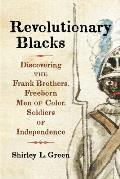
“Discovering the Frank Brothers, Freeborn Men of Color, Soldiers of Independence”
Shirley L. Green

William and Benjamin Frank joined the integrated Second Rhode Island Regiment in the spring of 1777. That unit saw action along the Delaware River in the defense of Fort Mercer and the battle of Red Bank before falling back with the rest of the army to Valley Forge.

After the Battle of Monmouth, the Frank brothers were transferred into the new and segregated First Rhode Island Regiment, composed of Black and Native American soldiers, including enslaved men promised freedom in exchange for service. This “Black Regiment” fought in the Battle of Rhode Island in August 1778. Later the brothers’ paths diverged, and they ended up settling in different countries.

Green based her book Revolutionary Blacks on her family’s oral history, archival research, interviews, and DNA evidence. Her talk is presented by the Battle of Rhode Island Association and the Newport Historical Society. Admission is $20, $15 for society members and people serving in the military. Register through this page.

Saturday, 9 March, 11:00 A.M. to 12:15 P.M.
“Newport’s British Occupation” walking tour
Brandon Aglio

In 1777, seven thousand British and Hessian soldiers invaded Newport, starting a military occupation that lasted for nearly three years. An expert tour guide dressed in an authentic 18th-century British military uniform leads this exploration of the sites and the stories from this trying time.

This event costs $15 for adults, $10 for members of the society and U.S. military, $5 for children ages 5–12. Register through this page.

Saturday, October 29, 2022

Digging into the Archeology of the Revolution

Here are a couple of items from Revolutionary War archeology.

After the Battles of Saratoga, the “Convention Army” of Crown prisoners of war marched to eastern Massachusetts, where they were supposed to board ships for Britain.

Instead, the Continental Congress decided to toss out the surrender agreement between Gens. Horatio Gates and John Burgoyne and keep those men (and not a few women and children traveling with them) in inland parts of the U.S. of A.

Hundreds of people were still held captive in Charlottesville, Virginia, in early 1781 before being moved north to York, Pennsylvania. In what became Springettsbury township, the Continental authorities built a compound of huts surrounded by a stockade fence that was named Camp Security.

The next year, hundreds more Crown prisoners, this time from the Yorktown surrender, also arrived in the area. More huts went up, many outside the stockade for people who didn’t seem to warrant strict surveillance; that area got the name of “Camp Indulgence.”

When the formal end of war finally arrived, those prisoners were freed to go back to Europe or make new homes in America. Locals quickly reclaimed the land and the wood. But the memory of the prison camp remained. Unlike other former prisoner-of-war camp sites from the Revolution, the land that Camp Security sat on was never heavily developed.

Eventually people moved to preserve the site, now property of the township. Locals formed the Friends of Camp Security. The Conservation Fund added to the protected land.

A 1979 archeological study found buckles, buttons, and other items linked to British soldiers, confirming local lore about the location of the P.O.W. camp. This week researcher John Crawmer announced that his team had located part of the stockade wall, identifying a “pattern of holes and a stockade trench that matched stockades at other 18th-century military sites.” Next season those archeologists will try to determine the full dimensions of the stockade and search for other features.

In other news, this past summer a different team found the remains of thirteen Hessian soldiers killed in the Battle of Red Bank, New Jersey, in October 1777. That was the same time the “Convention Army” was moving east toward Boston.

Emerging Revolutionary War will host a conversation with one of those archeologists, Wade Catts, to learn about the discovery and what it might say about those soldiers.

That event will be live on Facebook on Sunday, 30 October, starting at 7:00 P.M. The conversation will also be recorded and made available through Emerging Revolutionary War’s Facebook and YouTube accounts.