J. L. BELL is a Massachusetts writer who specializes in (among other things) the start of the American Revolution in and around Boston. He is particularly interested in the experiences of children in 1765-75. He has published scholarly papers and popular articles for both children and adults. He was consultant for an episode of History Detectives, and contributed to a display at Minute Man National Historic Park.

Subscribe thru Follow.it


•••••••••••••••••


Showing posts with label Richard Henry Lee. Show all posts

Thursday, July 02, 2026

“Jefferson proposed to me to make the draught”

At last we come to John Adams’s dramatic description of how he—and he alone—convinced Thomas Jefferson to draft the Declaration of Independence, in his August 1822 letter to Timothy Pickering.
You enquire why so young a man as Jefferson was placed at the head of the Committee for preparing a declaration of Independence? I answer, it was the Frankfort advice, to place Virginia at the head of everything.

Mr: Richard Henry Lee, might be gone to Virginia, to his sick family, for aught I know, but that was not the reason of Mr: Jefferson’s appointment. There were three Committees appointed at the same time. One for the declaration of Independence; another for preparing Articles of Confederation; and another for preparing a Treaty to be proposed to France. Mr Lee was chosen for the Committee of confederation, and it was not thought convenient that the same person should be upon both.
In fact, Lee wasn’t named to any of those three committees. Roger Sherman and Robert R. Livingston were placed on the Declaration committee on 11 June and the Articles committee on 12 June.
Mr Jefferson came into Congress in June 1775. and brought with him a reputation for literature, science, and a happy talent at composition. Writings of his were handed about remarkable for the peculiar felicity of expression. Though a silent member in Congress, he was so prompt, frank, explicit and decisive upon Committees, not even Saml Adams was more so, that he soon seized upon my heart, and upon this occasion I gave him my vote and did all in my power to procure the votes of others. I think he had one more vote than any other, and that placed him at the head of the Committee. I had the next highest number and that placed me the second.

The Committee met, discussed the subject, and then appointed Mr: Jefferson & me to make the draught; I suppose, because we were the two highest on the list.

The Sub-Committee met; Jefferson proposed to me to make the draught.

I said I will not; You shall do it.

Oh No!

Why will you not?

You ought to do it.

I will not.

Why?

Reasons enough.

What can be your reasons?

Reason 1st. You are a Virginian, and Virginia ought to appear at the head of this business. Reason 2d. I am obnoxious, suspected and unpopular; You are very much otherwise. Reason 3d: You can write ten times better than I can.

“Well,” said Jefferson, “if you are decided I will do as well as I can.”

Very well, when you have drawn it up we will have a meeting.

A meeting we accordingly had and conn’d the paper over. I was delighted with its high tone, and the flights of Oratory with which it abounded, especially that concerning Negro Slavery, which though I knew his Southern Bretheren would never suffer to pass in Congress, I certainly never would oppose.

There were other expressions, which I would not have inserted if I had drawn it up; particularly that which called the King a Tyrant. I thought this too personal, for I never believed George to be a tyrant in disposition and in nature; I always believed him to be deceived by his Courtiers on both sides the Atlantic, and in his Official capacity only, Cruel.

I thought the expression too passionate and too much like scolding for so grave and solemn a document; but as [Benjamin] Franklin and Sherman were to inspect it afterwards, I thought it would not become me to strike it out. I consented to report it and do not now remember that I made or suggested a single alteration.

We reported it to the Committee of Five. It was read and I do not remember that Franklin or Sherman criticized any thing. We were all in haste; Congress was impatient and the Instrument was reported, as I believe in Jefferson’s hand writing as he first drew it.
Adams made a copy of Jefferson’s draft before it was complete, and Jefferson kept another draft with marks on it. The latter shows that Franklin did make substantive contributions.

On Independence Day in 1823, Pickering quoted liberally from Adams’s letter in an oration, which he then published.

TOMORROW: What did Jefferson think of that?

Tuesday, June 30, 2026

“In the shape in which Mr. Jefferson had presented it”

In August 1822, Timothy Pickering wrote to John Adams with questions about the drafting of the Declaration of Independence.

Pickering had served as Secretary of State while Adams was President. The men fell out over foreign policy, and Adams chose a new Secretary of State. Later Adams grouped Pickering in the “Essex Junto” he said undermined him, to Pickering’s puzzlement.

But by 1822 both men were out of public office. Thomas Jefferson and his adherents had been in the White House for two decades. Old intraparty enmities didn’t seem so important as ongoing interparty enmities.

Pickering asked to clear up what he considered mysteries about how the Continental Congress chose its committee to write the Declaration:
Mr. Jefferson being first on the list, became the chairman. This, considering the composition of the committee, and that Mr. Jefferson was the youngest man, would appear remarkable. Mr. Charles Lee, who married a daughter of R. H. Lee, once gave me this account: That Mr. Lee having moved the resolution for declaring the Colonies independent, would, according to the usual course, have been elected chairman of the committee for preparing the declaration; but sickness in his family caused him to return home.—Mr. Jefferson, another Virginian, was then chosen to supply his place.
As Pickering said, in many committees of this sort, the first man named was not only expected to be chairman but also the principal writer of the committee’s report—in this case, the Declaration.

However, Pickering misstated the history in a couple of ways. Jefferson was older than another committee member, Robert R. Livingston. And Richard Henry Lee had a second reason to return home besides a sick wife: he wanted to be involved in how Virginia formed a state government.

The letter went on:
The late [Massachusetts] Chief Justice [Theophilus] Parsons once told me, that in conversing on this subject, you informed him, that you and Mr. Jefferson were the sub-committee to prepare the declaration, and that you left to Mr. Jefferson the making of the draught. . . . But I was at a loss to account for the committee’s letting it be reported in the shape in which Mr. Jefferson had presented it to them.
Pickering guessed that the other members of the committee held back their criticism of the wordy draft after “observing a strong attachment of the parent to his offspring,” figuring Jefferson would more easily accept revisions from the Congress as a whole.

As an arch-Federalist, Pickering invited Adams, the last Federalist President, to confirm his theories because:
there is no end of the praises of Mr. Jefferson as the author of the declaration of independence:—if he had been the author of our independence itself, he could hardly have been more eulogized.—I have thought it desirable that the real facts in this case should be ascertained.
Could Adams’s recollections knock former President Jefferson down a peg or two?

TOMORROW: Adams’s reply.

Friday, March 28, 2025

“The Spies of 1775” in Acton, 31 Mar.

On Monday, 31 March, I’m returning to Acton to speak in the town’s series of Sestercentennial lectures.

My topic this time is “Spies and Military Intelligence,” though I’m titling it “The Spies of 1775” for the assonance.

In my previous visit last spring I talked about the story of The Road to Concord: the Patriots’ effort to build an artillery force and Gen. Thomas Gage’s desire to thwart them.

That talk covered the Boston militia men who smuggled cannon away from the redcoats, the British officers scouting the countryside, and the still unidentified spy sending Gage messages from Concord in bad French.

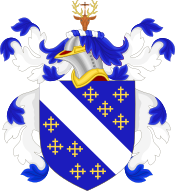
I don’t want to go over the same ground again, so for this talk I’m collecting the stories of other intelligence sources active from late 1774 to early 1776. One I’ve mentioned only once on this blog is John Skey Eustace, represented above by his coat of arms.

Eustace arrived at Gen. George Washington’s Cambridge headquarters in December 1775, one of several Virginians whom Capt. John Manley had captured on a British ship. He’d been sent north to Boston by his mentor: Lord Dunmore, royal governor of Virginia.

Within weeks Eustace was giving Gen. Washington useful tips about Dunmore’s agent Dr. John Connolly. Washington had already collected information on Connolly’s plan to recruit a Loyalist regiment, and at his warning Patriot authorities in Maryland had locked the man up. On 25 December, Washington warned John Hancock there was more to find:
I have received undoubted Information—that the genuine instructions given to Conolly, have not reached your hands—that they Are very artfully Concealed in the tree of his Saddle & coverd with Canvas So nicely, that they are Scarcely discernable—that those which were found upon him are intended to deceive—if he was caught—you will Certainly have his Saddle taken to pieces in order to discover this deep Laid plot.
Washington repeated that intelligence at the end of January 1776:
You may rely that Conolly had Instructions concealed in his Saddle—Mr Eustice who was one of Ld Dunmores family, & Another Gentleman who wishes his Name not to be mentioned, saw them cased in Tin, put in the Tree & covered over—he probably has exchanged his Saddle, or withdrew the papers when It was mended as you Conjecture—those that have been discovered are sufficiently bad, but I doubt not of the Others being worse & containing more diabolical & extensive plans
That information must have been deemed reliable because on 13 June Richard Henry Lee wrote to Washington:
I am informed that a certain Mr Eustace, now in New York, but some time ago with Lord Dunmore, is acquainted with a practise that prevailed of taking letters out of the Post Office in Virginia and carrying them to Dunmore for his perusal and than returning them to the Office again. As it is of the greatest consequence that this nefarious practise be stopt immediately, I shall be exceedingly obliged to you Sir for getting Mr Eustace to give in writing all that he knows about this business, and inclose the same to me at Williamsburg. I wish to know particularly, what Post Offices the letters were taken from, by whom, and who carried them to Lord Dunmore.
What’s striking about John Skey Eustace eagerly sharing what he knew about Lord Dunmore’s plots is that he was only fifteen years old.

And he’s just one of the people I’ll cover in this talk.

Monday, 31 March, 7 to 8:30 P.M.
The Spies of 1775
Acton Town Hall, Room 204

This event is free to all. It will be livestreamed on ActonTV.org and recorded for posting on the Acton 250 YouTube channel.

Monday, November 18, 2024

“Illuminating” Symposium in Williamsburg, 7 Dec.

On Saturday, 7 December, the Dr. Joseph Warren Foundation will present a symposium in Williamsburg, Virginia, on the theme of “Illuminating the Role of Six American Founders.” The day’s presentations will include:

Christian Di Spigna: “Founding Martyr: Dr. Joseph Warren, the American Revolution’s Lost Hero.” A Phi Beta Kappa graduate from Columbia University, Di Spigna wrote the Warren biography Founding Martyr and is the Executive Director of the Dr. Joseph Warren Foundation.

Edward G. Lengel, Ph.D.: “First Among Many Founders: George Washington Guides the Revolution to Victory.” For many years Lengel directed the Washington Papers Project. He has written fourteen books on different periods of American history, including General George Washington: A Military Life and Inventing George Washington.

Elizabeth Mauer: “There Were Founding Mothers Too: Martha Washington Supports the Revolution.” Maurer is the Chief of Programs & Education at the National Museum of the United States Army, having previously held various roles at Colonial Williamsburg, Mount Vernon, the National Women’s History Museum, and the D.E.A. Museum. She’s a former editor-in-chief of the Journal of Museum Education.

Gordon Steffey, Ph.D.: “‘Better known than acknowledged’: Richard Henry Lee and the American Cause.” Steffey is the Director of Research and of the Jessie Ball duPont Memorial Library at Stratford Hall. For nearly twenty years he taught at Randolph College in Lynchburg, Virginia, holding an endowed chair in Comparative Philosophy.

Bruce M. Venter, Ed.D.: “Rough-hewn and Enigmatic Founder: Ethan Allen Does Some Crazy Things.” President of America’s History, L.L.C., Venter organizes an annual conference on the American Revolution that’s considered the premier symposium for Revolutionary War enthusiasts, public historians, and scholars. He’s the author of The Battle of Hubbardton: The Rear-Guard Action that Saved America.

Stephen Wilson: “‘Give me liberty or give me death!’: One of America’s Most Important Speeches Celebrates its 250th Anniversary.” As Executive Director at the St. John’s Church Foundation, Wilson highlights the effect of Patrick Henry’s famous speech in that building on 20 Mar 1775.

This Founders Illuminated symposium will take place in the Williamsburg Regional Library Theatre starting at 9:00 A.M. The $95 registration fee includes lunch at the Hound’s Tale and snacks. For more information and to register, follow this link.

Though this event isn’t associated with Colonial Williamsburg, folks attending it will also be able to see that historic museum’s first Grand Illumination, or fireworks show, of the season.

Monday, May 23, 2022

“All should be ready to yield Assistance to Rhode Island”

We can see the logic of the London government’s decision to try people suspected of attacking H.M.S. Gaspee on 10 June 1772 in Britain, not Rhode Island.

For one thing, the colony hadn’t convicted anyone for the similar torching of the Customs ship Liberty in 1769. Or for earlier assaults on government vessels.

For another, a couple of the men accused of helping to storm the Gaspee were county sheriffs, and others were highly influential merchants and office-holders. The Crown controlled none of the branches of the Rhode Island government.

But by deciding on that plan, to be backed up by the army and navy, secretary of state Dartmouth gave Rhode Island’s Whigs a threat they used to rally other colonial leaders to their cause.

At first, American politicians and printers had been reluctant about supporting a bunch of smugglers who’d attacked a naval vessel enforcing the law. But once the issue became every British citizen’s right to be tried in the county where the alleged crime took place, not three thousand miles away, then Whigs found their voice.

Around Christmas, four Rhode Island politicians wrote to “several gentlemen in North America” about what Lord Dartmouth had told their governor. Those four politicians were:
  • Darius Sessions, deputy governor, who months before had initiated official complaints about the Gaspee’s patrols.
  • Stephen Hopkins, chief justice and possibly author of the “Americanus” essay on the case published days before.
  • John Cole, attorney and former chief justice who would be called as a witness in the inquiry.
  • Moses Brown, wealthy merchant and brother of the alleged leader of the attack.
One recipient of the men’s letters was Samuel Adams, leader of the Massachusetts resistance. He wrote three letters in return, saying such thing as:
It should awaken the American Colonies, which have been too long dozing upon the Brink of Ruin. It should again unite them in one Band. . . . It has ever been my Opinion, that an Attack upon the Liberties of one Colony is an Attack upon the Liberties of all; and therefore in this Instance all should be ready to yield Assistance to Rhode Island.
And:
I beg just to propose for Consideration whether a circular Letr from your Assembly on this Occasion, to those of the other Colonies might not tend to the Advantage of the General Cause & of R Island in particular
Adams had helped to guide the Massachusetts legislature through its 1768 circular letter dispute. In November 1772 he had led the Boston town meeting to set up a standing committee of correspondence to exchange political letters with other Massachusetts towns. He saw the Crown’s reaction to the Gaspee affair as a cue to do the same with other colonies.

Richard Henry Lee might have been another of the men who received the Rhode Islanders’ letter. At any event, on 4 February he wrote to Adams, introducing himself and asking about details of the Gaspee matter; “this military parade appears extraordinary, unless the intention be to violate all law and legal forms, in order to establish the…fatal precedent of removing Americans beyond the water, to be tried for supposed offences committed here.” Adams wrote back, assuring Lee that the stories out of Rhode Island were true.

Meanwhile, no American was actually removed to Britain. The royal commission never collected enough strong evidence against anyone to bring charges. The investigation petered out in the spring of 1773. But by then it had helped to inspire a wider network of correspondence and a little more paranoia among the American Whigs.

TOMORROW: Remembering Gov. Wanton.

Saturday, January 01, 2022

“Fair the year of glory lies”

It’s a Boston 1775 tradition to post a period poem for New Year’s. Usually I’ve chosen verses written and sung by young news carriers, but this year I’m picking up on this month’s thread of poetry debating the new U.S. Constitution.

“A POEM, Addressed to the PEOPLE of VIRGINIA, on New-Year’s Day, 1788” appeared in the Virginia Journal and Alexandria Advertiser dated 10 Jan 1788. Since that newspaper isn’t in the database I can access, I’ve transcribed the version reprinted in the Pennsylvania Packet on 25 January.

Despite the poem being reprinted in several more newspapers and the American Mercury magazine, it really is meant for a Virginia readership. It boasts about the state’s geographic bounties and drops the names of more than a dozen state politicians in a way that would make John Adams grumble, “You know Virginian geese are always swans.”

So far as I can tell, this poem was not included in the Documentary History of the Ratification of the Constitution, perhaps because it was published several months before the Virginia ratifying convention got under way.

Still, there’s no question what the anonymous poet was on about.
A POEM, Addressed to the PEOPLE of VIRGINIA, on New-Year’s Day, 1788.

FAIR VIRGINIA, ever dear,
See arriv’d th’ important year!
While the annual song I pay,
Truth inspires the patriot lay:
Wake!—too long thy sons have dream’d—
Where’s the sister state, that beam’d
Fairer in the dawn of fame,
Glowing with a purer flame?
Shall the ancient wreaths you gain’d
By thy latter deeds be stain’d?
Shall not fed’ral conduct crown
All thy acts of old renown?
Union into ruin hurl’d,
Shall a Tyrant grasp a world?
Or shall sep’rate Unions grow,
Endless source of war and woe?
Or, if Anarchy ensue,
Who hath more to lose than you?

Shall we basely sell the boon,
Bought with so much blood, so soon?
Oh! the muse a tale could tell,
How our heroes fought and fell—
Must our Empire’s short-liv’d reign
Prove they fought and bled in vain?

Blest Virginians, sum the cost!
Shall the price of blood be lost?
Lost the blessings ye possess,
Freedom and the pow’r to bless?
Your’s are planted plains and farms,
Villas fair in rural charms;
Lovely girls and prattling boys,
All the bliss of home-born joys;
When the soothing voice invites
Guests to hospitable rights.—
Your’s th’ illimitable waste,
Flow’ry meads and valleys vast;
Your’s stupendous cliffs that rise,
Bosom’d high in fleecy skies;
Your’s the Alleganian hills,
Spouting forth in num’rous rills.
List ye, how, from many a shore,
Distant sons of ocean roar?
Rivers broad to you belong,
Yet to run in deathless song—
Fair Ohio gently roves
Through the sweet Acasian groves;
Rappahannock (sounding name)
And Fluvanna, slow to fame;
Pohawtan superbly rolls;
Great Potomack, void of shoals;
Mississippi’s waves will gain,
Spite of fraud, for you, the main;
Harvests, by your fields supplied,
Then may float on ev’ry tide.

Go, thou miscreant, from whose tongue
Accents of DISUNION rung;
At the shrine of self, in lies,
Every blessing sacrifice!
Bid the kindling beacons far
Light the realms to civil war;
Bid the drum’s obstrep’rous sound
Rumbling run along the ground;
Bid the trumpet sing to arms,
Swell the cannon’s dread alarms;
Wake the clang of steel again;
Purple every flood and plain;
Make the sick’ning harvest die,
Burning cities scorch the sky:
Heav’n for this shall on thy head
Chosen bolts of vengeance shed.
Round our forests, on our coast,
We have nobler names to boast—
Liberal souls, by none surpast,
Names with time itself to last.
Hail Virginia’s patriot sons.
Griffin, Blair, M’Clurg and Jones!
Join the Pages firm and just:
Steward faithful to his trust:
Maddison, above the rest,
Pouring from his narrow chest
More than Greek or Roman sense,
Boundless tides of eloquence:
Withe, who drank the source of truth,
Skill’d in lore of laws from youth:
Thruston’s mind of ample reach;
Innis, fraught with powerful speech:
Too reluctant to engage:
Pendleton with locks of age,
Mild his eye with wisdom beams,
Lent from other worlds he seems;
Heav’n, resume not such a loan,
Ere we make his choice our own.
Erst the Lees, a glorious band,
For their country made a stand.
Wise and brave, unapt to yield.
In the council or the field;
Why asunder are they torn?
Why his* loss must millions mourn,
Who, to glad th’ astonish’d earth,
Spoke an empire into birth?
The footnote explains, “R. H. Lee made the motion in Congress for the declaration of Independence, July 4, 1776.” In late 1787 Lee publicly objected to the lack of specified rights in the new Constitution, though not to a restructured federal government. This poet thought Lee was undercutting his earlier actions while he, of course, felt he was acting on the same principles as before.
While the awful hour demands
Ablest heads and purest hands.
Him, in vain, we call from far,
Second splendor, other star,
Light and glory of the age,
Jefferson, the learned sage!
Yet a name adorns our state,
Great as modest, good as great;
Though unnam’d, illustrious far,
PRIDE of PEACE and STRENGTH of WAR!

Though a FEW, or false or blind,
Strive to taint the public mind;
Trust the muse’s Heav’n-taught strain,
All the noise, the labour’s vain—
Numbers vast will own the plan,
That secures the rights of man;
Gives the States their destin’d place,
High amidst the human race:
Our illustrious hero then,
(First of sages, best of men)
Will the nation’s cares assume,
And again avert its doom.

Bards! your wreaths immortal twine:
Brighter days begin to shine.
Come, ye freemen! Patriots, come!
Read with me Columbia’s doom—
Lo! involv’d in yonder skies,
Fair the year of glory lies.
Ravish’d far, in vision’d trance,
I behold, with mystic glance,
Towns extend on many a bank,
Late with darkling thickets dank,
And the gilded spires arise,
Grateful to propitious skies—
Arts, refinements, morals blest,
Claim perfection in the WEST—
Peace, with commerce in her train,
Brings a golden age again—
While our woven wings unfurl’d
Sail triumphant round the world.
Among the prominent Virginians not named in these lines were Patrick Henry, Edmund Randolph, and George Mason, all known to oppose the new Constitution.

Also unnamed, but only because he was too “Great” to need specifying, was George Washington.

(The photograph above shows Virginia’s capitol building in Richmond, designed by Jefferson and under construction in 1788.)

Wednesday, January 31, 2018

The Other Author of “The Liberty Song”

Earlier this month I wrote about “The Liberty Song,” which became popular throughout Britain’s North American colonies in late 1768.

The main author of that song, everyone agrees, was the Pennsylvania and Delaware lawyer John Dickinson. However, from the start Dickinson stated that the young Virginian Arthur Lee had “composed eight lines of it.”

That got me wondering how those two men collaborated. They didn’t live in the same colony, after all.

The answer seems to lie in Lee’s ambition to be involved in everything, which he shared with his brothers. He went to England for a top British education at Eton and then the University of Edinburgh to study medicine. After graduating in 1764, Lee went across the Channel to Leiden for another year of training. In same period he thrust himself into imperial politics, writing the pamphlet “An Essay in Vindication of the Continental Colonies of America.”

Lee came back to Virginia and set up a medical practice in Williamsburg. He ran into two problems. First, politics, both imperial and local, kept taking up his attention; he published a series of militant letters over the signature “Monitor” in William Rind’s Virginia Gazette in early 1768 and kept up the Lee family feud with the Mercers. Second, he just wasn’t that interested in medicine.

Meanwhile, in April 1768 Dickinson, now widely respected as author of The Farmer’s Letters, was trying to convince the merchants of Philadelphia to enter a non-importation pact, in the same way they had united against the Stamp Act three years before. Except those merchants didn’t want to. The debate in the newspapers pulled in Charles Thomson, Joseph Galloway—and young Dr. Arthur Lee from Williamsburg.

Lee declared in the 30 May Pennsylvania Chronicle that “the spirit of liberty is lukewarm in this powerful and important city.” [At least that’s what the Historical Society of Pennsylvania said in its 1895 edition of Dickinson’s papers. The newspaper database I use has no issues of the Chronicle from late May 1768 to confirm that.]

I don’t know if Lee visited Philadelphia before making that observation, but he was in the city the next month. That’s when he met Dickinson. Both men liked the idea of fighting the Townshend Act through a continental political movement, not just resistance from each colony. Lee appears to have brought the beginning of “The Liberty Song,” and Dickinson took up his invitation to collaborate.

Dickinson also took advantage of the young visitor’s presence by having Lee copy over an essay criticizing the Philadelphia mercantile community. Dickinson wanted to push the local merchants along, but didn’t want to make them resent him. So they pretended that essay came from Lee. It was published as “A Copy of a Letter from a Gentleman in Virginia to a Merchant in Philadelphia.”

By 6 July, Lee was back in Virginia, staying with George Washington at Mount Vernon. Shortly after that he sailed for London, where he took up the study of law. Eventually he became one of the U.S. of A.’s first diplomats.

Back in America, Lee’s older brother Richard Henry Lee maintained the connection to Dickinson, writing on 25 July: “From my brother, Dr. Lee, I have been informed of the kindness, with which you have expressed your willingness to begin a correspondence with me.”

The following year, Richard Henry Lee had Rind print Dickinson’s Farmer’s Letters and his little brother’s Monitor’s Letters in a single volume. He added a preface by himself and yet another version of “The Liberty Song.” Dickinson’s last and longest version of the song, published in the Pennsylvania Chronicle on 11 July 1768, had contained nine stanzas. The 1769 publication had five, four old and one new:
Here’s a health to our King, and the Nation at home,
AMERICA and BRITAIN should ever be one:
In liberty’s cause, we united shall stand
The envy and dread of each neighbouring land.
There’s no indication who composed those lines—Arthur Lee, John Dickinson, or perhaps even Richard Henry Lee.

TOMORROW: A measure of the popularity of “The Liberty Song” in Boston.

Tuesday, September 12, 2017

Election Day in Early America

It’s an Election Day in the city where I live, so I’m linking to Rosemarie Zagarri’s essay “What Did Democracy Look Like? Voting in Early America” at Mapping Early American Elections, a project of the Roy Rosenzweig Center for History and New Media at George Mason University.

Zagarri writes:
There was, for example, no uniformly established day on which to hold elections. In New England and New York, for example, elections tended to occur in the spring for legislative gatherings that would convene later in the year. In the Mid-Atlantic states and Upper South elections were often held in the late summer or the early fall. . . .

Whenever they occurred, elections did not necessarily take place over the course of a single day. The sheriff, or other local election official, could if he so wished either extend or shorten the amount of time in which the polls were open. If, for example, excessive rains and flooding made it difficult for voters from an outlying area to reach the polling site, the clerk might keep the poll open for two-to-three days—or in some cases, even a week, so that anyone who wanted to vote might do so. A corrupt official, on the other hand, might choose to prematurely close the polls to prevent certain voters from reaching the site in time.

Elections were communal affairs, sometimes with celebratory overtones, sometimes with more ominous overtones. Elections could be held at almost any public venue—from a town hall to a courthouse to a church or tavern. Arriving at the site, electors often confronted a “tumultuous assemblage of men,” as Richard Henry Lee put it, where people milled about—talking, arguing, and sometimes, drinking. In the North, where elections were more sober affairs, women and children might be present, bringing with them “election cakes,” baked especially for the occasion.

Actually casting the ballot was a kind of public performance. By 1800, most states, with the exception of Virginia and Kentucky, had moved from oral voting (viva voce) to the secret, written ballot. Nonetheless, electors often found themselves at the center of public attention. When they cast their ballots, voters moved one-by-one to the front of a line, under the close scrutiny of other members of the community. They sometimes had to mount a number of steps to reach an elevated dais. There they would place their folded ballot in a slot in a wooden ballot box. Many individuals, including their creditors, patrons, or other powerful individuals, looked on as they did so.

During the colonial period, most colonies, like Great Britain, had required that electors possess property—typically either a fifty-acre freehold or land worth fifty shillings. Although voting qualifications varied from state-to-state, by 1800 a majority of states had lowered, or even dropped, property requirements for voting. Throughout the country, perhaps 80% of all adult white males were eligible to vote. In New Jersey from 1776 to 1807, women were actually allowed to vote on the same terms as men. Only three states—Virginia, South Carolina, and Georgia—explicitly confined the vote to white males. There were no voter registration rolls. Electors simply declared that they had met the suffrage requirements for that state. If someone doubted the voter’s eligibility, they would declare their objections to the officials. The individual’s ballot would be set aside, for further investigation. Though not overt, then, the pressure to vote for a certain candidate was often unmistakable.
(The picture above is John Lewis Krimmell’s “Election Day at the [Philadelphia] State House” from 1815.

Sunday, July 03, 2016

New Words from Richard Henry Lee

The American Antiquarian Society just announced that retiree Kathy Major, back in the archive as a volunteer, had identified three previously unknown letters from Richard Henry Lee.

Lee is best recalled for having proposed independence at the Continental Congress in 1776, but he was active from the Stamp Act crisis of 1765 (on both sides) to presiding over the Congress in 1784-85 to the first U.S. Senate in 1789.

The society’s blog explains:
The letters were donated to AAS almost thirty years ago by Mrs. Allan Carr McIntyre of Watertown, Massachusetts, and contain much valuable information about the military progress (or lack thereof) of the American Revolution from 1776 to 1778. Written in Philadelphia, all three were addressed to Col. John Page (1744-1808), then serving as lieutenant governor of Virginia.
Lee wrote the letters on 23 Sept 1776, 10 Oct 1777, and 7 Sept 1778. Those dates were, respectively, soon after the Battle of Brooklyn, soon after the Battles of Brandywine and Germantown, and soon after the Battle of Rhode Island. In other words, not at high points of the war from the American side.

Yet Lee emphasized the positive. Despite the “northern militias…immensely expensive and utterly useless,” he wrote, the Continental Army was ready to stop the British forces at Harlem Heights (which it did, but only for a couple of weeks). “We heard yesterday from Lake Champlain and have the pleasure to find things there in a safe situation for this Campaign at least,” that 1776 letter concluded.

In 1777 Lee treated Germantown as a near-victory, but he was writing from York, Pennsylvania, because the Congress had had to flee from Philadelphia. The Valley Forge winter was ahead. (News of Saratoga hadn’t reached York yet or Lee would surely have emphasized it.)

About the 1778 fighting in Rhode Island, Lee wrote, “Victory declared in our favor, the enemy being driven from the field in great disorder.” Of course the goal of the American campaign had been to drive the British out of Newport, and the British were still there. But victory was declared.

Thursday, October 29, 2015

Two Virginia Gentlemen and the Stamp Act

As I noted back in May, the Virginia House of Burgesses was the first American institution to protest the Stamp Act—albeit not as forcefully as first thought, or later reported.

Virginians were also ahead of their southern neighbors in protesting the new law on the street, starting even before their stamp master had made his way back from Britain.

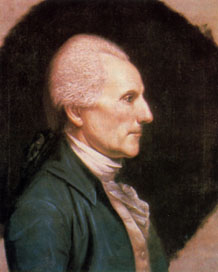
George Mercer (1733-1784), a former military companion of George Washington, was first hanged and burnt in effigy in Westmoreland County on 24 Sept 1765. Richard Henry Lee (shown here) led that protest, ordering his slaves to cart the effigy around and reportedly himself playing the part of a clergyman taking its confession before execution.

Mercer arrived in Virginia in the last week of October 1765. On the evening of 30 October, newspapers reported, he reached the colonial capital of Williamsburg.
…upon his walking up streets as far as the Capitol, in his way to the Governor’s, [Mercer] was accosted by a concourse of gentlemen assembled from all parts of the colony, the General court [House of Burgesses] sitting at this time. They insisted he should immediately satisfy the company (which constantly increased) whether he intended to act as a commissioner under the Stamp Act;

Mr. Mercer told them that any answer to so important a question that he should make, under such circumstances, would be attributed to fear; though he believed none of his countrymen, as he had never injured them, could have any design against his person; insisted that he ought to be allowed to wait on the Governor and Council, and to receive a true information of the sentiments of the colony (whose benefit and prosperity he had as much at heart as any man in it) and that he would, for the satisfaction of the company then assembled, give them his answer on Friday [1 November] at ten o’clock.

This seemed to satisfy them, and they attended him up as far as the Coffee-House, where the Governor, most of the Council, and a great number of gentlemen were assembled; but soon after many more people got together, and insisted on a more speedy and satisfactory answer, declaring they would not depart without one. In some time, upon Mr. Mercer’s promising them an answer by five o’clock this evening [31 October], they departed well pleased; and he met with no further molestation.

And accordingly he was met this evening at the capitol, and addressed himself to the company as follows:
I now have met you agreeable to yesterday’s promise, to give my country some assurances which I would have been glad I could with any tolerable propriety have done sooner.

I flatter myself no judicious man can blame me for accepting an office under an authority that was never disputed by any from whom I could be advised of the propriety or weight of the objections. I do acknowledge that some little time before I left England I heard of, and saw, some resolves which were said to be made by the House of Burgesses of Virginia; but as the authenticity of them was disputed, they never appearing but in private hands, and so often and differently represented and explained to me, I determined to know the real sentiments of my countrymen from themselves: And I am concerned to say that those sentiments were so suddenly and unexpectedly communicated to me, that I was altogether unprepared to give an immediate answer upon so important a point; for in however unpopular a light I may lately have been viewed, and notwithstanding the many insults I have from this day’s conversation been informed were offered me in effigy in many parts of the colony; yet I still flatter myself that time will justify me; and that my conduct may not be condemned after being cooly inquired into.

The commission so very disagreeable to my countrymen was solely obtained by the genteel recommendation of their representatives in General Assembly, unasked for; and though this is contradictory to public report, which I am told charges me with assisting the passage of the Stamp Act, upon the promise of the commission in this colony, yet I hope it will meet with credit, when I assure you I was so far from assisting it, or having any previous promise from the Ministry, that I did not know of my appointment until some time after my return from Ireland, where I was at the commencement of the session of Parliament, and for a long time after the act had passed.

Thus, gentlemen, I am circumstanced. I should be glad to act now in such a manner as would justify me to my friends and countrymen here, and the authority which appointed me; but the time you have allotted me for my answer is so very short that I have not yet been able to discover that happy medium, therefore must intreat you to be referred to my future conduct, with this assurance in the mean time that I will not, directly or indirectly, by myself or deputies, proceed in the execution of the act until I receive further orders from England, and not then without the assent of the General Assembly of this colony; and that no man can more ardently and sincerely wish the prosperity thereof, or is more desirous of securing all its just rights and privileges, than

Gentlemen, Yours &c.,
George Mercer.
Rather than stick around, Mercer headed back to Britain, warning the imperial government that the Stamp Act was unenforceable. Sympathetic bureaucrats there appear to have leaked letters to him showing that another Virginian had applied for the job of stamp master months before: none other than Richard Henry Lee.

TOMORROW: Stamp masters in deep trouble in the deep south.

Tuesday, December 17, 2013

The Junto Reviews the Books of Pauline Maier

Early this month The Junto devoted a week of their blog to reviewing the legacy of historian Pauline Maier, who died this summer. Their essays discuss both Pauline’s four major books (she also wrote valuable articles, reviews, and teaching texts) and where she fit into the late-1900s “ideology” school of historians of the Revolution. All the posts are worth reading, but here are some highlights.

Michael Blaakman on From Resistance to Revolution:
Maier demonstrated just how much a scholar can do by writing a history of both ideas and events, in ways that seem to me to have inspired many of the questions and methods that drove the subsequent generation of New New Political Historians. That ever-elusive sweet spot—where ideas and action, process and perception, meet—was the source of Maier’s powerful argument about why the revolutionaries opted for republican self-government after independence, and about how they learned its ins and outs through the work of colonial resistance.
Sara Georgini on The Old Revolutionaries:
Maier’s prosopography of five men and their “worlds,” accentuated by a thoughtful “interlude” on the rigors of political life in the colonies, marked a change in how historians used individual biographies to retell the Revolution to post-bicentennial Americans. First given as a series of lectures at New York University in 1976, the essays gather a fairly random matrix of people for a group shot of colonial life: Samuel Adams, Isaac Sears, Dr. Thomas Young, Richard Henry Lee, and Charles Carroll [plus] [New Hampshire Continental Congress delegate] Josiah and [wife] Mary Bartlett. . . . Wisely, Maier seized this opportunity to remind the reader that revolutionary thought did not happen outside of the colonists’ mundane or personal experience, but during and because of it.
Roy Rogers on American Scripture:
Maier makes several downright revolutionary moves in her interpretation of the Declaration and the movement toward American independence, more broadly. The most important, and most challenging to the common assumptions of historians and laypersons alike, is that there is nothing truly original about the Declaration. Maier sees the document “as a statement of political philosophy, [it] was…purposefully unexceptional in 1776.”
Ken Owen on Ratification:
The attention to detail, and especially the evident desire to treat each and every participant in the debates [over the Constitution] with respect for their views, is an approach that could easily tend to the arcane. Yet Maier writes with a verve and an evident passion for telling the story that can engage academic specialists with its attention to detail, yet also provide a gripping read for. It is easy to see that Maier had great fun researching, writing, and talking to others about this book…
Of these books I found From Resistance to Revolution most helpful for what interests me about pre-Revolutionary New England. The Old Revolutionaries might be the best for more casual reading since it focuses on individuals and each chapter can be taken on its own.

Saturday, December 14, 2013

Rhode Island Prepares for War

Samuel Ward was one of Rhode Island’s delegates to the First Continental Congress in 1774. There he met John Dickinson of Pennsylvania, Richard Henry Lee of Virginia, and other men pushing for a united opposition to the London government’s strictures on Massachusetts.

On 19 Oct 1774, the Earl of Dartmouth, Secretary of State for North America, sent a letter to all the colonial governors reporting that the privy council had barred the export of gunpowder and arms to the colonies. In most colonies the governors were royal appointees, and Ward appears to have assumed they’d keep this news to themselves. In Rhode Island and Connecticut, however, the governors were elected by the colonial legislature, and Gov. Joseph Wanton had shared the letter with his fellow politicians.

Ward and his Patriot colleagues saw the cut-off of gunpowder and arms as a clear attempt to limit the colonies’ ability to defend themselves. On 14 December he fired off warnings to Dickinson and to Lee from his home in Westerly. Here’s how his letter to Lee begins:
As it is of the greatest Importance that every Colony should have the earliest Notice of the hostile Intentions of Administration I have enclosed You Copies of Lord Dartmouths Letter & the Order received with it. Our Genl. Assembly immediately ordered Copies of them to be sent to Mr. [Thomas] Cushing to be communicated to the [Massachusetts] provincial Congress. They then ordered the Cannon at [Newport’s] Fort George (which was not tenable) to be sent to Providence where they will be safe and ready for Service, 200 bbls. of Powder, a proportionate quantity of Lead & Flints & several Pieces of brass Cannon for the Artillery Compy. were order’d to be purchased, a Major General (an officer never before chosen in the Colony) was appointed, several independent Companies of light Infantry Fusiliers, Hunters &c were formed, the Militia was order’d to be disciplined & the Commanding Officers empowered to march the Troops to the Assistance of any Sister Colony.

The Spirit & Ardor with which all this was done gave Me ineffable Pleasure and I heartily wish that the other Colonies may proceed in the same spirited Manner for I fear the last Appeal to Heaven must now be made & if We are unprepared We must be undone. The Idea of taking up Arms against Great Britain is shocking but if We must become Slaves or fly to Arms I shall not hesitate one Moment which to chuse for all the Horrors of civil War & even Death itself in every Shape is infinitely prefarable to Slavery which in one Word comprehends every Species of Distress Misery Infamy & Ruin.
Moving cannon to a more secure place, buying weaponry when the London government had just forbade that export, appointing a major general and forming new militia companies, invoking John Locke’s “Appeal to Heaven”—Ward’s Rhode Island was clearly preparing for war in December 1774.

Friday, February 24, 2012

John Adams on Benjamin Harrison’s “Pleasantries”?

Yesterday I quoted John Adams’s critical description of Benjamin Harrison, a Virginian delegate to the Continental Congress, in his autobiography. At another point in that manuscript, Adams wrote of Harrison, “This was an indolent, luxurious, heavy Gentleman, of no Use in Congress or Committees, but a great Embarrassment to both.”

So Adams really didn’t like Harrison. But some people, particularly folks writing about Virginia, really want Adams to have said something nice about Harrison. Clifford Dowdey wrote in The Great Plantation (1957):
Although later Adams conceded Harrison’s contributions and “many pleasantries” that steadied rough sessions, the clashing passions involved in united action are illustrated by venomousness of even John Adams to a fellow patriot…
And in America’s Political Dynasties (1966), which lists Dowdey’s book as a source, Stephen Hess wrote:
Even John Adams, who wrote that Harrison was “of no use in Congress,” had later to admit that the Virginian had contributed “many pleasantries” that steadied rough sessions.
On Wikipedia that’s become:
Adams also commented that “Harrison’s contributions and many pleasantries steadied rough sessions.”
Citation needed, of course.

In a similar process, Freeman Cleaves’s Old Tippecanoe (1990) says:
While Randolph filled the President’s chair, Harrison’s tongue and temper and his “many pleasantries,” according to John Adams, helped to steady a groping Congress.
In Mary Jane Child Queen’s William Henry Harrison: General and President (2006), which lists Cleaves’s book as a source, that became:
It was John Adams who stated, “Harrison’s tongue and temper and his many pleasantries helped to steady a groping congress (Continental).”
So a lot of Cleaves cleaved to the two words he actually ascribed to Adams.

And what’s the source of those two words, “many pleasantries”? Darned if I can find it. That phrase doesn’t appear in the Massachusetts Historical Society’s digital editions of the Adams Papers. To be sure, that project doesn’t yet cover the letters Adams wrote late in his retirement. But the phrase also doesn’t pop up in searching the mid-1800s edition of Adams’s collected writings. It doesn’t appear anywhere in connection with Adams and Harrison before 1957.

Adams was favorably impressed with Harrison when they met. On 2 Sept 1774, at the start of the First Continental Congress, Adams recorded first impressions of the Virginians in his diary:
After Coffee We went to the Tavern, where we were introduced to Peyton Randolph Esqr., Speaker of Virginia, Coll. Harrison, Richard Henry Lee Esq., and Coll. [Richard] Bland. Randolph is a large, well looking Man. Lee is a tall, spare Man. Bland is a learned, bookish Man.

These Gentlemen from Virginia appear to be the most spirited and consistent, of any. Harrison said he would have come on foot rather than not come. Bland said he would have gone, upon this Occasion, if it had been to Jericho.
Later Adams came to dislike Harrison intensely. Not only were they on opposite sides of a lot of debates, but Harrison was big, jovial, and very rich—all things that Adams was not.