J. L. BELL is a Massachusetts writer who specializes in (among other things) the start of the American Revolution in and around Boston. He is particularly interested in the experiences of children in 1765-75. He has published scholarly papers and popular articles for both children and adults. He was consultant for an episode of History Detectives, and contributed to a display at Minute Man National Historic Park.

Subscribe thru Follow.it


•••••••••••••••••


Showing posts with label Crean Brush. Show all posts

Friday, May 01, 2026

”No other Crime, but retaining their Allegiance to the King”
We left John Hill, his wife Elizabeth (?), and his daughter in the Boston jail in February 1777, suspected of “being Enemical to the States” and “attempting to Carry Intillegence to the Enemy.”

The next trace of Hill that I’ve found is from John Noble’s article “Some Massachusetts Tories” for the Colonial Society of Massachusetts in 1900:
At the July [court] Term, 1777, John Hill of Boston recovers judgment in a plea of the case against Crean Brush for £2.8s.10d lawful money, and costs.
Did Hill sue Brush, his employer during the evacuation from Boston, for some loss? Or was this another John Hill?

There’s firmer information from John Howe’s Newport Gazette, published in the British-occupied city on 20 Nov 1777:
By Mr. JOHN HILL, who left Boston the 15th of October, we learn, that Dr. [Benjamin] Church, Mr. John Dean Whitworth, of the Queen’s Rangers, and a Number of others, are yet confined in Boston; Dr. [Mather] Byles is confined in his own House; and upwards of 70 Persons, who can be charged with no other Crime, but retaining their Allegiance to the King, and Attachment to that happy Constitution under which they were born, and from which they have enjoyed the most solid and inestimable Blessings, are now confined on board a Prison Ship in that Harbour.—

He also adds, that almost every Goal in New England is filled with these unhappy People.

Mr. Hill has also favoured us with the current Prices, in Lawful Money, of the following Articles, at the Time he left it:
Beef, — — 0.1.3
Mutton, — — 0.1.6
Butter, — — 0.4.0
And so on through a list of other meats and foods, alcohols, sugars, teas, and cordwood to shoes for men (£2.2/pair) and women (£1.10/pair).

Presumably Howe was making the point about price inflation in Continental-governed areas, but we’d have to find pre-war costs for comparison.

Years later John Hill told the Loyalists Commission, as recorded by Todd Braisted:
That on the 17th of March 1776, he left Boston, with the Royal Army; but was taken at Sea, by the Rebels, . . . himself, his Wife, & Daughter was carried back to Boston, and he confined in Prison 19 months; they were all tried For their lives, but not Condemned.

In November 1777, they were Exchanged, went to Halifax, and afterwards to New York
Hill’s memory was off by just a few weeks. It’s possible he didn’t remember the port his family came through, or that the Hills went from Newport to Halifax. Adding to the confusion on that point, on 16 Oct 1777 the Independent Chronicle reported that “a Cartel” ship “with upwards 130 Prisoners on board” had sailed the previous day from Boston for Halifax. 

By whatever route they left New England, John Hill, his wife, and his daughter eventually returned to New York, the city he’d been chased out of in the spring of 1775. But now it was held by the British military.

TOMORROW: Inspector Hill.

Wednesday, April 29, 2026

“Prisoners in Boston Goal” in February 1777

On 18 Feb 1777, deputy jailer Joseph Otis wrote down “A List of Prisoners in Boston Goal,” transcribed and published by the Colonial Society of Massachusetts.

This document says:
Doctṛ̣ [Benjamin] Church for holding a Tratirus Correspondence with the Enemy

John Hill for being Enemical to the States

Thoṣ̣ Mews for ditto

Thoṣ̣ Edwards for ditto

Crean Brush for ditto

Benjạ̣ Davis for ditto

Hopestill Capen for ditto

Miss [Elizabeth?] Hill & Daughter for attempting to Carry Intillegence to the Enemy

John Dean Whitworth A prisoner of War

Seven Men & two Women prisoners of War taken Near fort Cumberland

Richḍ̣ Luby for theft Sentens’d

Mary Young Sentens’d

Mary Voax Sentens’d

John Lovell for theft not had his trial

Five Debtors
It’s no surprise that Dr. Church headed this list. But it is surprising to see Brush listed fifth, given his notoriety. But perhaps the order reflects their cell assignments or some other factor.

I’ve just written about how John Hill was jailed in May, and his wife and daughter arrested in October. Those two women were the only ones explicitly locked in Boston’s jail for actions to aid the enemy, as opposed to being prisoners of war or criminals.

As for the other political prisoners, Thomas Mewse was an English “wollen-manufacturer,” as the Massachusetts Spy once put it. William Molineux had recruited him into a public-works scheme that ended with the two men suing each other. Aside from that, I know no reason to think him “Enemical.”

Thomas Edwards is usually identified as the 1771 Harvard graduate and former Braintree schoolteacher who became suspect because he apprenticed in law to a Tory. Within a couple of years, however, that Thomas Edwards was a high-ranking Continental Army officer, and he went on to a long political career. I have yet to see any contemporaneous sources describing that man as a suspected Loyalist. So I wonder if there might have been two Thomas Edwardses.

Benjamin Davis and Hopestill Capen were merchants who had sided with the Crown. Davis was captured while sailing from Halifax to New York in June 1776. Capen had stayed in Boston after the evacuation was undoubtedly regretting that decision. I may discuss them, as well as Lt. John Dean Whitworth of the Queen’s Rangers, at more length in the future.

By the time Joseph Otis wrote out this list, John Hill had been imprisoned for nine months, his wife and daughter for four. It looks like they were held separately. And it would be several more months before their situation changed.

COMING UP: An exchange.

Saturday, April 25, 2026

“That the said Hill be immediately apprehended”

John Hill was yet another of the Loyalists captured aboard the brig Elizabeth.

[I feel like I’m never getting away! Then again, that’s probably how those passengers felt when they were brought back to New England after trying to evacuate.]

According to recent research shared in the Loyalist Directory, John Hill was born in Ireland about 1737. He moved to New York City in the early 1770s and ran an inn.

In March 1775, Hill came to the aid of William Cunningham during a fight near New York’s Liberty Pole (shown here). Hill later told the Loyalists Commission that “a Mob…beat us with Clubs, and stoned us.” The two men were thrown into prison and put on trial in April. But the foreman of the jury, John Wetherhead (another future Loyalist), kept them from being convicted and punished.

Cunningham and Hill “escaped to Boston,” reaching the besieged town by 5 May. They enlisted in the militia company of James Forrest, another man from Ireland. Hill said he was “appointed Quarter Master to the same Company.”

In March 1776, Gen. William Howe decided to evacuate the town. He ordered Crean Brush to confiscate all cloth that could be useful to the Continental Army. Brush enlisted Richard Hill, formerly sheriff in his county of northeastern New York (which would become Vermont), as an assistant. Richard presumably brought his younger brother, John Hill, onto that team.

As ships pushed off from Boston’s wharves, John Hill and his family squeezed onto the Elizabeth along with Brush, most of the confiscated goods, a squad of British soldiers, and other Loyalists. In Hill’s words, “on the 17th of March 1776, he left Boston, with the Royal Army; but was taken at Sea, by the Rebels.”

The brig, its property, and its wealthiest passengers were sent to Portsmouth, New Hampshire. The Hill family and several others were landed on Cape Ann by 7 April. The Massachusetts authorities summoned John Hill to Watertown for questioning.

On 19 April, the Massachusetts Council reported:
The Committee appointed to examine sundry Persons taken on board the Brigt Sally [sic] bound to Hallifax, & sent to the Council by the Committee of Marblehead…examined [John] Hill who informs your Committee that he is a native of Ireland that he came to New York three or four years since that he came to Boston about ten months ago on the removal of the troops from New York to Boston for the recovery of monies due to him from them and that for the same purpose he was going to Hallifax having acted as a Sutler among the troops.
Sailing off to Canada out of political loyalty was suspect. Sailing there just to collect debts from soldiers seemed more reasonable to these office-holders.

The Council agreed that Hill should be allowed to go free after providing a “written parole not to bear arms against the United Colonies, nor in any way aid or assist the Enemies of the said Colonies.” He probably headed back to Cape Ann to find his wife and at least one child.

In Boston, however, some merchants were still seething at how Brush and his assistants had taken their property. That property itself was up in Portsmouth, being sorted by Continental agent Joshua Wentworth. More information filtered back to Watertown.

On 25 April, 250 years ago today, the whole Massachusetts General Court passed a new resolve:
WHEREAS a certain John Hill, lately taken Prisoner by Commodore [John] Manly, in a Vessell bound from Boston to Hallifax, and brought into Portsmouth, was examined before the Council; and no Evidence then appearing against him, he was discharged & set at Liberty;

And whereas it hath since been made to appear to this Court; that the said Hill, at the time he was taken, as aforesaid, had in his possession Chests, Trunks & Packages of Goods and Merchandizes to the value of three hundred pounds Sterlg. supposed to have been stolen from the distressed Inhabitants of the Town of Boston; and was an Assistant to Crean Brush in his late unwarrantable and highhanded Thefts & Robberies
Therefore

Resolved, That the said Hill be immediately apprehended, wherever to be found, & brought before this Court for Examination, touching the Premises, and all Sheriffs, Constables & other executive Officers, and all the good People of this Colony, are hereby directed & impowered to apprehend the said Hill, wherever he may be found, and bring him forthwith before this Court, in order that he may be dealt with for his aforesaid highhanded Crimes, as to Law & Justice appertains.
TOMORROW: The manhunt was on!

[Boston also had a justice of the peace named John Hill, very involved in events surrounding the Boston Massacre. Unfortunately, the same tag applies to both men, but I think context will make it easy to sort out their stories.]

Friday, April 24, 2026

William Jackson in and out of the Boston Jail

One month after he’d decided to sail out of Boston with his goods, the brazier William Jackson was locked up in the town jail, suspected of stealing from his fellow merchants.

Cdre. John Manley had captured him on the Elizabeth. Crowds in Newburyport, Salem, and Boston had jeered him. The Massachusetts Council had ordered him into prison.

Bostonians already had some reasons to dislike Jackson. The great fire of 1760 started in his shop. He defied the non-importation movement in 1770, and on top of that he hosted Capt. Thomas Preston before the Massacre.

Then in 1774 Jackson signed the complimentary Addresses to Govs. Thomas Hutchinson and Thomas Gage. He stayed in town when war broke out. He joined the Associators, the Loyalist militia formed in Boston during the siege, though he tried to explain that away:
General [William] How…isued a Proclamation for the Inhabitants to Associate themselves and bear Arm’s in defence of the Town, being what I did not thing [think] was my duty I did not sing [sign],

sometime After he Isued another recommending to the Inhabitants to Associate themselves for preserving the peace and good Order of the Town by preventing any Riotous doings by the Soldier’s or other’s which I thought Incumbent with every good Citizen to comply
The Patriot government naturally looked askance at any “associators” who fell into its hands.

At the same time, William Jackson had some local support. Unlike Crean Brush and the other merchants locked up alongside him, Jackson had grown up in Boston. His mother Mary and older brother James still lived there. His shop sign, the Brazen Head, was a long-time landmark for locals and visitors.

The jailers had been ordered not to let Jackson have pen and paper, but he could ask his family for help. He stated, “after my Committment my brother wrote Mr [Joshua] Wentworth for my Baggage.”

More surprisingly, other members of Boston’s business community spoke up for him. I already quoted Isaac Smith, Sr.’s comment that he hadn’t really done anything bad. A few years back, Chris Hurley told me that Jackson garnered letters of support from selectmen John Scollay and Samuel Austin, printer John Gill, and other Patriots. (Among those names is John Peters, who could be the future husband of Phillis Wheatley.)

Later William Jackson would tell the Loyalists Commission that he was let out of jail after 126 days, or in August 1776. Some of his fellow prisoners would be locked up for much longer.

TOMORROW: Back to Cape Ann.

Thursday, April 23, 2026

“Without the Privelege of Pen, Ink, Paper or Candle”

In April 1776, Watertown was the seat of Massachusetts’s government.

Though people could now go into Boston, that town was still reeling from the siege. Plus, there was smallpox.

So the Massachusetts General Court stayed in Watertown—the assembly in the town’s meeting-house and the Council in an upper chamber of Edmund Fowle’s house (now headquarters of the Historical Society of Watertown, shown here).

Under the provincial charter, because the governor and lieutenant governor were absent (both driven away by the war), the Council exercised executive power.

That’s why, on 12 April, James Otis, Sr., as senior member of the Massachusetts Council, signed this order to imprison five genteel Loyalists captured aboard the brig Elizabeth:
To the Keeper of the Goal at Boston, in the County of Suffolk—Greeting—

You are hereby directed and commanded to take into your Custody Crean Brush, William Jackson, Peter Ramsey, Edward [K]eighley, and Richard Newton, lately taken in their flight from Boston in attempting to carry away from thence under the protection of the British fleet, large Quantities of Goods Wares & Merchandizes, the Rightful Property of the Inhabitants of that town, and having joined themselves with the Fleet & army employed against the united Colonies of America—

and you are commanded to confine the said Crean Brush William Jackson & Peter Ramsen [sic], each in an apartment by himself, without the Privelege of Pen, Ink, Paper or Candle, and not suffer them, or either of them to converse with any person whatever, unless in your hearing, and for the better Security of the said Crean Brush you are further ordered & commanded to put him into Handcufts immediately—

And them and each of them safely keep, ’till the further Order of the Major part of the Council, or they be otherwise discharged by due Course of Law—Hereof fail not at your Peril.
Two days later, Maj. John Grizzage Frazer, as assistant quartermaster for the Continental Army, wrote to Gen. George Washington to say that those men were now locked up. Brush was “in Irons.”

Frazer also passed on the news that on 12 April “8 british seamen” had made off with the cutter from H.M.S. Renown, one of the Royal Navy ships still hovering in the outer harbor, and got into Boston. Those defectors were much more welcome than the Loyalists who had tried to leave.

TOMORROW: Free William Jackson!

Wednesday, April 22, 2026

“They were much insulted by the people”

Yesterday we left William Jackson on the road from Portsmouth, New Hampshire, to Boston, having reached the town of Newburyport on 11 April 1776.

Jackson and dozens of fellow Loyalists had been captured aboard the brig Elizabeth while trying to sail to Halifax with the rest of the British evacuation fleet.

Most of the king’s army, and most of the Loyalists inside Boston, had managed to get away. Which meant popular anger about those people focused on the prominent few remaining—like Jackson.

In Newburyport, an angry crowd surrounded the tavern where the captives were eating, objecting to how they were riding in carriages. Carriages that Jackson, ship captain Peter Ramsey, and the others had hired.

Jackson later recounted:
we sent for the Committe of safety to Appease them, but all to no purpose, finding our selves in such a situation we comply’d, the Committe not thinking it safe they Appointed a Guard of five Men and Obliged us to pay the Expence the rest of the Journey,

as soon as we came out of the Inn we received Blow’s, mud, stones, Eggs, and every other abuse and proceeded to Boston being 40 miles on foot
In Salem, the lawyer William Pynchon (1723–1789) wrote in his diary:
Wm. Jackson, merchant, and others, with some regular soldiers, went thro’ Salem on foot for Boston, under guard; ’t is said they were much insulted by the people (it must be presumed to be the rabble) at Newburyport, in their way hither; that Jackson was stopped and obliged to leave his carriage, and walk on foot from Newbury to Salem, and thence to Boston
Pynchon then said: “in Newbury street he was stopped again and obliged, after his hat was knocked off, to fall on his knees and beg pardon of the mob and of the Country, and to say whatever was required of him.” At first I thought that might be a reference back to the streets of Newbury, but the placement suggests this story described when Jackson reached Newbury Street in Boston’s South End. Jackson himself didn’t specify such an incident.

Fellow gentlemen—merchants, professionals, landowners—sympathized with Jackson for coming under fire from crowds of poorer citizens. On 16 April, Isaac Smith, Sr., wrote to John Adams from Salem:
You have heard of Bill Jackson’s being taken. He received some Insult on the road which am sorry for and lamented by all, persons of any consequence. He is in Boston goal, but I dont learn he has behavd any way Ill att Boston dureing the seige.
Indeed, Jackson’s letter complained that after reaching Boston:
we was again carried to Wartertown 9 miles before the late Councill and being each seperately ask’d a few Question’s and not properly Examined was sent back to Boston and committed on a supposed Crime of being concern’d with Crean Brush denied the Use of pen Ink and paper and Candle light not suffer’d to speak to any one but in presence of the keeper whare we have been ever since 13th April
That accusation must have been especially galling to Jackson since one month before he’d been trying to stop Crean Brush from taking away Cyrus Baldwin’s goods.

TOMORROW: In the Boston jail.

Saturday, April 11, 2026

“Itt’s said she has a large quantity of the Stolen goods”

It didn’t take long for New England Patriots to realize that Cdre. John Manley’s capture of the Elizabeth on 2 April 1776 was a big deal.

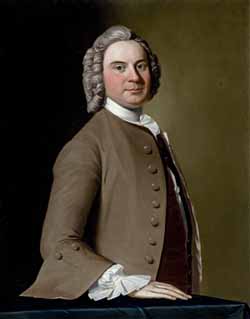
On 6 April, Isaac Smith, Sr. (1719–1787, shown here courtesy of the Yale University Art Gallery), wrote to his niece Abigail’s husband, John Adams, from Salem:
Commodore Manleys fleet has taken a brigantine bound to Halifax on board of which is Bill Jackson and all his Effects and itt’s said she has a large quantity of the Stolen goods—

and there is on board likewise One Greenbrush, receiver general of the stolen goods and has distinguisht himself in that way by demanding People’s propaty from them. Itts said he came from York and itts said those Carpenters and runagarders from that way has behaved worse than any Others.—

A sloop is on shore at the Cape, beleive nothing very Valuable on board but itt Appears they (the inhabitants) went away in a most dismal Cituation, not haveing even Water sufficient and crowded and some sick with the small pox.
That sloop was the Sally, commissioned by Jolley Allen and captained by no one who knew what he was doing, as described back here.

As a merchant in Boston before the siege, Isaac Smith knew William Jackson and his troubles well. But Smith wasn’t familiar with Crean Brush, who had arrived from New York after the siege began—hence his reference to the man as “One Greenbrush.”

John Rowe was all too familiar with Brush, having watched that royal appointee confiscate some of his property. On 8 April he wrote in his diary with surprising calm:
Capt. Manly is come to Town & brings the Accot. of his Taking Crian Brush Wm. Jackson & Twenty other passengers in A Brigg bound with The Fleet—

This Vessell tis Said has Twenty five Thousand pound Sterling On board—in English Goods & Other Merchandise—

among the Prisoners is A Sergiant & 12 Men of the Kings Troops
On 8 April Rowe added:
There is a Confirmation of Crean Brush & Wm. Jackson being taken & also My Negro Fellow Adam
Adam was one of the four enslaved people found aboard the Elizabeth. Remarkably, this is the only time in his published diary that Rowe mentioned the man. We therefore have no clue about how he came to be on the brig. Had Adam asked to evacuate the town, or had Rowe sent him away?

TOMORROW: Following the money.

Friday, April 10, 2026

“With an Irony which inflamed their resentments”

As Crean Brush was seizing linen and woolens for the British military in March 1776, some of the wealthy merchants who owned that cloth complained to Gen. William Howe’s headquarters.

Brush responded with a memo to Gen. James Robertson, who was overseeing the evacuation:
if any Articles were removed which did not answer the description [in Howe’s order] the Parties are only to blame they being repeatedly called on to declare the Contents of each which they obstinately refused—

These People your Memorialist are irritated against him but your Memorialist begs leave to assure your Honor he is fully able to prove that his Conduct toward them was governed with politeness coolness & moderation

true it is that when attempts were made to engage his attention in tedious dissertations on Magna Charta & the rights of British Subjects with intent to retard him in the execution of his Office he did interrupt such Harangues & with an Irony which inflamed their resentments complimented them on their Eloquence which had in Town Meetings been so successful as to throw all America into confusion but that I was upon Business which I was determined to execute without interruption—

The Goods I received from the Stores were taken on board & stowed away with all the care & attention my peculiar Situation would possibly admit and I solemnly aver that from the 5th to the 13th March my own Assiduity was so great that I did not in any one Night allow Myself more than two Hours Sleep…
With the help of his assistants plus “two boys and a man” on board the Elizabeth, Brush managed to pack that brig. Some of Cyrus Baldwin’s goods went onto the Minerva.

At some point Brush’s assistants—Charles Blasquet, Richard and John Hill, and David Cunningham—appear to have asked what arrangements he’d made to get them and their families out of Boston. To his credit, he didn’t just ask what arrangements they’d made for themselves. Instead, Brush recognized that they’d “neglected their own Concerns to serve Government at my request.”

Crean Brush hustled those men and their families onto the Elizabeth into “a small space between Decks.” He later told Gen. Howe they had all brought their own provisions so they “cannot be the least convenience to any Person on board.” Basically, he asked for forgiveness instead of permission.

Brush’s memos to Robertson and Howe, published in the Naval Documents of the American Revolution, document the hurry and disorder of the evacuation. He was managing goods that merchants had asked him to store, goods that he’d seized from Patriots who had left Boston, the cloth that he’d been commissioned to keep out of rebel hands, and his own property. And he was trying, at least on paper, to keep these all separate and safely stored.

Conflict continued even on the Elizabeth. Brush had loaded nineteen barrels of flour on board, on “Major Hutchinsons orders”—I think this was Maj. Frances Hutcheson of the 60th Regiment, the army paymaster. Brush told Robertson:
the second Barrell which was opened I sent for some [flour] which when discovered by Mr [Caleb] Wheaten he imperiously flourished [his sword] over me while in Bed & told me he was surprized at the assurance I dared to shew in giving directions to have any,

Upon which I told him he was an insignificant inpertinent Puppy.

Captain [Peter] Ramsey at that instant came in declared he would not hear one word of the occasion which provoked me to use the words I have mentioned but that if I uttered three words more he would send me Prisoner on board the Commodore—
While dealing with such quarrels, Capt. Ramsey got the Elizabeth out of Boston harbor with the rest of the evacuation fleet by the end of March.

And on 2 April three American schooners captured the ship.

TOMORROW: In custody.

Thursday, April 09, 2026

“This Party behaved very Insolently & with Great Rapacity”

Samuel Austin, quoted yesterday, wasn’t the only Boston merchant to complain about how Crean Brush had confiscated cloth in March 1776.

Capt. Samuel Dashwood also groused about Brush. As cited by Eric Wiser, the captain described how Brush pushed through the back door of his house, strode past the family, and opened their front door for his assistants. At the end of the day, Dashwood determined he was missing nine trunks and two chests of silks and cloth.

Dashwood made a point that Brush had been wearing a sword (as many gentlemen did). “If any person should presume to interrupt,” Dashwood quoted his unwanted visitor saying, “[soldiers] would thrust their bayonets into such a person.”

Capt. Dashwood wasn’t above violence himself, though. Back in 1769, he was among the merchants who challenged printers John Mein and John Fleeming on King Street. And the next year, during an anti-import protest, Theophilis Lillie described Dashwood as “in a great rage, challenging me to come out of my house and he would break my neck, my bones, and the like.”

While Dashwood was a virulent Patriot, John Rowe (shown above) was a trimmer, trying to stay neutral. He lamented the outbreak of war, lived in Boston through the siege, and then chose to remain as the king’s military left. But he also objected to Brush’s actions.

I quoted Rowe’s complaints about how Crean Brush seized property on 11 March back here. At that time I assigned “Mr. Hill” the first name William, but now I think it was more likely either Robert or John.

The next day Rowe collected a receipt for his goods from Brush but wrote, “[I] dont expect—much Good from it.”He told his diary, “This Party behaved very Insolently & with Great Rapacity & I am very well Convinc’d exceeding their orders.”

The next few days were even worse, however. Rowe found other men breaking into his warehouses and stealing more goods, not just the cloth that Gen. William Howe had authorized Brush to take. And of course those men left no receipts at all.

Between Rowe’s diary, documents that Brush signed, and postwar legal filings, we can identify a few more people besides those I’ve already discussed who lost property to Crean Brush’s team: selectman John Scollay, Capt. Samuel Partridge, “Widow [Mary?] Newman,” “John Barret & Sons,” and Dr. Thomas Bulfinch.

TOMORROW: Brush’s response.

Wednesday, April 08, 2026

“The officer (Crean Brush) who took my goods”

As quoted back here, on 10 Mar 1776 Gen. William Howe authorized Crean Brush to seize linen and woolen goods inside Boston to ensure they would be carried out of town and not fall into the hands of (or be sold to) the rebel army.

By that point, most of the wealthy people inside besieged Boston were Loyalists, and they planned to leave with the British military. But many adherents to the Patriot cause had left their goods in the town months before. And a few men had stayed to look after their property, their family, or their constituents.

Selectman Samuel Austin was in the last category. Nine years later he told John Adams, who had once employed his son as a law clerk and was now the U.S. of A.’s minister to Great Britain, what he remembered about those days:
I apprehend it needless to Say anything about the Rude, and insulting behavior of the officer (Crean Brush) who took my goods, all which I was oblidg’d to Submit to.—

Suffice it to say that on the 11th. March 1776 Crean Brush, an officer appointed by Genl. How, and by his written Orders…did by force and Arms, with near Twenty Soldiers, with their Guns and Bayonets enter my House and took from me in goods & Merchandize to the amount of Two Thousand Four hundred and Thirty Pounds 18/7 Neat Sterling Cost, to which I have aded Fifty per ct. Advance, which would not pay the Insurance & Freight, as also Interest on the same, untill paid. . .

I had an Opportunity of Conversing with [Gen. Howe] on the Subject of taking my goods from me in the manner he did, He Expressd himself with great Surprize and Indignation, that I should even think he mean’t to Alienate the Property of my goods, by no means he said, he mean’t no such thing, on the Contrary, he assured me in the most Sollemn manner my goods should all be Returnd me again, or the Cash paid for them. He aded it was a Common thing for an Army when Retreating and another army Pursuing, for the Retreating Army to take from the inhabitants, every thing that might any ways be servicable to the Pursuers, but that as soon as the Confusion was over, the inhabitants had their goods Return’d or the money paid them, to the amount of what was taken away, and this he Asur’d me should be the case with mine.—

He said further that what he had done was in Conformity to orders Rec’d from the Minster, to Prevent the Rebels as he calld them from being benifitted by them. Accordinly in a letter he writes Lord Dartmouth (which I have seen) given him an Accot. of Evacuating the Town, he has these words, “all the Woolen good also, that I could find Room for belonging to those who chose to stay behind, the want of which is more distress to the Enemy than any other Article whatever, has been shipd, Inventories of them taken in the best manner Possible, and Put under the Charge of proper persons, in order hereafter to be stor’d.”

Agreeable to this, is his Orders to Crean Brush when he took the goods (Coppy of which you’ll have withe Papers sent you from Congress) in which are these words, “You are hereby Authorizd, and Requir’d to take into your Possession, all such goods as Answer this discription, to give Certificates to the owners that you have Reciev’d them for their use, and will deliver them to the owners orders, Unavoidable Accidents Excepted.”

Both the above Extracts, Plainly Evince, that it was never the intention, or design either of Genl. How or the Minister, that such goods so taken, should be look’d upon as forfited goods, on the Contrary, they were to be inventoried and Stored, and taken Proper care of, for the bennefit of the owners, and to be deliverd to their Orders, all which is Exactly agreeable to Genl Hows declaration to me, that they or the money should be Return’d.
Austin’s point in 1785 was that the British government still owed him for the value of his confiscated goods. London merchants were pushing him to repay his debts from before the war, so he wanted that money—or he wanted to be able to tell those creditors that they should go after their own government for repayment instead of him.

TOMORROW: More complaints about Crean Brush.

Tuesday, April 07, 2026

Crean Brush’s Team

To help him collect goods from Bostonians, loyal and otherwise, Crean Brush hired four men.

I can’t tell whether Brush assembled this team in late 1775, when Gen. Thomas Gage first gave him a commission, or in March 1776, in the busy days after Gen. William Howe led an evacuation, as discussed yesterday.

In March, Brush gave Gen. James Robertson the names of four assistants: Charles Blasquet, Richard Hill, John Hill, and David Cunningham.

According to John J. Duffy and H. Nicholas Muller III’s Inventing Ethan Allen, the Hills were Brush’s cousins who came from Ireland to farm on his New York land grants in what would become Vermont.

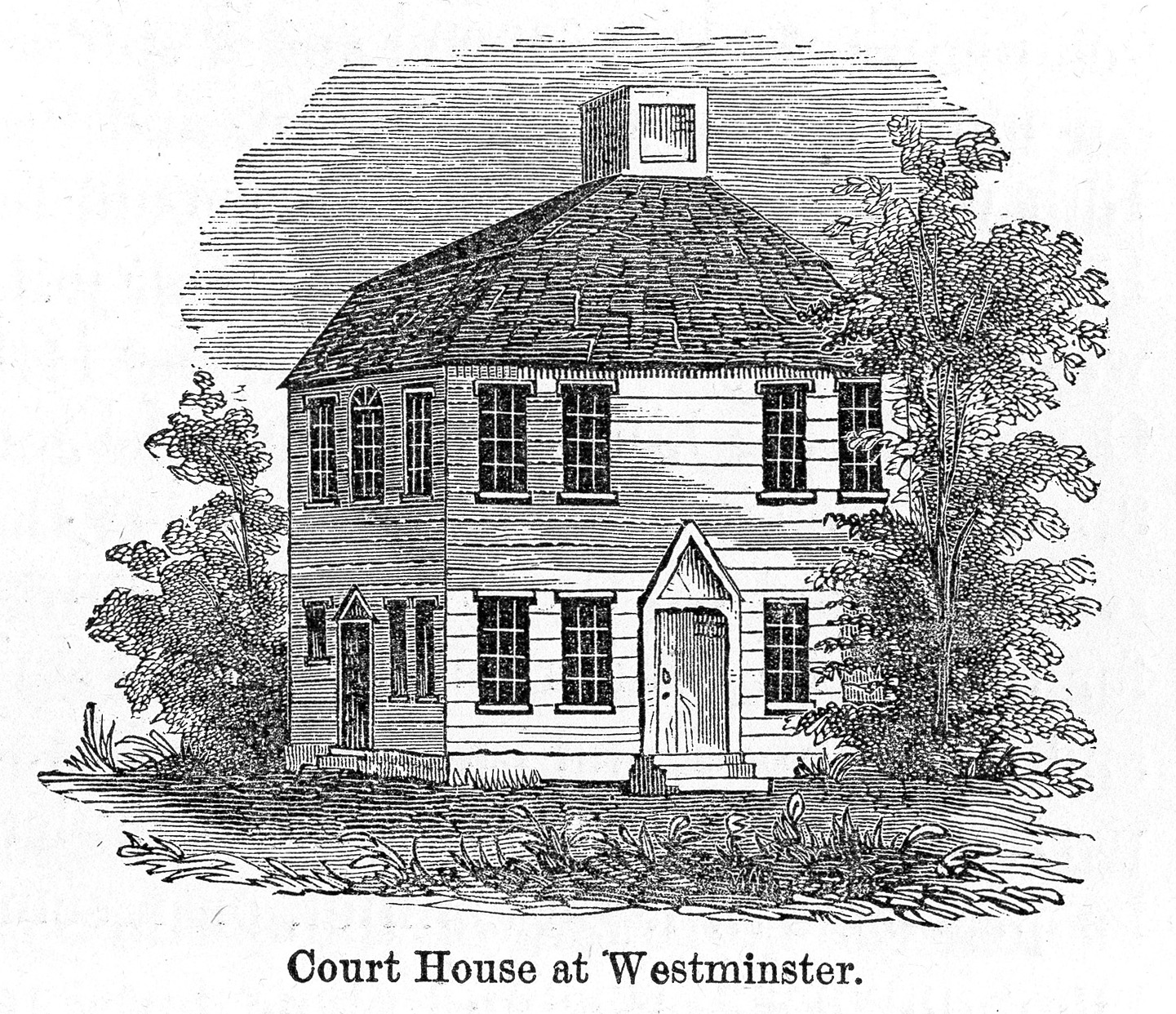
During the March 1775 fighting around the Westminster courthouse (shown above), Richard Hill aided the New York sheriff before being grabbed by the Green Mountain Boys. A Northampton committee set him free, and he hot-footed it to Boston.

As for John Hill, historians identify him as the man who was in New York City with William Cunningham on 6 March when they got into a fight with Patriots under the Liberty Pole. After being roughed up, Hill and Cunningham headed for Boston with their families. William Cunningham served as provost marshal there and later back in New York, becoming notorious among American prisoners of war.

In American Migrations, 1765-1799 Peter Wilson Coldham reports that David Cunningham was a baker in New York (earning £5 sterling per month, he said) who in 1775 was “forced to shelter at Westminster, a remote part of the country, with Mr. Richard Hill.” He may have been related to William Cunningham, but I found no indicators of that.

Charles Blasquet eludes me altogether. But it looks like Crean Brush hired men who had been his protégés in Westminster and/or his poorer relatives, and who had reasons to resent the Patriots.

TOMORROW: Search and seizure.

Monday, April 06, 2026

“All good Subjects will use their utmost Endeavors to have all such Articles convey’d”

When Crean Brush came to him after confiscating Cyrus Baldwin’s goods in March 1776, Gen. William Howe was looking ahead to the next phase of the war.

The British military was about to leave Boston. The American rebels lacked a lot of manufactured goods, from cannon down to woven cloth. Gen. Howe didn’t want them to find such useful material in the town.

In the coming days, the Royal Artillery would damage or spike all the cannon they left behind or pitch them into the water. Local Patriots would congratulate themselves on restoring those guns, but that took a lot of effort, and some of that ordnance was never as good again.

As for cloth, Gen. Howe issued this proclamation on 10 March:
By His Excellency
WILLIAM HOWE,
MAJOR GENERAL, &c. &c. &c.

AS Linnen and Woolen Goods are Articles much wanted by the Rebels, and would aid and assist them in their Rebellion, the Commander in Chief expects that all good Subjects will use their utmost Endeavors to have all such Articles convey’d from this Place:

Any who have not Opportunity to convey their Goods under their own Care, may deliver them on Board the Minerva at Hubbard’s Wharf, to Crean Brush, Esq: mark’d with their Names, who will give a Certificate of the Delivery, and will oblige himself to return them to the Owners, all unavoidable Accidents accepted.

If after this Notice any Person secretes or keeps in his Possession such Articles, he will be treated as a Favourer of Rebels.
That announcement was important enough to be printed, probably by John Howe (no relation).

Gen. Thomas Gage had already put Brush in charge of seizing abandoned property, but this order extended the New York lawyer’s mandate to cover linen and woolen from anyone in Boston.

TOMORROW: Assembling a team.

Sunday, April 05, 2026

The Weakness of Cyrus Baldwin’s Power of Attorney

As it became clear that the British military was about to pull out of Boston, Crean Brush moved to seize more property from absent townspeople, as Gen. Thomas Gage had commissioned him to do.

On the morning of 9 Mar 1776, Brush went to the store of Cyrus Baldwin, who had left for Woburn months before. Cyrus’s brother Loammi was even an officer in the Continental Army.

Baldwin’s neighbor, William Jackson, came out of the next shop, the Sign of the Brazen Head. He explained that Baldwin had asked him to look after his property, sending a power of attorney. Jackson had already chided people squatting in another nearby house for “the iniquity” of breaking into Baldwin’s.

Brush “pronounced Baldwin a rebel,” according to Benjamin H. Hall’s History of Eastern Vermont. He demanded that Jackson turn over the key he’d received from Baldwin’s clerk.

Back in 1770 the Sons of Liberty had declared William Jackson an enemy to his country for continuing to import goods from Britain. He had signed one complimentary address to a royal governor after another. He clearly leaned toward the Loyalist side. Nonetheless, Jackson felt honor bound to protect Baldwin’s property.

Jackson went off to find Gen. William Howe for support. Spotting an aide-de-camp, he lodged his complaint, explaining about the power of attorney. The officer sent an orderly sergeant back with Jackson to speak to Brush.

According to Jackson, however, the sergeant told Brush not to touch Jackson’s goods only. Jackson insisted that Baldwin’s goods should be protected as well. “Brush refused to receive the correction unless it was made in writing and by the proper authority.”

Jackson headed back to Gen. Howe’s headquarters, but this time he couldn’t get in to see anybody. By the end of the day Brush and his assistants had broken into the Baldwin storehouse and carted most of the contents to the brig Elizabeth.

According to a newspaper report in April 1776, William Jackson owned or chartered that ship for his departure from Boston. That looks like a mistake. Hall’s account says he ended up on that ship only because “he had determined to remain with his property”—and Baldwin’s property.

Meanwhile, Crean Brush got in to see Gen. Howe.

TOMORROW: A new commission.

Saturday, April 04, 2026

Crean Brush’s American Career

Yesterday’s post reported that among the people captured aboard the evacuation ship Elizabeth in April 1776 was Crean Brush.

Eric Wiser wrote a good article about Brush for the Journal of the American Revolution: “Hell’s Half-Acre: The Fall of Loyalist Crean Brush.” More information can be found in “Crean Brush vs. Ethan Allen: A Winner’s Tale” by John J. Duffy and Eugene A. Coyle, published in Vermont History (P.D.F. download). I’ll review just the main points here.

Brush came to America from county Tyrone in Ireland in the 1760s when he was in his thirties and already a widower. He soon established himself as a lawyer and government appointee in New York City.

Brush married Margaretha Schoolcraft, who had a daughter named Frances from her previous relationship with Capt. John Montresor, the British army engineer. (Some sources say this girl was Margaretha’s niece. Others give the girl’s surname as Montezuma. It seems clear those were cover stories.)

In 1772, after accumulating grants of tens of thousands of acres of frontier land, Brush moved his family to the new town of Westminster, New York, between Lake Champlain and the Connecticut River. Soon he was a leader of the new community, variously commissioner of the court, surrogate of the court, county clerk, and representative in the colonial legislature. Brush worked with Philip Schuyler to establish the rule of (New York) law in his new county.

Unfortunately for Brush, others had settled the same region with grants from New Hampshire that overlapped and competed with the grants from New York. These men, led by Ethan Allen, Seth Warner, and Remember Baker, called themselves the Green Mountain Boys. Brush called them the Bennington Mob, becoming an early opponent and target of that faction. The London government had approved New York’s side of that dispute, giving Brush more reason to support royal policies.

On 13 Mar 1775, while Brush was away at the legislature, there was a fatal fight around the Westminster courthouse. Then war broke out in Massachusetts. The Green Mountain Boys seized Fort Ticonderoga for the rebels. Brush realized the region wasn’t safe for him, and neither was his former home in New York City. The Brush family moved into besieged Boston.

On 1 October, Gen. Thomas Gage gave Brush a commission to collect goods from the buildings of people who had left Boston so they wouldn’t be damaged when British soldiers were lodged in those homes and warehouses. The general required Brush “to take all due Care thereof, and to deliver said Goods when called upon, to those to whom you shall have given Receipts for the same.”

What Brush really wanted, though, was the British commander’s approval for his scheme to raise a Loyalist regiment and take back his corner of New York from the Green Mountain Boys. Gage never authorized that, which probably saved Brush from dying in a futile battle. Still, Brush presented the same proposal to Gen. William Howe in early 1776, but he didn’t get any further before it was time to leave.

TOMORROW: Preparing to evacuate.

Friday, April 03, 2026

All Aboard the Elizabeth

When Cdre. John Manley captured the brigantine Elizabeth, evacuating from Boston, in April 1776, he saw that he’d hooked an important—and potentially lucrative—prize.

Manley sent some of the people aboard that ship to Gloucester on the Lee under Capt. Daniel Waters. He kept the rest on the Elizabeth and escorted that ship to Portsmouth, New Hampshire.  

That harbor was appropriate since it was the Elizabeth’s home port. Back in October 1775 H.M.S. George had captured that brig on its way back from Montserrat. The local merchant Richard Hart (c.1744–1820) was glad to see his ship return.

The Elizabeth was still carrying the seventeen hogsheads of rum and four hogsheads of sugar that it had picked up in the West Indies. And it was loaded with other cargo. There were household and mercantile goods that passengers were taking with them from Boston and, most valuably, a large quantity of linen and woolen cloth.

Sadly, the property on board the ship also included four enslaved people, listed in a public document a couple of months later as:
A negro man named Adam, John Rowe, Esq owner.
A negro man named Scip, Harrison Gray Esq: owner.
A negro woman named Belinder, Benjamin Austin Esq: owner.
A negro woman named Brada, a widow Kitpath, owner.
Rowe, Gray, and Austin were all rich Boston merchants, but they were in different political situations. Gray, also royal treasurer of Massachusetts, had left with the fleet. Austin was on the Patriot side. And Rowe was trying to find his usual place in the middle, having stayed in Boston through the siege but then stayed in town after the siege as well. (I can’t identify the widow.)

The Elizabeth was also carrying “a Serjeant & twelve privates of the 4th or Kings own Regiment,” who were now prisoners of war. At least some of those soldiers had wives and children with them.

In all, there were forty-six civilians on board the Elizabeth, including the ship’s captain, Peter Ramsey, and the crew. The most prominent of the Loyalist passengers were:
And Brush had made himself notorious inside besieged Boston.

TOMORROW: Where those woolens came from.

Wednesday, March 22, 2023

“Plundering of Houses &c. Increasing”

By 12 Mar 1776, the British military’s evacuation of Boston was dissolving into chaos in the eyes of merchant John Rowe, and the cannon were going off again:
A Continual Fire from Both sides this night

They are hurrying off all their Provisions & destroying & Mangling all Navigation

also Large Quantitys of Salt & other things they heave into the Sea & Scuttle the stores

I din’d & spent the Evening at home with—
The Revd. Mr. [Samuel] Parker Mr. [Jonathan] Warner & Richd. Green also Mrs. Rowe & Jack Rowe—

The Inhabitants are greatly terrifyed and Alarm’d for Fear of Greater Evils when the Troops Leave this distressed Place

I got Crean Brush Rect. for the Goods taken from Mee, but dont expect much Good from it tho severall Gentlemen Say they will be my Friend in this affair
By “be my Friend” Rowe meant those gentlemen would testify about his losses—though now he had a receipt as well.

Rowe dated his next entry “13 March Wednesday,” getting the date wrong—a sign of his distress:
I have Staid at home most part of this day—

The Confusion still Continues & Plundering of Houses &c. Increasing

Genl. [James] Robinson paid Me a Visit & Eat a Morsell of Provisions together with Richd. Green Mrs Rowe & Jack Rowe

The Sailors from the Ships have Broke Open my Stores on my Wharff & plunderd them— this was done at Noon this day—

This morning A house was burnt at the North End, whether Set on Fire on Purpose or from Accident Seems Uncertain—

a Considerable Number of Cannon fir’d in the night from Both Sides—

The Country People throwing up more Entrenchments &c on Dorchester Neck—

(I dind at home with Genl. Robertson—Mr. Richd. Green Mrs. Rowe & Jack—) and spent the Evening at home with the Revd. Mr. Saml. Parker Mr. Warner Mr. Richd Greene & Mrs. Rowe
On Thursday, 14 March, Rowe realized he’d made the dating error and corrected himself. This day brought “Snow & Sleet” and a cold wind:
This night much damage has been done to Many houses & stores in this Town & many valuable Articles stolen & Destroyed—

Stole out of Wm. Perrys Store a Quantity of Tea Rum & Sugar to the value of £120 Sterling

Mr. Saml. Quincys house broke & great Destruction The Revd. Mr. Wm. Walters also the Revd. Dr. [Henry] Caners & many others
Samuel Quincy had left Boston months before, so his house was vulnerable. But the ministers had stayed out the siege and presumably didn’t have mercantile goods to carry away.

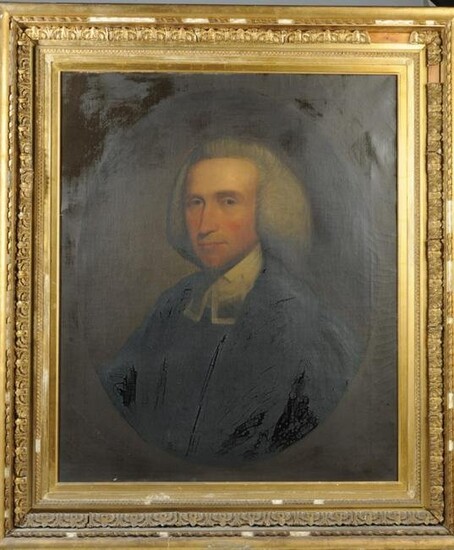
The picture above shows the Rev. William Walter, Anglican minister at Boston’s Trinity Church (1767–1776) and Christ Church (1791–1800). It was sold at auction in 2021.

TOMORROW: The expected departure date.

Tuesday, March 21, 2023

“They Stole many things & plunder’d my Store”

John Rowe reported that Monday, 11 Mar 1776, brought “Gloomy heavy Weather,” and his mood wasn’t any better.

The day before, as quoted yesterday, Gen. William Howe issued a proclamation requiring everyone with “Linnen and Woolen Goods” to turn them over to the evacuating army lest they fall into Continental hands.

That proclamation promised that the New York merchant Crean Brush (shown here) “will give a Certificate of the Delivery, and will oblige himself to return them to the Owners.” But if people didn’t comply, they risked being treated as rebel sympathizers.

Rowe appears to have been surprised that this proclamation applied to him, too. His 11 March diary entry says:

This morning I Rose very Early and very Luckily went to my Warehouse

when I Came there I found Mr. Crian Brush with an Order & party from the Genl. who were just going to Break Open the Warehouse which I prevented by Sending for the Keys & Opening the Doors—

They took from Mee to the Value of Twenty Two hundred & Sixty Pounds Sterling According to the best Calculation I Could make in Linnens Checks Cloths & Woollens—

This Party behaved very Insolently & with Great Rapacity & I am very well Convinc’d exceeding their orders to a Great Degree They Stole many things & plunder’d my Store. Words cannot Describe it

This Party consisted of Mr. Blasswitch who was one of the Canceaux people [i.e., an officer on H.M.S. Canceaux] Mr. Brush the Provost Mr. [William] Cunningham A Refugee Mr. [James or Peter] Welch The Provost Deputy—A Man nam’d [William] Hill & abo. fifteen Soldiers—with others—

I Remained all Day in the store but Could not hinder their Destruction of my Goods This day I Got a piece of Bread & one Draft of Flip

I Spent the Evening at home with Mr. [Samuel] Parker Rich’d Green Mr. [Jonathan] Warner of Portsmouth who assisted Mee very much with Mrs. Rowe & Jack Rowe

They are making the Utmost Speed to get away & carrying Ammunition Cannon & every thing they Can away taking all things they meet with never asking who is Owner or whose Property making havock in Every house & Destruction of All kinds of Furniture

There never was Such Destruction & Outrage committed any day before this Many other People have suffer’d the Same Fate as Mee— Particularly—
Mr. Saml. Austin Mr. John Scolly Capt. [Samuel] Partridge Capt. [Samuel] Dashwood Mr. Cyrus Baldwin The Widow [Mary] Newman
In May 1776, Austin, Scollay, Partridge, Dashwood, and Rowe petitioned the Continental Congress to speak up for them about their confiscated goods. But there was a war on.

Nine years later, in 1785, Rowe, Partridge, Dashwood, and Austin sought help from Gov. James Bowdoin and American minister John Adams in gaining redress from Britain. (I don’t know why Scollay dropped out; he was still alive at the time.)

Responding to a similar claim from Dr. Thomas Bulfinch, Adams wrote back on 13 Oct 1786:
I have not yet presented any of these Claims at Court, because there is not even a Possibility of their being regarded— . . . I frankly own I do not think, that the Dignity or the faith of the United States ought ever to have been compromised in these Matters—
If those Boston merchants had left with the British military, they might have regained their property after landing in Halifax. But they did, after all, show themselves to be rebel sympathizers.

TOMORROW: A receipt, and more disorder.

Monday, March 20, 2023

“Utmost Endeavors to have all such Articles convey’d from this Place”

Here’s merchant John Rowe’s diary entry for Sunday, 10 Mar 1776:
Capn. Dawson is Returnd with Two Vessells—he has had a severe Brush with four Privateers.
George Dawson commanded H.M.S. Hope, a schooner with four guns and thirty crewmen. On 30 January he had nearly caught or killed the first Continental naval hero, John Manley, as described here.

Rowe seems to sympathize with Dawson rather than the Patriots on the two ships he had captured, or the four “Privateers” that had tried to capture him. He went on:
I staid at home all Day—

A Proclamation came Out from Genl. How this day a very severe one, on Some People
In writing he stayed home, Rowe meant he didn’t go to church, though he did have the Rev. Samuel Parker over that evening.

That proclamation from Gen. William Howe appears here at the Journal of the American Revolution:
As Linnen and Woolen Goods are Articles much wanted by the Rebels, and would aid and assist them in their Rebellion, the Commander in Chief expects that all good Subjects will use their utmost Endeavors to have all such Articles convey’d from this Place:

Any who have not Opportunity to convey their Goods under their own Care, may deliver them on Board the Minerva at Hubbard’s Wharf, to Crean Brush, Esq; marked with their Names, who will give a Certificate of the Delivery, and will oblige himself to return them to the Owners, all unavoidable Accidents excepted.

If after this Notice any Person secretes or keeps in his Possession such Articles, he will be treated as a Favourer of Rebels.
So now we know what happened to the Minerva, the ship that Rowe had noted the army had impressed the day before.

When Rowe called Howe’s proclamation “very severe…on Some People,” he was downplaying how that could be severe on him. As a merchant, he owned a lot of cloth. But perhaps he thought he could get away with keeping most of it.

The general’s order not to leave any cloth in Boston sheds light on the rest of Rowe’s diary entry for 10 March:
John Inman Went on board this day—with his Wife he has in his Possession three Watches of mine & Sundry Pieces of Checks which was to be made into Shirts—

Jos Goldthwait Mrs. Winslow went on board this day—he has Carried off Capn. Linzees horse witho. Paying for him
John Linzee was a captain in the Royal Navy who had married Rowe’s niece and remained a good friend. Goldthwait wasn’t just a horse thief; he was commissary for the king’s troops, and undoubtedly wanted to preserve that animal from the rebels as well.

TOMORROW: A brush with Brush.

Saturday, January 31, 2015

More Woes for Cyrus Baldwin

Guest blogger Chris Hurley finishes up his look at the merchant Cyrus Baldwin.

This series so far has revolved around one incident: how Cyrus Baldwin’s 26 pounds of (technically non-odious) Bohea tea was stolen from his brother’s cart near Winter Hill on 4 Jan 1774 and dumped in the river by some who “tho’t it an Insult to be sent through their Town.” The Charlestown Committee of Correspondence refused to involve themselves in the matter.

Baldwin continued to have difficulties as the war approached. His 24 Oct 1774 ad in the Boston Gazette carried a postscript assuring people he was “neither Addresser, Protester, nor Roman Catholick”—suggesting some were saying he was a Loyalist or worse. A 6 Mar 1775 ad in the same newspaper saw him distressed, selling his English and Scotch goods at “50 per cent from the Sterling Cost.”

On 2 May 1776, after the siege of Boston, Baldwin’s ad in the New-England Chronicle indicates that his Boston shop had been looted by the evacuating British troops (and Crean Brush likely). It said that “he once more requests all those who are indebted to him on note, book or otherwise to make speedy payment to him at Woburn, where”—being the indefatigable merchant he was—he was selling sugar, rum, coffee, and “sundry other articles.”

But those setbacks were nothing compared to what Cyrus Baldwin suffered back at Winter Hill in 1784. That was still a sparsely settled stretch on the road between Charlestown and Medford, all but unavoidable if one was traveling to Woburn. Boston’s Continental Journal of 29 July reported:
Mr. Cyrus Baldwin of Woburn, crossing Winter Hill, was attacked by three foot pads who robbed him of his watch and money and, after abusing him very much, made off.
Boston’s Independent Ledger for 26 July had more detail. In addition to robbing Baldwin of 14 shillings and his pinchbeck watch—which this article described very thoroughly—the criminals had beaten Baldwin badly:
during the greatest part of the time they were stripping him, one of the villians was dealing very heavy blows with a club on the left side of his head, and cut his scalp in several places: ’tis hoped they will not prove mortal
The wounds did not prove mortal. And in a stroke of good luck for justice, the theives were apprehended after a subsequent unsuccessful attack on another man. The Continental Journal stated:
At the house where they were concealed was found the watch, purse, pocket-book, &c. of which Mr. Baldwin was robbed.
This time, unlike 1774, the law prosecuted the attack on Winter Hill. The 23 Nov 1784 Connecticut Courant of Hartford reported:
Boston, November 15. Thursday next Barrack and Sullivan, who robbed Mr. Cyrus Baldwin on Winter-hill, and who attempted to rob Major John Swan on Boston neck, as lately mentioned, are to be executed at Cambridge—
(The 27 July Salem Gazette and other Massachusetts papers had reported the second victim was James Swan, shown above.)

The 24 November Massachusetts Spy confirmed the sentence was carried out:
On Thursday last were executed at Cambridge, pursuant to their sentence,…Richard Barrack and John Sullivan for highway-robbery.
Six years later, Cyrus Baldwin died of drowning in Dunstable; that day, 5 Nov 1790, was his fiftieth birthday.

Samuel Thompson of Woburn wrote in his diary two days afterward: “Cyrus Baldwin, Esquire’s, corpse brought to Woburn.” In all the news items and advertisements examined for this story, I never saw Cyrus Baldwin honored with the sobriquet “Esquire” until his death. But that was how the Herald of Freedom reported him on 9 November:
Died]—at Dunstable, the 4th inst. CYRUS BALDWIN, Esq. formerly of Boston.—His funeral will be this afternoon, at two o’clock, from the house of his brother Loammi Baldwin, Esq. at Woburn—where the friends and acquantence of the deceased are desired to attend.
And thus ends the luckless story of Cyrus Baldwin. Thanks for sharing his ups and (mostly) downs, Chris Hurley!

Monday, April 07, 2008

Escaping Tories Captured at Sea

While the British army and navy sailed away from Boston on 17 Mar 1776, they didn’t go far at first. Capt. John Barker reported the long departure in his diary:

After remaining 2 or 3 days at King Road and blowing up the Castle, the fleet fell down the Harbour to Nantasket; the Centurion left at King Road, the Rebels brought Guns [and fire]d at her without effect. The Fleet preparing for Sea, taking in Water, &c.
A naval officer patrolling the area wrote on 23 March:
The bay swarms with American privateers, but we hope to protect the transports, which are daily expected from the West Indies, and to send them safe to Halifax.
Inevitably, some of the evacuating merchant ships became separated from the main fleet and vulnerable to those New England privateers. Boston businessman and court official Ezekiel Price, still at his refuge in Stoughton, recorded this news on 6 April:
Ed. Quincy…came from Boston, and says that Captain [John] Manley was in Boston, and told there that he had taken out of the fleet a brig laden with Tories and Tory goods, and other effects, which they plundered in Boston. Among the Tories is Bill Jackson.
According to the 8 April Boston Gazette, William Jackson was the new owner of the ship Manly had captured, a prize estimated to be worth £35,000 with the goods aboard. A brazier, or maker and seller of brass goods, Jackson had become notorious for defying the Whigs’ nonimportation boycott in 1769-70. He may have been unpopular even before then since the fire that destroyed the center of town in 1760 had started in his store, the sign of the Brazen Head. However, Jackson had not held appointments under the royal government, and therefore the new authorities couldn’t convict him of anything. After getting out of jail, he tried to settle back into life in Boston.

Three days later, Price added:
At noon, a traveller from below says that he heard Captain [Adino] Paddock and Captain [John] Gore were among the Tories taken in the transport brig by Captain Manley. Afterwards several other travellers from below passed; but they did not hear of Paddock or Gore being in that vessel, and no other of note but Bill Jackson and Crane Brush.

Yesterday the remains of Dr. [Joseph] Warren were re-interred in Boston with every mark of honor and respect that was possible to be exhibited.
Paddock and Gore, two militia officers who had sided with the king, indeed avoided capture. They landed safely at Halifax, then sailed on to London, where they roomed together. Paddock eventually settled on the Isle of Jersey while Gore came back to Boston in the late 1780s.

Also on board that ship, according to the Gazette, were “a number of others, women and children,...besides a Serjeant and 12 privates of the king’s own [4th] regiment, who are made prisoners.”

But the really big prize was Crean Brush, who had been appointed by Gen. Thomas Gage to take charge of goods that might be useful to the military. The Patriot authorities clapped him in Boston jail and kept him there over a year, even though they were unable to convict him for looting because he’d had government authority.

I’ll have more to say on Jackson and Brush’s ultimate fates. You can track the story of Dr. Warren’s remains here. The engraving of Capt. Manly above comes from the Surface Navy Association’s Hall of Fame.