J. L. BELL is a Massachusetts writer who specializes in (among other things) the start of the American Revolution in and around Boston. He is particularly interested in the experiences of children in 1765-75. He has published scholarly papers and popular articles for both children and adults. He was consultant for an episode of History Detectives, and contributed to a display at Minute Man National Historic Park.

Subscribe thru Follow.it


•••••••••••••••••


Showing posts with label libraries. Show all posts

Thursday, September 17, 2026

“The Prize Papers of the American War” Workshop, 8 Oct.

On Friday, 8 October, the Prize Papers Project at Britain’s National Archives will host an international symposium on “The Prize Papers of the American War of Independence.”

Online registration to this event is available, but folks should know that it will take place in London. The discourse will start at 4:30 A.M., Boston time.

The workshop description says:
Bringing together specialists on prize law, the American War of Independence and the Prize Papers, the workshop approaches the collection as a transnational archive of wartime capture and its afterlives. The workshop creates a forum for sustained international exchange and collaboration.

The year 2026 marks the 250th anniversary of both the Declaration of Independence of the United States of America in July and the opening of the British Vice-Admiralty Court in newly-captured New York City in September 1776. Although exceptionally rich, the prize papers of this court have been largely inaccessible. The newly catalogued papers of the New York court (and its mother-court in London) provide new perspectives on the War of Independence at sea, and on lived experiences of the time, through the intercepted papers and letters found by the British on merchant and fighting ships.

Maritime warfare was central to the War of Independence. Controlling, disrupting, and capturing shipping was crucial to the war on both sides. America started privateering early, in 1775, and sought new (previously forbidden) trading partners. From 1778, French naval and privateering activity expanded the war against Britain, followed by Spain and the Netherlands. British naval forces and loyalist privateers sought to stop American and allied shipping, enforce their imperial authority, and weaken the Continental cause. The conflict eventually extended far beyond the North American seaboard.

An initial group of papers from 150 captured ships, American or supporting America, will be published online on 8 October in the Prize Papers Portal, the open-access online database of the Prize Papers Project. . . . Major bodies of captured material from American, French, Spanish, Dutch and recaptured British vessels will be published in the coming months and years…
Presentations schduled for 8 October include:
  • Amanda Bevan & Luan Cakolli: “A Voyage of Discovery and Delivery … and what we’re learning along the way”
  • Suzanne Foxley: “American Experience of British Prize Law”
  • Séverine Angers: “Write to me by different ships as the English capture many”
  • Randolph Cock: “Piecing Together Clues from the U.S.S. Lexington, 1777: A Whodunnit”
  • Rebekah Harbord: “Behind the Scenes: Preparing documents from the Prize Papers for digitisation”
  • Bethany Groff Dorau: “‘Taken by 64 Guns’: A Case Study of Dalton Marine Captain Offin Boardman”
  • Christopher Minty: “‘False & Colourable’: The Brigantine Adventure and the Paper War of the American Revolution”
  • Abby Mullen: “Mutiny or Loyalty?: Revolt from the Enemy in American Prizes”
  • Graham Moore: “Revolution 250: Exhibiting the Prize Papers at The National Archives”
  • John Beiner & Lucas Haasis: “History at the Helm: The Prize Papers and the Making of the Videogame Ahoy”
The keynote address to close out Friday will be delivered by Nathan Perl-Rosenthal, author of The Age of Revolutions and the Generations Who Made It (Basic Books, 2024).

The Prize Papers Project is run by the National Archives, U.K., and the University of Oldenburg, Germany. Other organizers of this event are the German Maritime Museum Bremerhaven and the German Historical Institute London. The workshop will be hosted by Nele Popp, Amanda Bevan, Oliver Finnegan, and Lucas Haasis.

This symposium occurs alongside an exhibit at the National Archives in Kew titled “Revolution 250: America's Independence Story 1763–1783,” which will run through 29 November.

Wednesday, September 09, 2026

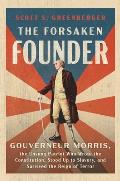
Forsaken and Lost Founders at the Athenaeum

This month the Boston Athenaeum will host two presentations about Founders less known to the public than the big six. To forget one Founder may be a misfortune, but to lose memory of two would be sheer carelessness.

16 September, 6 to 7 P.M.
The Forsaken Founder
Scott S. Greenberger

When George Washington and the Continental Army faced starvation, he turned to Gouverneur Morris to help devise a plan to provision the troops. When the fledgling nation needed a financial system to sustain the Revolution, Morris again was called upon to help design its first national bank and currency.

When the compromises between North and South, large states and small, had to be stitched into a single governing document, the task of shaping the Constitution’s final language fell largely to him. At the Constitutional Convention, Morris spoke more often than any delegate save James Madison—and more forcefully against slavery. When Alexander Hamilton died in a tragic duel, his widow insisted that Hamilton’s closest friend, Gouverneur Morris, deliver the eulogy.

Morris continued to serve the republic after its founding as envoy to France during the Revolution and Reign of Terror, and as an early visionary who grasped that New York, not Philadelphia, could become the nation’s economic capital if a canal opened the interior to the sea.

In this deeply researched biography, The Forsaken Founder, Scott Greenberger restores this indispensable figure to history and asks why one of the most prescient and principled founders faded from memory. Was it his uncompromising opposition to slavery? His unapologetic aristocratic style? His belief that liberty required structure as well as passion?

Scott S. Greenberger is coauthor of the New York Times bestseller Critical: What We Can Do About the Health-Care Crisis and author of The Unexpected President: The Life and Times of Chester A. Arthur. Currently the executive editor of Stateline, he has been a newspaper reporter at the Austin American-Statesman and the Boston Globe. Greenberger has a bachelor’s degree in history from Yale University and a master’s degree in international relations from George Washington University.

Tickets are required for this event. Athenaeum members can attend with up to three guests at no cost. Visitor tickets are $20.

28 September, 6 to 7 P.M.
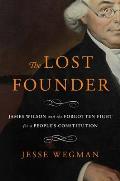
The Lost Founder
Jesse Wegman

As a young lawyer, James Wilson made a celebrated case for American independence in an essay that inspired the famous words “We hold these truths to be self-evident, that all men are created equal.” He wrote the first draft of the Constitution and, along with the more famous James Madison, played perhaps the essential role in its ultimate creation.

Wilson believed that the people are the ultimate source of all power. He argued successfully for a strong central government and a powerful presidency, and fought unsuccessfully for a direct vote for the President and the Senate. Appointed as a justice to the first Supreme Court, he was later brought down by reckless land speculation and died of malaria in the back room of a North Carolina tavern while hiding from his creditors.

Instead of being remembered as one of the nation’s great political thinkers, Wilson was virtually written out of history. But in The Lost Founder, Wegman brings to life the most prescient of the earliest patriots and makes a convincing argument that scandal should not diminish the life and impact of a brilliant, complicated man whose vision for his country could not be more relevant today.

Jesse Wegman is a senior fellow at the Brennan Center for Justice, where he works with the Kohlberg Center on the U.S. Supreme Court and the Future of the Constitution Advisory Committee. From 2013 through 2025, Wegman was a member of the New York Times editorial board. His work was part of a package that won the Pulitzer Prize for Public Service in 2018. Wegman is the author of Let the People Pick the President: The Case for Abolishing the Electoral College.

Tickets are required for this event. Athenaeum members can attend with up to three guests at no cost. Visitor tickets are $20.

Wednesday, July 29, 2026

Dickinson Seeking “a happy & permanent Reconciliation”

The William & Mary Quarterly had a big Sestercentennial scoop in its July 2026 issue—so big that it made those newly discovered documents available online for a limited time ahead of publication. 

The documents are two long 1775 letters and an enclosure from Pennsylvania politician John Dickinson to David Barclay, a British merchant and banker (shown here).

In 1775 the Continental Congress assigned Dickinson the task of drafting the Olive Branch Petition. He also reworked Thomas Jefferson’s prose in the Declaration of the Causes and Necessity of Taking Up Arms. The first text sought a reconciliation with the Crown in traditional fashion, the second explained publicly why the young war was justified.

Together those texts show the balancing act Dickinson was trying to pull off. He believed in the American resistance to Parliament’s new measures, in which he had played a leading role, and he also believed in the danger of splitting completely from Britain.

Dickinson dated the first of the newly surfaced letters on 5 Aug 1775. It shared his (not always accurate) description of the war so far, emphasizing how the Crown was unlikely to prevail without both sides suffering great harm. Then came his draft bill for reworking the constitutional relationship between Britain and its colonies and calming people’s “Fears & Jealousies.”

Those two documents were written out by a secretary for Dickinson’s edits and signature. The second letter, finished 28 October, is in Dickinson’s own messy, reconsidered writing. By then, though he didn’t know it, George III and the government had dismissed the Olive Branch Petition without looking at it, declared all the colonies at the Congress to be in rebellion, and promised a forceful response. Dickinson’s proposal had arrived too late to do any good.

According to the New York Times, these letters remained in the Barclay family, coming into the hands of his great-great-great-great-great-nephew, Humphrey Barclay. In 2024 he showed them to book and manuscript specialist Donovan Rees, who realized their importance. Dickinson’s initiative isn’t mentioned in any other source—both he and Barclay were working backchannels, so they kept their correspondence quiet. Dickinson even put a postscript on the first letter asking Barclay not to print it or give anyone a copy.

On behalf of the Barclay family, Rees offered to sell the three documents to the U.S. Library of Congress, but it didn’t meet the asking price. (It’s unclear when that discussion took place, but the Library of Congress has been under dire pressure at times in the last couple of years. There’s an ongoing legal dispute over whether the President’s criminal-defense lawyer and current acting U.S. Attorney General is also the acting Librarian of Congress.)

The documents were then purchased by Harvard professor Eric Nelson, author of The Royalist Revolution: Monarchy and the American Founding among other books. Nelson generously makes manuscripts in his collection available to researchers.

Prof. Jonathan Gienapp of Stanford and Dr. Jane E. Calvert of the John Dickinson Writings Project prepared transcripts of the documents for analysis and publication. The William & Mary Quarterly organized a forum of scholars to discuss their implications in short essays appearing in that July issue.

For a good primer on these Dickinson letters, see Calvert and Gienapp’s article “The Secret Effort to Prevent the Revolution.”

TOMORROW: Hurt feelings.

Sunday, June 14, 2026

Forgetting the Faiths of New England’s Revolutionary Founders

Thomas Lecaque, professor of history at Grand View University in Iowa, wrote at Religion Dispatches about the Pentagon’s recent move to “reduce the list from over 200 unmanageable categories to 31.”

After pointing out several ways the administration has promoted Christian nationalism over other religious approaches, Lecaque wrote:
[Assistant to the Secretary of Defense for Public Affairs Sean] Parnell’s statement feints at pluralistic neutrality, but stating that the Chaplain Corps is there to “provide the best spiritual care to our warfighters” suggests that what military personnel of all (real) religious backgrounds—which includes lots of kinds of Christians; agnostics, atheists, and Other Religions-ists; as well as Sikhs, Jews, Muslims (that one had to hurt), Hindus, Buddhists, and Baha’i—are really entitled to is Christianity-inflected pastoral care.

Guess who didn’t make the list, though?

Unitarian Universalists, Congregationalists, and Deists. Which, if you’re keeping score at home, you’ll recognize as the religious affiliations of Founding Fathers John Adams, Samuel Adams, Benjamin Rush, Paul Revere, Ethan Allen, Benjamin Franklin, Thomas Paine, Hugh Williamson, James Wilson—and possibly of Thomas Jefferson, James Monroe, and George Washington (who were raised Anglican, and, as historians have noted, demonstrated Unitarian, Deist, and/or semi-secular leanings).
This decision seems to reflect both the prejudices and the ignorance of Defense Secretary Pete Hegseth, who back in April solemnly read out quasi-Biblical lines from the Japanese action movie Karate Kiba, filtered through the U.S. action movie Pulp Fiction.

Lecaque went on to say, “We could argue these exclusions don’t matter—in a country that ‘to bigotry gives no sanction, to persecution no assistance,’ the Founders’ religious commitments (or lack thereof) should be immaterial.” He thus correctly quoted President Washington’s letter to the Touro synagogue in Newport. “But for an administration whose officers and supporters keep talking about Originalism as if it’s real (it’s not), people trying to wrap this country in the flag and the cross for its birthday party, the irony and hypocrisy somehow still manage to sting amidst larger horrors.”

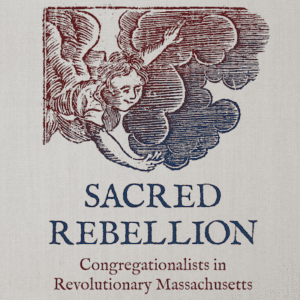
Meanwhile, the Congregational Library in Boston has announced it will reopen its free exhibition “Sacred Rebellion: Congregationalists in Revolutionary Massachusetts” on eight dates in June, July, and August. On each of those days there will also be a curator’s tour for $5 at 1 P.M.

Monday, May 18, 2026

“In what a defenceless State we still remain”

I was preparing to write about a document from the Samuel Adams Papers at the New York Public Library, digitized as “Letter from John Scollay” dated 22 Apr 1776.

But after taking a closer look, I realized that only the first two four pages at that link come from a letter by selectman John Scollay. And the first two pages of Scollay’s letter are at this link, called “Letter from William Davis”—which is indeed accurate for the first two of four pages there.

The file called “Letter from John Scollay” also contains a two-page letter from the Rev. Samuel Cooper, dated 29 Apr 1776. His signature is abbreviated, but the handwriting matches Cooper’s other letters in this collection.

The Cooper letter closes by saying he’d recently written to John Hancock and John Adams. The letter to Hancock isn’t listed in the John Hancock Papers project, so it probably hasn’t survived. But the Adams Papers does offer a 22 April letter from Cooper matching the style and concerns as the letter to Samuel Adams.

In particular, Cooper told John Adams he was worried about Boston’s defenses:
After so many Weeks Possession of this Town you would be surpriz’d to see in what a defenceless State we still remain. The Business of Fortifying has lain between Genl. [Artemas] Ward and a Committee of the General Court: Between them both, little or nothing has yet been done. We have but 7 or 8 Guns mounted on Fort Hill. Nothing yet done on any Island in the Harbor.

A British Ship of 40 or 50 Guns with two or three small arm’d Vessells are in Possession of King Road and Nantasket. They take or drive away almost all supplies coming to us by Water; and (would you believe it!) with this inconsiderable Force the Harbor has been, and is now effectually block’d up. Two or three Ships of War have had it in their Pow’r ever since the Evacuation of the Town to come up and cannonade it.
That warship’s primary mission was to stop other British ships from going into the harbor unaware that it waw now in rebel hands. But of course Cooper and other Bostonians couldn’t be sure it wouldn’t attack.
Ward complains that too small a Force, but 5 Regiments not full, were left him. The Court blame him for Inactivity, and He them. I was pleas’d to see your Letters and others from Gentlemen of the Congress mentioning the Importance of putting this Harbor into the best State of Defence. Pray write again and again to press this Matter.

There is a Report here that Ward has desir’d to resign. I wish from my Heart He would do it. He is a good Man, a thoro N. England man, and dispos’d to do us ev’ry Service in his Power. But He certainly wants Decision and Activity. It is of absolute Necessity that some General Officer of the best Qualities be sent to this Department immediately. Pray let [Nathanael] Green or some other be plac’d here.

We are in the utmost Hazard, should the Enemy return, of loosing in this Quarter much more than we have gain’d, by the Departure of the British Forces. Had there been a Man here, at the Head of the Military who would have discern’d at once what was proper to be done; and stated it to the Court, we might have been in a good Posture of Defence Weeks ago.
Ward had indeed put in his resignation on the grounds of ill health, then asked to remain so he could help Massachusetts rebuild. Cooper wasn’t the only local to say Ward moved too slowly. When the minister wrote this letter, however, it had been less than three weeks since Gen. George Washington had departed and left Ward in charge. It therefore doesn’t seem fair to suggest Boston could have been fortified against ocean attack “Weeks ago.”

Saturday, May 09, 2026

Declarations of Independence around Boston—Collect Them All!

To commemorate the 250th anniversary of the Declaration of Independence, multiple institutions in greater Boston have collaborated to lay out a Declarations Trail—exhibits of different significant copies of that document.

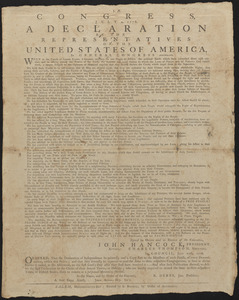
The Leventhal Map Center at the Boston Public Library has opened “Declarations: Printing a New Nation” with eight printings from broadsides and newspapers, along with maps showing the spread of that news. It will be up through 13 September. Shown here is the library’s copy of the Declaration as printed by Ezekiel Russell for the newly independent Massachusetts government.

The Boston Athenaeum exhibit “Imagined Nation” displays early printings in the context of such items as George Washington’s copy of Thomas Paine’s Common Sense, maps of the young republic, and World War II–era posters. That runs through November.

The Massachusetts Historical Society’s “1776: Declaring Independence” display, up through December, includes “handwritten copies of the Declaration by John Adams and Thomas Jefferson as well as multiple early printings, including a rare Dunlap broadside.” That was the first official presentation of the text, commissioned from printer John Dunlap by the Continental Congress in July 1776.

In Cambridge, three parts of the Harvard University library system are creating linked displays. The university archives is offering “Harvard and the American Revolution.” Next week the Harvard Map Collection will open “Charting Independence.” And starting on 18 May the Houghton Library will host “War of Words,” a display assembled by curator John Overholt to feature “the posters, pamphlets, newspapers, and images that brought news of the American Revolution to those who lived through it.”

In addition to the sites on the Declarations Trail, the Commonwealth Museum regularly displays Mary Katherine Goddard’s official reprinting of the Declaration signed by John Hancock and sent to the state in 1777.

And the “The Road to Revolution: Massachusetts and the Independence Movement” exhibit in Revolutionary Spaces’s Old State House, drawing on material from the M.H.S., includes a “rare 1776 Boston broadside printing of the Declaration of Independence.”

Most of those exhibits are free to the public. Many have special tours, talks, and workshops scheduled as well.

In a parallel initiative, five Revoloutionary-era institutions with admission fees—the Paul Revere House, Old State House, Old North Church, Old South Meeting-House, and King’s Chapel—have combined to offer visitors the Boston 250 Pass with a 10% on regular adult admission.

Thursday, April 30, 2026

“Now in his majesty’s Goal in Boston” in January 1775

Yesterday I illustrated a posting that quoted Boston jailer Joseph Otis’s list of prisoners with a small image of such a list.

However, that picture didn’t show the list I quoted from 1777, which is reportedly at the Boston Public Library. I couldn’t find a digital image of that document.

Instead, I ran an image of Otis’s list of prisoners from 3 Jan 1775, in the collection of the Newberry Library in Chicago.

That list includes Samuel Dyer, whom I wrote about in these articles, so I was eager to see if this source said anything more about him. It says he was being held for assault and battery, though he had clearly tried to murder two British army officers. 

But before I got to Dyer my eye fell on the top of the list.

First name on list is John Bell, held for Breach of Peace
The first prisoner was “John Bell,” held for “Breach of Peace.” I’m taking that personally.

Wednesday, March 11, 2026

Events about Washington in Boston and Cambridge

Here are two events accessible online in the next two days that explore the start and peak of George Washington’s national career.

Wednesday, 11 March, 6 to 7 P.M.
The Siege of Boston: An Ending and Beginning
online via the Boston Public Library

National Park Service rangers will explore the siege of Boston—its origins, impacts, and conclusion—and how the departure of the British military from Boston would influence the pivotal year of 1776 and the rest of the Revolutionary War. Register here.

Thursday, 12 March, 6 to 7:30 P.M.
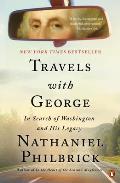
Travels with George: In Search of Washington and His Legacy
Cambridge Public Library in-person and online

Retrace President Washington’s post-inaugural journeys and explore how he sought to unite a fragile new nation, featuring:
  • Peter Drummey, Chief Historian of the Massachusetts Historical Society (ret.) 
  • Nathaniel Philbrick, author of Travels with George: In Search of Washington and His Legacy, along with many other New York Times bestselling books
The public is welcome to attend this event in the library auditorium or register to watch online through this page.

Tuesday, March 03, 2026

“Touch-screen displays, Revolutionary War artifacts, and A.I. slop”

Among the Trump administration’s Sestercentennial initiatives are modern gladiatorial games outside the White House on the President’s birthday. Less decadently imperial are the Freedom Trucks mentioned yesterday.

These trucks were clearly inspired by the Freedom Train that traveled the country in 1947–49, giving citizens a look at 127 documents from the National Archives and other artifacts.

The most detailed list of those documents that I found is a Huntington Library catalogue description of “Heritage of Freedom,” the booklet given out to explain those items to visitors. The selection didn’t include the handwritten Declaration of Independence, Articles of Confederation, or Constitution, but it did have the Congress-approved Bill of Rights, George Washington’s copy of the printed Constitution, and various letters and pamphlets from the Founding era. The display went back as far as the Magna Carta and Christopher Columbus, and as recently as the surrender of Germany and Japan.

The 1940s Freedom Train previously inspired the American Freedom Train of the Bicentennial period, 1975–76. This one carried Washington’s copy of the Constitution again, the original Louisiana Purchase, and other documents, but also one of Judy Garland’s dresses from The Wizard of Oz, Martin Luther King Jr.’s pulpit, and a Moon rock. It was like a rolling Smithsonian.

What will be in the Freedom Trucks? The New York Times reported:
The truck exhibits were designed in collaboration with Hillsdale College, a conservative school in Michigan, and PragerU, a company that makes conservative educational materials. . . . The trucks prominently feature quotes from Mr. Trump and a video he filmed inside the Oval Office.
On 27 February, the New Yorker offered a story by Jessica Winter about PragerU’s projects:
Last year, PragerU unveiled the Founders Museum, a “partnership” with the White House and the U.S. Department of Education featuring A.I.-generated video testimonials from luminaries of the American Revolution. These include a digitized John Adams who ventriloquizes the words of the right-wing influencer Ben Shapiro, almost verbatim: “Facts do not care about our feelings.”

PragerU is also supplying the multimedia content for the Freedom Truck Mobile Museums, a travelling exhibition of touch-screen displays, Revolutionary War artifacts, and A.I. slop that will chug across the country on tractor-trailers throughout 2026, in celebration of the two-hundred-and-fiftieth anniversary of the Declaration of Independence. It seems that the battle over who defines good and evil—or, at least, over who defines American history—will be waged, in part, from the helm of an eighteen-wheeler. . . .

Prager’s nonprofit is just one of dozens of conservative organizations, many of them Christian, that are named as “partners” in the America 250 Civics Education Coalition, which is overseen by Linda McMahon, the Education Secretary. The coalition has the secular task of developing programming for America’s birthday, such as PragerU’s Founders Museum and the Freedom Trucks, the latter of which received a fourteen-million-dollar grant from the federal Institute of Museum and Library Services. (In March, President Trump signed executive orders to dismantle both the I.M.L.S. and the D.O.E.; they remain alive, albeit in shrunken, ideologized versions of their former selves.)

Other America 250 partners include both of the major pro-Trump think tanks (the America First Policy Institute and the Heritage Foundation), a Christian liberal-arts school (Hillsdale College), the Supreme Court’s favorite conservative-Christian legal-advocacy group (the Alliance Defending Freedom), the Christian-right-aligned church of Charlie Kirk (Turning Point USA), and something called Priests for Life.
Another notable detail from the New York Times: “Both institutions [Hillsdale and Prager U] said that they had not received any of the $10 million in taxpayer money and that they had funded their work with private donations.” That $10 million, you may remember from yesterday, was shifted by the White House from the Institute of Museum and Library Services to America250 and then to Freedom 250, ostensibly for these very trucks. What pocket is that money sitting in now?

TOMORROW: Up in the air.

Monday, March 02, 2026

The Sestercentennial as a Civil War?

Yesterday I quoted a couple of news stories about how the White House was using America250 to raise money, and how it set up another group called Freedom 250 to raise more money with fewer rules.

Boston 1775 readers may remember these reports from September of America250 fighting off a Trumpist staffer’s attempt to commandeer its communication channels. The White House lost its plant within that organization then. After that, it appears, the administration promoted a rival organization to suck attention and taxpayer funds away from America250.

Freedom 250 was originally named Task Force 250, an initiative ordered up within the Department of Defense in January 2025. (The administration has of course also tried to rename that government department, without congressional authorization.)

The Mother Jones article by Dan Friedman and Amanda Moore reported that the top of the National Park Service is now telling employees to replace all America250 references and logos with Freedom 250 insignias. There are competing sets of merchandise. (The internet working as it does, there’s also merch from Freedom250.net, a domain registered in September 2024 and operating out of Sandwich.)

The New York Times story by Kenneth P. Vogel, Lisa Friedman, and David A. Fahrenthold says: “About $10 million in taxpayer funds has already been redirected to Freedom 250 from America250 for a fleet of six mobile museums called ‘Freedom Trucks’ that rolled out last month.”

Where did that $10 million come from? The conduit is the Institute of Museum and Library Services. At first the Trump administration tried to shutter that agency entirely, but federal judges ruled that illegal—so the administration is exploiting that channel instead.

Kelly Jensen of BookRiot reported, “IMLS’s new leadership has decided that nearly all of the $14.1 million allocated to the National Leadership Grants for Libraries program is going to a single recipient, the U.S. Semiquincentennial Commission for its America250 project, even though the America250 project has nothing to do with the Leadership Grant’s requirement that the grant recipient’s work ‘involve or directly impact libraries’.”

But that was back in September. Now, it appears, at least $10 million of that library money has been shifted over to Freedom 250 for trucks.

TOMORROW: About those trucks.

Monday, February 23, 2026

“At length we have had the Commencement of Hostilities begun”

Here’s an account of the start of the Revolutionary War that I don’t believe has been published before.

It’s a letter dated 11 June 1775 from Jonathan Hastings, Jr. (1751–1831), son of the steward of Harvard College, to a friend named Jacob.

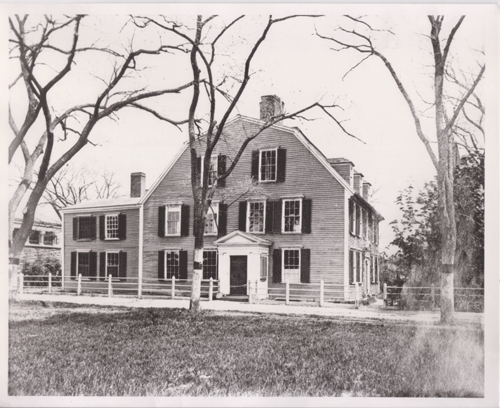
Hastings graduated from Harvard in 1768 and a few years later become one of Cambridge’s school teachers. He was living in his father’s house beside the common, shown here. On 8 June, three days before writing this letter, the young man took the job of town postmaster.

Ironically, his letter appears to have been intercepted by the Crown forces because it’s filed among Gov. Thomas Gage’s papers at the Clements Library. The library offers scans and an imperfect transcription.

Hastings wrote:
Your Brother’s Letter of 18th. May we received the 9 of June. Notwithstanding my many Avocations (our House being made Head Quarters) I cannot miss an Opportunity of sending you a Letter. Am happy you had so safe a Passage & found your Friends well.

At length we have had the Commencement of Hostilities begun by Gage’s Troops, at the Battle of Lexington, where 8 of our Men were killed, there being about 50 assembled on a Green.—

The Evening preceeding the 19 of April, I was met by 11 Officers equipt with Pistols & Cutlasses; when I got Home I acquainted several Gentlemen therewith; but they thought it was like to prove nothing but a false Alarm. They were mistaken. About 2 OClock the next Morning, we were roused out of Bed to pursue 1100 Grendadiers & Light Infantry being a Detachment from all the Regiments in Boston.—

They made their way to our Magazines at Concord, but affected nothing more than destroying 80 Barrels Flour, knocking of [sic] the Ears of 3 twenty four pounders & burning the Carriages. A Quantity of Bullets they threw into a pond, but have been got out since.

Coll. [Thomas] Gardner ordered our Regiment to parade at Watertown, not knowing but that Gage’s Reinforcement would take that Course. He was mistataken [sic], they marched thro’ Cambridge, wch. being known our Regiment took the nearest Way to meet the Detachment. Unluckily for us we had no sooner placed ourselves in an advantageous Post near Lexington Meeting House to give Battle to the Detachment, than we perceived the Brigade in the other Side of us. Our Situation was bad, being between both Armies.
Well, that seems like an exciting place to break, doesn’t it?

TOMORROW: Under fire.

Wednesday, February 11, 2026

“The supposed Plunder of the Cargo and burning of the Vessel”

Alas, the first newspaper printed in Newburyport, Massachusetts, Henry-Walter Tinges’s Essex Journal and Merrimack Packet, wasn’t founded until the end of 1773.

That means we don’t have published accounts of ships coming and going from that port in 1772, or stories on topics of local interest.

It’s possible a historian digging into the local sources like Alexander Cain will uncover a contemporaneous source on what happened to Capt. Thomas Parsons in 1772. But for now the closest he’s found is the lore published by Joshua Coffin in A Sketch of the History of Newbury, Newburyport, and West Newbury, from 1635 to 1845:
February 10th [1772]. Captain Thomas Parsons sailed from Newburyport, in a schooner, for the West Indies; was wrecked at St. Mary’s, Nova Scotia. It was supposed that he, with all his crew, eight in number, were massacred by the inhabitants there, after plundering the vessel, and setting it on fire.
We don’t know the name of Parsons’s ship or of his crewmen. Coffin also offered no sources—no indication of how the news got back to Newburyport, or when. I suspect that for months people thought the schooner had been lost at sea. Then something—the sight of a burned wreck, a bit of loot, seamen’s gossip—made people suspect there had been foul play.

On 11 Mar 1773, more than a year after Capt. Parsons’s departure, the Boston News-Letter ran this item:
We are informed, that the Accounts sent from hence of the Loss of a Schooner, belonging to Newbury, near Cape-Sable, and the supposed Plunder of the Cargo and burning of the Vessel if not the Murder of the Crew, had been received by the Governor of Nova-Scotia, and that there would be the strictest Inquiry and Prosecution by the Authority of that Province.
That was reprinted in the following weeks in the Essex Gazette of Salem and in Connecticut newspapers. (Capt. Parsons had brothers and other relatives in Connecticut who might be interested.)

It’s not certain that news item referred to rumors about Capt. Parsons’s ship, but the details are similar, and I’ve found no other possible cases. That suggests the suspicions about what happened in Nova Scotia built up over time until someone demanded an investigation.

Unfortunately, I also haven’t found any follow-up stories. Because of national boundaries, I can’t search the Halifax Gazette. Government archives in Nova Scotia might hold information. In early 1773 the royal governor, Lord William Campbell, was busy chasing smugglers and securing a better berth for himself in South Carolina, but maybe he did start an inquiry. Or at least file the “Accounts” from Massachusetts.

It’s also conceivable that some archive in the Caribbean holds a clue. Did Capt. Parsons sail to an island successfully only to run into difficulty on the way back? If he was on some sort of smuggling voyage, what sort of records would he have left?

TOMORROW: Probing the mystery.

Wednesday, February 04, 2026

“Causes of the breaking out of this ill Humor”

Among the items in the Boston Public Library’s manuscripts department is a 21 Apr 1770 letter from Charles Lloyd (1735–1773) to George Grenville, former prime minister of Britain (shown here).

Lloyd was working at the Treasury office by 1761. His elder brother had tutored Grenville’s sons before becoming dean of Norwich, and through him Charles secured the job of secretary to the new prime minister in 1763.

After the Marquess of Rockingham took over government, Lloyd lost some patronage appointments but continued working at the Treasury. As of 1770, he was writing from the “Salt Office”; that department collected the salt tax, operating somewhat independently.

Lloyd also continued serving Grenville, who remained in Parliament, as a source on London news and a pamphleteer. According to the Dictionary of National Biography, Lord North even suspected that Lloyd wrote the radical Junius letters, a theory most later scholars called “absurd.”

This particular letter passed on news from Boston, which is probably why it ended up on this side of the Atlantic. It began:
Salt Office Saturday
21st April 1770.

Dear Sir

Nothing has occurred since youn left Town that I thought worth troubling you with till this morning when Mr. Robertson [John Robinson] (one of the Commrs. of the Customs in America) arrived in Town with an account that he left the whole Town of Boston in the utmost Confusion.

The immediate Causes of the breaking out of this ill Humor arose from some petty Quarrel between a Townsman & a Soldier. Each had their respective Partizans from words they came to Blows some were killed by the Soldiers & many wounded—

The next Day, a more General Engagement took place between the Civil & military when the Commander in Chief [acting governor Thomas Hutchinson] to prevent further Effusion of Blood order’d the Troops to retire into the Castle, & the Commrs. of the Customs are lodged there likewise—

The Townsmen were guilty of several outrages before the military Fired.
Lloyd then went on to write more about a lottery. He added a brief postscript of political gossip.

We can barely recognize the Boston Massacre in Lloyd’s description. The “petty Quarrel” was probably the ropewalk brawl. Robinson or Lloyd put less significance on the people killed than on Lt. Gov. Hutchinson agreeing to the town’s demand to move the troops—“a more General Engagement…between the Civil & military.” That was how some conservative elements in London first learned about the Massacre. 

Saturday, January 31, 2026

Lunch with Maj. Thomas Musgrave, 6 Feb.

In last week’s talk about the end of the siege of Boston, I recounted the story of the British army raid on the Dorchester peninsula.

For action details I drew on Francis E. Blake’s 1899 article for the New England Historical and Genealogical Register, reprinted with additional realty information as a short book titled Dorchester Neck (Now South Boston): The Raid of British Troops, February 13, 1776.

In fact, most of that action happened in the early morning hours of 14 February. I quoted reactions to the raid in this posting from 2008.

Yet my favorite detail about the event is that Maj. Thomas Musgrave, who led a squad of elite troops across the ice from Boston Neck, was considered the best skater in the British force, as quoted here in 2010.

It was therefore intriguing to learn that the American Revolution Insitute will feature Maj. Musgrave in an online presentation on Friday, 6 February.

Here’s the event description:
Join the Institute’s museum collections and operations manager, Paul Newman, for a discussion of a 1780s manuscript account of the American Revolution by Lt. Col. (later made a General and Baronet) Thomas Musgrave, a British officer who served extensively throughout the war.

At the battle of Germantown, he commanded the British 40th Regiment of Foot that famously defended the Chew House against attacking American forces. Subsequently, he was restationed in the West Indies in 1778, before returning to New York as the last British commandant of the city.

Following the war, Musgrave authored a manuscript, housed in our library collections, that offers extensive details of his service throughout the Revolution.
The presentation will emphasize “the 40th Regiment of Foot at the Battle of Germantown.” But maybe there will some seasonal information about Maj. Musgrave on ice.

Tuesday, January 20, 2026

The Younger General Prescott

Bibliography abhors a vacuum.

Once William Tudor, Jr., suggested in print that “General Prescott” deserved credit for writing the 1774 pamphlet A Letter from a Veteran, to the Officers of the Army Encamped at Boston, cataloguers didn’t want to ignore that suggestion. It was better to share some possibly correct information than to leave a blank, right?

No matter that Tudor didn’t seem certain, or offer a reason to believe that attribution. He was a solid researcher, for the early nineteenth century. His parents had been in Boston before the war. His mother, Delia Jarvis, was from a Loyalist family who knew British army officers. So his info might have been accurate.

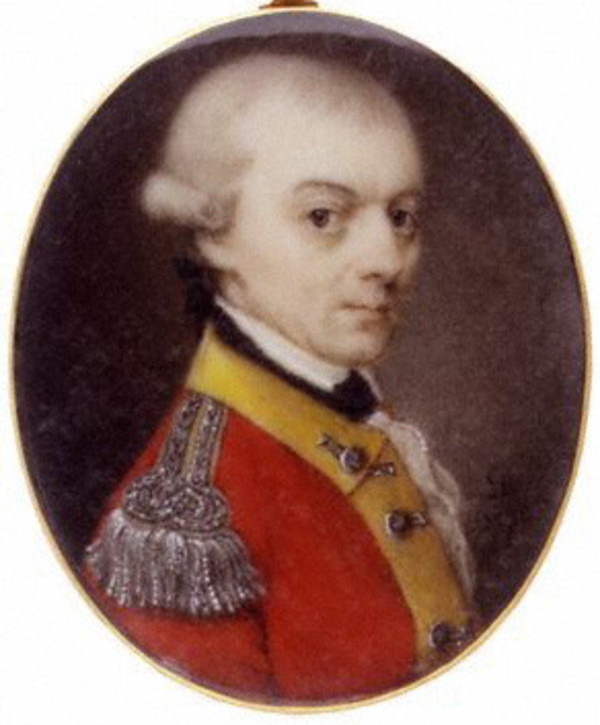
In the early twentieth century, bibliographers started to surmise that “General Prescott” might mean Robert Prescott (1726?–1815, shown above), a veteran of the Seven Years’ War who eventually became governor general of the Canadas. Most of those attributions remained tentative, but his was the only name put forward, so gradually it came to seem more solid.

I’m skeptical. In 1774, when A Letter from a Veteran appeared in New York, Robert Prescott was almost certainly in Britain, living on his half-pay pension as a lieutenant colonel mustered out of the 72nd Regiment. He hadn’t served on the North American mainland since 1760.

While it’s conceivable that Lt. Col. Prescott followed the political debates over America closely, wrote an essay responding to American Whig arguments and analyzing the cultures of different colonies, and sent it across the Atlantic to be published, that seems unlikely.

On 8 Sept 1775 Robert Prescott was called back into service, now lieutenant colonel in the 28th Regiment. He reached New York with the 1776 invasion force. After fighting on the mainland and in the Caribbean, he gained the rank of general in 1781. And his military and administrative career would continue. He never appears to have claimed A Letter from a Veteran as his own, or to have published other political essays. 

Is there any better candidate for “General Prescott”?

Robert’s older brother Richard Prescott (1725–1788) gained the rank of general a few years before him, early in the Revolutionary War. Richard’s regiment, the 7th or King’s Fusiliers, was in North America in 1774. So is Richard more likely to have been the author of A Letter from a Veteran?

The main problem with that hypothesis is that in 1774 the 7th Regiment was stationed in western Canada, practically as distant from New York as London was.

TOMORROW: A paper trail.

Monday, January 19, 2026

“It was attributed to General Prescott”

After the British army and the New England provincials went to war in April 1775, people stopped worrying about political pamphlets like A Letter from a Veteran, to the Officers of the Army Encamped at Boston.

John Adams broke off his “Novanglus” essays. The New York printer Hugh Gaine struggled to remain politically balanced, literally printing on both sides of the conflict. Most prewar essays fell into obscurity.

Nearly half a century after A Letter from a Veteran appeared, William Tudor, Jr. (1770–1830, shown here), wrote about it in The Life of James Otis, of Massachusetts:
A few of the officers felt an esteem for the people, and were reluctant to engage in a civil war, which they knew would bring great misfortunes upon the country, and as they supposed, overwhelm it. There was to much folly and disgusting arrogance in many of the subalterns, and careless ignorance about the whole subject of dispute, that one of their superior officers published a small pamphlet, entitled, “A letter from a Veteran to the Officers of the army encamped at Botton.” It is remarkably well written, and while it justifies his own government, reproves the frivolity and rashness that treated the Americans with contempt. It was attributed to General Prescott.
Tudor didn’t state a source for this information, and the expression “It was attributed” suggests he wasn’t completely sure about it.

That book might have given the pamphlet more visibility. James Fenimore Cooper took a passage from A Letter from a Veteran (imperfectly cited) as a chapter epigraph in his 1825 novel Lionel Lincoln: or, The Leaguer of Boston. His protagonist was a British army officer with conflicting loyalties.

Tudor’s emphasis on how A Letter from a Veteran “reproves” British officers who showed contempt for Americans might also have given people a false sense of its overall argument. It expressed very little sympathy for New Englanders.

In 1860 a catalogue of the Massachusetts Historical Society library attributed A Letter from a Veteran to, of all people, Col. William Prescott, the commander of the provincial redoubt at Bunker Hill.

That made no sense. William Prescott was never a high officer in the regular British army or, so far as I see, any sort a general. He wasn’t a political writer, and he certainly wouldn’t have published a criticism of New England religious zealotry.

Nonetheless, the attribution to William Prescott was repeated in other American publications for the rest of the nineteenth century.

TOMORROW: General Prescott and General Prescott.

Wednesday, January 14, 2026

Knox Trail Commemorations on 15–18 Jan.

Sestercentennial commemorations of the progress of Col. Henry Knox’s artillery convoys across western Massachusetts continue this weekend.

(I’m trying to list all of these events, but there are so many that I might miss some being promoted locally.)

Thursday, 15 January, 6:30 to 7:30 P.M.
The Most Proper Spot in America: The Continental Arsenal at Springfield
Alex MacKenzie
Captain Charles Leonard House, 663 Main Street, Agawam

The winter meeting of the Agawam Historical Association will hear from Alex MacKenzie, curator of collections at the Springfield Armory National Historic Site. Having visited the region in 1776, Col. Knox chose Springfield to be the site of the Continental Army’s laboratory, or depot for building and repairing ordnance and other military supplies. Starting in 1777, that operation eventually grew into the Springfield National Armory, now a national park. This event is free and open to the public.

Friday, 16 January, 6 to 8 P.M.
250th Anniversary of Henry Knox in Monterey
Monterey Library, 452 Main Road

A new exhibit opens at the town library with a reception and remarks by Mark Makuc, Heather Kowalski, Rob Hoogs, and Jonathan Barkan, including presentations on the Bicentennial and current reenactments of Knox’s trek. These presentations will be repeated at the library on Saturday morning.

Saturday, 17 January, 2 to 3 P.M.
250th Anniversary Commemoration of the Henry Knox Trail
Springfield Armory National Historic Site

Revolution 250, Boston Celebrations, the Springfield Armory National Historic Site, and citizens of the towns of Westfield, West Springfield, Springfield, Wilbraham, Palmer, and Warren join to commemorate the “Noble Train of Artillery” on its way to Boston. Attendees can take in the site’s exhibit “The Continental Arsenal at Springfield During the Revolution” and ongoing display of weaponry through the decades.

Saturday, 17 January, 2 to 4 P.M.
Walk the Old Knox Trail
Bidwell House Museum, Monterey

After an outdoor gathering with a bonfire and hot mulled cider, Rob Hoogs will lead attendees along a segment of old road that Knox’s teamsters used, about half a mile each way.

Saturday, 17 January, 7 to 8:30 P.M.
Panel Discussion on Ye Trodden Path
Monterey Library, 452 Main Road

As the Berkshire County Historical Society publishes a new booklet on the trails through the region in 1775, titled Ye Trodden Path, local historians Rob Hoogs, Bernie Drew, Gary Leveille, Ron Bernard, and Tom Ragusa discuss the research going into that publication.

Sunday, 18 January, shows at 1:30 and 4 P.M.
For Love! For Liberty!
Springfield Performing Arts Venture

This new musical theater production by Vana Nespor and Clifton (Jerry) Noble tells the story of Henry Knox, his young wife Lucy Knox, and his mission to bring cannon to the Continental forces around Boston. Middle school history students help the U.S. Park Service, teachers, and grandparents explore this tale. Tickets available through this webpage.

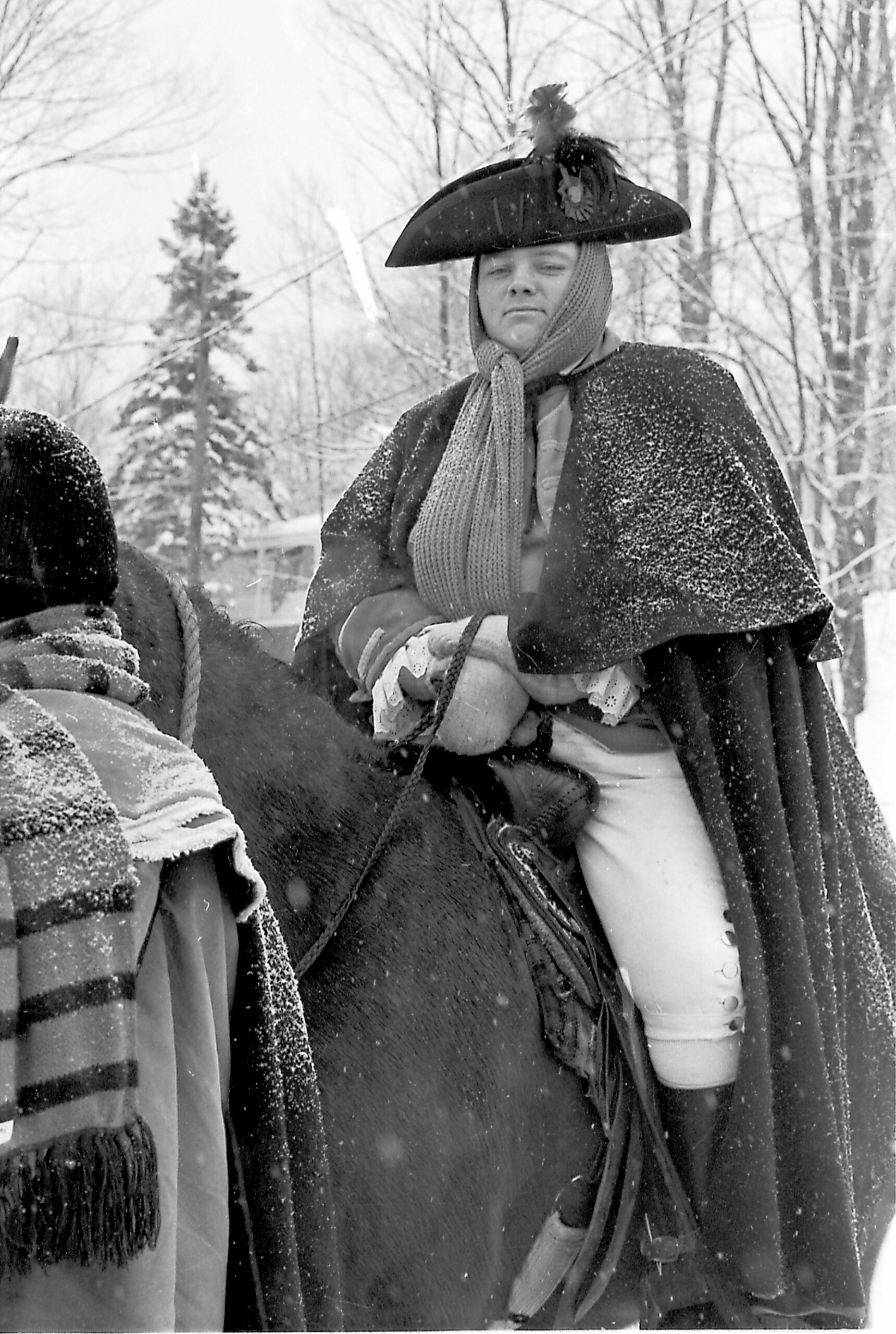
(The photograph above shows William Wilber portraying Henry Knox during the 1976 reenactment, courtesy of Gerry Francis and the Berkshire Edge.)

Friday, November 28, 2025

“The First Commander Remembered” Panel in Cambridge, 2 Dec.

On Tuesday, 2 December, I’ll take part in a panel discussion on “The First Commander Remembered: Washington’s Legacy in Cambridge.”

This is the second in a series of Sestercentennial events on “Washington in American Memory” to be held at the Cambridge Public Library through April 2026.

The panel will include:
  • Charles Sullivan, executive director of the Cambridge Historical Commission and coauthor of Building Old Cambridge: Architecture and Development.
  • Christopher Beagan, site manager at the Longfellow House–Washington’s Headquarters National Historic Site, moderator.
  • me, drawing from a study of the commander-in-chief’s months in Cambridge in 1775–76 and any thoughts that have occurred to me since. 
We’ll talk about how Gen. Washington came to Cambridge, how authors have portrayed his time there, and how he’s been commemorated in Cambridge by, among other things, a tree, a park, a monumental gate, a hotel (shown above), and a National Park Service site. What do all those landmarks tell us about how we like to think of Washington? And could we remember and teach that period of history more accurately?

This event is scheduled from 6 to 7:30 P.M. in the Cambridge Public Library’s Lecture Hall. It will also be livestreamed and recorded for online viewing.

This program and all the series will be free and open to the public. Follow this link to register.

The main supporter of this series is Eastern National, a nonprofit partner of the National Park Service. It has been organized by the National Park Service/Longfellow House–Washington’s Headquarters National Historic Site, History Cambridge, Cambridge Public Library, Cambridge Historical Commission, and Cambridge MA250.

Monday, November 17, 2025

The Coroners Who Oversaw Inquests after the Boston Massacre

The most famous piece of coroners’ paperwork from the Boston Massacre is a verdict from the inquest into the death of Michael Johnson—or Crispus Attucks, as he was soon to be identified.

That document is in the collection of Revolutionary Spaces and has been on display in the Old State House. It’s been reproduced and transcribed in several places. Here’s an article about its conservation.

The coroner for that proceeding was Robert Pierpont, a Whig who lived at the far southern end of town.

I knew that the Boston Public Library’s Special Collections Department holds several more inquest documents. Mellen Chamberlain collected those papers for the library in the late 1800s, for both their historical value and their autographs.

Last last month, therefore, I made an appointment to look at the Chamberlain Manuscripts. I’ve done research at the B.P.L. for years, but the Special Collections Department upgraded its facilities and tightened its procedures since my last visit, so this required making an appointment and learning some new procedures.

I’m pleased to report that I found the verdicts of two inquests overseen by coroner Thomas Crafts. One examined the body of James Caldwell on 5 Mar 1770, and the second examined Samuel Maverick the next day.

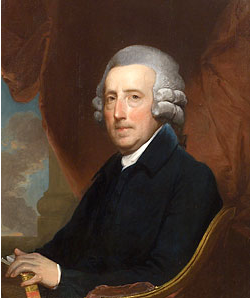
In addition, Chamberlain acquired verdicts from two inquests headed by Thomas Dawes (shown above). He handled the cases of Samuel Gray (6 March) and Patrick Carr (15 March).

The collection also includes testimony for the Gray inquest from Richard Palmes, Robert Goddard, Joseph Petty, and Richard Ward, plus a deposition about aggressive soldiers from John Leach, Jr., that Dawes took in on 6 March. All but one of those witnesses also testified for Boston’s Short Narrative of the Horrid Massacre report or the trials or both. (Frankly, they couldn’t shut Palmes up.)

Thus, we should list Thomas Dawes among the coroners who did the first investigations of the Boston Massacre. In fact, he did more than Pierpont, and more evidence from his inquiries survive.

TOMORROW: So am I satisfied that Thomas Crafts, Jr., was a coroner in 1770?

Sunday, November 02, 2025

“Washington in American Memory” Series in Cambridge, Starting 10 Nov.

The Longfellow House–Washington’s Headquarters National Historic Site, working with History Cambridge, the Cambridge Historical Commission, and Cambridge MA250, has organized a series of Sestercentennial panel discussions and talks at the Cambridge Public Library on the theme of “Washington in American Memory.”

This series runs through April 2026. Here are the events scheduled for this calendar year.

Monday, 10 November, 6 to 7:30 P.M.
From Revolution to Remembrance: Memory of the American Revolution
Cambridge Public Library and online

Explore how Americans have remembered, reinterpreted, and reshaped the meaning of the American Revolution from 1776 to today, featuring:
  • Michael Hattem, author of Past and Prologue: Politics and Memory in the American Revolution and Associate Director of the Yale-New Haven Teachers Institute
  • Nikki Stewart, Executive Director of Old North Illuminated
Register here.

Tuesday, 2 December, 6 to 7:30 P.M.
The First Commander Remembered: Washington’s Legacy in Cambridge
Cambridge Public Library and online

Debunk myths and trace the evolution of the public memory of George Washington in Cambridge, Massachusetts, featuring:
  • J. L. Bell, author of The Road to Concord: How Four Stolen Cannon Ignited the Revolutionary War and proprietor of Boston 1775
  • Charles Sullivan, co-author of Building Old Cambridge: Architecture and Development and Executive Director of the Cambridge Historical Commission
Register here.

All these events will be free thanks to funding from Eastern National.

Unfortunately, some of the people who worked hard to organize this series are now not being paid and legally barred from their jobs in the National Park Service because of the federal government shutdown. Because these panel discussions will be at the city library, they will go on, unlike events scheduled at parks themselves. But it’s a hell of a way for the U.S. government to celebrate the 250th.