






“Cast away upon the Isle of Sable”
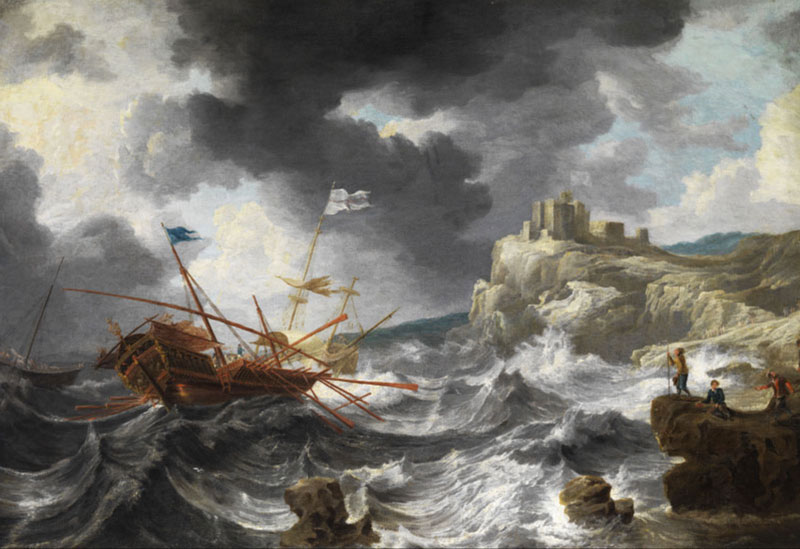
As colonial newspapers show, shipwrecks happened all the time. The rocky shores of Nova Scotia were notorious for their dangers.
For example, on 16 Sept 1773, the Massachusetts Spy ran this report from John Callahan, just arrived from London:
Capt. Callahan, last Thursday se’nnight, went on shore at Cape Sable, where he saw the Wreck of a Snow, New-England built, Pink Stern, called the Kitty, loaded with Lumber, had all her Cargo on board, but her Sails, Rigging and Crew gone.That might seem mysterious, even suspicious. But back on 10 May the Boston Post-Boy had reported:
A Fisherman, who arrived here last Week, informs, that the Snow Katy, Capt. Major, from this Port for Newfoundland, is cast away upon the Isle of Sable: The Vessel and Cargo is entirely lost; the Captain and Mate, with great Difficulty saved their Lives, and the Remainder of the Crew, (five in Number) perished.In the case of Capt. Parsons’s schooner, within a year New Englanders suspected he’d met with foul play. What led them to that conclusion? Unfortunately, our sources don’t say.
Those sources do raise some geographic questions about this voyage. One is why, if Capt. Parsons was heading from Newburyport to the Caribbean, he’d ended up far north. Perhaps that was a way of catching trade winds. Perhaps a storm had pushed his ship off course. Perhaps people didn’t remember his destination accurately. Or perhaps Parsons’s ship was returning from the islands and overshot Cape Cod because of weather.
The March 1773 news item quoted here said a schooner had been lost “near Cape-Sable,” which is the southernmost corner of the Nova Scotia peninsula. In Newburyport people came to believe Parsons had met his fate at “St. Mary’s,” which must mean St. Mary Bay’s at the westernmost corner. Was that close enough to count as “near Cape-Sable” to a New Englander?
Yet another mystery: Near the mouth of St. Mary’s Bay sits the village of Comeauville, where Basile Boudrot was granted 300 acres in May 1772. That was three months after Capt. Parsons reportedly left Newburyport, and in that season Boudrot was supposedly busy digging up buried money. Yet somehow the people of New England came to believe that Basile Boudrot was responsible for the death of Capt. Parsons and his crew.
TOMORROW: Spotting the culprit?
[The picture above is Bonaventura Peeters’s “Shipwreck,” ca. 1652, courtesy of the Journal of Historians of Netherlandish Art.]

No comments:
Post a Comment