


J. L. BELL is a Massachusetts writer who specializes in (among other things) the start of the American Revolution in and around Boston. He is particularly interested in the experiences of children in 1765-75. He has published scholarly papers and popular articles for both children and adults. He was consultant for an episode of History Detectives, and contributed to a display at Minute Man National Historic Park.

Subscribe thru Follow.it


•••••••••••••••••


Showing posts with label Mary Newman. Show all posts

Thursday, April 09, 2026

“This Party behaved very Insolently & with Great Rapacity”
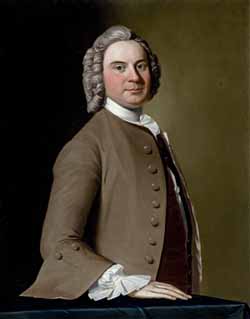
Samuel Austin, quoted yesterday, wasn’t the only Boston merchant to complain about how Crean Brush had confiscated cloth in March 1776.

Capt. Samuel Dashwood also groused about Brush. As cited by Eric Wiser, the captain described how Brush pushed through the back door of his house, strode past the family, and opened their front door for his assistants. At the end of the day, Dashwood determined he was missing nine trunks and two chests of silks and cloth.

Dashwood made a point that Brush had been wearing a sword (as many gentlemen did). “If any person should presume to interrupt,” Dashwood quoted his unwanted visitor saying, “[soldiers] would thrust their bayonets into such a person.”

Capt. Dashwood wasn’t above violence himself, though. Back in 1769, he was among the merchants who challenged printers John Mein and John Fleeming on King Street. And the next year, during an anti-import protest, Theophilis Lillie described Dashwood as “in a great rage, challenging me to come out of my house and he would break my neck, my bones, and the like.”

While Dashwood was a virulent Patriot, John Rowe (shown above) was a trimmer, trying to stay neutral. He lamented the outbreak of war, lived in Boston through the siege, and then chose to remain as the king’s military left. But he also objected to Brush’s actions.

I quoted Rowe’s complaints about how Crean Brush seized property on 11 March back here. At that time I assigned “Mr. Hill” the first name William, but now I think it was more likely either Robert or John.

The next day Rowe collected a receipt for his goods from Brush but wrote, “[I] dont expect—much Good from it.”He told his diary, “This Party behaved very Insolently & with Great Rapacity & I am very well Convinc’d exceeding their orders.”

The next few days were even worse, however. Rowe found other men breaking into his warehouses and stealing more goods, not just the cloth that Gen. William Howe had authorized Brush to take. And of course those men left no receipts at all.

Between Rowe’s diary, documents that Brush signed, and postwar legal filings, we can identify a few more people besides those I’ve already discussed who lost property to Crean Brush’s team: selectman John Scollay, Capt. Samuel Partridge, “Widow [Mary?] Newman,” “John Barret & Sons,” and Dr. Thomas Bulfinch.

TOMORROW: Brush’s response.

Tuesday, March 21, 2023

“They Stole many things & plunder’d my Store”

John Rowe reported that Monday, 11 Mar 1776, brought “Gloomy heavy Weather,” and his mood wasn’t any better.

The day before, as quoted yesterday, Gen. William Howe issued a proclamation requiring everyone with “Linnen and Woolen Goods” to turn them over to the evacuating army lest they fall into Continental hands.

That proclamation promised that the New York merchant Crean Brush (shown here) “will give a Certificate of the Delivery, and will oblige himself to return them to the Owners.” But if people didn’t comply, they risked being treated as rebel sympathizers.

Rowe appears to have been surprised that this proclamation applied to him, too. His 11 March diary entry says:

This morning I Rose very Early and very Luckily went to my Warehouse

when I Came there I found Mr. Crian Brush with an Order & party from the Genl. who were just going to Break Open the Warehouse which I prevented by Sending for the Keys & Opening the Doors—

They took from Mee to the Value of Twenty Two hundred & Sixty Pounds Sterling According to the best Calculation I Could make in Linnens Checks Cloths & Woollens—

This Party behaved very Insolently & with Great Rapacity & I am very well Convinc’d exceeding their orders to a Great Degree They Stole many things & plunder’d my Store. Words cannot Describe it

This Party consisted of Mr. Blasswitch who was one of the Canceaux people [i.e., an officer on H.M.S. Canceaux] Mr. Brush the Provost Mr. [William] Cunningham A Refugee Mr. [James or Peter] Welch The Provost Deputy—A Man nam’d [William] Hill & abo. fifteen Soldiers—with others—

I Remained all Day in the store but Could not hinder their Destruction of my Goods This day I Got a piece of Bread & one Draft of Flip

I Spent the Evening at home with Mr. [Samuel] Parker Rich’d Green Mr. [Jonathan] Warner of Portsmouth who assisted Mee very much with Mrs. Rowe & Jack Rowe

They are making the Utmost Speed to get away & carrying Ammunition Cannon & every thing they Can away taking all things they meet with never asking who is Owner or whose Property making havock in Every house & Destruction of All kinds of Furniture

There never was Such Destruction & Outrage committed any day before this Many other People have suffer’d the Same Fate as Mee— Particularly—
Mr. Saml. Austin Mr. John Scolly Capt. [Samuel] Partridge Capt. [Samuel] Dashwood Mr. Cyrus Baldwin The Widow [Mary] Newman
In May 1776, Austin, Scollay, Partridge, Dashwood, and Rowe petitioned the Continental Congress to speak up for them about their confiscated goods. But there was a war on.

Nine years later, in 1785, Rowe, Partridge, Dashwood, and Austin sought help from Gov. James Bowdoin and American minister John Adams in gaining redress from Britain. (I don’t know why Scollay dropped out; he was still alive at the time.)

Responding to a similar claim from Dr. Thomas Bulfinch, Adams wrote back on 13 Oct 1786:
I have not yet presented any of these Claims at Court, because there is not even a Possibility of their being regarded— . . . I frankly own I do not think, that the Dignity or the faith of the United States ought ever to have been compromised in these Matters—
If those Boston merchants had left with the British military, they might have regained their property after landing in Halifax. But they did, after all, show themselves to be rebel sympathizers.

TOMORROW: A receipt, and more disorder.