J. L. BELL is a Massachusetts writer who specializes in (among other things) the start of the American Revolution in and around Boston. He is particularly interested in the experiences of children in 1765-75. He has published scholarly papers and popular articles for both children and adults. He was consultant for an episode of History Detectives, and contributed to a display at Minute Man National Historic Park.

Subscribe thru Follow.it


•••••••••••••••••


Showing posts with label children. Show all posts

Wednesday, August 26, 2026

Identifying a Revolutionary Unknown Soldier at Camden

Last month the Independent newspaper reported on the identification of remains from the Revolutionary War using a relatively new method.

The story started on the battlefield at Camden, where on 16 Aug 1780 Gen. Cornwallis’s redcoats decisively defeated a Continental force under Gen. Horatio Gates.

The article says:
Archaeologists surveying the area in 2020 came across human bones protruding from the ground. Eventually, 14 sets of remains were identified — 12 of them Continental soldiers. The others were determined to be connected to the British side and were reburied at the battlefield.

The Richland County Coroner’s Office had worked with Texas-based FHD Forensics on modern-day cases and asked for their help.
The head of that organization is Allison Peacock. She and her associates use the immense databases of genetic code that have built up in recent decades to find unknown biological relatives for a range of reasons.

One of the American corpses was labeled “Camden 9B” as the second body retrieved from the ninth excavated burial.
The 12 Continentals were later reinterred [in 2023] with full military honors. Camden 9B’s headstone read: “UNKNOWN. REV WAR. BATTLE OF CAMDEN. AUG 16 1780.”

Meanwhile, samples from two of the soldiers were sent to Astrea Forensics in California for DNA extraction and sequencing. . . .

From a petrous portion of the temporal bone, a delicate structure behind the ear at the base of the skull, they successfully extracted DNA that generated [Camden 9B]’s entire genome. Peacock’s team then uploaded the data to FamilyTreeDNA and GEDmatch to trace three types of DNA matches: autosomal, X chromosome and Y chromosome.

“We got 20,000 matches to work with,” she said. “So, it was a lot to kind of comb through.”
Another clue was that when Camden 9B died, “the growth plates around his knees had not yet fully closed,” meaning he was still young.

The genetic markers found a match on the maternal line with Russ Hudson, a “retired federal agent in Gettysburg, Pennsylvania.” He offered to join the search in archival sources.

Ultimately, the team found records of a Continental Army private from Anne Arundel County, Maryland, named John Pumphrey. He was in the right age range and had a family connection to Hudson.

Pumphrey’s exact birthdate is unknown, but those growth plates suggest he was between thirteen and fifteen years old when he enlisted in the 7th Maryland Regiment on 6 Jan 1777. He could sign his name only with an X.

As Historic Camden relates, Pumphrey’s regiment served at Brandywine, Germantown, Valley Forge, and Monmouth. He reenlisted on 28 Feb 1779, as shown in the paperwork above. The regiment spent the brutally cold winter of 1780 at Morristown.

In April 1780, the Maryland Line was sent south. The last part of their travels was a brutal trek from Cox’s Mill, North Carolina, to Camden, South Carolina—a difficult route with little food available along the way. Then came the battle for one of the British army’s main inland garrisons.

The skeleton doesn’t preserve clues to how Pvt. Pumphrey died. However, his brigade was part of an especially brutal fight with the 71st Highlanders, and the bodies were found in that part of the field.

Research continues on another of the bodies from the Camden field that had surviving D.N.A.,  now known only as 11A.

Wednesday, August 12, 2026

Benjamin Davis, Jr., at the Boston Massacre

On 4 Apr 1756, Trinity Church in Boston recorded the baptism of “Benjamin Davis, Son of Benj. & [blank].”

Benjamin, Jr.’s mother was Elizabeth (Phillips) Davis, a convert to the Church of England. She bore a third child in 1757 but must have died in the few years following.

Presumably Benjamin, Jr., was baptized a few days after birth, meaning he was born in the spring of 1756. However, when he died on 28 Dec 1836, Boston newspapers reported that he was eighty-one, so it’s also possible his baptism was delayed a few months.

In 1762 Benjamin, Sr., married a second time, to Anstis Greenleaf, daughter of Suffolk County sheriff Stephen Greenleaf. She died in 1764, after giving birth, and Benjamin, Sr., remarried again to Alice Whipple of Rhode Island—and we all know how that turned out.

As a teenager, Benjamin, Jr., was present at the shooting on King Street in March 1770. He was called to testify at the soldiers’ trial, identified as “son to Mr. Davis a former witness.”

Here, as taken down by John Hodgson, is what Benjamin, Jr., experienced:
On the evening of the 5th March last, near the bottom of Royal exchange-lane, I saw a mob by Mr. [John] Greenleaf’s, I went right along into King street, I saw the Sentinel [Hugh White]; a barber’s boy [Edward Garrick] was there crying, and said the Sentry had struck him, and asked him what business he had to do it:

I went home and staid at the gate in Green’s lane some time,

Samuel Gray (one of the persons killed that night in King-street) came along, and asked where the fire was?

I said there was no fire, it was the soldiers fighting, he said, damn it, I am glad of it, I will knock some of them on the head; he ran off, I said to him, take heed you do not get killed in the affray yourself, he said, do not fear, damn their bloods.

Q. Had he a stick in his hand?

A. He had one under his arm.

Q. What sort of a stick was it?

A. I did not take notice.

Q. How long was this before the firing?

A. I do not suppose he could have got into King-street two minutes before the firing.
Benjamin’s father was also observing the action from a different angle, and his uncle Edward’s family had a clear view across the street at the Customs office. They were all defense witnesses at various trials.

TOMORROW: Fire!

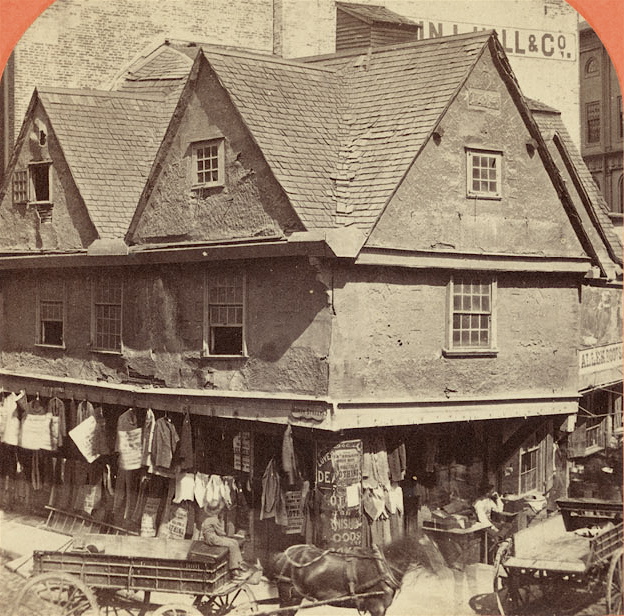
(Based on Benjamin’s quick description, I’m guessing he first spotted the crowd near John Greenleaf’s apothecary store, which survived into the late 1800s as the Old Feather Store at Dock Square, shown above.)

Sunday, August 09, 2026

“The Women from the Windows asking Davis whether he wanted any Gingerbread”

Massachusetts ships captured the Peggy on its voyage from Halifax to New York on 22 July 1776, as described yesterday.

The civilians aboard that ship were taken to Marblehead, then to Boston under guard. Word spread quickly that one of them was Benjamin Davis, a merchant who had left town months before.

On 28 July, Joseph Ward wrote to John Adams from Boston about the ship: “There are many Tories on board, among whom is the noted Benjamin Davis.”

The next day, Ezekiel Price put in his diary: “Brought to town Benjamin Davis and a number of other Tories, who were committed to jail.”

Why was Davis being singled out? He’d made himself notorious in some way, and we have a couple of hints about how.

David Cobb wrote to Robert Treat Paine on 29 July:
Just now the Tories were Landed at the Long Wharf from Marblehead & were attended from thence to the Prison by 2 thousand people; the Women from the Windows asking Davis whether he wanted any Gingerbread, refering to his treatment of the little Chreldren when they were going out of Town last Year. I wish the Devil had ’em.
Abigail Adams alluded to the same scuttlebut in her letter to John the same day:
we have taken a vessel from Halifax bound to New York, which we should call a prize but that it containd about 14 Tories among whom is that infamous Wretch of a Ben Davis the Ginger Bread Robber. How many little ones can say I was an Hungry and you gave me no Bread, but inhumanely took what little I had from me. I wish the Sea or any other Element had them rather than we should be tormented with them.
The editors of the Adams and Paine Papers weren’t sure what to make of those remarks about gingerbread.

I can’t find any sources providing a definite answer, but here’s my guess. At the start of the war, many families sought to leave Boston. Gen. Thomas Gage didn’t want refugees to take out food, which his army needed, or weapons, which the provincial army needed. So the governor set up a system of passes and inspections using both military and civilian administrators.

In the 5 June 1775 Boston Gazette, Benjamin Edes published an open letter addressed “To the perfidious, the truce breaking THOMAS GAGE” and signed “Massachusettensis.” (This was not, presumably, the Loyalist political writer.) Among its complaints about Gage was:
Nay, have not you, and your associates by your orders, been mean enough to steal rum and sugar from a poor teamster, half a cake of gingerbread, a nutmeg, and half a bisket from a poor woman who was flying half famished out of Boston from your low lived tyranny and oppression?
That item was reprinted in several other Massachusetts and Connecticut newspapers over the next couple of weeks. It’s the one gingerbread-related complaint I could find from the period.

That complaint shows that people working for the royal government were confiscating food from folks trying to leave Boston, even mundane food like gingerbread, even from “a poor woman.”

I suspect that Benjamin Davis had agreed to work for Gage’s royal government as some sort of inspector or administrator. At some point that spring, he took gingerbread from a family or two trying to leave town. Children may have cried. That incident didn’t get into the newspapers, but it made him notorious enough that citizens yelled at “Ben Davis the Ginger Bread Robber” more than a year later.

And, unlike Hopestill Capen, few people in Boston minded seeing Davis locked up.

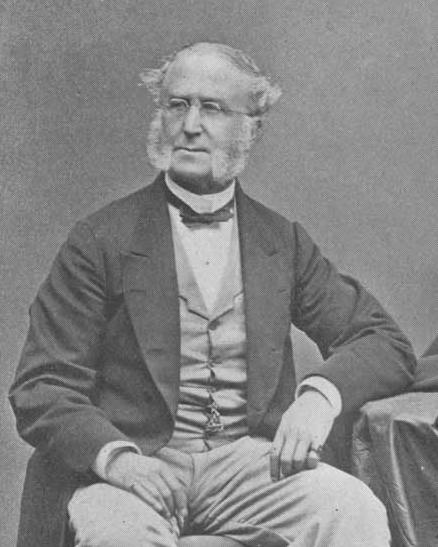
(The picture above shows the Pennsylvania politician Joseph Galloway, not mentioned anywhere in this posting. In September 1774 John Adams wrote in his diary that he was “introduced to Mr. Galloway, the Speaker of the House in Pensylvania. He looks like Ben. Davis the Sandimanian.”)

Friday, June 12, 2026

Did Sybil Ludington’s Ride Really Happen?

Last month I talked with Ryan Chatelain of Spectrum News about the tale of Sybil Ludington.

His story, headlined “Sybil Ludington is called the ‘female Paul Revere.’ But did her ride really happen?” is a good primer on the historical debate.

On the one hand, Vincent Dacquino has succeeded in pushing back the documented mentions of Sybil Ludington’s ride, as shown in the most recent edition of his book Patriot Hero of the Hudson Valley:
Through his research, Dacquino uncovered that the earliest evidence of her ride actually came in 1854, when Charles Ludington — Henry’s grandson and Sybil’s nephew — argued in a letter to a group of Masons planning a statue for Gen. David Wooster, who was killed in the Battle of Ridgefield, that Henry and Sybil Ludington should also be included in their tribute.
On the other hand, as I state in the article, we still lack contemporaneous evidence about the Ludingtons’ effect on the Battle of Ridgefield or anything else to support the family lore. Knowing that Charles Ludington believed the story seventy years later isn’t proof that it actually happened.

On such lore, Chatelain quotes me on my theory of “grandmothers’ tales”:
Women, sometimes men, involved in raising children would tell stories of the family’s involvement in historical events, presenting those stories simply as educational, as inspirational, as entertaining, not expecting them to be put into the public realm,” Bell said. “…But the children who are hearing those stories grow up — and because these are the earliest stories they’ve heard, because they have to do with their family, because they hear them maybe many times — they really stick with them. And so as they become older, they want these stories, which they believe to be gospel truth, out for everyone to hear.”
The legend of Sybil Ludington’s ride is one of many that fit that model. We know that in other ways the Ludington family lore exaggerates how central their ancestors were to events—just as most family traditions and many personal memoirs do. All the more reason to look for solid evidence.

As I said to Chatelain, the Sybil Ludington story may have some basis in fact. But we have to acknowledge how that account was massaged and enlarged over the years. In the early 1900s an author published a conjectural map of her ride, based on what he acknowledged was supposition. That’s became the basis of more maps, measurements, and highway markers, as well as the repeated claim that Sybil rode farther than Revere—without any additional evidence being offered.

Thursday, May 28, 2026

“Specimens of Indian Insult”

I’ve quoted a couple of accounts of mock battles on Boston Common during militia musters, as reported proudly in the local newspapers. On those occasions, half the local unit provided an enemy by portraying the French.

Here’s a report from the 12 May 1774 Norwich Packet, describing a different scenario in Woodstock, Connecticut, a town on the border with Massachusetts:
NORWICH, May, 12.

A Correspondent from Woodstock informs us, that on Monday the 2d. Inst. the Three Military Companies of that Town met upon the Parade, in the First Society, where they performed the Manual Exercise with a Spirit and Activity that did Honour to their Officers and themselves.

At Eleven o’Clock a Troop of Horse, under the Command of Capt. Samuel McClellan, came upon the Parade; which, for elegance of Dress, goodness of the Horses, and suitable Furniture, were judged, by the numerous Spectators present, to be inferior to no Troop in America.

At Three o’Clock the Foot and Troop feigned a Skirmish with each other, which they conducted with Propriety and Order: Suddenly a Company of Aborigines appeared, who made Captives of some of the Children present, and gave other Specimens of Indian Insult to the Foot and Horse: Their Depredations roused the New-England Spirit in the Troop, who, with seem Fury, attacked and drove them yelling off the Field, to the great Joy of the Spectators.

The good Order that was observed, not only by the Troop and Foot Companies, but also by the Spectators, was remarkable.----No Injury was sustained by any One present. The Day and Evening Entertainments, were concluded with strict Sobriety and Decency.

The Captain of the Troop gave an elegant Dinner to his Company and a Number of Gentlemen, as also did Capt. [Benjamin?] Lyon, and the Colonel of the Regiment honoured the Day with his Presence.
I’ve found this event mentioned in a local history but not quoted in full. It offers an example of what Philip J. Deloria called “playing Indian” in American culture. This moment was a few months after the Boston Tea Party, a few months before the Patriot press began to share fearful speculations that the Crown government might recruit Natives and French Canadians to attack resistant colonies.

Ironically, the town of Woodstock contains the site of Wabaquasset, a Native American “praying town” from the mid-1600s. That community was split and depopulated by the King Philip’s War. Englishmen from Roxbury then settled the land. The town’s seal now depicts Native and English men standing on either side of a heraldic shield.

Wednesday, May 27, 2026

Uncovering Boston Jersey

Earlier this month the Guardian reported on how researchers had unearthed new information about a figure in this portrait.
For hundreds of years, he was known only as “Jersey”, an enslaved boy of about 11 rendered in oil on canvas by the great 18th-century portrait painter Sir Joshua Reynolds. . . .

The painting, thought to have been completed around 1748, shows the boy and his “master”, the naval officer and MP Paul Henry Ourry. While Ourry looks out into the distance authoritatively, the enslaved child gazes up at the officer tentatively. . . .

Scouring admiralty records, letters, muster books (ships’ registers) and captains’ logs, [Mark] Brayshay and Katherine Gazzard, a curator at Royal Museums Greenwich, found him named as “Boston Jersey” on ships that Ourry was attached to.

They believe he may have been given the surname Jersey because Ourry was born in the Channel Islands. It is possible he had his first name because he once lived in Boston, Massachusetts.

The researchers discovered Jersey was baptised as George Walker (possibly a name he had been known by earlier in his life) on 30 July 1752, probably in a chapel in Westminster.
The article has a little more to say about George Walker and much more about the restoration of the painting.

This discovery led to the quick creation of a Wikipedia page about Boston Jersey/George Walker.

Tuesday, May 12, 2026

Finding Mary Fowle of Londonderry

Yesterday I cited Jane Merrill’s Sex and the Scientist: The Indecent Life of Benjamin Thompson, Count Rumford (1753–1814), the latest and frankest biography of the scientist, statesman, soldier, and seducer.

That book quotes testimony from Mary Fowle of Londonderry, New Hampshire, about how Thompson had an affair with Mary (Dill) Thomas, first wife of the Boston printer Isaiah Thomas.

Merrill distinguishes that woman from the Mary Fowle whom Isaiah Thomas married in 1779, whom she identifies as both the printer’s cousin and the widow of his old master, Zechariah Fowle.

Isaiah Thomas’s second wife named Mary was indeed a cousin, having been born Mary Thomas on 9 June 1750, according to genealogy published in “The Portraits of Isaiah Thomas” by Charles Lemuel Nichols.

However, that cousin Mary didn’t marry Zechariah Fowle. Her mother, Rebecca (Bass) Thomas, did. The older printer died in Portsmouth in 1776. Rebecca (Bass Thomas) Fowle, twice widowed, died in Worcester in 1803 and was buried in her son-in-law’s family tomb.

So who was Mary Thomas’s first husband? Boston vital records show that the Rev. John Lathrop married Isaac Fowle and Mary Thomas on 11 May 1769. The Thomas and Fowle family genealogies say they had two daughters, who both died young:
  • Rebecca T[homas?]. (4 Feb 1770–6 Dec 1773 in New York)
  • Dorothea Whitmarsh (5 Nov 1771–10 Sept 1772)
Isaac Fowle reportedly died in 1777 while serving in the Continental Army.

That same year, Isaiah Thomas leased his financially stressed press and newspaper to his come-of-age apprentice, Anthony Haswell, and moved with his children to “a small farm in Londonderry, New Hampshire,” according to the biography published with the second edition of his History of Printing in North-America. He also initiated a divorce from his first wife.

A couple of years later, Isaiah came back and took over the print shop again. Worcester’s vital records state that on 26 May 1779 Isaiah Thomas married “Mary Fowle of Londonderry” in Boston. Since 1777 he had been a divorcé with three children, his cousin Mary had been a childless widow, and there was a war on. Mary might well have been keeping house for Isaiah in New Hampshire even before they married.

Thus, the Mary Fowle of Londonderry who provided testimony for Isaiah Thomas in his divorce case in 1777 was:
  • his cousin
  • a stepdaughter of his former master
  • his future wife
Isaiah and Mary (Thomas Fowle) Thomas had no children. She died at Worcester in 1818, and he remarried again the next year. The picture above is the pastel portrait of Mary in the collection of the American Antiquarian Society.

Monday, May 11, 2026

“Not playing cards but fondling and kissing each other”

In preparation for tomorrow’s talk about Benjamin Thompson’s early years, I’ve been reviewing the evidence of his affair with Mary (Dill) Thomas, wife of printer Isaiah Thomas.

When Isaiah moved to divorce Mary in 1777 by petitioning the Massachusetts Council, he submitted testimony from several people who had seen his wife traveling with the militia major from New Hampshire in February 1775, behaving like man and wife.

The printer’s file also offered an affidavit from Mary Fowle of Londonderry, New Hampshire, who had stayed with the Thomases in Boston from 20 Sept 1774 to 16 April 1775.

In Sex and the Scientist, Jane Merrill quotes Fowle describing how “Major Thompson [was] then a refugee in Boston who borded in a house opposite.” Mary Thomas started visiting him several times a day even though (or because) she had two children under the age of three.

One Saturday the printer’s wife “dressed herself, shifting her Linen, which I knew was not her custom,” said her house guest. Mary Thomas came home with “a small piece of parchment, on which a Lady’s face had been drawn with a black lead pencil. . . . the Major had taken much pains with it.”

Soon Mary Thomas visited Thompson’s ”bed-chamber, where they staid the whole afternoon and part of the evening.” Fowle stated, “I could not but think there was more intimacy between them than I before tho’t of.” She observed the couple “kissing each other, laying in each others laps, speaking fondly of each without regarding me.”

One day Isaiah came home from business after his wife had gone to play cards with Maj. Thompson. Mary Fowle and a household servant went across to fetch her. They found the couple “not playing cards but fondling and kissing each other, she often laying her head on the Major’s shoulder, and their arms round each other.”

As if that wasn’t clear enough, in February 1775 Mary Thomas insisted on taking that trip to Newbury with Maj. Thompson, first having her hair “in the greatest taste much powdered.” Later the printer gathered testimony from several innkeepers about that journey. At the time, however, he just seems to have felt trapped.

On one Sunday, Isaiah Thomas and Mary Fowle went to church. When they came home, his daughter Mary Ann, who turned three years old that March, showed them a “copper” that Maj. Thompson had given her to go into another room. Fowle stated the little girl said, “The major kissed her Mama and felt her bosom.” In response, little Mary Ann’s mother told her she was lying and threatened to whip her.

Isaiah finally demanded that Mary admit to what was going on. She acknowledged having a sexual affair. And when did it start? True to Benjamin Thompson’s character, he first got into Mary Thomas’s bed right after writing a letter to his own wife back in Concord, New Hampshire.

I won’t bother asking if these marriages can be saved.

TOMORROW: Who was Mary Fowle?

Tuesday, May 05, 2026

Upcoming Talks in Woburn and Stoneham

As April started, I planned to spend just a few days on the capture of the Elizabeth, one of the Loyalist evacuation fleet.

I expected to focus on that brig’s two most prominent passengers, Crean Brush and William Jackson, and then sail on.

But then other passengers—the Wheatons, the Hills—turned out to have their own stories, which hit some of my prime interests: espionage, mythmaking, and other suspect behavior.

So here it is early May, and I haven’t even gotten to the legal wrangling around the Elizabeth and its cargo, which took months to settle in 1776 and could take many days to recount.

But I’ll break off from that topic to announce a couple of public talks next week (speaking of espionage, mythmaking, and other suspect behavior).

Tuesday, 12 May, 6:30 to 8 P.M.
Before He Was Count Rumford: Benjamin Thompson’s American Youth
Woburn Public Library, Fireplace South Gallery

Even as a teenager and young man, Woburn’s own Benjamin Thompson was intelligent, ambitious, and full of trouble. This talk tracks the future count through his failed apprenticeships (he blew himself up only once) to his youthful marriage, dealings with royal governors, and first known affair. The outbreak of war in Massachusetts presented young Thompson with bigger dangers—and opportunities.

This talk is free to the public. Register for a seat here. There are no plans to record this talk.

Thursday, 14 May, 7 to 8:30 P.M.
George Washington’s Spy—and Stoneham’s Minister?
Stoneham Historical Society and Museum

Twelve days after arriving in Massachusetts as the new commander-in-chief of the Continental Army, George Washington paid a man to go into Boston and secretly report on British “movements & designs.” For two centuries that person’s name remained hidden. Recent research reveals that he was John Carnes, a grocer with an unusual past: he had started his career in the 1750s as Stoneham’s minister. This talk uncovers Carnes’s background, his role in the first Continental spy network, and what happened to him when the British commander had his own spy among the Massachusetts Patriots.

This event is free, with donations welcome. Doors will open at 6:45 P.M. for museum viewing, and there will be a brief historical society business meeting at 7:15 before the presentation at 7:30. Again, I don’t think this talk will be recorded. [UPDATE: There are now plans to record this talk for sharing later on StonehamTV.]

Sunday, April 12, 2026

“What I am to dow whith the Prisoners for I have Thirtey hear now upon Expences”

A lot of the correspondence that followed the Continental capture of the Elizabeth in April 1776 involved money.

First, there was the cost of housing the prisoners taken on that brig.

Eleven men were sent to Gloucester, including four British soldiers and Caleb Wheaton, the Customs officer from Maine. Their families came along.

Winthrop Sargent, Sr. (1727–1793), the Continental Army’s agent at that port, wrote to Gen. George Washington on 7 April:
The Bayer [bearer] of this has under his Gard a Number of Prisoners & Toreys tachen by Comodor [John] Manley & Capt. [Daniel] Warters the Prise is sent to Portsmouth I mack Know doubt you have had Acount of before this Reaches your Excellence thar nams you have below

thare is two Women & Sum Children Left hear which is not Abel to Travel Should be glad your Excellence would Send me Answor to what I Roat you Last about Capt. Watt:s Goods and what I am to dow whith the Prisoners for I have Thirtey hear now upon Expences.

I Rem[ai]n You[r] Hume Sarv.
Winthrop Sargent, Agent

P.S. Sence I rote the above Capt. [Samuel] Tucker here Carres the Prisners to Marvelhead ware thay well be sent to head Quartr will not Carrey the women & Children for fear of the Small Pox so I am fors to porvide for them hear Should be glad of your Order in Regard to the afore
Capt. Tucker on the armed schooner Franklin carried twenty-two people, including the Wheatons, to Marblehead on 9 April. That town’s committee of correspondence sent Azor Orne to ask the Massachusetts Council what to do with them.

On 13 April, the legislature “Resolved that the Soldiers belonging to the British Army, with their Wives and Children, be sent to General [Artemas] Ward.” Apparently they would be treated like other prisoners of war.

The Marblehead committee would be responsible for maintaining all the civilian women and children, tracking the expenses so the town could “endeavour to have the same discharged out of the Monies arising on the Sales of the Cargo and effects found on Board the said Vessel.”

And that was where the big money was. John Rowe heard that the Elizabeth had “Twenty five Thousand pound Sterling On board—in English Goods & Other Merchandise.” The Boston Gazette reported, “she is estimated to be worth about 35,000l. sterling.”

Cdre. Manley had sent the brig into Portsmouth, New Hampshire, where Continental agent Joshua Wentworth would go through the legal process of ”condemning” the ship and its contents and putting them up for auction. Manley, his captains, and his crews were no doubt anticipating a good payday.

TOMORROW: What to do with the Wheatons.

Tuesday, March 31, 2026

“I told him I was sorry we had not a boat”

Not everyone who evacuated Boston in March 1776 actually got to Halifax.

Back on 11 March, the British-born merchant Jolley Allen rented a sloop called the Sally to evacuate with his wife and seven children. It looks like his party also included “Sally Bradford; servant maid,” and “Lilla Coppinger, belonging to Mr. Allen’s family.”

To command that ship Allen hired a man named Robert Campbell, and Campbell hired a small crew. Allen also authorized his captain to sell space to other passengers: five women, three of them with children along. When the Sally left the dock on 14 March, it carried thirty people, only six of them men.

Capt. Robert Campbell was an experienced mariner working out of New York, as shown by many newspaper entries. Unfortunately, in March 1776 that man was stuck on Antigua, contesting the seizure of his ship America by Capt. Samuel Graves of H.M.S. Viper, as he described at length.

The Robert Campbell whom Allen had hired was, according to New Brunswick Loyalist Journeys, “a farmer and tavern keeper in Monmouth County,” New Jersey, who for political reasons had fled to New York and then to Boston in October. Campbell’s tavern in Freehold continued to be a landmark until at least 1780, so perhaps Robert’s wife Mary and children stayed to run it after he left.

This Robert Campbell’s lack of seagoing experience wasn’t evident when boats towed the Sally out past the Castle on 17 March, then down to the Nantasket Road. The sloop was assigned to be part of the second division of the evacuation fleet, receiving the signal to sail for open waters on 27 March. And then everything started to go wrong.

First the Sally suffered two collisions in Boston harbor, its bowsprit ripping off parts of two larger ships. Then the sloop ran aground. It fell behind the rest of the fleet. Darkness came, and the small crew lost sight of the other ships ahead. By this time Allen had discovered that Campbell couldn’t tell which way the tide was flowing without an almanac, tie a sailor’s knot, or assemble the pumps.

By midnight a corner of the main sail had ripped loose and been jury-rigged to the pumps. The barrel of fresh water had leaked out. The kitchen apparatus (the “cabose”) was knocked overboard. Ice was coating the lines and the deck. And by the early hours of 28 March, “a plank in the side of the vessel had given way, and the sea was pouring in, and the vessel was sinking.”

Allen wrote:
I then desired the Captain to come upon deck with me, which he did; and I asked him whereabout he thought we was at sea.

He told me he could not tell.

I then asked him what distance we was from land.

He said that was impossible for him to tell, for he had not kept any reckoning, and the reason he gave me for it was that he had forgot to bring pens, ink, and paper.

I told him, if he had applyed to me, I had all these things.

He then made me answer he had never learned navigation, and that he never was on salt water before; but he knew how to row a boat in a river;

on which I told him I was sorry we had not a boat, that we might save our lives at the sinking of the vessel, and at the same time I told him, if we had a boat with oars, it was my opinion he knew as little of it as he did of navigation
The two men stayed on deck the rest of the night, not speaking to each other.

TOMORROW: Can this sloop be saved?

Tuesday, February 10, 2026

Parson Parsons and His Sons

Jonathan Parsons was born in West Springfield in 1705, the son of a church deacon. As an adolescent he “worked at a trade,” but a Yale tutor named Jonathan Edwards persuaded him to try college.

Parsons graduated at the late age of twenty-four. He then studied more theology under Edwards, who had become the minister at Northampton.

In 1731 Parsons took the pulpit himself in the town of Lyme, Connecticut. He married Phebe Griswold, from a prominent local family, and they started having children—thirteen in all, but six died in infancy.

The children who grew up were four sons, born every two years from 1733 to 1739 (Marshfield, Jonathan, Samuel Holden, and Thomas), and three daughters, born 1748 to 1755 (Phebe, Lucia, and Lydia).

At Lyme the Rev. Mr. Parsons also got caught up in the “New Light” revival inspired by his old mentor Edwards and further inspired by the Rev. George Whitefield, who came through town in 1740. Parsons was soon known for his energetic preaching and evangelical outreach.

In 1745 the minister’s fervor grew too much for his congregation, and they decided on a separation. Parsons moved his family to Newbury to preach to a small “New Light” congregation that set itself up as Presbyterian, independent of New England’s independent network.

That meeting grew, erecting what’s now called the Old South Presbyterian Church in Newburyport in 1756. Whitefield died during a visit to Parsons in 1770 and was buried in its crypt. The minister’s wife Phebe died later the same year. He married the widow Lydia Clarkson of Portsmouth, New Hampshire, in 1771. 

Of the Parsons sons, Marshfield and Samuel Holden moved back to their birthplace of Lyme. Marshfield was a merchant and with his succession of four wives kept a tavern. Samuel Holden graduated from Yale and became a lawyer. Jonathan, Jr., and Thomas kept Newbury as their base and went to sea.

In particular, Thomas Parsons had a son by his first wife, Mary Gibson, and four daughters by his second wife, Sarah Sawyer. The New-Hampshire Gazette shows a captain named Thomas Parsons sailing out of Portsmouth harbor:
  • on the Charming Sally to Guadaloupe in 1762.
  • on the Success to Dominica and the West Indies in 1769.
  • on the Three Friends to the West Indies and Guadaloupe in 1770.
In February 1772, according to secondary sources, Capt. Thomas Parsons took a schooner out of Newburyport for another voyage to the Caribbean. He never came home.

TOMORROW: Mystery off Cape Sable.

Thursday, February 05, 2026

“I fired two guns & my Master Mr. Manwarring fired one”

Another document related to the Boston Massacre in the collections of the Boston Public Library is catalogued as “Examination and answers of a servant of Edward Manwaring.”

Though his name doesn’t appear in the manuscript, that servant was Charles Bourgate, the “French boy.”

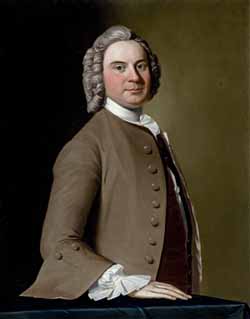
The handwriting identifies this document as having been made by Samuel Winthrop (1716–1779, shown here), long-time clerk of the Massachusetts superior court.

So far as I can tell, this text has never been published. It doesn’t contain information not found elsewhere—in fact, given that Charles Bourgate was lying, it doesn’t contain actual information at all. But here it is.
Q. was you at the Custom house in Boston on the Eveng. of the 5th. of March last
A. I was there

Q. at what time did you go there
A. I do not know at what hour I went there; it might be half an hour or an hour after Sunset

Q. how long did you stay there
A. after I got into the Custom house I staid there not quite half an hour

Q. Did you leave the Custom house before the firing was over
A. the guns were all discharged before he [sic] left the house

Q. was you at the Custom house at the time the bells rung for fire
A. I went there while the bells were ringing & staid there while the bells rang, when I came out of the house the bells had done ringing—

Q. do you know of any guns being fired out of the Custom house at that time
A. I fired two guns & my Master Mr. Manwarring fired one—

Q. Where were you when Mr. Manwarring fired
A. I was below. I had come from the Chamber down stairs I did not see him fire, I saw him direct the gun out of Window

Q. how came you to give those guns
A. my Master & the tall man ordered me

Q. What Chamber was those guns fired out of
A. Right over the Sentry box

Q. Whether when you went home you found Mr. Hudson & his Wife at home
A. I found them at home in the same Room where I left them when I went away—
There’s no date on this document, but I think it comes from the week after the Massacre. That was when Bourgate first told his story to legal authorities, but before John Munro came forward to provide an alibi for Edward Manwaring. Bourgate subsequently changed his story to accuse Munro as well, and a grand jury indicted both men and a couple more.

The indictment of Capt. Thomas Preston and the soldiers, also in the Boston Public Library, was written and signed by the Massachusetts attorney general, Jonathan Sewall. He then retired from the case. The indictment of Manwaring, Munro, and other men connected to the Customs service appears in Samuel Winthrop’s handwriting, based on Charles Bourgate’s testimony.

Sunday, January 11, 2026

The Reality of “Dr. Cutts”

Back here, I quoted Edmund Quincy’s story of his father, little Josiah Quincy, starting to study Latin at the Phillips Academy in Andover in 1778 alongside a man more than twenty years older—a former Continental Army surgeon named Cutts.

It’s significant that that story appeared in Edmund Quincy’s biography of his father not in Mayor Quincy’s own words but in those of the author (shown here), remembering what he’d heard from his father decades before.

As I stumbled across gathered evidence, it became clear that the younger Quincy amalgamated multiple figures from his father’s school days into a composite “Dr. Cutts.”

The first figure was James Anderson of Londonderry, New Hampshire, admitted to the same inaugural class at the academy alongside six-year-old Josiah even though he was twenty-nine. As beginning students, they may indeed have been seated together, as Edmund Quincy described.

Next were a pair of young brothers named Cutts, who joined the school in 1782. Josiah Quincy and Richard Cutts (1771–1845) went on to be Harvard classmates who both represented Massachusetts in the U.S. Congress in the first decades of the nineteenth century, albeit in different parties. Edmund Quincy remembered that surname.

Finally there was John Brown Cutting, whose last name was easily confused with “Cutts” and equally appropriate for a surgeon. He entered the Phillips Academy in 1781, when Josiah Quincy was nine. According to academy records, Cutting was then 23 years old. (According to the age reported when he died, Cutting was a little older, born about 1755.)

John Brown Cutting came to the school from the Continental Army medical department. But he wasn’t a surgeon or surgeon’s mate; rather, starting in 1775 he served as an assistant apothecary. In this period, apothecaries were routinely addressed as “Doctor,” and Cutting definitely used that title.

Other details of John Brown Cutting’s life also connect with what Edmund Quincy described about “Dr. Cutts.” He did spend many years after the Revolutionary War in Europe. In 1806 he did marry a gentlewoman in Virginia: Sally (Carter) Carter (1767–1814), widow of George Carter.

Later Cutting worked for the U.S. government and started spelling his middle name with a terminal E. He died in Alexandria in 1831. Laudatory obituaries appeared in national newspapers and in the Boston Palladium, which likely prompted Josiah Quincy to tell his son stories of his old schoolmate.

Mayor Quincy probably remembered John Brown Cutting vividly not just because he was an unusual older student at Andover but because the man was a world-class networker, schmoozer, and unabashed gossip. Cutting served John Adams as a fill-in secretary in 1787. He aided American sailors as a self-appointed diplomat. He corresponded with both John and Abigail Adams, Washington, Jefferson, Hamilton, Madison, Knox, Jackson, Pickering, and more. Gouverneur Morris once described him entering the room with “a World of News.”

I plan to explore stories from the life of John Brown(e) Cutting. For now, though, I simply wish to establish that Edmund Quincy’s tale of a “Dr. Cutts” turns out to have some basis in reality, but not exactly as printed.

Saturday, January 10, 2026

Seeking Josiah Quincy’s Much Older Schoolmate

The upstart rural academy in Andover that became the prestigious Phillips Andover prep school published records of exactly who attended. Of course it did.

The Biographical Catalogue of the Trustees, Teachers and Students of Phillips Academy Andover, 1778-1830 confirms one detail of the story from Edmund Quincy’s biography of his father that I quoted yesterday.

Namely, that age six, Josiah Quincy (1772–1864, shown here past age six) was indeed the youngest student at the school when it opened in 1778. There were five seven-year-olds, though.

The alumni list also confirms that one student at the academy that year was “a man nearly thirty years of age”: James Anderson of Londonderry, New Hampshire, aged twenty-nine.

It’s therefore conceivable that little Josiah and old Mr. Anderson were seated together as the most rank beginners among the Latin scholars. This history of the school makes that assumption.

Otherwise, however, James Anderson doesn’t match Edmund Quincy’s description of his father’s classmate: a former Continental Army surgeon named Cutts who went on to an overseas career and marriage to an heiress in the vicinity of Alexandria, Virginia.

A man from Londonderry named James Anderson did serve as a lieutenant in the first year of the war. He was not, however, a surgeon or surgeon’s mate. His military duties didn’t take him anywhere near Virginia. And we have no indication that that former officer decided to go back to school.

The academy said its James Anderson went on to Harvard College in 1784. Sometimes men of limited means who were fixed on clerical careers started their higher education late, and they might spend a couple of years intensively studying Latin and Greek to qualify for college.

Harvard says its James Anderson didn’t go on to earn a master’s degree, as most aspiring clergymen did. He died in 1835. I can’t find anything more about him. His common name doesn’t help. (In the 1790s, for example, George Washington was corresponding with a Scottish botanist named James Anderson while employing a different James Anderson to operate his distillery.)

When the Sibley’s Harvard Graduates series reaches the class of 1784, it might have more to say about this James Anderson. (This year’s volume covers the classes of 1775 through 1777.) His profile will surely not reveal he went by the name of “Dr. Cutts,” though.

In 1782, a couple of brothers named Cutts arrived at the academy. But they were about Josiah Quincy’s age, not army veterans and not doctors.

So does Edmund Quincy’s account of his father’s adult schoolmate Dr. Cutts have any basis in reality?

TOMORROW: Meet Dr. John Brown Cutting.

Friday, January 09, 2026

“This mature schoolfellow, Cutts by name”

Edmund Quincy wrote The Life of Josiah Quincy of Massachusetts (1867) by drawing on his father’s writings and his own memories.

The father, namesake son of the Patriot Josiah Quincy, Jr., wrote a detailed reminiscence about his years as a student at what became the Phillips Andover Academy. I quoted some here.

To that first-hand account Edmund added information he recalled hearing, such as this anecdote about one of his father’s classmates:
The Phillips Academy at Andover had just been founded [in 1778], mainly by the contributions of his grandfather [William Phillips] and other members of the Phillips family; and it was thought expedient that the founders should show their confidence in the school by sending their children and grandchildren to it. . . .

And at six years old he took his seat on the lowest form by the side of a man nearly thirty years of age, and they began their Cheever’s Accidence [the standard Latin textbook] together.

This mature schoolfellow, Cutts by name, had been a surgeon in the Continental army, who, having scrambled into as much surgical skill as was then thought sufficient for that position without any early advantages of education, was made so sensible of his deficiencies, through associating with the cultivated men he was thrown among in the army, that he resolved to supply them as soon as he had an opportunity.

Resigning his commission, he came to Andover Academy, and went regularly to school for two years, to make up in some degree his classical shortcomings. Out of school, of course, he associated on equal terms with the Preceptor and the other gentlemen of the town. He was a man of wit and talent, and the two ill-mated form-fellows were friends in later years.

Various romantic stories are told of him, of which this is one. During his military service he had won the heart of the daughter of a rich Virginia planter, who would not consent that her hand should go with it to the penniless young surgeon. His scholastic training as well as his military career being ended, Dr. Cutts, after various adventures, went to Europe, where he lived for many years, nobody knew how.

After long years a letter from the lady of his youthful love found him out, which told him that her father, and I think her husband, and whatever other obstacles had hindered the course of their true love from running smooth, were now out of the way, and that, if he retained his old affection for her, and chose to claim her early promise, she was ready to fulfil it. On this hint he hastened home, married his early love, and spent the rest of his life at ease. . . .

All this I remember my father telling us at breakfast, many years ago, on reading in the newspaper the death of his old schoolfellow, somewhere near Alexandria, at a good old age.
Now that’s a fine anecdote of a marriage being saved. Unfortunately, it’s tough to find any evidence to support it, and easy to find contradictory records.

TOMORROW: Little Josiah’s big classmate.

Thursday, January 01, 2026

“Time turns his Glass, and round the Pole Another Year begins to roll”

In 1775 the British artist John Hamilton Mortimer issued a series of prints titled Twelve Characters from Shakespeare.

One of those portraits showed Edgar from King Lear, in his guise as Poor Tom the madman, as shown here.

Among that character’s lines was “Poor Tom’s a-cold.”

Two hundred fifty years ago today, the young carriers of the Pennsylvania Evening Post quoted that line as they regaled their customers with this poem.
New-Year’s Verses,
Addressed to the CUSTOMERS of
The PENNSYLVANIA EVENING POST,
By the PRINTER’s LADS who carry it.

MONDAY, JANUARY 1, 1776.

“POOR TOM’s a cold”---God bless you, Masters,
And save you all from all Disasters!
Time turns his Glass, and round the Pole
Another Year begins to roll:
Welcome the new, adieu the old,
For every Year Poor Tom’s a-cold.

Sages have said, and Bards have sung,
That long ago, when Time was young,
The World enjoy’d a golden Age:
No Dog-Star kindled then to Rage;
No Summer’s Drought, nor Winter’s Snow,
Forbade the limpid Stream to flow:
No Torrents of descending Rain
With Desolation spread the Plain:
No languid Air, with sickly Breath,
Diffused the pois’nous Seeds of Death:
No Comet’s Blaze, of horrid Light,
Shot thro’ the Curtain of the Night;
No chilling Blast flew howling by,
No Lightnings rent the burning Sky,
Nor Thunder shook the rolling Sphere.
One genial SPRING was all the Year.
Then were the Hills and Vallies seen
Forever blooming, ever green;
And, like the Season, mild and gay,
Man liv’d a Stranger to dismay;
For smiling Peace, with Plenty crown’d,
Gave Health and Joy to all around.
No Din of War, no civil Hate,
Were then the chastening Rods of Fate.
O had I seen those Days of old!
But now, alas! Poor Tom’s a-cold:
But you, who live with Hearts at Ease,
Will surely never let him freeze.
Sweet Madam, Gentle Sir, Good-morrow;
God keep you free from Pain and Sorrow,
And let me hope, ere long, to boast
Good News!----Good News!----in the EVENING POST.
This example of carriers’ verse is interesting in how little it says about current affairs. The American colonies were at war with the London government, but the only possible allusion to that was the mention of “civil Hate.”

Earlier American examples of these verses reveled in the patriotism that the newspaper employees and their customers supposedly shared, heaping disdain on foreign enemies like France and Spain. But in a time of civil war, loyalties were more problematic. Better to talk about the weather.

That wasn’t because the printer of the Pennsylvania Evening Post, Benjamin Towne, kept away from politics. He supported the colonial resistance and independence, and a year later his 1777 carriers’ verse celebrated, “Shout, George is King no more.”

Of course, the British army occupied Philadelphia late that year. In 1778 Towne’s carriers offered lines praising Gen. Sir William Howe to the skies.

Thursday, December 25, 2025

John Rowe’s Christmas Gift to Himself

On 25 December 1775, 250 years ago today, the Boston merchant John Rowe began a new volume of his daily diary.

The Massachusetts Historical Society has preserved and digitized that document, so that page is available here with a good crowd-sourced transcription.

Rowe wrote:
Monday December 25. 1775 Christmas Day — The Weather A Little Moderated but Cold W W —

I went to Church this morning. Mr. [William] Walter Read prayers & Mr [Samuel] Parker preachd A very Good Sermon from the 2d Chapter of St Lukes Gospell and 14th. Verse Glory to God in the Highest and on Earth Peace Good Will towards Men.

I dind at home with Mrs. Rowe the Revd Mr Parker & Jack Rowe and spent the Evening at home with Richd Greene Mrs. Rowe & Jack Rowe

I Staid & partook of the Sacrament

The Mony gather’d for the Use of the Poor of this church amo to Sixty Dollars —
Rowe was an Anglican, a vestryman at Trinity Church. Unlike the colony’s more numerous Congregationalists, he and his fellow parishioners observed Christmas. But of course Christmas in a besieged town wasn’t a terrifically joyous occasion; “Peace [and] Good Will towards Men” were in short supply.

Rowe’s diary entry for this day is innocuous. This volume raises questions mainly in how the previous volume, covering the days from 1 June to 24 December 1775, is missing. What did Rowe do during the siege? How closely did he cooperate with the royal authorities? What sentiments did he express about the Battle of Bunker Hill and other fatal fights?

The only previous volume of the diary to go missing covered 18 Aug 1765 to 10 Apr 1766, a gap starting shortly before the attack on Thomas Hutchinson’s house. (The lieutenant governor suspected Rowe was somehow behind that attack.) Rowe’s numbering indicates that he filled 138 pages in those eight months.

In contrast, Rowe wrote only 72 pages in the missing volume from late 1775, which would be by far the shortest volume in his journal. Still, those pages would be good to have.

We know John Rowe altered a 1775 diary entry to reverse what he first wrote about the Massachusetts Provincial Congress’s fast day. We know his description of his speech during one of the 1773 tea meetings doesn’t match what an observer in the room reported. It’s easy to imagine, therefore, that Rowe at some point looked at what he wrote about the Stamp Act and its opponents, and about the early months of the war, and decided that those pages no longer reflected his views. Or how he wanted people to view him.

Sunday, December 21, 2025

The Burdicks after the Boston Massacre

In the year after the Boston Massacre, Benjamin Burdick became the proprietor of the Freemason’s Arms tavern—better known as the Green Dragon Tavern, owned by the St. Andrew’s lodge.

I imagine his wife Jane did a lot of the hosting since Benjamin remained Constable of the Town House Watch through 1774.

As the London government cracked down and war approached, the Burdicks moved out to Marblehead. Benjamin opened a “large, genteel, and commodious” inn opposite Jeremiah Lee’s mansion. Soon he was watching over auctions of captured goods and vessels. Later the inn hosted auctions of estates confiscated from absent Loyalists.

By 1786 Burdick had relocated to Danvers, at the Sign of the Flag, but that property was sold the next year. Jane was back in Boston when she died in 1791. I haven’t found a record of Benjamin’s death. (It doesn’t help that genealogists have intertwined him with a man of the same name from Westerly, Rhode Island.)

In 1778, the Boston merchant Samuel Phillips funded the opening of a new academy in Andover with Eliphalet Pearson as preceptor. The inaugural class of that school included Malcolm McNeil Burdick, born in Boston 1764—the Burdicks’ oldest son. (His first and middle name appeared with different spellings.) Malcolm was in his teens but for some reason listed as age ten in school records.

Later Malcolm M. Burdick went to sea, appearing in advertisements as master of the Minerva sailing from Baltimore to Liverpool in 1801 and of the John out of New York in 1807. By 1812 he had settled in Windham, Maine, where he advertised that someone else’s livestock had gotten onto his land.

Another of Benjamin and Jane Burdick’s sons, William, born in 1774, went into printing. In July 1795 he and Benjamin Sweetser cofounded a newspaper in Boston called the Courier. Soon that became The Courier, Boston Evening Gazette and Universal Advertiser. Burdick signed over his portion of the business to Sweetser in December, and it ceased publishing in March 1796 after a fire.

[ADDENDUM: From 1798 to 1800 William Burdick was the junior partner in publishing the Oriental Trumpet newspaper in Portland, Maine. He then returned to Boston.]

In 1809 William Burdick married Lucretia Sprague (1788–1849), daughter of Continental artillery veteran Samuel Sprague (1753–1844). According to her brother, the banker and poet Charles Sprague (1791–1895), their father was also part of the Boston Tea Party.

William Burdick reused the Boston Evening Gazette name for a new periodical in 1813. His printing office at Congress and State Streets was next to the Exchange Coffee House, and he bought stock in that jittery enterprise. The printer’s older brother Malcolm sold subscriptions up in Maine.

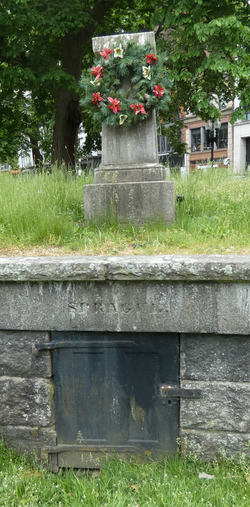
That Boston Evening Gazette evolved into the the Boston Intelligencer in August 1816. Burdick sold the business the following January and died on 30 May 1817, under Dr. John Collins Warren’s care. He was intestate but solvent, so his widow Lucretia could settle the estate and live for three more decades. She was interred in the Sprague family tomb in Boston’s Central Burying-Ground, shown above.

Thursday, November 27, 2025

A Tight Squeeze for the 1780–81 School Year

When we left the Boston selectmen yesterday, a town meeting committee had just told them that they’d heard the widow Rebecca Holbrook might have a room in her house suitable for teaching handwriting and arithmetic to 70–80 boys.

Since Widow Holbrook’s late husband and his brother had both been masters of the South Writing School, she would surely be willing to host scholars from that school while it was repaired after a fire, right?

The selectmen delegated two of their number, Gustavus Fellows and Tuthill Hubbard, to confer with Rebecca Holbrook. On 12 April they reported back “that Mr. [Samuel? Mrs.?] Holbrook was out of Town & they were of opinion that said Room would not accommodate the Schoolars of the South part of the Town, without very great expence.”

“Very great“ was the same level of expense that had prompted the selectmen to reject refitting the laboratory building as a school. With the war and wartime inflation both raging, the selectmen very much wanted to avoid spending a lot.

So the selectmen and town came to a decision about what to do with the South Writing School: nothing.

At least that’s how I interpret the record, which doesn’t include any moment of decision but shows the results. The boys appear to have been crowded into the town’s two other Writing Schools, on Queen Street and in the North End. The charred building was apparently left alone.

Normally in early July the selectmen led a big committee of officials and eminent male citizens on a visit to each of the schools. This was an end-of-school-year ritual, an occasion for the Writing School boys to show off their skills and for the Latin School boys to recite. The parents of the Latin School boys who were graduating after the full course of study (only about a third of those who had entered seven years before) joined the town notables for a dinner in Faneuil Hall.

I see no record of that ceremony in 1780—another likely sign of wartime austerity. The selectmen’s records say they visited the schools on 6 July, but there’s no list of invitees. That page left space for the count of boys in the South Latin School, North Latin School, Writing School on Queen Street, and North Writing School—but those spaces are blank. And the South Writing School wasn’t mentioned at all.

On 11 July 1781 the custom was back on, and the count was:
  • South Latin School: 91 scholars
  • North Latin School: 39
  • Queen Street Writing School: 270
  • North Writing School: 271
Back in 1773, the three Writing Schools held 674 students. Evidently Boston’s population was still low enough that all the Writing School boys could squeeze into two buildings.

But that population was growing. Inflation leveled off with the arrival of hard money from France. Bostonians wanted to go back to normal—even if that might cost a bit.

In May 1781 the town meeting authorized paying “Three hundred Pounds old Currency towards purchasing Repairs for South Writing School.” The next month, the selectmen reached an agreement with an experienced writing master to reopen that school, sixteen months after the fire.

John Vinal was moving back from Newburyport.

COMING UP: Vinal in the new republic.