J. L. BELL is a Massachusetts writer who specializes in (among other things) the start of the American Revolution in and around Boston. He is particularly interested in the experiences of children in 1765-75. He has published scholarly papers and popular articles for both children and adults. He was consultant for an episode of History Detectives, and contributed to a display at Minute Man National Historic Park.

Subscribe thru Follow.it


•••••••••••••••••


Showing posts with label Abigail Adams Smith. Show all posts

Sunday, August 31, 2025

“He died with the Effects of the Measles”

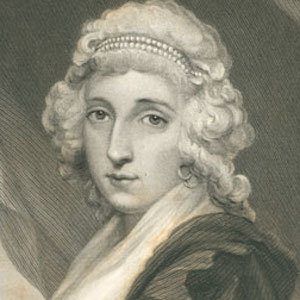
Henry Marchant (1741–1796, shown here) was a rising young lawyer in Rhode Island.

Born on Martha’s Vineyard, Marchant grew up in Newport and attended the College of Philadelphia (one of the schools that became the University of Pennsylvania in 1791).

In 1771 Marchant was appointed to be Rhode Island’s attorney general. He set sail for London to observe judicial practices there. His notes on James Somerset’s freedom case are an important document of that episode.

Marchant headed home in November 1772. On arriving in Boston, he received a boatload of bad news, as he told Benjamin Franklin in a letter. One loss was particularly close:
Mr. [Tuthill] Hubbart next informed me of the Death of my Third and only Son a Child of Three years old. He died with the Effects of the Measles, the Day after I left London. My two Daughters had been very ill with the same Disorder but are since happily recovered.
Measles was a common disease in colonial America. Martha Washington and other people at Mount Vernon caught it in 1760, and some of her enslaved workers in 1773. Benjamin Franklin’s grandson Benny caught measles in 1772, like little William Marchant. In 1788 Henry Knox reported that he had five children going through the disease.

In 1783 Abigail Adams reported that her son Charles had came down with the measles, adding: “it has proved very mortal in Boston. Tis said 300 children have been buried since last March.” Abigail’s sister Mary Cranch included a cousin’s descriptions of his symptoms in a letter in 1790:
I know you Will rejoice to hear that cousin Tom has got comfortable through the Measles. He caught them at Cambridge the day he arriv’d from new york— He came here the Monday after & told me he thought he had them but return’d the next day—promising to return as soon as he felt the Symtoms The Monday following his cousin William brought him home in a close carriage but he did not break out till Wednesday.

he was pretty sick but not very bad till they came out. He had Several faint turns before & sometimes felt as if he did not weigh a pound after they broke out— The rash came first but the measles soon follow’d thick enough, his cough was troublesome & his Fever pretty high but upon the whole I think he has had them light to what people in general have or to what you & I had. There are many People Who have them now extreamly bad & many have died with them—
Measles was overshadowed by smallpox, another disease that produced fever and spots, because smallpox was much deadlier. On the other hand, measles is much more contagious—spreading far more quickly and easily than Covid-19, H.I.V., and other viruses we’ve faced in recent decades.

We don’t have to worry about measles as much as past generations did because in 1954 medical scientists developed a vaccine. Cases in the U.S. of A. dropped precipitously after the government approved regular immunizations in 1963.

Unfortunately, the Trump administration’s Secretary of Health and Human Services, Robert Kennedy, Jr., has cockamamie ideas about vaccines. In fact, Kennedy was chosen for his cockamamie ideas—he has no other connection to health services. In particular, experts blame Kennedy for promoting a measles epidemic in American Samoa in 2019.

During his confirmation hearings Kennedy made noises about believing in vaccines, pointing out that all his children have been immunized. But as soon as he was in office and a media outlet gives him free rein to talk, Kennedy returned to spouting all sorts of lies about the nature of the vaccine, its effectiveness, and its side effects.

This past month, Kennedy demanded that the Centers for Disease Control adapt to his anti-vaccine beliefs, cancel highly promising research, and curtail the availability of Covid-19 boosters for Americans. When the head of the C.D.C. refused to go along, Kennedy and Trump forced her out, prompting the next level of managers to resign in protest.

There are many ways the Trump administration is harming people and causing deaths around the globe. The effects of Kennedy’s anti-vaccine crusade, if not stopped, will be among the most damaging. Parents will once again be feeling the same grief as Henry Marchant for no good reason.

Wednesday, October 14, 2020

A New Women’s History Podcast to Enjoy

Your Most Obedient & Humble Servant is a new podcast hosted by Kathryn Gehred, one of the editors working on the forthcoming scholarly collection of Martha Washington’s correspondence.

Each episode digs into one letter to or from a woman in the eighteenth or nineteenth century, highlighting the historical and personal context of that communication.

I like how Gehred and her guests are comfortable with the fact that one of the appeals of historical research is being able to read other people’s private mail.

Episode 5, “An Age of Discovery,” is a fine example. This conversation delves into a letter that Mary Cranch wrote to her younger sister Abigail Adams in 1786. As Gehred and her guest Rachel Steinberg discuss, Cranch crafted her letter to lead up to the juiciest piece of local gossip.

Go listen and come back. Or at least read the letter. Because I’m going to tack more gossip onto this episode.

Mary Cranch was married to Richard Cranch, as the podcast says. He came to America in 1746 with his sister Mary and her husband, Joseph Palmer. The Palmers and Cranches joined the locally grown Quincys and Adamses in making up north Braintree’s Whig gentry.

The Palmers’ eldest son was Joseph Pearse Palmer, who married Elizabeth Hunt across the border in New Hampshire in 1772. He was twenty-two, a recent Harvard graduate; she was seventeen. After the war, the Palmer family moved into Boston, but their fortunes fell through a combination of business failures, ill health, and general economic stress. The elder Joseph Palmer ended up in a dispute over debts with John Hancock before dying in 1788.

Joseph Pearse Palmer, through professional setbacks, psychological depression, and perhaps other personal issues, spent months at a time away from his family. Elizabeth Palmer took in boarders, including a young attorney and author named Royall Tyler (shown above).

Back in 1782, Tyler had settled in Braintree, boarding with the Cranches. During that time he wooed Nabby Adams, the Adamses’ eldest child. Her parents and the Cranches were more enthused about this than she was. Nabby put Tyler off until she sailed with her mother to Europe. There she met and married William Stephens Smith, the “Coll Smith” mentioned in this letter. Tyler came away with the first surviving volume of John Adams’s diary, eventually discovered among his papers, and looked around for new conquests.

That provided the conditions for the scene Mary Cranch described at the end of this letter, which must have taken place at Elizabeth Palmer’s boarding house in Boston. In the spring of 1786, Joseph P. Palmer had come home after many months to find his wife very friendly with boarder Tyler and a few months pregnant. The baby arrived in September 1786.

“I was determin’d to see” the newborn girl, Mary Cranch told her sister, to confirm that the baby had arrived full term. She saw Joseph P. Palmer, Elizabeth Palmer, and Royall Tyler all in a bedroom together, resolutely not acknowledging anything odd about the situation.

And this is the point I can’t stress enough: Joseph P. Palmer, the dupe of Mary Cranch’s story, was her own nephew.

Thursday, February 13, 2020

The Great 1770 Quiz Answers, Part 3

Here are answers from the start of the second part of the Great 1770 Quiz.

VII. What were the real names of people in Boston behind these nicknames or pseudonyms used in 1770?

A) Determinatus
B) The Irish Infant
C) Michael Johnson
D) Paoli
E) Philanthrop
F) Shan-ap-Morgan
G) Vindex
H) William the Knave

One site to find almost all of these names is Boston 1775. Use the search box in the upper left corner of the screen (on the desktop design). I’ve discussed everything but “Paoli.” Of course, one should still confirm what I’ve written, but this site offers a quick start.

Three of those names are pen names used in newspaper essays. Samuel Adams wrote as “Determinatus” and “Vindex,” among many other pseudonyms. Jonathan Sewall signed himself “Philanthrop.” Many newspaper readers knew the identities behind those signatures; they weren’t actually concealing much.

Two other nicknames are examples of how people attacked their political enemies in newspaper essays. Adams called Customs Commissioner John Robinson “Shan-ap-Morgan” because he came from Wales. Boston Chronicle printer John Mein called William Molineux “William the Knave,” along with my favorite, “Admiral Renegado.”

It’s not clear which category “Paoli” belongs in. In 1769 the unsuccessful Corsican revolutionary Pasquale Paoli (1725-1807) was celebrated in Britain, where it was easier to cheer people rebelling against the French king than rebelling against one’s own. American Whigs toasted Paoli, Ebenezer Mackintosh named a child after him, and a Pennsylvania tavern with his name grew into a township (and 1777 battle site).

In an 18 Feb 1770 letter Thomas Hutchinson wrote about Molineux, “whom the Sons of Liberty have given the name of Paoli.” The Censor magazine for 14 Mar 1772 likewise referred to “the Bostonian who assumes the name of Paoli.” But those are Loyalist voices, not actually Molineux’s friends. In fact, they were his enemies, eager to make him seem conceited or alarming.

So did Molineux and his colleagues really use the nickname “Paoli” regularly and unironically? I’m not sure. But many historians have accepted Hutchinson as an accurate reporter and repeated that Molineux seized on the Corsican’s name.

On to “Michael Johnson.” In the week after the Boston Massacre, newspapers and coroners referred to one dead victim under that name. Then suddenly they started calling that tall mulatto man Crispus Attucks—without, unfortunately, offering any explanation for the change. Most historians suspect Attucks was living under an alias, but that’s still a guess.

Finally, in his autobiography John Adams recalled how the merchant James Forrest, “then called the Irish Infant,” asked him to defend the soldiers after the Massacre. Adams used the same nickname in an 1816 letter to Jedidiah Morse. He described Forrest in tears, so people have interpreted the nickname to mean Forrest, an Irishman, cried as easily as a baby.

That said, I haven’t found any other source describing Forrest by that name or trait. When Forrest told the Loyalists Commission about the services he’d rendered to the Crown, he didn’t mention securing the soldiers’ defense attorney. And the younger Abigail Adams used the phrase “the Irish infant” to describe a little person she saw in London in 1785. So there’s still a little mystery there.

Both Kathy and John matched all the nicknames to the right people.

VIII. After approving the Short Narrative of the Horrid Massacre, Boston voted to send a copy to about two dozen potentially sympathetic readers in Britain. Who was the only woman on that list?

Boston’s Short Narrative report can be found at many websites, and in multiple editions. The first printing, as shown by the copy Molineux sent to Robert Treat Paine and the Massachusetts Historical Society later digitized, ends with an index of witnesses. The town meeting authorized a committee to send copies to “the Duke of Richmond, General [Henry Seymour] Conway, and such other Gentlemen as they may think proper” in Britain.

On 16 May, the printers produced more copies with some new pages at the end listing the people in Britain that committee had chosen. A footnote explained, “This list and the following letter, are annexed to such copies only of this pamphlet, as are intended for publication in America.” Then more material was added for later printings. The longer copies were the basis of reprints in 1849 and 1870.

There’s one female name on that long list of recipients: the Whig historian Catharine Macaulay (shown above during her 1784-1785 visit to the U.S. of A.).

Both John and Kathy identified that supporter of the American cause.

IX. What site on the Freedom Trail came under new management in 1770?

There are a limited number of sites on the Freedom Trail, some of which didn’t even exist in 1770. So that narrows down the possibilities.

The Freedom Trail Foundation’s own webpage about those sites includes an entry that begins: “Built around 1680, the Paul Revere House, owned by the legendary patriot from 1770-1800…” A-ha!

A little research in biographies confirms that Paul Revere bought the North End house now named after him in late 1770. It was his home and place of business for several years, though he moved out for grander quarters well before he sold it.

Both Kathy and John correctly landed on that site.

TOMORROW: Tar, feathers, and death.

Wednesday, July 04, 2018

John Adams and America’s First Fourth

As many people know, John Adams lauded the Continental Congress’s vote for independence by writing home, “The Second Day of July 1776, will be the most memorable Epocha, in the History of America.”

Adams didn’t realize that the Congress’s public Declaration of why it had voted that way—a document he was contributing to—would end up being much more prominent than the actual vote and thus define independence in the American people’s minds.

I wondered how long it took for Americans, and for Adams in particular, to adopt 4 July as the important anniversary. And the answer is: not long at all.

On 5 July 1777 Adams wrote to his preteen daughter Nabby:
Yesterday, being the anniversary of American Independence, was celebrated here with a festivity and ceremony becoming the occasion. . . .

The thought of taking any notice of this day, was not conceived, until the second of this month, and it was not mentioned until the third. It was too late to have a sermon, as every one wished, so this must be deferred another year.

Congress determined to adjourn over that day, and to dine together. The general officers and others in town were invited, after the President [Thomas Wharton, Jr.] and Council, and Board of War of this State.

In the morning the Delaware frigate, several large gallies, and other continental armed vessels, the Pennsylvania ship and row gallies and guard boats, were all hawled off in the river, and several of them beautifully dressed in the colours of all nations, displayed about upon the masts, yards, and rigging.

At one o’clock the ships were all manned, that is, the men were all ordered aloft, and arranged upon the tops, yards, and shrowds, making a striking appearance—of companies of men drawn up in order, in the air.

Then I went on board the Delaware, with the President [Wharton again? or John Hancock, head of the Marine Committee] and several gentlemen of the Marine Committee, soon after which we were saluted with a discharge of thirteen guns, which was followed by thirteen others, from each other armed vessel in the river; then the gallies followed the fire, and after them the guard boats. Then the President and company returned in the barge to the shore, and were saluted with three cheers, from every ship, galley, and boat in the river. The wharves and shores, were lined with a vast concourse of people, all shouting and huzzaing, in a manner which gave great joy to every friend to this country, and the utmost terror and dismay to every lurking tory.

At three we went to dinner, and were very agreeably entertained with excellent company, good cheer, fine music from the band of Hes­sians taken at Trenton, and continual vollies between every toast, from a company of soldiers drawn up in Second-street before the city tavern, where we dined. The toasts were in honour of our country, and the heroes who have fallen in their pious efforts to defend her.

After this, two troops of light-horse, raised in Maryland, accidentally here in their way to camp, were paraded through Second-street, after them a train of artillery, and then about a thousand infantry, now in this city on their march to camp, from North Carolina. All these marched into the common, where they went through their firings and manoeuvres; but I did not follow them.

In the evening, I was walking about the streets for a little fresh air and exercise, and was surprised to find the whole city lighting up their candles at the windows. I walked most of the evening, and I think it was the most splendid illumination I ever saw; a few surly houses were dark; but the lights were very universal. Considering the lateness of the design and the suddenness of the execution, I was amazed at the universal joy and alacrity that was discovered, and at the brilliancy and splendour of every part of this joyful exhibition.

I had forgot the ringing of bells all day and evening, and the bonfires in the streets, and the fireworks played off.

Had General Howe been here in disguise, or his master, this show would have given them the heart-ache.
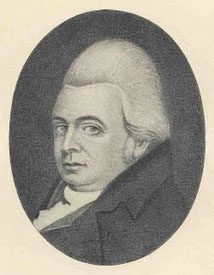
So as early as 1777 John Adams was calling the 4th of July “the anniversary of American Independence.” And for once, he wasn’t the grumpiest member of the Congress. The Connecticut delegate William Williams (shown above) wrote to Gov. Jonathan Trumbull the same day:
Yesterday was in my opinion poorly spent in celebrating the anniversary of the Declaration of Independance, but to avoid singularity and Reflection upon my dear Colony, I thot it my Duty to attend the public Entertainment; a great Expenditure of Liquor, Powder etc. took up the Day, and of Candles thro the City good part of the night. I suppose and I conclude much Tory unilluminated Glass will want replacing etc.
Within there months Gen. William Howe was in Philadelphia, as Adams had only imagined. The Continental Congress and Pennsylvania government had fled to Lancaster. And the U.S.S. Delaware was in British hands.

Thursday, September 28, 2017

Examining Abigail Adams Smith’s Breast Cancer, 3 Oct.

On Tuesday, 3 October, the Thomas Crane Public Library in Quincy will host a panel discussion on “Abigail Adams Smith and the Evolution of the Treatment of Breast Cancer from Colonial America to Today.”

Historical background for the event:
Abigail and John Adams’s daughter Abigail (“Nabby”) Adams Smith, born in Braintree (now Quincy) in 1765, was diagnosed with breast cancer in 1810, undergoing a radical mastectomy in 1811. Despite the surgery, cancer spread throughout her body, causing her death at age 48 in 1813. Abigail Adams expressed her grief at the loss of her daughter with the words, “The wound which has lacerated my Bosom cannot be healed.”
The surgeon who performed the operation was Dr. John Warren, whose older brother Joseph had been the Adams family’s physician before the war.

Smith’s case and modern treatment of her condition will be discussed by experts in medicine and the history of medicine:
  • David Jones, M.D., Ph.D., the A. Bernard Ackerman Professor of the Culture of Medicine at Harvard University.
  • Suniti Nimbkar, M.D., FACS, medical director of the Breast Care Center at South Shore Hospital.
This event has been organized by the Abigail Adams Historical Society, stewards of the birthplace of the second First Lady, in partnership with South Shore Hospital's Breast Care Center and the Thomas Crane Public Library.

The discussion is scheduled to start at 7:00 P.M. in the library’s Community Meeting Room, on the ground floor. It is free and open to the public.

Saturday, July 04, 2015

Celebrating the Fourth of July in 1777

John Adams wrote this letter from Philadelphia to his daughter Abigail, then about to turn twelve, on 5 July 1777:
Yesterday, being the anniversary of American Independence, was celebrated here with a festivity and ceremony becoming the occasion.

I am too old to delight in pretty descriptions, if I had a talent for them, otherwise a picture might be drawn, which would please the fancy of a Whig, at least.

The thought of taking any notice of this day, was not conceived, until the second of this month, and it was not mentioned until the third. It was too late to have a sermon, as every one wished, so this must be deferred another year.

Congress determined to adjourn over that day, and to dine together. The general officers and others in town were invited, after the President [Thomas Wharton, Jr.] and Council, and Board of War of this State.

In the morning the Delaware frigate, several large gallies, and other continental armed vessels, the Pennsylvania ship and row gallies and guard boats, were all hawled off in the river, and several of them beautifully dressed in the colours of all nations, displayed about upon the masts, yards, and rigging.

At one o’clock the ships were all manned, that is, the men were all ordered aloft, and arranged upon the tops, yards, and shrowds, making a striking appearance—of companies of men drawn up in order, in the air.

Then I went on board the Delaware, with the President [Wharton again? or John Hancock, head of the Marine Committee] and several gentlemen of the Marine Committee, soon after which we were saluted with a discharge of thirteen guns, which was followed by thirteen others, from each other armed vessel in the river; then the gallies followed the fire, and after them the guard boats. Then the President and company returned in the barge to the shore, and were saluted with three cheers, from every ship, galley, and boat in the river. The wharves and shores, were lined with a vast concourse of people, all shouting and huzzaing, in a manner which gave great joy to every friend to this country, and the utmost terror and dismay to every lurking tory.

At three we went to dinner, and were very agreeably entertained with excellent company, good cheer, fine music from the band of a taken at Trenton, and continual vollies between every toast, from a company of soldiers drawn up in Second-street before the city tavern, where we dined. The toasts were in honour of our country, and the heroes who have fallen in their pious efforts to defend her. After this, two troops of light-horse, raised in Maryland, accidentally here in their way to camp, were paraded through Second-street, after them a train of artillery, and then about a thousand infantry, now in this city on their march to camp, from North Carolina. All these marched into the common, where they went through their firings and manoeuvres; but I did not follow them.

In the evening, I was walking about the streets for a little fresh air and exercise, and was surprised to find the whole city lighting up their candles at the windows. I walked most of the evening, and I think it was the most splendid illumination I ever saw; a few surly houses were dark; but the lights were very universal. Considering the lateness of the design and the suddenness of the execution, I was amazed at the universal joy and alacrity that was discovered, and at the brilliancy and splendour of every part of this joyful exhibition.

I had forgot the ringing of bells all day and evening, and the bonfires in the streets, and the fireworks played off.
Even when the seat of government nearly forgot to celebrate the first anniversary of independence, there were fireworks.

Friday, March 21, 2014

A Miniature Henry Knox

In Dealings with the Dead (1856), Lucius Manlius Sargent told this anecdote about the Rev. Mather Byles, Sr., a Loyalist minister who stayed in Boston after the siege and became notorious for being unable to resist a pun:
He was intimate with General [Henry] Knox, who was a bookseller, before the war. When the American troops took possession of the town, after the evacuation, Knox, who had become quite corpulent, marched in, at the head of his artillery.

As he passed on, Byles, who thought himself privileged, on old scores, exclaimed, loud enough to be heard—“I never saw an ox fatter in my life.” But Knox was not in the vein. He felt offended by this freedom, especially from Byles, who was then well known to be a tory; and replied, in uncourtly terms, that he was a “—— fool.”
That anecdote has been republished in biographies of both Knox and Byles, and in other books as well. It’s too good to resist.

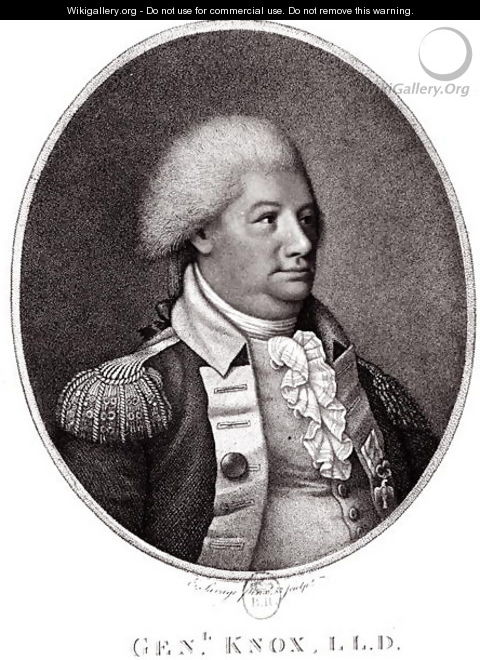
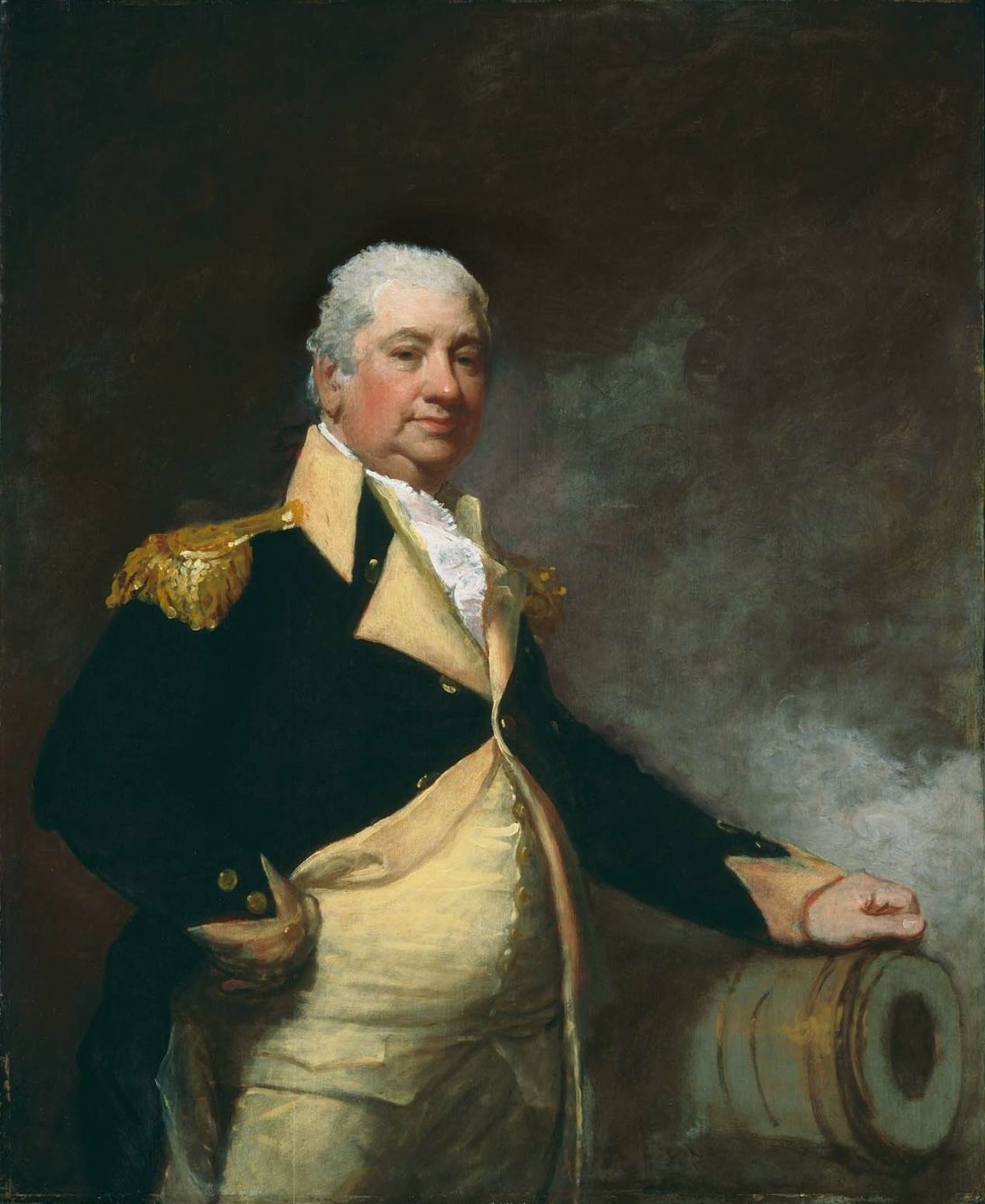
But I’ve long wondered whether Henry Knox was really that fat at the time. The picture above shows a miniature of Gen. Knox by Charles Willson Peale, dated 1778 and now in the collection of the Metropolitan Museum of Art. In this image Knox, while not miniature, doesn’t appear any fatter than many other gentlemen of his time.

When Peale painted Knox again around 1784, the general’s face had grown noticeably more jowly.

That might have been a peak point for Knox’s weight because on 18 May 1788 Abigail Smith wrote to her mother, Abigail Adams: “The General is not half so fat as he was.” (In his 1873 biography of the general, Francis S. Drake combined this remark with what Smith wrote about Lucy Knox on 15 June 1788.) At that time Smith was returning to America after some years in Europe, so she was comparing Knox in 1788 with him a few years earlier.

Knox’s later portraits by Edward Savage around 1790 and and Gilbert Stuart are also on the heavy side. (Mid-nineteenth-century American artists shaved down Knox’s belly like magazine art directors using Photoshop.) There’s no question Knox was a big man, but in 1776, when he was still in his mid-twenties, was he truly as fat as an ox?

Thursday, November 06, 2008

Dissecting John Adams on D.V.D.

Last spring, I wrote a series of postings about H.B.O.’s John Adams miniseries that led to interviews with the Boston Globe columnist Alex Beam and N.P.R.’s Bryant Park Project. Since then, the radio show was canceled, and the Globe’s circulation, advertising, and physical size have shrunk. Mere coincidence! (I think this link rounds up all those postings for anyone who dares risk looking at them.)

Now that John Adams is available on D.V.D., Princeton scholar Jeremy Stern has written a more comprehensive quibbling with its historical details. “What’s Wrong with HBO’s Dramatization of John Adams’s Story” at History News Network builds on his earlier “What’s Inaccurate About the New HBO Series on John Adams.” I found this detail particularly telling:

Fictionalized history can gain traction with alarming ease, spreading both factual errors and fundamental misconceptions: people tend to believe what they see on the screen. Wikipedia has already provided a depressing piece of proof.

The last episode of the series depicts the death of “Nabby” Adams, the daughter of John and Abigail, from breast cancer. An on-screen caption marks the start of Nabby’s ordeal as “1803.” In fact, the cancer was diagnosed in 1810; her mastectomy followed in 1811. What purpose does this flat-out distortion serve? Did the scriptwriters feel entitled to rewrite history simply to avoid an unwanted ten-year gap in events? Yet, as I write, Wikipedia’s entry on Nabby dates her diagnosis to 1803.

Wikipedia records all past revisions, revealing ironically that Nabby’s entry used to include the correct date of 1810—but it was altered to 1803 in late August of this year (the “John Adams” series had been released on DVD in June). Whoever made this erroneous “correction” clearly assumed that television had provided truer facts: the reviser noted a “change of date for diagnosis” to replace previously “false information.”
On 28 October, I changed that date back and added a section about Nabby in the miniseries to state that it had taken liberties with historical events. In doing so, I was trying to adhere to my new rule: Even though it’s a lot of fun to complain about misinformation on Wikipedia, I really should try to improve it when I can. (I also finally got around to fixing that entry on Dr. Joseph Warren. We’ll see how long either change lasts. Or how long me adherence to that rule lasts.)

I’m also posting this link to Jeremy’s article “Jane Franklin Mecom: A Boston Woman in Revolutionary Times,” since I think some Boston 1775 readers might like to know more about Benjamin Franklin’s favorite sister. But that webpage violates the first rule in publicity, that everything’s all right as long as they spell your name right. If only every site were as easy to improve as Wikipedia.