






McCurdy on Flavell’s The Howe Dynasty
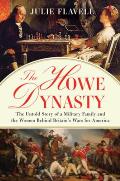
McCurdy starts with the challenge of getting close to the British commanders in the Revolutionary War:
Some of these generals and admirals are unknowable because of their aristocratic stoicism and others because their papers have been lost. The Howe brothers are particularly enigmatic for both reasons…Flavell’s approach was to widen her lens, so her book looks at multiple generations of the Howe family. More important, it looks at the female Howes, who left longer paper trails than the brothers but haven’t been well studied. In particular, Flavell drew on the letters of their sister Caroline.
When a set of sources is the only material you have, there’s always a challenge not to overstate their importance or the importance of the people who produced them. But Flavell makes the case for Caroline Howe as an important contributor to the family’s rise within the British establishment:
George, Richard, and William all headed to North America for the Seven Years’ War and earned accolades for their heroic service. Yet their success would have been impossible without the clever politicking of their mother, sisters, and wives. Because “a great deal of public business was also transacted in private settings,” Flavell observes, the dinners, parties, and visits “gave women many informal levers of influence” (p. 51).In 1776, Richard and William Howe were back in America, tasked with both commanding the imperial military and negotiating peace. A little more than a year later, William had taken the American capital while Richard maintained the Royal Navy’s command of the sea. That wasn’t enough.
Following Britain’s victory in the war, the brothers returned to England with three simultaneously holding seats in Parliament. Wielding both official and unofficial power, the siblings constituted a formidable Howe “interest” (p. 103).
From inside Caroline’s residence at Number 12 Grafton Street, the Howes watched events in America build toward revolution. In one of the most compelling chapters of The Howe Dynasty, Flavell unearths that it was Caroline who arranged for peace talks between her brother Richard, Benjamin Franklin, and representatives of the cabinet in late 1774. Over a seemingly innocent game of chess, Caroline orchestrated “this last-ditch and secret government peace initiative” as the British government sought to prevent an imperial rupture (p. 137).
Yet even indomitable women could not salvage William’s command after the British loss at Saratoga. Although William seized Philadelphia and dealt Washington’s army another blow, his decision to leave the Hudson Valley to General John Burgoyne was assailed in the British press once Burgoyne surrendered and the French entered the war on the side of the Americans. In May 1778, Sir William Howe departed for England, leaving the war to other men.Because she didn’t. The family that rose together subsided together. Ultimately, however, Richard won a major naval victory against Revolutionary France, restoring the Howe stature.
For the remainder of the American Revolutionary War, the Howes fought for their reputation in London. They demanded a Parliamentary investigation into their leadership, which they received although William was not exonerated. Even Caroline lost her influence. As the Howe interest declined, she was no longer “courted as a woman who had the ear of government ministers” (p. 313).

