J. L. BELL is a Massachusetts writer who specializes in (among other things) the start of the American Revolution in and around Boston. He is particularly interested in the experiences of children in 1765-75. He has published scholarly papers and popular articles for both children and adults. He was consultant for an episode of History Detectives, and contributed to a display at Minute Man National Historic Park.

Subscribe thru Follow.it


•••••••••••••••••


Showing posts with label Andover. Show all posts

Sunday, January 11, 2026

The Reality of “Dr. Cutts”
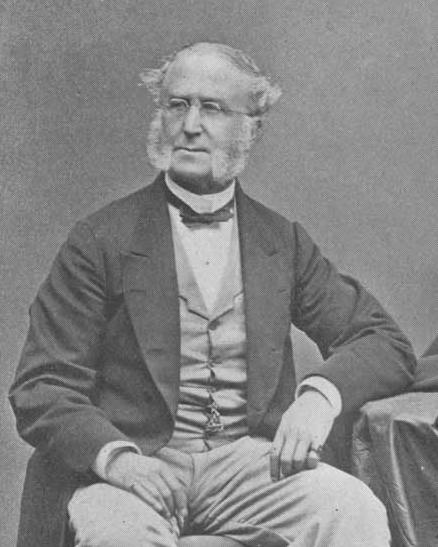
Back here, I quoted Edmund Quincy’s story of his father, little Josiah Quincy, starting to study Latin at the Phillips Academy in Andover in 1778 alongside a man more than twenty years older—a former Continental Army surgeon named Cutts.

It’s significant that that story appeared in Edmund Quincy’s biography of his father not in Mayor Quincy’s own words but in those of the author (shown here), remembering what he’d heard from his father decades before.

As I stumbled across gathered evidence, it became clear that the younger Quincy amalgamated multiple figures from his father’s school days into a composite “Dr. Cutts.”

The first figure was James Anderson of Londonderry, New Hampshire, admitted to the same inaugural class at the academy alongside six-year-old Josiah even though he was twenty-nine. As beginning students, they may indeed have been seated together, as Edmund Quincy described.

Next were a pair of young brothers named Cutts, who joined the school in 1782. Josiah Quincy and Richard Cutts (1771–1845) went on to be Harvard classmates who both represented Massachusetts in the U.S. Congress in the first decades of the nineteenth century, albeit in different parties. Edmund Quincy remembered that surname.

Finally there was John Brown Cutting, whose last name was easily confused with “Cutts” and equally appropriate for a surgeon. He entered the Phillips Academy in 1781, when Josiah Quincy was nine. According to academy records, Cutting was then 23 years old. (According to the age reported when he died, Cutting was a little older, born about 1755.)

John Brown Cutting came to the school from the Continental Army medical department. But he wasn’t a surgeon or surgeon’s mate; rather, starting in 1775 he served as an assistant apothecary. In this period, apothecaries were routinely addressed as “Doctor,” and Cutting definitely used that title.

Other details of John Brown Cutting’s life also connect with what Edmund Quincy described about “Dr. Cutts.” He did spend many years after the Revolutionary War in Europe. In 1806 he did marry a gentlewoman in Virginia: Sally (Carter) Carter (1767–1814), widow of George Carter.

Later Cutting worked for the U.S. government and started spelling his middle name with a terminal E. He died in Alexandria in 1831. Laudatory obituaries appeared in national newspapers and in the Boston Palladium, which likely prompted Josiah Quincy to tell his son stories of his old schoolmate.

Mayor Quincy probably remembered John Brown Cutting vividly not just because he was an unusual older student at Andover but because the man was a world-class networker, schmoozer, and unabashed gossip. Cutting served John Adams as a fill-in secretary in 1787. He aided American sailors as a self-appointed diplomat. He corresponded with both John and Abigail Adams, Washington, Jefferson, Hamilton, Madison, Knox, Jackson, Pickering, and more. Gouverneur Morris once described him entering the room with “a World of News.”

I plan to explore stories from the life of John Brown(e) Cutting. For now, though, I simply wish to establish that Edmund Quincy’s tale of a “Dr. Cutts” turns out to have some basis in reality, but not exactly as printed.

Saturday, January 10, 2026

Seeking Josiah Quincy’s Much Older Schoolmate

The upstart rural academy in Andover that became the prestigious Phillips Andover prep school published records of exactly who attended. Of course it did.

The Biographical Catalogue of the Trustees, Teachers and Students of Phillips Academy Andover, 1778-1830 confirms one detail of the story from Edmund Quincy’s biography of his father that I quoted yesterday.

Namely, that age six, Josiah Quincy (1772–1864, shown here past age six) was indeed the youngest student at the school when it opened in 1778. There were five seven-year-olds, though.

The alumni list also confirms that one student at the academy that year was “a man nearly thirty years of age”: James Anderson of Londonderry, New Hampshire, aged twenty-nine.

It’s therefore conceivable that little Josiah and old Mr. Anderson were seated together as the most rank beginners among the Latin scholars. This history of the school makes that assumption.

Otherwise, however, James Anderson doesn’t match Edmund Quincy’s description of his father’s classmate: a former Continental Army surgeon named Cutts who went on to an overseas career and marriage to an heiress in the vicinity of Alexandria, Virginia.

A man from Londonderry named James Anderson did serve as a lieutenant in the first year of the war. He was not, however, a surgeon or surgeon’s mate. His military duties didn’t take him anywhere near Virginia. And we have no indication that that former officer decided to go back to school.

The academy said its James Anderson went on to Harvard College in 1784. Sometimes men of limited means who were fixed on clerical careers started their higher education late, and they might spend a couple of years intensively studying Latin and Greek to qualify for college.

Harvard says its James Anderson didn’t go on to earn a master’s degree, as most aspiring clergymen did. He died in 1835. I can’t find anything more about him. His common name doesn’t help. (In the 1790s, for example, George Washington was corresponding with a Scottish botanist named James Anderson while employing a different James Anderson to operate his distillery.)

When the Sibley’s Harvard Graduates series reaches the class of 1784, it might have more to say about this James Anderson. (This year’s volume covers the classes of 1775 through 1777.) His profile will surely not reveal he went by the name of “Dr. Cutts,” though.

In 1782, a couple of brothers named Cutts arrived at the academy. But they were about Josiah Quincy’s age, not army veterans and not doctors.

So does Edmund Quincy’s account of his father’s adult schoolmate Dr. Cutts have any basis in reality?

TOMORROW: Meet Dr. John Brown Cutting.

Friday, January 09, 2026

“This mature schoolfellow, Cutts by name”

Edmund Quincy wrote The Life of Josiah Quincy of Massachusetts (1867) by drawing on his father’s writings and his own memories.

The father, namesake son of the Patriot Josiah Quincy, Jr., wrote a detailed reminiscence about his years as a student at what became the Phillips Andover Academy. I quoted some here.

To that first-hand account Edmund added information he recalled hearing, such as this anecdote about one of his father’s classmates:
The Phillips Academy at Andover had just been founded [in 1778], mainly by the contributions of his grandfather [William Phillips] and other members of the Phillips family; and it was thought expedient that the founders should show their confidence in the school by sending their children and grandchildren to it. . . .

And at six years old he took his seat on the lowest form by the side of a man nearly thirty years of age, and they began their Cheever’s Accidence [the standard Latin textbook] together.

This mature schoolfellow, Cutts by name, had been a surgeon in the Continental army, who, having scrambled into as much surgical skill as was then thought sufficient for that position without any early advantages of education, was made so sensible of his deficiencies, through associating with the cultivated men he was thrown among in the army, that he resolved to supply them as soon as he had an opportunity.

Resigning his commission, he came to Andover Academy, and went regularly to school for two years, to make up in some degree his classical shortcomings. Out of school, of course, he associated on equal terms with the Preceptor and the other gentlemen of the town. He was a man of wit and talent, and the two ill-mated form-fellows were friends in later years.

Various romantic stories are told of him, of which this is one. During his military service he had won the heart of the daughter of a rich Virginia planter, who would not consent that her hand should go with it to the penniless young surgeon. His scholastic training as well as his military career being ended, Dr. Cutts, after various adventures, went to Europe, where he lived for many years, nobody knew how.

After long years a letter from the lady of his youthful love found him out, which told him that her father, and I think her husband, and whatever other obstacles had hindered the course of their true love from running smooth, were now out of the way, and that, if he retained his old affection for her, and chose to claim her early promise, she was ready to fulfil it. On this hint he hastened home, married his early love, and spent the rest of his life at ease. . . .

All this I remember my father telling us at breakfast, many years ago, on reading in the newspaper the death of his old schoolfellow, somewhere near Alexandria, at a good old age.
Now that’s a fine anecdote of a marriage being saved. Unfortunately, it’s tough to find any evidence to support it, and easy to find contradictory records.

TOMORROW: Little Josiah’s big classmate.

Sunday, December 21, 2025

The Burdicks after the Boston Massacre

In the year after the Boston Massacre, Benjamin Burdick became the proprietor of the Freemason’s Arms tavern—better known as the Green Dragon Tavern, owned by the St. Andrew’s lodge.

I imagine his wife Jane did a lot of the hosting since Benjamin remained Constable of the Town House Watch through 1774.

As the London government cracked down and war approached, the Burdicks moved out to Marblehead. Benjamin opened a “large, genteel, and commodious” inn opposite Jeremiah Lee’s mansion. Soon he was watching over auctions of captured goods and vessels. Later the inn hosted auctions of estates confiscated from absent Loyalists.

By 1786 Burdick had relocated to Danvers, at the Sign of the Flag, but that property was sold the next year. Jane was back in Boston when she died in 1791. I haven’t found a record of Benjamin’s death. (It doesn’t help that genealogists have intertwined him with a man of the same name from Westerly, Rhode Island.)

In 1778, the Boston merchant Samuel Phillips funded the opening of a new academy in Andover with Eliphalet Pearson as preceptor. The inaugural class of that school included Malcolm McNeil Burdick, born in Boston 1764—the Burdicks’ oldest son. (His first and middle name appeared with different spellings.) Malcolm was in his teens but for some reason listed as age ten in school records.

Later Malcolm M. Burdick went to sea, appearing in advertisements as master of the Minerva sailing from Baltimore to Liverpool in 1801 and of the John out of New York in 1807. By 1812 he had settled in Windham, Maine, where he advertised that someone else’s livestock had gotten onto his land.

Another of Benjamin and Jane Burdick’s sons, William, born in 1774, went into printing. In July 1795 he and Benjamin Sweetser cofounded a newspaper in Boston called the Courier. Soon that became The Courier, Boston Evening Gazette and Universal Advertiser. Burdick signed over his portion of the business to Sweetser in December, and it ceased publishing in March 1796 after a fire.

[ADDENDUM: From 1798 to 1800 William Burdick was the junior partner in publishing the Oriental Trumpet newspaper in Portland, Maine. He then returned to Boston.]

In 1809 William Burdick married Lucretia Sprague (1788–1849), daughter of Continental artillery veteran Samuel Sprague (1753–1844). According to her brother, the banker and poet Charles Sprague (1791–1895), their father was also part of the Boston Tea Party.

William Burdick reused the Boston Evening Gazette name for a new periodical in 1813. His printing office at Congress and State Streets was next to the Exchange Coffee House, and he bought stock in that jittery enterprise. The printer’s older brother Malcolm sold subscriptions up in Maine.

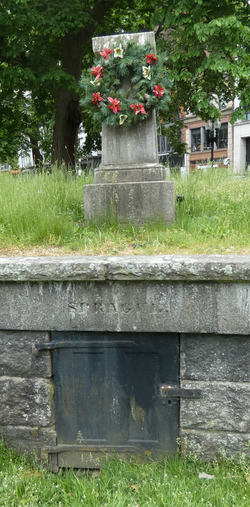
That Boston Evening Gazette evolved into the the Boston Intelligencer in August 1816. Burdick sold the business the following January and died on 30 May 1817, under Dr. John Collins Warren’s care. He was intestate but solvent, so his widow Lucretia could settle the estate and live for three more decades. She was interred in the Sprague family tomb in Boston’s Central Burying-Ground, shown above.

Friday, November 21, 2025

The End of the Jacob Osgood House

In 2012 and again in 2023 I reported on the deterioration of the Jacob Osgood House in Andover.

Parts of that building may have dated to 1699, but its historic significance arose from being where James Otis, Jr., died in 1783.

This month the Andover News website reported that the town had demolished the Osgood house as a safety hazard.

The owner of the building died last year. She had never lived there but used the property to store more than 100 tons of stuff she’d accumulated at other places and couldn’t bear to part with. By 2023 the house was flagged with a sign warning emergency personnel that it was too dangerous to enter.

Andover was able to preserve one artifact from the house: the granite back step where Otis was standing when lightning hit the building, traveled down a beam, and went through his body. It appears here in a photo by Brian C. Mooney.

According to the Andover News, “Before demolition, the stone was removed to a temporary location near the arch at West Parish Garden Cemetery, awaiting relocation to a permanent home in the cemetery.” (Otis’s body was interred in the Old Granary Burying Ground in Boston.)

For more on why James Otis went to Andover while dealing with mental illness, read Lucy Pollock’s article for Revolutionary Spaces. Otis first moved to the town in 1778 to be under the care of Dr. Daniel How, and How’s house still stands in the same neighborhood as the late Osgood house.

Thursday, September 19, 2024

Kenneth Lockridge and the New Social History

Kenneth A. Lockridge died last month at the age of seventy-nine. He was Professor Emeritus of History at the University of Montana, having previously taught at the University of Michigan and the University of Illinois, Chicago.

Lockridge’s first book, published in 1970, was A New England Town: The First Hundred Years: Dedham, Massachusetts, 1636–1736.

It was one of a bevy of studies of rural New England communities published in the 1970s, including John Demos’s A Little Commonwealth, Michael Zuckerman’s Peaceable Kingdoms, and Philip J. Greven’s Four Generations.

Robert A. Gross applied and extended that approach in The Minutemen and Their World, about Concord in the Revolutionary period.

This “new social history” focused on the lives of ordinary men and women rather than political elites, on long-term social and economic trends rather than individual narratives. Eventually it was no longer new, and younger historians developed other approaches, such as looking at the experiences of people who weren’t ordinary because of race, sex, or other factors.

Lockridge went on to write such books as Literacy in Colonial New England, Settlement and Unsettlement in Early America, and On the Sources of Patriarchal Rage: The Commonplace Books of William Byrd and Thomas Jefferson and the Gendering of Power in the Eighteenth Century.

He also published studies of Sweden, his wife’s home, and after retirement moved to that country to be with family.

The University of Montana has named its workshop for historical works in progress after Lockridge.

Monday, April 22, 2024

Washington on Franklin on Gage on Lexington

In 1789, President George Washington went on a tour (I might even say a progress) through the northern United States.

This is how he recorded his travel through Massachusetts in his diary on Thursday, 5 November:
About sunrise I set out, crossing the Merrimack River at the town, over to the township of Bradford, and in nine miles came to Abbot’s tavern, in Andover, where we breakfasted, and met with much attention from Mr. [Samuel] Phillips, President of the Senate of Massachusetts, who accompanied us through Bellariki to Lexington, where I dined, and viewed the spot on which the first blood was spilt in the dispute with Great Britain, on the 19th of April, 1775. Here I parted with Mr. Phillips, and proceeded on to Watertown, intending (as I was disappointed by the weather and bad roads from travelling through the Interior Country to Charlestown, on Connecticut River,) to take what is called the middle road from Boston.
Washington didn’t mention where he dined in Lexington, but other sources confirm that it was at the tavern of William Munroe, who had been a militia sergeant back in April 1775. That building is now one of the museums of the Lexington Historical Society.

The President’s travelogue sounds rather dry, but this item in the 7 Jan 1790 Berkshire Chronicle suggests he was actually in a cheerful mood:
ANECDOTE.
When the President of the United States, in his late tour, was at Lexington, viewing the field where the first blood was shed in the late war; he with a degree of good humor, told his informant, that the Britons complained to Dr. [Benjamin] Franklin, of the ill usage their troops met with at Lexington battle, by the Yankies getting behind the stone walls, and firing at them. The Doctor replied, by asking them whether there were not two sides to the wall?
Well, it’s not exactly Abraham Lincoln’s joke about Ethan Allen, but we rarely get to hear Washington tell funny stories at all.

Washington’s comment echoes a poem published in the 27 Nov 1775 Boston Gazette called “The King’s Own Regulars.” Written in the voice of the redcoats, it includes this couplet about Gen. Thomas Gage:
Of their firing from behind fences, he makes a great pother,
Ev’ry fence has two sides; they made use of one, and we only forgot to use the other.
The following spring, Charles Carroll described this poem to his wife as “a song made by Dr. Franklin.” It looks like Franklin might have written those lines while visiting Gen. Washington in Cambridge in October 1775, then left them behind for the local press. And President Washington remembered the doctor’s pithy point years later.

Sunday, October 29, 2023

Chandler on Stamp Act Protests in New England, 1 Nov.

On Wednesday, 1 November, Abby Chandler will speak to the North Andover Historical Society about her new book, Seized with the Temper of the Times: Identity and Rebellion in Pre-Revolutionary America.

As Chandler explained in an interview at the Journal of the American Revolution:
My original plan was to write a biography of Martin Howard who was a Loyalist from Rhode Island who later became the Chief Justice of North Carolina. He refused to disavow his loyalty to Britain in Rhode Island in 1765 and again in North Carolina in 1777 and had to flee for his life both times.

The reason I found him interesting was because the arguments that he made for supporting the British Empire are rooted in the same political traditions used by the men who argued in favor of revolting against the British Empire. . . .

The problem, however, with studying a man who had to abandon everything twice and died in exile is that he left very few documents explaining his thought processes.
So Chandler’s book became a study of the political movements swirling around Howard. Both Rhode Island and North Carolina were overshadowed by large neighboring colonies that became known for leading resistance to the Crown. Yet arguably each of those smaller colonies saw more resistance to authority in the pre-war period. And they were also the last two holdouts against the Constitution.

For the North Andover Historical Society, Chandler will focus on the Stamp Act protests of 1765, and how the movement in Rhode Island played out. While the Crown had appointed Francis Bernard to be governor of Massachusetts, and he felt a duty to enforce the new tax, Rhode Island elected Gov. Samuel Ward. He refused royal instructions to uphold that law. While Bostonians targeted the house of the appointed lieutenant governor, Thomas Hutchinson, in August 1765, Newporters had to find a different sort of target for their wrath—which is where Martin Howard comes in.

Abby Chandler is a professor at the University of Massachusetts Lowell. She serves on the 250th American Revolution Anniversary Commission in Massachusetts. I’ve had the pleasure of hearing her speak at many forums, most recently this summer’s History Camp Boston.

This talk is scheduled to start at 7:30 P.M. in the Stevens Center on the Common, 800 Massachusetts Avenue, North Andover. Register through this site.

Tuesday, August 29, 2023

The Last of the Jacob Osgood House?

Back in 2012, I picked up a local news report that the Andover board of health had issued orders for the owners of the house where Jacob Osgood lived during the Revolution to remove garbage bags piled up on the front lawn.

According to Andover Historic Preservation’s 2016 page about this house, the earliest part might have been built in 1699, and it was expanded with new decoration in the mid-1700s.

On 23 May 1783, James Otis, Jr., the former leader of the Massachusetts Whigs, was staying at this house, while hoping to recover from mental illness.

William Tudor’s 1823 biography of Otis included a picture of the Osgood house and said:

…the greater part of the family were collected in one of the rooms to wait till the shower should have past. Otis, with his cane in one hand, stood against the post of the door which opened from this apartment into the front entry. He was in the act of telling the assembled group a story, when an explosion took place which seemed to shake the solid earth, and he fell without a struggle, or a word, instantaneously dead, into the arms of Mr. Osgood, who seeing him falling, sprang forward to receive him. . . .

His own room was on the left hand side of the front door, when looking at the plate; and at his death, he was standing in the door way of the room to the right. The lightning struck the chimney, followed a rafter of the roof which rested upon one of the upright timbers, to which the door post was contiguous. The casing of this door was split, and several of the nails torn out all which marks still remain as they were at the time.
This week Donovan Loucks sent me this new photograph of the Osgood house, showing much more damage than that.
He wrote:
The place is in terrible condition and has a red square with a white cross prominently displayed on the front so emergency personnel know it’s unsafe for entry. The front door is gone, the entry is piled high with refuse, and I suspect it’ll end up being demolished at some point.
The house had clearly deteriorated since 2012. It may be too late to preserve anything more than a few architectural elements.

Monday, June 19, 2023

“I should not have chose this town for an Asylum”

On 17 June 1775, as I quoted yesterday, John Adams complained that five friends from Massachusetts hadn’t sent him any letters with news about the province since he’d left for the Second Continental Congress.

I decided to look into what those men did in the previous two months.

The Rev. Dr. Samuel Cooper had fled from Boston on 9 April, halfway through Sunday services, wary that Gen. Thomas Gage might order his arrest. He settled in with Samuel P. Savage in Weston. By the end of the month Cooper had his wife, daughter, and clothing with him, but not his library or all his letters.

In early May, Cooper arranged to stand in as the minister in Groton. Or rather, since that town was far away and he liked being near the seat of Patriot power, he made deals with other ministers to go out and preach in Groton while he preached in their churches close by. For a while, at least, he could coast on his celebrity as Boston’s most silver-tongued minister and recycle his old sermons.

Prof. John Winthrop of Harvard College lived in Cambridge. As the king’s troops marched through town on 18–19 April, he and his wife Hannah fled for safety, first to the Fresh Pond area, then further the next day, fearing the redcoats would return.

Later Hannah Winthrop wrote to her friend Mercy Warren:
Thus with precipitancy were we driven to the town of Andover, following some of our acquaintance, five of us to be conveyd with one poor tired horse & Chaise. . . .

I should not have chose this town for an Asylum, being but 20 miles from Seaports where men of war & their Pirates are Stationed, but in being fixd here I see it is not in man to direct his steps. As you kindly enquire after our Situation, I must tell you it is Rural & romantically pleasing.
Back in Cambridge, militia companies arrived en masse, taking over the college buildings and larger mansions. Most of the townspeople left.

By mid-June, however, the Winthrops were back home, though only temporarily. The professor helped to pack up the Harvard College library and scientific equipment. College classes resumed in Concord in October, and the Winthrops settled there for the rest of the school year.

Adams’s list started with three lawyers, all from Boston. All also had ties of family or friendship to Loyalists, and that complicated their choices as the war broke out.

Benjamin Kent at some point got a pass out of Boston and, according to his profile in Sibley’s Harvard Graduates, stayed with various friends in the countryside through the siege. Though he remained in the U.S. of A. through the war, in the mid-1780s he moved to Canada to spend his last years with his children.

William Tudor was just starting his legal career. He was also courting Delia Jarvis, a young lady from a Loyalist family. According to a family memoir, after the fighting started, Tudor tried to wrangle passes for himself, her, and her family from the Adm. Samuel Graves’s secretary, but that effort was fruitless.

On 12 May, Tudor “broke from Boston by the roundabout way of Point Sherly” in Chelsea (now Winthrop), leaving Delia and her family behind. He sought a position in the Patriot service. With John Adams championing him, Tudor became the Continental Army’s judge advocate general in the summer of 1775.

TOMORROW: The legend of Samuel Swift.

Friday, September 09, 2022

“A brave and valiant sea-commander, only a little bashful”

When James Rivington’s New-York Gazetteer ran what it said was a letter alerting British army officers in Boston to the men behind the town’s political troubles, its list of fifteen names included two we don’t usually read among Revolutionary leaders:
Both those men do already have tags here on Boston 1775, but you know this is an unusual place.

Neither Bradford nor Barber were elected to major political offices or wrote significant newspaper essays (that we know about). They weren’t in the top tier of Boston organizers, nor in my view in the next tier, either. They were too old to fight in the war, serving in civil offices instead, and neither survived the 1780s to help construct the federal government, two ways people got remembered.

Nonetheless, as their titles suggest, Bradford and Barber commanded respect in colonial Boston. Both were staunch Whig businessmen, the sort who spoke out in town meetings, signed protests, and served on committees. Indeed, both Bradford and Barber were part of Boston’s first committee of correspondence in 1772 and then the larger committee to enforce the Association boycott in 1774.

John Bradford (1735–84) was a merchant captain, sailing ships to London and Jamaica. In his study Smugglers and Patriots, John Tyler reported evidence that Bradford belonged in both categories. In 1775 the printer John Mein would call Bradford “a brave and valiant sea-commander, only a little bashful, which is well known to the underwriters in London.” Unfortunately, it’s not well known to us what Mein was referring to, probably sarcastically.

In the 1760s Bradford stopped commanding the ships himself, settled into his North End home, and focused on managing imports through his shop in Boston. He was elected an Overseer of the Poor in 1768 and a warden in 1772.

Bradford was also a slave-owner. Among his servants was a teenager born in Africa and renamed Chloe Spear, subject of a biography published in 1832 by Rebecca Warren Brown, daughter of Dr. John Warren. According to that book, Spear sought to learn to read by studying a psalter:
She kept the book secreted in her pocket, and whenever she had a few moments leisure, she would take it out and try to spell a word. While thus engaged one day, her master discovered the book in her hand, and inquired what she was doing. She told the truth, and this led to a full disclosure of the case. He angrily forbade her going again to the schoolmistress for instruction, even under penalty of being suspended by her two thumbs, and severely whipped; he said it made negroes saucy to know how to read, &c.
Nonetheless, Bradford joined the crusade to preserve political liberty for men like him.

In 1769–70 Bradford was among several Boston merchants who enforced the non-importation agreement—walking aboard ships, demanding Customs documents, leaning on merchants who defied the boycott. After James Otis, Jr., and Customs Commissioner John Robinson brawled in the British Coffee-House, Bradford was seen “looking for Mr. Otis’s Hat & Wig.” He was also on the town committee to hire a ship to carry the town’s report on the Boston Massacre to London, though cost worries scuttled that plan.

On 2 Sept 1774, a week before the New York newspaper item appeared, Capt. John Bradford was among the Boston Whigs who went out to Cambridge to calm the militiamen gathered in the “Powder Alarm.” After two colleagues, William Cooper and William Molineux, told the crowd that the gunpowder the royal authorities had seized was probably old and worthless anyway, Bradford had the boldness to publicly disagree. (The next month, Bradford was a pallbearer at Molineux’s funeral.)

The Bradford household appears to have escaped from the siege of Boston as refugees in Andover, boarding with a family named Adams. Their host helped Chloe Spear learn to read and converted her to a fervent Christianity.

In April 1776 the Continental Congress appointed Capt. Bradford its prize agent for all British ships captured and brought into Boston harbor—which some historians estimate amounted to half of all the prizes that Americans captured during the war. Bradford also became an agent for the Congress’s marine committee, purchasing ships and supplies. Those responsibilities reflect both his nautical knowledge and how the Boston Whigs believed Bradford deserved trust and rewards.

According to the Chloe Spear biography:
As a reward of her integrity, her master gave her a certificate of manumission, (freedom) which was to take effect at a specified period not very distant. But shortly after, by a law of the Commonwealth, all the slaves in the State were made free.
That would have been in 1783. John Bradford died in May 1784 “after a lingering illness.”

TOMORROW: Major Barber.

Friday, September 13, 2019

Prof. Pearson’s “Journal of disorders”

In late December 1787, the Harvard College faculty did some house-cleaning. It was the end of an academic term, the end of the calendar year, and time to address some problems.

Early in the month the college president, professors, and tutors had fined more than thirty students for that disturbance on Thanksgiving. (Then they lifted the fines on the sophomores, because those students were contrite or because the upperclassmen obviously had more power and responsibility.)

At the end of the year the faculty took further action against four students involved in the Thanksgiving disorder, probably because they had all done other things as well. The educators decided that seniors Grosvenor and Wier deserved formal admonitions, and that juniors Emerson and Fayerweather should sit out the next semester.

(In addition, the Boston merchant Thomas Russell reported that he wanted his son Daniel to spend another semester studying in Weston, and the college gratefully agreed to that.)

While Charles Adams was still on the list of juniors who had to pay the ten-shilling fine, he didn’t receive any additional disciplinary attention that season. Evidently he was still keeping up his studies and not leading a completely “dissipated” life.

But Charles got into more trouble in his senior year, and for that we have an additional source beyond the official faculty records. The Harvard University Archives also hold a notebook headed “Journal of disorders &c.” kept by Eliphalet Pearson (1752-1826, shown here).

Pearson had graduated from Harvard College himself in 1773 and then gone into education, teaching in Andover’s town school. He made gunpowder for Massachusetts early in the war and then helped to found Phillips Academy in Andover. After heading that private school for several years, Pearson returned to Harvard in 1786 as Hancock Professor of Hebrew.

Prof. Pearson began his “Journal of disorders” on 4 Dec 1788. He maintained it until 1797, but The Harvard Book: Selections from Three Centuries, edited by William Bentinck-Smith (1982), says, “the most lengthy and frequent entries occurred during December 1788 and January 1789.” Those entries are transcribed here. Apparently the junior and lower classes were particularly restive that winter, and it would be good to know why.

Pearson’s journal is useful because it records more detail about incidents than is in the official faculty records, and it records some incidents that didn’t get into the official disciplinary process at all. And that’s where we can see Charles Adams celebrating his last semester in college a little too much.

COMING UP: A tavern, a snowball, and a naked undergraduate.

Sunday, May 28, 2017

“Curnul putnum Com & ordered us down”

Here’s the rest of Pvt. James Stevens’s account of his Andover company’s fight along the Chelsea shore on this date in 1775.

When we left Stevens on the night of 27 May 1775, the Royal Navy schooner Diana had run aground near the ferry landing on the north side of Boston harbor.
Sunday ye 28 this morning a bout day thay [i.e., British sailors] come with thare barjes to bord the sconer

Curnul [Israel] putnum Com & ordered us down to the whoife & we fired so that thay retreted back to the sloup

our men run down & fired [i.e., set fire to] the sconer & it burnt very fast

the slup begun to to of [“to tow off”]

in about three qurters of a our after it was sot on fire the magersene Blod up [give it a minute…it’ll come…“magazine blowed up”!] & blod out some plunder

thay fired from Nodles oiland on us sun about an our hy

we are retreted back to our packs & gout our Brekfust

the slups drad of to Boston

there was of our men wounded fore & non cild [“none killed”!]

after the fier was gon down the men went & got out the plunder out of the rack [“wreck”]

in the afternune there come down about fore hundred men to relieve us & there was of us about a hundred & twenty men of us

tords night thay got tems & cared a lode of to Cambridge

we staid all night

Munday ye 29 this morning we went down to the sconer & got out som more of the plunder we staed about while the afternune & then set of for Cambridg we got up to Cambridg about dusk being very much feteged
News of this small but clear victory arrived in Philadelphia just as the Continental Congress was considering the New England colonies’ invitation to take control of their army. The reports of Putnam’s aggressive leadership during the fight prompted the Congress to make him a major general, moving him above more senior colleagues such as John Thomas and Joseph Spencer. That caused kerfuffles for Gen. George Washington to sort out when he arrived in Cambridge in July.

As it turned out, the fight off Chelsea was the last Continental victory Putnam got to see. He remained with the army until he suffered a stroke in 1779, but he was never again present for a win.

Sunday, June 19, 2016

“That day at Bunker Hill!”

You may have noticed that yesterday’s posting about Bunker Hill differed from the two that preceded it. It didn’t include any nineteenth-century poetry.

This posting corrects that omission. After Sarah Loring Bailey published the story of Pvt. John Barker and Capt. Benjamin Farnum in 1880, it inspired Annie Sawyer Downs to include the story in a long poem for the celebration of Andover’s sestercentennial sixteen years later.
The grass was green upon the lawn
The corn waved dark and tall.
And all day long the oriole,
Whistled his silvery call.
But what the veil, the film, the cloud
That frights the air of June?
And what the hush, the dread, the fear,
To which hearts beat in tune?

And why do men set faces hard
And eyes of women fill?
While trembling age and eager youth,
Press to the distant hill?
No courier swift swept through the street
With beat of martial drum,
And none could tell how the dread news
To Andover town had come.

Only that e’er the cannon’s roar,
Turned every heart's blood chill,
The voice was heard, “Stand fast! They fight
To-day at Bunker Hill.”
Dark rolled the smoke, when on the breeze
Was borne a deaf’ning shout
“We’ve beat the red coats off the field,
We hold the frail redoubt!”

Then there was mounting in hot haste
And hurrying to and fro,
For Doctor, Nurse, and Parson French
Swift to the field must go.
More weary hours wore slow away,
Again the mighty sound,
“A second time the red coats flee,
Once more they leave the ground.”

O maids and wives, and mothers dear,
Whose sad eyes watched the fire,
God grant though on that summer day
You lost your hearts’ desire,
That steadfast pride and courage high
Were yours through earthly ill,
For a great state was born that day,
That day at Bunker Hill!

Loud and still louder roared the guns,
Thick smoke hid all the sky,
And still the silvery oriole
Sang in the chestnut high.
At last the word, “Our powder gone,
We’ve turned us down the hill,
Content to prove this summer day,
This day at Bunker Hill!

That farmer lads can shake a crown
And lay proud England low,
And on a field they have not tilled
Such fearful harvest sow!”
Shot fell like rain on Charlestown Neck,
And brave the deeds oft told,
Of Bailey, Farnum, Frye, and Poor,
And stout John Barker bold.

For he was private in the ranks,
But last in the retreat;
When Captain Farnum struck by shell,
Fell just across his feet,
He lifted and he held him high
Full in the redcoats’ view
And shouted loud, “Now hold on Ben,
The Reg’lars sha’ n’t have you!”

A hundred years have come and gone,
And still in stirring verse,
The children of North Andover
John Barker’s deed rehearse,
And in the old-fashioned burying ground,
Shady and green and still,
On a mossy stone you oft may read,
“He fought at Bunker Hill.”

He fought the fight, he kept the step,
Loyal, and brave, and true,
For a free land he paid the price
Comrades, that day for you.
So lowly kneel, and softly tread,
In the graveyard under the hill
Fame writes aloft no prouder line,
Than, “Fought at Bunker Hill.”

Saturday, June 18, 2016

“The Regulars sha’n’t have Ben.”

In Historical Sketches of Andover (1880), Sarah Loring Bailey set down this story from the end of the Battle of Bunker Hill:
A private, John Barker, seeing his captain and friend, Benjamin Farnum, lying wounded in the path of the retreat, took him upon his shoulders, and steadying him by putting his gun across under his knees, bade him hold fast, and started off on the run, calling out, “The Regulars sha’n’t have Ben.” This is told by descendants of Captain Farnum, and by some of the neighbors.

On the other hand it has been the tradition in the Abbot family, and the Barker family, that Lieut. Isaac Abbot was the man rescued from the “Regulars.” Since the claim is made for the two, it is undoubtedly true that one or the other was carried off.
It’s striking how Barker’s own family said he had rescued Abbot, but the Farnum family’s claim got first position. To be sure, as of April, Abbot’s company had no man named John Barker in it while Farnum’s had two or three (depending on how one reads the roll).

Other sources confirm that both Abbot and Farnum were wounded in the battle. Bailey wrote that Farnum’s family arranged to bring him home to Andover to recover this way:
A sort of litter was placed on poles, and fastened to two chairs, and drawn by horses harnessed tandem. The Captain never wholly recovered from this wound, though he served during the whole war, and lived to a remarkable age; the sore made by the bullet continued to fester and be painful. Pieces of bone and the bullet that were taken from it were long kept, ghastly trophies of his first battle.
Pvt. James Stevens, who was home on sick leave during the battle, paid a sick call on 20 June. Stevens wrote in his diary, “this morning I went up to Captain varnum’s to se him he was wounded in two places in his lag & then I went home”.

Farnum recovered enough to serve as a militia officer in 1776 and then as a captain in the Massachusetts line in 1777, 1778, and the first three months of 1779 (not “the whole war”). Fifty years later he was hailed as the last surviving captain from the Battle of Bunker Hill. He died in 1833. The regulars never had him.

Tuesday, May 24, 2016

“Concerning our chusing a sargent”

On 19 April 1775, Thomas Poor was captain of a minute company from Andover. His sergeants were named John Chickering, Cyrus Marble, Philip Farrington, and William Johnson, as stated on a muster roll for the first week of the war.

One of the privates in that company was James Stevens. He kept a diary, later published in the Essex Institute Historical Collections. It shows that the Andover minutemen remained in Cambridge, with occasional patrols into Charlestown, for the next few weeks.

During that time Massachusetts’s emergency assemblage of militia regiments was formally reorganized into an army. We see a little of that process from Pvt. Stevens’s diary entry of 10 May:
Wednsday ye 10 we got our brecfast & then went on the pread in the morning & Capt Poor come out & spok very rash concerning our chusing a sargent & said that we had no right to

wich displesd the soldiers very much thay went of & did no duty that day

about leven a clok we praded & capt Poor come & said that he was mis under stod & the comping setld with him by his making som recantation
This was the New England way of war, privates insisting they had the right to choose whom they would serve under and refusing to do duty if they didn’t get their way. Their captain, a respected veteran, had to make a “recantation” of his scolding before the men settled down.

Ten days later, Capt. Poor got a little distance from that situation by getting promoted to major of the regiment. Benjamin Farnum, a lieutenant in April, became the captain of Poor’s company. (Farnum’s gravestone above comes courtesy of Find a Grave.)

The men probably chose their new sergeant to replace Cyrus Marble, promoted to ensign by 7 May. John Chickering, Philip Farrington, and William Johnson all remained sergeants under Capt. Farnum. Chickering became an ensign by October while Farrington later transferred to another company as an armorer.

And the new sergeant? That was John Barker (1753-1839). (Just to keep things confusing, the minute company had two men of that name.) Presumably the enlisted men chose Barker, and then the officers agreed. Like most of his Andover comrades, he served to the end of the year, and then in short stints later in the war. I’ll get back to him in mid-June.

Lest we think that only enlisted men complained about ranks, on 6 June the captains of that regiment, including Farnum, petitioned the Massachusetts Provincial Congress to have more lieutenants in their companies:
According to the Recommendation of the Congress 20th of Octobr Last [i.e., in 1774] Six Companyes in Sd Regiment have appointed two Lieutnts & Since that time to the 19th of April have ben Diciplined in the Art Military with two Lieutnts & Ever Since ye Lo 19th of April have been Imbodied & have Regularly Done Duty in the Army & So have ben Deprived of the Advantages of Returning to the Country for Recruiting of Troops much to our Disadvantage & as we are informed that the Presant Congress have Determined That Each Company may have but one Lieutnt & an Ensign your Petitioners, Conceiving great Difficulties will Arise in our Companies upon Account thereof, beg that if it may be Consistant with the Honour & Dignity of the Congress That Each of the Seven Companies may have two Lieutnts
Like Capt. Poor, the congress bowed to that demand from below. Cyrus Marble received the rank of second lieutenant by October.

Monday, April 20, 2015

“Shot a Canon Ball throug the metin hous”

On 19 Apr 1775, two companies of militiamen marched from Andover. Anticipating that the British column was headed to Concord, where the Massachusetts Provincial Congress had collected supplies, they marched toward that town, but kept adjusting their course as they received more news.

Here’s the account of Sgt. Thomas Boynton from Capt. Benjamin Ames’s company:

This morning, being Wednesday, about the sun’s rising the town was alarmed with the news that the Regulars was on their march to Concord. Upon which the town mustered and about 10 o’clock marched onward for Concord. In Tewksbury news came that the Regulars had fired on our men in Lexington, and had killed 8. In Bilricke news came that the enemy were killing and slaying our men in Concord. Bedford we had the news that the enemy had killed 2 of our men and had retreated back; we shifted our course and persued after them as fast as possible, but all in vain; the enemy had the start 3 or 4 miles. It is said that their number was about 1500 men. They were persued as far as Charlestown that night; the next day they passed Charles River. The loss they sustained as we hear were 500; our men about 40. To return, after we came into Concord road we saw houses burning and others plundered and dead bodies of the enemy lying by the way, others taken prisoners. About eight at night our regiment came to a halt in notime. The next morning we came into Cambridge and there abode.
The Andover men never made contact with the enemy that day, but they did become part of the army besieging Boston.

Another man on that march was James Stevens, a carpenter born in 1749 who was in Capt. Thomas Poor’s company. His diary was published in the Essex Institute Historical Collections in 1912, offering a vivid picture of the aftermath of battle:
April ye 19 1775 this morning a bout seven aclok we had alarum that the Reegerlers was gon to Conkord we getherd to the meting hous & then started for Concord we went throu Tukesbary & in to Bilrica we stopt to Polords [Solomon Pollard’s tavern, burned in 1977] & eat some bisket & Ches on the comon. we started & wen into Bedford & we herd that the regerlers was gon back to Boston

we went through Bedford, we went in to Lecentown. we went to the metinghous & there we come to the distraction of the Reegerlers thay cild eight of our men & shot a Canon Ball throug the metin hous. we went a long through Lecintown & we saw severel regerlers ded on the rod & som of our men & three or fore housen was Burnt & som hoses & hogs was cild thay plaindered in every hous thay could git in to thay stove in windows & broke in tops of desks we met the men a coming back very fast we went through Notemy & got into Cambridg we stopt about eight acloke for thay say that the regerlers was got to Chalstown on to Bunkers hil & intrenstion we stopt about two miles back from the college

Thursday ye 20 this morning we had alarum about day we imbodied as son as posable & marcht into the comon we herd that the regrelers was gon to Boston we staid on the Comon a spel & then retreted back to the hils & exspected them out on us we herd severl small canons & one or two swevels from a tender we staid while ten or a leven aClok & then come down & got some refreshment & men come in very fast
Stevens’s idiosyncratic spelling probably gives a good sense of what he sounded like. It’s also clear that even then people had trouble spelling “Billerica.”

Friday, January 16, 2015

President Washington in Sickness and in Lexington

Having spent many autumn days outdoors meeting lots of American citizens, on 26 Oct 1789 President George Washington…got sick.

He wrote in his diary:
The day being Rainy & Stormy—myself much disordered by a Cold and inflamation in the left eye, I was prevented from visiting Lexington (where the first blood in the dispute with G. Britn.) was drawn. . . . in the Evening I drank Tea with Govr. [John] Hancock & called upon Mr. [James] Bowdoin on my return to my lodgings.
(The President’s encounters with Gov. Hancock will be the focus of T. H. Breen’s talk at the Cambridge Forum next Wednesday evening.)

According to the editors of the Washington Papers, the President might have been suffering from the “widespread epidemic of respiratory ailments” spreading in the central and southern states. In fact, Washington and his retinue may have carried the virus north. Certainly a lot of the people who had crowded onto the Boston streets to see him came down with a big, and local newspapers began to refer to the “Washington influenza.”

Washington eventually made it to Lexington, visiting the town on his swing south after seeing New Hampshire.
Thursday 5th. About Sun rise I set out, crossing the Merimack River at the Town over to the Township of Bradford and in nine Miles came to Abbots Tavern in Andover where we breakfasted, and met with much attention from Mr. [William] Philips President of the Senate of Massachusetts, who accompanied us thro’ Bellarika to Lexington, where I dined, and viewed the Spot on which the first blood was spilt in the dispute with great Britain on the 19th. of April 1775.
The President dined at William Munroe’s tavern, now a museum of the Lexington Historical Society (shown above).

In 1917, the Journal of American History published “A Young Woman’s Sprightly Account of Washington’s Visit to Lexington in 1789,” said to be written by Munroe’s daughter Sarah. It looks like a total fake. But sprightly.

Saturday, January 12, 2013

“He had taken a Cold and became sick”

From the memoir of Pvt. Daniel Granger of Andover, published in the Mississippi Valley Historical Review in 1930:
My first services in the Revolution were on Winter Hill in the Fall and Winter of 1775. I at the age of 13 years. In the Month of December, News came up, that my Brother was sick and unable to do Duty, he was very thinly clad, as most of the Soldiers were at the time; he had taken a Cold and became sick. My parents said that I must take the Horse and go down and bring him home. But if the Officers would receive me in his sted, (and he being able to ride alone) I might stay in his room: I went down, & found him, he went with me to the Officers, to offer my services and to obtain a Furlow for himself: they questioned me a little and finally said that I might stay in his room if I thought that I could do the duty of a Soldier, & I gave my Consent, my Brother took the Horse & went home, & I took his Accoutrements and went in his Mess. The Barracks were then building, but were not finished. The Weather was extremely cold.
It looks like Daniel’s older brother was named Jacob and born about 1758. (All the other brothers whom that genealogy site lists were even younger than Daniel.) According to Sarah Loring Bailey’s Historical Sketches of Andover, in late 1777 Jacob marched north with a town militia company to defend against Gen. John Burgoyne’s thrust from Canada. The following spring Daniel, still only a teenager, served three months as a militia drummer at West Point.

My sinuses are feeling a bit like Jacob’s today, but—alas—I don’t have a thirteen-year-old brother to stand in for me.

Thursday, June 07, 2012

Jacob Osgood’s House Today

I’ve been writing about the death of James Otis, Jr., in Andover at a house owned by the Osgood family. That house still exists, and is listed on this Andover Historic Preservation website maintained by the town library. It describes the house and its history:
Isaac [Osgood]’s fourth son, Jacob, inherited the property and was a wealthy and highly respected farmer. He served in Nicholas Holt’s company during the Revolutionary War and was friend and host to James Otis, the patriot lawyer and orator. Otis spent nearly two years at the Osgood farm recuperating form a head injury and was killed here by lightening [sic] in 1783. Osgoods occupied the house until 1849; of the following owners the most historically significant has been Wadley Noyes, who kept an inn and tavern here from 1853-1863.

The awkwardly composed design reflects its centuries of architectural growth. The original building consisted of four rooms built around a central chimney; Isaac Osgood is thought to have added the eastern part of the house (making its L shape) and the northeast corner wing. The pretentiousness of this status-conscious owner is reflected in the buildings dignified window cornices—uncommon in Andover—fine pedimented doorway, large windows, and hipped roof.
A Boston 1775 reader alerted me that house has also become the focus of a local controversy as the current owner has stored large piles of trash bags on the property. After two items in the Andover Townsman in early February pushed for action, the town board of health found evidence that those heaps were endangering the public and ordered them removed. In April the board of health went to court to enforce that order. The photograph above accompanied one of those February articles.

In May a Boston Globe article linked the problem to compulsive hoarding, a behavior that appears to be receiving extra attention lately because it’s so telegenic. Whether or not that diagnosis has anything to do with the property’s current situation is another question. But there’s some historical irony in the house where James Otis, Jr., went to recover from one mental condition being linked to another.